The Crane
“You need to see what’s outside.”
My bridesmaid Jordan burst into the bridal suite so fast she almost knocked over the steamer. She was still in her robe, with half her hair curled and the other half pinned up in big clips. Her face was bright red.
“What? What’s wrong?” I was sitting in front of the mirror with my makeup artist dabbing something shiny on my cheekbones. “Is it raining? Please don’t tell me it’s raining.”
“It’s not raining,” Jordan said. “It’s worse. Just come look.”
I got up. My makeup artist sighed. I walked to the big window that looked out over the lawn.
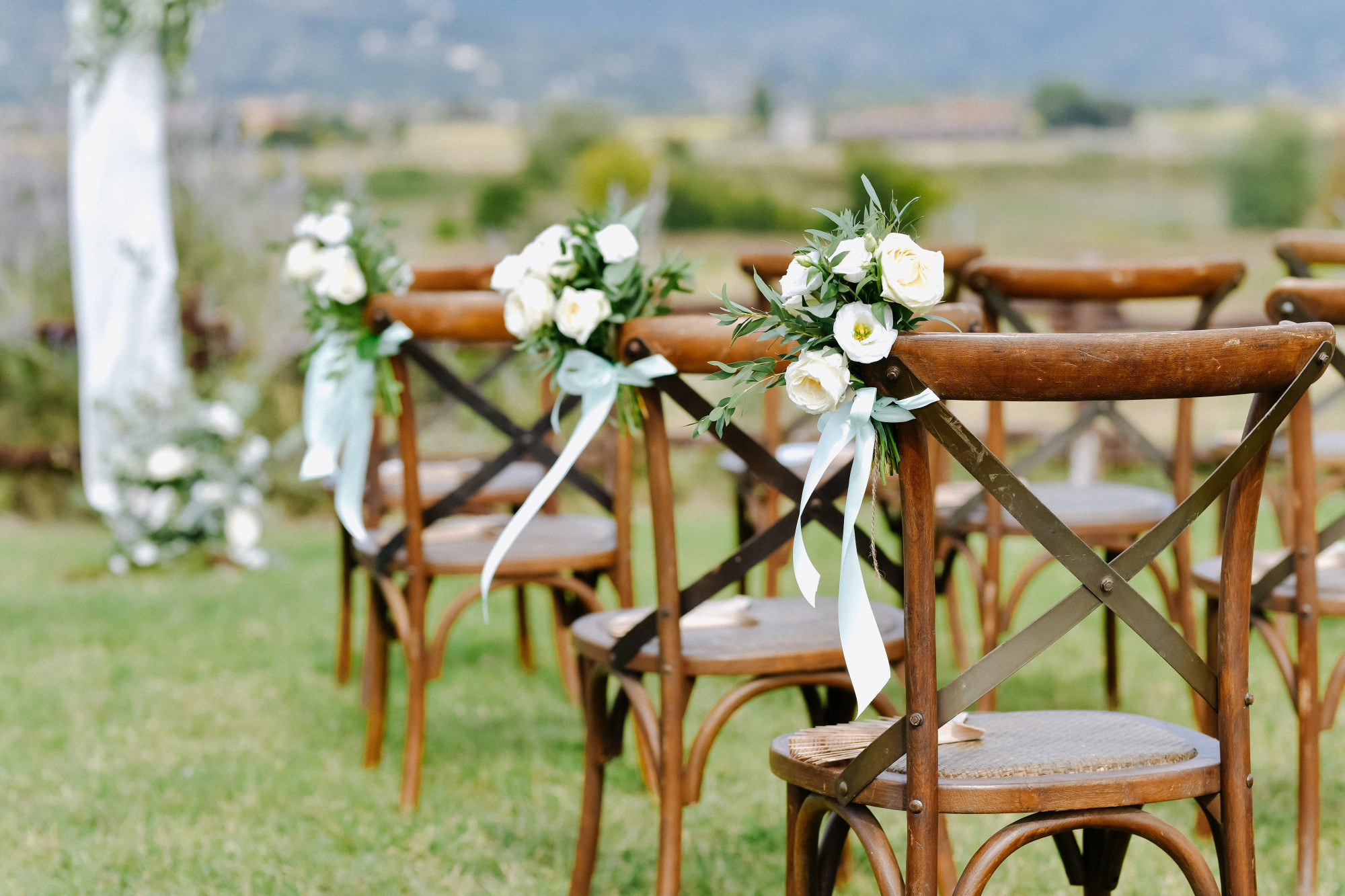
The venue was an old farm about forty minutes outside the city. A white barn with a new wood floor. A long green lawn sloping down to a pond. A little white arch at the bottom where Bruce and I would say our vows in exactly four hours. Rows of wooden chairs. Mason jars full of wildflowers hanging from shepherd’s hooks along the aisle. Everything I’d picked out, one little decision at a time, for fourteen months.
And parked beside the lawn, right next to the white arch, was a crane.
A big yellow crane truck. The kind you see on construction sites. With a long metal arm that went way up into the sky and a thick steel cable hanging down from the end of it.
And tied to the hook at the bottom of that cable was a huge white satin bow.
I stared at it.
“Is the venue doing construction?” I said. “They didn’t say anything about construction.”
“It’s not the venue,” Jordan said.
Before I could ask what she meant, I saw her.
Jacqueline.
My future mother-in-law. She was standing on the lawn below us in a champagne-colored dress with a matching hat, waving her arms toward the crane like a game show host showing off a new car. A few early guests had arrived. Aunts. Cousins. Bruce’s uncle Pete with his camera. They were standing around the crane, looking at it, confused.
And then Bruce walked around the side of the barn.
He was wearing jeans and a T-shirt. He’d been helping the caterers unload tables. He had a folding chair in each hand. He saw the crane. He stopped. He set the chairs down on the grass.
He walked over to his mother.
I couldn’t hear what they were saying. The window was closed. So I opened it.
Warm June air came in, smelling like cut grass. And with it, my future mother-in-law’s voice.
“Surprise!” Jacqueline said.
Bruce looked at the crane. Then at her. “What is that doing here?”
Jacqueline laughed. Loud. Loud enough for all the relatives standing around to hear it. Loud enough for me to hear it from the second floor.
“I thought I’d save your back tonight,” she said.
Bruce stared at her.
She pointed up at the big white bow on the hook.
“When you carry the bride over the threshold,” she said, “you’ll need help lifting her.”
A couple of people laughed. Awkwardly. The kind of laugh people do when they don’t know what else to do. Uncle Pete lowered his camera.
My face burned. It burned so hot I could feel it in my ears.
Then Jacqueline looked up. She saw me standing at the open window in my robe with my face half done.
She waved.
“Don’t worry, sweetheart!” she called up to me. “I made sure it can handle the weight!”
That killed every laugh.
Every single one. The whole lawn went dead quiet. Uncle Pete’s wife put her hand over her mouth. One of the cousins turned around and walked back to the parking lot like she’d forgotten something in her car.
Bruce’s expression changed.
I’d known him for five years. I’d seen him mad. I’d seen him sad. I’d seen him cry at the end of a dog movie. But I’d never seen his face do what it did right then. It went completely still. Like a lake with no wind on it.
He didn’t yell.
“You rented this?” he asked.
Jacqueline smiled. “For the whole day. Funny, right?”
“And you paid for it?”
“Of course.”
Bruce nodded slowly.
“Good,” he said.
Something in his voice made her smile weaken. Just a little. Just at the corners.
Bruce took his phone out of his back pocket.
He turned around and walked straight toward the crane operator. An older man in a hard hat and an orange vest, sitting on the step of the truck, eating a breakfast sandwich.
“Bruce?” Jacqueline called.
He ignored her.
I watched him hold up his phone. He showed the man something on the screen. Then he turned and pointed. Across the lawn. Past the barn. Toward the gravel parking lot.
The operator looked at the phone. He looked where Bruce was pointing. He put down his breakfast sandwich.
Then he looked at Jacqueline.
“You really want me to do that?” he asked Bruce.
Bruce looked straight at his mother.
“Absolutely,” he said.
Jacqueline’s face went blank.
The operator climbed up into his cab. The engine rumbled to life. The long yellow arm of the crane creaked and began to swing slowly around. Away from the white arch. Away from the lawn.
Toward the parking lot.
Toward the row of cars parked closest to the barn. In the little reserved section with the sign that said Family of the Bride & Groom.
Toward one car in particular. A shiny white Lexus with a silver bumper sticker on the back that said Proud Mom.
And when the crane started moving, Jacqueline realized exactly what her son had planned for her.
But I need to go back. Because you won’t understand why Bruce did it, or why I stood at that window and didn’t try to stop him, unless you understand the year before.
My name is Tessa. I’m thirty-one. I teach third grade.
Two years ago, my mother, Maureen, was diagnosed with breast cancer. Stage three. She was fifty-eight.
She called me on a Tuesday afternoon while I was grading spelling tests. I can still see the paper in front of me. A little boy named Jaylen had spelled because as becuz.
“Tessie,” Mom said. Her voice was very calm. That’s how I knew. My mother is never calm. My mother is loud and funny and talks with her hands even on the phone. “Can you come over tonight? I need to tell you something. In person.”
I knew before I got in the car.
My dad died when I was fifteen. It’s just been me and Mom since then. I’m an only child. So when the doctor said chemo, and surgery, and radiation, and eighteen months, there was only one person who was going to drive her to every appointment.
Me.
For a year, I lived in the car.
I’d get up at five. Drive forty minutes to Mom’s house. Help her get dressed on the bad days. Drive her to the cancer center. Sit in the waiting room with a cup of vending machine coffee while she got her infusions. Drive her home. Get her settled on the couch with a blanket and a bucket. Then drive to school and teach twenty-four eight-year-olds how to do long division.
After school, I’d drive back to Mom’s. Make her dinner she couldn’t eat. Sit with her while she threw up. Help her to bed. Drive home at ten. Sleep for five hours. Do it again.
I didn’t eat right. I didn’t eat at all, some days. Then other days, I ate everything. Hospital cafeteria sandwiches. Turkey on white bread with a pickle, eaten standing up in a hallway. Vending machine crackers. Drive-through cheeseburgers at eleven at night because it was the only thing open. Leftover casseroles people brought for Mom that she couldn’t touch.
I didn’t exercise. I didn’t sleep. I cried in the shower every morning so Mom wouldn’t hear me.
I gained about eighteen pounds that year.
I didn’t really notice it. Not at first. I was too busy. Too tired. Too scared. My clothes got tight, and I just bought bigger ones. I didn’t look in mirrors much. When you’re watching your mother lose her hair in the bathroom sink, you don’t really care what your own face looks like.
Bruce noticed. But not in the way you’d think.
“You look tired, babe,” he’d say, when I dragged myself into his apartment at night. “Sit down. I’ll make you something.”
He’d make me grilled cheese and tomato soup. He’d rub my feet. He’d drive Mom to her appointments on the days I had parent-teacher conferences. He learned how to flush her port. He shaved his own head the day she shaved hers.
He walked into her living room with a buzzed head and a big grin and said, “Now we match, Maureen.” And my mother, who hadn’t laughed in three weeks, laughed so hard she had to lie down.
That’s the man I was marrying.
In March, last year, Mom finished her last round of radiation.
She rang the bell at the cancer center. The brass one on the wall, that you ring when you’re done. All the nurses came out and clapped. Mom rang it so hard the rope came off in her hand.
In May, the scans came back clear. Remission.
In June, Bruce proposed.
He did it in Mom’s backyard, under the old apple tree where my dad used to push me on a tire swing. He’d asked Mom’s permission first. She told me later she cried so hard she couldn’t answer him, and he had to ask her twice.
That night, the three of us sat on Mom’s back porch with a bottle of cheap champagne. Mom’s hair was starting to grow back. Short and soft and gray, like a baby duck. She kept running her hand over it.
“I’m going to walk you down the aisle,” she said. “I’m going to walk you down the aisle on my own two feet. With hair.”
“You will, Mom.”
“With a lot of hair.”
“We’ll get you extensions if we have to,” Bruce said.
My mother laughed. And I looked at the two of them, sitting there on that porch, and I thought, This is it. The worst year of my life is over. Everything’s going to be good now.
I didn’t know about Jacqueline yet.
Well. I knew about Jacqueline. I’d known her for five years.
I just didn’t know how far she’d go.
The first comment came three days after the proposal.
We were at Bruce’s mom’s house for Sunday dinner. Jacqueline lives in a big white house in the suburbs with a perfect lawn and perfect shutters and a perfect kitchen with a marble island nobody ever cooks on. She’d made salmon. Plain. No butter. And a salad with no dressing.
I reached for a roll.
Jacqueline smiled at me across the table. “Oh, Tessa. Are you sure? You’ve got a dress to fit into now.”
I froze with my hand on the bread basket.
“Mom,” Bruce said.
“What? I’m just saying. Every bride wants to look her best on her big day.” She took a sip of her white wine. “I know I did. I lost twenty-two pounds for my wedding. I was a size four.”
“Mom.”
“I’m only trying to help.”
I took my hand back. I didn’t eat the roll.
On the way home, Bruce was furious. “I’m sorry. I’m so sorry. She’s… she’s always been like this about weight. With everybody. I’ll talk to her.”
“It’s fine,” I said.
It wasn’t fine.
Jacqueline knew exactly why I’d gained the weight.
She knew about my mom. She’d sent flowers when Mom was diagnosed. A big, expensive arrangement with a card that said Thinking of you. She’d asked about her treatments at Thanksgiving. She’d even come to one of Mom’s appointments, once, when Bruce couldn’t drive and I had a staff meeting, and sat in the waiting room for three hours.
She knew what that year had been.
That didn’t stop her.
At dress shopping, it got worse.
I’d found a little boutique downtown. Mom came, of course. And Jordan, my best friend since college. And Bruce asked me, very carefully, if I’d consider inviting his mother. “She doesn’t have a daughter,” he said. “She’s always wanted to do this. It would mean a lot to her.”
I said yes. I thought maybe it would help. Maybe if she saw me in a wedding dress, she’d see me differently. Not as the girl who took her son away. Not as the girl who ate the roll. Just as a bride.
The boutique was small and pretty. Pink velvet couches. A big three-way mirror on a raised platform. A saleswoman named Gloria with bright red lipstick and a tape measure around her neck.
“Okay, bride!” Gloria said. “Tell me what you’re looking for.”
Before I could answer, Jacqueline said, “Something structured. With a lot of support.” She smiled at Gloria. “Do you have anything with extra reinforcement?”
Gloria’s smile flickered. She looked at me. Then at Jacqueline.
“All of our gowns have excellent construction,” she said carefully.
“Oh, I’m sure,” Jacqueline said. “I just mean… you know.” She waved her hand vaguely at me. “Something forgiving.”
My mother stood up.
My mother, who was still wearing a scarf over her short new hair, whose arms were still thin from chemo, who had to sit down every twenty minutes because she got tired, stood up off that pink velvet couch.
“Jacqueline,” she said. “Could I speak with you outside for a moment?”
Jacqueline blinked. “Oh. Of course, Maureen.”
They went outside. Through the glass door of the boutique, I watched them stand on the sidewalk. My mother was talking. Quietly. Not waving her hands. Just standing very still, very straight, and talking.
Jacqueline’s face got tight.
When they came back in, neither of them said anything about it. Jacqueline sat on the far end of the couch and scrolled through her phone.
I tried on eleven dresses. I found the one on the ninth. Soft ivory lace with long sleeves and a low back. When I stepped up on the platform in front of the big mirror, my mother started crying. Jordan started crying. Gloria started crying, a little, and blamed her allergies.
Jacqueline looked up from her phone.
“It’s lovely,” she said. “Very… flattering.”
At Christmas, it was the pie.
Bruce’s family does a big dinner every Christmas Eve. Aunts, uncles, cousins, his grandmother Nana June. Twenty-five people crammed into Jacqueline’s perfect white house.
I brought a pie. Apple. My dad’s mother’s recipe. With the lattice top and the sugar sprinkled on it. My dad used to make it every Christmas when I was little. After he died, I learned how. It’s the only thing I make that’s really good.
After dinner, everybody was standing around the dessert table. I cut myself a small slice. A really small slice. I’d been careful all night. I’d skipped the potatoes and the rolls and the stuffing.
Jacqueline reached over and moved the pie plate away from me. Slid it right across the table, out of my reach.
“I’m protecting the wedding photos,” she said.
She said it loud. Laughing. Like it was a joke.
A few people laughed with her. An aunt. A cousin. Bruce’s uncle Pete, who laughs at everything.
I stood there holding my plate with the tiny slice of my dead father’s pie on it.
Bruce put down his coffee cup.
“Mom,” he said. “Stop.”
Jacqueline laughed. “Oh, Bruce. She knows I’m joking. Right, Tessa?”
Everybody looked at me.
I smiled. I said, “Sure.” I put my plate down on the table. I walked into the bathroom and locked the door and sat on the edge of the tub and stared at the tile for ten minutes.
When I came out, Bruce was standing in the hallway, waiting. He didn’t say anything. He just took my hand and walked me out to the car. We left before presents.
In the car, he was shaking. “I told her,” he said. “I told her this morning, if she said one more thing about your weight, we were leaving. She promised. She promised, Tess.”
“She doesn’t think she’s doing anything wrong,” I said.
“I know. That’s the worst part.”
I looked out the window at the Christmas lights on all the perfect houses.
“She’s not joking,” I said. “You know that, right? She says she’s joking. But she’s not. She means it. Every time.”
Bruce didn’t answer for a long time.
“I know,” he said finally.
I stopped laughing months ago.
I stopped laughing, and I started doing the thing I’d sworn I’d never do. I started counting. Every bite. Every calorie. Every step. I downloaded an app. I stopped eating lunch in the teachers’ lounge because I didn’t want anybody to see what I was eating. I weighed myself every morning and every night.
I lost six pounds. Then I got the flu and stopped counting for a week, and gained four back, and cried about it in the bathroom at school.
Two weeks before the wedding, I went to my final dress fitting. I stood on the little platform in front of the three-way mirror. Gloria pinned the back. The dress fit perfectly.
“You look beautiful,” Gloria said.
I looked at myself. All three of me. From every angle.
All I could hear was Jacqueline’s voice. Something forgiving.
I started crying. Right there on the platform. Gloria didn’t say anything. She just handed me a tissue and waited.
“She doesn’t mean it the way it sounds,” I said. I don’t even know why I was defending her.
Gloria looked at me in the mirror.
“Honey,” she said. “I’ve been doing this for twenty-six years. I’ve seen a lot of mothers-in-law.” She tucked one last pin into the lace. “The ones who say things like that? They always mean it exactly the way it sounds.”
Still, I never expected the crane.
Nobody could have expected the crane.
The yellow arm swung slowly across the sky.
It passed over the barn roof. Over the big old oak tree by the gravel drive. The white satin bow swung gently at the end of the cable, catching the morning sun.
On the lawn below, people were starting to realize what was happening. Uncle Pete had his camera up again. The cousin who’d walked away had come back. More guests were arriving. They were getting out of their cars in the parking lot and stopping and staring up at the crane.
Jacqueline was frozen in the middle of the lawn in her champagne dress and matching hat.
“Bruce,” she said. Her voice had gone high. “Bruce, what are you doing?”
Bruce didn’t answer her.
The crane arm stopped. Right above the little reserved parking section. Right above the white Lexus with the Proud Mom sticker.
Two workers from the venue, young guys in black polo shirts, looked at each other. Then at Bruce.
“Sir?” one of them said. “Is this… Is this okay?”
“It’s fine,” Bruce said. “I’ll take full responsibility.”
The crane operator leaned out of his cab. “Kid, I’m going to need somebody to hook the straps. I can’t do it from up here.”
“I’ll do it,” Bruce said.
He walked over to the Lexus. The cable came down slowly, the white bow still tied to the hook. Bruce untied the bow. He handed it to one of the venue guys. Then he took the heavy nylon straps that the operator lowered down and started threading them under the car’s wheels.
He knew what he was doing. Bruce is an electrician. He’s worked on job sites since he was nineteen. He’s rigged a hundred things to a hundred cranes.
“Bruce!” Jacqueline was walking fast across the lawn now, her heels sinking into the grass. “Bruce, stop it! That’s my car! Stop it right now!”
He tightened the last strap. He stepped back. He gave the operator a thumbs up.
The engine groaned.
And my future mother-in-law’s shiny white Lexus lifted slowly off the gravel and rose into the air.
Nobody on that lawn said a single word.
The car swung gently, twenty feet up, then thirty. It turned in a slow circle. The sun glinted off the windshield. The Proud Mom sticker went around and around.
Jacqueline stopped walking. She stood at the edge of the parking lot with her hand pressed against her chest.
“Bruce,” she whispered.
The crane arm began to move again. Slowly. Carefully. Away from the barn. Away from the lawn. Past the reserved section. Past all the other cars. Toward the long gravel driveway that led out to the county road.
To the big iron gate at the very end of the property.
It carried the car all the way to the gate. It lowered it very gently down onto the gravel on the other side. Outside the fence. Facing the road.
The straps went slack.
Bruce walked out to the gate. It took him a couple of minutes. The whole lawn watched him go. He unhooked the straps. He tossed them back up to the operator. He came walking back up the drive.
He stopped in front of his mother.
He reached into the pocket of his jeans and pulled out a set of car keys. He must have gotten them from her purse, or from wherever she’d left them. Maybe the guest book table. I don’t know.
He held them out to her.
“You said you rented it for the whole day,” he said quietly. “So you have the whole day to decide.”
Jacqueline stared at the keys.
“Decide what?”
“Whether you’re going to walk up those stairs,” Bruce said, “and knock on the door of the bridal suite, and apologize to my fiancée. For real. Not a joke. Not ‘she knows I’m kidding.’ For real. For every single thing you’ve said about her body for the last year.” He paused. “And then apologize to her mother. Who survived cancer and is about to walk her only daughter down the aisle. And who you just made cry, because I can see her standing at the window right next to Tessa.”
I turned my head. He was right. My mother was standing next to me at the window. I hadn’t even heard her come in. She had tears on her face.
“Or,” Bruce said, “you can take your keys. And walk down to that gate. And drive home.”
Jacqueline’s mouth opened. Nothing came out.
“Those are your choices,” Bruce said. “Apologize. Or leave.”
“You can’t do this,” she said. Her voice was shaking. “You can’t. I’m your mother. It’s your wedding. I paid for the flowers!”
“I’ll pay you back for the flowers.”
“Everybody’s watching!”
“I know,” Bruce said. “That’s the point. Everybody was watching when you told the whole lawn you made sure the crane could handle her weight.”
Jacqueline looked around. At all the faces. The aunts and the cousins and the uncle with the camera. The venue workers. The caterers, who’d come out of the barn to see what was going on.
Nobody was laughing now. Not one person.
“It was a joke,” she said. “It was a joke, Bruce. She knows I’m—”
“She doesn’t know you’re joking,” Bruce said. “Because you’re not. You haven’t been joking for a year. And I’ve been saying ‘Mom, stop’ for a year. And you never stop.” His voice finally cracked. Just a little. “So I’m done saying ‘Mom, stop.’ I’m just stopping it.”
He put the keys in her hand. He closed her fingers around them.
“I love you,” he said. “I really do. But I’m not going to marry her with you in the front row, smiling like nothing happened. Not after this.”
He turned around. He picked up the two folding chairs he’d set down on the grass. And he walked back toward the barn to finish helping the caterers.
I stepped away from the window.
I sat down on the edge of the bed in the bridal suite. My hands were shaking. My makeup artist had quietly packed up her brushes and was standing in the corner, pretending to check her phone.
Jordan sat down next to me. She put her arm around me.
“Holy crap,” she said. “Holy crap, Tess.”
I didn’t say anything.
“He lifted her car,” Jordan said. “He lifted her car with the crane she rented to make fun of you. That’s… I don’t even have words. That’s the most romantic thing I’ve ever seen in my life.”
“Everybody saw,” I said.
“Yeah. Everybody saw him stand up for you.”
“Everybody saw her,” I said. “Everybody heard what she said. About my weight. About the crane. Everybody out there is going to be looking at me today and thinking about it.”
Jordan didn’t say anything.
My mother came over. She sat down on my other side. She took my hand.
Her hand was still thin. Her rings were still a little loose. Her hair was short, curly, silver, soft, grown back just in time. She’d worn a little silver comb in it, a butterfly, that had been my grandmother’s.
“Tessie,” she said. “Look at me.”
I looked at her.
“Do you know what I thought about,” she said, “every single day while I was sick? When I was lying on that couch throwing up in a bucket, and you were sitting next to me holding my hair back, even though I didn’t have any hair?”
I shook my head.
“I thought about this day,” she said. “I thought, I have to make it to her wedding. I have to walk her down the aisle. I have to see her in that dress. That’s what got me through. Every single day. This day.”
Her eyes were wet.
“And you know who got me here?” she said. “You did. This body did.” She put her hand flat on my arm. “This body drove me to a hundred and twelve appointments. I counted. This body sat in hard plastic chairs for hours in waiting rooms. This body carried me up the stairs when I couldn’t walk. This body held me when I was scared. This body didn’t sleep, and didn’t eat right, and didn’t exercise, because it was too busy keeping me alive.”
“Mom.”
“Those eighteen pounds,” my mother said, “are the eighteen pounds that saved my life. I’m not going to let that woman make you ashamed of them. Not today. Not ever.”
I put my face on her shoulder and cried.
My makeup artist sighed very quietly from the corner.
“I’m going to have to start over,” she said. “Aren’t I.”
“Sorry,” I sobbed.
“Don’t be sorry, hon,” she said. She was wiping her own eyes. “This is the best wedding I’ve done all year. And it hasn’t even started yet.”
Jacqueline didn’t come up to the bridal suite.
Jordan went to the window every twenty minutes to check. The first time, Jacqueline was still standing at the edge of the parking lot, holding her keys. The second time, she was sitting on a bench under the oak tree, alone, with her hat in her lap. The third time, she was walking down the long gravel drive toward the gate.
“She’s leaving,” Jordan reported. “She’s actually leaving.”
I didn’t go to the window. I didn’t want to see it.
“Is she crying?” I asked. I don’t know why I asked.
Jordan squinted. “I can’t tell. She’s got sunglasses on.”
At the gate, Jacqueline stopped. She stood next to her car for a long time. She didn’t get in. She just stood there on the other side of the fence, looking back up the drive at the barn.
Then she opened the car door and sat down in the driver’s seat. With the door open. And her feet still on the gravel.
She didn’t drive away.
She just sat there.
An hour before the ceremony, there was a knock on the door of the bridal suite.
My heart jumped. I thought it was her.
It wasn’t.
It was Nana June. Bruce’s grandmother. Jacqueline’s mother. Eighty-four years old, tiny, with thick glasses and a cane and a pale blue dress with little white flowers on it.
“May I come in?” she asked.
“Of course, Nana June.”
She came in slowly, leaning on her cane. She looked at me in my robe with my hair half done and my makeup being redone for the second time.
“Oh, my,” she said. “You’re going to be a beautiful bride.”
“Thank you.”
She lowered herself into an armchair by the window. She sat there for a moment, catching her breath. She looked out at the lawn. At the crane, parked back where it started, next to the white arch. At the empty spot in the reserved parking section.
“I heard what happened,” she said.
“I think everyone did.”
“I heard what she said.” Nana June folded her hands on top of her cane. “About the crane. About the weight.”
I didn’t know what to say.
Nana June was quiet for a long time. Then she said something I didn’t expect.
“That’s my fault,” she said.
I looked at her.
“Jacqueline was a heavy little girl,” Nana June said. “Chubby. She loved to eat. She loved sweets. Ice cream. Cookies. And I…” She stopped. She took off her glasses and cleaned them on the hem of her dress. “I was very hard on her about it. I thought I was helping. My own mother was hard on me. That’s what mothers did, back then. We thought if we kept after our daughters, they’d grow up pretty. They’d find good husbands.”
She put her glasses back on.
“I used to call her Jumbo,” she said. “When she was eight. As a joke. I thought it was funny. Everybody laughed. I’d move the dessert plate away from her at Christmas. I’d say, ‘I’m protecting your figure.'”
A cold feeling went down my spine.
I’m protecting the wedding photos.
“I put her on her first diet when she was ten,” Nana June said. “I weighed her every Sunday morning. Before church. In her nightgown. On a scale in the bathroom. I wrote it down in a little notebook. If the number went up, she didn’t get dessert that week.” Her voice was shaking now. “She stopped eating lunch at school. She’d give her sandwich to other kids. I thought it was working. I was proud.”
She looked out the window. At the gate. Where her daughter was still sitting in her car with the door open.
“When she was sixteen, she got very thin,” Nana June said. “Too thin. She got sick. I didn’t want to see it. I told everybody she was just ‘finally growing into herself.’ The doctor told me she needed help. I didn’t take her. I was ashamed.” She pressed her lips together. “She got better on her own, mostly. But she never stopped counting. Never. Every bite she’s taken for fifty years, she’s counted. I did that. I taught her that.”
“Nana June,” I said. “I didn’t know.”
“Nobody knows,” she said. “Bruce doesn’t even know. She never talks about it.” She looked at me. “When she married Bruce’s father, she was a size four. She was so proud. And then he left her. When Bruce was twelve. For a woman at his office.” She paused. “A younger woman. A very thin one.”
I closed my eyes.
“She’s been at war with her own body her whole life,” Nana June said. “And she’s never won. Not once. Not one single day. And when she looks at you…” She shook her head. “I think she sees everything she was told she could never be. A woman who’s heavier than a size four. Who eats pie at Christmas. And who’s still loved anyway. Who’s still getting married. To a man who adores her. Who’d lift a car into the sky for her.”
She pushed herself up from the chair. Slowly. With her cane.
“That’s not an excuse,” she said. “What she did today was cruel. What she’s been doing all year is cruel. My grandson did exactly the right thing. I’m proud of him.”
She walked toward the door.
“But I wanted you to know where it came from,” she said. “Because it came from me. And I’m eighty-four years old. And I’m very tired of watching the women in my family hate themselves.”
She stopped with her hand on the doorknob.
“I’m going to go sit with her,” she said. “At the gate. I haven’t sat with her in a long time.”
The ceremony started at four o’clock.
My mother walked me down the aisle. On her own two feet. With hair. She held my arm so tight I had marks on it later. We walked slowly, because she still gets tired. The string quartet played. The wildflowers in the mason jars swung in the breeze.
Everybody stood up.
I’d been afraid of that. Of everybody looking at me. After what happened that morning. I’d been afraid I’d see it in their faces. Pity. Or worse. People thinking about the crane, about what Jacqueline said, looking at my arms and my hips and my face.
But when I looked up, that’s not what I saw.
I saw Uncle Pete wiping his eyes with a handkerchief. I saw Jordan at the front, already crying so hard her mascara was running. I saw the cousin who’d walked away that morning, standing on her chair in the back row so she could see better.
I saw Bruce.
Standing at the end of the aisle under the white arch. In his gray suit. With his hands clasped in front of him.
He was crying. Not a single tear. Real crying. The kind that makes your shoulders shake. He didn’t wipe it away. He just stood there and watched me come.
And I stopped thinking about my body at all.
When we got to the end of the aisle, my mother put my hand in Bruce’s.
She held on to both of our hands for a moment. She looked up at him.
“Thank you,” she said quietly. “For this morning.”
Bruce couldn’t answer. He just nodded.
She kissed my cheek. She sat down in the front row.
The seat next to her, on the groom’s side, was empty. There was a little white card on it. Mother of the Groom.
I looked at it. I couldn’t help it.
Then I looked past it. Past all the chairs. Past the lawn. All the way down the long gravel driveway to the iron gate.
There were two small figures standing at the gate. One in a champagne dress. One in pale blue with a cane.
They weren’t getting in the car.
They were just standing there. Watching.
We’d written our own vows.
Bruce went first. He had them written on an index card. His hands were shaking so badly the card rattled.
He looked down at it. Then he looked up at me. Then he folded the card in half and put it in his pocket.
“I had something written,” he said. “It was pretty good. But I want to say something else.”
The whole lawn was quiet.
“Two years ago,” Bruce said, “I watched you carry your mom. Not just to appointments. I mean really carry her. On the days she couldn’t walk, you picked her up. You carried her from the car to the house. You carried her up the stairs. You carried her to the bathroom at three in the morning. I watched you do it. Over and over. For a whole year. You never once complained.”
He swallowed.
“Everybody talks about how the groom’s supposed to carry the bride over the threshold,” he said. “Like it’s this big romantic thing. Like it proves something.”
He looked down the aisle. All the way to the gate.
“But I don’t need anybody’s help lifting you,” he said. “And I don’t need to carry you over anything. Because you’ve been the one carrying people. Your whole life. Your mom. Your students. Me, some days. You carry everybody.” His voice broke. “So I’m not going to promise to carry you, Tess. I’m going to promise to carry with you. Whatever it is. Whatever comes. Side by side. Every day. For the rest of my life.”
I don’t remember my own vows. Jordan says I said them. She says they were very good. She says I only cried through half of them.
I just remember Bruce’s face. And my mother in the front row, holding the hand of the empty chair next to her like there was somebody in it.
And the two small figures at the gate. Standing very still.
When the officiant said, “You may kiss the bride,” Bruce kissed me. The whole lawn cheered.
And at the gate, very far away, I saw one of those figures put her hands over her face.
The reception was in the barn.
It was everything I’d wanted. Strings of little lights hanging from the rafters. Long wooden tables. A band playing old Motown songs. My mother dancing with Uncle Pete, laughing so hard her silver butterfly comb fell out of her hair.
I ate.
I ate everything. The chicken. The mashed potatoes. The rolls. Three rolls. With butter. When the caterers brought out the dessert table, there was a pie on it. Apple, with a lattice top and sugar sprinkled on it.
I hadn’t ordered pie. I’d ordered a cake.
I looked at Bruce. He shrugged, grinning. “I asked your mom for the recipe,” he said. “I made it this morning. At four a.m. Before I came here. Don’t tell anybody. It’s a little burned on one side.”
I cut myself a slice. A big one.
It was a little burned on one side. It was the best thing I’d ever tasted.
Around eight o’clock, the sun was starting to go down. Everything outside turned gold. Jordan came and found me at the dessert table.
“Tess,” she said quietly. “She’s here.”
I turned around.
Jacqueline was standing in the big open doorway of the barn.
Nana June was beside her, holding her arm. Jacqueline wasn’t wearing her hat anymore. Her hair was a little messy. Her makeup was smeared. Her sunglasses were pushed up on top of her head, and her eyes were red and swollen.
She looked smaller. That’s the only word I have for it. She looked smaller than I’d ever seen her.
The band was still playing. Most people didn’t notice her. But a few did. Bruce’s uncle. Some cousins. My mother, at her table, went very still.
Bruce was on the dance floor with Jordan’s husband doing something embarrassing to My Girl. He saw his mother. He stopped dancing.
He looked at me across the barn.
I nodded.
I put down my plate. I walked across the barn to the door.
We went outside. The three of us. Me and Jacqueline and Nana June. Around the side of the barn, where it was quieter. Where the crane was still parked beside the lawn, its long yellow arm pointing up into the gold sky.
Nana June lowered herself onto a hay bale. Jacqueline stood in front of me.
For a long time, she didn’t say anything.
“I’ve been sitting in my car,” she said finally. Her voice was rough, like she’d been crying for hours. “All day. At the gate. I couldn’t make myself drive away. And I couldn’t make myself come up here.” She laughed a little. “I watched the whole ceremony from the fence. I heard the vows. The wind was blowing the right way.”
I didn’t say anything.
“My mother told me,” Jacqueline said. She glanced at Nana June. “That she talked to you. That she told you about… when I was little.”
“She did.”
Jacqueline’s jaw tightened. For a second, she looked angry. Then it went away. She just looked tired.
“I’ve never told anyone,” she said. “Not Bruce. Not my husband, when I had one. Nobody.”
“I’m sorry,” I said. “About what happened to you.”
“Don’t,” she said. “Don’t be sorry for me. Not today. I don’t deserve it.” She took a breath. “I came to apologize. Bruce told me that’s what I had to do. And he’s right.”
She looked at me. Straight at me. For the first time in five years, I felt like she was actually looking at me. Not at my arms. Not at my plate. At me.
“I’m sorry,” she said. “For the dress shop. For Christmas. For the pie. For every single thing I’ve said about your body since the day Bruce proposed. I’m sorry for the crane.” Her voice broke. “God. The crane. I can’t believe I did that. I planned it for two months. I called three companies. I picked out the bow.”
She put her hand over her mouth.
“I told myself it was funny,” she said through her fingers. “I told myself everyone would laugh. I told myself you’d laugh. But I knew. I knew exactly what it would feel like. Because I’ve felt it. My whole life. Every time somebody moved the plate away.”
She lowered her hand.
“I did to you exactly what was done to me,” she said. “And I knew I was doing it. And I did it anyway. Because some part of me couldn’t stand it. That you’d get to be happy. At your size. That he’d love you anyway. That you’d eat pie at your own wedding and nobody would weigh you on Sunday morning.” She was crying now. Really crying. “I’ve never gotten to eat the pie, Tessa. Not once. Not in fifty years.”
I stood there in the gold light next to the barn, listening to the band play Ain’t No Mountain High Enough through the wall.
And I didn’t know what to feel.
I wanted to be angry. I was angry. For a year, this woman had made me feel like something was wrong with me. Like I was too much. Like the body that had carried my mother through cancer was something to be embarrassed about.
But I was looking at her now. At her red eyes and her smeared makeup and her hands shaking at her sides.
And I saw a ten-year-old girl in a nightgown, standing on a bathroom scale before church.
“Jacqueline,” I said. “I accept your apology.”
She looked up.
“I don’t forgive you yet,” I said. “I want to be honest with you. I don’t know if I can. Not today. Maybe not for a long time. What you did hurt me. A lot. I started counting too. Every bite. For months. I cried in the dressing room two weeks ago. I almost didn’t eat at my own wedding.”
Her face crumpled.
“But I accept it,” I said. “And I’m going to tell you what Bruce told you. There are rules now. If you ever say one word about my body again, you’re done. Not just with me. With us. With our kids, if we have kids. And if we have a daughter,” I stopped. I had to take a breath. “If we have a daughter, you will never, ever say a single word about her weight. Not one. Not a joke. Not a comment. Not moving a plate. Not ever.”
“Never,” Jacqueline whispered. “I swear. Never.”
Behind her, on the hay bale, Nana June was crying into a handkerchief.
“And,” I said, “I think you should talk to somebody. A therapist. About… about all of it. About the scale. About the counting. Because I don’t think you can stop doing it to other people until somebody helps you stop doing it to yourself.”
Jacqueline looked at me for a long moment.
Then she nodded.
“Okay,” she said. “Okay.”
We went back inside.
Bruce was standing just inside the barn door. He’d been waiting. He looked at his mother. At her face. Then at me.
“Are you okay?” he asked me.
“I’m okay.”
He turned to his mother. For a long moment, they just looked at each other.
“I’m sorry, Bruce,” Jacqueline said. “About the crane. About all of it. I’m so sorry.”
“I know, Mom.”
“You were right to do what you did.”
“I know.”
She almost laughed. “You don’t have to agree so fast.”
“Yeah, I do,” Bruce said. But he was smiling a little.
Then he did something I didn’t expect. He reached out and hugged her. Awkwardly. Stiffly. Like he wasn’t sure if he should.
Jacqueline held on to him like she was drowning.
“You lifted my car,” she said into his shoulder. “You lifted my car, Bruce. With a crane.”
“You’re the one who rented it.”
“I know.”
“For the whole day.”
“I know.”
“Seemed like a waste not to use it.”
Jacqueline started laughing. Crying and laughing at the same time.
My mother was the one who came up with the idea.
It was almost dark. The sky was pink and orange over the pond. We were all standing outside the barn, getting ready for the sparkler send-off. Everybody was holding their little sparklers, waiting for somebody to light them.
My mother was looking at the crane.
“Is that thing still running?” she asked Earl. The crane operator. Who’d stayed all day, it turned out, because Jacqueline had paid for it, and because, he said, “I haven’t had this much fun on a job in thirty years.”
“Runs fine,” Earl said. “Why?”
“Does it have one of those baskets?” my mother asked. “The kind people stand in?”
Earl grinned. “Personnel platform. It’s in the back of the truck. Certified for four people. Nine hundred pounds.”
My mother looked at me. Then at Bruce. Then at Jacqueline.
“Well,” my mother said. “Somebody did say we’d need help lifting the bride.”
Earl hooked the metal basket onto the crane. It was big and yellow, with safety rails and a little gate. He strapped us all into safety harnesses. He checked every buckle twice.
Me in my wedding dress. Bruce in his gray suit. My mother in her blue dress with the silver butterfly comb back in her hair.
At the last second, my mother reached out and grabbed Jacqueline’s hand.
“Come on,” she said.
Jacqueline stared at her. “Me?”
“There’s room for four,” my mother said. “Nine hundred pounds. Earl said.”
Jacqueline looked at the basket. At me. At Bruce.
“I don’t think I should,” she said.
“Jacqueline,” my mother said. “I just spent a year fighting to stay alive. I’ve learned a few things. One of them is, when somebody offers you a view, you take it.”
Jacqueline hesitated for a long moment.
Then she stepped into the basket.
Earl strapped her in. He closed the little gate. He climbed back into his cab.
“Hang on, folks,” he called.
The engine rumbled.
And slowly, gently, the crane lifted us up into the sky.
I’ve never seen anything like it.
We went up and up. Past the roof of the barn. Past the top of the big oak tree. Up over the lawn with its rows of empty chairs and its white arch. Up over the pond. Up until the whole farm was spread out below us like a little toy world.
The sun was just going down behind the hills. The whole sky was on fire. Pink and gold and purple. The pond was a mirror, reflecting all of it. Far below, all of our guests were standing on the lawn, holding their sparklers, looking up at us. Somebody had lit them. A hundred tiny stars sparkling in the dusk.
Everybody was cheering. We could hear them all the way up there.
Bruce put his arm around me.
My mother leaned against the rail and looked out at the sunset. She was crying. She wasn’t wiping it away.
“I made it,” she said quietly. “Tessie. I made it.”
“You made it, Mom.”
“I walked you down the aisle. With hair.”
“With a lot of hair.”
She laughed. She put her hand on my cheek.
On my other side, Jacqueline was holding the rail with both hands. She was looking down. At the lawn. At the long gravel drive. At the gate, where she’d sat all day in her car with the door open.
“I’ve never been this high up,” she said. “In my whole life.”
Nobody said anything.
“It’s so small from up here,” she said. “All of it. Everything I was so worried about. It looks so small.”
She was quiet for a long time.
Then she turned and looked at me.
“Thank you,” she said. “For letting me up here.”
“It wasn’t me,” I said. “It was my mom.”
Jacqueline looked at my mother. At her thin arms and her short silver hair and her face lit gold by the setting sun.
“Maureen,” she said. “I don’t know how to thank you.”
My mother shrugged. “You paid for the crane.”
And for the first time since I’d known her, Jacqueline laughed. A real laugh. Not the loud one she used at parties. A small, surprised one. Like something had come loose inside her.
Uncle Pete got a picture of it from the ground.
It’s framed on our living room wall now. Four people in a yellow basket, high up in the sky, silhouetted against the sunset. You can’t really see our faces. You can’t tell who’s who. You can’t see anybody’s size or shape. Just four black outlines against a sky full of gold and pink.
Four people, lifted up together. Holding on to each other.
It’s been two years since the wedding.
Jacqueline goes to therapy now. Every Tuesday. She told Bruce about the scale. About Sunday mornings. About the notebook. He called me from his car afterward, sobbing. He’d had no idea. His whole life, he’d had no idea.
She goes to a support group, too. For women who’ve spent their whole lives fighting their bodies. She told me there’s a woman in her group who’s eighty-one. Eighty-one years old and still counting.
“I don’t want to be her,” Jacqueline told me. “I don’t want to be eighty-one and still counting.”
She’s not perfect. Once, last Thanksgiving, she started to say something when I took a second helping of stuffing. I saw her open her mouth. I saw her catch herself. She closed it again. She turned around and walked into the kitchen, and I heard her take a long, deep breath.
When she came back, she was carrying the pie.
She set it down in front of me.
“Here,” she said. “I made it. Your dad’s mom’s recipe. Maureen gave it to me.” She paused. “It’s a little burned on one side.”
I looked at the pie. At her. At her hands, shaking a little.
“Did you have some?” I asked.
She hesitated.
“No,” she said. “Not yet.”
I cut two slices. I put one on a plate. I held it out to her.
She looked at it for a long, long time.
Then she took it. She sat down next to me at the table. And she ate it. Slowly. One bite at a time. Not counting.
When she was done, she put her fork down very carefully on the empty plate.
“That was good,” she said. Her voice was shaking. “That was really good.”
“I know,” I said. “It’s the best thing I make.”
My mother is still in remission. Two and a half years clear. Her hair is down to her shoulders now. Silver and curly. She never dyed it. She says she earned every gray one.
She and Jacqueline have lunch once a month. I don’t know what they talk about. I’ve never asked. My mother says it’s “none of my business.” Bruce says he thinks they talk about us.
Last spring, I found out I was pregnant.
A girl. We found out at the twenty-week scan.
Bruce and I drove over to Jacqueline’s house to tell her. She sat on her perfect white couch and cried. Then she went to the kitchen and came back with a small box. Old. Wrapped in faded tissue paper.
Inside was a bathroom scale. An old one. Rusty. With a cracked glass face.
I stared at it.
“It’s the one,” Jacqueline said quietly. “From my mother’s house. The one she used to weigh me on. Every Sunday. Before church. I took it when she moved into assisted living. I don’t know why. I’ve kept it in my closet for thirty years.”
She held it out to Bruce.
“I want you to take it to the dump,” she said. “Before she’s born. Please. I want it gone. I don’t want it in this family anymore.”
Bruce took it. He didn’t say anything. He just held it.
“And I want you to know,” Jacqueline said, looking at me, “that I’ll never say a word about her body. Not one. Ever. I’ll never weigh her. I’ll never move her plate. I’ll never make a joke.” Her voice broke. “I’ll tell her she’s beautiful. Every single time I see her. Whether she’s big or small or anything in between. I’ll tell her she’s beautiful until she believes it.”
I looked at this woman. Who had rented a crane to humiliate me on my wedding day. Who was standing in her living room now, crying, holding out the scale that had broken her when she was ten years old.
“Okay,” I said.
Bruce took the scale to the county dump the next Saturday.
I went with him. So did Jacqueline. So did Nana June, who’s eighty-six now and uses a walker but insisted on coming.
We stood at the edge of the big metal dumpster. Bruce held the scale up. He looked at his mother.
“You want to do it?” he asked.
Jacqueline took it from him. She held it for a long moment. She looked down at the cracked glass face. At the little red needle.
Then she looked at Nana June.
“Mom,” she said. “Come here.”
Nana June shuffled forward with her walker. Jacqueline held out the scale. Nana June put her thin, spotted hands on it next to her daughter’s.
They held it together.
“On three,” Jacqueline said.
They didn’t count to three. They didn’t need to. They just let go.
The scale fell into the dumpster with a crash. The glass shattered.
Nana June started to cry. Jacqueline put her arm around her mother. The two of them stood there at the edge of the county dump, holding each other, crying, while seagulls screamed overhead and a garbage truck backed up somewhere nearby, beeping.
Bruce took my hand.
“Most romantic thing I’ve ever seen,” he said. “Two old ladies throwing a scale into a dumpster.”
“Second most,” I said.
“What’s the first?”
I looked at him.
“A man lifting his mother’s car into the sky,” I said. “With a crane she rented to make fun of me.”
He laughed. He put his hand on my belly.
“Well,” he said. “She did say I’d need help lifting.”
Our daughter was born in October.
Eight pounds, six ounces. A good, strong weight. The nurse said so when she put her on the scale. The first time anybody ever weighed her.
“Eight pounds six,” the nurse said. “She’s perfect.”
Jacqueline was in the waiting room when Bruce went out to tell everybody. He told me later that when he said eight pounds six, his mother put her hand over her mouth. He thought she was going to say something. Some old reflex.
She didn’t.
She just said, “Can I hold her?”
When she came into my hospital room, she walked very slowly. Like she was afraid of breaking something. Bruce put the baby in her arms.
Jacqueline looked down at her granddaughter. At the little round face. The chubby cheeks. The fat little fists.
“Oh,” she whispered. “Oh, look at you. You’re beautiful. You’re so beautiful.”
She said it again. And again. Standing there by the window with the baby in her arms and tears running down her face.
“You’re beautiful. You’re beautiful. You’re so beautiful.”
Like she was saying it to the baby.
Like she was saying it to herself, too. To a ten-year-old girl in a nightgown, on a Sunday morning, a long time ago.
Maybe she was.
We named our daughter Maureen June. After both her grandmothers’ mothers. After two women who survived things.
People ask me sometimes about the crane. About my wedding. It went a little viral, after Uncle Pete posted the picture. People find it strange. The crane. The car. The basket in the sky.
I tell them the truth.
My mother-in-law hired a crane because she thought I was too heavy to be lifted.
She was wrong about why.
But she was right about one thing.
I did need help lifting. We all do. My mother needed help lifting herself through a year of cancer. I needed help lifting the weight of that year off my shoulders. Jacqueline needed help lifting fifty years of Sunday mornings off hers.
Nobody gets lifted alone.
Not brides. Not mothers. Not little girls on bathroom scales.
You need somebody standing beside you in the basket, holding on to the rail, looking out at a sky so big it makes everything you were ashamed of look very, very small.

Sophia Rivers is an experienced News Content Editor with a sharp eye for detail and a passion for delivering accurate and engaging news stories. At TheArchivists, she specializes in curating, editing, and presenting news content that informs and resonates with a global audience.
Sophia holds a degree in Journalism from the University of Toronto, where she developed her skills in news reporting, media ethics, and digital journalism. Her expertise lies in identifying key stories, crafting compelling narratives, and ensuring journalistic integrity in every piece she edits.
Known for her precision and dedication to the truth, Sophia thrives in the fast-paced world of news editing. At TheArchivists, she focuses on producing high-quality news content that keeps readers informed while maintaining a balanced and insightful perspective.
With a commitment to delivering impactful journalism, Sophia is passionate about bringing clarity to complex issues and amplifying voices that matter. Her work reflects her belief in the power of news to shape conversations and inspire change.