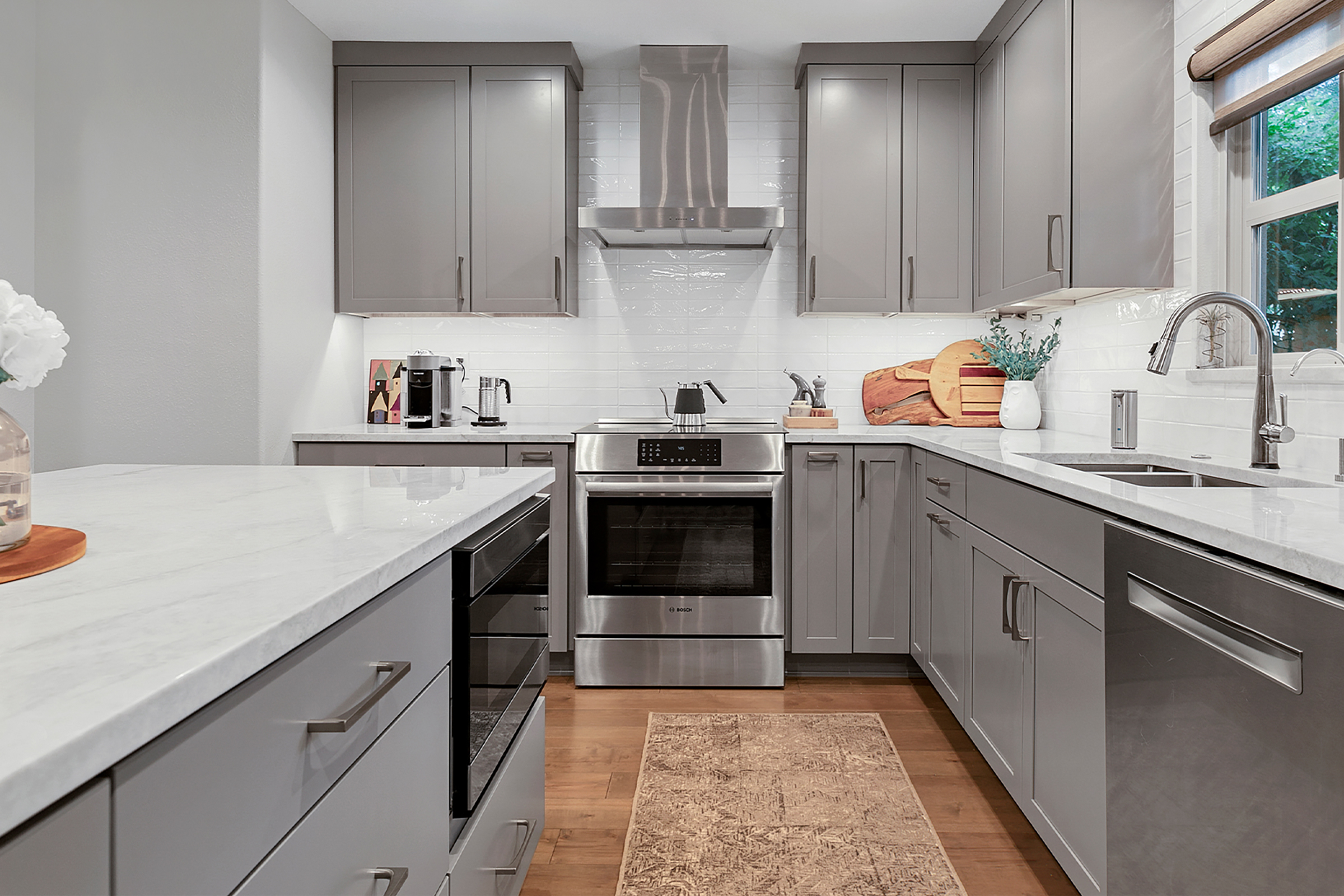
“Either she leaves, or I go.”
Vanessa stood in the middle of our parents’ kitchen in Columbus with her arms folded and her jaw set the way it always got right before she won an argument she hadn’t actually earned. I was twenty-two years old, sitting at the kitchen table with a stack of job applications I hadn’t sent yet, and I watched my mother’s eyes move to me before they moved anywhere else.
That was when I knew how this was going to end.
“Claire,” Mom said softly, not quite meeting my eyes, “maybe it would be better if you stayed somewhere else for a while.”
I actually laughed, a short disbelieving sound that surprised even me. “You’re serious?”
Dad wouldn’t look at me at all. He kept his eyes fixed on the salt shaker in the middle of the table, turning it slowly between two fingers, the way he always did when he wanted to be anywhere except in the room he was actually standing in.
Vanessa exhaled like she’d just won a court case. Twenty-six years old, recently engaged, temporarily moved back into our parents’ house with her fiancé Ryan while they “saved up” for a place of their own, though I had my doubts about how much actual saving was happening. I was twenty-two, freshly laid off from my first full-time job after the company downsized, sleeping in my childhood bedroom while I sent out application after application into a silence that felt endless.
The fight that night hadn’t started over anything I’d done. It started because I’d found something I wasn’t supposed to find — three months of credit card statements, my father’s card, showing charges for a wedding-venue deposit, a custom dining set from a boutique furniture store, and, strangest of all, a partial payment toward Ryan’s new truck. When I brought it to Vanessa privately, in the hallway outside her room, trying to keep it quiet, she’d laughed in my face and told me Dad had offered to help.
He hadn’t. I’d asked him directly, the next morning, before anyone else was awake, and watched his face go carefully blank in a way that told me everything before he even opened his mouth.
So I did something I probably shouldn’t have. I printed the statements and laid them on the kitchen table that evening, in front of both our parents, thinking, with the particular naivety of someone who still believed facts settled arguments in families, that this would simply resolve itself once the truth was visible.
Vanessa cried, on cue, within about ninety seconds. Then she pivoted, smooth as anything, into accusing me of being jealous, unstable, obsessed with ruining her happiness right when she’d finally found some. By the time dinner rolled around, somehow, impossibly, the conversation had transformed from my sister’s theft into a referendum on my attitude, my tone, my inability to be happy for other people.
And now, apparently, I was the one being asked to leave.
“What about the card?” I asked, my voice climbing despite my best effort to keep it level. “What about the six thousand dollars in charges that weren’t hers to make?”
Dad rubbed his forehead with two fingers, the universal gesture of a man trying to avoid a headache that had already arrived. “We’ll handle it.”
“You mean you’ll pay it.”
“Claire,” Mom snapped, sharper now, “don’t make this uglier than it already is.”
Vanessa leaned back against the kitchen counter, arms still crossed, looking entirely too comfortable for someone who’d just been caught stealing from her own father. “She always does this,” she said, to our parents, not to me, like I wasn’t standing three feet away. “She can’t stand seeing anyone else happy.”
I went upstairs. I packed two suitcases — everything I actually cared about fit into two suitcases, which felt like its own quiet, terrible piece of information about the life I’d been living up to that point. I came back downstairs forty minutes later, and nobody said a single word to stop me. Not one. Dad kept his eyes on the salt shaker. Mom stood near the stove with her arms wrapped around herself. Vanessa had already retreated to the living room to call Ryan and tell him, I assume, that the problem had been handled.
At the front door, Mom pressed an envelope into my hand. Sixty dollars, folded in half.
“That’s all?” I asked.
She looked embarrassed, actually embarrassed, for about half a second. “Vanessa needs help with the wedding.”
That single sentence stayed with me far longer than the eviction itself did. I’ve turned it over in my mind more times than I can count in the ten years since — not the anger of it, exactly, but the arithmetic. Sixty dollars for the daughter being thrown out into a Columbus winter. Whatever remained, whatever was left in that account after the wedding deposits and the furniture and the truck payment, for the daughter who stayed.
I slept in my car for three nights, parked in a twenty-four-hour grocery store lot because it felt safer than anywhere else I could think of, the seat reclined as far as it would go, my coat balled up under my head. I learned, out of sheer necessity, to shower at a gym before sunrise, paying for a week-long guest pass with money I couldn’t really spare, timing my visits for the hour right after opening when almost nobody else was there. I ate peanut butter sandwiches for what felt like weeks, because bread and peanut butter together cost less than almost anything else that could reasonably be called food. Every time my phone rang during those first weeks, my whole chest would lift with something close to hope, thinking, this time it’s them, this time someone’s calling to say come home.
It was never them.
Eventually a temp agency placed me in a data-entry role at a logistics company downtown, nothing glamorous, but steady, and a coworker there named Denise, who barely knew me, let me sleep on her couch for six weeks when she found out, almost by accident, what my nights had actually looked like. I’ve never forgotten that kindness. I still send her a card every Christmas, ten years later, because some debts are worth carrying even after the person who’s owed them has long since stopped keeping score.
Three months after I left, Vanessa married Ryan in a ceremony at a country club our parents paid for in full. I wasn’t invited. I found out it had happened at all from a mutual cousin’s social media post, a photo of Vanessa in white on a manicured lawn, captioned something about family and forever.
Within the year, my parents transferred the title of a small rental duplex they owned — worth close to a hundred and eighty thousand dollars — directly to Vanessa and Ryan, to help them start their life together, as the story went when it eventually reached me secondhand.
I received nothing. Not a phone call. Not an explanation. Nothing.
So I stopped waiting for one.
I want to walk you through what I actually did with those years, because it matters enormously to everything that happened later, and because I think people sometimes assume a story like mine skips straight from tragedy to triumph without any of the exhausting, unglamorous middle. It didn’t. The data-entry job led, eighteen months later, to an operations coordinator position at the same company, mostly because I was the only person in that department who actually read the shipping manifests closely enough to catch errors before they became expensive problems. I started taking night classes at a community college two evenings a week, business administration courses I paid for one semester at a time, often deciding between a textbook and groceries in the same week.
I moved to Seattle at twenty-six, on a whim that terrified me at the time, for a job that turned out to be a disaster within four months — a boss who screamed at his staff, invoices that went unpaid for ninety days at a stretch, a company that quietly folded less than two years after I joined it. But by then I’d made contacts, learned the actual mechanics of freight logistics from the inside, and understood exactly what kind of consulting a small manufacturer or a growing distributor actually needed and couldn’t afford to hire full-time. I started my own consulting practice with one client, a family-owned furniture importer, and a borrowed desk in the corner of a friend’s office that I paid for in favors rather than rent.
It was not, by any measure, an overnight success. There were months I genuinely wasn’t sure I’d make rent. There was a partnership with another consultant that fell apart badly enough that we haven’t spoken since, over a dispute about client ownership that still makes my stomach tighten when I think about it. There was one entire year, my fourth in business, when I sat down with my accountant in January and seriously discussed whether to close the company rather than watch it slowly bleed out over another twelve months. I didn’t close it. I cut every expense I could, took on two clients I probably should have turned down on principle, and made it through.
By thirty-two, I employed eighteen people. My office had a framed copy of that very first contract with the furniture importer hanging on the wall, slightly crooked, because I’d never bothered to fix it, and a chipped ceramic mug beside my computer that I’d owned since the Seattle apartment I could barely afford. Everything in that office, every single object, belonged to a life I had built entirely without my family’s help, brick by exhausting brick.
Ten years after that night in the kitchen, on a rainy Tuesday morning, my receptionist Maya stepped into my office looking faintly puzzled.
“Claire, there’s a woman here who says she’s your sister.”
I looked up from my laptop. For several seconds, I said absolutely nothing.
Through the glass wall separating my office from the reception area, I could see her. Vanessa, sitting with both hands wrapped tightly around a paper coffee cup she wasn’t drinking from. She looked smaller than I remembered her, which felt strange to notice, because in my memory she had always taken up more space in a room than her actual body required. Her blond hair was darker at the roots, pulled back into a hurried, imperfect ponytail. The expensive, armor-like clothes she’d always worn like a second skin had been replaced by a plain gray sweater and jeans that had clearly seen better years.
“Did she say why she’s here?” I asked Maya.
“Only that it’s a family matter.”
I almost told her to send Vanessa away. I want to be honest about that instinct, because it was strong, and it was reasonable, and nobody would have blamed me for acting on it. Instead, after a long pause, I said, “Give me five minutes.”
When Vanessa walked in, her eyes moved around the office slowly, taking inventory — the framed contract, the skyline view, the eighteen names on the employee roster pinned discreetly to a corkboard by the door.
“So it’s true,” she said.
“What is?”
“That you own this. All of this.”
I gestured toward the chair across from my desk. “Why are you here, Vanessa?”
She sat, but only on the very edge of the seat, the way people sit when they don’t feel entitled to take up the whole chair.
“Dad had a stroke.”
The sentence hit harder than I expected it to, harder than I would have predicted given everything else between us. I kept my face as still as I could manage. “When?”
“Six weeks ago. He’s home now, but he can’t work. Mom’s taking care of him full-time.”
“I’m sorry to hear that.” And I meant it, even then, even with everything sitting unresolved between us.
Vanessa looked down at the coffee cup she still hadn’t opened. “They’re in real trouble, Claire.”
I waited.
“The house is behind on property taxes. There are medical bills piling up. And the duplex is gone.”
That got my full attention. “Gone how?”
She swallowed hard. “Ryan borrowed against it.”
Of course he had.
She explained it in pieces, the way people do when they’re ashamed of the shape the whole story makes once it’s assembled. Ryan’s construction business had expanded too fast, chasing contracts he didn’t have the crew or the capital to actually deliver on time. He’d taken out loans, used the duplex as collateral for one of them, then eventually used their own house as collateral for another. When the business finally collapsed under its own weight, the bank had taken both properties within the same six-month stretch. He’d also run up credit cards in both their names and owed money to at least two suppliers who’d stopped returning his calls entirely.
“Where’s Ryan now?” I asked.
Her expression hardened into something brittle. “Nevada.”
“With you?”
“No.”
I understood before she said another word.
“He left?”
“With someone else.”
For the first time since she’d walked through my door, I felt something other than pure guardedness. Not pity, exactly — I want to be precise about that, because pity would have been its own kind of condescension. Recognition, maybe. Vanessa had once stood in our parents’ kitchen and watched me leave with two suitcases while they chose her, without hesitation, without a second thought. Now she was sitting across a desk from me with absolutely nowhere comfortable to put her pride.
She reached into her purse and pulled out a folded sheet of paper, sliding it across the desk toward me. A list of debts, several columns, different creditors. At the bottom, handwritten in blue ink that had clearly been pressed hard enough to nearly tear the page, was a total: $146,800.
“I need a loan,” she said.
I almost laughed out loud, the sound catching in my throat before it fully formed. “Why me?”
“Because the bank already said no.”
“That’s not what I asked.”
Her eyes met mine, and something in them flickered — not quite shame, not quite defiance, some uncomfortable place between the two. “Mom said you’d help.”
There it was. The old assumption, still fully intact after ten years and three thousand miles, that my life remained something that could be rearranged around Vanessa’s needs whenever the situation grew urgent enough.
I leaned back in my chair. “Did Mom ever tell you what happened the night I left?”
Vanessa frowned, genuinely confused by the shift. “We all know what happened.”
“No. You know the version where I was jealous and difficult and couldn’t stand your happiness. I’m asking whether she ever mentioned handing me sixty dollars in an envelope while you got a full wedding and a hundred-and-eighty-thousand-dollar duplex.”
Her cheeks colored. “That was a long time ago, Claire.”
“It was.”
“So what, you’re going to punish Dad for it now? While he’s sick?”
“I didn’t say that.”
“Then what exactly are you saying?”
I folded the debt sheet once, carefully, and slid it back across the desk toward her. “I’m saying I’m not going to hand you a hundred and forty-six thousand dollars.”
Her face changed instantly, the practiced composure cracking. “Claire—”
“But I will talk to Mom and Dad.” I held up a hand before she could respond. “Not through you. And before I pay a single cent toward anything, I want every bill, every loan document, every property record, and every bank statement from the last three years. All of it.”
“Why?”
“Because ten years ago, you told our parents one version of a story and made them choose before anyone bothered to check the facts underneath it. I’m not making that same mistake twice, and I’m certainly not making it on your behalf.”
She stood up so fast the chair scraped hard against the floor. “You haven’t changed at all.”
I looked at her, steady, unhurried. “No, Vanessa. That’s exactly the problem. I have.”
She left my office without saying goodbye, without another word, her footsteps sharp against the reception area’s tile floor.
That evening, alone in my apartment, I called my mother for the first time in almost nine years. My thumb hovered over the call button for a long time before I actually pressed it.
Her voice, when she answered, had changed. Thinner. More cautious, like she wasn’t quite sure the sound coming through the phone was real. “Claire?”
For a moment, neither of us said anything at all.
Then she started crying.
I didn’t. I sat very still on my couch, phone pressed to my ear, and let her cry for a while before I finally asked about Dad. She told me the stroke had weakened the entire left side of his body and affected his speech, though he was improving steadily with physical therapy three times a week. Medicare covered part of his care, she said, her voice tightening, but nowhere near all of it. Their savings, built up carefully over thirty-some years, were nearly gone.
“Vanessa told me you might lose the house,” I said.
A hesitation. “We’re behind on the property taxes.”
“How far behind?”
“Two years.”
“And the mortgage?”
“There isn’t one anymore. We paid it off years ago.”
That surprised me, genuinely. “Then why does Vanessa need nearly a hundred and fifty thousand dollars?”
Silence stretched out on the line.
“Mom?”
“I don’t actually know.”
I closed my eyes, sitting alone in my quiet apartment, and understood in that moment that nothing had changed nearly as much as Vanessa wanted me to believe.
I asked my mother to send me copies of every bill related to Dad’s care, every tax notice from the county, every piece of paperwork connected to the duplex. She grew defensive almost immediately.
“Why do you need all of that?”
“Because Vanessa asked me for a hundred and forty-six thousand, eight hundred dollars, Mom.”
My mother actually gasped audibly. “She told us she was only asking you for twenty thousand.”
There it was. The first crack in the story, right on schedule.
Over the following week, my parents sent me everything they had access to. I hired a local attorney in Ohio, someone recommended by a colleague with no connection to our family, and paid an accountant to go through every document line by line. I did not send Vanessa a single dollar during that time, despite three increasingly frantic voicemails.
The numbers, once properly assembled, told a much simpler and much smaller story than the one Vanessa had carried into my office. My parents actually owed approximately thirteen thousand four hundred dollars in property taxes and accumulated penalties. Dad’s outstanding medical bills came to just under eighteen thousand, a substantial portion of which could likely be reduced through hospital hardship programs and structured payment plans, according to the accountant. The duplex had indeed been lost after Ryan’s business collapsed — but Vanessa had personally signed the loan documents alongside him. She had not been an innocent bystander to any of it, whatever version of events she’d led with in my office.
And the actual, itemized $146,800 figure had almost nothing whatsoever to do with our parents. Most of it belonged entirely to Vanessa: credit card balances accumulated over several years, a private loan, unpaid legal fees from her divorce proceedings against Ryan, and — this detail took the accountant nearly a full day to trace properly — a substantial loan taken from one of Ryan’s former business partners, a man named Mark Ellis.
When I called Vanessa to confront her with the actual breakdown, she went quiet on the line for a long stretch.
“I was going to pay you back,” she finally said.
“With what money, exactly?”
“I’ll get a job.”
“You don’t currently have one?”
“I’ve been helping Mom with Dad.”
I’d already checked that too, as it happened. Vanessa had been staying with our parents for less than two weeks total. Before that, she’d been living just outside Las Vegas, working intermittently at a boutique clothing store owned by a friend from her old life.
“You wanted me to pay off your personal debts,” I said slowly, “and you used Dad’s stroke to make the whole thing sound urgent enough that I wouldn’t ask questions.”
“That is not fair, Claire.”
“It’s exactly what happened, and we both know it.”
“You have no idea what I’ve been through.”
I almost responded immediately, some sharp retort rising automatically to my tongue. I stopped myself.
“Actually,” I said instead, quietly, “I have some idea what it’s like to lose your home.”
She hung up on me.
Two weeks later, I flew to Ohio.
I hadn’t seen my childhood home in a full decade, and the sight of it from the rental car window did something strange to my chest. The blue shutters had faded to a dull, chalky gray-blue. The maple tree my father had planted the year Vanessa started kindergarten had grown enormous, its roots pushing a jagged crack up through one corner of the driveway. My old bedroom window was still there on the second floor, exactly where I remembered it, though the curtains behind the glass belonged to someone else’s memory now.
Mom opened the door before I’d even reached the porch steps. She looked twenty years older than the last time I’d seen her, deep lines around her eyes that hadn’t been there before, her hair almost entirely gray now instead of the chestnut brown I remembered.
She hugged me before I’d had the chance to decide whether I actually wanted her to. I stood stiff in her arms for a second, my whole body uncertain, and then, almost against my own will, I put my arms around her too.
Dad was in the living room, seated in a recliner that looked new, thinner than I remembered him being, a cane resting against the armrest within easy reach. When he saw me standing in the doorway, his mouth trembled before he managed to speak.
“Claire.”
His speech was slow, dragging slightly on one side, but perfectly clear.
I crossed the room and knelt down beside his chair. “Hi, Dad.”
He reached for my hand with the stronger of his two, his grip weaker than it used to be but still recognizably his.
“I’m sorry,” he said.
Three words. For ten years, I had imagined that particular apology arriving in a hundred different versions, in a hundred different scenes I’d constructed and discarded over sleepless nights. In some of them, I screamed at him until my voice gave out. In others, I simply turned around and walked back out the door without a word, leaving him to sit with whatever he’d finally worked up the courage to say.
Instead, kneeling there beside his recliner, I just looked at him.
“For which part?” I asked.
Mom flinched slightly, standing behind me.
Dad’s eyes dropped to the floor. “All of it.”
Vanessa arrived about twenty minutes later, letting herself in without knocking. She froze in the doorway of the dining room when she saw me sitting at the table with Mom, folders spread out between us, papers covered in the accountant’s neat handwriting.
“What are you doing here?”
“I came to deal with the actual problem,” I said.
Her eyes moved to the papers spread across the table.
Mom spoke before I had the chance to. “Claire paid the property taxes this morning.”
Vanessa’s whole face changed.
I had, in fact, paid the county directly that morning, wiring the funds straight to the treasurer’s office with my attorney’s guidance. I’d also arranged for Dad’s remaining medical bills to go through a formal review process, and set up a separate, dedicated account that would cover six months of his physical therapy sessions without touching a cent of our parents’ remaining savings. My parents would not be receiving any cash directly.
Neither would Vanessa.
“That’s it?” she asked, her voice climbing.
Mom stared at her. “What do you mean, that’s it?”
Vanessa turned to me. “You know I still have creditors calling me every single day.”
“Yes.”
“And you’re just going to leave me like this? After everything?”
The sheer audacity of it was enough that even Dad, weakened as he was, lifted his head from where he’d been resting it against the chair back.
“I’m not leaving you anywhere,” I said. “You’re thirty-six years old, Vanessa.”
“You have the money.”
“That doesn’t make your debt mine to carry.”
“You think you’re better than me because you own some company out in Seattle?”
“No.”
“Yes, you do. You flew in here, hired lawyers, demanded bank statements—”
“Because you lied to me, in my own office, about how much you actually owed and why.”
“I was desperate!”
“So was I,” I said, and I could hear my own voice sharpen despite every effort to stay calm, “when you made Mom and Dad throw me out of this house with two suitcases and sixty dollars.”
Her face went red. “Oh, here we go again.”
“No,” I said. “We’re not going back there because I’m obsessed with the past, Vanessa. We’re going back there because you are doing the exact same thing right now, in this room, ten years later. You create a crisis. You tell one version of the story. You demand an immediate decision, and you make everyone around you terrified that saying no to you means losing you entirely.”
Vanessa turned toward our parents. “Are you seriously going to let her talk to me like this?”
Neither of them answered.
That silence was new. I watched it land on Vanessa’s face, watched her eyes widen as she registered, maybe for the first time in her entire life, that the room wasn’t automatically going to rearrange itself around her.
“Mom?” she said again, quieter now.
My mother sat down slowly at the table. “Claire showed us the documents, Vanessa.”
Vanessa went pale. “What documents?”
“The loan from Mark Ellis,” Dad said, his voice weak but perfectly steady.
Vanessa’s mouth opened and then closed without producing any sound.
The accountant had uncovered something I hadn’t fully understood myself until she walked me through it over the phone two days earlier. The private loan from Ryan’s former business partner had been taken out after Ryan had already left for Nevada — Vanessa had claimed, both to our parents and initially to me, that the money had gone toward legal fees and basic living expenses. But the bank records told a different story. Nearly half of that borrowed money had gone toward online shopping, a deposit on a luxury apartment complex, and a used BMW.
Mom’s voice shook when she spoke again. “You told us you were sleeping on a friend’s sofa.”
“I was. At first.”
“You told me you had nothing left.”
“I was depressed, Mom. I wasn’t thinking clearly about any of it.”
“And the car?”
“I needed transportation.”
“You bought a BMW, Vanessa.”
“It was used.”
Dad closed his eyes, his jaw tight.
For years, I understood now, sitting at that table, my parents had treated Vanessa’s recklessness as evidence that she simply needed more help, more support, more rescuing. Every single bailout became, in their minds, proof that another one was probably necessary too. I had been treated in exactly the opposite direction. Because I had survived what they’d done to me — because I had gotten up off that grocery store parking lot floor and built something out of nothing — they had quietly convinced themselves, over ten years, that I must have needed less all along.
That was the actual equation our family had been running on my whole life, and I was only now, in this dining room, seeing it laid out clearly enough to name.
Vanessa turned back to me, something wild and cornered in her expression now. “So what do you want from me? An apology? You want me on my knees in front of you?”
“I don’t want anything from you.”
“That’s a lie.”
“It isn’t.”
I began gathering the folders back into a neat stack. “I came here because Dad is sick and because Mom and Dad were genuinely at risk of losing their house. I fixed the tax problem. I’m helping cover Dad’s medical care. I also spoke with an estate attorney while I was arranging all of this.”
Vanessa laughed, a bitter, humorless sound. “Of course you did.”
Mom looked at her directly. “We changed our will.”
The room went completely still.
Vanessa stared at her. “What?”
Dad spoke slowly, each word deliberate. “The house gets sold when we’re gone. Half to you. Half to Claire.”
Vanessa’s expression went almost childlike with disbelief. “But you always said the house would be mine.”
“We said a lot of things over the years that we shouldn’t have,” Mom said quietly.
“You already gave her the duplex, back then. That was supposed to be mine to build on.”
“It’s gone now,” Vanessa snapped, “because Ryan and I borrowed against it.”
“Because you and Ryan borrowed against it,” Dad repeated, and even with his weakened voice, the correction landed with real weight.
Vanessa looked back and forth between our parents, waiting, I think, for one of them to finally retreat the way they always had, to fold under the pressure of her frustration the way they’d folded a hundred times before.
Neither of them did.
She turned on me instead. “You did this.”
“No.”
“You came here and turned them against me.”
“I asked them to actually look at their own finances, and mine, honestly, for the first time in a decade.”
“You always wanted revenge for that night.”
I stood up slowly, folders in hand. “If I wanted revenge, Vanessa, I would have ignored your visit to my office entirely, let the county take this house out from under Mom and Dad, and never picked up the phone when any of you called.”
For once in her life, she had absolutely no response ready.
I stayed in Ohio for four days that trip. Dad and I talked more, honestly, in those four days than we had in the previous ten years combined. The conversations weren’t especially dramatic — there was no single, perfect explanation that made sense of everything he and Mom had done. Slowly, over quiet mornings with coffee and long afternoons while he napped in his recliner, I came to understand that they had favored Vanessa for years simply because she was louder, more emotionally demanding, more willing to punish them with tears and silence and accusations whenever they refused her something. I had always been quieter by comparison. They had mistaken that quiet for strength, and had used it, without ever quite admitting it to themselves, as an excuse to give me less.
On my last night there, Mom came into the guest room carrying a small cardboard box. Inside were old photographs, elementary school certificates, birthday cards going back decades, and a silver bracelet my grandmother had given me for my sixteenth birthday, one I’d assumed was lost forever.
“I kept these,” she said, setting the box on the bed beside me.
“I thought you’d thrown all of this away, honestly. Along with everything else.”
“I couldn’t do it. I tried, once, and I couldn’t.”
I ran my thumb slowly over the bracelet’s worn silver links.
Mom sat down across from me, her hands folded in her lap. “I should have stopped you that night. When you packed those suitcases.”
“Yes,” I said. “You should have.”
She winced visibly at my answer, but I didn’t soften it for her, and some part of me noted, almost with surprise, that I no longer felt the old reflexive need to make her feel better about her own failures.
“I kept telling myself, for years, that you would eventually call,” she said quietly.
“I kept telling myself the same thing about you.”
That was the closest either of us came to fully understanding ten years of silence in a single exchange.
Before I flew back to Seattle, I laid out clear conditions for any future financial help, conditions my attorney had helped me formalize into an actual written agreement. Their house could never be transferred to Vanessa, under any circumstance. No one could borrow against it, ever, for any reason. I would pay approved medical or property expenses directly to the provider or the county, never through a family member’s hands. And if Vanessa ever moved back in with them, she would be required to contribute toward groceries and utilities once she was employed again.
Mom agreed to every condition. Dad agreed too, his signature shaky but legible on the paperwork.
Vanessa didn’t speak to me at all for the next seven months. During that stretch of silence, she filed for bankruptcy. She sold the BMW. She moved into a small one-bedroom apartment in Dayton and took a job managing the front office of a dental practice, a position she was apparently quite good at, according to Mom’s occasional updates. It wasn’t the life Vanessa had always assumed she deserved, growing up as the daughter our parents chose without hesitation. But it was the first life she’d built in years that nobody else was financing on her behalf.
My parents began calling me every Sunday evening after that trip. At first the calls were painfully awkward — Mom over-explaining everything, apologizing for small, insignificant things in a way that felt like she was trying to make up for the one large thing all at once. Dad apologized too often as well, until I finally told him, gently but firmly, that if we were going to have any kind of real relationship going forward, it couldn’t consist of him apologizing on a loop while I performed comfort in response. So instead we talked about ordinary things. His physical therapy progress. My company’s newest contract. The Seattle Mariners’ latest disappointing season. The neighbor two doors down who kept parking his truck too close to their mailbox.
A year after Vanessa first walked into my office, Dad was able to walk short distances around the house without his cane.
That Thanksgiving, I flew back to Ohio again. Vanessa was there too, having driven up from Dayton, carrying a grocery-store pumpkin pie in a plastic clamshell container that she set on the counter without quite meeting anyone’s eyes.
For the better part of the first hour, we barely looked at each other across the table.
After dinner, I stepped outside for air, needing a moment away from the noise and the careful, deliberate normalcy everyone was working so hard to maintain. The backyard looked smaller than it had when we were children, the way childhood spaces always do once you’re grown, the fence lower than memory insisted it should be.
Vanessa followed me out a few minutes later. She stood beside the old wooden fence, hands shoved deep into her coat pockets, her breath visible in the cold November air.
“I hated you,” she said, without any preamble at all.
I looked over at her. “When?”
“When you came back here. Six months ago. With the lawyers and the accountant and the folders.”
“That’s not what I expected you to say.”
She gave a short, humorless laugh. “I thought I’d won, back when we were younger. Ten years ago, I mean.”
The word hung there in the cold air between us.
“Won what, exactly?” I asked.
“Everything. Mom and Dad always gave in to whatever I wanted. You left, and I got the wedding, and the duplex, and help every single time I asked for it. I genuinely thought that meant I mattered more to them than you did.”
I said nothing, letting her keep going.
“And then everything just fell apart,” she continued, staring out at the dark yard. “Ryan left. The properties were both gone within a year of each other. I owed money to people I’d never even met in person. And you — you had this whole life I didn’t even know existed. A company. Employees. All of it.”
“So you came to me.”
“I thought you’d still be the same person you were back then.”
“The one who left with sixty dollars in her pocket?”
“The one who would do absolutely anything to be let back into this family again.”
That answer hurt more than anything else she’d said all evening, precisely because it had been true, at least for the first few years after I left, before I’d learned to stop wanting something that clearly wasn’t coming.
Vanessa looked down at her boots. “When you said no to me, in your office, I hated you because you weren’t where I’d left you ten years ago. You’d actually moved on without any of us.”
I let out a slow breath, watching it cloud in the cold air. “Do you regret what you did? Back then, I mean. That night.”
She took a long time to answer, long enough that I wondered if she would answer at all.
“I regret that I thought love was something you could force people to prove by making them choose sides,” she finally said.
It wasn’t the apology I’d imagined during all those years of imagining. But it was honest, and honesty from Vanessa had always been in short supply.
Then she added, quieter, “And I’m sorry I got you thrown out of your own home.”
I nodded once, slowly. “I believe that you’re sorry. Now, at least.”
She looked at me carefully, studying my face in the porch light spilling out from the kitchen window. “That’s not the same as forgiveness.”
“No,” I agreed. “It isn’t.”
“Maybe someday, though?”
“Maybe,” I said, and I didn’t promise her anything more than that single word.
We went back inside together, the cold finally driving us in. Nothing became perfect after that Thanksgiving — I want to be clear about that, because real families rarely transform completely because of one honest conversation beside an old fence. Vanessa and I didn’t become best friends overnight, or ever, really. We exchanged birthday texts. We talked about our parents’ health from time to time. Once, when my company needed to hire an administrative coordinator for a small satellite office we were opening in Columbus, I actually asked Vanessa’s opinion, because I knew, whatever else was true about her, that she was genuinely good at office management. She gave me a thoughtful, useful answer and didn’t ask for anything at all in return, which felt, quietly, like its own small kind of progress.
Two years after that Thanksgiving, Mom called to tell me Vanessa had been promoted at the dental practice, moving into a full office manager role. I congratulated her sincerely when she texted me the news herself a few days later.
Three years after Dad’s stroke, my parents sold the Columbus house voluntarily, on their own timeline, and moved into a smaller condo near his physical therapy clinic. They split the remaining proceeds into retirement accounts, guided by a financial adviser I’d recommended but had no direct control over.
No daughter owned their home outright. No daughter controlled their money. That mattered to me more than almost anything else that came out of those years, more than any apology, more than any single conversation.
Ten years earlier, my sister had stood in our parents’ kitchen and forced them to choose between us in a single ultimatum, delivered with her arms crossed and her jaw set. They had chosen her, without a second’s real hesitation, and handed me sixty dollars on my way out the door.
For a long time afterward, I believed that night was the moment I lost my family for good.
I understand it differently now, looking back across a decade that reshaped nearly everything about who I turned out to be. That night, I didn’t lose my family at all. I lost only the version of it that required me to accept less, year after year, so that Vanessa could go on receiving more without ever having to ask what it cost anyone else.
The sixty dollars lasted three days, folded flat in my coat pocket, spent carefully on gas and grocery-store sandwiches.
The lesson underneath it lasted a great deal longer. I learned to read every contract twice before signing anything. I learned to build an emergency fund and never let it drop below a number that could carry me through six real months, no matter what. I learned to build friendships that didn’t depend on shared blood to hold their weight, the way Denise’s couch and six unasked-for weeks of kindness had taught me long before I understood what I was actually learning. And I learned, slowly, painfully, to stop confusing being needed with being loved, which turned out to be the hardest lesson of all the ones that decade handed me.
Most importantly, when Vanessa walked into my office that rainy Tuesday morning, ten years after our parents chose her over me in a kitchen in Columbus, I finally had something in my life that she couldn’t demand from me, couldn’t borrow against, couldn’t inherit, and couldn’t talk our parents into handing over on her behalf.
A life that was entirely, unmistakably my own.

Sophia Rivers is an experienced News Content Editor with a sharp eye for detail and a passion for delivering accurate and engaging news stories. At TheArchivists, she specializes in curating, editing, and presenting news content that informs and resonates with a global audience.
Sophia holds a degree in Journalism from the University of Toronto, where she developed her skills in news reporting, media ethics, and digital journalism. Her expertise lies in identifying key stories, crafting compelling narratives, and ensuring journalistic integrity in every piece she edits.
Known for her precision and dedication to the truth, Sophia thrives in the fast-paced world of news editing. At TheArchivists, she focuses on producing high-quality news content that keeps readers informed while maintaining a balanced and insightful perspective.
With a commitment to delivering impactful journalism, Sophia is passionate about bringing clarity to complex issues and amplifying voices that matter. Her work reflects her belief in the power of news to shape conversations and inspire change.