
Thirteen years after Daniel walked out of our marriage, I never expected to see him again standing in a university auditorium in Ohio, wearing a blazer that cost more than everything in my closet combined, next to a woman I’d once caught wearing my scarf.
But there he was.
It was the state Science and Engineering Championship, one of the largest academic competitions in the region, the kind of event where thirteen-year-olds walk around with binders full of formulas and parents pace the hallways checking their phones like the results were about to determine the entire course of their child’s life. I’d driven my sons, Eli and Owen, two hours from home that morning, both of them quiet in the back seat, running through equations under their breath the way some kids listen to music before a game.
We walked through the front doors of the main hall a little after eight, badges already printed, registration confirmed the night before online so we wouldn’t have to stand in the long line that always formed on competition mornings. I was scanning the hallway for the sign pointing toward the check-in tables when I heard a voice I hadn’t heard directly in thirteen years say my name.
“Claire?”
I turned, and there he was. Daniel. A little grayer at the temples than I remembered, a little heavier through the middle, but unmistakably him — the same posture, the same way of standing like he expected a room to organize itself around him. Beside him stood Vanessa, dressed in the kind of tailored coat that photographs well, and next to her, a boy about my sons’ age wearing a navy blazer with an embroidered crest on the chest pocket, the unmistakable insignia of one of the most expensive private schools in the state.
For a full second, Daniel’s face did something complicated — surprise first, and then, faster than I expected, something harder underneath it.
“What are you doing here?” he asked.
Vanessa stepped a half pace closer to him, her chin lifting slightly. “This is actually a fairly exclusive event,” she said, like she was reminding a stranger of the rules of a club she belonged to and I didn’t.
I looked at her, calm, unbothered. “It’s a statewide competition,” I said. “Open registration. Anyone can qualify.”
Daniel’s voice dropped lower, the particular register he used to use right before he said something designed to sting quietly instead of loudly, so nobody around us would notice except me. “How dare you come here today.”
I want you to understand something about that sentence, because I’ve turned it over in my mind more times than I probably should have in the weeks since. Daniel wasn’t asking how I’d found out about the competition. He wasn’t confused about my presence in any logistical sense. He was asking, in the particular entitled language he’d always used with me, how I had the audacity to occupy the same physical space as his current, curated life.
What he hadn’t done yet — what he genuinely seemed not to have done at all — was look past me to the two boys standing quietly at my shoulder, badges already clipped to their jackets, competition folders tucked under their arms.
Eli and Owen. My sons. The twins he had barely known for thirteen years.
He glanced toward them for maybe a second and a half, his eyes sliding right over their faces without landing on anything, the way you glance at strangers waiting for an elevator. Then his attention came straight back to me, like they simply weren’t worth a second look.
“I’m here for my children,” I told him.
He actually laughed. A short, disbelieving sound. “Your children?”
His eyes flicked toward Eli and Owen one more time — their plain navy jackets, nothing like Mason’s crested blazer, their handwritten name tags instead of the professionally printed ones the private academies handed out to their students. He saw two ordinary-looking thirteen-year-old boys standing beside their mother in a crowded hallway, and I watched him decide, in real time, that there was nothing here worth his attention.
“This weekend is important to Mason,” Daniel said, like that settled something.
I looked at my sons — Eli’s jaw tight the way it got when he was working hard not to react, Owen’s eyes steady on his father’s face with an expression I couldn’t quite name yet, something between curiosity and a kind of clinical distance, like he was studying a stranger rather than looking at a parent.
“It’s important to Eli and Owen too,” I said.
For thirteen years, Daniel had missed every single one of the moments that had actually built these two boys into who they were standing in that hallway. He missed both of their births, technically, having left three weeks before I went into labor, though I’ll get to that. He missed first steps and first words, kindergarten graduation, a broken arm that happened during a Little League game he wasn’t at, four consecutive years of science fair projects that took over our kitchen table every February, a stomach flu so bad when they were seven that I sat on the bathroom floor between them at two in the morning holding a bucket in each hand. He missed a hundred birthdays split across two boys, missed school concerts where Owen played trumpet slightly off-key and Eli sat in the audience clapping like it was the finest performance he’d ever witnessed. He missed every fever, every scraped knee, every moment of pride and every moment of heartbreak that had, slowly, over thirteen quiet years, turned two premature infants into the two remarkable young men standing beside me in that hallway.
And somehow, standing three feet away from both of them, he still believed I was there because of him.
I didn’t argue. There wasn’t anything left to argue about, honestly, not in that hallway, not with three minutes until registration closed.
I simply turned around.
“Come on, boys,” I said. “Registration closes in ten minutes.”
As we walked toward the main auditorium, weaving through clusters of nervous students and their parents, Owen asked quietly, not looking at me, “Mom? That was him, wasn’t it?”
I nodded. “Yes.”
Eli glanced back once, just once, over his shoulder. “Our father?”
“Yes.”
Neither of them said anything else. They didn’t need to. But Daniel had absolutely no idea that in just a few hours, he was going to see exactly who he had spent thirteen years ignoring.
I should tell you how we got here, because I think the ending only means something once you understand the whole shape of the story underneath it.
Daniel and I met in graduate school, both of us studying engineering at a university in Columbus, both of us young and ambitious and convinced we understood exactly what our lives were going to look like. We married at twenty-six. I got pregnant with the twins at twenty-nine, after two years of trying and one devastating miscarriage that Daniel, to his credit at the time, actually handled with real tenderness. I remember thinking, somewhere in my seventh month, swollen and exhausted and genuinely happy, that we were building something solid.
I found out he was having an affair when I was thirty-four weeks pregnant with two babies, sharing one uterus, both of them already putting a strain on my body that made ordinary tasks like climbing stairs feel like an athletic event. I found a hotel receipt in his coat pocket while doing laundry, a hotel eleven minutes from our house, dated for an afternoon he’d told me he was at a client meeting. When I confronted him, he didn’t even bother denying it right away. He just sat down at our kitchen table and, after a long silence, told me her name was Vanessa. A marketing coordinator at his firm. Six years younger than me. He said it like he was reading off a resume rather than confessing to destroying his family.
He moved out three weeks before I went into labor. I delivered Eli and Owen alone, with my sister Meredith holding one of my hands and a labor nurse holding the other, because Daniel had told me, over the phone, that he “needed space to think.” He came to the hospital once, the second day, stayed for eleven minutes, held Owen for approximately ninety seconds while a nurse hovered nearby in case he didn’t know how to support a newborn’s head, which, it turned out, he didn’t. Then he left.
The divorce was finalized when the twins were four months old. He fought for almost nothing in the settlement — not custody, not visitation beyond the bare legal minimum, barely even the furniture. I think, looking back, he simply wanted to be free of the whole situation as cleanly and quickly as possible, and two infant boys represented, to him, an obligation rather than a family.
For the first two years, he showed up occasionally. A birthday here, a random Sunday afternoon there, always slightly late, always slightly distracted, checking his phone while the boys, too young to understand what they were losing, reached for him anyway with the uncomplicated love small children give freely to anyone who shows up at all. By the time they were three, the visits had thinned to almost nothing. By the time they were five, his checks — never generous, always technically compliant with the court order and not a dollar more — had become the only reliable evidence that he still remembered he had children at all.
He married Vanessa when the twins were two. Mason was born when they were four. I found out about Mason’s birth from a mutual acquaintance at the grocery store, not from Daniel himself, which tells you most of what you need to know about where his attention had settled by then.
I want to be honest about those years, because I think it’s tempting, in stories like this, to skip straight to the triumphant part and gloss over how genuinely hard the middle actually was. I worked full time as a structural engineer at a firm downtown, a job I loved but that demanded hours I often couldn’t fully give while raising two babies alone. I brought work home most nights after the twins were asleep, sitting at the same kitchen table where Daniel had once confessed to his affair, running calculations until midnight so I could still make it to every single school event, every parent-teacher conference, every dentist appointment during the day.
There were nights I cried in the shower so the boys wouldn’t hear me through the bathroom door. There was a stretch, when they were six, when both of them got the flu within days of each other and I genuinely didn’t know how I was going to manage two feverish toddlers and a full-time job without a single family member nearby to help, because my parents had moved to Arizona the year before and Meredith lived four states away. I remember calling in sick to work for the first time in three years, sitting on the bathroom floor at two in the morning with a bucket in each hand, thinking, with a kind of exhausted clarity, that this was simply what my life was now, and that I would find a way to be enough for both of them because there was genuinely no other option available to me.
What I noticed, somewhere around the time they turned five, was that both boys had an unusual hunger for understanding how things worked. Eli would take apart the toaster, not out of mischief but out of genuine curiosity about what was inside it, and I’d find him at the kitchen table with all the components laid out in neat rows, trying to figure out how to put it back together correctly. Owen, meanwhile, developed an early and slightly alarming obsession with numbers — counting everything, calculating how many days until his birthday down to the exact hour, working out, unprompted, at age six, how old he’d be in the year 2050.
I leaned into it, because it felt like the one area of their childhood I had real control over, the one gift I could give them consistently even when everything else about our situation felt precarious. I found a library program for young engineers on Saturday mornings. I signed them up for a regional Science Olympiad team the moment they were old enough to qualify, driving them forty minutes each way twice a week for practices, sitting in the parking lot doing my own work on my laptop while they built bridges out of balsa wood inside. By the time they were ten, they’d started winning regional competitions consistently, the kind of quiet, unglamorous victories that nobody outside our small circle particularly noticed but that meant everything to the three of us sitting around our kitchen table afterward, eating celebratory pizza and going over what they’d do differently next time.
Daniel, during all of this, remained almost entirely absent. He came to exactly one Science Olympiad regional in nine years, when the boys were eight, sitting in the back row for twenty minutes before leaving during the award ceremony because, as he told me afterward in a curt text message, “something came up with Mason.” I didn’t tell the boys he’d left early. I’ve never been entirely sure whether that was the right call or not, but I made it, and I’ve lived with it.
By the time they were thirteen, Eli and Owen had become, without any exaggeration on my part, two of the most talented young engineers and mathematicians in our entire region. Eli had a gift for applied physics that made his middle school teachers genuinely nervous about how to keep challenging him. Owen’s mathematical intuition had gotten him invited, the previous spring, to a summer intensive program at a university two hours away, a program that accepted maybe thirty students statewide out of hundreds of applicants. Both of them had qualified, independently, for the state championship we were now walking into — Eli in the Advanced Physics division, Owen in Applied Mathematics, and together, as a two-person team, in the Robotics Design Challenge, the most competitive and visible event of the entire weekend.
Daniel knew none of this. I don’t believe he’d asked a single meaningful question about either boy’s life in over five years. His checks arrived on time, technically compliant with the court’s minimum requirements, and beyond that, his fatherhood had become almost entirely theoretical, a fact he occasionally referenced at family gatherings I wasn’t present for rather than a lived, daily reality.
So there we were, standing in that hallway, and he genuinely had no idea what he was looking at.
Registration took four minutes. The woman at the check-in table, a cheerful graduate student wearing a lanyard covered in enamel pins, pulled up the boys’ names on her laptop and smiled.
“Oh, the Whitfield twins,” she said, glancing between them. “You two are all over my spreadsheet this morning. Physics, Applied Math, and Robotics Design. That’s an ambitious morning.”
“We like being busy,” Owen said, with the small, dry smile he’d inherited from absolutely nobody I could identify, a trait entirely his own.
We got their event schedules, their room assignments, and made our way to the physics wing first, since Eli’s individual event started at nine sharp. I sat in the observation area outside the testing room with a paper cup of coffee going cold in my hands, watching through the small window in the door as forty of the state’s most talented young physicists bent over their exam booklets in total silence.
I won’t pretend the next several hours passed quickly. Competition days never do, not for the parents sitting outside waiting rooms pretending to read on their phones while their actual attention stays fixed on a closed door. Eli emerged from the physics exam a little after eleven, his expression carefully neutral in the way he’d learned to manage since he was young, never wanting to celebrate prematurely or show disappointment before results were official.
“How did it feel?” I asked.
“There was a rotational dynamics problem near the end that I think I solved two different ways by accident,” he said. “I’m not sure which method they actually wanted.”
“Did you get an answer?”
“Yeah. Both methods agreed, actually, which felt like a good sign.”
We grabbed a quick lunch from the food trucks parked outside the engineering building — Owen inhaling a burrito while simultaneously reviewing notes for his afternoon Applied Math exam, Eli quieter than usual, which I’d learned over the years meant he was still mentally replaying his morning exam rather than being genuinely upset about anything.
It was during lunch, sitting at a picnic table in the thin autumn sunlight, that I saw Mason for the first time up close, without Daniel or Vanessa standing beside him. He was sitting alone at a table about thirty feet away, his crested blazer folded neatly beside him, scrolling through something on his phone with the specific posture of a kid who felt slightly out of place despite his expensive school uniform.
I didn’t say anything to my sons about it. There was no reason to.
Owen’s Applied Math exam ran from one to three. I spent those two hours walking the campus grounds, partly to clear my head and partly because sitting still for that long made the whole day feel unbearably long. I thought, more than once during that walk, about the version of this day Daniel probably imagined he was living — showing up to support Mason at a prestigious event, the proud father cheering on his son’s achievements, entirely unaware that the two boys he’d essentially abandoned thirteen years earlier were about to outperform his current son so thoroughly that the difference would be impossible to explain away.
I want to be honest and say that some small, human part of me did feel a flicker of anticipation about that. I’m not going to pretend I was above it entirely. But mostly, walking that campus alone in the cool autumn air, what I actually felt was something closer to quiet, steady pride, unrelated to Daniel at all. Pride that had been building for thirteen years, one science fair and one late-night homework session at a time, entirely separate from whatever Daniel did or didn’t notice about it.
Owen came out of his exam glowing, practically vibrating with the specific energy he got whenever a math problem had genuinely delighted him rather than just tested him.
“There was a combinatorics problem,” he said, before I’d even asked, “that took me maybe four minutes to solve, and I think most people probably spent twenty on it, because there was this elegant substitution that basically collapsed the whole thing.”
“That’s wonderful, sweetheart.”
“I love combinatorics,” he said, with total, unguarded sincerity, and I felt something in my chest loosen slightly, the way it always did when I watched my sons be exactly, unapologetically themselves.
The Robotics Design Challenge ran from four until six, the culminating event of the whole competition day, held in a massive gymnasium converted into a series of testing stations. This was the event both boys had trained hardest for over the past eight months, building and rebuilding a small autonomous robot designed to navigate an obstacle course and complete a series of engineering tasks under strict time pressure. I’d watched them work on that robot at our kitchen table more nights than I could count, watched them argue about motor calibration and sensor placement with the particular intensity siblings bring to shared projects, watched Eli handle the mechanical design while Owen handled the programming, each of them respecting the other’s domain in a way that had taken years of practice to build.
I found a seat in the bleachers along with dozens of other parents, and it was there, scanning the crowd during a lull before the event officially began, that I spotted Daniel and Vanessa again, sitting several rows up and to the left, Mason nowhere visible among them, presumably already down on the competition floor with his own team.
Daniel hadn’t seen me yet. I watched him for a moment, unnoticed, checking his phone, leaning over to say something to Vanessa that made her laugh. He looked, from that distance, exactly like what he was — a man entirely comfortable in the life he’d built, with no apparent awareness that anything from his previous life was about to walk directly into it.
The competition began. I won’t try to explain every technical detail of what followed, because I think you’d need an engineering degree to fully appreciate the finer points the way the boys did, but I can tell you what it looked like from the bleachers. Forty teams of two, most of them from the state’s most well-funded private academies, working at individual stations arranged in a wide semicircle around the gymnasium floor, each team’s robot navigating an identical obstacle course under a countdown clock projected on the wall.
Eli and Owen’s station was almost directly across from where I sat, close enough that I could watch Owen’s hands moving rapidly over a small laptop, adjusting code between runs, while Eli made small physical adjustments to the robot itself, testing wheel alignment, checking a sensor mount that had apparently shifted slightly during transport.
Their first run was solid but not spectacular — their robot navigated the obstacle course cleanly but ran nearly four seconds slower than the fastest recorded time so far, a gap Owen immediately started diagnosing before the run had even fully ended, muttering something about friction coefficients that I only partially understood.
Between the first and second runs, I saw Mason’s team a few stations down, and I saw, more clearly than I expected to, the particular tension in how his team operated — a boy clearly talented but working with a partner who seemed more focused on impressing whoever was watching from the bleachers than on the actual engineering problem in front of him. Their first run ended with their robot tipping over entirely on the third obstacle, a small platform designed to test balance under uneven weight distribution.
I didn’t feel triumphant watching that. I want to be honest about that too. I mostly just felt a strange, distant sadness, thinking about how differently Mason’s life might have unfolded with different parents, different attention, a different foundation. It wasn’t his fault, any of it, and some part of me genuinely hoped he’d recover for his second run.
Eli and Owen’s second run, an hour later, was where everything changed. I watched Owen make three separate code adjustments during the break between runs, each one refining something specific he’d noticed in the failure modes of their first attempt. I watched Eli recalibrate the robot’s front sensor with the kind of careful, patient precision that had always been his particular gift, the ability to notice a problem most people wouldn’t even register and fix it without any wasted motion.
When their second run began, something in the entire section of bleachers near their station seemed to shift, other parents and coaches leaning forward slightly, sensing, the way people at competitions always seem to sense these things, that they were watching something unusually good happen in real time.
Their robot completed the entire obstacle course in fifty-one seconds. The previous fastest time recorded that day, across all forty teams, had been sixty-three seconds.
The gymnasium actually went quiet for a moment after the timer stopped, followed by a wave of applause that started near their station and spread outward. I found myself standing without entirely deciding to, my hands pressed against my mouth, tears I hadn’t expected suddenly blurring my vision.
I looked, almost involuntarily, toward where Daniel and Vanessa sat. Daniel was standing too, applauding along with everyone else, clapping for a team he didn’t yet realize belonged to me, his face still entirely unaware of what he was witnessing.
The award ceremony began at seven, held in the same gymnasium, results from all three divisions announced from a podium set up at one end of the floor, medals presented by university faculty in front of the assembled parents, students, and coaches. I sat between two empty seats I’d saved for the boys, who were down on the competition floor with the other finalists, waiting to see where they’d placed.
The Applied Mathematics results came first. I watched Owen’s face as the announcer worked through the rankings, third place, then second, both names belonging to students from schools I didn’t recognize. Then the announcer paused, glancing down at her card.
“First place, with a near-perfect score that our judges tell me is the highest recorded at this competition in over a decade — Owen Whitfield.”
The applause was immediate and genuine, and I watched my son walk up to accept his gold medal with an expression of stunned, quiet joy that made my chest ache with pride. He found my eyes in the crowd for just a second before returning to his seat, and even from that distance, I could see him fighting back a full smile, trying to stay composed the way he always did in public.
The Advanced Physics results followed shortly after. Third place, second place, and then, “First place, Eli Whitfield,” delivered the same way, the same wave of applause, the same walk to the podium, the same brief, searching glance toward me in the crowd.
I saw Daniel, several rows up, sit forward slightly, his brow furrowing. I couldn’t be entirely certain from that distance, but I think that was the moment the name finally registered fully — Whitfield, my maiden name, the name I’d given the boys instead of his, a decision I’d made in the divorce that Daniel had barely fought at the time because, I suspect, he simply hadn’t cared enough to argue.
The Robotics Design Challenge results came last, the largest and most anticipated award of the evening. The announcer worked through third place — a team from a school two counties over — and second place, a pair of students whose names I didn’t catch because my whole body had gone tense with anticipation.
“And first place, with a course completion time that set a new state record for this event,” the announcer said, pausing for effect the way announcers always do, “Eli Whitfield and Owen Whitfield.”
The applause this time was louder, sustained, several people around me actually turning to look at where I sat, having clearly put together, from the earlier announcements, that both individual champions were also this team. I stood, clapping, tears finally spilling over as I watched my sons walk together to the podium, side by side, to collect a single gold medal each for the team event, on top of the two individual gold medals they’d already earned that day.
Three gold medals. Both boys. In a single afternoon.
I looked over, almost without meaning to, toward Daniel.
He was standing too, but not applauding anymore. His face had gone through several visible stages in the span of about ten seconds — confusion, then a kind of dawning recognition, and finally something that genuinely did turn his complexion a deep, blotchy red, the color climbing from his collar up into his cheeks the way it always used to when he was furious and trying, unsuccessfully, to control it in public. Vanessa was staring at him, then at the boys, then back at him, her own expression shifting into something between alarm and confusion. Beside them, Mason sat very still, his own team having finished well outside the medals, watching the scene unfold with an expression I couldn’t quite read from that distance, though I thought, watching him, that it might have been something closer to curiosity than jealousy.
The ceremony continued for another twenty minutes, additional divisions, additional medals, but I’ll admit I only half-tracked the rest of it, my attention fixed on my sons standing at the front of the gymnasium, three gold medals now hanging around each of their necks, both of them scanning the crowd until they found me, both of them breaking into the kind of full, unguarded grins I’d been watching develop since they were toothless toddlers.
After the ceremony ended, the gymnasium dissolved into the usual controlled chaos of parents finding their kids, photos being taken in front of the event banner, coaches offering last congratulations before everyone dispersed toward the parking lots. I made my way through the crowd toward my sons, and it was there, near the edge of the gymnasium floor, that Daniel intercepted me.
He’d clearly worked to compose himself in the twenty minutes since the announcement, his color back to something closer to normal, though I could still see the tightness around his jaw that told me the effort was costing him something.
“Claire,” he said. “I didn’t realize.”
“You didn’t ask,” I said, not unkindly, just factually. “In thirteen years, you never once asked what they were doing, what they were good at, what mattered to them. You wouldn’t have known their favorite subjects if I’d handed you a written test.”
He glanced over toward where Eli and Owen stood with their medals, being photographed by a competition staff photographer for what I later learned would be the front page of the regional newspaper’s education section.
“They’re extraordinary,” he said, and something in his voice sounded genuinely surprised, like the word had cost him something to say out loud.
“Yes,” I agreed. “They are. They’ve been extraordinary for years. You simply weren’t there to see any of it.”
Vanessa had come up beside him by then, Mason trailing a few steps behind her, his crested blazer looking somehow smaller on him than it had that morning.
“Congratulations,” Vanessa said, the word coming out stiff, clearly costing her something too.
I looked past her, toward Mason. “You did well today too,” I said, and I meant it. “Balance recovery on obstacle three is genuinely difficult. A lot of teams don’t even attempt it after a tip.”
He looked at me with an expression of surprise, like nobody had bothered to acknowledge his actual effort all day. “Thanks,” he said quietly. “We tried to recalibrate for the second run, but we ran out of time.”
“Next year,” I said, “budget more time for recalibration between runs. It’s usually worth more than a third attempt at the same approach.”
He nodded slowly, like he was actually filing the advice away rather than just being polite.
Daniel watched this exchange with an expression I couldn’t fully read, something caught between discomfort and, maybe, a flicker of something like regret.
“Can I—” he started, then stopped, glancing again toward Eli and Owen. “Would it be all right if I said congratulations to them? Directly?”
I thought about it for a moment. I thought about thirteen years of missed birthdays and school concerts and science fairs, thirteen years of a man who had looked right past his own sons in a hallway that very morning because he hadn’t bothered, even once, to learn what they looked like as they grew.
“That’s not my decision to make,” I said. “That’s theirs.”
I called the boys over. They walked toward us, medals still around their necks, matching expressions of cautious curiosity as they registered who was waiting for them.
“Eli, Owen,” I said, “your father would like to say something to you.”
I watched both of them go very still, the way they did whenever something genuinely mattered to them and they didn’t want to show it too openly.
Daniel cleared his throat. “Congratulations,” he said. “Genuinely. That was — I’ve never seen anything like what you two did out there today.”
Eli looked at him for a long moment before answering. “Thanks,” he said, polite but flat, the tone he used with teachers he respected but wasn’t especially close to.
Owen said nothing at first, studying his father’s face with the same careful, analytical expression he brought to a difficult math problem, like he was working through an equation that didn’t quite balance. “Did you know,” he finally said, “that we’ve qualified for this competition three years in a row?”
Daniel’s expression faltered slightly. “I didn’t, no.”
“Mom drove us two hours each way, every single time,” Owen continued, not accusatory, just stating facts the way he always did, laying out the terms of an equation before solving it. “She took time off work every time. She built a robotics workbench in our garage two years ago so we’d have somewhere to practice.”
Daniel’s jaw tightened. “I understand,” he said quietly.
“I don’t think you do,” Eli said, his voice steady, “but that’s okay. You don’t have to.”
There was a long, uncomfortable silence after that, the kind that settles over a group of people who all understand something has been said that can’t easily be unsaid.
“We should get going,” I finally said. “It’s a long drive back, and these two have school tomorrow.”
Daniel nodded, something heavy behind his eyes that I chose not to interpret. “Congratulations again,” he said, to both boys, and this time it sounded slightly more genuine, less like a performance for whoever might be watching.
We walked out to the parking lot together, just the three of us, the autumn evening settling into full darkness around the campus. The boys were quiet for the first several minutes of the drive home, their gold medals still hanging around their necks, catching the occasional glow of passing streetlights.
“Are you okay?” I finally asked, glancing at them in the rearview mirror.
“Yeah,” Eli said. “It was weird, seeing him. I didn’t expect to feel much of anything, and then I did, a little.”
“What did you feel?” I asked, genuinely curious rather than probing.
He thought about it for a while before answering. “Not really sad,” he said slowly. “More like — relieved, maybe? Like I finally understood something I’d been wondering about for a long time.”
“What’s that?”
“That it was never actually about us,” he said. “I used to think, when I was little, that maybe if we were better at something, he’d notice. Today I think I finally understood that it was never going to matter how good we got. He just wasn’t paying attention, and that was never something we could have fixed by trying harder.”
I felt something in my chest tighten and release at the same time, hearing my thirteen-year-old son articulate something it had taken me years of therapy to fully understand about my own childhood, let alone theirs.
“That’s exactly right,” I said quietly. “And I’m sorry it took today for you to see it so clearly.”
“I’m not sorry,” Owen said from the back seat, his voice matter-of-fact in the way that was entirely his own. “Today was a good day. I got a gold medal in combinatorics. I don’t want to spend it being sad about him.”
I laughed, despite everything, a real laugh that surprised me with how easily it came. “That’s a very reasonable way to look at it.”
“Can we get ice cream?” Owen asked. “There’s a place that’s open until ten near the highway exit.”
“Yes,” I said. “Absolutely yes.”
We stopped at a small diner just off the interstate, the three of us sitting in a booth with our medals still on, ordering sundaes we probably didn’t need after a full day of competition adrenaline and nervous energy. Eli talked through his physics exam in detail, walking me through the rotational dynamics problem he’d solved two different ways. Owen explained his combinatorics substitution with the enthusiasm of someone who’d genuinely fallen in love with a mathematical idea, sketching the solution on a napkin because he couldn’t quite explain it in words alone. Neither of them mentioned Daniel again that night, not once, and I didn’t bring him up either.
In the weeks that followed, life mostly returned to its ordinary rhythm. The boys’ win made the front page of our local paper’s education section, a photo of the two of them grinning with their medals running above a short article about the state championship. Daniel didn’t call. I hadn’t expected him to, honestly, though some small, stubborn part of me had wondered.
He did send a check two months later, separate from his usual court-ordered payment, along with a short note that read simply, I’d like to help with their education, if that’s something you’d both be open to. I showed it to the boys and let them decide together what they wanted to do about it. After a long conversation at our kitchen table, they decided, on their own, to accept it, but only toward a shared fund for their eventual college textbooks, nothing more personal than that. It felt, to all three of us, like the right kind of boundary — acknowledgment without pretending thirteen years could simply be erased by a single gesture.
I think about that hallway often, the moment Daniel looked straight past my sons without recognizing them, the moment he asked how I dared show up at an event that, as it turned out, belonged far more to my children than to his. I think about the particular color his face turned when he finally understood exactly what he’d missed, standing in that gymnasium, applauding for a team he didn’t yet know was his own.
But mostly, when I think back on that day, what I actually remember most clearly isn’t Daniel’s face at all. It’s Owen’s small, precise smile as he sketched a mathematical proof on a diner napkin at nine o’clock at night, three gold medals hanging around his neck, entirely unbothered by a father who had spent thirteen years failing to notice him. It’s Eli’s steady voice telling his own father, calmly and without cruelty, that he didn’t have to understand what he’d missed, because that understanding was never really the point anymore.
For thirteen years, Daniel built a life that had no real place in it for the two boys he’d left behind, and for thirteen years, I built a life that had no real need for him in it either. Somewhere in that gymnasium, watching his face change color as my sons collected medal after medal for accomplishments he’d never once witnessed or supported, I understood, finally and completely, that I had never actually been raising my sons in his absence.
I had simply been raising them. Daniel’s absence was never the story. It had only ever been the empty space around the edges of one.
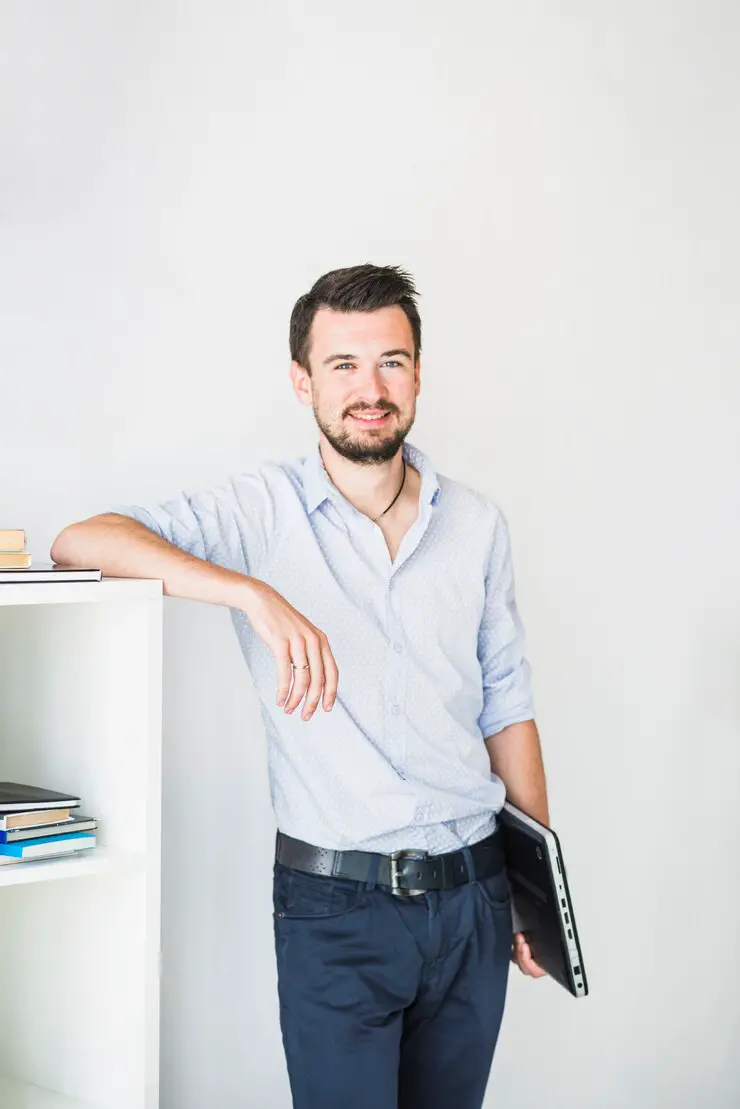
Ethan Blake is a skilled Creative Content Specialist with a talent for crafting engaging and thought-provoking narratives. With a strong background in storytelling and digital content creation, Ethan brings a unique perspective to his role at TheArchivists, where he curates and produces captivating content for a global audience.
Ethan holds a degree in Communications from Zurich University, where he developed his expertise in storytelling, media strategy, and audience engagement. Known for his ability to blend creativity with analytical precision, he excels at creating content that not only entertains but also connects deeply with readers.
At TheArchivists, Ethan specializes in uncovering compelling stories that reflect a wide range of human experiences. His work is celebrated for its authenticity, creativity, and ability to spark meaningful conversations, earning him recognition among peers and readers alike.
Passionate about the art of storytelling, Ethan enjoys exploring themes of culture, history, and personal growth, aiming to inspire and inform with every piece he creates. Dedicated to making a lasting impact, Ethan continues to push boundaries in the ever-evolving world of digital content.