The last signature went on the last page at 3:47 on a Friday afternoon.
I watched the buyer’s pen move across the paper. I watched him date it. I watched his lawyer slide the stack across the long walnut table to the seller’s lawyer, who flipped through it one more time, page by page, while everyone in the room held their breath.
Then he looked up and nodded.
“That’s it,” he said. “We’re closed.”
Fourteen million, two hundred thousand dollars. Eleven hundred acres of ranch land in Blanco County, with a spring-fed creek and a limestone house built in 1886. It had taken me fourteen months. Three buyers had walked away. One seller had died in the middle of it, and I’d had to start over with his four grown children, who didn’t agree on anything, including whether to sell at all.
Fourteen months of phone calls at midnight. Fourteen months of driving back and forth across the Hill Country with a thermos of coffee and a folder of surveys on the passenger seat. Fourteen months of being told by men twice my age that I was “a little young” to be handling a property like this.
I was thirty-three years old. And I had just closed the biggest deal of my career.
My boss, Marisol Ortega, was sitting next to me at the table. She’s sixty-one, with silver hair cut short and reading glasses on a beaded chain, and she’s been selling ranch land in Texas since before I was born. She reached under the table and squeezed my hand. Hard.
“You did it, Bella,” she whispered. “You actually did it.”
“We did it.”
“No, mija.” She shook her head. “I’ve been doing this for thirty-five years. That was you.”
Afterward, in the parking lot, she hugged me. She told me to take a week off. Then she told me to take two. Then she told me if she saw me in the office before Wednesday, she’d fire me.
“Go to your lake,” she said. “Turn off your phone. Sit on your dock. Do nothing. You’ve earned nothing.”
I laughed. “I don’t know how to do nothing.”
“Then learn,” she said. “It’s the most important skill there is. I learned it at fifty. Don’t wait that long.”
I got into my car. I turned it on. I sat there with the air conditioning blasting, looking at the heat shimmering up off the asphalt.
My phone buzzed in the cupholder.
It was my mother. Again. It was the sixth time she’d called that day. I’d been in the closing since nine that morning, with my phone on silent. Six missed calls. Three voicemails. Two texts.
Call me back.
Bella, it’s important. Call me.
I thought about calling her. I really did. I had my thumb over her name.
Then I thought about Marisol saying turn off your phone. And I thought about my mother, who calls me six times a day when she wants something and not at all when she doesn’t. And I thought about my lake. My dock. The heron that stands on one leg in the shallow water every evening at sunset.
I put the phone face-down on the passenger seat.
I’ll call her tomorrow, I told myself. From the dock. With a glass of wine. After I’ve slept for twelve hours.
It’s a two-hour drive from Austin to my lake house. I drove it with the windows down and the radio loud, singing along to old country songs, feeling lighter than I’d felt in fourteen months.
I didn’t know it then. But while I was sitting at that walnut table signing papers, my mother had been standing in my living room, watching men tear down my walls.
I should tell you about my family.
I have one brother. Jacob is three years older than me. He was the first baby, the only boy, the golden one. When we were growing up, my mother had a way of saying his name that was different from the way she said mine. When she said Jacob, it was soft and warm, like she was holding something precious. When she said Bella, it was a little sharp. A little tired. Like she was calling a dog in from the rain.
I don’t think she knew she did it. I don’t think she ever noticed.
But I did. Kids always notice.
Jacob got the big bedroom. I got the one next to the laundry room. Jacob got a car for his sixteenth birthday. A used Jeep, red, with a soft top. I got a bus pass for mine and a speech about responsibility. When Jacob wrecked the Jeep eight months later, my parents bought him another one. When I got a speeding ticket in my first year of college, driving a twenty-year-old Honda I’d bought with my own summer job money, my mother cried and asked what she’d done to deserve such a reckless daughter.
Jacob went to a private college in Dallas. My parents paid for all of it. He changed his major four times and graduated in six years with a degree in communications.
I went to the University of Texas on a partial scholarship, worked twenty hours a week at a bookstore and graduated in four years with a degree in finance and forty thousand dollars in student loans. My parents came to my graduation. My mother left early because Jacob had a job interview the next morning and she wanted to help him pick out a tie.
He didn’t get the job.
That’s been the pattern of Jacob’s life. He’s charming and handsome and everyone likes him, and he has a lot of big ideas. A food truck. A fitness app. A craft brewery. A real estate investment company, which he started two years after I got my license, and which lost three hundred thousand dollars of my parents’ retirement money in eighteen months.
My parents never said a word about that money. Not to him. Not to anyone. They just took a second mortgage on their house and kept going.
When I asked my mother about it once, she said, “Jacob is a visionary, Bella. Visionaries take risks. You wouldn’t understand. You’ve always been so…” She searched for the word. “Practical.”
She said practical like it was a disease.
Jacob married Victoria five years ago. She’s pretty and blond and very organized. She works as a loan processor at a bank in Round Rock. She’s also a notary public. I know that because she has a little stamp that she carries in her purse, and she likes to take it out at parties and notarize things for people as a joke. Now it’s official!
Victoria never liked me. I never knew why. My mother told me once it was because I “made her feel bad about herself,” because I had a career and a house and my own money, and Victoria didn’t.
“Maybe you could dress down a little when she’s around,” my mother suggested. “Not talk about work so much. Don’t make her feel small.”
I dressed down. I stopped talking about work. It didn’t help.
For the last year and a half, Jacob and Victoria had been living in an apartment in Round Rock. Then, three months before the closing, the apartment complex was sold, and the new owners didn’t renew their lease. They moved into my parents’ guest room. Temporarily. That’s what everyone kept saying. Temporarily.
I didn’t think much about it. I had my deal. I had my life. I had my lake.
I bought the lake house six years ago.
It wasn’t much of a house back then. It was a small stone cottage from the 1950s on Lake LBJ, about an hour and a half west of Austin. The previous owner was an old man named Walter who had lived there alone for thirty years after his wife died. When he passed, his kids didn’t want it. They lived in Houston and Chicago. They just wanted it gone.
The listing came across my desk at the office. It had been on the market for eleven months. The pictures were terrible. Sagging roof. Rotting dock. Kitchen from 1962. Carpet the color of mustard.
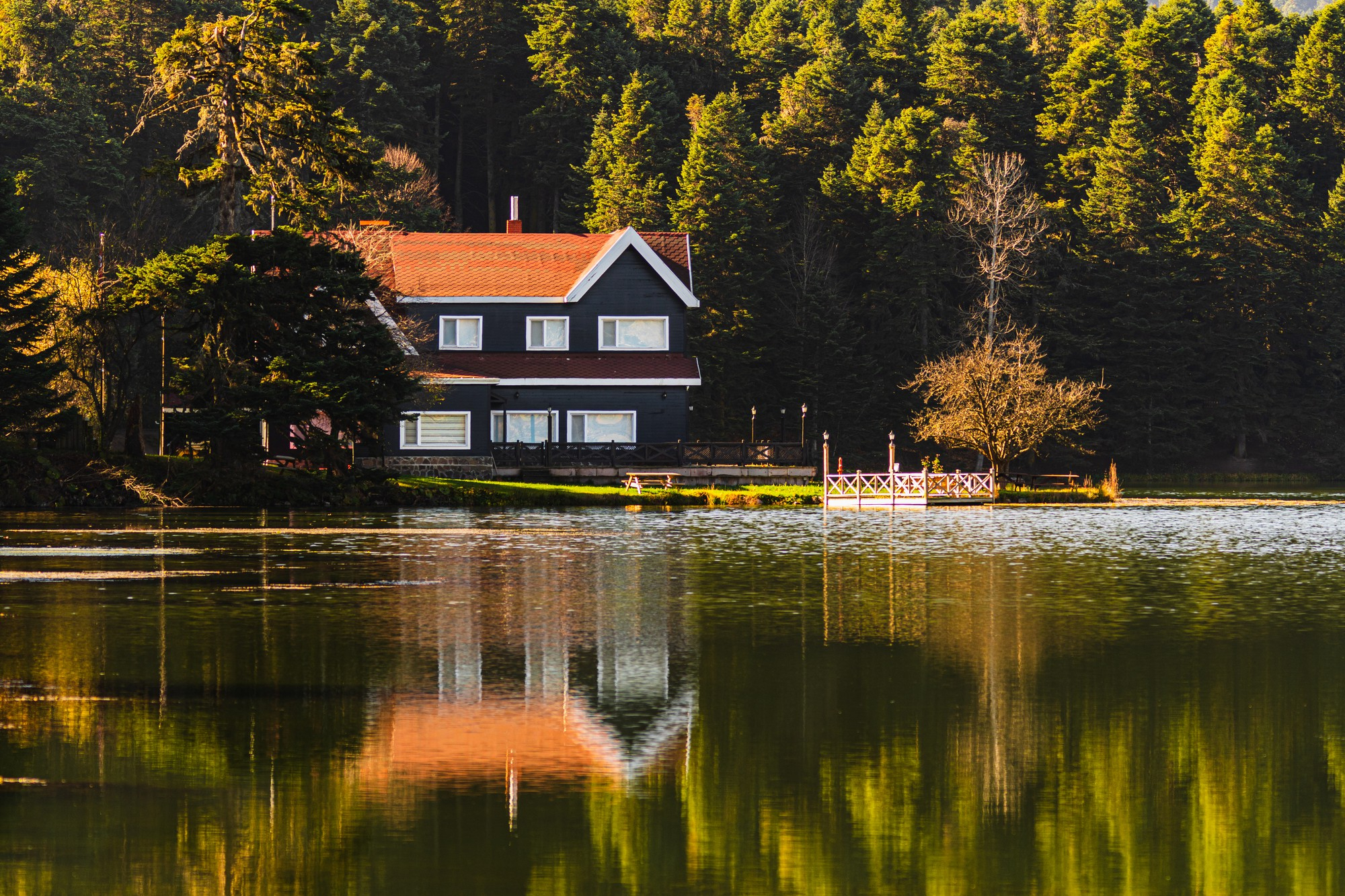
I drove out to see it on a Saturday. I stood in the overgrown yard and looked at the water through the live oaks. The sun was going down. The lake was turning gold and pink. A great blue heron was standing in the shallows near the broken dock, on one leg, perfectly still.
I bought it the next week. I used every dollar I’d saved since college. I took out a mortgage in my own name. I was twenty-seven.
My mother said I was crazy. My father said it was a lot of work for one person. Jacob laughed and said I’d bought a money pit.
“You don’t know anything about houses,” he said. “You sell them. You don’t fix them.”
“I’ll learn,” I said.
And I did.
I spent every weekend for three years out at that lake. I watched a hundred YouTube videos. I bought tools at pawn shops. I ripped out the mustard carpet on my hands and knees and found beautiful oak floors underneath. I sanded them myself. I refinished them myself. I painted every room. I learned to replace a faucet and rewire a light switch and grout a bathroom floor. I hired a roofer for the roof, because I’m not crazy, but I stood on the ladder and watched every shingle go on.
The dock took me a whole summer. I tore it out board by board and built it back with new cedar. When I was done, I sat at the end of it with my feet in the water and a cold beer in my hand, and I cried. I don’t know why. I think it was the first thing I’d ever built with my own hands.
That heron came back every evening. I named him Walter, after the old man.
Every mortgage payment came out of my own bank account. Every tax bill. Every insurance premium. Every can of paint and box of nails.
My name is on the deed. Isabella Marie Carter. Only mine.
The lake house was the one place in the world where nobody expected anything from me. Where I wasn’t the practical one or the reckless one or the one who made Victoria feel small. It was just me and the water and Walter the heron.
And my grandmother’s journals.
My Nana Pearl was my father’s mother. She died when I was twenty-four.
She was the only person in my family who ever made me feel like I was enough. Not enough compared to Jacob. Just enough, on my own.
She was a schoolteacher in a little town outside of San Angelo for forty years. She wore her white hair in a bun and her reading glasses on her head and she never, ever lost an argument. She kept journals her whole life. Leather ones, brown and soft, filled edge to edge with her small slanted handwriting. Fifty-three of them, from the year she turned sixteen until the week she died.
When I was little, I used to spend two weeks every summer at her house. She’d let me read the journals. Not all of them. Some of them, she said, were private. But she let me read about her growing up during the Depression. About meeting my grandfather at a county fair. About the year she taught a one-room school with twenty-two kids in eight different grades.
On the last night of my last summer visit, when I was fifteen, she sat on the edge of my bed and brushed my hair back from my face.
“Your mother loves you, Bella,” she said. “In her way. But she doesn’t see you. Not the way she sees your brother. I know that hurts.”
I didn’t say anything. I couldn’t. It was the first time anyone had ever said it out loud.
“I want you to remember something,” Nana said. “Nobody can give you your worth. And nobody can take it away. It’s yours. You were born with it. You don’t have to earn it and you don’t have to ask anybody’s permission to have it.”
When she died, she left her journals to me. Not to my father. Not to Jacob. To me. There was a note in her will, in her slanted handwriting.
To Bella, who will know what they’re worth.
I kept them at the lake house. On the built-in bookshelves on either side of the stone fireplace. Fifty-three brown leather journals in a row, in order, from 1947 to 2014. Next to them, I kept the framed photographs. Nana and my grandfather on their wedding day. Nana in front of her one-room school. Me at eight years old, sitting on Nana’s porch swing, eating a popsicle.
On the mantel, I kept the one thing I loved most of all. It was a little wooden box my grandfather carved for Nana on their tenth anniversary. Inside, there was a lock of my grandfather’s hair, and his wedding ring, and a pressed bluebonnet from the county fair where they met.
Those were the most precious things I owned. More precious than the house. More precious than the dock.
I didn’t know somebody was going to put them in a garbage bag.
I need to tell you about the Sunday dinner.
It was two weeks before the closing. It was my father’s sixty-fifth birthday. My mother invited everyone to their house in Round Rock. Me, Jacob and Victoria, a few of my parents’ friends from church. She made brisket and potato salad and a three-layer chocolate cake with sixty-five candles.
I almost didn’t go. The deal was at its worst point. The seller’s four children were fighting, and one of them had threatened to sue the other three. I had a phone call scheduled with their lawyers at 7:30 that evening.
But it was my father’s birthday. And I love my father. He’s a quiet man, a retired civil engineer, gentle and soft-spoken and very bad at standing up to my mother. When I was little, he used to sneak me extra dessert when my mother wasn’t looking. It was his way of saying he saw me.
So I went. I brought him a present. A new fishing reel. He’s been talking about getting one for years.
Dinner was fine at first. Then my mother brought up the lake.
“Bella, you’re hardly ever at that lake house anymore,” she said, passing the potato salad. “Are you?”
“I’ve been busy with the Blanco ranch deal. I get out there when I can.”
“It just seems like such a waste,” my mother said. “A big house like that, sitting empty. When some people don’t even have a place of their own.”
She looked across the table at Jacob and Victoria.
Jacob didn’t look up from his brisket. Victoria smiled at me. It wasn’t a friendly smile.
“It’s not a big house, Mom,” I said. “It’s two bedrooms.”
“Well, it could be bigger,” my mother said. “With an addition. Your father looked at it once, didn’t you, Tom? He said you could add a whole wing on the east side. A master suite. An office.”
My father was cutting his brisket very carefully. He didn’t look up.
“I said it was possible,” he said quietly. “In theory.”
“It’s my house, Mom,” I said. “I’m not adding a wing.”
“Of course not, sweetheart.” She smiled. “I was just making conversation.”
After dinner, we did the cake. Everyone sang. My father blew out the candles. It took him three tries. Then my mother passed around a birthday card for everyone to sign.
It was a big card. The kind with a golden retriever on the front wearing a party hat. FOR A VERY SPECIAL DAD. Everyone had already signed it except me. There was a spot left, right in the middle of the inside page. Somebody had even drawn a little arrow pointing to it.
“Right there, Bella,” Victoria said, handing me a pen. “We saved you a good spot.”
I remember thinking that was nice of her. I remember thinking maybe she was trying.
I signed it. Happy birthday, Dad! Love you so much. — Bella. I signed my full name at the bottom the way I always do. Isabella M. Carter. It’s a habit from work. I sign my name a hundred times a day.
Victoria took the card back. She looked at my signature for a long moment. She smiled.
“Perfect,” she said.
At 6:40, my phone buzzed. The lawyers wanted to move the call up. One of the four children was threatening to pull out of the deal entirely. I had to go. Right then.
I apologized to my father. I kissed him on the cheek. I told him happy birthday one more time. I drove straight back to Austin, to the office downtown. I parked in the garage on Congress Avenue and took the elevator up to the eighteenth floor, and I spent the next three hours on a conference call with four lawyers, talking a grieving family out of blowing up a fourteen-million-dollar deal.
I didn’t think about the birthday card again.
Not for two weeks.
I got to the lake house at 6:15 that Friday evening. The sun was starting to go down over the water. I turned off the county road onto my gravel driveway, and I was smiling. I was thinking about the dock. About Walter. About a glass of wine and my bare feet in the water.
Then I came around the bend in the driveway, and I stopped smiling.
There was a moving truck parked on my lawn.
Not in the driveway. On the lawn. A big white commercial truck, the twenty-six-foot kind, with its back doors open and its ramp down. It was sitting right on top of the flower bed I’d planted in the spring. Its tires had dug deep ruts in the grass.
Next to it, there was a dumpster. A big green construction dumpster, the kind you rent by the week. It was already half full. I could see pieces of drywall sticking out the top. Chunks of wood. A tangle of wire.
And parked by the front porch, there were three cars I recognized. My mother’s white SUV. My father’s old gray pickup truck. And Jacob’s black BMW, the one he leased last year even though he didn’t have a job.
I sat in my car with the engine running.
I thought maybe there’d been a fire. A pipe burst. A tree fell on the roof. Something terrible had happened, and my family had rushed out to help, and that’s why my mother had been calling me six times.
I turned off the engine. I got out. I walked up the porch steps.
The front door was wide open.
I stepped inside.
Construction dust filled the air. It was so thick I could taste it. White and chalky, like the inside of a cave. It covered everything. The floors. The windowsills. The light fixtures.
My living room was gone.
Not damaged. Gone. The east wall, the wall between the living room and the little den, had been torn down to the studs. The drywall was ripped out in big jagged chunks. There were holes in the ceiling where the light fixtures used to be, with wires hanging down like vines. My oak floors, the ones I refinished on my hands and knees, were scratched and gouged and covered with dust and nails and broken glass.
The furniture was gone. The couch I bought at an estate sale. The armchair where I sat and read. The rug. All of it. The room was completely bare.
The built-in bookshelves on either side of the fireplace were empty.
Nana Pearl’s journals were gone.
I stood in the doorway. I was still holding my phone in one hand and my car keys in the other. I couldn’t move. My brain couldn’t make sense of what my eyes were seeing.
I heard a noise from the kitchen. A rustling. Plastic.
I walked through the dust toward the kitchen doorway.
Victoria was standing in the middle of my kitchen.
My kitchen was half gone too. The cabinets on one wall had been ripped out. The countertop was cracked. The old farmhouse sink I’d found at a salvage yard was sitting on the floor in the corner.
Victoria was wearing yoga pants and a pink T-shirt and white sneakers with dust on them. She had her blond hair up in a ponytail. She was holding a black garbage bag. The heavy-duty kind, for construction.
And she was putting my things in it.
As I stood there, she picked up a stack of brown leather journals from the kitchen counter. Three of them. Nana’s journals. She didn’t even look at them. She just dropped them into the bag. I heard them hit the bottom with a heavy thud.
Then she picked up a framed photograph. It was Nana and my grandfather on their wedding day, in black and white. She looked at it for a second, wrinkled her nose and tossed it into the bag on top of the journals. I heard the glass crack.
Then she reached for the little wooden box. My grandfather’s carved box. With his ring inside, and his lock of hair, and the pressed bluebonnet from the county fair.
“Don’t,” I said.
Victoria turned around.
She saw me standing in the kitchen doorway, covered in dust. For a second, just a second, she looked surprised.
Then she smiled.
It was a smug, satisfied smile. The smile of someone who had been waiting a long time for this moment.
“Oh, hi, Bella,” she said. “Your brother’s moving in. We need the space.”
She dropped the wooden box into the garbage bag.
I didn’t scream.
I didn’t cry.
I don’t know why. I’ve thought about it a lot since then. I think something in me just went very cold and very quiet. The way you go quiet at a closing table when the other side makes a lowball offer. The way you stop feeling and start watching.
I raised my phone. I opened the camera. I pressed the red button.
And I started recording.
“Say that again,” I said.
Victoria’s smile flickered. “What?”
“What you just said. Say it again.”
She looked at the phone. She rolled her eyes.
“Oh, please. Put that away. You’re being dramatic.”
“You’re putting my grandmother’s journals in a garbage bag,” I said, very calmly, to the camera. “In my house. Which I own. Say again who’s moving in.”
Before she could answer, I heard footsteps behind me.
It was my mother.
She came in from the back porch through the sliding glass door. She was carrying a cardboard box. On the side of the box, somebody had written in black marker:
JACOB’S HOME OFFICE.
She saw me. And she smiled. A big, bright, warm smile. The smile she uses at church. Like she had arranged a wonderful surprise.
“Bella, sweetheart,” she said. “We didn’t expect you this early.”
“Clearly,” I said.
My father came in behind her. He was carrying a toolbox. He stopped dead when he saw me standing in the kitchen doorway with my phone raised.
His face went pale. He looked at me. He looked at the phone. He looked at the torn-out walls and the empty bookshelves and the garbage bag in Victoria’s hand.
He didn’t say anything. But I saw it in his face. The tension. The shame. He knew. He knew exactly how wrong this was.
“What is happening here?” I asked.
My mother looked around at the destruction. At the missing wall. At the wires hanging from the ceiling. At the dust on everything. She didn’t look concerned. She looked pleased. Like someone looking at a construction site where their new house is going up.
“Don’t turn a little renovation into a big production, Bella,” she said. “The contractor says the new addition should be done by next month. It’s going to be beautiful. A whole new wing. Master suite. Office for Jacob. A nursery.”
“A nursery,” I repeated.
Victoria smiled and put her hand on her stomach.
“We’re expecting,” she said. “Twelve weeks. We were going to tell everyone at Thanksgiving.”
“Who authorized this?” I asked. My voice was very steady. The phone was very steady. “Who authorized tearing down the walls of my house?”
My mother looked at me like I was being slow.
“Well, somebody had to make a decision,” she said. “Jacob and Victoria needed more space. The baby is coming. They can’t live in our guest room forever. You’re never here. The house just sits empty. It makes perfect sense for them to move in permanently.”
“Permanently,” I said.
“Well, of course. Where else would they go?”
I stared at my mother.
Move into my home. The house I bought with every dollar I’d saved since college. The house with my name on the deed and the mortgage and the tax records and the insurance policy. The house I rebuilt with my own hands, one oak board at a time.
“You can still stay in the guest room whenever you come to visit,” Victoria said brightly. “We’ll keep it made up for you.”
She said it like she was doing me a favor. Like my ownership, my years of work, every dollar I’d put into this place, was just a small inconvenience standing between her and the house she wanted.
I looked at my father. He was staring at the floor.
“Dad,” I said. “Did you know about this?”
He didn’t answer.
“Dad.”
“Your mother said you agreed,” he said quietly. He still didn’t look up. “She said you signed off on it.”
“I never signed anything.”
He finally looked at me. There was something in his eyes. Confusion. Fear. And something else. Something that looked like he was starting to understand a thing he didn’t want to understand.
“Tom,” my mother said sharply. “Go get the rest of the boxes from the truck.”
He didn’t move.
I turned to my mother. She was standing in the middle of the wreckage she’d helped organize, holding a box labeled JACOB’S HOME OFFICE, as calm and peaceful as a woman in a flower garden.
“Get out,” I said.
Her smile went away.
“Excuse me?”
“Get out of my house. All of you. Right now.”
“Bella.” Her voice got sharp. That voice she uses for me and never for Jacob. “You’re being incredibly selfish.”
“Leave my property immediately,” I said. “Or I will call the sheriff and report every single one of you for criminal trespass and criminal mischief. That’s what it’s called in Texas when you intentionally destroy someone else’s property. I sell real estate for a living, Mom. I know the words.”
The kitchen was silent.
Jacob came in through the back door. He was wearing a Texas Longhorns T-shirt and holding a tape measure. He saw me. He saw my face. He saw the phone.
“Bells,” he said. His easy, charming voice. “Hey. Come on. Don’t be like this.”
“I’m recording, Jacob,” I said. “So be careful what you say.”
He stopped.
For the first time in my entire life, I stood up to my family without apologizing for making them uncomfortable.
It felt like jumping off the end of my dock into cold water. Shocking. Terrifying. And strangely clean.
They left.
They didn’t leave quietly. My mother cried and said I was breaking her heart. Victoria called me a word I won’t repeat. Jacob said I’d always been jealous of him and this proved it. He said I was trying to ruin his life. He said I was going to make his baby homeless.
My father didn’t say anything at all. He carried his toolbox back out to his truck. At the door, he stopped. He turned around and looked at me.
“Bella,” he said.
“Not now, Dad.”
He nodded slowly. He left.
Before she went, Victoria tried to take the garbage bag. The one with Nana’s journals in it. I stepped in front of her.
“That stays,” I said.
“It’s just junk,” she said. “Old books. I was saving you the trouble.”
“Put it down.”
She looked at my phone, still recording. She put the bag down on the kitchen floor. She walked out.
I heard their cars start. I heard them drive away down the gravel driveway. I heard the moving truck, the big white one, start its engine and back off my lawn, grinding deeper ruts into my flower bed.
Then it was quiet.
I stood alone in the middle of my destroyed kitchen.
I knelt down on the floor. I opened the black garbage bag.
Nana’s journals were at the bottom. Fourteen of them. Just fourteen. Their leather covers were scuffed. One of them had its spine cracked. The wedding photo was on top, the glass broken in a long diagonal line right across my grandparents’ faces.
And there was the little wooden box. My grandfather’s carved box. The lid had come off. I found the wedding ring in the corner of the bag. I found the lock of hair, tied with a faded blue ribbon.
I couldn’t find the bluebonnet.
I looked for twenty minutes. I dumped the whole bag out on the kitchen floor. I went through it piece by piece. It wasn’t there. It had been pressed and dried for over seventy years. It must have crumbled into dust when the box fell into the bag.
Seventy years. And it turned to dust in a garbage bag in my kitchen.
I sat down on the floor. I held the empty box in my lap.
Then I noticed the other thirty-nine journals weren’t there.
I got up. I went out to the dumpster in the yard. It was getting dark. I got a flashlight from my car. I climbed up on a cinder block and shone the light down into the dumpster.
They were there. Under a layer of drywall and broken studs and insulation. Brown leather covers, crushed and torn, covered in white dust.
I climbed into the dumpster.
I dug them out one by one, in the dark, with the flashlight in my mouth. I cut my hand on a nail. I didn’t care. I found thirty-seven of them. Two were so badly crushed under a sheet of drywall that the pages were torn in half.
I carried them inside in armfuls. I stacked them on the kitchen counter. I sat on the floor next to them with my bleeding hand wrapped in a dish towel.
And then, finally, I cried.
But not for long.
After a while, I got up. I washed my hand. I put on a bandage.
And I did not clean up.
That was the thing I almost did. Every instinct in my body wanted to. Sweep up the dust. Pick up the broken glass. Put the journals back on the shelves. Make it look like home again. That’s what I always did. Clean up the mess. Fix it. Make it better. Make it so nobody had to feel uncomfortable.
Not this time.
This time, I documented it.
I took pictures of everything. Every demolished wall. Every hole in the ceiling. Every gouge in my oak floors. Every piece of missing furniture. I made a list of every single thing that was gone. The couch. The armchair. The rug. The lamp. The kitchen table. The dishes. The television. The bed from the guest room. My grandmother’s rocking chair.
I took pictures of the dumpster, and the ruts in my lawn, and the flattened flower bed.
On the back porch, I found a stack of paperwork on a folding table. The contractor must have left it. Invoices. Material orders. A work schedule. And a business card.
HILL COUNTRY CUSTOM BUILDERS. Ray Delgado, Project Manager.
I took pictures of all of it.
Then I called the Llano County Sheriff’s Office.
A deputy came out at ten o’clock that night. Her name was Deputy Carla Brennan. She was about my age, with short red hair and a very calm way of talking. She walked through the whole house with a flashlight. She looked at the walls. She looked at the dumpster. She watched the video on my phone. Twice.
“Ma’am,” she said, when she was done. “In fourteen years, I’ve never seen anything like this. Your own family?”
“My own family.”
“And you never gave permission for any of this work?”
“Never.”
She wrote her report. She gave me a case number. She said she would contact the contractor in the morning.
“You should talk to a lawyer,” she said as she was leaving. “A good one. This is going to get ugly.”
“It’s already ugly,” I said.
“No, ma’am,” she said. “With family, it always gets uglier.”
She was right.
It got uglier fast.
On Monday morning, my boss, Marisol, called me.
“Bella,” she said. “Where are you?”
“At the lake. You told me not to come in until Wednesday.”
“I know what I told you.” Her voice was tight. “Mija, I just got a call from the Texas Real Estate Commission. Somebody filed a complaint against your license.”
My stomach dropped.
“What complaint?”
“Fraud,” Marisol said. “Misrepresentation. Unethical conduct. The complaint says you’ve been using your position as a licensed agent to defraud your own family. It says you used family money to buy the lake house and then put it in your name only. It says you manipulated your elderly parents out of their savings. It says you’re holding your pregnant sister-in-law hostage over a property that rightfully belongs to the whole family.”
I sat down hard on the dock.
“Who filed it?”
“It’s signed by your mother,” Marisol said. “And your brother. Both of them.”
I couldn’t speak. The water was lapping against the dock posts. Walter the heron was standing in the shallows twenty feet away, on one leg, watching me.
“Bella,” Marisol said. “Listen to me. Are you listening?”
“Yes.”
“I don’t believe one word of it. Not one. I’ve known you for eight years. You’re the most honest agent I’ve ever hired. You once gave back a sixty-thousand-dollar commission because you found out the buyer had been misled by the seller. I remember. I was there.”
“Marisol—”
“And I’ll tell you something else,” she said. “I’ve been doing this for thirty-five years. I’ve seen false complaints before. Families fighting over property. They always look the same. Big words. No evidence. Filed right after somebody gets caught doing something they shouldn’t.” She paused. “What did they do, Bella?”
So I told her.
She was quiet on the other end of the phone for a long time.
“Send me everything,” she said finally. “The video. The pictures. The sheriff’s report. Everything. I’m calling the commission myself. And I’m calling my lawyer.”
“You don’t have to do that.”
“Yes, I do,” Marisol said. “You’re my agent. You’re my family now. And in my family, we don’t let people tear down our walls.”
The rest of that week was a nightmare.
My mother called my aunts and uncles and cousins. She told them I had stolen the lake house from the family. She said she and my father had given me the down payment, and I’d put it in my name only. That wasn’t true. They’d never given me a dime. But nobody asked me. Nobody called to check.
My Aunt Patty called me on Tuesday. She said I should be ashamed of myself. My cousin Derek sent me a text that said heartless. One of my mother’s friends from church, a woman I’d known since I was six years old, unfollowed me on every social media account I had.
Jacob posted something online. It was long. It talked about “toxic family members” and “people who value money over blood” and how sad it was that “some people will leave a pregnant woman homeless to protect their vacation house.” He didn’t use my name. He didn’t have to. Everybody knew who he meant.
Thirty-seven people liked it. Two of them were my own cousins.
My father didn’t call. Not once.
On Wednesday, I met with a lawyer. Her name was Grace Okafor. She was recommended by Marisol’s lawyer. She had an office in Austin with big windows and a view of the Capitol dome. She listened to everything without interrupting. She watched the video. She looked at every photo.
“Well,” she said, when I was done. “This is a civil case, obviously. Property damage. Destruction of personal belongings. Trespass. We can sue them for the cost of repairs and the value of what was destroyed. And the sheriff’s case is a criminal matter. Criminal mischief. Given the amount of damage, it could be a felony.”
“I don’t want to put my family in prison,” I said.
“I understand. But I’m going to be honest with you, Bella.” She leaned forward. “Right now, the problem is that it’s your word against theirs. They’re going to say you gave them permission. They’re going to say you agreed to the renovation and then changed your mind. And they’ve already started building that story with the real estate complaint. They’re getting ahead of you.”
“I never gave anyone permission.”
“I believe you,” Grace said. “But the contractor didn’t start tearing down walls on your mother’s say-so. No legitimate contractor would. They’d need authorization from the property owner. Something in writing.” She tapped her pen on her notepad. “Somebody gave that contractor a piece of paper. I want to see that piece of paper.”
I called Ray Delgado on Thursday.
He answered on the first ring. He sounded nervous.
“Ms. Carter,” he said. “I’ve been meaning to call you. The deputy came by my office on Monday. I’ve been sick about this all week. I swear to you, I had no idea. We stopped all work the minute I heard.”
“I believe you, Mr. Delgado. I just need to know one thing. Who authorized the work?”
He was quiet for a moment.
“Can you come to my office?” he said. “I think you need to see this yourself. In person.”
His office was in a metal building on the outskirts of Marble Falls. There was a dusty pickup truck out front and a big dog asleep on the porch. Ray was about fifty, with a gray mustache and a sunburned neck and a very worried face.
He sat me down in a folding chair across from his desk. He opened a file folder.
“Your mother came to me three weeks ago,” he said. “With your brother. They said they were representing the property owner. You. They said you were too busy with work to handle it yourself. That you’d given them full authority to manage the renovation.”
“I never—”
“I know. I know that now.” He held up his hand. “But I’ve been doing this twenty-two years, Ms. Carter. I don’t touch a wall without the owner’s signature. That’s my rule. So I told them I needed something in writing. From you. Signed and notarized.”
He took a document out of the folder. He slid it across the desk to me.
“And they brought me this.”
I picked it up.
It was two pages. At the top, it said:
PROPERTY OWNER AUTHORIZATION AND LIMITED POWER OF ATTORNEY.
Underneath, in legal language, it said that I, Isabella Marie Carter, as sole owner of the property at 1814 Heron Point Road, Lake LBJ, Llano County, Texas, authorized my mother, Linda Carter, and my brother, Jacob Carter, to act on my behalf in all matters related to the renovation and expansion of the property. It said they had the authority to hire contractors, approve plans, sign contracts, and make any and all decisions regarding the structure and contents of the property.
Any and all decisions regarding the structure and contents.
Contents. Like my grandmother’s journals. Like my grandfather’s box.
I turned to the second page.
At the bottom, there was a signature line. And on it, in blue ink:
Isabella M. Carter.
My signature. My exact signature. The big loop on the I. The little tail on the M. The way the C in Carter slants a little backward, because I learned cursive from Nana Pearl, and that’s how she made her C’s.
I had never seen this document before in my life.
Below my signature, there was a notary block. A round stamp. A signature.
Sworn to and subscribed before me on this day by Isabella M. Carter, who is personally known to me.
Victoria L. Carter, Notary Public, State of Texas.
And the date.
It was the day of my father’s sixty-fifth birthday.
And next to the date, in Victoria’s neat handwriting, there was a time.
7:42 p.m.
The blood drained out of my face.
I stared at that page. At my signature. At the date. At the time.
7:42 p.m.
At 7:42 p.m. on the night of my father’s birthday, I was not at my parents’ house in Round Rock. I was sitting in a conference room on the eighteenth floor of an office building on Congress Avenue in downtown Austin, thirty miles away, on a phone call with four lawyers.
I had left my parents’ house at 6:40.
And I’d never signed any document at that dinner. The only thing I signed all night was a birthday card with a golden retriever on the front.
Right there, Bella. We saved you a good spot.
Perfect.
“Ms. Carter?” Ray said. “Are you all right? You look like you’ve seen a ghost.”
“Can I keep this?” I asked. My voice sounded very far away. “Or a copy?”
“You can have the original,” Ray said. “My lawyer made copies. And the sheriff’s department wants it too. They’re coming to get it tomorrow.” He looked at me carefully. “That’s not your signature, is it?”
“It’s my signature,” I said slowly. “But I didn’t sign it.”
I drove back to the lake house in a daze.
I sat on the dock with the document in my lap and looked at it for a long time.
It was my signature. Exactly. Too exactly. When you sign your name a hundred times a day, no two signatures are ever quite the same. The loop is a little bigger here. The tail is a little shorter there.
But this one looked exactly like the one I’d signed in the birthday card. I was sure of it. I remembered how I’d signed it. I remembered the pen. A blue ballpoint with a chewed cap. Victoria handed it to me.
They’d traced it. Or copied it somehow. From the card.
And Victoria had notarized it. With her little stamp. She’d sworn, as a state-commissioned notary public, that I had personally appeared before her and signed that document at 7:42 p.m.
I had spent eight years in real estate. I knew what that meant.
Forging someone’s signature on a legal document to gain control of their property is forgery. In Texas, depending on what’s forged, it’s a felony.
And a notary who falsely certifies a signature is committing a crime too. They lose their commission. They can go to prison.
My sister-in-law hadn’t just helped tear down my walls. She’d committed a felony to do it.
And she’d done it at my father’s birthday party. At the dinner table. While everyone was eating cake.
I called Grace Okafor. I told her everything. I sent her a picture of the document.
She was quiet on the phone for a long time.
“Bella,” she said finally. “Do you have any proof of where you were at 7:42 that night?”
I thought about it.
“The parking garage,” I said. “On Congress. I paid with my card. It has a timestamp. I got there around 7:15. And the conference call. It was on the office phone system. It logs every call. And my phone. My location history. It shows everything.”
“Get all of it,” Grace said. “Every piece. And Bella?”
“Yes?”
“We need that birthday card.”
My heart sank.
“It’s my father’s,” I said. “It’s at their house. My mother probably threw it away. Or Victoria did. They’d have to be stupid to keep it.”
“People who do things like this,” Grace said, “almost always think they’re smarter than everyone else. That’s usually what gets them caught.”
I spent the next two days collecting everything Grace asked for.
The parking garage receipt, from my credit card statement. Entered 7:13 p.m. Exited 10:02 p.m.
The office phone logs, which Marisol pulled from the system herself. Conference call started 7:28 p.m. Ended 9:51 p.m. Participant: Isabella Carter, extension 1847.
My phone’s location history. A blue dot, sitting in downtown Austin, from 7:13 to 10:02. Not moving.
And three of the four lawyers from that call wrote letters confirming I was on the line the whole time, talking. One of them wrote, Ms. Carter was the only reason this sale did not collapse that night. I remember the call very clearly.
But I didn’t have the card.
I thought about asking my father. I picked up my phone a dozen times to call him.
I didn’t. I didn’t know which side he was on. I didn’t know if he knew. I didn’t know if he’d tell my mother I was asking.
On Saturday evening, eight days after I found the moving truck on my lawn, my phone rang.
It was my father.
I stared at his name on the screen for five rings. Then I answered.
“Bella,” he said. His voice sounded old. Tired. “Can we talk? Just you and me? Not at the house. Somewhere else.”
“Where?”
“There’s a Dairy Queen,” he said. “In Burnet. Halfway between. Tomorrow. Two o’clock.”
I almost said no.
Then I thought about him at the birthday party, cutting his brisket very carefully while my mother talked about adding a wing to my house. I said it was possible. In theory.
And I thought about him standing in my kitchen, looking at the torn-down walls, his face going pale.
Your mother said you agreed. She said you signed off on it.
“Okay,” I said. “Two o’clock.”
The Dairy Queen in Burnet is small and old, with red plastic booths and a jukebox that doesn’t work. My father was already there when I walked in. He was sitting in the booth in the back corner. He had two Blizzards in front of him. Oreo. My favorite, since I was seven.
He stood up when he saw me. He looked terrible. His face was gray. He had dark circles under his eyes. He’d lost weight in eight days.
“Hi, Bells,” he said.
“Hi, Dad.”
We sat down. I didn’t touch the Blizzard.
For a long time, he didn’t say anything. He just turned his spoon around and around in his ice cream.
Then he reached into the inside pocket of his windbreaker and took out an envelope. A big white one. He put it on the table between us.
“I didn’t know,” he said. “I need you to know that first. I didn’t know about any of it. Not the way it really was.”
“Dad—”
“Please. Let me finish. I’ve been practicing this for three days.” He took a breath. “Your mother told me three weeks ago that you’d agreed to let Jacob and Victoria move into the lake house. She said you’d signed some papers so they could do the renovation. She said you were happy about it. She said you were relieved because you never had time to go out there anymore.”
“And you believed her.”
“I wanted to believe her,” he said. “It was easier to believe her. It’s always been easier to believe her.” He looked down at his hands. “I’ve been believing your mother for forty years, Bella. It’s what I do. I don’t make waves. I let her make the decisions. I tell myself it keeps the peace.”
He looked up at me.
“But then I saw your face. In the kitchen. When you walked in. And I knew. The second I saw your face, I knew you’d never agreed to anything.”
He pushed the envelope across the table.
“When I got home that night,” he said, “I asked your mother to show me the papers you signed. She said the contractor had them. I asked her how you signed them, when you were so busy. She said you signed them at my birthday party.” He swallowed. “And I said, Linda, Bella left before we even cut the cake. She had a phone call. And your mother got very quiet. And then she said I must be remembering it wrong.”
He shook his head.
“I wasn’t remembering it wrong. I was there. I watched you leave. You kissed me on the cheek and said happy birthday. You said you’d come out to the lake in a few weeks and we’d try out the new fishing reel together.”
My eyes were stinging.
“So I went looking,” he said. “I don’t know what I was looking for. I just knew something was wrong. I went through the recycling bin. And the trash. And I didn’t find anything. And then Wednesday night, I couldn’t sleep, and I went out to the garage to sit for a while, and I saw Victoria’s car.”
He stopped.
“She keeps a folder,” he said. “In the back seat. For her notary stuff. I’ve seen her with it. I knew it was wrong to look. I looked anyway.”
He nodded at the envelope.
“Open it,” he said.
I opened it.
Inside, there was a birthday card. A golden retriever wearing a party hat. FOR A VERY SPECIAL DAD.
I opened the card.
Inside, there were a dozen signatures. My mother. Jacob. Victoria. My parents’ friends from church.
And in the middle of the page, where Victoria had drawn a little arrow, there was my message. Happy birthday, Dad! Love you so much.
And under it, my signature.
Isabella M. Carter.
Except it wasn’t clean anymore. Somebody had traced over it. You could see it if you tilted the card in the light. The faint grooves of a second pen, pressing hard, following every line. The loop on the I. The tail on the M. The backward slant of the C.
And on the back of the card, there were other signatures. Five of them. All mine. Practice ones. In pencil. Getting better each time. By the fifth one, it was almost perfect.
In the folder with it, my father said, there had been a sheet of tracing paper. With my signature on it. He’d left that. He was afraid she’d notice it was gone. But he took the card.
“It was in the folder,” my father said quietly. “Right next to her notary stamp. And her notary log. She’s supposed to keep a record of every document she notarizes. Did you know that? The date and time and who signed. I looked at it.” He swallowed. “She wrote you down. On my birthday. At 7:42.”
I held the card in my hands. I couldn’t say anything.
“Your mother knew,” my father said. “I don’t know if the tracing was her idea or Victoria’s. But she knew. She had to know. She’s the one who passed you the card and told you where to sign.” He wiped his eyes with a napkin. “At my birthday. They used my birthday.”
“Dad,” I said. My voice broke. “Why are you giving me this?”
He looked at me across the red plastic table.
“Because I watched them put your Nana’s journals in a dumpster,” he said. “My mother’s journals. Fifty-three of them. She left them to you because she knew you’d understand what they were worth. And I stood there in your kitchen and I didn’t say a word. I let them throw my mother’s whole life in the trash. Because I didn’t want to make waves.”
He was crying now. Openly. In the back booth of a Dairy Queen in Burnet, Texas.
“I’ve been letting your mother put you in the room next to the laundry for thirty-three years, Bella,” he said. “I’ve been sneaking you extra dessert and calling it love. It wasn’t enough. It was never enough. I’m sorry. I’m so, so sorry.”
I got up out of my side of the booth. I went around the table. I sat down next to my father and put my arms around him.
He held on to me like a man holding on to the side of a boat.
“Nana told me something once,” I said into his shoulder. “She said nobody can give you your worth, and nobody can take it away.”
“She told me that too,” my father said. “When I was your age. I guess I forgot.”
Grace Okafor called my family’s lawyer on Monday.
My mother had hired an attorney by then. A big, loud man from Dallas who charged six hundred dollars an hour and specialized in “family property disputes.” He was very confident on the phone. He said my client was a greedy, manipulative woman who had stolen family money to buy a vacation house. He said my client had verbally agreed to the renovation. He said my family had a signed and notarized document proving it.
Grace let him talk for fifteen minutes.
Then she said, “Mr. Hartley, I’d like to schedule a meeting. In person. With your clients. All of them. This week.”
“For what purpose?”
“I’d like to show them some documents,” Grace said.
The meeting was on Thursday afternoon, in a conference room at Grace’s office. Big windows. View of the Capitol. A long glass table.
My mother came in first. She was wearing her church dress and her pearls. Jacob came in behind her, in a suit. Victoria came in last, in a flowing maternity blouse, even though she was barely showing. Their lawyer came in with a leather briefcase and a big smile.
My mother saw me sitting at the table next to Grace. She looked away.
Then she saw my father sitting on my other side.
She stopped in the doorway.
“Tom,” she said. “What are you doing here?”
“Sit down, Linda,” my father said.
She sat down. Slowly. She didn’t take her eyes off him.
Grace opened her folder. She was very calm. Very polite.
“Thank you all for coming,” she said. “I’ll be brief.”
She slid a piece of paper across the table. The Property Owner Authorization and Limited Power of Attorney. My signature at the bottom. Victoria’s notary stamp.
“This is the document your clients provided to Hill Country Custom Builders,” she said to Mr. Hartley. “It authorizes Linda and Jacob Carter to make decisions regarding my client’s property. It is signed by my client. It is notarized by Victoria Carter. On the evening of Tom Carter’s birthday. At 7:42 p.m.”
“That’s right,” Mr. Hartley said. “It’s perfectly valid.”
Grace slid another piece of paper across the table.
“This is a receipt from the Congress Avenue Parking Garage in downtown Austin,” she said. “Showing my client’s car entering the garage at 7:13 p.m. and leaving at 10:02 p.m. on the same evening.”
She slid another piece of paper across.
“This is the phone log from Ortega Land and Ranch,” she said. “Showing my client on a conference call from her office extension from 7:28 p.m. to 9:51 p.m.”
Another piece of paper.
“These are letters from three attorneys who were on that call. Confirming my client was speaking on the line the entire time.”
Another piece of paper.
“This is my client’s phone location data for that evening. Placing her in downtown Austin, thirty miles from the Carter home in Round Rock, from 7:13 p.m. until after ten.”
Mr. Hartley’s smile was getting smaller.
“So,” Grace said pleasantly, “my client could not have personally appeared before Mrs. Victoria Carter at 7:42 p.m. to sign this document. Which means either Mrs. Carter notarized a signature without the signer being present, which is a crime, or she notarized a signature she knew to be forged, which is a more serious crime. Or both.”
Victoria’s face had gone completely white.
“And finally,” Grace said. She reached into the folder one more time. She took out a clear plastic sleeve. Inside it was a birthday card with a golden retriever wearing a party hat.
She set it on the table.
“This is the birthday card that my client signed at that dinner,” Grace said. “At the request of Mrs. Victoria Carter, who handed her the pen and directed her to sign in a specific spot. You’ll notice my client’s signature has been traced over. And on the back, you’ll notice five practice signatures in pencil. We’ve already had a forensic document examiner compare them. The signature on the power of attorney is a traced copy of the signature in this card.” She paused. “The card was found in Mrs. Victoria Carter’s car. In her notary folder. Next to her official notary stamp and log.”
Nobody said anything.
The air conditioning hummed.
Victoria was staring at the birthday card. Her hands were shaking.
My mother turned and looked at my father. It was the most frightening look I’ve ever seen on her face.
“You,” she said. Very quietly. “You went through her car.”
“Yes,” my father said.
“You went behind my back. For her.“
“For our daughter, Linda,” my father said. He didn’t raise his voice. He didn’t look away. “For the daughter you’ve been putting in the room next to the laundry for thirty-three years. For my mother’s journals, which you let Victoria throw in a dumpster. For my birthday, which you used to commit a crime.” His voice cracked a little. “Yes. I went through her car. And I’d do it again.”
My mother opened her mouth. Nothing came out.
Mr. Hartley, the big lawyer from Dallas, was very quiet. He picked up the birthday card in its plastic sleeve. He looked at it. He put it down.
“I’d like a moment with my clients,” he said.
“Take all the time you need,” Grace said.
It took about three weeks to sort out.
The Texas Real Estate Commission dismissed the complaint against my license. They said it was “without merit and appears to have been filed in retaliation.” Marisol framed the dismissal letter and hung it in the lobby of our office, right next to the photo of the Blanco ranch closing. When I asked her why, she said, “Because I’m proud of you. For both.”
The Texas Secretary of State revoked Victoria’s notary commission. The Llano County District Attorney charged her with forgery and tampering with a governmental record.
Jacob and my mother were not charged with forgery. The DA said there wasn’t enough evidence to prove which of them came up with the idea. But the sheriff’s case for criminal mischief, for the destruction of my house, was still open.
In the end, I made a deal.
I didn’t want my family in prison. I want to be honest about that. Even after everything. Even after the dumpster and the journals and the birthday card. I didn’t want to see my mother in handcuffs. I didn’t want Jacob’s baby to be born with his father in jail.
So Grace negotiated. My mother and Jacob and Victoria would pay for every single dollar of the damage. Every wall. Every floor. Every piece of furniture. The dumpster rental. My legal fees. Grace had a contractor estimate it. It came to a hundred and sixty-two thousand dollars.
They would also formally retract the real estate complaint and the social media posts, and write letters to every family member they had lied to, telling them the truth.
In exchange, I wouldn’t push for the criminal mischief charges.
Victoria’s forgery case was out of my hands. That was up to the state. She eventually took a plea deal. Probation. Community service. A felony on her record. She lost her job at the bank. She’ll never be a notary again.
The hundred and sixty-two thousand dollars came from my parents. From the house in Round Rock. They had to sell it. The one with the big bedroom where Jacob grew up and the little one next to the laundry room where I did.
My mother moved into an apartment. Jacob and Victoria moved into a smaller apartment across town. Jacob got a job. A real one, with a salary. He sells insurance. My father tells me he’s actually good at it.
My father moved into the little cottage behind my Aunt Patty’s house in Georgetown.
He and my mother separated in September.
“It’s not because of you,” he told me on the phone. “I need you to hear that, Bells. It’s not your fault. It’s because of forty years of me not saying anything. It’s because I finally started saying things, and it turns out we don’t have much to say to each other when I’m not just agreeing.” He paused. “I’m sixty-five. I figure I’ve got maybe twenty good years left. I’d like to spend them being somebody my mother would be proud of.”
The Letters went out in October.
My Aunt Patty called me the day hers arrived. She was crying.
“Bella,” she said. “I’m so sorry. I believed your mother. I didn’t even call you to ask. I should have called you.”
“It’s okay, Aunt Patty.”
“It’s not okay,” she said. “Your Nana would’ve tanned my hide. She always said you were the one with the most sense in the whole family.”
My cousin Derek sent me a text. I’m sorry. I was wrong. That was all. It was enough.
My mother’s friend from church, the one who unfollowed me, followed me again. She didn’t say anything. I didn’t either.
My mother didn’t call me.
She wrote me a letter. Not one of the official ones Grace required. A different one. It came in November, in a plain envelope, in her handwriting.
It was short.
Bella,
Your father says I never saw you. Your grandmother used to say the same thing. I used to think they were both wrong.
I’m starting to think they weren’t.
I don’t know how to fix this. I don’t know if it can be fixed. But I am trying to understand why I did what I did. I’m seeing someone. A counselor. She asks a lot of questions I don’t have good answers to.
I’m sorry about the journals. I’m sorry about the box.
— Mom
I read it on the dock. I read it three times.
I didn’t write back right away. I’m still not sure what to say. But I didn’t throw it away either. I put it in the back of Nana Pearl’s last journal, the one from 2014. The one she was writing the week she died.
The lake house took four months to rebuild.
Ray Delgado did the work. He insisted on it. He said he’d never be able to sleep again if he didn’t make it right. He charged me exactly what it cost him in materials. Not a dollar more. When I tried to pay him extra, he wouldn’t take it.
“You know what my rule is now?” he told me, the day he finished. “I call the owner. Personally. On the phone. Every single job. Before I touch a wall. Doesn’t matter how many stamps are on the paper.” He shook his head. “Twenty-two years, and I never thought a paper could lie like that.”
“It wasn’t the paper that lied,” I said. “It was the people holding it.”
The east wall is back. The ceiling is patched. The oak floors, the ones I refinished on my hands and knees, were too badly damaged to save. So I learned to install new ones.
My father helped me.
He drives out from Georgetown every other weekend now. He brings his toolbox. He’s a civil engineer, and it turns out he knows a lot more about houses than I do. He taught me how to find a stud without a stud finder. He taught me how to cut a board so it fits perfectly against a stone wall. He taught me to measure three times and cut once, which is advice I’ve been getting from YouTube for six years, but which sounds different when your father says it.
We laid the new floors together. It took us three weekends. At the end, we sat on the new floor in the empty living room, leaning back against the stone fireplace, drinking sweet tea.
“Nana would’ve liked this,” he said. “The two of us. Working on something together.”
“She would’ve told us we did it wrong.”
“She absolutely would have.” He laughed. “She’d have said the boards weren’t straight.”
“They’re straight.”
“I know. She’d have said it anyway.”
The built-in bookshelves on either side of the fireplace are full again.
Thirty-seven of Nana’s journals made it back. Some of them have cracked spines. Some have stains that will never come out. I found a woman in San Antonio who restores old books, and she’s done what she could. The two that were crushed under the drywall are in a special box. She says she can save about half the pages.
The other fourteen journals, the ones Victoria put in the garbage bag first, are fine. Scuffed. But fine.
That makes fifty-one out of fifty-three.
I took the broken wedding photo to a frame shop. The glass is new. But I kept the photo exactly as it was, with a faint crease across my grandparents’ faces where the glass pressed into it. I like it better that way. It shows that it survived.
And my grandfather’s little wooden box is back on the mantel. The ring is inside. The lock of hair, with its faded blue ribbon.
But not the bluebonnet.
For a long time, that empty space in the box made me so sad I couldn’t look at it.
Then, in April, my father came out to the lake with a little plastic bag.
“Look what I found,” he said.
It was a bluebonnet. Pressed flat between two pieces of wax paper. Dried perfectly. Deep blue with a white tip.
“It’s not the same one,” he said. “I know. That one’s gone. But I went to the county fairgrounds in San Angelo. Where they met. I asked the groundskeeper if they had any growing out there. He said the whole back field turns blue every spring. He let me pick one.”
I held it in my palm.
“I pressed it in your Nana’s old dictionary,” he said. “The big one. For three weeks. Like she used to do.”
I put it in the box. Right where the old one used to be.
It’s not the same bluebonnet. It never will be.
But it’s from the same field. Seventy years later. Picked by her son for her granddaughter.
I think that counts for something.
Last Friday, I closed another deal.
Smaller than the Blanco ranch. A little ninety-acre property outside of Fredericksburg, with a peach orchard and a creek. The buyers were a young couple, both teachers, who had been saving for eleven years. When they signed the last page, the wife started crying. She said it was the first thing that had ever been truly theirs.
I knew exactly how she felt.
Afterward, I drove out to the lake. I didn’t have my phone on silent this time. I didn’t need to. Nobody calls me six times a day anymore.
I got there just as the sun was going down. I walked through the house. The new floors. The patched ceiling. The rebuilt east wall, where my living room is whole again. The bookshelves with fifty-one leather journals, in order.
I went out on the dock. I sat down at the end of it with my feet in the water.
Walter the heron was standing in the shallows, on one leg, the way he always is. Perfectly still.
I thought about the day I found the moving truck on my lawn. About Victoria putting Nana’s journals in a garbage bag. About my mother carrying a box that said JACOB’S HOME OFFICE through the rubble of my living room, smiling like she’d planned a surprise party.
You can still stay in the guest room whenever you come to visit.
For thirty-three years, I’d been living in the guest room of my own family. Being grateful for whatever space they gave me. Apologizing for taking up any room at all. Dressing down so Victoria wouldn’t feel small. Being practical so Jacob could be a visionary. Keeping the peace so nobody would be uncomfortable.
And when they finally tried to take the one thing that was truly mine, I almost let them. My first instinct, standing alone in that wrecked kitchen, was to clean up the mess. Make it better. Make it so nobody had to feel bad.
I’m so glad I didn’t.
I’m so glad I picked up my phone instead of a broom.
Here’s what I learned that year. You don’t protect yourself by keeping the peace. You don’t protect yourself by being small. You protect yourself by keeping records. By telling the truth. By standing in the doorway of your own house and saying, out loud, this is mine. Even to your mother. Especially to your mother.
My family thought I’d give in. They were so sure of it. They were so sure that they left the proof in the back seat of a car, next to a notary stamp, tucked inside a birthday card with a golden retriever on the front.
They didn’t know my father was going to find it.
They didn’t know that after forty years of silence, he was finally going to say something.
I don’t think I knew it either.
My phone buzzed on the dock beside me. It was a text from my father.
Found a stud finder at a garage sale. Doesn’t work. Still better than you.
I laughed out loud. Walter the heron turned his head and looked at me.
I texted back. Come out next weekend. We’ll build the new shelves for the rest of the journals.
The two in the box?
She says she can save half the pages. I want them on the shelf. With the others. Where they belong.
He was quiet for a minute. Then:
Your Nana would be so proud of you, Bells.
I sat on the end of my dock and watched the sun go down over the water. Orange and pink and gold. The same way it did the first day I saw this place. When it was a falling-down cottage with mustard carpet and a rotting dock, and I was twenty-seven, and nobody believed I could make it into anything.
I typed back one more message.
She’d be proud of both of us, Dad.
Then I put the phone face-down on the dock, and I let my feet hang in the cool water, and I did nothing.
Absolutely nothing.
Marisol was right. It’s the most important skill there is.
And I finally have the space to learn it.

Lila Hart is a dedicated Digital Archivist and Research Specialist with a keen eye for preserving and curating meaningful content. At TheArchivists, she specializes in organizing and managing digital archives, ensuring that valuable stories and historical moments are accessible for generations to come.
Lila earned her degree in History and Archival Studies from the University of Edinburgh, where she cultivated her passion for documenting the past and preserving cultural heritage. Her expertise lies in combining traditional archival techniques with modern digital tools, allowing her to create comprehensive and engaging collections that resonate with audiences worldwide.
At TheArchivists, Lila is known for her meticulous attention to detail and her ability to uncover hidden gems within extensive archives. Her work is praised for its depth, authenticity, and contribution to the preservation of knowledge in the digital age.
Driven by a commitment to preserving stories that matter, Lila is passionate about exploring the intersection of history and technology. Her goal is to ensure that every piece of content she handles reflects the richness of human experiences and remains a source of inspiration for years to come.