I picked up my five-year-old grandson Noah from kindergarten a couple of afternoons a week and brought him back to my place until his parents finished work. It had been our routine for almost a year by then, ever since Emma’s schedule at the clinic shifted to longer shifts three days a week, and I’d come to treasure those drives more than almost anything else in my week. Noah could talk my ear off about absolutely anything — dinosaurs, what somebody had brought for lunch that day, why the sky wasn’t purple like he thought it should be sometimes at sunset. I never minded a single minute of it.
That particular afternoon, he was buckled into his booster seat in the back, still chattering happily about something that had happened at recess, when he suddenly lowered his voice to a near whisper, the way five-year-olds do when they’ve decided something has become genuinely serious.
“Grandma, I’m going to tell you a secret. Mom and Dad said even the police can’t know.”
I laughed, glancing at him in the rearview mirror. “Good Lord, what are those two up to now?”
But Noah looked serious enough, his small face set in an expression far too grave for a boy his age, that I found myself checking the mirror a second time.
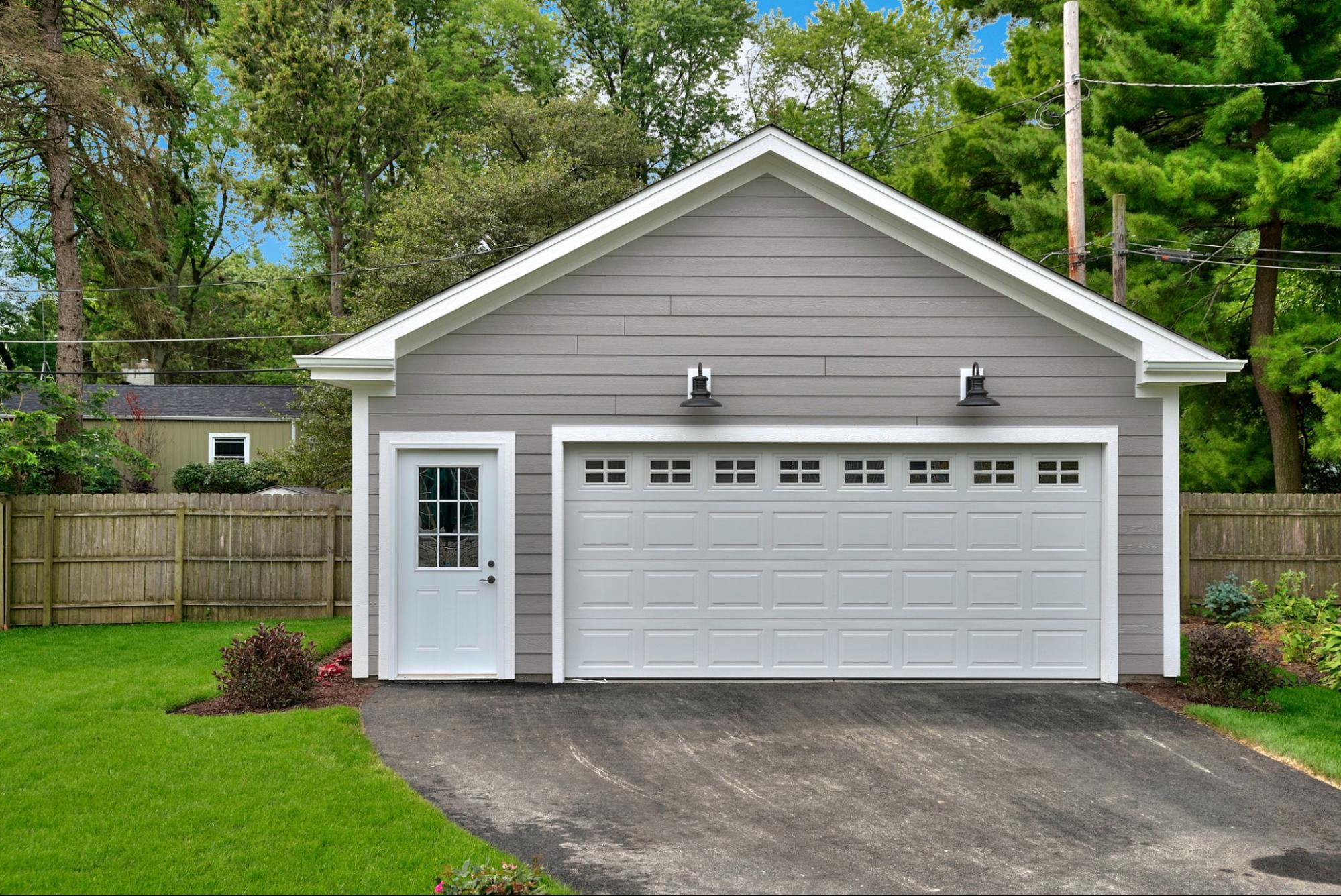
“It’s in the garage,” he said.
I smiled, keeping my eyes mostly on the road. “What’s in the garage, sweet pea?”
“I’m not supposed to tell you. Dad said nobody can know until it’s ready.”
I shook my head, already picturing my daughter and her husband Marcus attempting to build something together, or wrap some elaborate surprise, or pull off a project of some kind without their five-year-old accidentally spoiling it before it was finished. Noah had never once, in his short life, been good at keeping a secret. The previous Christmas, he’d announced the contents of every single wrapped box under the tree before any of us had even finished our coffee, working his way methodically around the room pointing at each present and declaring its contents with total confidence.
“Did your dad say anything else about it?” I asked.
Noah picked absently at the strap across his chest, considering the question with the particular seriousness he brought to everything. “Mom said, ‘What are we going to do if she finds out?'”
My smile faded, just slightly. “Who was she talking about?”
He pointed a small finger directly at me, in the mirror, so I could see it. “You.”
I felt my hands tighten around the steering wheel without quite meaning to. My family liked to joke, not entirely unkindly, that I could turn a minor mystery into a full criminal investigation before anyone had finished explaining themselves. My daughter had told me on more than one occasion that I should let people finish a sentence before I decided they were guilty of something. I’d told her, more than once in return, that I would happily do that the moment people stopped acting suspicious in the first place.
“Okay, sweet pea,” I said, keeping my voice light. “Tell Grandma exactly what you saw.”
Noah described a red light glowing somewhere inside the garage. He said he’d heard his parents talking quietly in there one evening after his bath, their voices low the way grown-up voices get when they don’t want little ears listening in. He said he’d seen his mother come into the house one afternoon carrying a package from the flea market, wrapped in brown paper, and that she’d carried it straight out to the garage without stopping and told him firmly not to touch it.
“Did you see what was inside it?” I asked.
He shook his head. “No. They said it wasn’t ready.”
I tried to laugh again, but it came out thinner than I intended, a little strained around the edges. A birthday surprise, maybe. Some home project they’d gotten more carried away with than usual. Nothing, surely, worth working myself into a state over during a fifteen-minute drive home from kindergarten.
Then, unbidden, I remembered the way Emma had asked me the week before, almost offhandedly while we were doing dishes together after Sunday dinner, whether I still kept any old things from when I was younger. I’d brushed the question off at the time, assumed it was idle curiosity, the kind of thing a daughter asks a mother sometimes without any particular agenda behind it.
“What are you thinking about, Grandma?” Noah asked, watching me in the mirror with the sharp attentiveness children sometimes have for adult moods.
“Nothing, sweetheart,” I said.
But I was already, despite myself, picturing the worst possible explanations, my mind running through every uncomfortable scenario a woman my age has accumulated enough life experience to imagine. By the time I reached the turn that would have taken us to my own house, I had driven straight past it without even noticing. I turned the car around at the next intersection and drove instead toward my daughter’s house, my grandson still chattering happily in the back seat, entirely unaware that his casual afternoon confession had just completely rerouted our whole evening.
When I pulled into Emma’s driveway, I could see it immediately — the garage window glowing a dim, reddish color from somewhere inside. Whatever they were hiding was sitting right there, just behind that closed door, close enough now that turning back seemed suddenly impossible.
I pulled Noah out of his car seat and took him firmly by the hand, walking us both up toward the back door. Emma opened it before I could even knock, wiping her hands on a dish towel, her expression shifting the moment she registered who was standing on her step an hour earlier than expected.
“Grandma came to see the garage,” Noah announced proudly, entirely oblivious to the tension suddenly filling the doorway.
Emma glanced at me, her face going carefully neutral in that particular way I recognized from her own childhood, the same expression she used to wear right before confessing to something. “Mom, I was just coming to—”
But I was already past her, moving through the kitchen toward the door that led out to the garage, some old, familiar urgency propelling me forward before I’d fully decided to move at all.
The red glow, once I stepped through the door, turned out to be nothing more sinister than a string of small colored lights looped carefully around the garage wall, the kind you might buy for a party or a holiday display. Beneath them hung photographs — some in simple frames, others clipped to lengths of twine strung across the wall with tiny wooden clothespins, the sort of arrangement you’d see at an anniversary party or a retirement celebration.
I recognized the woman in the photographs a full moment before I properly recognized myself in them. Younger. Sunburned across the nose the way I always used to get every summer before I learned to wear a hat. Smiling in a way that suggested I had never once had a genuine worry in my entire life, which, looking at myself now, I understood to be a very particular kind of lie a young face can tell.
For a few seconds, something in my chest loosened with relief. There was no emergency here. No secret worth the police, whatever a five-year-old imagined that phrase to mean. Just what appeared to be some kind of birthday display, probably meant as a surprise for an upcoming milestone I’d momentarily forgotten was even approaching.
Then I noticed the camera sitting on the workbench beneath the photographs.
It was small and dark, an old film camera with a faded sticker peeling slightly along one side, the plastic body scuffed in a particular pattern that struck something deep and immediate in my memory before my conscious mind had fully caught up. My hand moved toward it almost on its own, then stopped, hovering just above the workbench.
I had told the story of losing that camera so many times, over so many years, that the words had become easy, worn smooth the way a story does when you tell it often enough that the actual memory underneath stops mattering as much as the telling itself. Seeing the camera sitting there, real and solid under my own hand, made those easy, practiced words feel suddenly, uncomfortably uncertain.
I had absolutely no idea, standing in that garage, that the particular past I had spent nearly four decades quietly running from was about to catch up with me in my own daughter’s driveway.
“Where did that come from?” I asked, my voice coming out sharper than I intended.
Emma had come in behind me by then, Noah slipping past both of us toward the kitchen, already losing interest now that the mystery had apparently resolved itself into something boring and adult.
“I found it at the flea market,” Emma said. “The man selling it was clearing out some things after retiring, he said. I remembered you talking, more than once, about your old camera. The one you always said you lost.”
I looked back at the sticker on its side, something in me going very still. “You bought it?”
“I thought it was yours,” Emma said. “It matched everything you’d described, down to the sticker.”
“That isn’t what I asked.”
Her smile, which had been tentative from the moment I walked in, faded entirely now. “Yes. I bought it.”
“And then what?”
“He said there was still film inside it,” she said. “So I had it developed.”
“You had the film developed, printed the photographs, and put them all up in my daughter’s garage without asking me first,” I said, my voice flat.
“I thought you’d like seeing the pictures,” Emma said, gesturing toward the wall of photographs behind me, her voice starting to waver slightly. “You always sounded sad when you talked about losing that camera. I thought this would make you happy.”
“I said I lost it.” The sentence slipped out of me before I could stop it, sharper than I meant it, and I heard the particular strain in my own voice even as I said it. I turned back toward the workbench, and for a moment the garage felt too bright, every little colored light seeming to fix itself directly on that small, battered camera sitting there.
There were parts of my past I had learned, over many years, to speak about in a tidy, contained way — a way that kept them small and manageable, sealed off from the rest of my ordinary life. I did not appreciate having one of those parts placed in front of me, unwrapped and photographed and hung on a wall, like a birthday present I’d never asked for.
“Who was the man selling it?” I asked.
“Mom,” Emma said quietly, her own voice unsteady now, “I’m sorry. I really thought—”
“Who was the man selling it, Emma?”
She hesitated, glancing toward the kitchen where Noah’s small voice was audible, humming something to himself. “He seemed interested, when I told him it had belonged to my mother. He asked if he could meet you sometime.”
My eyes stayed fixed on the camera. “And you agreed to that?”
“I assumed the two of you must have known each other, once. Maybe you’d been friends. I thought it might be nice, actually, if you got to see him again after all this time, so I invited him to dinner tonight.”
“You invited a man I have never once mentioned to you, a man whose name I have never spoken in your entire life, into your home, because he wanted to meet me?”
“I know you don’t need anyone, Mom,” Emma said, her voice softening, pleading almost. “But you spend so much of your time taking care of everybody else — me, Noah, Dad’s memory, everyone but yourself. I thought maybe having a little male company, just for an evening, might be nice for you for once.”
I stared at her, something cold settling in my chest.
“Not a husband,” she added quickly, holding up both hands. “Not some big romance, Mom, I promise. Just dinner. I was trying to be your wingman, that’s all.”
“You were trying to be my wingman,” I repeated, “with a man neither of us actually knows anything about, based entirely on the fact that he happened to be selling a camera at a flea market.”
“He seemed kind,” Emma said. “And he seemed genuinely interested in you, once I mentioned your name. I thought you might enjoy having someone new to talk to, that’s all it was.”
“You don’t get to make that decision for me,” I said, finally turning to look at her fully. “You took something private, something I have spent forty years keeping carefully contained, and you opened it up, put it on public display in your garage, and invited the man who sold it to you over for dinner, all before you even told me any of it was happening. Do you understand, Emma, how far you went behind my back with this?”
Her face reddened deeply. She glanced toward the kitchen again, lowering her voice further. “I’m sorry, Mom. I should have asked you first, before any of it. I see that now.”
“I don’t want to see him,” I said. “I don’t want to hear from him. Whatever this was, whatever you thought you were doing, I want no part of it.”
That was, of course, exactly the moment the doorbell rang.
Emma moved toward the front door before I could stop her, and I heard it open, heard her voice greeting someone in the entryway while I stood frozen in the garage among the string lights and the photographs and that small, silent camera.
An elderly man stood on the front step when I finally made myself walk through to see, a paper bag held awkwardly in one hand. His hair had gone entirely silver at the temples, the years having reshaped the lines of his face considerably, but not nearly enough, I discovered, to save him from my recognition.
“Stephen,” I said, the name coming out of me before I’d fully decided to speak it.
His expression shifted, something softening and sharpening at once. “Alana.”
“You still have a talent,” I said, “for showing up right when I’ve already made up my mind about something.”
“I knew it might be awkward, coming here tonight,” he said, glancing past me toward the open garage behind us, toward the glow of those colored lights. “I didn’t know it would be quite like this, though.”
“Like what? Like I actually remember you?”
“I didn’t know it would be like this,” he repeated, quieter, some old, careful patience in his voice that I remembered even after forty years, the particular way he’d always had of not rising to meet anger with more anger.
Emma stepped between us, her hands raised slightly, placating. “I invited him, Mom. He didn’t force his way into anything. This is entirely on me.”
“I know that,” I said, not taking my eyes off Stephen. “I’m quite sure you’re very good, still, at making people believe you mean well.”
He lowered the paper bag slightly, his eyes not leaving mine. “I came to return something that belonged to you.”
“You already sold it,” I said. “That ship, I think, has sailed.”
“I didn’t know you’d want it back,” he said. “Not until Emma explained the whole thing to me over the phone last week. Then I understood.”
I started, without quite planning to, walking back toward the garage, toward the wall of photographs. “You didn’t know much about what I wanted, as I recall, forty years ago either.”
His eyes held mine for a long moment, but he didn’t answer that directly. For a moment I was pulled entirely back into the garage in my memory, standing there staring at that camera while the old photographs hung silently above it, and I could feel my anger, real and immediate, looking for somewhere solid to land.
I turned and started tearing the photographs down from the wall, one after another, the little wooden clothespins clattering onto the workbench.
“Those pictures,” Stephen said, glancing past me at the wall, something urgent entering his voice.
“Don’t,” I said, not turning around.
“Would you mind,” he said, “just looking at the sequence of them? Before you take them all down?”
“I don’t need you to tell me what to do,” I said, spinning to face him fully.
“I know,” he said simply. He looked past me toward Emma instead. “Would you mind?”
Emma glanced at me, hesitating, clearly caught between us, and I hated, in that moment, that she was waiting for my permission at all, and hated even more, somewhere underneath the anger, that some part of me actually wanted to say no and mean it.
“Fine,” I said finally, my voice tight. “Show me.”
My stomach tightened as Stephen followed me back into the garage, keeping a careful, respectful distance the whole way. He went to the photo wall and pointed to one image near the corner, one I’d already half torn free from its clothespin.
It showed him leaning toward Selena, a close friend of mine at the time, his face angled near hers, their noses nearly touching in the frame. From that particular angle, caught in that particular half-second, it looked exactly, unmistakably, like he was kissing her.
“That’s the one,” I said, my voice flat.
“I figured it would be,” he said, and gave a short, bitter laugh that had nothing of humor in it.
“You figured what, exactly?”
“That you’d see that photograph and think the exact same thing you thought the very first time you saw it. Forty years ago, in this same camera, before I ever got the chance to develop it and show you the rest.”
I turned on him fully now. “You expect me to remember one single photograph from forty years ago, out of everything that’s happened since?”
“I hoped,” he said quietly, “that you might remember what happened right after it. What I tried to tell you, before you walked out.”
I remembered, actually, a great deal more than I wanted to admit standing there in that garage. I remembered the hot, immediate sting across my face and chest when I first saw that image, developed in a drugstore darkroom decades earlier, handed to me by a clerk who had no idea what she was setting into motion. I remembered Stephen reaching for my hand while I pulled it sharply away from him. I remembered saying, in a voice I barely recognized as my own, that I didn’t want to hear a single excuse.
I remembered, too, the choice I had made not long after that — one Stephen had never once known about, across all these years.
At the time, I had been twenty-five years old and entirely certain that certainty itself was the same thing as being right about something. I had seen him leaning toward Selena in that single frozen moment, and the rest of the world, everything else that might have contradicted that one image, had simply disappeared from my consideration entirely.
I had stormed out before Stephen could get another word in. I’d left the camera behind on his kitchen table, slammed his front door hard enough to rattle the glass, and told myself, and later everyone else, that I had simply lost it somewhere along the way. It had been easier, over the years, to tell that story than the true one.
“You never let me explain,” Stephen said now, reaching for the photograph beside the first one, then stopping himself just before touching it. “Now look at this next one.”
The following picture showed Selena bent over laughing, Carl — her boyfriend at the time, later her husband — standing beside her with one arm draped casually around her shoulders. In the frame after that, Stephen stood between the two of them, grinning directly at whoever was holding the camera, while Carl made an exaggerated, ridiculous face behind him, clearly trying to ruin the shot.
Several more pictures followed in the same sequence, all of them clearly from the same picnic, the same golden afternoon light. Drinks raised in a toast. Everyone squinting against the sun. Selena leaning comfortably against Carl’s shoulder while Stephen reached across, laughing, trying to steal a bite off her plate.
“You took all these that same day?” I asked, my voice quieter now.
“Most of them,” he said. “The film was still in the camera when I finally got it developed, months later. I wanted so badly to show you all of it. I kept thinking, if I could just get you to sit down and actually look at the rest of the roll, you’d understand what you’d actually seen in that first frame.”
“But you didn’t,” I said. “You never showed me.”
“You told me never to come after you,” he said simply.
“You could have called,” I said, though even as I said it, my own voice had lost most of its earlier edge.
“I tried, once,” he said. “You’d already moved by then. I didn’t know where to find you, and you had made it very clear, in the moment, that you didn’t want me looking.” He paused. “After a while, I stopped trying to turn your no into a maybe. I decided I owed you that much, at least — believing you meant what you said.”
There it was. Not quite an excuse, I realized, standing there among the torn-down photographs. Simply a fact I had never once, in forty years, actually asked him to explain.
Neither of us said anything else for a long moment. For years, my family had gently teased me about making up my mind too quickly, too firmly, and I had always laughed along with it, treated it as a small, harmless personality quirk, something almost charming about me. Standing in that garage, looking at photograph after photograph of an afternoon I had rewritten entirely in my own memory, I understood, freshly and uncomfortably, exactly how easily one quick judgment, made in a single unbearable second, could go on to quietly reshape an entire life.
Emma glanced between the two of us, then toward the dining room, breaking the silence. “We’re all standing out here acting like the walls are about to come down,” she said. “Can we please sit and eat before somebody says something none of us can take back?”
The food, laid out earlier for what Emma had clearly intended to be some kind of gentle, hopeful reunion dinner, had gone cool sitting on the table. Emma pulled out a chair for herself and sat across from Stephen. I took the seat beside her, still not entirely certain I’d decided to stay for dinner at all. For a moment, the only sounds in the room were the refrigerator humming steadily in the kitchen and the faint clink of Emma setting down a serving spoon nobody had used yet.
She stood again a moment later to bring over the water glasses, pausing behind our chairs on her way back.
“How long ago did you two know each other?” she asked, from behind us.
Stephen didn’t answer her right away. He was looking, instead, at Emma’s face directly, at the particular shape of her eyes, with an expression that suggested something had just occurred to him, something he seemed almost afraid to say out loud.
“How old are you, Emma?” he asked instead.
“Forty,” Emma said, glancing between the two of us, clearly confused by the sudden shift in his attention.
Stephen went very still. His eyes moved from Emma’s face over to mine, then back again, as though he were searching carefully for some sign that he had simply misunderstood something. A flicker of something that looked almost like hope crossed his expression, quickly held in check by uncertainty.
“Alana,” he said slowly, “we broke up forty years ago. Almost to the month, if I remember the timing correctly.”
“I know,” I said.
“I don’t want to assume anything,” he said, drawing in a breath, hesitating, his fingers tightening visibly around the back of his chair. “And I know full well I have no right to ask this, not after everything, not after all these years.” He looked over at Emma again, something careful and searching in his expression. “Could she be my daughter?”
The question seemed to pull all the air out of that dining room at once. Emma’s eyes went wide, staring at me now instead of at him.
“I found out I was pregnant a few weeks after I left you,” I said, the words coming out steadier than I expected, though something in my chest was shaking. “I was already pregnant when I walked out that door. I simply didn’t know it yet.”
“You should have given me the chance,” Stephen said, his hand falling away from the back of the chair. “Why didn’t you tell me, once you found out?”
“I was hurt,” I said. “And I told myself you wouldn’t want to hear from me at all, after everything I’d said to you. I was too proud, honestly, to risk calling you and hearing you say it was nothing, or worse, hearing nothing back at all.” I swallowed hard. “That doesn’t excuse what I did. I should have given you the chance to answer for yourself, one way or the other. I took that choice away from both of us.”
Emma looked from him to me and back again, something hardening slightly in her expression. “You knew he might be my father this whole time, and you never once told me?”
“I knew the timing lined up,” I said. “I didn’t know, and I never let myself find out, whether he’d have wanted to be part of your life.”
“You decided that for both of us,” Emma said quietly. “For all three of us, really.”
I couldn’t deny it. There was nothing honest I could say that would make that untrue. Stephen lowered his eyes to the table, and for once in my life, standing there in that dining room, I didn’t rush to defend myself or fill the heavy silence that followed. I made myself simply wait, and listen, for whatever Emma needed to say next.
Emma folded her arms tightly across herself, holding very still. “I need a minute,” she said. “I genuinely don’t know what I’m supposed to be feeling right now.”
“You don’t have to decide anything tonight,” Stephen said gently. “I’m not asking you to call me your father, Emma. I’ve gone forty years without knowing you existed at all. I just needed to ask the question, now that it’s in front of me. Whatever you want to do with the answer is entirely yours to decide.”
Emma looked at him for a long, searching moment, her arms slowly loosening. “I’d like to have dinner,” she finally said. “But I want to ask my own questions tonight. Not just sit here and listen to the two of you work through forty years of your own history.”
“That seems fair,” Stephen said quietly.
I pulled out a chair for her, then stopped myself before I could tell her where exactly to sit, some old habit catching itself halfway out of my mouth.
“Where would you like to start?” I asked instead.
Emma sat down slowly, considering the question with real care, her hands folded on the table in front of her. “I want to know what he was actually like,” she finally said. “Not the man in the photographs from one afternoon forty years ago. I want to know who he actually was, back then. And I want to know who you actually were too, Mom, before any of this happened. Before I existed.”
I looked at Stephen across the table, and something in his expression told me he was as unprepared for that particular question as I was.
“That’s a longer story than one dinner,” I admitted.
“I have time,” Emma said. “It seems like we’ve all got a lot of time to make up for.”
So we told her. Not everything, not that first night — some of it took weeks, months even, to properly unfold between the three of us, and there were entire pieces of that old history I’m still, even now, working up the courage to share in full. But we started that evening, over cold chicken and rice that nobody had the heart to reheat, with the simple facts: how Stephen and I had met at a community college registration line in the autumn of 1978, both of us waiting to sign up for the same evening photography class, how we’d bonded over a shared, slightly ridiculous enthusiasm for a hobby neither of us was particularly good at yet. I told her about Selena and Carl, our closest friends in those years, about picnics by the reservoir and long nights playing cards in Stephen’s cramped apartment above a hardware store. I told her, carefully, about the particular fire I’d had in me at twenty-five, the kind of certainty that felt, at the time, like strength, and that I understood now, decades later, had cost me more than I’d ever properly accounted for.
Stephen, for his part, told her about the years right after I’d left — about finishing his degree in mechanical drafting, about a marriage of his own in his thirties that hadn’t lasted, about the two children from that marriage, a son and a daughter, both grown now, both living several states away with their own families. He told her about retiring the year before from the drafting firm where he’d worked for nearly three decades, about the sudden strange abundance of free time that had led him, almost by accident, to start clearing out his garage and selling off things he no longer needed, including, as it turned out, an old camera he’d never once managed to properly get rid of before.
“I kept it all those years,” he admitted, somewhere near the end of that first long dinner, “even though I never developed the rest of the film until just recently. I think some part of me always knew I’d want to show it to you eventually, if I ever got the chance. I just never expected the chance to actually arrive.”
Emma had gone quiet again by then, watching both of us with an expression I recognized from her childhood, the particular look she used to get when she was working through a math problem that had more steps than she’d initially expected.
“So you’re saying,” she finally said, slowly, “that for forty years, neither of you knew for certain. You just both assumed.”
“I assumed you didn’t want to know,” I said.
“I assumed she’d already decided, and that whatever she’d decided, it wasn’t going to include me,” Stephen said. “I told myself that respecting her choice, even a choice I didn’t understand, was the only decent thing left for me to do.”
Emma looked between the two of us for a long moment. “That’s a lot of assuming for something this big,” she finally said, and there was no real anger left in her voice by then, just a kind of tired, honest disbelief.
“It is,” I admitted. “It’s the single largest mistake I’ve made in an entire life full of them.”
We didn’t resolve everything that first night, not by any reasonable measure. Stephen left a little after nine, Emma walking him out to his car while I stayed behind in the kitchen, washing dishes I didn’t need to wash yet, giving the two of them a few private minutes I sensed they both needed. Through the window over the sink, I watched them stand together in the driveway for a long while, talking, Stephen occasionally gesturing with his hands the way I remembered him doing decades earlier, Emma nodding along, her arms wrapped around herself against the evening chill.
In the weeks that followed, things moved slowly, carefully, the way I suppose they should have, given everything at stake. Emma arranged for a paternity test, which felt, to me, like both an obvious and a strangely formal step after everything else that had already been said and understood between the three of us that first night. The results came back a little over two weeks later, confirming what none of us had really doubted by that point.
Stephen cried when Emma called to tell him. She told me later that she’d never once, in the brief time she’d known him, expected to hear a grown man’s voice break quite like that over the phone.
Noah, for his part, remained entirely unaware of the enormity of what his small, whispered secret in the back seat of my car had actually set into motion. As far as he was concerned, the mystery of the red-lit garage had simply resolved itself into old photographs and a nice dinner with a new grownup named Stephen who, a few weeks later, started coming around fairly regularly, and who turned out to be remarkably good at building elaborate block towers on the living room floor.
I want to tell you honestly that Stephen and I didn’t fall back into anything resembling romance, because that would be dishonest, and I think honesty is the very least I owe this particular story after everything my own quick temper cost all three of us across four decades. What we found instead, slowly, carefully, over that first year, was something more like friendship, built on the strange, shared foundation of a daughter neither of us had properly known we had. We had dinner together every few weeks, sometimes with Emma and Noah, sometimes just the two of us, working through old memories at a pace that felt sustainable rather than overwhelming. He told me, eventually, about Selena and Carl’s eventual divorce years later, about losing touch with most of our old friend group after I left, about the particular loneliness of building an entire second life around a first one that had ended so abruptly and so completely without explanation.
I told him, in turn, about raising Emma largely alone, about the small lies I’d told her over the years regarding her father — not cruel lies, I want to be clear, just careful omissions, the kind a proud, frightened twenty-five-year-old tells herself are protecting everyone involved. I told her he’d been someone I loved once, someone things simply hadn’t worked out with. It wasn’t false, exactly. It also wasn’t remotely the whole truth, and Emma, sitting across from me one evening several months into all of this, told me plainly that the incompleteness of it had shaped more of her own life than I probably realized — a certain caution she’d always carried around men, a habit of assuming the worst explanation first and asking questions only much later, if at all.
“I think I learned that from you,” she said, not unkindly, but not gently either. “Without either of us ever really noticing it happening.”
I didn’t have a good answer for that. I still don’t, if I’m honest. But I’ve thought about it often since, turning it over the way you turn over a stone you’ve been carrying in your pocket so long you’ve nearly forgotten why you picked it up in the first place.
Emma and Stephen’s relationship, meanwhile, developed at its own careful pace, separate from whatever Stephen and I were rebuilding between ourselves. She started calling him on Sunday afternoons, brief calls at first, gradually stretching longer over the following months. He came to Noah’s kindergarten graduation that spring, sitting in the row behind Emma and Marcus, and I watched him wipe his eyes more than once during a ceremony that, by any objective measure, was fairly unremarkable as far as kindergarten graduations go, twenty small children in paper caps singing a song about the alphabet slightly off-key.
“He missed forty years,” Emma told me afterward, watching Stephen from across the parking lot as he knelt down to say something to Noah, who was showing off his paper diploma with great pride. “I think he’s trying to make up for some of it all at once, even though he knows he can’t.”
“Let him,” I said. “It’s the least either of us can give him now.”
I still have the camera. It sits on a shelf in my own living room now, no longer in Emma’s garage, no longer surrounded by string lights, just resting quietly among a few other things I’ve collected over the years — a chipped ceramic bowl my mother once owned, a small brass clock that no longer keeps proper time. I look at it sometimes in the evenings, that small, battered thing that somehow survived forty years in someone else’s keeping, patiently waiting, it seems, for the story attached to it to finally catch up.
I think about that afternoon in the car often, Noah’s small serious voice in the back seat, the whole improbable chain of events his innocent five-year-old secret ended up setting loose. If he’d simply kept quiet that day, the way I’d always assumed, half-fondly, that he never quite managed to do, I wonder sometimes how much longer that camera would have sat on Stephen’s workbench, how much longer Emma would have kept planning her careful little surprise, how much longer all three of us might have gone on not knowing what, by then, had already been true for forty entire years.
I don’t know that I believe, particularly, in fate, or in things happening exactly the way they’re supposed to. I’ve lived long enough, and made enough of my own consequential mistakes, to be wary of stories that wrap themselves up too neatly. But I do know this much for certain: a five-year-old’s whispered secret in the back of a car, on an ordinary Tuesday afternoon, ended up handing all three of us — Emma, Stephen, and myself — something none of us had thought to go looking for on our own. Not a resolution, exactly. Not a neat, tidy ending. Just, finally, after forty long years, the truth, laid out plainly enough that none of us could keep quietly rewriting it in our own private version anymore.
Some evenings now, when Stephen comes for dinner and Noah drags him off to build another elaborate block tower on the living room floor, I watch the two of them together, and I think about all the years that particular scene very nearly never happened at all. I think about how close I came, standing in that garage with photographs clutched in my angry hands, to tearing the whole thing down before I ever let myself actually look.
I’m glad, in the end, that Emma made me look.

Laura Bennett writes about complicated family dynamics, difficult conversations, and the quiet moments that change everything. Her stories focus on real-life tensions — inheritance disputes, strained marriages, loyalty tests — and the strength people find when they finally speak up. She believes the smallest decisions often carry the biggest consequences.