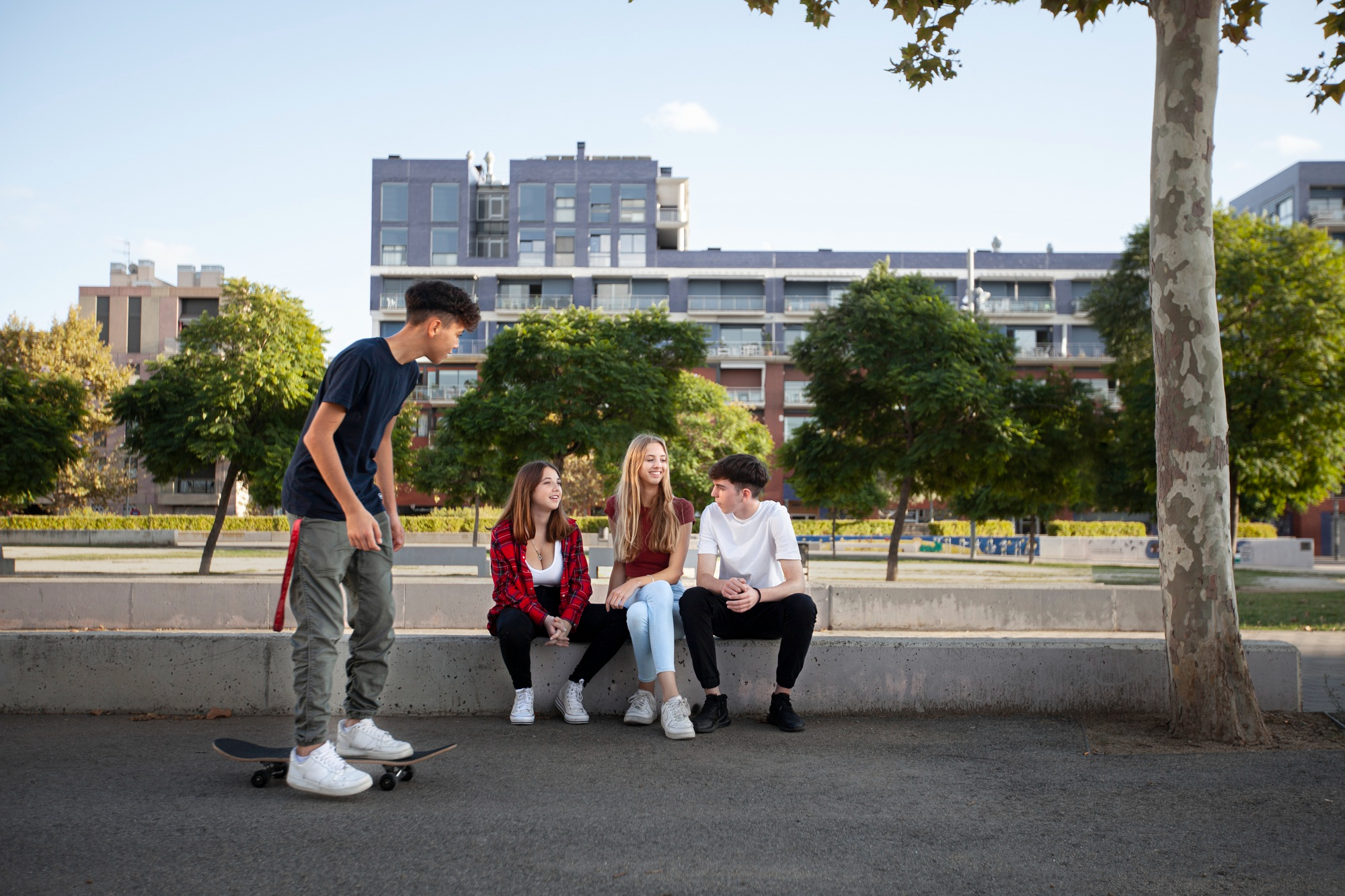
My daughter crawled into my bed at eleven o’clock on a Tuesday night to show me a video of a raccoon stealing a whole pizza off somebody’s back porch.
“Mom. Mom. Look at his little hands.”
“Stacy, it’s eleven o’clock.”
“Look at his little hands, Mom.”
I looked at his little hands. The raccoon was carrying the pizza box across a deck railing like a waiter with a tray, walking on his back legs. Stacy was laughing so hard she was shaking the whole mattress. My husband, Mark, groaned and put a pillow over his head.
“One more,” Stacy said.
“One more,” I agreed.
It was twelve more. By the end, she was lying sideways across the foot of the bed with her head on my shins, giggling at a video of a goat in pajamas, and I was thinking, This. This right here. This is my girl.
She was fifteen. Almost sixteen. She had long brown hair she was always twisting into a knot on top of her head, and her father’s dark eyebrows, and my nose, and a laugh that came out of her like a hiccup when she wasn’t expecting it.
At home, she was still my girl. She stole fries off my plate. She asked me what she should wear to school, and then wore something else. She hugged me once in a while without being asked, usually when I was cooking and couldn’t hug her back properly, which I think was the point.
But somewhere in the last year or two, I had started to feel like I was raising two different people.
There was the girl on the foot of my bed with her head on my shins.
And then there was the girl at school.
The first time I really noticed it was in the spring of eighth grade.
I’d gone to pick her up at the middle school, and I pulled right up to the front curb like always. She was standing with a group of girls. She saw my car, a silver minivan with a dent in the sliding door and a sticker on the back window that said MY KID IS ON THE HONOR ROLL, and her whole face changed.
She got in fast. She slid down in her seat.
“Mom,” she said. “Can you not pull up right in front?”
“Where do you want me to pull up?”
“Like, down by the gas station. On the corner.”
“Why?”
She looked out the window. “Your car is kind of giving soccer mom.”
I laughed. I honestly laughed. I thought it was funny. I told Mark about it at dinner, and he laughed too.
“Soccer mom,” he said. “You don’t even like soccer.”
“I know,” I said. “I don’t even know what the rules are.”
Looking back, I don’t think I should have laughed.
After that, it was a lot of little things. Sneakers that were perfectly fine became “embarrassing” because some girl in her grade had the two-hundred-dollar ones. Our summer trip to my sister’s lake cabin in Wisconsin wasn’t “a real vacation” because there was nothing to post. A sweater I bought her for Christmas went straight to the back of her closet with the tags still on because it was from Target and everybody would know.
She was on her phone constantly. TikTok. Instagram. Videos of girls her age unboxing four-hundred-dollar handbags. Videos of influencers showing off their “morning routines” in kitchens bigger than our whole downstairs. Videos of sixteen-year-olds screaming in driveways in front of brand-new cars with giant red bows on them.
She watched those last ones a lot.
“Stacy, those people aren’t real,” I told her once. “Half of those houses are rented for the video.”
“I know, Mom,” she said, without looking up. “I’m not stupid.”
But she kept watching.
The truth is, I probably made it worse. I’ve had a lot of time to think about it, and I know that’s true.
I grew up with almost nothing.
My dad, Joe, was a custodian at the high school in our little town in Illinois. My mom, Bev, worked the deli counter at the grocery store. They worked all the time. My dad took extra shifts cleaning the elementary school on weekends. My mom took in sewing. Hems and zippers, for neighbors, at the kitchen table at night.
We weren’t starving. But there were years when I knew better than to ask for things. I’d stand next to my mom in the grocery store and watch her lips move as she added up the prices in her head. When she put something back on the shelf, I didn’t ask why. I knew why.
I wore my cousin’s clothes until high school. I had one pair of sneakers a year, and I wore them until there were holes in the soles. When the other girls went on spring break trips to Florida, I worked at the Dairy Queen.
And I remember exactly what it felt like to be the kid who was always explaining. No, I can’t come, I have to work. No, we’re not going anywhere. No, I don’t have one of those.
So when I had Stacy, I made myself a promise.
She was never going to feel like that.
Mark and I did okay. Better than okay. He’s a pharmacist. I manage the billing department at an orthopedic clinic. We have a nice house in a nice suburb with a big yard and a decent school district. We’re not rich. But we’re comfortable.
So if Stacy’s classmates had something, and I could reasonably afford it, I usually found a way. The sneakers. The phone. The trip to the waterpark in the Dells with three of her friends for her fourteenth birthday.
It wasn’t because she demanded everything. She didn’t, not really. Not at first.
It was because I remembered.
I remembered standing in the cafeteria in seventh grade while a girl named Courtney Mills held up my shoe, the one with the duct tape on the side, and asked everyone if they wanted to see what poor people wear.
I remembered and I never wanted my daughter to stand in a cafeteria like that.
So I gave her things.
I didn’t realize until much later that I wasn’t giving them to her. I was giving them to the girl I used to be.
Which brings me to the car.
Stacy was turning sixteen in October. For almost a year, Mark and I had been quietly putting money aside to buy her a first car. A hundred dollars a week out of each of our paychecks, into a separate savings account.
She knew she’d probably get a car eventually. Most of the kids in her grade did. But she didn’t know we were seriously planning to give her one for her birthday.
And I’ll admit something that sounds ridiculous now.
I had been looking at a used Tesla.
Not brand new. I’m not crazy. A three-year-old Model 3, white, with forty thousand miles on it, at a dealership about twenty minutes from our house. It had a five-star safety rating. It had all those cameras and sensors that beep if you get too close to anything. I’d read every article. I’d watched every video.
I told myself it was about safety. And it partly was.
But mostly, it was about the moment.
I pictured putting a giant red bow on it in the driveway. Like in the videos. I pictured her coming out the front door in her pajamas. I pictured her screaming. I pictured her taking a hundred pictures and hugging me so hard my ribs hurt.
I wanted that moment so badly.
Mark wasn’t sure.
“It’s a lot of car for a sixteen-year-old,” he said, the first time I showed him the listing. We were sitting at the kitchen table after Stacy went to bed. “What happened to the plan? Something used and boring. A Civic. A Corolla.”
“It is used,” I said.
“Laura. It’s a Tesla.”
“It’s safe. It’s got all the safety stuff. You read the reviews.”
He looked at me for a long moment. Mark has a way of looking at me that makes me feel like he can see straight through my skull.
“Is this for her,” he asked, “or for you?”
I didn’t answer that. I said it was for her.
We went to the dealership together on a Saturday in September. We test-drove it. The salesman, a young guy named Tyler, kept saying things like “she’s going to flip” and “this is going to be the best birthday of her life.” I put down a deposit. Five hundred dollars. Refundable. We’d pick it up the morning of her birthday.
Driving home, I was so happy I was humming.
Three weeks later, I was sitting in a pickup line in ninety-degree heat with my windows down.
It was a Wednesday. One of those September days in Illinois that’s still pretending to be July. The air conditioning in my minivan had been making a grinding sound for a week, so I’d turned it off and rolled all the windows down.
The pickup line at the high school is a nightmare. It wraps around the parking lot and halfway down the street. You inch forward a car length at a time. Kids pour out of the building and stand along the curb in groups, waiting for their rides, scrolling on their phones.
I spotted Stacy right away. She was standing near the curb by the flagpole with three girls from her grade. I knew two of them. Brooke and Madison. They’d been coming over to our house since elementary school. The third girl I’d only met once. Jada. She was newer. Quiet. Her family had moved here from Indianapolis the year before.
Stacy had her back to me. She didn’t see my car coming.
I wasn’t trying to listen. I want to be clear about that. I wasn’t spying. I was just inching forward in the line with my windows down, thinking about what to make for dinner.
Then I heard my name.
Not my name, exactly. My mom.
“Yeah, my mom’s getting me a Tesla for my birthday,” Stacy said.
I immediately took my foot off the gas.
Madison turned around to look at her. “Seriously?”
Stacy laughed. A little high, bright laugh. The laugh she uses with her friends. I’d never noticed before how different it was from the hiccup laugh she does at home.
“Obviously,” she said. “She knows I’m not driving some ugly starter car.”
I sat there with my hands on the steering wheel. I actually thought I must have misheard her.
“How do you even know?” Brooke asked.
“Because I told her what I wanted,” Stacy said.
That wasn’t true.
She’d mentioned Teslas probably eight thousand times. She’d sent me videos. She’d pointed them out in parking lots. But I had never once told her she was getting one. I’d never even hinted. I’d been so careful.
“And,” Stacy added, flipping her hair over her shoulder, “my mom always caves anyway.”
That one hit me right in the chest.
The girls laughed.
Stacy kept going.
“She acts like she has rules,” she said, “but if I want something badly enough, I’ll get it. I’m her only daughter.”
I sat very still in the driver’s seat. The car behind me honked. I didn’t move.
Then Jada said something. The quiet one. She said it carefully, like she was testing the water.
“My parents are making me save for half of my first car,” she said. “I’ve been working at the frozen yogurt place since June. I’ve got almost two thousand dollars.”
Stacy turned to look at her. She made a face. This sad, pitying face. Like Jada had just told her she had a terrible disease.
“No offense,” Stacy said, “but that’s insane. Why would your parents make you pay for your own birthday present?”
Jada shrugged. “So I appreciate it, I guess?”
Stacy laughed. Actually laughed. Out loud.
“I’d appreciate not having to drive a Corolla,” she said.
Brooke and Madison laughed with her. Jada didn’t. She looked down at her phone. I watched her face go a little red.
I was sitting maybe twenty feet behind my daughter with my hands on the wheel. I could feel my own face getting hot. My hands were sweating on the steering wheel, and it wasn’t from the heat.
Then Stacy said the part that really did it.
“Honestly,” she said, “if my mom got me something like that, I literally wouldn’t drive it to school. I’d just leave it in the driveway and take the bus. At least the bus doesn’t have your name on it.”
The girls laughed again.
The car behind me honked again. Longer this time.
Stacy finally turned around. She saw my minivan sitting there with the windows down. Twenty feet away.
Her whole expression changed. Just for a second. Something flashed across her face. Fear, maybe. Or guilt.
Then it was gone. She smiled. She waved at me like nothing had happened. She said something to her friends and walked over to the car.
She got in. She buckled her seatbelt. She tossed her backpack on the floor.
“Oh my God, Mom,” she said, “you will not believe what happened in science today. Kaylee Brennan told Mr. Ortiz that she didn’t do her lab report because her dog died, and then Mr. Ortiz said, Kaylee, your dog died in March, and she said, It’s a different dog, and everybody—”
I pulled out of the line. I didn’t say anything.
She talked for three blocks. About Kaylee and the dog. About a quiz in history. About Madison’s older brother who just got kicked out of community college.
I barely answered. “Mm-hmm. Wow. Really?”
After a while, she stopped talking. She looked at me.
“Why are you being weird?”
“I’m not being weird.”
“You’re being weird.”
I almost confronted her right there. I had the words in my mouth. I heard you. I heard every word you said.
But I didn’t. I don’t know why. Maybe I wanted to give her one more chance. Maybe I wanted to see what she’d say if she didn’t know I’d heard.
So I asked her something else instead.
“Stace,” I said, keeping my eyes on the road. “Would you be embarrassed if I bought you a normal first car?”
She looked confused. “What do you mean, normal?”
“I don’t know. Something reliable. Used. Nothing fancy. Like a Honda. Or a Corolla.”
She stared at me for a second.
Then she laughed.
“Mom,” she said, “please don’t scare me like that.”
And she went back to her phone.
That answer pretty much confirmed everything I’d heard.
That night, after Stacy went upstairs, I told Mark.
We were sitting on the back porch. It was finally cooling off. The cicadas were going. Mark was drinking a beer. I wasn’t drinking anything. I was just sitting there with my arms wrapped around my knees.
I told him everything. Word for word. I’d been replaying it in my head all afternoon. I had it memorized.
My mom always caves anyway.
She acts like she has rules.
I’d appreciate not having to drive a Corolla.
I literally wouldn’t drive it to school.
When I was done, Mark was quiet for a while.
“She’s fifteen,” he said finally. “Fifteen-year-olds say stupid things around their friends. They brag. They show off. It’s what they do.”
“I know.”
“Remember when I was fifteen, I told everybody at school my dad was a pilot? He sold insurance.”
“I know.”
“So maybe don’t read too much into it.”
“I agree,” I said. And I did, partly. I was fifteen once. I know teenagers perform for each other. I know they say things they don’t mean. I know they try on personalities like jackets.
But the more I thought about it, the more uncomfortable I got.
“Mark,” I said. “If I give her that Tesla in three weeks, what does that teach her?”
He didn’t answer.
“It teaches her she was right,” I said. “Every word. That I cave. That my rules don’t mean anything. That if she wants something badly enough, she’ll get it. That it’s normal and reasonable to laugh at a girl who works at a frozen yogurt shop to pay for half her own car.” I took a breath. “I’d be handing her the keys to everything she said.”
Mark took a long drink of his beer. He looked out at the yard.
“Okay,” he said. “So what do you want to do?”
“I don’t know yet.”
“You still want to get her a car?”
“I want to get her a car,” I said. “Just not that one.”
He nodded slowly. “What were you thinking?”
I looked out at the dark yard for a long time.
“I was thinking,” I said, “about my dad’s Corolla.”
My father died two years ago. A heart attack, at sixty-eight, in the parking lot of the hardware store. He was buying a new washer for my mother’s kitchen faucet.
He drove the same car for the last fifteen years of his life. A 2007 Toyota Corolla. Silver. Plain. He bought it used, with forty thousand miles, the year he retired from the school. He drove it to church every Sunday and to the grocery store every Wednesday and to our house every other Saturday to see Stacy.
He loved that car. I don’t know why. It was the most boring car on earth. But he washed it every Saturday morning in my mother’s driveway with a bucket and a sponge and an old T-shirt. He changed the oil himself. He kept a little notebook in the glove compartment where he wrote down every oil change and every tank of gas.
After he died, my mother couldn’t bring herself to sell it. She doesn’t drive much anymore. Her eyes aren’t good. So the Corolla sat in her garage in our little town in Illinois, an hour and a half away, under a sheet, with a hundred and forty thousand miles on it.
She’d mentioned it on the phone a few months before.
“I should do something with Dad’s car,” she said. “It’s just sitting there. He’d hate that. He always said a car’s meant to be driven.”
I called her the next morning. Before work. I told her everything. About the pickup line. About the Tesla. About my mom always caves.
My mother listened without saying anything. She’s always been a good listener. She learned it at the deli counter, she says. Thirty years of people telling you their whole lives while you slice their turkey.
When I was done, she was quiet for a moment.
“Laura,” she said. “Do you remember Brian Kowalski’s car?”
I closed my eyes.
“Yes,” I said.
“I thought you might,” my mother said. “Come get the Corolla. Your father would want her to have it.”
Then I called the dealership.
Tyler, the young salesman, sounded crushed.
“Are you sure?” he said. “It’s such a great car. She’s going to love it.”
“I’m sure,” I said. “I’d like my deposit back.”
“Can I ask why?”
I thought about it.
“Because she was going to love it for the wrong reasons,” I said.
I didn’t tell Stacy anything.
For the next three weeks, she got more and more excited about her birthday. She sent me videos of Teslas. She asked bizarrely specific questions about charging stations. Whether we’d have to install one in the garage. How long it took to charge. Whether the one at the mall was free.
“Why do you want to know?” I asked.
“No reason,” she said, grinning.
She casually mentioned which colors she liked. White was classic. Black was cooler. Red was “a bit much.”
She also asked, out of nowhere one night at dinner, whether a Tesla could fit in the space in front of the school where the seniors park.
Mark nearly choked on his chicken.
I never confirmed anything. I never said yes. I never said no. I just said things like, “We’ll see,” and “You’ll have to wait,” and “It’s a surprise.”
Apparently, my silence was confirmation enough.
A few days before her birthday, I was folding laundry in the hallway outside her room. Her door was open a crack. She was on FaceTime with someone. Madison, I think.
“I think it’s white,” Stacy was saying. “But I’m hoping she got a black interior. White interior gets so dirty.”
Madison said something I couldn’t hear.
“No, she’s being super weird about it,” Stacy said. “Which is how I know it’s real. She always gets weird when it’s something big.”
I stood in the hallway holding one of her T-shirts.
That was the moment I stopped feeling guilty.
The weekend before her birthday, Mark and I drove to my mother’s house.
The Corolla was in the garage, under a blue sheet, exactly where my father left it. When I pulled the sheet off, it was covered in a thin layer of dust. The tires were low. The battery was dead.
Mark spent the whole Saturday on it. He jumped the battery. He filled the tires. He changed the oil, because the notebook in the glove compartment said it was overdue, in my father’s careful block letters. Next change: 145,000.
I washed it. In my mother’s driveway. With a bucket and a sponge and one of my father’s old T-shirts that my mother still kept in a drawer.
My mother sat on a lawn chair on the porch and watched me. She didn’t say anything for a long time.
“You missed a spot,” she said finally. “On the back bumper. He always missed that spot too.”
I laughed. Then I cried a little. I didn’t stop washing.
When we were done, the Corolla sat in the driveway, silver and plain and clean. It looked exactly like it did every Saturday morning for fifteen years.
“It’s a good car,” my mother said. “It’s not much to look at. But it’s a good car.”
“I know, Mom.”
She came down off the porch. She put her hand on the hood.
“He’d be glad,” she said. “Joe. He’d be glad she’s getting it. He was always so proud of that girl.”
Mark drove the Corolla home. I followed in the minivan.
We parked it in Mark’s brother’s garage, two streets over. So Stacy wouldn’t see.
On the morning of her birthday, Stacy came downstairs at 7:30 in her pajamas. Gray sweatpants and an old T-shirt from a 5K she ran in seventh grade. Her hair was a mess. She hadn’t even brushed it.
She didn’t come into the kitchen. She went straight to the front window. She pulled back the curtain and looked out at the driveway.
My minivan. Mark’s sedan. Nothing else.
She stood there for a long moment.
Then she turned around and looked at me. She was smiling.
“Where is it?”
I pretended not to understand. “Where’s what?”
She laughed. “Mom.”
“Happy birthday, sweetheart,” I said.
Mark was standing behind the kitchen counter making coffee. He was trying very hard not to react. He’d been practicing his straight face in the bathroom mirror for three days. It wasn’t working very well.
I picked up a box from the kitchen table. It was wrapped in silver paper with a white ribbon. It was about the size of a shoebox.
I held it out to her.
She looked at it. Then at me.
“What’s this?”
“Your birthday present.”
For the first time, she looked genuinely unsure. Her smile slipped a little. She looked at the box. She looked out the window at the empty driveway. She looked back at the box.
I could see her doing the math. It’s too small for a car. Unless it’s a key. It’s probably a key. It’s a key in a big box to throw me off.
She sat down at the kitchen table. She started ripping off the paper.
She was smiling again. Convincing herself.
She lifted the lid.
There was tissue paper inside. White. She pushed it aside.
And the second she saw what was underneath, all the color drained out of her face.
There were three things in the box.
The first thing was a car key.
It wasn’t a Tesla key card. It wasn’t a sleek black fob. It was an old Toyota key, the kind with a black plastic head and a metal blade. On the key ring, there was a little brass tag, worn smooth, that said JOE in letters stamped into the metal. My mother bought it for him at the county fair in 1985.
Stacy picked it up. She stared at it.
She knew that key ring. She’d seen it a hundred times, hanging on the hook by my parents’ back door. Every time we visited.
The second thing was a small blue book. A savings account passbook, from our credit union. The old-fashioned kind, with the balance written in. At the top, it said Stacy A. Brennan. And the balance said $24,600.
That was the Tesla money. All of it. The money Mark and I saved for a year, plus the money I would have paid on the loan.
The third thing was a card.
It was a plain white card. No picture on the front. Just a white card.
Stacy opened it.
Inside, in my handwriting, it said:
“My mom always caves anyway.”
“She acts like she has rules.”
“I’d appreciate not having to drive a Corolla.”
Happy 16th birthday, Stacy. I love you more than anything in this world. That’s exactly why I’m not caving this time.
— Mom
I watched her read it.
I watched her get to the first line, and stop. I watched her eyes go back to the top and read it again. I watched her understand. I watched her remember standing by the flagpole three weeks ago with her back to the pickup line. And turning around. And seeing my minivan twenty feet away with the windows down.
Her face went white. Then red. Then white again.
She looked up at me.
“You heard,” she said.
“I heard.”
“You were in the pickup line. With the windows down.”
“The air conditioning was broken.”
She looked down at the card. She looked at the key with JOE on the brass tag. She looked at the passbook.
“This is Grandpa’s car,” she said. Her voice was very quiet. “This is Grandpa’s key.”
“It is.”
“You’re giving me Grandpa’s Corolla.”
“I am,” I said. “Grandma wanted you to have it. So did I.”
She stared at me. Her lips were pressed together hard. Her chin was trembling.
“And this,” she said, holding up the passbook. “What’s this?”
“That’s the money we saved for the Tesla,” I said. “Every penny. It’s in an account in your name. You can’t touch it until you’re eighteen. When you’re eighteen, it’s yours. For college, or a car, or whatever you decide.”
“Why can’t I touch it now?”
“Because there’s a rule,” I said. “Every dollar you earn and save from now until you’re eighteen, we’ll match. Dollar for dollar. Into that account. You work at the frozen yogurt place and save two thousand dollars, we put in two thousand more. That’s the rule.”
I looked her right in the eye.
“And I’m not going to cave.”
She didn’t scream. I almost wish she had.
She just sat there for a long moment. Then she put the key back in the box. She put the passbook on top of it. She put the card on top of that. She put the lid back on, very carefully, like she was closing a coffin.
Then she stood up.
“I can’t believe you,” she said.
Her voice was shaking.
“You spied on me. You sat there in your stupid minivan and listened to me. And you didn’t say anything. For three weeks. You let me get excited. You let me tell everybody. I told everybody, Mom. Madison and Brooke and the whole volleyball team. I posted about it.”
“I know you did.”
“You knew that? And you still let me?”
“You told them before I heard you,” I said. “You told them I was getting you a Tesla before I’d even decided to. You told them because you were sure. Because I always cave.”
She flinched like I’d slapped her.
“That’s not fair.”
“It’s exactly what you said.”
“I was just talking!” She was crying now. “I was just talking with my friends! Everybody says stuff! It doesn’t mean anything!”
“Then why did you go pale when you read the card?”
She didn’t answer.
“You laughed at Jada,” I said quietly. “She told you she worked all summer at the frozen yogurt place to pay for half her car. And you made a face like she had a disease. And you laughed.”
“I didn’t mean—”
“She went red, Stacy. I watched her face. She looked down at her phone so nobody would see. You made her feel like the poor kid. In front of everybody.”
Stacy stared at me. Tears were running down her face.
“I hate you,” she said.
It came out sharp and sudden, like a door slamming.
Then she turned around and ran upstairs, and her bedroom door actually did slam, so hard the pictures in the hallway rattled.
I stood in the kitchen. The silver wrapping paper was all over the table. The box sat in the middle of it, closed.
Mark came around the counter. He put his arms around me from behind.
“Well,” he said quietly. “That went about how I expected.”
“She said she hated me.”
“She’s sixteen today,” Mark said. “She’s going to say that about forty more times before she’s twenty. Probably about me too.”
“What if I was wrong?” I said. My voice cracked. “What if I just humiliated my daughter on her birthday?”
Mark turned me around. He held my face in both his hands.
“Laura,” he said. “You didn’t humiliate her. You told her the truth. With a card. In private. In your own kitchen. You didn’t say it in front of her friends. You didn’t post it online. You just showed her what she sounded like.” He kissed my forehead. “That’s the kindest way to hear the truth that I can think of.”
She didn’t come down until four in the afternoon.
I’d made her favorite for dinner. Chicken parmesan. With the garlic bread from the Italian bakery. I’d made a cake, too. Chocolate, with chocolate frosting, the way she’s liked it since she was three.
She came into the kitchen in a hoodie with the hood up. Her eyes were swollen. She didn’t look at me.
She sat down at the table. The box was still there, where she left it. The silver paper was gone. I’d cleaned it up.
She didn’t touch the box.
“Can I ask you something?” she said finally. To the table, not to me.
“Of course.”
“Why Grandpa’s car?” She looked up. Her eyes were red. “You could’ve gotten me any old car. A Corolla from a dealer. A Honda. Why’d you have to give me Grandpa’s? Like, so I’d feel extra guilty? Because now if I don’t drive it, it’s like I’m saying I’m too good for Grandpa?”
I sat down across from her.
I’d known this question was coming. I’d been thinking about how to answer it for three weeks.
“Because I need to tell you something,” I said. “Something I’ve never told anyone except Grandma and Grandpa. And your dad.”
She waited.
I took a breath.
“When I was fifteen,” I said, “I was embarrassed of Grandpa’s car.”
My father didn’t always drive the Corolla. Before that, for most of my childhood, he drove a 1979 Chevy pickup truck. Brown. With rust holes in both doors and a cracked windshield and a muffler that was held on with a coat hanger.
You could hear it coming from three blocks away. It sounded like a cement mixer full of rocks.
My father drove it to work every day. At the high school. Where he was a custodian. My high school.
And I was ashamed of it. I was ashamed of him.
Not of him, exactly. I loved him. But I was ashamed of the truck, and his gray work uniform with JOE stitched on the pocket, and the way the other kids saw him mopping the cafeteria floor after lunch. I was ashamed when a boy named Brian Kowalski, whose father owned the car dealership in town, pointed at my dad pushing a trash cart down the hallway and said, “Hey, Laura, isn’t that your old man? Does he clean your house too?”
Everyone laughed.
I laughed too. I’m not proud of that. I laughed with them.
After that, I made my father drop me off at school a block away. At the corner by the post office. So nobody would see me get out of the brown truck.
He never asked me why. He just started doing it. Every morning. He’d pull over by the post office, and I’d get out without saying goodbye, and I’d walk the rest of the way like I’d come from somewhere else.
“I didn’t think he knew,” I told Stacy. “I thought he thought I just liked walking.”
Stacy was staring at me.
“When I was sixteen,” I said, “Brian Kowalski got a brand-new red Camaro for his birthday. From his dad’s dealership. With a big bow on it. He drove it to school every day and parked it right in front, by the flagpole. All the girls wanted to ride in it.”
“Including you?”
“Including me,” I said. “I rode in it once. He drove me home. He made me ask him to drop me off a block away from our house, because I didn’t want him to see where I lived.” I shook my head. “I didn’t want him to see the brown truck in the driveway.”
Stacy didn’t say anything.
“About a month later,” I said, “I was at a sleepover. At my friend Tina’s house. And a bunch of us were talking about our parents. And somebody asked what my dad did. And I said…” I stopped. I’d never said this part out loud to anyone except Mark. “I said, Oh, he’s just the janitor. I’d die before I let him drive me to school in that garbage truck.“
The kitchen was very quiet.
“Everybody laughed,” I said. “And I felt so good. For about five seconds. Like I’d made myself bigger by making him smaller.”
“Did he find out?” Stacy asked quietly.
“Tina’s mom was in the kitchen,” I said. “She went to our church. She told my mom. And my mom told my dad.”
I looked at my hands on the table.
“He never said a word to me about it. Not one. He just kept driving me to the corner by the post office every morning. For two more years. And he never once asked me why.”
“Then how do you know he knew?”
“Because a year later,” I said, “he sold the truck. And bought a used Buick. Light blue. It was the nicest car he’d ever owned. It had air conditioning and a tape deck. He bought it from Brian Kowalski’s dad’s dealership.” I swallowed. “He took out a loan for it. He paid it off for four years. Out of his custodian paycheck.”
My voice broke.
“And the first morning he drove me to school in it, he didn’t stop at the post office. He drove right up to the front, by the flagpole. And he looked at me and said, Is this okay, Laurie? And I said yes. And he smiled. He was so happy. He was so proud of that car.”
Stacy had her hands over her mouth.
“I found out later, from Grandma, that he only bought it because of what I said at the sleepover,” I said. “He didn’t want to embarrass me anymore. He took out a four-year loan on a janitor’s salary so his daughter wouldn’t be ashamed to get out of his car.”
I wiped my face with my napkin.
“I never thanked him. Not once. I never told him I was sorry. I thought about it a hundred times. Every time I visited. Every time I saw the Corolla in the driveway. I always thought, next time, I’ll say something.“
“And then he died,” Stacy whispered.
“And then he died,” I said. “In the parking lot of the hardware store. Buying a washer for Grandma’s faucet.”
Stacy didn’t say anything for a long time.
She sat at the kitchen table with her hood up, staring at the closed box.
Then she reached out and lifted the lid. She took out the card. She read it again. My handwriting. Her words.
“My mom always caves anyway.”
“I didn’t mean it,” she said. “About you. I swear. I don’t even know why I said it. I just…” She stopped. “They were all talking about what they were getting. Madison’s getting a Jeep. Brooke’s dad is giving her his old BMW. And I just wanted…” She shook her head. “I wanted to win, I guess. I wanted to have the best thing.”
“I know,” I said. “I wanted that too. At your age. I wanted it so badly I let my own father drive me to a corner by the post office for two years.”
She looked up at me.
“I’m not giving you Grandpa’s car to make you feel guilty,” I said. “I’m giving it to you because I made a mistake with him that I can never take back. And I don’t want you to make the same one with me. Or with anybody.”
“I wouldn’t—”
“Stace,” I said gently. “You told your friends you wouldn’t drive it to school. If I bought you something normal. You said you’d take the bus. At least the bus doesn’t have your name on it.“
She flinched.
“That’s exactly what I said about Grandpa,” I said. “Almost word for word. Thirty years ago. And he heard it.”
She put the card down on the table.
She put her head down on top of it. On her arms. With her hood still up.
And she cried. Not the angry crying from the morning. The other kind. The kind that comes from somewhere deeper.
I got up. I went around the table. I sat in the chair next to her. I put my hand on her back.
After a long time, she said something. Muffled. Into her arms.
“Is it still in Uncle Dave’s garage?”
“It is.”
“Can I see it?”
Mark drove her over to his brother’s house after dinner. I didn’t go. I thought she should see it without me.
She was gone for two hours.
When she came home, she didn’t say much. She came in the back door and put the key with JOE on the brass tag on the kitchen counter. She stood there looking at it.
“It still smells like him,” she said quietly. “Grandpa. The inside. It smells like his peppermints. The ones he always had in his pocket.”
“I know,” I said.
“There were some in the cupholder. Still in the wrappers.”
I couldn’t say anything.
She went upstairs. Her door didn’t slam this time. It closed quietly.
I’d like to tell you she drove the Corolla to school the next day. She didn’t.
She didn’t drive it at all for the first two weeks. She took the bus. She was quiet at dinner. She was polite to me, but distant. She stopped crawling into our bed at night to show me videos.
Then one Saturday morning, she came downstairs dressed in jeans and sneakers.
“I need to practice,” she said. “For the driving test. It’s in three weeks. Will you come with me?”
“In the Corolla?”
She looked at the floor. “It’s the only car I’ve got.”
So we practiced. Every Saturday and Sunday morning, in the high school parking lot. Then on the side streets. Then on the highway. She was a careful driver. Slow. Both hands on the wheel. She checked her mirrors so often I thought she’d give herself whiplash.
“Grandpa drove with both hands too,” I told her once. “Ten and two. Always.”
“I know,” she said. “I remember.”
She didn’t talk much during those drives. Neither did I. We just drove.
On the third Saturday, she pulled into a parking spot at the grocery store to practice parking. She turned off the engine. She sat there for a second.
Then she opened the glove compartment.
She was looking for a napkin, I think. Instead, she found the notebook.
It was a little spiral notebook, the kind you buy at the drugstore for a dollar. The cover was blue and soft from being handled. On the front, in my father’s block letters, it said:
COROLLA. 2007. JOE.
She opened it.
Every page was filled. Dates. Mileage. Oil changes. Tire rotations. Gas fill-ups, with the price per gallon and how many gallons. Fifteen years of it. In my father’s careful handwriting.
But in between, there were other things.
Little notes. In the margins. Next to some of the dates.
She started reading them out loud.
“March 4, 2012. 61,200 miles. Drove Bev to the eye doctor. Good news.“
She turned the page.
“July 19, 2013. 68,450. Took the long way home along the river. Sunset. Bev fell asleep.“
She turned another page. She stopped.
“April 12, 2014. 72,110,” she read. Her voice changed. “Took Stacy to the Brookfield Zoo. She sang the whole way there. Every song on the radio. Even the ones she didn’t know. Best drive I ever had.“
She looked up at me. Her eyes were full.
“I was four,” she said. “I remember that. I remember the giraffes.”
She kept turning pages. There were more.
“October 2015. Stacy’s 6th birthday. Drove her to get ice cream. She asked if my car had a name. I told her no. She named it Silver. Silver it is.”
“June 2017. Stacy rode in the front seat for the first time. Very proud. Told me I drive too slow.”
“Sept 2019. Picked Stacy up from school. She ran out and hugged me in front of everybody. Didn’t care who saw.”
Stacy stopped reading.
She sat in the driver’s seat of my father’s car with his notebook in her lap and tears running down her face.
“Silver,” she said. “I named it. I forgot I named it.”
“He didn’t,” I said.
She kept going. She read every page. All the way to the end.
The last entry was two weeks before he died.
“March 2022. 139,870. Long drive with Bev to see the cranes at the river. Thinking about Laura. Wish she’d call more. She works too hard. Wish I’d told her more often I’m proud of her. Next time she visits, I’ll say it.”
Stacy turned around in the driver’s seat and looked at me.
I was crying too hard to say anything.
She closed the notebook. She held it against her chest.
“He was going to say it,” she whispered. “Mom. He was going to tell you.”
“I know that now,” I said.
“He knew. About the sleepover. About the post office. All of it. And he still wanted to tell you he was proud of you.”
I nodded. I couldn’t talk.
Stacy reached over the gearshift and took my hand.
“I’m proud of you, Mom,” she said. “I’m saying it now. So you don’t have to wonder. Okay?”
We sat in the parking lot of the grocery store, in my father’s Corolla, holding hands and crying, while people pushed shopping carts past us and stared.
Neither of us cared who saw.
She passed her driving test on a Tuesday in November. On the first try. The examiner told her she was one of the most careful drivers he’d tested all year.
“My grandpa taught me,” she told him. Which wasn’t exactly true. But I didn’t correct her.
She still didn’t drive the Corolla to school, though. Not at first. She drove it to her new job instead.
She got a job at the frozen yogurt place. The same one where Jada worked.
I didn’t push her to. I didn’t even suggest it. She just came home one day in a pink polo shirt with a name tag that said STACY and announced she was working Tuesday and Thursday afternoons and Saturdays.
“Jada got me the job,” she said. “Her manager needed somebody.”
“You talked to Jada?”
She looked at the floor. “I apologized. For what I said. By the flagpole.” She paused. “She said it was okay. But I don’t think it was. So I asked if they were hiring.”
That was all she said about it. I didn’t push.
But after that, Jada started coming over to our house. On Saturday afternoons, after their shifts. They’d sit at the kitchen table and do homework and eat chips and talk about everything. Jada was funny. Quietly, unexpectedly funny. She made Stacy laugh the hiccup laugh. The real one. The one from home.
Brooke and Madison came over less.
I noticed. I didn’t say anything.
In January, my mother fell.
It was a Wednesday night. Late. Almost eleven. Mark and I were at a work dinner for his pharmacy chain in Chicago, an hour away. We’d left Stacy home alone for the first time overnight. She’d begged us. She was sixteen. She had a license. She’d be fine.
My mother lives an hour and a half away. Alone. In the same little house in Illinois where I grew up.
She called Stacy. Not me. Not 911. Stacy.
I found out later why. She’d tried my phone first. It was on silent at the dinner. Then she’d tried Mark’s. Same thing. Then, lying on her kitchen floor, she’d scrolled down and found Stacy’s name.
“Grandma?” Stacy said, half asleep.
“Stacy, honey,” my mother said. “I don’t want to scare you. But I fell. In the kitchen. I think I broke my wrist. I can’t get up. And I can’t find your mother.”
Stacy didn’t wait. She didn’t call me first. She didn’t call 911, because my mother told her not to, because she didn’t want “a big fuss with the ambulance and all the neighbors looking.”
She grabbed the key with JOE on the brass tag off the hook by the back door. She got in the Corolla. And she drove an hour and a half in the dark, in January, on the highway, to my mother’s house.
She called me from the road. She’d been calling me every ten minutes. When I finally saw my phone during dessert, there were nine missed calls and six texts.
Grandma fell.
I’m driving there.
In Grandpa’s car.
It’s ok Mom I’m being careful.
Both hands. Ten and two.
I’m almost there.
I called her back. My hands were shaking so badly I could barely hold the phone.
“I’m here, Mom,” she said. “I’m at Grandma’s. I found her. She’s okay. She’s on the kitchen floor. Her wrist is all swollen. I’m taking her to the ER.”
“Stacy, call an ambulance—”
“She doesn’t want an ambulance. She says the hospital’s only ten minutes away and she’s not dying, she just broke her wrist.” I heard my mother say something in the background. Stacy laughed a little. “She says to tell you she’s not dying.”
“How are you going to get her in the car?”
“I already did,” Stacy said. “She’s in the front seat. I put a pillow under her arm. I’m driving her right now.”
Mark and I left the dinner and drove straight to the hospital in my mother’s town. It took us almost two hours.
When we got there, it was almost two in the morning. My mother was sitting in a bed in the emergency room with a cast on her left wrist, drinking apple juice from a little plastic cup.
And Stacy was sitting in the chair next to her bed. Still in her pajama pants and a hoodie. Asleep. With her head on my mother’s blanket.
My mother looked up at me when I came in. She put her finger to her lips.
“Let her sleep,” she whispered. “She’s been up all night.”
I sat down on the other side of the bed.
“She drove all the way here,” my mother said quietly. “In the dark. In January. In Joe’s car.” She shook her head. “When she came in my front door, I was lying on the kitchen floor, and I heard that engine in the driveway. And for a second, Laura, I swear to God, I thought it was Joe. I thought he’d come home.”
I took my mother’s good hand.
“She got me up off the floor,” my mother said. “She’s stronger than she looks. She put my coat on me. She helped me down the porch steps. She put a pillow under my arm in the car. She drove so careful. Both hands on the wheel. Ten and two.” She smiled. “Just like him.”
She looked down at Stacy, asleep on her blanket.
“She told me about the notebook,” she said. “In the glove compartment. She read me some of it while we were waiting for the X-ray. The one about the zoo. And the one about Silver.” My mother’s eyes were wet. “I didn’t know he wrote those things. Fifteen years, and I never looked in that notebook. I thought it was just oil changes.”
“Me neither,” I said.
“She told me she’s going to keep writing in it,” my mother said. “Her own entries. She said Silver’s her car now, so it’s her notebook now. She said Grandpa would want somebody to keep it going.”
Stacy drove the Corolla to school for the first time the next Monday.
She didn’t tell me she was going to. She just did it. I found out because I got a text at 7:42 in the morning.
Parked by the flagpole.
That’s all it said.
I didn’t hear the whole story until later. From Jada.
She pulled right up to the front of the school. Right where the seniors park. Right in front of the flagpole, where she’d stood three months earlier and said I literally wouldn’t drive it to school.
A bunch of kids saw her. Brooke and Madison were there. Madison was leaning against her new Jeep.
“Oh my God, Stacy,” Madison said. “Is that your Tesla?” She laughed. “Did it shrink?”
A couple of people laughed.
Jada told me she held her breath. She said she watched Stacy’s face. She said she was waiting for Stacy to laugh along. To make a joke. To say Oh, it’s just my grandpa’s old thing, I’m only driving it until my real car comes.
Stacy didn’t laugh.
“It’s not a Tesla,” she said. “It’s my grandpa’s Corolla. Her name’s Silver. She’s got a hundred and forty-two thousand miles on her. Last week she drove me an hour and a half in the dark to get my grandma to the hospital when she broke her wrist. So she’s kind of the best car in this parking lot.”
Madison stopped laughing.
“Also,” Stacy said, “I named her when I was six. So she’s older than our friendship. No offense.”
Then she locked the car, walked past Madison and the Jeep and went inside.
Jada said she almost cried in the parking lot.
It’s been a year now.
Stacy turned seventeen last month. She still drives Silver. Every day. To school. To the frozen yogurt place, where she’s a shift leader now. To my mother’s house, every other Saturday, to take her to the grocery store and church, because my mother’s wrist healed but her eyes are worse.
She washes Silver every Saturday morning in our driveway. With a bucket and a sponge and one of my father’s old T-shirts. My mother gave her the whole drawer.
She misses the spot on the back bumper. Every single time. Just like he did.
She’s saved four thousand, three hundred dollars from the frozen yogurt place. Mark and I matched it, like we promised. The account in her name has almost thirty-three thousand dollars in it now.
She told me last week that she’s not going to use it for a car.
“I don’t need a car,” she said. “I’ve got Silver.”
“Then what for?”
“College,” she said. “I want to go to the University of Illinois. For social work.” She paused. “Jada’s going too. We’re going to room together.”
“Social work?”
“I want to work with kids,” she said. “Kids who are the poor kid. In the cafeteria. With duct tape on their shoes.” She looked at me. “Grandma told me about Courtney Mills. And your shoe.”
I hadn’t known my mother knew about that.
“She said you came home crying that day,” Stacy said. “And you didn’t tell her why. And she found the shoe in the trash can the next morning. With the duct tape on it.” Stacy shook her head. “She said she sat on the back steps and cried for an hour. Because she couldn’t afford new ones.”
I didn’t say anything.
“I don’t want anybody to feel like that,” Stacy said. “Not because of what they have. Or don’t have. Or what car their dad drives.”
On her seventeenth birthday, she gave me a present.
It was supposed to be the other way around. It was her birthday. But she came downstairs that morning, in her pajamas, and before I could hand her anything, she put a small wrapped box on the kitchen table in front of me.
“Open it,” she said.
It was about the size of a paperback book. Wrapped in silver paper with a white ribbon.
I opened it.
Inside, there was a little spiral notebook. Blue. Brand new. From the drugstore.
On the cover, in Stacy’s handwriting, it said:
SILVER. VOLUME 2. STACY.
I opened it.
The first page was a copy of my father’s last entry. She’d copied it out by hand, very carefully, in her best handwriting.
“March 2022. 139,870. Long drive with Bev to see the cranes at the river. Thinking about Laura. Wish she’d call more. She works too hard. Wish I’d told her more often I’m proud of her. Next time she visits, I’ll say it.”
Under it, in her own handwriting, there was a new entry.
“October 2024. 141,002. My birthday. Opened a box and found Grandpa’s key. Went pale. Was so mad. Was so wrong.”
I turned the page.
“January 2025. 142,340. Drove to Grandma’s in the dark. Both hands. Ten and two. She thought I was Grandpa when she heard the engine.”
“January 2025. 142,410. Parked by the flagpole.”
I turned the page.
There were more. A lot more. Every week. Dates and mileage and gas prices, the way he did it. And little notes in the margins.
“Drove Jada home after closing. She sang every song on the radio. Even the ones she didn’t know.”
“Took Grandma to see the cranes at the river. She cried. Said Grandpa used to bring her. She held my hand the whole way home.”
“Mom rode in the passenger seat today. She said I drive too slow.”
I laughed through my tears.
I turned to the last page with writing on it. It was dated that morning. Her seventeenth birthday.
“October 2025. 149,885. One year since the box.
Grandpa never got to say it. So I’m saying it.
Mom, I’m proud of you. For not caving. For telling me the truth. For the card. For giving me the best car in the parking lot.
Next time I see you, I’ll say it out loud too.
Actually, I’ll say it right now.”
I looked up.
Stacy was standing on the other side of the kitchen table in her pajamas with her hair a mess. She was crying a little. She was smiling.
“I’m proud of you, Mom,” she said. Out loud.
I got up. I went around the table. I hugged my daughter in the middle of the kitchen on her seventeenth birthday, and she hugged me back, hard, so hard my ribs hurt.
Just the way I’d always pictured it.
Just not for a Tesla.
Later that day, she drove me to my mother’s house. For a birthday lunch. Just the three of us.
On the way, we passed the high school. It was a Saturday, so the parking lot was empty.
Stacy slowed down. She pulled into the lot. She drove right up to the front. Right by the flagpole.
She stopped the car. She didn’t turn off the engine.
“Mom,” she said. “Can I ask you something?”
“Anything.”
“Where’s the post office? In Grandma’s town. The one where Grandpa used to drop you off.”
I looked at her.
“Corner of Main and Third,” I said. “Why?”
“When we get there,” she said, “I want to drive past it. And keep going. And pull up right in front of your old high school. By the flagpole.”
I couldn’t speak.
“And I want you to get out,” Stacy said. “And walk around the car. And get back in. In front of everybody. Even if nobody’s there.” She smiled a little. “For Grandpa.”
So we did.
We drove an hour and a half to my mother’s little town in Illinois. We drove down Main Street. We drove past the post office at the corner of Third. Stacy didn’t slow down. She didn’t stop.
She drove right up to the front of my old high school and parked by the flagpole.
It was empty. Saturday. Nobody there.
I got out of the car.
I stood there for a moment, next to my father’s silver Corolla, by the flagpole where Brian Kowalski used to park his red Camaro. Where I used to walk from the post office so nobody would see me get out of a brown truck.
I put my hand on the roof of the car. It was warm from the sun.
“Thank you, Dad,” I said. Out loud. Thirty-two years too late. “Thank you for the Buick. And for driving me to the corner. And for never asking why.” My voice broke. “I’m sorry. I was proud of you too. I always was. I just didn’t know how to say it.”
I stood there for a long time.
Then I walked around the car, slowly, and got back in the passenger seat.
Stacy was crying. She reached over the gearshift and took my hand.
“He heard you,” she said.
“You don’t know that.”
“Yeah, I do,” she said. She put the car in drive. Both hands on the wheel. Ten and two. “He’s got a notebook somewhere. I bet he’s writing it down.”
We pulled out of the parking lot of my old high school, in my father’s Corolla, and drove to my mother’s house for lunch. Stacy drove too slow. I told her so. She told me to mind my own business.
She sang every song on the radio. Even the ones she didn’t know.
It was the best drive I ever had.

Laura Bennett writes about complicated family dynamics, difficult conversations, and the quiet moments that change everything. Her stories focus on real-life tensions — inheritance disputes, strained marriages, loyalty tests — and the strength people find when they finally speak up. She believes the smallest decisions often carry the biggest consequences.