For eight years, my husband found a reason not to bring me to a single company dinner, executive reception, holiday party, or client event.
At first, I told myself it didn’t matter. Reed worked in corporate development, and his world revolved around contracts, projections, dinners with investors, and conversations where people casually mentioned numbers larger than the yearly budgets of most small businesses. I worked as a physician at a community clinic outside Missoula, Montana. Our lives were different. I understood that, or at least I told myself I did, the way you tell yourself a lot of things when the alternative is admitting something harder.
What I didn’t understand, at least not in the beginning, was that Reed wasn’t leaving me home because our schedules were different.
He was leaving me home because he was ashamed of me.
My name is Florence Croft. I was thirty-five years old the night I finally understood that my marriage had been quietly ending for years, piece by piece, long before either of us said the word out loud.
That morning started like hundreds of mornings before it. Sunlight came through the kitchen window while I stood at the counter pouring coffee. Our daughter, Laya, had already left for school, her backpack grabbed in a rush the way it always was. Her cereal bowl was still sitting in the sink, milk gone cloudy at the bottom, and one of her drawings was pinned crookedly to the refrigerator, a horse with legs slightly too long for its body.
Reed stood near the kitchen island in a pressed shirt and dark trousers, staring at his phone. When it rang, he answered immediately. “Reed Croft.” His posture changed as he listened, straightening slightly, the way it always did when something important came through. “Tonight?” A pause. “Yes, I understand.” Another pause. “Of course. We’ll be there.”
He ended the call and set his phone down on the counter harder than necessary, the sound sharp against the granite.
I took a sip of coffee. “What happened?”
He didn’t answer right away. Instead he picked the phone back up, checked the screen again as if it might say something different the second time, and released a slow breath.
“The company event tonight.”
“I remember.”
“It’s changed.”
“How?”
He looked at me the way he did when he thought I should already understand something without being told. “Every manager is required to bring a spouse.”
I waited. He stared at me. I understood.
“Oh.”
That single word seemed to annoy him even more than the news itself had. He walked past me toward the bedroom.
“Florence.”
I followed. He pulled a charcoal suit from the closet and laid it across the bed with precise, irritated movements.
“This evening matters.”
“I assumed it did.”
“I’m serious.”
“So am I.”
He turned toward me. “There are going to be senior executives there. Investors. Regional partners. People from the hospital network. A few government people too.”
“Okay.”
His mouth tightened. “Don’t do that.”
“Do what?”
“Act like you don’t understand what I’m telling you.”
I leaned against the doorway, crossing my arms. “What are you telling me, Reed?”
He stared at me for a moment before finally saying it plainly. “Your work at that little clinic is fine for what it is.”
I said nothing.
“But tonight isn’t the clinic. These people operate at a different level.”
He opened a drawer and dug through it for cuff links, not looking at me anymore. “They’ll be talking about expansion, capital allocation, acquisitions, public-private partnerships. Serious things.”
I watched him. He kept talking.
“I need you to wear something simple. Nothing dramatic. Nothing that draws attention.”
“I wasn’t planning to wear a ball gown.”
“I’m not joking.”
“Neither am I.”
He finally looked up at me. “And once we sit down, let me handle the conversation.”
There it was. The sentence he had apparently rehearsed somewhere between the phone call and that drawer.
I crossed my arms tighter. “You want me to stay quiet.”
“I want you to understand the environment.”
“Which means stay quiet.”
He looked away, toward the window. “If someone asks you a direct question, answer it. Obviously. Just don’t start talking about clinic problems or charity cases or whatever else you do.”
Whatever else you do.
I don’t know why those five words bothered me more than everything else he’d said. Maybe because they reduced eight years of work, of building something from a single desk into something real, into a category too insignificant to even deserve its own name.
I nodded once. “Fine.”
He seemed relieved. “Good.”
Then he took his keys and left for work. The front door closed behind him. I stayed in the bedroom for several seconds, looking at that suit laid across the bed, pressed and waiting. Then I returned to the kitchen and drank the rest of my coffee cold.
My phone vibrated on the counter. I almost ignored it. Instead I picked it up.
The message was from Melissa Grant, executive director of the Croft Medical Access Foundation. Official confirmation received. The committee voted unanimously. You are this year’s recipient of the National Award for Medical Charity. They are asking again that the result remain strictly confidential until your name is announced tonight. No advance disclosure. Congratulations, Florence. You earned this.
I read it twice. Then a third time. I sat down slowly at the kitchen table.
The foundation had begun eight years earlier with a desk, a laptop, and three families whose insurance companies had refused coverage for specialized treatment. One child needed surgery out of state. A single mother needed a medication her policy classified as nonessential. An older man needed transportation to a treatment center four hundred miles away. At first, I helped them personally, writing checks from our own account, making calls on my lunch break. Then a local business owner offered to donate. Then another donor joined. Then a hospital asked whether we could create a formal referral process.
By the third year, we were working with multiple hospitals. By the fifth, we had crossed state lines. Now we administered tens of millions of dollars in grants, treatment assistance, travel funding, medication support, and emergency medical aid. More than three thousand patients had received assistance through programs I had personally helped design, sitting at this same kitchen table some nights, long after everyone else had gone to bed.
Reed knew I did charity work. He knew I attended meetings. He knew I sometimes worked late. What he didn’t know was the scale. And the reason he didn’t know wasn’t because I had deliberately hidden it from him.
It was because he never asked.
Years earlier, I had tried to talk to him about it. I remembered one particular dinner when the foundation had secured its first major institutional donation, a moment that had felt, at the time, like everything might finally be turning a corner.
“Reed, we received a grant today.”
He had looked at his email. “That’s great.”
“It’s enough to cover fifty cases.”
“Good.”
“We may actually need to hire another person.”
“Sounds like it’s growing.”
Then his phone rang. He answered it. The conversation ended there, mid-sentence, as so many of our conversations about the foundation had.
Another time, I told him we had opened our second patient-support center, a milestone that had taken eight months of planning to reach. He responded without looking up from the television. “That’s nice.”
Eventually I stopped giving updates. Not because I wanted secrecy. Because repeatedly speaking to someone who had already decided your work was unimportant became, over time, simply exhausting in a way I didn’t have the energy to keep fighting.
I looked at Melissa’s message again on my phone. I could have called Reed right then. I could have told him everything, let him process it over the course of the day instead of in a ballroom full of strangers. Instead, I locked my phone and set it face down on the table.
Tonight, he would learn with everyone else.
The day continued normally after that, the way ordinary days do even on the edge of something enormous. Laundry. Emails. A school permission slip that needed my signature for a field trip to the natural history museum. A call with our program director about a medication funding request that had come in overnight, urgent enough that it couldn’t wait until Monday. A discussion with a partner hospital about three patients being transferred across state lines for a specialized cardiac procedure none of the regional facilities could handle.
At noon, I reviewed a report showing our quarterly expenditures, the numbers climbing steadily in a way that still occasionally took my breath away when I stopped to really look at them. At one thirty, I spoke to a mother whose husband had recently lost his job while their daughter was undergoing treatment for leukemia. We approved transportation assistance and temporary lodging near the treatment center. The woman cried quietly over the phone, the particular exhausted crying of someone who has been holding herself together for months and finally has one thing go right. I stayed with her until her breathing steadied, not saying much, just staying on the line.
Afterward, I sat alone at the kitchen table for a long moment. Reed believed I spent my free time doing charity because it “gave me something to do.” That sentence kept replaying in my mind, over and over, each time landing a little differently.
Later that afternoon, I drove into town for a haircut. The salon was busy, warm with the hum of hair dryers and low conversation. I took an empty chair near the back while the stylist finished with another client.
Two women sat nearby. I recognized one immediately. Dana Whitmore. Her husband, Charles, was a senior director at Reed’s firm. Dana didn’t recognize me, or perhaps she had seen photographs at some point but didn’t connect them to the woman sitting ten feet away with damp hair and no makeup, waiting for a trim.
She was speaking to another woman about the event. “I still can’t believe they’re making spouses attend.”
The other woman laughed. “It’s because of the partnership announcement.”
“Probably.”
“Who is Reed bringing?”
Dana lowered her voice, though not nearly enough. “His wife.”
“He’s married?”
“For years.”
“I’ve never seen her.”
“Nobody has.”
“What does she do?”
Dana shrugged, examining her nails. “Doctor at some small clinic.”
“Oh.”
“And she does charity work.”
The second woman gave a polite little smile, the kind that doesn’t reach the eyes. “That’s nice.”
Dana laughed. “Apparently she prefers that sort of thing to building an actual career.”
They both laughed together, easy and unbothered, the way people laugh when they’re certain no one who matters is listening.
I stared at myself in the mirror. The stylist returned and began trimming my hair. Behind me, their conversation continued.
“Who’s getting the medical charity award tonight?”
“I don’t know. Someone major.”
“I heard the foundation controls an enormous amount of funding.”
“Probably somebody from New York.”
“Or Chicago.”
“Definitely not local.”
I almost smiled. The stylist asked, “This length okay?”
“Perfect.”
Twenty minutes later, I paid and walked outside without acknowledging either woman. My dress was waiting at a small boutique nearby. It was dark blue, elegant but understated, with a simple neckline and fitted waist. Exactly the kind of dress Reed had requested, though I hadn’t chosen it with him in mind so much as with the evening itself.
I brought it home. He was already there. He looked at the garment bag.
“That’s what you’re wearing?”
“Yes.”
I removed the dress from the bag. His eyes moved over it, assessing, the way he might look over a report before a meeting.
“I told you not to stand out.”
“I don’t think this does.”
He considered it a moment longer. “It’s fine.”
That was the closest thing to approval I received all day.
Laya came running into the room with a workbook, her socks sliding on the hardwood. “Mom, can you help me with this?”
“Absolutely.”
I spent the next forty minutes sitting at the kitchen table with her, discussing her science assignment about the water cycle while Reed showered and prepared for the evening upstairs. Laya’s explanation of evaporation involved a surprising amount of hand gestures, and I let her talk through it twice before gently correcting one detail, more interested in watching her think it through than in rushing her to the right answer.
The sitter arrived shortly after six. I kissed Laya. “Be good.”
“I always am.”
The sitter laughed. “That isn’t what she told me last weekend.”
Laya grinned, unrepentant.
For a few seconds, everything felt normal, ordinary, the kind of evening that didn’t carry any weight at all. Then Reed appeared wearing his suit.
“Ready?”
“Almost.”
I went upstairs, changed, put on small earrings, and returned. Reed gave me a brief inspection, the kind you’d give a report before signing off on it.
“Good.”
Not beautiful. Not lovely. Good. As if I had passed a dress code.
We left. The drive to the Clark Fork Hotel took thirty minutes. Reed said almost nothing until we reached downtown. Then, while keeping his eyes on the road, he spoke.
“Just remember what I said.”
I looked out the window at the passing storefronts, their lights blurring slightly in the early evening. “What exactly?”
“Florence.”
“I remember.”
“These people are elite.”
I turned toward him. He still refused to look at me, his hands steady on the wheel.
“I’m only bringing you because the company requires it.”
There are moments when an insult is so direct that anger almost feels unnecessary, like it would be redundant on top of something that already speaks entirely for itself. I stared at his profile. Eight years. Eight years of marriage. A daughter. A house. Thousands of breakfasts and dinners. Vacations. Arguments. Birthdays. Sick days. Ordinary days, stacked one on top of another into something I had genuinely believed was a life we were building together.
And the man beside me still considered my presence a liability.
“I understand,” I said.
Silence filled the remainder of the drive.
The hotel entrance glowed beneath warm exterior lights. Valets moved between expensive vehicles with practiced efficiency. Guests in formal clothing crossed the lobby, laughter and conversation spilling out through the open doors. Reed stepped out, handed over the keys, and walked toward me. He placed one hand behind my elbow. Not affectionately. Guiding me. Managing me, the way you’d steer a piece of luggage through a crowded terminal.
Inside, a staff member checked our names. “Mr. and Mrs. Croft. Welcome.”
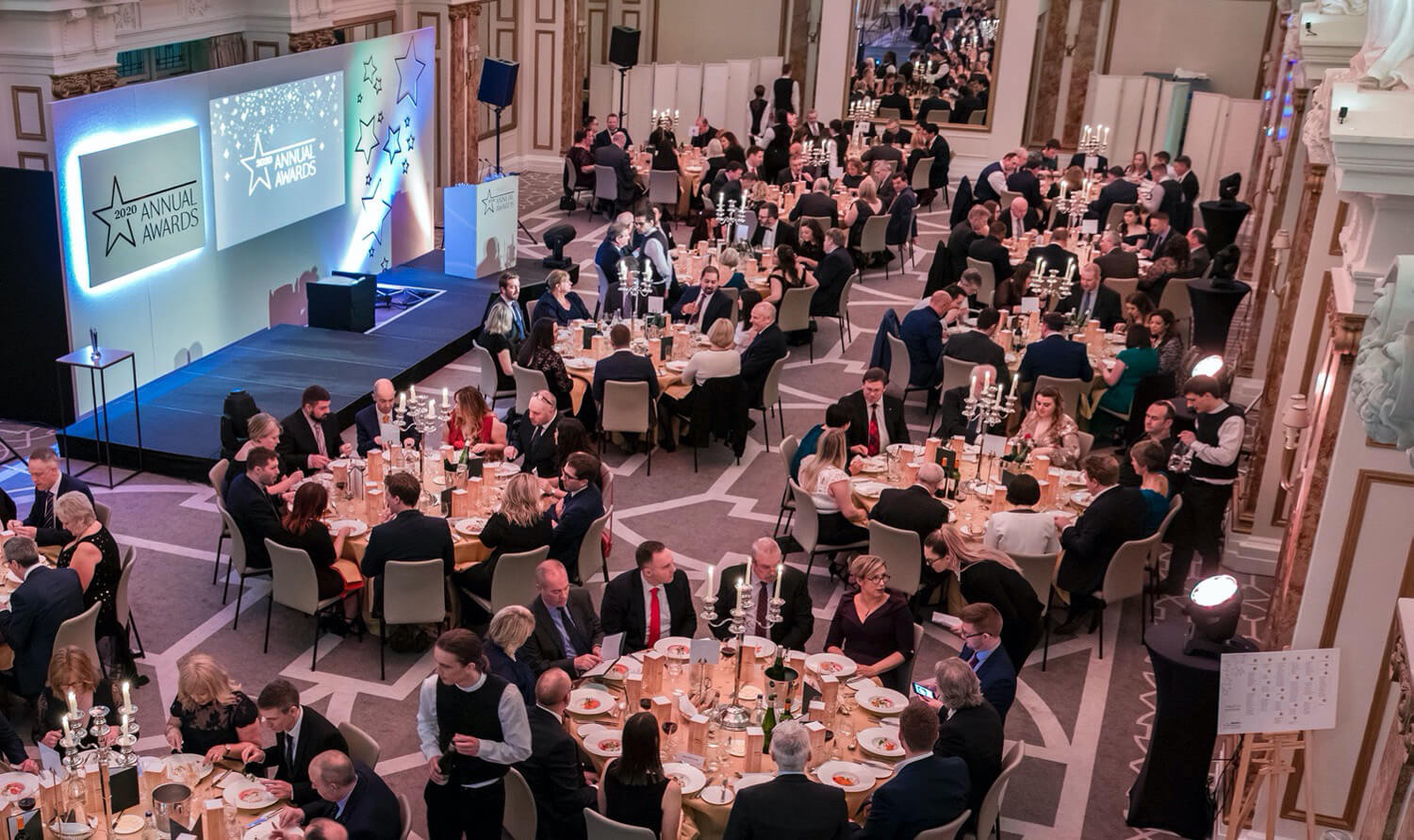
We entered the main ballroom. Several hundred guests filled the space beneath enormous chandeliers. Large round tables surrounded a central stage, each one set with more silverware than seemed strictly necessary. Company executives, hospital administrators, regional officials, investors, and their spouses moved between conversations, a low constant hum of networking filling the room.
Reed’s entire posture changed the moment we crossed the threshold. His shoulders relaxed. His smile appeared, easy and practiced. He became charming. Confident. Warm. The version of Reed his colleagues admired, a version I had seen plenty of times from across a room but rarely, anymore, directed at me.
“Reed!”
A man approached, hand already extended.
“About time.”
They shook hands. Then the man’s attention shifted toward me. “And this must be the mysterious wife.”
Reed laughed, easy and light. “Florence.”
I extended my hand. “Nice to meet you.”
“Likewise. Reed’s kept you hidden.”
“Apparently.”
Reed gave me a quick glance. The man laughed, assuming it was a joke between us.
We reached our table. Dana Whitmore was there. Her expression froze for half a second when she recognized me from the salon, her fork pausing halfway to her mouth. I gave her a polite smile.
“Hello.”
“Hello.”
She clearly didn’t know whether I had heard her earlier conversation. I let her wonder.
Reed began introductions. “This is my wife, Florence. She’s a doctor at a small clinic.”
A woman smiled politely. “That must be rewarding.”
“She likes it.”
I looked at Reed. He continued, unprompted. “She also does some charity work in her spare time. Keeps her busy.”
The words landed exactly as I expected. One man chuckled. “Nothing wrong with that.”
Another said, “Medical charity is admirable, although I imagine it’s difficult to make a measurable impact.”
Reed nodded along. “Exactly.”
I sat down. Nobody asked what the charity was called. Nobody asked what kind of cases we supported. Nobody asked how many patients we served. Reed had framed the story, carefully and without a single wasted word, and everyone around that table had simply accepted it.
Dinner began. For nearly an hour, I listened. The conversation moved from regional development to financing to workforce shortages, the particular shorthand of people who talk about these things so often they’ve worn the edges smooth. At one point, Charles Whitmore mentioned a hospital expansion project.
“We’re struggling with transport costs for rural patients,” he said, shaking his head slightly over his wine glass.
Without thinking, I almost responded. Our foundation had spent two years building a transportation program addressing exactly that issue, had the data and the partnerships and the cost-per-patient figures that could have changed the entire direction of his project in about ninety seconds.
Then I remembered Reed’s instruction. Stay quiet. So I did.
Later, a woman asked whether I enjoyed working at a small clinic. “Very much.”
“Must be nice not having executive-level pressure.”
Reed answered before I could. “That’s one of the reasons Florence prefers it.”
I looked at him. He smiled at the woman. I said nothing.
Across the ballroom, I recognized Dr. Samuel Rhodes, director of one of our largest partner hospitals, deep in conversation at a table near the stage. Beside him sat Arthur Brennan and Lena Price, two donors whose organizations had funded hundreds of treatment cases through our foundation over the years. I turned away before they noticed me. Not because I was ashamed. Because the evening hadn’t reached that moment yet, and I wanted it to arrive exactly the way Melissa’s text had promised it would.
Dinner ended. The lights dimmed. A staff member announced that the National Medical Charity Awards program would begin in the adjoining ballroom. Guests were invited to attend.
Reed checked his watch. “How long is this?”
Charles shrugged. “Forty-five minutes?”
Reed sighed, already reaching for his phone. “We’ll stay for the main award.”
The crowd moved into the second ballroom. Rows of chairs faced a stage with a large screen mounted behind it. We found seats near the middle, Reed settling in beside me with the particular restlessness of a man already calculating how soon he could reasonably leave.
A video began. Patients. Hospitals. Families. Doctors. Volunteers. I recognized several people featured in the footage, faces I had come to know well over years of case meetings and hospital visits.
Then the host took the stage. “Tonight’s primary recognition honors an individual whose organization has changed access to specialized medical treatment across multiple states.”
The room quieted. Reed shifted beside me, checking his phone one more time before slipping it into his jacket pocket.
The host continued. “Over the past five years, this foundation has provided financial assistance to more than three thousand patients.”
Someone near us whispered, “Three thousand?”
The host continued, unhurried. “The organization has covered surgeries, medications, travel costs, treatment lodging, specialist referrals, and emergency care.”
Reed stopped checking his phone entirely.
“The foundation currently administers tens of millions of dollars in annual medical assistance and maintains partnerships with hospitals and treatment centers across the western United States.”
Reed sat straighter. I watched his hands. He was holding the event program, and his fingers tightened slightly around the paper, creasing it without seeming to notice.
“The organization began with one physician, one desk, and several families who had run out of options.”
Reed turned his head toward me. I kept watching the stage.
The host continued. “Today, it operates a growing network of patient-support centers and has become a model for transparent medical charity administration.”
Reed looked at me again. This time longer, his eyes searching my face like he was trying to read a document in a language he’d only half learned. I could almost see him working through it, sorting through old conversations. Late meetings. Phone calls. Trips he never asked about. Reports left on the kitchen table that he’d never picked up. The laptop open at midnight, light spilling across my hands while he slept upstairs.
The foundation. My foundation.
A second speaker approached the microphone. “Last year alone, the organization funded more than eleven hundred individual treatment interventions.”
Reed’s jaw tightened. The man seated on his other side leaned over and whispered, “Have you heard of this group?”
Reed shook his head slowly. “No.”
The host returned, holding an envelope now. “This year, our selection committee reviewed forty-three nominations.”
The room became completely still.
“The final vote was unanimous.”
I took a slow breath.
“The recipient of this year’s National Award for Medical Charity is Dr. Florence Croft.”
For half a second, nobody beside me moved. Then the ballroom erupted. Applause. People standing. Spotlights sweeping across the audience, searching. One stopped directly on us.
Reed stared at me. His face looked almost blank. “Florence?”
I stood. People turned. Dana Whitmore covered her mouth with one hand. Charles looked between Reed and me, his expression caught somewhere between confusion and delight. Someone behind us said, loud enough to carry, “That’s Reed’s wife?”
I stepped into the aisle. The applause grew louder. Then something happened that Reed could not possibly have explained away afterward. Dr. Rhodes stood from the VIP section and clapped, a wide genuine smile breaking across his face. Arthur Brennan stood beside him. Lena Price followed. Other foundation partners joined them, one by one, until a whole section of the room’s most influential people were on their feet.
People Reed considered important were applauding me.
I walked toward the stage. The host shook my hand. “Congratulations, Dr. Croft.”
“Thank you.”
He handed me the crystal award, heavier than I expected, cool and solid in my hands. I placed it on the podium. Then I looked out over the room. Hundreds of faces watched me. Reed was still standing beside his chair, frozen in a way I had genuinely never seen him before.
For eight years, I had tried to make myself smaller inside my own marriage. Not because Reed explicitly ordered me to, not in so many words, at least not until that morning. Because that was the space he left available, the shape of the silence he built around me, and I had folded myself into it a little more every year without quite noticing I was doing it.
I adjusted the microphone.
“There are people,” I began, “especially women, who spend years hearing that the work they do isn’t serious enough to matter.”
The room went silent.
“Their careers are described as hobbies. Their achievements are treated as distractions. Their contribution is considered secondary because it doesn’t resemble someone else’s definition of success.”
I paused. I didn’t look directly at Reed. I didn’t need to.
“I know what that feels like.”
Nobody moved.
“The Croft Medical Access Foundation began with one desk and three families. Those families didn’t care about titles. They didn’t care about status. They needed help.”
I looked toward the screen, still showing a frozen image from the video.
“They needed surgery approvals. Medication funding. Transportation. Somewhere to sleep while their children received treatment.”
The room remained still.
“So we helped three families.” I smiled slightly. “Then six.” Another pause. “Then thirty.”
I looked toward our staff members seated near the front, several of them already wiping their eyes. “Then hundreds.”
Applause began, but I raised one hand gently, asking for just a little more room. “Today, we’ve assisted more than three thousand patients. But I don’t measure success by that number.”
I leaned slightly toward the microphone.
“I measure it by the phone call that says a patient made it home.”
The applause came harder this time. I stepped back. Dr. Rhodes came onto the stage. He hugged me briefly.
“This woman has changed the way our hospital handles complex financial cases,” he said into the microphone, his voice carrying easily across the room.
Arthur Brennan followed. “Our company has funded cases through Florence’s foundation for four years. Their reporting standards are among the most transparent I’ve ever seen.”
Lena Price shook my hand. “She never asks for recognition. She asks what the patient needs.”
More applause. From the stage, I could see Reed clearly. His colleagues surrounded him, the same people who had listened while he described my work as something that “kept me busy.” The same people who had accepted his version of me without a single question. Now they were looking at him differently, and I could see him feel it even from that distance.
I finished my remarks and stepped off the stage. The reception area immediately filled with people.
“Dr. Croft, congratulations.”
“Florence, we’d love to discuss a partnership.”
“Our company has been looking for exactly this kind of organization.”
“Can someone from your team contact us?”
“Do you have expansion plans?”
I answered patiently, one question after another, shaking hands and taking cards. Then Charles Whitmore reached me. His expression was almost amused.
“Florence, I had absolutely no idea.”
“I know.”
He glanced toward Reed, still standing near their table. “I’m guessing Reed is proud.”
I looked over his shoulder. Reed was standing twenty feet away, alone for the first time all evening.
“I imagine he’s processing the evening.”
Charles gave an awkward laugh. Then Dana approached.
“Florence.”
“Hello again.”
Her face changed. So she knew I had heard her in the salon.
“I’m sorry if earlier—”
“This isn’t the place.”
She nodded quickly. “Of course.”
I moved on. Eventually, I found a quiet corridor beside the ballroom, the noise of the reception fading behind a set of double doors. I placed the crystal award on a small table near the wall, finally setting down its weight.
A minute later, Reed appeared. He stopped several feet away. Neither of us spoke at first.
Then he said, “Why didn’t you tell me?”
I stared at him. There were dozens of possible answers. Instead, I chose the simplest one.
“I did.”
He frowned. “No, Florence. You never told me the foundation was this large.”
“I told you when we received our first institutional grant.”
He said nothing.
“I told you when we hired our first employee.”
Silence.
“I told you when we opened the second support center.”
He looked away, down the corridor.
“I told you about the hospital partnerships.”
“I didn’t understand the scale.”
“You didn’t ask.”
He rubbed the back of his neck. “I should have.”
“Yes.”
He stepped closer. “I was wrong.”
I studied his face. Not angry. Not emotional. Just tired, in a way that seemed to have settled into him over the course of the last hour.
“You were.”
“I made assumptions.”
“For eight years.”
“I know.”
“No, Reed. I don’t think you do.”
He looked at me, waiting.
“The problem isn’t that you discovered tonight that my foundation is successful.”
“I understand.”
“The problem is that if it weren’t successful, you would still think your behavior was acceptable.”
That stopped him.
“You were embarrassed to be seen with me.”
“Florence—”
“You told me that in the car.”
“I was stressed.”
“You told me everyone here was elite.”
“I shouldn’t have said it.”
“You introduced your wife as a doctor from a little clinic who does charity work to keep herself busy.”
His face tightened. “I know.”
“You let people dismiss me because you agreed with them.”
He looked toward the ballroom, toward the sound of the reception still going on without either of us.
“I was wrong.”
“Again, yes.”
“I can change.”
I looked down at my left hand. My wedding ring caught the hallway light, a small familiar glint I’d stopped noticing years ago. For years, it had represented something I kept believing could be repaired, patched over, eventually fixed with enough patience and enough time.
That night, I finally understood I wasn’t angry because Reed had underestimated my career. I was angry because he had underestimated me.
I slid the ring off. His eyes dropped immediately, following the small motion.
“Florence.”
I placed the ring on the windowsill, the metal catching the light one last time.
“Tomorrow I’m meeting with a lawyer.”
He stared at me. “What?”
“I’m filing for divorce.”
“You’re making this decision tonight?”
“No.”
I looked directly at him.
“I’ve been making it for years. Tonight is simply the first time I’m admitting it.”
He stepped forward. “What about Laya?”
“We’ll create a parenting plan.”
“Florence, come on.”
“No.”
“We have eight years.”
“Exactly.”
He stopped, the word landing somewhere he clearly hadn’t expected it to.
I picked up the award. He stared at the ring, still sitting on the windowsill where I’d left it.
“I didn’t know.”
I shook my head. “That’s the problem, Reed.”
“What?”
“You lived beside me for eight years and never wanted to know.”
I walked away.
I completed three interviews that night with journalists who’d caught me near the exit. One reporter asked what the award meant for future funding.
“It creates visibility,” I said. “Visibility creates opportunities. But the work tomorrow morning will be exactly what it was yesterday. Patients still need help.”
Another asked whether I planned to expand. “We’re evaluating partnerships.”
A third asked what motivated me. “Need.” Nothing more.
I arranged my own ride home.
Six months later, I was living in a two-bedroom apartment with Laya. The divorce was finalized after mediation, a process that had been easier than I expected, mostly because Reed, to his credit, hadn’t fought me on much of anything that actually mattered. The parenting plan placed Laya primarily with me while giving Reed alternating weekends and designated holidays.
The transition wasn’t perfect. Nothing involving divorce ever is. There were nights Laya cried about missing her old room, and nights I lay awake doing math about the mortgage I no longer had and the rent I now did. But our home became quieter in a way that had nothing to do with volume. Laya still attended the same school. She still saw her father. She still complained about vegetables and left art supplies scattered across every flat surface in the apartment. Life continued, the way it does, stubbornly ordinary even after something enormous has happened.
The foundation grew. The publicity from the award produced new donors, phone calls and emails arriving faster than Melissa could initially field them, but I refused to let growth move faster than our systems could actually support. I had seen too many well-meaning organizations collapse under their own sudden success, and I wasn’t going to let that happen to something three thousand families now depended on. We hired two additional staff members. Opened another intake line. Expanded referral partnerships with two more regional hospitals.
I continued working clinical hours at the original clinic because I never wanted the foundation to become disconnected from the reality of patients sitting in examination rooms, from the particular fear in someone’s eyes when they’re trying to do math on a diagnosis they can’t afford.
One afternoon, my assistant entered my office. “Reed is here.”
I looked up from a grant application. “Does he have an appointment?”
“Twenty minutes.”
I checked the calendar. I had forgotten entirely. “Send him in.”
Reed entered wearing a dark suit, though not as crisply pressed as the ones I remembered. He looked almost exactly as he always had. Almost. There was less certainty in the way he carried himself, a kind of careful quiet that hadn’t been there before.
He sat across from me. “How are you?”
“I’m fine.”
“And Laya?”
“You saw her Sunday.”
“I know. I mean generally.”
“She’s doing well.”
He nodded. Silence settled between us. Then he looked around the office. Framed reports covered one wall. A map showed the states where we operated, pins marking current and planned locations. Photographs showed staff members, patients who had given permission, hospital teams, and donors, all of it a visual history of what had grown out of that single desk eight years earlier.
“I’ve been thinking,” he said.
“I assumed.”
“I handled our marriage badly.”
I waited, saying nothing.
“I spent years measuring everything by status.”
I said nothing.
“I thought my work put me in important rooms.”
“It did.”
“That’s not what I mean.”
“I know.”
He leaned forward slightly. “I treated your work as less important because I didn’t understand it.”
“No.”
His eyebrows moved slightly, surprised.
“You treated it as less important because you didn’t respect me enough to understand it.”
He accepted that quietly, sitting with it for a moment before answering. “Yes.”
The answer surprised me. He continued. “I want another chance.”
“No.”
He looked down at his hands. “I expected that answer.”
“Then why ask?”
“Because I needed to.”
I nodded. He looked toward the map on the wall.
“Your expansion is going well.”
“Yes.”
“Three more states?”
“Eventually.”
He smiled faintly, a small, tired smile. “I read the reports now.”
That sentence might once have meant something enormous to me, might have been exactly the thing I’d spent years quietly hoping to hear. Now it simply felt late.
“I’m glad.”
He looked at me. “My firm lost the Holbrook contract.”
I knew the name. It was one of their largest regional partnerships, one he’d talked about constantly for the better part of two years.
“I’m sorry to hear that.”
“The board reviewed what happened at the awards event. There were internal concerns about judgment and leadership.”
I didn’t respond.
“I’m not blaming you.”
“I wouldn’t accept the blame.”
“I know.”
My desk phone flashed. My next call. I stood. “Our time is up.”
Reed stood too. He hesitated.
“Florence.”
“Yes?”
“I’m sorry.”
I believed him. That was the strange part. I genuinely believed he was sorry. But regret and repair are not the same thing, and I had learned that distinction the hard way, over eight years and one single unforgettable evening.
“I hope you become different because of it,” I said.
He nodded. Then he left.
That week, the foundation received an invitation from a national network of medical charities. They proposed a collaborative program expanding our model into three additional states over two years. I reviewed the proposal with the board. We negotiated reporting requirements. Adjusted staffing projections. Created safeguards to prevent expansion from overwhelming existing patients, the same careful discipline I’d insisted on since the very beginning. Two months later, I signed the agreement.
One Saturday morning, I spread a large map across my desk at home. Small markers showed current centers. Another set marked planned locations. Laya walked over holding a purple pencil, still in her pajamas.
“What are those?”
“Places where we’re going to help people.”
She pointed. “This one too?”
“Yes.”
“And this one?”
“Eventually.”
She studied the map seriously, the way she studied everything, with a focus that reminded me so much of myself at that age it sometimes startled me.
“Are you famous?”
I laughed. “No.”
“But you got that big award.”
I looked toward the bookshelf where the crystal award sat, catching the morning light.
“I got an award.”
“Same thing.”
“Definitely not.”
She climbed into the chair beside me, settling in with her purple pencil still in hand.
“Does Dad know what you do now?”
The question caught me unexpectedly.
“Yes.”
She nodded. “Good.”
Then she returned to her drawing, apparently satisfied, and I watched her for a moment, the quiet concentration on her small face.
There had been a time when I imagined success would make Reed understand me. That if I achieved enough, built enough, helped enough people, he would finally see value where he had previously seen inconvenience. I eventually learned that this was the wrong question entirely.
A partner shouldn’t need an auditorium full of strangers to prove your worth. A spouse shouldn’t respect you only after important people applaud. And love should never require you to become impressive enough to stop being embarrassing.
That evening, after Laya went to bed, I sat at the kitchen table reviewing patient files, the familiar rhythm of it settling over me the way it always did. One case involved a young father needing treatment several states away. Another involved a woman whose insurance had approved a procedure but not the specialized medication required afterward. A third family needed travel assistance to get their son to a specialist three hundred miles from their home.
Ordinary cases. Urgent cases. Real people.
I approved the first request. Flagged the second for pharmacy review. Sent the third to transportation coordination. Outside, the apartment complex was quiet, the kind of quiet that used to feel like loneliness and now simply felt like peace. My phone remained face down beside me. No one was telling me to stay silent. No one was explaining which rooms I belonged in. No one was deciding whether my work carried enough weight to be worth mentioning at dinner.
For years, Reed had believed he was protecting his reputation by leaving his wife at home. What he never understood was that I had already built a life far larger than the reputation he was trying to protect. And when he finally saw it, standing beneath the lights of a ballroom filled with people he wanted to impress, the discovery came too late to save our marriage.
But it arrived exactly in time to save something more important.
The part of me that had spent eight years waiting for permission to take up space.
I didn’t need that permission anymore.
I never had.

Sophia Rivers is an experienced News Content Editor with a sharp eye for detail and a passion for delivering accurate and engaging news stories. At TheArchivists, she specializes in curating, editing, and presenting news content that informs and resonates with a global audience.
Sophia holds a degree in Journalism from the University of Toronto, where she developed her skills in news reporting, media ethics, and digital journalism. Her expertise lies in identifying key stories, crafting compelling narratives, and ensuring journalistic integrity in every piece she edits.
Known for her precision and dedication to the truth, Sophia thrives in the fast-paced world of news editing. At TheArchivists, she focuses on producing high-quality news content that keeps readers informed while maintaining a balanced and insightful perspective.
With a commitment to delivering impactful journalism, Sophia is passionate about bringing clarity to complex issues and amplifying voices that matter. Her work reflects her belief in the power of news to shape conversations and inspire change.