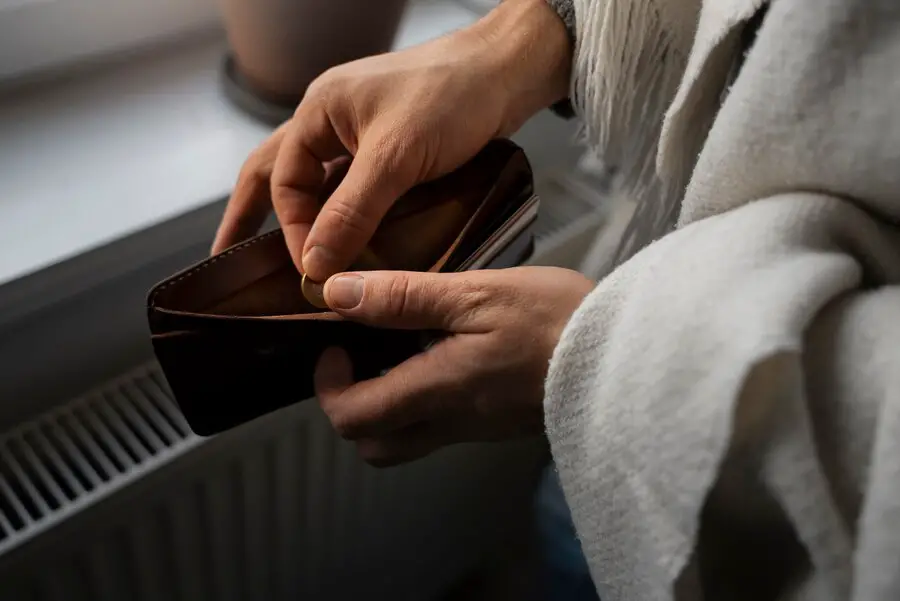
The sealed envelope settled into my palm, and the sight of Dad’s handwriting across the front made my stomach tighten.
Grant.
Just my name, written by Raymond Mercer himself before doctors took him into emergency surgery. I stood in that hospital corridor staring at it, afraid of what might be inside and even more afraid of why my father had made one thing so clear before he was sedated: Natalie was not supposed to see it.
Three days earlier, none of this had made sense. Dad had been standing in the middle of my kitchen asking me for a thousand dollars. That alone was enough to tell me something was wrong.
My father was the kind of man who would spend an hour repairing something most people would replace before he would admit he needed help. For more than thirty years he had worked construction. He carried lumber, poured concrete before sunrise on freezing mornings, climbed roofs under brutal summer heat, and came home with hands that always seemed to have another scrape or callus on them. He never talked much about sacrifice. He just made sacrifices. When I went to college, he sold his motorcycle to help cover my tuition, and I only learned about it later, from an uncle who mentioned it at a holiday dinner like it was common knowledge. When I was nine and needed decent shoes for school, he sold the only good suit he owned, and he never told me that either. Other people did. That was Dad. He would quietly give away something he cared about and then act like it had never mattered at all.
So when he showed up at my house with his weathered hands clasped together and his eyes fixed on my kitchen floor, I knew this was not some casual request for spending money. He looked embarrassed before he had even finished asking.
“I need to borrow a thousand dollars,” he said.
Before I could ask what had happened, Natalie looked across the room at him.
“Tell him to get another job,” she said. “We’re not some kind of bank.”
The words landed harder because Dad did not fight back. He did not snap at her. He did not remind her of everything he had done for us. He just stood there, his hands trembling slightly.
“That’s enough,” I told Natalie. Then I took Dad outside before the argument could get worse.
The afternoon was warm, but he kept rubbing his palms together as though he were trying to warm them. “I didn’t come here to cause trouble between you two,” he said. “If you can’t help, I’ll understand.”
That almost made me angrier than Natalie’s comment. Dad was apologizing for asking his own son for help when I could count on one hand the number of times he had ever asked me for anything significant.
“What is the money for?” I asked.
He looked toward the house before answering. “The money isn’t exactly for me, Grant. I need certified copies of some documents. I need legal help. And there’s a test I have to take.”
None of those things belonged together in my mind. Documents. Legal help. A test.
“What documents?”
He hesitated. “Old adoption files.”
For a moment I thought I had misunderstood him. “Whose adoption?”
His eyes moved toward the house again. That second glance bothered me more than the first. Dad was not simply uncomfortable discussing the subject. He was checking where Natalie was.
“I need proof before I tell you everything,” he said.
“Proof of what?”
“Because otherwise, someone might say I’m getting confused.” He stopped and swallowed. “Or accuse me of trying to interfere with your marriage.”
There are sentences you hear and immediately understand. Then there are sentences that keep expanding after they are spoken. That was one of them. Dad had not said Natalie’s name. He did not need to.
“Who would accuse you of that?” I asked.
He would not answer. Instead, he put one rough hand on my shoulder. “I’m trying to give you something I should have given you a long time ago.”
I knew my father well enough to hear what was underneath those words. Urgency. Maybe fear. But I also knew something else. This was the man who had spent most of my life helping me without making me prove that I deserved it. I was not going to make him stand in my backyard and justify every dollar.
“I’ll get it,” I said.
His face changed immediately. Relief moved through it, but embarrassment stayed.
“I’ll pay you back.”
“You don’t have to.”
I went inside and opened the small safe beneath my office desk. We kept emergency cash there. I pulled out the money, put it together for Dad, and was about to return when Natalie appeared in the doorway behind me.
“You’re really giving him the money?”
“Yes.”
“We agreed we’d discuss major expenses.”
“He has never asked me for money before.”
“That doesn’t mean it won’t become a habit.”
I looked at her. “He’s my father.”
“And this is our house.”
That stopped me. Not because she was right. Because the house was one more thing Dad had helped make possible. Years earlier, after selling the last parcel of land he had inherited from his mother, he had paid most of the down payment. Natalie knew that. I did not argue about it then.
I carried the money back to Dad. When I handed him the envelope, his fingers trembled around it.
“I’m sorry, son.”
“You have nothing to be sorry for.”
Usually, Dad hugged me before he left. That afternoon, he didn’t. It was such a small difference that I almost dismissed it. But later, I would keep thinking about it. About the adoption files. About the way he looked toward the house before answering me. About his fear that someone would accuse him of being confused. And about the fact that he was trying to give me something he believed he should have given me years earlier.
The front door had barely closed behind him when Natalie turned on me. “You made me look like an idiot.”
I could not believe that was what she had taken from the entire conversation. “You embarrassed him first.”
“You always choose him over me.”
That accusation had probably been waiting longer than the argument itself. I looked straight at her. “He spent my entire childhood choosing me.”
Neither of us had much to say after that. But Dad’s request stayed with me. There was nothing ordinary about it. If he had needed help with a bill, he would have said so. If his truck needed repairs or something in his house had broken, he would probably have tried fixing it himself before calling me. Instead, he needed certified documents, legal help, some kind of test, and old adoption records. Most troubling of all, he seemed convinced he needed proof before he could tell me the truth.
For three days, I had no idea what he was doing with the money.
Then my phone rang from a number I did not recognize.
“Is this Grant Mercer?” a woman asked.
“Yes.”
“I’m calling from the hospital. Raymond Mercer listed you as his emergency contact.”
My chair shot backward when I stood. “What happened?”
“He collapsed this morning. The doctors found an aortic aneurysm and took him straight into emergency surgery.”
For several seconds, all I could hear was the blood beating in my ears. Dad had been in my kitchen three days earlier. He had walked into my backyard. He had put his hand on my shoulder. Now someone was telling me surgeons were trying to save his life.
“Is he alive?” I asked.
“He was stable when they brought him into the operating room.”
Stable. I grabbed onto that word because there was nothing else to hold.
Then the woman said something I did not expect. “Before your father was sedated, he asked us to give you a sealed envelope.” I stopped moving. “There is also an attorney here waiting to speak with you.”
“An attorney?”
“Yes. Her name is Priya Desai.”
Legal help. Dad’s words from the backyard came back immediately. Certified copies. Adoption files. Proof. An attorney was now waiting at the hospital while my father was undergoing emergency surgery. Whatever Dad had been doing, it had not been a vague idea. He had already put something in motion.
I grabbed my keys from the counter. I was heading for the door when the woman stopped me.
“Mr. Mercer, there’s one more thing.”
My hand stayed around the keys. “What?”
“Your father left very specific instructions. He said you must not discuss the contents of the envelope with your wife until after you’ve spoken privately with Ms. Desai.”
I remember standing completely still after that. Not because I understood what was happening. Because suddenly every strange detail from the day Dad had come to my kitchen connected to Natalie. Dad looking toward the house. Dad refusing to explain whose adoption he was talking about. Dad saying someone might claim he was confused. Dad worrying that someone would accuse him of interfering with my marriage. And now this.
Do not discuss the envelope with your wife.
“What does Natalie have to do with this?” I asked.
“I’m sorry. Your father didn’t explain.”
That answer gave me nothing, but it also told me something important. The hospital staff were not interpreting Dad’s wishes. They were following them. He had been clear enough, before being sedated for emergency surgery, to create a boundary around that envelope. My wife was outside it.
I drove to the hospital with one thought repeating in my head. Dad had been preparing this before he ever walked into my kitchen asking for a thousand dollars. The request had not started the problem. It had been part of something already underway. That realization changed how I remembered his embarrassment. Maybe he had not been ashamed only because he needed money. Maybe he had been carrying the weight of whatever he was finally trying to tell me.
I kept replaying our conversation. I’m trying to give you something I should have given you a long time ago. At the time, I had heard that as an explanation for the money. Now it sounded different. He had not said he was buying something for me. He had said he was trying to give me something. Information, maybe. Proof, certainly. Something connected to old adoption records. Something he believed could affect my marriage enough that he expected accusations before he even revealed it.
I did not know whether those fears were justified. I did not know what the documents said. I did not know what kind of test he had needed or why an attorney was involved. And I refused to invent answers simply because the questions frightened me. Dad had asked me to trust him long enough to get proof. So that was what I had to do.
At the hospital, the corridor felt like the last place in the world where I wanted to solve a family mystery. My father was somewhere beyond those doors in surgery. Every other question should have felt secondary. But the envelope made that impossible. This was something he had chosen to arrange while facing an emergency serious enough that he might not be able to explain it himself afterward. He had made sure the hospital knew I was his emergency contact. He had made sure the envelope reached me. He had made sure an attorney was there. And he had made sure I understood one restriction before I opened anything.
Natalie was not to be involved yet.
That instruction hurt in a way I was not prepared for. Until then, the conflict between my father and my wife could still be explained as personality, money, pride, or old resentment. Natalie thought Dad depended on me too much. I thought she judged him without recognizing what he had sacrificed for us. Those were painful differences, but they were ordinary enough to understand. A secret envelope tied to adoption files was different. Dad was not merely frustrated with her. He believed secrecy was necessary. And he believed it strongly enough to say so before surgery.
I thought again about the kitchen. Natalie’s arms crossing when Dad tried to explain himself. Her saying we weren’t some kind of bank. Dad’s face tightening without arguing. His refusal to hug me when he left. None of those moments proved anything about the envelope. But they made the hospital instruction impossible to dismiss.
The worst part was that Dad could not answer my questions. He had spent his life being the person I called when something went wrong. Now something had gone wrong with him, and I was standing there holding the question he had prepared for me.
A sealed envelope can weigh almost nothing. That one felt heavy. I could see the front of it clearly. My name was there in Dad’s handwriting. Not Natalie’s. Not both of ours. Mine. Grant.
I thought about the thousand dollars still more than I wanted to. Three days earlier, Natalie had treated the request as though Dad were starting a bad habit. Dad had treated the money like a necessary step. Whatever those certified copies, legal help, adoption files, and the test were connected to, he had been determined enough to swallow his pride and ask me for cash. That told me the answer mattered to him. The attorney waiting nearby told me he had gotten farther than I realized. The sealed envelope told me he had expected a moment when the truth might have to speak for him. And the instruction about my wife told me he feared what might happen if the information reached the wrong person too soon.
I still did not know what any of it meant. That was the line I kept forcing myself not to cross. Suspicion was not proof. Dad himself had understood that. It was exactly why he said he needed records before telling me everything. He had not wanted to make an accusation he could not support. He had not wanted me to believe him simply because he was my father. He wanted something verifiable in his hands first.
That realization made me respect his silence differently. Three days earlier, I had been frustrated that he would not answer my questions. Now I understood at least the principle behind it. He was trying to protect the truth from becoming another family argument. Whatever he knew, he wanted evidence attached to it. Maybe that was why he feared being called confused. Maybe that was why he worried about being accused of interfering in my marriage. Those were possibilities, not answers, and Dad had been careful enough to know the difference. So I needed to be careful too.
I looked down at the envelope again. Dad’s handwriting was familiar in a way that suddenly made my chest ache. Those were the same rough hands that had worked construction for decades. The same hands that had sold things he owned so I could have opportunities he never talked about giving me. The same hands that had trembled when I placed a thousand dollars into them three days earlier. And sometime before doctors sedated him, those hands had written my name on the thing I was now holding.
Behind the envelope was an attorney named Priya Desai, waiting to speak with me privately. Behind the attorney were the questions Dad had refused to answer without proof. And behind all of it was my father, undergoing emergency surgery while I stood in a hospital corridor trying not to let fear turn uncertainty into conclusions.
For most of my life, Raymond Mercer had protected me by doing things instead of explaining them. He paid what he could. He fixed what broke. He sacrificed quietly. He showed up. This time, he had done something different. He had left words behind.
I had not opened the envelope yet. I did not know whose adoption file had sent him looking for certified records. I did not know what the test was meant to establish. I did not know why he believed Natalie needed to be kept away from the information until I spoke with the attorney. But for the first time since the hospital called, I knew exactly what I had to do next.
I tightened my fingers around the envelope and kept it with me. Dad had asked me to trust the process he had started. Until I knew what was inside, that was the one promise I could still keep.
A woman in a gray blazer stood up from a row of plastic chairs when she saw me come through the double doors, a slim leather folio tucked under one arm. She had the particular stillness of someone used to delivering hard news carefully.
“Mr. Mercer?” she asked. “Grant Mercer?”
“Yes.”
“Priya Desai.” She extended her hand. Her grip was firm, brief, professional. “Your father retained me eleven days ago. I want to be upfront with you right away — I can’t tell you what’s inside that envelope. That’s his letter to you, in his own words, and he was specific that you read it before I explain anything further. But I can tell you why I’m here, and I think that context will help once you’ve read it.”
I sat down across from her, the envelope still unopened in my lap. “Is he going to be all right?”
“I don’t have medical information beyond what the surgical team has already told you. I’m sorry.” She said it plainly, without the false reassurance people usually reach for. I found I trusted her more for not offering it.
“Eleven days,” I said. “He’s been planning this for eleven days?”
“Longer, actually. He first contacted my office about six weeks ago, after I’d been retained by another estate to help locate an heir. Your father’s name came up in the course of that search.” She paused, watching my face carefully. “I’d encourage you to read his letter now, Mr. Mercer. Whatever questions you have after that, I’ll do my best to answer.”
My hands were not steady when I broke the seal. Inside was a single folded sheet of lined paper, the kind Dad kept in a drawer in his kitchen for grocery lists, and beneath it, a thinner stack of photocopied documents held together with a binder clip. I unfolded the letter first.
Grant,
If you’re reading this, it means I didn’t get the chance to say any of it out loud, which is probably for the best, because I don’t know that I could have gotten through it without stopping halfway and losing my nerve the way I almost did a dozen times these last six weeks.
I need you to know something before anything else. I am your father. Nothing in these papers changes that, not one page of it, and if you walk away from this letter believing otherwise then I have failed to say the one thing that actually matters.
But you need to know where you came from, because somebody finally has a reason to need to know it, and I should have told you a long time ago, when it would have been easier for both of us.
You were born to my sister, Eleanor. Your Aunt Ellie, though you never knew to call her that. She was seventeen. I was twenty-six, already married to your mother, and we had been trying for a baby of our own for almost three years with no luck. When Ellie came to me, scared half to death, not knowing what to do, your mother and I made a decision that seemed right at the time and that I have had cause to question nearly every day since.
We adopted you. Privately, through a family arrangement an old lawyer in town helped put together, the kind of thing that happened more often in those years than people like to admit. Our parents — your grandparents — insisted it stay inside the family and go no further. Ellie was sent to live with a cousin two states over before she started showing, and she came back nine months later looking like a different person. She never spoke of it again, not to me, not to anyone, as far as I ever knew. I let her carry that silence alone for forty years because it was easier than disturbing the story everybody had agreed to tell.
Your mother and I raised you as our own from the day you came home, and as far as I am concerned, that is exactly what you are. I am not writing this to take anything away from the thirty-some years we’ve had together. I am writing it because Ellie died eight weeks ago, alone, in a house two towns over that none of us ever visited, and she left a will.
She never married. Never had other children. And in that will, she left everything she had to the son she gave up in 1989, described by his birth name and date of birth, because as far as the state knew, that adoption was never formally finalized through the courts — it was a private, informal arrangement, the kind that leaves a trail if you know where to look but doesn’t show up on an ordinary record search. Her attorney found me because I was the one listed on an old hospital discharge paper as the receiving family. That’s Ms. Desai, the woman I’ve hired to help us through all this. She can explain the legal piece better than I can.
I am telling you this now, instead of waiting until I had every answer settled, because I had a bad scare myself six weeks ago, before any of this started — a few minutes where I couldn’t remember your mother’s maiden name, of all things, sitting at my own kitchen table — and it frightened me enough that I went and got myself checked, and the doctor used words like “early” and “monitor” and “nothing certain yet,” and I understood all at once that I did not have forever to do this right.
I needed the records certified before I told you, because I did not want you to hear something this big from a man who might, someday, not be trusted to remember it correctly himself. I did not want you looking at me the way people look at someone they’re not sure they can believe anymore. I wanted proof in your hands, not just my word.
As for Natalie — I am not telling you to hide this from her forever, and I am sorry if that instruction felt like a wound on top of everything else. But Ellie’s estate, whatever it turns out to be, is meant for you, specifically, and Ms. Desai tells me there are things that need to happen in a particular order to make sure it stays that way — yours, not something folded into a marriage the moment it arrives. I have watched how she talks about money in front of you for three years now, son, and I did not want to risk this getting tangled up in that before you’d even had the chance to understand what it actually was. That is my fear speaking, not proof of anything about her character beyond what I’ve already seen with my own eyes. You are the one who has to decide what it means.
Whatever happens in that operating room, I want you to know I am prouder of the man you became than I have ever managed to say plainly, and I am sorry it took something like this to finally get the words down on paper where they couldn’t slip past either of us again.
I love you. I always have, from the first night you came home, whatever blood has to do with it.
Dad
I read it twice before I trusted my voice enough to look up. Priya Desai was watching me with the careful patience of someone who had clearly seen this exact moment play out before, in other families, over other envelopes.
“He had a cognitive screening done six weeks ago,” I said. It wasn’t quite a question.
“He mentioned that to me, yes. The neurologist’s note is in the folder — he wanted it included specifically, I think so you’d know he wasn’t inventing a crisis to justify the secrecy.” She slid the binder-clipped documents toward me. “What you’re holding is a certified copy of the original adoption placement record from 1989, located through county archive records once we had Eleanor Mercer’s name to search against. There’s also a letter from Eleanor’s estate attorney in Hartwell County, and the requisition for a DNA comparison — your father submitted a sample himself two weeks ago, through my office, to be matched against a sample Eleanor left with her attorney before she passed. The results came back nine days ago.”
“And?”
“A ninety-nine-point-nine-eight percent probability of a first-degree biological relationship. You are Eleanor Mercer’s son, Mr. Mercer. Biologically. There’s no ambiguity left in it.”
I sat with that for a long moment, the hospital’s fluorescent lights humming overhead, somewhere down the hall a monitor beeping its steady rhythm. “What did she leave me?”
“A house, free and clear, in a town called Marsh Hollow, about ninety minutes from here. A modest savings account — a little over sixty thousand dollars. Some personal effects. It’s not a fortune, Mr. Mercer, but it’s everything she had, and she left instructions that it go to no one else under any circumstance, including, specifically, your father.” Priya’s voice gentled slightly. “There’s also a box of letters. She apparently wrote to you every year on your birthday, starting when you turned eighteen. She never mailed any of them. Her attorney found them in a drawer by her bed.”
Something in my chest cracked open at that, quieter and deeper than anything else that whole long day had managed to do. A woman I had never met, who had given me away at seventeen because the family had decided that was the right thing, had spent twenty-some years writing letters to a version of me she never once got to meet, and had kept every single one.
“Why did Dad think Natalie would try to interfere?”
Priya considered the question carefully before answering, the way a lawyer considers most things. “I can’t speak to your marriage, Mr. Mercer. I can tell you that your father asked me, repeatedly, to structure this so that the inheritance would be unambiguously your separate property — established before any disclosure, documented thoroughly, protected from any claim that it was somehow jointly acquired during your marriage. That’s not an accusation. That’s prudence. Whether it turns out to be necessary prudence is between you and your wife.”
I thought about Natalie standing in the kitchen doorway three days earlier. We agreed we’d discuss major expenses. And this is our house. I thought about Dad paying most of the down payment on that house years ago, quietly, the same way he did everything, and Natalie somehow still managing to call it hers alone the moment it was convenient.
A doctor came through the double doors an hour later, still in scrubs, a surgical cap pushed back off her forehead. “Mr. Mercer? Your father came through the repair. He’s in recovery now. It was close — the tear was worse than the initial imaging suggested — but he’s stable, and barring complications, I expect a full recovery with time.”
I don’t remember exactly what I said back to her. I remember sitting down hard in the nearest chair and putting my face in my hands for a minute, the envelope and its contents still gripped tight in my other fist, and I remember Priya Desai quietly moving a box of tissues an inch closer to me on the little side table without making any comment about it at all.
Dad woke up groggy the next morning, tubes still trailing from one arm, his voice a rough whisper. The first thing he said, before he even asked how the surgery had gone, was, “Did you read it?”
“I read it.”
His eyes, bleary from anesthesia, searched my face for something. “And?”
“I have a half sister’s worth of birthday letters to read, apparently,” I said, and watched his whole body seem to loosen, the tension going out of his shoulders like something physically lifting off him. “You should have told me you were scared about your memory, Dad. Six weeks ago. Not through a letter in a hospital.”
“I didn’t want you watching me the way you’re watching me right now.” His mouth twitched, something almost like his old humor trying to surface through the exhaustion. “Didn’t work, I see.”
“No. It didn’t.”
He reached for my hand, his grip weaker than I’d ever felt it, the same rough calluses still there under skin gone thin and papery with age and the IV tape. “I should’ve told you about Ellie thirty years ago. Should have told you the week I found out she’d died, instead of waiting until I had every piece of paper lined up like a man building a case in a courtroom. I was scared of being disbelieved. I think I was more scared of that than I was of the surgery, if I’m honest.”
“You weren’t disbelieved. You just didn’t give anyone the chance to disbelieve you first.”
He almost laughed, then winced at what the laugh cost his chest. “Fair.”
I spent the next several days splitting my time between the hospital and my own house, where Natalie’s questions grew sharper by the day. What had the hospital said. Why was I being so cagey. Why wouldn’t I just tell her what was in whatever envelope I kept carrying around like it might bite me.
I did not lie to her. I told her Dad had left me something important, that it was legal and financial in nature, that I needed to finish working through it with his attorney before I could explain it properly, and that I would tell her everything once that process was complete. That was true, as far as it went. It was also, I understood even as I said it, a test of its own — not one Dad had designed, but one the situation had created regardless. I was watching to see whether she could tolerate not knowing something for a few days without turning it into a referendum on my loyalty.
She failed that test almost immediately.
“You’re keeping secrets from me now,” she said, three nights after the surgery, standing in our kitchen in almost the exact spot where Dad had once stood asking for help. “Just like your father. I guess it runs in the family.”
“It’s not a secret. It’s a process.”
“It’s convenient, is what it is. Convenient that whatever this is lands right when your father’s conveniently unavailable to explain it to my face.”
I should have recognized, in that moment, how completely she had missed the point — that a man had nearly died, that his sister had died alone two towns over with a drawer full of unsent letters, that none of this had anything to do with convenience for anyone. Instead she heard “inheritance” somewhere in the air around the situation, the way you smell rain before it arrives, and her only real question, underneath everything else she said over the following days, was some version of how much, and when.
I didn’t tell her the number for another two weeks, not until Priya had finished the paperwork that formally established the house and the savings account as mine alone, acquired before the disclosure, held in a trust structure Priya herself recommended precisely because, as she put it carefully, “sometimes the people closest to a sudden inheritance reveal exactly who they are the moment they learn the size of it, and it’s better to know that with the asset already protected than after.”
Dad had been right to be afraid. Not because he knew Natalie’s character with certainty. Because he had watched her for three years and trusted what he’d seen enough to protect me before I was ready to protect myself.
When I finally told her everything — Ellie, the adoption, the sixty thousand dollars, the house in Marsh Hollow — Natalie’s first question was not about my aunt, or the letters, or what any of it meant to me. It was whether the house could be sold quickly, and what we might do with the money toward “getting out of this starter place and into something better.”
I remember standing very still in our living room, the way Dad must have stood still in his kitchen three days before his surgery, absorbing a sentence that told you everything you needed to know about a person in one breath.
“It’s not our money, Natalie.”
“We’re married.”
“It’s separate property. My father made sure of that before I even knew it existed.”
Her face did something complicated then — surprise, calculation, and finally something colder settling underneath both. “He did that on purpose. To cut me out.”
“He did that because you call a house he half paid for ‘our house’ the second it’s convenient and ‘not your problem’ the second he needs something from it. He wasn’t wrong to protect this.”
We separated four months later. It wasn’t dramatic, in the end — no envelope, no secret, no final confrontation worthy of its own story. Just a long, grinding series of conversations in which I kept discovering, in small accumulating pieces, exactly how much of our marriage had been a quiet ledger she’d been keeping the whole time, balanced in her own favor, and exactly how little I had noticed until a dying woman’s hidden inheritance forced the math into the open.
Dad recovered slowly, the way men his age recover from major surgery, with a cardiologist’s careful monitoring and a diet he complained about constantly and a new, smaller fear living quietly alongside the old one — the early memory screening confirmed only mild, age-typical changes, nothing like what he’d dreaded in the dark, but he started keeping a notebook anyway, “just in case,” he said, “so nobody ever gets to tell me I imagined something that actually happened.”
I drove out to Marsh Hollow myself, alone, on a gray Saturday about two months after the surgery. The house was small and neat, a woman’s house, kept with obvious care even in her last difficult years — a garden gone slightly wild with neglect but clearly once tended lovingly, a kitchen with mismatched mugs collected over decades, a bookshelf full of paperback mysteries with cracked spines.
And in the bedside drawer, exactly where Priya had said they would be, a shoebox of letters, one for every birthday since I turned eighteen, each one sealed, each one addressed in careful, slightly shaking handwriting to a name I had never once been called: Baby Boy Mercer. Happy Birthday, Wherever You Are.
I read them in order, sitting on the edge of a bed that had belonged to a woman I would never get to properly know, and somewhere around the fourth or fifth letter I stopped being able to see the page clearly at all.
She had followed my life from a distance I never knew existed — my high school graduation announcement, apparently clipped from a local paper her cousin had mailed her years before. My wedding announcement, the same way. She never once reached out. She had promised the family she wouldn’t, and whatever else was true about Eleanor Mercer, she had kept that promise with a discipline that must have cost her everything, right up until the moment death finally released her from it and let her leave behind, in a will instead of a phone call, what she had never once let herself say out loud.
I kept the house. I didn’t sell it. I go out there sometimes, on weekends, and I’ve slowly started fixing the garden back into something like what it must once have been, the same way Dad taught me to fix anything — slowly, with my hands, without making a show of the effort.
Dad came with me the first time, leaning more heavily on his cane than he likes to admit, and stood in Ellie’s small kitchen for a long time without saying anything at all.
“I should have brought you here thirty years ago,” he finally said. “Introduced you properly. Let her know you, even if she couldn’t claim you.”
“You were protecting her. And the family. And me, I think, in whatever way you understood protecting anybody back then.”
“Bad kind of protecting, maybe.”
“Maybe. But you fixed it before you ran out of time to fix it. That’s more than a lot of people manage.”
He was quiet for a while, looking out Ellie’s kitchen window at the wild garden beyond it. “I kept thinking, in that hospital bed, about what I’d have left behind if I hadn’t made it through. A son who thought I was just his father. Never knowing the rest of it. Letting Ellie’s whole long silence just disappear into nothing because I was too much of a coward to break it first.”
“You weren’t a coward. You were scared. Those aren’t the same thing, even if they feel like it from the inside.”
He looked at me then, something raw and grateful moving behind his eyes. “Your mother would have liked how this turned out. The part where you forgave the mess of it instead of just the ending.”
I think about that conversation often, now, driving the ninety minutes out to Marsh Hollow on quiet Saturdays, a toolbox and a few packets of seeds in the trunk of my car. I think about how close I came to never knowing any of it — how easily an aneurysm could have taken my father before he found the nerve to write that letter, how easily Ellie’s secret could have simply died with her in that small house, unclaimed and unexplained, if her attorney hadn’t been thorough enough to trace an old discharge paper back to a name nobody had spoken aloud in decades.
Dad is better now, mostly. Slower than he used to be, more careful with himself in a way that still occasionally catches in my throat when I notice it — my father, who once carried lumber up three flights of unfinished stairs without breaking a sweat, now resting halfway through mowing his own small lawn. But he is here, and he is clear-minded, and every single week he calls just to talk, not because he needs anything, the way he used to insist he never needed anything, but because, as he told me once, almost embarrassed by his own honesty, “I spent so long being careful about what I asked you for. Figured I’d start practicing asking for the easy things too. Like just hearing your voice.”
I keep Ellie’s letters in a drawer in my own house now, read through once a year on my birthday, a private ritual nobody else needs to understand. I keep the certified adoption record, the DNA comparison report, and Priya Desai’s business card in the same manila folder Dad started, because some things are worth preserving exactly the way he taught me to preserve anything that matters — carefully, with proof attached, so that no one, ever again, gets to tell either one of us that we imagined the whole thing.
The thousand dollars I handed my father in my backyard three days before his surgery turned out to be the smallest part of what he was carrying that afternoon, and the cheapest, measured against everything that came after it. But I think about it often anyway — the way his hands trembled around that envelope of cash, the apology he offered for needing help at all, the hug he couldn’t quite manage before he drove away.
He was trying, that whole afternoon, to give me something far larger than money. It just took an emergency surgery, a sealed envelope, and a dead woman’s unsent letters before either of us understood exactly what that something actually was.

Sophia Rivers is an experienced News Content Editor with a sharp eye for detail and a passion for delivering accurate and engaging news stories. At TheArchivists, she specializes in curating, editing, and presenting news content that informs and resonates with a global audience.
Sophia holds a degree in Journalism from the University of Toronto, where she developed her skills in news reporting, media ethics, and digital journalism. Her expertise lies in identifying key stories, crafting compelling narratives, and ensuring journalistic integrity in every piece she edits.
Known for her precision and dedication to the truth, Sophia thrives in the fast-paced world of news editing. At TheArchivists, she focuses on producing high-quality news content that keeps readers informed while maintaining a balanced and insightful perspective.
With a commitment to delivering impactful journalism, Sophia is passionate about bringing clarity to complex issues and amplifying voices that matter. Her work reflects her belief in the power of news to shape conversations and inspire change.