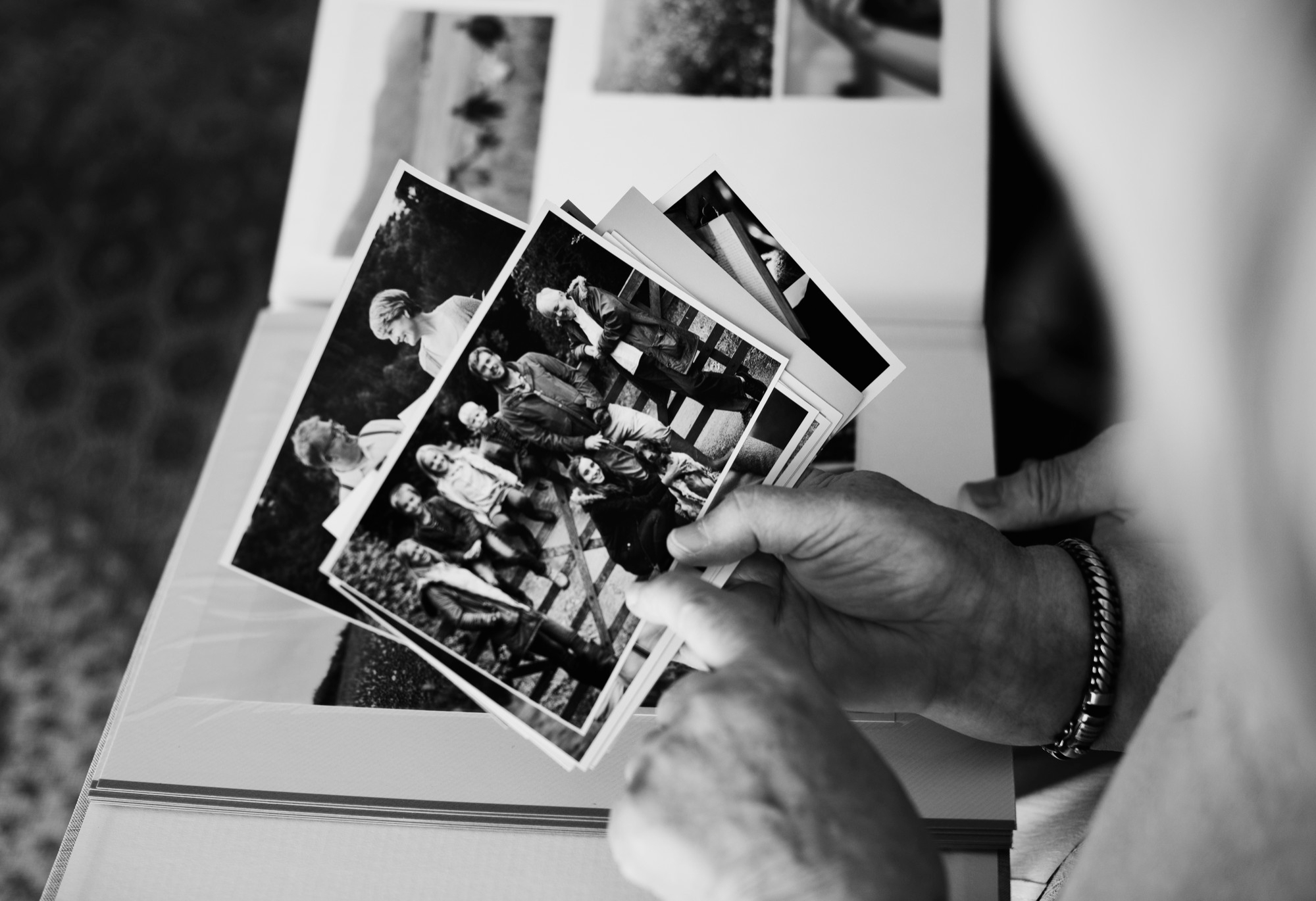
The Family Photo
The school called at 2:40 on a Tuesday afternoon.
I was standing in line at the pharmacy, holding a bottle of children’s cough syrup and a bag of the gummy bears Sophie liked. My phone buzzed. When I saw the name of her school on the screen, my whole body went cold. Every parent knows that feeling.
“Mrs. Bennett? This is Janet from the front office at Millbrook Elementary.”
“Is Sophie okay?”
“She’s fine. She’s not hurt. But Mrs. Parker would like you to come in. Right away, if you can.”
“What happened?”
There was a pause. I could hear Janet breathing. I could hear something else too, a door closing somewhere behind her.
“It’s about the project,” she said. “The family photo. I think it’s better if you come in.”
I put the cough syrup back on the shelf. I don’t know why. I just set it down next to the vitamins and walked out of the store with the gummy bears still in my hand, and I didn’t realize I’d stolen them until I was sitting in my car.
I drove to the school with them on the passenger seat.
I kept thinking, the family photo. What could possibly go wrong with a family photo?
I found out twenty minutes later.
But first, you need to know about Sophie.
My husband Tom and I tried to have a baby for five years. I won’t go into all of it. The doctors, the needles, the calendars on the fridge with little circles around certain days. The way Tom would hold me in the bathroom when the test came back negative again, without saying anything, because there was nothing left to say.
When we finally decided to adopt, it felt like giving up and starting over at the same time.
We’d been on the foster-to-adopt list for eight months when the social worker called. Her name was Diane. She had a voice like a kind aunt.
“There’s a little girl,” she said. “Seven months old. Her parents were killed in a car accident. She was in the back seat. She survived without a scratch. Her only family is an aunt in Arizona who can’t take her. Would you like to meet her?”
I remember I said yes before Diane even finished the sentence.
Her name was Sofia. The foster mother called her Sophie, and it stuck. When we finalized the adoption a year later, we kept her first name and gave her ours as a last name. Sophie Bennett. Tom cried in the courthouse hallway. He pretended it was allergies.
From the very beginning, we promised each other we wouldn’t hide where she came from. We read the books. We talked to the counselors. Everyone said the same thing: tell her early, tell her gently, tell her the truth.
So we did.
When she was three, she asked why there were no pictures of her in my belly. I told her she grew in another mommy’s belly, a mommy named Ana, who loved her very much.
When she was five, she asked where Ana was. I told her that Ana and her daddy, whose name was Daniel, had been in a car accident when she was a baby, and that they had both died, and that it wasn’t anybody’s fault and it wasn’t her fault.
She thought about it for a while. Then she asked if Ana liked dogs.
I said I didn’t know.
She asked if Daniel was tall.
I said I didn’t know that either.
She went back to her coloring book, and I went into the bathroom and sat on the edge of the tub for ten minutes, because I realized I’d been so careful about telling her the truth that I’d never thought about how little of it I actually had.
I did have one thing.
In a shoebox on the top shelf of my closet, behind the winter sweaters, there was a newspaper clipping.
The foster mother had saved the local paper from the day after the accident. When we picked Sophie up for the last time, she handed it to me folded in half. “For when she’s older,” she said.
That night, after Sophie was asleep in her new crib, I sat at the kitchen table with a pair of scissors and cut out the article. I was crying so hard I could barely see. I cut fast and crooked. I just wanted the story and the photo of her parents. I threw the rest of the paper in the recycling bin.
The headline said: Young Couple Killed in Route 9 Crash; Infant Daughter Survives.
Under it was a photo of Daniel and Ana Reyes. It looked like it came from a wedding, or maybe a party. Ana had her head on Daniel’s shoulder, and she was laughing at something outside the picture. Daniel was looking at her instead of the camera. He had a little gap between his front teeth. So did Sophie.
I put the clipping in the shoebox with Sophie’s hospital bracelet from the foster care intake and a tiny pink sock she’d been wearing the day we met her. I put the box on the top shelf.
And I left it there for six years.
I told myself I was waiting until she was old enough. Ten, maybe. Twelve. When she could understand.
The truth is, I was afraid of that photo. I was afraid that once Sophie saw her mother’s face, she’d look at mine and see the difference.
The project was announced the Monday before.
Sophie came home with a sheet of yellow paper in her backpack. Our Families! Please send in ONE family photo by Tuesday. We will put them on our big Family Tree wall. Thank you! — Mrs. Parker.
Mrs. Parker was new to Millbrook that year. She was younger than me, very organized, the kind of teacher who laminated everything. At the fall open house, she’d shown us a color-coded behavior chart and a spreadsheet of reading levels. Tom whispered to me that she seemed very nice and very terrifying. I laughed, but I agreed.
That evening after dinner, I pulled out all our photo albums and spread them across the living room floor.
“Okay, Sophie-bear. Pick any one you want.”
She lay on her stomach and flipped pages slowly, the way she always did with books, like she was looking for something specific.
“What about this one?” I said, pointing. It was Christmas, all three of us in matching red pajamas Tom’s mother had bought.
“No.”
“This one? Your birthday at the trampoline park?”
“No.”
“Grandma’s lake house?”
She shook her head. She kept flipping.
Tom came in and sat on the couch with his coffee. “She’s a tough customer.”
“She knows what she wants,” I said.
Sophie stopped at a picture from two summers ago. The three of us at the beach on the Outer Banks. Tom was holding her up on his shoulders, and I was squinting into the sun with my hair blowing everywhere. We all looked sunburned and happy.
“That one,” she said, and she pointed.
“Good choice,” Tom said. “Your mom looks like she’s been in a hurricane.”
“Thanks a lot.”
I slid the photo out of the album and put it in a plastic sleeve so it wouldn’t get bent. Sophie took it upstairs to put in her backpack herself. She said she was a big girl and could do it.
I remember feeling proud of her for that.
I remember she was upstairs for a long time.
When I pulled into the school parking lot, it was almost three. The buses were lined up out front, engines running. Kids were starting to spill out of the doors with their backpacks and lunchboxes.
I signed in at the front office. Janet didn’t look at me when she handed me the visitor sticker.
“Room 14,” she said. “Mrs. Parker’s waiting.”
I walked down the hallway past construction-paper turkeys and a bulletin board that said We Are Thankful For… in glitter letters. I could hear other classrooms emptying out. Chairs scraping. Kids laughing.
Room 14 was quiet.
When I opened the door, I understood why. All the kids were still sitting at their desks. Twenty-two of them. Backpacks on, coats zipped up, waiting. A few of them turned to look at me. One little boy in the front was picking at a scab on his elbow.
Sophie was at a desk near the window. She was sitting very straight, with her hands in her lap. Her face was blotchy, like she’d been crying and had stopped.
When she saw me, her chin started to shake.
Mrs. Parker was standing at the front of the room. She looked irritated. She had a folded piece of paper in her hand, and she was holding it the way you’d hold something you found in the garbage.
“Mrs. Bennett. Thank you for coming.”
“What’s going on? Why are the kids still here? The buses are leaving.”
“They’ll be fine. We’ll walk them out in a minute.” She lowered her voice, but not by much. “Your daughter brought something completely inappropriate for a second-grade project.”
She handed me the folded paper.
It was newspaper. Old, yellowed newspaper, soft from being handled. I unfolded it.
My stomach dropped.
Young Couple Killed in Route 9 Crash; Infant Daughter Survives.
Ana and Daniel, smiling up at me.
I hadn’t looked at that clipping in six years. I’d forgotten how young they were. Ana’s earrings. The gap in Daniel’s teeth.
“I kept this in a box,” I heard myself say. “At the top of my closet.”
“Well, it ended up on my Family Tree wall,” Mrs. Parker said. “Underneath a headline about two people dying. In front of twenty-two seven-year-olds. Tyler asked if Sophie’s parents were dead. Madison started crying. I have parents who are going to be calling me tonight, Mrs. Bennett, and I’m going to have to explain…”
I wasn’t really listening anymore.
I was looking at Sophie.
She had gotten up from her desk. She walked over to me in her little purple sneakers and stood in front of me. She didn’t look at the clipping. She looked at the floor.
“Where’s the beach picture?” I asked her quietly.
“In my backpack.”
“Why didn’t you bring that one?”
“I did bring it.” Her voice was very small. “I was going to put up both.”
“Both?”
She finally looked up at me.
“I wanted my first family too,” she whispered.
And just like that, my anger disappeared. All of it. Every bit of it that I’d been holding on to in the car, about the closet and the box and the climbing and the sneaking. It was just gone.
She’d gone into my room. She’d pulled the step stool from the bathroom. She’d climbed up to the top shelf, behind the winter sweaters, where she knew she wasn’t supposed to go. And she’d found the only picture of her parents in the whole world.
And all she wanted was to put them on the wall next to us.
I knelt down in front of her. “Oh, baby.”
“Are you mad?”
“No. No, I’m not mad.”
“Mrs. Parker said it was inappropriate.”
I looked up at Mrs. Parker. She had the decency to look a little uncomfortable.
“It’s not inappropriate,” I said. “It’s your family.”
“Mrs. Bennett,” Mrs. Parker started. “I understand this is a sensitive situation, but there are other children in this room and…”
Before I could answer, the door opened.
The principal, Mr. Harris, came in a little out of breath. He was a big man in his fifties with reading glasses on a cord around his neck. He’d been the principal at Millbrook for fifteen years. Every kid in that school knew him. He stood at the doors every morning and high-fived them as they came in. He knew every single one of their names.
“Sorry, Janet said there was some kind of issue?” He nodded at me. “Mrs. Bennett. Hi, Sophie.”
“Hi, Mr. Harris,” Sophie mumbled.
Mrs. Parker took the clipping out of my hands. I let her. She handed it to him.
“That’s what she brought,” she said.
He glanced at it. I saw his face start to soften. I saw him begin to understand. He looked at Sophie with that look adults get when they figure out something sad about a child.
Then he stopped.
His eyes went back to the paper. Not to the headline. Not to the photo of Ana and Daniel.
Lower.
He lifted his reading glasses and put them on. He moved closer to the window, where the light was better. He held the clipping right up to his face, and he read the article. The whole thing. From beginning to end. Then he turned it over and looked at the back, and turned it over again.
The room was so quiet I could hear the clock ticking over the whiteboard. Somewhere outside, a bus pulled away.
“Where did Sophie get this?” he asked. His voice was different. Flat.
“From my house,” I said. “I’ve had it since we adopted her.”
He looked around the classroom. At the kids. At the door. At the window into the hallway.
“Everyone stay seated,” he said.
Mrs. Parker frowned. “Why?”
He didn’t answer.
Instead, he pulled out his phone. He laid the clipping flat on Mrs. Parker’s desk, smoothed it with one big hand, and photographed one tiny section near the bottom corner.
I stepped closer to see what he was looking at.
I hadn’t noticed it before. In six years, I had never once noticed it.
Beside the article, where I’d cut crooked and fast that night at my kitchen table, there was part of another photograph. Most of it was gone. I’d sliced right through it. It was grainy and gray, like it came from a security camera.
Only half of a man’s face remained.
One eye. Part of a nose. The edge of a ball cap. And through the eyebrow, a small pale scar. A curved one. Like a fishhook.
Underneath it, there were three words left of a caption that had been cut off: …seen near the…
Mr. Harris stared at it.
Then he looked at Sophie.
Then, without saying a word, he walked to the classroom door, turned the deadbolt, and pulled down the little paper shade over the window.
The lock clicked.
A couple of the kids looked at each other. The boy in front stopped picking at his elbow.
“Mr. Harris,” I said. “What’s going on?”
He didn’t answer me right away. He was dialing his phone.
“Janet,” he said quietly. “It’s me. I need you to do me a favor and not make a big deal about it. Do you know where Walt is right now?”
He listened.
“Okay. When he comes back, don’t let him into the front office. Just tell him I said to wait in the boiler room. Tell him I need help with the valve. Then call me back.”
He hung up and dialed again. This time he turned away from the class and walked to the corner by the coat hooks. I could only hear pieces.
“…Millbrook Elementary… no, nobody’s hurt… a possible identification… a hit-and-run, six years ago, Route 9… yes, I’m sure. Well. I’m pretty sure.”
My legs went weak. I sat down in one of the tiny second-grade chairs, the kind made for little kids, with my knees almost up to my chin.
Hit-and-run.
That wasn’t in the article. I would know. I’d read that article a hundred times the first week. It said the Reyes’ car was struck by another vehicle that crossed the center line. It said police were investigating.
I had always assumed the other driver had been caught. Or had died too. I’d never asked. I hadn’t wanted to know anything except that Sophie was safe and Sophie was mine.
Mrs. Parker walked over to Mr. Harris and hissed at him. “What is going on? These kids need to get on their buses. I’ve got parents waiting out front.”
“Call the parents. Tell them there’s a short delay. Tell them it’s a soft lockdown drill.”
“It’s not a drill.”
“Mrs. Parker.” He looked at her over his glasses. “Please.”
Something in his voice made her stop arguing. She went to her desk and picked up her phone. I saw that her hands were shaking a little.
Sophie climbed into my lap. She was too big for it, really, all elbows and knees, but I held on to her.
“Mommy,” she whispered. “Are we in trouble?”
“No, baby. We’re not in trouble.”
“Is it because of the picture?”
I didn’t know what to say. I kissed the top of her head.
A girl in the second row raised her hand. “Mr. Harris? Is there a bad guy?”
The whole room went still.
Mr. Harris put his phone in his pocket. He walked to the front of the room and sat down on the edge of Mrs. Parker’s desk, the way he did at assemblies when he wanted the kids to feel like he was just talking to them.
“Nobody’s in danger,” he said. “I promise. I just need to talk to some people, and I need all of you to stay right here with Mrs. Parker while I do. Can you be my best listeners for a little bit?”
“Can we read?” someone asked.
“You can read. You can draw. You can do whatever you want, as long as you stay in your seats. Deal?”
A few kids said “deal.” Somebody pulled out a book. The room slowly started to breathe again.
Mr. Harris looked at me and tipped his head toward the back corner by the sink. I lifted Sophie off my lap and set her in her chair.
“I’ll be right there,” I told her. “I’m not leaving.”
In the corner, he spoke so low I had to lean in to hear him.
“Mrs. Bennett. I’m going to tell you something, and I need you to stay calm, because there are twenty-two kids watching us.”
“Okay.”
“Do you know Walt? Our custodian?”
I knew Walt. Everyone knew Walt. He’d been at Millbrook for two years. Gray beard, quiet voice, always had a roll of tape in his back pocket. The kids loved him. At the spring carnival, he ran the duck pond and let everyone win.
“Sure,” I said. “What about him?”
He held up his phone and showed me the photo he’d just taken. Half a face. One eye. The fishhook scar through the eyebrow.
“Walt has that scar,” he said. “Same eyebrow. Same shape. I’ve been looking at it every day for two years.”
“Lots of people have scars.”
“That’s what I keep telling myself.” He rubbed his forehead. “But that photo was printed next to a story about the crash that killed Sophie’s parents. And the caption says seen near the… something. That’s how they write it when they’re looking for someone.”
I stared at the phone.
“There’s more,” Mr. Harris said quietly. “About a month ago, Walt came into my office. He asked me if Sophie Bennett was adopted.”
The floor felt like it tilted.
“He asked about my daughter?”
“I told him it was none of his business. He apologized. He said he was just curious because she looked like somebody he used to know. I thought it was strange. But Walt’s never caused one problem. Not one. I let it go.” He looked at me with real pain in his face. “I’m sorry. I should have told you.”
“Where is he right now?”
“Janet says he went out to the dumpsters about twenty minutes ago. He hasn’t come back in yet.”
I looked over at Sophie. She was drawing on the back of a worksheet. Her tongue was sticking out of the corner of her mouth the way it always did when she concentrated.
“He’s been around her,” I said. “For two years. He’s been in her classroom.”
“I know.”
“He’s talked to her.”
“I know. The police are coming. They’ll be here in a few minutes. Until then, nobody leaves this room, and he doesn’t come in.”
That’s when Sophie looked up from her drawing and said something that turned my blood to ice.
“Mr. Walt fixed my lunchbox.”
Mr. Harris and I both turned around.
“What, baby?” I said.
“This morning. The zipper was broken. Mr. Walt fixed it.” She held it up. A purple lunchbox with a cartoon cat on it. “He said my mom used to have a purple lunchbox too.”
I couldn’t breathe.
“Your mom?” I said carefully. “Did he mean me?”
Sophie shrugged. “I don’t know. He just said ‘your mom.'”
I have never owned a purple lunchbox in my life.
The next ten minutes were the longest of my life.
Mrs. Parker read Frog and Toad out loud to the class. Her voice was steady, but she kept losing her place on the page. Mr. Harris stood by the door with his back against it. I sat next to Sophie and held her hand under the desk.
At one point, someone walked past in the hallway. Through the gap at the bottom of the paper shade, I could see a pair of work boots and the wheel of a custodian’s cart. The boots stopped right outside our door.
Mr. Harris didn’t move. He just stood there, breathing slowly.
The doorknob turned. Just a little. Then stopped, because it was locked.
Then the boots walked away. The cart wheel squeaked down the hall.
Sophie looked up at me. “Was that Mr. Walt?”
“I don’t know, baby.”
“Why didn’t Mr. Harris let him in?”
I didn’t answer.
Ten minutes later, there was a knock. Three short ones. Mr. Harris lifted the edge of the shade, then unlocked the door. Two police officers came in, a man and a woman. Behind them was a third person in plain clothes, a short, tired-looking woman with a lanyard around her neck and a notebook in her hand.
“Detective Alvarez,” she said, shaking Mr. Harris’s hand. “Can I see it?”
He gave her the clipping. She looked at it for a long time. Then she looked at me.
“You’re the adoptive mother?”
“Yes.”
She nodded slowly. Then she said something that I will never forget as long as I live.
“I worked that case six years ago,” she said. “We never found him. I have that photo pinned to the wall above my desk.”
They found Walt in the boiler room.
He wasn’t hiding. That was the strange part. Detective Alvarez told me later that he was sitting on an overturned bucket, next to the big humming furnace, with his hands resting on his knees. Like he’d been waiting for them.
When the officers came in, he stood up slowly and put his hands where they could see them.
“I know why you’re here,” he said.
They didn’t handcuff him in the hallway. Mr. Harris asked them not to, because of the kids, and Detective Alvarez agreed. They walked him out the side door by the gym.
I saw it through the classroom window. I’d gone to stand there because I couldn’t stop myself. Walt walked between the two officers, across the parking lot, toward the police car. He was wearing his gray work shirt with his name stitched on the pocket. His shoulders were bent forward.
Halfway across the lot, he stopped and turned around. He looked straight at the window of Room 14.
He found me. Then his eyes moved past me, to the desk by the window, where Sophie was sitting with her drawing.
He didn’t wave. He didn’t smile. He just looked at her for a long moment, the way you look at something you’re trying to memorize.
Then he got into the back of the car, and they drove away.
Detective Alvarez came back into the classroom alone. She was holding a large manila envelope in a clear plastic bag.
“He had this in his locker,” she said. “He told us where to find it. He said it was for her.” She nodded toward Sophie. “But I can’t give it to you yet. It’s evidence. I’m sorry.”
The envelope had one word written on it in careful capital letters.
SOFIA.
Not Sophie. Sofia. The name her first mother gave her.
“What is it?” I asked.
“I don’t know yet. A letter, I think. It’s thick.” She looked at me. “Mrs. Bennett, I’ll need to talk to you and your husband. Probably tomorrow. Take your daughter home.”
By the time we walked out to the parking lot, the buses were gone. A few parents were standing by their cars with their kids, talking in low voices. They all stopped when they saw us.
One of the mothers, a woman I sort of knew from soccer, gave me a sympathetic look. Another one pulled her son closer and looked away.
I buckled Sophie into her booster seat. The bag of gummy bears I’d accidentally stolen was still on the passenger seat. I handed it back to her.
“Where’d you get these?” she asked.
“Long story.”
She ate them slowly, one at a time, looking out the window. She didn’t say anything until we were almost home.
“Mommy?”
“Yeah?”
“Is Mr. Walt a bad man?”
I kept my eyes on the road. My hands were tight on the steering wheel.
“I don’t know yet, baby.”
“He fixed my lunchbox.”
“I know.”
“He knows the names of all the fish in the fish tank. He told me the orange one is named Captain.”
I didn’t say anything.
“Is he going to jail?”
“Maybe.”
She was quiet for a long time. Then she said, “Was it because of my picture?”
I pulled the car over to the side of the road. I turned around in my seat and looked at her.
“Sophie. Listen to me. Nothing that happened today was your fault. Nothing. Do you understand?”
“But I took the picture without asking.”
“Yes, you did. And we’ll talk about that. But that’s a small thing. Whatever Mr. Walt did, he did it a long time ago. Before you could even walk. It’s not your fault. It’s never going to be your fault.”
She looked at me with her serious brown eyes. Daniel’s eyes. I’d just seen them in the newspaper.
“Okay,” she said. But I could tell she didn’t believe me.
Tom was waiting at the front door when we got home. I’d called him from the school. He’d left work early. He picked Sophie up and held her so tight she squeaked.
“Daddy, you’re squishing me.”
“I know. I’m allowed.”
After dinner, which none of us ate much of, we put Sophie to bed. She asked for both of us, which she hadn’t done since she was four. Tom read her two chapters of her horse book. I lay on the floor beside her bed and held her hand through the railing.
Before she fell asleep, she said, “Can I keep the picture of them? Ana and Daniel? In my room?”
Tom looked at me.
“The police have it right now,” I said. “But when they give it back, yes. You can keep it.”
“Where I can see it?”
I swallowed. “Where you can see it.”
She closed her eyes.
Downstairs, Tom poured two glasses of wine and we sat on the kitchen floor with our backs against the dishwasher, because neither of us could make ourselves sit at the table.
“The custodian,” Tom said. He’d said it three times already, like he couldn’t make it make sense. “He’s been at her school for two years.”
“Yes.”
“Talking to her.”
“Yes.”
“How did he even find her?”
“I don’t know.”
He put his glass down. “And you never noticed. That photo. You never saw the photo.”
He didn’t say it meanly. But it landed hard anyway.
“I cut it out the night we brought her home,” I said. “I was crying. I wasn’t looking at anything except her parents.”
“And then you put it in a box for six years.”
“I was going to show her when she was older.”
“When, Rachel?”
I didn’t have an answer.
We sat there. The dishwasher hummed against our backs.
“She went into the closet,” I said finally. “She climbed up on a stool. She went looking for them, Tom. She’s been wanting to see them, and she didn’t ask us, because she knew. Somehow, she knew that I didn’t want her to.”
“That’s not true.”
“It is true.” My voice cracked. “I told myself I was protecting her. But I was protecting me. I was scared that if she saw her real mother’s face, she’d stop seeing mine.”
Tom put his arm around me. He didn’t tell me I was wrong. I loved him for that, actually. He just let me sit with it.
“You’re her real mother,” he said after a while.
“So was Ana.”
He didn’t argue with that either.
Detective Alvarez came to our house the next afternoon.
She sat on our couch with a cup of coffee she didn’t drink. Sophie was at my sister’s house. We didn’t want her to hear any of this. Not yet.
“He confessed,” the detective said. “Last night. He asked for a lawyer, and then he told the lawyer he didn’t want one. He wanted to tell us everything. He’s been waiting six years to tell somebody.”
Tom held my hand.
“His name is Walter Greer,” she said. “Six years ago, he was working two jobs. Days at a warehouse, nights cleaning offices. That night, he’d been awake for about twenty-two hours. He was driving home on Route 9. He says he closed his eyes for a second. Just one second. When he opened them, he was on the wrong side of the road.”
I stared at the coffee table.
“He hit the Reyes’ car head-on. Daniel was driving. He was killed instantly. The car rolled into the ditch.”
“And Ana?” I asked.
Detective Alvarez looked at her coffee.
“Ana was still alive when Walt got to the car. For a few minutes.”
Tom’s hand tightened around mine.
“He says he climbed down into the ditch. The car was on its side. There was smoke. He could hear the baby crying in the back seat. He broke the back window with a rock and got the car seat out. He says Ana was talking to him. She was trapped. He tried to get her out. He couldn’t. Her door was crushed.”
I covered my mouth with my hand.
“He carried the baby up to the road and put her down on the grass by the guardrail, wrapped in his jacket. He went back for Ana. By the time he got back down there, she…” The detective stopped. “She was gone.”
The room was so quiet.
“Then he ran,” I said. My voice didn’t sound like mine.
“He ran,” she said. “He drove a mile up the road to a gas station and called 911 from the payphone. He told them there was a baby on the side of the road and two people in a car. Then he hung up and drove away. The gas station camera got a picture of him. That’s the photo you had in your clipping. It ran in the paper the next day. Nobody ever identified him.”
“Why?” Tom said. His voice was rough. “Why would he run? He saved her. Why would he run?”
“Because his license was suspended,” she said. “He’d had a DUI three years before that. He wasn’t drunk that night. We know that now. He was exhausted. But he had no license, no insurance, and two dead people. He said he knew he’d go to prison for a very long time. He had a sick mother at home who depended on him. He panicked.”
“So he left a baby on the side of the road,” I said, “and went home to his mother.”
Detective Alvarez didn’t argue.
“His mother died four years ago,” she said quietly. “He said after that, there was nothing left to hide for. But he still couldn’t make himself walk into a police station. So he decided to do the only other thing he could think of. He decided to find the baby.”
This is how he found her.
Sophie’s aunt, Ana’s sister Marisol, lives in Tucson. When Sophie was placed with us, Marisol was twenty-three, broke, and living in a studio apartment. She couldn’t take a baby. She cried on the phone with Diane for an hour. But she asked if she could stay in Sophie’s life, and we said yes.
She sent birthday cards every year with ten dollars inside. Sometimes she called. Once, when Sophie was four, she flew out for a visit.
I wasn’t kind to her during that visit. I’m ashamed to say it now. I was polite. I made her coffee. But I watched every move she made with Sophie. When Sophie climbed into Marisol’s lap and Marisol said, “You have your mama’s laugh, you know that?” I got up and started loudly doing the dishes.
After that, the calls got less frequent. The cards still came.
On Sophie’s first day of kindergarten, I texted Marisol a photo of her in front of the school with her new backpack. It was one of the few times I reached out first. I felt like I should.
Marisol posted it on Facebook. My beautiful niece, first day at Millbrook Elementary. Your mama would be so proud of you, mija.
Her page was public. She’d made a memorial page for Ana and Daniel years before, and Walt had been watching it. Every post. Every anniversary. Every photo.
When he saw the name of the school, he applied for the custodian job.
“He says he never meant to talk to her,” Detective Alvarez said. “He just wanted to see that she was okay. That’s all. He says he’d see her in the hallway and that was enough. But she’s a friendly kid. She talked to him first. She asked him what his name was.”
Of course she did. Sophie talks to everyone.
“And the lunchbox?” I asked. “He told her that her mom had a purple lunchbox.”
The detective nodded slowly. “Ana had a purple lunchbox in the car that night. It was on the floor of the passenger side. He said he remembered it. He said he didn’t know why he said it. It just came out.”
I stood up. I walked to the window. I couldn’t sit anymore.
“He’s been watching my daughter,” I said. “For two years. The man who killed her parents. He took a job at her school to be near her. And he never said a word.”
“Yes,” Detective Alvarez said.
“How am I supposed to feel about that?”
She looked at me for a long time.
“I don’t know, Mrs. Bennett,” she said. “I’ve been doing this job for nineteen years. And I honestly don’t know.”
She left a copy of the letter.
The original was still evidence. But she’d made a photocopy. She said she’d talked to the district attorney, and they agreed I should have it. It was mine to decide what to do with.
“Read it alone first,” she said at the door. “Decide later if your daughter should ever see it.”
I read it that night after Sophie was asleep. Tom wanted to read it with me, but I asked him not to. I needed to do it by myself first. I sat in the closet, of all places, on the floor under the shelf where the shoebox used to be. I don’t know why. It felt like the right place.
It was nine pages long. Handwritten, in the same careful capital letters as the envelope.
I won’t share all of it. Some of it isn’t mine to share. But I’ll share part of it.
Dear Sofia,
You don’t know me. Or maybe by the time you read this you do, which means I finally did the right thing, or someone made me.
I am the man who caused the accident that killed your mother and father. I need you to know that first, before anything else. I was too tired to be driving and I drove anyway. It was my fault. Not the road’s, not the weather’s. Mine.
I want to tell you what happened, because I am the only person alive who was there. I don’t think it’s right that I carry it alone.
When I got down to the car, your mother was awake. She was hurt bad and she knew it. She couldn’t move her legs. She kept looking at the back seat. She said, “Is she okay? Is my baby okay?”
I told her yes. You were crying, so I knew you were breathing.
She asked me to get you out. I broke the window and got your seat out and held you up so she could see you. You stopped crying when she saw you. I’ll never forget that. You just stopped.
She said, “Her name is Sofia. She likes it when you sing to her. Any song. She doesn’t care if you’re bad at it.”
Then she said, “Tell her…”
And she didn’t finish.
I’ve spent six years wondering how she was going to end that sentence. I think about it every day. I have no right to guess. But I’ll tell you what I think, because I was there and I saw her face when she looked at you.
I think she was going to say “tell her I love her.” Or maybe “tell her I’m sorry.” Or maybe nothing big at all. Maybe just “tell her to be good.” But I know she was looking at you like you were the only thing in the world. That’s the truth. That’s the only thing I really know about your mother. That at the very end, she wasn’t thinking about herself. She was thinking about you.
I ran away that night, and I have no excuse for it. I left you on the grass in my jacket and I ran. Every day I am alive, I am ashamed of that.
I took a job at your school so I could see if you were okay. I know how that sounds. I know your parents will be angry, and they should be. I never meant to talk to you. But you asked my name. You told me you liked the fish. You told me you had another mom and dad before, and they died, and that you didn’t remember them.
I almost told you right then. I didn’t. I was a coward again.
You are a kind girl. You have good parents. I watched them pick you up every day. Your mom always kneels down so she’s eye level when she says hi to you. Your dad lets you carry his keys. You are loved. That’s all I wanted to know.
I’m going to turn myself in. I’ve said that every year for six years. I’m writing it down now so I have to do it.
I am so sorry, Sofia.
Walter Greer
At the bottom, in smaller letters, there was one more line.
P.S. Your mother’s lunchbox was purple. It had a sticker on it of a sun with sunglasses. I don’t know why I remember that. I just do.
I sat in the closet and cried until there was nothing left. Tom found me there an hour later. He didn’t say anything. He just sat down next to me and put his arm around me, and we stayed there in the dark with the winter sweaters until almost midnight.
I couldn’t sleep that night. Or the next.
On the third day, I called Detective Alvarez and asked if I could see him.
“Walt?” she said. “Why?”
“I don’t know. I just need to.”
She was quiet for a moment. “He has a right to refuse.”
“Ask him anyway.”
He didn’t refuse.
The county jail smelled like bleach and old coffee. They sat me in a small room with a table bolted to the floor and two plastic chairs. There was a guard by the door.
When they brought Walt in, he looked smaller than I remembered. His beard was gone. They must have shaved it. Without it, the fishhook scar through his eyebrow was easy to see. He wasn’t wearing his gray work shirt with his name on the pocket anymore. He was wearing orange.
He sat down across from me. He didn’t look up.
For a long time, neither of us said anything.
“I read your letter,” I said finally.
He nodded at the table.
“Look at me.”
He lifted his eyes. They were red and swollen, like he hadn’t slept either.
“You were in her classroom,” I said. “You fixed her lunchbox. You talked to her about fish. For two years, you walked past my daughter every day and you knew. You knew who she was, and you knew what you did, and you said nothing.”
“Yes, ma’am.”
“Do you know what that feels like? For me? To know that the man who killed her parents was standing next to her at the spring carnival? Handing her a plastic duck?”
“I’m sorry.”
“I don’t want you to be sorry.” My voice was getting loud. The guard shifted by the door. I didn’t care. “I want to know why. Why her school? Why not just write the letter and mail it? Why not turn yourself in six years ago, or four years ago, when your mother died? Why did you have to be near her?”
He was quiet for a long time.
“Because I needed to see that she was okay,” he said. His voice was rough and very quiet. “I needed to know that I didn’t ruin everything. I needed to see that something good came out of that night. Because if she wasn’t okay…”
He stopped.
“If she wasn’t okay, then what?”
“Then I didn’t know how I was going to keep breathing,” he said.
I stared at him.
“That’s not fair,” I said. “You don’t get to use her for that. She’s not your… your proof that you’re not a monster.”
“I know.”
“She’s a little girl.”
“I know.” His hands were shaking on the table. “I know, ma’am. I know. You’re right. I don’t have any right to her. I knew that the first day. I should have left. I kept saying, one more week. One more week. And then she asked me my name.”
I wanted to scream at him. I wanted to tell him he was selfish and weak and that I hoped he rotted in here. I had practiced it in the car.
Instead, I heard myself ask something else.
“What song?”
He blinked. “What?”
“Ana said Sofia likes it when you sing. Did you sing to her? That night, by the road?”
His face changed. It just fell apart. He put his hand over his eyes.
“I didn’t know any lullabies,” he said through his fingers. “I only knew one song all the way through. My mom used to play it on the radio in the kitchen. ‘You Are My Sunshine.’ So I sang that. Over and over. Until the ambulance came. I sat in the bushes across the road where they couldn’t see me, and I sang it until I heard the sirens. Then I ran.”
I couldn’t speak.
Because “You Are My Sunshine” was Sophie’s song.
Since she was a baby, it was the only thing that would make her stop crying. Tom figured it out by accident during her first week with us, when he was walking her up and down the hall at three in the morning and ran out of songs. He sang it, and she went quiet, and she looked up at him with her big brown eyes. After that, we sang it every night. We never knew why it worked. We just thought she liked the tune.
I never knew that she’d already heard it. On the side of Route 9. From the man who killed her parents.
I sat there in that bolted-down chair, and I cried in front of a stranger in orange, and he cried too. And the guard by the door looked at the ceiling and pretended not to see either of us.
When I could talk again, I stood up.
“I don’t forgive you,” I said. “I don’t know if I ever will.”
“I don’t expect you to.”
“But I’m going to tell her the truth. All of it. When she’s old enough to understand it. I’m going to tell her what her mother said. And I’m going to tell her about the song.” I looked at him. “Because it’s hers. It’s not mine and it’s not yours. It’s hers.”
He nodded. He couldn’t speak.
At the door, I stopped.
“She asked if you were a bad man,” I said, without turning around.
“What did you tell her?”
“I said I didn’t know yet.”
I didn’t wait for him to answer.
When I got home, I sat in the car in the driveway for a long time. I didn’t turn the engine off. I just sat there with the heater running and watched our front window. I could see Sophie and Tom in the living room, building something out of couch cushions.
Then I took out my phone and called Marisol.
She picked up on the second ring. “Rachel? Is she okay? Is everything okay?”
I realized I’d never called her before. Not once in six years. She always called me.
“She’s okay,” I said. “She’s fine. Marisol, I need to tell you something. It’s about Ana.”
I told her everything. The clipping. The custodian. The letter. Ana’s last words. The song.
For a long time, there was no sound on the other end of the line except crying.
“She always sang that,” Marisol finally said. “Ana. When she was pregnant. She’d sing to her belly. She said the baby kicked every time. We used to tease her that she’d sing it off-key so many times the kid would hate it.”
I laughed. It hurt, but I laughed.
“Marisol,” I said. “I owe you an apology.”
“For what?”
“For the visit. When Sophie was four. For being cold to you. For doing the dishes so loud.” I wiped my face. “I was scared. I thought if Sophie loved you too much, there’d be less for me. That’s stupid. I know it’s stupid.”
She didn’t say anything for a moment.
“I knew you were scared,” she said gently. “I was scared too. I thought you’d decide I was too much trouble and stop letting me see her.”
“I’m not going to do that.”
“Okay.”
“Will you come visit? Soon? She has questions about her mom. I don’t have the answers. You do.”
Marisol made a sound that was half laugh, half sob.
“I’ll book a flight tonight,” she said.
The next week, Mrs. Parker asked me to come in.
I was nervous about it. I didn’t know what she wanted. Another complaint, maybe. Parents had been calling the school all week. Some of them were upset about the lockdown. Some were upset that a “criminal” had been working there. One father had written an angry letter to the newspaper.
But when I walked into Room 14 after school, Mrs. Parker was sitting alone at one of the little desks. Her eyes were puffy. She looked much younger than she had the week before.
“I owe your daughter an apology,” she said before I could even sit down. “And you.”
“Okay.”
“I called her picture inappropriate. In front of the whole class. She just stood there and didn’t say anything. And I made her sit at her desk while I called you, like she’d done something wrong.” She shook her head. “I’ve been thinking about it all week.”
“You didn’t know.”
“I didn’t ask.” She looked at me. “That’s the part. I saw a newspaper headline about death and I panicked about what the other parents would say. I didn’t ask her one question. I didn’t ask her why she brought it.”
I didn’t say anything. I didn’t know what to say.
“I’m adopted too,” Mrs. Parker said quietly.
I looked up.
“From Korea. When I was two. My parents were wonderful. But nobody ever talked about it. There were no pictures. There was nothing. I’m thirty-one years old, and I’ve never seen a single photo of the woman who gave birth to me.” She laughed shakily. “So I guess when I saw a little girl holding up a photo of hers, it hit something. And I got angry. At the wrong person.”
We sat there in the tiny chairs.
“I’d like to fix it,” she said. “If you’ll let me.”
On Friday, the class finished the Family Tree wall.
Mrs. Parker invited the parents. About fifteen of them came. Marisol had flown in on Wednesday. She stood next to me in the back of the classroom, holding my hand so tightly my fingers went numb.
Each kid got up in front of the class and talked about their photo for one minute. Tyler had a picture with his two dads and his grandma at a baseball game. Madison had her mom and her three brothers and a very fat cat. A boy named Eli had a photo of just him and his mom, and he said, very proudly, that his mom was “the whole family and that’s plenty.”
When it was Sophie’s turn, she walked up to the front of the room in her purple sneakers. She was holding a big piece of poster board. She’d been working on it all week at the kitchen table with Marisol.
On the left side was our beach picture. Tom with Sophie on his shoulders. Me with my hurricane hair.
On the right side was a color copy of the newspaper photo. Just Ana and Daniel, laughing. We’d had the copy made at the drugstore, carefully cropped so you couldn’t see the headline.
In between them, Sophie had drawn a big yellow sun. With sunglasses.
“This is my family,” Sophie said. Her voice was a little shaky. “These are my mom and dad. Rachel and Tom. They adopted me when I was a baby. My dad is good at pancakes and my mom is good at hugs.”
A couple of parents laughed softly.
“And this is my first mom and dad,” she said, pointing to the other side. “Ana and Daniel. They died in a car accident when I was little. I don’t remember them. But my Aunt Marisol is here, and she told me stuff about them. My mom Ana liked dogs. She had a purple lunchbox. And she used to sing to me.”
She stopped. She looked at the back of the room, where Marisol and I were standing.
“And this is a sun,” she said, pointing at the middle. “Because they both sing me the same song. My first mom and my mom now. So that’s how I know they’re both my family.”
The room was completely silent.
Then Eli, the boy whose mom was the whole family, started clapping. And then everyone was clapping. And Marisol was crying so hard she had to sit down in one of the tiny chairs. And I was crying too, standing up, with my hand over my mouth.
Mrs. Parker came over and helped Sophie pin her poster to the wall. Right in the middle. She’d saved the best spot.
Walter Greer pleaded guilty in January.
Two counts of vehicular manslaughter. Leaving the scene of a fatal accident. Driving without a license.
The district attorney asked if I wanted to give a statement at the sentencing. I said yes. I worked on it for two weeks. I rewrote it eleven times.
On the day, I stood up in the courtroom in my one good black dress. Tom sat behind me. Marisol had flown back in for it. She was sitting next to him, holding a photo of Ana and Daniel in her lap.
Walt sat at the defense table. He didn’t turn around.
I unfolded my paper. My hands were shaking.
“Six years ago,” I read, “Walter Greer made a choice to drive when he was too tired to drive. Two people died because of that choice. A little girl lost her first mother and her first father. She’ll never remember their faces except in photographs. That is something he took from her, and he can never give it back.”
I looked up. Walt’s shoulders were shaking.
“Then he made another choice. He climbed down into a ditch and pulled her out of a car that was smoking. He held her up so her dying mother could see her one last time. He sang to her until help came. My daughter is alive today because of something he did.”
I took a breath.
“And then he made a third choice. He ran away. He left her in the grass. And for six years, he let the people who loved Ana and Daniel wonder what happened, and wonder who did it, and wonder if anyone would ever answer for it.”
I folded the paper. I didn’t need it for the last part.
“I don’t know what the right sentence is,” I said. “That’s not my job. I only know what I’m going to tell my daughter one day. I’m going to tell her that the same person can do the worst thing and the bravest thing on the same night. And that neither one cancels out the other. And that what matters most is what you choose to do after.”
I sat down.
The judge gave him eight years.
As they led him out, Walt stopped at the door and turned around. Just like he had in the school parking lot. He looked at me, and then at Marisol, holding the picture of her sister.
He mouthed two words.
Thank you.
Or maybe I’m sorry.
I never figured out which. I’ve decided it doesn’t matter.
That night, I climbed up on the step stool in my closet.
The shoebox wasn’t on the top shelf anymore. I’d brought it down the week after everything happened. But the shelf was still there, empty, behind the winter sweaters. And I stood on that stool for a long time, looking at the empty space where I’d hidden Ana and Daniel for six years.
Then I got down, went to Sophie’s room, and sat on the edge of her bed.
The shoebox was on her bookshelf now, right at eye level, where she could reach it whenever she wanted. It had her hospital bracelet in it. The tiny pink sock. The newspaper clipping, which the police had finally returned, a little more wrinkled than before. And a purple sticker of a sun with sunglasses, which Marisol had found at a craft store in Tucson and mailed to her with a note that said For your box.
On the wall above her bed, in a white frame, there were now two photos. Us at the beach. And Ana and Daniel, laughing.
Sophie was still awake.
“Mommy?”
“Yeah, baby?”
“Did the judge put Mr. Walt in jail?”
“Yes.”
“For how long?”
“Eight years.”
She counted on her fingers. “I’ll be fifteen.”
“That’s right.”
She was quiet for a while. Then she said, “Can I write him a letter? When I’m bigger?”
My first instinct was to say no. To protect her. To put it in a box on a high shelf where she couldn’t reach it.
But I’d done that before. I knew where it led.
“When you’re bigger,” I said, “if you still want to, we’ll talk about it. Okay? Together.”
“Okay.”
She turned over and pulled her blanket up to her chin.
“Will you sing it?” she asked.
So I sang it. You are my sunshine, my only sunshine. Quietly, a little off-key, the way I always do. I sang it until her breathing slowed and her hand went loose on the blanket.
Before I turned off the light, I looked up at the two photos on the wall. At Ana, laughing at something just outside the frame. I’ve decided she was laughing at Daniel. I’ve decided he’d just said something stupid, and she loved him for it.
“Tell her…” Ana had said. And she never got to finish.
I’ve thought a lot about how she would have finished that sentence. Walt guessed. Marisol has her own guess. I have mine.
I think it was simple. I think she just wanted someone to tell her daughter she was loved, by somebody, every single day, for the rest of her life.
So that’s what I do.
Every night.
I tell her for both of us.

Specialty: Quiet Comebacks & Personal Justice
David Reynolds focuses on stories where underestimated individuals regain control of their lives. His writing centers on measured decisions rather than dramatic outbursts — emphasizing preparation, patience, and the long game. His characters don’t shout; they act.