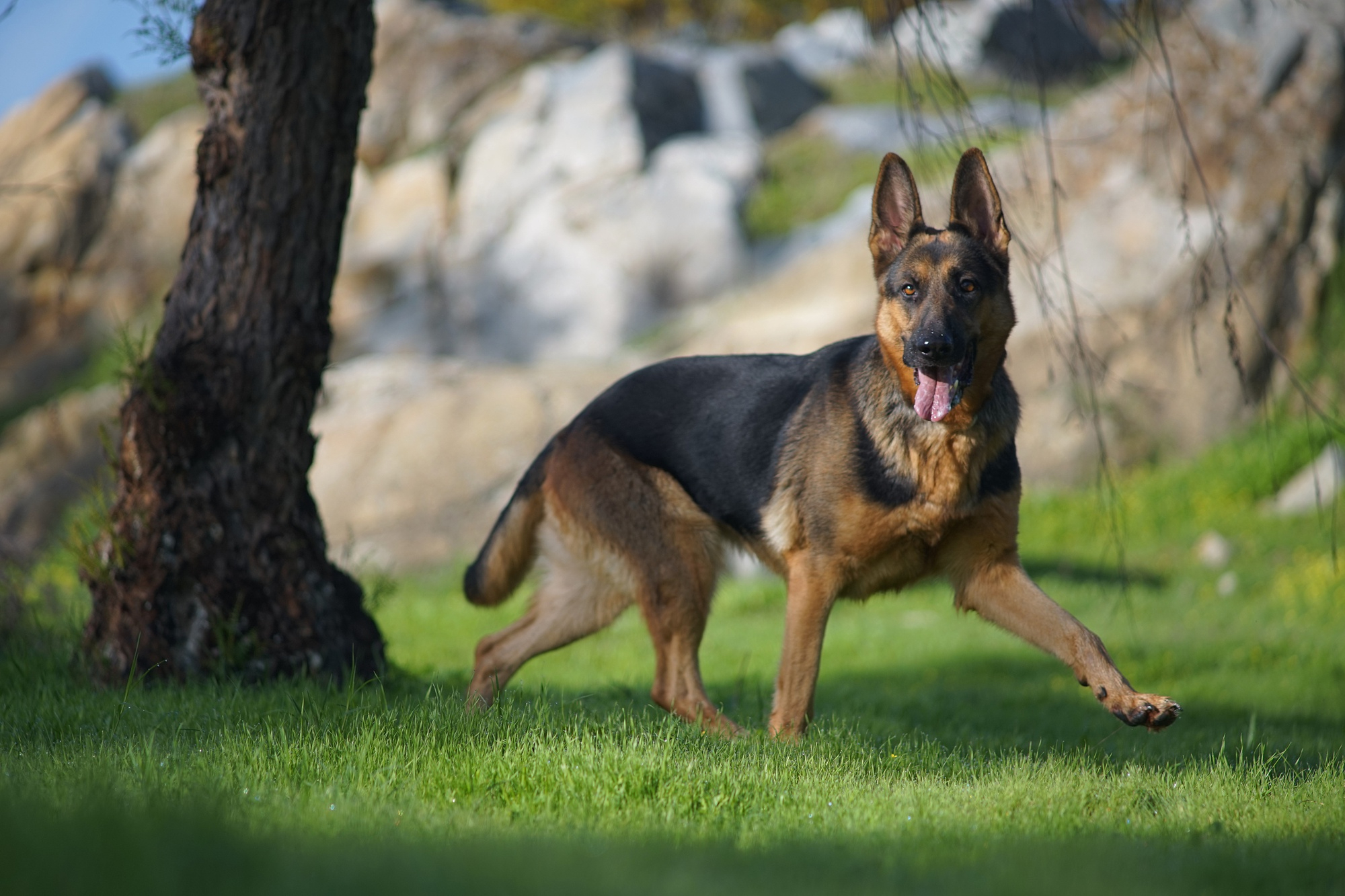
The puppy came to them in a cardboard box on a Thursday in April.
Henry Cole remembered that later. The box. The day. The way the little thing looked up at them from a nest of old towels with its ears too big for its head and its paws too big for its body.
“Oh, Henry,” Lorraine said. “Look at him. He looks like a little bear.”
He did. He was black and tan, round and fuzzy, with a wrinkled forehead and dark brown eyes that seemed much older than eight weeks. He sat in the bottom of that box and looked at them both very seriously, like he was deciding whether they’d do.
“Bear,” Lorraine said. “That’s his name. Bear.”
“Lorraine,” Henry said gently. “You know we don’t name them. The county names them. They’ll give him a real name when he goes to the academy.”
“I know,” she said. She picked the puppy up out of the box and held him against her chest. He licked her chin. “But he’s ours for now. And for now, he’s Bear.”
Henry and Lorraine Cole had been raising puppies for the Monroe County Sheriff’s K9 program for twenty-two years.
It started by accident. Their neighbor at the time, a deputy named Frank Delgado, was a K9 handler. He mentioned one evening over the fence that the county needed volunteer families. People who would take in a German Shepherd puppy at eight weeks, raise it for a year, teach it to be calm and confident and good around people. Take it to grocery stores and parks and baseball games. Get it used to loud noises and strange places. Love it. And then, when it was about fourteen months old, give it back so it could go to the academy and become a police dog.
“Most people can’t do it,” Frank said. “The giving back part. They fall in love, and then they can’t let go.”
Lorraine looked at Henry over the fence.
“We could do it,” she said.
They couldn’t have children. They’d tried for eleven years. They’d stopped trying. The house on Sycamore Drive had three bedrooms and two of them were empty.
“We could do it,” Henry agreed.
They raised fourteen puppies in twenty-two years. Every single one of them went on to become a police dog. Some of them worked for Monroe County. Some went to other states. One of them, a female named Duchess, ended up working at the airport in Philadelphia, sniffing luggage for explosives. Lorraine kept a scrapbook of every one. Photos from when they were babies. Newspaper clippings when they caught somebody or found somebody. Christmas cards from the handlers.
And every single time, at fourteen months, Henry and Lorraine drove the puppy to the training center on Route 9, and they handed over the leash, and they drove home, and Lorraine cried in the car the whole way.
“Every time,” she said once. “Every time, I think it’s going to get easier.”
“Does it?”
“No,” she said. “But it’s worth it. Isn’t it?”
“It’s worth it,” Henry said.
Bear was the fifteenth puppy.
He was different. Lorraine said so from the first week. He was smarter than the others. Calmer. He never barked unless there was a reason. He watched everything. He followed Lorraine from room to room. When she sat in her chair in the evenings knitting, he lay on her feet. When she went into the garden, he sat at the edge of the flower bed and guarded her like she was the queen of England.
Henry used to sit on the porch in the evenings and watch them. His wife in her garden hat. The black-and-tan puppy at the edge of the roses. He thought it was the happiest he’d ever been.
Bear was eleven months old when Lorraine found the lump.
She was sick for seven months. The cancer moved fast. By the time Bear was fourteen months old, Lorraine couldn’t get out of bed. Henry was taking care of her full-time. Feeding her. Bathing her. Sitting with her through the nights.
And the county called. It was time for Bear to go to the academy.
Henry stood in Lorraine’s bedroom doorway with the phone in his hand.
“I could tell them no,” he said. “I could tell them we want to keep him. People do that sometimes. They can choose to adopt instead.”
Lorraine was lying in the bed with Bear’s head on her lap. She was stroking his ears. She was so thin. Her hair was gone. She wore a blue scarf over her head.
“No,” she said quietly. “He’s meant for more than this, Henry. He’s meant to help people. He’s the smartest one we ever had. He’s going to be the best of all of them.” She looked down at the dog. “We can’t keep him just because we love him. That’s not what love is.”
So Henry drove Bear to the training center on Route 9.
He went alone. Lorraine couldn’t come. She said goodbye to the dog in her bed. She held his big head in her thin hands and whispered something in his ear. Henry never knew what.
At the training center, a young trainer came out to the parking lot to get him. She was very kind. She took the leash.
Bear didn’t want to go. For the first time in his life, he pulled against the leash. He turned around and looked at Henry with those old brown eyes. He whined.
Henry knelt down in the gravel. He took Bear’s face in both hands.
“Go on,” he said. His voice cracked. “Go be a good boy. Go help people. That’s what she wants.”
Then he reached into his coat pocket. He took out the little leather collar Bear had worn since he was a puppy. Brown leather, worn soft, with a brass tag shaped like a bone. Lorraine had the tag engraved at the hardware store. It said BEAR on one side. And on the other side, in tiny letters: Loved by Henry & Lorraine.
The academy would give him a new collar. A police collar. Henry had already taken this one off.
He held it up so the dog could smell it one more time. Then he put it back in his pocket.
“Go on, Bear,” he said.
The trainer led him away. Bear looked back over his shoulder the whole way across the parking lot. Until the door closed.
Henry sat in his truck for a long time.
Then he drove home to his dying wife.
Lorraine died nine days later. In her sleep. On a Sunday morning in October.
Henry never raised another puppy.
He kept the little leather collar in the inside pocket of his old canvas coat. The same coat he wore that day in the parking lot. He never took it out.
That was six years ago.
The first thing everyone remembered later was the heat.
Not the sirens. Not the guns. Not even the dog.
The heat.
It lay over Sycamore Drive like something alive, pressing down on patrol cars, front lawns, rooftops, officers’ shoulders and the restless crowd gathered behind the yellow police tape. It was the kind of blistering July afternoon when the asphalt shimmered, the tree leaves hung limp, and every breath felt too thick to fully get into your lungs.
On a normal day, Sycamore Drive was the kind of quiet suburban street where nothing more dramatic happened than trash cans left out too long or a neighbor trimming hedges at seven on a Saturday morning.
But that Tuesday, red and blue lights painted the houses in frantic color.
Police cruisers blocked both ends of the cul-de-sac. Car doors stood open as shields. Officers crouched behind them with sweat running down beneath their collars and their fingers hovering too close to their triggers. A perimeter had been drawn around the last property on the street, the broken old house at number 442, half swallowed by overgrown weeds and dead vines.
Yellow tape stretched between oak trees and streetlamps.
Behind it, neighbors whispered, filmed on their phones, prayed and tried to piece together what they thought they’d seen.
A violent fugitive had run into the neighborhood less than an hour earlier. That was all most of them knew.
Armed robbery. A gas station on Route 9. The clerk pistol-whipped. The suspect fled on foot when his car crashed into a utility pole three blocks away. Possibly armed. Dark jacket. Gray hair or a gray hat. White male. Highly dangerous.
At 2:47 p.m., a frantic 911 call came in from Abigail Fischer, who lived two houses down. She said she’d seen a man in a dark jacket slip onto the wraparound porch of the old Cole house.
“He went right up the steps,” she told the dispatcher. Her voice was shaking. “He went right in. I think he’s inside. Oh my God. I think he’s in there.”
The house at 442 Sycamore Drive had been falling apart for years.
Peeling wooden siding. Sagging gutters. A porch rail missing three spindles. An old lawn chair collapsed under a maple tree. Rusty garden tools scattered in the side yard, where a flower bed used to be. The roses had died a long time ago. Now there was just a tangle of thorny brown stems and weeds as tall as a man’s waist.
Most of the neighbors didn’t know who lived there anymore. A couple of them thought it was empty. Abigail Fischer had lived on Sycamore Drive for three years, and in that time she’d seen an old man in the yard maybe twice. She’d never spoken to him. She wasn’t even sure he was still alive.
The kids on the street called it the haunted house. They dared each other to touch the mailbox.
Officer Mitchell Davis got the call at 2:52 p.m.
He was parked in the lot of a Dunkin’ Donuts on Route 9, eating a sandwich in his patrol SUV with the air conditioning on full blast. In the back, behind the metal grate, his partner was lying on a cooling mat with his tongue hanging out.
Bruno.
Ninety-two pounds of black-and-tan German Shepherd. Six years old. The most decorated K9 in the history of the Monroe County Sheriff’s Department.
Bruno had found eleven missing people. Two of them were children. He’d tracked down forty-three suspects. He’d sniffed out enough drugs to fill a pickup truck. He’d once followed a burglar’s scent for four miles through a thunderstorm and found him hiding under a bridge.
The other officers called him “the Missile.” Criminals in Monroe County called him worse things. There was a joke around the station that half the suspects in the county gave up the second they heard Bruno bark in the back of a cruiser.
Mitchell had been his handler for five years. Since Bruno graduated from the academy.
Mitchell was thirty-four. He’d been a cop for eleven years. He was tall and quiet, with a shaved head and a jaw that didn’t move much. He didn’t talk a lot. He didn’t laugh a lot. He lived alone in a small apartment on the north side of town. He didn’t have a wife or kids or a girlfriend. He had a mother in Florida he called on Sundays and a brother in the Army he hadn’t spoken to in two years.
He had Bruno.
Bruno lived with him. Slept on the floor next to his bed. Rode in the back of his SUV every shift. Ate dinner at the same time he did.
The other officers joked that Mitchell talked more to his dog than to any human being. They weren’t wrong. Mitchell didn’t think it was funny. He thought it was just true.
He didn’t know much about Bruno’s life before the academy. That wasn’t something handlers usually thought about. The dogs came from breeders, or from puppy-raising families, and then they went to the academy and became police dogs, and that was their life. Their real life.
Mitchell had never asked where Bruno came from. It never seemed to matter.
He pulled onto Sycamore Drive at 2:58.
His sergeant, a big red-faced man named Kowalski, was crouched behind the open door of a cruiser near the end of the cul-de-sac. He waved Mitchell over.
“Davis. Good. We think he’s in that house.” He pointed at 442. “Neighbor saw him go up on the porch. The front door’s open. Hasn’t come out. We’ve called in a negotiator, but she’s forty minutes out. I don’t want to wait forty minutes. This guy pistol-whipped a nineteen-year-old kid at a gas station. He’s got nothing to lose.”
“Who lives there?”
“Records say it belongs to a Henry Cole,” Kowalski said. “Seventy-eight years old. Might be inside. Might be a hostage. Might be dead. Might not live there anymore. Nobody on the street knows him.” He wiped sweat off his forehead. “If the suspect’s got a hostage in there, things could go bad fast.”
Mitchell looked at the house. At the dead roses and the missing porch spindles and the dark open doorway.
“You want Bruno to go in?”
“I want Bruno ready,” Kowalski said. “If anybody comes out of that door looking wrong, you send him.”
Mitchell went back to his SUV. He opened the back. Bruno jumped down onto the hot asphalt. He shook himself. His ears went straight up. He looked at the crowd, at the cruisers, at the house at the end of the street.
Then he did something strange.
He lifted his nose into the air. Very high. And he sniffed. Long and slow. The way he did when he was tracking.
He stood like that for a long moment. Completely still. His whole body pointed at the house.
Then he whined.
Just a little. Very low. In his chest.
Mitchell looked down at him.
In five years, he’d never heard Bruno whine at a scene. Not once. Bruno didn’t whine. Bruno barked, or growled, or went silent and focused. Whining was something other dogs did. Pets. Not the Missile.
“Easy,” Mitchell said. He clipped on the long leash. “Easy, buddy. Focus.”
Bruno looked up at him. Then back at the house.
He whined again.
Inside the house at 442 Sycamore Drive, Henry Cole didn’t know anything was happening.
He was sitting in his recliner in the dark living room. All the curtains were closed. The house was very hot. He didn’t have air conditioning. The window unit broke three summers ago, and he’d never fixed it. It didn’t seem important.
He was wearing his old canvas coat. The dark brown one. The one with the leather collar in the inside pocket.
He was always cold now. Even in July. The doctor said it was his heart. Congestive heart failure. The blood didn’t move through his body the way it used to. His hands and feet were always freezing. He slept in the coat sometimes.
He couldn’t hear very well, either. His hearing aids were broken. The left one stopped working in May. The right one in June. He’d meant to get them fixed. But the hearing aid place was across town, and he didn’t drive anymore, and it was hard to get there on the bus, and he didn’t really have anyone to talk to anyway. So what was the point?
So he didn’t hear the sirens.
He didn’t hear the cruisers.
He didn’t hear the man run up onto his porch at 2:45, crouch behind the old swing for a few seconds, gasping, then run around the side of the house and disappear into the backyard.
He was asleep.
When he woke up a little after three, his chest was hurting. That squeezing feeling. Like a fist around his heart. It happened sometimes. The doctor gave him little white pills to put under his tongue when it did. Nitroglycerin. He kept the bottle in the inside pocket of his coat. Right next to the collar.
He sat up in the recliner. He rubbed his chest. He thought he’d go out on the porch for some air. Sometimes that helped. He could sit on the swing and look at the maple tree where Lorraine used to hang her bird feeders.
He got up slowly. He walked to the front door. It was open. He didn’t remember leaving it open. He didn’t remember much these days.
He stepped out onto his porch into the blinding afternoon light.
“MOVEMENT! FRONT DOOR!”
Every officer on Sycamore Drive raised their weapon at once.
A figure stepped out of the dark doorway onto the porch. A man. Old. Gray hair. Wearing a dark jacket.
In July. In ninety-eight-degree heat.
“POLICE! SHOW ME YOUR HANDS!” Kowalski shouted through the loudspeaker on his cruiser. “SHOW ME YOUR HANDS! NOW!”
The old man stood on the porch, squinting in the sunlight. He didn’t seem to understand. He looked around at the cruisers. At the lights. At the crowd behind the yellow tape.
He didn’t raise his hands.
“SIR! SHOW ME YOUR HANDS! GET ON THE GROUND!”
The old man frowned. He cupped one hand behind his ear, like he was trying to hear. He said something. Nobody could make it out over the noise.
Behind the tape, Abigail Fischer grabbed her husband’s arm.
“That’s him,” she said. Her voice was high and thin. “That’s the jacket. That’s the man I saw on the porch.”
It wasn’t. The man she’d seen was thirty years younger and fifty pounds heavier. She’d only seen him for a second, from two houses away, through her kitchen window. Dark jacket. Gray. On the porch. That was all she remembered.
“That’s him,” she said again. Louder. “Oh my God, that’s him.”
“SIR! THIS IS YOUR LAST WARNING! GET ON THE GROUND!”
On the porch, Henry Cole’s chest squeezed. Hard. The fist around his heart tightened so much he gasped. He swayed on his feet. He grabbed the porch rail with one hand.
He needed his pill.
He reached into his coat.
Slowly. With his right hand. Into the inside pocket on the left side. Where he kept the little bottle of nitroglycerin.
Where he kept the collar.
“HE’S REACHING!” somebody screamed. “HE’S REACHING INTO HIS COAT!”
“GUN! POSSIBLE GUN!”
Every weapon on Sycamore Drive was pointed at the old man on the porch.
Kowalski turned his head. “Davis! Send him! Send the dog!“
Mitchell Davis had about a second and a half to make a decision.
He had sent Bruno at suspects forty-three times. He knew exactly what would happen. Bruno would cross the yard in less than three seconds. He would hit the man in the chest at about thirty miles an hour. Ninety-two pounds. He would take him to the ground. He would grab his arm, the arm reaching into the coat, and hold it in his jaws until officers got there. It was the safest way to stop a man who might be reaching for a gun. Safer than shooting him.
But the man on the porch was old. Very old. Thin and frail. He’d go down hard. He might break a hip. He might break his skull on the porch steps.
And if he was reaching for a gun, and Mitchell didn’t send the dog, an officer might shoot him instead. Or he might shoot an officer.
A second and a half.
Mitchell unclipped the leash.
“Bruno,” he said. “Fass!“
The German command. Bite. The one Bruno had been trained on since the academy. The one that meant go now, take him down, don’t stop.
Bruno launched.
He crossed the yard like a missile.
That’s what everyone said later. Everyone who saw it. The neighbors behind the tape. The officers behind the cruisers. The local news crew that had pulled up ten minutes earlier and was filming from the end of the street.
He went through the overgrown weeds and the dead roses and across the cracked front walk in a black-and-tan blur. His ears flat against his head. His mouth open. His body low and fast and terrifying.
The crowd screamed.
A woman behind the tape covered her daughter’s eyes.
Henry Cole stood on the porch with his hand inside his coat and saw the dog coming.
He didn’t run. He didn’t raise his hands. He didn’t do anything at all.
He just stood there and looked at the dog. And his face changed.
Bruno hit the bottom of the porch steps.
He gathered himself to jump. Every muscle tensed. Every officer on the street braced for the impact.
And three feet from the old man, Bruno stopped.
Dead. All at once. Like he’d hit an invisible wall. His front paws skidded on the porch boards. His back legs slid out from under him.
He stood there, three feet away. Frozen. His nose working. His whole body trembling.
The street went silent.
Nobody breathed.
Then Bruno lowered his head.
He dropped to his belly on the porch. He crawled the last three feet. Slowly. On his stomach. Like a puppy. His tail was down, but the very tip of it was wagging, back and forth, back and forth, sweeping the dust on the porch boards.
He put his big black-and-tan head down on the old man’s worn brown shoe.
And he began to cry.
It wasn’t a bark. It wasn’t a growl. It wasn’t a whine. It was a sound nobody on Sycamore Drive had ever heard a dog make. A high, broken, aching sound that came up from somewhere deep inside his chest. Over and over. Like a child sobbing.
The old man looked down at the dog at his feet.
His hand came slowly out of his coat.
It wasn’t holding a gun.
It was holding a small orange pill bottle. And a little brown leather dog collar, worn soft with age, with a brass tag shaped like a bone.
Henry Cole’s knees gave out. He sat down hard on the top porch step. The pill bottle rolled out of his fingers and bounced down the steps.
He didn’t notice. He was looking at the dog.
“Bear?” he whispered.
The dog lifted his head. He looked up into the old man’s face with his old brown eyes.
Then he put both front paws in Henry’s lap and pushed his face into the old man’s chest, into the dark canvas coat, and kept crying.
“Bear,” Henry said. His voice broke completely. “Oh, Bear. Oh, my good boy. My good, good boy. You remember. You remember me.”
He put his arms around the dog’s neck. He held him. He buried his face in the black-and-tan fur.
And the old man began to cry too.
On the sidewalk, behind the open door of his patrol SUV, Officer Mitchell Davis stood with the empty leash hanging from his hand.
He couldn’t move.
Kowalski was shouting something. “Davis! What’s he doing? What the hell is your dog doing?”
Mitchell didn’t answer. He didn’t know.
In five years, Bruno had never once disobeyed a command. Not once. He’d gone into burning buildings. He’d gone into rivers. He’d gone after men twice his size with knives in their hands. When Mitchell said Fass, Bruno went. Every time. Without hesitating.
He’d never stopped.
He’d never lain down at a suspect’s feet.
He’d never cried.
“Hold your fire,” Mitchell heard himself say. Then louder. Into his radio. “Hold your fire. Everybody hold your fire. He’s not armed. It’s a pill bottle. He’s not armed.”
Slowly, one by one, the officers lowered their weapons.
Mitchell walked across the yard.
He walked slowly. Through the weeds and the dead roses. Up the cracked front walk. He picked up the little orange pill bottle from the bottom of the porch steps. NITROGLYCERIN 0.4 MG. HENRY COLE. Place one tablet under tongue for chest pain.
He climbed the steps.
The old man was sitting on the top step with his arms around Bruno. The dog was half in his lap. The old man was rocking a little, back and forth. Talking into the dog’s fur. Mitchell couldn’t hear what he was saying.
Bruno looked up when Mitchell came close. He didn’t move. He didn’t get up. He just looked at his handler with his wet brown eyes. He made a small sound in his throat.
Mitchell knelt down on the porch.
“Sir,” he said quietly. “Sir. Are you Henry Cole?”
The old man looked up. He squinted at Mitchell. He cupped his hand behind his ear.
“What?”
“Are you Henry Cole?” Mitchell said, louder. Slowly.
The old man nodded.
“I can’t hear so well,” he said. “My hearing aids broke.” He looked down at the dog in his lap. “Is he yours? Is Bear yours now?”
“Bear?” Mitchell said.
The old man held up the little brown leather collar with the brass tag. His hand was shaking. Mitchell took it gently.
He turned over the tag.
BEAR.
And on the other side, in tiny letters:
Loved by Henry & Lorraine.
Mitchell looked at the collar. He looked at the dog. He looked at the old man.
Something cold went down the back of his neck.
“We raised him,” Henry said. His voice was thin and shaking. “My wife and I. Lorraine. For the county. From when he was eight weeks old. He was the last one. Number fifteen.” He put his trembling hand on Bruno’s head. “I gave him back six years ago. In the parking lot on Route 9. My wife was dying. I couldn’t keep him.” He looked down at the dog. “I didn’t think he’d remember. It’s been six years. I didn’t think he’d remember me.”
Bruno pushed his head harder against the old man’s chest.
Mitchell couldn’t say anything.
Then Henry winced. His face went gray. He grabbed his chest with one hand. He gasped.
“Sir? Sir, are you okay?”
“My heart,” Henry said. “My pill. I dropped my—”
Mitchell opened the bottle. He shook out one tiny white tablet into his palm.
“Under your tongue,” he said. “Right? Under your tongue.”
Henry opened his mouth. Mitchell put the pill under his tongue.
Then he grabbed his radio.
“I need EMS at 442 Sycamore,” he said. “Now. Seventy-eight-year-old male. Chest pain. Possible cardiac event. And sir—” He looked at Kowalski at the end of the street. “This is not our suspect. Repeat. This is not our suspect. This is the homeowner. He’s hard of hearing. He was reaching for his heart medication.”
The paramedics came up the porch steps four minutes later.
Bruno wouldn’t move.
He lay across the old man’s lap with his front legs on either side of him and his head on Henry’s chest and he wouldn’t move. When the paramedics tried to get close, he didn’t growl. He didn’t bark. He just looked at them. And pressed himself closer to the old man.
“Officer,” one of the paramedics said nervously. “Can you get your dog?”
Mitchell knelt down.
“Bruno,” he said. “Aus. Come on, buddy. Let them help him.”
Bruno didn’t move.
Mitchell had never seen him refuse a command. Not in five years. Now he’d refused two in ten minutes.
Henry put his shaking hand on the dog’s head.
“Bear,” he said softly. “It’s okay. Let them. Go on. Go with your partner.” He swallowed. “I’ll be okay. I promise. Go on.”
Bruno looked up at him. For a long moment.
Then he got up. Slowly. He backed away. One step. Two steps. He sat down next to Mitchell on the porch.
But he never took his eyes off the old man.
The paramedics put Henry on a stretcher. They put an oxygen mask over his face. They hooked him up to a heart monitor. They carried him down the porch steps and across the yard, through the dead roses and the weeds, past the yellow tape, toward the ambulance at the end of the street.
Bruno stood at the edge of the porch and watched him go.
And then, as they lifted the stretcher into the back of the ambulance, Bruno threw back his head and howled.
It was the loneliest sound anyone on Sycamore Drive had ever heard.
Behind the yellow tape, Abigail Fischer started to cry.
The real suspect was still out there.
Kowalski was furious. Shaken, but furious. They’d lost twenty minutes. Twenty minutes pointed at the wrong man. Twenty minutes that the real suspect had to get further away.
“Davis,” he said, coming up the porch steps. His face was red and sweating. “Can that dog still work? Or is he broken?”
Mitchell looked down at Bruno.
Bruno was standing at the edge of the porch. His nose was in the air again. He was sniffing. Long and slow.
He wasn’t looking at the ambulance anymore.
He was looking at the side of the house. Toward the backyard.
His whole body went stiff. His ears went straight up. His tail went straight out behind him.
The Missile was back.
“He’s not broken,” Mitchell said. He clipped on the long leash.
“Bruno,” he said. “Such. Find him.”
Bruno went down the porch steps and around the side of the house like he’d been shot out of a cannon. Mitchell ran behind him, holding the leash. Kowalski and two other officers ran behind Mitchell.
Bruno went straight through the overgrown side yard. Past the rusty garden tools. Past the collapsed lawn chair under the maple tree. Into the backyard.
It was a jungle back there. Grass as high as Mitchell’s shoulders. Thorny bushes. A rotting wooden fence.
And at the very back of the yard, half hidden by vines, an old wooden garden shed.
Bruno stopped at the door of the shed. He didn’t bark. He just stood there, pointing at it with his whole body. Nose to the crack under the door. Perfectly still.
Then he looked back at Mitchell.
That look. Five years of partnership. Mitchell knew exactly what it meant.
He’s in there.
Kowalski drew his weapon. He nodded at the other officers. They spread out around the shed.
“POLICE!” Kowalski shouted. “WE KNOW YOU’RE IN THERE! COME OUT WITH YOUR HANDS UP! RIGHT NOW!”
Nothing happened.
“WE HAVE A K9!” Kowalski shouted. “IF YOU DON’T COME OUT IN TEN SECONDS, WE’RE SENDING THE DOG IN!”
Bruno barked. Once. It was the bark Mitchell knew. The bark that made criminals in Monroe County give up.
There was a long pause.
Then the shed door creaked open.
A man stumbled out. Forty, maybe. Heavyset. Sweating so badly his gray T-shirt was soaked through. He’d taken off his dark jacket. He was holding it in one hand. His other hand was in the air. There was blood on his knuckles.
“Don’t let the dog get me,” he said. “Please. Don’t let the dog get me.”
The officers put him on the ground. They put handcuffs on him.
Inside the shed, under a pile of old burlap sacks, they found a gun. A small black revolver. Fully loaded.
And next to it, a cardboard box of old newspaper clippings and photographs, which the man had knocked off a shelf while he was hiding.
Mitchell picked one up.
It was a photo of a black-and-tan German Shepherd puppy, about four months old, sitting at the edge of a rose garden. A woman in a big straw hat was kneeling next to him, laughing. On the back, in neat cursive handwriting:
Bear. Our 15th. Summer. He guards the roses like they’re the Crown Jewels. — L.
Mitchell went to the hospital that night.
He didn’t plan to. His shift ended at eleven. He was supposed to go home, feed Bruno, write his report and go to bed. Kowalski had told him to take the next day off. Everybody knew about what happened. The video was already online. The news crew at the end of the street had gotten all of it. The dog crossing the yard. The dog stopping. The dog lying down at the old man’s feet and crying.
It had two million views by nine p.m.
But Mitchell didn’t go home. He drove to St. Joseph’s Hospital with Bruno in the back.
He wasn’t supposed to bring the dog inside. Dogs weren’t allowed in the cardiac unit. But Mitchell was in uniform, and Bruno was wearing his police vest, and the nurse at the front desk had seen the video like everybody else.
She looked at Bruno. She looked at Mitchell.
“Room 412,” she said quietly. “Fifteen minutes. And I never saw you.”
Henry Cole was sitting up in a hospital bed with tubes in his nose and wires on his chest. He was wearing a hospital gown. His dark canvas coat was folded on the chair next to the bed.
He was awake. He was staring out the window at the dark parking lot.
When Mitchell came in with Bruno, Henry turned his head.
His whole face changed.
Bruno pulled against the leash. Mitchell let him go. The dog went straight to the side of the bed. He put his front paws up on the mattress, very gently, and laid his big head on Henry’s lap. On top of the blanket. His tail was going back and forth.
Henry put both hands on the dog’s head. He closed his eyes.
“Hello, Bear,” he whispered.
Mitchell pulled a chair over and sat down. He didn’t say anything for a long time. He just watched.
“The doctor says it wasn’t a heart attack,” Henry said finally. “Just angina. Very bad angina. From the stress, probably.” He almost smiled. “It’s not every day you get forty police officers pointing guns at you on your own porch.”
“I’m sorry,” Mitchell said. “I’m so sorry, Mr. Cole. I sent him. I gave the command. If he hadn’t stopped…”
“If he hadn’t stopped,” Henry said, “I’d have broken my neck on the porch steps, probably. And that would’ve been that.” He shrugged a little. “I’m seventy-eight with a bad heart. I’m not afraid of dying, son. I’ve been waiting six years for it.”
Mitchell looked at him.
“But he stopped,” Henry said. He scratched Bruno behind the ears. The exact spot. Mitchell noticed. The left ear, a little behind the base. The spot where Bruno liked to be scratched. The spot Mitchell had found by accident three years ago and never told anybody about.
“He stopped,” Henry said again. “Three feet away. Six years later. He stopped.”
He looked at Mitchell.
“Did you know?” he asked. “That he came from us?”
Mitchell shook his head.
“I never asked,” he said. “I never thought about it. They don’t tell you much about the puppy families. I just got him at the academy. He was already Bruno by then.” He looked down at the dog. “I didn’t even know his name used to be Bear.”
“Lorraine named him,” Henry said. “The first day. He came in a cardboard box. She said he looked like a little bear.”
“He does,” Mitchell said. “He still does. A little.”
Henry laughed. It turned into a cough. Mitchell handed him a cup of water.
“Tell me about him,” Mitchell said. “About when he was a puppy. If you don’t mind.”
So Henry told him.
He told him about the cardboard box. About Lorraine in her garden hat. About the puppy who sat at the edge of the roses and guarded her like the Crown Jewels. About the way he followed her from room to room. About the way he lay on her feet in the evenings while she knitted.
“He never barked,” Henry said. “Not unless there was a reason. The others barked at everything. The mailman. Squirrels. Their own reflections. Not Bear. Bear just watched. He was always watching. Lorraine said he had an old soul. She said he’d been here before.”
He told him about the lump. About the seven months. About the call from the county when Bear was fourteen months old, and Lorraine saying, He’s meant for more than this. We can’t keep him just because we love him. That’s not what love is.
He told him about the parking lot on Route 9. Kneeling in the gravel. Taking off the collar. Go on, Bear. Go be a good boy. Go help people.
“He looked back,” Henry said. His voice was shaking. “The whole way across the parking lot. He kept looking back at me. Until the door closed.”
He took a long breath.
“Lorraine died nine days later,” he said. “And I just… stopped. I stopped going places. I stopped seeing people. I stopped fixing things. The air conditioner broke and I didn’t fix it. The roses died and I didn’t replant them. My hearing aids broke and I didn’t get them fixed.” He shook his head. “There didn’t seem to be much point. Nobody to talk to. Nobody to fix anything for.”
“You kept the collar,” Mitchell said.
“In my coat,” Henry said. “Every day. For six years. I don’t know why. I never took it out. I just liked knowing it was there.” He looked down at the dog. “When I saw him coming across that yard today, I didn’t even think. I just reached for it. My chest was hurting, and I reached for my pills, and my hand found the collar instead. And I thought, if this is it, if this is how I go, at least I’ll be holding his collar.”
Mitchell had to look away. He looked out the window at the dark parking lot until he could see again.
“Mr. Cole,” he said. “Can I tell you something?”
“Call me Henry.”
“Henry.” Mitchell took a breath. “When I gave the command. When I said Fass. I’ve said that word forty-three times in five years. And every single time, he went. He didn’t think about it. He just went. He’s the best dog I’ve ever worked with. The best dog anybody in this county has ever worked with.”
“I believe it,” Henry said. “Lorraine said he’d be the best.”
“He’s never disobeyed me,” Mitchell said. “Never. Not one time. Not in training. Not on the job. Not ever.” He looked at Bruno, whose head was still on Henry’s lap. “Today, he disobeyed me twice. Once on your porch, when he stopped. And once when the paramedics came and I told him to come, and he wouldn’t move off you.”
“I’m sorry,” Henry said.
“No,” Mitchell said. “You don’t understand. I’m not upset. I’m…” He searched for the word. “They teach us at the academy that a police dog only has one loyalty. To his handler. That’s the whole thing. That’s what makes them work. The dog does what the handler says. Always. No matter what.”
He shook his head.
“And today I found out that’s not true,” he said. “Today I found out there’s something deeper than the training. Something that was there before I ever met him. Something your wife put there. In a rose garden. Six years ago.” His voice cracked. “And I’m glad. I’m so glad it was there. Because if it wasn’t, I’d have hurt you. Maybe killed you. Because a neighbor saw a dark jacket and a gray head and decided you were dangerous.”
Henry looked at him for a long time.
“Son,” he said finally. “You didn’t hurt me. He didn’t hurt me. Nobody hurt me.” He put his hand on Mitchell’s arm. “You want to know the truth? Today was the best day I’ve had in six years.”
The video went everywhere.
By the end of the week, it had forty million views. It was on every news channel in the country. Police Dog Refuses to Attack Elderly Man, Recognizes Him as Former Owner. People cried watching it on morning shows. A late-night host talked about it for five minutes. A man in Australia started a fundraiser for Henry Cole’s medical bills that raised eighty-four thousand dollars in three days.
The Monroe County Sheriff’s Department held a press conference. The sheriff stood at a podium and apologized to Henry Cole publicly. He said the department would review its procedures for calls involving elderly residents. He said all officers would get new training on identifying people with hearing loss.
He didn’t mention that his officers had pointed guns at a seventy-eight-year-old man reaching for his heart pills because a neighbor saw a dark jacket.
He didn’t have to. Everybody had seen the video.
Abigail Fischer came to the hospital on Thursday.
She stood in the doorway of room 412 for a long time before she came in. She was holding a bouquet of yellow roses. She looked like she hadn’t slept.
Henry was sitting up in bed doing a crossword puzzle. A nurse had found him a pair of temporary hearing aids. He could hear again. A little.
“Mr. Cole?” Abigail said. “I’m Abigail Fischer. I live at 438. Two doors down.”
Henry looked up.
“I’m the one who called 911,” Abigail said. Her voice was shaking. “On Tuesday. I’m the one who said I saw a man on your porch. And then when you came out, I told my husband it was you. I said, That’s him. I said it out loud. I don’t know if the police heard me. But I said it.”
She was crying now.
“I’ve lived two doors down from you for three years,” she said. “And I didn’t even know your name. I didn’t know if you were alive. My kids call your house the haunted house. They dare each other to touch your mailbox.” She held out the yellow roses. “I saw a dark jacket and gray hair, and I decided you were a criminal. Because I didn’t know you. Because I never bothered to know you.”
Henry looked at her for a long time.
Then he put down his crossword puzzle.
“Mrs. Fischer,” he said. “Do you know why I wear that coat? In July?”
She shook her head.
“Because my heart doesn’t work right anymore,” he said. “And I’m always cold. Even when it’s ninety-eight degrees. My hands are like ice. My wife used to hold them in the evenings to warm them up. Before she died.” He looked down at his hands. “Nobody’s held them since.”
Abigail put her hand over her mouth.
“You didn’t know that,” Henry said. “How could you? You never asked. Nobody did.” He held out his hand to her. “But you’re here now. So I guess that’s a start.”
Abigail Fischer put down the yellow roses on the bed. She took Henry Cole’s cold old hand in both of hers.
She held it for a long time.
When Henry came home from the hospital a week later, the house at 442 Sycamore Drive looked different.
Mitchell drove him home. Bruno was in the back seat. When they turned onto Sycamore Drive, Henry sat up straight and stared out the window.
The weeds were gone. The overgrown grass in the front yard had been mowed. The dead roses had been pulled out, and in their place, somebody had planted new ones. Red and pink and yellow. Dozens of them. The three missing porch spindles had been replaced. The sagging gutter had been fixed. Somebody had power-washed the peeling siding, and somebody else had started painting it white, and gotten about halfway.
There was a brand-new window air conditioner in the living room window.
And on the porch, there was a hand-painted wooden sign hanging from the swing. In red letters. A little crooked. Painted by children.
WELCOME HOME, MR. COLE & BEAR.
Henry got out of the car. He stood on the cracked front walk. He looked at the roses.
Abigail Fischer came out of her house two doors down. Her husband came out behind her. Then their two kids. Then the family across the street. Then the old couple on the corner. Then more. Neighbors Henry had lived next to for years and never spoken to.
They’d done it all. In a week. Mowing and weeding and planting and painting. Abigail had organized it. She’d knocked on every door on Sycamore Drive. She told them who Henry was. She told them about Lorraine and the fifteen puppies and the parking lot on Route 9.
Every single person on the street said yes.
“We didn’t know,” Abigail said, standing at the bottom of the porch steps. “We didn’t know who you were. Now we do.”
Henry Cole stood in front of his house and cried.
Bruno jumped out of the back of the SUV. He trotted across the front yard. He went to the edge of the new rose bed.
And he sat down there. At the edge of the roses. Very straight. Very still. Watching the street.
Guarding them. Like they were the Crown Jewels.
Mitchell came to see Henry every Sunday after that.
He brought Bruno. They sat on the porch swing together. Henry told stories about the other fourteen puppies. About Duchess at the Philadelphia airport. About a dog named Rocket who ate a whole couch cushion. About a dog named Major who wouldn’t walk on the kitchen floor because he was afraid of the linoleum.
Mitchell listened. He didn’t talk much. He never did.
But one Sunday in September, he told Henry something he’d never told anybody.
“My dad was a cop,” he said. “Thirty years. He wasn’t a good man. He was hard. He never said he loved us. He never hugged us. He said cops couldn’t afford to be soft. He said soft gets you killed.”
Henry was quiet.
“I think I believed him,” Mitchell said. “I think that’s why I’m the way I am. Why I don’t have anybody. Why I talk to my dog more than people.” He looked down at Bruno, lying at Henry’s feet on the porch. “I always thought Bruno was like me. Hard. All training. All job. That’s why we worked so well together.”
“And now?”
“Now I know he isn’t,” Mitchell said. “Now I know that under all that training, he was a puppy who sat by a rose garden. And he never forgot the people who loved him.” He swallowed. “And I think maybe that’s what makes him so good at his job. Not the training. The other thing. The thing your wife gave him.”
Henry nodded slowly.
“Lorraine used to say that,” he said. “She said the best police dogs aren’t the toughest ones. They’re the ones who’ve been loved the most. Because a dog who’s been loved knows the difference between somebody who needs to be stopped and somebody who just needs help.” He smiled. “She said you can teach a dog to bite. You can’t teach a dog to know when not to.”
Mitchell sat with that for a long time.
“I think I needed to learn that,” he said finally. “When not to.”
“We all do, son,” Henry said. “Some of us just take seventy-eight years.”
Bruno retired the next spring.
He was seven. That’s young for a police dog. Usually they work until they’re eight or nine. But his hips were starting to hurt. And Mitchell noticed that every time they drove past Sycamore Drive, Bruno stood up in the back of the SUV and whined.
Mitchell asked the department if Bruno could retire early. They said yes.
Normally, when a police dog retires, his handler adopts him. Mitchell had always planned to. He’d been looking forward to it. Bruno sleeping on the floor next to his bed every night. No more shifts. No more scenes. Just the two of them.
He drove to Sycamore Drive on a Sunday morning in April. Henry was sitting on the porch swing in his coat. Even though it was seventy degrees.
Mitchell sat down next to him.
“Bruno’s retiring,” he said. “Next week.”
“I heard,” Henry said. “Abigail told me. It was in the paper.” He looked at the dog lying at his feet. “He’s earned it.”
“I’m supposed to adopt him,” Mitchell said. “That’s how it works. The handler takes the dog home.”
Henry nodded. He didn’t say anything. But Mitchell saw his hand tighten on the arm of the porch swing.
“I’ve been thinking about it,” Mitchell said. “A lot. And I want to ask you something.”
Henry looked at him.
“Would you take him?” Mitchell asked. “Bear. Would you take him home?”
Henry stared at him.
“Son,” he said. “He’s yours. You’ve had him for six years. You’re his partner.”
“I know,” Mitchell said. “And you had him first. You and Lorraine. You gave him up because it was the right thing to do. Because he was meant to help people.” He looked down at the dog. “He’s helped a lot of people, Henry. Eleven missing people. Two of them kids. Forty-four suspects now. He’s done his job. He’s done everything your wife hoped he’d do.”
His voice cracked.
“And now I think he’d like to come home,” Mitchell said. “To his roses.”
Henry Cole put both hands over his face.
“I can’t take care of him,” he said through his fingers. “My heart. I can barely walk to the mailbox. I can’t walk a dog.”
“I’ll walk him,” Mitchell said. “Every morning. Before my shift. And every evening after. I’ll buy his food. I’ll take him to the vet. I’ll do everything.” He paused. “I’ve been looking at apartments. There’s a little house for rent on Sycamore. Number 451. Across the street. It’s got a fenced yard.”
Henry lowered his hands. He looked at Mitchell.
“You’d move,” he said slowly. “Here. To this street.”
“If you’ll let me,” Mitchell said. “I’d like to be close. To both of you.” He looked at the floor of the porch. “I don’t have anybody, Henry. You know that. I’ve got my dog and my job and a mother in Florida I call on Sundays. That’s it. And for six months I’ve been sitting on this porch every week and it’s the only place I’ve felt like I belonged anywhere in a long time.”
Henry didn’t say anything for a long time.
Then he reached over and put his cold old hand on top of Mitchell’s.
“Lorraine always wanted a son,” he said quietly. “We tried for eleven years. We raised fifteen dogs instead.” He squeezed Mitchell’s hand. “I guess she just had to wait a little longer.”
Mitchell turned his hand over. He held on.
Henry’s hand was freezing. Mitchell held it anyway. Until it got warm.
Bruno came home to 442 Sycamore Drive on a Saturday in April.
Mitchell carried in his dog bed and his food bowls and his favorite toy, a chewed-up rubber ball. He put the bed in the living room, next to Henry’s recliner.
Bruno didn’t use it.
He went straight to the corner of the living room by the front window. To a spot on the floor next to an old, empty armchair with a knitting basket beside it. Lorraine’s chair. Henry had never moved it. Never sat in it. Six years.
Bruno lay down on the floor in front of that chair. Right where he used to lie on Lorraine’s feet in the evenings while she knitted.
He put his head on his paws. He sighed. A long, deep, contented sigh.
Henry stood in the doorway and watched him.
“He remembers,” Henry said quietly. “Six years. And he remembers exactly where she used to sit.”
Henry Cole lived eleven more months.
They were good months. That’s what everybody on Sycamore Drive said afterward. The best months he’d had in years.
He got his hearing aids fixed. He started going to church again. Abigail Fischer drove him. He sat on his porch every evening with Bruno at his feet, and neighbors stopped to talk. Kids who used to dare each other to touch his mailbox came up on the porch to pet the famous dog from the video. Henry told them about the fifteen puppies. About Lorraine. About the roses.
Mitchell moved into the little house across the street at number 451. Every morning at six, he crossed the street and took Bruno for a walk. Every evening at seven, he crossed the street again and sat on the porch with Henry until it got dark.
They didn’t talk much. Neither of them were talkers.
But one evening in January, sitting on the porch in the cold with a blanket over their legs, Henry said something Mitchell never forgot.
“I spent six years waiting to die,” Henry said. “After Lorraine. I thought my life was over. I thought there was nothing left. Just an old man in a falling-down house with a collar in his pocket that nobody knew about.”
He looked down at Bruno, asleep on his feet.
“And then forty police officers pointed their guns at me on my own porch,” he said. “And the scariest dog in the county came running across my yard to take me down. And I thought, Well, this is it.“
He laughed softly.
“And instead, he came home,” Henry said. “And he brought you with him. And he brought Abigail and the kids and the whole street.” He shook his head. “The worst day of my life turned into the best year.”
“He didn’t do it on purpose,” Mitchell said. “He’s a dog. He just recognized you.”
“That’s all any of us need, son,” Henry said. “Somebody who recognizes us. Under the dark jacket. Under the gray hair. Under whatever it is people see from two houses away.” He put his hand on Bruno’s head. “Somebody who stops three feet away and says, Wait. I know you.“
Henry died in March. On a Sunday morning. In his sleep.
Exactly like Lorraine.
Mitchell found him at six a.m., when he crossed the street for Bruno’s morning walk. Henry was in his recliner in the living room with a blanket over his legs and his canvas coat on, even though the house was warm now. His face was peaceful.
Bruno was lying across his feet.
The dog didn’t move when Mitchell came in. He didn’t bark. He didn’t whine. He just lifted his head and looked at Mitchell with his old brown eyes.
Then he put his head back down on Henry’s feet.
Mitchell sat down on the floor next to them. He put his hand on the dog’s back. He sat there for a long time.
In Henry’s hand, resting in his lap on top of the blanket, there was a small brown leather collar with a brass tag shaped like a bone.
BEAR.
Loved by Henry & Lorraine.
The whole street came to the funeral.
Abigail Fischer and her family. The neighbors who’d planted the roses. The kids who used to dare each other to touch the mailbox. Kowalski came, in his dress uniform. So did half the Monroe County Sheriff’s Department. The sheriff gave a short speech. He talked about Henry and Lorraine and twenty-two years of raising puppies for the county. He said fifteen of the department’s best dogs had started their lives in a little house on Sycamore Drive.
Six retired police dogs came with their handlers. Former puppies of Henry and Lorraine’s. They’d driven in from all over the state. One of them, an old gray-muzzled female, came from Philadelphia. Duchess. From the airport.
She walked right up to the casket and lay down beside it.
Bruno lay down on the other side.
Mitchell gave the last speech. He wasn’t a talker. He’d never given a speech in his life. He stood at the front of the church in his uniform with a piece of paper shaking in his hands.
He didn’t read from the paper. He just looked out at the crowd.
“Eighteen months ago,” he said, “I gave my dog a command to attack a seventy-eight-year-old man on his own front porch. Because a neighbor saw a dark jacket. Because the man was reaching into his coat. Because we all decided, in about a second and a half, that he was dangerous.”
The church was silent.
“My dog stopped three feet away,” Mitchell said. “And everybody keeps asking me how. How a trained police dog could disobey a direct command. People call it a miracle. Scientists have called the department asking to study it.”
He looked down at Bruno, lying next to the casket.
“It’s not a miracle,” he said. “I know what it was. Henry told me. His wife Lorraine used to say it. You can teach a dog to bite. You can’t teach a dog to know when not to.“
He took a breath.
“Lorraine Cole taught my dog when not to,” he said. “In a rose garden. When he was a puppy. Before I ever met him. She loved him so much that six years later, with forty officers screaming and a crowd watching and his own partner giving him an order, he still remembered. Under all that training. Under everything we taught him at the academy. He remembered who he was before.”
His voice broke.
“And I think that’s the lesson,” he said. “For all of us. Not just the cops. Everybody. Before you decide who somebody is from two houses away, from a dark jacket and a gray head, from what you think you saw through a kitchen window, stop. Three feet away. And look again. Because everybody’s somebody’s Bear. Everybody’s got a collar in their pocket nobody knows about.”
He folded up the paper he never read.
“Henry Cole taught me that,” he said. “And so did his dog.”
Mitchell still lives across the street from 442 Sycamore Drive.
Henry left the house to him. It was in the will. Henry wrote it in January, two months before he died, and didn’t tell anybody. When the lawyer read it, Mitchell had to leave the room.
To Mitchell Davis, who walked my dog and held my hand. The house is yours. Take care of the roses. Lorraine would want someone to.
Mitchell moved in that summer. He fixed the rest of the siding. He painted the whole house white. He kept the new air conditioner. He kept Lorraine’s chair by the front window, exactly where it was.
He takes care of the roses every Saturday morning. He doesn’t know anything about roses. Abigail Fischer taught him. She comes over with coffee and gardening gloves, and the two of them kneel in the dirt, and her kids run around the front yard.
Bruno is nine now. His muzzle is going gray. His hips are bad. He sleeps a lot.
But every evening, around seven, he gets up from his bed in the living room. He walks very slowly across the floor to the corner by the front window. To the old empty armchair with the knitting basket.
And he lies down in front of it. On the floor. Right where he used to lie on Lorraine’s feet.
He puts his head on his paws. He sighs. A long, deep, contented sigh.
Mitchell sits in Henry’s recliner across the room and watches him.
Sometimes, in the evening, Mitchell reaches into the inside pocket of the old dark brown canvas coat hanging by the front door. Henry’s coat. Mitchell kept it. He wears it sometimes when it’s cold.
In the inside pocket, there’s a small brown leather collar with a brass tag shaped like a bone.
Mitchell never takes it out. He just likes knowing it’s there.
On the other side of the tag, under the words Loved by Henry & Lorraine, there’s a new line now. Mitchell had it engraved at the hardware store after the funeral. In tiny letters. It was the only space left.
And by Mitch.
Every night, before he goes to bed, Mitchell crosses the living room and kneels down next to the old dog lying in front of the empty chair. He scratches him behind the left ear. A little behind the base. The exact spot.
“Good night, Bear,” he says.
Bruno’s tail moves. Just once. Back and forth, sweeping the floor.
The dog doesn’t answer to Bruno anymore. Not since he came home. Not since the spring.
He only answers to Bear.

Adrian Hawthorne is a celebrated author and dedicated archivist who finds inspiration in the hidden stories of the past. Educated at Oxford, he now works at the National Archives, where preserving history fuels his evocative writing. Balancing archival precision with creative storytelling, Adrian founded the Hawthorne Institute of Literary Arts to mentor emerging writers and honor the timeless art of narrative.