Noah carried the tiny American flag in his pocket all morning.
Not in his backpack. Not in the beach tote. His pocket. Every few minutes, his hand would slip down to check that it was still there, the way people touch a house key before locking the door.
“You okay, Bug?” I asked.
He nodded without looking at me.
The beach spread ahead of us, bright and loud under the Fourth of July sun. Children ran toward the water, shrieking at the cold the way children always do, as though the ocean were playing some elaborate trick on them personally. Umbrellas snapped open in bursts of color all down the shoreline, red and yellow and the striped kind that always seemed to belong to families with too many coolers. Someone’s portable speaker played a song Simon used to hate and secretly hum while pretending not to, a habit of his I’d caught him at more times than he ever knew, humming along to pop songs he claimed to despise while he flipped burgers or folded laundry, never once admitting it when I teased him.
Noah stopped at the edge of the sand.
For a moment, he looked nine and ninety at the same time, his small shoulders set in a way that had nothing to do with childhood at all.
“This is where Dad built the dragon wall,” he said.
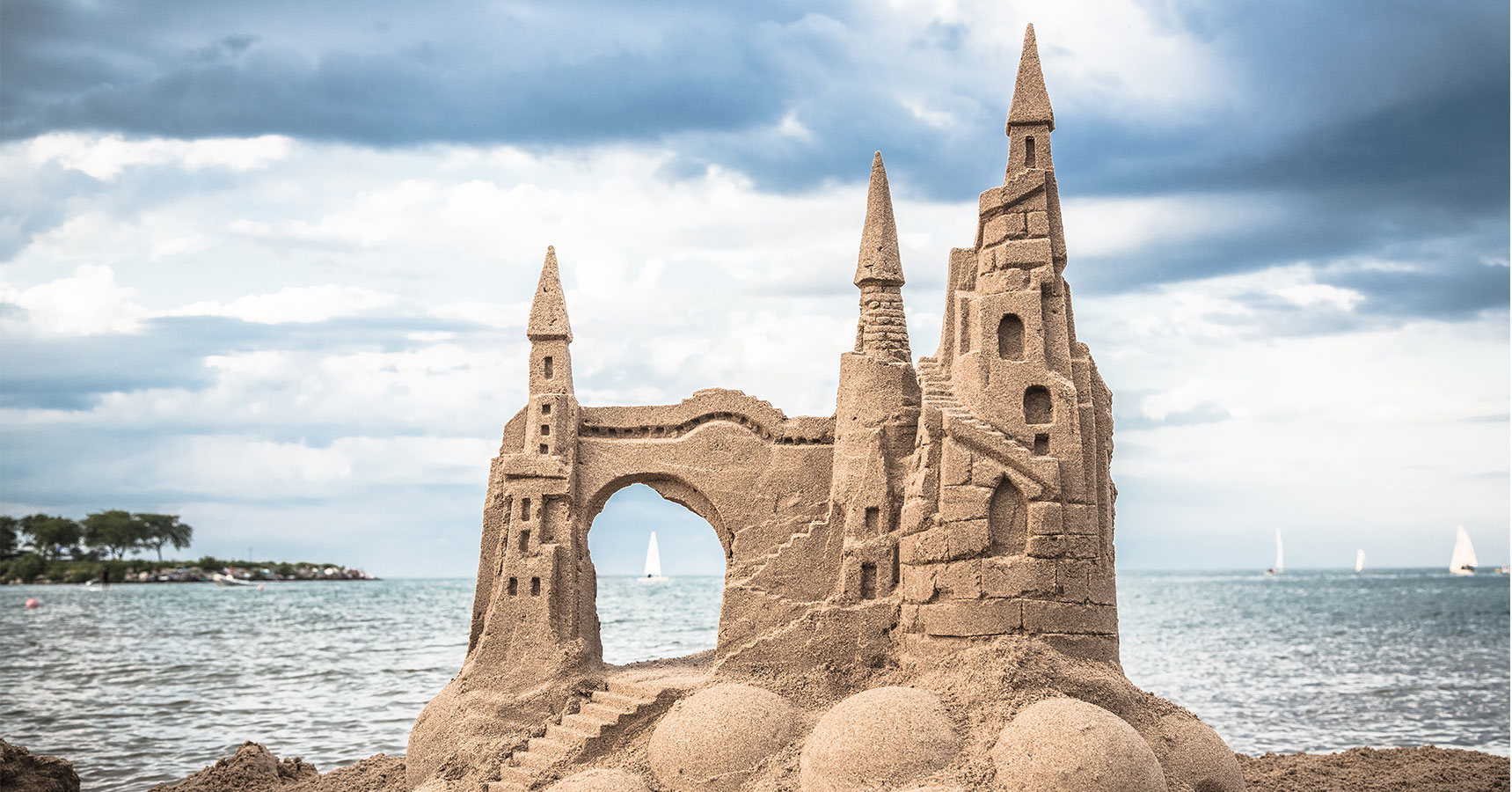
I followed his gaze to the wet sand near the tide line. Last summer, that stretch of beach had belonged to Noah and Simon. Other fathers tossed footballs or slept under umbrellas with sunglasses pushed down their noses. Simon built sand kingdoms. He packed wet sand into buckets, carved windows with popsicle sticks he kept in a Ziploc bag specifically for that purpose, and let Noah decide whether each castle needed a moat, a jail, or a bakery.
“Every kingdom needs bread,” Noah had told him once, maybe five years old at the time, utterly serious about the logistics of his imaginary realm.
Simon had nodded seriously, matching his son’s gravity exactly, because that was the thing about Simon — he never once laughed at the things Noah cared about, not even the silly ones. “Then we build the bakery first.”
I remembered standing a little ways back that day, a paperback novel open and unread in my lap, watching the two of them negotiate castle politics with the same seriousness other fathers and sons might reserve for discussing college funds or career plans. Simon had always said that taking a child’s imagination seriously was the whole job of being a father. Everything else, he liked to say, was just logistics.
Last October, a beam fell at a construction site.
That was the sentence people used because it was easier than saying my husband left for work with coffee in a travel mug and never came home. The actual details — a crane operator’s misjudged swing, a safety harness that should have caught him and somehow didn’t, four seconds between standing and not standing anymore — I kept locked away somewhere I didn’t visit often. The sentence about the beam was easier. It was the version I could say to Noah’s teacher, to the pharmacist, to the woman at the bank who needed to update our accounts. A beam fell at a construction site. Simple. Containable. A fact you could hand someone without watching their face crumple the way it did when I’d tried, once, early on, to explain it more fully to my own sister over the phone.
For months afterward, Noah barely spoke above a whisper. He stopped asking for bedtime stories because the stories Simon used to tell him, elaborate serialized adventures about a knight named Sir Puddlejump who protected sandcastle kingdoms from invading crab armies, belonged to a voice that was gone. He stopped drawing. He stopped, for a while, laughing at all, even at the things that used to reliably crack him up, like the dog three doors down who howled along with ambulance sirens.
Then, one evening in June, he found the little flag in Simon’s old tackle box, tucked beneath a tangle of lures and a half-used spool of fishing line. It was a cheap thing, really, the kind sold in bulk at hardware stores before the holiday, a small wooden stick with a faded cloth flag stapled to the top. Simon had kept it for years, using it to mark the tallest tower of whatever castle he and Noah had built that day, a tradition so small and automatic that I’d never once thought to ask where the flag had come from or why he bothered.
“Mom,” Noah asked, holding it by the wooden stick, turning it over carefully in his small hands, “do you think Dad can still see the sandcastles I build for him?”
I turned away before answering. Not because I did not know what to say. Because I knew exactly what he needed me to say, and saying it meant swallowing something hard and jagged first.
“Yes, baby,” I told him. “I think he sees them.”
So we came back.
Noah chose a spot where the sand was damp enough to hold shape but far enough from the water to survive for a while. For a while. That mattered to me. It had never mattered to Simon, who built his castles close enough to the tide line that the ocean usually claimed them within the hour, and who had always seemed, if anything, pleased by that fact rather than bothered.
Noah worked for three hours.
He built a wide wall first, patting each section flat with Simon’s old blue shovel, the plastic handle faded nearly white from years of sun. Then came the towers, four at the corners, one in the center, each one patiently packed and smoothed with the flat of his palm. He gathered shells for windows, walking the tide line with a focused determination that reminded me so sharply of his father that I had to look away more than once. He dragged a trench around the outside with both heels, moving backward in a careful circle, tongue poking slightly from the corner of his mouth the way it always did when he concentrated hard on something.
I helped when he asked. Mostly, I watched. There were moments when Noah’s face changed in small ways. Not smiling exactly. Remembering how. He stuck a broken shell into the gate and stepped back to survey it.
“Dad would say the front needs guards.”
“What kind?”
“Crab guards.”
“Terrifying.”
He almost laughed. Almost. It hovered right there at the edge of him, close enough that I held my breath, hoping it might finally break free after so many months of careful, guarded half-smiles. It didn’t quite make it, but it came closer than it had in weeks, and I counted that as a victory regardless.
A tiny American flag stayed in his pocket until the end.
When the castle was finished, Noah washed his hands in the surf and came back carefully, as if loud movement might damage what he had made. He pulled the flag out. The cloth was faded from other summers, bleached nearly pink from what had once been a bright red stripe. One corner had begun to fray. Simon had once said that made it look like it had survived a battle, and he’d say it every single summer when the flag emerged from the tackle box, as though discovering the fact fresh each time.
Noah held it between both hands.
“I’m putting it on the highest tower,” he chirped, standing proud as a little sentry, his chest puffed out the way it always did when he’d decided on something important. “It’s for Dad.”
He had not even bent down when the woman appeared.
I saw the phone first. She held it at arm’s length, recording herself as she walked along the shoreline, narrating something to an audience I couldn’t hear, her voice pitched in that particular bright, performative register people use when they know a camera is watching. Her wide hat threw a clean shadow over her face. Her sunglasses were huge and black, the kind that cost more than most people’s monthly grocery budget. A pale cover-up fluttered behind her like she expected the beach to part for her specifically, the way crowds part for someone important.
She stopped in front of Noah’s castle. Not beside it. In front of it, blocking the angle she’d apparently wanted for her video.
“Seriously?” she hissed.
Noah froze with the flag still in his hand.
The woman lowered her phone and looked toward a beach blanket set several yards back, already staged with a cooler and a folded towel and an expensive-looking speaker.
“Gross! This thing ruins the view from my spot.”
I stood, brushing sand from my knees, my heart already picking up its pace in that specific way it does when you sense a confrontation arriving before you’ve fully understood its shape.
“We’ll be done soon,” I said. “He’s just placing the flag.”
She looked at me as if I had offered her a wet towel, some small indignity she hadn’t asked for and didn’t appreciate having pressed upon her.
“It’s in the way.”
Before I could move, she swung her leg through the tallest tower.
Sand burst outward.
Noah did not make a sound.
She kicked again. The corner wall collapsed, three hours of careful work scattering into loose grains that the wind immediately began to carry.
A third kick tore through the gate, the shell windows scattering into the foam. The next wave slid under the broken pieces and pulled them apart as if the ocean had been waiting for permission, as if it, too, had simply been biding its time for someone to give it leave to take what it wanted.
“STOP!” I shrieked, the word tearing out of me before I’d even consciously decided to speak.
She stepped back, brushing sand from her ankle with a small, fastidious motion, as though the sand itself were the offense here rather than what she’d just done.
“It’s pathetic!”
Noah stood there with the flag in his hand. His fingers were wrapped so tightly around the stick that the little cloth trembled, the fabric shaking with a motion that had nothing to do with the wind.
“But,” he whispered, “I built it for my dad.”
The woman rolled her eyes, the gesture so casual, so utterly unmoved, that something in my chest went cold and hard in a way grief itself had never quite managed.
“It’s just sand! Build another one.”
I went to Noah before I went to her. That was the only choice I am still proud of from that moment. I wrapped my arms around him, and he pressed his face against my shoulder. His crying came without sound at first. Just his body shaking against mine while the ruined castle flattened into the water, grain by grain disappearing into the foam as though it had never existed at all.
Around us, people had gone quiet. A teenager holding a boogie board stared at the woman with open disgust. A father pulled his toddler closer, instinctively, the way you shield a small child from something ugly even when you can’t quite explain why. Someone muttered, “Are you kidding me?” loud enough to carry.
The woman lifted her phone again, but did not record this time. She walked back to her blanket, shook out her towel with sharp snaps that cracked through the quiet beach air, and sat down like the matter had bored her, like she’d already moved three thoughts past the whole incident and onto whatever came next in her afternoon.
Noah did not let go of the flag.
I held him there at the tide line for a long time, longer than I think either of us fully registered, the ocean continuing its patient work on what remained of the castle while my son’s tears soaked slowly into my shoulder. I didn’t say anything right away. I didn’t trust my voice yet. Instead I just held him, one hand cradling the back of his head the way I had when he was an infant, feeling the small, hitching breaths gradually begin to slow.
A woman I didn’t know, maybe in her fifties, with sunscreen still white along her hairline, crouched down near us and asked quietly if we needed anything, a bottle of water, a chair, anything at all. I shook my head and thanked her, and she nodded and returned to her own family a few yards off, though she kept glancing our way for the next several minutes, the way strangers do when they’ve witnessed something that unsettles them more than they expected.
Twenty minutes later, the lifeguard whistle cut across the beach. One sharp sound. Then another. Everyone turned.
A senior lifeguard walked down from the tower carrying a golden box tied with a navy ribbon. He was older than the other guards, maybe in his sixties, with sun-browned arms and silver hair tucked under a red cap. His shirt said Captain Reyes. Something about him tugged at my memory, some half-formed recognition I couldn’t quite place at first, distracted as I was by Noah’s tear-streaked face still pressed against my side.
Then I remembered Simon waving up to that same tower while Noah carried buckets of wet sand across the beach, years of summer mornings when Simon would lift a hand toward the lifeguard stand in greeting, a small, casual gesture between two men who’d apparently known each other longer than I’d realized. Captain Reyes had been on that same lifeguard tower during the summers Simon and Noah built castles there.
He did not look at me first. He looked at the flag in Noah’s hand. Then he walked straight toward the woman.
She noticed him and sat up, adjusting her hat with the particular alertness of someone who senses an opportunity arriving.
When she saw the box, her face brightened.
Captain Reyes stopped beside her blanket and smiled politely, a smile that gave away nothing of what was actually coming.
“Excuse me, Ma’am.”
She adjusted her sunglasses, tilting her chin up slightly. “Yes?”
“Congratulations,” he said. “You’ve been selected for today’s special beach presentation.”
People around us began watching again, drawn by the box, by the ceremony of it, the way crowds gather instinctively around anything that looks like it might be an event.
The woman glanced left and right, making sure they were watching, her posture straightening with visible satisfaction.
“Oh,” she bubbled. “Well. That’s nice!”
He held out the golden box. She reached for it with both hands, her fingers already working at the ribbon before he’d fully extended his arm. The ribbon slipped loose. The lid opened.
Her smile lasted until she saw what was inside.
“What the hell is this?” she exploded.
Captain Reyes said nothing.
She stared into the box again. Inside, resting on dark velvet, was a small brass compass, old and slightly tarnished, the kind of object that looked like it had been carried in someone’s pocket for years before finding its way into that box.
Beside it lay a card written in neat black ink, which Captain Reyes read aloud for everyone to hear, his voice carrying easily across the now-silent stretch of sand.
“For people who help others find their way.”
Her jaw clamped shut.
Then he continued to the second line.
“Today, a little boy almost forgot why he came to this beach.”
No one laughed. No one clapped. That was what made the silence feel heavier, a silence thick with the collective understanding of everyone watching that this wasn’t a joke at her expense exactly, but something worse — a quiet, public accounting of exactly what she’d done.
The woman looked around and finally seemed to understand that no one was looking at her the way she wanted. They were looking past her. At Noah. At the flag. At the place where the castle had been, now just a smooth, undifferentiated stretch of wet sand where the tide continued its slow erasure.
She shoved the box back toward Captain Reyes, grabbed her bag, and stood so quickly her hat slipped. She caught it with one hand and walked away across the sand, her pace quickening with every step, the cover-up that had fluttered so confidently behind her now just trailing, forgotten, half-tangled around one ankle until she yanked it free.
At the boardwalk stairs, she turned back once. No one followed her gaze. No one offered the validation she seemed to be searching for in that last look. She disappeared up the stairs and did not come back.
Captain Reyes watched her go. Then he carried the golden box to Noah.
He lowered himself carefully onto one knee, the posture of a man whose joints had logged plenty of years on sand and concrete alike.
“Mind if I sit here, Buddy?”
Noah wiped his face with the back of his wrist. “My castle is broken.”
“I saw.”
Noah looked at the water. “She did it on purpose.”
“She did.”
There was no softening in the lifeguard’s voice. No pretending. Just truth, delivered plainly, the way you’d tell a child the sky was blue.
Then Captain Reyes set the golden box between them.
“Can I show you something your dad left behind without knowing it?”
I looked at him. Noah did too. “My dad?”
The lifeguard opened the box again. This time, he lifted the velvet lining. Beneath it was a laminated photograph, faded at the edges from years of sunlight and drawer dust. He handed it to me first.
The man in the photo was younger, barefoot, shirtless, and covered in wet sand up to his elbows. Simon. My Simon. He stood beside an enormous sandcastle I had never seen before, laughing so hard his eyes were nearly closed, one arm flung wide as though presenting his creation to some invisible audience.
I stared at the photograph longer than I meant to, my thumb moving unconsciously over the laminated edge, trying to pull every detail from it that I could — the particular angle of his grin, a pair of swim trunks I half-recognized from early in our marriage, the way the morning light caught the sand still clinging to his forearms.
Noah leaned against my arm. “Dad?”
Captain Reyes nodded. “Before you were born, your father used to come here early. Sometimes before sunrise. He built castles right there.” He pointed toward the shoreline, toward a stretch of sand that looked, to my eyes, indistinguishable from any other part of the beach, and yet apparently held an entire unknown chapter of my husband’s life.
“Big ones. Strange ones. One had a wall shaped like a whale. The guards would come down and help when the beach was quiet.”
I had never known that.
Simon built office towers. Parking garages. Bridges. He believed in measurements, codes, and foundations. Things meant to stay, structures engineered to withstand decades of weather and weight and time, buildings he’d point out to Noah from the car with genuine pride, telling him which beam went where and why, as though the permanence of concrete was itself a kind of love letter to the future.
I had never known that this same man, before any of that, before Noah, before me even, had spent early mornings alone on this beach building things he knew the tide would erase within hours.
Captain Reyes looked at the broken sand near the water. “Every afternoon, the tide took them.”
Noah touched the edge of the photograph. “Was he mad?”
The lifeguard smiled a little. “Never.”
That answer seemed to bother Noah, his brow furrowing in the particular way it did when something didn’t add up according to his careful nine-year-old logic.
“Why not?”
Captain Reyes looked at me, then back at my son. “Your dad used to say, ‘If my kid only learns how to build things that last, he’ll miss half the beautiful things in life.'”
The beach sounds returned slowly around us. Waves. Children. A gull complaining near someone’s chips a few blankets down. The ordinary texture of an ordinary beach day, somehow restoring itself around the strange, suspended moment we’d all just witnessed.
I looked at the destroyed castle. Then I remembered. Pumpkins Simon carved even though they rotted in days, elaborate jack-o-lanterns with intricate expressions that would be soft and collapsing by the following weekend, and he’d carve a new one anyway, every single October, never once suggesting they skip the effort because the results wouldn’t last.
Blanket forts he built and knocked down before bedtime, entire elaborate architectural constructions of couch cushions and sheets that existed for a single evening before being dismantled and returned to their ordinary furniture lives.
Kites that ripped, sent up into windy March afternoons knowing full well the thin paper and balsa frames wouldn’t survive a hard enough gust, and Simon laughing anyway when they tore, already talking about the next one he’d build.
Flowers he planted knowing winter would take them, annuals he chose deliberately over the perennials I sometimes suggested, because he said he liked the surprise of starting over each spring more than he liked the certainty of something that simply returned on its own.
I had thought those were just happy things, small quirks of a man who liked projects and didn’t mind a little mess. Maybe they had been lessons all along, quiet ones, offered without explanation because Simon had never been a man for long speeches about meaning. He simply lived the lesson and let you absorb it by watching.
Noah looked at the flag still pinched in his hand. “Dad wasn’t sad when the ocean took the castles?”
Captain Reyes shook his head. “He used to say the ocean was just taking its turn to admire them.”
Noah was quiet. Then, for the first time all afternoon, he looked at the water without flinching, his small shoulders settling into something that looked almost like peace.
“Can I keep the picture?”
“It’s yours, Buddy.”
Noah held it carefully, then handed it to me so he could stand. He walked back to the wet sand. Not to rebuild the kingdom. Not all of it. He knelt where the water had softened everything and packed one handful of sand on top of another. A tower. Small. Crooked. Barely taller than his shin.
People watched without moving closer, the earlier crowd that had gathered for Captain Reyes’s strange, pointed ceremony now simply witnessing something gentler, something that needed space rather than attention.
Noah pressed the tiny American flag into the top.
The next wave rushed up the shore. It circled the tower. The sand sagged. The flag tipped sideways.
For one awful second, I thought he would cry again, my whole body tensing in anticipation of having to comfort him through yet another small collapse in a day already so full of them.
Instead, Noah laughed.
He ran forward, snatched the flag from the foam, and held it above his head.
“I got it!”
The sound of his laughter, real and unguarded, the first one I’d heard in what felt like months, hit me harder than anything that had happened all afternoon, harder even than watching the woman destroy his castle. I had to press the back of my hand against my mouth for a moment, the photograph of Simon still held carefully in my other hand, before I trusted myself not to cry in front of him.
Captain Reyes stood beside me. I folded the photograph carefully between both hands, tucking it against my chest like something fragile.
“Thank you,” I said.
He kept watching Noah, who had already turned back toward the water, packing another handful of sand with the easy, forgiving resilience that children somehow manage even after the hardest days.
“Your husband built good castles.”
I looked at my son, already packing wet sand around his ankles again, laughing at something only he could see.
“He built something better.”
We stayed another hour after that, though Noah didn’t rebuild anything elaborate. He seemed content simply to sit at the edge of the water, letting the small waves wash over his feet, occasionally glancing down at the photograph I’d propped carefully in the sand beside us, weighted at the corners with shells so the breeze wouldn’t carry it off. Captain Reyes returned to his tower eventually, though he gave us a small wave before he climbed back up, the same casual lift of the hand Simon used to offer him, and something about the gesture, passed now in the opposite direction, settled something in my chest that I hadn’t realized needed settling.
Before we left that evening, as the light went gold and long across the water, a few of the people who’d witnessed the whole thing came by, almost shyly, to say something kind. The teenager with the boogie board told Noah his crab guards sounded “actually pretty cool,” which earned a small, pleased smile. The father with the toddler said something quiet to me about how sorry he was that we’d had to go through that, and how proud he was, watching from a distance, of how Noah had handled it. I thanked each of them, surprised by how much their small gestures of decency mattered after the ugliness of the afternoon, how they seemed to balance something back into alignment.
That night, after Noah had finally fallen asleep, the photograph of Simon propped now on his nightstand against the base of his lamp, I sat alone on our back porch for a long while, turning the day over in my mind. I thought about how close I’d come to simply pulling Noah away from that stretch of sand forever, to deciding privately that the beach held too much pain now, that we should find some other way to remember his father. I was grateful, in a way I couldn’t quite articulate, that the day had forced us to stay, to sit inside the wreckage long enough for something unexpected and necessary to surface from it.
I thought, too, about the woman, though I found I couldn’t summon much anger toward her by that point, strange as it felt. Mostly I felt something closer to pity, imagining whatever hollow place inside a person made them capable of destroying a child’s sandcastle over a blocked camera angle. I hoped, distantly, that Captain Reyes’s compass had landed somewhere inside her, even briefly, even if she’d never admit it to anyone.
When we went back to the beach the following day, Noah didn’t ask if Simon could see the castle. He only asked if we could bring the blue shovel.
By noon, five children had joined him near the tide line, drawn in the easy, unquestioning way children are drawn to any ongoing project that looks like fun. Together they built walls, tunnels, crooked towers, and one bakery because Noah still insisted every kingdom needed bread, explaining the rule with the same solemn authority his father once had, to a small audience of new friends who nodded along as though this were obviously, self-evidently true.
A little girl watched the water creeping closer, her brow furrowed with the particular worry small children bring to large, inevitable things.
“The tide’s just going to knock it down,” she said.
Noah packed another handful of sand into place without looking up.
“That’s okay!”
He reached into his pocket and pulled out the tiny red paper flag he had made with his dad, a smaller, homemade replacement he’d fashioned the night before at our kitchen table out of a toothpick and a scrap of red construction paper, carefully instructed by me on how to fold and tape it just right. Then he smiled.
“We’ll just build another one.”
He planted the paper flag on the tallest tower and ran toward the waves with the other kids, shrieking with the same delighted, ordinary joy of every other child on that beach, indistinguishable now from any of them, a boy simply playing in the sand on a bright summer day.
Behind him, the little red flag stood alone in the sea breeze.
Waiting for the tide.

Adrian Hawthorne is a celebrated author and dedicated archivist who finds inspiration in the hidden stories of the past. Educated at Oxford, he now works at the National Archives, where preserving history fuels his evocative writing. Balancing archival precision with creative storytelling, Adrian founded the Hawthorne Institute of Literary Arts to mentor emerging writers and honor the timeless art of narrative.