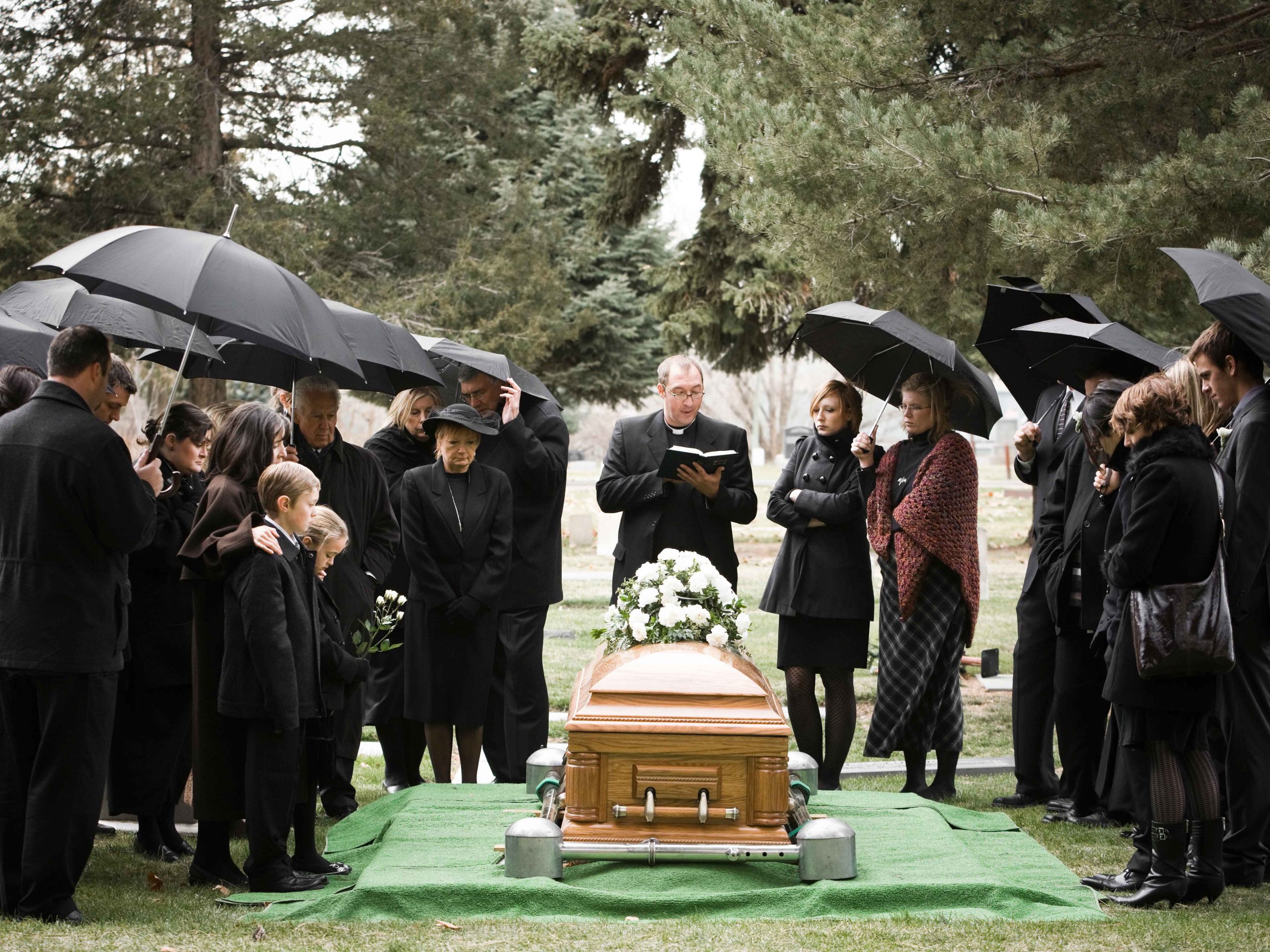
More than two hundred mourners stood frozen in silence. He had no idea the girls had already hidden their mother’s notebook, secret recordings, and one final envelope that would destroy his wedding before he ever reached the altar.
“If nobody wants to take responsibility for those girls, I’ll hand them over to Child Protective Services on Monday. I’m not wasting my life raising children whose mother is already dead.”
Those were the words my son-in-law chose to say beside my daughter’s coffin.
Not in a whisper. Not through tears. Not like a grieving husband standing over the woman he had once promised to love for the rest of his life. He said them loudly, in the middle of the cemetery in Savannah, Georgia, while the earth covering Rose’s grave was still fresh and the scent of white lilies lingered in the damp afternoon air. My daughter had been buried less than an hour earlier. She was only thirty-five years old. And before the mourners had even begun to leave, Arthur was already talking about getting rid of their three daughters as though they were nothing more than an inconvenience standing between him and his new life.
Something inside my chest broke.
Beside me stood my granddaughters. Twelve-year-old Lucy clutched her mother’s framed photograph so tightly that her knuckles had turned white, the brass edge of the frame pressing a pale line into her fingers. Nine-year-old Rachel stared silently at the freshly covered grave, her face completely empty, as though some part of her had already stepped outside her own body to watch the afternoon from a safer distance. Little April, only six years old, buried herself against my black coat, trembling so hard I could feel every shake of her tiny body through the wool.
Arthur looked untouched by grief. His tailored gray suit was immaculate, the kind of cut that costs more than most people’s mortgage payments. His expensive shoes gleamed despite the muddy ground, as though the earth itself had been too intimidated to leave a mark on them. A luxury watch rested beneath the cuff of his sleeve, catching the gray afternoon light. Not a single tear marked his face. His phone vibrated. He glanced down, read the message, and the faintest smile crossed his lips — as though someone, somewhere, was already waiting to celebrate with him.
I looked directly at him. “What did you just say?”
He released a long, impatient sigh, as if I were the one making the day more difficult. “Charles,” he replied calmly, “don’t do this. Rose is gone. I have every right to move on with my life.”
“And your daughters?”
His eyes shifted toward the girls for barely a second. Then he dismissed them with a careless wave of his hand. “My girlfriend isn’t interested in raising three girls who barely respect me. You’re their grandfather. If they matter that much to you… then you take them.”
A heavy silence settled over the cemetery. Several relatives lowered their eyes. My godmother pressed both hands over her mouth. Even the priest quietly looked away, unwilling to witness what had just happened. A groundskeeper who had been standing respectfully near the tree line, waiting to begin his work once the family dispersed, froze with his shovel still in hand.
For one brief moment, I wanted to hit him. I wanted to wipe that smug expression off his face before another word left his mouth, wanted to feel something crack beneath my fist the way my chest had just cracked under his words. But then I felt a tiny hand wrap around mine. April. She squeezed my fingers so tightly that my anger dissolved into something even heavier: heartbreak.
When I looked down at the girls, something immediately felt wrong. Lucy wasn’t crying. That frightened me more than anything Arthur had said. She wasn’t angry. She wasn’t begging her father to stay. She simply watched him with a calm, unreadable expression that no twelve-year-old should ever have, the kind of stillness I’d only ever seen before on much older faces, people who had learned long ago that panic rarely changed anything.
Then she turned toward Rachel. Rachel looked back. Finally, both of them glanced at little April. The three sisters exchanged a silent understanding. No words. No tears. Just one look.
A look that made my stomach tighten. In that instant, I realized they already knew something I didn’t.
I knelt beside them, my knees sinking slightly into the softened cemetery grass. “You’re coming home with me,” I said softly.
Arthur let out a quiet laugh. “Perfect. That solves my problem.”
He never hugged his daughters goodbye. He never kissed their foreheads. He never asked whether they had clothes, medicine, or even a place to sleep. He simply turned his back and walked toward a white van waiting outside the cemetery gates. Inside sat a young woman wearing oversized dark sunglasses. She smiled the moment she saw him approaching, that bright, easy smile of someone who had never once imagined herself attached to a funeral. He climbed in beside her. The van drove away, and he never looked back.
That night, my home felt painfully quiet. I heated soup. Warmed fresh bread. Made up the small bedroom where Rose used to sleep whenever she visited, the same quilt still folded at the foot of the bed that she’d slept under as a teenager, decades-faded but soft. Rachel fell asleep wearing one of her mother’s oversized blouses, the sleeves rolled twice over so her hands could still peek out. April refused to let go of my hand until exhaustion finally closed her eyes, her small fingers slack in mine only once her breathing had evened out completely.
Only Lucy stayed awake. She sat beside the living-room window for hours, staring into the darkness without saying a single word, her reflection faint and ghostlike against the black glass.
Just after three o’clock in the morning, I heard soft footsteps. She quietly walked into the kitchen where I was sitting alone with a cup of untouched coffee, long gone cold, a skin having formed faintly across its surface.
“Grandpa…” Her voice was barely louder than a whisper.
I looked up. She was holding a small purple cloth bag against her chest, the fabric worn soft at the corners as though it had been handled many times, hidden and retrieved and hidden again. “What is it, sweetheart?”
She swallowed hard. Then she said the words that made the blood drain from my face.
“Mom didn’t die just because she was sick.”
Every muscle in my body froze. I stared at her. “What do you mean?”
Without answering immediately, Lucy carefully placed the little cloth bag on the kitchen table. Her hands were shaking. Slowly, she untied the string.
Inside were three things. An old cellphone, its screen spider-webbed with a small crack in one corner. A worn notebook, its cover soft and curling from repeated handling. A small USB drive, barely bigger than my thumbnail.
She looked down at them before lifting her eyes to meet mine. “Mom told us… that if anything ever happened to her… we had to give these to someone who still loved her.”
The room fell completely silent. I looked at the phone. Then the notebook. Then the USB drive. And in that moment, I realized my daughter hadn’t left us only with memories.
She had left behind the truth.
“When did she give you these?” I asked, my voice rougher than I intended.
“A few months ago,” Lucy said. “She woke me up really late one night. She was crying, but trying really hard not to let me see it. She told me to hide this somewhere Dad would never look, and that if she… if she wasn’t here anymore, I should find someone who would actually listen.”
“Did Rachel and April know?”
Lucy nodded slowly. “Rachel knew where I hid it. April’s too little, but Mom still made her promise something. She made her promise not to eat anything Dad gave her without one of us checking first.”
I had to set my coffee cup down before my hand betrayed how badly it was shaking. “Checking for what, sweetheart?”
Lucy’s eyes filled, finally, the composure she’d worn like armor all day cracking at last. “I don’t know exactly. But Mom started getting really confused sometimes. Dizzy. She’d forget things she just said five minutes before. It got worse every month. And every time it got bad, Dad would bring her papers to sign.”
I sat with that information long after Lucy finally went to sleep that night, curled against her sisters in the small guest bed, the three of them a tangle of limbs and shared blankets, instinctively seeking the comfort none of the surrounding adults had managed to offer them that day. I did not sleep at all. I sat at my kitchen table with the notebook open in front of me, reading in the lamplight until the first gray edge of dawn crept through the window, and by the time the sun was fully up, I understood that my daughter had spent the last eighteen months of her life being systematically, deliberately poisoned by the man who stood at her grave and called her daughters baggage.
I did not call the police that morning, though every instinct told me to. I called a lawyer instead — not just any lawyer, but Margaret Osei, a woman I’d known since she was a junior associate working on my company’s contracts twenty years earlier, who had since built a reputation as one of the most formidable forensic litigators in the state of Georgia. I told her everything. The notebook. The recordings. The pattern of medication changes documented in Rose’s careful, increasingly shaky handwriting. The dates that lined up, with sickening precision, against corporate paperwork Rose had apparently been pressured to sign during her worst episodes.
Margaret listened without interrupting for nearly forty minutes. When I finally stopped talking, she was quiet for a long moment.
“Charles,” she said finally, “if even half of what’s in that notebook holds up, this isn’t a custody dispute. This is a criminal case. But we need to be very, very careful about how we move, because a man capable of what you’re describing is also capable of destroying evidence the moment he feels threatened.”
“So what do we do?”
“We let him believe he’s won,” she said. “Completely. We don’t show our hand until every piece is locked down tight enough that he can’t wriggle free of it.”
For two agonizing, meticulous months, I played the role of the broken, exhausted, helpless grandfather to absolute perfection. I filed an emergency petition for full legal and physical custody of Lucy, Rachel, and April in family court, framing it in the gentlest, most non-confrontational language Margaret’s team could draft — a grieving grandfather simply trying to give three orphaned girls some stability, nothing more. Arthur didn’t even attempt to contest it. He was practically giddy to be rid of what he called the “baggage.” His own attorney, a slick young man named Robert Dillard who clearly specialized in making wealthy, impatient men feel validated, pushed the paperwork through with barely a glance at the specifics, eager to close out what he no doubt considered a tedious family matter standing between his client and a lucrative new marriage.
Meanwhile, Margaret’s forensic accountants were quietly tracing every transfer Rose had made in her final eighteen months, cross-referencing them against the pharmacy records Lucy’s USB drive had somehow captured, against hospital intake notes, against the timeline documented so meticulously in my daughter’s own handwriting. A former GBI investigator Margaret brought in as a consultant, a careful, soft-spoken woman named Denise Harmon, spent weeks quietly interviewing Rose’s former coworkers, her physical therapist, a home health aide Arthur had fired abruptly six months before Rose’s death after the aide had asked one too many questions about the medication schedule.
Each piece, alone, might have been explained away. Together, they formed something undeniable.
We met in a sterile lawyer’s office to sign the final custody paperwork. Arthur wore a designer suit, checking his Rolex impatiently, clearly eager to be elsewhere — probably, I thought, with Brooke, already deep into wedding planning for a ceremony he assumed would mark the true beginning of his unencumbered new life. He eagerly signed away his parental rights with a flourish of an expensive pen, smirking at me across the table, believing he had successfully shed the last remnants of his old life in one clean, convenient stroke.
He was so arrogant, so blinded by his impending two-million-dollar payout from the corporate trust Rose’s family had established decades earlier, that he didn’t even bother to have his own lawyers read the fine print of the custody agreement my legal team had drafted. Robert Dillard barely skimmed the document before nodding his approval, more concerned with his billable hours than with protecting a client who clearly didn’t want protecting anyway.
By signing that document, Arthur didn’t just surrender custody of his children. Buried in clause fourteen, subsection C, in language that looked entirely standard to anyone not specifically looking for it, he legally and permanently surrendered all guardianship and fiduciary control over the girls’ portion of Rose’s estate — a cross-collateralization clause that would, under specific triggering conditions, lock him out of any accounts bearing their names, effectively reverting any disputed assets directly to Lucy, Rachel, and April the moment his fraud came to light.
He signed it without reading it. He signed it laughing, already halfway out the door in his mind, checking his phone for a message from Brooke about centerpiece arrangements.
I took the girls home. They were safe. The perimeter was secured. Now, the offensive could begin.
Over those same two months, while Arthur planned his wedding with increasingly public extravagance — a venue that cost more than most people’s annual salary, a guest list heavy with business associates he wanted to impress, a two-million-dollar trust disbursement he was already mentally spending on a honeymoon in the Maldives — I spent my evenings with my granddaughters, slowly, carefully, rebuilding something that resembled normal life.
Lucy, it turned out, had inherited her mother’s quiet watchfulness along with her sharp mind. She helped Rachel with homework at the kitchen table most evenings, the two of them bent over math worksheets while April colored nearby, humming some tuneless little song under her breath. Some nights were harder than others. Rachel had nightmares for the first few weeks, waking with small, strangled cries that brought me down the hallway at two and three in the morning. April asked, more than once, when her mother was coming back, a question that never got easier to answer honestly.
But slowly, the house began to feel less like a place holding its breath and more like a home. I learned April liked her sandwiches cut into triangles, never squares. I learned Rachel needed a nightlight but refused to admit it was for her own comfort, insisting instead it was “for April.” I learned Lucy, despite everything, still laughed easily when something was genuinely funny, a sound that reminded me so sharply of Rose at that age that it sometimes caught in my chest like a held breath.
I never told them the full details of what Margaret’s team was uncovering. They knew, in broad strokes, that the notebook and recordings mattered, that their mother had wanted them preserved for a reason. But I shielded them, as much as I possibly could, from the grinding mechanics of what was coming — the warrants being drafted, the financial forensics slowly assembling an ironclad case, the careful choreography of exactly when and how to move.
The grand ballroom of the Savannah Riverfront Resort was a sea of white orchids, silk drapery, and high-society whispers on the afternoon Arthur Vance planned to marry Brooke Whitfield. The event was calibrated entirely for vanity — towering floral arrangements imported from three different states, a string quartet flown in from Atlanta, a guest list of nearly two hundred that read like a who’s who of Savannah’s wealthiest families and Arthur’s various business connections. A two-million-dollar grand estate settlement was scheduled to clear into Arthur’s accounts immediately following the ceremony, funded by a corporate asset pool he believed he had inherited unconditionally from my late daughter’s estate.
He stood near the altar in a custom ivory tuxedo, a glass of champagne in hand, laughing loudly with his new business associates, a man entirely convinced he had successfully buried the memory of my daughter and erased the burden of his children. I watched him from the back of the venue for a long moment before we moved, watched the easy, untroubled way he held himself, the way his laughter carried across the room without a single trace of the man who had stood at a graveside two months earlier and called his own children baggage.
Then, the heavy double doors of the ballroom swung open.
I walked down the central aisle, my expression flat and unreadable. I wasn’t wearing wedding attire; I wore the same dark charcoal suit I had worn to my daughter’s funeral, the one I’d specifically chosen that morning, deliberately, because some things deserve to be witnessed in mourning clothes rather than celebration. Flanking me on either side were two senior investigators from the Georgia Bureau of Investigation and a federal forensic accountant carrying a slim leather case.
Behind us walked Lucy, Rachel, and April. Lucy walked tall, holding a leather folder tightly against her chest, her eyes steady and entirely devoid of fear — the same calm, unreadable expression I’d first seen on her face at the cemetery, except now I understood exactly what had been building behind it all along.
The soft classical music faltered, the string quartet’s bows dragging to an uncertain halt. The collective hum of the two hundred wealthy wedding guests died down instantly, replaced by a tense, suffocating silence that settled over the ballroom like a held breath.
Arthur’s smug smile curdled. He handed his champagne flute to a groomsman and marched down the altar steps, his face tight with sudden rage. “Charles? What the hell is this? I explicitly omitted you and the girls from the guest list. Security, remove them immediately!”
“Security won’t be helping you today, Arthur,” I said, my voice echoing clearly through the vaulted architecture of the room. “We didn’t come to attend a wedding. We came to execute the final instructions left behind by Rose.”
Brooke stepped forward, her expensive veil trailing behind her, her face twisting into an ugly sneer entirely at odds with the soft bridal makeup beneath it. “You pathetic old man. The wedding is about to start. You have no legal standing here!”
“Actually, ma’am, he has all the standing in the world,” the lead GBI investigator stated, stepping forward and flashing a gold shield that caught the ballroom’s chandelier light. “Mr. Arthur Vance, we are here to execute a federal warrant for corporate embezzlement, institutional healthcare fraud, and the chemical endangerment of a dependent.”
Arthur staggered back a step, his breath hitching audibly. “This is a lie. Rose died of a chronic illness! The medical records are sealed!”
“They were sealed, Arthur,” Lucy said, her twelve-year-old voice slicing through the ballroom with a chilling, absolute clarity that made more than one guest visibly flinch. She opened the leather folder and pulled out a stack of pristine, forensic documents. “Until I gave Grandpa the notebook you tried to burn.”
On the massive digital projection screens flanking the altar — screens meant to display a romantic slideshow of the newlyweds, photographs of Arthur and Brooke laughing on some sunlit beach, probably taken not long after Rose’s funeral — a video suddenly began to play instead. It wasn’t a deepfake, wasn’t manipulated in any way. It was the high-definition data recovered from the old cellphone inside Lucy’s purple cloth bag, painstakingly extracted and verified by Margaret’s forensic team over the preceding weeks.
The audio boomed through the ballroom’s state-of-the-art sound system, Arthur’s own recorded voice filling every corner of the room he’d spent a fortune to fill instead with vows.
“Just take the medication, Rose. The doctors said it’s a necessary adjustment for your symptoms.” Arthur’s recorded voice purred from the speakers, smooth and patient in a way that made my skin crawl now that I understood exactly what that patience had been purchasing.
“It makes me dizzy, Arthur… I can’t think straight. I feel like I’m fading,” Rose’s weak, trembling voice replied, and hearing my daughter’s voice fill that enormous, glittering room, hearing the fear threaded through it that I had never once detected during our phone calls because she had always, always protected me from it, very nearly broke whatever composure I had left.
“That’s just the illness talking. Once you sign the corporate trust modification over to me, you can rest completely.”
The ballroom gasped, a visible ripple moving through the rows of seated guests. Several of Arthur’s primary financial backers stood up from their rows, their faces masks of profound horror, already calculating, I imagined, how quickly they needed to distance themselves from whatever was unfolding.
“You systematically altered her prescriptions, Arthur,” I said, stepping up to the base of the altar, close enough now to see the sheen of sweat beginning to break out across his forehead despite the ballroom’s carefully regulated temperature. “The USB drive contained the digital pharmacy logs you hacked using a stolen employee credential. The notebook detailed every single day you withheld her actual medication to force her into signing the asset transfers while she was too weak to fight back.”
Arthur looked frantically toward his legal team seated in the front row. “Robert! Fix this! It’s inadmissible surveillance!”
His attorney stood up, took one look at the federal badges and the thick stack of financial forensic documents in the GBI investigator’s hands, and slowly sat back down, completely abandoning him without a single word of defense — the particular, swift betrayal of a lawyer who has just realized, in real time, that his client’s problem is now far larger than anything a billable hour could fix.
“And as for your two-million-dollar payout,” I added, letting a cold, lethal smile touch my lips, “the custody agreement you so eagerly signed two months ago carried a cross-collateralization clause. By surrendering your parental rights to Rose’s children, you triggered an automatic fraud reversion under the Sterling Trust. Every single account you attempted to siphon has officially reverted to Lucy, Rachel, and April. You don’t have a payout, Arthur. You are completely broke.”
Brooke looked at Arthur, the absolute ruin on his face confirming everything she needed to understand. With a shrill, hysterical cry of betrayal, she ripped her veil off her head, threw it onto the floor, and marched off the stage, the train of her gown dragging behind her like something discarded, leaving him standing entirely alone at the altar he’d spent a small fortune decorating.
The lead investigator stepped forward, pulling a pair of steel handcuffs from his belt. “Arthur Vance, you are under arrest. Hands behind your back.”
Arthur didn’t fight as the metal clicked around his wrists. He looked down at his daughters, his face a hollow, terrified gray shadow of the arrogant man who had stood by the grave two months ago and called them baggage he couldn’t wait to be rid of.
Lucy didn’t look away. She stood shoulder to shoulder with her sisters, holding April’s hand tightly, watching the man who had abandoned them be led down the white-carpeted aisle in chains, past the floral arrangements he’d chosen to impress people who were now whispering his name in horror rather than admiration. He had wanted a fresh start; instead, he was heading toward a federal cell.
As the police cruisers drove away from the resort, blue and red light sweeping briefly across the manicured front lawn, the heavy doors of the ballroom closed forever on the Vance name. I knelt down on the plush carpet, pulling my three granddaughters into a tight, protective embrace, the leather folder still clutched in Lucy’s hand pressing against my shoulder.
“Is it over, Grandpa?” little April whispered, her face buried in my shoulder.
“It’s completely over, sweetie,” I murmured, pressing a kiss to her forehead. “The truth is out. You’re safe now. Let’s go home.”
We walked out of the resort together into the warm, golden Savannah twilight, past valets and caterers already beginning the awkward, whispered task of dismantling a wedding that would never happen. The road ahead would be long, and the healing would take time — more time, I knew, than any courtroom victory could account for. There would be nightmares still to come, questions from April as she grew old enough to understand more fully what her father had actually done, the slow, uneven work of three girls learning to trust the adults left standing around them.
But as I looked at the fierce, unyielding strength in Lucy’s eyes, the same steadiness that had carried her through a graveside humiliation and a ballroom confrontation without once breaking, I knew my daughter’s memory was honored. Rose hadn’t just left us with a legacy of loss — she had given her daughters the weapons to reclaim their future, and together, we were finally whole.

Sophia Rivers is an experienced News Content Editor with a sharp eye for detail and a passion for delivering accurate and engaging news stories. At TheArchivists, she specializes in curating, editing, and presenting news content that informs and resonates with a global audience.
Sophia holds a degree in Journalism from the University of Toronto, where she developed her skills in news reporting, media ethics, and digital journalism. Her expertise lies in identifying key stories, crafting compelling narratives, and ensuring journalistic integrity in every piece she edits.
Known for her precision and dedication to the truth, Sophia thrives in the fast-paced world of news editing. At TheArchivists, she focuses on producing high-quality news content that keeps readers informed while maintaining a balanced and insightful perspective.
With a commitment to delivering impactful journalism, Sophia is passionate about bringing clarity to complex issues and amplifying voices that matter. Her work reflects her belief in the power of news to shape conversations and inspire change.