The first time I met my mother-in-law, I heard her say it through a bathroom door.
It was the night David introduced me to his parents. Fifteen years ago. A steakhouse in downtown Columbus with white tablecloths and waiters in black vests. I was twenty-five. I’d bought a new dress for it. Navy blue with little white polka dots. I’d practiced what I was going to say in the car. It’s so nice to finally meet you, Mrs. Harmon.
Linda Harmon was polite all through dinner. She asked where I grew up. Cleveland. She asked what my father did. He drove a city bus. She asked what I did. I was a school librarian. She asked how many brothers and sisters I had. Six.
“Six,” she repeated. She set down her fork. “My goodness. Your poor mother.”
“She loved it,” I said. “Big, loud, happy house.”
“I’m sure,” Linda said. She smiled. It wasn’t a smile that reached her eyes.
After dessert, I went to the ladies’ room. I was washing my hands at the sink when the door to the hallway opened a crack. Linda and David’s father were standing right outside it. I don’t think they knew the walls were so thin.
“She’s sweet, I suppose,” Linda said. “But a bus driver’s daughter, Frank? A librarian?” She sighed. “He could’ve chosen a better woman. He could’ve had anyone.”
David’s father said something I couldn’t hear.
“I’m just saying,” Linda said. “He deserves better than that.”
I stood at the sink with the water running and looked at myself in the mirror. My navy dress with the polka dots. My hair that I’d spent an hour curling.
Then I turned off the water and dried my hands and walked back out to the table and smiled and said thank you so much for dinner, Mrs. Harmon.
I never told David what I heard.
I should have.
My name is Nina. I’m forty years old. I’ve been married to David Harmon for fourteen years.
David is a civil engineer. He designs bridges for the state of Ohio. He’s quiet and steady and kind, with gray coming in at his temples now and glasses he’s always pushing up his nose. He’s the kind of man who reads the instruction manual before he assembles anything. The kind of man who apologizes to furniture when he bumps into it.
We have two kids. Maya is twelve and wants to be a marine biologist. Theo is nine and wants to be a YouTuber, or a dinosaur, depending on the day.
I’m still a librarian. At an elementary school in Westerville. I’ve been there sixteen years. The kids call me Mrs. H. I do the voices when I read out loud. I keep a box of granola bars under my desk for the ones who come in hungry. I love it more than I can say.
My family is big and loud and messy. My mother raised seven kids in a three-bedroom house in Cleveland. My father drove the number 26 bus for thirty-one years and knew every regular by name. Sunday dinners at my parents’ house had twenty-five people at them, minimum. Somebody was always laughing. Somebody was always crying. Somebody was always burning the garlic bread.
David’s family is the opposite.
His father, Frank, died five years ago. Heart attack. He was a gentle, quiet man who mostly hid behind the newspaper.
His mother is Linda.
Linda Harmon and I have never been close.
I’ve tried. I want to say that first. For fourteen years, I tried.
I invited her to every birthday. Every holiday. Every school play. I sent her pictures of the kids. I asked her for recipes. I asked her advice about things I didn’t need advice about, just to give her a way in.
It never mattered.
Nothing I did was ever good enough for her.
I didn’t cook right. My lasagna had “too much cheese,” which I didn’t know was possible. My pot roast was “a little dry, dear, but it’s fine.” My Thanksgiving turkey was “an interesting choice.”
I didn’t iron right. She’d come over and see David’s work shirts hanging in the laundry room and say, “Oh, honey. Are those creases? Let me.” And she’d re-iron all of them while I stood there.
I didn’t raise the kids right. Maya was “too opinionated.” Theo was “too wild.” I let them have too much screen time. Not enough screen time. Too much sugar. Not enough vegetables. When Maya cut her hair short in fourth grade, Linda said, “Well, I hope she’s happy with that. I suppose somebody has to look like a boy.”
My hair was wrong. My clothes were wrong. My laugh was “a bit much.” My family was “a lot.” My job was “sweet.”
You get the idea.
And whenever she got the chance, she’d tell David.
“You could’ve chosen a better woman.”
She said it at our wedding reception, at the bar, when she thought I was dancing.
She said it when Maya was born, in the hospital waiting room, when she thought I was asleep.
She said it at Frank’s funeral, at the luncheon afterward, to her sister, when she thought I was in the kitchen.
I was always in the kitchen. I always heard.
For the most part, I tried to ignore her. Just to avoid starting arguments in the family.
David knew she was difficult. He’d say so. “Mom’s a lot,” he’d say, after a visit, while we were doing the dishes. “I’m sorry. She doesn’t mean it.”
“She means it, David.”
“She’s just set in her ways. She grew up a certain way. She’s lonely since Dad died.”
“She was like this before your dad died.”
He’d sigh. He’d push his glasses up his nose. “I’ll talk to her,” he’d say.
He’d talk to her. Gently. On the phone. In the other room. I’d hear him. Mom, can you go easier on Nina? Mom, she’s trying. Mom, please.
And Linda would say, Of course, sweetheart. I didn’t mean anything by it. She’s just so sensitive.
And nothing would change.
I didn’t blame David. Not exactly. I knew how much he loved his mother. I knew she’d raised him mostly alone, because Frank worked nights at the plant for twenty years. I knew she’d sat up with him through every fever and every nightmare. I knew she was the one who drove him to every math competition. I knew she was proud of him in a way that sometimes looked like ownership.
And I knew there was something else. Something he never talked about. Something in his childhood that made him go very quiet whenever his mother got cruel.
I just didn’t know what it was.
When I started planning my fortieth birthday, I decided I was going to have the party I’d always dreamed of.
I wanted a big celebration. I have a very large family and lots of friends. Six brothers and sisters. Their husbands and wives. Nineteen nieces and nephews. My parents. My aunts. My cousins. My best friends from college. The teachers I work with. Our neighbors.
It had always been my dream to get everybody together under one roof and just enjoy a wonderful evening. No funeral. No wedding. No obligation. Just a party. For me.
I’d never had one. Not really. For my thirtieth, I was eight months pregnant with Theo and exhausted. For my twenty-first, I was working two jobs to pay for college. My birthdays had always been small. Cake at my parents’ house. A card from David. A phone call from my sisters.
Forty felt like a door. Like if I didn’t throw myself a party now, I never would.
So that’s exactly what I did.
I invited seventy guests. I booked a restaurant outside the city. A converted barn in the countryside near Delaware, Ohio, called The Harvest Table. With exposed wooden beams and long farm tables and strings of little lights hanging from the rafters. It had a big patio overlooking a pond. There was a stage in the corner for a band. And a projector and a big screen they used for weddings.
I booked a three-piece jazz band. I chose a menu. Chicken piccata. Roasted vegetables. My mother’s recipe for Italian wedding soup, which the chef agreed to make after I brought him a sample in a mason jar.
And a cake. A lemon cake with raspberry filling and buttercream frosting. Three tiers. With fresh flowers on top.
And I bought a dress.
It took me four weekends. I tried on probably fifty. Finally, at a little boutique in German Village, I found it. Emerald green silk. Floor length. With a low back and thin straps. The color of the first leaves in spring.
I stood in front of the mirror in that boutique and I didn’t recognize myself. I looked like somebody who was celebrating something.
It cost four hundred dollars. More than I’d ever spent on a dress in my life.
I bought it.
Linda kept trying to put in her two cents.
David made the mistake of telling her about the party. She called me that night.
“Seventy people?” she said. “Nina, that’s excessive. At your age?”
“It’s my fortieth, Linda.”
“Exactly. It’s not your wedding.”
Then she asked about the dress. I sent her a photo. I don’t know why. I think part of me still wanted her to say it was beautiful.
She called back in five minutes.
“Green?” she said. “Oh, honey. Green is so difficult. And that back. You’re forty, dear. You have to be realistic about these things. People will talk.”
“I like it.”
“You should change it,” she said. “Something black. Something with sleeves. More appropriate.”
Then she asked about the menu.
“Chicken piccata?” she said. “And soup? Nobody eats soup at a party, Nina. People won’t eat that. You need a carving station. Prime rib. That’s what people expect.”
“My mother’s soup is the best thing I’ve ever eaten.”
“I’m sure it is, to your family,” Linda said. “But you’ll be feeding David’s side too. They have more refined tastes.”
She called the next day. And the next. Every day for a week. About the flowers. About the band. About whether I’d thought about how it would look to have so many of “my people” there and only a handful of David’s.
“Your people,” I repeated.
“You know what I mean,” she said. “Your family is very… boisterous.”
So eventually, I couldn’t hold back anymore.
“Linda,” I said. “Thank you for the advice. But I want to organize my own celebration and wear the dress I choose.”
There was a long silence on the line.
“Well,” she said. “I see.”
She hung up.
It was obvious that she was offended.
After that, she called David every single day. At work. At home. On his cell during dinner. Complaining about what a rude and horrible woman I was for speaking to an older person like that.
“She was so disrespectful,” I heard her say through his phone one evening. Loud enough that I could hear it across the kitchen. “After everything I’ve done for her. After I welcomed her into this family. I’ve never been spoken to like that in my life.”
David listened. He said, “Mom. Mom. Mom, she just wants to plan her own party.”
“She’s turning you against me,” Linda said. “I can see it. Fourteen years, she’s been turning you against me.”
David hung up. He came into the kitchen. He looked tired.
“I’m sorry,” he said.
“Do you think I was rude?” I asked.
He thought about it.
“No,” he said. “I think you were honest. I think nobody’s ever been honest with her before.” He pushed his glasses up his nose. “I’m not sure she knows what to do with it.”
Still, I continued organizing my celebration.
Around that same time, David started working on a project.
He’d decided to make a slideshow for the party. Fourteen years of us. Pictures and videos. To play on the big screen at The Harvest Table after dinner.
He’s an engineer. He doesn’t do anything halfway. He spent every night for three weeks in the basement with his laptop and a box of old photos and a machine he bought online that converts VHS tapes to digital files.
“VHS?” I said. “We don’t have any VHS tapes.”
“Mom does,” he said. “She’s got three boxes in her basement. Everything from when I was a kid. Birthdays. Christmases. Dad bought a camcorder in 1988 and filmed everything for ten years.” He smiled. “I want to put some baby pictures of me in it. So the kids can laugh at my haircut.”
He drove to Linda’s house on a Saturday and came back with three cardboard boxes full of tapes. Every one labeled in Frank’s neat handwriting. Christmas 1989. David’s 7th Bday. Lake Erie Summer 92.
He started converting them. One by one. In the basement. It took hours. The machine played them in real time.
About a week before the party, something changed.
I came downstairs late one night to bring him a cup of tea. He was sitting in front of his laptop in the dark. Very still. The screen was frozen on a grainy image I couldn’t make out from the stairs. Something with a lot of people around a table.
He had his hand over his mouth.
“David?” I said. “Are you okay?”
He jumped. He closed the laptop. Fast.
“Fine,” he said. “Just tired. Old tapes. You know.”
“What were you watching?”
“Nothing,” he said. “Mom’s fortieth. 1996.” He took off his glasses and rubbed his eyes. “I forgot it was on there.”
He didn’t say anything else. He took the tea. He thanked me. He went back to work.
But for the next week, he was quiet. Quieter than usual. Every time his mother called, he let it go to voicemail.
I didn’t think much of it. I thought he was stressed about work. About the party. About his mother.
I didn’t know what he’d seen.
On the night of my birthday, everybody came.
All seventy of them. My parents drove down from Cleveland. My mother in her best church dress, crying before she even got out of the car. My father in his good suit, the one he wore to every wedding and funeral since 1987. All six of my brothers and sisters. All nineteen nieces and nephews, running across the patio, chasing each other around the pond until somebody’s mother yelled at them.
My friends from college. The teachers I work with. Our neighbors. David’s cousins from Dayton. David’s aunt Carol, Linda’s sister, who I’d always liked.
And Linda.
She came. I was surprised. After the phone calls, I thought she’d stay home to make a point.
She arrived exactly on time, in a black dress with long sleeves. Pearls. Her silver hair perfectly set. She walked into The Harvest Table and looked around at the wooden beams and the strings of lights and the long farm tables and my enormous, boisterous family.
She looked at me. In my emerald green dress with the low back.
She smiled.
“Happy birthday, Nina,” she said. “You look… festive.”
The evening was going wonderfully.
The band played old jazz standards. Ella Fitzgerald. Louis Armstrong. My parents danced to “What a Wonderful World,” and my mother cried again, and my father dipped her, and everybody clapped.
The food was perfect. Everybody ate the chicken piccata. Everybody ate the soup. My uncle Sal had three bowls. Even David’s cousins from Dayton went back for seconds.
Linda didn’t touch her soup. She sat at the end of the long table with Aunt Carol and pushed her chicken around her plate.
My sister Teresa gave a toast. She told the story of when I was eight and organized all seven of us kids into a “library” in our garage with a card catalog made out of index cards and charged everybody a penny in late fees. Everybody laughed.
My best friend Keisha gave a toast. She told the story of how I talked her out of dropping out of college at two in the morning in our dorm with a box of donuts and a speech about how she was going to be the first doctor in her family. She’s a pediatrician now. She cried. I cried.
David gave a toast. He’s not a talker. He stood up with a piece of paper that was shaking in his hands and said, “Fourteen years ago, I met a woman who could make a room full of strangers feel like family. She’s been doing it ever since. Happy birthday, Nina. I’m the luckiest man here.” Then he sat down fast, red in the face, and everybody whistled.
I looked at Linda at the end of the table.
She was drinking her wine. Looking at the wall.
It didn’t matter. For once, it didn’t matter. I was surrounded by everybody I loved. In a green dress. Under a ceiling full of lights.
It was the best night of my life.
For about ten more minutes.
Then it was time to bring out my birthday cake.
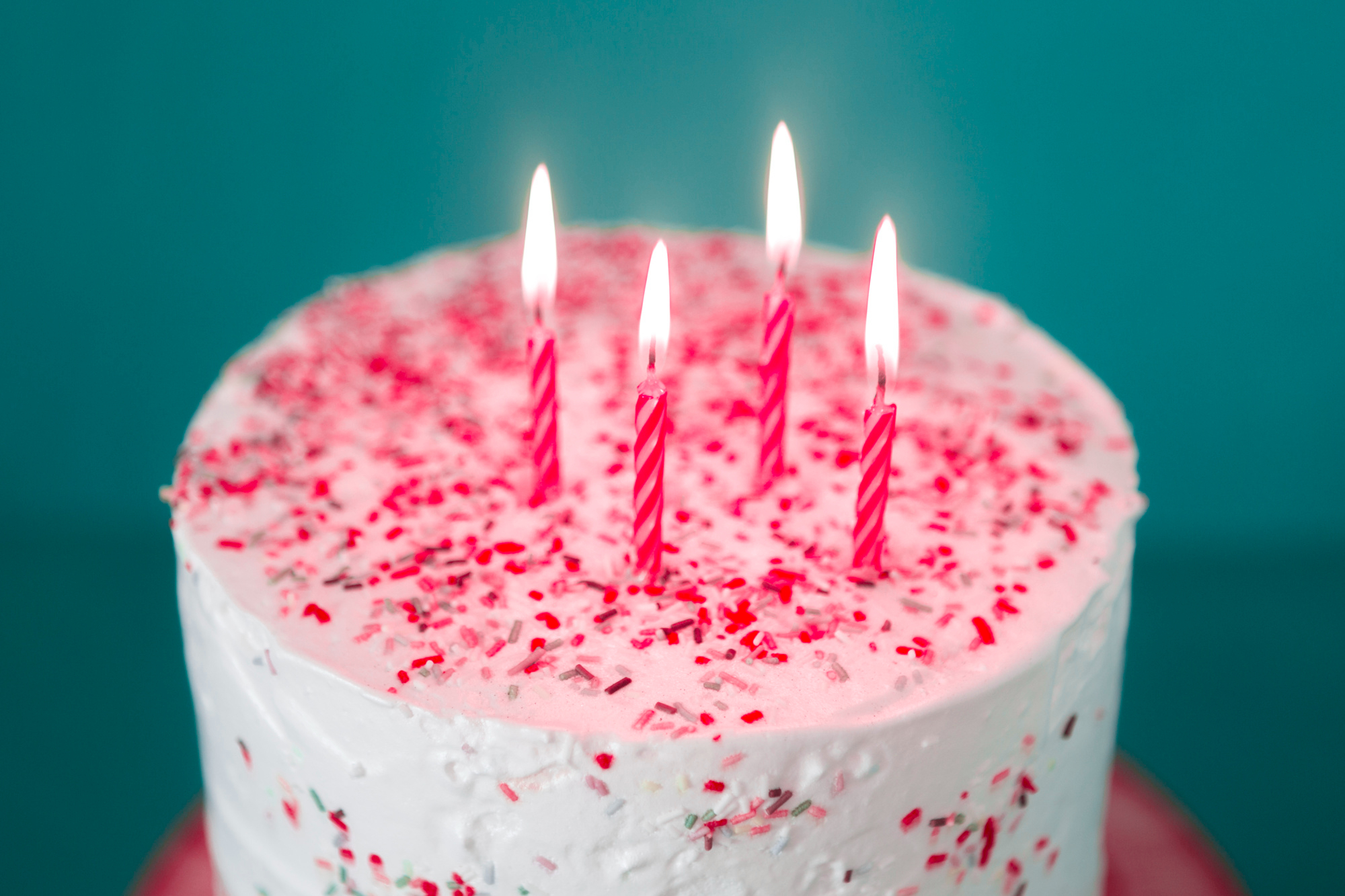
The lights dimmed. The band played “Happy Birthday.” The waiter came out of the kitchen pushing a little cart with my cake on it. Three tiers. Lemon and raspberry. With fresh white roses on top. And forty candles, flickering.
Everybody sang.
I stood at the head of the table. I closed my eyes. I made a wish. I don’t remember what it was. I think it was just more of this.
I blew out the candles.
Everybody cheered.
The waiter started removing the candles. He picked up the big silver cake knife. He was about to cut the first slice and serve it to the guests.
Then Linda stood up.
“Wait, wait!” she said. Loud. Cheerful. Her wine glass in one hand. “Wait. We have a tradition!”
The room went quiet. Seventy people looked at her.
“In our family,” Linda said, smiling at everyone, “the birthday girl has to be served her piece of birthday cake in a special way. It’s a Harmon tradition. Isn’t that right, David?”
I looked at David. He was sitting next to me. His face had gone very still.
Very white.
Linda came around the table. She took a plate from the stack. She took the cake knife from the waiter. She cut a big slice. Lemon cake. Raspberry filling. A thick layer of buttercream frosting on top.
She put it on the plate.
She walked toward me. Smiling. Holding the plate out in front of her like an offering.
I smiled back. I didn’t know what else to do. Everybody was watching.
She stopped in front of me.
“Happy birthday, dear,” she said.
And then she flipped the plate.
She pressed the slice of cake straight into my face.
Hard. With her palm flat on the bottom of the plate. She pushed it into my face and then she twisted it. Like she was grinding out a cigarette.
I couldn’t breathe. Frosting went up my nose. Into my eyes. Raspberry filling ran down my chin. Lemon cake fell in clumps onto my emerald green dress.
She pulled the plate away.
I stood there with my eyes closed. I could feel frosting in my hair. In my eyelashes. Dripping down my neck. Down the front of my four-hundred-dollar dress.
Linda burst out laughing.
It was so loud. So loud everybody in the restaurant could hear it. The waiters. The kitchen staff. The bartender. A big, cackling, delighted laugh.
“Oh, look at her face!” she said. “Look at her face! Somebody get a picture! Family tradition!”
Nobody laughed with her.
Not one person.
The whole room was silent. Seventy people. Not a sound. Somebody’s fork clattered onto a plate. One of my nieces said, “Grandma Linda?” in a small voice.
I opened my eyes.
Frosting stung them. Everything was blurry. My mascara was running. I could feel it on my cheeks.
I saw my mother at the other end of the table, standing up, with both hands over her mouth.
I saw Maya, my twelve-year-old, staring at me with her mouth open.
I saw Theo starting to cry.
And I burst into tears.
I turned around. I ran. Across The Harvest Table. In my green dress with cake falling off it. Past the band. Past the long farm tables. Past my father in his good suit. Into the women’s restroom.
I locked myself in the restroom. I stood at the sink. I looked at myself in the mirror.
Frosting in my hair. Up my nose. Raspberry on my chin like blood. Mascara running in black streaks down both cheeks. Big clumps of lemon cake on the front of my dress, sliding down the emerald silk.
I turned on the water. I started scrubbing my face with paper towels. My hands were shaking so badly I could barely hold them.
I thought about the steakhouse fifteen years ago. Standing at a sink just like this one. Washing my hands. Listening through the door.
He could’ve chosen a better woman.
Fifteen years. Fourteen years of marriage. Every holiday. Every birthday. Every it’s a little dry, dear. Every oh, honey. Every you could’ve done better.
And now this. In front of everyone I loved. On the one night I’d ever had for myself.
I put both hands flat on the sink and cried so hard I thought I’d be sick.
A moment later, I heard Linda screaming.
Not laughing. Screaming. High and loud and frantic.
“Turn it off! Turn that off! David! Turn it off right now!“
I lifted my head.
I grabbed a wad of paper towels. I pressed them against my face. I unlocked the restroom door. I ran out into the hallway. Down the hallway. Back into the main room of The Harvest Table.
And I stopped.
I saw an absolutely unbelievable scene.
All seventy guests were standing. Every single one of them. They’d all turned to face the same direction. Toward the corner of the room. Toward the big projector screen they used for weddings.
They were all standing there with their mouths open.
And on the screen, ten feet tall, there was a video.
It was old. Grainy. The colors were faded and blurry, with lines running across them. The kind of video from an old camcorder. In the bottom corner, glowing orange numbers: JUN 14 1996 7:42 PM.
It was a restaurant. A Red Lobster. I could tell from the fishing nets on the walls and the plastic lobster hanging over the bar. A long table. Maybe twenty people. Balloons tied to the chairs. A banner that said HAPPY 40TH LINDA.
And standing at the head of the table, in a blue dress with big shoulder pads and permed hair, was a woman.
Linda. Twenty-eight years younger. Forty years old.
She was smiling. Nervously. Looking around at everyone.
An older woman stood up from the table. Gray hair in a tight bun. Thin lips. A cardigan. Pearls.
The old woman picked up a plate with a slice of birthday cake on it. Chocolate. With white frosting.
She walked over to Linda. She was smiling.
“Happy birthday, dear,” the old woman said on the video. Her voice was thin and tinny through the speakers.
And then she flipped the plate.
She pressed the slice of cake straight into young Linda’s face. Hard. With her palm flat on the bottom. She twisted it.
Then she pulled the plate away.
And she laughed.
A big, cackling, delighted laugh. Exactly the same laugh I’d just heard. The exact same.
“Look at her face!” the old woman said on the video. “Somebody get a picture! Family tradition!“
On the screen, young Linda stood there with chocolate cake all over her face. In her blue dress with the shoulder pads. Frosting in her permed hair. Mascara running down her cheeks.
Nobody at the Red Lobster table laughed either.
Then young Linda burst into tears. And turned. And ran.
The camera swung around wildly. Following her. Somebody was filming. Frank, I realized. David’s father. The camera bounced down a hallway. Past a sign that said RESTROOMS. Stopped outside the women’s restroom door.
And through the door, you could hear her. Young Linda. Sobbing. Huge, ugly, heartbroken sobs.
Then a small boy ran past the camera. Maybe ten years old. In a little clip-on tie and a white shirt. With big glasses and messy brown hair.
He pushed open the women’s restroom door with both hands.
“Mom?” the little boy said. His voice cracked. “Mom, are you okay? Mom, don’t cry. Mom, it’s okay. I’m here.“
The camera stopped. The screen froze.
On the last frame, through the half-open door, you could see young Linda sitting on the floor of the Red Lobster restroom in her blue dress with chocolate cake in her hair. And a ten-year-old boy in a clip-on tie with his arms around her neck.
The room was completely silent.
Seventy people. Staring at that frozen screen.
Real Linda was standing next to the big screen. Her hand stretched out toward it. Like she could cover it. Her face was red as a tomato. Her mouth was open. Her whole body was shaking.
And David was standing on the little stage in the corner. Next to the band. Holding the remote for the projector in one hand.
And a microphone in the other.
He saw me standing in the doorway. Frosting still in my hair. Paper towels pressed against my face.
He didn’t smile. He looked back at his mother.
“Since we’re doing family traditions,” David said into the microphone. His voice was very quiet. Very steady. It carried through the whole silent room. “I thought everybody should see where this one came from.”
Linda turned around and stared at him.
“That’s Grandma Ruth,” David said. He pointed at the frozen screen. At the old woman with the bun and the pearls. “My father’s mother. She did that to my mom. At her fortieth birthday. At the Red Lobster on Route 23. In front of twenty people.”
He looked at his mother.
“I was ten,” he said. “I was in the bathroom when you came in, Mom. I heard you crying. I ran in after you. You remember? You sat on the floor in your blue dress. You cried for an hour. And I held on to you and promised you that when I grew up, I’d never let anybody do that to you again.”
Linda didn’t say anything. Her lips were trembling.
“I found the tape,” David said, “two weeks ago. Converting Dad’s VHS tapes in the basement. For Nina’s slideshow. I’d forgotten it existed.” He swallowed. “I sat in the basement and watched it four times. I watched Grandma Ruth smash cake in your face. And laugh. And I watched you run. And I watched myself, at ten years old, push open that bathroom door.”
His voice cracked.
“And I remembered something I’d forgotten for thirty years,” he said. “When we got home that night, you put me to bed. And you sat on the edge of my bed with your hair still wet from washing the frosting out. And you said, David, promise me. When you grow up, you’ll never let anybody treat your wife the way Grandma treats me.“
The room was so quiet I could hear the band’s keyboard humming.
“You made me promise,” David said. “You made me promise, Mom.”
He looked at me in the doorway. With frosting in my hair and mascara running down my face. In my ruined green dress.
“I didn’t know,” he said quietly, “that the person I’d have to keep that promise against would be you.”
Linda made a sound. A small, strangled sound. Like something breaking inside her.
She looked at the screen. At her younger self, frozen on the floor of a Red Lobster bathroom, with chocolate in her hair and a little boy’s arms around her neck.
She looked at me in the doorway. With lemon cake in my hair.
She looked around the room. At seventy people. My mother. My father. My sisters. My friends. Her own sister, Carol, who was standing at the end of the table with tears running down her face.
Nobody said a word.
Linda turned red. Redder than I’ve ever seen a person turn. Red as a tomato. All the way up to her silver hair.
She grabbed her purse off the table.
And she ran.
Out of The Harvest Table. Through the double doors. Across the gravel parking lot in her black dress and her pearls, as fast as she could. We heard her car door slam. We heard her engine start. We heard her tires spin on the gravel.
Then she was gone.
For a long time, nobody moved.
Then my father, in his good suit from 1987, walked over to the stage. He didn’t say anything. He just reached up and put his big bus-driver’s hand on David’s shoulder.
David put down the microphone. He came down off the stage. He walked across the room. Through all those staring people. To me, in the doorway.
He took the paper towels out of my hand. He looked at my face.
“Hold still,” he said gently.
And he started wiping the frosting off my face himself. Carefully. With his thumb. The way you’d wipe a child’s face after ice cream. Around my eyes. Off my chin. Out of my eyelashes.
“I’m sorry,” he said. “I’m so sorry, Nina. I should have stopped her. I saw her get up. I saw her pick up that plate. I knew. The second she said tradition, I knew. I should have moved faster.”
“You did,” I said. My voice was shaking. “You did something.”
“Too late,” he said. “Fourteen years too late.”
He kept wiping. His hands were shaking.
“I’ve let her do this to you for fourteen years,” he said. “Every Thanksgiving. Every Christmas. Every you could’ve chosen better.” He swallowed. “I heard it, you know. Every time. I always heard it. And I always told myself she didn’t mean it. Because I didn’t want to know who she’d become.” His eyes filled up. “Because I didn’t want to know she’d become Grandma Ruth.”
Behind us, I heard a sound.
My mother. Walking across the room in her best church dress. She was holding a plate. With a slice of cake on it. Lemon and raspberry. A clean slice. And a fork. And a napkin.
She stopped in front of me.
“In our family,” my mother said loudly, so everybody could hear, “we have a tradition too.”
She held out the plate.
“The birthday girl gets the first piece,” she said. “On a plate. With a fork. And she gets to eat it however she wants.”
Somebody laughed. Then somebody else. Then my sister Teresa started clapping. Then Keisha. Then all of them. All seventy people, minus one. Clapping and laughing and crying.
I took the plate.
I ate my birthday cake standing in the doorway of The Harvest Table, in my ruined green dress, with frosting still in my hair, while my husband held my hand and my mother held my other arm and the band started playing “What a Wonderful World” again without anybody asking.
It was the best piece of cake I’ve ever eaten.
That night, after the party, after everyone went home, David and I sat in the car in the parking lot of The Harvest Table.
The kids were asleep in the back seat. Maya had cried on the way out. Theo had asked if Grandma Linda was in trouble.
David had his hands on the steering wheel. He hadn’t started the car.
“Tell me about it,” I said. “The Red Lobster. Grandma Ruth. You’ve never once told me.”
He was quiet for a long time.
“Grandma Ruth hated my mom,” he said finally. “From the day Dad married her. Mom grew up poor. Her father worked at the steel mill. Grandma Ruth’s husband was a judge. She thought Dad married beneath him.” He laughed a little. It wasn’t a happy laugh. “She used to say it. Right in front of Mom. Frank could’ve done so much better.“
I went very still.
“Every holiday,” David said. “Every birthday. Mom’s cooking was wrong. Mom’s clothes were wrong. Mom’s family was too loud. Mom was raising me wrong. Grandma Ruth would come over and re-iron Dad’s shirts in the laundry room while Mom stood there.” He shook his head. “Sound familiar?”
“David.”
“And Dad never said a word,” David said. “Not once. In thirty years. He’d hide behind his newspaper. And Mom would cry in the bathroom. And I’d go in after her. That’s what I remember about being a kid. Going into bathrooms after my mother.”
He took off his glasses. He rubbed his eyes.
“The cake thing was the worst,” he said. “At the Red Lobster. Mom’s fortieth. Grandma Ruth said it was a family tradition. It wasn’t. She made it up on the spot. She just wanted to humiliate her in front of everybody. And Dad filmed the whole thing because he didn’t know what else to do.” He swallowed. “Mom never forgave him for that. For filming instead of stopping it. She told me that, years later. After he died.”
“And then she did it to me,” I said quietly.
“And then she did it to you,” David said. “The exact same thing. The exact same words. Family tradition. Look at her face. Somebody get a picture.” He put his forehead down on the steering wheel. “She became the person who broke her heart. And she doesn’t even know it.”
“Why did you play it?” I asked. “Why not just stop her? Why not just yell at her? Why the video?”
David lifted his head. He looked at me.
“Because yelling at her wouldn’t have done anything,” he said. “She’d have said I was overreacting. She’d have said it was a joke. She’d have said you were too sensitive. She’s been saying that for fourteen years.” He looked out the windshield at the dark barn. “I needed her to see it. Not hear it. See it. Her own face. Her own tears. On that bathroom floor. I needed her to recognize herself.”
“In front of seventy people,” I said.
“In front of seventy people,” David said quietly. “The same seventy people she just did it to you in front of.” He looked at me. “I’m not proud of it, Nina. It was cruel. Maybe as cruel as what she did. I’ve been sitting here thinking about that.”
“It wasn’t as cruel,” I said. “You didn’t touch her. You didn’t laugh. You showed her the truth.”
“I humiliated her.”
“She humiliated herself,” I said. “Twice. In 1996, somebody did it to her. In 2024, she did it to me. All you did was put them side by side.”
He didn’t say anything for a long time.
“I had it queued up,” he said finally. “Did you know that? On my laptop. Hooked up to the projector. For the slideshow. I’d been going back and forth all week about whether to show her. Privately. At her house. Just the two of us.” He shook his head. “And then she stood up and said tradition. And something just… snapped. I thought about that ten-year-old kid in the clip-on tie pushing open the bathroom door. And I thought, Not again. Not to my wife. Not in front of my kids.” He looked into the back seat at Maya and Theo, asleep. “I wasn’t going to let Theo grow up going into bathrooms after his mother.”
Linda didn’t call for three weeks.
Not David. Not me. Not the kids.
It was the longest she’d ever gone without calling David. In forty years.
Aunt Carol called me, though. The day after the party.
“I need to tell you something,” she said. “About my sister.”
She told me that after Linda ran out of The Harvest Table, she drove to Carol’s house. She sat in Carol’s kitchen until three in the morning. She didn’t say much. She just cried.
“She kept saying, I didn’t know,” Carol said. “I didn’t know I was doing it. I didn’t know it was the same.” She paused. “I don’t know if that’s true. I think maybe some part of her knew. I think maybe some part of her wanted somebody else to feel the way she felt on that bathroom floor.”
“Why?” I asked.
“Because nobody ever said sorry to her,” Carol said. “Not Ruth. Not Frank. Nobody. Ruth died in 2003 and never once apologized. Frank died five years ago. Never once stood up to his mother. Linda carried that for twenty-eight years.” She sighed. “Hurt people hurt people, Nina. It doesn’t make it right. But that’s what happened.”
She came to our house on a Sunday afternoon in the fourth week.
I was in the backyard pulling weeds. David was at the hardware store. The kids were at a friend’s.
I heard the gate open. I looked up.
Linda was standing in the backyard. In slacks and a sweater. No pearls. Her hair wasn’t set. It was just pulled back in a plain clip. She looked older. Much older than she had at the party.
She was holding something. A plate. With a piece of cake on it. Covered in plastic wrap.
She stopped about ten feet away from me.
“Nina,” she said.
I stood up. I took off my gardening gloves. I didn’t say anything.
“I’m not here to make excuses,” she said. Her voice was shaking. “I want to say that first. I don’t have any excuses.”
I waited.
“I watched it,” she said. “The tape. David sent me the file. The next day. With no message. Just the file.” She swallowed. “I watched it nine times. At my kitchen table. Me. On the floor of that bathroom. With David holding on to me.”
She looked at the plate in her hands.
“I didn’t remember the promise,” she said. “That night. Making him promise. I’d forgotten. I’d forgotten everything except how much I hated her. How much I hated that tradition.” She laughed. It came out broken. “And then I stood up at your party and called it a tradition. My tradition. Like it was something I was proud of.”
“Why?” I asked. “Why did you do it?”
She was quiet for a long time.
“Because you were happy,” she said finally. Very quietly. “You were in that green dress. In that room full of people who loved you. Your mother crying. Your father dancing. Your sister telling stories. David giving that speech.” She closed her eyes. “And I was sitting at the end of the table by myself. Pushing chicken around my plate. And I was so jealous I couldn’t breathe.”
I didn’t say anything.
“I never had that,” she said. “Not once. Not my wedding. Not my birthdays. Ruth ruined every single one. And I married a man who never stood up for me. Not once in thirty-five years.” Her voice cracked. “And then I watched my son stand up and say I’m the luckiest man here. About you. And I thought, Frank never said that about me.“
She opened her eyes.
“So I did to you what was done to me,” she said. “Because it was the only thing I knew how to do. Because somewhere inside me, I thought, Why should she get to be happy? Nobody let me.“
She held out the plate.
“I made this,” she said. “Lemon. With raspberry. I looked up the recipe. It’s probably terrible. I’m not much of a baker. Ruth always said so.”
I looked at the plate. At the slice of lemon cake under the plastic wrap. A little lopsided. The frosting a little uneven.
“I’m sorry, Nina,” Linda said. “For the cake. For the party. For the dress.” She took a breath. “For the steakhouse. Fifteen years ago. I know you heard me. Through the bathroom door. I saw your face when you came back to the table.” She looked at the ground. “For fourteen years of you could’ve chosen better. He couldn’t have. He couldn’t have chosen better. I’ve always known that. That’s why I hated you so much.”
I didn’t take the plate. Not right away.
I stood in my backyard with my gardening gloves in my hand and looked at my mother-in-law. Sixty-eight years old. Shaking. With a lopsided lemon cake.
I thought about forgiveness. About how easy it would be to take the plate and say it’s okay and hug her and have it all be over.
But it wasn’t okay. And it wasn’t over.
“I’m not going to say it’s okay,” I said. “Because it’s not. Fourteen years isn’t okay. What you did at my party isn’t okay. What you said to my daughter about her haircut isn’t okay.”
Linda nodded. She didn’t argue.
“And I’m not going to pretend I’m not still angry,” I said. “I am. I’m going to be angry for a while.”
“I know.”
“But I’m going to tell you something,” I said. “Something David told me. In the car. That night.”
She looked up.
“He said that when he was ten, he spent his whole childhood going into bathrooms after his mother,” I said. “Because nobody else would. Because his father hid behind a newspaper and his grandmother laughed.” I took a breath. “And he said he wasn’t going to let Theo grow up doing the same thing.”
Linda put her hand over her mouth.
“So here’s what’s going to happen,” I said. “You can see the kids. You can come to holidays. You can come to birthdays. But if you say one cruel thing to me, or to Maya, or to Theo, one oh, honey, one you could’ve done better, one comment about our hair or our cooking or my family, you leave. Right then. No argument. And you don’t come back until you’ve apologized.”
“Yes,” she said. “That’s fair.”
“And you’re going to see somebody,” I said. “A counselor. For you. Not for me. For the woman on the floor of that Red Lobster bathroom. Because nobody ever helped her. And I think she’s been waiting twenty-eight years for somebody to say sorry.”
Linda started to cry.
“Nobody’s ever said that to me,” she whispered. “Nobody’s ever said I deserved an apology.”
“You did,” I said. “You deserved one from Ruth. And from Frank. You never got it.” I paused. “That doesn’t mean you get to make me pay for it.”
“No,” Linda said. “No, it doesn’t.”
I took the plate.
I peeled back the plastic wrap. I looked at the cake. Lopsided. Uneven. The frosting was a little too thick on one side.
“Do you have a fork?” I asked.
Linda reached into her purse. She took out a fork. Wrapped in a napkin.
“I brought one,” she said. “Just in case.”
I took a bite.
It was terrible. Dry. Too much lemon. The raspberry filling had soaked through and made the bottom soggy.
“It’s good,” I said.
Linda laughed. Through her tears. It was a real laugh. Not the cackling one from the party. A small, surprised, wet laugh.
“It’s awful,” she said. “I know it’s awful. I had a bite in the car.”
“It’s awful,” I agreed.
We stood there in my backyard. Me with a fork. Her with her arms wrapped around herself.
“Can I ask you something?” she said.
“Sure.”
“The green dress,” she said. “Did it come clean?”
“No,” I said. “The raspberry stained it. Right across the front.”
She closed her eyes. “I’ll pay for it. A new one. Whatever it costs.”
“I don’t want a new one,” I said. “I’m keeping it. Stains and all.”
She looked at me.
“Why?”
“Because it’s the dress I was wearing the night my husband kept his promise,” I said.
Linda started seeing a counselor in December. A woman named Dr. Abernathy. She goes every Tuesday. David drives her sometimes, when it’s icy.
She told me once, at Christmas, that Dr. Abernathy asked her to write a letter. To Ruth. Even though Ruth has been dead for twenty-one years.
“I wrote it,” Linda said. “Six pages. It took me a month. I said everything I never got to say. About the Red Lobster. About the ironing. About Frank and the newspaper.” She looked at her hands. “Then Dr. Abernathy asked me to write another one. To you.”
“Did you?”
She reached into her purse. She took out an envelope. She handed it to me.
I read it in the car on the way home. David drove. I read it twice.
I’m not going to tell you everything it said. It’s mine. But I’ll tell you the last line.
I spent twenty-eight years hating the woman who smashed cake in my face. And then I became her. Thank you for refusing to become me.
It’s been a year now.
Linda’s still difficult. I won’t pretend she’s not. She still has opinions about everything. She still notices when the towels are folded wrong. But she catches herself now. You can see it. She’ll open her mouth to say something, and then she’ll stop. And close it. And sometimes, very rarely, she’ll say something nice instead.
Last spring, Maya won the science fair. Her project was about coral reef bleaching. Linda came to see it. She stood in front of Maya’s poster for twenty minutes and asked questions. Real questions.
At the end, she looked at Maya. At her short hair. The haircut she’d mocked two years ago.
“You know,” Linda said, “I think that haircut suits you. You look like a scientist.”
Maya stared at her.
“Thanks, Grandma,” she said. Suspiciously.
In the car on the way home, Maya said, “Mom, I think Grandma Linda got abducted by aliens.”
“Why?”
“Because she said something nice to me,” Maya said. “Without being sarcastic.”
I laughed so hard I had to pull over.
Last month was Linda’s sixty-ninth birthday.
We had it at our house. Small. Just family. David and me and the kids. Aunt Carol. A few of Linda’s friends from church. My mother drove down from Cleveland, because she said Linda needed some people around her who knew how to throw a party.
After dinner, I brought out the cake.
Lemon, with raspberry filling. Buttercream frosting. Fresh white roses on top. The same cake from my fortieth birthday. I ordered it from the same bakery.
I’d put sixty-nine candles on it. The kids helped. It looked like a forest fire.
Everybody sang. Linda closed her eyes. She made a wish. She blew out the candles. It took her three tries.
Then the room got quiet.
I saw her face change. I saw her look at the cake. Then at me. Then at David.
I watched her remember.
I picked up the cake knife. I cut a slice. A big one. With a white rose on top.
I put it on a plate. I picked up a fork. A napkin.
I walked around the table toward her. Holding the plate out in front of me.
Linda went very still. Her hands gripped the edge of the table. I saw her shoulders tense. Like she was bracing for something.
Everybody at the table was watching. David. The kids. My mother. Aunt Carol.
I stopped in front of my mother-in-law.
“In our family,” I said, “we have a tradition.”
Linda closed her eyes.
I set the plate down on the table in front of her. Gently. I put the fork next to it. I laid the napkin on her lap.
“The birthday girl gets the first piece,” I said. “On a plate. With a fork. And she gets to eat it however she wants.”
Linda opened her eyes.
She looked down at the plate. At the slice of lemon cake with the white rose. At the fork.
She looked up at me.
She started to cry.
Not the way she cried in the parking lot of The Harvest Table. Not the way she cried on the floor of the Red Lobster bathroom twenty-nine years ago.
A different way. Quieter. Like something had finally unlocked.
“Thank you,” she whispered.
“Happy birthday, Linda,” I said.
She picked up the fork. She took a bite. She closed her eyes again.
“Oh,” she said. “That’s much better than mine.”
Everybody laughed. Theo laughed so hard he fell off his chair.
David came up behind me. He put his arms around my waist. He rested his chin on top of my head.
“Thank you,” he said quietly. Into my hair.
“For what?”
“For ending it,” he said. “The tradition. I could only stop it. You ended it.”
That night, after everybody went home, I went into my closet.
In the back, in a garment bag, there’s an emerald green silk dress. Floor length. Low back. Thin straps.
It has a stain across the front. Pink. Faded now, but still there. Right over the heart.
I unzipped the bag and looked at it for a long time.
I thought about a forty-year-old woman in a blue dress with shoulder pads, sitting on the floor of a Red Lobster bathroom in 1996, with chocolate cake in her permed hair.
I thought about a ten-year-old boy in a clip-on tie pushing open the door. Mom, are you okay? I’m here.
I thought about a forty-year-old woman in a green dress in 2024, standing at a sink in a different restroom, scrubbing lemon cake out of her eyelashes.
And I thought about the same boy, thirty-eight now, standing on a stage with a remote in his hand. Keeping a promise he made in 1996.
Some family traditions get passed down because they’re beautiful. Recipes. Songs. The way your mother hums when she cooks.
And some get passed down because nobody was brave enough to stop them. The cruelty. The silence. The you could’ve done better. The newspaper held up in front of your face while your wife cries in the bathroom.
It took twenty-eight years and a VHS tape and a ruined green dress.
But in our family, at least, that one’s over.
I zipped up the garment bag. I hung it back in the closet.
Then I went downstairs. Maya was at the kitchen table, eating a leftover slice of lemon cake straight from the box with her fingers.
“Mom,” she said, with her mouth full. “Can I have a party like yours when I turn forty?”
“Seventy people?” I asked.
“Seventy people,” she said. “And a band. And soup. And a green dress.”
“And cake?”
“And cake,” she said. She licked frosting off her finger. “On a plate. With a fork.”
She looked up at me. Twelve years old. With her short hair and her serious eyes and frosting on her chin.
“That’s the tradition, right?” she said.
“That’s the tradition,” I said.

Specialty: Quiet Comebacks & Personal Justice
David Reynolds focuses on stories where underestimated individuals regain control of their lives. His writing centers on measured decisions rather than dramatic outbursts — emphasizing preparation, patience, and the long game. His characters don’t shout; they act.