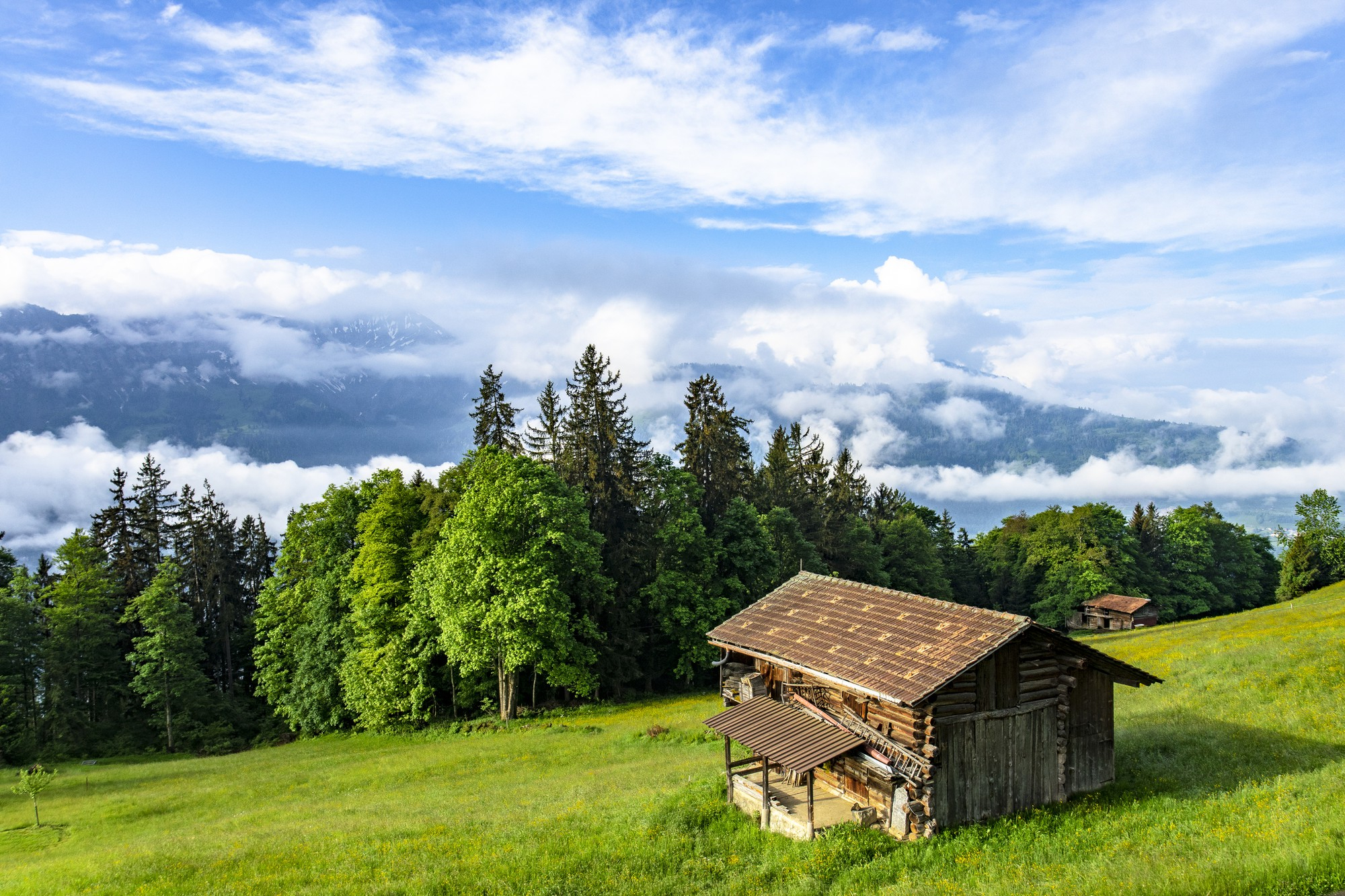
The first time I saw the cabin, I cried. And not in a good way.
It was June of 1986. I was twenty-three years old. Thomas and I had been married for exactly two days. We’d driven six hours north from Charlotte in his rusty blue pickup with a cooler of sandwiches and a box of wedding cake wrapped in tinfoil.
“Wait until you see it,” he kept saying. “Just wait, Leah. It’s the most beautiful place in the world.”
The road climbed higher and higher. The trees got taller. The houses got fewer. Then the pavement ended, and we were bouncing along a dirt track with branches scraping both sides of the truck.
Then he stopped.
“There she is,” he said. He was grinning like a kid.
I looked through the windshield.
It was a shack.
That’s the only honest word for it. A little gray log cabin, leaning slightly to the left, with a tin roof covered in rust and moss. One window was boarded up. The porch had a hole in it big enough to drop a cat through. The chimney had lost about a third of its stones. There was a raccoon sitting on the front step, eating something, looking at us like we were the ones trespassing.
“Thomas,” I said slowly. “Where are we going to sleep?”
“Inside,” he said. Like it was obvious.
The inside was worse. Dust everywhere. Mouse droppings in the corners. A cast-iron stove with a cracked door. One old iron bed with a mattress so thin you could feel every spring.
I stood in the middle of the floor in my going-away dress and started to cry.
Thomas didn’t laugh at me. He didn’t get upset. He just put down the cooler and came over and put his arms around me.
“I know,” he said. “I know it looks bad.”
“It looks terrible,” I sobbed.
“My grandfather built it,” he said quietly. “With his own hands. In 1931. During the Depression. He didn’t have any money. He didn’t have anything. So he came up here with an axe and a mule and he built a house.” He looked around at the dusty walls. “He used to bring me here every summer when I was a boy. He taught me to swing a hammer on that porch. He taught me to fish in the creek out back. He taught me everything that matters.”
He held me tighter.
“Everybody thinks it’s junk,” he said. “My dad wanted to sell it. My uncles wanted to tear it down. But it’s not junk, Leah. The bones are good. The logs are solid oak. It’s just tired. It just needs somebody to love it again.”
I looked up at him. He had tears in his eyes too.
“Someday,” he said, “I’m going to fix it. Every board. Every stone. I’m going to make it beautiful. For you. For when it’s just the two of us again. After the kids are grown and the work is done and nobody needs anything from us anymore.”
“That’s a long time from now,” I said.
“I know,” Thomas said. “But I’ll get to it. I promise.”
That night, we slept on that terrible mattress with the springs poking through. A thunderstorm came over the mountain. Rain dripped through the roof into a pot Thomas put on the floor. Plink. Plink. Plink.
I lay in the dark listening to the rain and my new husband snoring and I thought, We are never coming back here.
I was wrong about that.
I was wrong about a lot of things.
My name is Leah Brennan. I’m sixty-two years old.
I was married to Thomas for thirty-eight years. He was a builder. He started out framing houses for other people when he was nineteen. By thirty, he had his own company. Brennan Construction. Small. Never more than twelve men. But every house they built was solid. Thomas used to say he didn’t care how fast a house went up. He cared how long it stayed up.
“Anybody can make something look good,” he’d say. “The trick is making something that lasts.”
I worked part-time as a bookkeeper. For his company and for a few others in town. I balanced checkbooks and filed taxes and raised our son.
Jared was born in 1990. Our only child. We tried for more. It didn’t happen.
He was a sweet boy. Curious. Funny. He followed Thomas everywhere. When he was six, Thomas bought him a little tool belt with a real hammer, a small one. Jared wore it everywhere. To church. To the grocery store. To bed, once, until I made him take it off.
Every summer until Jared was twelve, Thomas took him up to the cabin. Just the two of them. For a week. They fished in the creek. They patched the roof. Thomas taught him to split wood and swing a hammer on the same porch where his grandfather taught him.
Jared loved it. He’d come home sunburned and filthy and full of stories.
Then, when he was twelve, he stopped wanting to go.
“It’s boring,” he said. “There’s no TV. There’s no Wi-Fi. My friends are going to the beach.”
Thomas didn’t push. He just nodded and went up alone that summer. And every summer after that.
He never said a word about it. But I saw his face when he packed the truck by himself.
Jared grew up. He went to college. He studied business. He got a job at a bank in Charlotte. He was good at it. He wore nice suits. He drove a nice car.
He met Vanessa when he was twenty-seven.
She was beautiful. Tall and blond and polished. She worked in real estate. Luxury properties. She knew everything about everything that cost a lot of money. Wines. Watches. Handbags. Neighborhoods.
The first time Jared brought her to dinner at our house, she looked around our living room. At the couch we’d had for fifteen years. At the coffee table Thomas built himself out of a walnut tree that fell in a storm. At the family photos on the wall.
“How cozy,” she said.
She said it the way you’d say it about a motel.
Thomas liked her anyway. Or he tried to. He was like that. He always assumed the best about people until they gave him a reason not to.
They got married two years later. A big wedding. A country club. Three hundred guests. Thomas paid for a lot of it. Jared asked. Thomas said yes.
Thomas always said yes to Jared.
Six years ago, Thomas got sick.
Pancreatic cancer. They caught it early, which almost never happens. The doctors said with surgery and chemotherapy, he might have years. Maybe a lot of years.
He had six.
The treatment was at a hospital in Charlotte. Forty-five minutes from our house in the country. Some weeks, we drove back and forth five times. It was wearing him down. It was wearing me down.
Jared and Vanessa had a big house in a new neighborhood in Charlotte. Five bedrooms. Ten minutes from the hospital.
“Move in with us,” Jared said. “You’ll be close to the hospital. We have the guest room. It’ll be easier.”
I didn’t want to. Thomas didn’t either. But he was so tired. And the drive was so long.
We sold our house. The little house where we raised Jared. With the walnut coffee table and the porch swing. We put most of our things in storage. We moved into Jared and Vanessa’s guest room.
I told myself it was temporary. Just until Thomas got better.
I’m not going to pretend those years were all bad. There were good days. Days when Thomas felt strong enough to sit on the back patio and drink coffee with Jared before work. Days when he played catch with the neighbor’s kids in the front yard.
But I want to be honest about the rest.
Vanessa didn’t want us there. Not really. She wanted what came with us.
Thomas paid rent. Every month. More than they asked. He helped with their mortgage when Jared’s bonus didn’t come through one year. He paid for their new roof. He paid for Vanessa’s car when hers got totaled. He paid for a trip to Cabo for their fifth anniversary.
He always said yes to Jared.
And me?
I cooked. Every night. For four people. Then five, when Vanessa’s sister stayed with them for a year. I did the laundry. All of it. I cleaned the house. I picked up their dry cleaning. I waited at home for the plumber, the cable guy, the pool man, the furniture delivery.
I drove Vanessa to her dentist appointments because she didn’t like driving downtown.
I did all of it while taking care of Thomas. Driving him to chemo. Sitting with him in the infusion room for six hours at a time. Holding a bucket while he threw up at two in the morning. Learning to change the dressing on his port. Learning to give him shots in his stomach.
Vanessa never once offered to help.
Jared did, sometimes. In the beginning. He’d drive Thomas to an appointment if I was sick. He’d sit with him on a Sunday afternoon and watch football.
But somewhere in the third year, he stopped. He got promoted. He got busy. Vanessa got pregnant, and then she didn’t, and after that, she didn’t want anybody to mention babies, and the house got very quiet and very tense.
I don’t blame Jared for everything. I want to say that.
But I watched my son get smaller. Year by year. I watched him stop pushing back when Vanessa said something cruel. I watched him stop calling his father Dad and start calling him your husband when he talked to me. Like he was a tenant.
I watched him stop looking me in the eye.
Thomas started going up to the cabin about two years before he died.
His cancer had gone quiet for a while. A remission. The doctors said it might not last. But for now, he was stronger than he’d been in years.
The first time, he said he was going for a long weekend. To fish. To get away.
He came back with sawdust in his hair.
The next month, he went again. And again. And again. Every few weeks. Sometimes for a week at a time. He hired a couple of men from a town near the cabin to help him. Guys he’d worked with years ago.
“What are you doing up there?” I asked him once.
“Just fixing a few things,” he said. “So we can sell it someday.”
“Sell it?” I said. “You’ve never wanted to sell it.”
He shrugged.
“Things change,” he said. “It’s just an old shack. Somebody might want it for the land.”
I believed him. Why wouldn’t I? He was dying. I thought he wanted to make sure I had some money after he was gone. I thought he was patching a roof and fixing a porch so somebody would pay a few thousand dollars for an old hunting cabin.
I never once went up there with him.
He never once asked me to.
At the time, that hurt. I thought maybe he wanted to be alone. Maybe he needed somewhere to go where nobody needed anything from him.
I understand now. He didn’t want me to see it. Not yet.
Thomas died in March. At the hospice in Charlotte. On a gray Tuesday morning. I was holding his hand.
His last words to me were strange. I didn’t understand them at the time.
He was very weak. He’d been asleep for most of two days. Then, around six in the morning, he opened his eyes and looked at me.
“Leah,” he whispered. “Did you get the key?”
“What key, honey?”
“The brass one,” he said. “In the envelope. Don’t lose it.”
“I won’t,” I said. I didn’t know what he was talking about.
He smiled. A little.
“The bones were good,” he said. “Remember? I told you. The bones were good.”
Then he closed his eyes.
He died about an hour later.
There was no courtroom drama.
No family fight over a will.
Thomas was a builder. He planned everything. He’d met with his lawyer, a man named Harold Pruitt, a year before he died. He’d arranged all the transfers in advance. Everything was already in our names. He left a letter for each of us. Sealed envelopes. To be opened together, a week after the funeral.
We opened them at Jared and Vanessa’s kitchen table. Harold Pruitt sat at the end, in his gray suit, with his reading glasses. Just to answer questions, he said.
Jared opened his envelope first.
Inside was a deed. And a short letter in Thomas’s handwriting.
A penthouse in Miami.
Twenty-sixth floor. Two bedrooms. Floor-to-ceiling windows overlooking Biscayne Bay. Thomas had bought it as an investment fifteen years ago, back when prices were low. He’d rented it out ever since. I knew about it. It was the only fancy thing Thomas ever bought. He called it his “pension.”
Vanessa’s face lit up immediately.
“Oh my God,” she said. She grabbed the deed out of Jared’s hands. “Brickell? Ocean views? Do you know what those go for now?”
She was already pulling out her phone. Looking up comparable listings. Reading off amenities out loud. Rooftop pool. Private gym. Valet parking. Concierge.
Exactly the kind of property she loved talking about.
Jared looked happy. And a little stunned.
Then I opened mine.
Inside was a deed. And a small brass key, taped to the inside of the envelope with a piece of masking tape. And a single sentence in Thomas’s handwriting.
The bones were good. Go see.
I looked at the deed.
The property known as the Brennan Cabin, Laurel Gap Road, Ashe County, North Carolina.
The old cabin.
Vanessa looked over my shoulder. She read it.
She laughed.
“Well,” she said. “That definitely suits you.”
I looked at Jared.
He lowered his eyes toward the floor.
Harold Pruitt cleared his throat. He looked like he wanted to say something. Then he didn’t.
Vanessa put down her phone. She smiled at me across the kitchen table.
“Honestly, Leah,” she said. “That place is perfect for you. You always liked things simple.”
She folded her arms.
“And since you own a place now,” she said, “you obviously don’t need our guest room anymore.”
She smiled wider.
“I’m turning it into a home gym,” she said. “I’ve been wanting one for years. Peloton. Mirror wall. The works.”
Then she added, very casually, like she was mentioning the weather:
“You should probably pack tonight.”
The kitchen was quiet.
Harold Pruitt took off his reading glasses. He looked at Vanessa. Then at Jared. Then at me.
Jared said nothing.
He sat at the table with the deed to a Miami penthouse in front of him and stared at the floor and said nothing at all.
That silence hurt more than anything Vanessa had ever said to me.
I could’ve reminded him of every sacrifice I’d made. Six years of cooking. Six years of laundry. Six years of picking up their dry cleaning and waiting for the plumber and driving Vanessa to the dentist. Six years of holding a bucket for his father at two in the morning while he slept down the hall.
I could’ve reminded him that his father paid their roof and their car and their trip to Cabo.
I could’ve reminded him of a little boy in a tool belt.
Instead, I stood up.
“Fine,” I said.
Vanessa blinked. She almost looked disappointed. I think she wanted me to argue. I think she wanted a scene. Something she could tell her friends about later.
I didn’t give her one.
I packed two suitcases.
That’s all I had in that house. Two suitcases worth of clothes. A framed photo of Thomas and me on our wedding day. His reading glasses, which I couldn’t stand to throw away. A sweater he wore every winter for twenty years.
Everything else was in storage.
I carried the suitcases downstairs myself. Jared was in the living room, on the couch. Watching TV. He didn’t get up.
At the bottom of the stairs, I stopped.
“Goodbye, Jared,” I said.
He looked up. For a second, something moved across his face. Something that looked like the little boy in the tool belt.
“Mom,” he said. “Where are you going to go?”
“To my house,” I said.
I put my house key on the kitchen counter. Next to Vanessa’s car keys and the deed to the penthouse.
And I walked out.
It was almost nine o’clock at night when I left Charlotte.
Four hours later, I was driving deeper into the mountains.
The road narrowed with every mile. Tall pine trees crowded both sides. The streetlights disappeared. The towns got smaller. Then they stopped being towns at all. Just a gas station here and there. A church. A mailbox at the end of a gravel driveway.
I hadn’t been up there in thirty-eight years. Not since the honeymoon.
And the only thing I could picture was what everyone had always called it.
The old cabin.
I pictured the raccoon on the step. The hole in the porch. The boarded-up window. The rusty tin roof. The mattress with the springs poking through. Rain dripping into a pot on the floor. Plink. Plink. Plink.
I pictured mouse droppings. Dust. Rotting boards. Broken glass.
I pictured myself, sixty-two years old, sleeping on that mattress, alone, with nobody left who needed me.
That place is perfect for you.
I cried most of the way up the mountain.
Thomas had written directions on the back of the deed. In his blocky builder’s handwriting.
Laurel Gap Road. 3.2 miles past the Baptist church. Left at the big split oak. Gravel drive. You’ll know it.
I found the Baptist church. I counted the miles. I saw the big oak tree, split down the middle by lightning a long time ago, with both halves still growing.
I turned left.
The gravel driveway was smooth. New gravel. Graded. Not the bumpy dirt track I remembered.
At the end of the driveway, there was a gate. A heavy iron gate. Painted black. Standing wide open.
I drove through it.
The driveway curved through the trees. Up a little hill.
Then my headlights swept across the property.
I hit the brakes.
Warm golden light was glowing from the porch.
Lanterns. Four of them. Hanging from the porch beams. On a timer, I found out later. Thomas had set them to come on at dusk.
The cabin was there. Exactly where it had always been. The same shape. The same size. The same old oak logs his grandfather cut by hand in 1931.
But it wasn’t leaning anymore.
The logs had been cleaned and sealed. They glowed a deep honey color in the lantern light. The rusty tin roof was gone. In its place was a new metal roof. Dark green. Clean. Every seam straight.
The chimney was whole again. Every stone back in place. Smoke wasn’t coming out of it, but it looked like it could.
The windows were spotless. All of them. Even the one that used to be boarded up. Big new windows with dark wood frames.
The porch looked almost new. The hole was gone. The boards were wide and smooth and honey-colored like the logs. There were two rocking chairs on it. Side by side.
Even the steps had been rebuilt.
There was no raccoon.
I sat behind the wheel with the engine running for a long time.
I couldn’t move.
The brass key from my envelope was in my coat pocket. I took it out. I held it in my hand.
I got out of the car. I walked up the new steps. I stood on the new porch.
The front door was solid wood. Heavy. With iron hinges. Thomas’s kind of door. I knew it the second I saw it.
I put the brass key in the lock.
It turned smoothly. Like it had been waiting.
I opened the door.
And I stopped again.
A massive stone fireplace covered one whole wall.
The same chimney. But inside, it had been rebuilt from the floor up. River stones. Gray and white and rust-colored. A thick wooden mantel across the top, cut from a single beam of oak. There was firewood stacked beside it, split and dry. Ready to light.
In front of the fireplace, there was a big leather couch. Dark brown. Soft. With a wool blanket folded over the back. And two leather armchairs facing it. And between them, a coffee table.
I knew that coffee table.
It was walnut. Thomas built it himself out of a tree that fell in a storm, twenty years ago. It was in our old house. Then it went into storage when we moved into Jared’s guest room.
He’d brought it up here.
Beyond the living room, there was a kitchen.
A real kitchen. A beautiful one. Stainless-steel appliances. A big six-burner stove. Custom cabinets in a soft sage green. A white farmhouse sink under a window that looked out at the dark trees. Polished hardwood floors that glowed in the light.
I walked through it slowly. I touched the countertops. Butcher block. Smooth as silk.
I opened a cabinet. Plates. White ones. Simple.
I opened another one. Coffee mugs.
Mine. From our old house. The blue one with the chip in the handle I’d drunk out of every morning for twenty years.
I stood in that kitchen holding my old blue mug and I couldn’t breathe.
This wasn’t some forgotten mountain shack.
Thomas had rebuilt the entire place.
And he’d never told me.
I kept exploring.
There were new double-paned windows everywhere. The kind that keep the cold out. There was insulation in the walls. I could tell. The cabin was warm. It was cold outside, maybe forty degrees, but inside it was comfortable.
There was a little room off the kitchen with a washer and dryer and a utility panel. A big one, with a lot of switches and a little digital screen. SOLAR SYSTEM: 94% CHARGED.
Solar. On a cabin in the middle of the mountains.
There was a bathroom with a big claw-foot tub and a walk-in shower with river stones on the floor. There was a pump and a pressure tank for a deep-water well.
Everything. Every single thing. Restored. Repaired. Rebuilt. Done right. The way Thomas did everything.
Then I went into the bedroom.
It was in the back of the cabin. Where the old iron bed used to be.
The iron bed was still there.
I almost laughed. He’d kept it. The same frame. But it had been sanded and painted a soft cream color. And there was a new mattress on it. A thick one. And a white quilt. And a pile of pillows.
There was a big window over the bed. Through it, I could see the dark shapes of the mountains against the night sky. And stars. More stars than I’d seen in thirty years.
On the bedside table, there was a lamp. And next to the lamp, there was a notebook.
Leather. Brown. Worn soft at the corners like he’d carried it in his back pocket for a long time.
My name was stamped across the cover. In gold letters.
Leah.
My hands trembled as I picked it up.
I sat down on the edge of the bed. I opened it.
Thomas’s handwriting filled the pages.
Blocky. Neat. Builder’s handwriting. Every letter careful.
The first section was practical. He’d documented everything.
SOLAR: 12 panels on south roof + 2 battery banks. Fully paid. No loan. Inverter warranty through 2034. If it beeps, call Danny Hollins. Number in back.
WELL: 340 feet deep. Belongs to property. Pump replaced 2023. Water tested — clean. Best water you’ll ever drink.
ROOF: Standing seam metal. 50-year warranty. You’ll never have to worry about it.
TAXES: Ashe County. Land is in a conservation easement — taxes are very low. I’ve prepaid the next six years. Receipts in the desk drawer.
GREENHOUSE: Behind the cabin. You’ll see it in the morning. Heated in winter with a wood stove. Grow your tomatoes. You always said you wanted to.
GATE: Remote in the back pocket of this notebook. See page 4.
EVERYTHING ELSE: Paid for. All of it. You don’t owe anybody anything.
I read that last line three times.
You don’t owe anybody anything.
Then, near the bottom of the first section, he’d written something else. Separated from the rest by a line.
Leah —
Jared and Vanessa care about appearances.
You care about whether something lasts.
I left him something that looks like a lot. I left you something that is a lot.
Watch what happens next.
I sat on the edge of the bed with the notebook in my lap.
He knew.
He’d known for years. He’d watched the same things I watched. Vanessa’s face at our old house. How cozy. The roof and the car and the trip to Cabo. Jared getting smaller and quieter. Me getting more and more tired.
He’d sat in that guest room for six years, sick, and watched it all.
And he hadn’t said anything. Because he didn’t want to cause trouble. Because he didn’t want to make me choose between my husband and my son.
Instead, he’d gone up a mountain. And built me a way out.
I turned to page four.
There was a small black remote control tucked into a pocket glued inside the back cover. Like a garage door opener. One button.
And on page four, there was a note.
The gate.
I put in an iron gate at the bottom of the drive. Heavy. Strong. Electric. Runs on the solar.
I know what you’re thinking. “Thomas, why does a cabin in the woods need a gate?”
A gate isn’t for keeping people out, Leah. A wall keeps people out. A gate is for deciding who comes in.
You’ve spent your whole life with every door open. For me. For Jared. For everybody. You never once decided who got to come in. You just let everyone walk through you.
It’s your turn to decide.
I didn’t sleep much that night.
I lit a fire in the fireplace. The first time I’d lit a fire in years. I sat on the leather couch with the wool blanket over my knees and Thomas’s notebook in my lap and I read every page.
There were drawings. Sketches of the kitchen before he built it. Measurements. Lists of materials. Notes to himself. Leah likes sage green. Not too dark. Farm sink — she always wanted one. Make the bedroom window face east. She’ll want to see the sun come up.
There were dates. He’d started in April, two years ago. The week after his first remission scan.
And in between the sketches and the measurements, there were little notes. Just to me. In the margins.
Tore out the old floor today. Found a penny from 1931 under the boards. Grandpa must’ve dropped it. Saving it for you.
Roof’s on. First rain tonight. Not a single drip. Thought about the pot on the floor on our honeymoon. You cried. I’m sorry I made you sleep in a leaky shack, Lee.
Bad day today. Couldn’t lift anything. Sat on the porch and watched Danny and Pete hang the cabinets. Told them they were doing it wrong. They were doing it fine. I just wanted to be the one doing it.
Scan came back. It’s back. Doctor says six months, maybe a year. Need to hurry. Hired two more guys.
Almost done. Couldn’t make it up the porch steps today without stopping twice. Pete carried the coffee table in for me. Your walnut table. I know you miss it.
Last trip. I won’t make another one. Put the lanterns on a timer so they’ll be on when you get here. Wish I could see your face.
That was the last entry.
I sat on the couch and cried until the fire burned down to coals.
My phone buzzed around seven the next morning.
I’d fallen asleep on the couch. The sun was coming through the big front windows, gold and pink. I’d never seen anything so beautiful.
It was Vanessa.
I let it ring.
A message arrived instead.
The monthly HOA fee on the penthouse is $3,500. Plus property tax is $14,000 a year. We need you to transfer money for this month immediately. Jared says you have access to the emergency fund.
I read it twice.
No apology for throwing me out.
No question about whether I’d arrived safely. After driving four hours into the mountains alone in the middle of the night at sixty-two years old.
Not even a simple Are you okay?
Just a request for money.
Jared and I still shared an emergency account.
Thomas set it up years ago. When Jared first started working. Family emergency fund, he called it. Thomas and I put money into it every year. Jared was supposed to too. He’d added maybe two thousand dollars total in ten years.
There was thirty thousand dollars in it.
I’d never touched it. Thomas never touched it. It was for real emergencies. A car accident. A hospital bill. A roof caving in.
Not a luxury HOA fee.
I opened the banking app on my phone.
I looked at the number for a long time. $30,000.00.
Then I transferred exactly half.
$15,000.
My share. Into my private savings account.
Then I sent Jared one message.
I removed my half of the emergency fund. The remaining half belongs to you. Use it wisely.
My phone rang almost immediately.
Jared.
I answered.
“Mom, what are you doing?” he demanded. No hello. “We need that money for the penthouse.”
“A luxury HOA fee is not an emergency, Jared.”
“But Dad always helped with those expenses,” he said.
The way he said it. Like it was owed. Like it was the weather.
“Your father is gone, Jared,” I said.
I stood up from the couch. I walked into the kitchen. I looked around at the sage green cabinets. The farmhouse sink. The butcher block counters. My old blue mug sitting by the coffee maker, where I’d left it last night.
The kitchen Thomas built for me with his own hands while he was dying. While I thought he was patching a roof.
“The penthouse belongs to you now,” I said.
I paused.
“So do the bills.”
There was a scuffle on the other end of the line. A muffled voice. Then Vanessa’s voice. Loud. Sharp.
“You put that money back right now,” she said. “Or don’t expect us to keep including you in our lives.”
I walked to the kitchen window.
Outside, dark pine trees stretched across the mountainside. The sun was coming up over the ridge. Gold light was spilling down through the trees. There was mist in the valley below, white and soft, like a lake.
I’d never seen anything so beautiful.
“You threw me out,” I said. “And insulted me. On the same day.”
My voice stayed calm. Calmer than I’d ever heard it.
“Why would I keep financing people who treat me that way?”
“Because Jared is your son!” Vanessa said.
“And Jared is an adult,” I said.
I ended the call.
That morning, I found the greenhouse.
It was behind the cabin. Down a little path of flat stones. A real greenhouse. Glass and cedar. Maybe twenty feet long. With a little potbellied wood stove in one corner for winter and raised beds full of dark soil.
On the potting bench by the door, there was a box.
Seed packets. Dozens of them. Tomatoes. Peppers. Basil. Zinnias. Sunflowers. Every kind I’d ever mentioned wanting to grow.
Some of them, I’d only mentioned once. Years ago. At the kitchen table in our old house. Someday I’d love to grow those little yellow pear tomatoes. My grandmother used to grow them.
There was a packet of yellow pear tomatoes. On top.
With a sticky note. Thomas’s handwriting.
You said someday. It’s someday.
I spent that whole first week in the greenhouse.
I planted the yellow pear tomatoes. And the Cherokee Purples. And three kinds of basil. I lit the little wood stove at night to keep the seedlings warm.
I walked the property. All eleven acres. I found the creek out back where Thomas used to fish with his grandfather. I found a little bench he’d built by the water, under an old sycamore tree. Carved into the back of it were two sets of initials. T.B. + L.B. 1986.
He’d carved it on our honeymoon. While I was crying in the cabin. I never knew.
I sat on that bench every afternoon.
I drove down the mountain to the little town of Laurel Springs. I bought groceries at a small market where everybody knew everybody. The woman at the register was in her seventies. Her name was Opal.
“You’re Tom Brennan’s wife,” she said. Before I even said anything.
“How did you know?”
“He described you,” Opal said. “Every time he came in. Bought coffee and talked about you for twenty minutes.” She smiled. “He said you’d come up here someday. He said you’d be sad. He said to be nice to you.” She handed me my receipt. “He paid for the first six months of your groceries. Did you know that? He set up a tab. Said you’d never ask for help, so he’d better do it in advance.”
I stood at the register and cried in front of a seventy-year-old woman named Opal.
She came around the counter and hugged me.
“He was a good man,” she said. “A real good man. They don’t make ’em like that anymore.”
On the eighth morning, I was in the greenhouse planting tomato seedlings into bigger pots when I heard tires crunching across the gravel.
I looked out through the glass.
Jared’s silver sedan was pulling into the driveway.
He’d come through the gate. It was open. I’d left it open. I hadn’t figured out yet how I wanted to use it.
He stepped out of the car in an expensive gray suit. Shiny shoes. Sunglasses. He looked completely out of place. Like a man who’d taken a wrong turn on his way to a board meeting.
He didn’t look at the cabin. He didn’t look at the mountains. He marched straight toward the porch.
I came out of the greenhouse. I wiped my hands on my apron. I walked around the side of the cabin and stood at the bottom of the porch steps.
He saw me. He stopped.
“Mom,” he said.
“Jared.”
“You need to sell this cabin,” he said.
No hello. No how are you. No I’m sorry.
I walked up the porch steps. I leaned against the railing.
“No,” I said.
He stared at me.
“Vanessa ran the numbers,” he said. “We can’t afford all the expenses on the penthouse. The HOA. The taxes. The insurance. It’s almost sixty thousand a year. With the mortgage on our house and Vanessa’s car payment and everything else, we can’t make it work.”
“Then sell the penthouse,” I said.
“Vanessa won’t sell the penthouse,” Jared said. “She’s already told everybody. Her parents. Her friends. Her whole office. She wants to move down there in a couple of years. She’s already picked out furniture.”
“That sounds like something the two of you need to solve.”
“Sell this place,” he said. His voice sharpened. “Move into a smaller apartment. Near us. In Charlotte. And give us the money. Vanessa looked it up. Land up here sells for decent money. You could get maybe fifty, sixty thousand for it. That would cover the penthouse for a year.”
“No,” I said.
Jared looked dismissively toward the cabin. He still hadn’t really looked at it. He was looking at me.
“You’re choosing some old shack,” he said, “over your own family?”
I didn’t argue.
Instead, I walked across the porch. I opened the front door.
“Come inside,” I said.
He stepped through the doorway.
Then he stopped.
His whole expression changed.
He took off his sunglasses. Slowly.
His eyes moved from the massive stone fireplace to the leather furniture. To the walnut coffee table. Then to the kitchen. The sage green cabinets. The six-burner stove. The farmhouse sink. The butcher block. The hardwood floors gleaming in the morning light.
Then to the enormous windows. Overlooking the mountains. Ridge after ridge, blue and gold, going on forever.
His mouth fell open.
“This is the cabin?” he said.
“Yes,” I said.
He walked slowly into the living room. He touched the mantel. The single oak beam. He looked at the river stones.
Then he looked down at the coffee table.
“That’s Dad’s table,” he said quietly. “From the old house.”
“Yes.”
“I thought it was in storage.”
“So did I,” I said.
He walked into the kitchen. He opened a cabinet. He saw my blue mug.
He walked to the back of the cabin. He looked into the bathroom. The claw-foot tub. The river-stone shower.
He looked into the bedroom. The old iron bed, painted cream. The big east window.
He came back into the living room. He stood in the middle of it. In his expensive suit and his shiny shoes. Looking lost.
“When did he do this?” he asked.
“The last two years,” I said. “Every time he came up here. Every weekend. Every week he was gone. He told me he was fixing a few things so we could sell it.”
Jared stared at me.
“He was dying,” Jared said. “The whole time. He was dying, and he was up here building this.”
“Yes,” I said.
“He never told me.”
“He never told me either,” I said.
I folded my arms.
“Your father left me a completely paid-off home,” I said. “Solar power. A deep well. A new roof that’ll last fifty years. Six years of property taxes already paid. A greenhouse full of seeds. A tab at the grocery store in town.” I looked directly at him. “Everything I need. For the rest of my life. And not a single bill.”
Jared didn’t say anything.
“And he left you,” I said, “a luxury property you apparently can’t afford.”
Jared left less than twenty minutes later.
He didn’t apologize.
He barely said goodbye. He just stood in the doorway for a long moment, looking back at the fireplace. At the walnut table. Then he put his sunglasses back on and walked to his car.
I stood on the porch and watched his silver sedan disappear down the gravel drive. Through the open gate.
Then I went back to the greenhouse.
The yellow pear tomatoes had their first true leaves.
Two weeks passed.
I didn’t hear from Jared. Vanessa sent two more texts about the HOA fee. Then one about how disappointed she was. Then one about how some mothers actually support their children. I didn’t answer any of them.
I went to church on Sunday. The little Baptist church three miles down the road. The one Thomas mentioned in his directions. The pastor, a gentle man with white hair, shook my hand at the door.
“You must be Leah,” he said. “Tom asked us to pray for you. Every Sunday. For two years.”
I was starting to understand that my husband had spent the last two years of his life quietly building me an entire world. Not just a house. A world. A grocery tab. A pastor. A woman named Opal.
People who’d been waiting for me before I even knew I was coming.
Then one Saturday afternoon, I was sitting on the porch in one of the rocking chairs. Shelling peas into a bowl. The sun was warm. The bees were in the clover.
A large luxury SUV turned into my driveway.
White. Brand new. Tinted windows. It came up the gravel drive much too fast. Spraying stones.
It stopped right in front of the porch.
Vanessa climbed out of the driver’s seat. Designer sunglasses. White linen pants. Expensive sandals that sank into the gravel.
Behind her, her parents stepped out.
Her father, Gerald. Big man. Red face. Golf shirt. He’d sold commercial insurance for forty years and talked about it at every family dinner. Her mother, Carol. Small. Quiet. Perfect blond hair. She always looked a little nervous, like she was waiting for someone to tell her she’d done something wrong.
Vanessa pulled an overnight bag from the back seat. A big designer one. She slung it over her shoulder. She marched toward the porch.
“We’re here to inspect the property,” she said.
I stayed seated in my rocking chair. I kept shelling peas.
She glanced toward the house. Up and down. Like a real estate agent. Her eyes stopped on the new windows. The metal roof. The stone chimney.
I watched her calculate. I could practically see the numbers moving behind her sunglasses.
“Jared told us,” she said. “About the renovations. Daddy’s going to give us an appraisal. If it’s worth what I think it’s worth, we need to have a family conversation about it.” She smiled. “We’ll be staying for the weekend. Mom wants to see the mountains.”
Carol looked at the ground.
“No,” I said. “You won’t.”
Vanessa stopped.
“What?”
“This is private property,” I said.
I set the bowl of peas on the little table beside my chair. I looked at all three of them.
“You weren’t invited,” I said.
Gerald laughed. A big, booming laugh.
“Leah,” he said. “Come on now. We drove three and a half hours. We’re family.”
“Are we?” I said.
Vanessa laughed too. Like I’d said something ridiculous. She put one sandaled foot on the bottom porch step.
“Leah,” she said slowly, like she was talking to a child, “you’re being emotional. You’re grieving. We understand. But this property is a family asset now. Jared’s your only child. Everything you have is going to be his someday anyway. So it just makes sense for us to plan together.”
“Everything I have,” I said, “is mine.”
“For now,” Vanessa said. She smiled. “We’ll put our bags in the bedroom. Mom and Dad can have the couch.”
She started up the steps.
I reached into the pocket of my apron.
My fingers closed around the small black remote Thomas had left in the back of the notebook.
At the far end of the driveway, past the trees, the heavy iron gate was still standing wide open. The way I’d left it every day since I arrived.
Because I hadn’t decided yet.
I’d spent my whole life with every door open. I’d never once decided who got to come in.
A gate isn’t for keeping people out, Leah. A gate is for deciding who comes in.
Vanessa was still smiling when I pressed the button.
Behind her, down at the bottom of the drive, the iron gate began to close.
Slowly. With a low mechanical hum. The two heavy halves swinging inward.
Gerald turned around. He saw it.
“Hey,” he said. “Hey! What’s that doing?”
The gate met in the middle. There was a deep, solid clunk as the lock engaged.
Vanessa turned around on the porch steps. She stared at the closed gate. Then at her white SUV. Parked on the inside.
“Did you just lock us in?” she said.
“No,” I said. “I locked you out. You’re just on the wrong side of it right now.”
I stood up from my rocking chair.
“That gate opens from the inside,” I said. “When you drive up to it, it’ll let you out. It just won’t let you back in.” I looked at Vanessa. “Not unless I open it.”
Vanessa’s face went red. Then white. Then red again.
“You can’t do this,” she said. “You can’t just—Jared is going to hear about this. Jared is your son. You can’t lock your own son’s wife out of a family property.”
“It isn’t a family property,” I said. “It’s my property. Thomas made sure of that. It’s in my name. Only mine. The taxes are paid. The roof is paid. The well is paid. The solar is paid.” I looked at her. “Even the gate is paid. Nobody owns one single board of this cabin except me.”
Gerald stepped forward. His face was purple.
“Now listen here,” he said. “My daughter has every right—”
“Gerald,” I said. “Your daughter told me to pack my bags the same week I buried my husband. She told me a cabin in the woods was perfect for me. She laughed.” I looked at him. “And I left. Without a word. I left her the guest room. I left her the house key. I left her my son.”
Gerald didn’t say anything.
“I’m not leaving anything else,” I said.
Then Carol spoke.
Vanessa’s mother. The quiet one. She hadn’t said a single word since she got out of the car.
“Vanessa,” she said softly. “Get in the car.”
Vanessa turned around.
“Mom—”
“Get in the car, honey,” Carol said. Her voice was very quiet. But it didn’t shake. “We shouldn’t have come. I told you we shouldn’t have come.”
“She can’t just—”
“She can,” Carol said. “It’s her house.” She looked at me. Then she looked down at the ground. “I’m sorry, Leah. I’m very sorry.”
Vanessa stared at her mother like she’d never seen her before.
Then she yanked her overnight bag off her shoulder. She threw it into the back seat. She got into the driver’s seat and slammed the door.
Gerald got in on the passenger side. He didn’t look at me.
Carol was the last one. She stopped at the car door. She looked back at the cabin. At the honey-colored logs. The green roof. The lanterns on the porch. The rocking chairs.
“It’s beautiful,” she said quietly. “He must have loved you very much.”
“He did,” I said.
She nodded. She got in the back seat.
The white SUV backed down the gravel drive. Too fast. Spraying stones. When it got to the gate, the gate swung open, the way Thomas built it to.
They drove through.
The gate closed behind them.
Clunk.
I sat back down in my rocking chair. I picked up my bowl of peas.
My hands were shaking. I let them shake.
The bees were in the clover. The creek was running out back. Somewhere up the ridge, a woodpecker was knocking on a tree.
I sat there and shelled peas until my hands stopped shaking.
Then I went inside and opened Thomas’s notebook to page four.
A gate isn’t for keeping people out, Leah. A wall keeps people out. A gate is for deciding who comes in.
I read it again.
Deciding who comes in.
Not never letting anyone in.
I thought about my son. In his gray suit and his shiny shoes. Standing in my living room looking at his father’s coffee table.
He was dying the whole time. He was dying, and he was up here building this.
I thought about the look on his face. Just for a second. Before he put his sunglasses back on.
I didn’t know yet who I was going to let in.
But I knew I’d get to decide.
Carol called me a week later.
I didn’t know she had my number. She must have gotten it from Jared’s phone.
“Leah,” she said. “I hope it’s okay that I’m calling.”
“It’s okay.”
She was quiet for a moment.
“I wanted to apologize again,” she said. “For the weekend. For Vanessa. For everything.” She took a breath. “And I wanted to tell you something. Because I think you should know. And because Jared won’t tell you.”
“What is it?”
“They’re in trouble,” Carol said quietly. “Real trouble. Vanessa has credit cards I didn’t know about. Lots of them. She’s been spending money they don’t have for years. Clothes. Trips. The SUV. She bought that SUV the week after Thomas died. Because she thought the penthouse money was coming.” Her voice cracked. “And Jared… Jared lost his job, Leah. Three weeks ago. The bank had layoffs. He hasn’t told anyone. Not even Gerald. He still puts on his suit every morning and drives somewhere. I don’t know where.”
I sat down at the kitchen table.
“They’re going to lose the house,” Carol said. “In Charlotte. They’re three months behind on the mortgage. And the penthouse fees keep coming. And Vanessa still won’t sell it. She says it’s the only thing that makes her look like she has her life together.” Carol was crying now. “I raised her wrong, Leah. I gave her everything. I never once told her no. I thought that was love.”
I didn’t say anything for a long time.
“Thank you for telling me,” I said finally.
“I’m not asking you to fix it,” Carol said. “I just thought… he’s your son. You should know he’s drowning.”
I didn’t call Jared.
I wanted to. Every single night, I picked up my phone and looked at his name. Every single night, I put it back down.
Because I knew what would happen. I’d call. He’d cry. I’d send money. I’d put the fifteen thousand back in the emergency fund. I’d pay the HOA. I’d pay the mortgage. I’d fix it.
And in six months, he’d be drowning again.
Thomas always said yes to Jared.
And look where yes had gotten him.
I opened the notebook. I read it again. All of it. Every page.
And in the very back, behind the pocket where the remote had been, I found something I’d missed.
An envelope.
Sealed. White. Glued to the inside of the back cover so flat I hadn’t noticed it.
On the front, in Thomas’s handwriting:
For Jared.
Only if he comes alone. Only if he comes asking for help, not money.
If he never comes, burn it.
Winter came early to the mountains that year.
The first snow fell in November. I’d never seen snow like that. Soft and deep and quiet. It covered the porch and the rocking chairs and the greenhouse roof. I kept the little wood stove burning in the greenhouse day and night so my winter greens wouldn’t freeze.
The cabin was warm. Thomas’s insulation. Thomas’s windows. Thomas’s fireplace. The solar panels kept humming along under the snow. The well never froze.
I’d never been so warm in my life.
On the first Saturday in December, it was snowing hard. I was sitting by the fire with a book and a cup of tea in my blue mug.
Around four in the afternoon, I heard something outside.
Not tires on gravel. The gravel was under six inches of snow.
A car horn. Far away. At the bottom of the driveway.
I went to the front window.
Through the falling snow, through the trees, I could just make out a pair of headlights. At the gate. Stopped.
The gate was closed. I’d kept it closed since Vanessa’s visit.
I put on my coat and my boots. I took the remote out of my apron pocket. I walked down the driveway in the snow.
It took me ten minutes to get there. When I did, I stopped.
It was Jared’s silver sedan. It was stuck in the snow, right at the gate. The back wheels were spinning uselessly.
Jared was standing outside the car.
No gray suit. No shiny shoes. He was wearing jeans and an old Carolina Panthers sweatshirt and sneakers that were soaked through. No coat. No hat. Snow in his hair.
He was holding the iron bars of the gate with both hands.
He looked up when he saw me coming through the trees.
He looked terrible. Thin. Pale. Dark circles under his eyes. He hadn’t shaved in days.
He looked like a man who’d been drowning for a long time.
“Mom,” he said.
I stopped on the other side of the gate. About four feet away.
“Jared,” I said. “Where’s your coat?”
He looked down at himself. Like he hadn’t noticed.
“I don’t know,” he said. “I left in a hurry.”
“Where’s Vanessa?”
He laughed. It wasn’t a real laugh.
“In Charlotte,” he said. “At her parents’ house. She moved out two weeks ago.” He swallowed. “The bank took the house on Thursday. The penthouse is going to auction in January. She left me a note. It said, You told me you could provide.” He shook his head. “That’s all. Seven words. After eight years.”
I didn’t say anything.
“I lost my job in September,” he said. “I didn’t tell anybody. I drove to a Starbucks every morning in my suit and sat there applying for jobs until it was time to come home. For two months.” He looked at the ground. “I couldn’t tell her. I couldn’t tell anybody. Dad always provided. I was supposed to provide.”
The snow kept falling. On both of us.
“I’m not here for money,” Jared said. His voice cracked. “I swear, Mom. I’m not. I know what you’re thinking. I’m not asking you to sell the cabin. I’m not asking you to put the fund back. I don’t want anything.”
“Then why are you here?”
He looked at me through the iron bars. His eyes were wet.
“Because I didn’t know where else to go,” he said. “And I kept thinking about that coffee table. About Dad building all this while he was dying. And I kept thinking about how I sat on the couch and watched you carry your suitcases down the stairs. And I didn’t get up.” He was crying now. Openly. In the snow. “I didn’t even get up, Mom. I didn’t carry your bags. I didn’t say anything. I let her throw you out. My mother. A week after Dad’s funeral.”
He held on to the gate.
“I’m not asking you to let me in,” he said. “I know I don’t deserve it. I just needed to come and say it. To your face. I’m sorry. I’m so sorry. For all of it.”
I stood in the snow and looked at my son through the bars of the gate.
I thought about the little boy in the tool belt. The one who wore it to church and to bed. The one who used to come home from this mountain sunburned and filthy and full of stories.
I thought about the twelve-year-old who said it was boring. And Thomas packing the truck alone every summer after that, without a word.
I thought about the man who said Dad always helped with those expenses. The man who said some old shack.
And I thought about the man in front of me now. Soaked. Shaking. Holding on to the bars of a gate his father built. Asking for nothing.
Only if he comes alone. Only if he comes asking for help, not money.
I took the remote out of my coat pocket.
A gate isn’t for keeping people out, Leah. A gate is for deciding who comes in.
I pressed the button.
The gate swung open. Slowly. With a low hum. Shaking snow off its bars.
Jared stood there and stared at the open gate.
“Come inside,” I said. “Before you freeze to death. And leave the car. We’ll dig it out tomorrow.”
He sat by the fire for an hour without saying anything. Wrapped in the wool blanket from the couch. Holding a cup of tea in my old blue mug with both hands.
I made soup. Chicken and vegetables. From the winter greens in the greenhouse and a chicken I’d bought from Opal’s market.
He ate three bowls. Like he hadn’t eaten in days. He probably hadn’t.
Then, when he was warm and fed, I went to the bedroom. I came back with the leather notebook.
I opened the back cover. I peeled the envelope off carefully.
I held it out to him.
He saw his name on the front. In his father’s handwriting.
For Jared. Only if he comes alone. Only if he comes asking for help, not money.
His hands started shaking.
“He knew,” Jared whispered. “He knew I’d come.”
“He hoped you would,” I said. “There’s a difference. He also told me to burn it if you never did.”
Jared looked at the envelope for a long time.
Then he opened it.
He read it to himself first. I watched his face. I watched him read it twice. Then a third time.
Then he handed it to me.
“I want you to read it,” he said. “Out loud. I can’t.”
So I did.
Jared,
If you’re reading this, you came up the mountain by yourself. And your mother let you in. That means you’re in more trouble than you’ve ever been in your life. I’m sorry about that.
I’m going to tell you some things I should have told you a long time ago.
I left you the penthouse because I knew you’d want it. I knew Vanessa would want it. I knew it would look like a lot. And I knew you couldn’t afford it.
That’s not a trick. I’m not trying to punish you. I’m trying to teach you the only thing I never taught you right. The thing my grandfather taught me on this porch when I was eight years old.
Anybody can make something look good. The trick is making something that lasts.
Son, I spent your whole life saying yes to you. Every time you asked. The car. The wedding. The roof. Cabo. I thought that was love. I was wrong. I was doing to you what Carol did to Vanessa. I never let you find out what you could carry on your own.
So I’m saying no. The only way I know how, now that I’m gone. I’m leaving you something that looks like a lot and costs more than you have. You’re going to have to decide what to do with it. Keep it and drown. Or sell it and start over.
Sell it, Jared. Pay off what you owe. Buy something small that you can actually afford. Something with good bones.
And then come up here and help your mother. The greenhouse roof is going to need re-sealing in a couple years. The gutters need cleaning every fall. There’s a split rail fence down by the creek I never got to. The firewood doesn’t split itself.
You used to love this place. You used to wear that little tool belt everywhere. You used to swing a hammer on this porch.
I kept the tool belt. It’s in the shed out back. Top shelf. It won’t fit you anymore. But I couldn’t throw it away.
Your mother gave everything she had to everybody for forty years. Including you. Including me. She never once asked for anything back.
Be the one who gives her something back.
I love you, son. I always did. Even when you thought it was boring up here.
Dad
Jared put his face in his hands and cried.
Not like a grown man. Like a little boy. With his whole body. In his wet sweatshirt by the fire.
I sat down next to him on the leather couch. I put my arm around him.
He leaned into me. The way he used to when he was six and scared of thunderstorms.
“I’m sorry,” he kept saying. “I’m sorry, Mom. I’m sorry.”
“I know,” I said.
“I didn’t get up,” he said. “When you carried your suitcases. I didn’t get up.”
“You’re here now,” I said. “That counts.”
He stayed the night. In the little second bedroom Thomas had built off the kitchen. I’d thought it was a pantry. It was a bedroom. Small. With a single bed and a window that looked out at the creek. There was a sign over the door, carved into a piece of oak. I’d never noticed it before.
JARED’S ROOM.
Jared stood in the doorway and looked at that sign for a long time.
“He built me a room,” he said.
“He built you a room,” I said.
“Even after I stopped coming.”
“He never stopped hoping,” I said.
The next morning, Jared went out to the shed.
He came back twenty minutes later carrying something small and brown.
A little leather tool belt. A child’s. Worn soft. With a small hammer still hanging from the loop.
He held it in both hands. He didn’t say anything.
Then he went out to the porch. In the snow. In his father’s old work coat that I’d found in the closet.
He took the little hammer out of the tool belt. He looked at it.
He knelt down on the porch boards. The ones his great-great-grandfather laid in 1931. The ones Thomas rebuilt with his own hands while he was dying.
He tapped one of the nails very gently with the little hammer. Just once.
Tap.
Then he sat back on his heels and looked out at the mountains. Ridge after ridge, white with snow, going on forever.
I watched him from the kitchen window. I didn’t go out. Some things a person needs to do alone.
Jared stayed for the winter.
He dug his car out of the snow. He split firewood. A lot of it. He was terrible at it at first. Thomas would’ve laughed at him. By January, he was good.
He cleaned the gutters. He re-sealed the greenhouse seams. He walked down to the creek and found the split rail fence Thomas never finished. He started building it. Slowly. One rail at a time.
He drove down to Laurel Springs and got a job. At the hardware store. Ringing up nails and paint and chainsaw oil. Eleven dollars an hour. Opal’s nephew owned it. Opal put in a word.
“Tom Brennan’s boy,” she said to me at the register one day. “Working at the hardware store. Who would’ve thought.”
“Thomas would have,” I said.
She smiled. “Yes,” she said. “I suppose he would.”
In January, the penthouse sold.
Jared sold it. Himself. He called a realtor in Miami and listed it. Vanessa called him screaming. She said he was throwing away their future. She said she’d never forgive him.
“There’s no our anymore, Ness,” he said quietly. “You left me a seven-word note. I’m selling it.”
It sold for a lot of money. More than I expected. Thomas had bought it at the right time.
Jared paid off every debt. The credit cards. The car. The second mortgage on the Charlotte house that the bank had already taken. Everything.
He had a little left over. Not a fortune. Enough.
The next morning, I checked the emergency account.
There was a deposit. Fifteen thousand dollars.
The account said $30,000.00 again.
I called him. He was out at the creek, working on the fence.
“Jared,” I said. “What did you do?”
“I put back my half,” he said. “And I put back your half too. The half you took out.” He was quiet for a moment. “It was always supposed to be for emergencies. I used it like a credit card for ten years. That’s done.”
“You didn’t have to put back my half.”
“Yes, I did,” Jared said. “Dad said be the one who gives you something back. I figured I’d start with the money I tried to take.”
In March, on the anniversary of Thomas’s death, Jared and I sat on the bench by the creek.
The one with the initials carved in it. T.B. + L.B. 1986.
The snow was melting. The creek was high and loud and full of light. The first green was coming up on the banks.
Jared had a pocketknife. Thomas’s. He’d found it in the shed with the tool belt.
He leaned over and carved something into the back of the bench. Under his parents’ initials. It took him a long time. He was careful.
When he finished, he sat back.
J.B. Came home. 2025.
I looked at it for a long time.
“He’d like that,” I said.
“I hope so,” Jared said.
That was a year and a half ago.
Jared lives in Laurel Springs now. In a little two-bedroom house he bought with the last of the penthouse money. Small. Simple. Good bones. He’s re-doing the kitchen himself. On weekends. With a hammer that fits his hand.
He got promoted at the hardware store. Assistant manager. He’s taking classes at the community college in Boone. Construction management. He wants to start his own company someday.
“Small,” he says. “Never more than twelve guys. Every house built to last.”
He and Vanessa finalized the divorce last fall. It was quiet. No courtroom drama. She lives in Charlotte with a man who sells boats. Carol sends me a Christmas card every year. Last year’s said, I finally told her no. She hasn’t spoken to me in four months. It’s the most loving thing I’ve ever done.
Jared comes up the mountain every Sunday.
He drives up after church. He brings groceries from Opal’s. He fixes whatever needs fixing. He split three cords of firewood last fall. He finished the fence by the creek.
And every Sunday, when his truck comes up Laurel Gap Road and turns left at the big split oak, he stops at the bottom of the driveway.
At the gate.
He could call me. He could honk. He has his own remote now. I gave it to him last Christmas.
He never uses it.
He gets out of his truck. He stands at the iron bars. And he waits for me to come down the driveway and open it.
I asked him about it once.
“You have a remote,” I said. “Why don’t you just open it yourself?”
He looked at me for a long moment.
“Because Dad was right,” he said. “A gate isn’t for keeping people out. It’s for deciding who comes in.” He smiled. “I want you to decide, Mom. Every single time. I never want to walk into your house again without being invited.”
The yellow pear tomatoes did beautifully that first summer. And the next.
I sell them now. At a little stand at the farmers’ market in Laurel Springs on Saturday mornings. Next to Opal’s niece, who sells honey. People line up. They say they’ve never tasted anything like them.
I tell them it’s the soil. The mountain air. The well water.
That’s true.
But it’s also the greenhouse. And the wood stove. And a box of seed packets on a potting bench with a sticky note on top.
You said someday. It’s someday.
Last week, a young woman stopped at my tomato stand. Maybe thirty. Tired eyes. A wedding ring she kept twisting on her finger.
She picked up a little basket of yellow pears. She looked at me.
“These are beautiful,” she said. “Did you grow them?”
“I did,” I said.
“Do you live around here?”
“Up the mountain,” I said. “In a cabin.”
She smiled a little. “A cabin,” she said. “That sounds peaceful. My mother-in-law keeps telling me I should just be grateful for what I’ve got.” She twisted her ring. “She says I’m too picky. She says I should stop asking for things.”
I looked at her for a long time.
Then I put two more baskets of tomatoes in her bag. I didn’t charge her for them.
“Can I tell you something my husband told me?” I said.
She looked surprised. “Sure.”
“Some people care about how things look,” I said. “Some people care about whether they last.” I handed her the bag. “Figure out which kind of people you’re living with. And then figure out which kind you want to be.”
She looked at me for a long moment.
“Your husband sounds smart,” she said.
“He was a builder,” I said. “He knew a lot about good bones.”
At the end of every day, I sit on the porch in one of the two rocking chairs.
I still keep the second one there. Next to me. Empty. Sometimes Jared sits in it. Sometimes Opal does, when she drives up with a pie. Mostly it’s just empty.
I don’t mind. It isn’t a sad kind of empty.
It’s the kind that’s waiting.
I watch the sun go down over the ridge. Gold and pink, then purple, then dark. The lanterns on the porch come on by themselves. Thomas’s timer. Every single night.
And I think about a twenty-three-year-old girl in a going-away dress, crying in the middle of a dusty floor. Listening to rain drip into a pot. Plink. Plink. Plink. Thinking, We are never coming back here.
I wish I could tell her something.
I’d tell her the bones were good.
I’d tell her that someday, a man she loved would spend the last two years of his life quietly rebuilding every board while she thought he was fixing a few things to sell. That he’d put her coffee mug in the cabinet and her table by the fire and her name on the cover of a notebook. That he’d build her son a room, and wait, even after he stopped coming.
I’d tell her that the most valuable thing anybody ever gave her looked, to everybody else, like an old shack in the woods.
And I’d tell her that one day, a woman in designer sunglasses would laugh and say, That place is perfect for you.
And she’d be right.
She’d just never understand why.

Specialty: Quiet Comebacks & Personal Justice
David Reynolds focuses on stories where underestimated individuals regain control of their lives. His writing centers on measured decisions rather than dramatic outbursts — emphasizing preparation, patience, and the long game. His characters don’t shout; they act.