When my sister Emily was six years old, she had eleven baby dolls, and every single one of them had a name.
There was Rosie and Bea and Marcus and Penny and a bald one named Gordon that she said was “an old soul.” She kept them in a row on her bed, tucked under a doll blanket our grandmother knitted. Every night, she gave each one a kiss and told it a story. Every morning, she changed their clothes.
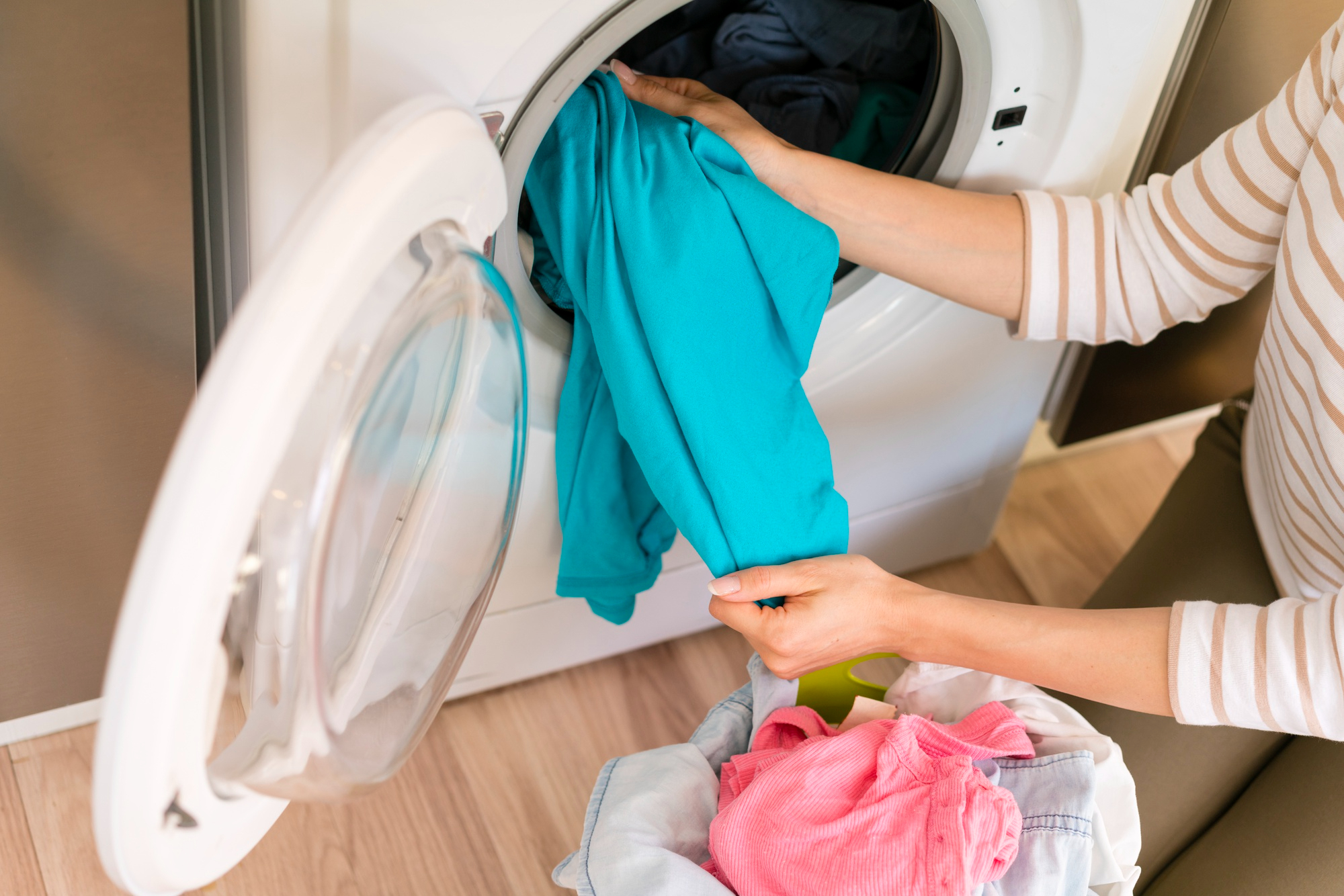
She had a little plastic washing machine. The kind with a crank on the side. Grandma bought it for her at a yard sale for two dollars. It didn’t actually wash anything. You put the doll clothes in, turned the crank, and it made a whirring sound.
Emily used it every single day.
She’d sit cross-legged on our bedroom floor, cranking that little plastic machine, singing to herself. Then she’d take out the doll clothes, which were exactly as dirty as they were before, and hang them on a piece of string she’d tied between the bedpost and the closet doorknob. Tiny pajamas. Tiny dresses. Tiny socks.
“What are you doing?” I asked her once. I was nine. I thought dolls were stupid.
“Laundry,” she said. Very seriously. “Babies make a lot of laundry, Holly. That’s how you know you’re a mom. There’s always laundry.”
I rolled my eyes and went back to my comic book.
I didn’t know then that I’d remember that sentence for the rest of my life.
My name is Holly. I’m thirty-eight. Emily is thirty-five.
We grew up in a small brick house in Dayton, Ohio, with a mom who worked at the post office and a dad who fixed air conditioners. We shared a bedroom until I was fourteen. We fought about everything. Who got the top bunk. Who used the last of the shampoo. Who took whose sweater without asking.
But when it mattered, we were each other’s.
When I broke my wrist falling off the garage roof at eleven, Emily sat next to me in the emergency room holding my good hand and telling me jokes so bad I laughed through the pain.
When Emily’s first boyfriend dumped her at sixteen, I drove her to Dairy Queen at midnight and let her cry into a Blizzard for two hours.
When our dad died, I was twenty-six and Emily was twenty-three. We sat on the floor of his garage together, in the dark, surrounded by his tools, and held each other until the sun came up.
She was my sister. My first best friend. The person who knew everything about me.
At least, that’s what I thought.
I got pregnant easily.
I don’t say that to brag. I say it because it matters to this story. Because I didn’t understand, for a long time, what it was like for someone who didn’t.
I married Dan when I was twenty-seven. We decided to start trying at twenty-nine. I was pregnant the second month. Max was born when I was thirty. Lucy came three years later. Also on the second month.
“You’re so lucky,” Emily said, when I told her about Lucy. She hugged me at my kitchen table. She was smiling. “I’m so happy for you, Hol.”
I didn’t notice that her eyes were wet. Or that she went into my bathroom right afterward and stayed there for fifteen minutes.
I noticed later. Much later. When it was too late to have noticed in time.
Emily married Nate when she was twenty-eight.
Nate Ferraro is a high school history teacher. Tall and quiet, with glasses and a dry sense of humor that sneaks up on you. He coaches the debate team. He reads books about the Civil War for fun. He’s the kind of man who brings a casserole when somebody’s sick and remembers everybody’s birthday.
He adores my sister. Anybody can see it.
They started trying for a baby the year they got married.
It didn’t happen.
A year. Then two. They went to a doctor. Then a specialist. There were tests. So many tests. Blood work and ultrasounds and procedures I didn’t understand. Nate had something called low motility. Emily had something with her tubes. Either one alone might have been okay. Together, the doctors said, it would be hard.
They did IUI three times. Nothing.
They did IVF twice. The first time, it didn’t take. The second time, Emily got pregnant.
She called me from the clinic parking lot, screaming. I’d never heard her so happy. Not at her wedding. Not ever.
She lost it at nine weeks.
She called me from the same parking lot. She wasn’t screaming that time. She wasn’t saying anything at all. I could just hear her breathing.
I drove over. I sat with her in the car for three hours.
They tried one more round. It didn’t work.
They’d spent forty-one thousand dollars. They’d taken out a home equity loan on their condo. They were done.
Then they tried adoption.
It took almost two years. Home studies. Background checks. A profile book with pictures of their condo and their cat and the two of them at the beach. Emily made the profile book herself. She spent a month on it. She cried every time she looked at the picture of the empty second bedroom they’d painted pale yellow.
Then, three years ago, a birth mother picked them.
She was nineteen. Her name was Kayla. She was due in March. She’d looked at sixty profile books and chosen theirs because of a picture of Nate reading to a kid at the library.
Emily and Nate met her four times. They went to a doctor’s appointment with her. They bought a crib. They washed every single baby outfit twice in that special detergent for newborns.
The baby was born on a Thursday. A boy. Seven pounds, two ounces.
Kayla let them name him. They named him Oliver.
They brought him home on Friday.
On Monday, Kayla changed her mind.
She had the legal right to. In Ohio, a birth mother has seventy-two hours after birth before she can sign the consent, and she hadn’t signed yet. Her own mother had come back from Florida and said she’d help raise him. Kayla called the agency crying. She said she was sorry. She said she couldn’t do it. She said she had to keep her son.
The caseworker came to Emily and Nate’s condo on Monday afternoon.
Emily handed Oliver over in the pale yellow nursery. In the little blue pajamas with ducks on them.
She’d had him for three days.
I was there that afternoon. I’d driven over with a lasagna. I didn’t know the caseworker was coming.
I watched my sister put a baby in a stranger’s arms. I watched her kiss the top of his head. I watched the caseworker carry him down the stairs and out to her car.
Then I watched Emily walk back into the yellow nursery and sit down on the floor and pick up a pile of tiny clothes. Onesies. Sleepers. Little socks.
She started folding them.
Very slowly. Very carefully. One at a time.
“Em,” I said. “Emily. Stop. You don’t have to do that right now.”
“There’s laundry,” she said. She didn’t look up. “Babies make a lot of laundry, Holly.”
Nate came in. He saw her. He knelt down next to her on the floor and put his arms around her from behind and held on.
He was crying so hard he was shaking.
That night, he packed up the nursery. All of it. The crib. The changing table. The clothes. The little blue pajamas with ducks on them. He put it all in boxes and drove it to the Goodwill on Wilmington Pike at nine o’clock at night.
When he came home, he sat Emily down at the kitchen table.
“We’re done,” he said. “No more. No more clinics. No more agencies. No more profile books. I can’t do it again, Em. I can’t watch you hand another baby to a stranger. It’ll kill you. It’ll kill me.”
Emily didn’t argue. She just nodded.
They painted the yellow room gray. Nate turned it into an office.
They never talked about it again.
At least, not in front of me.
That was three years ago.
Emily went back to work. She’s a dental hygienist. She came to family dinners. She bought my kids birthday presents. She took Max to the science museum and Lucy to see a princess movie. She laughed. She seemed okay.
She seemed okay for three years.
And then, about two months ago, the laundry started.
It was a Tuesday evening in early March.
Emily texted me at six.
Hey. Weird question. Can I do a load of laundry at your place tonight? Our washer died.
Of course, I wrote back. Come over whenever.
She showed up at seven with a big blue IKEA bag full of clothes. Jeans. T-shirts. Towels. She hugged me at the door. She looked tired.
“Thank you so much,” she said. “The repair guy can’t come until next week. It’s a whole thing with the warranty.”
“No problem,” I said. “Stay for dinner. Dan made chili.”
“I can’t, actually,” Emily said. “I’ve got some errands to run. Can I throw it in and come back in a couple hours?”
“Sure.”
She put the load in my washer. She set the dial. Then she left.
She came back at ten-fifteen. Three hours later. She moved everything to the dryer. She sat at my kitchen table with a cup of tea while it ran. She seemed distracted. She kept checking her phone.
She left at eleven. Thanking me again.
I didn’t think anything of it.
Three days later, she texted again.
Ugh, sorry. Can I bring another load? The repair guy rescheduled.
Sure.
Same thing. Seven o’clock. Blue IKEA bag. Into the washer. I’ve got errands, I’ll be back. Back at ten. Dryer. Tea. Gone by eleven.
The next week, twice.
The week after that, three times.
By the end of March, Emily was coming over three or four nights a week. Always around seven. Always with the blue bag. Always leaving for two or three hours while the clothes washed. Always coming back tired.
“Still broken?” I asked one night.
“Still broken,” she said. “It’s ridiculous. They’re saying it’s a part that’s back-ordered from Korea.”
“From Korea?”
“I know,” Emily said. She rolled her eyes. “Supply chain.”
I started noticing things. Small things.
The laundry in the blue bag was always the same. Her jeans. Nate’s work shirts. Towels. But never very dirty. Some of the towels looked like they’d already been washed. Folded, even, before she put them in the bag.
She smelled different when she came back from her errands. Not bad. Just different. Like baby shampoo. Or hospital soap. Something clean and sweet.
Once, when she was sitting at my kitchen table waiting for the dryer, I noticed a smear of something orange on the shoulder of her sweater. Dried. Like mashed sweet potato.
Once, she fell asleep at my kitchen table. Sitting up. With her head on her arms. I had to wake her when the dryer buzzed.
And once, around the end of April, my daughter Lucy, who’s five, came downstairs in her pajamas while Emily was sitting at the table.
Lucy climbed up into Emily’s lap. Like she always does. And Emily held her. And closed her eyes. And started humming. A song I didn’t recognize. Something soft, with Spanish words.
“What song is that, Aunt Em?” Lucy asked.
Emily’s eyes flew open. She stopped humming.
“Nothing,” she said quickly. “Just something I heard on the radio.”
She put Lucy down. She went to check the dryer.
It hadn’t buzzed yet.
I asked her once. Directly. In early May.
“Em. Is everything okay?”
She was folding towels at my kitchen table. She didn’t look up.
“Of course. Why?”
“You’ve been coming over here for two months. You’re always gone for three hours. You fall asleep at my table. You smell like baby shampoo.” I tried to make it a joke. “Are you having an affair with a pediatrician?”
She laughed. It wasn’t a real laugh.
“I’m just tired,” she said. “Work’s crazy. The washer thing is stressing me out.”
“Have you thought about just buying a new washer?”
“Nate wants to wait for the warranty,” she said. She folded the last towel. “You know how he is.”
I let it go.
I should’ve pushed. I’m her big sister. I should’ve noticed. I should’ve asked a second time. And a third.
But I had two kids and a job and a husband and a house, and my sister was folding towels at my kitchen table, and she said she was fine.
So I let it go.
Then one afternoon in mid-May, she called me.
It was a Thursday. Around two o’clock. I was at work. I’m a pharmacist at a CVS on Far Hills Avenue.
“Hey,” she said. “Can I bring another load over tonight?”
“Seriously?” I said. “They still haven’t fixed your washer? It’s been two months, Em.”
“I know,” she said. “It’s ridiculous.”
“I can’t tonight,” I said. “Dan and I have Max’s school thing. The spring concert. We won’t be home until nine-thirty.”
There was a pause.
“Oh,” Emily said. “Okay. That’s fine. I’ll figure something out.”
“You could always buy a new washer,” I said. “They have them at Lowe’s. Delivery in two days.”
“Yeah,” she said. “Maybe.”
She hung up fast.
A few hours later, at the end of my shift, I realized I’d left my phone charger at Emily’s apartment.
I’d been there the Sunday before. For a birthday lunch for Nate. I’d plugged my phone in by her kitchen counter and forgotten it.
I needed it. My phone was at eleven percent. Max’s concert was at seven, and I wanted to record his trumpet solo.
Emily’s condo was on my way home. Ten minutes from CVS.
I texted her. Hey, stopping by to grab my charger. 5 min.
She didn’t answer.
I drove over anyway.
Emily and Nate live on the second floor of a brick condo building in Kettering. Three units per floor. Theirs is at the end of the hall. 2C.
When I got there, Emily was just coming out her front door. Keys in her hand. Purse on her shoulder. Wearing a gray sweatshirt with a stain on the shoulder.
She saw me in the hallway. She stopped dead.
“What are you doing here?” she asked.
She said it too fast. Too sharp.
“I just came to grab my phone charger,” I said. “From Sunday. I texted you.”
“Oh.” She looked behind her. Into the condo. Then back at me. “I didn’t see it.”
She hesitated. For a second, I thought she was going to tell me she’d bring it to me later. She was standing in the doorway. Blocking it.
Then she stepped aside.
“It’s by the coffee maker,” she said. “I’m just running to the store. I’ll be back in ten minutes.”
“Okay.”
She went down the stairs. Fast.
I walked into my sister’s condo.
It was quiet. Clean. It always is. Emily’s a neat person. Nate’s at school until five most days, coaching debate.
My charger was right where she said. By the coffee maker. Plugged into the wall.
I unplugged it. I wrapped up the cord.
And as I turned around to leave, I noticed the laundry closet.
It’s in the hallway. Between the kitchen and the bathroom. A little closet with folding doors where they keep a stacked washer and dryer.
The folding doors were open.
And the washer was running.
I stood in the hallway and listened to it. That low hum. The swish of water. The little click as the drum turned.
It wasn’t broken. It wasn’t making any strange noises. It wasn’t waiting for a part from Korea.
It was just running. Like a washer.
The little display on the front said 0:04. Four minutes left.
I stood there and watched it count down.
0:03.
0:02.
0:01.
It beeped. Three short beeps. The way washers do when they’re done.
I didn’t decide to open it. I just did.
There were freshly washed clothes inside.
Wet. Warm. Smelling like that sweet, clean smell I’d been noticing on Emily for two months. Baby shampoo. Or that special detergent. The kind for newborns.
I stood there staring at them.
Only a few hours earlier, Emily had called me and asked to bring another load to my house. Because her washer was broken. Because it had been broken for two months. Because the part was back-ordered from Korea.
She’d been lying to me.
For two months. Three or four nights a week. The blue IKEA bag. I’ve got errands. I’ll be back in a couple hours.
But why?
What kind of person pretends their washer is broken for two months? What could she possibly have been doing?
I started taking the clothes out. I don’t know why. I think I needed something to do with my hands. I figured I’d put them in the dryer before she came back. Be helpful. Pretend I hadn’t noticed.
A gray towel. A washcloth. A pair of Emily’s pajama pants.
Then I pulled out something small.
A tiny pair of pajamas.
Toddler size. Two-T, maybe. Soft cotton. Blue, with little green dinosaurs on them. With feet. The kind with the little rubber grippers on the bottoms so they don’t slip on the floor.
I froze.
My sister didn’t have children.
I stood in the hallway of her condo holding a pair of wet dinosaur pajamas, and my whole body went cold.
I thought about the baby shampoo smell. The orange smear on her shoulder like sweet potato. The three hours away. Falling asleep at my table. Humming a song in Spanish to Lucy and stopping when she realized I was listening.
I thought about Oliver. The yellow nursery. The little blue pajamas with ducks on them that Nate drove to the Goodwill at nine o’clock at night.
Babies make a lot of laundry, Holly. That’s how you know you’re a mom. There’s always laundry.
Before I could make sense of any of it, I heard a key in the front door.
Emily walked in carrying a grocery bag.
She saw me standing in the hallway. By the open washer. Holding the dinosaur pajamas.
Her face changed immediately. All the color went out of it. Like somebody had pulled a plug.
I held up the pajamas.
“Okay,” I said. “What is going on?”
“What are you doing with those?” Emily said. Her voice was very quiet.
“They were in your washer.”
She put the grocery bag down fast. On the floor. A box of Cheerios fell out. The little round ones. The kind for toddlers.
“You went through my laundry?” she said.
“I wasn’t going through anything,” I said. “I saw your washer running. The one you told me was broken. Three hours ago. The one that’s been broken for two months.” I held the pajamas out. “Whose are these?”
“Give them to me.”
“Emily. You don’t have kids.”
“Just give them to me,” she said. She stepped forward. Her hand was out.
“No,” I said. “You’ve been bringing your laundry to my house for weeks. Lying to my face. Telling me about parts from Korea. And now I find out your washer works perfectly fine. What aren’t you telling me?”
She stepped closer. She glanced at the front door behind her. She lowered her voice to almost a whisper.
“Keep your voice down.”
“Why?”
“Please,” she said. Her eyes were filling with tears. “Holly. Please. Just give me the pajamas.”
“Not until you tell me who they belong to.”
Then a man’s voice came from behind us.
“Who do they belong to?”
I froze.
So did Emily.
Nate was standing in the open front door.
He was still in his work clothes. Khakis. A blue button-down. A lanyard with his school ID around his neck. His messenger bag over his shoulder. He’d gotten home early. Debate practice must have been canceled.
He was looking at the pajamas in my hand.
His face was very still. Too still.
Emily turned around and looked at him.
Then she turned back and looked at me. Her eyes were huge. Horrified.
“Oh God,” she whispered. “What have you done?”
Nobody said anything for a long time.
The washer clicked. Settling.
Nate stepped into the condo. He closed the door behind him. Very carefully. Like he didn’t want to make any noise. He put his messenger bag down on the floor next to the spilled Cheerios.
He looked at the box of Cheerios. The little toddler ones.
He looked at the dinosaur pajamas in my hand.
Then he looked at Emily.
“I fixed the washer,” Nate said quietly. “Seven weeks ago. On a Saturday. You were at Holly’s doing laundry. Remember? I watched a YouTube video. It was the door latch. A twelve-dollar part. I fixed it in twenty minutes.” He swallowed. “I told you that night. You said thank you. And then two days later, you said it was broken again. You said it was making a noise. You said you’d take the laundry to Holly’s until the repair guy came.”
Emily didn’t say anything.
“There was never a repair guy,” Nate said. “Was there.”
“Nate—”
“I checked,” he said. “Last week. I called the warranty company. There’s no service request. There never was.” His voice cracked. “I thought—” He stopped.
He looked at the floor.
“You thought what?” Emily whispered.
“I thought you were seeing somebody,” Nate said.
Emily made a small sound.
“Three, four nights a week,” Nate said. “You’d come home at eleven. You smelled different. Like somebody else’s soap. You fell asleep on the couch in your clothes. You stopped talking to me. You were always checking your phone.” He looked at her. “And the washer. You lied about the washer, Em. For seven weeks. What was I supposed to think?”
“I’m not seeing anybody,” Emily said. Tears were running down her face. “Nate. I swear to God. It’s not like that.”
Nate looked at the dinosaur pajamas in my hand.
“Then what is it like?” he said. Very quietly. “Whose pajamas are those, Emily?”
Emily sat down.
Right there in the hallway. On the floor. With her back against the laundry closet. Next to the open washer.
She put her face in her hands.
“His name is Theo,” she said.
She told us.
Sitting on the hallway floor. With her knees pulled up. With Nate standing by the front door and me standing by the washer, still holding the wet pajamas.
“There’s a woman,” Emily said. “Down the hall. In 2A. Her name is Rosa. Rosa Delgado. She moved in last fall. Do you remember? You helped her carry a dresser up the stairs, Nate. In October.”
Nate nodded slowly.
“She has a little boy,” Emily said. “Theo. He’s two and a half. He’s—” She stopped. Her voice broke. “He’s the sweetest little boy I’ve ever met. He has these big brown eyes and he laughs at everything and he says ‘thank you’ after every single bite of food, even if it’s just a Cheerio.”
She wiped her face with her sleeve.
“I started talking to Rosa in the hallway,” she said. “Just hi, how are you. She’s a nurse’s aide at Miami Valley. She works nights. She’s by herself. No family here. Her parents are in Puerto Rico. Theo’s father isn’t around.” She swallowed. “In January, I noticed she looked sick. Thin. Yellow. Tired all the time. I asked her if she was okay. She said she was fine.”
“She wasn’t fine,” Nate said.
“No,” Emily said. “In February, she fainted in the hallway. Right outside our door. I found her. Theo was sitting next to her on the floor, patting her face, saying Mami, Mami, wake up.” Emily’s whole body shook. “I called 911. I rode with them to the hospital. Theo sat in my lap in the ambulance.”
The washer clicked again. Nobody moved.
“It’s ovarian cancer,” Emily said. “Stage four. It’s in her liver. Her lungs. They told her she has maybe six months. Maybe less. She’s doing chemo. Three nights a week. At the cancer center on Far Hills. In the evenings, because she still works days when she can. Because she has to. Because she doesn’t have anybody else.”
“And Theo?” I asked. Very quietly.
“And Theo,” Emily said, “had nobody to stay with him.”
She’d started watching him the night Rosa came home from the hospital.
Just one night. Then two. Then every chemo night.
“Rosa can’t afford a sitter,” Emily said. “She can barely afford rent. She can’t leave him alone. And her chemo makes her so sick she can’t take care of him after. She throws up all night. She can’t stand up.” She looked at her hands. “So I go over. Three or four nights a week. At seven. I give him dinner. Mashed sweet potatoes. He loves them. I give him his bath. I read him books. I put him to bed. And I stay until Rosa can get herself to the couch.”
“And his laundry,” I said. Looking at the pajamas.
“And his laundry,” Emily said. “Rosa doesn’t have a washer. She used to take everything to the laundromat on Dorothy Lane. She can’t do that now. She can barely walk. So I bring Theo’s clothes over here and wash them in our machine. In the afternoons. While you’re at school, Nate.” She looked at him. “And then I hang them up to dry on the rack in the closet in the office. In the gray room. Where you never go anymore.”
Nate closed his eyes.
“The yellow room,” he said.
“The yellow room,” Emily whispered. “I hang his pajamas in the yellow room.”
“Why didn’t you tell me?” Nate said.
He hadn’t moved from the front door. His voice was rough.
Emily looked up at him.
“Because you made me promise,” she said.
Nate flinched.
“Three years ago,” Emily said. “At the kitchen table. The night you took everything to Goodwill. You said, We’re done. No more. I can’t watch you hand another baby to a stranger. It’ll kill you.” Her voice cracked. “And I promised. I said okay. I said no more babies.”
“Em—”
“And then I found Rosa on the hallway floor,” Emily said. “And Theo was patting her face. And I couldn’t just walk past them, Nate. I couldn’t. I picked him up. He put his head on my shoulder. He was so warm.” She was crying so hard she could barely talk. “And I thought, I’ll just help for a few weeks. Just until Rosa gets better. I won’t tell Nate. He doesn’t need to know. It’s not our baby. It’s not a stranger’s baby. It’s just a neighbor who needs help.”
“But Rosa’s not getting better,” I said.
“No,” Emily said. “Rosa’s not getting better.”
She took a shaky breath.
“So I needed somewhere to go. Somewhere Nate wouldn’t wonder about. I couldn’t say I was going down the hall. He’d walk by. He’d hear Theo. He’d know.” She looked at me. “So I said I was going to your house. To do laundry. Because our washer was broken. And I’d bring the bag over, Hol, with our clothes in it, and put it in your machine, and then I’d drive back here and walk down the hall to 2A and put Theo to bed. And then I’d drive back to your house and put our clothes in the dryer and sit at your table until they were done. So it would look real. So the timing would make sense.”
I stared at my sister.
“The towels,” I said. “They were already folded. Some of them were already clean.”
“I was running out of dirty laundry,” Emily said. And she laughed. A broken, terrible laugh. “There’s only so much two people can get dirty, Holly. I started washing the same towels twice.”
“And today?” I asked. “Why didn’t you bring him over? Why’d you do it here?”
“Because you said you weren’t home tonight,” Emily said. “And Theo had an accident in his pajamas at Rosa’s this morning. Before she went to work. She called me at noon. She was crying. She said they were his only clean pair. He has two. That’s it. Two pairs of pajamas.” Her voice cracked. “So I came home on my lunch break and put them in the washer. I thought I’d have time to dry them and get them back before Nate got home.”
She looked at the dinosaur pajamas in my hand.
“They’re his favorites,” she said. “The dinosaurs. He calls them his roar jammies. He won’t go to sleep without them.”
Nate still hadn’t moved.
He was standing by the front door with his school lanyard around his neck. Looking at his wife on the floor.
“Three months,” he said slowly. “Since February. You’ve been taking care of a two-year-old down the hall. Three, four nights a week. For three months. And you lied to me. And you lied to your sister. About a washing machine.”
“Yes,” Emily whispered.
“And you’re—” He stopped. His jaw worked. “You’ve been going back into the yellow room. To hang his pajamas.”
“Yes.”
He looked at me. At the dinosaur pajamas in my hand.
Then he turned around and walked out the front door.
He didn’t slam it. He just closed it. Very quietly.
Emily put her head down on her knees and sobbed.
I put the pajamas on top of the dryer. I sat down on the hallway floor next to my sister. I put my arms around her.
“I’m sorry,” I said. “I’m so sorry, Em. I shouldn’t have opened the washer. I shouldn’t have pushed.”
“It’s not your fault,” she said into her knees. “It’s mine. I lied to everybody. I’m a liar.”
“You’re not a liar,” I said. “You’re a mom.”
She went very still.
“That’s what you told me,” I said. “When you were six. With your plastic washing machine. You said, Babies make a lot of laundry. That’s how you know you’re a mom. There’s always laundry.“
Emily lifted her head and looked at me.
“You remember that?”
“I remember everything,” I said. “I just didn’t pay attention.”
We sat on that floor for a long time.
And somewhere in there, I started to understand something I’d missed for years.
I thought about all the times I’d complained to Emily about my kids. Max won’t eat anything green. Lucy woke up three times last night. I’m so tired. I just want five minutes alone. I thought about Emily nodding and smiling and saying That sounds hard, Hol.
I thought about Lucy’s announcement at Thanksgiving. I’m pregnant again! No, that was me. Telling everybody about Lucy. At Thanksgiving. Three years ago. Two weeks after Oliver.
Two weeks after Emily handed a baby to a caseworker in the yellow room.
I’d announced my pregnancy at the dinner table. Everybody cheered. Emily hugged me. Then she went to the bathroom for fifteen minutes.
I thought she was just happy for me.
“Em,” I said. “When I told everybody about Lucy. At Thanksgiving. Was that—”
“Two weeks after Oliver,” Emily said quietly. “Yeah.”
I closed my eyes.
“I didn’t think,” I said. “I didn’t even think. I’m so sorry.”
“You didn’t know,” Emily said.
“I knew about Oliver,” I said. “I was there. I brought a lasagna. I watched you fold his clothes. I knew.” My voice cracked. “And I still stood up at Thanksgiving and told everybody I was having a baby. Like it was nothing. Like it was easy.” I wiped my face. “Because for me it was easy. And I never once thought about what that was like for you.”
Emily leaned her head on my shoulder.
“I was happy for you,” she said. “I was. That’s the hard part. I was so happy for you and so sad for me at the same time. And I didn’t know where to put it.”
“You put it in a plastic washing machine,” I said. “And then you put it in the yellow room.”
She laughed. Through her tears. A real laugh this time.
At six-thirty, the dryer buzzed.
I’d put the dinosaur pajamas in. While Emily cried on my shoulder. Fifteen minutes on low.
Emily got up. She opened the dryer. She took out the little blue pajamas with the green dinosaurs and the rubber grippers on the feet.
She held them against her chest.
“I have to take these to him,” she said. “Rosa has chemo tonight. At seven. I promised.”
“I’ll come with you,” I said.
She looked at me.
“Max’s concert,” she said.
I looked at my phone. Eleven percent.
“Dan can record it,” I said. I texted him. Family emergency. I’ll explain later. Please record Max’s solo. Tell him I’m so sorry and I love him.
Dan wrote back in thirty seconds. Got it. Is everyone okay?
I looked at my sister holding a pair of toddler pajamas against her heart.
I think everyone’s going to be okay, I wrote. Eventually.
We walked down the hall together. To 2A.
Emily knocked softly. Three times. A pattern. Knock. Pause. Knock-knock.
The door opened.
Rosa Delgado was standing there. She was maybe thirty. Small. Very thin. She was wearing a pink headscarf over her bald head and a nurse’s aide uniform that hung off her like it belonged to someone else. Her skin had a yellow tint. Her eyes were huge and dark and tired.
She saw Emily. She smiled. It changed her whole face.
Then she saw me.
“Rosa,” Emily said. “This is my sister. Holly. She knows. It’s okay.”
Rosa looked at me for a long moment. Then she held out her hand.
“Holly,” she said. “Emily talks about you all the time. And Max and Lucy. She shows Theo their pictures on her phone.”
Behind her, there was a sound. Little feet running on a wood floor.
A little boy came around the corner.
He was two and a half. Small for his age. In a T-shirt and a diaper. With a big head of dark curls and enormous brown eyes. He was holding a plastic stegosaurus.
He saw Emily.
His whole face lit up.
“EM!” he shrieked. He dropped the stegosaurus and ran across the room and threw himself at her knees. “Em! Em! Em!”
Emily knelt down. She caught him. She held him against her. She buried her face in his curls.
“Hi, baby,” she whispered. “Hi, my sweet boy. I brought your roar jammies.”
She held up the dinosaur pajamas.
Theo gasped. Like it was Christmas.
“ROAR JAMMIES!” he yelled. He grabbed them. He hugged them. He started roaring at them.
Rosa laughed. Then she started coughing. She held on to the doorframe.
Emily stood up with Theo on her hip. She put her free hand on Rosa’s arm.
“Go,” she said gently. “Go sit down. I’ve got him. What time’s your ride?”
“Six-forty,” Rosa said. “The van from the cancer center.”
“Okay,” Emily said. “Go sit down until then. I’ll start his dinner.”
Rosa looked at Emily. Then at me. Her eyes filled up.
“I don’t know what I’d do without her,” she said to me. “I don’t know what Theo would do. He’d have nobody.”
I didn’t know what to say.
Theo was roaring at the pajamas.
I stayed that night.
I sat at Rosa’s little kitchen table and watched my sister take care of a child.
She made sweet potatoes. She mashed them with a fork. She fed Theo at a high chair that was clearly secondhand, with a sticker of a truck on it that was half peeled off. After every bite, he said, “Thank you, Em.” Every single bite.
She gave him a bath in the little tub. She sang to him. The song in Spanish. The one she’d hummed to Lucy at my table.
“Rosa taught me,” Emily said, when she saw me listening. “It’s what her mom used to sing to her. In Puerto Rico. Arrorró mi niño.“
She put him in his roar jammies. She tucked him into a little toddler bed in the corner of Rosa’s bedroom. She read him three books. Then a fourth. Then she sat on the floor next to the bed and held his hand until he fell asleep.
I watched from the doorway.
I watched my little sister, who had eleven baby dolls with names when she was six, who cranked a plastic washing machine every morning, who handed a baby to a stranger in a yellow room and folded his clothes afterward on the floor.
I watched her be a mother.
To a boy who wasn’t hers. Whose own mother was dying in the next room. Three nights a week. In secret. For three months.
Because nobody else would.
At nine-thirty, the van brought Rosa home. The driver helped her up the stairs. She was gray. Shaking. She went straight to the bathroom and threw up.
Emily held her hair back.
Then she helped Rosa to the couch. Put a blanket over her. A bucket next to her. A glass of ginger ale on the coffee table.
“Do you want me to stay?” Emily asked.
“No,” Rosa said. “No. Go home. Go to your husband.” She grabbed Emily’s hand. “Emily. Did you tell him?”
Emily didn’t answer.
Rosa looked at me.
“He found out,” I said. “Tonight. Because of me.”
Rosa closed her eyes.
“I’m sorry,” she whispered. “I told her. I told her to tell him. Weeks ago.”
“I know,” Emily said.
“He’s a good man,” Rosa said. “I can tell. He carried my dresser up the stairs. He wouldn’t let me pay him.” She opened her eyes. “Emily. You need to tell him the rest.”
Emily went very still.
“The rest?” I said.
Rosa looked at me. Then at Emily.
“She didn’t tell you either,” Rosa said softly.
Emily and I sat in her car in the parking lot of the condo building. It was after ten. The lights in 2C were off. Nate hadn’t come home.
“What’s the rest?” I asked.
Emily stared out the windshield.
“Rosa asked me to be Theo’s guardian,” she said. “After.”
I didn’t say anything.
“Three weeks ago,” Emily said. “She had a lawyer from the hospital come to her apartment. A free one. From a program for patients. She had papers drawn up. A will. A guardianship designation.” She swallowed. “She doesn’t have anybody, Holly. Her parents are in their seventies in Puerto Rico. Her dad has dementia. Theo’s father is in prison in Texas. He’s never even met him. If she dies without naming somebody, Theo goes into foster care. Into the system. With strangers.”
“And she named you.”
“She asked me first,” Emily said. “She asked if I’d be willing. If I’d raise him. If I’d sing him the song.” Her voice broke. “I said yes. I said yes before she even finished asking.”
“Without telling Nate.”
“Without telling Nate,” Emily said. “She needs both of us to sign. The lawyer said so. It’s a joint guardianship. Because we’re married. She needs Nate’s signature too.”
She put her forehead against the steering wheel.
“I’ve been carrying those papers in my purse for three weeks,” she said. “Trying to figure out how to tell him. How do you tell your husband, who drove a crib to Goodwill at nine o’clock at night because he couldn’t watch you lose another baby, that you’ve already promised to take one? A two-year-old whose mother is dying? Who might be ours in a few months? Or might not, if something goes wrong? If a judge says no? If his father gets out of prison and wants him?” She was shaking. “How do you ask him to risk it all again?”
I didn’t have an answer.
Nate came home at midnight.
I know because Emily texted me. I was home by then. Lying awake in bed next to Dan, who’d shown me the video of Max’s trumpet solo three times. It was terrible. He missed two notes. I cried anyway.
He’s home, Emily texted. He’s in the yellow room. He’s been in there for twenty minutes. He hasn’t said anything.
Then, an hour later:
He found the drying rack. With Theo’s clothes on it. He’s just sitting on the floor looking at them.
Then, at two-fifteen in the morning:
I gave him the papers.
Then nothing.
I didn’t sleep.
At seven the next morning, my phone rang. Emily.
“Hol,” she said. Her voice was hoarse. Like she’d been crying all night. “Can you come over? Before work?”
“Is everything okay?”
There was a long pause.
“I don’t know,” she said. “Just come.”
When I got to the condo, the door to 2C was open.
Emily was in the kitchen. Making coffee. In the same gray sweatshirt from yesterday.
She didn’t say anything. She just pointed down the hall.
To 2A. Rosa’s door. It was open too.
I walked down the hall.
Nate was sitting on Rosa’s kitchen floor. In the same khakis and blue button-down from yesterday. Wrinkled now. His school lanyard was gone.
Theo was sitting in his lap.
In his roar jammies. Eating dry Cheerios out of a plastic cup. One at a time.
Nate was holding the plastic stegosaurus. Making it walk across his own knee. Making it roar.
Theo was giggling. After every Cheerio, he said, “Thank you, Nate.” Every single one.
Rosa was on the couch. Under her blanket. Watching them. She was smiling. Tears were running down her face.
Nate looked up when I came in. His eyes were red. He hadn’t slept either.
“Hi, Holly,” he said.
“Hi, Nate.”
Theo held up a Cheerio to me.
“You want one?” he said.
I took it. “Thank you, Theo.”
“Thank you,” Theo said seriously. And went back to the stegosaurus.
Later, Emily told me what happened that night.
Nate sat on the floor of the yellow room for an hour. With the drying rack. With Theo’s tiny socks and shirts and the dinosaur pajamas that had been there before they went back to 2A.
Then Emily came in and sat down next to him and gave him the guardianship papers.
He read them. All of them. Twice.
Then he said, “You hung his pajamas in here.”
“Yes.”
“In Oliver’s room.”
“Yes,” Emily said. “I’m sorry. I know you painted it gray so we wouldn’t have to look at it.”
Nate didn’t say anything for a long time.
“I didn’t paint it gray so we wouldn’t have to look at it,” he said finally. “I painted it gray so I wouldn’t have to. You were stronger than me. You always were. I couldn’t handle it, Em. So I made you promise. So I’d never have to feel that again.” He looked at the drying rack. “And you kept the promise. For three years. You kept it for me. Until you couldn’t.”
“I broke it,” Emily said.
“No,” Nate said. “You found a loophole.”
She laughed. Through her tears.
“Neighbor’s kid,” Nate said. “Not a stranger’s baby. Not an agency. Not a clinic.” He shook his head. “You found the one baby in Ohio you could take care of without breaking your promise.”
“I didn’t mean to,” Emily said. “I just found them on the floor. In the hallway. And I couldn’t walk past.”
Nate was quiet for a long time.
“I could’ve walked past,” he said. “That’s the thing. If it had been me, coming home from school, finding them on the floor. I would’ve called 911 and then I would’ve walked past. Because I’m scared. I’ve been scared for three years.” He looked at her. “You’ve never been scared of anything. Not since you were six.”
Then he picked up the pen.
And he signed.
Then, at five-thirty in the morning, he walked down the hall and knocked on Rosa’s door. Very softly. Knock. Pause. Knock-knock.
He’d seen Emily do it. Through the peephole. Weeks ago. He’d thought it was a lover’s code.
Rosa opened the door. She was up. She couldn’t sleep either.
He held out the papers. Signed. Both names.
“I’m Nate,” he said. “I’m sorry I didn’t come sooner. Can I meet him?”
Rosa lived four more months.
They were good months. That’s what everybody said at the funeral. The best she’d had.
Emily and Nate stopped pretending. Nate took over the chemo nights when Emily worked late. He learned to make sweet potatoes. He learned the song in Spanish. Badly. Theo corrected his pronunciation. Rosa laughed so hard at Nate’s singing that she started coughing and had to sit down.
Nate drove to the laundromat on Dorothy Lane and bought Rosa a stacked washer and dryer. Used. Two hundred dollars. He installed it himself in her closet with a YouTube video. It took him four hours. He said a lot of words Theo wasn’t supposed to hear.
Emily didn’t need to come to my house anymore.
But she did. Every Tuesday. With the blue IKEA bag. And Theo on her hip.
“The washer’s broken,” she’d say at my front door, with a straight face.
“Still?” I’d say. “Is the part still back-ordered from Korea?”
“Supply chain,” she’d say.
Then she’d come in and sit at my kitchen table while Theo played trucks with Lucy and Max on the living room floor. Lucy taught him to say “vroom.” Max taught him to say “dinosaur” properly. Theo taught them both to say “thank you” after every Cheerio.
We never actually did any laundry.
Rosa’s parents flew in from San Juan in July. Her father didn’t know where he was most of the time. Her mother, Carmen, was small and fierce and spoke very little English.
She met Emily and Nate in Rosa’s apartment. She looked at them for a long time. At Theo, asleep in Emily’s arms in his roar jammies. At Nate, making coffee in Rosa’s kitchen like he lived there.
Then she said something to Rosa in Spanish. Fast. Rosa answered. They talked for a while.
Then Carmen walked over to Emily. She put her hand on Theo’s dark curls. She put her other hand on Emily’s cheek.
She said something. Just a few words.
Rosa translated from the couch.
“She says,” Rosa said, “I can see you already sing him the song.“
Rosa died on a Tuesday in September. At home. In her own bed. With her mother on one side and Emily on the other.
Theo was in the next room with Nate. Building a tower of blocks. Nate kept it standing for the whole hour. He wouldn’t let it fall.
Before she died, Rosa asked for one thing. Her voice was barely a whisper.
She asked Emily to wash Theo’s roar jammies one more time. And bring them to her. So she could smell them.
Emily did. In the stacked washer Nate bought from the laundromat. In the special detergent. The kind for babies.
She brought them to Rosa still warm from the dryer.
Rosa held them against her face. She breathed in.
“That’s how you know you’re a mom,” she whispered. “There’s always laundry.”
Emily had never told her that. Not once.
Rosa just knew.
The guardianship went through in November. Then the adoption, the next spring. Theo Delgado Ferraro. They kept his name. Rosa’s name. In the middle, where it belongs.
He’s four now. He has his own room in Emily and Nate’s condo.
The yellow room.
Nate painted it back. Pale yellow. The same shade as before. He did it the week after Rosa’s funeral. With Theo helping. Theo got more paint on himself than on the walls. There’s a small handprint near the light switch that Nate refused to paint over.
On the wall over Theo’s bed, there’s a framed photo. Rosa, in her pink headscarf, laughing on the couch, holding Theo in his roar jammies. Emily took it in June.
Under it, a little brass plate.
Mami.
Emily still comes to my house on Tuesdays.
With the blue IKEA bag. And Theo.
Last week, I opened the front door, and Theo was standing on my porch holding the bag himself. He could barely lift it. He dragged it across the welcome mat.
“Aunt Holly,” he said very seriously. “Our washer’s broken.”
I looked over his head at my sister. She was grinning.
“Is it?” I said. “Still?”
“Supply chain,” Theo said. He’d learned it from his mother.
I looked in the bag.
It was full of tiny clothes. T-shirts with dinosaurs on them. Little jeans with grass stains on the knees. Socks. So many socks.
And at the very bottom, folded very carefully, a pair of blue pajamas with green dinosaurs and rubber grippers on the feet. Way too small for him now. Two-T. He’s four.
“He still wants those washed every week,” Emily said quietly. “He doesn’t wear them anymore. He just likes to hold them at night. He says they smell like Mami.”
I looked at my sister. Thirty-six now. Gray hairs at her temples she pretends she doesn’t have. Dark circles under her eyes from a four-year-old who still wakes up at five a.m.
Happier than I’ve ever seen her.
“Come in,” I said. “I’ll put the kettle on.”
Later, while the boys played trucks on the living room floor, while Lucy taught Theo a new song and Max tried to explain the solar system to a four-year-old who didn’t care, Emily and I sat at my kitchen table with our tea.
The washing machine was running in the laundry room. Actually running. With Theo’s grass-stained jeans and all those socks. And, very carefully, on the gentle cycle, the dinosaur pajamas.
“Can I tell you something?” Emily said.
“Sure.”
“That day,” she said. “When you opened the washer. When Nate walked in. I said, Oh God, what have you done?” She looked at her tea. “I’ve been thinking about that a lot.”
“I’m sorry,” I said. “I’ve been sorry for a year and a half.”
“No,” Emily said. “That’s the thing. I meant it like you’d ruined everything. But you didn’t.” She looked up at me. “You did what I couldn’t. You opened the door. I’d been hiding behind that washer for three months, Holly. Washing the same towels twice. Lying to everybody I loved. Because I was too scared to say it out loud.”
“Say what?”
She was quiet for a moment.
“That I’m a mom,” she said. “That I’ve always been a mom. Even when there was nobody to be a mom to. Even when it was just eleven dolls and a plastic washing machine.”
I reached across the table and took her hand.
From the laundry room, the washer beeped. Three short beeps. The way washers do when they’re done.
Emily got up. She went to the laundry room. I heard her open the door.
She came back holding the dinosaur pajamas. Warm and damp. Smelling like that sweet, clean detergent. The kind for babies.
She held them against her chest for a second. Then she walked into the living room and knelt down next to Theo on the floor.
“Your roar jammies are clean, baby,” she said.
Theo looked up from his trucks. His whole face lit up. He took them. He held them against his face. He breathed in.
“Thank you, Mama,” he said.
Emily froze.
He’d never called her that before. Not once. For a year and a half, she’d been Em. Then Mama Em. Never just Mama.
Theo didn’t notice. He was already back to his trucks, the pajamas tucked under his arm.
My sister knelt on my living room floor with her hand over her mouth.
I watched her from the kitchen doorway. I didn’t say anything. I didn’t need to.
Some things you don’t have to wash twice.

Laura Bennett writes about complicated family dynamics, difficult conversations, and the quiet moments that change everything. Her stories focus on real-life tensions — inheritance disputes, strained marriages, loyalty tests — and the strength people find when they finally speak up. She believes the smallest decisions often carry the biggest consequences.