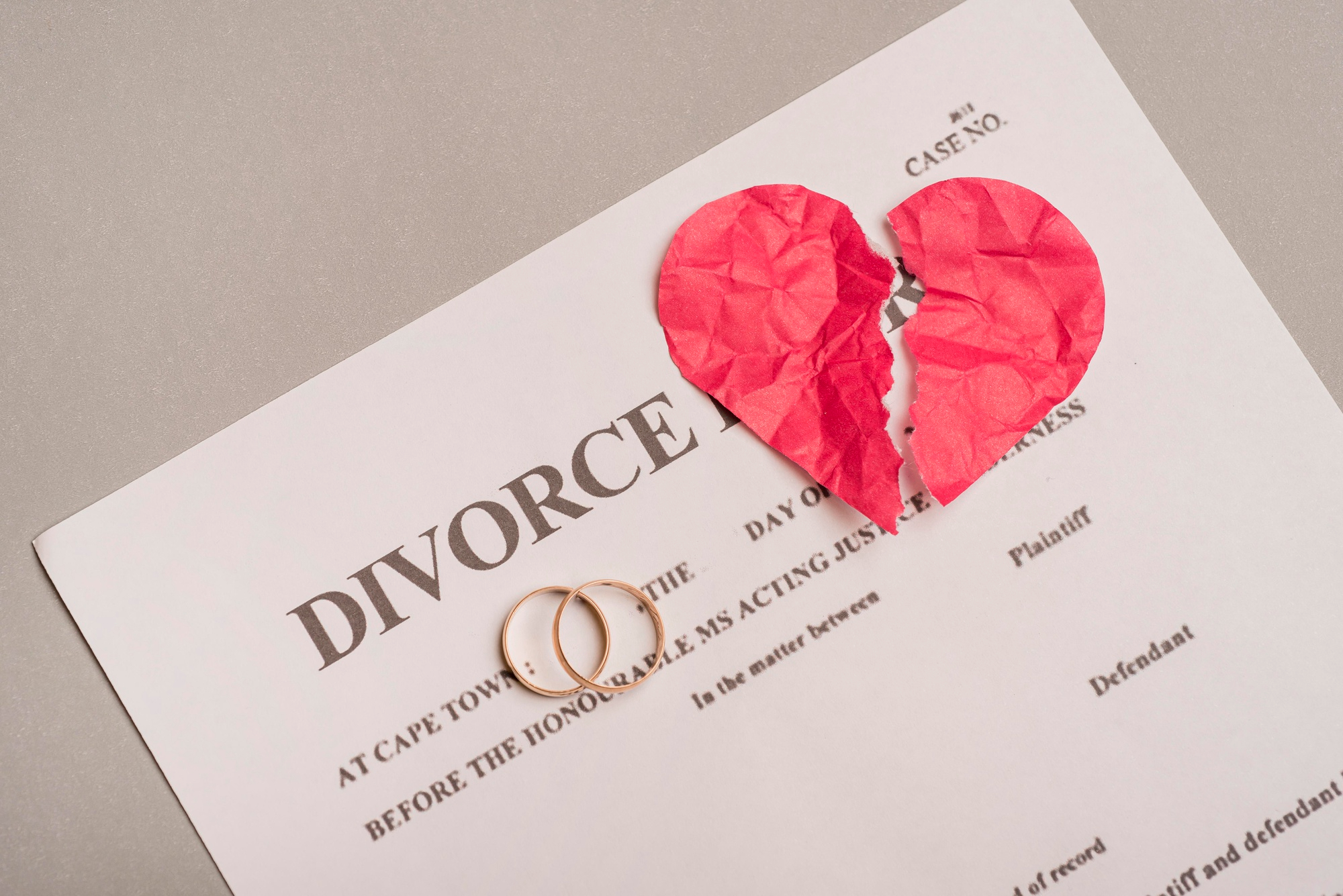
“If you’re going to take that tone, maybe we should just get a divorce.”
Michael said it across our dining table in the exact same flat, bored voice he used to complain about midtown traffic or the leaky faucet in the guest bathroom.
For five long seconds, the only sound in the room was silverware against porcelain.
I just stared at him.
To my left, his mother, Carol, kept pushing steamed rice around her plate as if she had suddenly gone deaf. Across from me, his sister, Jessica, lowered her eyes, but not fast enough to hide the little smirk tugging at the corner of her mouth. Beside her, her twelve-year-old son, Tony, reached across the table for another helping of the sweet-and-sour chicken I had spent two hours making from scratch.
Not one person at that table told Michael he had gone too far. Nobody even blinked.
And in that silence, the last illusion of my seven-year marriage cracked down the middle. I wasn’t sitting with my family. I was sitting in a room full of people who had already decided I could be thrown away.
It had started over three cardboard boxes.
They had been delivered that afternoon, and I had stacked them neatly by the front door because I was too tired to carry them to the bedroom. That was my mistake. Jessica saw them the moment she came out of the guest room, which she had been calling her room for almost five years now.
“Three more packages today, Althia?” she said before I had even set the appetizers down. “What could you possibly need? You don’t even go to an office.”
My hand went to my stomach under the tablecloth before I could stop it.
All afternoon, I had been carrying around a quiet, fragile happiness, the kind you’re afraid to look at directly in case it disappears. Those boxes held prenatal vitamins, two loose cotton dresses, a book about the first trimester, and the ginger tea my doctor had recommended. After four years of trying, after three negative tests I had cried over alone in our bathroom, I had learned that morning that I was two months pregnant.
I had spent the evening fighting waves of nausea over a hot stove so I could make Michael’s favorite dinner and tell him with everyone together. I had imagined it a hundred times since breakfast. I would wait until dessert. I would set the little ultrasound printout beside his plate. He would look at it, and then at me, and his face would open up the way it used to when we first met.
Instead, Jessica kept going.
“You live under my brother’s roof. You eat the food he puts on this table. The least you could do is stop bleeding his bank account dry on useless junk.”
Something in my chest, something that had bent and bent for years to keep the peace, snapped clean in two.
“Every single dollar I spent today was mine,” I said. My voice was quiet. It didn’t shake.
The room went dead still. Jessica looked at me like I had slapped her.
Carol set her fork down with a sharp little tap. “Althia, really. Marriage isn’t supposed to be a scoreboard of your money and his money. We are a family.”
I turned my head slowly and looked at my husband.
Michael knew the truth. He knew exactly how much I had brought into this marriage. He knew who paid the property taxes on the apartment and who paid the electric bill and the internet and the building fees. He knew that whenever Tony needed a tutor, or a winter coat, or a co-pay at the pediatrician, or a check for his private school, Jessica didn’t knock on Michael’s door. She knocked on mine. He knew his mother had received transfers from my personal account more times than either of us could count.
I waited for him to say one honest sentence. Just one. Five words would have been enough. That’s not true, Jess. Stop.
Instead, he leaned back in his chair, looked at me like I was a scheduling problem, and suggested we end our marriage.
So I stopped waiting.
“Fine,” I said.
Michael blinked. His shoulders stiffened slightly. Across the table, Jessica’s smile disappeared.
“Fine?” Michael repeated. A flicker of irritation crossed his face. “That’s all you have to say?”
“If a divorce is what you want, Michael, I won’t stand in your way.”
I took my phone out of my pocket, unlocked it, and slid it across the polished wood until it stopped beside his plate.
On the screen was my order history from that afternoon. Right below it was the confirmation email from my doctor’s office, with the date of my next appointment.
Michael frowned and looked down. He scrolled once. Then his thumb froze.
“I’m two months pregnant,” I said.
Carol’s wineglass stopped halfway to her lips. Tony looked from his uncle to his mother, the way kids do when they can feel the temperature in a room drop and don’t know why.
Jessica recovered first. “Oh, please. How convenient. You’re only saying that now because Michael brought up divorce.”
Michael’s head snapped toward her. “Jessica. Enough.”
But even then, looking right at the proof, he didn’t reach for my hand. He didn’t ask how long I’d known. He didn’t ask if I was okay.
Carol cleared her throat, her voice full of gentle, churchy concern. “Well. If you truly are expecting, Althia, that’s a blessing. But a child should never be used to trap a man in an unhappy marriage.”
A short laugh came out of me. There was nothing funny in it.
Not one of them asked if the baby was healthy. Not one of them asked how I was feeling. I had stood over boiling oil and vinegar for two hours, swallowing nausea, to celebrate this baby with them. In less than thirty seconds, they had turned my child into a bargaining chip.
“Relax, Carol. I’m not trapping anyone.” I stood up. I looked straight at Michael. “You asked for a divorce in front of your family. I accepted.”
Jessica crossed her arms. “And where exactly are you going to go tonight? Run crying back to Mommy and Daddy?”
I met her eyes. “Yes. Actually, I am.”
There were no tears in my voice. I could see that bothered her more than screaming would have.

Adrian Hawthorne is a celebrated author and dedicated archivist who finds inspiration in the hidden stories of the past. Educated at Oxford, he now works at the National Archives, where preserving history fuels his evocative writing. Balancing archival precision with creative storytelling, Adrian founded the Hawthorne Institute of Literary Arts to mentor emerging writers and honor the timeless art of narrative.