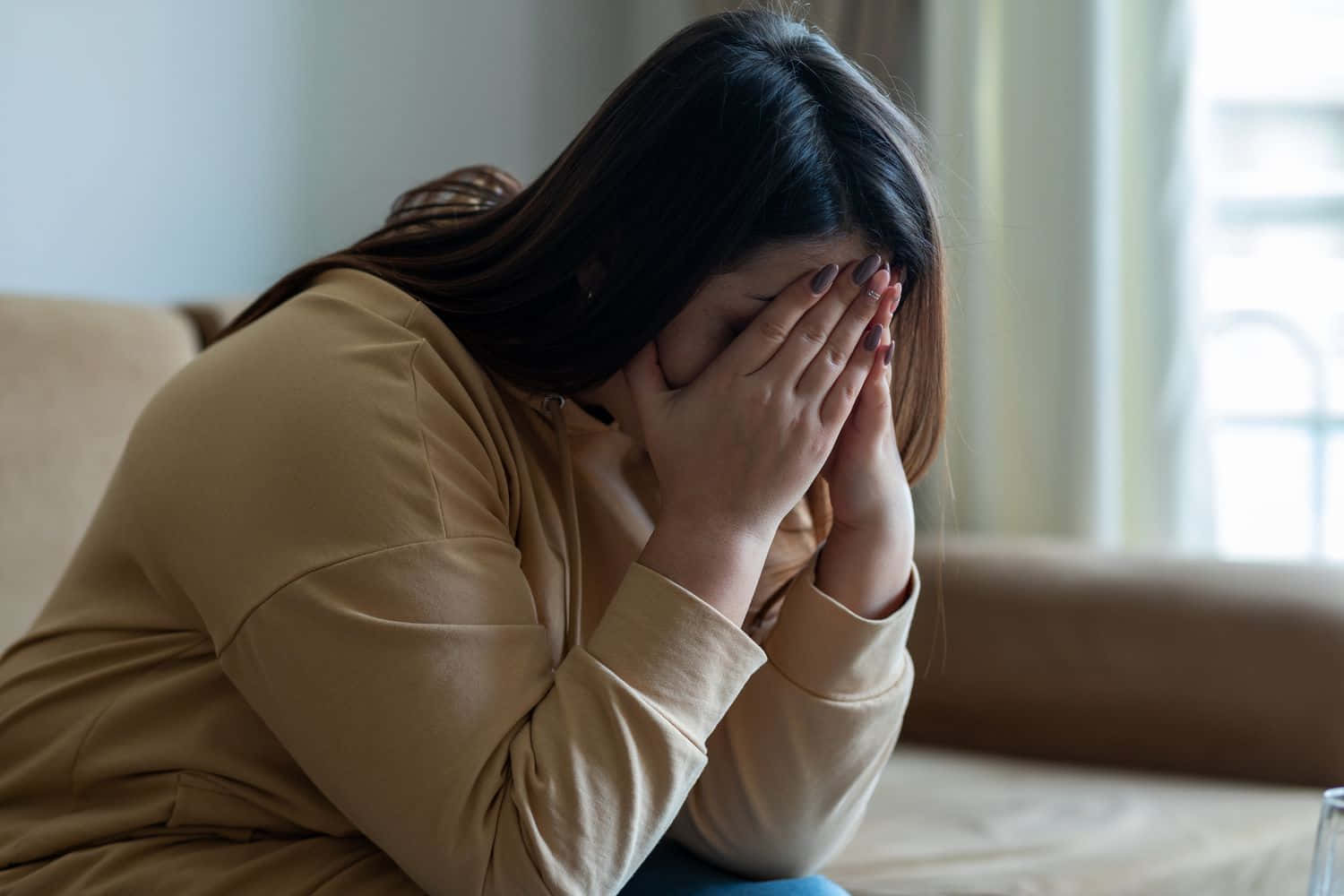
The silence that followed that sentence was the loudest thing I had ever heard in that apartment. Alyssa was still crying, quietly now, the way children cry when they’ve realized that something fundamental about their father has shifted and they don’t yet have words for it. Lucas had his arms crossed tight across his chest, jaw set in a way that reminded me, uncomfortably, of Brandon himself during an argument.
“Nobody died,” I repeated. “That’s the bar now? That’s what we’re measuring against?”
Brandon ran both hands through his hair, pacing a small, agitated circle near the dining table. “I’m not saying it that way. I’m saying I know it was wrong, but you’re acting like I planned to starve him.”
“You canceled his plane ticket two days after I left for my mother’s funeral,” I said. “That’s not an accident that happened to a kid. That’s a decision you made, sober, in an airline app, with your thumb.”
He didn’t have an answer for that. He looked at the receipts still sitting on the table, at the cancellation confirmation with its timestamp, and something in his face finally cracked open into something that looked less like defensiveness and more like the beginning of actual fear, fear of what this was going to cost him.
“Dad,” Lucas said again, quieter this time but somehow more devastating for it. “Is that why you kept telling me not to call him? You said he was busy with video games.”
“Lucas—”
“I believed you,” Lucas said. “I felt bad for him and you told me he was fine, and the whole time he was by himself.”
Alyssa bent down slowly and picked the bag of shells back up off the carpet, holding it against her chest like something she wasn’t sure what to do with anymore. “I picked the purple one because it’s his favorite color,” she said, to no one in particular, and that small, useless fact broke something open in me that the whole rest of the evening hadn’t quite managed to reach.
I knelt down in front of her. “He’s going to love that you thought of him,” I said. “He really is, sweetheart. None of this is your fault, or Lucas’s fault. You two didn’t lie to anybody.”
She nodded, not quite looking at me, still looking at her father.
Brandon sat back down heavily in the dining chair I’d pointed to earlier, the fight visibly draining out of him now that his own children were the ones looking at him like that. “What do you want from me,” he said. Not a question, really. More like a man checking how much further the floor was going to drop.
“Right now,” I said, “I want you to understand that this isn’t a conversation we’re going to resolve tonight. There’s a police citation with your name on it. There’s a child welfare process that may or may not open depending on what the department decides to do with the report. None of that is something I control, and none of it is something I’m going to try to make disappear for you.”
“You could make it disappear,” he said. “If you told them it was a misunderstanding—”
“No,” I said. “I could not do that even if I wanted to, because it would be a lie, and I am done being the person in this family who smooths over your lies so everyone else doesn’t have to feel the weight of them.”
He opened his mouth to argue and then, for once, didn’t.
I drove to Aunt Nora’s that night rather than sleep in the apartment. Liam was already in his pajamas, sitting cross-legged on Nora’s guest bed with a paper plate of fish scales from his lesson earlier that day still sitting proudly on the nightstand like a trophy.
“I cleaned four whole fish,” he told me the moment I walked in, practically glowing. “Grandma Nora says I have good hands for it.”
“I believe that completely,” I said, and sat down beside him, and for a little while we didn’t talk about Brandon at all. We talked about fish scales and whether sharks could smell one drop of blood in an entire ocean, a fact he’d apparently also learned that day and found both thrilling and deeply concerning. It was, I think, the first real stretch of ordinary conversation either of us had had in a week, and I let it last as long as he wanted it to.
Later, after he’d fallen asleep with the bedside lamp still on, Aunt Nora found me in her kitchen staring at a cup of tea I hadn’t touched.
“You’re not going back to that apartment tonight,” she said. It wasn’t a question.
“No.”
“Good.” She sat down across from me. “What happens now?”
I thought about it for a long moment before answering. “I don’t know everything yet. I know the police report exists. I know there’s a citation. I know I have every receipt, every text message, every piece of paper that shows exactly what he did and when he did it. Beyond that, I’m taking it one day at a time, because I think if I try to plan the whole next year tonight, I’m going to break something in myself that I need intact.”
Nora reached across the table and took my hand. “That boy,” she said, “is going to be all right. Not because of anything that happened this week. Because of you. Because the first thing you did when you heard his voice was get on a plane.”
I didn’t trust myself to answer that without crying, so I just squeezed her hand back and let the tea go cold.

Adrian Hawthorne is a celebrated author and dedicated archivist who finds inspiration in the hidden stories of the past. Educated at Oxford, he now works at the National Archives, where preserving history fuels his evocative writing. Balancing archival precision with creative storytelling, Adrian founded the Hawthorne Institute of Literary Arts to mentor emerging writers and honor the timeless art of narrative.