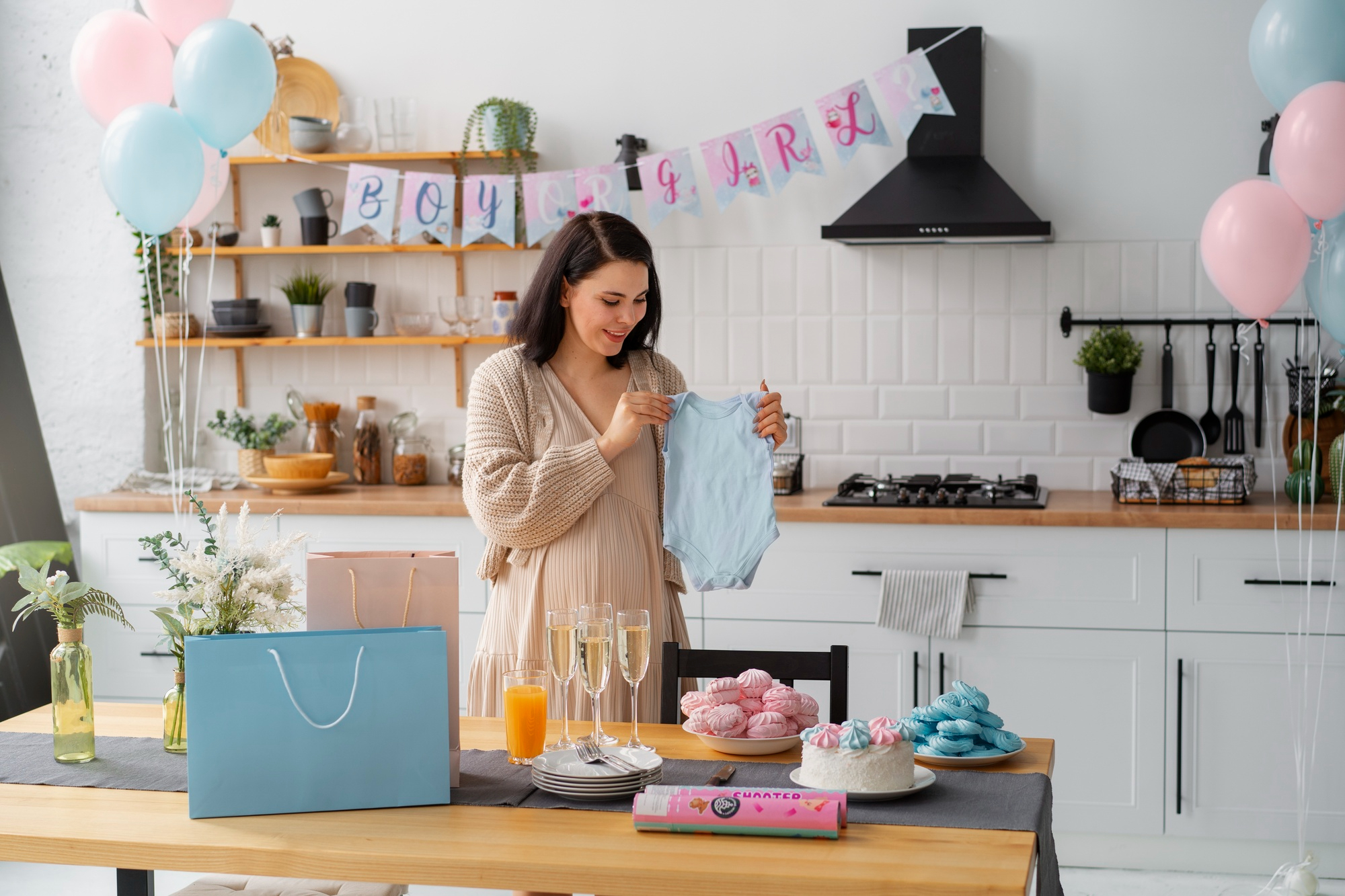
Grandma’s Little Blessing
Diane stood up, smoothed the front of her lavender dress, and tapped her champagne glass with a dessert spoon.
Ding. Ding. Ding.
Forty heads turned toward her. Most of them belonged to people I had never met.
“I have one final surprise,” she said.
My stomach tightened. I had felt that tightening a dozen times in the last six weeks, every time my mother-in-law said the word surprise. But this time it was different. This time it went all the way down to where my son was curled up inside me, and I swear he went still too.
Diane smiled out at the room like a queen on a balcony.
“Since we’re all family here,” she said, “I think it’s finally time to tell you that our little boy is going to be named Benjamin.”
The room burst into applause.
Women I didn’t know put their hands on their hearts. Somebody said, “Oh, Diane, after Ben!” Somebody else said, “He’d be so proud.” A woman in a big floppy hat actually wiped her eyes.
I didn’t clap.
Neither did Levi.
I sat in my chair with my hands resting on my belly and I felt my whole body go cold, from my scalp to my swollen feet. Because Benjamin was the one name we had told Diane we would never use. Not once. Not twice. Three times. In her own kitchen.
Diane turned and looked down at me. She saw my face. And she laughed.
“Oh, don’t look so upset,” she said. “It’s just a name.”
I went completely still.
Beside me, Levi looked at me. Just for a second. I’d been married to him for four years, and I had never seen that look on his face before. It wasn’t anger. It was something quieter than that. Something settled. Like a man who had been standing at the edge of cold water for a very long time and had finally decided to jump.
Then, without saying a word, he stood up and walked across the room.
But to understand what my husband did next, and why every person in that room went silent, you need to know about the two men in Levi’s childhood.
One of them was named Benjamin.
The other one taught him how to fish.
I met Levi Carter at a hardware store on a Tuesday night six years ago.
I was standing in the paint aisle holding two swatches that looked exactly the same to me. One was called Morning Fog. The other was called Gentle Mist. I’d been standing there for ten minutes.
“The one on the left,” a voice said behind me.
I turned around. He was tall, with messy brown hair and a gray T-shirt with sawdust on the shoulder. He was holding a box of wood screws.
“Why the left one?” I asked.
“The right one has more blue in it. It’ll look cold in the evening. The left one has a little warm in it. It’ll look like the room is glad to see you.”
I stared at him. “Are you a painter?”
“Carpenter.” He shrugged. “But I’ve stood in a lot of rooms.”
I bought Morning Fog. He was right. My living room looked glad to see me every single night for the next two years, until I moved into his house and painted his living room the same color.
Levi was gentle in a way that surprised people. He was big, with rough hands and a deep voice, and strangers expected him to be loud. But he wasn’t. He talked softly. He listened all the way to the end of your sentences. He apologized to furniture when he bumped into it.
And he was always, always trying to be good enough.
I noticed it early. If he made dinner, he’d watch my face when I took the first bite, like he was waiting for a grade. If I said I liked something he’d built, he’d immediately point out the one tiny flaw in it. A crooked hinge. A gap in the corner no one would ever see.
“It’s beautiful, Levi,” I’d say.
“The left drawer sticks a little.”
“It’s beautiful.”
“I can fix the drawer.”
It took him almost a year to tell me why.
We were sitting on the back steps of his house one night in October, sharing a blanket and a bottle of cheap wine, watching the moon come up over the neighbor’s oak tree. I asked him something simple. I asked him what his dad was like.
He was quiet for so long I thought he hadn’t heard me.
“Nothing I did was ever right,” he finally said.
He told me the story slowly, in pieces. His father, Benjamin Carter, had been a foreman at the paper mill. Big man. Big voice. Respected in town. Coached Little League. Shook hands at church. Everybody thought he was wonderful.
At home, he was something else.
“He never hit me,” Levi said. “I want to say that. People hear stuff like this and they always think it was hitting. It wasn’t. Sometimes I wish it was. You can show somebody a bruise.”
When Levi was seven, he drew a picture of his father’s truck for Father’s Day. He worked on it for a week. He colored it with every crayon in the box. His father looked at it for about two seconds and said, “The wheels are wrong,” and handed it back. Levi found it in the kitchen trash the next morning under the coffee grounds.
When Levi was nine, he dropped a fly ball in a Little League game. His father was the coach. In front of the whole team, in front of all the parents, Benjamin Carter said, “Son, if you’re going to play like a girl, go sit with the girls.” Then he made Levi sit in the bleachers for the rest of the game, next to his little sister and her friends, while everybody looked at him.
When Levi was twelve, he got a B plus on a science project. His father put it on the refrigerator with a magnet. Levi was thrilled for about an hour, until he noticed his father had circled the plus in red marker and written next to it, Almost.
“That one stayed on the fridge for a whole year,” Levi said quietly. “Almost. Every time I got a glass of milk.”
When he was fifteen, he told his father he wanted to be a carpenter. That he liked building things. That he was good at it.
His father laughed. “You? Build something? You can’t even hang a picture straight. You’re soft, Levi. You’ve always been soft. I don’t know where you came from.”
I remember sitting on those steps holding Levi’s hand under the blanket and feeling something hot and furious rising in my chest. For a little boy I’d never met. For a man I’d never get to yell at.
“Where was your mom?” I asked.
Levi took a long sip of wine.
“Right there,” he said. “Every time. Doing the dishes. Folding the laundry. Saying, ‘Ben, he didn’t mean it.’ Or, ‘Levi, your father’s tired.’ Or, ‘You know how he gets. Just try harder, honey.'”
“She never stood up for you?”
“Once.” He smiled a little, but it wasn’t a happy smile. “When I was ten. He was yelling about my report card, and she said, ‘Ben, that’s enough.’ Just that. That’s enough. And he looked at her. Didn’t say anything. Just looked.” Levi shook his head. “She went upstairs and didn’t come down until morning. She never said it again.”
I didn’t know what to say. So I just held his hand tighter.
“But there was Sam,” Levi said, and his whole voice changed.
Sam Whitley lived next door to the Carters. He was a retired mail carrier, sixty years old when Levi was a boy, with a white beard and a big belly and a laugh you could hear from three houses away. He had a little workshop in his garage that smelled like sawdust and motor oil and coffee. He had a dog named Biscuit and a wife named Ruth who made the best peach pie in Hollis County.
“The first time I went over there, I was eight,” Levi said. “I’d just gotten yelled at for something. I don’t even remember what. I went and sat behind the hedge between our yards because I didn’t want anyone to see me cry. And Sam’s garage door was open. He saw me. He didn’t say anything about the crying. He just said, ‘Hey, kid. You know how to hold a hammer?'”
Levi hadn’t. So Sam showed him.
“He let me build a birdhouse,” Levi said. “It was the ugliest birdhouse in the world. The roof was crooked. The hole was too big. A squirrel could have moved in. And Sam held it up to the light and looked at it like it was a Rembrandt, and he said, ‘Well, look at that. That’s a good birdhouse, son. That’s a real good birdhouse.'”
Levi’s voice cracked.
“Son. He called me son. Nobody had ever said ‘good’ and ‘son’ in the same sentence to me before.”
After that, Levi went over to Sam’s garage almost every day. Sam taught him how to measure twice and cut once. How to sand with the grain. How to fix a leaky faucet and change a tire and tie a fishing knot. On Saturday mornings, they’d drive out to Miller’s Pond in Sam’s old blue pickup with Biscuit in the back, and they’d fish until noon. Mostly they didn’t catch anything. Mostly they just sat there.
“He never once told me I was soft,” Levi said. “When I cried, he’d hand me a handkerchief and wait. When I messed something up, he’d say, ‘Well, now we know one way it doesn’t work.’ When I told him I wanted to be a carpenter, he went into his house and came back with an old wooden toolbox. His own father’s. He gave it to me.” Levi swallowed. “I still use it every single day.”
I’d seen it. A beat-up wooden box with a rope handle and the initials S.W. burned into the side. It sat in the back of Levi’s truck. He never let anyone else carry it.
“What happened to him?” I asked.
“Heart attack. When I was nineteen.” Levi looked up at the moon. “I was away at trade school. I didn’t get to say goodbye. My father didn’t even go to the funeral. He said Sam was ‘a nosy old busybody who should’ve minded his own business.'”
We sat there quietly for a while. Somewhere a dog barked. The moon got higher.
“Nora,” Levi said. “Can I tell you something?”
“Anything.”
“If I ever have a son.” He stopped. He started again. “If I ever have a son, I want him to have a father who never makes him feel like he’s almost. Not once. Not ever.”
“You will be that father,” I said. “I know it.”
“And I don’t ever want him to carry that name.” He looked at me. His eyes were wet. “Benjamin. I don’t want my kid walking around with that man’s name. Like a coat that doesn’t fit. Do you understand?”
“I understand,” I said. “Never Benjamin. I promise.”
He nodded slowly. Then he put his head on my shoulder, and we sat there until the wine was gone.
That was five years before I got pregnant. It was the first time we ever talked about our son’s name.
It was the most important promise I’ve ever made.
Benjamin Carter died four years ago. Lung cancer. Thirty years of cigarettes behind the paper mill.
Levi went to the hospital. I went with him. I remember standing in the doorway of that hospital room, watching my husband stand at the foot of his father’s bed. Benjamin was thin and gray by then, with an oxygen tube in his nose. He looked at Levi for a long time.
“You came,” he said.
“I came,” Levi said.
Benjamin seemed to think about that. Then he said, “You could’ve worn a nicer shirt.”
That was the last thing he ever said to his son.
At the funeral, the church was packed. People from the paper mill. People from the Little League. The pastor talked about Benjamin’s strong hands and strong faith and his devotion to his family. People cried. Diane cried the hardest of all, in a black dress, holding a framed photo of him against her chest.
Levi sat in the front pew and didn’t cry once.
Afterward, at the reception in the church basement, a man I didn’t know shook Levi’s hand and said, “Your dad was the best man I ever knew. You must be so proud to be his son.”
Levi just said, “Thank you for coming.”
In the car on the way home, he didn’t say anything for twenty minutes. Then he pulled over on the side of the road and put his forehead against the steering wheel and cried so hard the car shook.
“I’m not even sad he’s gone,” he said. “That’s the worst part. I’m sad because now he can never say it. Now he’s never going to say I was good enough. It’s over. That was my last chance.”
I held him on the side of that road for a long time.
After Benjamin died, Diane changed.
Or maybe she didn’t change. Maybe she just got louder.
She turned her living room into something like a museum. Photos of Benjamin everywhere. Benjamin in his Little League coach’s shirt. Benjamin holding a fish. Benjamin in his good suit at church. She hung his old flannel jacket on a hook by the front door and never took it down.
She talked about him constantly. And it was never the Benjamin Levi knew.
“Ben always said Levi had the best hands of anyone he ever saw,” she told my mother at Thanksgiving, the first year after.
Levi put down his fork and stared at her.
“He never said that, Mom.”
“Of course he did, honey. You just don’t remember.”
“I remember everything he said.”
Diane smiled her sweet, bright smile and passed the cranberry sauce. “Ben loved you so much. He just had a hard time showing it. That’s all.”
Later, in the car, Levi said, “She’s rewriting it. She’s rewriting the whole thing.”
“Why would she do that?”
He shook his head. “Because if he was a good man, then she didn’t stand there doing dishes while he did all that to me. Then she didn’t do anything wrong.”
I didn’t know Diane that well back then. She’d always been sweet to me in a way that felt a little like a performance. She brought casseroles. She sent cards on every holiday, even Arbor Day. She called Levi every Sunday at exactly four o’clock. If he didn’t answer, she called again at four fifteen, and four thirty, and then she called me.
She was lonely. I could see that. Levi’s younger sister, Claire, had moved to Denver for work and only came home at Christmas. Diane’s friends were mostly church ladies and women from her bridge club and the Women’s Auxiliary. She filled her days with committees and casseroles and causes. She organized the church bake sale, the Christmas pageant, the Easter egg hunt, and the retirement party for the pastor.
She loved to organize. She loved to be needed.
And more than anything, she loved being the center of a room.
I got pregnant last spring.
We’d been trying for almost two years. Two years of tests and calendars and disappointments, of me crying in the bathroom while Levi sat outside the door on the floor saying, “It’s okay. It’s okay. We’ve got time.”
When the test finally came back positive, I didn’t believe it. I took three more. Then I walked out of the bathroom holding all four of them like a bouquet of flowers, and Levi looked at me from the couch, and he knew. He didn’t even need to see them. He knew from my face.
He stood up so fast he knocked over a lamp.
He didn’t apologize to it this time.
At sixteen weeks, we found out it was a boy. Levi went very quiet in the ultrasound room. On the drive home he kept looking over at me with a strange expression.
“What?” I finally said.
“I’m scared,” he said.
“Of what?”
“Of being him.” He gripped the steering wheel. “What if it’s in me somewhere? What if I open my mouth one day and his voice comes out?”
I reached over and put my hand on his arm.
“Levi. You apologize to lamps.”
He laughed. A real laugh. Then his eyes filled with tears.
That night, lying in bed, we talked about names.
We already knew. Honestly, I think we’d known for years. But we’d never said it out loud, because saying it out loud would make it real.
“Samuel,” Levi whispered in the dark.
“Samuel,” I said.
“After Sam.”
“After Sam.”
“We’d call him Sam,” Levi said. “Little Sam. Sammy, when he’s small.”
I turned on my side and put my hand on his chest. His heart was pounding.
“Let’s not tell anyone yet,” I said. “Not even your mom. Let’s keep it ours for a while.”
He nodded.
“But we have to tell her one thing,” he said. “We have to tell her it won’t be Benjamin.”
I’d wondered if he would say that. I hadn’t wanted to be the one to bring it up.
“Do you think she’ll push for it?” I asked.
“I know she will,” he said. “She’s been talking about it since the funeral. ‘When you have a son, Ben would be so honored.’ Every time we see her. Every holiday.”
So two weeks later, we drove to Diane’s house to tell her we were having a boy.
She screamed when we told her. Actually screamed. She jumped up from the kitchen table and hugged me and then hugged Levi and then hugged me again. She cried. She laughed. She ran to get her phone so she could call her sister.
“A boy,” she kept saying. “A grandson. Oh, Levi. Your father would have been so happy.”
Levi took a deep breath.
“Mom,” he said. “Sit down for a second.”
She sat, still glowing.
“We wanted to tell you before anyone else,” Levi said carefully. “We haven’t decided on a name yet. But we have decided one thing. We’re not naming him Benjamin.”
Diane’s smile didn’t move. Not even a little. It was like the words just bounced off her.
“Oh, you’ll change your mind,” she said. “Once he’s born and you see his little face.”
“No, Mom. We won’t.”
“It’s a family name, Levi. It was your grandfather’s name too. There’s been a Benjamin Carter for three generations.”
“I know. And it stops with me.”
Something flickered across her face then. Something hurt and sharp. Then it was gone, and she reached across the table and patted his hand.
“Well, we’ll talk about it later,” she said.
“There’s nothing to talk about,” Levi said. “I need you to hear me. Not Benjamin. Not as a first name. Not as a middle name. Please don’t bring it up again.”
Diane looked at him for a long moment. Then she looked at me, as if I might be the one to fix this. I didn’t say anything. I just reached over and held Levi’s hand.
“Fine,” Diane said, in a tight little voice. “Fine. It’s your baby.”
She brought it up again at my parents’ house on the Fourth of July. “Benjamin’s such a strong name for a boy, don’t you think, Margaret?” she said to my mother, while Levi was outside at the grill.
I said, quietly, “Diane, we talked about this.”
She said, “I’m just making conversation, Nora.”
She brought it up a third time in September, in her own kitchen, while I was helping her dry dishes. “You know, Ben always wanted a grandson. It was the very last thing he said to me. The very last thing. ‘Promise me a grandson carries my name, Di.'”
I stood there holding a wet plate.
“Diane,” I said. “Levi has asked you three times now. It’s not going to be Benjamin. And honestly, it’s not my decision to change. It’s his father. It’s his name to carry or not carry.”
She took the plate from my hands and dried it herself.
“I know my son,” she said, not looking at me. “He’ll come around. He always does.”
I told Levi about it that night. He sat down on the edge of our bed and put his face in his hands.
“Three times,” he said. “Three times I’ve told her.”
“I know.”
“She doesn’t hear me, Nora. She’s never heard me. Not my whole life.”
I didn’t know then how much that would matter. I didn’t know that I should have been writing it all down.
Actually, that’s not true. I did start writing it down. Just not yet.
I told Levi I wanted a small baby shower.
“Nothing fancy,” I said. “Just our parents, Claire, my brother and his wife, a few close friends. Some food. A cake. That’s it.”
“No games?” Levi asked, grinning. He knew me.
“No games. No speeches. Nothing that puts me on the spot. You know how I get.”
I do know how I get. I’m the kind of person who sweats through her shirt when a waiter sings happy birthday. In college I dropped a class because the professor made everyone give a speech. At our wedding, I made Levi promise that nobody would clink their glasses to make us kiss, and when his cousin did it anyway, I hid in the bathroom for twenty minutes.
I wanted an afternoon where I could sit in a comfortable chair, eat cake, and see the faces of the people I love most. That’s all. That was the whole dream.
Diane found out we were planning something about four hours after I told Levi. I still don’t know how. Maybe Claire told her. Maybe she just sensed it, the way she sensed everything about Levi.
She called that evening.
“Nora, sweetheart,” she said. “I hear you’re thinking about a shower.”
“Just a little one. Something small.”
“Let me do it.”
“Oh, Diane, you don’t have to…”
“I want to. Please. You’re pregnant. You shouldn’t have to worry about anything. Let me take care of it. I’ve organized a hundred parties. I’d love to do this for you.” Her voice softened. “I’d love to do this for my grandson.”
I hesitated. I looked across the room at Levi, who was on the couch watching a baseball game. He raised his eyebrows at me.
Part of me wanted to say no. But another part of me was so tired. I was twenty-two weeks pregnant. My back hurt. My feet hurt. I had heartburn that felt like a dragon living in my chest. And here was someone offering to take something off my plate.
And there was another part of me too. A part that thought maybe this would help. Maybe if I let Diane do something for us, something she was good at, she’d feel included. Maybe she’d let go of the name thing.
“Okay,” I said. “But Diane, I want to keep it really simple. Can I send you some things I like?”
“Of course! Send me anything. Whatever you want.”
So I did.
I sent her a guest list. Eighteen people. Our parents. Claire and her girlfriend. My brother, Tom, and his wife, Jess. My best friend, Priya, and her husband. A few friends from work. Levi’s best friend from trade school, Marcus, and his wife.
At the very bottom, I added one more name. I’d asked Levi the night before if there was anyone he wanted there. Anybody at all.
He thought about it for a long time.
“Ruth Whitley,” he said.
Sam’s widow. She was eighty-one now, living in a senior apartment complex across town. Levi visited her every couple of months. He brought her groceries and fixed things in her apartment that didn’t need fixing, just so he’d have a reason to stay longer.
“Are you sure?” I asked. “Your mom and Ruth…”
Things had always been cool between Diane and Ruth. Levi never really said why. Just that after Sam died, his mother stopped going to the church where Ruth went, and switched to the Methodist church across town.
“I’m sure,” Levi said. “I want her there. She’s the closest thing to a grandmother I’ve got.”
So I called Ruth myself and invited her. She was so happy she had to put the phone down for a minute.
“I’ll bring a peach pie,” she said, when she picked it back up. “If my hands are still good for it.”
I sent Diane the list with Ruth’s name on it. I sent her a link to a little restaurant downtown called The Garden Room, a sunny space with big windows and white tablecloths that could hold about twenty-five people. I sent her three photos from the internet of the decorations I liked. Soft green and cream. Simple greenery on the tables. Little jars of baby’s breath. A banner that just said Welcome, Baby.
And I wrote a short list, because I knew myself and I knew Diane.
No games. No speeches. No surprises. Please. Just food, cake, and the people we love.
She texted back within a minute. Got it, sweetheart! Leave it all to me!!
Two exclamation points. I should have known.
A week later, she sent me a photo.
It was a picture of centerpieces. Big ones. Towering glass vases filled with blue and silver balloons and white roses and something that looked like crystal beads dangling on strings. There were eight of them lined up on her dining room table.
Aren’t they gorgeous?? Already ordered! The florist gave me a deal!
I stared at it.
They were beautiful, I guess. In a wedding reception kind of way. But they weren’t anything like what I’d sent her. Not even close.
I texted back carefully. They’re really pretty, Diane. But they’re a lot bigger than I was picturing. Remember the simple green and cream ones?
Oh, honey, those were so plain! This is a celebration! Trust me. You’ll thank me.
I showed Levi. He frowned.
“Do you want me to call her?”
“No.” I sighed. “It’s just centerpieces. It’s fine.”
It was fine. That’s what I kept telling myself. It’s just centerpieces. It’s just one afternoon.
That night, though, before I went to bed, I did something I can’t quite explain. I opened the notes app on my phone and started a new note. I called it Shower. And I wrote down the date, and what I’d asked Diane, and what she’d done. I took a screenshot of her text and saved it.
I don’t know why I did it. Maybe because my mother taught me that when somebody starts telling you that you didn’t say what you said, you’d better have it in writing. Maybe because something in my stomach already knew.
I added to that note almost every day for the next five weeks.
Two weeks after the centerpieces, Priya called me.
“Hey, so, random question,” she said. “Who’s Linda Pruitt?”
“I don’t know. Why?”
“Because I’m in a group text about your shower with like thirty-five people, and Linda Pruitt just asked if it’s okay to bring her granddaughter.”
I sat down on the couch. “What group text?”
Priya added me to it. I scrolled through it with my mouth open. Names I’d never heard of. Barbara and Joanne and Patty and Linda Pruitt. Women from Diane’s bridge club. Women from the Methodist church. Women from the Women’s Auxiliary. Somebody named Gail who apparently was Diane’s hairdresser.
I counted. Thirty-nine people. Forty, if Linda Pruitt brought her granddaughter.
I called Diane.
“Diane, I just saw the guest list. I don’t even know half of these names.”
“Oh, they’re friends of mine,” she said brightly. “They’re so excited for me. Everyone’s been asking about the baby for months. I couldn’t leave them out. It would have been rude.”
Excited for me.
For her.
I noticed that. I noticed it the way you notice a pebble in your shoe. But I didn’t say anything.
“Diane,” I said instead, “The Garden Room only holds twenty-five people.”
“Oh, I know! That’s why I moved it.”
“You moved it?”
“To the Lakeside Banquet Hall. It’s much nicer, and it has a dance floor. The Garden Room was too small, sweetheart. It would’ve been so cramped. You’d have been miserable.”
“A dance floor?” I said. “For a baby shower?”
“You never know!” She laughed. “Oh, and I’ve planned a few fun games. Nothing big. Just a few little things to break the ice. Since so many people won’t know each other.”
I closed my eyes. “Diane. I specifically asked for no games. I wrote it down. I sent it to you.”
“Just one or two. Guess the size of Mom’s belly. Diaper races. Everybody loves those. You’ll have fun, I promise.”
“Diane…”
“And I have a few little surprises planned too.” Her voice went soft and secretive, like a little girl hiding a present behind her back. “But I’m not telling you what they are. That would ruin it.”
“Diane, please. I don’t want surprises.”
“Trust me, Nora,” she said. “You’ll thank me.”
She hung up before I could say anything else.
I wrote it all in my note. The new guest list. The new venue. The games. The surprises. I screenshotted the group text.
Levi could see I was getting frustrated. Honestly, I think everyone could see it. I wasn’t sleeping well. I’d snap at him over little things. One night I burst into tears because we were out of shredded cheese.
“It’s not about the cheese,” I sobbed at the open refrigerator.
“I know it’s not about the cheese,” Levi said gently, putting his arms around me from behind.
“It’s her. It’s everything. It’s like she’s planning a party for somebody else and I’m just supposed to show up.”
He was quiet for a long time, holding me there in the cold light of the refrigerator.
“I’ll talk to her,” he promised.
He called her the next day. I heard him from the kitchen, standing out on the back porch.
“Mom, Nora asked you for something simple. She asked you for no games. Why can’t you just give her that?”
A long pause.
“No, Mom. Nobody said you were trying to ruin anything.”
Another long pause. His shoulders slumped.
“Mom. Please don’t cry. Mom. I’m not… no. No, I’m not saying that. Okay. Okay. I’m sorry. I’m sorry.”
He came back inside and sat down at the kitchen table and stared at the wall.
“What happened?” I asked.
“She cried.” He rubbed his face. “She said everybody’s taking everything away from her. She said Dad’s gone, and Claire’s gone, and now I’m trying to take her grandson away too. She said this shower is the only happy thing she has to look forward to.”
“Oh, Levi.”
“She said I sound just like him.” His voice broke on the last word. “When I tell her no. She said, ‘You sound just like your father when you talk to me like that.'”
I sat down next to him. I took his hand. It was shaking.
By then, the shower was only six days away. The invitations had gone out. Forty people had RSVP’d. The banquet hall was booked. Ruth Whitley had already bought peaches.
I thought about all of it. Cancelling. Moving it. Fighting. Making Levi call his mother again and listen to her cry and tell him he sounded like the man who’d circled Almost on his science project.
I couldn’t do that to him. Not for one afternoon.
“It’s okay,” I said. “Let’s just get through it. It’s three hours. I’ll smile and eat cake and open presents and then it’ll be over.”
“Are you sure?”
“I’m sure.”
He looked at me with so much gratitude it almost hurt.
“Thank you,” he said. “I’ll be right there. The whole time. I won’t leave your side.”
“I know you won’t.”
That night I added one more line to the note on my phone. Levi talked to D. She cried. Said he sounds like Ben. We decided to just get through it.
And then, underneath it, a line I’m still not sure why I wrote.
If she says the name, I’m done being quiet.
The Lakeside Banquet Hall sits on the edge of Bellwood Lake, about twenty minutes outside of town. It’s where people go for wedding receptions and fiftieth anniversaries and retirement parties for important men. It has chandeliers.
The moment we walked in, I regretted everything.
The room was enormous. Round tables with white tablecloths and the towering balloon centerpieces, blue and silver, with crystal beads catching the light from the chandeliers. A DJ booth in the corner. A dance floor, just like she promised. A long buffet table with silver chafing dishes. A bar.
And photographs. Everywhere.
They were blown up and printed on foam boards and set up on easels all around the room. Diane at twenty-six, holding newborn Levi in a hospital bed. Diane holding Levi on his first birthday, with cake all over his face. Diane at the beach with toddler Levi on her hip. Diane and Levi at his kindergarten graduation. Diane, Diane, Diane.
I counted twelve photographs. Levi was in every one. So was Diane.
I was in none.
Benjamin was in three of them, standing beside Diane with his hand on her shoulder, smiling at the camera. In one of them, he was holding a tiny Levi on his knee. Levi looked about two. He was crying. Benjamin was laughing.
And behind the dessert table, stretching almost the entire length of the wall, was a huge banner in sparkly silver letters.
GRANDMA’S LITTLE BLESSING.
Levi stopped walking. His hand tightened on mine.
“Breathe,” I whispered to him. Or maybe to myself. I’m still not sure.
Diane spotted us from across the room. She was wearing a lavender dress with a sparkly brooch and a corsage on her wrist. A corsage. Like it was her prom.
“There they are!” she called out. “There’s my boy! And Nora!”
Forty heads turned. Women I’d never seen in my life came rushing toward us. But they didn’t rush toward me. They rushed toward Diane.
“Oh, Diane, congratulations!”
“A grandson, Diane, you must be over the moon!”
“Diane, everything looks gorgeous. You’ve outdone yourself.”
A woman with silver hair and a very large purse hugged Diane and said, “You deserve this, honey. After everything you went through with Ben. You deserve every bit of happiness.”
Then she turned and looked at my belly, and then at me, and said, “And you must be the daughter-in-law!”
The daughter-in-law. Not Nora. Not the mother. The daughter-in-law.
“Yes,” I said. “I’m Nora.”
“Well, isn’t that nice,” she said, and turned right back to Diane.
The afternoon went downhill from there.
Diane had a seat for me at a table at the front of the room, decorated with blue tulle and a little silver crown on the back of my chair. It said MOMMY. Next to it was another chair, with an even bigger crown, that said GRANDMA.
She’d put her chair right next to mine. Levi’s chair was on the other side of hers.
I sat down. My back was already aching. I’d worn a dress I thought was nice, a soft green one, the color of the decorations I’d wanted. Nobody mentioned it.
My mother arrived about ten minutes later with my dad. She saw the room and her eyebrows climbed all the way up to her hairline. She came over and kissed my cheek and whispered, “What in God’s name?”
“Don’t,” I whispered back. “Please. Just help me get through it.”
She squeezed my hand.
Claire flew in from Denver that morning. She saw the GRANDMA’S LITTLE BLESSING banner and said a word I won’t repeat. Then she came over and hugged me so tight my belly squished between us.
“I’m so sorry,” she said in my ear. “I tried to talk her out of half of this. She doesn’t listen.”
“I know,” I said.
Priya and Marcus and Tom and Jess and my friends from work came, and they found each other in the crowd like shipwreck survivors and sort of huddled together at one table near the back, looking around at the strangers and the balloons with dazed faces.
Ruth Whitley came last.
She came in slowly, leaning on a cane with one hand and carrying a pie dish wrapped in a dish towel in the other. She was small and stooped, with soft white hair in a neat bun and a navy dress with little white flowers on it. She stopped just inside the door and looked around at all the people and all the balloons.
I saw Diane see her. Diane’s smile froze for half a second. Then she turned away and went back to talking to the woman with the big purse.
Ruth stood there by the door, alone, holding her pie.
I got up as fast as my belly would let me.
“Ruth,” I said. “Thank you so much for coming.”
She smiled up at me. Her eyes were very blue and very clear. “Oh, honey. Look at you. You’re glowing.”
“I’m sweating,” I said, and she laughed.
“I brought peach pie,” she said. “I know there’s a lot of fancy food here, but I promised.”
“It’s the only thing here I actually want to eat,” I said, and I meant it.
There was no room for her at the front. Diane had put her at a table near the back, by the kitchen door, with three women from the bridge club who were already deep in conversation and didn’t look up when she sat down.
Levi came over a few minutes later. He crouched down beside her chair and took both of her hands.
“Hey, Ruthie.”
“Hey yourself, sweetheart.” She touched his cheek. “You look tired.”
“I’m all right.”
She looked at him for a long moment with those clear blue eyes. Then she looked across the room at the giant banner. At the photos on the easels. At Diane in her lavender dress and her corsage.
“Is she treating your wife well?” she asked quietly.
Levi didn’t answer.
Ruth patted his hand. “Go on. Go sit with her. She needs you more than I do.”
The next two hours were the longest of my life.
Diane barely let me finish a sentence. Every time somebody asked me a question, Diane answered it.
“How are you feeling, Nora?”
“Oh, she’s been so tired, poor thing. I was exactly the same with Levi. I couldn’t keep anything down. I lost twelve pounds my first trimester. The doctor was worried sick.”
“Have you picked out a crib yet?”
“They’re getting the most adorable one. I helped Levi pick it out. White, with little carved stars. I had one just like it for Levi.”
I had picked out that crib. By myself. On my laptop. At two in the morning when I couldn’t sleep. Diane had never even seen it.
She told stories about raising Levi. How he was a colicky baby who never slept. How he said his first word at nine months and it was “Mama.” How he was so shy in kindergarten he hid behind her legs. How she stayed up all night sewing him a Halloween costume when he was six. A pumpkin. With a little green hat.
Everybody laughed and said “Aww.”
She did not tell the story about the fly ball. Or the science project. Or the drawing in the trash under the coffee grounds.
“Ben was such a wonderful father,” she said at one point, dabbing her eyes. “He’d have loved to be here today. He always wanted a grandson.”
Beside me, Levi went very still. I put my hand on his knee under the table. He covered it with his own.
Then came the games.
Diane did guess the size of Mom’s belly. She made me stand in the middle of the room while forty strangers cut lengths of string and came up and held them around my stomach. People laughed at how big I was. A woman I’d never met patted my belly without asking and said, “Oh, he’s going to be a big one! Just like his grandpa!”
Then diaper races, where people had to put diapers on baby dolls while blindfolded. Then a game where you had to guess what was in the dirty diapers, which turned out to be melted chocolate bars, and a man from Diane’s church actually licked one.
I smiled through all of it. I smiled until my face ached. I kept looking at the clock on the wall. Three hours. Then two and a half. Then two.
Then we started opening gifts.
The gift table was piled high. Most of the presents were from people I didn’t know. Diane had put a little card with a number on each gift, and she’d made a list, and she had a pen.
She pulled her chair right next to mine. So close our shoulders touched.
I reached for the first box. It was wrapped in blue paper with little white storks.
Diane laughed, took it right out of my hands, and said, “Let Grandma help!”
She tore it open. A set of baby blankets. She held them up for the room to see. “Oh, from Barbara! Look at these, aren’t they precious!” Everyone clapped. She handed the box to me empty.
She did it with the second one. And the third one. And the fourth one. Every single time I reached for a gift, she got there first. “Let Grandma help!” Tearing, holding up, announcing, clapping. Handing me the empty paper.
By the sixth gift, I just stopped reaching.
I sat there in my green dress with my hands in my lap and a pile of torn wrapping paper at my feet, and I watched my mother-in-law open every single present at my baby shower.
My mother was sitting three seats away. Her face was the color of a tomato. My father had his hand on her arm, holding her down.
I looked at Levi.
This time, he wasn’t smiling. He wasn’t even pretending.
He was looking at his mother. And for the first time since I’d known him, he didn’t look like a little boy waiting to be told he was good enough.
He looked like a man doing math.
Then Ruth’s gift came up. The last one on the table. It was small, wrapped in brown paper and tied with plain kitchen string. No bow. No card with a number, because Diane hadn’t known about it. Ruth must have slipped it onto the table herself.
Diane picked it up. She turned it over. She saw the handwriting on the tag.
For the baby. From Ruth. And Sam.
Something passed over Diane’s face. Quick and dark. She put the gift down on the table without opening it.
“Well!” she said brightly, standing up. “I think that’s everything.”
And then she picked up her champagne glass and a dessert spoon.
“I have one final surprise,” she said.
Ding. Ding. Ding.
You know what came next. I already told you.
Our little boy is going to be named Benjamin.
The applause. The hands over hearts. Oh, Diane, after Ben!
And then Diane looked down at me and laughed.
“Oh, don’t look so upset,” she said. “It’s just a name.”
I’ve thought a lot about that moment since. About why it was that sentence that did it. Not the forty strangers. Not the centerpieces. Not the giant banner or the twelve photographs or the games or the gifts.
I think it was the laugh.
Because I’d seen that laugh before. Not on Diane. On Benjamin. In the photograph on the easel, six feet away, where he was holding a crying two-year-old on his knee and laughing at the camera.
It’s just a name.
The wheels are wrong.
Almost.
I went completely still.
Levi looked at me. Just for a second.
Then he put his napkin on the table and stood up.
He didn’t say anything. He didn’t look at his mother. He just walked across the room.
Everyone watched him go. The applause was dying down into a confused murmur. Diane was still standing with her glass in her hand and her bright smile on her face.
He walked past the buffet. Past the DJ booth. Past the easels with the twelve photographs.
He stopped at the one of Benjamin holding the crying toddler.
He looked at it for a long moment. Then he turned it around. Very gently. So that the picture faced the wall.
Then he kept walking. All the way to the back of the room. To the little table by the kitchen door, where an eighty-one-year-old woman in a navy dress with white flowers was sitting alone with her cane hooked over the back of her chair, because the bridge club ladies had all gotten up to get closer to Diane’s speech.
Levi crouched down beside her chair.
He said something to her. I couldn’t hear it. I saw Ruth’s hand go to her mouth.
Then he held out his arm, the way you would for a lady at a dance. And Ruth took it. She took her cane in her other hand. And my husband helped her stand up, slowly, carefully, and walked her all the way across that enormous room.
Past all forty strangers. Past the balloon centerpieces with the crystal beads. Past the photograph turned to face the wall.
It took a long time. Ruth walked slowly. Nobody spoke. You could hear her cane on the floor. Tap. Tap. Tap.
Levi brought her to the front of the room. To our table. To the chair with the big silver crown that said GRANDMA.
Diane’s chair.
And he helped Ruth Whitley sit down in it.
Diane’s smile stopped. Instantly. Like a light being switched off.
“Levi,” she said. “What are you doing?”
Levi didn’t answer her. He turned to face the room. He wasn’t holding a microphone. He didn’t tap a glass. He didn’t need to. The room was so silent you could hear the hum of the refrigerator behind the bar.
“Hi, everybody,” he said. His voice was quiet but it carried. “Most of you don’t know me. I’m Levi. It’s my son we’re celebrating today. Mine and Nora’s.” He looked at me. “Mostly Nora’s. She’s the one who’s been carrying him around for seven months.”
A few people laughed nervously.
“My mom just told you our son’s name is Benjamin.” Levi paused. “It isn’t.”
A murmur went through the room. Diane took a step toward him. “Levi, honey, let’s not do this here…”
“You did it here, Mom,” Levi said. He didn’t raise his voice. He didn’t need to. “You did it here. So I’m going to finish it here.”
Diane stopped.
Levi put his hand on the back of Ruth’s chair.
“This is Ruth Whitley,” he said. “When I was a kid, she lived next door to us. Her husband was named Sam. Some of you might have known him. He was a mailman. He had a big laugh. He had a dog named Biscuit who used to steal people’s newspapers.”
A man near the bar said quietly, “I knew Sam. He delivered my mail for twenty years.”
Levi nodded at him. “Then you know.”
He took a breath.
“My father was a lot of things to a lot of people,” he said. “I’m not going to stand up here and tell you he was a monster. He wasn’t. He coached your kids. He shook your hands at church. Some of you loved him.” He looked at the easels. “But he was a hard man to be a son to. He never once in my whole life told me I’d done something good. Not once. I spent my whole childhood trying. I’m still trying, honestly. I’m thirty-four years old and I still flinch when somebody looks at something I made.”
The room was dead silent.
“Sam Whitley was the man who taught me how to hold a hammer,” Levi went on. “He taught me how to fish. He taught me how to fix a faucet and change a tire and build a birdhouse. He was the first person who ever looked at something I made and told me it was good. He was the first person who ever called me son and made it sound like a good thing to be.”
Ruth was crying silently in the GRANDMA chair. Tears running down her cheeks into the creases of her face.
“Every time I build something,” Levi said, “every cabinet, every table, every porch, I use his toolbox. It’s in my truck right now. And every time I open it, I hear him. ‘Measure twice, son. Cut once.’ ‘Well, now we know one way it doesn’t work.’ ‘That’s a good birdhouse. That’s a real good birdhouse.'”
His voice cracked. He stopped. He pressed his lips together and looked at the floor.
I stood up. I don’t remember deciding to. I just stood up and walked over to him and took his hand. He held onto me so tight it hurt.
When he looked up again, his eyes were wet, but his voice was steady.
“Our son’s name is Samuel,” he said. “Samuel Whitley Carter. We’re going to call him Sam.”
Ruth made a sound I’ll never forget. A small, broken, beautiful sound, like something old and locked opening up for the first time in years.
“I’m going to try to be the kind of father to him that Sam was to me,” Levi said. “That’s all. That’s the whole speech. Thank you for coming. The cake is really good. My wife picked it out.”
And then he turned back toward Ruth. He knelt down in front of her chair, in front of everyone, and he put his head in her lap the way a little boy would, and Ruth put her trembling old hands on his hair.
Nobody clapped.
It wasn’t that kind of moment. It was too quiet for clapping.
At the table near the back, Priya was crying into a napkin. My mother had her hand pressed over her mouth. My dad was nodding slowly, over and over. Claire, Levi’s sister, was standing up with her arms crossed tight over her chest and tears pouring down her face, and she was looking at her mother.
Everyone was looking at Diane.
Diane stood in the middle of her party. In her lavender dress. With her champagne glass in one hand and her dessert spoon in the other. With her corsage on her wrist and GRANDMA’S LITTLE BLESSING sparkling in silver letters behind her head.
Her face had gone white. Her lips were trembling.
“You don’t understand,” she said. Her voice came out thin and high, like a girl’s. “You don’t understand. I promised him.”
Levi lifted his head from Ruth’s lap.
“Promised who, Mom?”
“Your father. In the hospital. The night before he died.” Diane’s glass was shaking so badly that champagne slopped over the rim onto her hand. She didn’t seem to notice. “He grabbed my wrist. He said, ‘Promise me a grandson carries my name, Di. Promise me there’s something left of me.’ And I promised. I promised him. I had to.”
“Why?” Levi asked. Not angry. Just tired. “Why did you have to?”
Diane looked at him. And then she said something I don’t think she ever meant to say out loud.
“Because if I didn’t give him that,” she whispered, “then what was it all for? Thirty-six years. What was all of it for?”
She looked down at the champagne glass in her hand like she didn’t know how it had gotten there. She put it down on the nearest table. Then she turned and walked out of the room, past the DJ booth and the easels and the twelve photographs, through the double doors to the lobby.
The doors swung shut behind her.
For a moment, nobody moved.
Then Ruth Whitley put her hand on Levi’s shoulder and pushed herself up out of the GRANDMA chair. She reached for her cane.
“Ruthie,” Levi said. “Sit. Please. Where are you going?”
“To talk to your mother,” Ruth said.
“You don’t have to.”
“Yes, honey. I do.” She looked down at him with those clear blue eyes. “I should have done it thirty years ago.”
She walked out of the room alone, slowly, her cane tapping on the floor. Nobody stopped her.
I didn’t hear what Ruth said to Diane. Nobody did. They were out in the lobby for almost forty-five minutes.
Inside, the party sort of fell apart and then sort of put itself back together. The DJ, bless him, played some soft music without being asked. The bridge club ladies gathered their purses and left in little clusters, whispering. The man who’d known Sam came over and shook Levi’s hand and didn’t say anything, just held on for a while.
My mother finally got up and came over and hugged Levi so hard he made a noise.
“Well,” she said, wiping her eyes. “That’s the best speech I ever heard at a party with diaper games.”
Levi laughed. It came out wet.
My friends from the back table came up front. Somebody found a knife and cut the cake I’d ordered. It was small and plain, vanilla with buttercream, from the little bakery near our house. Diane had put it on a side table in the corner, behind the giant three-tier cake she’d ordered with a fondant baby on top.
We ate my cake. All of us, at one table, with the balloons bobbing over our heads. Claire sat on Levi’s other side and leaned her head on his shoulder and didn’t say anything for a long time.
“I’m sorry,” she finally whispered. “I’m sorry I never stood up for you. When we were kids. I was so scared of him.”
“You were five,” Levi said.
“I’m thirty-one now. And I still never said anything to her.”
He put his arm around her and kissed the top of her head.
Then Claire got up, walked over to the GRANDMA’S LITTLE BLESSING banner, and very carefully unhooked one end of it from the wall. It slid down in a long, sparkly, silver puddle on the floor.
Nobody said anything about it.
When Ruth came back, she was alone. She walked slowly to our table and sat down heavily in a chair next to me. She looked exhausted. She looked like she’d been carrying something up a long flight of stairs.
“Is she okay?” Levi asked.
Ruth was quiet for a moment.
“No,” she said. “But she might be, someday.”
“What did you say to her?”
Ruth folded her hands on her cane.
“I told her I used to watch her,” she said. “Through the kitchen window. Thirty years ago. Standing at that sink with her shoulders up around her ears while Ben yelled in the next room. I told her I knew. I always knew. And I told her I was sorry I never knocked on her door. I was so busy taking care of her little boy, I never once thought about taking care of her.”
Levi stared at her.
“She cried for a long time,” Ruth said. “Then she told me she hated me. Then she said she was sorry. Then she said she hated me again.” Ruth smiled a little. “Then she asked me what Sam’s middle name was. I told her it was Arthur. She said that was a stupid name. Then she cried some more.”
Ruth reached across the table. She picked up the little gift wrapped in brown paper and kitchen string. The one Diane had put down without opening.
“Here,” she said, and handed it to me. “This was supposed to be yours to open. Not anybody else’s.”
I unwrapped it slowly. My hands were shaking.
Inside was a fishing lure. An old one, hand-carved out of wood and painted red and white, the paint worn down to bare wood in spots. It had a little brass hook, rubbed shiny.
Levi made a sound beside me.
“That’s Sam’s,” he whispered. “That’s the lucky one. The one he never let anybody use.”
“He carved it himself,” Ruth said. “In 1962. He caught a seven-pound bass with it at Miller’s Pond and never stopped talking about it for fifty years.” She smiled at the lure in my hands. “He told me once, if that boy next door ever has a son, give him this. So he’ll know where he comes from.”
“He said that?” Levi’s voice was barely a whisper.
“He said it the week before he died.” Ruth reached over and patted Levi’s hand. “He was proud of you, honey. Every single day. He just didn’t get to see the rest of it.”
Levi put his face in his hands.
I held the lure in my palm. It was warm from Ruth’s hands. It was small and light and worn smooth by a man I’d never met, who had looked at an ugly birdhouse and seen something worth calling good.
Diane didn’t call for three weeks.
Not on Sunday at four o’clock. Not at four fifteen or four thirty. Levi’s phone just sat there on the kitchen counter, silent.
He’d check it every Sunday. Then he’d put it down and go out to his workshop in the garage and not come in until dinner.
“Do you want to call her?” I asked him the third Sunday.
He shook his head. “Not yet. I think she needs to call me.”
So we waited.
I kept writing in the note on my phone. Not about Diane anymore. About other things. About the baby kicking so hard during dinner that my plate moved. About Levi painting the nursery Morning Fog, and putting up shelves he’d built himself with Sam’s toolbox, and hanging the red and white fishing lure from a string over the crib like a mobile.
On the fourth Sunday, at exactly four o’clock, Levi’s phone rang.
He looked at it for a long time. Then he picked it up.
“Hi, Mom.”
I don’t know everything she said. Levi went out on the back steps, the same steps where he’d first told me about his father, and talked for almost two hours. When he came back in, it was dark, and his eyes were red, but his face looked different. Lighter. Like he’d put something down.
“She’s seeing someone,” he said. “A counselor. Through her church. Ruth found her.”
“Ruth found her?”
He nodded and sat down at the kitchen table. “They’ve been having lunch. Ruth and Mom. Every Wednesday. For three weeks.”
I stared at him. “Your mother and Ruth Whitley.”
“I know.”
“Having lunch.”
“I know, Nora.”
We looked at each other. Then we both started laughing. We laughed so hard I had to hold onto my belly, and Levi had to wipe his eyes, and neither of us could really explain why it was so funny.
“What else did she say?” I asked when we finally calmed down.
Levi was quiet for a moment.
“She said she was sorry,” he said. “For the shower. For the name. And then she said she was sorry for the other stuff too. When I was a kid.” He swallowed. “She said she should have said ‘That’s enough’ more than once. She said she should have said it every single day.”
I reached across the table and held his hand.
“She also said,” Levi went on, and he smiled a little, “that she wants to come to the hospital. When the baby’s born. If we’ll let her. She said she won’t touch any of the presents.”
Samuel Whitley Carter was born on a Thursday morning in March, at 6:42 a.m., after nineteen hours of labor that I’m not going to describe because I’ve been told it’s not polite.
He weighed seven pounds, four ounces. He had a full head of dark hair and Levi’s long fingers and an extremely loud opinion about being born.
Levi held him first, while the nurses were taking care of me. I watched him from the bed. My big, gentle husband standing by the window in the early gray light, holding this tiny screaming red thing in his arms like it was made of glass.
He didn’t say anything for a long time. He just looked.
Then he bent his head down close to that little face, and I heard him whisper.
“Hey, Sam. Hey, buddy. You did so good. You did so, so good.”
Then he cried. Of course he cried. So did I.
Diane came that afternoon.
She stood in the doorway of the hospital room for a long time without coming in. She was holding a small paper bag. She wasn’t wearing a corsage. She looked older than I remembered. Smaller.
Behind her, holding onto her arm, was Ruth.
“Come in, Mom,” Levi said quietly.
Diane walked in slowly. She looked at me in the bed. Then she looked at the baby in Levi’s arms.
Her face crumpled.
“Can I…” she started. Then she stopped. She looked at me, not at Levi. “Nora. Can I hold him? You can say no. I’ll understand.”
I looked at her for a long moment. At the gray roots in her hair she hadn’t had time to dye. At the paper bag in her hands. At Ruth, standing behind her like a small old lighthouse.
“Yes,” I said. “You can hold him.”
Levi placed the baby in his mother’s arms. She held him the way you hold something you’re afraid you don’t deserve. Stiffly, at first. Then softer.
She looked down into his face for a long, long time.
“Hello, Sam,” she whispered.
Not Benjamin. Not little blessing. Sam.
The baby yawned enormously. Diane let out a little laugh that turned into a sob.
“He has your hands,” she said to Levi. “Look at those fingers. You had exactly those fingers.”
Levi didn’t say anything. He just nodded.
Diane handed Sam back to Levi very carefully. Then she held out the paper bag to me.
“This is for you,” she said. “Not for the baby. For you.”
I opened it. Inside was a small wooden frame. The kind you get at a drugstore. And inside the frame, behind the glass, was a drawing done in crayon. Faded and creased and stained brown in one corner.
A truck. A red truck with blue wheels and a yellow sun in the sky above it, and a little stick figure in the window.
The wheels were wrong. They were drawn as squares.
On the bottom, in a child’s wobbly handwriting, it said: HAPPY FATHERS DAY. LOVE LEVI.
Levi stopped breathing.
“I took it out of the trash,” Diane said, very quietly. “That morning. After you went to school. I washed off the coffee grounds and I flattened it out and I hid it in my sewing box. For twenty-seven years.” Her voice was shaking. “I never showed anybody. I never even showed you. I was too scared he’d find out.”
She looked at Levi.
“It was a good truck,” she said. “I should have told you. It was a really good truck.”
Levi handed the baby to me very carefully. Then he crossed the room in two steps and put his arms around his mother, and she held onto him and cried into his shoulder, and Ruth sat down slowly in the vinyl hospital chair by the window and wiped her eyes with a handkerchief.
I sat in the bed holding my son and the drawing of the red truck with the square wheels, and I didn’t say anything.
There wasn’t anything to say. Some things just need to happen quietly, in a room with the door half open, while the afternoon light comes in sideways through the window.
Sam is eight months old now.
He has two bottom teeth and a laugh like a hiccup and a deep, personal hatred of socks. He pulls them off and throws them. Levi says he gets that from me.
Diane comes over every Sunday at four. She doesn’t call first anymore. She just knocks. She brings a casserole and stays for dinner and gets down on the floor and plays peekaboo with Sam until her knees hurt, and then she complains about her knees for the rest of the night.
She has never once said the name Benjamin in our house.
Last month, she brought a box of old photographs and asked if I wanted to go through them with her. There were pictures of Levi I’d never seen. Levi in a pumpkin costume with a little green hat. Levi asleep on the couch with a puppy. Levi at about ten years old, standing in a garage that smelled like sawdust, holding up a lopsided birdhouse, next to a big white-bearded man who was laughing.
“Can I keep this one?” I asked.
“That’s why I brought it,” Diane said.
It’s on our refrigerator now. With a magnet. Nobody circled anything.
Ruth comes on Wednesdays, with Diane. They come together in Diane’s car, arguing about the radio station the whole drive over. They sit at our kitchen table and drink coffee and hold the baby and fight about whose peach pie is better, Ruth’s or Diane’s mother’s, and they never come to an agreement, and I don’t think either of them wants to.
This morning I came downstairs early. The house was quiet. The sun was coming up through the kitchen window and turning the walls the color of Morning Fog.
Levi was already in the nursery. I stood in the doorway and watched him.
He was standing by the crib with Sam in his arms. The baby was half asleep, drowsy and warm, one hand wrapped around his father’s finger. Above the crib, on its string, the old red and white fishing lure turned slowly in the air from the heat coming out of the vent.
Levi didn’t see me. He was looking down at his son.
“That’s a good fish,” he whispered, pointing up at the lure. “You see that? Your Grandpa Sam caught a seven-pound bass with that thing. In 1962. Someday we’ll take it out to Miller’s Pond, you and me. We probably won’t catch anything. That’s okay. Mostly we’ll just sit there.”
Sam made a small, sleepy sound.
Levi kissed the top of his head.
The lure turned on its string. The sun came up a little more. Down in the kitchen, the coffee maker clicked and gurgled. And from the open window, I could hear a bird somewhere in the yard, singing on the roof of the lopsided wooden birdhouse Levi had hung on the oak tree last spring, the one with the crooked roof and the hole that’s much too big.
A squirrel lives in it now. Levi says that’s fine.
He says it’s still a real good birdhouse.

Adrian Hawthorne is a celebrated author and dedicated archivist who finds inspiration in the hidden stories of the past. Educated at Oxford, he now works at the National Archives, where preserving history fuels his evocative writing. Balancing archival precision with creative storytelling, Adrian founded the Hawthorne Institute of Literary Arts to mentor emerging writers and honor the timeless art of narrative.