The Cages
The smell of candle wax and funeral lilies still hung in every room of the house when my son walked in without knocking.
He didn’t ring the bell. He didn’t call first. He just turned the knob of the front door, the way he’d done since he was seven years old, and walked into my living room like it was his.
Behind him, his wife came in carrying three cages.
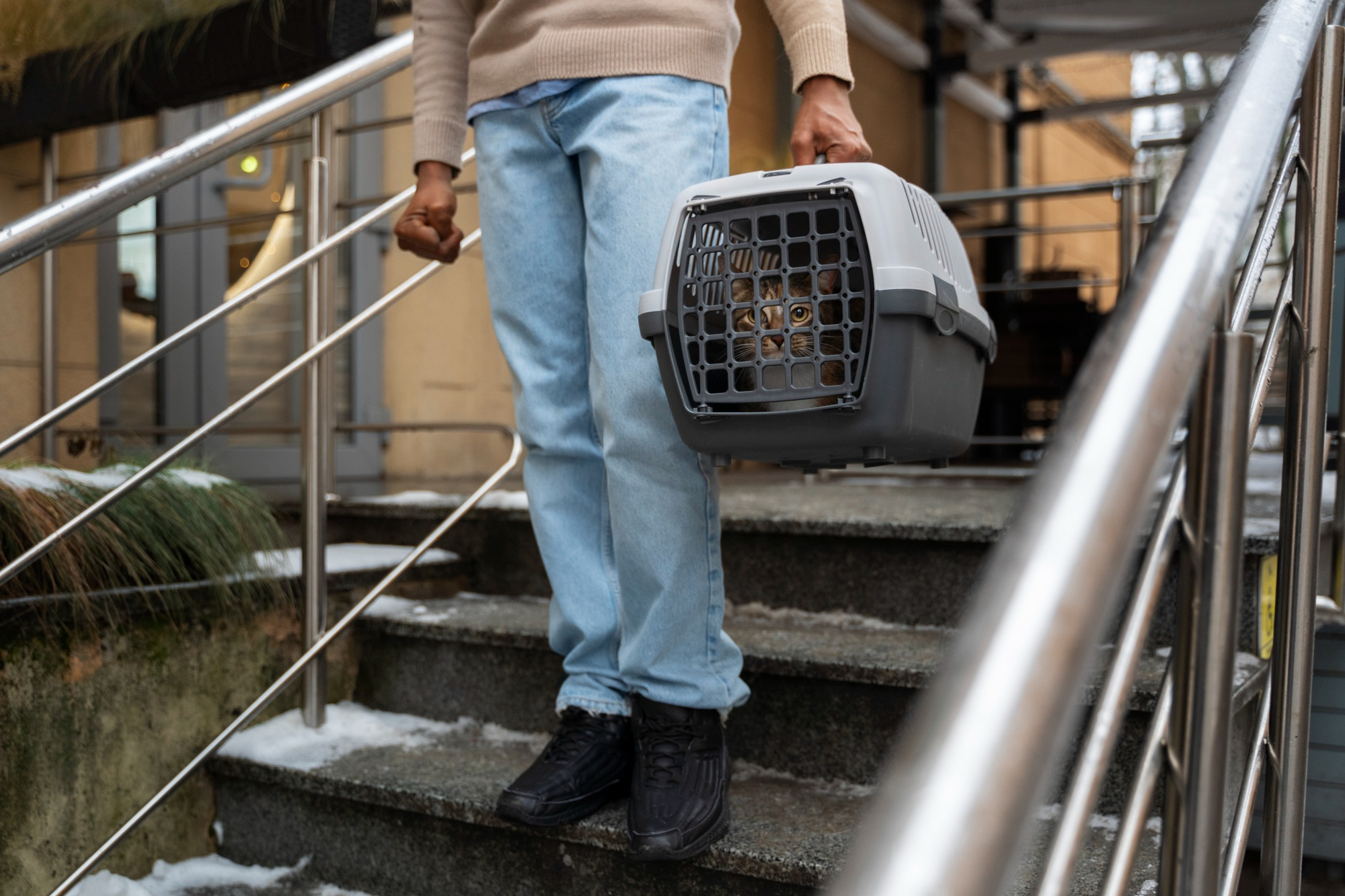
Two parakeets screamed from one cage. A white rabbit shook in the corner of another. The cat was jammed into an old plastic carrier, pressed against the back wall like even it knew it had been brought somewhere it didn’t belong.
My daughter-in-law didn’t say hello. She didn’t look at me. She set all three cages down on my rug, right next to the little table where I’d put Ernest’s photograph and a white candle.
Then she pulled a folded piece of paper out of her purse and dropped it on top of the cat carrier.
“There are your instructions,” she said.
I looked at the paper. Then I looked at my son.
And I smiled.
Because they didn’t know what I knew. They didn’t know that in my bedroom closet, there was a suitcase already packed. They didn’t know that in my purse, there was a printed ticket for a ship leaving Miami at sunrise. A ship that wouldn’t bring me back to this house for a whole year.
By the time that ship sailed, my disappearance was going to turn their lives upside down.
But let me tell you how I got there.
My name is Theresa. I’m sixty-six years old.
Ernest, my husband, had been gone for exactly one week.
I buried him on a gray Tuesday in a cemetery outside West Palm Beach. I dressed him in the white linen shirt he loved, the one he wore every Sunday after church and every Fourth of July. I put his rosary in his hands, the one his mother gave him when he was confirmed. And just before they closed the casket, I slipped a small photograph into his shirt pocket.
It was a picture from Key West. Forty-one years old, faded at the corners. The two of us on our honeymoon, sitting on a seawall at sunset. Ernest had a terrible mustache. I had a terrible perm. We were laughing at something the man taking the picture had said.
Nobody saw me put it in his pocket. Nobody would have understood what it meant.
It was a secret between me and Ernest. One last secret. I wanted him to take it with him.
For seven days after the funeral, I cried until my eyes hurt.
On the eighth day, I bought the cruise ticket.
It wasn’t an impulsive decision. I want to be clear about that.
People will tell you that grief makes you do crazy things. And maybe it does. But this wasn’t crazy. This was the sanest thing I’d done in forty years.
Because for forty years, I had been everyone’s backup plan.
Their emergency fund. Their nurse. Their cook. Their driver. Their babysitter. Their quiet place to dump their problems when they didn’t know where else to put them.
When Ernest got sick, three years ago, his insurance didn’t cover the newest cancer medicine. Eleven hundred dollars a month. I sold my wedding earrings. Little diamond studs he’d saved up for six months to buy me in 1985. I took them to a jewelry store on Okeechobee Boulevard and the man gave me nine hundred dollars and didn’t even look at them twice.
I never told Ernest. When he asked where my earrings were, I said I’d put them away for safekeeping.
When Austin lost his job at the car dealership two years ago, he came to the house and sat at the kitchen table with his head in his hands.
“I just need a little help, Mom. Just to get through a rough patch. A couple months.”
I gave him nineteen thousand dollars. Everything I had in my own savings account. The account I’d been building since I was twenty-two, five dollars at a time, out of my grocery money.
The couple of months turned into two years. He never paid back a penny. He never mentioned it again.
When Chloe had their baby, my granddaughter Lily, I spent three months sleeping on their couch. I got up every night at two and four and six to warm bottles while Chloe slept. I did their laundry. I cooked their dinners. I scrubbed their bathroom.
At Lily’s christening, I heard Chloe tell her friends, “Oh, Austin’s mom is so lucky. She has a real purpose now. Old people need a purpose.”
So lucky.
I went home after those three months and slept for two days straight.
Ernest held my hand while I slept. When I woke up, he was sitting next to me on the bed.
“Theresa,” he said. “When are you going to stop?”
“Stop what?”
“Letting them use you up.”
I didn’t have an answer.
And then, at Ernest’s funeral, my son didn’t hug me.
I stood next to the grave with dirt on my good black shoes. People were filing past, squeezing my hands, saying they were sorry. Austin came up last. He was wearing sunglasses even though it was cloudy.
He didn’t hug me. He didn’t take my hand. He looked past me at the casket being lowered into the ground, and then he said:
“Mom, have you thought about what you’re going to do with the house?”
I stared at him.
“The house?”
“Yeah. It’s a lot of house for one person. Four bedrooms. That big yard. Chloe and I were thinking…” He shrugged. “We can talk about it later. I’m just saying. You should think about it.”
Then he walked to his car.
I stood there by my husband’s grave and couldn’t move.
That question stayed in my head all week. Every day. Every night. Have you thought about what you’re going to do with the house?
My husband wasn’t even cold yet.
So when Austin came back on the eighth day, wearing a new shirt and dark sunglasses and that bossy tone of voice Chloe had taught him, I already knew exactly what kind of man my son had become.
“Mom, we’re going to the Bahamas for a few days,” he said.
He didn’t sit down. He didn’t take off his sunglasses.
“That’s nice, son,” I said.
“You’re going to watch the pets.”
That’s when Chloe came in with the cages.
She set them right next to Ernest’s photograph. The parakeets screamed. The rabbit trembled. The cat pressed itself against the back of its carrier and stared at me with big, frightened eyes.
No flowers. No hug. Not even How are you holding up, Theresa?
Just cages. And two big bags of pet food. And a list.
“Change the water for the birds twice a day,” Chloe said. She was looking at her phone. She didn’t look up once. “Don’t give the rabbit lettuce, it makes him sick. The cat gets stressed, so don’t let him out of the carrier. And make sure you clean up properly, because it smells awful after.”
I looked at her.
“Chloe,” I said. “I just buried my husband.”
She let out a long, tired sigh. Like my grief was getting in the way of her vacation.
“Oh, Mrs. Theresa,” she said. “Everyone has problems.”
I turned and looked at my son.
He didn’t look embarrassed. He didn’t stand up for me. He didn’t say Chloe, stop.
He just shrugged.
“Besides,” he said, “that’s why you’re here, Mom. You’ll get bored all by yourself.”
The parakeets kept screaming.
Next to Ernest’s photograph, the candle flame bent sideways for a second. Like someone had breathed on it. Then it straightened up again.
And for the first time in my whole life, I didn’t feel anger rising up inside me.
I felt calm. A strange, cool, quiet calm. Like stepping into the ocean on a hot day.
I looked at the cages.
Then I looked at my son.
And I smiled.
“Of course, sweetie,” I said. “Leave them with me.”
Chloe looked up from her phone for the first time. She seemed surprised. I usually argued a little. Sighed a little. Said I’ll do my best.
“We also left you the spare key to our apartment,” she said. She put it on the table next to Ernest’s photograph. “In case you need to get more food.”
“That’s fine,” I said.
Austin leaned down and kissed the top of my head. Quickly. The way you’d pat a countertop on your way out of a room.
“Thanks, Mom,” he said. “We can always count on you.”
Then they left.
The front door closed behind them. I heard their car start. I heard it pull away.
And those words hung in the air of my living room like the smell of the lilies.
We can always count on you.
That was exactly the problem.
I sat down in Ernest’s recliner. The parakeets were still screaming. The cat was making a low, unhappy sound in its carrier.
I looked at Ernest’s photograph. His big smile. His gray hair. The reading glasses he always wore pushed up on his forehead and then spent twenty minutes looking for.
“Well,” I said out loud. “You were right.”
Here’s what nobody knew.
Three weeks before he died, Ernest asked me to bring him the metal lockbox from the top shelf of our closet. The one we kept our passports and the deed to the house in.
I brought it to his hospital bed. He was so thin by then. So tired. He couldn’t even open the lid himself. I opened it for him.
Inside, under the passports and the deed, there was an envelope I’d never seen. And a bank book. From a credit union in Lake Worth I’d never heard of.
“What’s this?” I asked.
“Open it,” Ernest said.
The bank book had one account in it. A savings account. In my name. Opened in 1986.
The balance was eighty-seven thousand, four hundred dollars.
I almost dropped it.
“Ernest. What is this? Where did this come from?”
He smiled. That big, crooked, tired smile.
“Remember Key West?” he said. “On our honeymoon? We sat on that seawall and watched the cruise ships go out. And you said, ‘Someday, I want to get on one of those and never stop. Just go around the whole world.'”
I remembered. I’d forgotten I remembered. But I remembered.
“I started putting money away the next month,” he said. “Twenty dollars a week. Then fifty, when I got the raise at the plant. Every week for forty years. I never touched it. Not when the roof leaked. Not when Austin needed braces. Not even when I got sick.” He coughed. It took a long time. “I called it the Key West fund.”
I couldn’t speak. I just held that little bank book.
“I always thought we’d go together,” Ernest said. “When I retired. Then I thought, after Austin gets settled. Then I thought, when the house is paid off.” He shook his head slowly. “There was always something. Always somebody who needed something. And now I’ve run out of time.”
“Ernest—”
“Listen to me.” He reached over and took my hand. His grip was weak. But he held on. “When I’m gone, you go. You hear me? You get on that ship. You go around the whole world. You do it for both of us.”
“I can’t leave—”
“Yes, you can.” He squeezed my hand as hard as he could. “And Theresa. Don’t you dare give that money to Austin. Not one penny. He’ll ask. He always asks. And you’ll want to say yes. Don’t.”
Then he pushed the envelope toward me.
“Read this after,” he said. “After the funeral. Not before.”
I read the letter on the seventh night after the funeral. Sitting on the edge of our bed, at two in the morning, with the lilies dying in the vase on the dresser.
It was short. Ernest was never a man of many words.
Theresa,
Forty-one years ago I promised I’d take you around the world. I’m sorry I never did. I’m sorry for every year I said “next year.”
You’ve spent your whole life taking care of other people. Me. Austin. Chloe. The baby. Your mother before she passed. Mine too. You never once took care of yourself. Not even once.
Now it’s your turn. Please. Take it.
Austin is a grown man. He’s thirty-eight years old. You can’t save him from his own life. You’ve been trying since he was born, and all it’s done is make him weak. I should have stopped you. I should have stopped both of us. That’s on me.
Let him fall. He needs to fall. It’s the only way he’ll ever learn to stand up.
Go see the world, my love. Send me a postcard from every place. I’ll be reading them.
Ernest
P.S. Don’t forget your sunscreen. You burn like a lobster.
I cried until the sun came up.
And then I got dressed, drove to a travel agency in a strip mall on Military Trail, and sat down across from a young woman with purple fingernails.
“I want to go around the world,” I said. “On a ship. For as long as I can afford.”
She looked at me for a moment. Then she smiled.
“There’s a world cruise leaving Miami in nine days,” she said. “A hundred and twenty-three days. Then you could transfer to the second leg. Asia and the Pacific. That gets you almost a year.” She tapped on her keyboard. “Inside cabin. Very small. But you’ll be on deck most of the time anyway.”
“How much?”
She told me.
It was most of the Key West fund. Not all. But most.
I thought about Austin at the cemetery. Have you thought about what you’re going to do with the house?
I thought about Ernest. Don’t you dare give that money to Austin.
“I’ll take it,” I said.
She printed the ticket. I put it in my purse.
The ship sailed on the ninth day.
Which happened to be the morning after my son left his pets in my living room.
I sat in Ernest’s recliner for about ten minutes after they left. Just thinking.
I want to be honest about something. I thought about leaving the animals right there. Just walking out. Letting Austin come back to an empty house with three cages and a mess.
For about thirty seconds, I thought about it.
Then I looked at the cat. He was a big gray tabby named Biscuit. Austin got him at a shelter six years ago, before he met Chloe. Biscuit used to sleep on my lap every Christmas when they came over. He’d purr so loud it sounded like a motorboat.
Now he was pressed against the back of that dirty carrier, shaking.
I couldn’t do it. I couldn’t punish those animals for what my son had become. They hadn’t done anything wrong. They were just like me. Carried somewhere without being asked.
So I picked up the phone.
I called Marisol, my neighbor’s granddaughter. She was twenty-two, studying to be a vet tech at Palm Beach State. She’d helped me take care of Ernest’s old dog before he passed. She was gentle and smart and she needed money for school.
“Marisol,” I said. “Do you want a job? Five days. Taking care of some pets. I’ll pay you three hundred dollars.”
“Mrs. Theresa? Of course. When?”
“Starting tomorrow morning. But not here. At my son’s apartment. I’ll take them back there tonight. I’ll leave you the key.”
There was a pause.
“Are you going somewhere?” she asked.
I looked at Ernest’s photograph.
“Yes, honey,” I said. “I’m going somewhere.”
I loaded the cages into my car one at a time. The parakeets screamed the whole way. Biscuit howled. The rabbit just trembled. I talked to them while I drove. I told them it was okay. I told them they were going home.
Austin and Chloe lived in a two-bedroom apartment in a new building off Clematis Street downtown. The kind with a fancy lobby and a pool on the roof. The rent was twenty-six hundred dollars a month. I knew because I’d helped them with the deposit.
I used the spare key.
The apartment was a mess. Dirty dishes stacked in the sink. Clothes all over the floor. A pile of Lily’s toys in the corner. The baby was staying with Chloe’s mother in Boca while they were in the Bahamas. I’d heard Chloe say so on the phone.
I set the cages down in the living room. I let Biscuit out of his carrier. He shot under the couch and stayed there, but after a minute I heard him start to purr.
I cleaned the birdcage. I gave the rabbit fresh hay and water. I filled Biscuit’s bowls.
Then I noticed the pile of mail on the kitchen counter.
I didn’t mean to look. I promise. It was just sitting right there, spread out, with the top envelope open.
It was red. Bright red, with big black letters across the top.
FINAL NOTICE. PAY OR QUIT.
I picked it up.
It was from the building management. Austin and Chloe were three months behind on their rent. Seven thousand eight hundred dollars. If they didn’t pay by the end of the month, the building would start eviction proceedings.
Under that was another envelope. A credit card statement. Maxed out. Eighteen thousand dollars.
Under that, a printed receipt from a travel website.
Nassau, Bahamas. 5 nights. Ocean view suite. $4,200.
Charged to the maxed-out credit card.
I stood in their kitchen with those papers in my hands.
And suddenly I understood everything.
Have you thought about what you’re going to do with the house?
They weren’t asking because they were worried about me rattling around in four bedrooms. They were asking because they were about to be evicted. And they’d already decided where they were going to live next.
My house.
My house, that Ernest and I spent thirty years paying off. With the big yard and the lemon tree Ernest planted the year Austin was born.
They’d already planned it. Move Mom into the little back bedroom. Take the big room for themselves. Let her watch the baby. Let her cook the dinners. Let her pay the electric bill. Forever.
And in the meantime, take one last vacation on a credit card they couldn’t pay. Because why not? Mom would be there when they got back. Mom was always there.
I put the papers back exactly how I’d found them.
Then I sat down at their kitchen table and wrote a letter.
I wrote it on the back of a grocery list I found in a drawer. It took me a long time. I crossed out a lot of things.
When I was done, I read it over once. Then I left it on top of the red eviction notice, where they’d be sure to see it.
Austin,
Your pets are home. They’ve been fed and watered and cleaned. Biscuit is under the couch, but he’s purring. Marisol from next door to me will come twice a day until you’re back. I paid her. You don’t owe me for it.
I’m going away. For a year. I’m not going to tell you where yet. I’ll call you when I’m ready.
I saw the mail on your counter. I’m sorry you’re in trouble. I really am. But I’m not going to fix it this time.
You asked me at your father’s funeral what I’m going to do with the house. Here’s my answer. I’ve rented it. For a year. To someone who needs it more than you do.
Your father left me a letter. In it, he said that I’ve spent your whole life trying to save you from your own life, and all it did was make you weak. He was right. I’m sorry, son. I’m sorry I did that to you. I thought I was loving you. I was just carrying you.
It’s time for you to walk.
I love you. That will never change. But I’m not your backup plan anymore.
Mom
P.S. Don’t give the rabbit lettuce. It makes him sick.
The part about the house was true. I’d done it four days earlier.
There was a nurse named Denise who took care of Ernest at the end. Hospice. She came every afternoon for six weeks. She was forty-four, a single mother with two teenage boys, and she was the kindest person I’d ever met. She held Ernest’s hand when he was scared. She brushed his hair. She talked to him about baseball even when he couldn’t talk back.
On the last day, while we were waiting for the funeral home, she sat with me in the kitchen and drank coffee. And she told me, very quietly, that her landlord had just sold her building. She and the boys had to be out in thirty days. She didn’t know where they’d go. Rent in Palm Beach County had gone through the roof.
She said it like it was nothing. Like she was telling me the weather. She didn’t ask for anything.
Four days after the funeral, I called her.
“Denise,” I said. “How would you like to rent a house for a year? Four bedrooms. Big yard. A lemon tree. Eight hundred dollars a month.”
There was a long silence on the phone.
“Mrs. Theresa,” she said. “That house would go for three thousand. At least.”
“I know,” I said. “But I’d rather it went to you.”
She cried on the phone. I cried too.
We signed a lease at my lawyer’s office the next day. Mr. Kaplan, who’d done our wills. He looked at the eight-hundred-dollar rent and raised his eyebrows at me over his glasses.
“Are you sure about this, Theresa?”
“I’m sure.”
“Your son’s going to be upset.”
“I know,” I said. “That’s sort of the point.”
Mr. Kaplan smiled. He’d known Ernest for thirty years.
“Ernest would have liked this,” he said.
“Ernest planned this,” I said. “He just didn’t know it yet.”
I left Austin’s apartment at ten o’clock that night.
I drove home. I took a long hot shower. I put on the comfortable traveling clothes I’d bought at Marshalls. I took the suitcase out of the closet. I checked my passport three times.
I walked through every room of the house one last time.
The kitchen, where I’d made forty years of dinners. The living room, where Austin took his first steps. The back bedroom, where my mother died. Our bedroom, where Ernest and I had slept for thirty years.
In the backyard, I stood under the lemon tree for a long time. Ernest planted it the spring Austin was born. He’d said, “When he’s grown, he can make lemonade from his daddy’s tree.” Austin never made lemonade once.
I picked one lemon and put it in my purse.
Then I left Denise’s set of keys in the mailbox, the way we’d arranged.
At three in the morning, a taxi pulled up in front of the house. The driver loaded my suitcase into the trunk. He was a young man with a cross hanging from his rearview mirror.
“Airport?” he asked.
“No,” I said. “The Port of Miami. Terminal G.”
He looked at me in the mirror.
“Going on a cruise?”
“Going around the world,” I said.
He grinned. “Good for you, ma’am. Good for you.”
We drove south on I-95 in the dark. I watched the lights of the towns go by. Boynton. Delray. Boca. Fort Lauderdale. All the places I’d driven a hundred times, to doctor’s appointments and grocery stores and Austin’s apartment.
I’d never driven past them going somewhere for myself.
The ship sailed at 6:04 that morning.
I was standing at the railing on the top deck, holding a paper cup of coffee, when the horn blew. It was so loud it shook my teeth.
The ship started to move. Very slowly at first. Then faster. The city of Miami slid away behind us. All those tall glass buildings, turning pink and orange in the sunrise.
I watched the coast get smaller and smaller.
I thought about Austin, asleep in a hotel in Nassau, with no idea.
I thought about Biscuit, purring under the couch.
I thought about Denise, who’d be moving her boys into my house that afternoon. Who’d sleep in my bed. Who’d make coffee in my kitchen.
And I thought about Ernest.
I reached into my purse and took out the lemon from his tree. I held it in both hands. It was cool and smooth and smelled like our backyard.
“We’re going, honey,” I whispered. “We’re finally going.”
And I cried. Not like I’d cried for the past week. Not the heavy, crushing kind.
Something lighter. Something that felt almost like laughing.
A woman came up next to me at the railing. She was old. Older than me. Maybe seventy-five. She had bright white hair cut very short and a pink visor and enormous sunglasses.
She looked at me crying and holding a lemon.
“First time?” she asked.
I wiped my eyes. “Is it that obvious?”
“Honey, everybody cries the first morning.” She held out her hand. “Beatrice. Bea. This is my fourth time around the world. My husband passed in 2017. I’ve been going ever since.”
I shook her hand.
“Theresa,” I said. “My husband passed eleven days ago.”
Bea took off her big sunglasses. She looked at me with sharp blue eyes.
“Eleven days?”
“Eleven days.”
She was quiet for a moment. Then she put her sunglasses back on and patted my arm.
“Well, Theresa,” she said. “Then you and I are going to need to eat a lot of dessert.”
The first week was hard.
I’m not going to pretend it wasn’t. I’d wake up in my tiny cabin with no window and reach over for Ernest and remember. Every single morning. I’d lie there in the dark and listen to the engine humming somewhere far below and feel like the loneliest person on the ocean.
But then I’d get up. I’d go up on deck. Bea would be there, at the same table by the pool, with two cups of coffee. She always ordered one for me.
“How’d you sleep?”
“Terrible.”
“Good. Me too. Sit down. Eat a croissant.”
We spent our days together. Bea knew everything about the ship. Which dining room had the best soup. Which bartender made the strongest drinks. Which lectures were worth going to and which ones were just people selling jewelry.
She had a husband named Frank who’d been a mailman in Pittsburgh for thirty-five years. They’d had four kids. All four of them called her every single week.
“How do you do it?” I asked her one night, watching the sunset. “How do you leave them for so long?”
Bea laughed.
“Honey, I raised four kids and buried a husband. I paid my dues. Now they visit me in ports. Two of them are flying to meet me in Sydney.” She looked over at me. “What about you? You have kids?”
“One. A son.”
“He mad at you for coming?”
I thought about it.
“He doesn’t know yet,” I said. “Not exactly where I am. He’s going to be very mad.”
“Why?”
So I told her. Everything. The cages. Everyone has problems. That’s why you’re here, Mom. The eviction notice. The Bahamas trip on the maxed-out credit card. Denise in my house.
When I was done, Bea didn’t say anything for a long time. She just watched the sun disappear into the ocean.
“You know what my Frank used to say?” she said finally. “He said some people only learn to swim when you take away the pool noodle.”
I laughed.
“I was the pool noodle,” I said.
“Honey,” Bea said. “You were the whole pool.”
Our first port was Cozumel, Mexico. Five days after we left Miami.
I turned my phone on in the cruise terminal.
It took almost a full minute for all the messages to come through. The phone just kept buzzing. Buzzing. Buzzing. Bea, standing next to me in her pink visor, raised her eyebrows.
Forty-seven missed calls.
Sixty-three text messages.
Twenty-two voicemails.
I sat down on a bench outside the terminal, under a palm tree, and started listening.
The first ones were from four days ago. The day Austin got back from the Bahamas.
“Mom, what the hell is this? Where are you? Call me back.”
“Mom. Seriously. This isn’t funny. Call me.”
“There’s a woman in your house. A woman and two teenagers. She says she’s renting it. She showed me a lease. Mom, what did you do? Call me back right now.”
Then Chloe.
“Mrs. Theresa, this is completely unacceptable. You can’t just abandon your family. Austin is very upset. We’re all very upset. You need to call us immediately.”
Then Austin again. Different now. Angrier.
“You RENTED the house? To a NURSE? For EIGHT HUNDRED DOLLARS? Do you know what you could get for that place? Do you know what WE could have—” He stopped. I heard him breathe. “Call me. Now.”
Then, two days ago. Quieter.
“Mom, I called the police. To do a wellness check. They went to your house. The nurse told them you went on a trip. They said there’s nothing they can do. They said you’re an adult and you’re allowed to go on a trip.” A long pause. “Where are you? Just tell me where you are.”
Then yesterday.
“Mom.” His voice was cracking. “Mom, they’re evicting us. The building filed the paperwork. We have three weeks. I don’t know what to do. I don’t have the money. Chloe’s mom says we can’t stay with her. She’s got Chloe’s brother there already. I don’t know where we’re going to go. Mom, please. Please call me back. I need you. Please.”
I sat on that bench under the palm tree with the phone pressed against my ear.
Bea sat down next to me. She didn’t say anything. She just put her hand on my knee.
The last voicemail was from that morning.
It was very short. Austin’s voice was so quiet I almost couldn’t hear it.
“I read the letter again. The one you left. About Dad. About carrying me.” A long silence. “Did Dad really say that? That you made me weak?”
Another silence.
“I’m sorry about the funeral. About asking about the house. I don’t know why I did that. Yes I do. I know exactly why I did that.” He breathed out. “Just call me. Please. Even if it’s just to yell at me.”
The message ended.
I sat there for a long time.
“You going to call him?” Bea asked.
I looked down at my phone. My thumb was hovering over his name.
Every single part of me wanted to call. Wanted to say It’s okay, baby. I’ll fix it. I’ll send money. I’ll come home.
Forty years of habit. Forty years of picking up the phone.
I thought about Ernest’s letter. Let him fall. He needs to fall.
I put the phone back in my purse.
“Not yet,” I said.
Bea nodded.
“That’s the hardest thing you’ll ever do,” she said. “Harder than burying him.”
“How do you know?”
“Because I did it too.” She stood up and held out her hand. “Come on. There’s a place in town that makes churros. You need a churro.”
I didn’t call him from Cozumel.
I didn’t call him from Grand Cayman, or Jamaica, or Aruba either.
I sent him one text. From Aruba. Two weeks after I left.
I’m safe. I’m on a ship. I’m going around the world, like your father and I always talked about. I love you. I’m not coming home to fix this. You can do it, Austin. I know you can.
He didn’t answer.
But the voicemails stopped.
I didn’t know if that was a good sign or a bad one.
The ship crossed the Caribbean and made its way south toward the Panama Canal. Our last port before the canal was Cartagena, Colombia. A beautiful old city with walls around it and houses painted every color you can imagine. Yellow and blue and pink and bright green, with flowers spilling off every balcony.
Bea and I spent the whole morning walking through the old town. We ate fresh mango on a stick from a woman selling them out of a cart. We sat in a little square under a tree and watched a man play guitar.
I bought a postcard. A picture of the colorful houses. I wrote on the back of it.
Ernest — Cartagena. You’d hate the heat. I love it. Bea says I’m getting tan. I’m not, I’m getting red, like you said I would. I forgot the sunscreen. Love, T.
I mailed it to the cemetery. I don’t know if they deliver mail there. I mailed it anyway. I’d been mailing one from every port.
We got back to the cruise terminal around three in the afternoon. The ship was leaving at five.
That’s when I saw him.
He was standing outside the terminal gate, next to a security booth. He was wearing a wrinkled blue T-shirt and jeans. He hadn’t shaved in days. He had a backpack over one shoulder. He looked like he hadn’t slept.
Austin.
My son.
In Cartagena, Colombia.
I stopped walking. Bea almost bumped into me.
“Theresa? What’s—” She followed my eyes. “Oh. Oh, is that him?”
“That’s him.”
Austin saw me at the same moment. He started walking toward me. Fast. Then faster. Almost running.
He stopped about three feet away.
For a long moment, neither of us said anything.
“How did you find me?” I said finally.
“I called every cruise line out of Miami,” he said. His voice was rough. “I told them it was a family emergency. Finally one of them told me you were on board. And they told me the itinerary.” He shoved his hands in his pockets. “I put a plane ticket on Chloe’s mom’s credit card. Three hundred and eighty dollars. She’s going to kill me.”
“Austin. Why are you here?”
He looked at me. His eyes were red.
“To bring you home,” he said.
Bea squeezed my arm. “I’ll be on the ship,” she said quietly. “We sail at five. Don’t you miss it.”
She walked away toward the terminal.
Austin and I stood there in the hot afternoon sun. A taxi honked. Somewhere, a radio was playing salsa music.
“There’s a bench over there,” I said. “Let’s sit.”
We sat down on a stone bench in the shade of a tree, facing the water. I could see my ship from there. Huge and white, with its three red smokestacks.
“Mom,” Austin said. “You have to come home.”
“No.”
“Mom, please. Listen. We’re getting evicted. In two weeks. We’ve got nowhere to go. Chloe’s mom won’t take us. Chloe’s working part-time at a nail salon and it’s not enough. I’ve applied to forty jobs. Nobody’s calling me back. Lily’s two. She needs—”
“Lily needs her parents to figure it out,” I said.
He stared at me.
“That’s… Mom, that’s cold. That’s really cold.”
“Is it?”
“Yes! You’re supposed to help us! You’re my mother!”
“I am your mother,” I said. “And I’ve helped you for thirty-eight years, Austin. I helped you through school. I helped you with your first car. I helped you with your deposit on that apartment. I gave you nineteen thousand dollars two years ago. Do you remember that?”
He looked away.
“I remember.”
“That was all the money I had. My whole savings. Since I was twenty-two years old. And you never paid back a single dollar. You never mentioned it again. Not once.”
“I was going to—”
“Austin,” I said. “You took a vacation to the Bahamas on a credit card while you were three months behind on rent.”
He went completely still.
“How do you know about that?”
“I took your pets home. The letter on the counter. The receipt was right there.”
His face turned red. He looked down at his hands.
“Chloe wanted to go,” he said. “She said we deserved a break. She said everything was so stressful with your… with Dad dying and everything. She said—”
“She said I’d be home when you got back,” I said. “And I’d fix it. Like I always do.”
He didn’t answer.
“That’s why you asked about the house,” I said. “At the funeral. You already knew you were getting evicted. You already had a plan. Move in with Mom. Take the big bedroom. Mom watches Lily. Mom pays the bills. Problem solved.”
He still didn’t say anything.
“Didn’t you?”
“Yes,” Austin said. Very quietly. “Yes. That was the plan.”
The salsa music kept playing somewhere behind us. A seagull landed on the railing by the water and looked at us.
“Do you know what your father said to me?” I asked. “Before he died?”
Austin shook his head.
I reached into my purse. I’d brought Ernest’s letter with me. I’d been carrying it everywhere. It was soft now from being folded and unfolded so many times.
I handed it to him.
“Read it,” I said.
He unfolded it. I watched him read. I watched his lips move a little, the way they used to when he was a boy reading his comic books.
I watched him get to the part about him.
Austin is a grown man. He’s thirty-eight years old. You can’t save him from his own life. You’ve been trying since he was born, and all it’s done is make him weak.
His hands started shaking.
Let him fall. He needs to fall. It’s the only way he’ll ever learn to stand up.
He put the letter down in his lap. He stared at it.
“He said that,” Austin said. “Dad said that. About me.”
“Yes.”
“He thought I was weak.”
“He thought I made you weak,” I said. “That’s different. He blamed me. And himself. Not you.”
Austin’s face crumpled.
I hadn’t seen my son cry since he was maybe fourteen. Since his best friend moved to Ohio. He’d stopped crying after that. He’d gotten hard. Gotten cool. Gotten sunglasses.
He cried now. On a stone bench in Cartagena. With his face in his hands and his shoulders shaking.
I didn’t touch him. I wanted to. Every part of me wanted to put my arms around him and say It’s okay, baby, Mommy’s here.
I didn’t.
I just sat next to him and let him cry.
“I didn’t even know about the money,” he said finally. His voice was thick. “The Key West fund. Dad never told me.”
“He didn’t tell me either. Not until the end.”
“Forty years,” Austin said. He wiped his face with the bottom of his T-shirt. “He saved for forty years. And he never used it. Not even when he was sick. Not even for his medicine.” He looked at me. “You sold your earrings, didn’t you? For his medicine?”
I stared at him. “How do you know about that?”
“Dad told me. About a month before he died. He said, ‘Your mother sold her earrings for me, and she thinks I don’t know.’ He made me promise not to tell you he knew.” Austin laughed, but it came out broken. “He said, ‘That woman would sell her own teeth for this family, and none of us ever say thank you.'”
I couldn’t say anything.
“I never said thank you,” Austin said. “Not once. Not for anything. Not for the nineteen thousand. Not for sleeping on our couch for three months. Not for any of it.”
“No,” I said. “You didn’t.”
He looked out at the water. At my ship.
“I’m so sorry, Mom,” he said. “I’m so sorry about the funeral. About the house. About the cages. About what Chloe said. Everyone has problems.” He shook his head. “I just stood there. I just let her say it. You’d just buried Dad, and I just stood there.”
“Why?”
He was quiet for a long time.
“Because it was easier,” he said finally. “Everything’s always easier when you’re the one who has to deal with it. I just let you. My whole life. I never had to be scared of anything, because you’d always be there. And I never thought about what it cost you.” He looked at me. “I never thought about you at all. Not really. You were just… Mom. Always there. Like the furniture.”
That word hit me hard. Furniture.
“I’m not furniture, Austin,” I said.
“I know. I know that now.” He looked down at Ernest’s letter in his lap. “I think I figured it out when I walked into the house and saw Denise in the kitchen. Making coffee. In your mug. And she looked at me and said, ‘Your mother is the most generous person I’ve ever met.’ And I thought, she’s right. And I’ve never once said that out loud.”
The ship’s horn blew. One long blast. A warning. One hour until departure.
Austin flinched.
“You’re really not coming home,” he said. It wasn’t a question.
“No,” I said. “I’m really not.”
“What are we going to do? Me and Chloe and Lily?”
“You’re going to figure it out,” I said. “Like everybody else in the world does. You’ll find a smaller apartment. Something you can actually afford. You’ll take whatever job you can get. Even if it’s not the job you want. Even if it’s beneath you. You’ll sell Chloe’s car, because you don’t need two. You’ll cancel the vacations. You’ll cut up the credit cards.” I looked at him. “And you’ll pay back every dollar you owe. Not to me. To the people you owe it to.”
He swallowed.
“And you?”
“I’m going around the world,” I said. “I’m going to Panama. And then Peru. And then all the way across the Pacific to Tahiti. And then Australia. And then Asia. Bea says I’ll love Vietnam.” I smiled. “I’m going to eat things I can’t pronounce. I’m going to send your father a postcard from every single place. And I’m going to come home in a year. And when I do, I’ll be your mother. Not your bank. Not your babysitter. Just your mother.”
Austin stared at me.
“Can I ask you something?” he said.
“Yes.”
“If I figure it out,” he said slowly, “if I really figure it out. On my own. Will you be proud of me?”
I looked at my son. Thirty-eight years old. Unshaven. Red-eyed. Sitting on a bench in a foreign country with his dead father’s letter in his lap.
For the first time in a long time, he looked like the little boy who used to climb into my lap during thunderstorms.
“Austin,” I said. “If you figure it out on your own, I’ll be the proudest mother in the whole world.”
He nodded slowly. He folded up Ernest’s letter carefully, along the same soft creases, and held it out to me.
“Keep it,” I said.
He looked surprised.
“I’ve read it enough,” I said. “I know what it says. You need it more than I do now.”
He put it in his back pocket.
Then my son leaned over and hugged me.
Not a quick hug. Not a pat on the countertop. A real hug. Hard. With both arms. He put his face down on my shoulder like he was ten years old, and held on.
“I love you, Mom,” he said into my shoulder. “I’m sorry. I love you.”
“I love you too, baby,” I said. “I always will.”
The horn blew again. Thirty minutes.
I stood up. My knees cracked. Austin stood up too.
“How are you getting home?” I asked.
“Same way I got here. Chloe’s mom’s credit card.” He laughed weakly. “I’m going to have to pay her back too.”
“Yes,” I said. “You are.”
I reached into my purse. He watched me. I saw something flicker in his face. Hope. The old hope. Here it comes. Here comes the money.
I took out the lemon.
The lemon from Ernest’s tree. I’d been carrying it in my purse for three weeks. It was getting soft, and a little wrinkly, and it had a brown spot on one side. But it still smelled like our backyard.
I put it in his hand.
He looked at it. Confused.
“Your father planted that tree the year you were born,” I said. “He said, ‘When he’s grown up, he can make lemonade from his daddy’s tree.'” I closed his fingers around the lemon. “You never did. Not once in thirty-eight years.”
Austin stared at the lemon in his hand.
“Make some,” I said. “When you get home. Go to the house. Ask Denise nicely if you can pick some lemons. And make your father’s lemonade.”
His chin started trembling again.
“Okay,” he said. “Okay, Mom.”
I turned around and walked toward the terminal.
I didn’t look back. I knew if I looked back, I’d see him standing there alone. And I’d turn around. And I’d go to him. And I’d fix it. Like I always did.
So I didn’t look back.
Bea was waiting for me at the top of the gangway. She didn’t say anything. She just handed me a tissue and a glass of champagne.
We stood at the railing together and watched Cartagena get smaller and smaller in the late afternoon light.
I could still see him. A tiny figure on the stone bench by the water. Sitting with his head down. Holding something small and yellow in his hands.
He didn’t leave until we were too far away for me to see him anymore.
The next eleven months were the best of my life.
I’m not going to tell you about all of it. I couldn’t. There’s too much.
I went through the Panama Canal. I stood on the deck at six in the morning with a cup of coffee and watched the locks fill with water and lift our giant ship up like a toy in a bathtub.
I walked through the old streets of Lima. I got altitude sickness in Cusco and threw up on a llama. Bea laughed so hard she had to sit down on the sidewalk.
I swam in the ocean in Tahiti. I hadn’t been swimming since I was thirty. I bought a bathing suit in a little shop in Papeete. Bright red. I didn’t care what I looked like.
I stood on the steps of the Sydney Opera House and cried for no reason at all.
In Vietnam, Bea was right. I loved it. I ate a bowl of noodle soup on a plastic stool on a sidewalk in Hanoi and it was the best thing I’ve ever tasted in my life.
I sent Ernest a postcard from every single port. Ninety-one postcards. All to the cemetery.
And every week, I talked to Austin.
The first call was from Panama. Two weeks after Cartagena.
He sounded different. Tired. But different.
“We got a place,” he said. “A one-bedroom. In Lake Worth. It’s small. It’s kind of ugly. The carpet’s orange. But it’s eleven hundred a month. We can actually afford it.”
“That’s great, honey.”
“Chloe’s mad. She hates it. She says it’s beneath us.” He sighed. “But she’s staying. We’re working on it.”
The second call was from Peru.
“I got a job,” he said. “At a warehouse. Home Depot distribution center. Forklift. Night shift.” He laughed a little. “Seventeen dollars an hour. I used to make sixty grand a year selling cars.”
“How do you feel about it?”
He was quiet.
“Honestly? Kind of good,” he said. “I come home tired. Real tired. Like Dad used to come home from the plant. I never understood that before.” He paused. “I sleep really good now.”
The third call was from Tahiti.
“I made the lemonade,” he said.
I stopped walking. I was on the beach. I sat down in the sand.
“You did?”
“Yeah. I went to the house. Denise was home. I asked her if I could pick some lemons. She looked at me like I had two heads.” He laughed. “She said, ‘Your mom told me you might come.’ Then she made me sit in the kitchen and she gave me coffee. In your blue mug. And she told me about Dad. About the hospice. About how he talked about you every single day. About how he talked about me.”
“What did he say about you?”
Austin was quiet for a long time.
“He said I was a good kid who never got the chance to grow up,” Austin said. “He said that was his fault. And yours. And mine.” He cleared his throat. “Then Denise helped me pick a whole bag of lemons. And I took them home. And I made lemonade with Lily. She stood on a chair and squeezed them with her little hands. She got juice everywhere. She got it in her eye and screamed.”
I laughed. I couldn’t stop laughing. I sat on that beach in Tahiti and laughed until I cried.
“It was terrible lemonade,” Austin said. “Way too sour. Lily loved it. She drank three cups.”
The calls got longer as the months went on.
He told me about the warehouse. About the guys he worked with. About a man named Hector who’d been driving forklifts for twenty-two years and was teaching Austin everything he knew.
He told me Chloe got a full-time job at a dental office. Front desk. She hated it at first. Now she kind of liked it.
He told me they sold Chloe’s car. And her designer purses on eBay. And they paid off one credit card in March and were working on the second one.
He told me Chloe’s mother finally stopped speaking to them for a while, because they paid her back for the plane ticket and she was insulted that they “made such a big deal about it.”
“I think she wanted us to owe her,” Austin said. “Like it gave her something to hold over us.” He was quiet for a second. “Chloe saw it. That’s the thing. She saw it, and she said, ‘That’s what we did to your mom, isn’t it? We made her owe us. Without even asking.'”
I didn’t say anything.
“She wants to talk to you,” Austin said. “Chloe. When you’re ready. She’s not good at saying sorry. But she wants to try.”
“When I’m ready,” I said.
“Okay,” Austin said. “That’s fair.”
In Singapore, nine months into the trip, Austin called me at three in the morning his time.
He was crying.
My heart stopped. “What’s wrong? Is it Lily? Is it—”
“Nothing’s wrong,” he said. “Mom, nothing’s wrong. I just got promoted.”
I sat down on my tiny bed in my tiny cabin.
“What?”
“Shift supervisor. Forklift crew. Hector recommended me. He’s retiring and he told the manager I was the only one he’d trust with his guys.” Austin laughed through his tears. “Twenty-three dollars an hour. Health insurance. A real retirement plan.”
“Oh, Austin.”
“And Mom? We paid off the second credit card. Today. It’s gone. All of it. We don’t owe anybody anything anymore.” He took a shaky breath. “Except you. The nineteen thousand. I haven’t forgotten. I’m putting fifty dollars a week into a savings account. In your name. I’m calling it the Key West fund. It’s going to take me about seven years. But I’m going to pay you back.”
I put my hand over my mouth.
“You don’t have to do that.”
“Yes, I do,” he said. “I really do, Mom. That’s the whole point.”
Then, in the eleventh month, in Lisbon, I got a letter.
It came to the ship at port, through the mail service. A thick envelope. Austin’s handwriting on the front.
Inside, there was a photograph.
It was Austin and Lily, standing in the backyard of my house. Under the lemon tree. Lily was on his shoulders holding a lemon over her head like a trophy. They were both grinning.
Behind them, in the kitchen window, I could see Denise, waving.
On the back of the photograph, Austin had written:
Picked lemons for the fourth time. Lily calls it “Grandpa’s tree.” We made lemonade for Denise and her boys. Her oldest is going to college in the fall. First in his family. Denise cried.
The rabbit’s name is Snowball, by the way. You never asked. I’m the one who feeds him now. No lettuce.
Biscuit sleeps on my chest every night. Chloe says he finally decided I’m worth trusting.
I’m trying to be worth trusting too.
Your ship comes back to Miami on October 22nd. I already asked off work. We’ll be there.
Love, Austin
P.S. Dad was right. I needed to fall. Thank you for letting me.
The ship came back to Miami on a bright October morning. Almost exactly one year after it left.
I was standing at the railing on the top deck when we came into the port. Bea was next to me. We’d done the whole thing together. All of it. She was going straight on to her fifth world cruise. She’d be leaving again in three weeks.
“You coming?” she asked. “Next one? I’ll save you a seat at breakfast.”
“Maybe,” I said. “Maybe next year.”
She smiled. “You’ll come. They always come back.”
The ship pulled in slowly. The horn blew. I looked down at the crowd waiting on the dock. Hundreds of people. Holding signs. Waving.
And then I saw them.
Austin. Chloe. And Lily, almost three now, on her father’s shoulders.
They were holding a sign. Handmade. Painted on a big piece of cardboard. Pink and yellow and green, with lemons drawn all over it.
WELCOME HOME GRANDMA.
And under that, in smaller letters, in Austin’s handwriting:
We missed you. Not because we needed you. Just because we love you.
I put my hand over my mouth.
Bea looked at the sign. Then at me.
“Well, honey,” she said. “Looks like the pool noodle worked.”
When I came down the gangway, Lily ran to me.
She was so much bigger. Her hair was longer. She threw her arms around my legs and almost knocked me over.
“Grandma! Grandma! Did you see the whole world?”
“Most of it,” I said. I picked her up. She was heavy. I didn’t care. “Not all of it. I saved some for you.”
Austin came up behind her. He looked different too. Thinner. Stronger. His hands were rough and calloused. He wasn’t wearing sunglasses.
He hugged me. Long and hard.
“Hi, Mom,” he said. “Welcome home.”
Then Chloe stepped forward.
She didn’t look at her phone. She looked right at me. Her eyes were wet. She was holding something in her hands. A small velvet box.
“Mrs. Theresa,” she said. “I… I’m not good at this. I’ve been practicing what to say for a month.” Her voice shook. “I said something terrible to you. In your living room. A week after your husband died. I said ‘everyone has problems.'” She shook her head. “You were standing right next to his picture. And I said that. I don’t even know who that person was. I don’t like her very much.”
I didn’t say anything. I let her talk.
“Austin told me about the earrings,” Chloe said. “The ones you sold. For Ernest’s medicine.”
She held out the velvet box.
“I found the jewelry store,” she said. “On Okeechobee. I asked the man if he remembered. He didn’t. But he still had them. In a case in the back. Nobody ever bought them, because they’re kind of old-fashioned.” She opened the box. “I’ve been paying for them a little at a time. Since March. I made the last payment two weeks ago.”
Inside the box were two little diamond studs.
My wedding earrings. The ones Ernest saved six months to buy me in 1985.
I couldn’t speak. I just stood there on the dock in Miami with my granddaughter on my hip, staring at those earrings.
“I’m sorry,” Chloe said. She was crying now. “I know it doesn’t fix it. I know I can’t take back what I said. But I wanted to give you something back. Instead of just taking.”
I handed Lily to Austin.
I took the box from Chloe.
Then I hugged my daughter-in-law. For the first time in five years. Really hugged her.
She sobbed into my shoulder.
“Thank you,” I whispered. “Thank you, Chloe.”
There was one more stop I needed to make before I went home.
Denise’s lease on my house had another two weeks. I’d planned to stay at a hotel. Austin wouldn’t hear of it.
“You’re staying with us,” he said. “On the couch. I’ll make you breakfast. You’ll hate the orange carpet.”
But first, I asked them to drive me somewhere. Not home.
Key West.
It’s a four-hour drive from Miami, down the long chain of islands, over the bridges, with the ocean on both sides. Lily fell asleep in her car seat. Chloe dozed against the window. Austin drove. I sat in the passenger seat and watched the water go by.
We got there at sunset.
I asked Austin to find the seawall. The one from the photograph. It took us a while. Key West has changed a lot in forty-one years. But I found it. Down at the end of a street near the old harbor. The same stone wall. The same view of the water.
I sat down on it.
Austin sat down next to me. He didn’t say anything.
Out on the water, a cruise ship was leaving the harbor. Big and white, with all its lights coming on in the dusk. Heading out to sea.
“That’s where we sat,” I said. “Your father and me. On our honeymoon. We watched a ship just like that one leave. And I said, ‘Someday, I want to get on one of those and never stop.'”
“And he saved for forty years,” Austin said.
“And he saved for forty years.”
I reached into my purse. I took out a photograph. Not the old one. That one was with Ernest. This was a new one.
Bea had taken it, on the last morning of the cruise. Me, standing at the railing, with the whole Atlantic Ocean behind me. Sixty-seven years old. Sunburned. Wearing my bright red bathing suit cover-up and a ridiculous straw hat I’d bought in Tahiti.
I was laughing at something Bea had said.
I looked at it for a long time.
“I’m going to take this to the cemetery tomorrow,” I said. “I’m going to leave it with him. So he can see. So he knows I went.”
Austin looked at the photograph over my shoulder.
“You look happy, Mom,” he said quietly.
“I am happy,” I said.
And I realized it was true. For the first time in a very long time, maybe for the first time in my whole life, I was happy. Not because someone needed me. Not because I’d fixed something. Not because I was useful.
Just because I was alive. And I’d seen the world. And I’d come home to people who loved me for who I was, instead of for what I did.
The cruise ship blew its horn out in the harbor. One long, low note across the water.
Austin put his arm around my shoulders. And we sat on that seawall together, my son and I, and watched the ship sail away into the dark.
I’ve been home for a while now.
Denise found a little house of her own, with a yard. Her oldest is in his first year at Florida Atlantic. She calls me every Sunday. I made her promise to come back and pick lemons whenever she wants.
I moved back into my house. It’s quiet. Some nights, it’s too quiet. I still reach over for Ernest in the mornings.
But I don’t feel trapped in it anymore.
Austin and Chloe come for dinner every Sunday. They bring the food. Chloe cooks now. She’s actually pretty good. Austin does the dishes. He always does the dishes. He won’t let me near the sink.
Lily spends every other Saturday with me. Not because they need a babysitter. Because she asks to come. We pick lemons. We make lemonade that’s way too sour. We look at the photographs from my trip, and I tell her about Vietnam and Tahiti and the llama I threw up on, and she laughs so hard she falls off the couch.
Snowball the rabbit lives with Austin now. So does Biscuit. So do the parakeets, whose names, I’ve finally learned, are Salt and Pepper. Austin feeds them himself. Every morning before work. He sends me pictures.
Last week, he called me on a Tuesday afternoon.
“Hey, Mom,” he said. “We’re thinking about taking Lily to the Keys for a weekend next month. Nothing fancy. A little motel. We already saved for it.”
“That sounds wonderful.”
“I wanted to ask you something,” he said. “And you can totally say no.”
I waited. Old habits. My whole body got ready for it. Can you watch the pets. Can you lend us a little. Can you just—
“Would you want to come with us?” Austin said. “Not to babysit. Just to come. Lily wants to show you the seawall. She says it’s Grandpa’s wall now.”
I stood in my kitchen with the phone against my ear. I looked out the window at Ernest’s lemon tree.
“Yes,” I said. “I’d love to come.”
“Great. We’ll pick you up. You don’t need to bring anything. Just yourself.”
Just yourself.
I hung up the phone and stood there in my kitchen for a long time.
For forty years, I thought love meant being needed. I thought if I stopped carrying everyone, they’d stop loving me. I thought my worth was in the cages I’d agreed to watch, the bills I’d agreed to pay, the couches I’d agreed to sleep on.
It took a cruise ship and a dead man’s letter and a whole year on the other side of the world to teach me the truth.
The people who really love you don’t need you to carry them.
They just want you to come along.

Adrian Hawthorne is a celebrated author and dedicated archivist who finds inspiration in the hidden stories of the past. Educated at Oxford, he now works at the National Archives, where preserving history fuels his evocative writing. Balancing archival precision with creative storytelling, Adrian founded the Hawthorne Institute of Literary Arts to mentor emerging writers and honor the timeless art of narrative.