I left Charlotte at five in the morning.
I filled up the tank at a Shell station for forty-two dollars. I bought a bag of pretzels and a jug of water and two bananas. I calculated it on a napkin. If I drove the speed limit and didn’t run the heat too much, I could make it on three more tanks of gas.
That would leave me with about twenty dollars when I got there.
I drove north through Virginia. Through West Virginia, where the mountains rose up on both sides of the highway like walls. Through Ohio, which went on forever. I slept for four hours at a rest stop outside Toledo with my coat pulled over my head.
I crossed into Michigan on Sunday morning. The trees got taller. The towns got smaller. Snow started showing up in patches under the pine trees, even though it was almost April.
At three in the afternoon, I passed a sign. Charlevoix. The Beautiful.
I almost laughed. It didn’t look beautiful. It looked gray. The sky was gray. The road was gray. The lake, when I first saw it through the trees, was gray, wide and cold and choppy, with whitecaps blowing across it.
Rachel had given me directions. They led me out of town on a winding road along the south shore. Big houses flashed past through the trees. Glass and stone and cedar. Huge docks. Boathouses bigger than my old apartment.
Then the road turned to gravel. Then the gravel turned to two dirt ruts with grass growing between them.
And then I saw it.
It was a stone cottage.
Small. One and a half stories. The walls were built from round gray and brown fieldstones, the kind you find in the fields up here after the glaciers left them behind. Each stone had been fitted to the next one like a puzzle. The roof was steep and curved at the edges, almost like a wave. Old cedar shingles, gone silver with age. A massive stone chimney on one end.
The windows were small and deep set, with diamond-shaped glass panes. The front door was round at the top, made of thick dark wood with iron hinges.
It looked like something out of a fairy tale. Like a house that had grown out of the ground instead of being built.
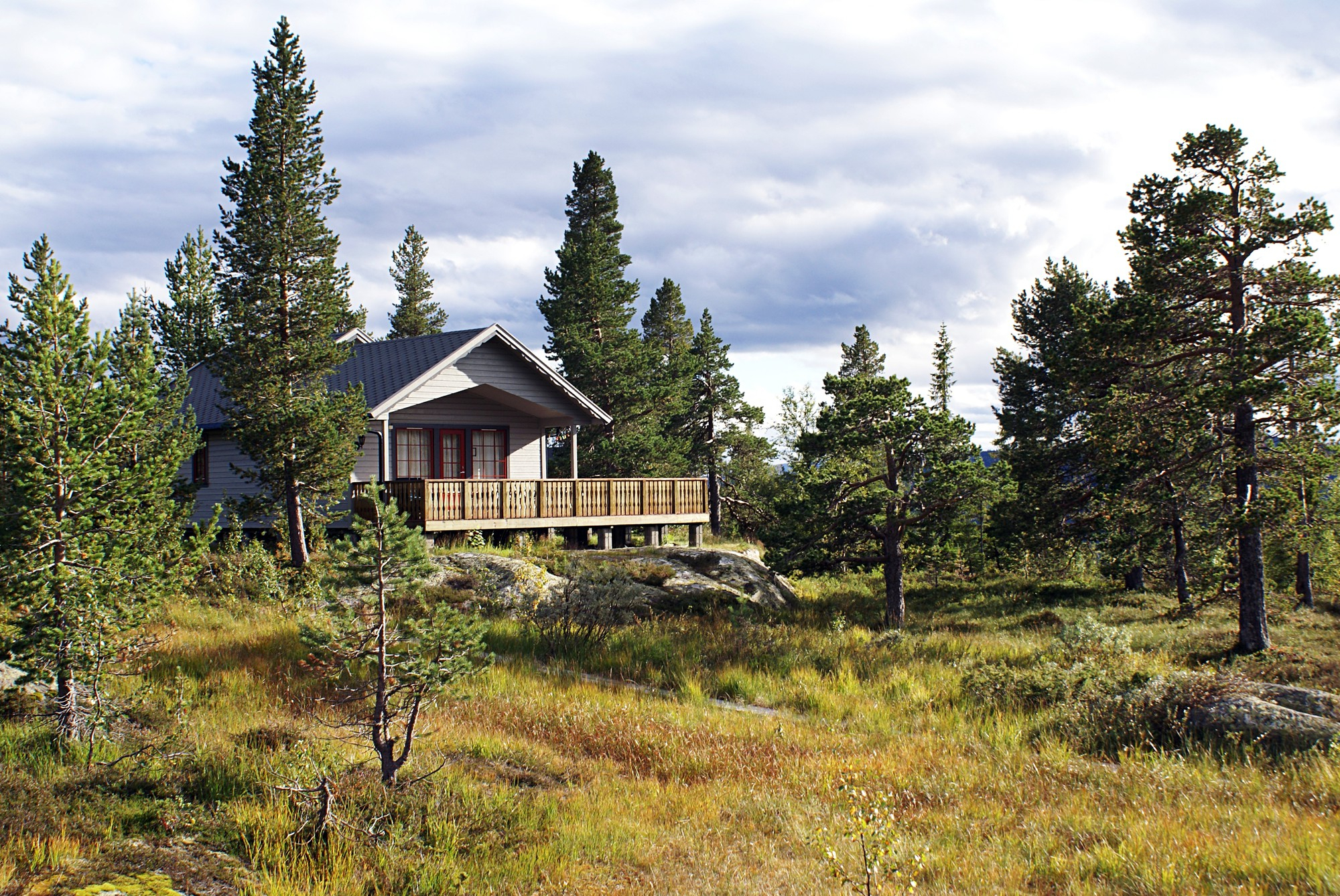
And it sat on maybe two acres of pine trees and lawn, sloping right down to the lake. There was an old wooden dock jutting out into the gray water.
I got out of the car and stood there with my mouth open.
I’d studied architecture for eight years. I’d seen thousands of houses. I knew right away that this one was special. The curves of that roof. The way the stones were set. Somebody had built this house with their hands and their heart. It was the kind of house you see once in your life and never forget.
And I also knew, standing there in that dirt driveway, exactly why Derek wanted it.
Two acres of waterfront on Lake Charlevoix. Even if the cottage was falling down, the land alone had to be worth millions.
Rachel Bennett was waiting for me on the porch.
She was younger than I’d expected. Maybe forty. Short dark hair, a navy raincoat, sensible boots. She was holding a large envelope and a ring of old iron keys.
“Emily?”
“Yes.”
She shook my hand. Then she looked at me for a long moment. At my wrinkled clothes and my unwashed hair and the dark circles under my eyes.
“You drove straight through,” she said.
“Mostly.”
“You look like Tom,” she said. “Around the eyes. He’d squint like that too, when he was deciding whether to trust somebody.”
I didn’t know what to say to that.
She handed me the keys. They were heavy. Five of them, on an iron ring. One was a regular house key. The others were long and old-fashioned, with teeth like little castles.
“Thomas changed the front lock last year,” she said. “Derek had a key. Tom didn’t want him to have one anymore.”
“Why not?”
“He found Derek inside the house one afternoon. With a metal detector.”
I stared at her.
“Tom was eighty pounds lighter than Derek and seventy-three years old,” Rachel said. “He walked him out at the end of a shotgun. Not loaded. But Derek didn’t know that.” She almost smiled. “Two weeks later, Tom came to my office and changed his trust. He left the cottage to you.”
“Why me?” I said. “I hardly knew him. I saw him maybe five times in my whole life.”
Rachel held out the envelope.
It was thick. Cream-colored paper, yellowed at the edges. Sealed with red wax. On the front, in neat block capitals I’d recognize anywhere:
FOR EMILY ONLY. NOT DEREK. NOT ANYONE ELSE.
“I think,” Rachel said gently, “that’s what this is for.”
She left a few minutes later. She told me she’d come back on Tuesday to go over the legal papers. She told me the electricity and water were still on, because Tom had prepaid them for two years. She told me Derek’s lawyer would probably find out I was here by tomorrow.
“Be careful,” she said, getting into her car. “Derek’s been desperate lately. I don’t know why. But he is.”
Then she drove away, and I was alone.
I unlocked the round front door. It swung open with a long, low creak.
Inside, it was cold and smelled like woodsmoke and old books and something else. Pipe tobacco, maybe. The front room was small but the ceiling was high, with dark wooden beams. A huge stone fireplace took up most of one wall. The stones were enormous. Some of them were as big as suitcases.
There was a worn leather armchair beside the fireplace. A wooden table with two chairs. Shelves full of books from floor to ceiling. A narrow staircase curving up to the loft.
And on every surface, on the shelves, on the windowsills, on the mantel, there were drawings.
Architectural drawings. Floor plans. Elevations. Sketches of the cottage from every angle, in pencil, in pen, in watercolor. Some old and yellow, some newer. Pinned to the walls. Stacked in piles. Rolled up in tubes.
I walked over to the table and sat down in one of the chairs. My legs were shaking from the drive. From everything.
I put the envelope on the table.
I looked at it for a long time.
Then I broke the wax seal and opened it.
Inside was a letter. Six pages, handwritten in pencil, in Uncle Tom’s careful block capitals.
The first line said:
KID.
IF YOU’RE READING THIS, I’M DEAD AND DEREK’S BEEN A PAIN IN THE BACKSIDE. I’M SORRY ABOUT BOTH.
I laughed out loud. It echoed off the stone walls. Then I put my hand over my mouth because I was crying too.
I NEED YOU TO KNOW SOMETHING BEFORE YOU READ ANY FURTHER, the letter said. THE GOLD IS REAL.

Specialty: Emotional Turning Points
Rachel Monroe writes character-driven stories about betrayal, second chances, and unexpected resilience. Her work highlights the emotional side of family conflict — the silences, the misunderstandings, and the moments when someone quietly decides they’ve had enough.