It started in March with a cough.
Just a little one. A dry tickle in his throat that wouldn’t go away. He said it was allergies. Then he started getting tired. Martin had never been tired a day in his life. He was the kind of man who got up at five in the morning and mowed the lawn before breakfast.
Then he started losing weight. Ten pounds. Then fifteen. His belt needed new holes.
“Go to the doctor,” I said.
“It’s nothing. I’m just getting old.”
“Martin. Go to the doctor.”
He went in early April. They took X-rays. Then a CT scan. Then a biopsy. Then the doctor called us both into a small office with a box of tissues on the desk and a painting of a sailboat on the wall. I remember staring at that sailboat the whole time she talked.
Metastatic lung cancer. It had already spread. To his liver. His bones. His brain.
Too advanced to cure.
“How long?” Martin asked. His voice was perfectly calm. The voice he used on the bridge during storms.
“With treatment, maybe six months,” the doctor said gently. “Without treatment, maybe two or three.”
Martin nodded slowly.
“Thank you for telling us straight,” he said.
He held my hand the whole drive home. We didn’t say anything. When we pulled into the driveway, he turned off the engine and sat there for a long time, staring at the garage door.
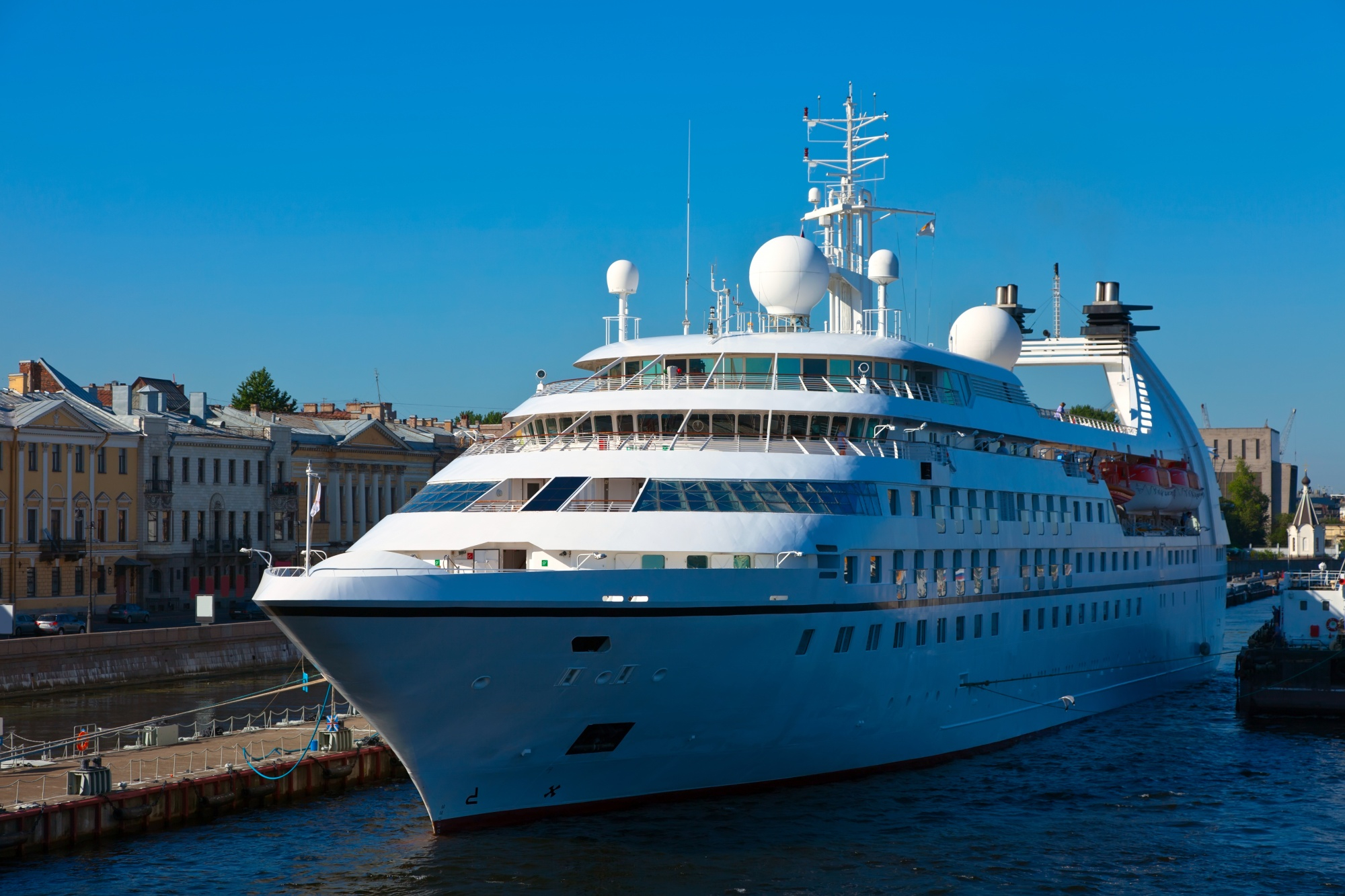
“The cruise,” he finally said. “It’s in June.”
“Don’t,” I said. “Don’t think about that right now.”
“It’s ten weeks away.”
“Martin.”
He turned and looked at me. His eyes were wet. It was the first time I’d seen him cry since his mother’s funeral.
“I’m sorry, Evie,” he said. “I’m so sorry. I finally got you to say yes, and now—”
I put my hand over his mouth.
“Stop,” I said. “Just stop. We’re going to fight this. You’re going to get treatment. And we’re going to go on that cruise. Together. You promised.”
He kissed my palm.
“I promised,” he said.
He tried. God, he tried.
Chemotherapy. Radiation. A clinical trial in Boston. He went to every appointment. He took every pill. He made jokes with the nurses and learned all their names and asked about their kids. He never once complained.
But the cancer was faster than any of it.
By May, he couldn’t climb the stairs anymore. We moved a hospital bed into the living room by the big front window. He liked to look out at the sky.
By late May, he was sleeping most of the day.
David flew home from Seattle with his wife and their two girls. We all sat around that hospital bed in the living room. The girls drew him pictures of ships. Martin taped them to the window.
There were things that happened in those last weeks that I didn’t understand at the time.
Martin made phone calls. Long ones. Late at night, when he thought I was asleep upstairs. I’d hear his voice through the floor, low and serious. I couldn’t make out the words.
Once, I came downstairs for a glass of water and he quickly hung up the phone.
“Who was that?” I asked.
“Just the cruise line,” he said. “Paperwork. Retirement stuff.”
Another time, a package came in the mail addressed to him. A big flat box from a company in New York. He had David take it out to the garage before I could see the label.
“What’s that?”
“Nothing, Evie. Just some old ship stuff I ordered. For the garage.”
And one afternoon in late May, a man came to visit.
He was in his forties, tall and broad-shouldered, with dark skin and close-cropped gray hair and a quiet, steady way of moving. He was wearing jeans and a navy blue windbreaker. He’d flown in from Miami.
“Mrs. Hale,” he said, shaking my hand at the front door. “I’m Thomas Okafor. I’m the staff captain on the Aurelia. Second in command. I’ve worked with your husband for eleven years.”
I remembered the name. Martin talked about him sometimes. Thomas is the best officer I’ve ever trained. He’ll have his own ship someday.
“He’s in the living room,” I said. “He’s very tired today.”
“I won’t stay long.”
He stayed three hours.
Martin asked me to leave them alone. I sat in the kitchen with a cup of tea that went cold. Through the doorway, I could see Thomas sitting in the chair beside the hospital bed, leaning close, listening. Martin was talking. Slowly. With long pauses. Sometimes Thomas wrote something down in a small notebook.
At one point, Martin pointed toward the garage. Thomas nodded.
At another point, I saw Thomas wipe his eyes.
When he finally left, he stopped in the kitchen doorway. He looked at me for a long moment. He looked like he wanted to say something.
“Mrs. Hale,” he said. “Your husband is a great man.”
“I know.”
“He taught me everything I know about the sea. And about—” He stopped. He cleared his throat. “About a lot of things.”
He shook my hand again. Then he went out to the garage with David for a few minutes. When he drove away in his rental car, I saw something large and flat in his back seat, wrapped in a blanket.
I didn’t ask. I was too tired to ask. I was too tired for anything except sitting beside my husband.
Martin died on June second. Nine days before the cruise.
It was early in the morning, just after sunrise. The sky outside the big front window was pink and gold. I was sitting in the chair beside his bed, holding his hand. I’d fallen asleep that way.
I woke up because his fingers moved.
He was looking at me. His eyes were clear. Clearer than they’d been in days.
“Evie,” he whispered.
“I’m here.”
“I had a dream.” His voice was barely a breath. “We were dancing. On the ship. In the ballroom. And you weren’t afraid.”
I couldn’t speak. I just held his hand tighter.
“Promise me something,” he whispered.
“Anything.”
“Go.” He swallowed. It took him a long time. “Go on the cruise. Without me.”
“Martin, no. I can’t. Not without you.”
“Please.” His fingers squeezed mine. Weakly. “I’ll be there. I promise. I’ve never broken a promise to you. Not once. In fifty years.”
Tears were running down my face. “That’s not fair.”
“I know.” He almost smiled. “Promise me, mermaid.”
I looked at him. At his crooked nose. His brown eyes. The face I’d loved since a summer night in 1975 when he walked into a dance hall dripping wet and laughing.
“I promise,” I whispered.
He closed his eyes. He smiled.
“Moon River,” he breathed. “Wider than a mile.”
Then he was gone.
I don’t remember much about the next week.
The funeral home. The church. The same little white church in South Portland where we got married. Hundreds of people came. Sailors and officers from forty years of ships. Neighbors. Old friends. Gus, his best man, now eighty years old, using a cane, crying openly in the front pew.
They played “Moon River” at the end. I don’t remember who arranged that. I just remember that I couldn’t breathe while it played.
Afterward, at home, I sat in the living room where the hospital bed used to be. Someone had taken it away. There was just an empty space by the window. And on the window, still taped there, were my granddaughters’ drawings of ships.
I didn’t know how to go on living.
Martin and I had lived so happily together for so many years. Even the years he was at sea, he was always coming home. There was always a truck in the driveway eventually. Always a duffel bag dropped on the lawn. Always hello, mermaid.
Now there would never be another one.
I cried over how unfair it all was. Fifty years. We were nine days away from fifty years. Nine days.
On the night after the funeral, I found the tickets.
They were in the kitchen drawer, where Martin had put them in January. Two tickets for the Aurelia. June eighth to June twenty-second. Barcelona to Athens.
I took them out. I held them in both hands. I wanted to tear them apart. I wanted to rip them into a thousand pieces and throw them in the trash. What was the point? What was the point of any of it now?
My fingers tightened on the paper.
And then I heard his voice. As clear as if he were standing in the kitchen.
Promise me, mermaid.
I put the tickets down on the counter. I put my face in my hands.

Sophia Rivers is an experienced News Content Editor with a sharp eye for detail and a passion for delivering accurate and engaging news stories. At TheArchivists, she specializes in curating, editing, and presenting news content that informs and resonates with a global audience.
Sophia holds a degree in Journalism from the University of Toronto, where she developed her skills in news reporting, media ethics, and digital journalism. Her expertise lies in identifying key stories, crafting compelling narratives, and ensuring journalistic integrity in every piece she edits.
Known for her precision and dedication to the truth, Sophia thrives in the fast-paced world of news editing. At TheArchivists, she focuses on producing high-quality news content that keeps readers informed while maintaining a balanced and insightful perspective.
With a commitment to delivering impactful journalism, Sophia is passionate about bringing clarity to complex issues and amplifying voices that matter. Her work reflects her belief in the power of news to shape conversations and inspire change.