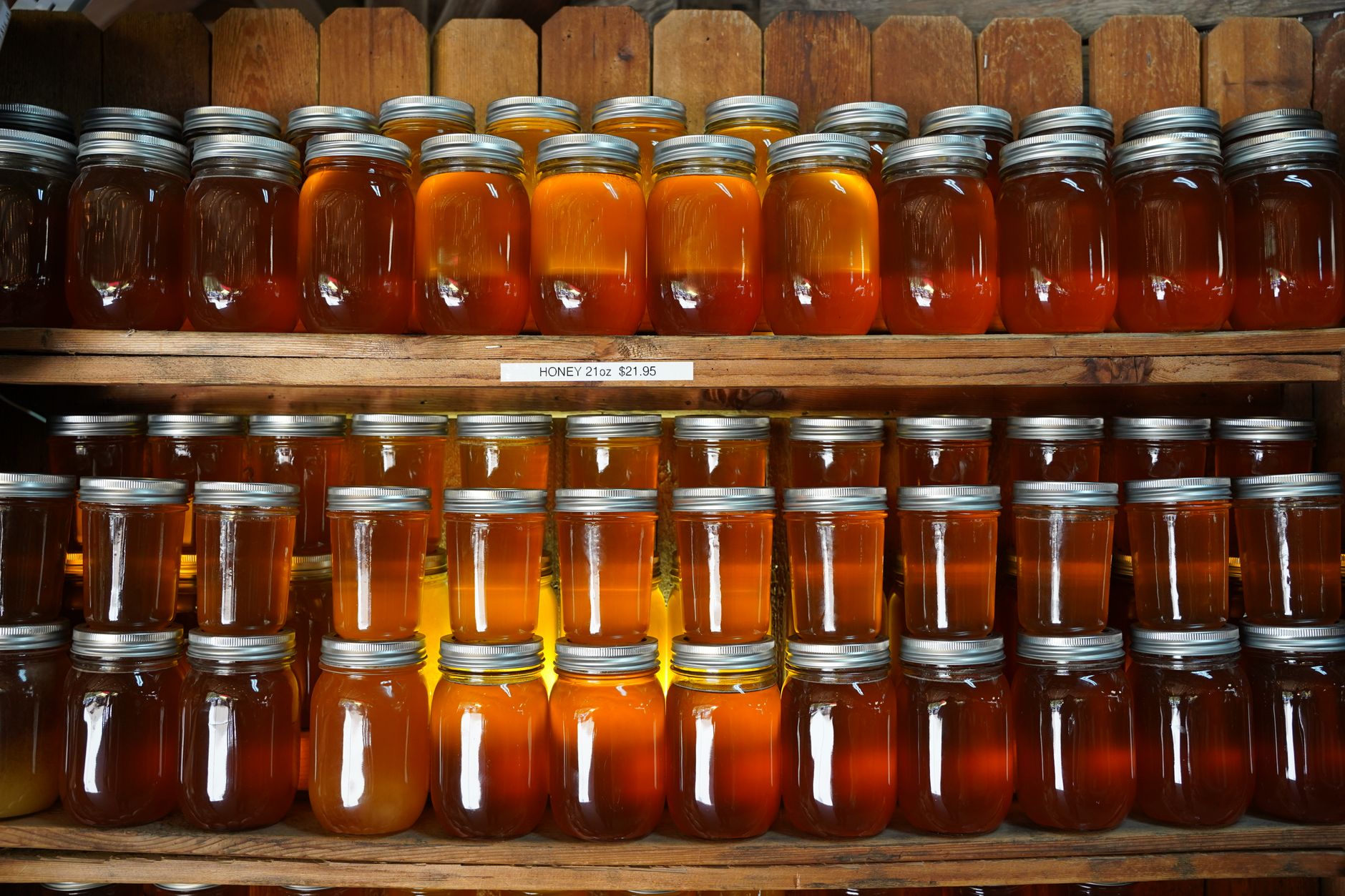
“She never sold a jar,” I said. “Not one. Not at the church bazaar, not when Dad was laid up in ’79 and they were eating out of that cellar themselves. She gave them. Every November she started carrying them down to the pantry.”
“Lorraine’s table,” Hank said.
That is what they called it. The food pantry runs out of our church basement the second and fourth Thursday of the month, and by its rules it can only shelve store goods, nothing home canned. So twenty-some years ago Jean, who runs it, let my mother set up a card table of her own by the door. Those jars were not the pantry’s. They were Lorraine Olson’s, and anyone going out with a box could take one.
She asked one thing. It was written on a recipe card taped to the table: “Bring the jar back washed.”
They did, mostly. A canning jar costs a dollar and a half new. That is how she kept three hundred of them going on a widow’s check.
Hank dried his hands. “What are you going to do, Jude?”
I looked at the cards.
“Dennis says it’s even. They got the jars and I got the box.”
“He did say that.”
“Then I guess I’ll do with my half what he’s doing with his. I’ll take it to market.”
Hank studied me.
“You’re going to sell your mother’s recipes.”
“No,” I said. “I’m going to do what she did.”
Monday on my way home from the lumberyard I stopped at the drugstore and bought two packs of index cards, a hundred to the pack, and a box of black pens.
Tuesday I called Mrs. Albrecht. She has run the Saturday market for twenty-six years. Before that she taught ninth grade civics for thirty, and she had both my brother and me, and she still calls on people.
“I have exactly one space,” she said. “Number fourteen. That’s beside your brother.”
“That’ll do.”
“What are you selling, Judy?”
“Nothing.”
“It’s ten dollars whether you sell or not,” said Mrs. Albrecht. “Half past seven. Bring a tablecloth. I won’t have a bare table on my square.”
I picked eight cards. Dilly beans, pear butter, peaches, bread and butter pickles, pickled beets, tomatoes, applesauce and rhubarb jam: the eight things that had filled most of those shelves. I would copy each one twenty-five times. Two hundred cards.
I am not fast. I copied them the way she wrote them, every word, the notes too. I put in the things she left off because she knew them and a stranger wouldn’t. Canning salt, not table salt. Vinegar that says five percent on the label. Lemon juice in the tomatoes whether you think they need it or not. A full rolling boil as long as the canning book says, and if a lid doesn’t go down, that jar goes in the refrigerator and gets eaten this week.
My mother was not casual about any of that. When her wrists got too weak for the pressure canner she handed it over to me, and after that the plain beans and the corn went home to my cellar. Everything on her own shelves was pickles and fruit, put up in a boiling kettle, and every lid had a month and a year on it. Anything that reached its second August went on the supper table or out to the hens.
At the bottom of each card I wrote one more line, the one from the card taped to the pantry table.
“Bring the jar back washed. Lorraine Olson.”

Sophia Rivers is an experienced News Content Editor with a sharp eye for detail and a passion for delivering accurate and engaging news stories. At TheArchivists, she specializes in curating, editing, and presenting news content that informs and resonates with a global audience.
Sophia holds a degree in Journalism from the University of Toronto, where she developed her skills in news reporting, media ethics, and digital journalism. Her expertise lies in identifying key stories, crafting compelling narratives, and ensuring journalistic integrity in every piece she edits.
Known for her precision and dedication to the truth, Sophia thrives in the fast-paced world of news editing. At TheArchivists, she focuses on producing high-quality news content that keeps readers informed while maintaining a balanced and insightful perspective.
With a commitment to delivering impactful journalism, Sophia is passionate about bringing clarity to complex issues and amplifying voices that matter. Her work reflects her belief in the power of news to shape conversations and inspire change.