I had the scissors open around the string.
I didn’t cut it. I closed the scissors and put them back in my pocket.
I had already decided two things. I would not tell one lie about that saddle, and I would not start a fight in front of those boys. If nobody asked, then nobody asked, and Randy and I would settle it some other day.
But I wasn’t going to tidy it up for him either.
“You’re leaving that on,” Scott said.
“I am.”
“All right,” he said, and went to check the oil in the truck.
Randy had asked us to Sunday dinner back on Thursday, at the meal the church ladies put on after the graveside. “Y’all come eat Sunday,” he’d said. “The boys need people around.” I had said we’d bring a pie.
After church I changed into jeans and my denim shirt, since I knew what I’d be carrying, and Scott drove us the six miles north.
Randy rents the old Baker farmhouse, a white two-story with a stock pen and a windmill that doesn’t turn anymore. He’s had the boys by himself for four years, since their mother moved to Amarillo. He drives a water truck for an oilfield service outfit. He packs those boys’ lunches and he has never missed a school program, and I want that said plainly before I tell the rest.
What I didn’t know that Sunday was that his hours had been cut from fifty a week to thirty-two since August. I didn’t know his rent was $650 and due on the first. I didn’t know that on the last Monday of September, the day our father died, my brother had $750 to his name.
Four hundred to the funeral home left three fifty. He was three hundred short.
I only knew what the yellow ticket said.
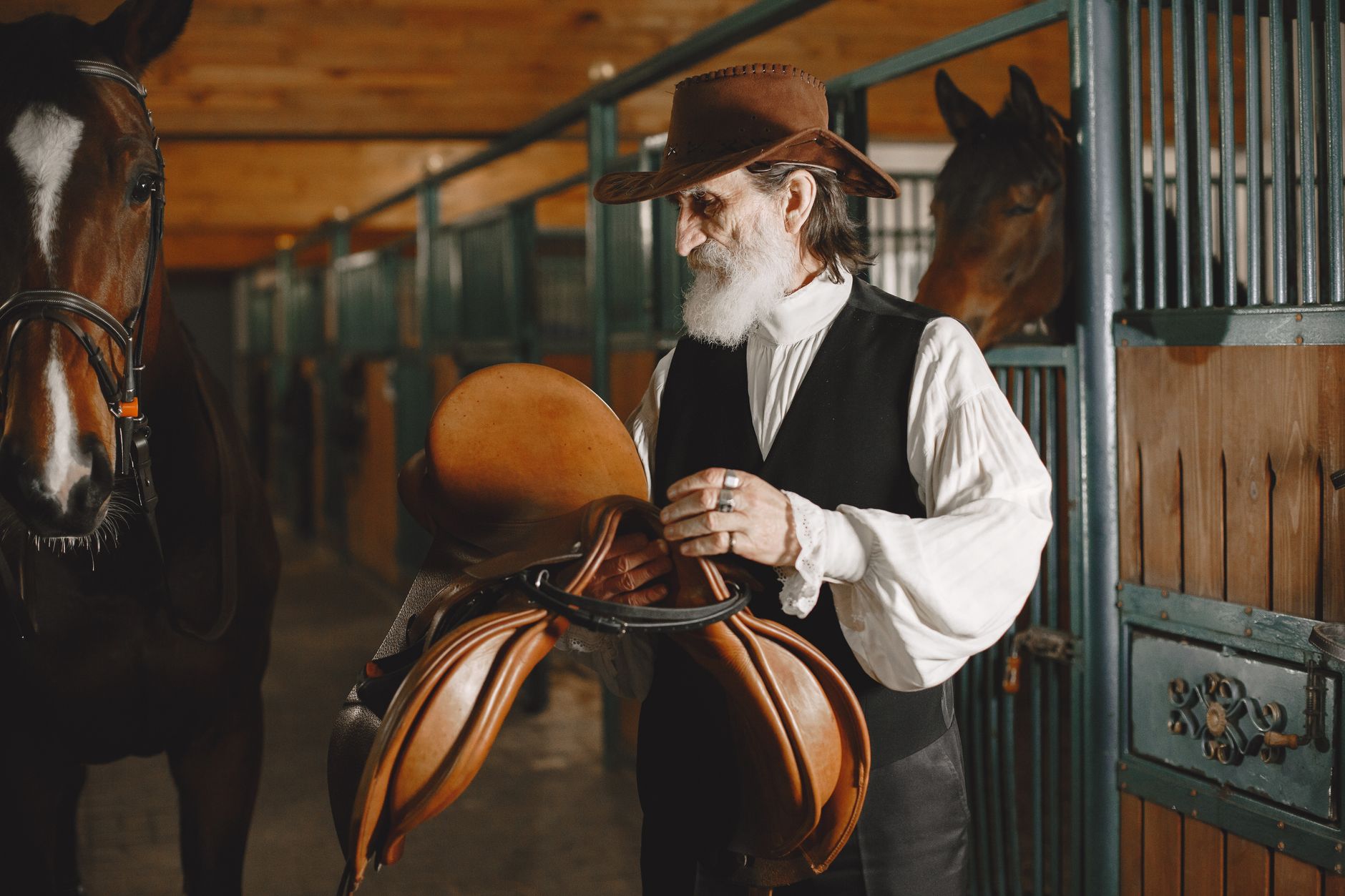
Scott parked by the propane tank. I got the saddle out of the back seat and up on my hip, horn forward, and it about pulled my arm out of the socket. The stirrups knocked my knee all the way up the porch steps. Scott carried the pie in one hand and held the screen door with the other.
“You sure?” he said, low.
“Hold the door.”
The kitchen smelled like chili and cornbread. Randy was at the stove with his back to us, stirring. Cody and Luke were already at the table in their T-shirts, Cody tipped back in his chair, Luke building something out of crackers.
“Hey, Aunt Tammy,” Luke said. And then, “Whoa.”
I set it on the end of the table, between the cornbread and the butter. I set it on its side, easy, but the cinch ring swung down and hit the wood like a dropped spoon.
Randy turned around.
I watched him see it. I watched his eyes go from the saddle to the little white tag to me, and I watched every drop of color go out of his face and then come back twice as dark.
He didn’t say a word.
Neither did I. Not to him.
“Boys,” I said, “come here and look at your granddad’s saddle. There are some things about it you ought to know, and I’m the only one left who knows a few of them.”
Cody’s chair came down on all four legs. Luke was already up on his knees.
Luke put his nose right down on the seat. “It smells like Grandpa’s truck.”
“That’s neatsfoot oil. He rubbed it in every spring and every fall. And that’s horse, and that’s close to fifty years of dust.”

Specialty: Legal & Financial Drama
Michael Carter covers stories where money, power, and personal history collide. His writing often explores courtroom battles, business conflicts, and the subtle strategies people use when pushed into a corner. He focuses on grounded, realistic storytelling with attention to detail and believable motivations.