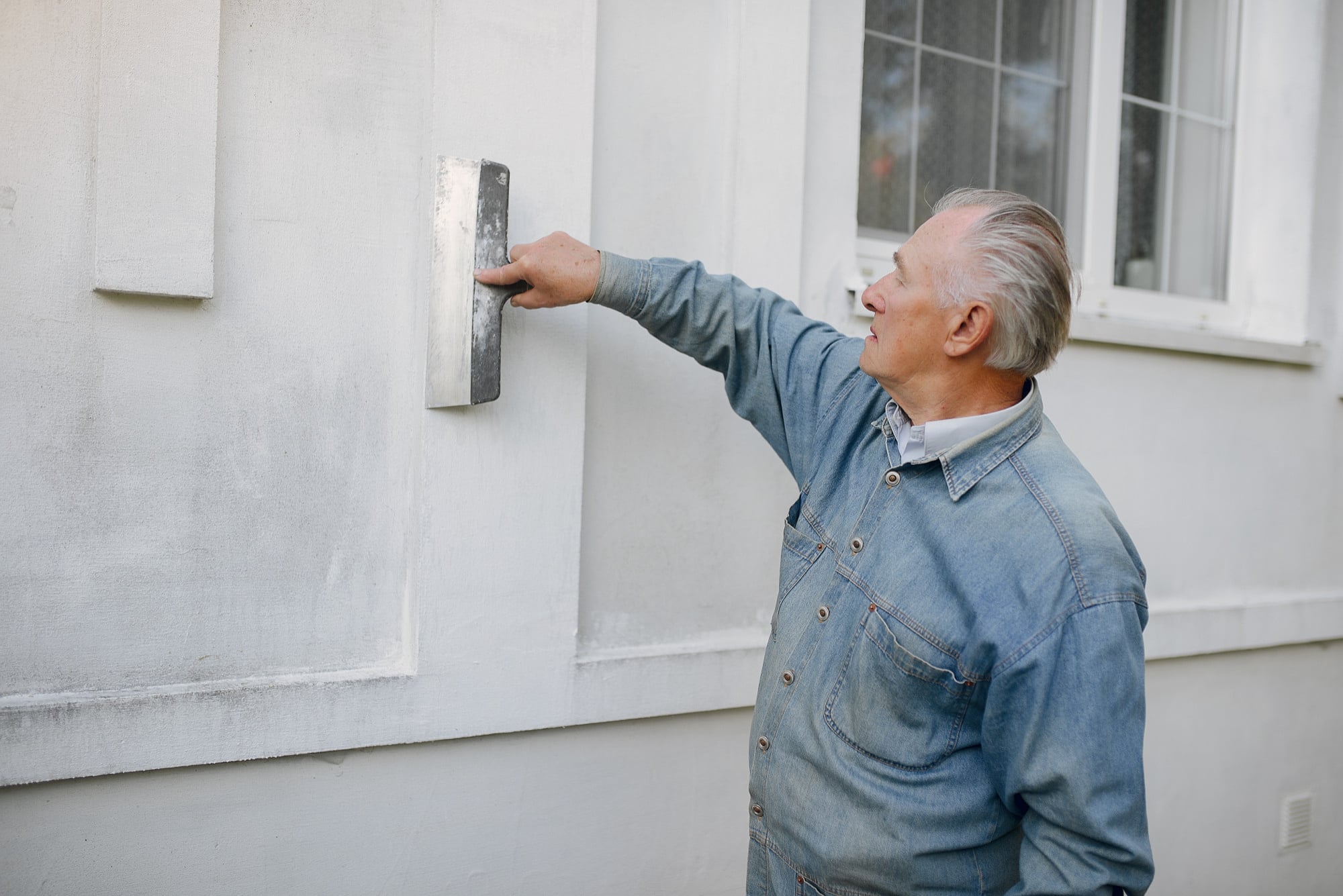
Paid in Full
“Sue us, old man. You’ll be dead before it gets to court.”
My father told me Mr. Prescott said it with a laugh. Standing by the garage of a three-story lake house that my dad had just spent nine weeks painting by hand. In August. By himself. At seventy-two years old.
Dad called me from his truck afterward. I was standing in my kitchen in Brookfield, stirring a pot of chili, when my phone rang.
“Hi, Dad. Are you finished? Did they love it?”
“They loved it,” he said. “Mrs. Prescott took about two hundred pictures.”
“That’s great! So they paid you?”
There was a little pause.
“Not exactly,” he said.
I turned off the burner.
“What do you mean, not exactly?”
And he told me. About Mr. Prescott pulling him aside by the garage. About the invoice. About we’re over budget, we’re not paying that. About sue us, old man.
About Mrs. Prescott, standing right there on the porch she’d had him paint three different shades of white, laughing.
Paint’s on the house, Gerald. You can’t exactly take it back.
I was so angry I could barely breathe.
“Dad. I’ll drive up there right now. I’ll call a lawyer. I’ll call the newspaper. I’ll call the Better Business Bureau. I’ll—”
“No, you won’t,” Dad said.
He didn’t sound angry.
That was the strange part. My father had just been cheated out of four thousand eight hundred dollars by two people who laughed at him and told him he’d be dead before he saw a dime.
And he sounded almost cheerful.
“What did you say to them?” I asked.
“I said, ‘That’s fair.'”
“Dad!”
“And I had them sign one paper,” he said. “Said I needed it for my records.”
“What paper?”
He didn’t answer that.
“Go to bed, honey,” he said. “It’s late. You’ve got school tomorrow.”
“Dad, what paper?”
“Goodnight, Amy.”
He hung up.
My father’s name is Gerald Hollis.
He’s painted houses for fifty-one years.
He started in 1975, when he was twenty-one, right out of the Army. His uncle Walt had a painting business in Oconomowoc. Uncle Walt handed him a brush and a five-gallon bucket and said, “Don’t slop it. Every drip is your name on the wall.”
Dad never slopped it.
He cuts his lines by hand. No tape. Never. He says tape is for people who don’t trust their own wrist. He can run a brush along the edge of a window frame so straight you’d swear somebody used a laser. I’ve watched him do it my whole life. His hand doesn’t shake. Even now. Even at seventy-two.
He’ll stay an extra hour to touch up a nail hole nobody but him would ever see. He’ll come back a week after a job is done, uninvited, just to check that the paint cured right. He’ll fix a drip on the back of a gutter that faces a hedge and that no human being will ever look at.
“I’ll know it’s there,” he says.
He has a little ritual. At the end of every job, he climbs up into the attic, or into the back of a closet, or behind a furnace, somewhere nobody ever goes. And he takes a pencil and writes on the wall in his neat, square printing.
Painted by Gerald Hollis.
And the year.
And, once the bill is paid, he goes back and adds two more words.
Paid in full.
He’s been doing it since 1975. There are probably three thousand houses in southeastern Wisconsin with his name hidden in the attic.
“Why do you do that?” I asked him once, when I was about ten, holding the flashlight for him in the crawlspace of a big Victorian in Delafield.
“So the house remembers who took care of it,” he said.
My mother, Peggy, kept the books.
For forty-four years, she sat at our kitchen table every Sunday night with a green ledger and a calculator and a stack of receipts and invoices. She did all of Dad’s paperwork. Contracts. Estimates. Change orders. Taxes.
Dad hated paperwork. He’d rather paint a three-story house in a thunderstorm than fill out a form.
But Mom made him do it.
It started in 1987.
I was five. I don’t remember it. But I’ve heard the story a hundred times.
A man named Richard Gaffney hired Dad to paint his big new house in Brookfield. Inside and out. It took Dad six weeks. The bill was nineteen hundred dollars. That was a lot of money in 1987. That was two months of our mortgage.
Gaffney never paid.
He just stopped answering the phone. Dad drove over there three times. Nobody came to the door. Then Gaffney sold the house and moved to Arizona.
Dad didn’t have a written contract. He didn’t have anything. Just a handshake.
“A handshake used to mean something,” Dad said at the dinner table. Mom told me he said it with tears in his eyes.
That winter was hard. We ate a lot of spaghetti. Mom took a second job at the Kohl’s on Bluemound Road.
And in the spring, Mom sat my father down at the kitchen table with a lawyer named Arthur Fenwick. An old man with a bow tie who did real estate law out of a little office over the Ben Franklin in downtown Waukesha.
Mr. Fenwick explained something to my father that day. Something called a construction lien.
“Gerald,” he said. “When you work on a man’s house, the law says you’ve got a claim on that house. Until you’re paid. Not on the man. On the house. You don’t need to sue him. You don’t need to chase him to Arizona. You just file a piece of paper with the county. And that house can’t be sold, can’t be refinanced, can’t change hands with a clear title, until you’re paid.”
“I didn’t know that,” Dad said.
“Most people don’t,” Mr. Fenwick said. “That’s why most people get cheated.”
He told Dad the rules. You have to file within a certain time after you finish the work. You have to be able to prove what you did and what you’re owed. Written contract. Dates. Signatures. Every change in writing.
“Paperwork, Gerald,” Mr. Fenwick said, tapping the table. “The law protects the man with the paperwork.”
My mother wrote it on an index card and taped it inside the visor of Dad’s truck.
THE LAW PROTECTS THE MAN WITH THE PAPERWORK.
It’s still there. Faded almost white. Thirty-nine years later.
After that, Dad never did another job without a contract.
Not one. Not for a neighbor. Not for a friend from church. Not for his own brother.
“Custom work gets custom paperwork,” he always says.
Every estimate in writing. Every contract signed. Every change, every single change, written down on a little slip of paper, dated, and initialed by the customer.
He keeps the slips in a coffee can in his truck.
A Maxwell House can. Red. Dented. With a plastic lid that doesn’t quite fit anymore. It rides on the floor of the passenger side of his old white Ford F-150. Under the seat. Next to his thermos.
Every job has its own rubber band. Every rubber band holds every slip for that job.
He’s never once needed them.
Until this summer.
My mother died four years ago.
Breast cancer. She fought it for two years. She kept doing Dad’s books right up until the end. I’d come over on Sunday nights and find her at the kitchen table, bald under her scarf, with the green ledger open in front of her.
“Somebody has to,” she’d say.
After she died, I tried to take over the books. I’m a fourth-grade teacher. I’m not great with numbers. Dad wouldn’t let me anyway.
“I can do it,” he said. “Peg taught me.”
He does it badly. He writes everything in pencil. He loses receipts. But he never loses the coffee can.
And last October, Dad had a heart attack.
A small one. Mild, the doctor said. He was up on a ladder painting the gutters of a ranch house in New Berlin when he felt a pressure in his chest and his left arm went numb. He climbed down. Very carefully. He sat on the bottom rung of his ladder and called 911 himself.
Then he called the homeowner, a nice woman named Mrs. Okonkwo, and apologized for not finishing the gutters.
They put a stent in. He was in the hospital for four days. He was back on a ladder in six weeks. Against doctor’s orders. Against my orders.
“I’m not ready to quit, Amy,” he said. “I’ve got a little more left in me.”
So when Dad told me what Mr. Prescott said by the garage, you’ll be dead before it gets to court, I didn’t just hear an insult.
I heard my father sitting on the bottom rung of a ladder in New Berlin, clutching his chest.
And I wanted to drive up to that lake house and set it on fire.
The Prescotts hired him in June.
Bradley and Courtney Prescott. From Chicago. Lake Forest, actually. He did something in commercial real estate. She did something on Instagram. They had a black Range Rover and a white Tesla and matching sunglasses.
They’d bought a lake house up on Pine Lake. An old one. Built in 1924. Three stories. Cedar shake siding. A wraparound porch. Dormers on the third floor. Every inch of it trimmed in fancy carved woodwork. Brackets and spindles and scalloped edges.
It was a beautiful old house. It had been sitting empty for three years after the last owner died. The paint was peeling off in sheets.
The Prescotts weren’t going to live in it.
They were flipping it.
“Fix it up and sell it,” Mrs. Prescott told my father at the first meeting. “Lake houses are going for crazy money right now. We’re going to list it at one point two.”
One point two million dollars.
They’d paid six-eighty for it. Dad found the sale record later at the county.
Dad gave them an estimate.
Exterior only. All three stories. Siding, trim, porch, railings, spindles, brackets, dormers, window frames, doors, shutters. Scrape, prime, two coats.
Eleven thousand six hundred dollars.
Plus materials.
Mr. Prescott looked at it for about four seconds.
“That’s high.”
“It’s a lot of house,” Dad said. “And a lot of trim. Every one of those spindles has to be hand-brushed. There’s two hundred and forty of them. I counted.”
Mr. Prescott sighed. Like Dad was wasting his time.
“Fine,” he said. “Whatever. Just get it done by the end of August. We want to list it Labor Day weekend.”
Dad pulled out his contract. One page. Typed on the old IBM Selectric in his basement. The same form Mom created in 1987, with GERALD HOLLIS PAINTING — QUALITY SINCE 1975 at the top.
Scope of work. Price. Payment schedule: one-third at signing, one-third at midpoint, balance on completion. Any changes to color, materials, or scope must be made in writing and initialed by the owner. Additional costs for changes will be added to the final balance.
Both Prescotts signed it.
Mr. Prescott signed it without reading it.
Mrs. Prescott signed it with a little heart over the i in her name.
They changed the color twice.
The first color was a soft gray-blue. Mrs. Prescott picked it from a Pinterest board. She showed Dad on her phone. She called it “sea glass.”
Dad bought the paint. Eighteen gallons of exterior acrylic. Sherwin-Williams. The good stuff. Nine hundred and forty dollars.
He primed the whole first floor. He put the first coat of sea glass on the south side.
Mrs. Prescott drove up from Chicago that weekend. She stood in the yard and looked at it.
“No,” she said. “That’s not sea glass.”
“It’s the color you picked,” Dad said. He showed her the paint chip. The same one she’d sent him.
“It looks different in person,” she said. “It’s too gray. I want something more… beachy. More like actual sea glass.”
She scrolled through her phone. She found another photo. A beach house in Nantucket. A slightly greener blue.
“This,” she said. “This sea glass. Not that sea glass.”
Dad looked at the photo. He looked at the south side of the house, freshly painted.
“That’s a different color,” he said. “I’ll have to buy new paint. And repaint the south side.”
“Okay,” she said. “Do that.”
Dad pulled out a little slip of paper from his shirt pocket. A change order. Mom designed those too. He wrote it out by hand, right there in the yard.
Change #1. Owner requests color change from SW 6211 to SW 6476. Additional paint: $940. Additional labor to repaint south elevation: $600. Total: $1,540.
He held out his pen.
Mrs. Prescott rolled her eyes. “Seriously?”
“Custom work,” Dad said, “gets custom paperwork.”
She initialed it. C.P. With a little heart.
He put it in the coffee can.
Two weeks later, she changed it again.
This time it was the trim. She’d wanted bright white. Now she wanted “warm white.” Then “not that warm. Like, a cool warm.”
Dad bought the paint. He repainted every inch of trim on two sides of the house. Two hundred and forty spindles. By hand.
He wrote out a change order.
Change #2. Owner requests trim color change from SW 7006 to SW 7005. Additional paint: $380. Additional labor: $1,180. Total: $1,560.
Mrs. Prescott initialed it.
Then she wanted the front door red. Then black. Then “a moody green.”
Change #3. Front door, three colors. $340.
Then she wanted the porch ceiling painted “haint blue,” like they do in the South to keep away spirits.
Change #4. Porch ceiling, haint blue. $420.
Every time, Dad wrote it down. Every time, she initialed it. Every time, it went in the coffee can.
By the end, the contract plus changes came to sixteen thousand four hundred and sixty dollars.
The Prescotts had paid two installments. Eleven thousand six hundred and sixty.
Balance due on completion: four thousand eight hundred.
It took him nine weeks.
Up and down a ladder at seventy-two. In June and July and August. By himself.
August in Wisconsin isn’t Arizona. But it gets hot. Ninety-one degrees, some days. Ninety-four on the worst one. Humid as a wet towel. The sun bouncing off the lake.
I drove up on Saturdays to bring him lunch. Ham sandwiches and iced tea and the oatmeal cookies he likes. I’d find him three stories up on his big aluminum extension ladder, painting the dormer trim with a two-inch angled brush, sweat running down his face.
“Dad, come down and eat.”
“In a minute. I’m cutting a line.”
He was always cutting a line.
I begged him to hire a helper. I begged him every single Saturday.
“Dad, you had a heart attack ten months ago. You can’t be up on a ladder in this heat by yourself.”
“I’m fine.”
“You’re seventy-two.”
“I know how old I am, Amy.”
“Hire somebody. Just for the high stuff. Just for the third floor. One of the Sorensen boys. They’re always looking for work.”
He climbed down the ladder. Slowly. Carefully. He sat on the porch steps and took the sandwich.
“They’re paying for me,” he said. “They’ll get me.”
That’s how my father has always thought about it. When somebody hires Gerald Hollis, they’re not hiring a company. They’re hiring a man. His eye. His hand. His wrist that doesn’t shake.
“They’re paying for me,” he said again, chewing. “Not some kid who’ll slop it.”
“They’re not paying for you to have another heart attack.”
He just smiled and ate his sandwich.
I met Mrs. Prescott once that summer. In July.
She drove up on a Saturday while I was there. In the white Tesla. She got out in big sunglasses and white linen pants and walked right past me like I wasn’t there.
She stood in the yard with her phone, taking pictures of the house.
“Gerald,” she called up the ladder. “Can you move? You’re in the shot.”
My father was three stories up, cutting a line along a window frame on the dormer.
“I’m almost done with this window, Mrs. Prescott. Two more minutes.”
“I need the shot now. The light’s perfect.”
Dad set down his brush. He started climbing down the ladder. Slowly. Carefully.
He’s seventy-two. It took him three minutes.
Mrs. Prescott sighed the whole time.
When he got to the bottom, she took her pictures. Then she looked at him.
“You know,” she said. “You might want to think about retiring. No offense. It’s just a little stressful watching you up there.”
She walked back to her Tesla and drove away.
Dad picked up his ladder and moved it back to the dormer.
“Nice lady,” he said.
“Dad.”
“She’s stressed,” he said. “Flipping a house is stressful.”
He climbed back up. He finished his line.
He finished the house on the last Friday in August.
He called me that morning. He sounded happy. Proud.
“Last day, honey. I’m doing the final walk-through with them at two. They’re driving up from Chicago.”
“How does it look?”
“It looks like 1924,” he said. “Like the day it was built.”
I believed him. I’d seen it the week before. It was beautiful. The cedar shakes were the soft greenish-blue of real sea glass. The trim was a perfect warm white. Two hundred and forty spindles, every one hand-brushed. The porch ceiling was a pale robin’s-egg blue. The front door was a deep, moody green that looked almost black in the shade.
It was the most beautiful house on Pine Lake.
My father made it that way.
At two o’clock, the Prescotts walked all the way around the house.
Dad told me about it later. Every detail. He remembers everything.
Mrs. Prescott took pictures the whole time. For her listing. She took pictures of the porch and the spindles and the dormers and the green front door. She posted three of them on Instagram before they’d even finished the walk-through.
Our lake house glow-up is DONE!!! #flipping #lakelife #transformation
She didn’t tag my father.
“It’s gorgeous,” she said, standing on the porch. “Honestly, Gerald. It’s gorgeous.”
“Thank you, Mrs. Prescott.”
Then Mr. Prescott pulled Dad aside by the garage.
“So,” he said. “About the balance.”
Dad got out his invoice. He’d typed it up on the Selectric the night before. One page. Every line item. Every change order, with the date. The total at the bottom.
Balance due: $4,800.00.
He held it out.
Mr. Prescott didn’t take it. He didn’t even look at it.
“We’re over budget,” he said. “Way over. The kitchen ran long. The contractor screwed us on the bathrooms. The landscaping cost twice what we thought. We’re not paying that.”
Dad thought he was joking.
He actually smiled, he told me. He thought it was some kind of rich-guy joke.
“It’s in the contract,” Dad said. “You signed it.”
Mr. Prescott laughed.
Not a big laugh. A small one. A tired, impatient laugh. Like Dad was a child who didn’t understand how the world worked.
“Then sue us, old man,” he said. “You’ll be dead before it gets to court.”
Mrs. Prescott was standing right there on the porch.
She’d heard every word.
She laughed too.
“Paint’s on the house, Gerald,” she said. “You can’t exactly take it back.”
Dad stood there by the garage.
He told me he stood there for a long time. Maybe ten seconds. Looking at Mr. Prescott. Looking at Mrs. Prescott on the porch he’d painted, under the haint blue ceiling, with her phone in her hand.
He thought about 1987. About Richard Gaffney. About spaghetti every night and Mom working at Kohl’s.
He thought about the index card taped inside his visor.
THE LAW PROTECTS THE MAN WITH THE PAPERWORK.
And then he smiled.
“That’s fair,” he said.
Mr. Prescott looked surprised.
He’d been ready for a fight. Dad could tell. He’d been ready for yelling and threats and an old man turning red in the face.
He got that’s fair.
“Good,” Mr. Prescott said. He looked a little uncertain. “Good. Glad you understand.”
“I do understand,” Dad said. He folded up his invoice. He put it in his shirt pocket. “Just one thing.”
“What?”
“I need you to sign one paper,” Dad said. “For my records. Just to close out the job. My accountant likes everything tidy.”
He went to his truck. He came back with a clipboard. On the clipboard was a single sheet of paper.
Typed on the Selectric.
At the top, it said: JOB COMPLETION ACKNOWLEDGMENT.
Mr. Prescott glanced at it.
“What is this?”
“Just says the job’s done,” Dad said. “And you looked at it. And you’re satisfied with the work. For my records. So nobody can come back later and say I didn’t finish.”
Mr. Prescott rolled his eyes.
“Fine,” he said. “Whatever gets you off my property.”
He signed it.
He didn’t read it.
Then he handed the clipboard to his wife. “Court. Sign this so he’ll leave.”
Mrs. Prescott came down the porch steps. She took the clipboard. She glanced at it. She signed it. Then, because she was in a good mood, because the house was gorgeous and her Instagram post already had four hundred likes, she wrote something next to her name.
Gorgeous work!!!
She handed it back.
“There,” she said. “Now you can tell people you painted a million-dollar house.”
Dad took the clipboard.
“Thank you, Mrs. Prescott,” he said. “I’ll do that.”
He got in his truck. He drove away.
Then, about a mile down the road, he pulled over onto the shoulder and called me.
“Go to bed, honey,” he said.
I didn’t go to bed.
I lay awake until two in the morning, so angry I couldn’t see straight. I wrote three different angry Facebook posts and deleted them all. I looked up the Prescotts online. I found Mrs. Prescott’s Instagram. Forty-two thousand followers. Pictures of her in white linen pants on the porch my father painted.
Our lake house glow-up is DONE!!!
I wanted to comment. I wanted to write, My seventy-two-year-old father painted this house by hand in ninety-degree heat and you laughed at him and refused to pay.
I didn’t.
Dad had told me not to.
And I trusted my father.
Mostly.
The next day, I drove out to his house in Waukesha.
The little brick ranch where I grew up. With the big maple tree in the front yard and the white picket fence Dad paints every other spring.
He was in the garage. Sitting at his workbench. The red Maxwell House coffee can was open in front of him. He was taking out the rubber-banded bundle of change orders for the Prescott job.
He was making copies on the old fax machine Mom bought in 1998.
“Dad,” I said. “What are you doing?”
“Paperwork,” he said.
“What paperwork? What was the paper you had them sign?”
He handed it to me.
JOB COMPLETION ACKNOWLEDGMENT
The undersigned owners of the property located at 4417 Lakeshore Drive, Pine Lake, Wisconsin, acknowledge that GERALD HOLLIS PAINTING has completed all exterior painting work described in the contract dated June 9, 2026, and in Change Orders #1 through #4, initialed by the owner. The owners have personally inspected the completed work and accept it as satisfactory. The owners acknowledge that the final balance due under the contract is $4,800.00, and that said balance has not been paid as of the date below.
Last date of work performed: August 28, 2026.
And at the bottom, two signatures.
Bradley J. Prescott.
Courtney A. Prescott. With a little heart over the i.
Gorgeous work!!!
I read it twice.
“They signed this?” I said. “They actually signed this?”
“They didn’t read it,” Dad said. “Rich people never read anything. Your mother used to say that.”
“Dad, this says they owe you the money. It says they accept the work. It says they haven’t paid.”
“That’s right.”
“Why would they sign that?”
“Because they wanted me to leave,” Dad said simply. “And because they thought I was a stupid old man who’d be dead before it got to court.”
He took the paper back. He put it in a manila folder.
“Arthur Fenwick told me something in 1987,” he said. “He said the hardest part of a lien isn’t filing it. It’s proving what you’re owed. The other side always says the work wasn’t done. Or it wasn’t done right. Or they already paid. Or the price was different.” He tapped the folder. “Now they can’t say any of that. They signed it. In ink. With a heart.”
I sat down on the overturned bucket next to his workbench.
“You’re going to file a lien,” I said.
“I’m going to file a lien.”
“On the house.”
“On the house,” Dad said. “Not on them. On the house. The house doesn’t care how rich they are. The house doesn’t laugh at old men. The house just sits there. And it can’t be sold with a clean title until I’m paid.”
“How long do you have to file?”
“Long enough,” Dad said. “I’m doing it Monday. At the county. In person.”
“And then what? You wait for them to try to sell it?”
He looked at me over his reading glasses.
“They’re having an open house,” he said. “Labor Day weekend. Mrs. Prescott posted it. Saturday the fifth. Nine a.m.”
I didn’t understand.
“So what? So they have an open house. Somebody makes an offer. The title company finds the lien. They have to pay you before they can close. You get your money.”
“That’s right.”
“So why do you care about the open house?”
Dad put down his pen.
“Because I’m not the only one, honey,” he said.
Here’s what I didn’t know.
Dad had been on that job site for nine weeks. Every day. From seven in the morning until the light went.
And other people had been on that job site too.
An electrician named Earl Dobbs. Sixty-eight. Thirty-nine years in the trade. He rewired the whole house. Every outlet, every switch, every light fixture. New panel in the basement.
A plumber named Mike Sorensen. Big Mike, everybody calls him. Fifty-five. He redid both bathrooms and the kitchen.
A roofer named Tyler Novak. Twenty-six. A young guy with a new business and a new wife and a three-month-old baby girl. He replaced the whole roof. Cedar shakes, like the original.
A landscaper named Rosa Medina. Forty-four. A single mom with three teenagers. She redid the whole yard. The gardens. The stone path down to the lake. The new dock.
And a carpenter named Hank Brennan. Seventy. Semi-retired. He rebuilt the porch railings. The ones my father painted. He hand-turned forty new spindles on a lathe in his garage to match the originals.
Dad got to know all of them that summer.
They ate lunch together sometimes on the porch steps. They shared their thermoses of coffee. They talked about their kids and their grandkids and the Brewers and the price of materials.
And in the last two weeks of August, one by one, they finished their jobs.
And one by one, the Prescotts told them the same thing.
We’re over budget. We’re not paying the balance.
Dad found out at Hartman’s Hardware.
The Tuesday after the Prescotts stiffed him. He went in to buy sandpaper. Earl Dobbs was standing at the counter.
Earl looked terrible. Gray. Tired.
“You get paid up at the Prescott place?” Earl asked.
Dad didn’t answer right away.
“No,” he said finally.
Earl’s face changed.
“Me neither,” he said. “Eleven thousand two hundred. Said they were over budget.”
“Forty-eight hundred,” Dad said.
They stood there at the counter of Hartman’s Hardware looking at each other.
Then Earl said, “You know Big Mike? The plumber?”
“I know Mike.”
“He got stiffed too. Eight thousand six.” Earl rubbed his face. “And that kid Tyler. The roofer. With the new baby. Nine thousand eight hundred. He’s about to lose his truck.”
“Rosa?” Dad asked.
“Sixty-three hundred.”
“Hank?”
“Hank’s forty spindles. Twenty-three hundred. Hank said he’s not going to bother. Said it’s not worth the fight. Said the Prescotts told him the same thing they told you. You’ll be dead before it gets to court.”
Dad stood there at the counter for a long time.
Then he said, “Earl. Do you have your paperwork?”
Earl looked at him like he was crazy.
“Paperwork?”
“Contracts. Change orders. Anything in writing. Anything they signed.”
Earl thought about it. “I’ve got the contract. I think. Somewhere in my truck.”
“Find it,” Dad said. “And call the others. Tell them to find theirs. Tell them to meet me here Thursday night after closing. Mr. Hartman will let us use the back room.”
“What for?”
Dad smiled.
“Paperwork,” he said.
They met in the back room of Hartman’s Hardware on Thursday night.
Six of them. Sitting on folding chairs between the bags of grass seed and the boxes of deck screws. Earl. Big Mike. Tyler, with his baby asleep in a car seat at his feet. Rosa. Hank, who almost didn’t come. And my father.
Dad brought the coffee can.
He set it on the table in the middle of the room. He took out the Prescott bundle. Every change order. Every initial. Every little heart.
“Thirty-nine years ago,” he said, “I got cheated. Nineteen hundred dollars. I didn’t have any paperwork. I couldn’t do anything about it. My family ate spaghetti for a whole winter.”
The room was quiet.
“And then a lawyer named Arthur Fenwick told me something,” Dad said. “He told me the law protects the man with the paperwork.”
He looked around the room.
“So let’s see what you’ve got,” he said.
They went through everything.
Earl had his contract. Signed. And three change orders for extra outlets the Prescotts wanted in the boathouse. Initialed.
Big Mike had his contract. And a long string of emails with Mr. Prescott, arguing about faucets, that clearly showed what was agreed to.
Tyler had a contract. And photos. He’d taken photos of every stage of the roof, with dates.
Rosa had her contract. And her invoices. And the receipts for every plant and stone and board she bought.
Hank had a handshake.
“I didn’t write anything down,” Hank said quietly. “I’ve known Bradley Prescott’s realtor for twenty years. Joanne Walsh. She recommended me. I figured if Joanne vouched for him…”
“You’ve got the spindles,” Dad said.
“What?”
“You turned forty new spindles on your lathe,” Dad said. “To match the originals. Every one of them is on that porch right now. You’ve got the receipt for the wood. And the old spindles you replaced are probably still in your garage. Right?”
Hank blinked. “They’re in a box.”
“Then you’ve got paperwork,” Dad said. “It’s just made of wood.”
That was the part I didn’t know about.
That’s what my father was doing the two weeks after the Prescotts stiffed him. While I was lying awake writing angry Facebook posts and deleting them.
He was going around to five other people the Prescotts had cheated. Sitting in their kitchens. Helping them find their papers. Helping them fill out the lien forms. Driving them to the county building.
He drove Tyler, the young roofer, himself, because Tyler’s truck was about to be repossessed and he didn’t have gas money.
On the Monday after Labor Day, all six of them filed construction liens against 4417 Lakeshore Drive, Pine Lake.
Gerald Hollis Painting. $4,800.
Dobbs Electric. $11,200.
Sorensen Plumbing. $8,600.
Novak Roofing. $9,800.
Medina Landscape Design. $6,300.
Hank Brennan, carpentry. $2,300.
Total: forty-three thousand dollars.
Then Dad drove back to the county building on Tuesday and asked for certified copies of all six.
He put them in a manila envelope.
Along with copies of every contract. Every change order. Every email. Every photo.
And the JOB COMPLETION ACKNOWLEDGMENT. With two signatures. And a little heart. And Gorgeous work!!!
“What are you going to do with that?” I asked him.
“Give it to the right person,” Dad said.
“Who?”
“Joanne Walsh,” he said. “The realtor.”
Two weeks after the Prescotts laughed at my father, they held their open house.
Saturday. September fifth. Labor Day weekend.
I drove Dad up there. He asked me to. He said he wanted me to see it.
“See what?”
“How it’s done,” he said.
We left Waukesha at seven-thirty. He was wearing his painter’s whites. Clean ones. White overalls over a white T-shirt. White cap. He’d ironed the overalls. I’ve never seen anybody iron overalls before.
He had the manila envelope on his lap the whole way.
“Dad,” I said. “What if they call the police? What if Mr. Prescott gets violent?”
“We’re not going on their property,” Dad said. “We’re going to stand at the end of the driveway. On the public road. That’s public land. And we’re not going to say a word to anybody unless they talk to us first.”
“That’s it?”
“That’s it.”
“What if nobody talks to you?”
He smiled.
“Somebody will,” he said.
We got to Pine Lake at eight-forty.
The house looked incredible.
I’d seen it two weeks before, but it was different now. Somebody had staged it. There were big pots of orange mums on every porch step. White Adirondack chairs on the lawn, facing the lake. A bistro table on the porch with a plate of cookies and a pitcher of lemonade. Blue and white balloons tied to the mailbox.
A big sign at the end of the driveway.
OPEN HOUSE TODAY 9–12. JOANNE WALSH, LAKE COUNTRY REALTY.
And underneath, a rider:
$1,200,000.
The house was glowing in the morning sun. Sea glass blue and warm white. Every spindle perfect. The green door shining.
My father made it that way.
Dad got out of the truck. I got out with him.
We walked to the end of the driveway. To the edge of the road. Right next to the big sign.
Dad stood there in his painter’s whites with the manila envelope under his arm.
I stood next to him. My heart was pounding.
And then I heard a truck coming down Lakeshore Drive behind us.
An old green Chevy pickup with DOBBS ELECTRIC painted on the door. It pulled off onto the shoulder behind us. Earl Dobbs got out. Sixty-eight. In his work shirt and jeans. Holding a manila folder.
He walked over and stood next to my father.
“Morning, Gerald.”
“Morning, Earl.”
Then another truck. A big white Ford with SORENSEN PLUMBING on the side. Big Mike got out. Six foot four. A beard like a lumberjack. He walked over and stood on the other side of Earl.
Then a little red Nissan. Tyler Novak got out. He had his wife with him. Jess. And their baby girl, Ava, in a carrier on Jess’s chest. Tyler was holding a folder too.
Then a minivan. Rosa Medina got out with her three teenagers. Two boys and a girl. All of them in green MEDINA LANDSCAPE T-shirts.
Then, last, an old blue Buick. Moving slowly. Hank Brennan got out. Seventy years old. He was carrying a wooden box.
He walked over to my father. He opened the box.
Inside were forty old porch spindles. Weathered and gray and cracked. The originals. From 1924.
“Brought my paperwork,” Hank said.
Dad laughed. Really laughed.
“That’s good, Hank,” he said. “That’s real good.”
So there were twelve of us. Standing at the end of the driveway. On the shoulder of the public road. Next to the big OPEN HOUSE sign with the balloons.
Six contractors in their work clothes. Their families.
Nobody had a sign. Nobody was shouting. Nobody was blocking the driveway.
We were just standing there.
Quietly.
Holding our paperwork.
At nine o’clock, the first buyers were pulling in.
A silver Lexus. A young couple. Then a black BMW. An older couple in golf clothes. Then a Volvo SUV with a family. Two kids in the back seat.
They drove past us slowly. Looking at us. Wondering.
The realtor was standing on the porch. Joanne Walsh. Sixty, maybe. Short silver hair. A navy blazer with a gold pin on the lapel. She was greeting people at the top of the porch steps, shaking hands, handing out glossy brochures.
She saw us.
She frowned.
She said something to the couple she was talking to. Then she came down the porch steps and walked down the long driveway toward us. Fast. Her heels clicking on the brick pavers that Rosa laid.
She stopped about ten feet away.
Then she saw my father.
Her whole face changed.
“Gerald?” she said. “Gerald Hollis?”
“Morning, Joanne,” Dad said.
Here’s what I didn’t know about Joanne Walsh.
In 2009, Joanne’s mother was dying of emphysema in a little house in Hartland. She’d lived in that house for fifty years. She wanted to die in it. But the house was falling apart. The paint was peeling. The county sent a letter saying it was a hazard.
Joanne couldn’t afford a painter. She’d just gotten divorced. She was barely getting by.
My father painted her mother’s house.
The whole thing. Inside and out. It took him three weeks.
He charged her for the paint.
Not the labor. Just the paint.
“Your mother should see her house look nice,” he told Joanne. “One more time.”
Her mother died two months later. In her bedroom. Looking out the window at the porch my father painted yellow, because yellow was her favorite color.
And on the attic wall of that house in Hartland, there’s a line of pencil in neat, square printing.
Painted by Gerald Hollis. 2009. Paid in full.
“Gerald,” Joanne said. “What are you doing here? What is all this?”
Dad held out the manila envelope.
“I’m sorry to bother you on your big day, Joanne,” he said. “I just thought you should have this.”
She took it.
She opened it.
She pulled out the first page.
It was a certified copy of a construction lien. Recorded with the county. Stamped and sealed. Gerald Hollis Painting. $4,800. Against the real property located at 4417 Lakeshore Drive.
She read it.
She pulled out the next page.
Dobbs Electric. $11,200.
The next.
Sorensen Plumbing. $8,600.
Novak Roofing. $9,800.
Medina Landscape Design. $6,300.
Brennan Carpentry. $2,300.
She looked up at us. At the six contractors standing at the end of the driveway in their work clothes.
Her face had gone very still.
Then she pulled out the last page.
The JOB COMPLETION ACKNOWLEDGMENT.
She read it slowly. Every word. I watched her eyes move down the page.
The owners acknowledge that the final balance due under the contract is $4,800.00, and that said balance has not been paid.
Two signatures.
A little heart.
Gorgeous work!!!
Joanne Walsh lowered the paper.
“Gerald,” she said very quietly. “Did they refuse to pay you?”
“They did.”
“All of you?”
“All of us,” Earl Dobbs said.
“Forty-three thousand dollars,” Big Mike said. “Between the six of us.”
Joanne closed her eyes.
“They told Hank he’d be dead before it got to court,” Rosa said. “They told Gerald the same thing.”
Joanne opened her eyes. She looked at Hank Brennan. At his box of old spindles.
“Hank,” she said. “I recommended you to them.”
“I know you did, Joanne.”
“I told them you were the best carpenter on the lake.”
“I know.”
She looked at the paper in her hand for a long time.
Then she turned around.
The front door of the house opened.
Mrs. Prescott came out onto the porch.
She was wearing a white sundress and big sunglasses and a gold necklace. Her hair was perfect. She had a glass of iced coffee in her hand. She’d seen Joanne walk down the driveway. She’d seen the crowd of people standing at the end of it.
She came down the porch steps. Smiling. Annoyed. The way you smile at a waiter who got your order wrong.
“Joanne? Is everything okay? Who are these people?”
She saw my father.
The smile flickered.
“Oh,” she said. “Gerald. What are you doing here? You’re done. We’re finished.”
Dad didn’t say anything.
Joanne Walsh turned around and looked at her client.
“Courtney,” she said. “When you signed the listing agreement with me in August, there was a section on the seller’s disclosure form. It asked whether there were any outstanding liens on the property. Or any unpaid contractors who’d done work in the last six months.”
Mrs. Prescott’s smile froze.
“You checked no,” Joanne said. “And you initialed it.”
She held up the stack of liens.
“Was that true?” she asked.
Mrs. Prescott went white as the trim.
I mean white.
All the color left her face at once. Her perfect makeup suddenly looked like a mask. Her mouth opened. Nothing came out.
She looked at the papers in Joanne’s hand.
She looked at my father.
She looked at the six contractors standing at the end of the driveway.
“That’s… that’s not…” she started.
“Courtney,” Joanne said. Her voice was very calm. “Is that true? Are there liens on this property?”
Behind them, on the porch, the young couple from the silver Lexus had stopped. They were standing by the bistro table with their brochures. Watching. The older couple in golf clothes had come out too. The family from the Volvo was standing on the lawn by the Adirondack chairs.
They’d all heard.
Mrs. Prescott turned around and saw them watching.
She turned back.
“Brad!” she yelled toward the house. “BRAD!”
Mr. Prescott came out of the front door.
He was in a navy polo shirt and khaki shorts and boat shoes. He had his phone in his hand. He was annoyed. He walked down the porch steps and down the driveway like a man who’d been interrupted.
“What? What’s going on? Joanne, we’ve got buyers in the—”
He saw my father.
He stopped walking.
“You,” he said.
“Morning, Mr. Prescott,” Dad said.
Mr. Prescott looked at the crowd at the end of his driveway. At Earl and Big Mike and Tyler and Rosa and Hank. At their families. At the baby in the carrier.
His face went red.
“Get off my property,” he said. “All of you. Right now. Or I’m calling the police.”
“We’re not on your property,” Dad said mildly. “We’re on the county road. Public right-of-way. You can call the police if you like. They’ll tell you the same thing.”
“This is harassment!”
“Nobody’s said a word to you, Mr. Prescott,” Dad said. “We’ve just been standing here. Joanne came down to talk to us.”
Mr. Prescott turned to Joanne.
“What did he tell you? Whatever he told you, it’s a lie. These people are trying to extort us. They did terrible work. Terrible. We’re refusing to pay because the work was substandard.”
Joanne didn’t say anything.
She just held up the last piece of paper.
The JOB COMPLETION ACKNOWLEDGMENT.
She held it up so he could see his own signature.
Bradley J. Prescott.
“You signed this, Brad,” she said. “Two weeks ago. Saying you inspected the work and accepted it as satisfactory. Saying you owe four thousand eight hundred dollars and haven’t paid.”
Mr. Prescott stared at it.
“That’s… he said it was for his records.”
“It is for his records,” Joanne said. “It’s also for the county. It’s attached to his lien.”
She turned the paper slightly.
“Your wife wrote gorgeous work,” she said. “With a heart.”
Mr. Prescott’s face went from red to purple.
“So what?” he said. “So he’s got a lien. So what? Liens are nothing. A lien’s just a piece of paper. They’d have to sue us to enforce it. That takes years. Years! And these people…” He gestured at Dad, at Hank, at Earl. “Look at them. Half of them are going to be dead before it ever gets to court.”
The young wife from the silver Lexus put her hand over her mouth.
The older man in golf clothes said, “Jesus Christ,” under his breath.
Tyler Novak’s wife, Jess, turned so the baby’s face was against her chest. Like she didn’t want her daughter to hear.
My father didn’t move.
He looked at Mr. Prescott for a long moment.
Then he said, “That’s fair.”
Mr. Prescott blinked.
“I’m seventy-two,” Dad said. “I had a heart attack last October. I might be dead before it gets to court. Hank’s seventy. Earl’s sixty-eight. You’re right.”
Mr. Prescott opened his mouth.
“That’s why I didn’t go to court,” Dad said.
He took a step forward. Just one.
“A lien doesn’t care if I’m alive, Mr. Prescott,” he said. “It’s not attached to me. It’s attached to the house. It’s recorded with the county. If I die tomorrow, it goes to my estate. To my daughter.” He nodded at me. “And it stays on this house until it’s paid. You can’t sell this house with a clean title. You can’t refinance it. No title company in the state will insure it. No bank will lend on it. No buyer’s lawyer will let their client close on it.”
He nodded at the crowd on the porch.
“Not while there are six liens on it,” he said.
“He’s right,” Joanne said quietly.
Mr. Prescott whirled on her.
“You’re my realtor! You work for me!”
“I work for you,” Joanne said. “And I have a license. And a duty to every buyer who walks through that door. I can’t hold an open house for a property with forty-three thousand dollars in undisclosed liens on it. Not after your seller’s disclosure said there weren’t any. That’s misrepresentation, Brad. That’s how I lose my license.” She folded the papers and put them back in the envelope. “I’m ending the open house.”
“You can’t—”
“I’m ending the open house,” Joanne said again. “And until these liens are released, I’m suspending the listing. If you want to fire me, go ahead. But any realtor you hire is going to find the same thing at the county. And they’re going to have the same duty I have.”
She turned and walked back up the driveway.
She went up on the porch. She talked to the young couple. To the older couple. To the family by the Adirondack chairs.
One by one, they put down their brochures.
One by one, they walked back to their cars.
The silver Lexus pulled out first. It drove past us slowly. The young wife rolled down her window as they went by.
“Good for you,” she said to my father.
The black BMW was next. The older man in golf clothes stopped right next to Hank Brennan.
“Is that true?” he asked. “About the spindles? You made them?”
Hank held up his box of old spindles.
“Forty of ’em,” Hank said. “On my lathe. Matched to the originals.”
The man looked at the porch. At the spindles. Then at Hank.
“I’ve got a porch in Oconomowoc that needs that kind of work,” he said. He handed Hank a business card. “Call me Monday.”
He drove away.
The Volvo pulled out last. The two kids in the back seat waved at Tyler’s baby.
And then there were no buyers left.
Just balloons on the mailbox. And a sign that said OPEN HOUSE. And a plate of cookies on a bistro table on a porch nobody was standing on.
Mrs. Prescott was crying.
Standing in the middle of the driveway in her white sundress. Her iced coffee forgotten in her hand. Her mascara starting to run.
“Brad,” she said. “Brad, we have the bridge loan. It’s due in November. If we can’t sell this house—”
“Shut up, Courtney.”
“If we can’t sell this house, we lose everything. We lose the Lake Forest house. You said this was a sure thing. You said we’d clear four hundred thousand. You said—”
“I said shut up!”
She flinched.
Mr. Prescott turned to my father. His face was dark purple. His fists were clenched.
For a second, I thought he was going to hit him.
Big Mike Sorensen took one step forward. Just one. Six foot four. Arms crossed.
Mr. Prescott stopped.
He looked at Big Mike. He looked at my father.
“What do you want?” he said through his teeth.
Dad reached into the pocket of his ironed painter’s overalls.
He took out six pieces of paper. Folded in thirds.
Invoices. One from each of them. Typed on the Selectric.
He held them out.
“Forty-three thousand dollars,” he said. “Every dollar you owe every one of us. Cashier’s checks. To each of us. By Friday.”
Mr. Prescott stared at the invoices.
“And then you’ll release the liens?”
“The day the checks clear,” Dad said. “Joanne can relist the house the following Monday. You’ll probably still sell it for more than you paid. It’s a beautiful house.”
He looked up at the porch. At the spindles. At the sea glass siding and the warm white trim and the green door shining in the September sun.
“We made it beautiful,” he said.
Mr. Prescott took the invoices.
He didn’t say anything. He just took them, and turned around, and walked back up the driveway, past his crying wife, past the bistro table with the cookies. He went inside and slammed the green door.
Mrs. Prescott stood in the driveway.
She looked at my father.
She looked at Hank, with his box of spindles. At Tyler and Jess and the baby. At Rosa and her three kids in their green T-shirts.
At Earl Dobbs. Sixty-eight years old. Who rewired her whole house.
“I’m sorry,” she said.
It came out very small.
“I didn’t… I didn’t think about it,” she said. “Brad handles the money. He said everybody does this. He said contractors always pad their bills, and you just refuse to pay the last part, and they go away. He said nobody ever fights it. He said it’s just how business works.”
Dad looked at her.
“Is that what you think, Mrs. Prescott?” he asked. “That it’s just how business works?”
She looked at the ground.
“You laughed,” Dad said. “When he told me I’d be dead before it got to court. You stood on that porch, the one I painted, and you laughed.”
She didn’t answer.
“I’m not angry about the money,” Dad said. “I mean, I want the money. I earned it. But that’s not what I’m angry about.” He nodded at Tyler Novak. “That young man’s about to lose his truck. He’s got a three-month-old baby. He put a new cedar roof on this house in July, in the heat, with a baby at home and his wife up all night with colic. And your husband looked him in the eye and told him to go away.”
Mrs. Prescott looked at Tyler. At the baby.
Her face crumpled.
“I didn’t know he had a baby,” she whispered.
“You didn’t ask,” Dad said.
The checks came on Thursday.
Six cashier’s checks. Delivered by courier to Joanne Walsh’s office in Hartland. Joanne called each of us to come pick them up.
Dad’s was for four thousand eight hundred dollars.
Exactly.
He held it up to the light in Joanne’s office. Like he was checking for a watermark. He folded it carefully and put it in the inside pocket of his flannel shirt.
“Thank you, Joanne,” he said.
“Don’t thank me,” Joanne said. “Thank Arthur Fenwick.”
Dad looked at her.
“How do you know about Arthur Fenwick?”
Joanne smiled.
“My mother told me,” she said. “In 2009. When you painted her house. She asked you why you were so careful about your paperwork when you weren’t even charging her for labor. You told her about Arthur Fenwick. And the index card in your visor.” She paused. “She told me that story a dozen times before she died. She said, ‘Joanne, that’s a man who’s learned something the hard way and decided to make sure nobody else has to.'”
Dad filed the lien releases that same afternoon.
All six of them. He drove to the county building himself, with the releases in a manila folder on his lap.
On the way home, he stopped at Tyler Novak’s little house in Mukwonago.
I was with him. He asked me to come.
Tyler’s truck was in the driveway. It hadn’t been repossessed yet. There was a notice taped to the windshield from the finance company. FINAL NOTICE.
Tyler came out onto the porch with the baby on his shoulder.
“Mr. Hollis?”
Dad handed him an envelope.
“What’s this?”
“Open it,” Dad said.
Tyler opened it.
Inside was Dad’s cashier’s check. Four thousand eight hundred dollars. Signed over to Tyler Novak.
Tyler stared at it.
“Mr. Hollis, no. No. That’s yours. You earned that. Nine weeks on a ladder.”
“You need it more than I do,” Dad said. “I’ve got a paid-off house and a pension and Social Security. You’ve got a baby and a truck payment. Take it.”
“I can’t.”
“You can,” Dad said. “And here’s the thing. It’s not a gift.”
Tyler looked at him.
“It’s a loan,” Dad said. “No interest. Pay it back whenever you can. Twenty dollars a month. Fifty. Whatever. And when you get on your feet, when your business is going good, when some young kid comes to you and he’s getting cheated and he doesn’t know what to do…”
Dad reached into his back pocket. He pulled out a folded index card. He’d written it out that morning at the kitchen table.
He handed it to Tyler.
THE LAW PROTECTS THE MAN WITH THE PAPERWORK.
“You give him this,” Dad said. “And you sit at his kitchen table. And you help him find his papers.”
Tyler looked at the index card for a long time.
His baby girl, Ava, reached out from his shoulder and grabbed the corner of it with her tiny fist.
Tyler laughed. His eyes were wet.
“Okay, Mr. Hollis,” he said. “Okay. I will.”
The house on Pine Lake sold in October.
Joanne relisted it the Monday after the liens were released. A young family bought it. The Andersons. A dentist and a pediatric nurse from Madison, with three little boys and a golden retriever named Waffles. They paid one point one million. A hundred thousand under the original asking price. The Prescotts were in a hurry.
Joanne told Dad that after closing costs and the bridge loan, the Prescotts barely broke even.
“They were hoping to clear four hundred,” she said. “They cleared about eleven.”
Dad didn’t say anything.
“Are you happy about that?” I asked him later.
He thought about it.
“No,” he said. “I’m not happy anybody lost money. I’m happy everybody who did the work got paid.”
Mrs. Prescott came to see him in November.
Alone.
I was there. It was a Sunday. I was making pot roast in Dad’s kitchen like I do every week. The doorbell rang.
Dad opened the door.
Courtney Prescott was standing on his front porch. Not in white linen. In jeans and an old Northwestern sweatshirt and no makeup. She looked tired.
She was holding a plate covered with aluminum foil.
“Mr. Hollis,” she said. “I’m sorry to bother you. I got your address from Joanne. I hope that’s okay.”
Dad looked at her.
“What can I do for you, Mrs. Prescott?”
“I made cookies,” she said. “I don’t really bake. They’re probably terrible.” She held out the plate. “I just wanted to… I wanted to say I’m sorry. In person. Not just in the driveway.”
Dad took the plate.
“Brad and I are separating,” she said. “It’s been coming for a while. The lake house was just the last thing.” She looked down at her shoes. “After the open house, I went through all our old paperwork. Every flip we’ve ever done. Eleven houses. Over six years.” She swallowed. “We did it every time. Every single time. Refused to pay the last bill. To somebody. A painter. A plumber. A tile guy. Brad said it was how you protected your margins. Nobody ever fought back.”
“Until somebody did,” Dad said.
“Until somebody did.” She looked up at him. “I wrote letters. To everybody I could find. All the contractors from the old houses. I’m paying them back. Out of my half of the settlement. It’s going to take a while.”
Dad was quiet for a long moment.
“That’s good, Mrs. Prescott,” he said.
“Courtney,” she said. “Please.”
“That’s good, Courtney.”
She turned to go. Then she stopped.
“Mr. Hollis?”
“Yes?”
“When you said ‘that’s fair.’ When Brad told you you’d be dead before it got to court.” She hesitated. “Why weren’t you angry? I’ve thought about it a hundred times. Anybody else would’ve screamed at him. Why’d you say that’s fair?”
Dad thought about it.
“Because he was right,” he said. “I might be dead before it gets to court. I’m seventy-two. I’ve got a stent in my heart. That’s just the truth.”
He looked at her.
“When somebody tells you the truth, Courtney,” he said, “even when they mean it to hurt you, you don’t argue with it. You say that’s fair. And then you figure out how to win anyway.”
He ate one of her cookies after she left.
He made a face.
“Terrible,” he said. “She’s right.”
He ate another one anyway.
In December, the Andersons called him.
The young family who bought the lake house. Dr. Mark Anderson and his wife, Kristen. They’d found something in the attic.
“There’s writing on the wall,” Kristen said on the phone. “Up by the chimney. In pencil. It says Painted by Gerald Hollis. 2026. Is that you?”
“That’s me,” Dad said.
“Joanne Walsh told us the whole story,” Kristen said. “About the Prescotts. And the liens. And the open house.” She laughed a little. “We almost didn’t buy it after we heard. We thought, what kind of people would do that to a seventy-two-year-old man? But then Joanne said, ‘The house didn’t do anything wrong. The house was taken care of by the best people on this lake.'”
Dad didn’t say anything.
“Mr. Hollis,” Kristen said. “We have three boys. And the youngest one’s room on the third floor, the one with the dormer windows, it’s painted this awful neon orange. The previous owner’s grandkid did it. The Prescotts never touched the inside.”
“I remember,” Dad said. “I saw it through the window.”
“Would you paint it?” Kristen asked. “We’ll pay whatever you want. In advance, if you like.”
Dad laughed.
“You don’t have to pay in advance,” he said. “But I’ll bring a contract.”
He painted the room in January.
A soft sky blue. With white clouds on the ceiling, because the little boy, Charlie, who’s four, asked for clouds. Dad painted them by hand. Freehand. No stencils. Fluffy white clouds drifting across a blue ceiling.
It took him three days.
On the last day, I drove up to bring him lunch. Ham sandwiches and iced tea and the oatmeal cookies he likes.
I found him in the attic.
He was standing in front of the chimney with a pencil and a flashlight. Looking at his own handwriting on the old plaster.
Painted by Gerald Hollis. 2026.
The pencil line ended there. Since August. Since the day the Prescotts laughed at him by the garage.
He’d left it blank.
“Hold the light for me, honey,” he said.
I held the flashlight. The same way I did when I was ten, in the crawlspace of a big Victorian in Delafield.
He pressed the pencil to the plaster.
And in his neat, square printing, he added two words.
Paid in full.
He stood back and looked at it for a long time.
“Took a while,” I said.
“It always takes as long as it takes,” he said.
He handed me the pencil.
I looked at it. “What?”
“Sign it,” he said.
“Dad, I didn’t paint anything.”
“You held the light,” he said. “Your whole life, you’ve held the light. And you drove me up here on the day of the open house. And you stood next to me at the end of that driveway when your hands were shaking. I saw them.”
I didn’t know what to say.
“Someday I’m not going to be here,” he said. “Mr. Prescott was right about that much. And there’s going to be a lot of houses with my name in the attic. And some of them, somebody’s going to try what the Prescotts tried. With somebody else’s dad.”
He nodded at the pencil.
“I want you to know where the paperwork is,” he said. “The coffee can. The index card. Arthur Fenwick’s number, though he’s been dead fifteen years. Joanne’s number. Tyler’s number. You call them. You sit at somebody’s kitchen table. You help them find their papers.”
I held the pencil.
Then I reached up and wrote, under his handwriting, in my own loopy fourth-grade-teacher printing:
Light held by Amy Hollis.
Dad laughed.
He put his arm around my shoulders. We stood in the attic of a hundred-year-old lake house on Pine Lake, under the rafters, looking at two lines of pencil on old plaster.
People ask me sometimes why Dad didn’t just sue them.
Take them to small claims court. Get a judgment. Let the system handle it. That’s what most people would do.
I tell them the truth.
My father never once wanted to beat the Prescotts. He wasn’t trying to humiliate them. He didn’t post anything online. He didn’t call the newspaper. He didn’t yell. He didn’t even step onto their property.
He just stood at the end of the driveway.
Quietly. In his ironed painter’s whites. Holding the truth in a manila envelope. With five people standing next to him who would have walked away with nothing if he hadn’t taken the time to sit at their kitchen tables and help them find their papers.
That’s the thing about my dad.
He didn’t win because he was angry. He won because he was prepared. Because somebody taught him a hard lesson in 1987, and instead of being bitter about it for forty years, he wrote it on an index card and taped it to his visor and lived by it.
And when the time came, he didn’t just protect himself.
He protected everybody who was standing next to him.
Mr. Prescott told my father he’d be dead before it got to court.
Maybe he will be. Someday. He’s seventy-three now. He still climbs ladders. I still yell at him about it. He still doesn’t listen.
But his paperwork won’t die with him.
It’s in a red Maxwell House coffee can on the floor of his truck. It’s in an index card in Tyler Novak’s wallet. It’s in the attic of three thousand houses all over southeastern Wisconsin.
Painted by Gerald Hollis.
Paid in full.
And somewhere, under the rafters of a lake house on Pine Lake, in loopy pencil, under his:
Light held by Amy Hollis.
Because some debts aren’t paid in money.
They’re paid by showing up. By standing quietly at the end of the driveway. By holding the light so somebody else can see.
And by making sure, when you’re gone, someone else knows where the coffee can is.

Adrian Hawthorne is a celebrated author and dedicated archivist who finds inspiration in the hidden stories of the past. Educated at Oxford, he now works at the National Archives, where preserving history fuels his evocative writing. Balancing archival precision with creative storytelling, Adrian founded the Hawthorne Institute of Literary Arts to mentor emerging writers and honor the timeless art of narrative.