He saw the red wheels.
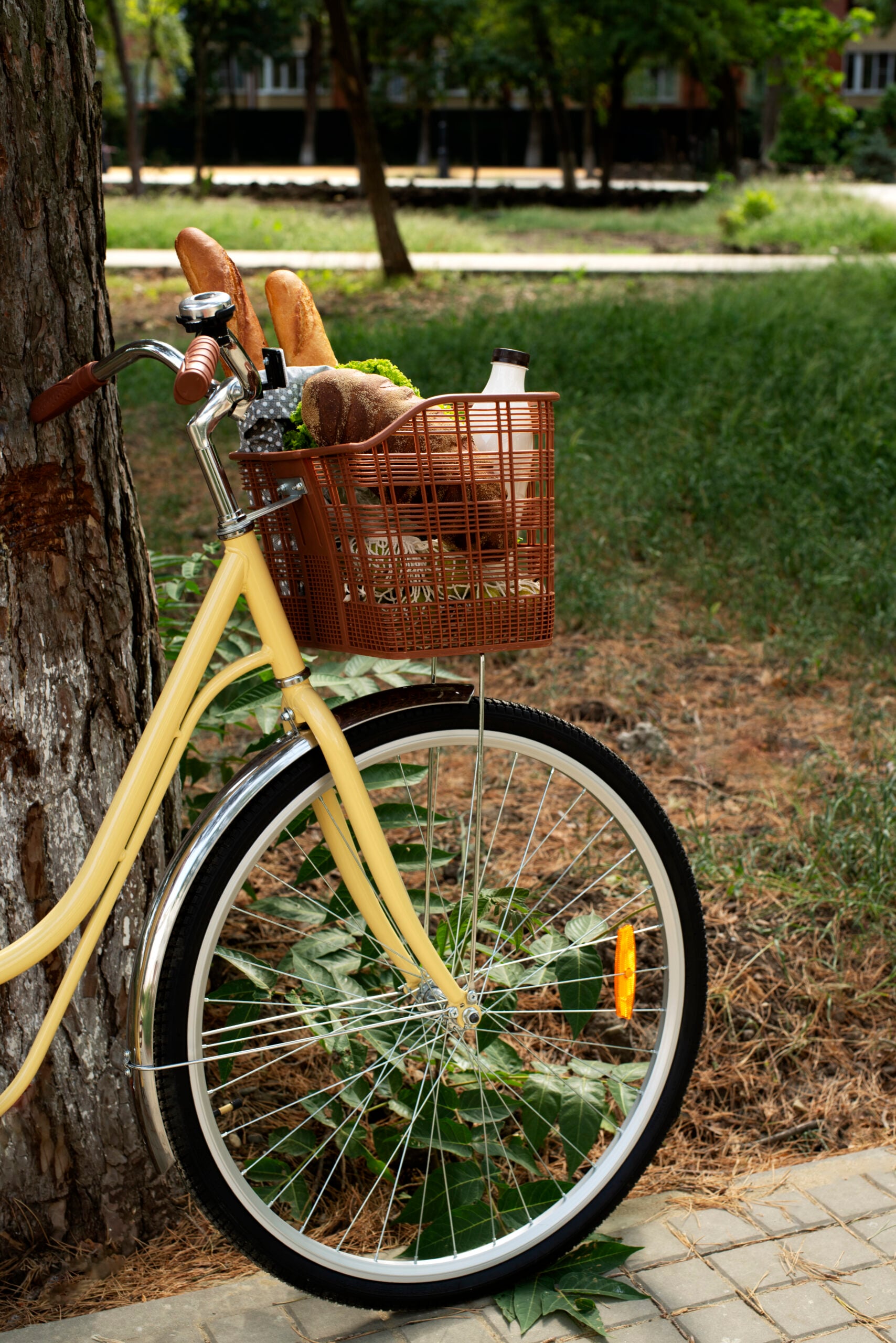
He saw the basket, and my purse in it.
He saw his mother.
And the color went right out of his face.
I’d expected him to be angry. I’d gotten myself ready for angry. For the whole two miles. I had a few sentences all prepared.
He wasn’t angry.
He looked exactly the way he looked at the cemetery eleven years ago. Standing at the edge of his father’s grave in a coat that was too thin for November.
He came out onto the sidewalk in his shirtsleeves and his tie.
“Mom.” It came out hoarse. “What is that?”
“It’s a tricycle, Brian. I bought it this morning.”
“You rode that here? On Main Street?”
“On the trail, mostly. Then Depot Street. Then Main. Wilma followed me.”
He looked up the street.
Wilma was parked in front of the bakery with her flashers still going. She lifted two fingers off the steering wheel at him.
“You could’ve been killed,” Brian said.
“By what? I was going slower than the mail.”
“There are trucks out there. There’s the grain trucks, there’s—”
He stopped. He put his hand on the back of his neck.
“Mom. This is exactly what I’m talking about. This right here.”
People were starting to slow down on the sidewalk to watch.
I didn’t want that for him. Whatever else was going on, he has to make his living on this street.
“I didn’t come here to argue with you,” I said.
I kept my voice exactly where I used to keep it for a caller who was upset.
“I’m not asking for the car back. You’ll never hear me ask for it. I came to ask you one question. And then I’ll be on my way to the Piggly Wiggly.”
He waited.
“When you decided I wasn’t fit to drive,” I said, “who did you ask?”
“What do you mean, who did I ask?”
“Did you call Dr. Keller? Did you call my eye doctor? Did you ride with me, even once around the block, to see how I did?”
He didn’t say anything.
“Did you ask one single person who would know?”
He was quiet for a long time.
“No,” he said finally.
“Then what did you go on, Brian?”
His mouth opened.
For one second, I thought he was going to tell me. I saw it come right up to the surface, whatever it was. Like a fish rising in a pond.
Then Mandy tapped on the window glass and held up the telephone receiver.
And it went right back down.
“I’ve got a ten-thirty,” he said.
“Then I’ll let you get to it.”
I rang my bell once to clear the sidewalk. And I rode to the Piggly Wiggly and bought a quart of milk, a loaf of bread, a pound of butter, and a small ham.
And I carried them home in my basket. Six blocks. The bag didn’t even shift.

Adrian Hawthorne is a celebrated author and dedicated archivist who finds inspiration in the hidden stories of the past. Educated at Oxford, he now works at the National Archives, where preserving history fuels his evocative writing. Balancing archival precision with creative storytelling, Adrian founded the Hawthorne Institute of Literary Arts to mentor emerging writers and honor the timeless art of narrative.