The Red Maple
“Either get that junk off your house, or I’m calling the police!”
Mrs. Whitmore was standing at the end of our driveway in a long gray coat buttoned to her chin. Eighty-one years old. Five foot nothing. Pointing one bony finger at my sons like she was casting a spell.
Max froze on the front porch with a staple gun in his hand.
Theo dropped the milk jug he was holding. It bounced down the steps and rolled into the grass.
I came out the front door with a roll of duct tape around my wrist like a bracelet.
“Mrs. Whitmore,” I said. “Is something wrong?”
“Is something wrong?” She swept her hand at our house. At the bedsheet ghosts hanging from the porch rafters. At the cardboard tombstones stuck in the flowerbeds. At the lanterns lined up along the front walk. “Look at this. Look at it. It looks like a landfill exploded.”
Theo’s face crumpled.
He’s seven. He made the tombstones.
My name is Laurel Pierce. I’m thirty-nine.
I live in a little white Cape Cod on Larkspur Lane in Elm Grove, Wisconsin, with my two sons. Max is eleven. Theo is seven.
My husband, Joel, died two years ago this November.
And after Joel passed away, Halloween became our thing.
It was always Joel’s thing first.
He was a shop teacher at Elm Grove High. Twenty-two years. He could build anything out of anything. A birdhouse out of an old drawer. A go-kart out of a lawnmower and a shopping cart. A cello stand out of a hockey stick for a girl in his third period who couldn’t afford a real one.
And every October, he went crazy.
Not store-bought crazy. Joel never bought a single Halloween decoration in his life. He said store-bought stuff had no soul.
“Anybody can buy a plastic skeleton at Target,” he’d say. “It takes a real artist to make one out of PVC pipe and pool noodles.”
So he made everything. Every year. With the boys.
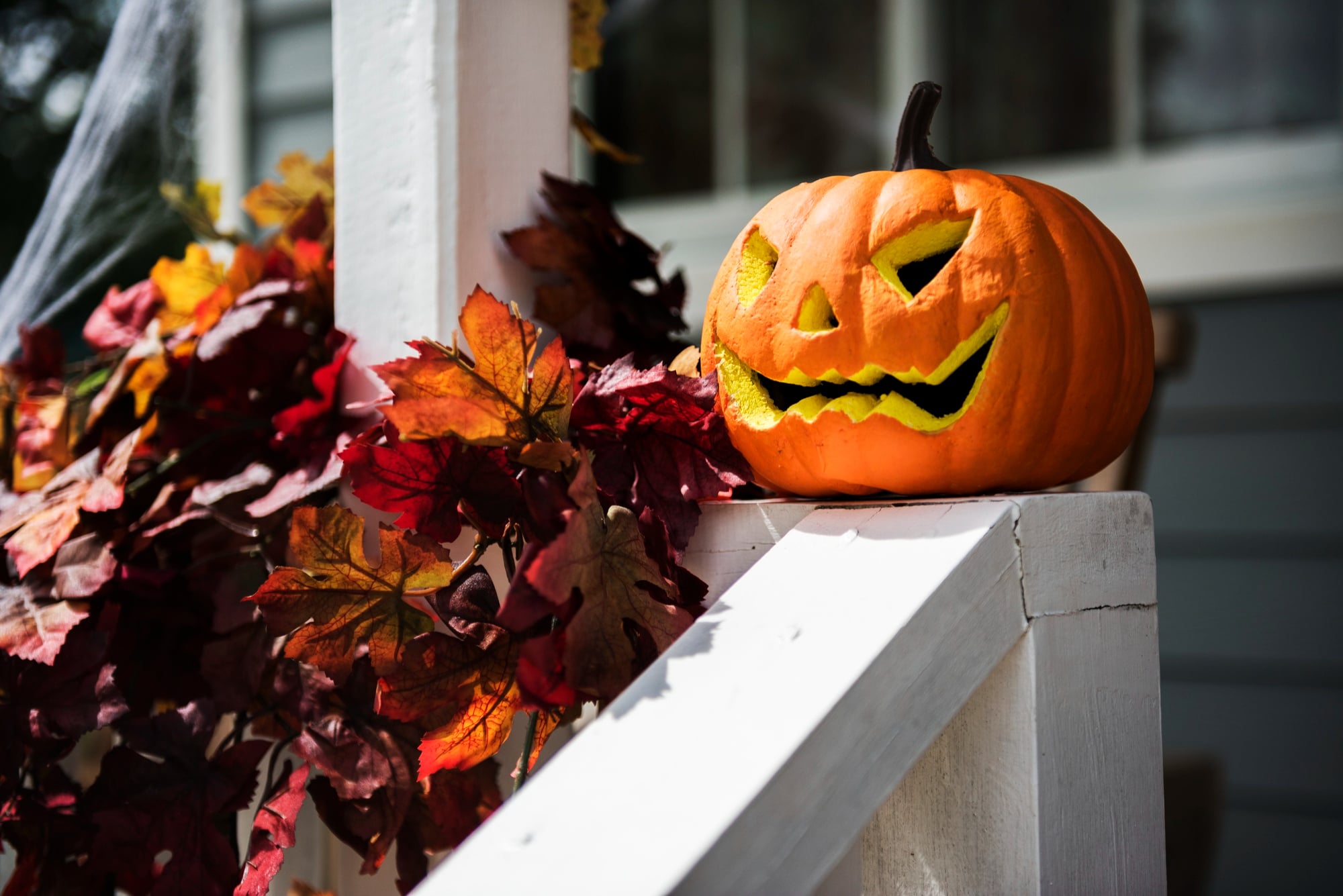
Ghosts out of old bedsheets, stuffed with plastic grocery bags so their heads were round. Lanterns out of empty milk jugs, with faces cut into them and battery tea lights inside. Tombstones out of cereal boxes, painted gray and lettered with terrible jokes.
HERE LIES LES MOORE. NO LES, NO MORE.
I TOLD YOU I WAS SICK.
RIP JOEL’S DIET. 1987–1987.
It was nothing special.
It was cardboard and bedsheets and milk jugs and tape.
But families would stop on the sidewalk to see what the boys had made. Little kids pointed at the ghosts. Parents laughed at the tombstones. The high school kids who’d had Joel for shop class drove by slowly and honked.
Joel would sit on the front porch steps in his flannel shirt with a mug of cider, grinning like he’d built the Eiffel Tower.
“Look at that, Laur,” he’d say. “That’s ours. We made that.”
He died on November third. Two years ago.
An aneurysm. In his brain. He was forty-one. He was grading birdhouses in his classroom after school. A student found him on the floor next to a half-finished cardinal feeder.
They told me he didn’t feel anything. They said it was like a light switching off.
I don’t know if that’s true. I hope it is.
That first year, the decorations were still up when he died. The ghosts were still hanging from the porch. The milk jugs were still lined up along the walk.
I couldn’t take them down.
I left them up until Christmas. Then until January. The ghosts got gray and soggy in the snow. The tombstones fell over. The neighbors started to stare.
In February, Max took them down himself. He was nine. I came home from work and found him on a stepladder on the porch, crying, pulling down the last ghost.
“Dad wouldn’t want them to look like this,” he said.
The next October, I didn’t think we’d do it.
I didn’t think I could.
But on the first Saturday in October, Theo came downstairs with an old bedsheet dragging behind him.
“Mom,” he said. “When do we make the ghosts?”
I looked at him. Five years old. With Joel’s cowlick and Joel’s crooked smile.
“You want to?” I said.
He nodded.
“Dad would want to,” he said.
So we did.
We sat on the living room floor with bedsheets and grocery bags and a box of markers. We made five ghosts. They were lumpy and uneven. Theo drew a mustache on one. Max drew Joel’s glasses on another.
We cut faces into milk jugs. We painted cereal boxes gray. Max wrote the jokes. Joel’s jokes. He remembered every single one.
HERE LIES LES MOORE.
We hung it all up on a Saturday morning in the rain.
When we were done, the three of us stood in the front yard and looked at it.
“It’s not as good as Dad’s,” Max said quietly.
“No,” I said. “It’s ours.”
That’s what Halloween became for us. After.
Every year, starting the first weekend in October, we’d spend our Saturdays on the living room floor making decorations. We’d play Joel’s old playlist. Creedence Clearwater Revival and the Monster Mash and that awful Ray Parker Jr. Ghostbusters song he loved.
We’d talk about him. While our hands were busy. It was easier that way. Easier than sitting at the kitchen table and trying to talk about him with nothing to do.
“Remember when Dad tried to make a pumpkin catapult?”
“Remember when the ghost blew into Mr. Kowalski’s pool?”
“Remember when Dad dressed up as a hot dog and the dog bit him?”
We’d laugh. Sometimes we’d cry. Sometimes both.
It was the only time of year we really talked about him.
The rest of the year, it was too hard.
So when Mrs. Whitmore stood at the end of our driveway pointing at my seven-year-old son’s cereal-box tombstones and calling them junk, something in me went very cold.
But I didn’t yell.
I had two boys standing on the porch watching me.
“Mrs. Whitmore,” I said carefully. “The boys made all of this themselves. It’s… it’s something we do. For their dad.”
“I don’t care what it’s for,” she said. “It’s ugly. And it’s in my way.”
“In your way?”
She pointed across the street. At her house. A narrow gray Victorian with black shutters and a front porch with one white rocking chair.
“I sit at that window every morning,” she said. “Every morning. With my coffee. And now all I see are your filthy bedsheets flapping around.”
I looked at her house. At the big front window on the first floor, with lace curtains.
Then I turned and looked where she was looking.
At my front yard.
At the red maple tree in the middle of it.
The tree was about twenty feet tall now. Joel planted it the year we moved in. Ten years ago. It was just a sapling then. A stick with leaves. Now it was tall and full and, every October, it turned the most incredible red. Like it was on fire.
The ghosts were hanging from the porch rafters, right behind it. When the wind blew, they swung out in front of the branches.
“I don’t understand,” I said. “What does the tree have to do with—”
“Teach your brats some manners,” Mrs. Whitmore said.
Max flinched.
“If you won’t clear that junk,” she said, “I will.”
She turned around and marched back across the street. Up her porch steps. Into her gray house.
The door slammed.
Theo was crying.
Max was standing very still on the porch with the staple gun in his hand. His jaw was tight. He was eleven. Old enough to be angry. Too young to know what to do with it.
“Can she do that?” Max asked. “Can she call the police on us? For decorations?”
“No,” I said. “She can’t.”
“Then why’d she say it?”
I didn’t have an answer.
I wanted to keep the peace.
That’s what I do. That’s what I’ve always done. Joel used to say I’d apologize to a chair if I bumped into it.
So that night, I baked her a pumpkin pie.
From scratch. Joel’s grandmother’s recipe. With real pumpkin I roasted in the oven, not the canned kind. I made the crust by hand. I crimped the edges with a fork, the way Joel’s grandmother showed me when we were first married.
I carried it across the street at seven o’clock. Still warm. Wrapped in a dish towel.
I knocked on her door.
Nothing.
I knocked again.
“Mrs. Whitmore? It’s Laurel. From across the street. I brought you a pie.”
I heard footsteps inside. I saw the lace curtain on the front window move. Just an inch.
The door didn’t open.
“Please,” I said through the door. “They made it all themselves. My boys. It’s been hard for them since their father died. It’s the one thing they look forward to all year. We’ll take everything down on November first. I promise. Every single piece.”
Silence.
Then her voice. Through the door.
“I sit at that window every morning to look at my beautiful red maple,” she snapped. “Every single morning. For years. And now all I see are dangling bedsheets.”
My beautiful red maple.
“It’s my tree, Mrs. Whitmore,” I said. “It’s in my yard.”
“I don’t care whose yard it’s in!”
“I’ll move the ghosts,” I said. “I can hang them on the other side of the porch. Away from the tree. So you can see it.”
Silence.
“Teach your brats some manners,” she said. “If you won’t clear that junk, I will.”
The porch light went off.
I stood there on her dark porch with a warm pumpkin pie in my hands.
After a while, I set it down on her doormat. I tucked the dish towel around it. I walked home.
That night, I moved the ghosts.
All five of them. I climbed up on the stepladder in the dark and unhooked them from the rafters on the left side of the porch, where they swung in front of the maple. I rehung them on the right side. By the garage. Where nobody could see them from across the street.
It took an hour. I was crying the whole time. I don’t know why. They were just bedsheets.
Max came out in his pajamas and held the ladder for me.
“Why are we moving them?” he asked.
“So Mrs. Whitmore can see the tree.”
“But it’s our tree.”
“I know.”
“Dad planted it.”
“I know, buddy.”
He was quiet for a while. Holding the ladder.
“Why does she care so much about our tree?” he asked.
I didn’t know.
I wish I’d asked.
The next afternoon, I pulled into the driveway after work with the boys in the back seat.
I’d picked them up from after-school care. Max was telling me about a kid in his class who’d eaten a whole glue stick on a dare. Theo was singing the Monster Mash under his breath.
Then I turned into the driveway.
And I froze.
Our entire Halloween display had been destroyed.
The ghosts were lying in the gutter at the end of the driveway. All five of them. Torn down from the rafters. Soaked from the sprinklers. One of them had been stepped on. There was a muddy shoe print across its face. The one with Joel’s glasses drawn on it.
The milk jug lanterns were crushed. Flattened. Like somebody had stomped on every single one. The little battery tea lights were scattered across the front walk. Some of them still flickering.
And the cardboard tombstones.
They’d been ripped out of the flowerbeds. Torn in half. Stuffed into our garbage can at the end of the driveway. I could see the corner of one sticking out of the lid.
HERE LIES LES MO—
The rest was torn off.
Behind me, in the back seat, it went completely silent.
Theo stopped singing.
I turned around.
He was staring out the window at the gutter. At the ghost with Joel’s glasses. Lying face-down in the wet leaves with a shoe print on it.
He didn’t cry. That was the worst part. He didn’t make a sound.
He just stared.
Max unbuckled his seatbelt. He opened the car door. He got out and walked to the end of the driveway. He knelt down in the gutter in his school uniform and picked up the ghost with Joel’s glasses.
He held it in both hands.
Water dripped off it onto his shoes.
Across the street, Mrs. Whitmore stepped out onto her porch.
She was holding a cup of coffee. She was wearing her gray coat. She stood at the top of her steps and looked across the street at us.
At my son kneeling in the gutter holding a wet bedsheet.
“See?” she called. “Doesn’t the whole street look nicer?”
I got out of the car.
I walked to the end of my driveway. I stood next to Max. I put my hand on his shoulder.
“Did you go onto my property?” I asked her.
My voice was very calm. I don’t know how.
“I fixed a problem you refused to fix,” Mrs. Whitmore said.
“I moved the ghosts. Last night. To the other side of the porch. So you could see the tree.”
She took a sip of coffee.
“Not far enough,” she said.
I was just about to call the police.
I had my phone in my hand. I’d already opened it. I’d already typed in the nine and the first one.
We have a doorbell camera. Joel installed it three years ago after somebody stole a package. It records everything. I knew exactly what I’d find on it. A small old woman in a gray coat, walking across my lawn, climbing my porch steps, yanking down my children’s decorations.
Trespassing. Destruction of property. Maybe more.
I could call the police. I could press charges. I could make her pay for it.
I looked down at Max.
He was still holding the ghost. Looking at the muddy shoe print across his father’s drawn-on glasses.
I looked at Theo. Still in the back seat. Still staring. Still not making a sound.
I looked up at the red maple.
Joel’s tree.
It was at its peak. That week. The most beautiful week of the year. Every single leaf was red. Deep, dark red. Like wine. Like fire. Against the gray October sky.
I looked at it for a long time.
And then, for the first time since I got home, I smiled.
An idea had just occurred to me.
I put my phone back in my pocket.
“Max,” I said quietly. “Take your brother inside. Get him a snack. I’ll be in in a minute.”
Max looked up at me.
“Aren’t you going to call the cops?”
“Not yet.”
“Mom—”
“Trust me,” I said. “Take Theo inside.”
He looked at me for a long moment. Then he nodded. He opened the back door of the car. He took Theo’s hand. Theo climbed out like a sleepwalker. Max walked him up the front steps and into the house.
He took the wet ghost with him. The one with Joel’s glasses.
Across the street, Mrs. Whitmore was still standing on her porch. Watching me. Sipping her coffee.
I looked at her.
I didn’t say anything.
She looked back at me. Waiting for me to yell. To cry. To threaten her.
I didn’t.
I just stood there at the end of my driveway. Smiling.
She frowned. She looked uncertain. Then annoyed.
Then she turned around and went back inside her house.
The door closed.
I waited until Mrs. Whitmore went back inside her house.
Then I moved.
It took less than a minute.
I knelt down in the gutter. I picked up the other four ghosts. Wet and heavy and muddy.
I walked across my front lawn to the red maple.
The lowest branches were about six feet off the ground. I’m five-seven. I could reach them if I stood on my toes.
I took the first ghost by the corners and threw it up over a low branch on the front side of the tree. The side facing the street. It caught. It hung there. A white bedsheet with a round head and a mustache drawn on in Sharpie.
The second ghost. Another branch. Higher. I had to jump.
The third. The fourth.
I stepped back.
Four ghosts. Hanging in the branches of the red maple. Dead center. Right in front of the brightest, reddest leaves. Swaying in the October wind.
Directly in front of Mrs. Whitmore’s window.
Then I picked up the one tombstone that wasn’t completely torn. It was bent but readable. I stuck it in the dirt at the base of the tree.
I TOLD YOU I WAS SICK.
I went inside.
Then I waited.
I stood at my own front window, behind my own curtains, and watched her house.
Max came and stood next to me.
“What did you do?”
“Watch,” I said.
A few minutes later, she came back outside.
She had a fresh cup of coffee. She stepped onto her porch. She lifted the cup to her lips.
She looked across the street.
She took one look at the red maple and stopped dead.
The coffee cup stopped halfway to her mouth.
Four ghosts. Hanging in her beautiful red maple. Right in the middle of her view. Muddy and lumpy and swaying in the wind. With a mustache on one of them. And a cereal-box tombstone at the bottom.
Her face turned dark red.
She set her coffee cup down on the porch railing so hard it sloshed over the side.
She came down her porch steps. Across the street. Fast. Faster than I’d ever seen an eighty-one-year-old woman move.
She stopped at the edge of my lawn.
“What the hell did you do?!”
I opened my front door. I stepped out onto the porch.
“I decorated my tree,” I said.
“Your tree?” Her voice cracked. “Take them down! Take them down right now!”
“No.”
“That’s my tree!”
“No, Mrs. Whitmore,” I said. “It isn’t. It’s in my yard. On my property. My husband planted it ten years ago. With his own hands. I was standing right here.”
She stared at me.
“You can destroy my porch,” I said. “You can trespass on my lawn and rip down my children’s decorations and throw them in the trash. But you can’t take them out of my tree. Because if you set one foot on my lawn again, I’m calling the police. I have you on camera from this morning. Every second of it.”
Her face went from red to white.
“You wouldn’t,” she whispered.
“I almost did,” I said. “Ten minutes ago. I had my phone in my hand.”
“Then why didn’t you?”
“Because I wanted you to see what it feels like,” I said. “To look out your window at something you love and have somebody ruin it.”
She didn’t say anything.
She was staring at the tree. At the ghosts. At the mustache. At the swaying white sheets against the red leaves.
Her hands were shaking.
Not with anger.
Something else.
“Take them down,” she said. But her voice was different now. Small. “Please. Please take them down.”
“Why?” I asked. “Why does this tree matter so much to you? It’s not yours. You’ve never even been in my yard before today. Why do you sit at that window every morning and look at my tree?”
She looked at me.
And her face crumpled.
Her chin trembled. Her eyes filled up. Her mouth opened and closed.
“Because it’s Bernard’s,” she whispered.
I didn’t understand.
“Who’s Bernard?”
She didn’t answer. She was staring at the tree. Tears were running down her face now.
“Your husband planted it,” she said. “Joel. Yes. I know. I watched him do it. Ten years ago. October. He dug the hole himself. With a shovel. In the rain.”
“I know. I was there.”
“But he didn’t plant it for you,” she said.
I stared at her.
“He planted it for Bernard,” she said. “My husband. He planted it for my husband.”
Behind me, the front door opened. Max came out onto the porch. Then Theo, holding his brother’s hand.
Mrs. Whitmore saw them. She looked at Theo. At his tear-stained face. At the cowlick.
She made a sound. Like something breaking.
And she sat down.
Right there. On the curb at the edge of my lawn. In her long gray coat. Like her legs had just given out.
She put her face in her hands.
I didn’t know what to do.
I stood on my porch with my sons behind me. Looking at an eighty-one-year-old woman crying on my curb.
The woman who’d destroyed everything my boys made.
The woman who’d called them brats.
I wanted to be angry. I was angry. I wanted to go inside and close the door and let her sit there.
But I could hear Joel.
I could hear him so clearly it was like he was standing next to me.
Laur. Go sit with her.
I walked down the porch steps. Across the lawn. I sat down on the curb next to her. Not close. A couple of feet away.
The boys stayed on the porch. Watching.
I didn’t say anything. I just sat there.
After a while, Mrs. Whitmore lifted her face out of her hands.
“Bernard planted a red maple,” she said. “In our front yard. The day we moved in. 1962. We’d been married three weeks. We were twenty-two. He said every house needs a tree that turns red in the fall. So you always know it’s home.”
She looked across the street at her house. At the front yard. At an empty patch of grass in the middle of it. With a stump, gray and cracked, almost hidden in the lawn.
“That tree was fifty-three years old,” she said. “It was enormous. You couldn’t see the sky through it. Every October, it turned red. Every October, for fifty-three years, Bernard and I sat on that porch and drank coffee and watched it turn.”
“What happened to it?”
“A storm,” she said. “July of 2015. A big one. Straight-line winds. It split down the middle. Half of it came down on our garage.” Her voice broke. “Bernard stood in the front yard in the rain and watched them cut it up with chainsaws. He didn’t say anything. He just stood there. He was eighty.”
“That fall,” Mrs. Whitmore said, “Bernard was diagnosed with pancreatic cancer.”
I closed my eyes.
“Stage four. They said he had a year. Maybe less. He didn’t want to go to the hospital. He wanted to die at home. So they put a hospital bed in our front room. By the big window.”
She pointed across the street. At the big front window. With the lace curtains.
“He lay in that bed for eleven months,” she said. “He couldn’t get up. He couldn’t go outside. All he could do was look out that window.”
She looked at me.
“And all he could see,” she said, “was the stump.”
I didn’t say anything. I couldn’t.
“He’d look at it every day,” Mrs. Whitmore said. “Every morning. I’d bring him his coffee and he’d look out that window at the stump and his face would just… fall. Every single morning. Like he was losing it all over again.”
She wiped her eyes with the back of her hand.
“Your husband used to come over,” she said. “Joel. He’d shovel our walk in the winter. He’d mow our grass in the summer. He never asked. He just did it. He and Bernard would sit on our porch and talk. About baseball. About woodworking. Bernard was a carpenter. Fifty years.”
“I didn’t know,” I said. “I knew Joel helped you sometimes. I didn’t know they were friends.”
“They were,” Mrs. Whitmore said. “Very good friends. Bernard used to call him ‘the kid.’ ‘The kid came by. The kid fixed the gutter. The kid brought me a beer I’m not supposed to have.’” She almost smiled. “Joel brought him a beer every Friday. Even after the cancer. Especially after the cancer.”
“One day in September,” she said, “Joel came over to visit. Bernard was in the bed by the window. And Bernard said something to him. I was in the kitchen. I heard it.”
She stopped. She pressed her lips together.
“What did he say?” I asked quietly.
“He said, ‘Kid, I’m not going to see that tree turn red again. I’m going to die looking at a stump.’”
The wind picked up. The ghosts swayed in the branches of the maple. The red leaves rustled.
“Joel didn’t say anything,” Mrs. Whitmore said. “He just sat there with Bernard for a while. Then he went home.”
She turned and looked at me.
“The next morning,” she said, “I woke up at six o’clock to the sound of a shovel.”
I remembered.
I hadn’t thought about it in years. But I remembered.
October of 2016. We’d been in the house a year. I woke up one Saturday morning and Joel wasn’t in bed. I went downstairs. He wasn’t in the kitchen. I looked out the front window.
He was in the front yard. In the rain. Digging a hole.
There was a tree lying on its side next to him. A sapling. About eight feet tall. Its roots wrapped in burlap.
I went out on the porch in my bathrobe.
“Joel,” I said. “What are you doing? It’s six in the morning. It’s raining.”
“Planting a tree,” he said.
“Why?”
He stopped digging. He leaned on the shovel. He looked across the street at the Whitmores’ house. At the big front window.
“Because every house needs a tree that turns red in the fall,” he said. “So you know it’s home.”
I thought it was just a Joel thing to say. I went back inside. I made coffee.
I didn’t know.
I didn’t know he was quoting Bernard.
“He drove all the way to a nursery in Waukesha,” Mrs. Whitmore said. “At five in the morning. He bought the biggest red maple they had. He picked the one that was already starting to turn. He planted it right there.” She pointed at the tree. “Right in the middle of your yard. Exactly where Bernard could see it from his bed. Exactly in the line of the window.”
I looked at the tree.
I looked at Mrs. Whitmore’s front window.
I’d never noticed. In ten years, I’d never noticed. The tree wasn’t in the middle of my yard. It was a little off to the left. Slightly crooked. I’d always thought Joel just eyeballed it wrong.
It was lined up perfectly with her window.
“Bernard woke up that morning,” Mrs. Whitmore said, “and I brought him his coffee. And he looked out the window. Like he always did. At the stump.”
She stopped. She couldn’t go on for a moment.
“And then he looked across the street,” she said. “And there was a red maple. In your front yard. Brand new. Just planted. With half its leaves already turned.”
She was crying so hard now she could barely talk.
“He cried,” she said. “My Bernard. Fifty-four years of marriage. I saw him cry three times. When his mother died. When our son was born. And that morning.”
“He lived six more weeks,” Mrs. Whitmore said. “Every morning, I’d bring him his coffee. And he’d look out that window at Joel’s tree. And he’d watch it turn. A little redder every day. He’d say, ‘Look, Edie. It’s almost all red now. Look at it.’”
She wiped her face with both hands.
“He died on November ninth,” she said. “In the morning. With his coffee. Looking out that window.” She swallowed. “The tree was completely red. Every leaf. It was the most beautiful I’ve ever seen it.”
I sat on the curb next to her. I couldn’t speak.
Behind me, on the porch, I heard Max make a small sound.
“I’ve sat at that window every morning since,” Mrs. Whitmore said. “For eight years. With my coffee. In Bernard’s chair. Looking at that tree.” She shook her head. “I talk to him. Isn’t that stupid? An old woman talking to a tree. I tell him about my day. About the neighbors. About the Brewers. I tell him I miss him.”
“It’s not stupid,” I said.
“It’s the only place I can still find him,” she said. “In that tree. Joel gave me that. He gave both of us that. Bernard got to see one more October. And I got somewhere to put my grief.”
She looked at the ghosts hanging in the branches.
“And then this October,” she said quietly, “I sat down at the window. And there were bedsheets. Flapping in front of it. And I couldn’t see him anymore.”
I looked at the tree.
At the four muddy ghosts hanging in it. Blocking the red leaves. Swaying in front of the window where an old woman had been talking to her dead husband every morning for eight years.
I felt sick.
“Mrs. Whitmore,” I said. “I didn’t know. I swear to God, I didn’t know.”
“I know you didn’t,” she said. “Joel never told you. He told me once he wouldn’t. He said it was between him and Bernard.”
“But you could have told me.”
“I know.” She looked down at her hands. “I should have. When you came over with the pie. I should have opened the door and told you. Instead I yelled at you. I yelled at your boys. And then this morning I…”
She stopped.
“I came over here and tore everything down,” she said. “Like a crazy woman. I ripped your children’s decorations off the porch and stomped on them. I don’t even know why. I’ve never done anything like that in my life.”
“I know why,” I said quietly.
She looked at me.
“Because you’re grieving,” I said. “And the tree is the only place you can put it. And somebody got in the way.”
Mrs. Whitmore stared at me.
“That’s what the decorations are for us,” I said. “Joel loved Halloween. He made everything. Every ghost. Every tombstone. Every milk jug. With the boys. Every year.” I looked at the ghosts in the tree. “After he died, we kept doing it. It’s the only time we really talk about him. When our hands are busy. When we’re making something he would’ve made.”
I pointed at the ghost hanging lowest in the tree. The one with the mustache.
“Theo drew that mustache,” I said. “Because Joel grew one every Movember for charity. And it was terrible. It looked like a caterpillar.”
Mrs. Whitmore made a sound. Half laugh. Half sob.
“I remember that mustache,” she said. “Bernard told him to shave it. Every single November.”
“And the one you stepped on,” I said. “In the gutter. With the shoe print.”
Mrs. Whitmore closed her eyes.
“Max drew his dad’s glasses on it,” I said. “Max is eleven. He’s the one who took the decorations down by himself when Joel died. Because I couldn’t. He stood on a ladder in February and cried and took them down because I couldn’t do it.”
Mrs. Whitmore put her hand over her mouth.
“So when you stepped on that ghost,” I said, “you stepped on his dad.”
She cried.
Really cried. Sitting on my curb in her gray coat, with her face in her hands. The kind of crying you can’t stop once it starts. The kind I’d done on the bathroom floor the week after Joel died. The kind Max did on that ladder.
I didn’t say anything.
I just moved over on the curb. A little closer.
And I put my hand on her back.
Behind me, I heard footsteps.
I turned around.
Max was walking down the front steps. Across the lawn. He was holding the ghost. The one with Joel’s glasses and the shoe print. It was still wet.
He stopped in front of Mrs. Whitmore.
She looked up at him. Her face was a wreck. Red and swollen and wet.
Max held out the ghost.
“This is my dad,” he said.
Mrs. Whitmore looked at it. At the drawn-on glasses. At the muddy shoe print across the face.
“I’m so sorry,” she whispered. “I’m so sorry, honey.”
Max didn’t say anything for a long moment.
“He planted that tree for your husband?” he finally asked.
Mrs. Whitmore nodded.
“For real?”
“For real.”
Max looked at the tree. Then at the old woman on the curb. Then at the ghost in his hands.
“Then I guess,” he said slowly, “it’s kind of both of theirs.”
Mrs. Whitmore stared at him.
Then she reached out. Very slowly. Like she was afraid he’d pull away.
She touched the ghost. The muddy shoe print on its face.
“Can I fix it?” she asked. “Can I wash it? I have a washing machine. And bleach. I can get the mud out.”
Max looked at me.
I nodded.
Max held out the ghost.
Mrs. Whitmore took it. She held it in her lap. On top of her gray coat. Like it was a baby.
Then Theo came down the porch steps.
He walked across the lawn in his socks. He didn’t have shoes on. He stopped in front of Mrs. Whitmore.
He looked at her very seriously. Seven years old. With Joel’s cowlick and Joel’s crooked smile and Joel’s way of looking at you like he was trying to figure out how you worked.
“Did your husband like Halloween?” he asked.
Mrs. Whitmore blinked.
“He… he loved it,” she said. “He used to carve pumpkins. Big ones. With his carving tools. From the shop. He could carve anything. A cat. A castle. The Brewers logo.”
Theo’s eyes got big.
“He could carve the Brewers logo into a pumpkin?”
“Every year,” Mrs. Whitmore said. “Every single year. People used to drive by to see it.”
Theo looked at the tree. At the four ghosts hanging in it.
“Then maybe,” he said, “we should make him a ghost too.”
Mrs. Whitmore stopped breathing.
“What?” she whispered.
“For the tree,” Theo said simply. “We have ghosts for my dad. Your husband should get one. It’s his tree too.” He thought about it. “We could draw on it. What did he look like?”
Mrs. Whitmore stared at my son.
Then she started to laugh. And cry. At the same time. Sitting on the curb with a muddy ghost in her lap.
“He had a bald head,” she said. “And big ears. And a red flannel cap he wore every day from October to April.”
“We can draw that,” Theo said confidently. “I’m really good at ears.”
That’s how it happened.
I wouldn’t have believed it if somebody had told me that morning.
By six o’clock that evening, Mrs. Edith Whitmore, eighty-one years old, was sitting on my living room floor.
In her gray coat. With her shoes off. With a bedsheet in her lap and a Sharpie in her hand.
Theo was sitting next to her. Directing.
“Bigger ears,” he said. “Bigger. He had really big ears, right?”
“Enormous,” Mrs. Whitmore said. “Like a car with both doors open.”
Theo giggled so hard he fell over.
Max was across the room, cutting faces into new milk jugs. I’d run to the store and bought six gallons of milk. We were going to be drinking milk for a month.
I was making tombstones. Out of new cereal boxes. Max was dictating the jokes.
HERE LIES LES MOORE.
RIP JOEL’S DIET.
Mrs. Whitmore looked over at the tombstones. She watched me paint I TOLD YOU I WAS SICK on a box of Cheerios.
“Can I make one?” she asked.
I handed her a cereal box and a paintbrush.
She painted it slowly. Carefully. Her hand shook a little. When she was done, she held it up.
HERE LIES BERNARD WHITMORE.
HE NEVER LET ME WIN AT CRIBBAGE.
NOT ONCE IN 54 YEARS.
Max laughed so hard he dropped his milk jug.
We played Joel’s playlist. Creedence and the Monster Mash and that awful Ghostbusters song.
Mrs. Whitmore didn’t know any of the songs. She asked Max to play something from her day. He found Frank Sinatra on my phone. Witchcraft.
She sang along. Every word. Off-key and wobbly.
“Bernard used to sing this to me,” she said. “Every Halloween. While he carved the pumpkins. He had a terrible voice.”
“So did Joel,” I said. “He sang the Monster Mash every year. Every single verse. Even the ones nobody knows.”
“Bernard used to call me his little witch,” Mrs. Whitmore said. “Because I’d stand in the kitchen and stir the cider on the stove. He said I looked like I was making a potion.”
She looked down at the bedsheet in her lap. At the bald head and the enormous ears and the little red cap Theo had colored in with marker.
“I haven’t made cider since he died,” she said quietly.
Mrs. Whitmore washed the ghost with Joel’s glasses that night.
She took it home. Across the street. She washed it three times. With bleach. And a stain stick. And a toothbrush, she told me later, scrubbing at the shoe print until her fingers ached.
She brought it back the next morning at seven a.m.
I opened my front door in my bathrobe.
She was standing on my porch. In her gray coat. Holding the ghost, folded neatly, like a flag.
It was white again. Bright white. The mud was gone. The shoe print was gone.
And she’d redrawn Joel’s glasses. In fresh black Sharpie. Carefully. Exactly where Max had drawn them.
“I didn’t want them to fade,” she said. “When I bleached it. So I traced over them.”
I couldn’t speak.
“And I brought you something else,” she said.
She held out a mason jar. It was warm. Steam was coming off the top.
“Apple cider,” she said. “Bernard’s recipe. With cinnamon sticks and cloves and a little orange peel.” She swallowed. “I made it at five this morning. First time in eight years. I stood at the stove and stirred it and I swear to God I heard him singing Witchcraft in the living room.”
We hung the ghosts that afternoon. Saturday. All of us.
Five ghosts for Joel. Like always.
And one new one. For Bernard.
With a bald head and enormous ears and a little red flannel cap.
But we didn’t hang them from the porch rafters this time.
We hung them in the tree.
All six of them. In the lower branches of the red maple. Not on the front side, where they’d block the view. Around the edges. On the sides. Framing it. So that from across the street, from Mrs. Whitmore’s big front window, you could see the whole tree. Every red leaf. With six white ghosts dancing around the edges like they were holding hands in a circle.
Max figured it out. He stood in Mrs. Whitmore’s front room by her window and called out instructions on his phone while Theo and I climbed the ladder.
“Left. More left. No, your other left, Mom. There. Stop. Perfect.”
When we were done, Mrs. Whitmore stood at her window and looked out.
She didn’t say anything for a long time.
Then she came across the street.
She stood on my lawn and looked up at the tree.
“Bernard’s next to Joel,” she said quietly.
He was. Theo had insisted. The ghost with the bald head and the red cap was hanging right next to the ghost with the glasses. Their sheet-arms were tied together with a piece of orange yarn.
“They were friends,” Theo explained. “So they should hold hands.”
Mrs. Whitmore put her hand over her mouth.
She put her own decorations up that week.
She hadn’t decorated her house for Halloween since Bernard died. Eight years.
She dug through her attic and found Bernard’s old carving tools. In a wooden box with his initials burned into the lid. B.W.
She asked Max to help her carve a pumpkin.
They sat on her porch for three hours. Max held the pumpkin steady. Mrs. Whitmore held the tools. Her hands shook too much to carve the fine lines, so Max did those, with her guiding his hands.
When they were done, it was the Brewers logo. Perfect. The little ball and glove. The letters.
Max put a candle in it. They set it on the porch railing, right next to her white rocking chair.
People started driving by to see it.
On Halloween night, we did something we’d never done before.
We trick-or-treated together. All of us.
Max went as a mad scientist. Theo went as a ghost. A bedsheet with eyeholes. He said it was so he could match the tree.
I went as a witch. Mrs. Whitmore lent me a hat.
And Mrs. Whitmore went as a witch too.
She stood on her porch in a long black dress and a pointy hat with a stirring spoon in her hand. Next to Bernard’s Brewers pumpkin. Handing out full-size Snickers bars, because she said Bernard always said if you’re going to do Halloween, do it right.
She had a big pot of cider on a camp stove on her porch. She gave a cup to every parent who came by.
“My husband’s recipe,” she told every single one of them. “Bernard. He used to call me his little witch.”
At the end of the night, after the last trick-or-treater had gone home, the four of us sat on Mrs. Whitmore’s porch.
She was in her white rocking chair. I was in Bernard’s chair, which she’d brought out from the front room for the first time in eight years. The boys were sitting on the steps, sorting their candy.
Across the street, the red maple glowed.
Max had put battery tea lights inside all six ghosts. They lit up from the inside. Six soft white shapes floating in the dark among the red leaves. Holding hands.
“It’s beautiful,” Mrs. Whitmore said.
“It is,” I said.
She was quiet for a long time.
“I’m sorry, Laurel,” she said. “For everything. For what I said to your boys. For what I did. I don’t know what came over me.”
“Grief,” I said. “That’s what came over you.”
She nodded slowly.
“It makes you crazy,” she said. “Doesn’t it?”
“Yes.”
“It makes you hold onto things. Too tight. A tree. A view. A window. And then when somebody gets in the way, you…”
“You stomp on their ghosts,” I said.
She laughed. A small, sad laugh.
“You stomp on their ghosts,” she agreed.
“Can I tell you something?” I said.
“Of course.”
“When I hung those ghosts in the tree,” I said. “That afternoon. After you tore everything down. I wanted to hurt you.”
She looked at me.
“I wanted you to look out your window and feel what my boys felt,” I said. “Coming home and seeing everything they made in the gutter. I wanted you to feel that. I wanted you to scream.”
“I did scream.”
“I know.” I looked down at my hands. “I’m not proud of it. I could have called the police. I should have, probably. That would have been the grown-up thing. Instead, I did something petty.”
Mrs. Whitmore was quiet for a moment.
“I’m glad you did,” she said.
I looked at her.
“If you’d called the police,” she said, “I’d have gotten a ticket. Or a fine. And I’d have paid it. And I’d have sat at my window every morning hating you. And your boys. And I’d have died an angry old woman staring at a tree I couldn’t stand to look at anymore.”
She reached over and put her hand on my arm.
“Instead,” she said, “you made me come across the street. You made me sit on your curb. You made me tell you about Bernard.” She smiled. “Nobody’s asked me about Bernard in eight years. Not one person.”
“Why didn’t Joel ever tell me?” I asked. “About the tree. About Bernard.”
Mrs. Whitmore thought about it.
“I asked him that once,” she said. “After the funeral. Bernard’s funeral. Joel came. He sat in the back. Afterward, I asked him why he never told anybody. About planting the tree. He could have. People would have thought he was a hero.”
“What did he say?”
Mrs. Whitmore smiled.
“He said, ‘Mrs. W, it’s not the kind of thing you do for people to know about. It’s the kind of thing you do so somebody can see something beautiful when they need it most.’”
I looked across the street at the tree.
At the six ghosts glowing in the dark.
At Joel and Bernard. Holding hands with a piece of orange yarn.
“That sounds like him,” I said.
“He said one more thing,” Mrs. Whitmore said. “He said, ‘If anything ever happens to me, you watch over Laurel and the boys. You’ve got the best view on the street.’”
I turned and looked at her.
She was crying again. Quietly.
“And instead,” she said, “I sat at that window for two years after he died and watched you three grieve. And I never once came across the street. I watched you hang up those ghosts every October. I watched Max take them down by himself on that ladder in February. I watched you sit on your porch steps and cry. And I never came over.”
She shook her head.
“I was so busy looking at the tree,” she said, “I forgot to look at the people under it.”
The boys had stopped sorting their candy.
They were sitting on the porch steps, listening.
Theo stood up. He came over to Mrs. Whitmore’s rocking chair. He climbed up into her lap. In his ghost costume. Bedsheet and all.
Mrs. Whitmore froze. Then she put her arms around him.
“You can watch us now,” Theo said. “From your window. Every morning. We’ll wave.”
Mrs. Whitmore put her face in the top of his bedsheet.
“That would be nice,” she whispered.
We took the decorations down on November first.
Like I promised.
All of us. Mrs. Whitmore held the ladder. She insisted.
But we didn’t take everything down.
We left one thing.
Hanging from the highest branch we could reach, near the top of the tree, where it would catch the wind. Where it could be seen from Mrs. Whitmore’s front window every single morning.
Two small ghosts. Made from scraps of the same bedsheet. One with glasses. One with a red cap.
Holding hands with a piece of orange yarn.
Max tied them up there himself. He climbed higher than I wanted him to. He was careful. He used a double knot. Joel taught him that.
“They can stay all year,” he said, climbing down. “Like a reminder.”
“A reminder of what?” Mrs. Whitmore asked.
Max thought about it.
“That they’re still friends,” he said.
That was a year ago.
Mrs. Whitmore comes over every Saturday in October now. She sits on the living room floor with us and makes decorations. She’s terrible at cutting milk jugs. She’s surprisingly good at tombstones.
HERE LIES MY DIET. IT WASN’T JOEL’S FAULT. IT WAS THE CIDER.
She brings the cider every week. Bernard’s recipe. With cinnamon sticks and cloves and a little orange peel.
She plays Sinatra. We play the Monster Mash. We argue about which is better. She always loses.
She’s taught Theo to play cribbage. She lets him win sometimes. She says Bernard would be horrified.
She comes to Max’s soccer games. She sits in a lawn chair on the sidelines in her gray coat and yells at the referee.
On the anniversary of Joel’s death, November third, she came across the street at six in the morning with a mason jar of cider and sat with me on my front porch steps until the sun came up. She didn’t say anything. She didn’t have to.
On the anniversary of Bernard’s death, November ninth, the boys and I went across the street with a pumpkin pie. Joel’s grandmother’s recipe.
This time she opened the door.
Every morning, she sits at her front window with her coffee. In Bernard’s chair. Looking at the red maple.
And every morning, on their way to the school bus, my boys stop at the end of our driveway and wave.
She waves back.
Sometimes, when the wind blows just right, the two little ghosts at the top of the tree swing out together. The one with the glasses and the one with the red cap. Still holding hands. A year later. Faded and weathered and tied with a double knot.
And sometimes, if I’m standing at my own window at just the right moment, I can see her lips moving. Across the street. Behind the lace curtains.
Talking to Bernard.
And I like to think that maybe, somewhere, Joel’s sitting next to him.
Drinking a beer he’s not supposed to have.
Watching the tree turn red.
People ask me sometimes about that day.
The neighbors who saw it. Mrs. Kowalski from two doors down, who watched the whole thing from her kitchen window. The high school kids who drove by and saw the ghosts in the tree and posted about it.
They ask why I didn’t just call the police. She trespassed. She destroyed property. She called my kids brats. I had her on camera.
I tell them the truth.
I was going to.
I had my phone in my hand. I’d typed the nine and the one.
And then I looked up at Joel’s tree. And I thought: he planted this so somebody could see something beautiful when they needed it most.
I didn’t know, then, who that somebody was. I didn’t know about Bernard. About the hospital bed by the window. About the stump.
I just knew that Joel never once in his life answered cruelty with more cruelty. He answered it with a shovel. In the rain. At six in the morning.
So I didn’t call the police.
I hung some ghosts in a tree instead. Out of spite. I’m not going to pretend it was anything else.
But it worked.
Not the way I expected.
It made her scream. It made her come across the street. It made her sit on my curb and cry and tell me a story nobody had asked her about in eight years.
And it turned out that the woman who stomped on my boys’ ghosts was carrying a ghost of her own.
She’d been carrying him for eight years. Alone. At a window. Talking to a tree.
And all that time, the man who planted the tree was carrying something too. A promise. To watch over us. From the best view on the street.
He just didn’t get to keep it.
So she’s keeping it for him.
Every house needs a tree that turns red in the fall.
So you always know it’s home.
Bernard Whitmore said that in 1962.
Joel Pierce said it in 2016, standing in the rain with a shovel.
I say it now. To my boys. Every October. When the maple starts to turn.
And every October, across the street, an old woman in a witch hat sits at her window with a cup of cider.
Watching the ghosts dance in the branches.
Waving back.

Adrian Hawthorne is a celebrated author and dedicated archivist who finds inspiration in the hidden stories of the past. Educated at Oxford, he now works at the National Archives, where preserving history fuels his evocative writing. Balancing archival precision with creative storytelling, Adrian founded the Hawthorne Institute of Literary Arts to mentor emerging writers and honor the timeless art of narrative.