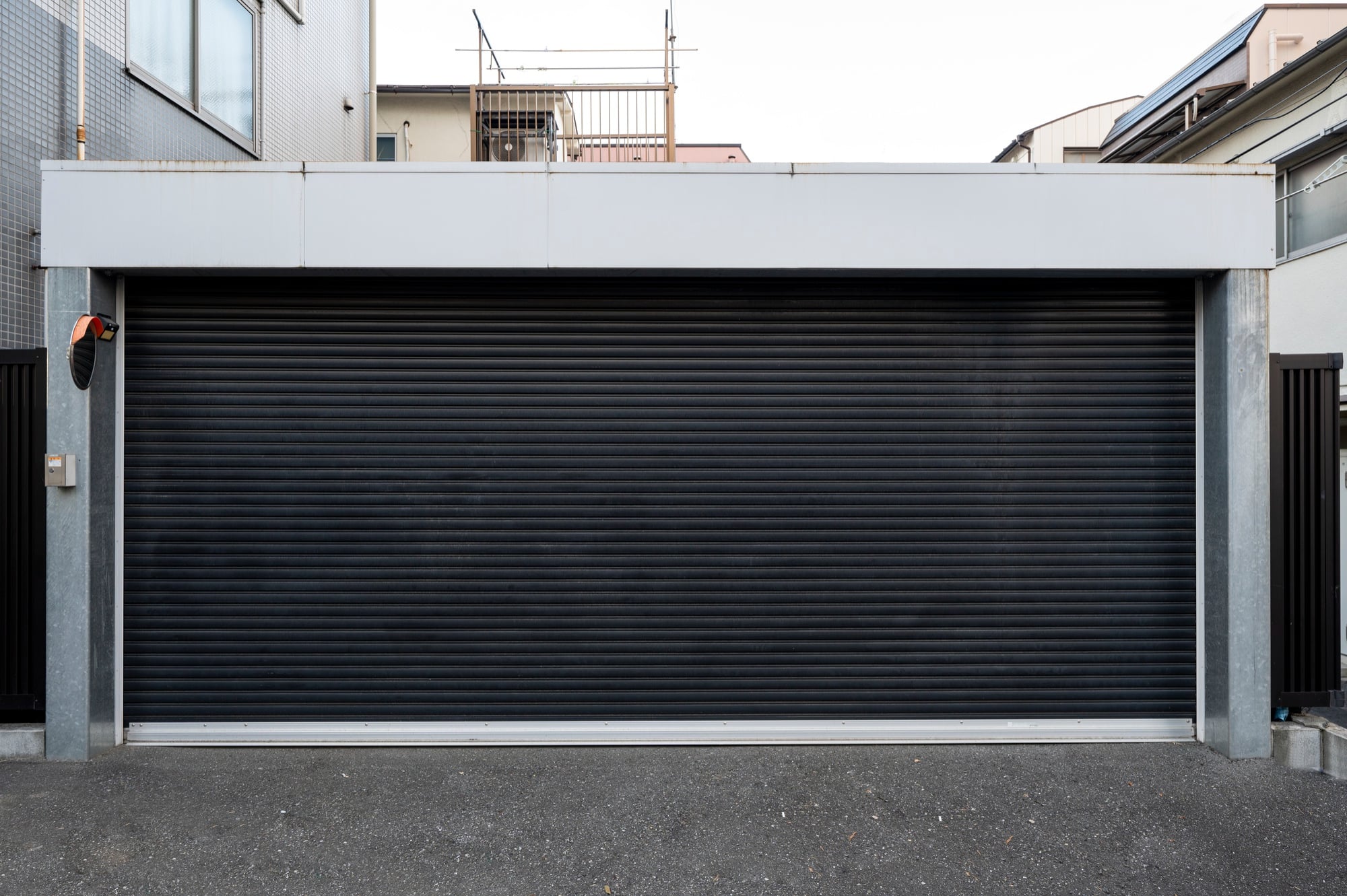
The garage door was standing wide open.
A radio was playing somewhere inside. George Strait, low and scratchy. The whole place smelled like fresh cut pine and paint.
I stood at the edge of the gravel drive in my good shoes and my good blouse, the one with the little blue buttons, and I couldn’t make my feet go any farther.
My son had told me what I would find out here. A wife, maybe. A girlfriend. A man with something to hide, who wanted his hands on my dead husband’s insurance money.
I’d driven forty minutes on back roads to prove him wrong. Or to prove him right. By then I honestly didn’t know which one I was more afraid of.
Then I looked into that garage, and I saw the ramp.
Long and wide, built of brand new lumber, so new the wood was still pale and sticky with sap. It ran from the concrete floor of the garage all the way up to the door that led into the house. There were rails on both sides. Smooth, sanded rails.
I walked over to it before I could stop myself. I put my hand on the rail.
It was exactly the right height for my hand.
Not his hand. Wendell was six foot two.
Mine.
My name is Winona Pruitt. I was an ER nurse for thirty four years at Baylor in Dallas.
I still check people’s color when they walk into a room. I can’t help it. Gray around the mouth, that’s the heart. Yellow in the whites of the eyes, that’s the liver. Too pink and too sweaty, that’s somebody whose sugar is off. Thirty four years of triage doesn’t wash out of you just because you hand in your badge.
My husband Dwight used to say I couldn’t even enjoy a church picnic without diagnosing half the congregation.
“Brother Lyle’s color is bad,” I’d whisper to him over the potato salad.
“Winnie, eat your chicken.”
“I’m just saying. Somebody ought to check his pressure.”
Brother Lyle had a heart attack six weeks later. Dwight never teased me about it again.
But I didn’t catch it with Dwight.
That’s the thing I’ve carried for two years. I could spot a heart attack across a fellowship hall, and I didn’t catch it in my own husband. He came in from mowing on a hot Saturday in November, said his arm felt funny, sat down in his brown recliner by the window and said he’d be fine after a glass of tea.
By the time I came back from the kitchen with the tea, he wasn’t fine.
I did CPR on my own living room carpet until the ambulance came. I knew. I knew before they got there. I’d seen that color a thousand times.
Dwight’s recliner still sits by the window of our house in Seagoville. It’s brown corduroy, worn smooth on the arms where his hands went. Nobody sits in it. I dust around it. Every week, I dust the end table and the lamp and the windowsill and I run the cloth all the way around that chair like it’s a little island.
My daughter Megan said once that I ought to get rid of it.
“I will,” I said. “When I’m ready.”
That was two years ago.
For a long time after Dwight died, I didn’t go anywhere except the grocery store and church and the cemetery out on Highway 175. My knees made sure of that. Thirty four years on hospital floors will grind your knees down to gravel. By sixty four, I couldn’t kneel in the garden anymore. Some mornings I had to go down the porch steps sideways, like a crab.
My neighbor Carla finally lost patience with me last June.
Carla is seventy one and lives across the street. She’s been widowed eleven years, and she wears bright pink lipstick to the mailbox, and she does not believe in sitting around.
“There’s a grief group at the senior center,” she said, standing on my porch with her purse already on her arm. “Tuesdays at ten. Coffee’s terrible but the people are nice. You’re coming.”
“I’m not much for groups.”
“You’re not much for anything these days, Winona. Get your shoes.”
So I got my shoes.
There were about a dozen of us in a little room with folding chairs and a big coffee urn and a box of Kleenex on every table. A cheerful young woman named Brooke ran it. She had Carla write my name tag in big black marker.
WINONA, in letters about two inches high.
“Lord, Carla,” I said, peeling the backing off. “I look like a kindergartner.”
“You act like one, too,” she said, and slapped it on my chest.
That’s where I met Wendell.
He was sitting across the circle from me. Big man, quiet, wearing a pressed plaid shirt buttoned all the way to the top. His name tag said WENDELL in neat block letters that he must have written himself, because they were straight as a ruler.
He had the biggest hands I’d ever seen on a man. Careful hands. When he held his little styrofoam cup of terrible coffee, he held it like it might break.
When it was his turn to talk, he said his name was Wendell Haskins. He was sixty six. He’d retired from the electric co op after thirty eight years as a lineman. His wife, Ruth, had passed fourteen months before.
“ALS,” he said. Then he stopped. He looked at his coffee cup for a long time. “That’s all I got today. Sorry.”
Brooke said that was fine. That was more than fine.
I watched him while the others talked. I couldn’t help it. His color was fine, but he had the look I used to see on family members in the ER waiting room at three in the morning. Like somebody who’s been holding his breath so long he’s forgotten how to let it out.
The second week, I came in late. My knees had been bad that morning and the porch steps took me a while. By the time I got there, everybody was already sitting down.
Wendell stood up when he saw me. He walked over to the coffee urn and came back with a cup and handed it to me.
“Two creams,” he said. “Right?”
I stared at him. “How’d you know that?”
He shrugged and sat back down. “You took two creams last week. I was paying attention.”
I didn’t know what to say. Dwight drank coffee with me every morning for thirty nine years, and to this day I’m not sure he could have told you how I took it.
The third week, after group, Wendell walked me to my car.
“Your porch light’s out,” he said.
“How do you know about my porch light?”
“You said it last week. When Brooke asked what’s hardest. You said it was little things. You said the porch light’s been out since your husband passed and you keep forgetting to get a new bulb, and every time you come home at night, it’s dark.”
I’d forgotten I said that. He hadn’t.
“It’s not the bulb,” I said. “I tried the bulb. Dwight always said it was the wiring. He kept meaning to look at it.”
“I was a lineman for thirty eight years,” Wendell said. “I can look at it.”
He came that Saturday. He spent two hours on a ladder on my front porch with his toolbox, and I stood at the bottom handing him things and trying not to fuss. He replaced the switch and a whole length of wire inside the wall. When he flipped it on, the porch light came on, bright and yellow, the first time in almost two years.
I stood in my front yard looking at it, and I had to put my hand over my mouth.
“Winona?” he said from the ladder. “You okay?”
“I’m fine,” I said. “Get down from there before you fall. I’m making you supper.”
I made chicken fried steak and mashed potatoes and green beans with bacon. He ate two helpings and said it was the best meal he’d had in a year and a half. Then he washed the dishes without asking, and dried them, and asked where everything went.
The next Sunday, he came back for supper. Then the Sunday after that.
By August, it was every Sunday.
I want to be honest about something. I didn’t think I’d ever want another man in my life after Dwight. I didn’t want one now, exactly. I wasn’t looking for a husband. I’d had one. A good one.
But it was nice to cook for two again. It was nice to have somebody to talk to while I peeled potatoes. It was nice to hear a man’s voice in the house, a deep, slow voice laughing at something on the TV.
Wendell didn’t talk much. But he listened like no man I’d ever known.
One Sunday in July, I was standing at the stove and my knees were bad. I had to hold onto the counter to get the cornbread out of the oven.
“You all right?” he asked.
“Just my knees. Thirty four years on hospital tile.” I laughed. “I’ll end up in a wheelchair like Mama did. You watch. Then you’ll have to push me around.”
I meant it as a joke. Wendell didn’t laugh.
He looked at me for a long moment across the kitchen. Then he looked down at his plate.
“Your mama was in a wheelchair?”
“The last eight years of her life. Arthritis. Her hips and knees both.”
“Where’d she live?”
“Out in Kaufman. The house I grew up in.” I set the cornbread on the table. “Little old farmhouse. She wouldn’t move. My brother and I begged her, but she said she’d been in that house fifty years and she’d die in it.” I smiled. “She painted the kitchen buttercup yellow when I was six. I remember sitting on the counter while she did it. She said yellow was the color of a happy kitchen. Every time I walked in, it was like the sun was coming up.”
“Buttercup yellow,” Wendell repeated.
“That’s what the can said. Buttercup.”
Two Sundays later, out of nowhere, he asked me about it again.
“That kitchen. Your mama’s. Was it a pale yellow, or a bright yellow?”
“Pale,” I said, surprised. “Like butter. Why?”
“Just wondering.”
And then a month after that, when I was washing up, he asked a third time. “Did the cabinets match? In your mama’s yellow kitchen? Or were they white?”
“White,” I said. “With little glass knobs. Wendell, why do you keep asking me about my mama’s kitchen?”
He just smiled and dried a plate.
“I like hearing you talk about it,” he said. “You look different when you talk about it.”
I didn’t know what that meant. I didn’t ask.
But there was one thing that started to bother me.
He never once asked me over to his place.
Not once, in four months. He came to my house every Sunday for supper. He fixed my porch light and my garbage disposal and the leaky faucet in the guest bathroom. He took me to the Mexican place in Mesquite on my birthday. He drove me to the cemetery on Dwight’s birthday and waited in the truck for a whole hour without complaining.
But whenever I said, “Next Sunday, why don’t I come to you for a change?” he’d shake his head.
“It’s not fit for company yet, Winnie.”
That was what he called me by then. Winnie. Only Dwight had ever called me that.
“I don’t care what it looks like. I was a nurse. I’ve seen worse than a messy house.”
“Give me till Christmas,” he said. “It’ll be ready by Christmas.”
I’m sixty four years old. I’ve heard every excuse a man can make. Dwight’s brother Earl kept a whole second family in Tyler for eight years and told his wife he was driving a truck route. I was the one who had to sit with her in the ER when she found out and tried to swallow a bottle of her sleeping pills.
So that one bothered me. It’s not fit for company. Give me till Christmas.
And I noticed things. I can’t turn that off.
Sawdust in the cuffs of his jeans. Little curls of it, pale, the kind that comes from a power saw.
A splinter in his palm that he hadn’t bothered to take out. I took it out myself with my tweezers at the kitchen table and he winced and said, “Mean nurse,” and I said, “You’d better believe it.”
Paint on his knuckles. A pale yellow. Scrubbed, but not all the way, the kind of paint that gets in the creases and won’t come out with soap.
When I asked about the paint, he just smiled.
“Puttering,” he said.
“Puttering at what?”
“This and that.”
And one Sunday in September, he came in and sat down in Dwight’s recliner.
Nobody had sat in that chair in two years. I stopped in the kitchen doorway with a dish of macaroni and cheese in my hands. I opened my mouth to say something.
Wendell’s head went back against the corduroy, and his eyes closed, and he was out cold. Asleep in about ten seconds. His big careful hands went loose on the worn arms of the chair, right where Dwight’s used to go.
I stood there and looked at him for a long time.
I checked his color out of habit. A little gray under the eyes. Tired. Not sick, I didn’t think. Just a man who’d been working too hard at something.
I didn’t wake him up. I let him sleep for forty five minutes while the macaroni got cold. It was nice to see somebody in that chair. I hadn’t known how much I wanted to see somebody in that chair until he was in it.
When he woke up, he was embarrassed.
“I’m sorry, Winnie. I don’t know what happened. I was up late last night.”
“Doing what?”
He hesitated.
“Puttering,” he said.
My son Zach did not like Wendell. Not from the first minute.
Zach is thirty eight. He runs a body shop in Balch Springs called Pruitt Collision. Dwight helped him start it eleven years ago with money we’d saved, and Zach has worked himself half to death keeping it going. He’s a good boy. He was always a good boy. When he was eight, he gave his whole allowance to a kid at school whose dog got hit by a car, so the kid could buy a new puppy.
But since Dwight died, Zach had changed.
Right after the funeral, while I was still in a fog, he sat me down at the kitchen table.
“Mama, I’m going to handle your bank stuff for a while,” he said. “Just till you get your feet under you. Daddy’s insurance came through, and that’s a lot of money. Old people get scammed. I see it on the news every day.”
“I’m not old, Zachary.”
“You know what I mean.” He took my hand. “Just so you don’t get scammed, Mama. Please. Let me do this for you.”
So I let him. He set up my online banking. He kept the password. When I needed to know something, I called him and he’d look it up on his phone. I didn’t mind. Honestly, I was glad not to think about it. I’d been doing paperwork for thirty four years in the hospital. I’d had enough of it.
The first time Zach met Wendell was at the end of August. He came by unexpectedly on a Sunday and found Wendell in my kitchen, drying dishes.
Zach stood in the doorway with his arms crossed. He’s built like his daddy, thick through the chest, and when he crosses his arms, he takes up the whole doorway.
“Who’s this?”
“Zach, this is Wendell Haskins. From my grief group. Wendell, this is my son.”
Wendell put down the dish towel and held out his big hand. “Pleasure to meet you, Zach. Your mama talks about you all the time.”
Zach looked at the hand for a second too long before he shook it.
“Does she,” he said.
After that, Zach started coming to Sunday supper. Every single week.
He’d never come every week before. Not even when Dwight was alive. Once a month, maybe. On holidays. He was always so busy at the shop.
Now he showed up every Sunday at five o’clock sharp with his wife Jordyn and the grandkids, Kaylee and Brody. Kaylee is seven and Brody is four. I loved having them. I’d have loved it more if I didn’t understand exactly why they were there.
Zach watched Wendell eat. That’s the only way I know how to put it. He sat across the table and watched him eat like he was counting the bites.
He asked questions. Lots of them.
“So where’d you say you worked, Wendell?”
“Trinity Valley Electric Co op. Thirty eight years.”
“And you’re retired now?”
“Two years.”
“Pension pretty good?”
“Zachary,” I said.
“What? I’m just making conversation.”
“It’s fine,” Wendell said. He wiped his mouth with his napkin. “It’s a decent pension. Enough for me.”
“Huh.” Zach cut his pork chop into small pieces. “And where do you live?”
“Out past Ferris.”
“Big place?”
“Little place.”
“Never seen it, though,” Zach said, and looked at me. “Have you, Mama?”
I didn’t answer. Wendell looked at his plate.
Across the table, Jordyn was looking at hers too. Jordyn is a quiet girl, a dental hygienist, sweet with the kids. All through supper, she hardly looked up. When I went to the kitchen to get the pie, she followed me in to help, and she stood next to me at the counter cutting slices without saying anything.
Then she said, very quietly, “He seems really nice, Miss Winona.”
“He is.”
She nodded. She kept cutting. Her hands were shaking a little. I noticed that. I thought she was nervous about Zach making a scene. I didn’t think about it again.
I should have. Thirty four years in an ER, and I didn’t think about it again.
It went on like that for three weeks. Then, on the last Sunday in September, it came apart.
Wendell had gone home early. He said he had something he needed to finish. The grandbabies were in the living room watching cartoons. Jordyn was helping me clear plates.
Zach leaned back in his chair. He had his daddy’s way of leaning back, with one arm hooked over the back of the chair.
“Where does he live, Mama? Really?”
“Out past Ferris, I think.”
“You think.” He laughed. “You think. You’ve been seeing this man for four months, and you’ve never been to his house?”
“He says it isn’t fit for company.”
“Mama.” He leaned forward. “For all you know, he’s got a wife out there.”
“He’s a widower. Ruth. She died of ALS. He talked about it in group.”
“He told you that. Anybody can say anything in a grief group.” Zach shook his head. “Mama, wake up. A man who won’t show you his house wants one thing, and it’s Daddy’s insurance.”
Jordyn set down the stack of plates on the counter. She didn’t turn around.
“He’s never asked me for a dime,” I said.
“Not yet.” Zach pulled his phone out of his pocket. He tapped on it. I saw the green logo come up on the screen. My bank. “I’m just making sure he’s not in your accounts.”
“Zachary, put that away.”
He didn’t look up. He was scrolling.
“I’m serious, Mama. Has he asked to borrow your card? Has he asked about your Social Security number? Has he asked you to sign anything?”
My face went hot. I could feel it climbing up my neck, all the way into my ears.
I was being talked about like a child. In my own kitchen. In front of my grandbabies, who’d gone quiet in the living room and were peeking around the door.
“Put that phone away, Zachary,” I said. “Right now.”
He didn’t.
He kept scrolling. And then he stopped, and he looked at something on the screen for a long second. His jaw got tight.
Then he put the phone face down on the table.
“Everything looks fine,” he said. “For now.”
That Tuesday, my daughter Megan called from Longview.
Megan is thirty five. She’s a school counselor. She has two little girls and a husband who sells insurance. She calls me on Tuesdays and Fridays, regular as a clock.
“Mama,” she said. “Zach called me. He’s real upset.”
I was standing in the kitchen. I sat down hard on the kitchen stool.
“About Wendell.”
“He says this man’s got you wrapped around his finger. He says he’s at your house every Sunday, sitting in Daddy’s chair.”
“He fell asleep in it one time.”
“Mama.” She sighed. “Zach says if you keep seeing him, he’s done bringing the kids.”
The kitchen was very quiet. I could hear the refrigerator hum. I could hear the clock over the stove.
“He said that?”
“He’s just scared. He doesn’t want you to get hurt.”
“Is that what you think too, honey?”
She took too long to answer.
“I think,” Megan said slowly, “that you’re lonely, Mama. And lonely people get taken. I see it all the time. Not just old people. Everybody. When you’re lonely, you see what you want to see.”
I didn’t say anything for a long time. I looked at Dwight’s recliner through the kitchen doorway, in its little dusted island by the window.
“Mama? Are you there?”
“I’m here,” I said. “I’ve got to go, baby. I’ve got something on the stove.”
I didn’t have anything on the stove.
I didn’t sleep much that week.
At two in the morning, I’d lie there in the big bed Dwight and I bought in 1991 and listen to the house tick. The air conditioner cycling on and off. The ice maker dropping cubes. The porch light buzzing a little, the one Wendell fixed.
Maybe they were right.
I’d go over it and over it. Maybe I was just a lonely old woman getting fooled by a nice man with a coffee cup. Maybe he’d watched me in that grief group and seen exactly what I was. A widow with a paid off house and a life insurance check. Maybe the porch light was just the first step. Maybe the two creams were just the first step.
I’d seen it happen. Lord knows I’d seen it happen. Old women coming into the ER with broken hips, and the “boyfriend” nowhere to be found when the bills came. Earl’s poor wife with her bottle of pills.
Then I’d think about those yellow knuckles.
The sawdust. The splinter. The way he’d fallen asleep in Dwight’s chair, out cold in ten seconds, like a man who’d been working twelve hours a day.
A man running a con doesn’t come to supper too tired to eat. A man running a con doesn’t wash your dishes and ask where they go. A man running a con doesn’t ask three separate times what color your dead mother’s kitchen cabinets were.
Thirty four years in the ER taught me one thing above everything else. When the story doesn’t match the body, you trust the body.
The story everybody was telling me said Wendell was a liar.
The body said he was exhausted, and covered in sawdust, and paint.
I’m a nurse. When something’s off, I go see for myself.
Wendell had written his address on a paper napkin once, back in July. “In case of emergency,” he’d said, and tucked it under the sugar bowl. I’d put it in my junk drawer and forgotten about it.
On Thursday morning, I went through that drawer. Rubber bands and twist ties and dead batteries and coupons for things I’d never buy. Under the old phone book, folded in half, I found it.
1412 County Road 664. Ferris, TX.
His handwriting. Straight block letters, like a ruler.
I put on my good blouse, the one with the little blue buttons. I put on my good shoes. I looked at myself in the hall mirror and thought, Winona, what in the world are you doing?
Then I got in my car.
It took me forty minutes. The back roads out past Ferris wind through cotton fields and cattle and long stretches of nothing. I had my phone on the seat beside me with the map on it, and twice I took a wrong turn and had to back up on a gravel road.
I almost turned around three times.
The first time was at the gas station in Wilmer. I sat at the pump and thought, this is crazy. This is exactly the kind of thing a lonely, foolish old woman does.
The second time was when I passed the sign for Ferris. I thought about Zach’s face at the table. You think. You’ve never been to his house.
The third time was when I turned onto County Road 664, and I saw it.
A little white frame house with green shutters and a chain link fence. A big pecan tree in the front yard, so big its branches hung down over the roof. A tire swing on one of the low branches, old and faded, the rope gone gray.
His truck was parked out back by a metal shed.
But the garage door was standing wide open. And a radio was playing country music inside.
I pulled over at the edge of the road and sat in my car with the engine running.
What if Zach was right? What if a woman came to that door? What if I got out and walked up that drive, and some lady in a housecoat came out on the porch and said, “Can I help you?”
My hands were shaking on the steering wheel. Not my knees this time. My hands.
I turned off the engine.
I got out anyway.
I walked up that gravel drive in my good shoes. The gravel crunched loud as gunshots. My knees complained with every step.
Nobody came out on the porch.
The garage smelled like fresh cut pine and paint and something else, something like turpentine. The radio was on a workbench in the back, playing George Strait. There were sawhorses and a table saw and a stack of lumber against one wall. A shop vac. Paint cans, a lot of them, lined up neatly on a shelf.
And there was the ramp.
Long and wide, built of new lumber, running from the garage floor up to the door into the house. Gently sloped, the way you build them when you want somebody to be able to roll up them easy. Raw wood, sanded smooth. Not a splinter on it.
Rails on both sides. Nice and wide. At just the right height for a hand.
I put my hand on the rail. It fit my hand perfectly. I’m five foot three. My hand sat on that rail like it was made for it.
Because it was. I knew that, standing there. I knew it before I knew anything else.
I looked at the paint cans on the shelf. I walked over to them. Most were primer. White semi gloss. A can of deck stain.
And four gallons of interior latex, with a color swatch taped to the lid. A little square of pale yellow.
The name printed under the swatch said: Buttercup.
I walked up the ramp.
I don’t remember deciding to. My feet just did it. I put my hand on that rail and walked up that gentle slope in my good shoes, and my knees didn’t hurt at all. Not once. It was the easiest walk I’d taken in a year.
At the top, the door into the house was open a crack. I pushed it.
It swung in onto a kitchen.
I stood in the doorway, and I couldn’t breathe.
The walls were buttercup yellow. Pale, like butter. Like the sun coming up.
The cabinets were white. Every single one of them. And on every cabinet door, there was a little glass knob.
The counters had been cut down. I could see it. They were lower than any counter I’d ever seen, maybe six inches lower than standard, just the height you could reach from a chair. The bottom cabinets on one side had been taken out entirely, leaving an open space under the sink, so a person in a wheelchair could roll right up and wash dishes. The doorway into the next room had been widened. I could see the fresh trim around it, still unpainted, and the new section of hardwood floor where the old wall had been.
There was a grab bar by the back door. Another one by the stove.
And on the windowsill over the sink, in a little clay pot, there was a pink geranium. My mama grew pink geraniums. I’d told him that, too. I didn’t even remember telling him that.
I put my hand on the counter to steady myself.
That’s when I heard the back door open.
Wendell came in from the yard with a paint roller in one hand and a five gallon bucket in the other. He was wearing old overalls, splattered all over with yellow and white. There was yellow paint on his cheek. Yellow paint in his gray hair.
He saw me and stopped dead in the doorway.
The bucket hit the floor. The paint roller clattered out of his hand.
For a long moment, neither of us said anything. George Strait was still playing out in the garage, faint through the door.
“Winnie,” he said finally. His voice came out cracked. “You… you weren’t supposed to see it yet.”
I couldn’t answer him.
“It’s not done,” he said. He looked around the kitchen like he was seeing it through my eyes. “The trim’s not painted. I haven’t finished the bathroom. The grab bars in the shower aren’t in. I was going to do the bathroom this week, and the ramp out front by Thanksgiving, and then…”
“Wendell,” I said. “What is this?”
He took off his cap. He turned it around in his big careful hands.
“I was going to tell you at Christmas,” he said. “I had it all planned. I was going to drive you out here Christmas Eve and walk you up the ramp and open the door and… I don’t know. I had a speech. It was a pretty good speech.” He laughed a little. “I practiced it in the truck.”
“Tell me now,” I said.
He was quiet for a long time.
Then he pulled out one of the kitchen chairs. It had arms on it, sturdy wooden arms, the kind you can push up on when your knees are bad.
“Sit down, Winnie,” he said. “Your knees.”
I sat.
“Ruth got sick in 2021,” he said. He sat down across the table from me. “ALS. You know about it. You were a nurse. You know how it goes.”
I knew how it went.
“First it was her hands. She couldn’t button her blouse. Then her legs. By the spring of 2022, she was in a wheelchair. And this house…” He looked around. “This house had three steps up to the front door. Two up from the garage. Narrow doorways. The bathroom was so small I had to carry her in and out like a baby. She hated that. She was a proud woman. She hated it.”
“I’m sorry, Wendell.”
“I kept saying I’d build her a ramp.” He looked at his hands. “I kept saying it. Next weekend. After I finish this job. When it cools off. I had the lumber in the shed. I had it sitting right out there in the shed for four months.”
He stopped.
“She wanted to see the pecan tree,” he said quietly. “That last spring. She used to sit out under it every evening, before she got sick. That was her favorite place in the world. And she couldn’t get out there anymore. Because of the steps. Because I never built the ramp.”
He wiped his eyes with the back of his wrist. It left a streak of yellow across his cheekbone.
“She died in May. In the hospital bed in our living room. Looking out the window at that tree.” He took a breath. “I never built her the ramp, Winnie. I had the lumber in the shed the whole time.”
I reached across the table and put my hand on his. He held on.
“When I met you in that group,” he said. “And you were late that second week, because of your knees. I saw you coming down the hall, holding onto the wall. And then you told me about your mama. The wheelchair. You laughed about it. You said I’ll end up in a wheelchair like Mama did.” His voice broke. “And I thought, not this time. Not this time. I’m not going to wait till it’s too late again. I’m going to build it first.”
I couldn’t speak.
“I didn’t want to ask you anything,” he said. “I didn’t want to just say words. Anybody can say words. Ruth heard four months of words from me about that ramp.” He looked up at me. “I wanted to have it ready. So that whenever you came here, whenever you wanted to come, even if your knees were bad, even if someday you couldn’t walk at all, you could come right in. Like it was your house too. Like you always belonged here.”
He looked around the yellow kitchen.
“I asked you about your mama’s kitchen three times,” he said, “because I wanted to get it right.”
I don’t know how long I sat there crying at his kitchen table. A long time. Long enough that the song on the radio changed twice.
He didn’t say anything. He just held my hand, and when I needed a tissue, he went and got me a roll of paper towels because that’s all he had, and he sat back down.
When I finally stopped, I wiped my face and looked at him. Really looked at him. The nurse in me, out of habit.
He was gray around the eyes. Grayer than he should have been. His hands had little tremors in them that I’d seen before and blamed on tiredness. There was a bottle of Advil on the counter by the coffee pot, the big one, the five hundred count, half empty.
“Wendell,” I said. “How many hours a day have you been working on this?”
He looked away.
“Wendell.”
“Eight. Ten, maybe. Twelve on Saturdays.”
“For how long?”
“Since August.”
“You’re sixty six years old.”
“I know how old I am.”
“You’ve been sleeping, what, four hours a night? Five?”
He didn’t answer. That was the answer.
I stood up. My knees creaked. I walked around the table to him, and I put two fingers on the inside of his wrist, the way I’d done ten thousand times on ten thousand people.
His pulse was steady. A little fast. But steady.
“You’re going to sleep tonight,” I said. “Eight hours. And you’re not touching a paintbrush till Saturday. Do you hear me?”
He looked up at me with yellow paint in his hair, and he smiled. The first real smile I’d seen on him all day.
“Yes, ma’am,” he said.
“I mean it.”
“I know you do. You’re a mean nurse.”
“You’d better believe it,” I said, and I bent down and kissed the top of his paint covered head.
He showed me the rest of the house before I left.
The bedroom down the hall had a new door, wider than the others, and a new bed, lower than normal. The bathroom was torn up, the old tub pulled out, a walk in shower half built with a little tiled bench inside it. Out the back, a second ramp was framed but not finished, leading down from the back door to a concrete path that ran right out to the pecan tree.
There was a bench under the tree. Brand new, made of the same pale lumber as the ramps. Wide enough for two.
“I was going to paint that too,” he said. “But I couldn’t decide on a color.”
“Leave it,” I said. “It’s perfect like that.”
We sat on it for a while. The pecan tree moved over our heads, and the light came through the leaves in little pieces.
“Can I ask you something?” I said.
“Anything.”
“Why’d you tell me it wasn’t fit for company? Why not just say you were fixing it up?”
He thought about it. “Because you’d have wanted to see it. You’d have come out here and seen it half done and figured out what it was. And then it would’ve been words again. Promises. Next weekend.” He shook his head. “I wanted you to see it finished. All at once. So you’d know it was real.”
“It’s real, Wendell.”
“I know.” He took my hand. “I know that now.”
I drove home with the windows down. I didn’t turn on the radio. I didn’t need to.
I kept thinking about Zach. A man who won’t show you his house wants one thing, Mama, and it’s Daddy’s insurance.
And then I kept thinking about Zach’s face at that Sunday supper. The way he’d stopped scrolling on my bank app. The way his jaw had gone tight. The way he’d put the phone face down on the table, quick, like he didn’t want me to see it.
Everything looks fine. For now.
I thought about Jordyn, cutting pie with her hands shaking. He seems really nice, Miss Winona.
I thought about Megan, taking too long to answer.
The story didn’t match the body.
I’d trusted the body on Wendell, and the body had been right.
What was the body telling me about my son?
I went to the bank on Friday morning.
Not the app. The actual bank. The little branch of First Texas on Highway 175 in Seagoville, where Dwight and I opened our first account in 1985 with four hundred dollars and a wedding check from his grandmother.
The manager was a young woman named Tamika, with long braids and kind eyes. I told her I wanted to see everything. Every account in my name. Every transaction for the last two years, since my husband died. And I wanted to change my online password, right now, in front of her, so that only I would know it.
She was very careful with me. She asked me twice if anybody was pressuring me. I told her no.
She printed out the statements. She put them in a manila folder. I didn’t open it at the bank. I took it home and sat at my kitchen table and put on my reading glasses and opened it there.
Dwight’s life insurance had come to two hundred and twenty thousand dollars. I’d put it in a money market account, the way our financial man said. I hadn’t touched it except for the funeral and the headstone. I was saving it. For my knees, maybe. For a home, someday. For the grandbabies’ college.
There should have been about a hundred and ninety thousand dollars left.
There was a hundred and forty six.
I read the number three times. Then I went through the pages, line by line, the way I used to go through charts at the end of a twelve hour shift.
Transfers. Starting in February of this year. Five thousand dollars. Then three thousand. Then eight. Then a gap. Then four thousand in June. Six in August. Eleven thousand, in one shot, on the second week of September.
The same week Zach started coming to Sunday supper.
Every single transfer went to the same account. The receiving name was printed right there on the statement, in small black capital letters.
PRUITT COLLISION LLC.
I sat at that table for a long time.
I didn’t cry. I’d done all my crying the day before, in a yellow kitchen out past Ferris. I just sat there with my reading glasses on and that folder open in front of me, and I looked at Dwight’s recliner through the doorway.
Forty four thousand dollars.
My son had taken forty four thousand dollars from his dead father’s insurance. And then, when a man showed up in my kitchen who might notice, who might ask questions, who might sit at the table and look at things with clear eyes, my son had started coming every Sunday to watch him. To scare him off. To call him a con man, in front of my grandchildren, so nobody would ever look at the person really doing it.
A man who won’t show you his house wants one thing, and it’s Daddy’s insurance.
He’d been describing himself.
I called Megan that night.
I told her everything. Wendell’s house first. The ramp, the yellow kitchen, Ruth and the pecan tree. Then the folder.
She was quiet for a very long time.
“Oh, Mama,” she said finally. “Oh, Mama. I’m so sorry.”
“Did you know?”
“No. God, no. I swear I didn’t.” Her voice cracked. “But Zach called me in September. He was so upset. He kept saying this man was going to take everything. He kept saying it over and over. I thought he was scared for you.” She took a shaky breath. “I didn’t think… Mama, I should have heard it. I’m a counselor. Somebody that scared of being robbed, it’s usually…”
“Usually somebody who’s scared of being caught,” I said.
“Yeah,” she whispered.
“I’m going to talk to him Sunday. At supper.”
“Do you want me to come?”
I thought about it. “Yes,” I said. “I want everybody there. Wendell too.”
“Mama, are you sure? With Wendell there?”
“I’m sure,” I said. “I’ve spent four months listening to my children talk about that man at my table like he wasn’t good enough to sit there. He’s going to sit there. And he’s going to hear the truth.”
Sunday was the longest day of my life.
I cooked like I always did. Pot roast, carrots and potatoes, yeast rolls, sweet tea. Banana pudding with the vanilla wafers on top. I set the table for eight.
Megan drove in from Longview at three. She hugged me in the driveway for a long time and didn’t say anything.
Wendell came at four thirty. He’d shaved and put on his good plaid shirt, buttoned to the top. There was still a faint line of yellow paint along one thumbnail. When he saw Megan, he held out his hand and said, “You must be Megan. Your mama talks about you all the time.”
Megan looked at his hand. Then she ignored it and hugged him.
“Thank you,” she said into his shoulder. “For the porch light.”
He didn’t know what to say to that. He patted her back like she was something fragile.
Zach and Jordyn came at five, with the kids. Zach saw Megan’s car and frowned. Then he came in and saw Wendell sitting at the table, and his face went flat.
“Didn’t know it was a party,” he said.
“Sit down, Zachary,” I said. “Supper’s ready.”
We ate. It was quiet. Kaylee told a long story about a girl in her class who threw up on the bus. Brody spilled his tea. Jordyn cleaned it up without looking at anyone.
When the plates were empty, I asked Jordyn to take the kids into the living room and put on a movie. She looked at me. Something in my face must have told her, because she went pale and she took them without a word.
When she came back and sat down, I opened the drawer of the sideboard and took out the manila folder. I set it on the table in front of Zach.
“I went to the bank on Friday,” I said.
He didn’t touch the folder. He just looked at it.
“I changed my password. I got the statements printed out.” I opened the folder and turned it so he could see. “Forty four thousand dollars, Zachary. Since February. To Pruitt Collision.”
Nobody moved.
Wendell sat very still beside me. He didn’t look at Zach. He looked at his plate, the same way he did that first day in grief group.
Zach’s face went red. Then white. Then red again.
“Mama,” he said. “It’s not… I can explain.”
“Then explain.”
“I was going to pay it back. Every cent. I swear to God, I was going to pay it back.”
“Explain,” I said again.
He put his face in his hands.
It came out in pieces. The shop had been struggling for two years. Since before Dwight died, even. Insurance companies cutting what they’d pay for repairs. Two of his best guys leaving for a dealership in Mesquite. A new paint booth that cost twice what he’d budgeted.
Then, last January, a fire. An electrical fire in the back bay. No one was hurt, but it destroyed sixty thousand dollars in equipment and three customer cars. His insurance company was fighting the claim. Said the wiring was out of code. Said it might be months, maybe years, before they paid anything.
“I had payroll,” Zach said. His voice was raw. “I had eleven guys with families. I had a bank loan on the building. I was going to lose everything Daddy helped me build. Everything. And Daddy’s money was just… sitting there. In your account. And I had the password.”
“You could have asked me,” I said.
“I couldn’t.” He looked up at me. His eyes were wet. “I couldn’t, Mama. You’d just lost Daddy. You were barely getting out of bed. How was I supposed to come to you and say, hey, Mama, the shop Daddy was so proud of is going under, can I have his life insurance? I couldn’t do that to you. So I told myself I’d just borrow it. Just a little. Just until the insurance paid out. I’d put it all back before you ever noticed.”
“And then Wendell came along,” I said.
He flinched.
“And you got scared,” I said. “Because he was here every Sunday. Because he pays attention. Because he might ask to see something, or notice something, and then I’d notice.” I set my hand flat on the folder. “So you came every week to make sure he didn’t. And you told me he was after Daddy’s insurance. You told Megan. You threatened to keep my grandbabies away from me. To protect yourself.”
“No, Mama, I…”
“Zachary.”
He stopped.
“Look at me,” I said. “Not at the table. At me.”
He looked at me.
“Thirty four years in an ER, son,” I said quietly. “I know what a person looks like when they’re lying. I watched you lie to me at this table for four months. I didn’t see it because I didn’t want to see it. But I see it now.”
He broke.
My big, strong son, built like his daddy, who could lift the front end of a car with a jack and a cheater bar. He put his head down on my kitchen table next to the banana pudding and cried like he was eight years old again.
Jordyn put her hand on his back. She was crying too.
“I knew,” she whispered. “Miss Winona, I’m so sorry. I knew since June. I begged him to tell you. Every week. Every week I begged him.”
“I know you did, honey,” I said. “I saw your hands shaking.”
It was Wendell who spoke next. I didn’t expect it.
He’d been sitting so quietly, I’d almost forgotten he was there. He cleared his throat. Everybody looked at him.
“Zach,” he said. “Can I say something?”
Zach lifted his head. His face was blotchy. He didn’t say yes or no.
“My wife Ruth needed a ramp,” Wendell said. “For four months, she needed it. I had the lumber in the shed. I kept saying I’d build it. I kept saying next weekend. And I didn’t, because I was ashamed I hadn’t done it sooner. And the longer I didn’t do it, the more ashamed I got. And the more ashamed I got, the harder it was to go out to that shed.” He turned his coffee cup around on the table. “She died without ever seeing her pecan tree again. Because I was too ashamed to admit I’d waited too long.”
Zach stared at him.
“Shame’ll do that,” Wendell said quietly. “It’ll make you keep digging a hole you already know you’re in, just so nobody sees you standing at the bottom of it.” He looked at Zach. “I’m not saying what you did was right. It wasn’t. But I know how you got there. I’ve been there.”
Nobody said anything for a long moment.
Then Zach said, very quietly, “I called you a con man. In front of my kids.”
“You did.”
“You built my mama a ramp.”
“I did.”
Zach put his face back in his hands. “I’m so sorry,” he said. “I’m so sorry. To both of you.”
That night, after everybody went home, I sat in my kitchen by myself for a long time.
Then I got up and went to the living room. I stood in front of Dwight’s recliner.
“Well, Dwight,” I said out loud. “Your son’s in a mess.”
The chair didn’t say anything. Chairs don’t.
But I could hear what Dwight would have said, as clear as if he were sitting in it. He’d have said, Winnie, the boy made a mistake. He’s not a bad boy. He’s a scared one. You’ve seen enough scared people to know the difference.
I sat down in Dwight’s chair.
First time in two years. The corduroy was cool and soft under my hands, worn smooth on the arms where his hands used to go. It still smelled a little like him. Old Spice and grass clippings.
I sat there till almost midnight. I thought about my son crying at my table. I thought about Wendell telling him about the ramp. I thought about how many of us carry something we’re too ashamed to put down.
When I got up, I knew what I was going to do.
The next week, I went with Zach to see a lawyer. Not to press charges. I told him that right away, and I watched his shoulders come down an inch. But to make it all clean and legal, so there’d be no more secrets.
We wrote it up as a loan. Forty four thousand dollars, at two percent interest, to be paid back over six years, five hundred dollars a month. If the insurance company ever paid out on the fire, the full balance would be due right away.
Zach signed it. His hand shook.
“I don’t deserve this,” he said. “You could have called the police.”
“You’re my son,” I said. “Not a stranger off the street.”
“I treated Wendell like a stranger off the street.”
“Yes,” I said. “You did. So you’re going to go fix that.”
He did.
The next Saturday, Zach drove out to County Road 664 in his work truck. I know because Wendell called me afterward. He sounded like he didn’t know whether to laugh or cry.
“He showed up at seven in the morning,” Wendell said. “With a paint sprayer. A real one, a professional one, from his shop. And two of his guys. He said, ‘My mama says you’ve been working twelve hours a day and she wants you to stop. So show me what’s left.’”
They painted the trim. All of it, every door and window frame in the house, in one day. Zach’s guys did the deck stain on both ramps. Zach himself finished the tile in the walk in shower, kneeling on the bathroom floor with a level and a trowel until almost dark. His body shop hands, steady and careful.
“He’s good,” Wendell told me. “Real good. He’s got an eye for it.”
“His daddy taught him,” I said.
“I could tell,” Wendell said. “He kept stopping to check things twice. Same as you do.”
At the end of the day, Wendell said, Zach stood at the bottom of the ramp out front for a long time, just looking at it. Then he said, “My mama’s going to love this.” And then he said, “I’m sorry I called you a con man. I’m sorry I said all that. I was talking about myself.”
And Wendell said, “I know, son. I know you were.”
Christmas came.
On Christmas Eve, Wendell picked me up in his truck at four in the afternoon. He was wearing a red flannel shirt, buttoned to the top. He’d gotten a haircut. He looked nervous, the way Dwight looked on our wedding day.
“You’ve seen it already,” he said, as we turned onto County Road 664. “So I guess the surprise is ruined.”
“You still haven’t given me your speech,” I said. “The one you practiced in the truck.”
He went red. “I don’t remember it anymore.”
“Then make up a new one.”
The house looked different in the winter light. The trim was white and crisp. The ramp out front was stained a deep honey color, with little solar lights along the rail. There was a wreath on the door. The pecan tree was bare, but someone had wrapped white Christmas lights all around its trunk and up into the lowest branches.
And there were cars in the driveway. A lot of cars.
Zach’s truck. Megan’s minivan. Carla’s little silver Buick with the pink fuzzy dice hanging off the mirror.
“Wendell,” I said. “What did you do?”
“Not me,” he said. “Your son.”
They were all inside, in that yellow kitchen. Zach and Jordyn. Kaylee and Brody, running up and down the ramp in the garage, shrieking, because it was the best slide they’d ever seen. Megan and her husband and their two little girls. Carla, in a Christmas sweater with a light up reindeer on it and her bright pink lipstick, holding a plate of fudge.
“Surprise,” Megan said.
The table was set. Not Wendell’s little kitchen table. A long one, two tables pushed together and covered with a white cloth. There were twelve chairs. Every chair had arms on it.
“Zach borrowed them from the church,” Jordyn said. “So you’d have something to push up on. He made them give us the ones with arms.”
I looked at my son. He was standing by the stove in a Christmas apron, stirring a pot of gravy.
“Daddy’s recipe,” he said. “Your recipe, I mean. I called Megan to get it. I think I messed it up.”
I went and tasted it.
He had messed it up. Way too much pepper.
“It’s perfect,” I said.
After supper, Wendell asked me to come outside.
Everybody suddenly found something very interesting to look at on their plates. Carla winked at me. Megan pretended to be very busy wiping Brody’s face.
Wendell walked me out the back door and down the new ramp. The concrete path was lit by little lanterns. It led straight out to the pecan tree, to the wooden bench underneath it, glowing in the Christmas lights.
We sat down.
It was cold. I could see my breath. Wendell took off his coat and put it over my shoulders, even though I had a perfectly good coat on already.
He was quiet for a long time.
“I had a whole speech,” he said finally. “In the truck. It started, ‘Winnie, I’m not a young man.’ And then it went on about Ruth. And the ramp. And how I didn’t want to wait till it was too late again.” He shook his head. “It was a good speech. But you already know all of it.”
“I know all of it.”
“So I’ll just ask you.” He turned to me. His big careful hands were shaking. “Will you come here? Not to live. Not unless you want to. Not to get married, unless someday you want that. I’m not asking you to leave your house. Or Dwight. Or anything.” He took a breath. “I just want you to know you can come. Any day. Every day. Whenever your knees are bad, or whenever they’re good. And that this house will always be ready for you. No matter what happens. That’s all.”
I looked at him in the Christmas lights.
I thought about Dwight’s recliner, back in Seagoville. I’d sat in it twice more since that night in October. I’d been thinking that maybe Zach should have it. Maybe in his living room, where Kaylee and Brody could climb all over it, the way he used to climb all over his daddy.
I thought about my mama’s yellow kitchen, and how every time I walked in, it was like the sun was coming up.
“Wendell,” I said. “Can I ask you something?”
“Anything.”
“Will you come to my house on Sundays still? For supper?”
He blinked. “Of course.”
“And can I come here on Wednesdays? And sit under this tree? And you’ll make me coffee?”
“Two creams,” he said.
“Two creams.” I took his hand. “Then that’s my answer. For now. Ask me again at Easter.”
He laughed, a big surprised laugh that I’d never heard from him before. It rolled out across that dark yard and up into the bare branches of the pecan tree.
“I’ll ask you every Easter for the rest of my life,” he said.
“I know you will,” I said. “You’re stubborn.”
“Takes one to know one, Mean Nurse.”
That was ten months ago.
I still live in my house in Seagoville. Zach has Dwight’s recliner now, in his living room in Balch Springs. Brody falls asleep in it every Sunday afternoon after supper, out cold in about ten seconds, just like his granddaddy used to. Zach sent me a picture of it. I keep it on my refrigerator.
Zach has paid back seven thousand dollars so far. Five hundred a month, every month, on the first. He never misses. The insurance company finally settled on the fire in August. He paid the rest of what he owed me the day the check cleared. All of it, in one lump. He drove it to my house himself and put it in my hand.
“Daddy’s money,” he said. “I’m sorry it took me so long.”
“It’s not Daddy’s money,” I said. “It’s ours. All of ours. That’s what it was always for.”
I don’t let anyone handle my bank stuff anymore. Not Zach, not Megan, not Wendell. I do it myself, at my kitchen table, with my reading glasses on. I figured out the app. It’s not that hard. Thirty four years of charting will teach you to find your way around a screen.
Megan calls on Tuesdays and Fridays, still. She asks about Wendell every time now. She and her girls came out to the pecan tree in April and had a picnic. Her littlest one fell asleep on the bench in Wendell’s lap.
Carla still wears pink lipstick to the mailbox. She says she knew from the first day in that grief group. She says she saw the way Wendell looked at me when I came in late that second week, holding onto the wall.
“That man looked at you like you were the sun coming up,” she said.
“Oh, hush, Carla.”
“I’m just telling you what I saw. You’re not the only one in this neighborhood who notices things.”
Wendell asked me again at Easter. Under the pecan tree, with the new leaves just coming out over our heads.
I said, ask me again in the fall.
He said he would.
My knees got worse this summer. The doctor says I’ll need replacements, both of them, probably next year. Some mornings, I can barely get down my own porch steps. I go sideways, holding the rail.
But every Wednesday, I drive out to County Road 664. Wendell meets me in the garage with a cup of coffee, two creams.
And I put my hand on that rail, the one that fits my hand exactly, and I walk up that ramp into a buttercup yellow kitchen, and my knees don’t hurt at all.
Not once.
It’s not a big thing, a rail at the right height. It’s just wood and nails and a man who was paying attention.
But I’ve seen a lot of people in my life. Thirty four years of them, coming through the ER doors at three in the morning. I’ve seen what people do when they’re scared, and what they do when they’re ashamed, and what they do when they love somebody.
And I’ve learned that you can’t always trust what people say. My son said a lot of things at my table. Some of them broke my heart.
But you can trust what people build for you when they think you aren’t looking.
That’s the body. That’s the truth.
That’s the only story I believe anymore.

Adrian Hawthorne is a celebrated author and dedicated archivist who finds inspiration in the hidden stories of the past. Educated at Oxford, he now works at the National Archives, where preserving history fuels his evocative writing. Balancing archival precision with creative storytelling, Adrian founded the Hawthorne Institute of Literary Arts to mentor emerging writers and honor the timeless art of narrative.