Delivered Safe
“Straight home,” I said.
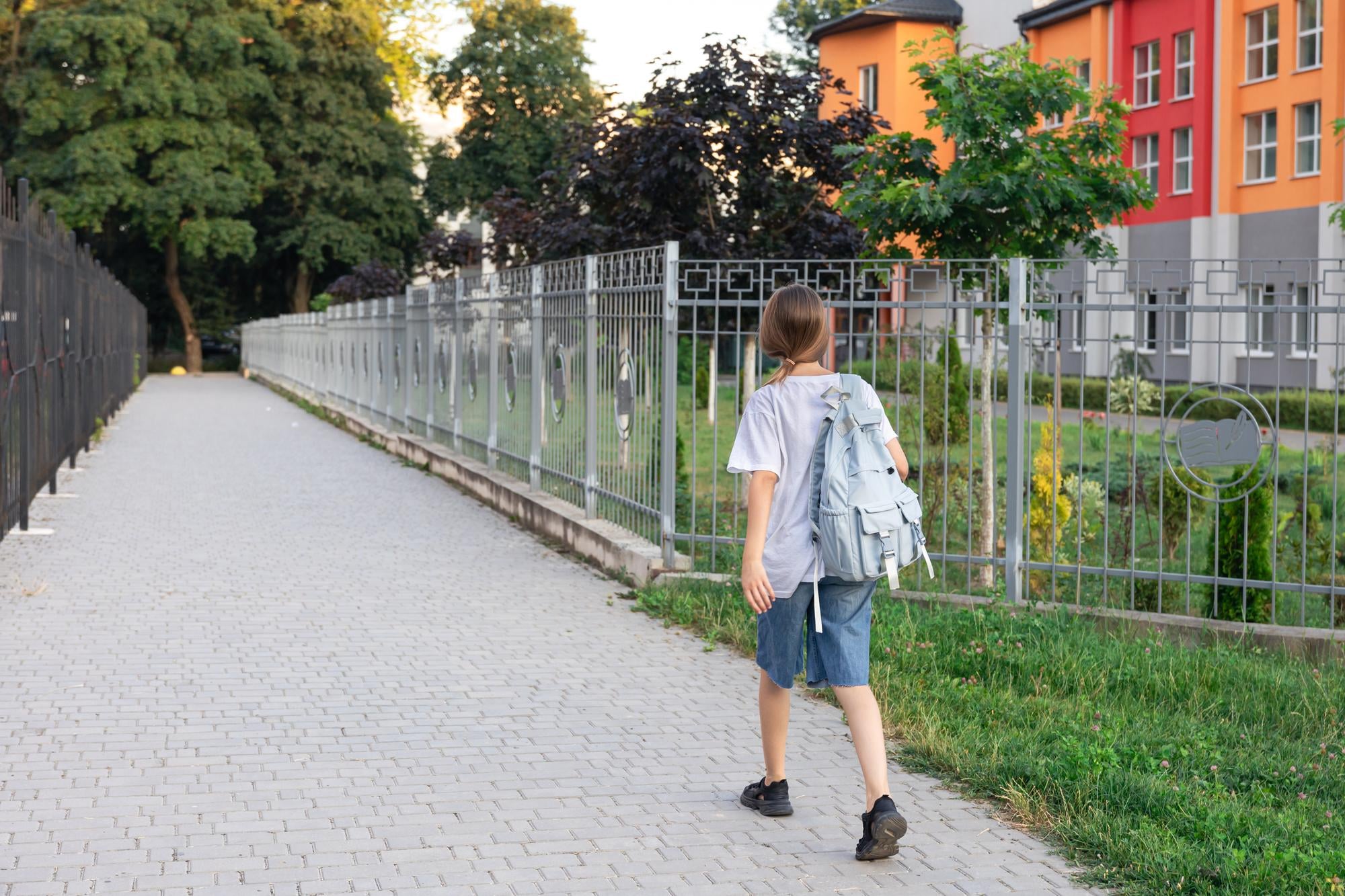
Joel was standing by the front door with his backpack already on both shoulders. Eleven years old. Hair sticking up in the back no matter how much water I put on it. Sneakers with the laces tucked in instead of tied because tying them took too long.
He sighed.
“I know.”
“No shortcuts.”
“I know.”
“No stopping anywhere.”
“Mom.”
“And you text me the second you walk out of that building.”
He gave me the most dramatic sigh an eleven-year-old could possibly produce. His whole body sagged with it. His backpack slid down one arm.
“Yes, Mom.”
I smiled.
I couldn’t help it. He wanted so badly to prove he could handle a little freedom. He’d been asking for weeks.
“Mom, it’s ten minutes. I’m eleven. I can walk home by myself.”
He started in September. The second week of sixth grade at Whitman Elementary. Every single afternoon, when I pulled up to the pickup line in my old Honda, he’d climb into the back seat and say it.
“Ten minutes, Mom.”
“I know how long it is.”
“Ava walks. Caleb walks. Everybody walks.”
“Everybody’s mother isn’t me.”
“That’s not an argument.”
“It’s the only one I need.”
He’d slump against the window and stare out at the street.
And here’s the thing I didn’t notice. Not then. Not for weeks.
He wasn’t staring at the street.
He was staring at the corner.
My name is Erin Matthews. I’m forty-one.
I’m a paralegal at a law firm in downtown Columbus. Family law, mostly. Divorces. Custody. I spend my days reading about all the ways parents fail their children.
Maybe that’s why I held on so tight.
My husband, Chris, is a firefighter. Station 14. He works twenty-four-hour shifts. Twenty-four on, forty-eight off. On the days he’s on, it’s just me and Joel.
We live on Linden Avenue in Clintonville. A little brick house with a front porch and a maple tree that drops about four million leaves every October. We’ve lived here since Joel was two.
Whitman Elementary is exactly 0.6 miles away. I know because I mapped it. Twice.
Straight down Linden. Right on Fifth. Cross at the light on Elm. Left on Oakland. Up the hill. Home.
Ten minutes. Twelve if you dawdle.
Joel always dawdled.
I picked him up every single afternoon for six years.
Kindergarten through fifth grade. Rain, snow, sleet. The week I had the flu and a fever of a hundred and two, I sat in the pickup line with a box of tissues and a bottle of Gatorade.
I didn’t trust the walk.
Not the walk, exactly. The world. Cars. Strangers. Everything that could happen in 0.6 miles that I’d read about in custody files and police reports.
So I drove.
And every afternoon at 3:05, I pulled up to the curb at Whitman with my phone in one hand, answering emails from work, and Joel climbed into the back seat. And we drove home. Right on Fifth. Cross at the light on Elm.
And I never once looked at the corner.
But he wasn’t wrong.
The school was close. The route was easy. Sidewalks the whole way. A crossing guard at Elm and Fifth until three-thirty. We’d walked those same streets together more times than I could count. On weekends. In the summer. To the ice cream place on High Street.
He knew the way better than I did.
So on a Friday in October, I finally said yes.
“Really?” he said.
We were eating dinner. Thursday night. Chris was on shift. Just the two of us with a pot of spaghetti.
“Really,” I said. “Tomorrow. One time. A trial run.”
He stared at me. His fork stopped halfway to his mouth. A noodle dangled off it.
“For real?”
“For real. But there are rules.”
“Anything.”
I listed them. He nodded at every one. Very seriously. Like he was signing a contract.
Then he put down his fork.
“Mom,” he said. “Can I ask you something?”
“Of course.”
“If I see somebody who needs help,” he said slowly. “On the way home. Am I allowed to help them?”
I frowned.
“What kind of help?”
He shrugged. He looked at his plate.
“I don’t know,” he said. “Like if somebody’s lost. Or confused. Or something.”
“Then you call me,” I said. “Right away. You don’t go anywhere with anybody. You don’t talk to strangers. You call me and I’ll come.”
He was quiet for a moment.
“What if they’re not a stranger?”
“Joel. What are you talking about?”
He picked his fork back up.
“Nothing,” he said. “Just wondering.”
I should have asked more.
I didn’t.
Before he left that Friday morning, I made him repeat the rules.
Straight home. No shortcuts. No stopping anywhere. Text me the second you leave.
He sighed and said, “Yes, Mom,” and kissed my cheek and walked out the door.
I watched him go from the front window. Down the porch steps. Down the sidewalk. Under the maple tree with its red leaves.
At the corner of Linden and Oakland, he stopped. Just for a second. He looked back at the house. He waved.
I waved back.
Then he turned the corner and was gone.
At 3:11 that afternoon, my phone buzzed.
I was at my desk at work. I’d taken a half day so I could be home by three. I’d lied to my boss and said I had a dentist appointment. I was sitting in my car in my own driveway, actually, staring at my phone like it was a bomb.
On my way.
Three little words. And a thumbs-up emoji.
I smiled when I saw it.
Part of me wanted to stand at the front window and wait for him. Watch the corner. Count the minutes.
But I stopped myself.
If I was going to trust him, I had to actually trust him.
So I went inside. I made a cup of tea. I sat at the kitchen table with my back to the window. On purpose.
Ten minutes went by.
That was normal. He’d be passing the dry cleaner on Fifth. Waiting at the light on Elm.
Fifteen.
Still fine. He’d be on Oakland now. Walking up the hill. He always kicked acorns on Oakland. There was a giant oak tree halfway up the hill that dropped acorns all over the sidewalk.
At twenty, I finally walked to the front window.
No Joel.
I looked up and down the sidewalk.
Nothing. Just leaves blowing across Linden Avenue. A squirrel on the power line. Mrs. Abernathy across the street raking her lawn.
My stomach tightened.
Twenty minutes. Even with acorn kicking, twenty minutes was too long.
I reached for my phone.
Before I could text him, it rang.
IVY.
Ivy Novak lives three houses down. In the little white bungalow with the blue shutters and the bird bath in the front yard. She’s seventy-two.
She’s known Joel since he was two. She used to babysit him when Chris and I both worked late. She taught him to make pierogies. She taught him to play gin rummy. She taught him every bad word in Polish and made him promise never to tell me.
I answered immediately.
“Hey, Ivy.”
She didn’t say anything at first.
I could only hear her breathing. Fast. Uneven.
Then I realized she was crying.
“Are you home?” she asked.
My whole body tensed.
“Yes. Why?”
“Come outside.”
“What happened?”
“It’s Joel.”
My heart dropped straight through the floor.
“Ivy,” I said. “What happened to him?”
“He’s okay,” she said quickly. “He’s okay. He’s not hurt.”
“Then why are you crying?”
There was a long pause.
Then she took a shaky breath.
“You need to see,” she said, “what your son did.”
I was already heading for the door.
I didn’t stop to put on proper shoes. I was wearing fuzzy slippers. The pink ones with the bunny ears that Joel gave me for Mother’s Day when he was eight. I didn’t care.
I yanked open the front door. I ran down the porch steps.
The moment I stepped outside, I saw Ivy.
She was standing near the curb in front of her house. Three doors down. In her gardening clothes. Old jeans and a gray sweatshirt and a pair of muddy rubber clogs. Her white hair was coming loose from its clip.
She was wiping tears from her face with both hands.
“Ivy?”
She didn’t say anything. She just pointed.
Down the sidewalk.
Toward the corner of Linden and Oakland.
Joel was standing there.
His backpack was still on both shoulders. His hair was still sticking up in the back.
He looked completely fine.
Relief hit me so hard that my knees almost gave out. I had to grab the trunk of the maple tree in our front yard to stay standing.
Then I saw what was beside him.
I walked closer.
Slowly. In my bunny slippers. On the cold sidewalk.
And I stopped.
Whatever I’d imagined, it wasn’t this.
Standing next to my son on the corner of Linden and Oakland was an old man.
Tall. Stooped. Eighty, maybe. Thin white hair, uncombed, sticking up in tufts. A gray stubble beard.
He was wearing plaid flannel pajama pants. Blue and green. Bedroom slippers on his feet. Brown corduroy ones, the kind with the backs crushed down from being stepped on.
And over his pajama top, buttoned wrong, was a vest.
Bright orange. Reflective. With silver stripes across the chest and back. Faded. Torn at one pocket.
The kind crossing guards wear.
And in his right hand, held high over his head, he was holding a stop sign.
Not a real one. A homemade one. Cardboard. Cut into an octagon. Painted red. With STOP written across it in white letters. Thick, careful, slightly crooked letters. Like a kid had painted them.
It was taped to a yardstick.
His left hand was holding Joel’s hand.
And he was smiling.
The biggest, proudest smile I’d ever seen on anybody’s face.
I looked at Joel.
Then at the old man.
Then at the cardboard stop sign. Held high. Like a flag.
I knew him.
Of course I knew him. Everybody in Clintonville knew him.
Mr. Lou.
Ivy’s husband.
“Joel,” I whispered.
He turned toward me.
And the only words I could get out were:
“What did you do?”
Mr. Lou saw me before Joel could answer.
He straightened up. Tall. Proud. Shoulders back, the way he used to stand at the corner of Elm and Fifth, every school day, for twenty-two years.
He lowered the cardboard stop sign.
He looked at me with clear, bright eyes.
“Afternoon, ma’am,” he said. His voice was strong. Steady. “Delivered him safe.”
I put my hand over my mouth.
Delivered safe.
Every afternoon for twenty-two years, Lou Novak said that. To every parent who came to the corner of Elm and Fifth. To every mother waiting on the other side of the crosswalk. To every father in a pickup truck idling at the curb.
He’d walk their kids across. Stop sign high. One hand on a shoulder. And when they got to the other side, he’d look at the parent and say it.
Delivered him safe.
Delivered her safe.
He said it to me. Hundreds of times. When Joel was in kindergarten and first grade and second, before I started picking him up right at the school. I used to wait on the corner of Elm and Fifth with the stroller. And Lou would walk Joel across with his big orange stop sign held high. And he’d say it.
Delivered him safe, ma’am.
I hadn’t heard it in three years.
Ivy came up beside me.
She was still crying. She put her hand on my arm.
“He knew me,” she whispered. “When they came around the corner. He looked at me and said, ‘Ivy, I’m off duty now. Put the coffee on.’”
She pressed her hand against her mouth.
“He hasn’t known my name in four months,” she said.
I need to tell you about Lou Novak.
Because nothing about that afternoon makes sense without him.
Lou was a crossing guard at the corner of Elm and Fifth for twenty-two years.
Before that, he was a mail carrier for thirty-one. Clintonville route. He walked the same streets every day from 1966 to 1997. He knew every house. Every dog. Every kid.
When he retired from the post office at sixty, he lasted about four months before he went crazy sitting at home.
“I need to be outside,” he told Ivy. “I need to be useful.”
So he applied to be a crossing guard. The city put him at Elm and Fifth. The busiest corner near Whitman Elementary. Four lanes on Fifth Avenue. Cars coming off the freeway ramp going way too fast.
He stood on that corner every school day for twenty-two years. Seven-thirty to eight-fifteen in the morning. Two-forty-five to three-thirty in the afternoon.
Rain. Snow. Sleet. Heat. He never missed a day. The newspaper did a story about him in 2011. Clintonville’s Most Dependable Man. There was a picture of him in his orange vest holding his stop sign up in a blizzard.
He knew every kid’s name. Every single one. Hundreds of them. Thousands, over twenty-two years.
He’d high-five them in the morning. He’d ask about their spelling tests in the afternoon. He kept a bag of butterscotch candies in the pocket of his orange vest and gave one to every kid who said please and thank you.
And every afternoon, when he walked a child across the street and handed them over to their parent, he’d say it.
Delivered safe.
Three years ago, he started forgetting things.
Little things, at first. Ivy told me. He’d forget where he put his keys. He’d call the dog by the wrong name. He’d forget whether he’d eaten lunch.
Then he started forgetting the kids’ names.
Then one afternoon in March, he stepped out into Fifth Avenue with his stop sign up and walked a group of second graders right into traffic. Against the light.
A minivan slammed on its brakes. Nobody was hurt. Thank God.
But the school called Ivy. And the city called Ivy. And Ivy took Lou to a neurologist at Ohio State.
Alzheimer’s.
He was seventy-nine.
The city took his vest back. And his stop sign. A very kind woman from the Department of Public Service came to the house. She sat at Ivy’s kitchen table and explained it gently.
Lou sat there and listened. He nodded. He didn’t argue.
When she left with his vest and his stop sign, he stood at the front window and watched her car drive away.
Then he went into the bedroom and lay down.
He didn’t get up for two days.
After that, things got worse.
I knew. Everybody on Linden Avenue knew. We just didn’t talk about it.
Ivy stopped coming to the block party. She stopped going to church. She stopped babysitting. She stopped coming over for coffee on Saturday mornings.
Sometimes, at night, you could hear Lou yelling from inside their house. Confused. Scared. Where am I? Who are you? Where’s my wife?
Sometimes you’d see Ivy in the backyard, standing by the bird bath, crying.
And I’m ashamed to say this.
Most of us stopped visiting.
Not on purpose. Life just got busy. And it was hard. It was hard to go over there and sit with a man who used to know your son’s name and now looked at you like a stranger. It was hard to watch Ivy try so hard. It was easier to wave from across the street.
I told myself I’d go next week.
Next week turned into three years.
“He got out,” Ivy said.
We were standing on the sidewalk. She was holding my arm. Joel and Lou were still standing on the corner. Lou had raised his stop sign again. He was watching the street. A car was coming down Linden. He stepped out to the curb.
The car slowed. Stopped.
Lou waved it through. Grandly. With his whole arm. Like a conductor.
The driver, a young woman, stared at him. Then she waved back and drove on.
“He got out of the house,” Ivy said. “At two-forty. I was in the shower. Ten minutes. I was in the shower for ten minutes.”
She was shaking.
“I came out and the front door was open,” she said. “And his slippers were gone. And his old orange vest. The real one. I keep it in the hall closet. He wore it to work for twenty-two years and I couldn’t throw it away. It was gone.”
“Oh, Ivy.”
“I looked everywhere,” she said. “The backyard. The garage. Down the street. I called his name. I called the police. They said they’d send a car.” Her voice broke. “I stood on the sidewalk and screamed his name. Nobody came out. Nobody on this whole street came out of their house.”
I closed my eyes.
I’d been sitting at my kitchen table with my back to the window. On purpose.
“And then,” Ivy said, “about ten minutes ago, I saw them. Coming around the corner. From Oakland. Lou with that stop sign. Holding Joel’s hand. Walking up the hill like they were in a parade.”
She looked at my son.
“And Lou looked at me,” she said, “and he said, ‘Ivy, I’m off duty. Put the coffee on.’”
A police car turned onto Linden Avenue.
It came slowly up the street. Lights flashing. No siren.
Lou saw it.
He stepped off the curb. He raised his cardboard stop sign. High over his head. He held up his other hand, palm out.
The police car stopped.
Lou looked both ways. Up Linden. Down Linden. Then he turned around and looked at Joel.
“Okay, son,” he said. “Clear. Go on now.”
Joel looked at me.
I nodded.
Joel walked across the street. Slowly. In front of the police car. Lou walked beside him with the stop sign up the whole time.
When they got to the other side, to my side, Lou lowered the sign.
He put his hand on Joel’s shoulder.
He looked at me.
“Delivered him safe, ma’am,” he said again.
I knelt down on the sidewalk.
In my pink bunny slippers. On the cold concrete.
I didn’t say anything. I couldn’t.
I just put my arms around my son.
Joel let me. He didn’t even sigh.
The police officer got out of the car. Young. Maybe twenty-five. His name tag said HOLLOWAY.
He looked at Lou in his pajamas and orange vest and crushed-back slippers. At the cardboard stop sign. At Ivy, crying on the curb.
His face softened.
“Mrs. Novak?” he said. “You called about your husband?”
“Yes,” Ivy said. “He’s here. He’s okay. This boy found him.”
Officer Holloway looked at Joel.
“You found him?” he said.
Joel nodded.
“Where?”
Joel looked at me. Then at the ground.
“At the corner,” he said. “Of Elm and Fifth.”
He told us.
Standing on the sidewalk on Linden Avenue with his backpack still on both shoulders.
He’d walked out of school at 3:10. He’d texted me. On my way. He’d walked down the hill. Past the bike rack. Past the kindergarten playground.
He turned right on Fifth.
And when he got to the corner of Elm and Fifth, there was Mr. Lou.
Standing at the curb. In his pajamas and his orange vest. With no stop sign.
The real crossing guard, a young woman named Kendra who took over after Lou, was on the other side of the street. Helping a group of first graders.
Lou was standing on the near side. All by himself. Staring at the traffic on Fifth Avenue.
“Some fifth graders were laughing at him,” Joel said quietly. “Calling him Pajama Man. Somebody was filming him on their phone.”
His voice shook.
“And then he stepped off the curb,” Joel said. “Into Fifth. With his hand up. Like he was stopping traffic. Except he didn’t have his sign. And the light was green. And there was a truck coming.”
Ivy made a sound. Like something tearing.
“I ran,” Joel said. “I dropped my water bottle and I ran. I grabbed his arm. I pulled him back. The truck honked really loud. It went right past us.”
He looked down at his sneakers.
“He was really confused,” Joel said. “He didn’t know where he was. He kept saying, ‘Where’s my sign? Where’s my sign? The kids need to cross.’ He was getting really upset. Like he was going to cry.”
“So I gave him his sign,” Joel said.
I stared at him.
“The cardboard one?”
Joel nodded.
“I made it,” he said. “In art class. Two weeks ago. Mrs. Delgado let me use the red paint. And the yardstick’s from the supply closet. I asked first.”
“You made Mr. Lou a stop sign,” I said slowly. “Two weeks ago.”
“It’s been in my backpack,” Joel said. “Every day. Folded up. I didn’t know when I’d see him.”
He reached around and unzipped the big pocket of his backpack. He pulled out a piece of notebook paper. Folded in quarters.
He handed it to me.
It was a list. In Joel’s messy sixth-grade handwriting. Dates.
Sept. 9 — saw Mr. Lou at Elm and 5th. 3:06. In bathrobe. Mom didn’t see.
Sept. 16 — Mr. Lou at corner again. 3:04. Looked lost.
Sept. 23 — Mr. Lou. 3:07. Kids laughing.
Sept. 30 — Mr. Lou. 3:05. Stepped in street. Kendra pulled him back.
Oct. 7 — Mr. Lou. 3:06. No shoes.
Every Monday. Every week. For five weeks.
I looked up from the list.
“Joel,” I said. “You saw him? From the car?”
Joel nodded.
“Every Monday,” he said. “When you picked me up. We always drive right past that corner. He’d be standing there. At the curb. Where he used to stand.” He looked down. “You were always on your phone.”
I felt like someone had punched me in the stomach.
“Why didn’t you tell me?”
Joel shrugged. He looked at Ivy. Then away.
“I tried,” he said. “The first time. I said, ‘Mom, look, there’s Mr. Lou.’ And you said, ‘Hang on, buddy, I’m answering an email.’ And then we were past it.”
I didn’t remember.
I didn’t remember at all.
“And I didn’t know if I was allowed,” Joel said. “To tell people. About Mr. Lou. Because nobody ever talks about him anymore. And Mrs. Ivy doesn’t come to the block party. And you said once, at dinner, that it was sad and we should give them their privacy.”
I’d said that.
I remembered saying that.
“So I asked if I could walk home by myself,” Joel said quietly.
I looked at him.
“That’s why?” I said. “That’s why you asked? For six weeks? Every single day? Ten minutes, Mom. I’m eleven?”
Joel nodded.
“I figured if I walked,” he said, “I’d go past the corner by myself. And if Mr. Lou was there, I could help him.”
“Help him how?”
“Walk him home,” Joel said simply. “He used to walk me across the street. Every day. In kindergarten. And first grade. He used to give me butterscotch. He used to say my name.” He swallowed. “I figured somebody should walk him home.”
The sidewalk was very quiet.
Officer Holloway had taken off his hat. He was holding it in both hands.
Ivy had stopped crying. She was just staring at my son.
“But why the stop sign?” I asked. “Why did you make him a stop sign?”
Joel looked over at Lou.
Lou was standing at the curb. Still holding the cardboard sign. Watching the street. Proud. Ready.
“Because he looked so sad without it,” Joel said. “Every Monday. He’d be standing there with his hands empty. Looking at the other crossing guard’s sign. Like he lost something.”
He paused.
“Mrs. Ivy told me once,” he said, “a long time ago, when she was babysitting me. She said Mr. Lou was happiest when he had a job to do. She said people need to be needed.”
Ivy put her hand over her mouth.
“So I thought,” Joel said, “if I gave him a sign, he could have a job again. Just for a little while. He could walk me home. Instead of me walking him.”
“So when he was upset on the corner,” Joel said, “and kept saying where’s my sign, I took off my backpack. And I got out the stop sign. And I unfolded it. And I handed it to him.”
He looked at Lou.
“And he stopped being upset,” Joel said. “Right away. He looked at it. And he held it up. And he stood up really straight. And then he looked at me and said, ‘Well, son. You need to cross?’”
Joel’s voice cracked.
“And I said yes,” he said. “I said, ‘Yes, sir, Mr. Lou. I need to get home. To Linden Avenue.’ And he took my hand.”
“He walked me home,” Joel said. “The whole way. Every street. Even the little ones. He held the sign up at every corner. Even when there weren’t any cars.”
He wiped his nose on the back of his hand.
“It took a long time,” he said. “He walks really slow. And he stopped at the big oak tree on Oakland and made me pick up acorns. He said I used to pick up acorns there in kindergarten. And I did. I used to. I didn’t think he’d remember.”
He looked at me.
“That’s why I was late,” he said. “I’m sorry, Mom. I broke the rules. I stopped. I took a long time. I didn’t go straight home.”
I couldn’t speak.
I just knelt there on the sidewalk in my bunny slippers and looked at my eleven-year-old son.
Who’d been watching an old man stand lost on a street corner every Monday for five weeks. From the back seat of my car. While I answered emails.
Who’d made him a stop sign in art class. And carried it in his backpack. Every day. Folded up. Waiting.
Who’d begged me for six weeks to let him walk home alone.
Not because he wanted freedom.
Because he wanted to walk Mr. Lou home.
“Joel,” I said finally. My voice was shaking. “You didn’t break the rules.”
He looked at me.
“I said no stopping,” I said. “Unless somebody needs help. I said that. At dinner. Remember? You asked me.”
He nodded slowly.
“You asked me what if they’re not a stranger,” I said. “And I didn’t listen.”
I put my hand on his cheek.
“I’m sorry I didn’t listen,” I said.
Officer Holloway walked over to Lou.
He did it slowly. Carefully. The way you’d walk up to a skittish horse.
Lou saw him coming. He turned. He looked at the young officer’s uniform.
He straightened up.
“Officer,” he said. Polite. Formal.
“Mr. Novak,” Officer Holloway said. “That’s a fine sign you’ve got there.”
Lou looked at it.
“Kid made it,” he said. “Good letters. Little crooked on the O.”
Officer Holloway smiled.
“Mr. Novak,” he said. “My mom told me you walked me across Elm and Fifth. When I was at Whitman. Nineteen years ago.”
Lou looked at him. Hard. Searching.
“What’s your name, son?”
“Danny. Danny Holloway.”
Lou looked at him for a long time.
Then his face changed.
“Holloway,” he said slowly. “Little red-headed kid. Glasses. Always lost his mittens.”
Officer Holloway’s mouth fell open.
“I always lost my mittens,” he whispered. “Every winter. My mom used to sew them to a string through my coat sleeves.”
Lou nodded. Like it was obvious.
“Butterscotch,” he said. “You liked the butterscotch.”
Officer Holloway put his hand over his mouth.
He drove Lou home. Three houses. In the front seat of the police car. With the cardboard stop sign held out the window like a flag.
Ivy walked beside the car. Holding Lou’s hand through the open window.
Joel and I walked behind them.
When they got to Ivy’s house, Officer Holloway helped Lou out of the car. He walked him up the front steps. He held the screen door.
At the top of the steps, Lou turned around.
He looked out at Linden Avenue. At the maple trees. At the leaves blowing across the street. At Joel and me on the sidewalk.
He raised the cardboard stop sign one more time.
High over his head.
Then he looked at Officer Holloway.
“Off duty, Danny,” he said. “Tell my relief I’ll be back Monday.”
Ivy sat on my front porch that evening.
It was the first time she’d been on my porch in almost three years.
Joel was inside, doing his homework at the kitchen table. Chris was still on shift. I’d called him and told him everything. He was quiet on the phone for a long time. Then he said, “I’m coming home early. I’m trading the rest of my shift.” He’s never done that. Not once in eleven years.
Ivy held a cup of tea in both hands. She hadn’t touched it.
“He’s asleep,” she said. “He went right to sleep. He hasn’t slept through the night in months. He was so tired from the walk. He kept the stop sign next to him. On the bed. Like a teddy bear.”
“Ivy,” I said. “I’m so sorry.”
She looked at me.
“For what?”
“For three years,” I said. “For not coming over. For waving from across the street. For telling my son it was sad and we should give you your privacy.”
Ivy didn’t say anything for a long time.
“It was lonely,” she said finally. Very quietly. “It’s been so lonely, Erin.”
“I know.”
“People stopped coming,” she said. “Our friends from church. The neighbors. Even our son, Michael, in Cincinnati. He calls on Sundays. But he hasn’t visited since Easter.” She shook her head. “Everybody says, Let us know if you need anything. And then they never come.”
“I said that,” I said. “I said those exact words.”
“I know,” Ivy said. “I know you did.”
“Do you know what the worst part is?” Ivy said.
I waited.
“He knows,” she said. “Somewhere. Somewhere inside. He knows he’s not useful anymore. He knows he’s a burden.” She swallowed. “Some nights he wakes up and he cries and says, Ivy, I’m sorry. I’m so sorry. I’m no good to you anymore. And I tell him he’s wrong. And he doesn’t believe me.”
She looked down the street. At her own house. At the light on in the bedroom window.
“Twenty-two years he stood on that corner,” she said. “Thirty-one years he carried the mail. Fifty-three years he’s been taking care of people. Every single day. That’s who he is. That’s who he’s always been.” Her voice broke. “And then this disease came and took it away. And now he’s the one who needs taking care of. And he can’t stand it.”
She wiped her eyes.
“And today,” she said, “your son gave it back.”
“He walked through the front door,” Ivy said, “and he was standing up straight. For the first time in a year. He was proud, Erin. He was proud of himself. He’d done his job. He’d walked a kid home.”
She shook her head slowly.
“He looked at me and knew my name,” she said. “Do you know how long it’s been since he looked at me and knew my name?”
“Four months,” I said quietly. “You said.”
“Four months,” Ivy said. “And today he walked in the door and said, Ivy, put the coffee on. Like it was 2015. Like he’d just come off shift.” She laughed. A wet, broken laugh. “So I put the coffee on. And we sat at the kitchen table. And he drank it. And he told me about his day.”
“What did he say?”
Ivy smiled.
“He said there was a good kid on the corner today,” she said. “He said the kid helped him find his sign.”
That night, after Ivy went home and Joel went to bed, I sat at the kitchen table with Chris.
He’d come home at nine. He’d gone straight to Joel’s room. He’d sat on the edge of Joel’s bed for half an hour, talking quietly. I don’t know what they said. Chris came out with red eyes.
He sat down across from me at the kitchen table.
“He made him a stop sign,” Chris said.
“I know.”
“In art class. Two weeks ago. Carried it around in his backpack.”
“I know.”
“Erin,” Chris said. “We didn’t know. Our own kid. We had no idea.”
“I know,” I said. “He tried to tell me. In the car. Five weeks ago. I was answering an email.”
Chris reached across the table and took my hand.
“I’ve been on that corner too,” he said quietly. “Elm and Fifth. A hundred times. Driving the engine back from calls. I’ve seen Lou standing there.” He shook his head. “I thought he was waiting for the bus.”
Here’s what I learned that night. Sitting at my kitchen table at eleven o’clock with my husband’s hand in mine.
I’d spent six years driving my son 0.6 miles home from school.
I told myself it was to keep him safe.
From cars. From strangers. From everything I read about in custody files at work.
But I’d been so busy keeping my son safe from the world that I’d never once let him look at it.
And when he finally did look, from the back seat of my car, on a Monday afternoon in September, he saw something I’d driven past a hundred times.
An old man on a street corner. Lost. With his hands empty.
And he decided to do something about it.
Not because I taught him to.
Because I didn’t.
On Monday morning, I called my boss.
I told her I needed to change my hours. I needed to leave at two-thirty every day. I’d make up the time in the evenings, after Joel was in bed.
She asked why.
I told her.
She was quiet on the phone for a long time.
“My father had Alzheimer’s,” she said finally. “For seven years. Nobody came to see him either.” She cleared her throat. “Two-thirty is fine, Erin. Take as long as you need.”
At 2:45 that Monday afternoon, I walked over to Ivy’s house.
I knocked on the door.
Ivy answered. She looked tired. Surprised.
“Erin?”
“Is Lou up?” I asked.
“He’s in his chair,” she said. “Watching the birds. Why?”
“Because it’s 2:45,” I said. “And he told Officer Holloway to tell his relief he’d be back Monday.”
Ivy stared at me.
“I’d like to walk with him,” I said. “To the corner. If he wants to. To meet Joel.”
Ivy didn’t say anything for a long moment.
Then she stepped aside.
Lou was in his recliner by the front window. Wearing jeans and a flannel shirt today. Buttoned right. Ivy had shaved him.
The cardboard stop sign was leaning against the arm of his chair.
He looked up when I came in.
He looked at me for a long time. Searching.
He didn’t know me. I could see it. I was a stranger.
“Mr. Novak,” I said. “It’s almost three o’clock. School’s letting out.”
He looked at the clock on the wall.
Then he looked at the stop sign.
Something lit up in his eyes.
“School’s letting out,” he said slowly.
“There’s a boy at Whitman,” I said. “Joel. He needs somebody to walk him home.”
Lou put both hands on the arms of his recliner.
He stood up.
He reached for the stop sign.
Ivy brought his orange vest out of the hall closet. The real one. Faded and torn at the pocket. Twenty-two years old.
She held it up. He put his arms through it. She buttoned it for him.
He stood up straight.
He looked at himself in the hall mirror.
“There he is,” Ivy whispered.
We walked to the corner of Elm and Fifth.
Lou and Ivy and me. Slowly. Lou walked slowly. He held Ivy’s hand on one side and the stop sign on the other.
When we got to the corner, Kendra was already there. The real crossing guard. Twenty-eight years old, with braids and a whistle and a reflective vest that was much newer than Lou’s.
She saw Lou coming. In his orange vest. With his cardboard stop sign.
Her face did something complicated.
Then she smiled.
“Mr. Lou,” she said. “You came back.”
Lou looked at her.
“You’re my relief,” he said.
“I’m your relief,” Kendra said. She didn’t miss a beat. “I’ve been holding your corner for you.”
She stepped aside. Just a little. Just enough.
Lou stepped up to the curb.
He raised the cardboard stop sign.
At 3:08, the kids started coming out of Whitman.
They came down the hill in clumps. Backpacks bouncing. Shouting. Laughing.
Some of them saw Lou. Some of them stopped.
A group of fifth graders. The ones who’d laughed at him on Friday. Who’d called him Pajama Man. Who’d filmed him.
They saw him standing on the corner in his orange vest. With his cardboard stop sign. Next to Kendra.
They stopped laughing.
One of them, a tall boy with a skateboard, looked at Lou for a long time.
Then he looked at his phone. At something on the screen. He tapped it a few times.
He put his phone in his pocket.
He walked up to the crosswalk.
He stopped in front of Lou.
“Hey, Mr. Lou,” he said. Quietly. “Can you walk me across?”
Lou looked at him.
He didn’t know him. He didn’t know anybody anymore.
But he knew the corner.
He knew the curb under his feet and the stop sign in his hand and the kids coming down the hill.
“Course I can, son,” Lou said.
He looked both ways. Up Fifth Avenue. Down Fifth Avenue. Kendra was watching the light. When it turned, she nodded.
Lou stepped off the curb.
He raised the stop sign high.
The cars stopped.
And he walked the boy across.
On the other side, Lou put his hand on the boy’s shoulder.
“Delivered safe,” he said.
The boy stood there for a second.
Then he said, “Thanks, Mr. Lou.” And he skated away.
Joel came down the hill at 3:11.
He saw us. He saw Lou in the crosswalk. In his orange vest. With the cardboard stop sign held high.
He started running.
He ran down the hill and across the sidewalk and stopped at the curb, breathing hard. His backpack bouncing.
Lou looked at him.
I watched Lou’s face. I watched him look at my son.
For a second, nothing.
A stranger.
Then something flickered.
“Acorns,” Lou said slowly.
Joel’s face crumpled.
“Yes, sir,” he said. “I pick up acorns. On Oakland. By the big tree.”
“You do,” Lou said. He nodded. “You always did.”
He held out his hand.
Joel took it.
“You need to cross, son?” Lou asked.
“Yes, sir,” Joel said. “I need to get home. To Linden Avenue.”
Lou raised the stop sign.
And they walked.
That was four years ago.
I want to tell you what happened next. Because it didn’t stop with one Monday.
I told the principal at Whitman. A tall, quiet man named Mr. Okonkwo, who’d been at the school for twelve years. Who’d walked across Elm and Fifth with Lou every morning, he told me, before he went inside to start the day.
“I didn’t know he was coming to the corner,” Mr. Okonkwo said. “I didn’t know. Nobody told me.”
“My son knew,” I said. “He saw him every Monday. From the car. For five weeks.”
Mr. Okonkwo was quiet for a long time.
Then he asked me to come back on Wednesday. With Ivy.
On Wednesday, Mr. Okonkwo called a meeting. In the school library. With Kendra. With the head of the PTA. With two police officers, including Danny Holloway. With a woman from the Alzheimer’s Association of Central Ohio. With Ivy.
And with Joel.
Joel sat at the end of the long library table in his school uniform with his hands folded. He was terrified. He didn’t say anything for the first twenty minutes.
Then Mr. Okonkwo turned to him.
“Joel,” he said. “You’re the one who saw him. Every week. When none of us did.” He leaned forward. “What do you think we should do?”
Joel looked at me.
I nodded.
He took a breath.
“I think he should get to keep his job,” he said.
Nobody laughed.
The woman from the Alzheimer’s Association, a gray-haired woman named Pat, leaned forward.
“What do you mean, sweetheart?”
“Not really,” Joel said quickly. “I know he can’t really be a crossing guard. He might walk somebody into traffic. I know.” He looked at Ivy. “But on Fridays. Kendra could be right there. And somebody could walk with him. To the corner and back. And he could hold his sign. And walk kids across. With Kendra watching the light.”
He swallowed.
“He just needs to be needed,” Joel said. “Mrs. Ivy told me that a long time ago. People need to be needed.”
They called it Mr. Lou’s Fridays.
Every Friday at 2:45, someone from Linden Avenue walked Lou to the corner of Elm and Fifth. In his orange vest. With his cardboard stop sign.
It wasn’t always me. That was the point.
It was me on the first Friday. Then Mrs. Abernathy from across the street. Then the Patels from the corner house. Then the young couple at the end of the block with the twins. Then Danny Holloway, on his day off, in jeans and a Buckeyes sweatshirt.
Everybody on Linden Avenue took a turn.
Every single person who’d waved at Ivy from across the street for three years. Who’d said let us know if you need anything.
We stopped saying it.
We just came.
Kendra stood at the light. Lou stood at the curb.
When the light changed, Kendra nodded. Lou raised his sign. And he walked the kids across.
Not all of them. Just the ones who asked.
And the ones who asked grew every week.
First it was Joel. And the tall boy with the skateboard, whose name turned out to be Marcus.
Then Marcus’s little sister. Then Joel’s friend Caleb. Then a group of third graders. Then half the fourth grade.
By December, there was a line. Every Friday at 3:10. Kids waiting at the corner of Elm and Fifth. Waiting for Mr. Lou to walk them across.
He didn’t know their names.
It didn’t matter.
He put his hand on every shoulder on the other side.
Delivered safe.
Ivy started coming back to the block party.
She started coming to church again. On Sundays, somebody from Linden Avenue sat with Lou so she could go. She cried through the whole first service. Pastor Reyes came down from the pulpit afterward and hugged her for a long time.
She started coming over for coffee again on Saturday mornings.
She brought pierogies. She taught Joel to make them all over again. He’d forgotten.
“You were six the last time,” she said. “You put too much cheese in. You still do.”
Lou lived three more years.
He got worse. That’s what the disease does. There was no stopping it.
By the second spring, he couldn’t walk to the corner anymore. His legs were too weak. So we brought the corner to him.
Every Friday at 3:10, the kids from Whitman walked to Linden Avenue. A whole group of them. Fifteen, twenty, sometimes more. They walked in a line down the sidewalk. Up the hill on Oakland. Past the big oak tree.
And they stopped in front of Ivy’s house.
Lou sat on the front porch in his recliner. Ivy and Chris carried it out every Friday. In his orange vest. With the cardboard stop sign in his lap.
The kids lined up at the bottom of the porch steps.
And one by one, they walked up the steps. And Lou raised his sign. And they walked across the porch. From one side to the other. Eight feet.
And on the other side, Lou put his hand on their shoulder.
Delivered safe.
By the third year, he couldn’t hold the sign up anymore.
So Joel held it for him.
Joel stood next to Lou’s recliner on the porch every Friday. Fourteen years old by then. Taller than me. His voice cracking. He held the cardboard stop sign up high. The same one he made in sixth grade art class. The red paint faded to pink. The yardstick cracked and taped in two places.
And Lou sat in his chair and watched the kids walk across the porch.
And every single time, he said it.
Quietly. Barely a whisper sometimes.
Delivered safe.
He died in October.
A Tuesday night. In his bed. At home. With Ivy holding one hand and their son, Michael, who finally came home from Cincinnati in August and never left, holding the other.
The cardboard stop sign was leaning against the nightstand.
The funeral was at St. Michael’s on High Street.
Ivy asked Joel to carry the stop sign.
He walked down the aisle of the church in front of the casket. Fifteen years old. In a borrowed suit. Holding the faded pink cardboard sign high over his head with both hands.
Behind him, six pallbearers. Two mail carriers. Two crossing guards, including Kendra. Danny Holloway in his dress uniform. And Chris, in his.
The church was full.
Not just full. Overflowing. People standing in the back. Standing in the aisles. Standing out on the steps in the rain.
Hundreds of them.
Mail carriers. Crossing guards. Police officers. Firefighters. Teachers from Whitman. Neighbors from Linden Avenue.
And former students.
Grown-ups now. Some of them in their thirties and forties. People who’d walked across Elm and Fifth with Lou when they were six years old. Who’d gotten butterscotch from his vest pocket. Who’d been delivered safe.
They came from Dayton and Cleveland and Chicago and Pittsburgh. One man flew in from Seattle.
“He walked me across that street every day for six years,” the man told Ivy at the reception. “I haven’t thought about him in twenty years. Then my mom sent me the obituary. And I sat in my office and cried.”
When the service ended and they carried Lou out of the church, the funeral procession drove down High Street.
And turned on Fifth.
And slowed at the corner of Elm.
It was 3:10 on a school day.
And the corner of Elm and Fifth was lined with children.
Hundreds of them. On both sides of the street. The whole school. Every grade. Kindergarten through sixth. Mr. Okonkwo had walked them all down the hill.
Every single child was holding a stop sign.
Cardboard. Red. Cut into octagons. Taped to rulers and yardsticks and paint stirrers.
They’d made them in art class. All week. Mrs. Delgado had used every drop of red paint in the school.
As the hearse came to the corner, Kendra stepped out into the crosswalk.
She raised her real stop sign.
The procession stopped.
And every child on that corner raised their cardboard stop sign high over their heads.
Hundreds of little red octagons. Held up in the October sun.
Nobody said anything.
The hearse sat at the corner of Elm and Fifth for one full minute. Kendra held her sign up the whole time. Her face was wet.
Then she stepped back to the curb. She lowered her sign.
She looked at the hearse.
And she said it. Loud enough for everybody to hear.
“Delivered safe, Mr. Lou.”
Joel is fifteen now. A sophomore at Whetstone High.
He’s on the safety patrol. He was the captain in sixth grade. He wore the orange belt every morning and every afternoon. Rain or shine. He never missed a day.
He walks to school by himself now. Every day. He takes the long way. Down Oakland. Past the big oak tree. He still kicks acorns. He says he can’t help it.
And every afternoon, on his way home, he stops at the corner of Elm and Fifth.
Kendra’s still there. She’s been there seven years now. She says she’s not going anywhere.
Joel stands on the curb next to her for a few minutes. He doesn’t say anything. He just stands there. Watching the little kids come down the hill.
Some days, if a kindergartner looks lost, or scared, or confused, Joel will walk over and crouch down.
“Hey,” he’ll say. “You need to cross?”
The cardboard stop sign hangs on the wall in Ivy’s living room now.
In a frame. Above Lou’s empty recliner.
Faded pink. Crooked O. Taped yardstick.
Underneath, a little brass plate. Michael had it engraved.
LOU NOVAK
1937 – 2025
31 years carrying the mail. 22 years carrying the children.
He delivered us all safe.
People ask me sometimes about that first Friday.
When Ivy called me crying. When I ran outside in my bunny slippers. When I saw my son standing on the corner next to an old man in pajamas holding a cardboard stop sign.
When I asked Joel, What did you do?
I tell them the truth.
He did the thing I spent six years trying to protect him from.
He looked.
He looked out the window of my car at a corner I drove past a hundred times. And he saw somebody standing there, lost, with empty hands. And he didn’t look away.
He didn’t say let us know if you need anything.
He didn’t decide it was sad and that we should give them their privacy.
He made a stop sign in art class. And he carried it in his backpack for two weeks. And he begged his mother for six weeks to let him walk home alone.
So that when the day came, he’d be ready.
I thought freedom was something I had to give my son.
I thought it meant trusting him with the world.
It turns out it meant trusting the world with him.
And trusting that when he finally walked out into it by himself, he’d see things I’d stopped seeing a long time ago.
An old man on a corner.
A job somebody needed to do again.
A way home.
Every Friday at 3:10, I still find myself at the front window.
Not watching for Joel. He’s fifteen. He doesn’t need me watching.
Watching the corner of Linden and Oakland.
Remembering an afternoon in October when an old man in an orange vest and corduroy slippers came around that corner holding a cardboard sign high over his head. Holding my son’s hand. Walking slowly. Proudly. Like he was leading a parade.
And stopped in front of me.
And looked me straight in the eye.
And said it.
The thing he’d said to thousands of parents on thousands of afternoons for twenty-two years.
The thing my son gave him back.
Delivered him safe, ma’am.
He did.
They both did.

Adrian Hawthorne is a celebrated author and dedicated archivist who finds inspiration in the hidden stories of the past. Educated at Oxford, he now works at the National Archives, where preserving history fuels his evocative writing. Balancing archival precision with creative storytelling, Adrian founded the Hawthorne Institute of Literary Arts to mentor emerging writers and honor the timeless art of narrative.