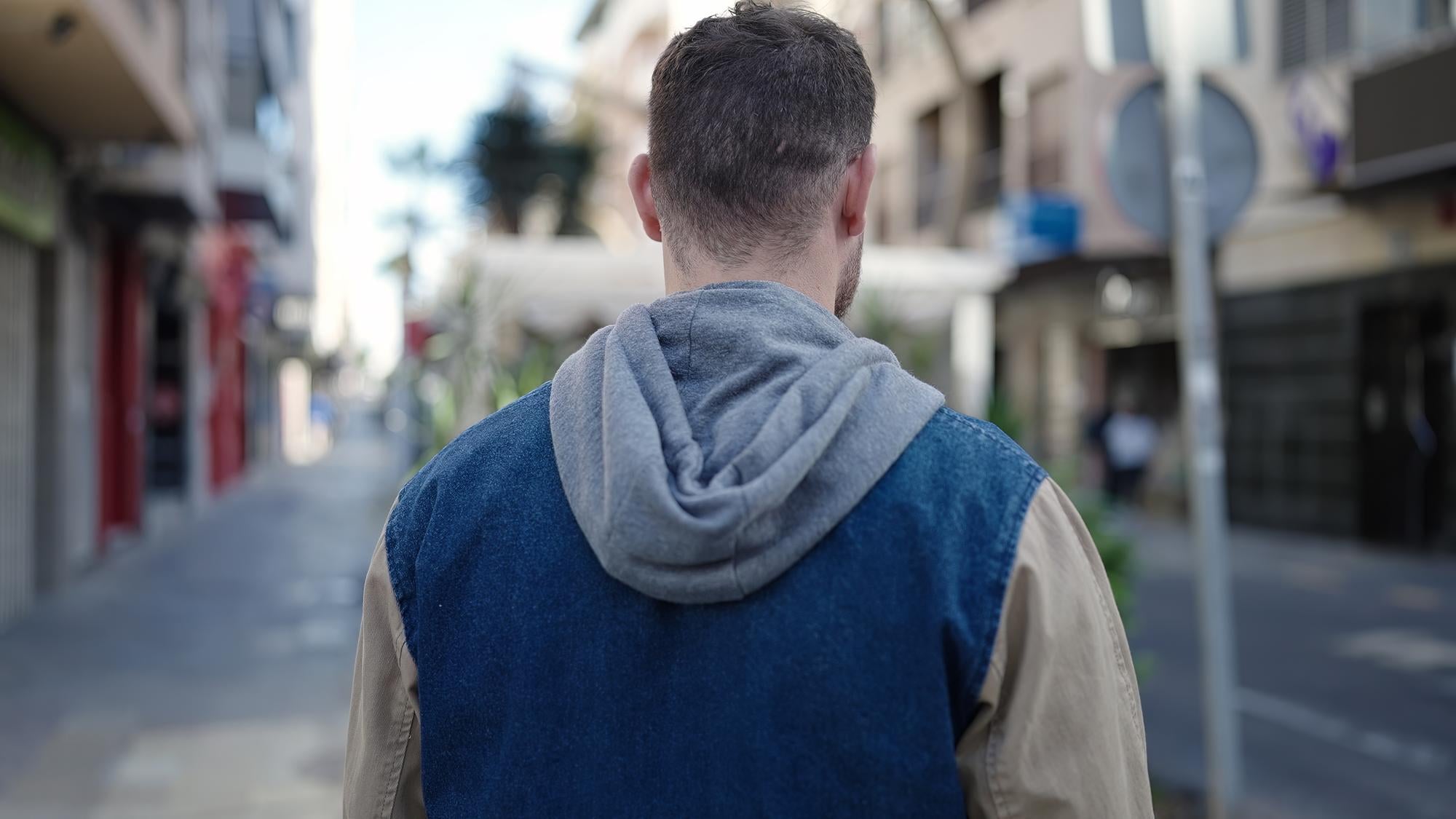
I knocked on the door of my own house like a stranger.
Three knocks. Not too loud. I had practiced that too, sitting in my car at the end of the street for forty minutes with the engine off, watching the porch light come on at dusk. How hard to knock. What to say. Where to put my hands. I’d practiced it the way I used to practice sales pitches in the mirror back when I still thought I was the kind of man who could talk his way into anything.
The porch was freshly painted. A soft gray, not the faded white I remembered. There were new flower boxes under the front windows, full of red geraniums. The broken step I’d promised to fix for three years was fixed. Someone had replaced the porch light with one of those old-fashioned lanterns Helena always liked and I always said was too expensive.
Life had clearly moved on without me.
I stood there with my hands in my jacket pockets because I didn’t know what else to do with them. I had eleven dollars in my wallet. Everything else I owned was in the trunk of a 2009 Corolla with a cracked windshield and a check engine light that had been on since March.
I heard footsteps inside. The lock turned.
I took a breath and got ready to say the words I’d been rehearsing for two days. Helena, I know I don’t deserve this. I know I hurt you. I made the biggest mistake of my life. Please. I just need somewhere to stay. Just for a while. Just until I get back on my feet.
The door opened.
And everything I’d planned to say went right out of my head.
But I’m getting ahead of myself. If I’m going to tell this story honestly, and I’ve promised myself I would, I have to start at the beginning. I have to tell you who I was. Because the man standing on that porch didn’t get there by accident. He got there one stupid, selfish step at a time.
My name is Adam Keller. Helena and I met at a friend’s wedding in Indianapolis when we were both twenty-five. She was a bridesmaid in a terrible green dress. I spilled punch on it. She laughed so hard she had to sit down. I asked for her number to pay for the dry cleaning, and she said, “This dress deserves to die,” and gave it to me anyway.
We got married two years later in a little church in her hometown. On our wedding night, in a cheap hotel by the airport, she pulled an envelope out of her purse and handed it to me. A plain white envelope. On the front, in her neat handwriting, it said PARIS.
“What’s this?” I said.
“Our trip,” she said. “I’ve always wanted to go. Ever since I was a little girl. I want to stand at the top of the Eiffel Tower with you and eat a croissant that costs nine dollars and walk along the river at night.” She was smiling. “We can’t afford it now. But we can start saving. A little at a time. And someday we’ll go.”
There were two twenty-dollar bills inside. Forty dollars. Her tip money from her last shift waiting tables.
I put a twenty in. That’s all I had in my wallet.
“Someday,” I said.
We kept that envelope in the top drawer of our dresser for eleven years. For the first couple of years, we put money in all the time. Birthday checks. Tax refunds. The twenty dollars Helena found in an old coat. We’d count it sometimes, in bed, laughing, planning. The Louvre. Notre Dame. A little hotel with a balcony.
Then real life happened.
Sophie was born when we’d been married a year and a half. Then Ben, two years after that. Then Lily, a surprise, three years after Ben. We bought a house in a suburb north of the city, a little three-bedroom split-level with a yard and a mortgage that made my stomach hurt every month. I sold commercial HVAC systems. Helena had been a dental assistant, but after Lily, daycare for three kids cost more than she made, so she stayed home.
The money in the Paris envelope went out a little at a time. A car repair. Ben’s ear tubes. The water heater. Sophie’s braces. Every time, Helena would take a few bills out and say, “We’ll put it back.” We never did. By the end, there was eighty-four dollars in it. I know because I counted it once, the night I decided to leave.
Paris became something we stopped talking about. And then something we stopped thinking about. At least, I did.
Helena was the one holding everything together.
I didn’t see it at the time. I want to be honest about that. I really didn’t see it. I thought I was the one working hard. I left the house at seven every morning and came home at six thirty and thought I’d earned the right to sit on the couch.
But Helena packed three lunches every morning. She got three kids dressed and fed and out the door, with matching shoes and signed permission slips. She remembered every dentist appointment, every birthday party, every field trip, every school picture day. She bought the groceries and cooked dinner every night. She helped with homework at the kitchen table, three different grades at once. She did eleven loads of laundry a week. She paid the bills. She called the plumber. She knew which kid was getting sick before the kid knew. She knew Ben was being bullied in second grade before he said a word about it. She knew Sophie was ready to start reading before her teacher did.
She knew what everybody needed before they asked.
And by bedtime, she was exhausted. Most nights, she fell asleep on the couch at nine thirty with a laundry basket on her lap.
Instead of appreciating her, I focused on what we didn’t have anymore.
No spontaneous dates. No weekends away. No sex more than once every two or three weeks, and when it happened, she seemed like she was thinking about the grocery list. No long talks at night. No Paris.
I convinced myself Helena had changed. That she’d let herself go. That she cared more about the kids than she cared about me. That she wasn’t the funny, wild girl in the terrible green dress anymore.
I never once asked myself whether I’d changed too. Or whether the funny, wild girl had just gotten tired, carrying all of us by herself.
I met Tara at a trade show in Chicago.
She was a rep for a company that made smart thermostats. Thirty-one years old. Red hair. A laugh you could hear across a convention hall. She had no kids, no mortgage, no laundry. She had a condo downtown with a view of the river and a cat named Prosecco. She drove a white Audi with the top down.
We had a drink at the hotel bar the first night. Just a drink. She asked me about myself. Not about the kids, not about the house, not about the mortgage. About me. What I wanted. What I dreamed about. Nobody had asked me that in years.
I told her I’d always wanted to own my own business. A restaurant. A barbecue place. I’d been smoking ribs in the backyard on weekends for years. Everybody said they were the best they’d ever had.
“So do it,” she said, like it was the easiest thing in the world.
“I have three kids,” I said. “And a mortgage.”
“So?” she said. “You only get one life, Adam. Are you going to spend it doing what everybody else wants?”
I thought about that all the way home on the train.
I’m not going to describe what happened with Tara over the next six months. I’m not proud of it, and the details don’t matter. What matters is that I lied. I lied about late meetings and work trips and conferences. I lied about where the money went. I lied to Helena’s face at her own kitchen table, eating the dinner she’d cooked, while my phone buzzed in my pocket.
Life with Tara felt easy and exciting. It felt like being twenty-five again. We went to concerts. We ate at restaurants where they brought the food on wooden boards. We drove to Lake Michigan on a Tuesday afternoon just because. She thought I was funny. She thought I was smart. She thought I could do anything.
At home, I was the guy who forgot to take out the recycling.
With Tara, I was somebody.
So one night in October, after the kids were asleep, I sat Helena down at the kitchen table.
She’d just finished folding laundry. There was a little stack of Lily’s tiny socks in front of her, rolled into balls. She was wearing an old sweatshirt with a hole in the elbow. Her hair was pulled up in a clip. She looked tired.
“Helena,” I said. “I need to tell you something.”
She looked at me. She must have seen something on my face, because she put down the sock she was holding.
“I’ve lost interest,” I said.
That’s how I said it. I’d planned it. I thought it sounded better than the truth. More honest, somehow. More grown up. Like it wasn’t anybody’s fault. Like it was just something that happened, like the weather.
“Lost interest,” she repeated slowly.
“In us. In this. I’m not happy, Hel. I haven’t been happy for a long time. And I don’t think you are either.”
She didn’t say anything for a while. She just looked at me. Her face was very still.
“Is there someone else?” she asked quietly.
I could have told the truth. I didn’t.
“This isn’t about anybody else,” I said. “This is about us.”
She knew. I could see it in her eyes. She knew I was lying, and she knew I knew she knew. But she didn’t call me on it. She just kept looking at me, for a long time, like she was trying to find somebody she recognized.
Then she asked me one question.
“Are you sure?”
That was all. Not why. Not how could you. Not what about the kids. Just three words, very quietly.
Are you sure?
I’ve thought about those three words more than anything else anybody’s ever said to me. I’ve thought about them in cheap motel rooms and in my car at three in the morning and in a bankruptcy lawyer’s waiting room. Because she was giving me a door. Right there, at the kitchen table, with Lily’s socks between us. She was giving me one last chance to stop and think. To turn around.
“Yes,” I said. “I’m sure.”
She nodded slowly. She picked up Lily’s sock again and held it in her hand.
“Okay,” she said.
And I left.
I packed a duffel bag that night while she sat at the kitchen table. I didn’t say goodbye to the kids. I told myself it would be easier for them that way, not to wake them up. That was a lie too. It was easier for me.
On my way out, I stopped at the dresser. I opened the top drawer. I took out the Paris envelope.
I don’t know why. I think I thought it was half mine. Maybe I thought it was a symbol of something. I counted it standing there in the dark bedroom. Eighty-four dollars.
I put it in my pocket and walked out the front door.
I spent the eighty-four dollars on dinner with Tara the next night. A steakhouse downtown. We toasted to new beginnings.
I still think about that.
For a while, I thought I’d made the right choice.
I moved into Tara’s condo. I woke up to the river and the city lights. I didn’t have to drive anybody to soccer practice or sit through a single school play. Tara and I went to Cabo for a week in January. I sent the kids postcards. I didn’t call much. I told myself they needed time to adjust.
The divorce was quick. Helena didn’t fight anything. She didn’t ask for alimony. She asked for the house and full custody and child support, and I agreed to everything, because I felt guilty and because I wanted it over. I got the kids every other weekend.
At first, I went. Every other weekend, I’d drive out to the suburbs and pick them up and take them to the condo. But Tara didn’t like having kids at the condo. They were loud. Ben spilled grape juice on her white couch. Lily cried at night because she missed her mom. Sophie, who was nine, barely spoke to me the whole weekend and spent all her time reading in the guest room with the door shut.
“Maybe you could do day visits,” Tara said, after the third weekend. “Take them to the zoo or something. And then take them home.”
So I started doing day visits. Then every other day visit. Then I missed one because of a work thing. Then another because Tara had concert tickets. Then I’d call Helena on a Friday and say, “Something came up. Can we do next weekend?” And she’d say, “The kids were really looking forward to it, Adam.” And I’d say I was sorry. And she’d say, “Okay.”
She always said okay. She never yelled. She never threatened me. She never begged. She just said okay, in that same quiet voice from the kitchen table, and hung up.
By the end of the first year, I was seeing my children maybe once a month.
In March, Tara and I opened the restaurant.
I put everything into it. My half of the house equity, which Helena had paid out to me in the divorce by refinancing. My 401(k), cashed out with penalties. A loan from the bank. A second loan from a guy Tara knew who charged a lot of interest and didn’t ask a lot of questions.
Smokestack BBQ. On a busy corner in a part of the city Tara said was “up and coming.” Brick walls. Edison bulbs. Twelve kinds of local craft beer on tap. A neon sign of a pig wearing sunglasses. Tara designed the logo. Tara picked the décor. Tara picked the beer. Tara picked everything, really, except the barbecue, which was mine.
The barbecue was good. I’ll say that. The barbecue was really good.
But I didn’t know anything about running a restaurant.
I didn’t know about food costs, or labor costs, or how many servers to schedule on a Tuesday. I didn’t know that the neighborhood wasn’t up and coming, it was just coming. I didn’t know that the building had plumbing problems the landlord hadn’t mentioned. I didn’t know that three other barbecue places would open within a mile of us that same year. I didn’t know that Tara would get bored of the restaurant in about four months and stop coming in.
We lost money from the first week. By fall, we were losing four thousand dollars a month. By the next spring, eight.
I worked eighteen hours a day. I slept on a cot in the office some nights. I stopped seeing the kids at all. I didn’t call on Ben’s birthday because I was dealing with a broken walk-in freezer and forgot. I texted the next day. Sorry buddy happy birthday. Ben didn’t text back. He was eight.
I stopped paying child support in May. I told myself it was temporary. I told myself I’d catch up. Helena didn’t call me about it. Her lawyer sent a letter. I put it in a drawer and didn’t open it.
Around that time, Helena called me.
It was a Thursday afternoon in June. I was in the restaurant kitchen arguing with a produce supplier on the other line. I saw her name on my screen. Helena. I hit decline.
She left a voicemail.
I saw the little red notification. I thought, she’s calling about the child support. I’ll deal with it later. I’ll call her back when I have some good news. When I have money.
I never listened to it.
I want you to remember that. I’m going to come back to it. I never listened to it.
The restaurant closed eleven months later. Twenty-two months after it opened.
The day we closed, I stood alone in the empty dining room after the last customer left. The neon pig in sunglasses was still buzzing in the window. I had ninety-three thousand dollars in debt. The bank loan, the guy Tara knew, the credit cards, the back rent, the suppliers. I’d lost every dime I had and a lot of dimes I didn’t.
I called Tara. She didn’t answer. I texted her. She didn’t answer.
When I got back to the condo that night, my things were in boxes in the hallway outside the door. The locks had been changed. There was a note taped to the top box in her big loopy handwriting.
This isn’t working anymore. I think we both know that. Please don’t make this harder than it needs to be. T.
I stood in that hallway for a long time, looking at four cardboard boxes. That’s what I had. Four boxes and a car payment and ninety-three thousand dollars of debt.
Prosecco the cat watched me through the gap under the door. I swear she looked happy.
I found out later from a guy who used to tend bar at the restaurant that Tara had been seeing someone else for six months. A dentist. He owned his practice and a house on the lake.
She disappeared as soon as the money did. I should have seen it coming. Helena would have seen it coming in about five minutes. But I’d been too busy looking at myself in Tara’s eyes to see anything at all.
The next three months were the lowest of my life.
I declared bankruptcy in August. My lawyer was a tired man in a strip mall office who told me I’d made “some very creative decisions.” I sold my car and bought the old Corolla for eight hundred dollars. I rented a room in a house with four other guys, all of them about twenty-three, all of them gamers who stayed up all night screaming at their headsets. I got a job at a big box hardware store, working the paint counter, twelve dollars an hour.
I was forty years old. I was mixing paint for people who were redoing their kitchens. People with houses. People with families. People with lives.
And that was when the guilt finally caught up with me.
It’s funny how it works. As long as I had Tara, and the restaurant, and the condo with the view of the river, I didn’t feel it. Or I felt it and pushed it down so far I could pretend it wasn’t there. I’d tell myself the kids were fine. That Helena was fine. That they were all probably happier without me.
But when everything was gone, there was nothing left to push it down with.
I started dreaming about the kitchen table. Lily’s socks. Helena asking, are you sure? Sometimes in the dream I’d say no. And I’d wake up in the room in that house with the gamers yelling through the wall and lie there in the dark and not be able to breathe.
I’d lie awake and think about Sophie reading in the guest room with the door shut. About Ben’s birthday. About Lily crying for her mom in Tara’s white condo. About the Paris envelope. Eighty-four dollars on a steak dinner.
I thought about calling Helena about fifty times. I’d get as far as pulling up her number. Then I’d put the phone down.
What would I even say?
Then, in late October, the guys in the house told me they were moving out at the end of the month. The lease was up. The landlord was selling. I had two weeks to find somewhere else to go, and I had about three hundred dollars, and my credit score was somewhere below zero.
My mother lived in a one-bedroom apartment in a senior complex in Muncie. She’d moved there after my father died. I hadn’t talked to her much in two years. Every time I called, she asked about the kids. And I didn’t know what to say. So I stopped calling.
My brother lived in Phoenix. We hadn’t spoken since he called me a coward at our father’s funeral, which had been about something else entirely, and which, in hindsight, he had been right about.
I didn’t have any friends left. Not real ones. The real ones had been Helena’s friends too, and they’d all stayed with her.
So, with nowhere else to go, on a Sunday evening at the beginning of November, I put my last three boxes in the trunk of the Corolla and drove back to our old house.
I sat at the end of the street for forty minutes with the engine off.
I watched the porch light come on. I watched shadows move behind the living room curtains. I watched a little kid’s bike lying on its side in the front yard, a purple one with streamers on the handlebars. Lily’s, probably. She’d have been six by then. The last time I’d seen her, she was four and a half and still had training wheels.
I didn’t even know she’d learned to ride a bike.
I sat there and rehearsed what I was going to say. I knew it by heart. I knew I didn’t deserve anything. I knew it was a lot to ask. But I was the father of her children. We’d been married eleven years. There was a spare room in the basement. Just for a few weeks. Just until I found a place. I’d help with the kids. I’d fix things around the house. I’d do the dishes. I’d make it up to her. I’d make everything up to her.
I’d beg if I had to.
Finally I got out of the car and walked up the front walk. I noticed the new flowers. The fresh paint. The fixed step. The fancy lantern.
I knocked on the door.
The door opened.
It was Helena.
I almost didn’t recognize her.
Her hair was gone. Not gone completely. Short. So short you could see the shape of her skull under it, dark and soft, about an inch long all over, like the fuzz on a peach. She was thinner than I’d ever seen her. Her collarbones stuck out above the neck of her sweater. Below one of them, on the right side of her chest, I could see the top of a small pink scar, about two inches long, where something had been put under the skin and later taken out.
Her face was different too. Not old, exactly. Just different. Like something had been scraped out of it and something else had grown back in its place. There were lines around her eyes I’d never seen. But her eyes were clear. Very clear. And very calm.
She looked at me standing on the porch with my hands in my pockets.
She didn’t say anything for a long moment.
Then she said, “Adam.”
Just my name. The same quiet voice from the kitchen table.
I couldn’t speak. Every word I’d rehearsed was gone. I stood there with my mouth open, staring at my wife’s short hair and her thin face and the little pink scar on her chest.
And then, behind her, down the hallway, I saw the wall.
There was a big piece of white poster board taped to the wall at the end of the hallway, above the hall table. The kind kids use for science projects. Somebody had covered it in glitter and stickers and crayon. In big wobbly letters across the top, in three different colors, in three different kids’ handwriting, it said:
MOM BEAT CANCER!!!
And underneath, in smaller letters, in Sophie’s careful printing:
LAST CHEMO: AUGUST 22. ONE YEAR CANCER FREE.
Next to the poster, there was a calendar. One of those big paper ones. November. And on a day near the end of the month, somebody had drawn a giant red circle. Inside the circle, in Lily’s huge messy letters:
PARIS!!!!!!
I put my hand on the door frame. My legs didn’t feel like they would hold me up anymore.
“Helena,” I said. “What… what happened? When?”
She looked at me for a very long time.
“I called you,” she said quietly. “Fifteen months ago. In June. I left you a voicemail.”
The voicemail.
The red notification on my phone. The Thursday afternoon in the restaurant kitchen, with the produce supplier yelling in my other ear. I’ll deal with it later. I’ll call her back when I have good news.
“I didn’t listen to it,” I whispered.
“I know,” she said. “You would have called back.”
There was another sound behind her. Footsteps in the hall. A woman came out of the kitchen drying her hands on a dish towel. She was in her late sixties, short, with gray hair and reading glasses pushed up on her head.
It was my mother.
She stopped in the hallway when she saw me. Her face went white. Then red.
“Adam,” she said.
“Mom?” I said. “What are you… how are you…”
“I’ve been here every weekend since July of last year,” my mother said. Her voice was shaking. “Every single weekend. I drive up from Muncie on Friday and go back on Monday. Somebody had to take the kids to school when she couldn’t get out of bed. Somebody had to drive her to chemo.” She took a step forward. “Somebody who wasn’t you.”
I couldn’t look at her. I looked at the floor.
“I called you too,” my mother said. “Six times. You didn’t answer. I left messages. I sent you a letter at that woman’s condo. Did you get that?”
I thought about the drawer at the restaurant where I’d been putting letters I didn’t want to open.
“I don’t know,” I said.
“You don’t know,” my mother repeated.
Helena put a hand on my mother’s arm. Gently. “Carol,” she said. “It’s okay.”
“It is not okay,” my mother said. Her eyes were full of tears. “It is not okay, Helena, and you know it.”
Then, from somewhere upstairs, I heard a door open, and a voice called down.
“Mom? Who’s at the door?”
Sophie.
Helena turned and looked up the stairs. Then she looked back at me. And I could see her deciding. I could see her deciding right there, with her hand on the door, whether to let me in.
“It’s your dad, honey,” she called up.
There was a long silence upstairs.
Then the door upstairs closed again. Not slammed. Just closed. Very quietly.
Helena looked at me.
“You’d better come in,” she said. “Before you fall down on my porch.”
She made coffee. I sat at the kitchen table.
The same table. Our table. The one we bought from a used furniture store the week we moved in, with a wobbly leg I’d been promising to fix for years. It didn’t wobble anymore. Somebody had fixed it.
My mother wouldn’t sit down with us. She stood at the kitchen counter with her arms folded and watched me like I might steal the silverware. After a few minutes, Helena said, “Carol, would you check on Lily’s bath?” and my mother gave me one last look and went upstairs.
Helena set a mug of coffee in front of me. Then she sat down across from me with her own. She wrapped both hands around it. Her hands were thinner too. Her wedding ring was gone. Of course it was.
“Tell me,” I said. “Please. Tell me what happened.”
So she told me.
It started with a lump. In May, the spring after I left. She found it in the shower. She didn’t think much of it at first. She was so busy. Three kids, the house, the divorce paperwork. She waited a month. Then another week. Then she went to the doctor.
Breast cancer. Stage three. It had already spread to her lymph nodes.
“I called you the day I found out,” she said. “From the parking lot of the doctor’s office. I didn’t know who else to call. I know that sounds crazy. But you were still their father. I thought you should know. I thought…” She stopped. “I don’t know what I thought. I just wanted to hear somebody’s voice who’d known me for a long time.”
I put my head in my hands.
“When you didn’t call back, I figured you’d made your choice,” she said. “So I called your mother. I didn’t know what else to do.”
My mother had driven up the next morning. She’d stayed for a week. Then she’d started coming every weekend.
Helena had surgery in July. A mastectomy. Then six months of chemo. Every other Tuesday, all day, in a big room with recliners and IV poles and televisions playing game shows. Then six weeks of radiation, every single weekday.
“The chemo was the worst,” she said quietly. “I couldn’t eat. I couldn’t stand up. My hair came out in the shower the second week, in big clumps. Lily found some of it on the bathroom floor and screamed.” She looked down at her coffee. “That was a bad day.”
“Who took care of the kids?” I said. My voice didn’t sound like mine.
“Everybody,” she said. “Your mother, on weekends. My sister Maggie came out from Denver for a month. The neighbors set up a meal train. Somebody brought us dinner every single night for five months. Do you remember the Delgados? Across the street?”
I nodded. I’d waved at Mr. Delgado maybe twice in seven years.
“He painted the porch,” Helena said. “Last summer. And fixed the step. He just showed up one Saturday with a ladder and didn’t ask.” She almost smiled. “His wife planted the flowers. The church youth group did all the raking last fall. Ben’s soccer coach drove him to every practice and every game, all season. Sophie’s best friend’s mother took her to get her ears pierced, because I couldn’t.” Her voice cracked a little. “That was supposed to be my job. I’d been promising her since she was seven.”
“And Sophie?” I said. “How did she…”
Helena looked at me for a long time.
“Sophie took care of me,” she said. “Our eleven-year-old daughter. She learned how to make soup. She learned how to clean my port. She sat with me in the bathroom at three in the morning when I was too sick to get up off the floor. She read to Lily every night. She made Ben do his homework. She did all the laundry for three months.” Helena pressed her lips together. “She grew up, Adam. She had to. Because there was nobody else.”
I couldn’t breathe.
“I’m not telling you this to hurt you,” Helena said. “I want you to know that. I’m telling you because you asked. And because you deserve to know what you missed.”
“I don’t deserve anything,” I said.
She didn’t argue with me.
We sat there for a long time without talking. The kitchen clock ticked. Upstairs, I could hear water running and my mother’s voice and Lily laughing at something.
“And Paris?” I finally said. “The calendar.”
For the first time, something like real happiness crossed Helena’s face.
“Thanksgiving week,” she said. “The four of us. Me and the kids. Ten days.”
“How…” I stopped. “How can you afford it?”
“Maggie started a fundraiser,” Helena said. “Online. When I was in chemo. For medical bills. And people gave so much, Adam. Way more than we needed. Strangers. People from church. People from the kids’ school. People I haven’t talked to since high school.” She shook her head slowly. “After the medical bills were paid, there was some left over. Not a lot. Enough. And I thought, I almost died. I almost died and never went.” She looked up at me. “So I’m going. I’m going to stand at the top of the Eiffel Tower with my kids and eat a nine-dollar croissant and walk along the river at night.”
Something broke inside my chest.
“The envelope,” I said. “I took it. The night I left. I took the Paris envelope.”
“I know,” Helena said quietly. “I noticed the next morning.”
“I spent it,” I said. “On a steak dinner. With her. The next night.”
Helena looked at me for a long time. She didn’t say anything. She didn’t need to.
“I’m sorry,” I said. And then I was crying. Really crying. Sitting at our old kitchen table with my face in my hands, sobbing like a child, the way I hadn’t cried since my father died. “I’m so sorry, Helena. I’m so sorry. I was so stupid. I was so selfish. I threw everything away. I threw you away. And the kids. For nothing. For a woman who left me the second I ran out of money. For a restaurant with a pig in sunglasses. I’m so sorry. I’m so sorry. I’m so sorry.”
Helena let me cry. She didn’t reach across the table. She didn’t touch me. She didn’t tell me it was okay. She just sat there with her hands around her coffee and let me cry until I was done.
When I finally stopped, she handed me a napkin.
“Why are you here, Adam?” she asked.
I wiped my face. I looked at her. I could have lied. I’d lied to her so many times at this table.
“I lost everything,” I said. “The restaurant. The money. Tara. I declared bankruptcy in August. I’ve been living in a room with four college kids. The lease is up. I have three hundred dollars and nowhere to go.” I took a breath. “I came here to ask if I could stay. In the basement. Just for a while. Just until I got back on my feet. I was going to beg you.”
She didn’t say anything.
“But I can’t,” I said. “Now. I can’t ask you that. Not after what you just told me. I don’t have the right.”
Helena looked down at her coffee for a long moment.
“No,” she said quietly. “You can’t stay here.”
I nodded. I’d known it. I’d known it from the moment the door opened.
“I’m not saying that to punish you,” she said. “I want you to understand that. I’m not angry anymore. I was. For a long time. I was so angry I couldn’t sleep. But somewhere in the middle of chemo, when I was lying on the bathroom floor at three in the morning with Sophie holding a wet washcloth on my head, I just. Stopped.” She looked at me. “I didn’t have the energy to be angry at you, Adam. I needed it all to stay alive.”
“Then why?” I said.
“Because you didn’t come back for me,” she said. “You came back because you had nowhere else to go. Those are not the same thing.” Her voice was gentle, but it didn’t waver. “And because I’ve spent the last two years building something here. With the kids. With your mother. With the Delgados and Maggie and Ben’s soccer coach and the whole neighborhood. It’s not perfect. But it’s ours. And it’s strong. It’s stronger than anything you and I ever had.” She took a breath. “And I’m not going to let you walk back into it just because the other door closed.”
I nodded. I couldn’t say anything.
“You asked me once,” she said, “if I’d changed. Remember? Right before you left. You said I wasn’t the same girl you married.”
“I remember.”
“You were right,” Helena said. “I’m not. I’m a lot stronger than that girl. I had to be.” She paused. “But I asked you a question too. At this table. Do you remember what it was?”
“Are you sure,” I whispered.
“Are you sure,” she said. “And you said yes.”
There was nothing I could say to that. Nothing at all.
She stood up and took my empty coffee mug to the sink. With her back to me, she said, “Your mother’s apartment in Muncie has a pullout couch. I’m sure she’ll let you use it. If you ask her.”
“She hates me.”
“She doesn’t hate you.” Helena turned around. “She’s ashamed of you. There’s a difference.” She dried her hands on a dish towel. “She’s your mother, Adam. She’s driven three hours each way every weekend for sixteen months for your children. If you ask her for help, she’ll say yes. But you’re going to have to ask. And you’re going to have to listen to everything she has to say first.”
There was a small sound in the kitchen doorway.
We both turned.
Lily was standing there in pink pajamas with cartoon cats on them. Her hair was wet from the bath and sticking up in all directions. She was holding a stuffed elephant by one ear. She was so much bigger than the last time I’d seen her. Taller. Her face was longer. She’d lost her two front teeth.
She looked at me. She didn’t run to me. She didn’t smile.
She looked at me the way you’d look at someone you might have met once, a long time ago, and couldn’t quite remember.
“Hi, Lily-bug,” I said. My voice cracked.
She looked at her mother.
“Is that Daddy?” she asked.
I felt something inside me tear clean in half.
“Yes, baby,” Helena said softly. “That’s Daddy.”
Lily looked back at me. She looked for a long time. Then she said, very seriously:
“Mom had cancer. But she beat it. We made a poster.”
“I saw it,” I whispered. “It’s a really good poster.”
“I did the glitter.”
“It’s really good glitter.”
She looked at me for another moment. Then she turned around and walked back upstairs, dragging the elephant behind her.
I didn’t see Ben that night. Helena said he was at a sleepover. And Sophie never came downstairs.
When I left, my mother walked me to the door.
She stood in the doorway with her arms folded and looked at me for a long time. Then she said, “My apartment’s at 412 Riverside. Apartment 3C. The couch pulls out. It’s lumpy. You’ll survive.”
“Mom, I…”
“Don’t,” she said. “Not tonight. I’ve got sixteen months of things to say to you, and I’m not going to say them in Helena’s doorway.” She took a deep breath. “You’ll come to my apartment. You’ll sleep on my couch. And tomorrow you’ll sit at my kitchen table, and you’ll listen to every single word. And then we’ll see.”
“Okay,” I said.
She looked at me for one more second. Then she reached out and grabbed me and hugged me so hard my ribs hurt. She was crying. So was I.
“You stupid, stupid boy,” she said into my shoulder. “You stupid, stupid boy. Your father would have broken your nose.”
“I know, Mom.”
“I would have held you down while he did it.”
“I know.”
She let go. She wiped her eyes. She went back inside and closed the door.
I stood on the freshly painted porch, under the fancy lantern, for a long time. Then I walked down the fixed steps, past the purple bike with the streamers, and got in my car.
I didn’t drive away right away. I sat there and looked at the house. At the light in the upstairs window, where Sophie’s room was. At the shadow moving behind the curtain.
She was standing at the window. Watching me.
I lifted my hand. Just a little.
The shadow didn’t move. Then, after a long time, it stepped away from the window, and the light went out.
I lived on my mother’s lumpy couch for eight months.
She did say everything. The next morning, at her little kitchen table in Muncie, with two cups of instant coffee and a plate of store-bought cinnamon rolls between us. She talked for two hours. About Helena on the bathroom floor. About driving her to chemo every other Tuesday in a sleet storm in January. About Sophie, at eleven, learning to flush a medical port. About Ben getting into a fight at school because a kid said his dad didn’t want him. About Lily asking every single night for six months when Daddy was coming, and then one night just not asking anymore.
I sat there and listened. I didn’t defend myself. There was nothing to defend.
When she was done, she sat back in her chair and folded her arms.
“So,” she said. “What are you going to do about it?”
“I don’t know, Mom.”
“Wrong answer.”
I looked at her.
“You’re going to get a job,” she said. “A real one. You’re going to pay back every penny of child support you owe. Every penny. I don’t care if it takes you ten years. You’re going to show up for those children. Every single time you say you will. And you’re not going to ask Helena for one thing. Not one. Not forgiveness, not a second chance, not a place to stay. Nothing.” She leaned forward. “You’re going to earn your way back into their lives, one day at a time. Or you’re not. But you’re not going to beg your way in. You don’t get to do that.”
So I did.
I got a job at an HVAC company in Muncie. Back to what I knew. Installing and repairing furnaces. It wasn’t sales. It was crawling around in people’s basements and attics with a flashlight in my mouth. It paid nineteen dollars an hour. I worked every overtime shift they’d give me.
I set up a payment plan for the back child support. Four hundred dollars a month, on top of the regular payment. It took most of what I made. I ate a lot of ramen noodles. My mother made me pay her rent too. Two hundred a month for the couch. She said it was the principle of the thing.
I called the kids every Sunday night at seven.
The first month, nobody would talk to me. Helena would answer and say, “They’re busy right now, Adam.” Or “Ben’s at a friend’s house.” Or “Sophie doesn’t want to talk.” And I’d say, “Okay. Tell them I called.” And I’d call again the next Sunday.
They went to Paris for Thanksgiving. I didn’t ask to talk to them while they were there. My mother told me Helena sent pictures. I didn’t ask to see them.
In December, Lily got on the phone.
“Hi,” she said. “This is Lily.”
“Hi, Lily-bug. It’s Daddy.”
“I know. Mom told me.” She was quiet for a second. Then she said, “We went to Paris. I went up the Eiffel Tower. It was really high. I was scared. Ben said I was a baby. I wasn’t a baby. I was just scared.”
“Being scared isn’t being a baby,” I said.
“That’s what Mom said.” Another pause. “We ate croissants. They were really expensive. Mom said they were worth it.”
“Were they good?”
“So good,” Lily said. “Bye.” And she hung up.
I sat on my mother’s couch with the phone in my hand and cried for twenty minutes.
After that, Lily got on the phone every Sunday. She told me about her week. About her teacher, Mrs. Abernathy, who had a pet snake in her classroom. About the girl in her class who threw up during music. About her bike, which she could ride without hands now, almost, if nobody was looking.
In February, Ben got on the phone. He was ten. He didn’t say much. He told me his soccer team was going to a tournament in Fort Wayne. He said it the way you’d tell a stranger at a bus stop.
“Can I come?” I asked. “To watch?”
He was quiet for a long time.
“I guess,” he finally said. “If you want.”
I drove to Fort Wayne on a Saturday morning in March and sat in the bleachers in the rain for three games. Ben played defense. He was good. Better than I’d been at his age. He didn’t look at the bleachers once, the whole first game. In the second game, he looked once. In the third game, when he blocked a shot right in front of the goal, he turned around and looked straight at me.
I stood up and cheered so loudly that the other parents turned around and stared.
After the game, he walked over to the bleachers with his duffel bag. He stood in front of me with his muddy cleats and his wet hair. He looked so much like me at ten it hurt.
“You came,” he said.
“I said I would.”
He looked at me for a long time. “You said you would a lot of times before,” he said. “You didn’t come.”
“I know, buddy.”
“Why’d you come this time?”
I thought about that. I wanted to say something wise. Something a good father would say.
“Because I’m trying to be somebody who comes,” I said finally. “I wasn’t before. I’m trying to be now. And I’m going to keep trying until you believe me.”
He thought about that for a long time. Then he nodded once. A tiny nod. And he walked away to the team bus.
It wasn’t much. But it was something.
Sophie was the last.
Sophie didn’t get on the phone for six months. Every Sunday, Helena would say, “Sophie doesn’t want to talk tonight.” And I’d say, “Okay. Tell her I love her.” And Helena would say, “I’ll tell her.”
In May, I asked Helena if I could write Sophie a letter.
“She might not read it,” Helena said.
“That’s okay.”
I wrote it on a Saturday night at my mother’s kitchen table. It took me four hours and about twenty sheets of paper. When I was done, it was three pages long. I won’t tell you everything it said. Some of it is between Sophie and me. But I’ll tell you how it ended.
I know you took care of Mom when I should have. I know you learned to make soup and clean her port and do all the laundry. I know you sat with her on the bathroom floor at three in the morning. I know you were eleven years old and you had to be the grown-up because I wasn’t there. I’m not going to ask you to forgive me. I don’t think I’d forgive me either. But I want you to know that what you did was the bravest thing anyone in this family has ever done. You’re braver than me. You always will be. And I’m going to spend the rest of my life trying to be a little bit like you.
I mailed it on a Monday. I didn’t hear anything.
In June, on my birthday, a card came in the mail at my mother’s apartment.
It was a plain white card. Inside, in Sophie’s careful printing, it said:
Happy birthday. I read your letter. I’m still mad. But I read it. Sophie.
That’s all. That’s all it said.
I put it on my mother’s refrigerator with a magnet shaped like a pineapple. My mother looked at it every day and never said a word about it. But I saw her smile once, when she thought I wasn’t looking.
In July, I moved out of my mother’s apartment and into a small one-bedroom of my own, in Muncie, near the HVAC shop. It had a kitchen the size of a closet and a bathroom with orange tile from 1974. But it had a second room, barely bigger than a closet, that I made into a bedroom with bunk beds. For when the kids visited.
They didn’t visit right away. It was another four months before Helena said Ben could come for a weekend. Then Lily. Then both of them. Sophie still wouldn’t come. But she started getting on the phone on Sunday nights. Just for a minute. Just to say hi.
I didn’t push. I’d learned that much.
It’s been three years now since I stood on that porch.
I’m forty-three. I’m still installing furnaces. I got promoted to lead technician last spring. I paid off the last of the back child support in August. All of it. Every penny. I drove up to the house and handed Helena the final cashier’s check in person.
She looked at it for a long time. Then she looked at me.
“Thank you,” she said.
That’s all she said. But it was the first time she’d said those words to me in five years.
Helena and I are not getting back together. I know that. I’ve made my peace with it. She’s seeing someone now. A high school chemistry teacher named Paul, a widower with a little boy, who she met at a cancer survivors’ support group. He’s a good man. Ben says he’s corny. Lily says he makes the best pancakes in the world. Sophie says he’s okay, which, for Sophie, is very high praise.
I met him at Ben’s soccer game in September. He shook my hand and said, “Ben talks about you a lot.” I don’t know if that was true. But it was a kind thing to say, and I’ll never forget it.
Helena is five years cancer-free this fall. She went back to school and got certified as an oncology nurse navigator. She works at the same hospital where she got her chemo. She helps other women find their way through it. She says it’s the hardest job she’s ever had and the best one.
Ben’s thirteen. He plays travel soccer and has started saying “bro” constantly, which drives everyone crazy. He comes to my apartment every other weekend. We play video games and eat too much pizza and don’t talk about anything important, and every once in a while, when we’re driving somewhere in the car, he’ll say something like, “Remember when you used to make ribs in the backyard?” and I’ll say, “Yeah, buddy,” and that’s all. But it’s enough.
Lily’s nine. She’s in the fourth grade. She still talks the most on the phone. She still does the best glitter. She calls me Daddy, which nobody else does anymore. I hope she never stops.
Sophie’s fifteen.
Last spring, she called me on a Tuesday. Not a Sunday. A Tuesday afternoon. It was the first time she’d ever called me on her own.
“Dad,” she said. “Are you busy?”
I was in a crawl space under a house in Yorktown with a flashlight in my mouth. I spat it out.
“Never too busy for you, Soph. What’s up?”
“There’s a trip,” she said. “With my French class. In the summer. To Paris. It’s two weeks. They’re taking twelve kids.” She paused. “I got picked.”
“Soph. That’s amazing.”
“It costs a lot,” she said. “Mom said she could pay for some of it. Paul offered to pay some. But I don’t want Paul to pay. It’s not his job.”
I lay in that crawl space on my back with spiders all around me and cobwebs in my hair and didn’t say anything for a moment.
“How much?” I said.
She told me. It was a lot. More than I had.
“I’ll figure it out,” I said.
“Dad, you don’t have to…”
“Sophie,” I said. “I’ll figure it out.”
I did. I worked every overtime shift I could find for four months. I sold the Corolla and bought a bike to ride to the shop. I didn’t eat out once. I put every extra dollar into an envelope. A plain white envelope that I kept in the top drawer of my dresser.
On the front, in my handwriting, it said PARIS.
When I gave it to Sophie in July, at the airport, she looked at it for a long time. She knew. Of course she knew. Helena had told her the story about the envelope. Everybody in my family knew that story.
She opened it. She counted the money. Then she looked up at me with her mother’s eyes.
“It’s all here,” she said.
“It’s all there.”
She put the envelope in her backpack. Then she stepped forward and put her arms around me, right there in the security line at Indianapolis International, with forty other kids and their parents watching.
She hadn’t hugged me in five years.
“I’m still kind of mad,” she said into my shoulder.
“I know.”
“But I’m proud of you,” she said. “A little. You know. For trying.”
I couldn’t say anything. I just held on.
Then she let go and walked through security with her French class. At the very end, right before she disappeared around the corner, she turned around and waved.
Two weeks later, a postcard came in the mail at my apartment.
On the front, there was a picture of the Eiffel Tower at night, all lit up in gold against a dark blue sky.
On the back, in Sophie’s careful printing, it said:
Dad. I’m at the top right now. It’s really high. I was scared. I did it anyway. I ate a croissant. It cost 9 euros. Mom said it was worth it and she was right. We walked along the river last night. It was the most beautiful thing I’ve ever seen. Next time, maybe you can come. Love, Sophie.
P.S. I put the change back in the envelope. Start saving.
The postcard is on my refrigerator now, next to the birthday card from three years ago. I’m still mad. But I read it.
And in the top drawer of my dresser, there’s a plain white envelope. On the front, it says PARIS. There’s twenty-three dollars and forty cents inside. Sophie’s change.
Every Friday, when I get paid, I put a little more in.
I’m in no hurry. I’ve learned that some things can’t be rushed. Some doors don’t reopen just because you knock. You have to stand on the porch a long time first. You have to show up every Sunday at seven. You have to sit in the bleachers in the rain. You have to keep being someone who comes, again and again, until someone finally believes you.
I asked Helena, once, at Ben’s soccer game last fall, if she thought I’d ever make it to Paris.
She was quiet for a while, watching Ben run down the field.
“I think you’ll go,” she said finally. “Someday. When you’ve earned it.”
Then she smiled at me. A small one. The first real smile she’d given me in five years.
“Are you sure?” she said.
It took me a second to understand. Then I laughed. I couldn’t help it. And she laughed too, standing there on the sideline in the cold, with her short dark hair blowing in the wind.
“Yes,” I said. “This time, I’m sure.”

Adrian Hawthorne is a celebrated author and dedicated archivist who finds inspiration in the hidden stories of the past. Educated at Oxford, he now works at the National Archives, where preserving history fuels his evocative writing. Balancing archival precision with creative storytelling, Adrian founded the Hawthorne Institute of Literary Arts to mentor emerging writers and honor the timeless art of narrative.