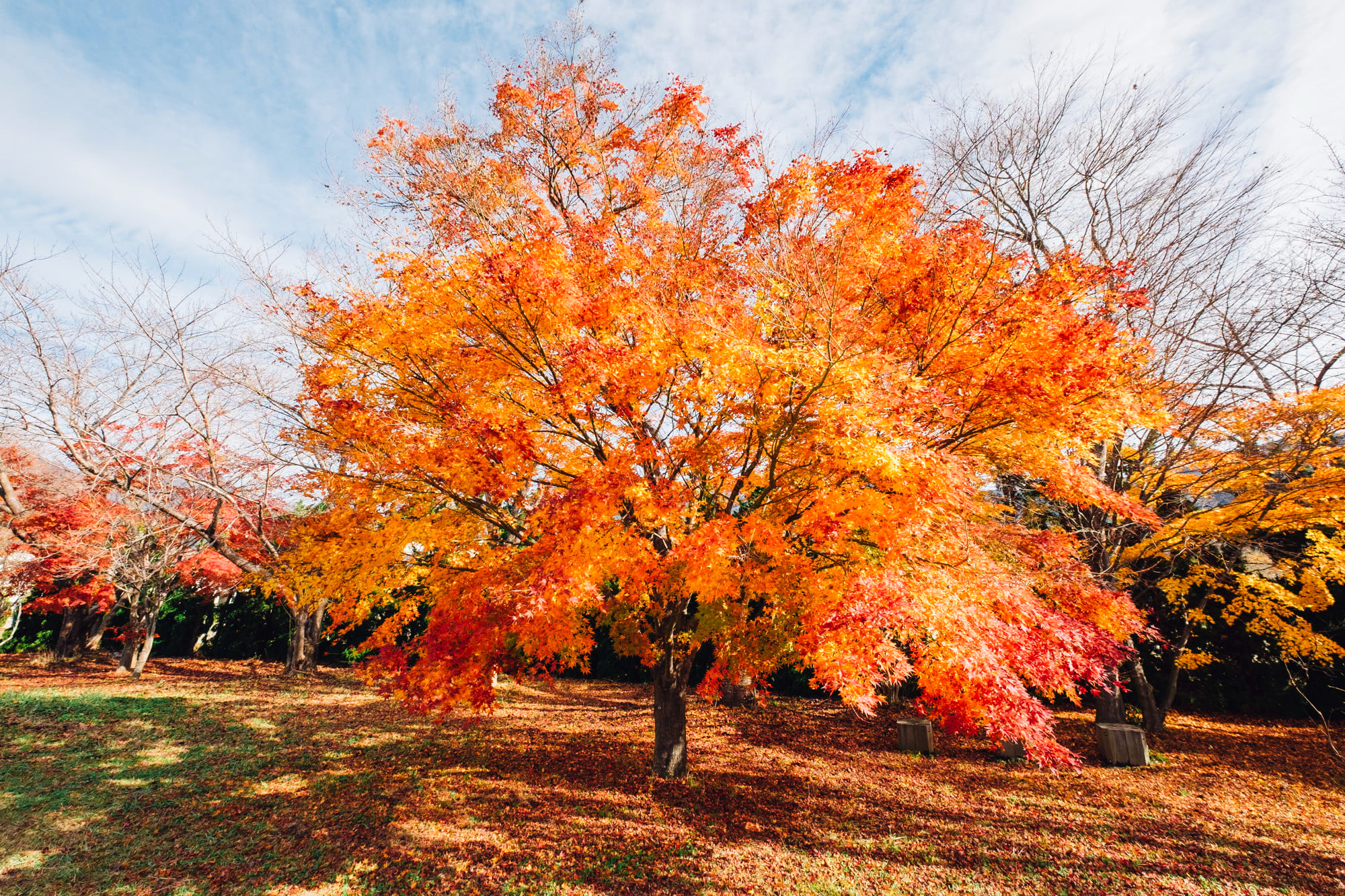
The Maple Tree
I heard the chainsaw before I saw anything.
I was turning onto Birchwood Lane in my old Buick with the windows down. It was a warm Saturday in July. I’d just come from the cemetery. There was still dirt under my fingernails from planting petunias on Tom’s grave. Pink and purple. His favorites. He always said petunias were the only flowers honest enough to smell like what they were.
The chainsaw was screaming. High and angry. Then it stopped. Then it started again.
Somebody’s doing yard work, I thought.
Then I came around the curve by the Hendersons’ mailbox.
And I saw the sky where my tree used to be.
I stopped the car in the middle of the street.
I didn’t pull over. I didn’t put it in park. I just took my foot off the gas and stopped.
There was a truck in front of my house. A big white flatbed with a trailer hitched behind it. GREEN VALLEY TREE SERVICE painted on the door in green letters. Three men in hard hats and orange vests were loading something onto the trailer.
The last of a trunk.
Thick. Gray-brown bark. Cut into sections about four feet long. Stacked on the trailer like firewood.
And on my front lawn, in pieces, scattered across the grass, was Tom’s maple.
Branches. Hundreds of them. Leaves still green, still alive, lying in heaps on the lawn. Sawdust everywhere. Pale yellow sawdust on my sidewalk, on my porch steps, on my flowerbed.
And in the middle of my front yard, where the tree had stood for forty-six years, there was a stump.
Fresh. Pale. Flat. Bleeding sap.
Lying in the grass next to the stump was my wind chime.
Brass tubes. A little wooden disc at the top that Tom carved with a pocketknife the summer before he got sick. A cardinal, he said it was. It looked more like a potato. I loved it.
It was bent in half. The brass tubes were tangled. The string was snapped. One tube had come off and was lying three feet away in a pile of sawdust.
Pam was standing on her side of the fence.
My neighbor. In a white linen sundress and big sunglasses. Holding a glass of iced tea with a lemon wedge on the rim. Leaning against the white vinyl fence that separates her yard from mine. Watching the tree crew work like she was watching a tennis match.
She saw my car stopped in the middle of the street.
She raised her glass.
“Oh, good,” she called. “You’re back. I took care of it.”
My name is Linda Harmon. I’m seventy-two years old.
I’ve lived in the little blue Cape Cod at 214 Birchwood Lane in Cedar Hollow, Oregon, for forty-seven years. Tom and I bought it in 1978. We paid forty-one thousand dollars. Tom said we were crazy. He said we’d never pay it off.
We paid it off in 2003. Tom burned the mortgage papers in the barbecue grill in the backyard and we drank a bottle of champagne that cost eleven dollars.
Tom was a high school shop teacher for thirty-four years. Cedar Hollow High. He taught half the men in this town how to build a birdhouse. He could fix anything. A lawnmower. A toaster. A broken heart, sometimes. That was mostly mine.
He died in February.
Pancreatic cancer. Seven months from the diagnosis to the end. He was seventy-four.
Tom planted that maple in 1979.
October fourteenth. A Sunday.
Our son, Jeff, was six hours old.
Jeff was born at four in the morning at Providence Hospital in Portland. Eight pounds, two ounces. Bald as an egg. Screaming his head off.
Tom held him for the first time and cried so hard the nurse had to take the baby back so Tom wouldn’t drop him.
Then, around nine in the morning, Tom kissed me on the forehead and said, “I’ll be back. There’s something I have to do.”
“Where are you going?” I said. “Our son was born five hours ago.”
“I know,” Tom said. “That’s why I have to go.”
He drove home. Thirty minutes. To Birchwood Lane.
He went to the nursery on Route 43. Fredrickson’s. Old Mr. Fredrickson opened up special for him on a Sunday morning because Tom told him why.
He bought a sapling. A sugar maple. No taller than me. Five foot four. With a trunk about as thick as my thumb.
He drove it home in the back of his pickup truck. He dug a hole in the front yard. Right in the middle. Twenty feet from the house. He planted it. He watered it. He put a little wooden stake next to it and tied it up with an old necktie so the wind wouldn’t knock it over.
Then he drove back to the hospital.
He walked into my room with dirt on his knees and dirt under his fingernails and a big stupid grin on his face.
“Where have you been?” I said. “You smell like fertilizer.”
“I planted a tree,” Tom said.
“You planted a tree? Today?”
He sat down on the edge of my hospital bed. He looked at Jeff, asleep in the little plastic bassinet next to me.
“So the boy has something to climb,” he said.
Jeff climbed it.
The first time, he was five. He made it about four feet up before he got scared and Tom had to lift him down.
By seven, he could get to the first big branch. By nine, he was halfway up. By twelve, he could climb so high we could only see his sneakers through the leaves.
He built a treehouse in it when he was thirteen. With Tom. Out of scrap lumber from the shop at the high school. It was crooked and leaky and had a sign on the door that said NO GIRLS (EXEPT MOM). With except spelled wrong.
He had his first kiss in that treehouse when he was fifteen. I wasn’t supposed to know that. I knew.
When he went to college at Oregon State, he hugged me on the porch and then he walked over and put his hand on the trunk of the maple. Just for a second. Like he was saying goodbye to it too.
Then his kids climbed it.
Noah and Ruby. Jeff’s kids. My grandchildren. Twelve and nine now.
Noah climbed it like a monkey. Ruby was scared of it until she was seven. Then one summer afternoon she just went up. All the way up to the old treehouse, which Tom had rebuilt for the grandkids in 2015. Sturdier. With a real roof this time. And a sign that said NO GROWN-UPS (EXCEPT GRANDPA).
Spelled right this time. Ruby checked.
Every fall, the maple turned red. Not orange. Not yellow. Red. Bright, burning, fire-engine red. People drove down Birchwood Lane just to look at it. A photographer from the Oregonian came out once in 2009 and took a picture of it for the front page of the Sunday Living section.
Tom framed it. It’s still hanging in the hallway.
Cedar Hollow’s Most Beautiful Tree.
Tom died in February.
In our bedroom. In the hospital bed the hospice people set up by the window. Where he could see the maple.
It was bare then. February. Just gray branches against the gray sky.
The last thing he said to me, the last clear thing, was about the tree.
“It’ll bud in April,” he whispered. “Watch for it, Lin. Little red buds. That’s how you’ll know I’m okay.”
It budded in April.
Little red buds. All over the branches.
I stood at the bedroom window and cried until I couldn’t breathe.
In May, I hung a little wind chime from the lowest branch.
Tom’s wind chime. The one with the cardinal that looked like a potato. He made it the summer before he got sick. It used to hang on the back porch.
I moved it to the maple.
I could hear it from the kitchen. Every time the wind blew. Soft and silvery. Ting. Ting-ting.
It sounded like he was still out there. Puttering around in the front yard. Fixing something. Whistling.
I’d stand at the kitchen sink washing dishes and listen to it and talk to him.
Tom, the gutters need cleaning.
Tom, Jeff called. Ruby lost a tooth.
Tom, I miss you.
Ting. Ting-ting.
Pam moved in next door three years ago.
Pam Whitaker. Fifty-eight, maybe. Divorced. From California. She bought the old Kowalski place. Tore it down. All of it. The little brick ranch the Kowalskis lived in for forty years. Down to the foundation.
She built something new. Big. Gray. Modern. Black window frames. A three-car garage. A front door that looked like it belonged on a bank.
And a pool.
A big one. In the backyard. Right along the fence line between her yard and mine. Saltwater. With a waterfall feature and a hot tub and underwater lights that change colors at night. Blue, then purple, then green, then pink.
Big house. Bigger pool.
The first summer, she knocked on my door.
She was holding a maple leaf between two fingers. Pinched. Like it was something dead.
“These are clogging my filter,” she said.
I looked at the leaf. Then at her.
“I’m sorry,” I said. “It’s that time of year. I’ll rake more.”
“Raking won’t help,” Pam said. “They blow over the fence. Into the water. Every day. Hundreds of them. My pool guy is charging me extra.”
“I’m sorry. I don’t know what else to do.”
She looked past me. At the maple. Huge and green and full in the front yard. Its branches stretching out over the fence line. Over the corner of her pool.
“You could just cut it down,” she said.
I laughed.
I honestly thought she was kidding.
She wasn’t.
Every summer after that, she left notes in my mailbox.
The first one was on pale blue stationery. Very neat handwriting.
Linda — Your tree is a nuisance. The leaves are damaging my pool equipment. Please take care of it. — P. Whitaker
Tom read it at the kitchen table. He laughed.
“A nuisance,” he said. “She’s calling a forty-three-year-old sugar maple a nuisance.”
“She’s serious, Tom.”
“So am I,” Tom said. He folded the note and stuck it on the refrigerator with a magnet shaped like a pine cone. “That tree was here forty years before her pool. She can buy a pool cover.”
The second summer, the note was on white printer paper.
PLEASE ADDRESS YOUR TREE.
All capitals. No signature.
Tom was sick by then. The cancer. He read it in his recliner with an oxygen tube in his nose. He didn’t laugh this time.
“She’s going to try something,” he said quietly. “I can feel it.”
“What can she do? It’s our tree. It’s on our property.”
Tom didn’t answer. He looked out the window at the maple for a long time.
The next morning, I found him at the kitchen table at six a.m. With the drawer open. The one where he kept everything important. Insurance papers. The deed to the house. Our marriage license. Jeff’s birth certificate.
He was looking at a folder.
“What’s that?” I asked.
He closed it.
“Insurance,” he said. “For the tree.”
I didn’t ask what he meant. I was too tired. I was always too tired that year.
The third note came this June.
Four months after Tom died.
Red pen.
I’VE ASKED NICELY.
That was all.
I threw it away. I didn’t show anybody. I didn’t want to deal with it. I was still sleeping on Tom’s side of the bed because his pillow still smelled like him. I was still setting out two coffee cups in the morning and then putting one back.
I didn’t have room for Pam Whitaker’s pool.
I was at the cemetery that Saturday.
Every Saturday. Since February. I bring Tom fresh flowers. Petunias in the summer. Mums in the fall. Little evergreen wreaths in the winter.
I sit on the bench next to his grave and tell him about the week.
That Saturday, I told him about Ruby’s swim meet. She came in third in the fifty-meter backstroke. I told him about the Hendersons’ new dog, a beagle that howls at the mailman. I told him the maple was looking good. Full and green. The wind chime was singing every afternoon.
“It sounds like you, Tom,” I told him. “I swear it does.”
I stayed for an hour.
Then I drove home.
And I heard the chainsaw before I saw anything.
I got out of the car.
I left it in the middle of the street with the door open and the engine running.
I couldn’t feel my legs.
I walked across my front lawn. Through the branches. Through the leaves. Through the sawdust. I stepped on something that crunched. A piece of the old treehouse. The floor. With NO GROWN-UPS (EXCEPT GRANDPA) painted on it in Ruby’s handwriting.
I stopped at the stump.
It was huge. Thirty-one inches across. I found out later. Pale and raw and wet with sap. I could see the rings. Forty-six of them. Every year since Jeff was born.
I put my hand on it.
It was still warm from the saw.
“That tree was on my property,” I said.
My voice didn’t sound like mine. It sounded far away. Like it was coming from the bottom of a well.
Pam took a sip of her iced tea.
“Half of it was over mine,” she said.
“My husband planted that tree.”
“I know, Linda. You’ve told me.”
“He planted it the day our son was born. Six hours after. He drove home from the hospital and planted it with his own hands.”
Pam took off her sunglasses. She looked at me across the fence.
She looked at the stump. At the branches all over my lawn. At the wind chime bent in half in the grass.
She took another sip of her tea.
“Linda,” she said. “Trees grow back.”
She set the glass down on top of the fence post.
“Husbands don’t,” she said.
The tree guy stopped working.
He was the oldest of the three men. Sixty, maybe. Gray beard. Leathery face. A name stitched on his orange vest. DALE. He’d been loading the last section of trunk onto the trailer.
He stopped. He set it down.
He turned around and looked at Pam.
Even he looked at her like she’d said something wrong.
The two younger men looked at each other. One of them took off his hard hat.
Nobody said anything.
I bent down.
My knees cracked. I’m seventy-two.
I picked up my wind chime.
The brass tubes were tangled. Bent. Two of them were dented flat where something heavy had landed on them. The string was snapped. The little wooden cardinal that looked like a potato had a crack running right through the middle of it.
I held it in both hands.
I stood up.
I looked at Pam.
At her white linen sundress and her big sunglasses and her glass of iced tea with the lemon wedge.
At her pool. Behind her. Sparkling blue in the July sun. Perfectly clean. Not a single leaf on the surface.
“You’re right, Pam,” I said.
She smiled.
She thought she’d won.
She picked up her iced tea again. She leaned back against the fence.
“I knew you’d see reason,” she said. “It’s for the best. Really. You’ll have so much more light in the house now. And no more raking.”
I didn’t say anything.
I turned around and walked back across my lawn. Through the branches. Through the sawdust.
Dale was standing by the trailer. He looked at me as I passed. His face was strange. Like he wanted to say something.
He didn’t.
I walked up my porch steps. I opened my front door.
I went inside.
I set the wind chime on the kitchen counter.
Very carefully. Like it was made of glass.
Then I stood at the kitchen sink and looked out the window.
At the sky.
There was so much sky. I’d never seen that much sky from my kitchen window. For forty-six years, all I’d seen was green leaves in summer and red leaves in fall and gray branches in winter. And the little treehouse. And Noah’s sneakers dangling down from the first big branch.
Now there was just sky. Pale blue and empty.
And the stump.
I turned around.
I opened the drawer.
The drawer where Tom kept everything important. Left of the stove. Under the silverware.
The deed to the house. The insurance papers. Our marriage license from 1977. Jeff’s birth certificate. Tom’s Army discharge papers. Tom’s will.
And a folder.
Manila. Thick. Soft at the edges from being handled.
On the front, there was a seal. Gold. Embossed.
CITY OF CEDAR HOLLOW — DEPARTMENT OF PARKS AND URBAN FORESTRY.
The folder Tom was looking at that morning at six a.m.
Insurance, he’d said. For the tree.
I took it out. I sat down at the kitchen table. Tom’s chair. I don’t usually sit in Tom’s chair.
I opened it.
The first thing inside was a certificate.
Heavy paper. Cream-colored. With a border of green leaves. And the city seal at the top.
CITY OF CEDAR HOLLOW
HERITAGE TREE DESIGNATION
This certifies that the Sugar Maple (Acer saccharum) located at 214 Birchwood Lane has been officially designated
HERITAGE TREE #47
in recognition of its exceptional size, age, beauty, and significance to the community, and is hereby afforded all protections under Cedar Hollow Municipal Code Chapter 12.08.
Designated: May 15, 2006.
Signed by the mayor. And the city forester.
I stared at it.
Heritage Tree. Number forty-seven.
I’d never heard of it. I’d never seen this certificate. Tom never said a word.
May 2006. Twenty years ago.
I flipped to the next page.
It was a letter. From the city. Dated March 2006.
Dear Mr. Harmon,
Thank you for your application to the Cedar Hollow Heritage Tree Program on behalf of the Sugar Maple at your residence. Our urban forester, Marisol Vega, has completed her assessment. We are pleased to inform you that the tree meets all criteria for designation…
I kept reading.
There was a copy of Tom’s application. In his handwriting. Neat block capitals. The shop teacher’s printing he used on every blueprint for thirty-four years.
REASON FOR NOMINATION: This tree was planted on October 14, 1979, the day my son was born. It has been climbed by my son and will be climbed by his children. It is the largest sugar maple on Birchwood Lane. In October, it turns the reddest red in Cedar Hollow. People drive from all over town to see it. It was on the front page of the Oregonian. I would like to make sure it is protected after I am gone, so that nobody can cut it down for no good reason. My wife loves this tree more than I do, and that’s saying something.
— Thomas J. Harmon
I put my hand over my mouth.
My wife loves this tree more than I do.
I didn’t even know he’d done it.
There was more.
A copy of Cedar Hollow Municipal Code, Chapter 12.08. Tom had highlighted parts of it in yellow.
No person shall remove, destroy, or cause to be removed or destroyed any designated Heritage Tree without first obtaining a Heritage Tree Removal Permit from the City Forester.
Any person who removes or causes the removal of a Heritage Tree without a permit shall be subject to a civil penalty of not less than $1,000 per inch of trunk diameter measured at breast height, plus the cost of replacement trees as determined by the City Forester.
Any tree service, contractor, or individual who performs such removal shall be jointly and severally liable for said penalties.
Tom had underlined per inch of trunk diameter three times.
There was a survey. A property survey. From 2006. Showing our lot. And the Kowalskis’ lot next door. And the property line between them.
And a little circle on our side of the line. Labeled in a surveyor’s neat handwriting.
Sugar maple, 18″ DBH. Trunk entirely within parcel 214. Canopy extends approx. 14 feet over east property line.
Tom had circled Trunk entirely within parcel 214 in red pen.
And at the very back of the folder, there was an envelope.
White. Sealed. Tom’s handwriting on the front.
Lin.
I opened it.
Lin,
If you’re reading this, somebody’s done something to our tree. Probably that woman next door with the pool. I’ve got a bad feeling about her.
I’m sorry I never told you about the Heritage Tree thing. I did it in 2006, after the city was talking about widening Birchwood and putting in sidewalks. They wanted to take out every tree within ten feet of the road. I wasn’t going to let them take our maple. So I filled out a form and called the city forester, and she came out and measured it and said it was the biggest sugar maple she’d ever seen in a residential yard. She said it qualified for protection. So I did it.
I didn’t tell you because I thought you’d say I was being dramatic. You always say that.
Then they didn’t widen the road, and I forgot about it. Until that woman started leaving notes.
So here’s what you do. If anybody ever cuts down our tree, don’t yell. Don’t cry in front of them. Don’t give them the satisfaction.
Just say “okay” and go inside.
Then call Marisol Vega at the city. Her number’s on the back of her card, stapled to the inside cover. She’s been the city forester for twenty years. She’s tough. She’ll know what to do.
Then make yourself a cup of coffee and wait.
I love you, Lin. I always will. Watch for the red buds.
— T.
I sat at Tom’s kitchen table with his letter in my hands.
I cried. Of course I cried.
But I wasn’t crying like I’d been crying on the lawn. That hollow, helpless crying. This was something else.
Don’t give them the satisfaction.
Just say “okay” and go inside.
I hadn’t even read the letter yet. I hadn’t known.
And I’d done exactly what he told me to do.
You’re right, Pam.
Marisol Vega’s business card was stapled to the inside of the folder. Just like Tom said.
MARISOL VEGA — CITY FORESTER — CEDAR HOLLOW DEPARTMENT OF PARKS AND URBAN FORESTRY.
On the back, in pen, a cell phone number. And a note in a woman’s handwriting.
Tom — Call me anytime about #47. Day or night. — M.V.
I made one phone call.
It was 2:47 on a Saturday afternoon. I didn’t think she’d answer. Twenty years later. On a weekend.
She answered on the second ring.
“Marisol Vega.”
“Ms. Vega,” I said. “My name is Linda Harmon. I live at 214 Birchwood Lane. My husband was Tom Harmon. He—”
“Heritage Tree number forty-seven,” she said immediately.
I stopped.
“You remember?”
“I remember every one of them,” she said. “Sixty-three Heritage Trees in this city. I know them all. Forty-seven is the sugar maple. Biggest in the city. Turns red in October. Your husband was the shop teacher. He made me a birdhouse.” She paused. “I heard he passed. I’m so sorry, Mrs. Harmon.”
“Thank you.”
“What happened?” she said. Her voice had changed. Careful. “Is it the tree?”
I looked out the kitchen window.
At the sky.
“My neighbor cut it down,” I said. “Two hours ago. It’s gone.”
There was a long silence on the other end of the line.
“Cut it down,” Marisol said slowly. “Forty-seven. All of it?”
“All of it. There’s a stump.”
“Did she have a permit?”
“I don’t know. I don’t think so.”
“She didn’t,” Marisol said flatly. “I’d know. Every Heritage Tree removal permit crosses my desk. Nobody’s applied for forty-seven. Ever.” I heard her moving. Keys jingling. A door closing. “Mrs. Harmon. Is the tree crew still there?”
I looked out the window. Dale was strapping down the last section of trunk on the trailer.
“Yes.”
“What company?”
“Green Valley Tree Service.”
Marisol made a sound. Half laugh, half groan.
“Dale Jessup,” she said. “I know Dale. He’s been doing this thirty years. He’s a good arborist. He knows better than this.” She paused. “Mrs. Harmon, don’t go back out there. Don’t talk to the neighbor. Don’t talk to the crew. Don’t touch the stump. Take pictures from your window if you can. I’m getting in my truck right now.”
“Ms. Vega—”
“Marisol,” she said. “Call me Marisol. Your husband did.”
“Marisol. What happens now?”
There was a pause.
“Now,” Marisol said, “I’m going to do my job.”
Then I made a pot of coffee.
Like Tom said.
And I sat down at the kitchen table to wait.
Marisol came at 3:30.
She drove a green city pickup truck with the Parks Department seal on the door. She parked behind my Buick, which was still sitting in the middle of the street with the door open. She got out.
She was about fifty-five. Short. Solid. Gray braids pinned up under a baseball cap that said CEDAR HOLLOW URBAN FORESTRY. Khaki pants with a lot of pockets. Steel-toed boots. A tape measure clipped to her belt. A clipboard under her arm.
The tree crew was gone by then. Dale had driven off with the trailer about twenty minutes after I went inside.
Pam was still on her side of the fence. Lying on a lounge chair by her pool. In her sunglasses. Reading a magazine.
Marisol didn’t look at her.
She walked straight across my lawn to the stump.
She stood there for a long time.
She took off her baseball cap.
She held it against her chest. Like you’d do at a funeral.
I came outside.
She heard me on the porch steps. She turned around. Her eyes were wet.
“Mrs. Harmon,” she said. “I’m so sorry.”
“Linda.”
“Linda.” She looked back at the stump. “I measured this tree in 2006. Eighteen inches at breast height. I climbed it. Did Tom tell you that? I climbed all the way up to the treehouse to check the canopy. Your son’s sign was on the door. No girls except Mom. With except spelled wrong.”
I laughed. It came out as a sob.
“Thirty-one inches,” Marisol said quietly. She’d already run her tape measure across the stump. “It grew thirteen inches in twenty years. That’s extraordinary. Sugar maples don’t grow that fast. Somebody loved this tree.”
“Tom watered it,” I said. “Every night in the summer. With the hose. Even when he was sick. He’d sit in a lawn chair with the hose and water it.”
Marisol nodded slowly.
She put her cap back on.
Then she started working.
She took pictures. Dozens of them. The stump. The branches on the lawn. The sawdust. The tire tracks in my grass where Dale’s truck had backed up. The broken pieces of the treehouse.
She measured the stump. Three times. She wrote everything down on her clipboard.
She walked along the property line. She found the old survey pins. Little metal stakes in the ground, half-buried in the grass. She measured from the pins to the stump.
“Trunk was entirely on your property,” she said. “Eleven feet from the line. Not even close.”
Then she turned around.
And for the first time, she looked at Pam.
Pam was sitting up on her lounge chair now. She’d taken off her sunglasses. She was watching Marisol with a strange expression. Uncertain. Like she couldn’t figure out who this woman in khaki pants was.
Marisol walked over to the fence.
“Ma’am,” she said. “Are you the owner of this property? 216 Birchwood?”
Pam stood up. She smoothed her sundress.
“I am,” she said. “Pam Whitaker. Who are you?”
“Marisol Vega. City Forester. Cedar Hollow Department of Parks and Urban Forestry.”
Pam blinked.
“I’m sorry,” she said. “Is there a problem?”
Marisol looked at her for a long moment.
“Ma’am,” she said. “Did you hire Green Valley Tree Service to remove the sugar maple at 214 Birchwood Lane this afternoon?”
Pam laughed. A light little laugh.
“Yes,” she said. “I did. It was a nuisance. The leaves were destroying my pool. I asked her nicely for three years. She refused to do anything. So I took care of it.” She shrugged. “I paid for it myself. She should be thanking me.”
Marisol didn’t say anything for a while.
“Did you obtain a removal permit from the city?” she asked.
“A permit?” Pam laughed again. “For a tree? In somebody’s yard? Since when do you need a permit to cut down a tree?”
“Since 2006,” Marisol said. “For that one.”
She turned and walked back to her truck.
She was gone by five.
She didn’t tell Pam anything else. She didn’t explain. She just got in her truck and drove away.
I didn’t hear from her again that evening.
At six-thirty, Jeff came.
I’d called him after Marisol left. He drove up from Salem. Forty-five minutes. He did it in thirty.
He pulled into the driveway and got out of his car and stood on the lawn and looked at the stump.
He didn’t say anything for a long time.
Then he walked over to it. He knelt down in the sawdust. Forty-six years old. A grown man. A high school principal with two kids and a mortgage.
He put both hands flat on the stump.
And he cried.
“I climbed it,” he said. His voice was broken. “The day I left for college. Did you know that? I climbed it at five in the morning before you and Dad were awake. All the way to the top. Higher than I’d ever been. I could see the whole town. I could see the river.”
“I didn’t know.”
“I carved my initials up there,” Jeff said. “At the very top. On the last branch that would hold me. J.H. 1997. I never told anybody.”
He looked over at the trailer tracks in the grass. At the empty driveway where Dale’s truck had been.
“They’re gone,” he said. “The initials. They’re on some trailer somewhere. Getting turned into mulch.”
Jeff stayed the night.
He slept in his old room. The one with the window that used to look out at the maple. The one where Tom used to stand in the doorway at night when Jeff was little and say, Goodnight, Jeffy. Goodnight, tree.
I didn’t sleep.
I sat at the kitchen table with Tom’s folder and Tom’s letter and Tom’s broken wind chime.
And I waited.
At 7:15 the next morning, Pam opened her front door in her bathrobe.
I know because I was watching from my front window.
I’d been watching since six. With a cup of coffee. Jeff was standing next to me. He’d come downstairs at six-thirty and seen me at the window and hadn’t asked any questions. He’d just poured himself a cup and stood next to me.
At 6:52, the first car pulled up.
A green city pickup truck. Marisol.
At 6:58, a second car. A white sedan with a city seal. A man got out. Tall. Thin. Gray suit. A clipboard. A badge on his belt.
At 7:03, a third car. A Cedar Hollow Police cruiser. A young officer got out. Thirty, maybe. He stood by his car with his arms crossed.
At 7:09, a fourth car.
A white pickup truck. With GREEN VALLEY TREE SERVICE painted on the door.
Dale.
They all walked up Pam’s driveway together.
Marisol walked to Pam’s front door with a piece of paper. Bright orange. Laminated. She taped it to the door. Right in the middle. At eye level. Right on the fancy black front door that looks like it belongs on a bank.
Then they all stood in Pam’s driveway.
Marisol in her khaki pants and her baseball cap. The man in the gray suit. The police officer with his arms crossed. And Dale, in jeans and a flannel shirt instead of his orange vest. With his hands in his pockets. Looking at the ground.
Waiting.
At 7:15, Pam opened her front door.
She was wearing a pink silk bathrobe. Her hair was in a messy bun. She had a cup of coffee in one hand.
She was probably going to get the newspaper. She gets the Oregonian delivered every morning. It was lying at the bottom of her driveway.
She opened the door.
She saw the orange paper taped to it.
She stopped.
She read it.
I couldn’t read it from my window. Marisol showed it to me later.
CITY OF CEDAR HOLLOW
NOTICE OF VIOLATION
MUNICIPAL CODE CHAPTER 12.08 — HERITAGE TREE PROTECTION
Property Owner: Pamela A. Whitaker, 216 Birchwood Lane
Violation: Unauthorized removal of designated Heritage Tree #47 (Acer saccharum, Sugar Maple), located at 214 Birchwood Lane, without a Heritage Tree Removal Permit.
Trunk diameter at breast height: 31 inches.
Civil penalty assessed: $1,000 per inch DBH = $31,000.
Replacement requirement: Replacement trees equal to 100% of removed trunk diameter, species and location to be determined by City Forester, at violator’s expense.
Additionally: Unauthorized entry onto adjacent property for purpose of removal has been referred to Cedar Hollow Police Department for review under ORS 164.245 (Criminal Trespass) and ORS 164.354 (Criminal Mischief).
You have 30 days to respond to this notice.
Pam read it.
Then she looked up.
She looked at the people standing in her driveway.
Marisol. The man in the gray suit. The police officer.
And Dale.
Dale Jessup. The arborist she’d hired. The man she’d paid to cut down my tree. Standing in her driveway in his flannel shirt next to a police officer. Looking at her.
Then she looked across the fence.
At my front window.
At me. Standing there with my cup of coffee. In my bathrobe. With my son next to me.
She screamed my name so loud the dog three houses down started barking.
“LINDA!”
I went outside.
Jeff came with me. He walked one step behind me. The way Tom used to walk behind me at parties, close enough to catch me if I needed it.
I walked down my porch steps. Across my lawn. Past the stump. To the fence.
Pam was standing in her doorway in her pink silk bathrobe holding the orange notice. Her face was red. Not pink. Red. Splotchy. Her hands were shaking so hard the notice was rattling.
“What is this?” she said. “What did you do? What is this?”
“Good morning, Pam,” I said.
“Thirty-one thousand dollars? For a tree? This is insane! This is extortion! Who are these people?”
“Ms. Whitaker,” the man in the gray suit said. “I’m Raymond Ellis. Code Enforcement. City of Cedar Hollow.”
“I don’t care who you are! This is ridiculous! It was a tree! In somebody’s yard! You can’t charge me thirty-one thousand dollars for cutting down a stupid tree!”
“It was a Heritage Tree, ma’am,” Raymond Ellis said. “Designated in 2006. It’s on the city’s public registry. It’s protected under Chapter 12.08 of the municipal code. Removing it without a permit carries a mandatory penalty.”
“I didn’t know!”
“Ignorance of the ordinance isn’t a defense,” he said mildly. “It’s posted on the city website. It’s in the property records. And, frankly, ma’am, if you’d applied for a removal permit, which anybody needs to remove a tree that size in Cedar Hollow, Heritage Tree or not, you’d have found out right away.”
Pam turned to Dale.
“You,” she said. “You did this. You cut it down. You should have known. You’re the professional!”
Dale took his hands out of his pockets.
“Yes, ma’am,” he said quietly. “I should’ve known.”
He looked at me across the fence. Then back at Pam.
“I asked you yesterday,” he said. “Before we started. I asked if you had a permit. You said you didn’t need one. You said it was your tree.”
“I said half of it was over my property!”
“No, ma’am,” Dale said. “You said it was your tree. You signed my work order.” He pulled a piece of paper out of his back pocket. Folded. He unfolded it. “Right here. Property owner attests that the tree to be removed is located on property owned by the undersigned and that all necessary permits have been obtained.”
He held it up.
“You signed it,” he said. “Pamela Whitaker. With a little heart over the i.”
Pam’s face went white.
“I didn’t—that’s just a form, everybody signs those—”
“I asked you twice,” Dale said. “I said, ‘Ma’am, this is a big tree. Are you sure it’s on your property?’ And you said, ‘I’m sure. The old lady next door said I could do whatever I wanted with it.’”
He looked at me.
“Did you say that, Mrs. Harmon?” he asked quietly.
“No,” I said. “I was at the cemetery. Putting flowers on my husband’s grave.”
Dale closed his eyes.
“I figured,” he said.
He turned to Marisol.
“I’m sorry, Marisol,” he said. “I’ve been doing this thirty-one years. I’ve never cut a Heritage Tree. I’ve never cut anything without checking. I knew better.” He shook his head. “She was so sure. And she was paying cash. And it was Saturday and I had two guys who needed the hours.”
“I know, Dale,” Marisol said. “We’ll talk about it.”
“I’ll pay my share,” Dale said. “Whatever the city says. Joint and several. I read the code last night. I’ll pay it.”
Then he turned to me.
“Mrs. Harmon,” he said. “When we were cutting. Up top. On the last branch. There was something carved in the bark.”
My heart stopped.
“J.H. 1997,” Dale said.
Behind me, Jeff made a sound.
“I saw it,” Dale said. “I was up in the bucket. I was about to cut that branch. And I saw it. And I thought, that’s somebody’s kid. Somebody’s kid climbed all the way up here.” He swallowed. “I almost stopped. Right then. I almost came down and said I wasn’t doing this.”
“Why didn’t you?”
Dale looked at the ground.
“Because I’m a coward,” he said. “Because she was paying cash. Because I needed the money.” He looked up. “I’m sorry. I’m so sorry. I’ve been sick about it all night.”
He reached into the pocket of his flannel shirt.
He pulled something out.
He held it out to Jeff. Across the fence.
It was a piece of wood. About the size of a deck of cards. Gray bark on one side. Pale wood on the other.
Carved into the bark, in shaky, deep letters, cut with a pocketknife by an eighteen-year-old boy at five o’clock in the morning before he left for college:
J.H. 1997.
Jeff took it.
He held it in both hands. He looked at it for a long time.
“I cut it out of the branch,” Dale said. “Last night. At the yard. Before the chipper. I didn’t know whose it was. I just couldn’t let it go in the chipper.”
Jeff didn’t say anything.
He reached across the fence and shook Dale’s hand. Hard. For a long time.
Pam was still standing in her doorway.
In her pink silk bathrobe. Holding the orange notice. Shaking.
“This is insane,” she whispered. “This is insane. Over a tree. Over leaves.”
The police officer stepped forward. He’d been quiet the whole time.
“Ms. Whitaker,” he said. “I’m Officer Delgado. I need to ask you some questions about yesterday. About entering the property at 214 Birchwood with the tree crew. Would you like to do that here, or at the station?”
Pam stared at him.
“You’re arresting me?”
“No, ma’am,” Officer Delgado said. “Not today. I’m taking a report. The DA will review it and decide whether to file charges. Criminal trespass. Criminal mischief. It’ll depend on the total value of the damage.”
He looked across the fence. At the stump. At the sawdust. At the broken pieces of the treehouse in the grass.
“From what I’m hearing,” he said, “the value is going to be pretty significant.”
Pam looked at me.
Across the white vinyl fence. Over the stump. Past her perfect blue pool with the waterfall feature and the underwater lights.
Her face crumpled.
“Why?” she said. Her voice cracked. “Why would you do this? Why would you call all these people? Over a tree? It’s just a tree, Linda!”
I looked at her for a long time.
“You’re right, Pam,” I said. “Trees grow back.”
She stared at me.
“That’s what you told me yesterday,” I said. “Trees grow back. Husbands don’t.”
I held up Tom’s broken wind chime. I’d brought it out with me. I don’t know why. I just picked it up off the kitchen counter on my way out the door.
“My husband planted that tree six hours after our son was born,” I said. “He watered it every night for forty-six years. Even when he had an oxygen tube in his nose. He applied to the city to protect it. Twenty years ago. He never told me. He just did it. Quietly. In case somebody like you ever came along.”
My voice was shaking now.
“And he left me a letter,” I said. “In that folder. He told me exactly what to do if anybody ever cut it down. He said don’t yell. Don’t cry in front of them. Don’t give them the satisfaction. Just say okay and go inside. And then call Marisol.”
I looked at Marisol. She was standing in Pam’s driveway with her baseball cap in her hands again. Her eyes were wet.
“So I did,” I said.
“Trees grow back,” I said again. “You’re right. It’ll take forty-six years. And I’m seventy-two. So I won’t see it.”
I looked at the stump.
“But Tom made sure that whoever cut it down would have to pay for the new ones,” I said. “Every inch. A thousand dollars an inch. Thirty-one of them.”
I looked back at Pam.
“Tom was a shop teacher,” I said. “He always said measure twice, cut once.” I swallowed. “You should have measured, Pam.”
That’s what happened.
That’s what some of my neighbors think was too far.
Some of them said so.
Mrs. Henderson across the street came over a few days later with a plate of lemon bars. She sat at my kitchen table and said, very carefully, “Linda, honey. Thirty-one thousand dollars. And the police. Isn’t that a little much? Over a tree? She’s going to lose her house.”
“She’s not going to lose her house,” I said.
“How do you know?”
“Because I’m not finished,” I said.
Mrs. Henderson looked at me like I’d lost my mind.
Others didn’t say anything to my face. But I heard. Cedar Hollow is a small town. Word travels.
Linda Harmon called the cops on her neighbor over a tree.
Did you hear she’s suing for thirty thousand dollars?
That poor woman. She just wanted to swim.
And some of them, I’ll be honest, sided with Pam. They’d seen the notes too. YOUR TREE IS A NUISANCE. They thought I should’ve trimmed it back years ago. They thought I was being sentimental. Holding on to a tree because I couldn’t hold on to my husband.
Maybe they were right about that last part.
Pam didn’t speak to me for three weeks.
She hired a lawyer. A man from Portland in an expensive suit. He sent the city a letter saying the fine was excessive and the ordinance was unconstitutional and his client was the victim of a vindictive neighbor.
The city sent back a letter saying the ordinance had been upheld in court twice, in 2011 and 2018, and the hearing would be on August twenty-first.
Pam’s lawyer stopped returning her calls after that. I heard. Small town.
I didn’t hire a lawyer.
I didn’t need to. It wasn’t my case. It was the city’s.
But I went to the hearing.
It was in a small room at City Hall. Fluorescent lights. Folding chairs. A long table at the front with three people behind it. A hearings officer, a retired judge named Harriet Cho. Raymond Ellis from Code Enforcement. And Marisol.
Pam sat on one side. Alone. Her lawyer didn’t come.
She looked different. She wasn’t wearing a linen sundress. She was wearing jeans and a plain blue blouse. No sunglasses. Her hair was pulled back in a ponytail.
She looked tired. She looked older.
She looked like she hadn’t been sleeping.
Raymond Ellis presented the city’s case. The certificate. The code. The survey. The measurements. Marisol’s photographs. Dale’s signed work order with the heart over the i.
Then Judge Cho asked if anybody else wanted to speak.
I stood up.
I hadn’t planned to. My knees were shaking.
I walked to the front of the room. I stood at a little podium with a microphone that squealed when I got too close.
I unfolded Tom’s letter.
And I read it out loud.
All of it. Lin, if you’re reading this, somebody’s done something to our tree. Probably that woman next door with the pool.
Some people in the back of the room laughed when I read that part. A few of my neighbors had come. Jeff. Mrs. Henderson. The young couple from 210.
I read the whole thing. Don’t give them the satisfaction. Just say okay and go inside. Watch for the red buds.
When I was done, the room was very quiet.
I looked across the room at Pam.
She was looking at the floor. Her hands were clasped tight in her lap. Her knuckles were white.
“Your Honor,” I said to Judge Cho. “I’d like to ask for something.”
Judge Cho looked at me over her glasses.
“Go ahead, Mrs. Harmon.”
“I’d like the fine reduced,” I said.
The whole room turned and looked at me.
Pam’s head snapped up.
“I’m sorry?” Judge Cho said.
“The thirty-one thousand dollars,” I said. “I’d like it reduced. Or waived. If that’s possible.”
Raymond Ellis frowned. Marisol looked at me with her eyebrows raised.
“Mrs. Harmon,” Judge Cho said slowly. “You’re the injured party. Your property was damaged. Your husband’s tree was destroyed. Why would you ask for the penalty to be reduced?”
I took a breath.
“Because I don’t want her money,” I said. “Thirty-one thousand dollars won’t bring back the tree. It won’t bring back Tom. It won’t bring back my son’s initials or my grandchildren’s treehouse.” I looked at Pam. “I don’t want her to lose her house. I don’t want her to go to jail.”
“Then what do you want?” Judge Cho asked.
I looked at Pam.
“I want her to plant the new one,” I said. “With me. With her own hands. In the dirt.”
Pam stared at me.
Her mouth opened. Nothing came out.
“The code says replacement trees,” I said. “Thirty-one inches of them. I’d like one of them to be a sugar maple. In my front yard. Where Tom’s was. And I’d like Pam to plant it. Not a tree crew. Not her pool guy. Her.”
I looked at Judge Cho.
“And I’d like her to water it,” I said. “Every night. For the first summer. With a hose. The way Tom did.”
The room was dead silent.
Judge Cho looked at me for a long time. Then she looked at Pam.
“Ms. Whitaker,” she said. “Do you have anything to say?”
Pam didn’t say anything.
She was crying.
Not loud. Just tears running down her face. She wasn’t wiping them away. She just sat there in her plain blue blouse with her hands clasped in her lap and cried.
“Ms. Whitaker?” Judge Cho said gently.
Pam stood up.
She walked to the front of the room. To the little podium where I was still standing.
She stood next to me.
She didn’t look at the judge. She looked at me.
“Why?” she whispered.
I didn’t answer right away.
I thought about it.
I thought about her standing on her side of the fence with her glass of iced tea. Trees grow back. Husbands don’t.
I thought about the way she’d said it. Not cruel, exactly. Flat. Bitter. Like something she’d said to herself a hundred times.
“Because of what you said,” I told her.
“Trees grow back?”
“No,” I said. “The other part. Husbands don’t.”
Pam flinched.
“I’ve been thinking about it for five weeks,” I said. “Every night. Lying in bed. Husbands don’t. The way you said it. Like you knew. Like it was something you learned the hard way.”
Pam closed her eyes.
“Who was he?” I asked quietly.
She told me.
Right there. At a podium in a hearing room at City Hall. In front of a judge and a code enforcement officer and a city forester and half of Birchwood Lane.
His name was Richard. They were married twenty-six years. In Sacramento. He was a dentist. She was a dental hygienist in his office. They had a daughter, Kelsey.
Four years ago, Richard left. For the receptionist. She was twenty-nine.
He took the practice. He took the house in Sacramento. He took the friends, most of them. And he took Kelsey too, in a way. Kelsey was twenty-four. Kelsey said her mother was bitter and impossible to be around and moved in with Richard and the receptionist.
Pam got a settlement. Enough for a fresh start. She picked Cedar Hollow off a map. She’d never been here. She liked the name.
She built the big gray house. And the pool.
“Kelsey used to love to swim,” Pam said. Her voice was shaking. “When she was little. She was on a swim team. She was so fast. I used to sit in the bleachers at every meet and scream my head off.”
“I built that pool for her,” Pam said. “For when she visits. I thought, if I have a really nice pool, she’ll come. She’ll bring her friends. She’ll bring her kids someday. She’ll want to be there.”
She wiped her face with her hand.
“She’s never come,” Pam said. “Not once. In three years. She doesn’t answer my calls. She texts me on my birthday. HBD Mom. That’s it.”
She looked at the floor.
“So I clean the pool,” she said. “Every day. I keep it perfect. Not a leaf. Not a bug. Not a speck of dirt. I check the chlorine twice a day. I run the waterfall every evening. I turn on the lights.”
Her voice broke completely.
“In case she comes,” Pam whispered.
I put my hand over my mouth.
Every day. Every single day. A perfect pool. With nobody in it.
And every day, my tree dropped leaves into it.
Hundreds of them. Green ones in summer. Red ones in fall.
Every leaf, a reminder that nobody was coming.
“And every day,” Pam said, “I’d look over the fence at your yard. And there’d be kids in that tree. Your grandkids. Screaming and laughing. Climbing up to that stupid treehouse. And you’d be sitting on your porch watching them. And your husband would be out there with his hose.” She was sobbing now. “And I couldn’t stand it. I couldn’t stand looking at it. A whole family. In a tree. Right next to my empty pool.”
She looked at me.
“When your husband died,” she said, “I thought, good. Now she knows. Now she knows what it’s like to lose somebody and have to keep living next to the thing that reminds you.”
She put her face in her hands.
“That’s what I meant,” she said through her fingers. “Husbands don’t. I wasn’t talking about yours. I was talking about mine.”
Nobody in that room said anything for a long time.
Judge Cho took off her glasses and wiped them on her sleeve.
Marisol was looking out the window.
Behind me, I heard Jeff blow his nose.
“Pam,” I said finally.
She lowered her hands.
“I’m not going to tell you it’s okay,” I said. “What you did. It’s not okay. You lied to Dale. You trespassed on my property. You cut down a tree my husband planted on the day our son was born. You broke Tom’s wind chime.” My voice shook. “You destroyed something I can never get back.”
“I know,” she whispered.
“But I know what it’s like,” I said. “To keep something perfect for somebody who isn’t coming. I set out two coffee cups every morning for three months after Tom died. Every morning. And then I’d put one back in the cupboard. Every single morning.”
Pam looked at me.
“I still sleep on his side of the bed,” I said. “Because his pillow still smells like him. A little. Not as much as it used to.”
Pam’s face crumpled.
“So I’m not going to take your house,” I said. “And I don’t want your thirty-one thousand dollars.”
I turned to Judge Cho.
“I want her to plant the tree,” I said. “That’s all.”
Judge Cho looked at me for a long time.
Then she looked at Raymond Ellis. Then at Marisol.
Marisol nodded. Just slightly.
Judge Cho put her glasses back on.
“In thirty-one years on the bench and six as a hearings officer,” she said, “I’ve never had an injured party ask for the penalty to be reduced so the violator could do yard work.”
Somebody in the back laughed.
“The code allows the City Forester discretion on replacement,” Judge Cho said. “And it allows me discretion on the civil penalty in cases of extraordinary circumstances.” She looked at Pam over her glasses. “I’d say a widow asking me to let you plant her husband’s tree qualifies as extraordinary.”
She wrote something on her paper.
“Civil penalty reduced to five thousand dollars,” she said. “Payable to the Cedar Hollow Urban Forestry Fund. Replacement trees totaling thirty-one inches of trunk diameter, species and locations to be determined by the City Forester. One of which shall be a sugar maple, planted by Ms. Whitaker personally, at 214 Birchwood Lane, at the location of Heritage Tree #47.” She looked up. “And watered by Ms. Whitaker personally. Daily. Through September thirtieth.”
She looked at me.
“Is that satisfactory, Mrs. Harmon?”
“Yes, Your Honor,” I said. “Thank you.”
“And Mr. Jessup,” Judge Cho said, looking at Dale in the back row. “Your share.”
“Yes, ma’am.”
“I understand from Ms. Vega that you’ve already volunteered to grind the stump and prepare the planting site at no charge. And provide the replacement trees at cost.”
Dale nodded. “Yes, ma’am.”
“Good,” Judge Cho said. “Then I’ll waive yours.”
She banged her gavel.
We planted it on the first Saturday in October.
Dale ground out the old stump the week before. He brought in a truckload of good topsoil. He did it himself. He wouldn’t take a penny.
Marisol picked out the tree herself. A sugar maple. From Fredrickson’s Nursery on Route 43. The same place Tom bought the first one.
Old Mr. Fredrickson died in 2008. His granddaughter runs it now. She walked Marisol through every sugar maple on the lot. Marisol picked the one that was already starting to turn red.
“For Tom,” she said.
It was taller than the one Tom planted. Eight feet. Marisol said that was the biggest one we could plant without a crane.
The trunk was about as thick as my wrist.
Everybody came.
Jeff. And Karen, his wife. And Noah and Ruby. Ruby brought a sign she’d painted. On a piece of wood. She’d been working on it for a week.
Marisol came in her khaki pants and her baseball cap. Dale came with his shovel. Officer Delgado came on his day off, in jeans. Even Judge Cho came. She said she wanted to see how it turned out.
Half of Birchwood Lane came. Mrs. Henderson with lemon bars. The young couple from 210 with their baby. The beagle that howls at the mailman.
And Pam.
She came across the lawn from her house in jeans and an old sweatshirt and a pair of brand-new gardening gloves with the tags still on them.
She’d never planted a tree in her life. She told me later. She’d never even planted a flower.
She stood at the edge of the hole. Dale had dug it. Exactly where the old stump had been. In the middle of my front yard. Twenty feet from the house.
She looked down into it.
She looked at me.
“I don’t know how to do this,” she said.
“Neither did Tom,” I said. “The first time. He figured it out.”
Dale showed her how.
How to take the burlap off the root ball. How to set it in the hole. Not too deep. How to check that it was straight. How to backfill the dirt. How to tamp it down with her feet. How to make a little moat around the base to hold the water.
Pam did all of it.
She got dirt on her jeans. Dirt on her sweatshirt. Dirt on her face. She broke a nail and didn’t even notice.
When she was done, she stood back and looked at it.
A little sugar maple. Eight feet tall. Leaves already turning red at the tips. Standing in the middle of my front yard where Tom’s had stood for forty-six years.
“Is it straight?” she asked.
Dale looked at it. He squinted.
“Close enough,” he said.
Jeff came forward.
He was holding something. The piece of wood Dale cut out of the branch. J.H. 1997.
He knelt down at the base of the new tree. He dug a small hole in the fresh dirt next to the trunk. With his hands.
He set the piece of wood in it. Bark side up. So you could see the letters.
He covered it with dirt. He patted it down.
“So it’s part of it,” he said quietly. “So it remembers.”
Ruby put her sign next to it. Stuck in the ground on a wooden stake. Painted in bright red letters.
THIS IS GRANDPA’S TREE. IT GROWS BACK.
Then I took out the wind chime.
Tom’s wind chime. With the cardinal that looked like a potato.
I’d taken it to Dale. In August. After the hearing. I didn’t know who else to ask. Dale’s a woodworker on the side. He makes furniture in his garage.
He fixed the cardinal. Glued the crack with wood glue and clamped it for a week. You can still see the line. But it held.
He straightened the brass tubes. He couldn’t get the dents out of two of them. So he cut new ones. From brass pipe he bought at the hardware store. They’re a little shinier than the old ones. They sound a little different.
He restrung the whole thing. With fishing line. Twenty-pound test. He said it’d hold through a hurricane.
He wouldn’t take any money for that either.
I couldn’t reach the lowest branch. The tree was too small. The branches were too high and too thin.
So I held the wind chime out.
To Pam.
She looked at it. Then at me.
“Me?” she said.
“You’re taller,” I said.
She took it.
She reached up. On her toes. She looped the fishing line around the lowest branch. Carefully. Gently. So it wouldn’t hurt the bark.
She let go.
The wind chime swung. Back and forth. Slowly.
Then the wind picked up. A little October breeze off the river.
Ting. Ting-ting.
Pam put her hand over her mouth.
She stood there under the little sugar maple with dirt on her face and listened to it.
Ting. Ting-ting.
“It sounds like somebody’s out here,” she whispered.
“It does,” I said. “That’s why I hung it.”
She watered it every night.
Every single night. Through October. Through September of the next year, when the hearing order ran out. And after.
She’d come across the lawn at seven o’clock with a hose she bought specially. Green. A hundred feet. Long enough to reach from her spigot over the fence to my yard.
She’d stand there for twenty minutes. Watering. Sometimes she’d sit in a lawn chair. Tom’s old lawn chair. I gave it to her.
Sometimes I’d come out and sit with her.
We’d talk. About Tom. About Richard. About Kelsey. About Jeff and Karen and the grandkids. About the beagle that howls at the mailman.
Sometimes we didn’t talk at all. We just listened to the wind chime.
She called Kelsey in November.
She told me about it the next night. Sitting in Tom’s lawn chair with the hose.
“I told her everything,” Pam said. “About the tree. About the hearing. About you. About planting it. About the watering.”
“What did she say?”
Pam was quiet for a moment.
“She said, ‘Mom, that doesn’t sound like you,’” Pam said. “And I said, ‘I know. That’s the point.’”
She laughed softly.
“She asked if she could see it,” Pam said. “The tree. She asked if she could come for Christmas.”
I didn’t say anything. I just reached over and took her hand.
Kelsey came for Christmas.
She was twenty-eight. Pam’s eyes. Pam’s chin. She brought her boyfriend, a quiet young man named Diego who works for the Forest Service in California.
Diego stood in my front yard on Christmas Eve and looked at the little sugar maple. Bare now. Just branches. With a wind chime and a hand-painted sign.
“Heritage Tree,” he said. “My dad’s been trying to get the city of Fresno to adopt a program like that for fifteen years.”
“Marisol could help him,” I said. “She knows everybody.”
Kelsey stood next to her mother. She looked at the tree for a long time.
Then she looked over the fence. At Pam’s pool. Covered for the winter. A blue tarp stretched tight over the water.
“You built that for me,” she said quietly. “Didn’t you?”
Pam didn’t answer.
“Dad told me,” Kelsey said. “He said you were probably sitting in Oregon with a pool nobody swims in. He said it like a joke.” She swallowed. “I thought it was a joke.”
Pam’s face crumpled.
Kelsey put her arms around her mother.
They stood there in my front yard on Christmas Eve under a little bare maple tree with a wind chime.
Ting. Ting-ting.
That was two years ago.
Jeff and Karen had a baby last May.
A girl. Margaret. After Tom’s mother. We call her Maggie.
Eight pounds, two ounces. Bald as an egg. Screaming her head off.
Jeff held her for the first time and cried so hard the nurse had to take the baby back.
Then, about six hours after she was born, Jeff kissed Karen on the forehead and said, “I’ll be back. There’s something I have to do.”
He drove to Fredrickson’s Nursery on Route 43.
He bought a sapling. A sugar maple. No taller than me. With a trunk about as thick as my thumb.
He drove it to his house in Salem. He dug a hole in the front yard. He planted it. He tied it up with one of Tom’s old neckties that I gave him after the funeral.
Then he drove back to the hospital with dirt on his knees.
Karen told me the rest.
She said Jeff walked into her room and she said, “Where have you been? You smell like fertilizer.”
And Jeff sat down on the edge of her hospital bed and looked at Maggie asleep in the little plastic bassinet.
“So the girl has something to climb,” he said.
I cried for an hour when Karen told me that.
The little maple in my front yard is twelve feet tall now.
It grew four feet in two years. Marisol says that’s extraordinary. She says sugar maples don’t grow that fast.
“Somebody loves this tree,” she said.
Somebody does.
Two somebodies.
Pam still waters it. Every night in the summer. With her long green hose. Sitting in Tom’s lawn chair.
Kelsey comes every summer now. For two weeks in July. She and Diego. They swim in Pam’s pool every day. Diego’s teaching himself to dive off the waterfall feature. He’s terrible at it.
In June, Noah and Ruby came over to swim too. Pam invited them. Ruby did a cannonball off the edge and soaked Pam’s whole lounge chair. Pam laughed so hard she cried.
Leaves fall in the pool every day. From my maple. Little ones. Green in summer. Red in fall.
Pam skims them out with a net.
She doesn’t complain anymore.
She says she likes them. She says it means the tree is growing.
Some of my neighbors still think I went too far.
They say I shouldn’t have called the city. They say I shouldn’t have let the police get involved. They say I should’ve just let it go. A tree’s a tree.
Mrs. Henderson said it again last month. Over lemon bars. “Linda, you put that poor woman through the wringer. Thirty-one thousand dollars. The police. A hearing. In front of everybody.”
“I didn’t put her through anything,” I said. “Tom did. Twenty years ago. With a form from the city.”
“But you made the call.”
“I did,” I said. “And I’d make it again.”
“Why?”
I thought about it.
“Because if I hadn’t,” I said, “Pam would have won. And she’d have gone back to her perfect, empty pool. And she’d have kept it clean every day for a daughter who wasn’t coming. And she’d have looked over the fence at a stump where my family used to be. And she’d have thought, good.”
I looked out my kitchen window. At the little maple. At the wind chime.
“And I’d have sat in my kitchen,” I said, “listening to nothing.”
Tom used to say measure twice, cut once.
He said it to every kid in his shop class for thirty-four years. He said it to Jeff when they built the treehouse. He said it to me when I was trying to hem a pair of pants.
I thought it was about wood.
It wasn’t.
It was about everything.
Pam cut once without measuring. She looked at a tree and saw leaves in her pool. She didn’t measure what it was. Forty-six years. A boy’s initials at the top. Two grandkids in a treehouse. A man with an oxygen tube in his nose, sitting in a lawn chair with a hose.
She cut.
And then I had a choice. I could cut too. Thirty-one thousand dollars. Criminal charges. Make her lose everything. Make her pay.
Or I could measure.
I could look at her standing on her side of the fence with her glass of iced tea and actually see her. Trees grow back. Husbands don’t. I could hear what she was really saying. A woman with an empty pool and a daughter who wouldn’t call.
I measured.
And then I cut.
But not the way she did.
I cut the fine. I cut the charges. I cut it all down to one thing.
A shovel. A tree. A hose.
Every night. Through September.
It’s October again.
The little maple in my front yard is turning red. Not orange. Not yellow. Red. Bright, burning, fire-engine red.
People are starting to drive down Birchwood Lane again. Slowing down. Looking.
It’s not as big as Tom’s was. Not yet. It won’t be for a long time. I’ll be gone before it is.
But it’s red.
And there’s a wind chime on the lowest branch. With a cardinal that looks like a potato. And two brass tubes that are shinier than the others.
And there’s a hand-painted sign at the base. Faded now. Ruby wants to repaint it.
THIS IS GRANDPA’S TREE. IT GROWS BACK.
Last night, I stood at my kitchen sink washing dishes.
I looked out the window.
At the little maple. Red leaves in the porch light.
At Pam. Sitting in Tom’s lawn chair. With her long green hose. Watering it. Even though it’s October and it doesn’t need it anymore.
She saw me in the window.
She waved.
I waved back.
The wind picked up.
Ting. Ting-ting.
It sounds like he’s still out there.
Puttering around in the front yard. Fixing something. Whistling.
And sometimes, if I listen really carefully, I think I can hear him saying it.
The thing he said on October 14, 1979. With dirt on his knees and a big stupid grin on his face.
So the boy has something to climb.
He does, Tom.
So does the girl.
So do all of us.

Adrian Hawthorne is a celebrated author and dedicated archivist who finds inspiration in the hidden stories of the past. Educated at Oxford, he now works at the National Archives, where preserving history fuels his evocative writing. Balancing archival precision with creative storytelling, Adrian founded the Hawthorne Institute of Literary Arts to mentor emerging writers and honor the timeless art of narrative.