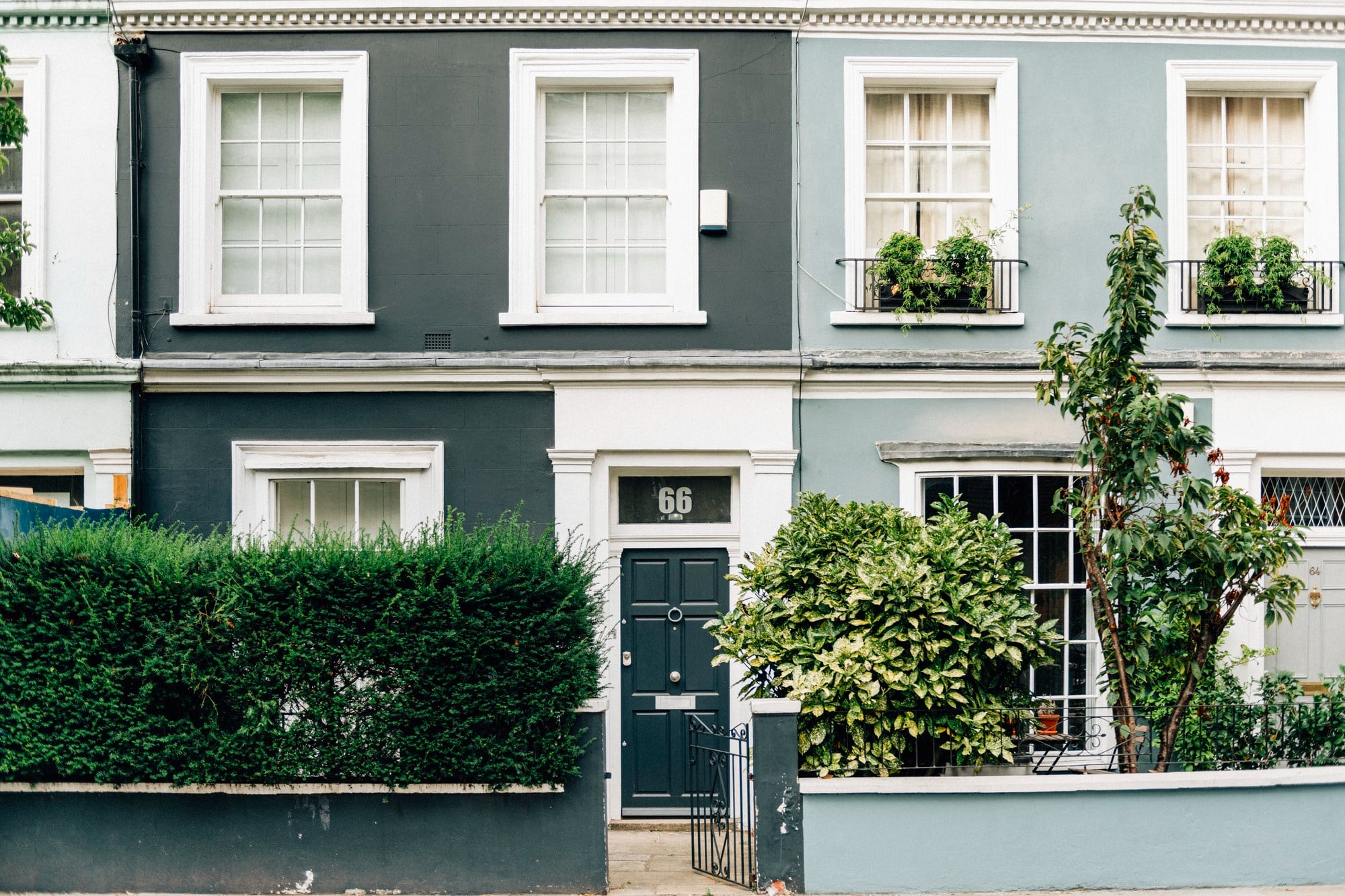
The Wednesday Trash Cans
“Kevin,” Martin whispered. “I found this outside your bedroom window. And I don’t think your family is safe.”
He was standing on my front porch at seven-fifteen on a Wednesday evening in October. In a gray hoodie and work boots. His face was the color of old paper. His hands were shaking so badly the little black device rattled against his wedding ring. The ring he still wore, even though his wife left four years ago.
I looked at the device in his palm.
Black plastic. About the size of a deck of cards, but thinner. A tiny lens on one end. A short wire antenna. A strip of gray duct tape on the back, curled at the edges.
I’d seen it before.
On my own side-yard camera. In my neighbor’s hand. At four-fifteen that morning.
“Kevin,” Martin said again. “Please. Let me in. I’ll tell you everything.”
But to understand why I didn’t slam that door in his face, I have to tell you about the trash cans.
My name is Kevin Sutter. I’m forty-six years old.
I’ve lived on Larkhaven Drive in Wake Forest, North Carolina, about twenty minutes north of Raleigh, for almost thirteen years. A two-story brick colonial with black shutters and a basketball hoop over the garage that nobody’s used since my daughter left for college.
My wife, Denise, and I have two kids.
Olivia is nineteen. A sophomore at App State, up in the mountains. She’s studying environmental science and calls us every Sunday to tell us about salamanders.
Caleb is fourteen. He just started ninth grade at Heritage High. He’s quiet. Anxious. Plays the cello and doesn’t talk much at dinner. Last spring, he started having panic attacks. We found him a therapist. He’s doing better.
Our street is quiet. The kind of neighborhood where people wave while mowing their lawns and borrow extension cords from each other. Where the Hendersons put up too many Christmas lights and the Okafors throw a block party every Fourth of July.
It’s the kind of place where nothing happens.
That’s why we bought here.
Our next-door neighbor, Martin Greer, moved in last spring.
He bought the little gray ranch house on the left side of ours. The Whitakers had lived there for twenty years before they retired to Myrtle Beach.
Martin was about fifty-five. Divorced. Quiet. Thin, with a gray beard and reading glasses he pushed up on his head and forgot about. He worked nights. Some kind of distribution center, he said. Warehouse work. He left at nine p.m. and came home around four in the morning.
We weren’t close. But we’d always been friendly.
He helped me push my car out of the driveway once when the battery died. I lent him a ladder to clean his gutters. He brought over a pie at Thanksgiving. Store-bought. Pecan. He apologized for it.
“I don’t bake,” he said. “My wife did all that.”
“Where’s she now?” Denise asked. Gently.
Martin looked at the pie in his hands.
“Charlotte,” he said. “With her sister. We split up after our son died.”
Denise put her hand on his arm. She didn’t ask anything else.
Ordinary neighbor stuff.
Then something strange started happening.
It was a Wednesday morning in late September. I went outside at six-thirty to leave for work.
And I found both our trash cans sitting near the street.
The big green garbage can and the blue recycling bin. Side by side. About three feet from the curb.
I’d left them beside the garage the night before. Where they always go.
Garbage collection in our neighborhood is Friday. Not Wednesday.
I assumed Denise had moved them. For some reason.
She hadn’t.
“Why would I move the trash cans on a Wednesday?” she said. She was standing at the kitchen counter in her scrubs. Denise is a nurse. Pediatric ICU at WakeMed. She works three twelve-hour shifts a week. “I don’t even know what day the trash goes out. That’s your job.”
The following Wednesday, it happened again.
Both cans had been moved.
Same position. Same distance from the curb. Lined up exactly the same way. The green one on the left, the blue one on the right.
I stood at the end of the driveway in my work clothes with my coffee and looked at them.
That afternoon, I saw Martin out collecting his mail. He’d just woken up. He was in his slippers and a T-shirt.
I walked over.
“Hey, Martin,” I said. “Weird question. Have you noticed anybody messing with our trash cans? They keep ending up at the street on Wednesdays.”
He looked at me.
For a second, something crossed his face. I didn’t recognize it then. I do now.
Then he smiled.
“Maybe somebody’s doing you a favor,” he said.
I laughed.
“Would’ve been more useful on Thursday night,” I said.
He shrugged.
He went back inside.
That should’ve been the end of it.
But on the third Wednesday, I woke up at four-thirty in the morning.
I don’t know why. I just did. Maybe I heard something. Maybe I didn’t.
I lay in bed in the dark next to Denise. She was asleep. Her breathing slow and even.
I got up to use the bathroom.
On the way back, I glanced out the bedroom window.
The trash cans were gone.
Not from beside the garage. They’d been moved again.
But this time, they weren’t at the street.
One of them, the big green garbage can, was sitting directly beneath our bedroom window.
That made no sense.
Our driveway runs along the right side of the house. The trash cans are normally stored beside the garage, at the back corner. About twenty feet from our bedroom.
Our bedroom is on the first floor. The left side. The side facing Martin’s house. There’s a narrow strip of grass there, maybe four feet wide, between our house and the wooden privacy fence that separates our yard from his.
Nobody goes over there. There’s no reason to. It’s just a strip of grass and some azaleas and the air conditioning unit.
Who would roll a garbage can all the way around the house and park it under a bedroom window?
I asked Denise about it over breakfast.
She was tired. She’d worked a double. She was eating a bowl of cereal standing up at the counter.
“Kevin,” she said. “You’re overreacting.”
“It was under our window, Denise.”
“Maybe Martin just moves them when he gets home from work,” she said. “Maybe he’s bored. Maybe he’s lonely. He’s a nice man. His son died. Leave him alone.”
“But why only Wednesdays?”
She didn’t have an answer.
Neither did I.
So I checked our doorbell camera.
We have two cameras. One in the doorbell, facing the front walk and the driveway. And one on the side of the house. I installed it last summer after somebody stole Caleb’s bicycle out of the driveway.
I sat at the kitchen table that night after Denise went to bed. With my laptop. And I went back through three weeks of recordings.
Every Wednesday. Four in the morning.
The first recording was from the first Wednesday.
4:02 a.m.
Martin walked across our driveway from his yard. Hoodie up. Hands in his pockets.
He grabbed the blue recycling bin. Rolled it toward the street. Set it down.
Then he came back for the green garbage can. Rolled it down. Set it next to the recycling.
He went back to his house.
Nothing unusual. A neighbor rolling trash cans. Weird, but not alarming.
But when I watched the second recording, I noticed something.
He kept glancing toward our bedroom window.
The whole time. While he was rolling the cans. Over his shoulder. Every few seconds.
Like he was checking whether the light was on.
On the third recording, the one from that morning, the one when I’d woken up at four-thirty, he did something different.
4:04 a.m. He came across the driveway. He grabbed the green garbage can.
He started rolling it toward the street.
Then he stopped. Halfway down the driveway.
He stood there. Holding the handle. Looking toward the street.
As if he were waiting for someone.
I checked the timestamp.
4:11 a.m.
A car rolled slowly past our house.
A dark sedan. Navy blue or black. I couldn’t tell in the dark. Tinted windows. No front license plate.
It slowed down in front of our driveway.
And Martin immediately turned the garbage can around. He pushed it back up the driveway. Around the corner of the house. Toward the side yard. Out of the doorbell camera’s view.
Toward our bedroom window.
The sedan stopped at the curb.
Its headlights went off.
A person stepped out.
The camera couldn’t capture their face. They stayed on the far side of the car, behind the roof. All I could see was a dark shape. A jacket. A baseball cap.
Martin walked back into frame. Down to the end of the driveway.
They spoke. Briefly. Maybe thirty seconds.
Then the person handed him something.
A small rectangular object. Black. About the size of a phone.
Martin slipped it into his jacket pocket.
The person got back in the car.
The sedan drove away. Lights off until it reached the stop sign at the end of the block.
Martin stood in our driveway for another minute. Looking at our house.
Then he walked back around the side of the house. Out of frame.
At 4:26, he came back into frame.
He rolled both trash cans back to their spot beside the garage.
He went home.
I watched the recording three times.
Something about it made my stomach tighten. A cold, sick feeling. Low and heavy.
Why would Martin meet someone outside our house at four in the morning?
And why use our trash cans?
I didn’t confront him.
Instead, I checked the recordings from our side-yard camera.
It’s mounted under the eave at the back corner of the house. It faces the fence between our yard and Martin’s. You can see the whole side strip. The grass. The azaleas. The air conditioning unit.
And our bedroom window.
The side camera had captured the same Wednesday morning.
4:12 a.m. The green garbage can came rolling into frame. Martin pushed it along the strip of grass. He stopped it right under our bedroom window. Right against the house.
Then he left. Back toward the driveway. To meet the car.
4:24 a.m. He came back.
He looked around. Toward our back door. Toward his own house.
Then he crouched down behind the garbage can.
From the camera’s angle, the can blocked most of him. Just his head and shoulders were visible over the top.
He reached into the narrow space between the wooden fence and our house. Down low. Behind the azaleas. Right below the window frame.
His arm disappeared from view.
A few seconds later, he stood up.
He was holding something.
I zoomed in. The video got grainy. But I could see it.
A small black electronic device. Flat. With something sticking out of one end. A wire.
Then he reached into his jacket pocket. He took out the rectangular object the person in the sedan had given him.
He did something with the two. His hands moved. Fast. Like he was swapping something. Clicking something into place.
Then he crouched back down. His arm disappeared behind the azaleas again.
When he stood up, his hands were empty.
He put something in his pocket. Something small.
He rolled the garbage can back toward the driveway.
I felt cold all over.
I sat at my kitchen table at eleven o’clock at night with my laptop open and my hands shaking.
Something was hidden outside my bedroom window.
My neighbor had been putting it there. Or checking it. Or changing it.
Every Wednesday. At four in the morning. While my wife and I were asleep twelve inches away on the other side of the wall.
And he was using our trash cans to hide what he was doing.
From the street. From the neighbors.
From us.
That evening, I told Denise everything.
I woke her up. I showed her the recordings on my laptop. All of them. The doorbell camera. The side camera. The sedan. The device.
She watched them sitting up in bed with the blanket pulled up to her chin.
When it was over, she didn’t say anything for a long time.
Then she got out of bed. She went to the window. She pulled the curtain back and looked out at the dark strip of grass between our house and the fence.
“Is it still there?” she whispered.
“I don’t know.”
“Kevin,” she said. “There’s something out there pointed at our bedroom.”
“I know.”
“We sleep here. I change here.”
“I know, Denise.”
She let the curtain fall.
“Call the police,” she said. “Right now.”
I agreed. We should report what we’d seen rather than try to investigate him ourselves. I’m a pharmacist, not a detective. I didn’t want to go out there in the dark and find out what it was.
I picked up my phone.
But Denise said wait. It was eleven-thirty at night. Caleb had school in the morning. He’d hear the police. He’d panic. He’d been doing so well.
“First thing tomorrow,” she said. “After he leaves for school. We’ll call.”
We didn’t sleep that night.
Denise lay on her side, facing the wall. Facing the window. Staring at it.
I lay on my back and stared at the ceiling.
At three-fifty, I heard Martin’s truck pull into his driveway. Home from work.
I got up. I stood at the window in the dark.
I watched his kitchen light come on. Then go off. Then his bedroom light.
He didn’t come outside.
It was Thursday morning. Not Wednesday.
I went to work.
I don’t know why. I should’ve stayed home. But I had a meeting I couldn’t miss. A meeting I’d been dreading for six weeks.
I’ll tell you about that meeting in a minute. It matters.
Denise called the non-emergency police line at nine a.m. They said they’d send an officer by sometime that afternoon or evening. They said not to touch anything.
The officer never came. A burglary across town, the dispatcher said when Denise called back at four. Tomorrow morning, probably.
And at seven-fifteen that evening, before we could call again, our doorbell rang.
Martin stood on the porch.
He looked pale. Paler than I’d ever seen anybody look who wasn’t in a hospital. He hadn’t shaved. His gray hoodie was on inside out.
His hands were trembling.
I opened the door just enough to speak. The chain was still on. I’d put it on the second Denise told me what the police said.
“Kevin,” he said. “I need to talk to you.”
I didn’t answer.
He glanced over his shoulder. At the street. At the dark sedan-shaped shadows of parked cars under the streetlights.
Then he lowered his voice.
“Have you been checking your cameras?”
My heart started pounding.
“Why?” I said.
He stepped closer to the gap in the door.
“Because if you’ve seen that black car,” he said, “there’s something about your house you need to know.”
He reached into his pocket.
And pulled out the same small device I’d seen in the recording.
Black plastic. A tiny lens. A wire antenna. Duct tape on the back.
“Kevin,” he whispered. “I found this outside your bedroom window. And I don’t think your family is safe.”
I looked at the device in his hand.
Then at him.
“You didn’t find it, Martin,” I said. “I watched you put it back. Yesterday morning. At four-twenty-four. On my side camera.”
All the color left his face.
He closed his eyes.
“I know,” he said quietly. “I know you did. That’s why I’m here.”
He held the device out. Through the gap in the door.
“Take it,” he said. “Please. Take it. And let me come in. And let me tell you the truth. All of it.” His voice broke. “And then you can call whoever you want. The police. The FBI. Whoever. I won’t run.”
Behind me, I heard Denise come down the hall.
She stopped a few feet behind me. In her pajamas. With her phone in her hand. Her thumb was already on the screen.
“Kevin,” she said. “Don’t you dare open that door.”
I looked at Martin.
At his inside-out hoodie. At the gray stubble on his jaw. At his wedding ring. The one he still wore four years after his wife moved to Charlotte.
At his hands. Shaking. Holding out a little black box that had been pointed at our bed.
“Caleb’s upstairs,” Denise said. “Our son is upstairs, Kevin.”
“I know,” I said.
I took the device from Martin’s hand.
Then I unhooked the chain.
“Ten minutes,” I said. “Kitchen table. Denise stays on the phone with 911 the whole time. You so much as stand up too fast, she presses call.”
Martin nodded.
“That’s fair,” he said.
He came inside.
He sat at our kitchen table.
Denise stood by the counter with her phone. The number dialed. Her thumb over the green button.
I sat across from Martin. The device sat on the table between us.
Up close, I could see it better. There was a tiny label on the bottom. Mostly scratched off. And a slot on the side. Like for a memory card. Or a battery.
“It’s a recorder,” Martin said. “Audio and video. Motion-activated. It has a little SIM card in it. It’s supposed to send everything to a server somewhere. But the signal’s bad out here. Too many trees. So it saves to a card too. And the battery only lasts about a week.”
“So every Wednesday,” I said.
“Every Wednesday,” Martin said. “He brings me a new battery and a fresh card. I swap them. I give him the old card.”
“Who’s he?”
Martin looked at the device for a long time.
“His name is Gary Doss,” he said. “He’s a private investigator. Out of Durham.”
“A private investigator? Why would a private investigator—”
“He works for Carolina MedSupply,” Martin said.
I stopped breathing.
Behind me, I heard Denise make a sound.
Carolina MedSupply.
The pharmaceutical distribution company in Morrisville. Eleven hundred employees. Warehouses in four states. They buy medications from manufacturers and ship them to pharmacies all over the Southeast.
I’ve worked there for nine years.
I’m their senior compliance pharmacist.
“You work at Carolina MedSupply,” I said slowly.
Martin nodded.
“Night shift,” he said. “Warehouse. Shipping and receiving. Building C. The controlled substances cage.”
I stared at him.
“That’s the distribution center,” I said. “You said you worked at a distribution center.”
“I do,” Martin said. “Yours.”
“I didn’t know you worked there,” Martin said. “When I bought the house. I swear to God, Kevin. I didn’t know. I bought this house because it was cheap and it was close to work and it had a little yard where I thought maybe I’d grow tomatoes. Like Evan and I used to.”
Evan. His son. The one who died.
“Then in August,” Martin said, “I got called into an office. In the main building. Not my supervisor. Somebody way up. The head of corporate security. A man named Rick Haldane.”
I closed my eyes.
I know Rick Haldane. Everybody at Carolina MedSupply knows Rick Haldane. Former state trooper. Big man. Crew cut. Shakes your hand too hard. Reports directly to the CEO.
“He said they’d found out I lived next door to you,” Martin said. “He said they had reason to believe you were stealing. From the company. Controlled substances. Oxycodone. Hydrocodone. He said you’d been falsifying the compliance reports to cover it up.”
“That’s a lie,” I said.
“I know that now,” Martin said quietly. “I didn’t know it then.”
“He said they were conducting an internal investigation,” Martin said. “Confidential. He said they couldn’t go to the police yet because they didn’t have enough evidence. He said they needed to know who you were talking to. What you were planning.”
He swallowed.
“He said if I helped them, they’d pay me,” Martin said. “Five hundred dollars a week. Cash. And they’d move me to day shift. And make sure I got a raise in January.”
“And you said yes,” I said.
Martin looked down at the table.
“I said yes,” he said.
“Why?” Denise said from the counter. Her voice was shaking. Furious. “Why would you say yes to that? To spying on your neighbor? On a family? We gave you a ladder.”
Martin didn’t look up.
“Because I owe eleven thousand dollars,” he said. “In medical bills. From Evan. From the hospital. From the ambulance. From the funeral.” His voice cracked. “And because I pay my ex-wife four hundred a month that I don’t have. And because I’ve been working nights in a warehouse for nine years and I’ve never been offered a raise in my life.”
He lifted his head.
“And because Rick Haldane said you were stealing opioids,” he said. “From the cage. From my cage.”
He looked at me.
“My son died of an oxycodone overdose,” Martin said. “Four years ago. He was twenty-four.”
The kitchen was completely silent.
Denise lowered her phone. Just a little.
“I’m sorry,” I said.
“He hurt his back,” Martin said. “Playing college baseball. At East Carolina. A doctor gave him pills. Then another doctor gave him more. Then a pharmacy in Greenville gave him more without asking any questions. Then he couldn’t stop.” He wiped his eyes with the back of his hand. “We found him in his apartment in Greenville. On the bathroom floor. He’d been there two days.”
Denise put her hand over her mouth.
“So when a man in a suit tells me my neighbor is stealing oxycodone,” Martin said, “and covering it up, and asks me to help catch him.” He shook his head. “I didn’t even think about it. I said yes before he finished the sentence.”
“It was Gary Doss’s idea to use the trash cans,” Martin said.
He explained it.
The device had to go somewhere it could see into our bedroom and hear inside. The bedroom window was the only spot. Because I took phone calls in the bedroom. Late at night. With the door closed. Rick Haldane knew that, somehow.
“He said you’d been making phone calls,” Martin said. “At night. In your bedroom. To someone outside the company. He said they needed to know who.”
Gary Doss put the device in the first time himself. In August. At three in the morning. Taped behind the azaleas, pointed up at the gap at the bottom of our window where the blinds don’t quite close.
But he couldn’t come back every week. A strange car parked on a quiet street at four in the morning gets noticed.
So he needed Martin.
“He said if anybody saw me in your yard at four in the morning, I needed a reason,” Martin said. “So I’d move the trash cans. If anybody saw me, I’m the helpful neighbor taking out your garbage. Weird, but harmless. And the garbage can blocks the view from the street while I’m crouched down swapping the battery.”
He laughed. A short, ugly laugh.
“And I figured you’d think the same thing,” he said. “Helpful neighbor. Bored. Lonely. Moving your cans on the wrong day.”
“Denise did think that,” I said.
Behind me, Denise didn’t say anything.
“So what changed?” I asked. “Why are you here? Why tonight?”
Martin was quiet for a long time.
“Because I listened to it,” he said.
He told us.
He wasn’t supposed to listen to the recordings. He was supposed to swap the card and hand the old one to Gary Doss. That’s all.
But on the third Wednesday, the one I’d woken up for, he got home from the swap and couldn’t sleep. He sat at his kitchen table at five in the morning with the old card in his hand. Gary Doss had driven off before Martin gave it to him. A car had turned onto the street and spooked him.
So Martin had the card.
And he had a laptop.
“I just wanted to hear it,” Martin said. “I wanted to hear you say something about the pills. I wanted to know I was doing the right thing.”
He looked at me.
“I heard you on the phone,” he said. “Two weeks ago. A Tuesday night. In your bedroom. Eleven-fifteen.”
I knew exactly which call he meant.
“You were talking to a woman,” Martin said. “Agent Ortiz. With the DEA.”
Denise turned around and stared at me.
“The DEA?” she said. “Kevin? What is he talking about?”
I put my hands flat on the kitchen table.
I hadn’t told her.
I hadn’t told anybody.
Here’s the meeting I couldn’t miss that Thursday morning. The one I’d been dreading for six weeks.
Nine years ago, I took the job at Carolina MedSupply because it paid twenty thousand dollars more than the hospital pharmacy where I’d been working. Senior compliance pharmacist. My job was to watch the orders. Every order of controlled substances that came through the company. Oxycodone. Hydrocodone. Fentanyl patches. Morphine. Make sure nobody was ordering too much. Flag anything suspicious. Report it to the DEA.
That’s the law. Distributors have to report suspicious orders.
For years, I did my job. I flagged orders. My supervisors reviewed them. Sometimes the orders got stopped. Sometimes they didn’t. I trusted the system.
Then, last spring, I noticed something.
Seven pharmacies. In eastern North Carolina. Small towns. Kinston. Goldsboro. Rocky Mount. Greenville.
They were ordering oxycodone like nothing I’d ever seen. One pharmacy in a town of nine thousand people ordered more thirty-milligram oxycodone tablets in three months than the entire Duke University Hospital system.
I flagged them.
My flags disappeared.
I flagged them again. I wrote a memo to my supervisor. Then to his supervisor. Then to the Vice President of Operations, a man named Douglas Pryor.
Douglas Pryor called me into his office in July.
He told me the orders were legitimate. He told me those pharmacies served a large population of chronic pain patients. He told me my flags were “creating unnecessary friction with valued customers.” He told me to stop.
Then he told me that my annual review was coming up, and that the company valued “team players.”
I went home that night and didn’t sleep.
The next week, I made a copy of every order. Every flag. Every memo. Every email from Douglas Pryor. I put them on a flash drive.
And I called the DEA.
“Agent Lena Ortiz,” I said quietly. “Diversion Control. Raleigh field office. I’ve been talking to her since August. At night. In the bedroom. With the door closed. So nobody would hear.”
Denise stared at me.
“For two months?” she said. “You’ve been talking to the DEA for two months and you didn’t tell me?”
“I didn’t want to scare you,” I said. “I didn’t want you to worry. I thought if I just… handled it.”
“Handled it?”
“I was going to tell you,” I said. “After. When it was over.”
Denise put her hand over her mouth. She turned around and faced the sink.
“The meeting this morning,” I said to Martin. “That’s what it was. I was supposed to meet Agent Ortiz this Friday. Tomorrow. At the federal building. To give her the flash drive. Everything. Nine months of orders.”
Martin nodded slowly.
“I know,” he said. “You said it on the phone. Tuesday night. Friday at ten. I’ll bring everything.”
He looked down.
“And I heard you say one more thing,” he said.
“What?”
“You said, Seven pharmacies. Greenville’s the worst. The one on Tenth Street. Pitt Family Pharmacy.”
Martin’s voice broke.
“That’s where Evan got his pills,” he said. “The last two years. Pitt Family Pharmacy. On Tenth Street. I have the bottles. I kept them. Every one.”
I stared at him.
“Carolina MedSupply shipped the pills that killed my son,” Martin whispered. “And I was taking their money to spy on the only man in the company who was trying to stop it.”
He put his face in his hands.
He sat at my kitchen table and sobbed.
Denise turned around from the sink.
She looked at Martin. At his inside-out hoodie. At his shaking shoulders.
She set her phone face-down on the counter.
She pulled out a chair. She sat down next to him.
She didn’t touch him. But she sat close.
“Martin,” she said quietly. “Why do you think we’re not safe?”
He lifted his head.
“Because Gary Doss called me today,” he said. “At two o’clock. Woke me up.”
He took out his phone. He pulled up a call log. Gary Doss. 2:04 p.m. Eight minutes.
“He was angry,” Martin said. “About the card I didn’t give him. He wanted it. He said I’d better have it for him next Wednesday.” He swallowed. “And then he said Rick Haldane needed something else.”
“What?” I said.
“Your laptop,” Martin said. “And whatever you’re keeping your files on. He said they know you have a meeting Friday. He said they need to know exactly what you have before you hand it over.”
“They want you to break into my house?”
“He said you and your family would be at the high school football game Friday night,” Martin said. “Your son’s in the marching band, right? He plays cello but they make him carry a drum for football?”
I nodded. I couldn’t speak.
“He said your house would be empty from six to ten,” Martin said. “He said I have a key. Because you gave me one. In June. When you went to the beach. To water your plants.”
I’d forgotten.
I’d completely forgotten.
“He said I’d go in,” Martin said, “and take your laptop and anything that looked like a flash drive or a hard drive. And leave the door unlocked. And make it look like a break-in.” He looked at me. “And if I didn’t, he said Rick Haldane would make sure I lost my job. And that I’d be the one charged with stealing from the cage. Because I work in the cage. Because they could make the paperwork say whatever they wanted.”
“But your meeting’s tomorrow,” Denise said slowly. “Friday morning. At ten. The game’s Friday night.”
Martin looked at her.
“I know,” he said. “That’s what scared me. That’s why I came over.”
“What do you mean?”
“Because if they know about the meeting,” Martin said, “and they’re planning to break in Friday night.” He stopped.
“Then they don’t think the meeting’s going to happen,” I said quietly.
The kitchen went cold.
“Gary Doss asked me one more thing,” Martin said. “At the end of the call. He asked what time you leave for work in the morning. And what route you take. And whether you stop for coffee.”
Denise grabbed my arm.
“I told him I didn’t know,” Martin said. “I told him I sleep during the day. Which is true.” He shook his head. “But I watched you leave every morning for six months, Kevin. I know you stop at the Starbucks on Capital Boulevard. I know you take Falls of Neuse. I know exactly what time.”
He looked at me.
“They’re going to ask me again,” he said. “Next Wednesday. Or sooner. And I don’t know what they’ll do if I don’t tell them.”
Upstairs, I heard Caleb’s cello.
He practices every night at eight. Bach. A suite. He’s been working on the same one for three months. It’s the only thing that helps when the panic gets bad.
The music came down the stairs. Slow and sad and steady.
The three of us sat at the kitchen table and listened.
“I’m not calling 911,” I said finally.
Denise looked at me.
“I’m calling Agent Ortiz,” I said. “Right now.”
She answered on the third ring.
“Ortiz.”
“Agent Ortiz, this is Kevin Sutter.”
“Mr. Sutter.” Her voice sharpened. Awake. “Is everything okay? We’re still on for tomorrow?”
“I don’t know,” I said. “I need you to come to my house. Tonight. There’s someone here you need to talk to.”
“Who?”
I looked at Martin.
“A witness,” I said.
She came at nine-forty.
Not alone. With another agent. A big quiet man named Agent Briggs. They parked down the street and walked up. Agent Ortiz was about forty. Short dark hair. Jeans and a windbreaker. A badge on her belt. She looked tired.
She sat at our kitchen table across from Martin.
She listened to everything. The device. The trash cans. The sedan. Gary Doss. Rick Haldane. Five hundred dollars a week. The card Martin didn’t hand over. The phone call. The laptop. The football game.
The question about my route to work.
When Martin got to that part, Agent Ortiz stopped writing.
She looked at Agent Briggs.
Agent Briggs took out his phone and walked into the living room.
“Mr. Greer,” Agent Ortiz said. “Do you still have that memory card? The one you didn’t give him?”
Martin reached into his pocket. He took out a tiny black card. Smaller than a stamp.
He set it on the table.
“And the device,” she said.
I pushed it across the table.
Agent Ortiz put on a pair of gloves. She picked up the device. She turned it over. She looked at the scratched-off label.
“This is commercial surveillance equipment,” she said. “Not the kind you buy on Amazon. Somebody spent real money on this.”
She looked at Martin.
“Mr. Greer,” she said. “I’m going to be honest with you. You’ve committed a crime. Several, probably. Unlawful surveillance. Trespass. Conspiracy. Depending on how the US Attorney looks at it.”
Martin nodded. He didn’t argue.
“I know,” he said. “I’m ready.”
“But you also just walked into a federal investigation,” Agent Ortiz said, “with the first direct evidence that Carolina MedSupply’s executives knew about the diversion and tried to obstruct it. Hired a PI. Surveilled a witness. Planned a burglary to destroy evidence.” She set the device down. “And possibly worse.”
She leaned forward.
“That makes you very valuable to me,” she said. “If you’re willing to keep going.”
“Keep going?” Martin said.
“Next Wednesday,” Agent Ortiz said. “Four a.m. Gary Doss comes to collect the card. You meet him. Like always. You move the trash cans. You walk down to the car.” She paused. “And you wear a wire.”
Martin stared at her.
“We’ll be there,” she said. “Two cars. Four agents. We’ll be on the next street over. We’ll hear everything. You get him talking about Haldane. About the laptop. About Kevin’s route to work. About who’s paying him.”
“And then?”
“And then we take him,” she said.
Martin was quiet for a long time.
Upstairs, Caleb’s cello had stopped. I heard his door close.
“What happens to me?” Martin asked. “After?”
“I can’t promise anything,” Agent Ortiz said. “That’s up to the US Attorney. But I can tell you that cooperating witnesses who walk in on their own and help us make a case against the people who hired them usually get treated very differently than people we have to go find.”
Martin looked at me.
“What do you think, Kevin?”
I didn’t know what to say.
He’d been spying on my family. For two months. Pointing a camera at my bedroom. Listening to my wife and me. Taking money from the people trying to bury what I’d found.
He’d also walked across my yard tonight with his hoodie on inside out and his hands shaking and told me the truth.
“I think,” I said slowly, “you should do it for Evan.”
Martin closed his eyes.
“Okay,” he said. “I’ll do it.”
They moved us that night.
Agent Ortiz wouldn’t let us stay in the house. Not with Gary Doss asking about my route to work.
We packed bags. Denise woke up Caleb. She told him there was a gas leak. He believed her. Or pretended to.
We drove to a Hampton Inn in Cary. Agent Briggs followed us. He sat in the parking lot all night in his car.
I called Olivia at App State. I told her the truth. All of it. She was quiet on the phone for a long time.
“Dad,” she said finally. “You’re a whistleblower?”
“I guess so.”
“That’s so cool,” she said. Then she started crying.
I didn’t go to work on Friday.
I went to the federal building in downtown Raleigh instead. At ten a.m. With Agent Briggs walking next to me.
I gave Agent Ortiz the flash drive.
Nine months of orders. Every flag. Every memo. Every email from Douglas Pryor telling me to stop.
She plugged it into her laptop. She scrolled for a long time.
“Mr. Sutter,” she said. “Do you have any idea how many pills this is?”
“Eleven point four million,” I said. “Oxycodone. Thirty-milligram. In nine months. To seven pharmacies.”
She looked up at me.
“In towns with a combined population of under two hundred thousand people,” I said.
She didn’t say anything.
She just closed her laptop.
Caleb asked about it on Saturday.
We were sitting in the hotel room. Denise had gone to get breakfast. He was sitting on the bed with his knees pulled up. The way he sits when the panic’s starting.
“Dad,” he said. “There’s no gas leak. Is there?”
I looked at my son.
Fourteen. Skinny. Too smart. Scared of everything.
I thought about lying.
I’d been lying to my family for two months. To protect them, I told myself. And because I didn’t trust them to handle it.
“No,” I said. “There’s no gas leak.”
And I told him.
Not everything. Not the part about my route to work. But most of it. The pills. The pharmacies. The DEA. The camera. Mr. Greer.
He listened to all of it.
When I was done, he was quiet for a long time.
“Mr. Greer’s son died,” he said finally. “From the pills.”
“Yes.”
“And you were trying to stop it.”
“Yes.”
He looked at his knees.
“Are you scared?” he asked.
I thought about it.
“Yes,” I said. “Really scared.”
Caleb looked up at me. His eyes were wet.
“Me too,” he said. “All the time. About everything.”
“I know, buddy.”
“Is it okay?” he asked. “To be scared and do it anyway?”
I sat down on the bed next to him.
“I think,” I said, “that’s the only kind of brave there is.”
He leaned against my shoulder.
We sat there until Denise came back with bagels.
The next Wednesday, Martin wore the wire.
I wasn’t there. Agent Ortiz wouldn’t let me. We were still at the Hampton Inn.
But she told me everything afterward. And I’ve listened to the recording. Twice.
3:58 a.m. Martin came out of his house. Hoodie on right-side out this time. A tiny microphone taped to his chest under his T-shirt.
4:02 a.m. He crossed our driveway. He grabbed the blue recycling bin. He rolled it toward the street.
4:05 a.m. He came back for the green garbage can.
On the recording, you can hear the wheels on the concrete. And Martin breathing. Fast and shallow. And then, very quietly, under his breath:
“Come on, Evan. Come on, buddy. Help me out here.”
4:11 a.m. The dark sedan turned onto Larkhaven Drive.
It rolled slowly past our house. Lights on.
It stopped at the curb.
Lights off.
Gary Doss got out. Fifty. Heavy. Baseball cap. Leather jacket. He stayed on the far side of the car. Like always.
Martin walked down the driveway.
On the recording, Gary Doss says: “You got the card?”
Martin says: “I got it.”
A pause. A rustling.
Gary Doss says: “About time. Haldane’s been on my back all week. What took you?”
Martin says: “A car came. Last time. I got spooked.”
Gary Doss says: “Whatever. Listen. Friday’s off. The family left town. House has been empty since Thursday. Haldane thinks they know something.”
Martin says: “Know what?”
Gary Doss says: “How should I know? Maybe your buddy’s not as dumb as he looks. Maybe he found the camera.”
Martin says: “I don’t think so. I checked it. It’s still there.”
That was a lie. Agent Ortiz had the camera in an evidence bag.
Gary Doss says: “Good. Leave it. Swap the battery. And listen. Haldane wants to know something else.”
Martin says: “What?”
Gary Doss says: “Did Sutter go to the federal building Friday? Did he meet with the DEA?”
Martin says: “I don’t know. I sleep during the day.”
Gary Doss says: “Find out. Because if he did, Pryor’s going to lose his mind. And Haldane says if he did, we’ve got about two weeks before this whole thing comes down on all of us.”
Martin says: “Who’s Pryor?”
Gary Doss says: “The VP. Douglas Pryor. Who do you think’s paying for all this? You think corporate security has a budget for this kind of thing? This is coming out of Pryor’s personal account. Cash. Every week. Because if those seven pharmacies go down, Pryor goes down. He signed off on every shipment.”
A pause.
Martin says: “And what happens to Sutter? If he did go?”
On the recording, Gary Doss laughs. A short, ugly laugh.
“Not my department,” he says. “Haldane said he’d handle it. Haldane used to be a state trooper. He knows people. He said accidents happen on Falls of Neuse all the time. Lot of traffic. Lot of trucks.”
On the recording, there’s a long silence.
Then Martin says, very quietly:
“My son died from those pills.”
Gary Doss says: “What?”
Martin says: “My son. Evan. Pitt Family Pharmacy. On Tenth Street in Greenville. Thirty-milligram oxycodone. Carolina MedSupply shipped every one of them.”
Gary Doss says: “What the hell are you talking about?”
And Martin says:
“I’m talking about Evan.”
That’s when the agents came.
Two cars. From both ends of Larkhaven Drive. Lights on. Sirens off.
On the recording, you hear tires. Doors. Shouting. “Federal agents! Hands! Hands where I can see them!”
You hear Gary Doss say something I won’t repeat.
You hear a scuffle. A thud. The sound of somebody hitting a car door.
And then, very close to the microphone, you hear Martin.
Breathing.
Crying.
“I did it, Evan,” he whispers. “I did it, buddy.”
They arrested Gary Doss in my driveway at 4:14 a.m.
Next to my green garbage can.
He flipped in eleven hours.
He gave them Rick Haldane. He gave them Douglas Pryor. He gave them bank records showing cash withdrawals from Pryor’s personal account every Monday for ten weeks. He gave them text messages. “Need eyes on Sutter. Whatever it costs.” He gave them a burner phone with Haldane’s number in it.
He gave them a text from Haldane, sent two days after my call with Agent Ortiz. “If S meets with feds, we have a problem. Find out his commute.”
The FBI arrested Rick Haldane at his house in Apex on Friday morning.
They arrested Douglas Pryor at the Carolina MedSupply headquarters in Morrisville on the same day. In front of everybody. At nine a.m. In the lobby.
I wasn’t there. But a friend in accounting told me. She said they walked him out in handcuffs past the big glass sign with the company logo. She said nobody said a word. She said somebody in the back started clapping. Then stopped. Then a few other people started.
The DEA raided the seven pharmacies the following week.
Kinston. Goldsboro. Rocky Mount. Wilson. New Bern. Jacksonville.
And Greenville. Pitt Family Pharmacy. On Tenth Street.
The pharmacist who owned it, a man named Dale Hutchins, had been filling prescriptions from three doctors in a clinic in Florida. Thousands of prescriptions. For patients who drove in from all over the state. Cash only.
He was arrested in his pharmacy. Behind the counter.
Agent Ortiz called me that afternoon.
“Tell Mr. Greer,” she said. “Tell him we got Tenth Street.”
I went next door that night.
Martin was sitting on his back porch in the dark. Alone. With a beer he wasn’t drinking.
I sat down next to him.
“They got Tenth Street,” I said.
He didn’t say anything.
He just put his face in his hands.
We sat there for a long time.
In the dark. On his back porch. Looking at his little backyard. At the empty raised garden bed in the corner where he’d wanted to grow tomatoes.
“Evan used to grow tomatoes,” Martin said finally. “When he was a kid. We had a garden. In Goldsboro. Before the divorce. Before the baseball. He’d go out every morning in his pajamas and check them. Dad, they’re getting bigger. Dad, this one’s almost red.”
He wiped his eyes.
“I bought this house because of that yard,” he said. “I thought, I’ll grow tomatoes. For Evan. And then I never did. I couldn’t even look at the seeds.”
“Why not?”
“Because I was so angry,” Martin said. “At the doctors. At the pharmacy. At myself. For not seeing it sooner. For not stopping it.” He shook his head. “I couldn’t grow anything. I couldn’t do anything. I went to work in that warehouse every night and stood in the cage with all those pills. Thousands of them. Boxes and boxes. Going out on trucks every night to God knows where. And I thought, which one of these is going to kill somebody else’s son?”
He looked at me.
“And then a man in a suit told me you were the one stealing them,” he said. “And I thought, finally. Finally, somebody I can blame. Somebody I can stop.”
His voice broke.
“And it was the opposite,” he said. “You were the one trying to stop it. The whole time. And I was helping them stop you.”
“Martin,” I said. “You came to my door.”
He looked at me.
“You could have kept your mouth shut,” I said. “You could have handed Gary Doss the card. You could have broken into my house on Friday night and taken my laptop and nobody would ever have known. You could have told them my route to work.”
He didn’t say anything.
“You didn’t,” I said. “You put your hoodie on inside out and walked across my yard and knocked on my door and told me everything. And then you wore a wire and stood in my driveway at four in the morning with a man who was talking about accidents on Falls of Neuse.”
Martin was crying now.
“You saved my life,” I said.
He shook his head.
“I nearly ended it,” he said.
“Both of those things are true,” I said. “I’ve been thinking about it all week. And I think both things are true.”
Martin wasn’t charged.
The US Attorney’s office reviewed everything. The recordings. The cooperation. The fact that he came forward on his own. The fact that he’d been deceived about what he was doing. The fact that his son died from pills shipped by the company that recruited him.
They gave him immunity. In exchange for testifying.
He testified at Douglas Pryor’s trial in May.
I was there. In the third row. Next to Denise.
He sat in the witness box in a borrowed suit. Too big in the shoulders. He told the whole story. The office in August. Rick Haldane. Five hundred dollars a week. The trash cans. The device. The card. The phone call. The wire.
When the defense attorney asked why he’d done it, why he’d agreed to spy on his neighbor in the first place, Martin looked at the jury for a long time.
“Because my son died,” he said. “And I wanted somebody to blame. And they gave me somebody.” He swallowed. “They gave me the wrong somebody.”
He looked across the courtroom. At Douglas Pryor at the defense table. In his expensive suit.
“The right somebody was sitting in an office in Morrisville,” Martin said, “signing off on eleven million pills.”
Douglas Pryor was convicted on fourteen counts. Conspiracy to distribute controlled substances. Obstruction of justice. Witness tampering. Conspiracy to commit unlawful surveillance.
He got nineteen years.
Rick Haldane pleaded guilty before trial. He got eleven.
Gary Doss got four.
Dale Hutchins, the pharmacist on Tenth Street in Greenville, got twenty-two.
Carolina MedSupply paid three hundred and forty million dollars to settle with the federal government and the state of North Carolina. Most of it went into a fund for addiction treatment in eastern North Carolina.
Kinston. Goldsboro. Rocky Mount. Wilson. New Bern. Jacksonville.
Greenville.
I don’t work at Carolina MedSupply anymore.
I quit the week after the arrests. I couldn’t walk back into that building.
I work for the state now. North Carolina Board of Pharmacy. Investigations. I make less money. A lot less.
Denise says I come home happier.
She’s right.
Denise and I had a long talk. After.
About the two months I didn’t tell her. About the late-night phone calls in the bedroom with the door closed. About handling it.
“You don’t get to decide what I can handle,” she said. We were sitting in the car in the hotel parking lot. The last night before we went home. “I’m a pediatric ICU nurse, Kevin. I hold dying children. I can handle you being a whistleblower.”
“I know.”
“You thought you were protecting us,” she said. “And the whole time, there was a camera outside our bedroom window. Recording everything. Because you were keeping secrets. Because you were taking calls in the bedroom so I wouldn’t hear.”
I hadn’t thought of it that way.
“If you’d told me in August,” Denise said, “we’d have done it together. You wouldn’t have been taking calls in the bedroom. There’d have been nothing for the camera to catch.”
She took my hand.
“No more secrets,” she said. “Not to protect me. Not to protect the kids. Not ever. We’re in this together. Even when it’s scary. Especially when it’s scary.”
“Even when I’m scared?”
“Especially then,” she said.
We came home in November.
The house was the same. Brick colonial. Black shutters. Basketball hoop nobody uses.
The strip of grass between our house and Martin’s fence was the same too. The azaleas. The air conditioning unit.
But there was something new.
A garden bed. Wooden. Raised. About four feet by eight. Built right up against the fence on Martin’s side. Where you could see it from our bedroom window.
There was nothing in it yet. Just dirt. It was November.
There was a little wooden sign stuck in the middle of it. Hand-painted.
EVAN’S GARDEN.
Martin planted the tomatoes in April.
Twelve plants. Big Boys and Better Boys and Cherokee Purples and a row of little yellow pear tomatoes along the front.
He planted them on a Saturday morning. Caleb helped. My son. Fourteen and anxious and scared of everything.
He knocked on Martin’s door at eight a.m. in his pajamas and a hoodie and asked if he could help.
Martin looked at him for a long time.
Then he handed him a trowel.
They planted all twelve plants together. Kneeling in the dirt. Not talking much.
When they were done, Caleb stood back and looked at them.
“How long until they’re ready?” he asked.
“July,” Martin said. “Maybe August.”
“Can I check on them?” Caleb asked. “In the mornings? Before school?”
Martin turned away. He wiped his face with the back of his dirty hand.
“Yeah, buddy,” he said. “You can check on them.”
Caleb checks on them every morning now.
He goes out the back door at six-forty-five. Through the gate in the fence that Martin and I put in at Easter. He stands at the garden bed in his pajamas and looks at the tomatoes.
Sometimes Martin’s there too. Just home from work. He still works nights. At a different distribution center now. A grocery one. Produce and dairy. No controlled substances.
They stand at the garden bed together and don’t say much.
“They’re getting bigger,” Caleb said one morning in June.
Martin didn’t answer for a long time.
“Yeah,” he said finally. “They are.”
Caleb’s panic attacks are mostly gone.
His therapist says a lot of things helped. The medication. The cello. Time.
But she said something else too. At his last appointment. She asked to talk to Denise and me alone.
“Caleb talks a lot about Mr. Greer,” she said. “And about the tomatoes. And about what you told him in the hotel room. That being scared and doing it anyway is the only kind of brave there is.”
She smiled.
“He’s been practicing,” she said. “Being scared and doing it anyway. He auditioned for the youth orchestra in Raleigh last month. He was terrified. He did it anyway.” She paused. “He got in.”
The trash cans still go out on Thursday night.
Garbage collection is Friday.
But now Martin and I take them out together.
Every Thursday. Nine p.m. Right before he leaves for work.
He walks across his driveway. I walk out of my garage. We each grab a can. His and mine. We roll them down to the curb. Side by side.
We don’t say much. Sometimes we talk about the Panthers. Sometimes about the tomatoes. Sometimes about Evan.
Last Thursday, we stood at the curb after the cans were down. It was a warm night. September. The air smelled like cut grass and somebody’s barbecue.
“Kevin,” Martin said. “Can I ask you something?”
“Sure.”
“Why’d you open the door?” he said. “That night. With the chain on. With your wife standing behind you with her finger on 911. You’d seen the recordings. You knew what I’d done. Why’d you let me in?”
I thought about it.
I thought about him standing on my porch with his hoodie on inside out and his hands shaking. Holding out the little black box.
“Because you were wearing your wedding ring,” I said.
He looked down at his hand.
The ring was still there. Gold. Scratched. Four years after his wife moved to Charlotte.
“A man who still wears his wedding ring four years after the marriage is over,” I said, “is a man who doesn’t let go of things he loves. Even when it hurts.” I shrugged. “I figured a man like that might be wrong about a lot of things. But he probably wasn’t lying to me at my front door.”
Martin was quiet for a long time.
Then he twisted the ring off his finger.
He held it in his palm. He looked at it under the streetlight.
“Evan used to spin this,” he said. “When he was little. On the kitchen table. Like a top. For hours.”
He closed his hand around it.
He put it in his pocket.
“Maybe it’s time,” he said.
The tomatoes came in August.
Big Boys and Better Boys and Cherokee Purples and a whole row of little yellow pear tomatoes.
Caleb picked the first one. A Cherokee Purple. Dark red and purple and enormous. The size of his fist. He carried it into Martin’s kitchen in both hands like it was a newborn baby.
Martin sliced it on a cutting board. He put salt and pepper on it. He handed a slice to Caleb. And one to me. And one to Denise. And he took one himself.
We stood in his kitchen eating tomatoes.
Nobody said anything.
Then Martin put his slice down.
He walked to the window. He looked out at the garden bed. At the hand-painted sign.
EVAN’S GARDEN.
“He would’ve liked you, Caleb,” Martin said, without turning around. “He would’ve liked you a lot.”
Caleb didn’t say anything.
But he walked over to the window.
And he stood next to Martin.
And after a minute, he reached over and took the old man’s hand.
People ask me sometimes how I could forgive Martin.
He spied on my family for two months. He pointed a camera at my bedroom. He took money from the men who were planning to hurt me. He nearly told them my route to work.
I tell them the truth.
Martin did a terrible thing for a reason he believed was good.
And then, when he found out the truth, he did a brave thing for a reason that was better.
Most people only ever do the first one. They make a mistake and they keep making it. Because stopping means admitting they were wrong. And admitting you were wrong is the scariest thing in the world.
Martin stopped.
He walked across my yard with his hoodie on inside out and his hands shaking and knocked on my door.
That’s the only kind of brave there is.
Every Wednesday morning at four a.m., I still wake up.
I don’t know why. My body just does it. Two years later.
I lie in bed next to Denise in the dark. I listen.
And sometimes, I hear it.
A truck pulling into the driveway next door. Martin. Home from work.
His kitchen light comes on. Then off.
Then, a few minutes later, his back door opens.
And I hear his footsteps. On the grass. Crossing his little backyard.
To the garden bed.
He stands there for a while. In the dark. In front of the tomatoes. Or the empty dirt, in winter.
Sometimes I can hear him talking. Very quietly. I can’t make out the words.
I don’t need to.
I know who he’s talking to.
Then the footsteps go back. The door closes.
And I turn over and go back to sleep.
The trash cans stay exactly where they belong.

Specialty: Emotional Turning Points
Rachel Monroe writes character-driven stories about betrayal, second chances, and unexpected resilience. Her work highlights the emotional side of family conflict — the silences, the misunderstandings, and the moments when someone quietly decides they’ve had enough.