“Good morning, Margaret. I have something for you.”
My daughter-in-law slid a single sheet of paper across the kitchen table toward me. She was smiling. It was the first real smile I’d seen on her face in seven days.
I set down my coffee cup and looked at the paper.
It was typed. Neat and official, with a little logo at the top that looked like it came from a template on a computer. My name was printed under the word INVOICE.
Margaret Ellison.
I read it out loud, slowly, because I was sure I’d misunderstood something.
“Guest room accommodation, seven nights. Food and utilities. Use of household amenities.”
I looked at the bottom of the page.
“Total due,” I read. “Two thousand dollars.”
I lifted my eyes to her face.
She was still smiling.
For seven days, I had cooked every meal in her house. I had scrubbed her bathrooms on my hands and knees. I had washed, folded, and put away every piece of laundry her family owned. I had packed her children’s lunches, given them their baths, read them their bedtime stories, and held them when they cried.
And now she was charging me for it.
My name is Margaret Ellison. I’m sixty-eight years old.
Eight days before Melissa handed me that invoice, I was standing in my own kitchen, tightening the lid on the last jar of strawberry jam.
I’d been at it all afternoon. Hulling strawberries from the farm stand down the road, simmering them with sugar and a little lemon juice, stirring until my arm ached. My late husband, Harold, always said my jam was the only reason he married me. He was joking. Mostly.
I was humming an old tune while I worked. One Harold used to whistle when he was fixing things around the house. “Moon River.” He could never get the high part right. He’d whistle it flat every single time, and I’d tease him, and he’d whistle it flatter on purpose just to make me laugh.
He’d been gone three years now.
The house had grown so quiet since he passed. Too quiet. Some days the only voice I heard was the man on the radio telling me the weather.
Twelve jars sat in a neat row on the counter, ruby red and gleaming in the afternoon light.
I imagined my grandchildren’s faces when they tasted them. Lily would want to eat it with a spoon straight out of the jar. Noah would get it all over his face and his shirt and probably his hair.
That’s when the phone rang.
My daughter-in-law’s name lit up the screen.
Melissa.
My heart jumped a little. She almost never called me. When we talked, it was usually because Jason had put her on the phone for a minute at Christmas, or I’d called to wish the kids a happy birthday.
I wiped my sticky hands on my apron and picked up.
“Margaret, thank goodness you answered,” she said.
Her voice was thin and hurried. Breathless.
“Melissa? Is everything all right? Is it the children?”
“No, no, they’re fine. Everyone’s fine.” She let out a long breath. “It’s just that Jason has to travel for work next week. A whole week. Some conference in Denver. And honestly, I don’t know how I’ll manage. With the kids and everything.”
“Oh, honey.”
“And the children keep asking about you,” she said. “All the time. They miss their grandma.”
My heart lifted right up into my throat.
“They ask about me?”
“All the time,” she said. “Lily asks every night. So I was thinking. Why don’t you come stay with us for the week while Jason’s away? Please. It would mean so much to Lily and Noah.”
I pressed my hand flat against my chest.
“Oh, Melissa,” I said. “I would love that. Nothing in the world would make me happier.”
If only I’d known what I was truly signing up for.
“Wonderful,” she said. “So it’s settled. You’ll come Sunday.”
There was something strange in her tone when she said it.
A sweetness that felt a little too smooth. A little too practiced. Like she was reading the words off a card.
But I brushed the thought away as quickly as it came.
She was just happy, I told myself. Relieved. That was all.
“I’ll pack tonight,” I said. “And I’ve just made jam. Strawberry. I’ll bring some. And I have little gifts for the children.”
“They’ll love that,” she said. “See you soon.”
The line went dead before I could say goodbye.
I stood there for a second with the phone still against my ear. Then I put it down and laughed out loud in my empty kitchen.
They miss their grandma.
I went straight to the hall closet and pulled out my old suitcase.
That evening, I folded my cardigans carefully and laid them in the suitcase. The blue one. The cream one with the pearl buttons. The gray one Harold always said made me look like a librarian, which I took as a compliment.
I wrapped two small gifts in tissue paper.
A wooden puzzle for Noah. A map of the United States, with each state a separate piece. He was five and obsessed with trucks, and I’d picked one where every state had a little truck painted on it.
A book of fairy tales for Lily. An old-fashioned one, with real illustrations. Lily was seven and could read on her own now, but she still liked being read to. Or she had, the last time I saw her.
That was at Easter. Almost three months ago.
I tucked the jam jars between my sweaters so they wouldn’t break. Four of them. One for Jason, one for Melissa, one for each of the kids.
Then I sat down on the edge of my bed for a moment.
And I let myself feel something I rarely said out loud. Even to myself.
Since Harold died, I’d drifted to the edges of this family.
It hadn’t happened all at once. It happened slowly. A little at a time. Like a boat drifting away from a dock while nobody’s watching.
Holidays where I sat quietly in the corner of Jason and Melissa’s living room, holding a cup of coffee, while everyone else talked and laughed around me.
Phone calls that grew shorter. And then fewer.
Birthday dinners I found out about afterward, from pictures Melissa posted online.
And underneath all of it, a slow, aching worry. That I’d become something to be tolerated instead of wanted. An obligation. The old lady you have to invite to Thanksgiving because it would look bad if you didn’t.
“I won’t be a burden,” I whispered to the empty bedroom. “I’ll help. I’ll make myself useful. They’ll see.”
Maybe that’s why the invitation felt like such a gift from heaven.
Somebody needed me.
Somebody wanted me under their roof.
The next morning, I left before dawn.
It was a three-hour drive to Jason and Melissa’s house in the suburbs outside Charlotte. I wanted to get there in time for breakfast with the children. I wanted to make them pancakes. Harold’s recipe, with a little vanilla in the batter.
I rehearsed things in the car the whole way there. The games we’d play. Go Fish. Crazy Eights. The stories I’d read at bedtime. Whether Noah still liked the voice I did for the Big Bad Wolf.
When I finally pulled into the driveway a little after eight, I sat in the car for a minute.
I smoothed my hair in the rearview mirror. My hands were trembling just a little. Excitement. Nerves.
“You’re here for them,” I said to my reflection. “Just be here for them.”
I gathered my purse and stepped out into the cool June morning.
The house was big. Bigger than I remembered. Two stories, with tall windows and a wide green lawn and a fancy front door painted navy blue. Jason had done very well for himself. He was an engineer. A good one. Harold had been so proud.
The front door opened before I reached the porch.
Melissa stood there in silk pajamas, the shiny kind, pale pink. Her blond hair was piled on top of her head. Her phone was already in her hand.
“Margaret,” she called. Her smile was wide, but her eyes were somewhere else. On the phone screen. “You made it. Come in, come in.”
“Where are the little ones?”
“Still asleep,” she said, with a wave of her hand. “Go ahead and get yourself settled in the guest room. Down the hall, last door.”
I stepped inside with my suitcase.
I took a deep breath. I wanted to smell a home full of family. Children and cooking and laundry soap.
I told myself this was the beginning of something good. Something close.
But as I carried my bag down the hall, I noticed things.
A thin layer of dust on the side table by the stairs. Thick enough to write my name in.
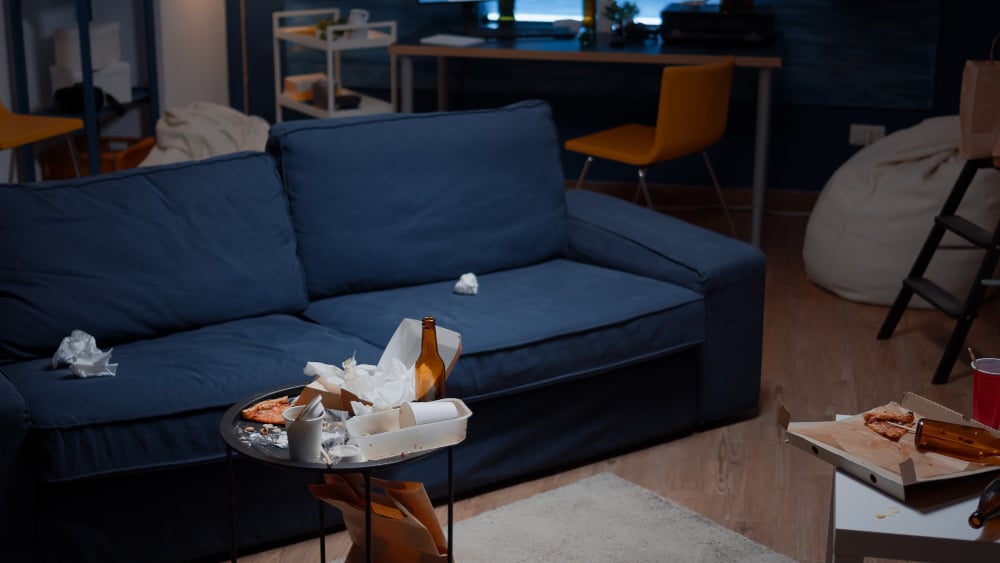
A heap of laundry slumped in the corner of the hallway. Towels, mostly, and children’s clothes. It smelled sour. Like it had been sitting there damp for days.
A pizza box on the floor outside the laundry room.
When I opened the guest room door, the bed was unmade. The sheets were rumpled. There was a pile of shopping bags on the floor, from stores I’d never heard of, with the tags still on the clothes inside.
I stood there for a moment.
Then I moved the shopping bags to a corner. I found clean sheets in the hall closet and made the bed.
And that was only the beginning.
It soon became clear that the neglect in that house ran deeper than a single unswept corner.
The kitchen sink was full. Dishes crusted with food. Some of it looked days old. A pan with dried egg in it. Cereal bowls with milk gone sour at the bottom.
The bathroom the children used hadn’t seen a scrub brush in weeks. Maybe months. There was a ring around the bathtub. Toothpaste dried on the mirror in white spatters.
The refrigerator had almost nothing in it. Condiments. A carton of eggs. Half a gallon of milk that had expired three days earlier. A take-out container I didn’t dare open.
I stood in that kitchen and thought, how is she feeding these children?
Then I heard little feet on the stairs.
“GRANDMA!”
Noah came flying into the kitchen in dinosaur pajamas, hair sticking straight up on one side. He hit me at full speed and wrapped himself around my legs.
Right behind him came Lily, in a nightgown with butterflies on it. She stopped in the doorway, suddenly shy. She was seven now. She’d grown at least two inches since Easter. Her front teeth were missing.
“Hi, Grandma,” she said softly.
I knelt down on the kitchen floor and opened my arms.
She ran into them.
I held them both for a long time. Noah smelled like sleep and peanut butter. Lily’s hair was tangled in the back, like nobody had brushed it in a while.
“Who wants pancakes?” I said.
They both screamed.
I made pancakes that first morning with what I could find. The eggs. Some flour from the back of the pantry. A box of baking powder that I prayed wasn’t too old. No vanilla. No real syrup. Just a little bottle of the fake stuff, almost empty.
The children didn’t care. They ate them like they’d never had pancakes before.
“These are the best pancakes in the whole world,” Noah announced with his mouth full.
“When do you usually have breakfast?” I asked them.
Lily shrugged. “Sometimes cereal. Sometimes Mommy gives us granola bars in the car.”
“What about Daddy?”
“Daddy makes eggs on Saturdays,” Lily said. “But Daddy’s always working.”
Melissa came into the kitchen while we were eating. Still in her pajamas. Still on her phone. She grabbed a pancake off the plate with her fingers, ate it standing up, and wandered back out without a word.
After breakfast, I made a grocery list. Two pages long.
Then I drove to the store and bought everything on it. With my own money. Two hundred and twelve dollars.
I didn’t think twice about it. They were my grandchildren.
That night, after I’d made dinner, a roast chicken with potatoes and green beans, and given the kids their baths and read Lily three fairy tales and done the Big Bad Wolf voice for Noah six times, I fell into the bed in the guest room.
I was exhausted. More exhausted than I’d been in years.
But I lay there in the dark and smiled.
They need me, I thought. This house needs me.
I fell asleep humming “Moon River.”
The next morning, I rose early and started tidying.
It was my routine at home. Up at six. Coffee. A little cleaning while the house was quiet. I’d done it every morning for forty-four years of marriage, and I hadn’t stopped after Harold died.
I washed the dishes in the sink. All of them. I wiped down the counters. I swept the kitchen floor.
The children were still asleep. The house was quiet. It almost felt peaceful.
Then Melissa came in. Her phone was glued to her palm. She didn’t look up from it.
“Oh good, you’re up,” she said. “The kids’ bathroom needs cleaning. And they need lunches packed for camp. They leave at eight-thirty.”
“Camp?”
“Day camp. At the Y. Didn’t Jason tell you?”
“No,” I said. “But that’s fine.”
I glanced out the window. It was a beautiful morning. Blue sky. Sunshine. Birds at the feeder somebody had hung and forgotten to fill.
“I actually thought,” I offered gently, “I might take Lily and Noah to the park this afternoon, after camp. They asked me yesterday. Noah wants to show me the big slide.”
Melissa laughed. The sound was thin and dismissive.
“They can wait,” she said. “Don’t be a lazy grandma, Margaret. There’s real work to do around here.”
Lazy.
I stood there by the sink with a dish towel in my hands.
I’d raised a son by myself for the first five years of his life, while Harold was overseas with the Army. I’d worked thirty-one years as a school secretary. I’d nursed my husband through two years of cancer, every day, every night, until the very end.
Nobody had ever called me lazy.
I swallowed the sting.
I hadn’t come to argue. I had come for my grandchildren.
And taking care of my grandchildren included making sure they lived in a clean, safe home. With food in the refrigerator. With a bathroom that didn’t have mildew growing in the corners.
So I cleaned the bathroom.
It took an hour and a half. I used half a bottle of bleach. I got down on my knees on the tile and scrubbed the grout with an old toothbrush. My knees screamed at me the whole time.
Then I packed the lunches. Turkey sandwiches, apple slices, a little bag of crackers each. A napkin with a note in each one. Have a wonderful day! Love, Grandma. With a heart.
Then I drove them to camp, because Melissa said she had “calls.”
Those calls, as far as I could tell, were the kind you make lying on the sofa.
When I got back from dropping the kids off, Melissa was stretched out on the living room couch in leggings and a sweatshirt, with her phone held up over her face. Her thumbs were flying across the screen. She had a little ring light set up on the coffee table.
Every so often, she’d sit up, fix her hair, hold up some product, a candle, a throw pillow, a little ceramic vase, and talk to her phone in a bright, chirpy voice.
“Hey, babes! So I’m obsessed with this. Like, obsessed. Link in my bio.”
Then she’d lie back down and scroll.
Occasionally, without looking up, she’d call out another task for me.
“The coat closet needs organizing too, Margaret. Everything’s a mess in there.”
“Of course,” I answered quietly.
“And can you run the vacuum? The kids track in so much dirt.”
“Of course.”
“And the windows in the sunroom. They’re filthy. I can’t film in there.”
“Of course.”
By the afternoon, I was folding towels on the guest room bed. A mountain of them. Every towel in the house, it seemed, had been dirty.
Lily came in. She’d just gotten back from camp. She was still wearing her little backpack.
She came over and wrapped both her arms around my leg and pressed her face against my hip.
“Grandma,” she whispered. “Will you stay forever?”
My hands stopped on the towel.
“Why, sweetheart?”
“Because the house smells so nice now that you’re here,” she said into my skirt. “And there’s food. And you read to me.”
I set the towel down. I smoothed her tangled hair.
“I’ll stay as long as I can, sweetheart.”
Then Noah came barreling in. He tugged at my sleeve and held up a piece of paper. A crayon drawing. A tall woman with gray curly hair, a purple dress, and a giant, enormous smile that went all the way to the edges of her face.
“That’s you,” he said proudly. “You make the house happy.”
I bent down and kissed the top of his head. I did it so they wouldn’t see the tears pricking my eyes.
Those two small faces were the only reason I kept going that week.
The days blurred together after that.
Scrubbing. Cooking. Hauling laundry up and down the stairs. Driving the kids to camp and back. Grocery shopping. Bath time. Bedtime. Dishes. Then up at six to do it all again.
My back ached in ways it hadn’t ached in years. My knees were swollen by the third night. I took two aspirin before bed and two more in the morning.
Every morning, Melissa slept late. Nine. Ten. Once almost eleven.
And every morning, she woke up with a new list.
“The oven’s filthy,” she said on Tuesday. “Do the windows too while you’re at it. Upstairs ones.”
“Can you take the kids’ winter clothes to the attic?” she said on Wednesday. “And bring down the summer ones? They’re in bins. Somewhere.”
“The baseboards,” she said on Thursday. “Have you seen these baseboards? Disgusting.”
I said nothing. I just did it.
Jason called on Tuesday night.
The kids were in bed. I was sitting on the back porch with a cup of tea, too tired to move.
“Mom!” he said. His voice sounded so warm and happy that I almost cried. “Melissa says you’re there! That’s so great. How are the kids?”
“They’re wonderful, honey. Noah lost a tooth today. At camp. He’s very proud.”
“Ha! Already? He’s only five.”
“He’s very advanced,” I said.
He laughed. Then he said, “Thanks for doing this, Mom. Seriously. Melissa’s been so stressed. I hated leaving her alone with them for a whole week. It means a lot that you came.”
I opened my mouth.
I wanted to tell him. About the dust. The sour laundry. The empty refrigerator. The list.
Don’t be a lazy grandma, Margaret.
Through the kitchen window, I could see Melissa standing at the counter. She was watching me. Holding her phone.
“Of course, honey,” I said. “I’m happy to help.”
“Love you, Mom.”
“I love you too.”
When I hung up, Melissa had turned away from the window.
I kept telling myself she was only stressed.
Jason was away. The children were demanding. Stress made people short. Stress made people forget their manners. I’d been short with Harold sometimes, when Jason was little and Harold was overseas and I was doing everything alone.
Yet a harder truth was pressing against my ribs. I could feel it there, every time she called out another chore without looking up.
My son had married a woman who didn’t respect me.
Admitting that felt like a small death.
So I stayed silent.
Silence, I believed, was how a mother kept the peace. How she kept her place at the table. If I made a fuss, I’d lose them. I’d lose my grandchildren. I’d be the difficult mother-in-law. The one who didn’t get invited anymore.
I’d already lost so much. I couldn’t lose them too.
On the sixth night, I couldn’t sleep.
My back hurt too much to lie down. Around eleven, I got up to get a glass of water from the kitchen.
As I came down the hall, I heard Melissa’s voice. She was on the phone in the kitchen. Her voice was low and tight. Nothing like the chirpy voice she used for her videos.
“I’ll figure out the money, okay? Just stop asking. It’s handled.”
She paused.
“I said it’s handled. I’ll have it by the end of the week.”
I stopped in the doorway.
She saw me. She hung up so fast she almost dropped the phone.
“Eavesdropping now?” she snapped.
“I only came for water,” I said softly.
I filled a glass at the sink. I could feel her staring at the back of my neck the whole time.
I turned and went back to bed.
I didn’t understand then what I’d heard. I filed it away somewhere in the back of my mind, the way you file away a funny noise your car makes.
I lay awake for a long time anyway.
By the seventh day, I had scrubbed that entire house from top to bottom.
Every room. Every bathroom. Every window, upstairs and down. Every baseboard. The oven, the stovetop, the inside of the refrigerator. The coat closet. The linen closet. The garage, even, which wasn’t on anyone’s list.
The house sparkled.
My spirit felt as thin as the worn skin on my hands. My knuckles were cracked and red from the bleach. I’d broken two fingernails.
But Jason was due home the next morning.
I imagined it all day. His truck pulling into the driveway. His face lighting up when he saw me. His arms around me, the way he used to hug me when he was a boy and he’d been away at summer camp. A warm family breakfast at last. All of us together around the table. Pancakes with vanilla in them. Strawberry jam.
That was the dream I clung to as I poured my coffee that final morning. The seventh morning.
And then Melissa walked into the kitchen.
She was wearing a smile I hadn’t seen all week. Bright and wide and real.
In her hand, she carried a single sheet of paper.
“Good morning, Margaret,” she said sweetly. “I have something for you.”
She slid it across the table.
The invoice.
Guest room accommodation, seven nights. Food and utilities. Use of household amenities. Total due: two thousand dollars.
I read it twice. Then I looked up at her face. Certain I’d misread something.
“Melissa,” I said. “You invited me here.”
“And you stayed in our home,” she replied smoothly. She pulled out a chair and sat down across from me, folding her hands. “For a whole week. You used our water. Our electricity. Our food. Our air conditioning. It’s been ninety degrees every day, Margaret. That isn’t free.”
My cheeks burned hot.
“I bought the groceries,” I said. “Two hundred and twelve dollars on Sunday. Another ninety on Wednesday. I have the receipts.”
“Well—”
“I cared for your children every day,” I said. My voice was shaking now. “I drove them to camp and picked them up. I cleaned every single room in this house. I cooked every single meal. Every breakfast, every lunch, every dinner.”
Her mouth tightened into a thin line.
“Nobody asked you to do all that.”
I stared at her.
The bathroom needs cleaning. The oven’s filthy. Do the windows too while you’re at it.
“I’ll need the money before you leave tomorrow,” she said. “Cash or a check is fine.”
For a long moment, I couldn’t speak.
I just sat there with my coffee going cold in front of me.
Then I picked up the invoice and folded it carefully. In half. Then in half again. Into a neat, small square.
“I don’t have two thousand dollars available right now,” I finally managed. “Not in my checking account. Please give me until morning.”
She leaned back in her chair, utterly satisfied. She picked up her phone.
“Fine,” she said, scrolling. “But I expect to be paid, Margaret.”
I carried my coffee down the hall to the guest room. I closed the door behind me.
I sat down on the edge of the bed, the bed I’d made with fresh sheets on the first morning, and I let the humiliation wash over me completely.
Two thousand dollars.
For being a guest. For being invited. For being wanted.
I sat there for a long time.
At one point, I picked up my phone and almost called Jason. My thumb was right on his name. But what would I say? Your wife sent me a bill? He was at the airport. He’d be home in a few hours. He’d be tired. I didn’t want to start a fight between them over the phone.
At another point, I almost pulled out my checkbook. I had some savings. Harold’s life insurance, mostly, that I’d been careful never to touch. I could write a check. Just pay it. Pack my suitcase, leave the jam on the counter, kiss the children goodbye, and drive home with whatever dignity I had left.
Never come back.
Never be a burden again.
I actually got the checkbook out of my purse. I actually opened it.
Then I looked over at the nightstand.
There was a little stack of drawings there.
Lily and Noah had made them for me all week. Every afternoon after camp, they’d sat at the kitchen table with their crayons while I cooked dinner.
Crayon flowers. Lopsided hearts. A purple cat. A truck with a smiling grandma driving it. A house with smoke coming out of the chimney and the words GRANDMAS HOUSE written underneath, with no apostrophe.
And on top of the stack, the one Lily had made that morning before camp.
A big red heart. And across the top, in wobbly, careful, seven-year-old letters, one word.
GRANDMA.
I looked at that word for a long time.
And something inside me straightened.
After Harold died, I had made myself smaller and smaller.
I’d been so terrified of being a burden. So afraid of being too much. I sat in corners at holidays. I didn’t call too often. I didn’t ask questions. I said yes to everything and no to nothing. I made myself useful, and quiet, and grateful for whatever scraps of attention I got.
And where had that gotten me?
To this. To a guest room full of someone else’s shopping bags. To cracked, bleeding knuckles. To being called lazy in my son’s kitchen.
To a bill for my own kindness.
I closed the checkbook.
Not anymore, I thought.
I went to the kitchen. Melissa was out on the back patio, on her phone, filming herself with a candle.
I found a notepad in the junk drawer. A yellow legal pad with half the pages torn out.
Then I went to the playroom and opened Noah’s craft drawer. I found a sheet of white poster board, left over from some school project. And a fat black permanent marker.
I carried all of it back to the guest room and closed the door.
I hesitated, just for a second, with the cap of the marker in my hand.
Are you really going to do this, Margaret?
Then I uncapped it.
I set to work on something that would teach Melissa a lesson.
First, the legal pad.
I’d been a school secretary for thirty-one years. I knew how to make an invoice. I knew how to make a very good invoice.
I sat at the little desk in the guest room and wrote out an itemized bill. Neat and careful. Every line.
I looked up what nannies charge in North Carolina on my phone. And housekeepers. And personal cooks. I used the lowest numbers I could find. I didn’t want anyone saying I’d padded it.
Childcare. Two children. Seven days. 10 hours per day at $18/hour. $1,260.
Housekeeping, deep cleaning. Full house, top to bottom. Including oven, windows, baseboards, closets, garage. 35 hours at $25/hour. $875.
Meal preparation. 21 meals for 3–4 people. Including grocery shopping and planning. $1,890.
Laundry. Washing, drying, folding, putting away. All household laundry. 12 loads. $360.
Transportation. Camp drop-off and pickup, 5 days, plus errands. $210.
Groceries, paid out of pocket. Receipts attached. $302.
Personal assistance. Seasonal clothing exchange, closet organization, attic retrieval. $450.
Emotional support for two small children whose mother was on her phone. Priceless, but let’s say $1,498.
I looked at that last line for a while. Then I left it.
I added it all up at the bottom.
TOTAL DUE: $6,845.
Then the poster board.
I laid it out on the bed. I took my time with the marker. Big, clear letters. My old school-secretary handwriting. The kind that used to go on bulletin boards in the front office.
When I was done, I held it up and looked at it.
Then I slid it under the bed where no one would see it.
Around midnight, I was still awake.
I heard footsteps in the hall. Then Melissa’s voice drifted through my door. Low and tense. She must have thought I was asleep.
“Just give me a few more days,” she was saying. “Please. I’ll have it. It’s covered.”
I froze in the bed.
She kept talking. About a payment. About a balance she was behind on. About a credit card she’d maxed out. I know it’s three months late. I know. I’m getting money tomorrow.
I’m getting money tomorrow.
She meant me.
“Please don’t call my husband,” she said. “Please. I’m begging you. He doesn’t know about this card.”
Her footsteps moved away down the hall. A door closed.
I lay there in the dark while the pieces slid together.
The neglected house. The empty refrigerator. The shopping bags in the guest room with the tags still on. The ring light on the coffee table. The products she held up to her phone. Link in my bio.
The desperate phone call to me. Thank goodness you answered.
The two thousand dollars she needed so badly she’d bill her own mother-in-law for the privilege of scrubbing her floors.
She hadn’t invited me because the children missed me.
She’d invited me because she was cornered.
She needed someone to keep the house running while she tried to dig herself out of a hole. Someone who’d work for free. Someone who wouldn’t complain.
And then, at the end, someone she could squeeze for money.
And I was the easiest way out.
Strangely, lying there in that dark guest room, my anger softened.
It turned into something closer to pity.
She was scared. I could hear it in her voice. She was in over her head and terrified her husband would find out. She’d made a mess, and instead of facing it, she’d tried to make someone else pay for it.
I knew a little about being scared.
But I also knew a little about choices.
The pity wasn’t enough to change my mind.
“You made your choices, Melissa,” I whispered to the dark room. “Now I get to make mine.”
I didn’t sleep much that night.
Before the first gray light touched the window, I got up and dressed quietly. My good slacks. My blue cardigan. I brushed my hair and put on a little lipstick.
I pulled the poster board out from under the bed.
I slipped down the hall in my stocking feet, carrying my shoes in one hand.
I passed the closed bedroom door where Melissa was sleeping soundly. Certain she’d won. Certain that in a few hours, she’d have a check in her hand.
I stepped out the front door into the cool morning.
The sky was just turning pink over the rooftops across the street. Dew soaked the hem of my slacks as I crossed the wide green lawn to the very end of the driveway, right next to the mailbox. Right where everybody who walked or drove down that street would see it.
There was a stake in the garage. A garden stake, left over from tomato plants nobody had planted. I’d found it while I was cleaning. I’d taped the poster board to it the night before.
I pushed it deep into the soft grass by the curb.
I stepped back and looked at it.
Then I walked back inside.
I sat down at the kitchen table with my hands folded in my lap.
My itemized bill was in the pocket of my cardigan. Melissa’s invoice was folded into a small square in the other pocket.
I waited for the sound of my son’s truck.
While I waited, I thought about Lily’s wobbly letters. About the word GRANDMA she’d spelled with such care, her tongue poking out of the corner of her mouth.
Whatever came of this morning, I thought, she’d know her grandma hadn’t slunk away in shame. She’d know I stood up.
Somewhere outside, a dog started barking.
Then I heard voices on the sidewalk.
A man’s voice. Then a woman’s. Laughing.
Then another voice.
The neighborhood was waking up.
At 6:48, a jogger in a neon yellow shirt stopped dead at the end of the driveway. He read the sign. He pulled out his phone and took a picture.
At 6:55, a woman from across the street, in a bathrobe and slippers, walked her little white dog to the end of her own driveway, saw the sign, and walked right across the street to read it up close. She put her hand over her mouth.
At 7:02, two more people. A man walking to his car with a briefcase. He stopped. Read it. Laughed. Read it again.
By 7:15, there was a little cluster of people on the sidewalk. Five or six of them. Coffee cups. Dogs. Someone in a bicycle helmet.
I sat at the kitchen table and watched them through the front window.
I didn’t move.
Then, at 7:22, I heard the crunch of tires on the driveway.
My son’s truck. A big silver one.
I got up and went to the front window.
The door down the hall flew open. Melissa came hurrying out of the bedroom in her robe, pulling it tight around her. She was smiling. She’d heard the truck too.
She went right past me without a word. She opened the front door and stepped out onto the porch.
Then she froze.
She’d seen the crowd at the end of the driveway.
She’d seen the sign.
She walked down the front steps. Slowly at first. Then faster. Then she was running across the wet lawn in her bare feet and her bathrobe.
She stopped in front of the sign.
And her scream split the quiet morning wide open.
“OH MY GOD! WHAT HAVE YOU DONE?!”
Jason climbed out of his truck. He was rumpled from the overnight flight, his tie loose, his carry-on bag over one shoulder. He was squinting at the poster board propped in the grass.
At the crowd of neighbors.
At his wife standing there in her robe with her hands over her mouth.
I stepped out onto the porch.
Then I walked down the front steps and across the lawn to the end of the driveway.
Here’s what stood there, at the end of my son’s driveway, in big black letters on white poster board. Exactly what I’d put there before dawn.
HELP WANTED
Looking for a live-in housekeeper, nanny, cook, laundress, chauffeur, and personal assistant.
Must work 12-hour days, 7 days a week.
Must be cheerful. Must not be lazy.
Free room and board NOT included.
Payment: Negative $2,000.
Inquire within.
Jason frowned. He looked from the sign to his wife. Then back to the sign.
“Why does it say payment negative two thousand dollars?” asked the woman in the bathrobe from across the street. Her little white dog was sniffing the bottom of the sign.
“How can payment be negative?” said the man with the briefcase. “Do they expect the employee to pay them?”
“That’s what it sounds like, Frank,” the woman said.
A few people laughed.
Melissa’s face had gone from white to bright red.
Jason turned to her.
“Melissa,” he said slowly. “What is this? Why is there a help-wanted sign in my yard?”
I met my son’s eyes.
“Because that’s exactly what your wife invited me here to be,” I said.
His brow furrowed. He looked so tired. So confused.
“Mom? I don’t understand.”
“You will,” I said quietly. “Just give me a minute.”
Melissa rushed toward the sign. She grabbed it by the edges and tried to yank it out of the ground. The stake was in too deep. It wouldn’t budge.
She forced out a brittle, high-pitched laugh.
“It’s a joke, Jason,” she said. “Your mother has a strange sense of humor. Honestly. Help me pull this thing up before everyone sees it.”
“Everyone’s already seen it, honey,” said the woman in the bathrobe.
I stepped forward.
“It isn’t a joke, sweetheart,” I said to Melissa. Gently. “Let me show your husband what my week looked like.”
I reached into the right pocket of my cardigan and took out the folded invoice. The small, neat square.
I unfolded it and handed it to my son.
He read it.
I watched his face while he read it. I watched it fall. I watched him read it a second time, his lips moving.
“Guest room accommodation,” he read out loud. “Food and utilities. Use of household amenities.” He looked up at Melissa. “Two thousand dollars?”
Melissa didn’t say anything.
“You billed my mother,” Jason said. “You billed my mother. Two thousand dollars. For staying here. When you asked her to come.”
“Money’s been tight,” Melissa said quickly. Her voice was high and fast. “I told you I was handling it, Jason. I told you.”
Jason looked at her for a long moment.
Something broke behind his eyes. I watched it happen. My son, who I’d held when he was a baby and who’d held me when his father died.
“I asked you to cut back,” he said quietly. “Months ago. In February. I asked you to stop with the shopping. And the business stuff. I asked you to stop putting things on the card.”
“I did stop.”
“Did you?”
Melissa didn’t answer.
But I wasn’t done yet.
I reached into my left pocket. I took out the yellow legal pad page, folded in thirds.
My own invoice.
I unfolded it and held it up. Not to Jason. To Melissa.
“I did some math last night,” I said.
I read it out loud. Every line. Slowly and clearly, the way I used to read the morning announcements over the school intercom for thirty-one years.
“Childcare. Two children, seven days. One thousand, two hundred and sixty dollars.”
Melissa’s mouth fell open.
“Housekeeping. Full house, top to bottom, including the oven, the windows, and the baseboards. Eight hundred and seventy-five dollars.”
Someone in the crowd whistled.
“Meal preparation. Twenty-one meals. One thousand, eight hundred and ninety. Laundry, twelve loads. Three hundred and sixty. Transportation. Two hundred and ten. Groceries, paid from my own pocket, receipts attached. Three hundred and two.”
I took a breath.
“Personal assistance, including retrieving the winter clothes from the attic. Four hundred and fifty.”
I looked up at her.
“And emotional support,” I said, “for two small children whose mother was on her phone. One thousand, four hundred and ninety-eight dollars.”
The woman in the bathrobe let out a sharp little laugh and then covered her mouth.
“Seven days of full-time work,” I said. “Total due: six thousand, eight hundred and forty-five dollars.”
I folded the paper back up.
I met Melissa’s eyes and kept my voice steady.
“Of course,” I said, “you can deduct the two thousand you say I owe you. That leaves four thousand, eight hundred and forty-five.”
I held out the paper to her.
She didn’t take it.
Her face was crumbling. Right there in front of the neighbors. In front of the jogger and the woman in the bathrobe and the man with the briefcase and the little white dog. Her chin was wobbling. Her eyes were filling up.
Jason turned to her.
“Melissa,” he said, very quietly. “Is any of it true?”
She didn’t answer.
She just stood there in her robe on the wet grass, with her arms wrapped around herself.
Her silence answered for her.
The front door of the house opened.
Lily and Noah came out onto the porch in their pajamas. Lily was rubbing her eyes. Noah had his blanket dragging behind him.
“Daddy!” Noah yelled.
He came running down the steps and across the lawn and threw himself at Jason’s legs. Lily followed, slower. She looked at the crowd of people. She looked at the sign. She looked at her mother.
She came and stood next to me.
I knelt down on the wet grass and hugged them both. I held them tight. I smelled their sleepy hair.
Then I stood up and kissed my son on the cheek.
“Welcome home, honey,” I said.
Then I turned back to Melissa.
“I don’t want the money,” I said. “Not a dime of it. I never did.”
She looked up at me through her tears.
“I only want an apology,” I said. “When you can give it to me without an audience.”
The crowd at the end of the driveway was starting to drift away. The woman in the bathrobe gave me a little nod as she walked her dog back across the street. The jogger gave me a thumbs-up and kept running.
Melissa turned without a word and walked back up the lawn toward the house. Barefoot. Her robe dragging in the wet grass. She went inside and closed the door.
Jason watched her go.
Lily slipped her little hand into mine. I felt her small fingers wrap around my cracked, bleach-red knuckles.
“Grandma,” she whispered. “Are you still staying for pancakes?”
I looked at Jason.
His face was a mess. Hurt and confused and embarrassed and angry, all at once. Dark circles under his eyes from the overnight flight.
But then he looked at me. Really looked at me. At my hands. At my tired face. At the swollen knees I’d been trying to hide all week.
And he gave me a small, hopeful smile.
“If you’ll stay, Mom,” he said. “I’d really like us to have breakfast together. All of us.”
For the first time that whole week, it felt like I’d been invited for the right reason.
“Of course, sweetheart,” I said.
I made pancakes.
Harold’s recipe. With vanilla in the batter. I’d bought vanilla on Wednesday. And real maple syrup. And butter.
Jason set the table. He got out the good plates. The kids put on their camp T-shirts and sat at the table swinging their legs.
I opened a jar of strawberry jam. The first jar. Lily ate it with a spoon straight out of the jar, the way I knew she would. Noah got it all over his face and his shirt and somehow his ear.
Melissa didn’t come down for breakfast.
Nobody said anything about it. Not in front of the children.
But halfway through his second pancake, Jason stopped eating. He stared down at his plate for a long time. Then he looked up at me across the table.
“I didn’t know, Mom,” he said quietly. “I swear. About any of it. I talked to her every night. She said everything was great. She said you were loving it here.”
“I know you didn’t know, honey.”
“Why didn’t you tell me? When I called on Tuesday?”
I thought about that.
“Because I was afraid,” I said finally. “I was afraid that if I made a fuss, I’d lose all of you. That I’d become the difficult mother-in-law. That you wouldn’t invite me anymore.”
He put down his fork.
“Mom,” he said. His voice cracked. “You could never lose us. Never.”
I reached across the table and put my hand on top of his.
“I know that now,” I said.
After breakfast, Jason took the kids to camp himself.
When he got back, he asked me to sit with him on the back porch. We sat side by side on the wicker loveseat, with two cups of coffee, looking out at the backyard.
He told me things. About Melissa’s online business. She’d started it a year and a half ago, selling home décor. Candles and pillows and vases. She’d been so excited about it. She’d wanted something of her own.
She’d bought inventory. A lot of inventory. On a credit card Jason didn’t know about. She’d paid for ads and a fancy website and a photographer. None of it sold.
The debt had kept growing. Eighteen thousand dollars by now, he thought. Maybe more. She’d been hiding the statements. Paying the minimum. Then not paying at all.
“The calls,” I said. “The ones at night.”
“Collections,” he said. “They’d started calling her. Threatening to call me.” He rubbed his face. “She panicked. I guess she thought if she could get a couple thousand from you, she could buy some time.”
“And keep the house running while she did it,” I said. “For free.”
He winced.
“Yeah.”
We sat there for a long time without talking.
“I’m so sorry, Mom,” he said finally. “For all of it. For your hands. For the whole week. For not seeing it.”
I patted his knee.
“I know, honey. Me too.”
I drove home that afternoon.
Jason carried my suitcase to my car. He hugged me in the driveway. A long, tight hug, like he used to give me when he came home from summer camp.
The sign was gone. He’d pulled it up while I was packing. I noticed he hadn’t thrown it away, though. He’d leaned it against the wall in the garage, facing the wall.
“I’m going to keep that,” he said, when he saw me looking. “To remind me.”
The kids cried when I left. Lily held on to my legs and wouldn’t let go. Noah gave me another drawing. A grandma in a car, driving away, with tears coming out of her eyes in big blue drops.
“That’s you being sad,” he explained.
“I’ll come back soon,” I promised them both. “Very soon.”
“When?”
“When your daddy invites me,” I said. I looked at Jason. “Properly.”
Jason smiled.
“How about the Fourth of July?” he said. “We’ll do a barbecue. Just family. And Mom? You don’t lift a finger. Not one.”
“I’ll bring jam,” I said.
“You can bring jam.”
The drive home was quiet. Three hours. I turned off the radio and just drove.
Somewhere around the halfway point, I realized I was whistling. “Moon River.” The way Harold used to whistle it.
Flat on the high note.
I laughed out loud alone in my car.
Melissa didn’t call for almost three weeks.
I didn’t call her either. I’d said what I needed to say. The rest was up to her.
Jason called every few days. He told me they’d started seeing a counselor together. A financial one, and then a marriage one. He told me she’d closed down the online store and was selling off the inventory at a loss. He told me she’d gone back to work part-time, at the front desk of a dentist’s office.
“She’s trying, Mom,” he said. “She really is.”
“I’m glad, honey.”
Then, one Saturday afternoon in late July, I was in my kitchen making another batch of jam. Peach, this time. The peaches were perfect that summer.
The doorbell rang.
I wiped my hands on my apron and went to answer it.
Melissa was standing on my front porch.
Alone.
No Jason. No kids. No phone in her hand. She was wearing jeans and a plain gray T-shirt, and no makeup at all. She looked younger without it. Younger and very tired.
She’d driven three hours. By herself.
“Hi, Margaret,” she said.
“Hello, Melissa.”
“Can I come in?”
I stepped aside.
She stood in my kitchen and looked around at the jars lined up on the counter. The pot of peaches simmering on the stove. Harold’s photograph on the windowsill.
She didn’t sit down. She stood by the counter with her hands clasped in front of her.
“I came to say I’m sorry,” she said. “Without an audience. Like you said.”
I didn’t say anything. I let her talk.
“I was drowning,” she said. “With the money. I’d been drowning for a year. And I was so ashamed I couldn’t tell Jason. And I couldn’t tell anybody. I thought if I just held my breath long enough, I’d figure it out.” She swallowed. “And then I thought of you.”
“As a way out.”
“As a way out,” she agreed. She didn’t flinch. “And as somebody who wouldn’t fight back. Because you never did. At Christmas, at Easter, you’d just sit there in the corner and smile. I thought you’d just— do whatever I wanted. And pay whatever I asked. And go home.”
That stung. But it was honest.
“I called you lazy,” she said. Her voice wobbled. “In my own kitchen. While I was lying on the couch. And you’d cleaned my whole house.”
“You did.”
“And the kids,” she said. Now she was crying. “Lily told me. After. She said, Grandma brushed my hair every morning. You never brush my hair. And she was right. She was right. I’d been so busy staring at my phone, trying to make that stupid business work, I forgot to brush my own daughter’s hair.”
She wiped her face with the back of her hand.
“I’m so sorry, Margaret. For everything. For the invoice. For the list. For calling you lazy. For not wanting you around. For all of it.”
I looked at her for a long moment.
My daughter-in-law. Standing in my kitchen. No phone. No makeup. No audience.
Then I went to the cupboard and took down a second apron. Harold’s. A big blue one with a lobster on it, from a trip to Maine in 1994.
I held it out to her.
She looked at it, confused.
“The peaches won’t stir themselves,” I said.
She stared at me.
Then she laughed. A small, wet, surprised laugh.
She took the apron and put it on.
We stood side by side at my stove all afternoon, stirring peach jam. I showed her how to tell when it’s ready. How to test it on a cold plate from the freezer. How to fill the jars without spilling. How to wipe the rims.
We didn’t talk about the invoice again. Or the sign. Or the money.
She told me about the kids. Noah had learned to ride a bike with no training wheels. Lily had read an entire chapter book by herself, the fairy tale book I’d given her, and she’d read every story out loud to Noah at bedtime.
“She does the Big Bad Wolf voice,” Melissa said. “She says she learned it from you.”
I had to turn away and look out the window for a minute.
When she left that evening, she took six jars of peach jam with her.
At the door, she stopped.
“Margaret,” she said. “Would you come stay with us again? In August? For a few days? Before school starts?”
I looked at her.
“Not to clean,” she added quickly. “Not to cook. Not to work. Just to be there. The kids want you. I want you. Jason wants you.”
I thought about it.
“I’d like that,” I said. “But I’ll bring the jam, and you’ll make the beds.”
She smiled. A real smile. Not the practiced one. Not the one she used for her phone.
“Deal,” she said.
I went that August. For four days.
The guest room had clean sheets on it when I arrived. Fresh flowers on the nightstand. Daisies, in a little glass jar. No shopping bags anywhere.
Melissa made dinner the first night. Spaghetti. A little overcooked. Jason made pancakes the next morning. Burned the first batch. Nobody cared.
I didn’t wash a single dish the whole time.
I sat on the back porch and read fairy tales with Lily. I put together the wooden truck puzzle with Noah on the living room floor, fifty times at least, until he knew where every single state went. He was very proud of North Dakota.
On the last night, after the kids were in bed, Melissa brought me a cup of tea on the porch. She sat down next to me.
“Lily asked me something today,” she said.
“What’s that?”
“She asked if Grandma’s going to stay forever this time.”
I smiled.
“What did you tell her?”
Melissa looked at me.
“I told her Grandma’s always welcome,” she said. “For as long as she wants. And that this time, we’re the ones who are going to make the house happy.”
I reached over and squeezed her hand.
I’m sixty-eight years old. I spent three years after my husband died making myself smaller and smaller, trying not to be a burden. I sat in corners. I said yes to everything. I thought that if I was quiet enough and useful enough, I’d get to keep my place at the table.
I was wrong.
Being quiet didn’t keep my place at the table. It just made it easier for someone to forget I was sitting there.
It took a bill for two thousand dollars and a poster board sign at sunrise to remind everyone, including me, that I was family.
Not the help.
Not a burden.
Family.
And family doesn’t get invoiced for showing up.
Family gets invited for pancakes.

Ethan Blake is a skilled Creative Content Specialist with a talent for crafting engaging and thought-provoking narratives. With a strong background in storytelling and digital content creation, Ethan brings a unique perspective to his role at TheArchivists, where he curates and produces captivating content for a global audience.
Ethan holds a degree in Communications from Zurich University, where he developed his expertise in storytelling, media strategy, and audience engagement. Known for his ability to blend creativity with analytical precision, he excels at creating content that not only entertains but also connects deeply with readers.
At TheArchivists, Ethan specializes in uncovering compelling stories that reflect a wide range of human experiences. His work is celebrated for its authenticity, creativity, and ability to spark meaningful conversations, earning him recognition among peers and readers alike.
Passionate about the art of storytelling, Ethan enjoys exploring themes of culture, history, and personal growth, aiming to inspire and inform with every piece he creates. Dedicated to making a lasting impact, Ethan continues to push boundaries in the ever-evolving world of digital content.