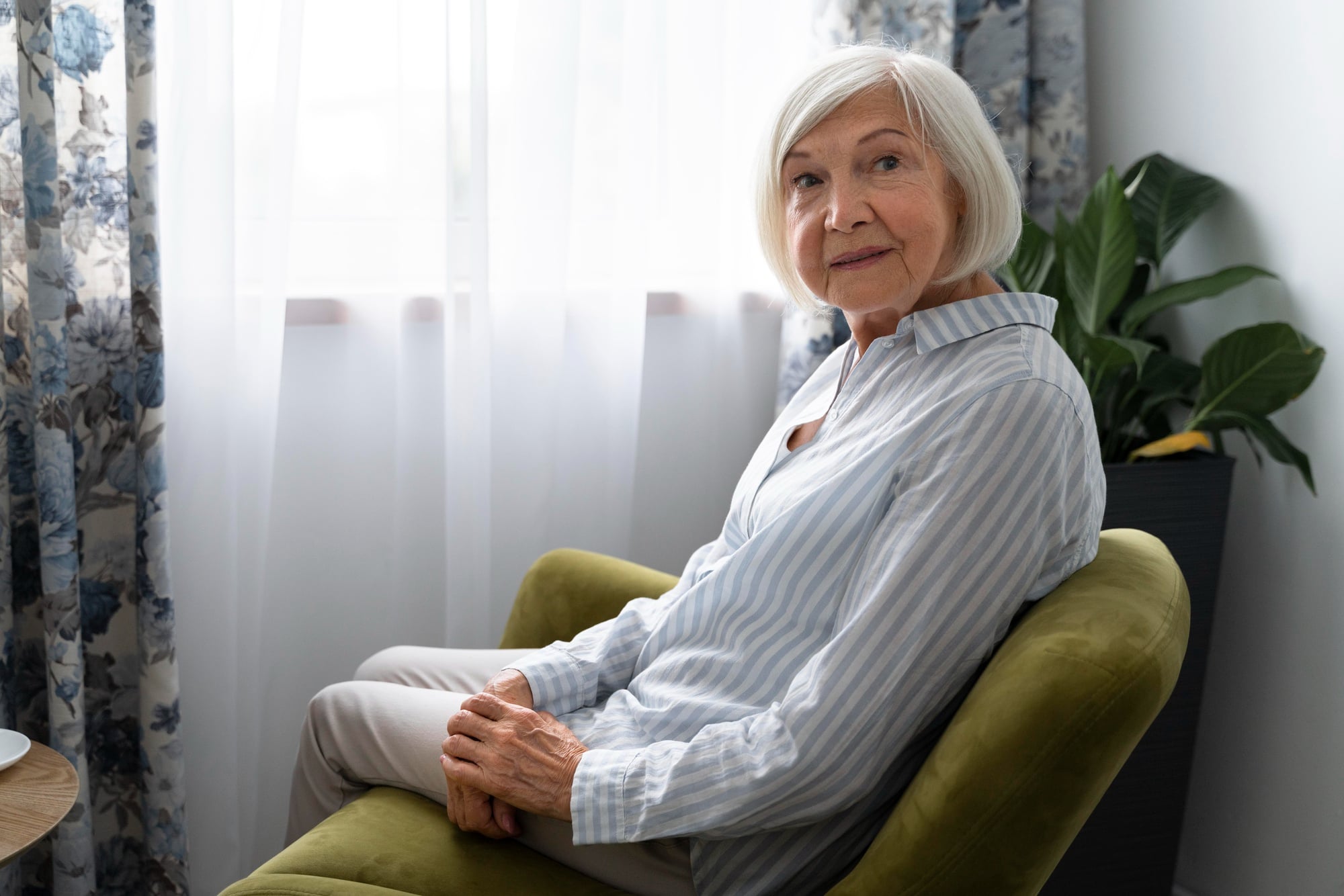
The Black Suitcase
My mother had always been a cheerful, slightly overweight woman.
That’s how I’d describe her if you asked. Round face. Soft arms. A laugh that came from somewhere deep in her stomach and filled up every room she walked into. She wore cardigans with pockets full of tissues and butterscotch candies. She smelled like vanilla extract and Jergens lotion.
She loved baking. Cinnamon rolls every Saturday. Apple pie every Sunday. Banana bread whenever a banana got a single brown spot, because she couldn’t stand to waste anything.
And she never missed Sunday dinner.
Never. Not once in my whole life. Not when my father had his heart attack in 2009. Not when she broke her wrist in 2016. Not during the pandemic, when we did it over FaceTime with her propping her iPad up against the gravy boat.
Every Sunday at four o’clock. Pot roast or roast chicken or meatloaf. Mashed potatoes. Green beans with bacon. Rolls from scratch. Pie.
So when she announced in October that she was spending a week with her childhood friend Margaret, I was happy for her.
I really was.
“Margaret?” I said. “Margaret from Erie?”
We were sitting at her kitchen table on a Sunday afternoon. After the pot roast. Before the pie. She was cutting the pie into eight perfect slices with the same knife she’d used since 1971.
“Margaret Feeney,” Mom said. “We grew up together. On Plum Street. We were best friends from first grade until…” She paused. The knife stopped. “Until we weren’t. For a while. Then we were again.”
“I remember her,” I said. “She came to Dad’s funeral, didn’t she?”
Mom set the knife down.
“No,” she said quietly. “That was her sister. Margaret couldn’t make it.”
“When’s the last time you saw her?”
Mom thought about it.
“Twenty years,” she said. “Maybe a little more.”
“And she just called you? Out of the blue?”
Mom picked the knife back up. She started cutting again.
“Something like that,” she said.
Margaret lived three hours away. In Erie, Pennsylvania. Up on the lake.
Mom said she’d take the train. Amtrak. The Lake Shore Limited. From Cleveland to Erie. It would take two and a half hours.
“I can drive you, Mom.”
“Annie, you work. You have the kids. You have Dave. I’m eighty, not dead. I can sit on a train.”
“For a whole week?”
“Seven days,” Mom said. “Monday to Monday. Margaret has a guest room. She said I can stay as long as I like.”
She smiled.
“We have a lot to catch up on,” she said.
My name is Annie Cole. I’m fifty-four years old.
I’m a dental hygienist in Lakewood, Ohio. Just west of Cleveland. I’ve been married to Dave for twenty-nine years. He manages a Home Depot. We have two kids. Tyler’s twenty-six and lives in Columbus. Grace is twenty-two and just started nursing school at Kent State.
My mother is June Abernathy.
She lives alone in the little white Cape Cod on Hilliard Road in Rocky River where I grew up. Seven minutes from my house. My father, Bill, died in 2009. They were married forty-four years.
She’s eighty years old. She drives to the grocery store. She volunteers at the library on Wednesdays. She goes to Mass at St. Christopher’s every Saturday at five. She plays bridge on Thursdays with three women she’s known for fifty years.
She’s never been anywhere without telling me first.
I drove her to the Amtrak station in downtown Cleveland on a Monday morning at five a.m.
She had one bag. A small blue travel bag. Hard-sided. With wheels. I bought it for her in 2018 when she went to visit my aunt in Florida. It had a little pink ribbon tied to the handle so she could find it on the baggage carousel.
She was wearing her good navy coat. And a cardigan underneath. Gray. Too big for her. I noticed that. I remember noticing it.
“New sweater?”
“Old one,” she said. “From the back of the closet.”
It hung on her. The shoulders were too wide.
I didn’t think anything of it.
At the station, she kissed my cheek.
“Call me when you get there,” I said.
“I will.”
“And call me every night.”
“Annie.”
“Every night, Mom. I mean it. You’re eighty.”
She smiled.
“I’ll call you every night,” she said.
She went through the door to the platform. Pulling her little blue bag with the pink ribbon.
She didn’t look back.
She called the first night.
She sounded tired. She said the train was fine. She said Margaret’s house was lovely. She said they’d stayed up late talking.
“What did you talk about?”
“Old times,” Mom said.
She called the second night. Shorter. Tired again. She said they’d gone for a walk by the lake. She said she was going to bed early.
She called the third night. Very short. Two minutes. She said she was fine. She said she loved me.
She didn’t call the fourth night.
I called her. It went to voicemail.
I called again. Voicemail.
I almost drove to Erie.
Then at eleven p.m., she texted. Sorry, sweetheart. Phone died. All fine. Love you.
Mom never texts. She hates texting. She says her thumbs are too old.
She didn’t call the fifth night either.
Or the sixth.
She texted both nights. Short texts. Fine. Tired. Love you.
Seven days later, I picked Mom up at the train station.
Monday afternoon. Four-ten p.m. The Lake Shore Limited, arriving from the east.
I stood on the platform with a cup of hot chocolate for her. Her favorite. From the Starbucks in the station. Extra whipped cream.
The train pulled in. People got off. Business travelers. College kids. An old man with a cane.
And then her.
I barely recognized her.
I mean that. For about three full seconds, I looked right at her and didn’t know who she was.
A small old woman in a navy coat. Stepping carefully down from the train with one hand on the rail. Her clothes hung loosely from her shoulders. The coat that used to fit snug across her middle was hanging on her like a tent. Her gray cardigan underneath was swimming on her.
Her cheeks were sunken. The round face I’d known my whole life was gone. Her cheekbones stood out like I’d never seen them. There were hollows under her eyes. Dark circles. Her skin looked gray.
Her hands were bony. Her wrists were thin.
She’d lost so much weight. In seven days.
And she was dragging an enormous black suitcase.
I dropped the hot chocolate.
It splattered on the platform. I didn’t care.
I ran to her.
“Mom,” I said. “Mom, what happened to you?”
She looked up at me.
She forced a smile.
It didn’t reach her eyes. Her eyes were red. Swollen. Like she’d been crying for days.
“Just a little stomach trouble, sweetheart,” she said.
“Stomach trouble?” I put my hands on her arms. I could feel the bones through her coat. “Mom, you’ve lost twenty pounds. Thirty. You look sick. You look like you haven’t eaten in a week.”
“I haven’t been very hungry,” she said.
“We’re going to the hospital. Right now.”
She pulled her arm away.
“No,” she said.
“Mom—”
“No, Annie.” Her voice was sharp. She never uses a sharp voice with me. “I don’t need a hospital. I need to go home.”
“You look like you’re dying.”
“I’m not dying,” Mom said. “Please. Just take me home.”
Then I noticed the suitcase.
Black. Huge. The kind of hard-shell suitcase that costs four hundred dollars at Macy’s. With four spinner wheels and a telescoping handle and a brushed metal finish. Expensive. Nothing my mother would ever buy.
Mom had left home with a small blue travel bag. With a pink ribbon.
“Mom,” I said. “Where’s your luggage?”
She gripped the black handle. Tighter. Her knuckles went white.
“Margaret gave me this one,” she said. “Mine broke.”
I drove her home.
She sat in the passenger seat with the black suitcase in the back. She didn’t say anything. She looked out the window at Lake Erie as we drove west on the Shoreway. Gray water. Gray sky.
I kept glancing at her.
At her hands in her lap. Thin. Shaking a little.
At her face. Gaunt. Older than I’d ever seen it.
“Mom,” I said. “Did something happen? At Margaret’s?”
She didn’t answer.
“Mom.”
“I’m tired, Annie,” she said. “I’ll tell you later. I promise. Not now.”
At home, Mom carried the suitcase straight into her bedroom.
She didn’t let me help. She dragged it up the front steps by herself. Through the living room. Down the hall.
Into her bedroom.
And she locked the door.
My mother has never locked a door in her life.
Not the bathroom. Not the front door, most nights. I yell at her about it. She says she’s lived on Hilliard Road for fifty-four years and nobody’s ever broken in.
She locked her bedroom door.
I stood in the hallway and listened.
I heard the suitcase unzip.
Then nothing.
Then, very quietly, through the door, I heard my mother crying.
I knocked.
“Mom? Can I come in?”
“Not right now, sweetheart.”
“Mom, please. You’re scaring me.”
“I’m fine,” she said through the door. Her voice was thick. “I just need some time. Go home, Annie. Go home to Dave. I’ll call you tomorrow.”
“I’m not leaving you like this.”
“Please,” she said. “Please, honey. I’m begging you. Just give me one night.”
I didn’t go home.
I sat in her living room. On her floral couch. Under the framed photo of my parents on their wedding day in 1965.
I called Dave. I told him what happened. He said he’d keep dinner warm.
Then I sat there for a long time.
Thinking.
Margaret gave me this one. Mine broke.
We have a lot to catch up on.
Twenty years. Maybe a little more.
That evening, I called Margaret.
Mom had given me the number before she left. Written on a Post-it note. In her neat Catholic-school handwriting. Margaret Feeney and a phone number with an 814 area code. Erie.
I’d stuck it on my refrigerator.
I’d brought it with me in my purse. I don’t know why. Just in case.
I dialed it.
It rang four times.
A man answered.
“Hello?”
Older. Gruff. Like a man who’d been watching TV and didn’t want to be interrupted.
“Hi,” I said. “I’m sorry to bother you. I’m looking for Margaret Feeney. This is June Abernathy’s daughter. My mother’s been staying with her this week.”
There was a pause.
“Who?”
“Margaret Feeney,” I said again. “She’s an old friend of my mother’s. My mom gave me this number.”
He went quiet.
A long, strange quiet.
Then he said:
“Ma’am, Margaret hasn’t lived here for eight years.”
My stomach dropped.
“What?”
“Margaret Feeney,” he said slowly. “She was my mother-in-law. She lived in this house. She passed away in 2018. My wife and I bought the house from the estate. We kept the phone number.” He paused. “I’m sorry. Nobody’s asked for her in a long time.”
I couldn’t speak.
“Ma’am?” he said. “Are you okay?”
“She died?” I whispered. “Eight years ago?”
“March of 2018,” he said. “Cancer. She’s buried at Calvary Cemetery. Up on Peach Street.”
“And nobody’s been staying there? This week? An eighty-year-old woman? June Abernathy?”
“No, ma’am,” he said. “It’s just me and my wife. Nobody’s stayed here.”
I hung up.
I checked the number again. On the Post-it note. In my mother’s handwriting.
It was the same one.
The same one Mom had given me before leaving.
I sat on my mother’s couch with the Post-it note in my hand and stared at her bedroom door.
Margaret Feeney had been dead for eight years.
My mother had known her since first grade. Of course she knew.
She’d lied to me.
For seven days.
I didn’t knock again.
I didn’t go home either.
I fell asleep on the couch around one in the morning.
The next morning, I found her asleep in her armchair.
In the living room. The old blue recliner by the window that used to be Dad’s. She must have come out of her bedroom sometime during the night.
She was wrapped in a quilt. Still wearing the gray cardigan. Her head was tipped to the side. Her mouth was a little open. She was breathing softly.
In the morning light, she looked even thinner.
I stood over her and watched her sleep.
Then I looked down.
Beside her, on the little side table, lay a train ticket.
An Amtrak ticket. Printed. Folded in half.
I picked it up.
ERIE, PA (ERI) to CLEVELAND, OH (CLE).
No.
Wait.
I looked again.
PITTSBURGH, PA (PGH) to ERIE, PA (ERI).
Dated Friday. Three days before her supposed return.
She hadn’t been in Erie on Friday.
She’d been in Pittsburgh.
Then she’d traveled from Pittsburgh to Erie on Friday. And from Erie to Cleveland on Monday.
What was in Pittsburgh?
And underneath the ticket was a luggage tag.
Leather. Brown. The kind that buckles around a suitcase handle. It had been unbuckled and laid flat.
I turned it over.
There was a little plastic window. And a card inside. Typed.
Not Margaret’s name.
Not my mother’s.
SAMUEL J. REINER
1847 Beechwood Blvd.
Pittsburgh, PA 15217
I’d never heard that name in my life.
I put the ticket and the luggage tag back exactly where I found them.
I looked at my mother. Still sleeping.
Then I went down the hall.
Her bedroom door was open now. Just a crack.
I pushed it open.
The black suitcase was on the floor at the foot of her bed. Zipped closed.
I knelt down next to it.
I’d never in my life gone through my mother’s things. Not her purse. Not her drawers. Not her mail. She’d raised me better than that.
I quietly opened the black suitcase.
Inside were neatly folded clothes.
My mother’s clothes. Her nightgowns. Her underwear. Her two pairs of slacks. Her good blouse. Her toiletry bag.
Folded perfectly. The way she folds everything. In thirds.
But also something else.
A sweater. On top. Not hers. A man’s sweater. Navy blue wool. Old. Soft. Worn at the elbows.
It smelled like a man’s aftershave. Old Spice, maybe. And something else. Something like a hospital.
Underneath the sweater, there was a sealed brown envelope.
Manila. Thick. Sealed with tape.
Nothing written on the front.
And next to it, an old-fashioned digital camera.
A little silver Canon. The kind everybody had in 2006. With a wrist strap.
I switched it on.
The screen lit up. A little battery icon blinked red in the corner.
The battery was almost dead.
I pressed the button to view the pictures.
There were only four photographs.
I opened the first.
It was taken in a hospital room.
I could tell. The beige walls. The window with the vertical blinds. The IV pole. The rolling tray table. The little whiteboard on the wall where nurses write their names.
There was a man in the bed.
Sixty, maybe. Thin. Very thin. Bald. Pale. Wearing a hospital gown. An IV in his arm. A tube under his nose.
And sitting in a chair next to the bed, holding his hand, was my mother.
She was wearing the gray cardigan.
They were both crying.
Not small crying. Faces crumpled. Tears running down. My mother had her free hand pressed against her mouth. The man had his eyes squeezed shut.
They were holding hands so tight their knuckles were white.
I stared at it.
Then I looked at the second.
The same hospital room. Same man. Same bed.
This time, he was holding something. In his lap. Spread out across the hospital blanket.
A baby blanket.
Small. Knitted. Yellow. Faded almost to cream. With a white border. And a little pattern of ducks around the edges.
I knew that pattern.
I knew it the second I saw it.
My mother knits. She’s knitted my whole life. Sweaters. Scarves. Mittens. Afghans for every couch in the family. Baby blankets for every grandchild.
Every baby blanket she’s ever made has the same pattern around the border.
Little ducks.
She learned it from her grandmother in 1955. She told me once. She said it was the first thing she ever knitted. She said she’d made one baby blanket with ducks when she was seventeen, a long time ago, and she’d put a little of herself into every one since.
The man in the hospital bed was holding a yellow baby blanket with ducks around the border.
And it was old.
Very old.
Older than me.
My hands were shaking.
I clicked to the third photograph.
It was a family.
Standing around the same hospital bed. The man in the middle. A woman next to him. His age. Gray hair. Kind face. A younger woman, thirty-something, with two little kids. A boy and a girl. Maybe six and eight.
And my mother.
Standing at the end of the bed. In her navy coat. Looking small and tired and sad.
But the little girl had her arms around my mother’s waist.
Hugging her.
And my mother had her hand on the little girl’s head.
I sat back on my heels.
I looked at the man in the hospital bed.
At his face. Thin and pale and bald.
At his eyes.
Dark. Deep-set. A little crooked when he smiled.
My mother’s eyes.
My eyes.
I clicked to the fourth photograph.
The final one.
It was just him.
The man in the hospital bed. Alone. Sitting up against the pillows. Looking straight at the camera.
He was holding a piece of paper. A sheet of printer paper. Held up in front of his chest with both hands. Like a sign.
Written on it, in black marker, in big shaky letters:
HI ANNIE.
I’M SAM.
I’M YOUR BROTHER.
I’D REALLY LIKE TO MEET YOU.
ROOM 612
UPMC SHADYSIDE
PITTSBURGH
(PLEASE HURRY)
The camera went dark.
The battery died.
I sat on my mother’s bedroom floor with a dead camera in my hand.
And I knew exactly where I needed to go.
But I didn’t grab my car keys.
Not yet.
First, I went back into the living room.
My mother was awake.
She was sitting up in the blue recliner. Wrapped in the quilt. Looking at me.
Looking at the camera in my hand.
Her face crumpled.
“You found it,” she said.
“Who is he?” I said.
My voice was shaking. My whole body was shaking.
Mom didn’t answer.
“Mom. Who is Samuel Reiner? Who is the man in the hospital bed holding a sign that says he’s my brother?”
She closed her eyes.
“Sit down, Annie,” she said quietly. “Please. Sit down.”
“I don’t want to sit down.”
“Please,” she said. “I can’t tell you if you’re standing over me. I can’t. I need you to sit.”
I sat.
On the floral couch. Across from her. With the dead camera in my lap.
Mom looked at her hands for a long time.
“His name was Michael,” she said finally. “When he was born. I named him Michael. After my father.”
I didn’t say anything.
“He was born on March 3, 1963,” Mom said. “At St. Brigid’s Home for Unwed Mothers in Erie, Pennsylvania. At four-fifteen in the morning. He weighed seven pounds, two ounces.”
She looked up at me.
Tears were running down her sunken cheeks.
“I was seventeen,” she said.
I couldn’t breathe.
“His father was a boy named Danny Reilly,” Mom said. “From Plum Street. Three houses down from mine. We’d known each other since we were little. We were going to get married.”
She swallowed.
“He enlisted in the Navy in the summer of 1962,” she said. “He was eighteen. He shipped out to Norfolk in August. He didn’t know I was pregnant. I didn’t know yet either.”
“What happened to him?”
Mom closed her eyes.
“His ship was the USS Thresher,” she said. “A submarine. It sank in April of 1963. Off Cape Cod. During a test dive. A hundred and twenty-nine men. Nobody survived.”
She opened her eyes.
“Michael was five weeks old,” she said. “Danny never knew he had a son.”
I put my hand over my mouth.
“My parents found out I was pregnant in October,” Mom said. “My mother cried for three days. My father didn’t speak to me for a month. Then they sent me away.”
“To St. Brigid’s.”
“To St. Brigid’s,” Mom said. “In Erie. Run by the Sisters of Mercy. I told everybody on Plum Street I was going to stay with an aunt in Buffalo. That’s what all the girls said. An aunt in Buffalo. Or an aunt in Pittsburgh. Everybody knew. Nobody said anything.”
She wiped her eyes with the corner of the quilt.
“That’s where I met Margaret,” she said.
“Margaret Feeney was there too,” Mom said. “She was sixteen. From Erie. She had a little girl in February. Three weeks before Michael.”
“Margaret wasn’t your childhood friend,” I said slowly. “From Plum Street.”
“No,” Mom said. “I lied about that too. I met her at St. Brigid’s. In the laundry room. We folded sheets together. Every day. For five months. She was the only one who knew. The only one in my whole life.”
She looked at me.
“She was my best friend, Annie,” she said. “We wrote letters for fifty-five years. Every month. Until she died.”
“They let me keep him for three days,” Mom said.
Her voice was very quiet now.
“That was the rule. Three days. Then the adoptive family came. The sisters said it was better that way. A clean break. They said if you held them too long, you’d never be able to let go.”
She was crying harder now.
“I held him for three days,” she said. “I fed him. I changed him. I sang to him. I wrapped him in the blanket I’d knitted. Yellow. With ducks. I’d been knitting it the whole time I was pregnant. In the laundry room. Margaret helped me with the border.”
She put her hand over her mouth.
“And on the third day,” she whispered, “Sister Agnes came and took him out of my arms. And I never saw him again.”
I was crying now too.
I didn’t know when I’d started.
“The adoptive family was from Pittsburgh,” Mom said. “That’s all they told me. A good Catholic family. A doctor and his wife. They couldn’t have children. They’d been waiting four years.”
“Reiner,” I said.
“Reiner,” Mom said. “I didn’t know that until this spring.”
“I went home,” Mom said. “In April. Two weeks after Danny’s ship went down. My parents told everybody I’d had a nice time in Buffalo. Nobody asked any questions.”
She looked at the framed wedding photo on the wall. Her and Dad. 1965.
“I met your father the next year,” she said. “At a church dance. He was the kindest man I’d ever met.”
“Did he know?”
Mom nodded.
“I told him before he proposed,” she said. “I thought he’d leave. I sat in his car outside my parents’ house and told him everything. Danny. St. Brigid’s. Michael.”
“What did he say?”
Mom smiled. Through her tears.
“He said, June, that’s the bravest thing I’ve ever heard. And then he asked me to marry him. Right there. In the car.”
“And then you were born,” Mom said. “In 1971. After two miscarriages. You were my miracle.”
She looked at me.
“I never told you,” she said. “I’m so sorry, Annie. I never told you. I thought about it a thousand times. When you were sixteen. When you got married. When you had Tyler. When Daddy died.”
“Why didn’t you?”
Mom looked down at the quilt in her lap.
“Because I was ashamed,” she said quietly. “Because in 1963, girls like me were a disgrace. My mother told me so. The sisters told me so. The priest at St. Brigid’s told me so every Sunday. You’ve sinned. You’ve shamed your family. The best thing you can do for that baby is disappear from his life forever.”
She shook her head.
“I believed them,” she said. “For sixty years. I believed that if anybody ever found out, they’d look at me differently. You’d look at me differently.”
“Mom,” I whispered.
“I didn’t want to be the girl from St. Brigid’s,” she said. “I wanted to be your mother. Just your mother. Who makes pie on Sundays.”
“So what happened?” I said. “This spring?”
Mom took a shaky breath.
“A letter came,” she said. “In April. To my house. From a woman named Carol Reiner. In Pittsburgh.”
“His wife.”
“His wife,” Mom said. “She said her husband had been adopted. She said he’d always wondered about his birth mother but never looked because he didn’t want to hurt his adoptive parents. They’re both gone now. His father died in 2011. His mother in 2020.”
She swallowed.
“Carol said their daughter, Jenna, did one of those DNA tests last Christmas. Ancestry. For fun. And she got a match.”
Mom looked at me.
“You did one too,” she said. “Remember? Three years ago. Tyler bought you one for your birthday.”
I went cold.
I remembered. I’d spit in a tube and mailed it off and looked at my pie chart of ethnicities for about ten minutes. Irish, Polish, a little German. I’d never logged in again.
“Jenna matched with you,” Mom said. “As a close relative. A first cousin or a half-aunt. Carol said they couldn’t figure out how. You weren’t on any family tree they knew.”
“So they found you.”
“They found Margaret first,” Mom said. “Margaret’s daughter. The one Margaret gave up in 1963. She’d done a DNA test too. She and Margaret found each other in 2014. Margaret told her everything. About St. Brigid’s. About her friend June who had a baby boy three weeks after her.”
She shook her head.
“Margaret’s daughter remembered my name,” Mom said. “June Kowalski. My maiden name. Carol Reiner found me from that.”
“Carol’s letter said Sam had always known he was born at St. Brigid’s,” Mom said. “His adoptive mother told him when he was twelve. She gave him the only thing that came with him.”
She looked at the dead camera in my lap.
“The blanket,” she said. “Yellow. With ducks. She kept it for sixty years. She gave it to him when she was dying.”
“And the letter said something else,” Mom said.
Her voice broke completely.
“It said Sam had leukemia.”
I stopped breathing.
“Acute myeloid leukemia,” Mom said. “Diagnosed in February. He’d had chemotherapy. Two rounds. It didn’t work. The doctors said the only chance was a bone marrow transplant. A stem cell transplant.”
“And they need a donor.”
“They need a match,” Mom said. “They searched the registry. Be The Match. Millions of people. Nobody matched him well enough. He’s mostly Irish and Polish. That’s harder, they said. Fewer donors.”
She looked at me.
“His best chance,” she said, “is a sibling.”
The room went completely silent.
I looked at the dead camera in my lap.
HI ANNIE. I’M SAM. I’M YOUR BROTHER.
(PLEASE HURRY)
“Carol’s letter asked if I had any other children,” Mom said. “She said even a half-sibling has a chance. One in four, maybe. The doctors said it was worth trying.”
“Mom,” I said. “That was April.”
“I know.”
“It’s October.”
“I know,” Mom whispered.
“Six months. You knew for six months. That I might be a match. For my brother. Who’s dying.”
She put her face in her hands.
“I couldn’t,” she said through her fingers. “I couldn’t tell you. I tried. A hundred times. Every Sunday at dinner. I’d sit there and look at you across the pot roast and open my mouth. And nothing would come out.”
She was sobbing now.
“Sixty-three years,” she said. “Sixty-three years I kept it. I couldn’t say the words. Annie, you have a brother. I gave him away. He’s dying. He needs you. I couldn’t. I just couldn’t.”
“So I wrote back to Carol,” Mom said. “In May. I told her I had a daughter. I told her your name. I told her I’d talk to you.”
“And you didn’t.”
“I didn’t,” Mom said. “I wrote to Carol every week. I wrote to Sam. He wrote back. Long letters. About his life. About his parents. About his work. He’s a high school chemistry teacher. Did you know that? Thirty-five years. At Taylor Allderdice in Pittsburgh.”
She smiled. Through her tears.
“He has my handwriting,” she said. “Isn’t that strange? He writes his Js just like I do. Big loop at the bottom.”
“And every week,” Mom said, “Carol would write and ask. Have you talked to Annie yet? Have you asked her? And I’d write back and say not yet. Soon. I’m trying.”
She looked at me.
“And I stopped eating,” she said quietly.
I stared at her.
“I couldn’t,” she said. “Every time I sat down to eat, I thought about him. In a hospital bed. In Pittsburgh. Waiting. While I sat in my kitchen with my pot roast. Too much of a coward to tell my daughter.” She shook her head. “I couldn’t swallow. It was like something was stuck in my throat.”
“Since May?”
Mom nodded.
“That’s why the sweaters,” I said slowly. “The big cardigans. In the summer. That’s why you’ve been wearing Dad’s old sweaters.”
“I didn’t want you to notice,” Mom said. “I’ve lost forty-one pounds since May, Annie. I hid it under Daddy’s sweaters.”
I put my hand over my mouth.
Forty-one pounds.
Every Sunday. Every single Sunday since May. I’d sat across the table from my mother at Sunday dinner. I’d watched her cut the pie into eight perfect slices.
I’d never once watched her eat it.
“And then in September,” Mom said, “Carol called. On the phone. For the first time. She said Sam was getting worse. She said the doctors at UPMC Shadyside were saying weeks, maybe. Not months. She said if there was any chance at all, they needed to test you now.”
She took a breath.
“And she said Sam had asked for something,” Mom said. “Before it was too late.”
“What?”
Mom looked at me.
“He asked to meet me,” she said. “His birth mother. Just once. To say hello. And thank you. And goodbye.”
“So I told you I was going to visit Margaret,” Mom said. “Because she was the only one who ever knew. I thought if I said her name, it would give me courage. Like she was coming with me.”
She almost smiled.
“I gave you her old phone number,” she said. “I didn’t think you’d call. I’m sorry. That was cruel.”
“Where did you go, Mom? Really?”
“I took the train to Erie,” Mom said. “On Monday. Like I told you. I went to St. Brigid’s first. It’s not a home anymore. It’s apartments now. Senior apartments. I stood outside on the sidewalk for an hour.”
She closed her eyes.
“Then I went to Calvary Cemetery,” she said. “To Margaret’s grave. I sat there all afternoon. I told her I was going to meet him. I told her I was scared.”
She opened her eyes.
“Then I took the bus to Pittsburgh,” she said. “That night. And Carol picked me up at the station.”
“I met him on Tuesday,” Mom said. “In Room 612. At eleven in the morning.”
She was crying again. Quietly.
“I walked in the door,” she said. “And he was sitting up in bed. And he looked at me.”
She put her hand over her heart.
“And he said, Hi, Mom.”
I couldn’t speak.
“Sixty-three years,” Mom whispered. “Sixty-three years since Sister Agnes took him out of my arms. And he looked at me and said Hi, Mom. Like he’d been waiting his whole life to say it.”
“What did you say?”
“Nothing,” Mom said. “I couldn’t. I just sat down. And held his hand. And we both cried for an hour.”
She looked at the dead camera.
“Carol took that picture,” she said. “The first one. I didn’t know she was taking it.”
“I stayed six days,” Mom said. “At Carol’s house. In their guest room. I sat with him every day. From eight in the morning until the nurses made me leave at nine at night. I slept in the chair next to his bed two nights.”
“You didn’t eat,” I said.
“I couldn’t,” Mom said. “I was so happy, Annie. And so sad. All at the same time. I’d look at him and think, I have my son back. And I’m going to lose him again.”
She swallowed.
“He told me everything,” she said. “His whole life. His parents. Good people. Dr. and Mrs. Reiner. He said they loved him so much. He said he never once felt unwanted.” Her voice cracked. “He said his mother used to tell him, every night when he was little, Somebody loved you very much before we ever met you. She knitted you a blanket with ducks.”
She put her face in her hands.
“His mother,” she said through her fingers. “His adoptive mother. Told him every night that I loved him. For sixty years. I never knew.”
“He showed me the blanket,” Mom said. “On Wednesday. Carol brought it from home. It was in a box. Wrapped in tissue paper. He’d kept it in his closet his whole life.”
She looked up at me.
“The ducks were still there,” she said. “Every one. Margaret helped me with them. In the laundry room. Fifty-five years ago. Every stitch.”
“On Thursday, he asked about you,” Mom said.
She looked at me.
“He asked what you were like,” she said. “I told him everything. That you’re a dental hygienist. That you’re married to a good man named Dave. That you have two children. That you call me every night. That you’re stubborn and bossy and kind and you never let me get away with anything.”
She almost laughed.
“He said, She sounds like me,” Mom said. “He said Carol says he’s stubborn and bossy too.”
“And then?”
“And then he asked if he could meet you,” Mom said quietly. “Not for the transplant. Not just for that. He said even if you weren’t a match. Even if you didn’t want to be tested. He said he’d just like to meet his sister. Once. Before.”
“So on Friday, I left,” Mom said.
“You took the train from Pittsburgh to Erie.”
Mom nodded.
“I was going to come straight home and tell you,” she said. “Friday night. I bought the ticket. I had it all planned out what I was going to say.”
“But you didn’t come home Friday.”
“I got as far as Erie,” Mom said. “And I got scared. I couldn’t get on the train to Cleveland. I just couldn’t.”
She looked down.
“I stayed in a motel in Erie for three nights,” she said. “Near the station. The Red Roof Inn. I sat in that room and tried to figure out how to say it. I wrote it out on the motel notepad. Forty times. Every version. None of them sounded right.”
“That’s why you didn’t call,” I said. “Thursday, Friday, Saturday, Sunday. You just texted.”
“I couldn’t hear your voice,” Mom said. “If I heard your voice, I’d have told you on the phone. And I didn’t want you to find out on the phone.”
“And the suitcase?” I asked.
Mom looked down the hall. Toward her bedroom.
“My blue bag broke,” she said. “On Thursday. In Sam’s room. The zipper split. Carol gave me one of theirs. Sam’s. He used to take it to science teacher conferences.”
She smiled faintly.
“Sam put the camera in it,” she said. “And the envelope. Before I left. He said, Give these to Annie. If you can’t find the words, maybe these will help.”
I picked up the brown envelope.
It was still sealed.
I looked at my mother.
She nodded.
I opened it.
Inside were two things.
The first was a medical kit. A small cardboard box. With a printed label.
UPMC HILLMAN CANCER CENTER
HLA TYPING — SIBLING DONOR TEST KIT
Patient: SAMUEL J. REINER
Potential donor: ANNE ABERNATHY COLE
Inside were four long cotton swabs. In sealed plastic tubes. And an instruction sheet. And a prepaid FedEx envelope.
Swab inside of both cheeks for 30 seconds each. Return within 24 hours.
The second thing was a letter.
Handwritten. On lined notebook paper. In blue ink.
The Js had big loops at the bottom.
Dear Annie,
I’m sorry to meet you this way. In a letter. In a suitcase. Through Mom.
That’s what I’ve been calling her this week. Mom. I hope that’s okay. I know she’s your mom. I know you’ve had her your whole life, and I’ve had her for six days. But I’ve had a mom my whole life too, and she always told me that somewhere out there was another one who loved me first. So now I have two. I’m a lucky man.
I don’t know how much Mom’s told you. Probably not much. She’s been trying to tell you since April. She says she can’t find the words. I understand. I’ve been trying to find them for sixty-three years.
Here are the facts. I’m sixty-three. I teach high school chemistry in Pittsburgh. I’ve been married to Carol for thirty-eight years. We have a daughter, Jenna, and two grandkids, Lucy and Max. I like the Steelers and the Pirates and bad science fiction movies. I’m bald now from the chemo, but I used to have dark curly hair. Mom says you do too.
I have leukemia. AML. The doctors say I need a stem cell transplant. They’ve searched the whole national registry. No good match. My best chance is a sibling.
You’re the only sibling I have.
I know that’s a lot to put on a stranger. You don’t owe me anything. You didn’t know I existed a week ago. If you don’t want to do the test, I understand completely. Please don’t feel guilty. Please don’t let Mom feel guilty. She’s carried enough guilt for one lifetime.
But here’s the thing I really wanted to say.
Even if you’re not a match. Even if you don’t want to be tested. I’d still like to meet you.
Just once. Just to say hello. Just to see my sister’s face.
I always wanted a sister. When I was little, I used to ask my mother for one every Christmas. She’d laugh and say, “Maybe someday, Sammy.”
Turns out she was right.
Room 612. UPMC Shadyside. I’m not going anywhere. Well. Not yet.
Your brother,
Sam
P.S. The camera has four pictures. I asked Carol to take the last one. I figured if Mom couldn’t say it, I would.
I put the letter down.
I looked at my mother.
She was sitting in Dad’s blue recliner. Wrapped in the quilt. Forty-one pounds lighter than she was in May. Her sunken face wet with tears.
“I’m sorry, Annie,” she whispered. “I’m so sorry. For lying to you. For Margaret. For sixty-three years. For not being brave enough to—”
I got up off the couch.
I knelt down in front of the recliner.
I put my arms around my mother.
She was so small. I could feel every bone in her back.
“Mom,” I said into her hair. “Stop. Stop apologizing.”
“I gave him away,” she sobbed. “I gave him away and I never told anybody and now he’s dying and—”
“You were seventeen,” I said. “You were seventeen and scared and your boyfriend was dead at the bottom of the ocean and everybody told you that you were a sinner. You did what they told you. You knitted him a blanket. You held him for three days. You loved him.”
I pulled back. I held her face in both my hands.
“You loved him so much,” I said, “that his mother told him about you every night for sixty years. That’s not something to be ashamed of, Mom. That’s the most beautiful thing I’ve ever heard.”
My mother looked at me.
And for the first time in five months, something in her face let go.
She cried. Really cried. In my arms. In Dad’s recliner. Sixty-three years of it.
I held her.
Then I stood up.
I picked up the test kit.
I went into her bathroom. I washed my hands. I opened the first sealed tube.
I swabbed the inside of my left cheek for thirty seconds. Then my right. Then the second swab. Then the third. Then the fourth.
I sealed them in the plastic tubes. I put them in the FedEx envelope.
I came back out.
Mom was watching me from the recliner.
“Annie,” she whispered. “You don’t have to—”
“Yes, I do,” I said.
Then I grabbed my car keys.
“Get your coat, Mom,” I said.
She stared at me.
“Where are we going?”
“Pittsburgh,” I said. “Room 612. I want to meet my brother.”
We stopped at the FedEx on Detroit Road on the way. I overnighted the swabs to UPMC Hillman. Priority. Seven-dollar extra for Saturday delivery.
Then I called Dave.
“I’m driving Mom to Pittsburgh,” I said.
“Pittsburgh? What’s in Pittsburgh?”
I looked over at my mother. In the passenger seat. Wrapped in her navy coat. Holding the yellow baby blanket in her lap. She’d taken it out of the black suitcase. Sam had sent it home with her. He wanted me to see it.
“My brother,” I said.
Dave was quiet for a long time.
“I’ll pack a bag,” he said. “I’ll meet you there tomorrow.”
It’s two hours and fifteen minutes from Rocky River to Pittsburgh. I-80 to I-76. Through Youngstown. Into the hills of western Pennsylvania.
Mom didn’t talk much.
About an hour in, she said, “Annie.”
“Yeah, Mom.”
“I’m hungry,” she said.
I looked over at her.
She was looking out the window. At the trees. At the hills. The leaves were turning. Red and gold and orange.
“I haven’t been hungry since May,” she said quietly. “I’m hungry.”
I pulled off at the next exit.
There was a Cracker Barrel.
I bought her chicken and dumplings and mashed potatoes and biscuits. And a slice of apple pie.
She ate all of it.
Every bite.
She cried the whole time.
We got to UPMC Shadyside at four-fifteen.
Room 612.
Mom walked in first. Slowly. With the yellow blanket.
I stood in the doorway.
He was sitting up in bed. Bald. Pale. Thin. An IV in his arm. A tube under his nose.
Carol was in the chair next to him. She stood up when she saw us. Her hand went to her mouth.
And Sam looked past Mom.
He looked at me.
I can’t describe it.
I’ve tried. Since then. To Dave. To my kids. To my friends at work.
I can’t describe what it’s like to look at a stranger’s face and see your own.
His eyes were mine. Dark. Deep-set. A little crooked.
His nose was mine. His chin. The way his mouth turned down at the corners before he smiled.
He looked at me for a long time.
Then he smiled.
Crooked.
Like mine.
“Hi, Annie,” he said.
I walked across the room.
I don’t remember doing it. I just remember being in the doorway, and then being next to the bed.
I didn’t know what to say.
I’d driven two hours and fifteen minutes and I didn’t know what to say.
So I said the only thing I could think of.
“I always wanted a brother.”
Sam laughed. Then he started crying.
“I asked for a sister every Christmas,” he said. “Every single year. For sixty-three years.”
“I know,” I said. “I read your letter.”
He held out his hand.
The one without the IV.
I took it.
His hand was cold and thin.
It was the same shape as mine.
Carol took a picture.
I didn’t see her do it. She told me later.
It’s on my refrigerator now. Me and Sam. In Room 612. Holding hands. Both crying. Both smiling the same crooked smile.
And behind us, in the chair by the window, our mother. In her navy coat. Holding a yellow baby blanket with ducks around the edges.
Watching both of her children.
For the first time.
In the same room.
The test results came back nine days later.
Dr. Patel called me at work. I was cleaning a patient’s teeth. I had to take my gloves off and step into the hallway.
“Mrs. Cole,” she said. “I have your HLA typing results.”
I leaned against the wall.
“There’s about a twenty-five percent chance a full sibling is a perfect match,” Dr. Patel said. “For a half-sibling, it’s lower. Much lower. We don’t usually see it.”
“I understand,” I said. My voice was shaking. “I’m not a match. That’s okay. I knew it was a long shot—”
“Mrs. Cole,” Dr. Patel said. “You’re a ten out of ten.”
I slid down the wall.
All the way to the floor. In the hallway of Lakewood Family Dentistry. In my scrubs.
“A ten out of ten,” I whispered.
“A perfect match,” Dr. Patel said. “Every single marker. I’ve been doing this for nineteen years. I’ve seen it with half-siblings maybe twice.” She paused. “Your brother is a very lucky man.”
The transplant was on December twelfth.
I spent two days at Hillman Cancer Center getting injections to boost my stem cells. Then four hours hooked up to a machine that drew out my blood, separated the stem cells, and put the rest back in.
It didn’t hurt much. My bones ached. I was tired.
Mom sat next to me the whole time. Knitting.
A baby blanket. Yellow. With ducks.
“Who’s that for?” I asked.
She smiled.
“Lucy’s going to have a baby,” she said. “In June. Sam’s granddaughter. My great-granddaughter.”
She kept knitting.
“Margaret would want me to do the ducks,” she said.
They gave Sam my stem cells the next morning.
They come in a bag. Like a blood transfusion. Dark red. They hung it on an IV pole and dripped it into his chest catheter.
It took an hour.
I sat on one side of his bed. Mom sat on the other. Carol stood at the window.
Sam watched the bag drip.
“That’s you,” he said to me. “That’s actually you. Going into me.”
“That’s me.”
He looked at me.
“Sixty-three years,” he said. “Sixty-three years I didn’t know you existed. And now part of you is going to be inside me for the rest of my life.”
“However long that is,” I said.
“However long that is,” he agreed.
He reached over and took my hand.
He reached over with the other hand and took Mom’s.
And we sat there, the three of us, holding hands, watching the bag drip.
It’s been ten months.
Sam’s in remission.
His blood type changed. Did you know that happens? After a stem cell transplant? He was O positive. Now he’s A positive.
Like me.
“I’ve got your blood,” he told me on the phone in March. “Literally. My doctor says I’m basically half Annie now.”
“God help you,” I said.
He laughed.
His hair grew back in April.
Dark. Curly.
Like mine.
Mom’s gained back thirty-two of the forty-one pounds.
She’s baking again. Cinnamon rolls every Saturday. Apple pie every Sunday. Banana bread whenever a banana gets a brown spot.
She wears her own cardigans again. The ones that fit. Not Dad’s old sweaters.
She hasn’t missed a Sunday dinner since November.
And now, every other Sunday, there are more chairs at the table.
Sam and Carol drive up from Pittsburgh. Two hours and fifteen minutes. They come for Sunday dinner. Pot roast or roast chicken or meatloaf.
Sometimes Jenna comes too. With Lucy and Max. Lucy’s baby was born in June. A boy. They named him Daniel.
After Danny Reilly. The boy from Plum Street who went down with the Thresher in 1963 and never knew he had a son.
Mom held him at the christening. In the yellow blanket with the ducks.
She cried so hard Father Mike had to wait.
Dave and Sam watch the Steelers-Browns game together. They yell at each other. They’re both terrible losers.
Tyler and Jenna figured out they’re both into the same podcast about true crime. They text constantly.
Grace, my daughter, the nursing student, asked Sam if she could interview him for a paper. About being a stem cell recipient. She got an A.
And Mom sits at the head of the table.
In her own cardigan. Pink. With pockets full of tissues and butterscotch candies.
With both of her children.
And she cuts the pie.
Ten slices now. Not eight.
She always gives Sam the biggest one.
“You were the first,” she says. “First one gets the biggest slice.”
I don’t mind.
I’ve had fifty-four years of the biggest slice.
Last Sunday, after dinner, after the pie, after Dave and Sam went into the living room to yell at the football game, Mom and I washed dishes together at her kitchen sink.
She was washing. I was drying. Like always.
“Annie,” she said.
“Yeah, Mom.”
“Do you know what I thought about? In the motel? In Erie? For those three nights?”
I shook my head.
“I thought about Sister Agnes,” Mom said. “Taking him out of my arms. On the third day. And I thought about what she said to me.”
“What did she say?”
Mom stopped washing. She held a plate under the running water.
“She said, June, the kindest thing you can do for this boy is let him go and never look back. Pretend he never happened. It’s better for everyone.”
She turned off the water.
“I believed her for sixty-three years,” Mom said. “I pretended he never happened. I never looked back. Not once. Not even when I wanted to so badly I couldn’t breathe.”
She looked at me.
“And it wasn’t better for everyone,” she said quietly. “It was worse. For me. For him. For you. For all of us.”
She picked up a dish towel. She dried her hands.
“Secrets don’t protect anybody, Annie,” she said. “They just make everybody lonely.”
I put the plate I was drying in the cupboard.
I looked out the kitchen window. At the backyard. At Dad’s old maple tree. At the bird feeder.
“Mom,” I said. “Can I ask you something?”
“Anything.”
“Why Margaret?” I said. “Of all the lies you could have told me. Why did you say you were visiting Margaret?”
Mom was quiet for a long time.
“Because she was the only one who was there,” she said finally. “In the laundry room at St. Brigid’s. Folding sheets. Knitting ducks. Crying together every night.” She swallowed. “She was the only person in my whole life who knew both of my children existed.”
She looked at me.
“And I thought, if I said her name,” Mom said, “if I told you I was going to see Margaret, it would be the truth. In a way. Because I was going to see the only other person she ever knew about.”
She smiled.
“I wanted her to come with me,” Mom said. “Even though she was gone. I wanted my best friend there when I finally met my son.”
I keep the black suitcase in my closet now.
Sam told me to keep it. He said he’s not going to any more science teacher conferences. He retired in June. He says he wants to spend the time he has left getting to know his family.
The leather luggage tag is still on the handle.
SAMUEL J. REINER.
But underneath, Mom tied something else to it.
A little pink ribbon.
The same pink ribbon from her blue bag. The one that broke. In Room 612. On the day she found her son.
She said she wanted it on the suitcase that brought her home.
And in the bottom of the suitcase, wrapped in tissue paper, is the little silver Canon camera.
I charged the battery.
There are more than four pictures on it now.
There’s Sam’s first Sunday dinner. Sam and Dave yelling at the TV. Sam holding baby Daniel in the yellow blanket. Sam and me at the Hillman Cancer Center on transplant day, both bald-headed in solidarity, because I shaved my head the night before. Mom laughing so hard she had to sit down.
But I still look at the first four sometimes.
Mom and Sam in Room 612. Holding hands. Crying.
The yellow blanket with ducks.
The family around the bed. A little girl hugging my mother’s waist.
And the last one.
HI ANNIE. I’M SAM. I’M YOUR BROTHER. I’D REALLY LIKE TO MEET YOU.
(PLEASE HURRY)
I did hurry.
It took me two hours and fifteen minutes and a stop at Cracker Barrel.
It took my mother sixty-three years.
But we both got there.
People ask me sometimes how I feel about it. About my mother lying to me. About keeping a brother secret for my entire life. About Margaret. About the black suitcase.
They expect me to be angry.
I tell them the truth.
My mother was seventeen years old. Her boyfriend was dead at the bottom of the Atlantic. Everybody she knew told her she was a disgrace. They took her baby out of her arms on the third day and told her to pretend he never existed.
So she did.
For sixty-three years, she carried it alone. Under her sweaters. Under her pie crusts. Under her Sunday dinners.
And when she finally found him again, and he needed her, she was so scared she stopped eating for five months.
She lost forty-one pounds hiding the truth from me.
And then a man she’d held for three days in 1963 put a camera in a borrowed suitcase and said, If you can’t find the words, maybe these will help.
She couldn’t find the words.
So her son found them for her.
HI ANNIE.
I’M SAM.
I’M YOUR BROTHER.
That’s all it took.
Four photographs.
And a yellow blanket with ducks.

Adrian Hawthorne is a celebrated author and dedicated archivist who finds inspiration in the hidden stories of the past. Educated at Oxford, he now works at the National Archives, where preserving history fuels his evocative writing. Balancing archival precision with creative storytelling, Adrian founded the Hawthorne Institute of Literary Arts to mentor emerging writers and honor the timeless art of narrative.