The Cousin From Out of Town
The fairy lights were already glowing when I pulled into Meadow Creek Barn outside Cedar Bluff, Tennessee.
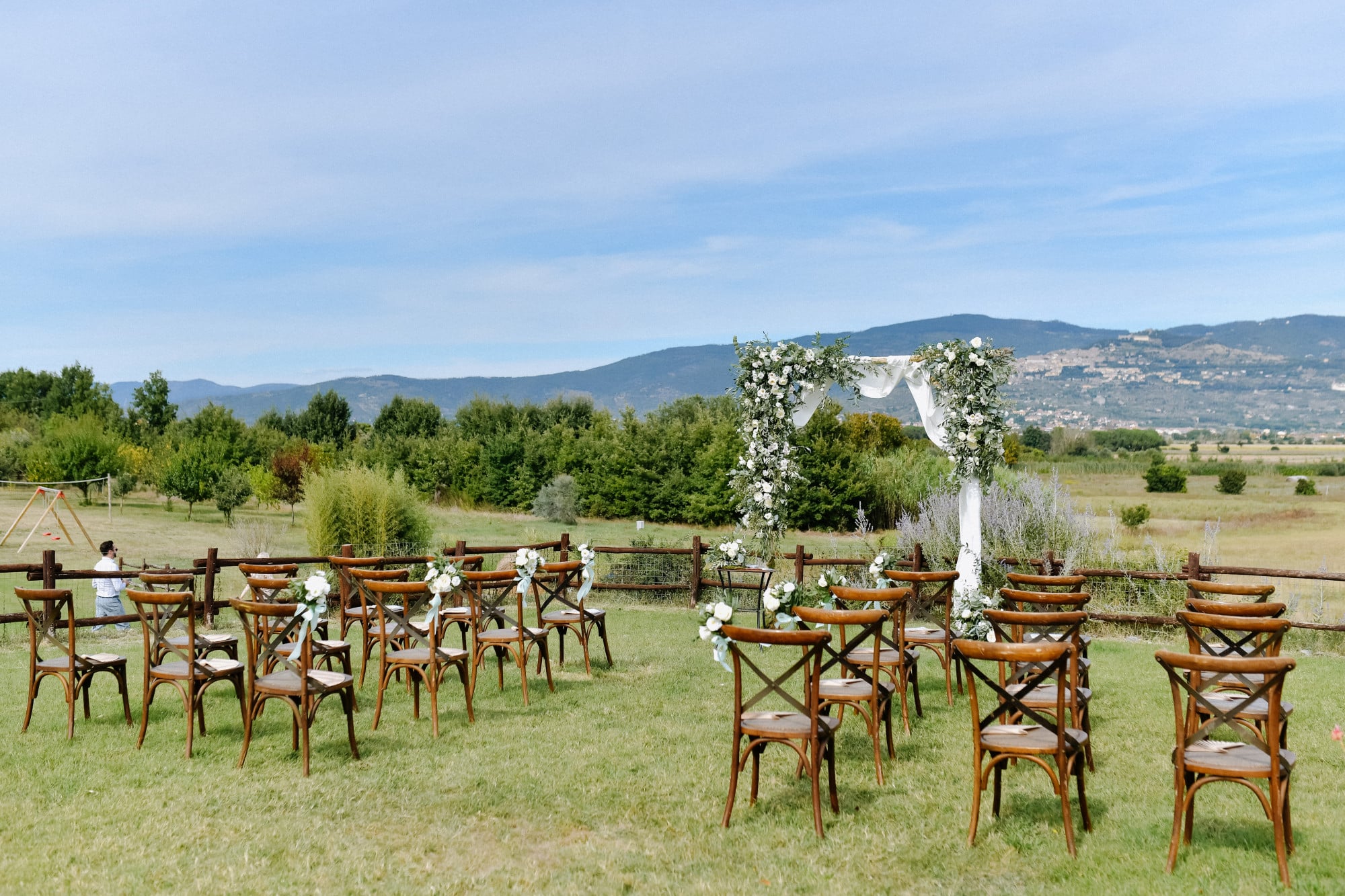
They were strung through the old oak trees lining the gravel driveway. Hundreds of tiny lights, warming the June evening. Mason jars hung from the branches, catching the last of the sunlight. A string quartet was tuning near the entrance. Women in floral dresses crossed the parking lot in heels that sank into the gravel. Men loosened their collars against the heat.
It looked exactly like the wedding my sister Brooke had always wanted.
She’d described it to me when she was nine years old. Lying on the floor of our grandmother’s living room in Knoxville with a Barbie magazine. A barn, Harper. With lights in the trees. And jars. And a violin.
I sat in my rental car for a full minute before I got out.
I had been awake for nearly twenty-two hours.
My flight from London to Atlanta had been delayed by two hours on the tarmac at Heathrow. I’d missed my connection to Knoxville. I’d stood in a customer service line at Hartsfield-Jackson for fifty minutes. Then I’d given up, rented a car, and driven three and a half hours north through Georgia and into Tennessee in a gray Nissan Altima that smelled faintly of stale cigarettes and pine air freshener.
I’d checked into my hotel. A Hampton Inn off the interstate. I’d showered. I’d spent twenty minutes ironing my dress on a hotel ironing board with a burn mark on the cover.
It was still wrinkled.
Still, I was there.
I reached into the back seat and picked up Brooke’s gift.
A cobalt-blue Dutch oven. Le Creuset. Seven and a quarter quarts. Wrapped in silver paper I’d bought at the CVS down the road from the hotel, with a white ribbon I’d tied three times until the bow looked right.
She’d mentioned wanting one. Years ago. Four Christmases back, standing in our mother’s kitchen, watching a cooking show on the little TV on the counter.
Someday I’m going to have one of those. In that blue. When I have a real kitchen.
She didn’t remember saying it.
I did.
I always remembered things like that.
As I walked toward the barn, guests streamed around me. Laughing. Hugging. Women complimenting each other’s dresses. A little boy in a clip-on bow tie running between the cars while his mother chased him.
Nobody looked at me.
I didn’t recognize anybody either.
That should have told me something.
Then my father saw me.
He was standing near the barn entrance. In a gray suit. Talking to an older man with white hair and a cane I didn’t recognize.
Doug Ellison. My stepfather. He’s been married to my mother for twenty-seven years. He raised me from the time I was three. Taught me to ride a bike in the parking lot of his hardware store. Sat through every one of my high school debate tournaments.
I’ve called him Dad since I was five.
Our eyes met across the gravel.
His expression changed.
And instead of walking toward me, he turned around.
And went inside.
No wave.
No smile.
Nothing.
I stopped on the gravel.
For a second, I convinced myself he hadn’t recognized me. It was getting dark. I’d cut my hair since Christmas. I’d lost weight. He was talking to someone.
Then my mother came outside.
She was wearing champagne-colored silk. A dress that fell to the floor and caught every fairy light. Her blonde hair swept back in a perfect chignon. Pearl drop earrings. The good ones. Her mother’s.
She looked beautiful.
She also looked at me as though I’d arrived somewhere I wasn’t supposed to be.
She walked down the three wooden steps of the barn. Quickly. Before anybody else could come outside. She stopped in front of me on the gravel.
“What are you doing here?” she said.
I stared at her.
“I’m here for Brooke’s wedding,” I said. “I flew eighteen hours, Mom.”
Her face didn’t soften.
Not even a little.
“You need to leave,” she said.
The words were so calm that at first I thought I’d misunderstood them.
“I’m sorry?”
“You need to leave, Harper,” she said again. Quietly. Steadily. Like she was telling me the weather. “Now. Before anyone sees you.”
“Before anyone—Mom, I’m her sister. I’ve been awake for twenty-two hours. I spent twenty-eight hundred dollars to get here. I have her gift right—”
“Lower your voice.”
Then another woman stepped into the doorway behind her.
Margaret Caldwell.
The groom’s mother.
I’d met her only once. Briefly. At Christmas two years ago. When Brooke brought Cole home to Cedar Bluff for the first time and Margaret came to dessert. She’d been polite. Distant. Old Tennessee money. The Caldwells own half the timber land in Cumberland County.
I recognized her from family photographs. Silver hair cut in a sharp bob. Pearl earrings. A navy silk dress with a small brooch shaped like a magnolia.
She looked from my mother to me.
“Diane,” she said. “Everything all right?”
My mother changed instantly.
Her shoulders dropped. Her face opened. Her voice became warm.
Bright.
Easy.
“Oh, it’s nothing, Margaret,” she said. She laughed. “Just a distant relative who got the wrong venue.”
I stopped breathing for a second.
Margaret looked at me again.
She looked at my wrinkled dress. At the silver-wrapped box in my arms. At my face.
Then back at my mother.
“I thought you only had one daughter,” Margaret said.
My mother laughed.
Not nervously.
Not accidentally.
She looked directly at me.
And she said, “I do.”
She turned back to Margaret. She touched her arm.
“She’s just a cousin,” my mother said. “From out of town. She got confused about the schedule. I’ll sort it out. Go on in. They’re about to start.”
I was thirty-one years old.
I had crossed an ocean to be there.
I was holding a seven-hundred-and-twenty-dollar wedding gift.
And my own mother was standing ten feet away telling someone I wasn’t her daughter.
What Margaret didn’t know was that I had signed the contracts behind nearly everything she could see.
The barn.
The caterer.
The flowers.
The photographer.
Even the string quartet tuning inside.
But I need to go back.
My name is Harper Rourke. I’m thirty-one years old.
I’m a senior risk analyst at an insurance firm in the City of London. I’ve lived in London for seven years. I have a one-bedroom flat in Southwark with a view of the Shard if you lean out the bathroom window. I have a boyfriend named Daniel who’s a secondary school history teacher in Peckham. He makes terrible tea and wonderful risotto.
I grew up in Cedar Bluff, Tennessee. Population nine thousand.
Sort of.
My mother had me when she was seventeen.
My biological father was a man named Jack Rourke. He was twenty-four. He was the youth pastor at Cedar Bluff First Baptist Church.
I know. I know.
He married my mother at the county courthouse two months before I was born. He kept his job. He kept preaching. He got a raise.
When I was two, it came out that he’d been stealing from the church building fund.
For four years.
Two hundred and eighty thousand dollars.
It was the biggest scandal in the history of Cedar Bluff.
It was on the front page of the Cedar Bluff Courier for three weeks. It was on the Knoxville news. People who’d given their life savings to the new sanctuary fund. Widows. Retired schoolteachers. A man who’d sold his bass boat.
Jack Rourke went to prison for seven years.
He never came back to Cedar Bluff. He moved to Arizona after his release. I’ve spoken to him twice in my life.
My mother was nineteen.
She was the wife of the man who robbed God.
She divorced him. She changed her name back. Diane Pruett. She moved to Knoxville to live with her mother.
And she left me there too.
With Nana June. My grandmother. In a little brick house on Sutherland Avenue.
My mother went to community college. She got a job at a bank. She met Doug Ellison at a church social in Maryville when I was three.
They married when I was four.
They moved back to Cedar Bluff. Doug’s hometown. He owned the hardware store on Main Street. Ellison’s Hardware. Since 1961.
Brooke was born when I was five.
I lived in Cedar Bluff with them. Mostly. During the school year.
But I spent every summer in Knoxville with Nana June. And every Christmas Eve. And most weekends after I turned twelve.
My mother never said why.
Nana June did. When I was fourteen. On her front porch. Shelling peas.
“Your mama loves you, Harper,” she said. “She just can’t stand to look at you in that town.”
“Why?”
Nana June was quiet for a long time.
“Because you’ve got his name,” she said. “And his eyes. And every time somebody in Cedar Bluff looks at you, they see the man who stole their sanctuary.”
I kept the name.
Rourke.
My mother asked me to change it when I was sixteen. She said Ellison would be easier. Doug said he’d adopt me officially if I wanted.
I said no.
I don’t know why. Stubbornness, maybe. Or loyalty to a man I’d never met. Or just wanting one thing about myself that I’d chosen.
My mother didn’t speak to me for a week.
Brooke was different.
Brooke was Diane and Doug’s. Born in Cedar Bluff. Baptized at First Baptist, after things had calmed down. Homecoming queen. Cheerleader. Sorority at UT Knoxville.
She had her father’s name. She had the right name.
She was the daughter my mother could show people.
I didn’t blame Brooke.
I never did.
She was five years younger. She worshipped me when she was little. She’d crawl into my bed during thunderstorms. She’d wear my old T-shirts. She cried every time I left for Nana June’s in the summer.
When I left for Vanderbilt, she gave me a friendship bracelet she’d made. Pink and blue. She said, “So you don’t forget me.”
I still have it.
But the older Brooke got, the more she became part of their family.
And the more I became a visitor in it.
Three months before the wedding, my mother called me in London.
Seven in the morning. A Tuesday. I was making coffee.
She used the voice.
The particular soft voice she’d always used when she needed something. Since I was a kid. Harper, sweetheart, could you watch Brooke this weekend? Harper, honey, could you skip Nana’s this summer and help at the store?
“Harper, sweetheart,” she said. “How are you? How’s London? How’s Daniel?”
She’d never asked about Daniel before.
“I’m fine, Mom. What’s wrong?”
“Nothing’s wrong,” she said. “We’ve just run into a little snag. With the wedding vendors.”
She explained.
Doug had sold the hardware store the year before. After fifty-eight years. To a regional chain. His finances were complicated, she said. Tied up in the sale. In taxes. In investments.
Brooke and Cole were just starting out. Cole was a junior associate at a law firm in Nashville. Brooke was a dental hygienist.
And the vendors were being difficult. They needed someone with strong financial standing on the paperwork. A credit check. A signature. A card on file.
“It’s only your name,” Mom said. “You won’t actually have to pay anything. Daddy and I are covering it. We just need someone with good credit to sign. You have such good credit, Harper. You’ve always been so responsible.”
I asked for the numbers.
She gave them to me one piece at a time.
Venue. Meadow Creek Barn. Eleven thousand.
Catering. Cedar Ridge Table. Fourteen thousand.
Flowers. Six thousand eight hundred.
Photography. Five thousand two hundred.
Music. The string quartet and a DJ for the reception. Four thousand.
When I added it up myself later, at my kitchen table in Southwark, it came to just over forty-one thousand dollars.
Daniel looked at me carefully when I told him.
He was standing at the stove. Making risotto. He turned off the burner.
“That’s a lot to put your name behind,” he said.
“I know.”
“If anything changes,” Daniel said, “you’re the one attached to it. Not them. You.”
“I know that too.”
“Harper.” He came and sat across from me. “Your mum hasn’t called you in four months. She didn’t call on your birthday. Now she calls at seven in the morning to ask you to sign for forty-one thousand dollars.”
I didn’t say anything.
“I’m not telling you not to,” Daniel said. “It’s your family. I just want you to see it.”
“I see it,” I said.
And I still agreed.
Because Brooke was my little sister.
Because I’d spent most of my life being the dependable daughter. The responsible one. The one who didn’t need anything.
Because some part of me still believed that if I showed up enough. Helped enough. Remembered enough birthdays and solved enough problems and signed enough papers.
One day, I would stop feeling like a visitor inside my own family.
So I signed.
DocuSign. Five contracts. My legal name on every one.
Harper J. Rourke.
My credit card on file for every deposit. Ten percent down. Forty-one hundred dollars. My mother said she’d pay me back. She didn’t.
The final balances were due after the wedding. Standard, the barn coordinator told me. So the vendors can account for any last-minute changes.
Thursday. Four days after.
Then I waited for someone to include me in the wedding.
The bridesmaids’ group chat came first.
I learned about it because Brooke accidentally forwarded me a message. In March. A screenshot. Asking everyone to vote between Nashville and Savannah for the bachelorette trip.
There were nine names in the group.
Brooke. Cole’s sister, Lindsay. Three sorority sisters. Two cousins from Doug’s side. A coworker from the dental office. Our mother.
Not me.
I texted Brooke.
Hey, I think you sent this to me by mistake? Am I in the bridal party?
She replied three hours later.
Ha, sorry, sis! Meant to send to Lindsay. It’s just a small group, you’re so far away!
Nothing else.
The rehearsal dinner appeared later. On Instagram.
My mother posted twelve photographs. The night before the wedding. At a steakhouse in Cookeville.
Brooke glowing in a white sundress. Cole beside her with his arm around her waist. My parents smiling. Doug giving a toast. The Caldwells gathered around them. Margaret and her husband, Richard. Cole’s sister. Aunts. Uncles. Cousins.
Extended family everywhere.
My mother’s caption said: My whole family under one roof. Blessed beyond measure.
I wasn’t in a single picture.
I was at thirty-six thousand feet over Greenland when she posted it.
I wasn’t invited to the rehearsal dinner. Nobody told me there was one.
Still, I told myself there had to be an explanation.
There always was.
No one offered me a place to stay. My parents’ house in Cedar Bluff has four bedrooms. Brooke’s old room. The guest room. Doug’s office.
So I booked a hotel.
No one asked for my flight information.
So I handled that myself.
I spent twenty-eight hundred dollars getting from London to Tennessee. Flights. Rental car. Hotel. The dress, from a shop in Covent Garden, because I didn’t own anything nice enough.
The week before the ceremony, my mother called once.
Not to ask when I was arriving.
Not to ask whether I needed someone to pick me up at the airport.
She wanted to confirm when the vendors would collect their final balances.
“Thursday after the wedding,” I told her.
“Perfect,” she said. “And those will go on your card? Automatically?”
“That’s what’s on file,” I said. “But you said you and Dad—”
“Of course, sweetheart,” Mom said. “We’ll transfer it to you. Don’t worry about that.”
Then she immediately started talking about Brooke’s hair appointment. Updo or down. Brooke couldn’t decide.
She hung up four minutes later.
I should have understood then.
Instead, I ironed my dress in a hotel room the night before the ceremony and wrapped Brooke’s gift in paper from a CVS down the street.
And now I was standing outside the barn I’d helped secure while my mother called me a cousin.
I looked at Margaret.
Then at my mother.
I could have argued.
I could have listed every contract I’d signed. Every dollar. I could have pulled up the DocuSign on my phone and shown Margaret Caldwell my name at the bottom of the barn’s rental agreement.
I could have asked why my father had disappeared inside instead of saying hello.
I could have said, I’m Harper. I’m her oldest daughter. My father is Jack Rourke. I’m the girl you all whispered about.
I didn’t.
I lowered the heavy gift box onto the stone step at the bottom of the barn stairs.
“Keep it,” I said. “It’s for Brooke.”
My mother didn’t say anything.
Margaret looked at the box. At the silver paper. At the little white card tucked under the ribbon.
Then I turned around.
I walked back through the fairy lights while guests continued arriving around me.
Past the mason jars. Past the oak trees. Past the women in floral dresses and the men in loosened ties.
Behind me, the quartet began playing.
Pachelbel’s Canon.
Brooke’s favorite. Since she was nine.
I got into my rental car.
I closed the door.
I sat there with both hands in my lap.
I didn’t cry.
That surprised me.
I’d expected to. I’d cried at the Heathrow gate when the flight was delayed. I’d cried in the customer service line in Atlanta. I’d cried in the hotel shower.
But sitting in a gray Nissan Altima in the gravel parking lot of Meadow Creek Barn, listening to Pachelbel’s Canon through the closed window, I didn’t cry.
Something had simply gone still.
Like a pond on a morning with no wind.
I drove back to the hotel.
I walked upstairs in the same wrinkled dress. I sat on the edge of the bed.
For a long time, I did nothing.
I didn’t call Daniel. It was two a.m. in London.
I didn’t text Brooke.
I just sat there.
Then I saw my laptop on the little desk by the window.
That was when I remembered something my mother had been very careful to ask me about before I flew over.
And those will go on your card? Automatically?
I changed clothes.
Jeans. Daniel’s old Arsenal sweatshirt. The one I stole from him the first month we dated.
I opened the laptop.
I pulled up the contracts one by one.
Meadow Creek Barn. Venue rental agreement.
Cedar Ridge Table. Catering contract.
Bloom & Bramble. Floral services.
Ashley Morgan Photography.
Cumberland Strings. Music services.
My legal name appeared at the bottom of every agreement.
Harper J. Rourke. Client.
My credit card was attached to every one.
But there was another detail.
One I’d noticed when I signed them months ago and almost forgotten.
The remaining balances weren’t due until after the wedding.
Final balance to be charged to card on file on Thursday, June 19, unless alternative payment arrangements are made in writing prior to that date.
I looked at the dates again.
Thursday.
Four days away.
I added it up.
Thirty-seven thousand, nine hundred dollars.
Still outstanding.
On my card.
We’ll transfer it to you, sweetheart. Don’t worry about that.
I sat alone at that hotel desk listening to the air conditioner hum.
While the wedding I hadn’t been allowed to attend continued a few miles away.
While my sister danced to whatever song she picked. While my mother gave a toast about her whole family. While Margaret Caldwell sat at a table thinking Diane Ellison had only one daughter.
While thirty-seven thousand nine hundred dollars waited to be charged to the card of a cousin from out of town.
Then I picked up my phone.
The first call went to the barn.
It was 9:40 p.m. There was an after-hours number on the contract. A woman answered. Her name was Kelsey. She was the event coordinator. She was at the wedding. I could hear music in the background.
“Meadow Creek Barn, this is Kelsey.”
“Hi, Kelsey. This is Harper Rourke. I’m the client on the Ellison-Caldwell event tonight.”
There was a pause.
“Oh,” Kelsey said. “Hi! I—I thought you’d be here. Is everything okay?”
“I need to update the billing information attached to Saturday’s event,” I said.
Another pause.
“Is there a problem with the event?” Kelsey asked carefully.
“No,” I said. “The event can continue exactly as planned. Please don’t interrupt anything. I just need the final balance directed to the people actually hosting it.”
I gave her my parents’ Cedar Bluff address. 214 Magnolia Drive. And Doug’s email.
“And please remove my card from file for the final balance,” I said. “Effective immediately. I’ll confirm in writing tonight.”
Kelsey was quiet for a moment.
“Okay,” she said. “I can do that. I’ll need it in writing.”
“You’ll have it in ten minutes.”
Then I called the caterer.
Then the florist.
Then the photographer.
Then the musicians.
One by one, I asked them to direct all remaining invoices to the people hosting the wedding.
I sent written notice to each of them. By email. From the hotel desk. Short. Polite. Clear.
Please be advised that, effective immediately, I withdraw authorization for the final balance on this contract to be charged to my card on file. Please direct the remaining invoice to the hosts of the event, Douglas and Diane Ellison, at the address below. I remain available to discuss.
Nobody argued.
Nobody asked for the family story.
The photographer, Ashley, answered on the second ring. She was at the reception too. Shooting the first dance.
“Harper Rourke?” she said. “You’re the client.”
“I am.”
“I’m literally looking at the bride right now,” Ashley said. “Are you here? I thought—”
“I’m not there,” I said.
Ashley was quiet.
I explained what I needed. She took down the address.
At the end, she said, very quietly:
“I hope your evening gets better.”
That almost got me.
When the final call ended, twelve minutes had passed.
I looked at the wedding contracts spread across my screen.
Then I made one more call.
This one was to my bank.
Barclays. The international line.
I told them I had five recurring payment authorizations to vendors in Tennessee. I wanted every one of them revoked. I wanted a note on my account that any charge from those merchants after tonight was unauthorized.
The man on the phone, a polite Scottish voice, typed for a long time.
“Done,” he said. “Anything else, Ms. Rourke?”
I looked at the screen.
“No,” I said. “That’s everything.”
Afterward, I booked the first flight back to London.
Knoxville to Atlanta. Atlanta to Heathrow. Departing at 6:15 a.m.
I set my alarm for four.
I slept for maybe three hours.
By the time the wedding photographs began appearing online, I was already leaving Tennessee.
I saw them at the gate in Knoxville. On Brooke’s Instagram. Posted at 5:52 a.m.
Brooke in her dress. Strapless. Ivory. A cathedral veil.
Brooke and Cole under the fairy lights.
The first dance.
The cake.
And one photo I almost scrolled past.
The gift table. Covered in presents. Silver and white and gold.
And in the middle, a big box wrapped in silver paper from a CVS. With a white bow I’d tied three times.
I put my phone in airplane mode.
I got on the plane.
And somewhere over the Atlantic, my phone started filling with missed calls.
I didn’t see them until I landed.
Heathrow. Terminal 5. Sunday afternoon. Gray and drizzling. The most beautiful weather I’d ever seen.
I turned my phone back on in the immigration line.
It buzzed for a full minute.
14 missed calls — Mom
6 missed calls — Dad
2 missed calls — Brooke
1 missed call — Unknown number (Tennessee)
Voicemails: 11
Daniel was waiting at arrivals.
He saw my face.
He didn’t say anything. He just put his arms around me in the middle of Terminal 5 while families with luggage carts streamed past us.
I stood there and finally cried.
I listened to the voicemails on the Tube.
Daniel held my hand.
The first one was from my mother. Sunday morning. 7:14 a.m. Tennessee time. Before the brunch.
“Harper. I just got an email from the barn. Something about billing. What did you do? Call me.”
The second. 7:31.
“Harper, the caterer emailed too. And the florist. They’re saying the final balances are going to us now. That’s not what we agreed. Call me back immediately.”
The third. 8:02.
“Harper Jean. This is not funny. Thirty-eight thousand dollars. Your father and I do not have thirty-eight thousand dollars sitting around. You know that. You know Doug’s money is tied up. Call me right now.”
The fourth was Doug.
“Harper, it’s Dad. Honey, please call your mother. She’s very upset. We need to talk about this.”
He didn’t say anything about the barn. About turning around. About walking inside.
By Monday, the voicemails had changed.
“Harper, the barn is saying if they don’t get paid by Thursday, they’re sending it to collections. In our names. Do you understand what that does to us? Your father is sixty-four years old.”
“Harper, I don’t know what you think you’re doing, but this is cruel. This is the cruelest thing you’ve ever done. On your sister’s wedding weekend.”
“Harper, please. Please call me. I’m begging you.”
I didn’t call.
On Tuesday, Daniel’s sister came over.
Priya is a solicitor. She does commercial contracts at a firm in Canary Wharf. She sat at my kitchen table with a glass of wine and read all five contracts on my laptop.
When she was done, she sat back.
“Harper,” she said. “I need you to understand something.”
“Okay.”
“Revoking the card authorization stops them from charging you automatically,” Priya said. “Good. That was smart. But your name is still on these contracts. You’re still the client. Legally, if your parents don’t pay, the vendors can come after you.”
I looked at the screen.
“I know,” I said.
“You knew?”
“I’m a risk analyst, Priya,” I said. “I knew the night I signed them.”
Priya looked at me for a long time.
“Then why did you do it?” she asked. “On Saturday night. If you knew they could still come after you.”
I thought about it.
“Because for three months,” I said slowly, “the whole thing was set up so that I’d pay without anyone ever having to say it out loud. My card. Automatic. Thursday. Nobody would have to ask me. Nobody would have to thank me. Nobody would have to tell Margaret Caldwell where the money came from.”
I looked out the window. At the wet rooftops of Southwark.
“I just wanted them to have to ask,” I said. “Out loud. Me. By name.”
They didn’t ask.
Not on Tuesday. Not on Wednesday.
My mother called fourteen more times. Doug called six more. They left voicemails about collections and credit scores and cruelty and your sister’s special weekend.
Not one of them said I’m sorry.
Not one of them said we should have let you in.
Not one of them mentioned the word cousin.
On Wednesday night, the unknown Tennessee number called again.
I almost didn’t answer.
I did.
“Is this Harper Rourke?”
A woman’s voice. Older. Precise. A soft East Tennessee accent with the edges sanded off by money.
“Yes.”
“This is Margaret Caldwell,” she said.
I sat down on the edge of my bed.
“Mrs. Caldwell.”
“I apologize for calling so late,” she said. “I believe it’s almost midnight there. I wasn’t sure you’d answer an unfamiliar number.”
“How did you get this number?”
There was a pause.
“From the photographer,” Margaret said. “Ashley Morgan. I asked her on Sunday why the bride’s mother was so upset at brunch. She told me she’d taken a call during the first dance from the client. She said the client’s name was Harper Rourke.”
I didn’t say anything.
“Then I looked at the gift table,” Margaret said. “There was a box in silver paper. With a card.”
I closed my eyes.
I knew what the card said. I’d written it at the hotel desk the night before the wedding.
Brooke —
You said you’d have one of these someday. In this blue. When you had a real kitchen.
Now you do.
I love you more than every star at Nana’s.
— Your sister, Harper
“Your sister,” Margaret said quietly. “Harper.”
I didn’t say anything.
“Diane told me you were a cousin,” Margaret said. “A confused cousin. From out of town.”
“I know,” I said. “I was there.”
“Yes,” Margaret said. “So was I.”
She was quiet for a long time.
“Ms. Rourke,” she said finally. “Is your father Jack Rourke?”
My whole body went cold.
“Yes.”
Margaret let out a long breath.
“I thought so,” she said. “When Ashley said the name. I thought so.”
“Mrs. Caldwell—”
“My mother-in-law gave eleven thousand dollars to the sanctuary fund at Cedar Bluff First Baptist,” Margaret said. “In 1993. Her late husband’s life insurance. She was so proud. She had her name engraved on a brick for the walkway.”
I closed my eyes.
“The walkway was never built,” Margaret said.
“I’m so sorry,” I whispered.
“Why?” Margaret said.
I didn’t understand.
“Why are you sorry?” Margaret said. “You were two years old.”
I couldn’t speak.
“Ms. Rourke,” Margaret said. “Is that why your mother told me you were a cousin?”
“I think so,” I said. “I think she was afraid. That you’d find out. Who I am. Whose daughter I am. That you’d think Brooke came from that.”
Margaret was quiet.
“I’ve known Diane for two years,” she said. “I’ve had dinner at her house a dozen times. I’ve sat next to her in church. Not once did she mention another daughter.”
“She wouldn’t have,” I said. “Not in Cedar Bluff. Not to the Caldwells.”
“I want you to know something,” Margaret said.
Her voice had changed. Harder.
“My son married your sister on Saturday. In a barn you paid for. With flowers you paid for. Under lights you paid for. While the woman who paid for all of it was turned away at the door and called a cousin.”
She paused.
“In front of me,” she said.
“I asked Diane about it,” Margaret said. “On Sunday. At brunch. After I saw the card. She said you were difficult. She said you’d always been jealous of Brooke. She said you had a lot of your father in you.”
I put my hand over my mouth.
“Then I asked Doug,” Margaret said. “Privately. In the parking lot.”
“What did he say?”
Margaret was quiet for a moment.
“He cried,” she said. “He’s sixty-four years old and he stood in the parking lot of the Cookeville Cracker Barrel and cried. He said Diane made him promise. Months ago. That if you showed up, they wouldn’t acknowledge you in front of us. He said he walked inside when he saw you because he couldn’t look at you. He said he couldn’t stand there and do it to your face.”
I couldn’t breathe.
“He said,” Margaret continued, “She’s the best of all of us, Margaret. She always was. And we’ve treated her like she’s the worst.”
I sat on my bed in Southwark and cried.
Daniel came to the bedroom door. He looked at me. He didn’t come in. He just stood there.
“And Brooke?” I whispered. “Did Brooke know?”
Margaret was quiet.
“That’s the other reason I called,” she said.
“Brooke didn’t know you’d signed anything,” Margaret said. “She didn’t know about the contracts. She didn’t know you’d paid deposits. She thought her parents were paying. Diane told her the money came from the hardware store sale.”
“She didn’t know?”
“And she didn’t know you were turned away,” Margaret said. “Diane told her you’d texted on Saturday afternoon. That your flight was cancelled. That you couldn’t make it. That you were so sorry.”
I stopped breathing.
“Brooke cried at the reception,” Margaret said. “Cole told me. She was sad you weren’t there. She said she’d been looking forward to it for months. She said you’d always promised you’d be at her wedding.”
“She found out on Monday,” Margaret said. “When she and Cole got back from the brunch to open gifts. She opened yours. She read the card.”
I closed my eyes.
“Your sister, Harper,” Margaret said. “In this blue. When you had a real kitchen.”
“She remembered,” I whispered. “That she said that?”
“No,” Margaret said. “She didn’t remember. That’s what destroyed her. Cole said she sat on the floor of their apartment in Nashville holding the card and said, I don’t even remember saying that. And she remembered. From four years ago. She flew eighteen hours and remembered.”
“Then she called your mother,” Margaret said. “Monday afternoon. And your mother told her the truth. Or some of it. That you’d come. That she’d sent you away. That she’d told me you were a cousin.”
Margaret was quiet for a long time.
“I’m told it was a very loud phone call,” she said.
“Brooke’s been trying to call you,” Margaret said. “Since Monday.”
I looked at my phone. 2 missed calls — Brooke. Both on Sunday.
“Only twice,” I said.
“She’s been afraid to call more,” Margaret said. “She thinks you hate her. She thinks you’ll never forgive her.”
“For what? She didn’t know.”
“She says she should have,” Margaret said. “She says she let your mother push you out for years. The bridal party. The group chat. The rehearsal dinner. She says she didn’t ask why you weren’t in any of it. She says she didn’t want to know.”
“Mrs. Caldwell,” I said. “Why are you telling me all this?”
Margaret didn’t answer right away.
“Because I stood next to your mother on those barn steps,” she said. “And I watched her look her own daughter in the face and say I only have one. And I didn’t say anything. I went back inside and sat down for the ceremony.”
Her voice tightened.
“I’ve regretted it every minute since,” she said. “I should have stopped. I should have asked. I saw your face. I knew something was wrong. I’ve buried a child, Ms. Rourke. Cole’s older brother. Twenty years ago. I know what a mother’s face looks like when she’s lying about her children.”
I didn’t know what to say.
“I didn’t say anything,” Margaret said. “And you drove away.”
“The barn called Doug again today,” Margaret said. “And the caterer. They’re sending it to collections on Friday.”
“I know,” I said. “And if they don’t get it from my parents, they’ll come after me. I’m the client.”
“Yes,” Margaret said. “I know. My husband is an attorney.”
She paused.
“Ms. Rourke, Richard and I would like to pay it,” she said.
I sat very still.
“No,” I said.
“Ms. Rourke—”
“No,” I said. “Thank you. But no.”
“It’s thirty-eight thousand dollars. It’s our son’s wedding. We’d have paid for it in the first place if anybody had asked. Diane never asked. She said she had it handled.”
“She did have it handled,” I said. “Me.”
Margaret was quiet.
“I didn’t revoke my card so somebody else would pay for it,” I said. “I didn’t do it to make a point about money. I’d have paid every cent if they’d asked. If my mother had called me and said, Harper, we can’t afford this, can you help. I would have said yes. I always say yes.”
My voice broke.
“I did it because they arranged the whole thing so I’d pay without anybody knowing I existed,” I said. “Not you. Not the guests. Not even Brooke. They took my name and my money and my credit and then they called me a cousin and sent me back to London before the cake.”
I wiped my face.
“If you pay it,” I said, “then it’s the same thing. Somebody fixes it quietly. Nobody has to say anything out loud. My mother goes on telling people she has one daughter.”
Margaret was silent for a long time.
“Then what do you want?” she said finally.
I thought about it.
“I want my mother to call me,” I said. “Not about money. Not about collections. Not about Brooke’s special weekend. I want her to call me and say my name and say I’m sorry. And then I want her to tell you. And Mr. Caldwell. And whoever else was at that rehearsal dinner. That she has two daughters.”
I took a breath.
“That’s all,” I said. “That’s all I’ve ever wanted.”
Margaret didn’t say anything.
Then she said, “Thank you for telling me.”
And she hung up.
My mother didn’t call.
Not on Thursday.
Thursday came and went. The final balances weren’t charged to my card. The vendors sent invoices to 214 Magnolia Drive.
Friday came.
At 4:15 p.m. London time, my phone buzzed.
Not my mother.
Kelsey. From the barn.
Hi Harper — just wanted to let you know the final balance for the Ellison-Caldwell event has been paid in full. Thank you so much. We hope to see you at Meadow Creek someday. — K.
Then Cedar Ridge Table. Paid.
Bloom & Bramble. Paid.
Ashley Morgan Photography. Paid.
Cumberland Strings. Paid.
I called Priya.
“Somebody paid it,” I said. “All of it. Today.”
“The Caldwells?”
“I don’t know.”
I found out on Saturday.
From Doug.
He called at noon my time. Six a.m. his. He’d never called me that early in my life.
“Harper,” he said.
His voice sounded old. Thin.
“Hi, Dad.”
He was quiet for a long time. I could hear birds. He was outside. On the back porch, probably. Where he drinks his coffee.
“I sold the boat,” he said.
Doug’s boat. A 1998 Bayliner. Twenty-one feet. He bought it with the first big profit from the hardware store. He kept it on Center Hill Lake. He took me fishing on it every summer before Nana’s. He named it The Ellison Girls.
He’d taught me to drive it when I was twelve. He’d let me steer all the way across the lake while he sat in the back and pretended to be scared.
“Dad,” I said. “No.”
“And the lake lot,” Doug said. “On Center Hill. The one we were going to build on. I sold it to the man next door. He’s been asking for ten years.”
“Dad—”
“It covered it,” he said. “All of it. Thirty-seven nine. With some left over.”
“Why?” I said. “Margaret Caldwell offered to pay it.”
“I know,” Doug said. “She called me Thursday. I told her no.”
“Why?”
He was quiet.
“Because she’s not the one who owes you,” he said.
“Harper,” Doug said. “I need to say something. And I need you to let me say it all the way through. Okay?”
“Okay.”
“I turned around,” he said. “On Saturday. At the barn. I saw you in the parking lot holding that box and I turned around and walked inside.”
His voice cracked.
“I’ve been married to your mother for twenty-seven years,” he said. “I’ve let her do a lot of things I knew were wrong. Sending you to June’s every summer. Not putting your picture in the church directory. Telling people at the store you were Diane’s niece when you came in to help. I let her. Because I loved her. Because she was so scared. Of Cedar Bluff. Of Jack’s name. Of what people would say.”
I didn’t say anything.
“And she made me promise,” he said. “In March. If you came. If the Caldwells were there. I wouldn’t acknowledge you. Not in front of them. She said we’d explain it to you after. She said you’d understand. You always understand.”
“I always understand,” I repeated.
“You do,” Doug said. “That’s the problem. You always have. Since you were three. You’d stand in June’s driveway and wave at our car while we drove back to Cedar Bluff without you. And you never once cried. Not where we could see.”
“I raised you, Harper,” Doug said. “From the time you were three. I taught you to ride a bike. I taught you to drive the boat. I sat through every debate tournament. I was in the front row when you graduated from Vanderbilt.”
“I know, Dad.”
“And when it mattered,” Doug said. “When it actually mattered. When you were standing in a gravel parking lot after flying across an ocean. I turned my back on you.”
He was crying now.
“I sold the boat because I don’t deserve it,” he said. “I named it The Ellison Girls. Plural. And I never once acted like you were one of them.”
I didn’t say anything for a long time.
“Dad,” I said finally. “Does Mom know? About the boat?”
“She knows,” Doug said.
“What did she say?”
He didn’t answer.
“Dad.”
“She didn’t say anything,” Doug said. “She hasn’t said much of anything since Monday. Since Brooke called her.”
He paused.
“She’s been sitting in Brooke’s old room,” he said. “Every night. With the door closed.”
Brooke came on Tuesday.
I didn’t know she was coming.
Daniel and I were having dinner. Risotto. Wednesday night, actually. Ten p.m. The buzzer rang.
Daniel went to the intercom.
He came back into the kitchen with a strange look on his face.
“Harper,” he said. “It’s your sister.”
She was standing on the landing outside my flat.
In leggings and a UT sweatshirt and sneakers. Her blonde hair in a messy knot. No makeup. Her eyes were red and swollen.
She was holding a suitcase.
And a box.
A big box. Wrapped in silver paper from a CVS. With a white ribbon. Retied. Badly. In a knot instead of a bow.
“Brooke,” I said.
“I flew eighteen hours,” she said. Her voice was shaking. “Nashville to Atlanta. Atlanta to London. I missed my connection. I stood in a line in Atlanta for an hour.”
She held out the box.
“I wanted to know what it felt like,” she said.
I stood in my doorway and looked at my little sister.
Twenty-six years old. Married five days. On her honeymoon. Supposed to be in Turks and Caicos.
“Where’s Cole?” I said.
“In Turks and Caicos,” Brooke said. “On our honeymoon. Alone. He said go. He said, Go find your sister. I’ll be here.”
She was crying now.
“I’m sorry,” she said. “Harper, I’m so sorry. I didn’t know. About the contracts. About the barn. About Mom turning you away. She told me your flight was cancelled. She said you texted. She said you were so sorry.”
“I know,” I said. “Margaret told me.”
“I cried,” Brooke said. “At my own reception. Because you weren’t there. And the whole time, you were—”
She couldn’t finish.
“But that’s not even the worst part,” Brooke said.
She was standing on my landing with the box in her arms. Shaking.
“The worst part is the bridesmaids,” she said. “And the group chat. And the rehearsal dinner. I knew you weren’t in any of it, Harper. I knew. I noticed.”
I didn’t say anything.
“Mom said it would be easier,” Brooke said. “She said you were so far away. She said you wouldn’t want to come back for all the little stuff. She said the Caldwells didn’t need to know all the family history.”
She looked at me.
“And I let her,” Brooke said. “Because it was easier. Because I didn’t want to fight with her. Because I didn’t want to explain Jack Rourke to Cole’s family. Because I was ashamed.”
“Of me?”
“Of him,” Brooke said. “Of the story. Of the church. Everybody in Cedar Bluff knows. Everybody. I grew up hearing it. In Sunday school. In the hallways at school. That’s Harper Rourke’s sister. You know her daddy stole from the church.”
She wiped her face with her sleeve.
“And I let Mom erase you,” she said. “So I wouldn’t have to be that girl’s sister in front of the Caldwells.”
I looked at my sister for a long time.
Then I held out my arms.
She dropped the box.
It hit my doorstep with a heavy thunk. Seven and a quarter quarts of cobalt-blue cast iron.
She fell into me.
She sobbed.
Standing on my landing in Southwark at ten o’clock at night, with her suitcase and the Dutch oven at our feet, my little sister sobbed into my shoulder the way she used to during thunderstorms when she was five.
“I remembered,” she said into my sweatshirt. “On the plane. Hour eleven. Over the ocean. I remembered saying it. About the Dutch oven. In Mom’s kitchen. I remembered.”
“Good,” I said.
“You remembered for four years.”
“I remember everything,” I said. “About you. That’s what sisters do.”
She stayed for five days.
She slept on my couch. She met Daniel. She told him he made terrible tea. He agreed.
She cooked dinner on the third night. In my kitchen. In the cobalt-blue Dutch oven.
She’d brought it back. On purpose. She’d paid an extra hundred and fifty dollars in overweight baggage fees.
“It’s yours,” she said. “I’m giving it back.”
“Brooke, it was a wedding gift.”
“I know,” she said. “But you should have something from my wedding. You paid for all of it.”
She made Nana June’s pot roast. In the Dutch oven. The one Nana made every Sunday in Knoxville. With carrots and potatoes and onions.
I hadn’t had it since Nana died.
We sat at my little kitchen table, me and Brooke and Daniel, and ate pot roast out of a seven-hundred-and-twenty-dollar wedding gift.
Brooke cried. Then I did. Then Daniel did, and he didn’t even know Nana June.
On the fourth night, Brooke said, “Mom wants to talk to you.”
I put down my fork.
“She’s been sitting in my old room for a week,” Brooke said. “Dad says she won’t come out. She won’t go to church. She won’t answer the phone. Margaret Caldwell came over on Sunday and sat with her for three hours.”
“Margaret?”
“Margaret,” Brooke said. “Dad said they talked. He doesn’t know about what. Margaret came out and hugged him on the porch and left.”
She looked at me.
“Mom asked me to give you something,” she said.
It was a letter.
Handwritten. On my mother’s stationery. Monogrammed. DPE.
Brooke put it on the table next to my plate.
“I didn’t read it,” she said. “She asked me not to. She said it was yours.”
I didn’t open it that night.
Or the next.
Brooke flew home on Monday. To Nashville. To Cole, who’d come back from Turks and Caicos alone after six days and met her at the airport with flowers.
She hugged me at Heathrow for so long a security officer asked us to move along.
“Come home,” she said. “Not to Cedar Bluff. To me. To Nashville. Thanksgiving. Please. Cole wants to meet you. Properly. As my sister.”
“Okay,” I said.
“Promise?”
“Promise.”
I opened the letter on Tuesday night.
At my kitchen table. Alone. Daniel was at a parents’ evening at his school.
Harper,
I don’t know how to start this. I’ve written it eleven times. I’ve thrown away ten.
I’m going to tell you the truth. All of it. You deserve that. You’ve always deserved that.
I was nineteen when they arrested your father. You were two. I was standing in the parking lot of First Baptist with you on my hip when the sheriff’s car pulled up.
Mrs. Abernathy from the choir spat on me. On my shoes. With you in my arms.
I don’t think I’ve ever told anybody that. Not Doug. Not Mama. Not anybody.
For two years after that, I couldn’t walk down Main Street. People crossed the street. People whispered. The Baptist ladies stopped bringing casseroles. My own cousin uninvited me from her wedding.
And everywhere I went, I was carrying you. With his eyes. With his name.
So I ran. To Knoxville. To Mama’s. And when I met Doug and came back to Cedar Bluff, I made a decision. I’d be somebody new. Diane Ellison. Doug’s wife. The hardware store. Church on Sundays. A nice house on Magnolia.
And I couldn’t do it with you there. Every time somebody saw you, they saw him. They saw the sanctuary. They saw me in that parking lot with Mrs. Abernathy’s spit on my shoes.
So I sent you to Mama’s. Every summer. Every chance I got. I told myself it was for you. So you wouldn’t have to hear the whispers.
It wasn’t for you. It was for me.
Then Brooke met Cole. A Caldwell. The Caldwells who lost money in the sanctuary fund. Margaret’s mother-in-law had her name engraved on a brick for a walkway that was never built.
I panicked, Harper. I’m not making an excuse. I’m telling you what happened. I panicked. I thought if the Caldwells knew Brooke’s sister was Jack Rourke’s daughter, they’d look at Brooke the way Cedar Bluff looked at me. I thought they’d call off the wedding. I thought they’d spit on her shoes.
So I erased you. From the bridal party. From the group chat. From the rehearsal dinner. From the photos.
And then I needed money. Doug’s money is real money, but it’s tied up for another year. I couldn’t ask Margaret. I couldn’t let them know we couldn’t afford it.
So I called you. At seven in the morning. In my soft voice. Because I knew you’d say yes. You always say yes.
I used you, Harper. I took your name and your money and your credit and I used them to build my daughter a wedding. And then I told everyone you didn’t exist.
And when you showed up at the barn, after eighteen hours, holding a gift you’d remembered for four years, I looked you in the face and said I only have one daughter.
Margaret came to see me on Sunday. She sat in Brooke’s old room with me for three hours.
She told me about her son. Her older boy. Andrew. He died when he was nineteen. Car accident. Twenty years ago. She said she’d give anything she has. Every acre. Every dollar. Every pearl. For one more hour with him.
Then she looked at me and said, “You have a living daughter who flew across an ocean to see you. And you told her she was a cousin.”
She said, “Diane, I don’t care whose daughter she is. I care whose daughter she isn’t. And right now, she isn’t yours. Because you won’t let her be.”
I’ve been sitting in Brooke’s room for a week, Harper. Thinking about that.
I’m not going to ask you to forgive me. I don’t think I could forgive me.
But I want you to know that on Sunday afternoon, before Margaret left, I said it. Out loud. To her. In Brooke’s old room.
I said, “I have two daughters. Harper and Brooke. Harper is the oldest. She lives in London. She’s the best of us.”
It’s the first time I’ve said it out loud in Cedar Bluff in twenty-nine years.
It won’t be the last.
— Mom
P.S. Mrs. Abernathy died in 2019. I went to her funeral. I don’t know why. I sat in the back. When they carried her out, I thought, I spent twenty-seven years afraid of a woman who’s now in a box. And I let her make me afraid of my own daughter.
I read it three times.
Then I put my head down on my kitchen table and cried for an hour.
When Daniel came home, he found me there.
He didn’t say anything. He sat down next to me. He picked up the letter. He read it.
When he was done, he folded it carefully.
“Are you going to call her?” he asked.
I lifted my head.
“Not yet,” I said.
“When?”
I looked at the cobalt-blue Dutch oven sitting on my stove.
“When I’m ready,” I said. “Not when she needs me to be.”
I called her in September.
Three months later. On a Sunday. My birthday.
She’d called that morning. Like she hadn’t in four years. She left a voicemail. Happy birthday, Harper. Thirty-two. I remember the day you were born. It was raining. You didn’t cry. The nurse said she’d never seen a baby so calm. I love you.
I called back that night.
She answered on the first ring.
“Harper?”
“Hi, Mom.”
She started crying. Immediately. She couldn’t talk for a full minute.
I waited.
“I’m sorry,” she said finally. “I’m so sorry. I’m so sorry, baby.”
“I know, Mom.”
“I said it,” she said. “To Margaret. And to Pastor Hughes. And to the ladies at circle. At First Baptist. Last month. I stood up during prayer requests and said I had two daughters and I’d been lying about one of them for twenty-nine years.”
I didn’t say anything.
“Nobody spit on my shoes,” Mom said. “Eleanor Whitlock hugged me. She’s eighty-six. She said she remembered you as a baby. She said you were the calmest baby she’d ever seen.”
We talked for two hours.
About Nana June. About Knoxville. About the summers. About Jack Rourke.
About the barn.
At the end, she said, “Harper. Can I ask you something?”
“Okay.”
“Will you come home?” she said. “Not for anything. Not for a wedding or a funeral or a favor. Just to come. To Cedar Bluff. To Magnolia Drive.”
I thought about it.
“Thanksgiving,” I said. “I’m coming for Thanksgiving. To Brooke’s. In Nashville.”
“Oh,” Mom said. Small.
“You can come too,” I said. “If Brooke says yes.”
Mom was quiet.
“She already said yes,” Mom said. “She told me last week. She said, Harper’s coming. If you want to come, you come as her mother. Or you don’t come at all.”
I went to Nashville for Thanksgiving.
Daniel came with me. His first American Thanksgiving. He was terrified of the turkey.
Brooke and Cole’s apartment is small. Two bedrooms in East Nashville. With a kitchen that has a gas stove and a window over the sink.
Brooke cooked. In the cobalt-blue Dutch oven. I’d given it back to her. Again. At the airport in London. She’d argued. I’d won.
“It’s yours,” I said. “When you have a real kitchen.”
“This is a real kitchen,” Brooke said.
“I know,” I said.
The Caldwells came.
Margaret and Richard. And Cole’s sister, Lindsay.
Margaret walked into the apartment. She saw me. She stopped.
Then she crossed the room and hugged me. For a long time.
“Harper,” she said. Not Ms. Rourke. Harper.
“Mrs. Caldwell.”
“Margaret,” she said. “Please.”
She pulled back. She held my face in both her hands. Like my grandmother used to.
“I’m sorry I went inside,” she said quietly. “On the steps. I’m sorry I didn’t stop.”
“You called,” I said. “Afterward. That’s more than anybody else did.”
Then the doorbell rang.
Brooke looked at me.
I nodded.
She opened the door.
My parents were standing in the hallway.
Doug in a brown sweater. Holding a pecan pie. From the Cracker Barrel in Cookeville. Mom never could make pie crust.
And my mother.
Not in champagne silk. In jeans and a navy cardigan. Her hair down. No pearls.
She looked older. Thinner.
She looked at me across the little apartment.
She didn’t move.
Neither did I.
Then Margaret Caldwell walked across the room.
She stopped next to my mother in the doorway.
She took my mother’s hand.
And she said, loud enough for the whole apartment to hear:
“Diane. Come in. Your daughters are waiting.”
My mother made a sound.
She came inside.
She walked across Brooke’s living room. Past Cole. Past Richard. Past Daniel, who stood up awkwardly with a glass of wine.
She stopped in front of me.
“Harper,” she said.
“Hi, Mom.”
She looked at me for a long time.
Then she turned around.
She looked at Margaret. At Richard. At Lindsay. At Cole.
“This is my daughter,” she said. “My oldest. Harper. She lives in London. She’s a risk analyst. She paid for Brooke’s wedding.”
Her voice cracked.
“She’s the best of us,” my mother said.
Then she turned back.
And she opened her arms.
I want to tell you I fell into them.
I didn’t. Not right away.
I stood there for a long moment. Looking at my mother. At her open arms.
Thinking about Nana June’s driveway in Knoxville. About standing there at three years old. Waving at the back of a car.
About gravel at Meadow Creek Barn. About fairy lights. About I only have one.
About a letter on my kitchen table in Southwark. It’s the first time I’ve said it out loud in twenty-nine years.
It won’t be the last.
Then I stepped forward.
And my mother put her arms around me.
She held on.
As if she didn’t want to let go.
We ate at five o’clock.
Ten of us. Around a table meant for six. Folding chairs. A card table pushed against the end.
Brooke’s pot roast in the cobalt-blue Dutch oven. Nana June’s recipe.
Doug’s Cracker Barrel pecan pie.
Margaret brought a sweet potato casserole with marshmallows. Daniel was horrified. Then he had three helpings.
Before we ate, Doug stood up.
He cleared his throat. He held up his glass of sweet tea.
“I’d like to say something,” he said.
Everybody looked at him.
“I sold my boat this summer,” Doug said. “I had it for twenty-six years. The Ellison Girls.”
He looked at me.
“I’m buying a new one in the spring,” he said. “A little one. For the lake. I already know what I’m naming it.”
He paused.
“Both Girls,” he said.
Daniel proposed in March.
In London. On Waterloo Bridge. At sunset. With his terrible tea in a thermos and a ring that had been his grandmother’s.
I said yes.
We got married in September. In London. At a little church in Southwark with a garden in the back.
Forty guests. Small. Simple.
Brooke was my maid of honor. She flew eighteen hours. She didn’t miss her connection.
Cole came. Margaret and Richard came. Lindsay came.
Doug walked me down the aisle.
My mother sat in the front row.
At the reception, in the garden behind the church, under fairy lights Daniel had strung through the trees himself, an older woman I didn’t know came up to my mother.
One of Daniel’s aunts. From Birmingham.
“Are you the bride’s mother?” she asked.
I watched my mother.
She looked across the garden at me. In my dress. Holding Daniel’s hand.
She smiled.
“Yes,” she said. “I’m her mother. I have two daughters. Harper’s the oldest.”
She paused.
“She’s the one who always remembers,” my mother said.
People ask me sometimes about the wedding in Tennessee.
The barn. The fairy lights. The gravel parking lot. I only have one daughter.
They ask if I regret what I did. Revoking the card. Walking away. Letting them scramble for thirty-eight thousand dollars four days after their daughter’s wedding.
They ask if it was revenge.
I tell them the truth.
It wasn’t revenge.
I’d have paid every cent. Gladly. If anybody had asked.
But nobody asked.
They took my name and put it at the bottom of every contract. And then they made sure nobody saw it.
They wanted my money without my face. My credit without my presence. My signature without my existence.
They wanted me to pay for a family I wasn’t allowed to be part of.
So I took my name back.
That’s all.
I didn’t cancel anything. I didn’t ruin anything. The barn stayed booked. The flowers bloomed. The quartet played Pachelbel’s Canon.
I just made them say it.
Out loud.
Whose name was on the bottom of the page.
It took thirty-eight thousand dollars and a sold boat and a letter written eleven times and a mother sitting alone in her daughter’s old room for a week.
It took Margaret Caldwell, who lost a son, telling my mother she still had a daughter.
It took my little sister flying eighteen hours to stand on my landing with a Dutch oven.
But my mother says it now.
Out loud. In Cedar Bluff. At First Baptist. At the Cracker Barrel in Cookeville. In a garden behind a church in Southwark.
I have two daughters.
And every summer now, Doug takes us out on Center Hill Lake.
In a little boat. Sixteen feet. Aluminum. With an outboard motor that sputters.
He lets me steer.
He sits in the back and pretends to be scared.
The name is painted on the side in white letters. Doug did it himself. The G is a little crooked.
BOTH GIRLS.

Specialty: Quiet Comebacks & Personal Justice
David Reynolds focuses on stories where underestimated individuals regain control of their lives. His writing centers on measured decisions rather than dramatic outbursts — emphasizing preparation, patience, and the long game. His characters don’t shout; they act.