Way Out
Part 1: The Locked Door
Five days after my husband left me to die, I watched him mourn beside my empty casket.
I was sitting up in a hospital bed in a private room at St. Brendan’s Medical Center, forty miles from the church where two hundred people had gathered in black. My newborn son was asleep on my chest. Four pounds, eleven ounces. A pale blue cap on his head. A monitor wire taped to his tiny foot.
On the laptop balanced on the rolling tray table, the livestream played without sound.
I didn’t need the sound.
I could read Grant’s lips.
He stood at the podium of First Presbyterian Church in Boulder, Colorado, in a charcoal suit I’d bought him for our fifth anniversary. His hand was pressed flat against his chest. His eyes were red. He’d always been able to cry on command. He told me once it was a trick he learned in a high school drama class.
Thank you, his mouth said. Thank you all for praying for Maren. And for our son.
He paused. He lowered his head. Two hundred people lowered theirs with him.
Behind him, near the white lilies and the enlarged photograph of me laughing on a sailboat in the San Juan Islands, stood Brooke Ellis.
Northstar Air Rescue’s Director of Strategic Planning.
My husband’s mistress.
She was wearing black too. A fitted dress. A small pearl necklace. She dabbed at the corner of her eye with a folded tissue. When Grant’s voice broke at the podium, she stepped forward and touched his shoulder.
Gently. Like a friend.
Like a woman who had not stood in the snow outside my burning cabin five nights earlier and asked him why I was awake.
My son stirred against my chest.
I put my hand on his back. He settled.
In the corner of the room, a silver-haired man sat in a vinyl chair with his elbows on his knees. Watching me. Not the screen. Me.
He hadn’t left that chair in five days.
“You don’t have to watch this,” he said quietly.
“Yes,” I said. “I do.”
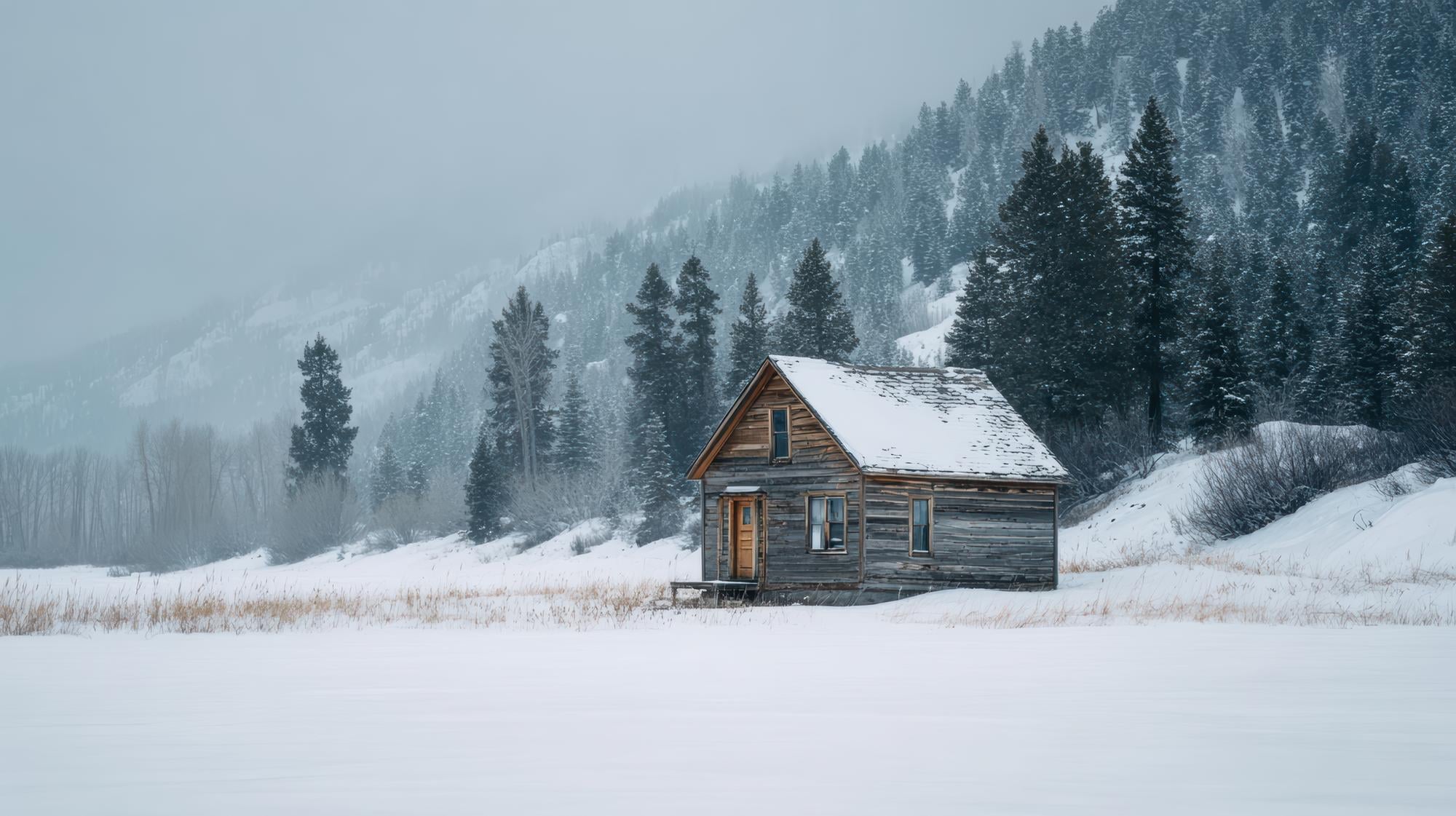
Five days earlier, Grant had taken me to our Cedar Ridge cabin for one final weekend before the baby arrived.
That’s what he called it. One last weekend, just us. Before everything changes.
He planned it himself. He packed the car. He stopped at the market in Nederland for the expensive cheese I liked. He drove the winding road up into the Indian Peaks with one hand on the wheel and one hand on my stomach.
I was thirty-five. Eight months pregnant.
And I owned sixty-eight percent of Northstar Air Rescue.
Northstar was my mother’s.
Evelyn Calder started it in 1993 with one used helicopter, a bank loan she had no business getting, and a hangar in Broomfield that leaked when it rained. A medical air-transport company. Helicopters and fixed-wing planes. Flying critical patients out of mountain towns and ranch roads and highway pileups to the trauma centers in Denver.
She flew the first two years herself. Then she hired pilots. Then nurses. Then paramedics. Then mechanics. By the time she died three years ago, Northstar had nineteen aircraft, six bases across Colorado and Wyoming, and four hundred and twelve employees.
She left me sixty-eight percent.
The rest was held by the employees. She’d made sure of that.
Grant was its Chief Financial Officer.
I met him at a fundraiser for Children’s Hospital Colorado in 2017. He was a numbers man. Wharton MBA. Charming in a way that made rooms tilt toward him. He made me laugh within ten minutes. He made my mother laugh within twenty, and my mother didn’t laugh easily.
Two years later, Mom hired him as CFO.
A year after that, I married him.
I had trusted him with both my marriage and my company.
At 2:17 a.m., smoke woke me.
I remember the time because the digital clock on the nightstand was glowing red through the haze. 2:17. The numbers looked strange. Blurred. Like I was underwater.
I couldn’t breathe.
I sat up. My throat was burning. My eyes were burning. The room was gray. Thick. I couldn’t see the far wall.
I reached for Grant.
His side of the bed was empty.
The sheets were cold.
Flames glowed beneath the bedroom door.
Orange light. A line of it. Flickering along the crack at the bottom. And heat. Heat I could feel on my face from across the room.
I got out of bed. Clumsy. Heavy. Thirty-five weeks of baby throwing my balance off. I dropped to my knees. Low. Where the air was cleaner. The way they teach you.
I crawled to the door.
I touched the handle.
It was hot.
Not warm. Hot. I yanked my hand back. My palm was red.
The bedroom had a second door. French doors. Glass. Opening onto the back deck.
I crawled to them. I grabbed the handle. I pushed.
They didn’t move.
I pushed again.
Nothing.
I looked through the glass.
There was something on the outside. Across both handles. A metal bar. A long one. Wedged between the door handles on the deck side. Holding them shut.
Both exits had been secured from outside.
I stopped breathing.
Not from the smoke.
From understanding.
Through the glass, through the smoke, through the dark, I saw the driveway. The gravel turnaround at the side of the cabin. Lit orange now. By the fire.
Our SUV was parked there. A black Range Rover.
Grant was standing beside it.
Fully dressed. Jeans. His North Face jacket. Boots.
And next to him, a woman.
Blonde. In a long camel coat. With her arms wrapped around herself.
Brooke Ellis.
The French doors were old. Single-pane glass. The cabin was built in 1962. The windows were never replaced.
I could hear them.
Not perfectly. But I could hear them.
“She’s awake,” Brooke whispered.
She was staring at the bedroom window. At me. On my knees behind the glass.
“You said she wouldn’t wake up.”
Grant didn’t look at the window.
He was looking at his phone.
He remained calm.
“They’ll blame the propane system,” he said. “The line runs right under the bedroom. Old cabin. Old fittings. Happens every winter up here.”
He put his phone in his pocket.
“Once the thirty-million-dollar policy pays,” he said, “and her shares clear probate, we can start over. Anywhere you want.”
Thirty million dollars.
The key-person life insurance policy. On me. As majority owner of Northstar. The board took it out two years ago. Grant recommended it. Grant was the beneficiary as my spouse.
I’d signed the papers on our kitchen counter without reading them.
Brooke didn’t move.
She was still staring at the window.
“Grant,” she said. “What about the baby?”
He glanced toward the burning cabin.
For the first time.
He looked at the bedroom window. At the smoke. At me.
His face didn’t change.
“If they die together,” he said, “there won’t be a separate investigation.”
Then he opened the driver’s side door.
Brooke stood there for one more second. Looking at me.
Then she got in the passenger side.
The headlights came on.
The Range Rover backed out of the gravel turnaround. Turned around. Drove down the long dirt road through the pines.
The taillights disappeared.
They drove away while flames spread across the ceiling.
I don’t know how long I knelt there.
Ten seconds. Thirty.
Long enough for the smoke to get thicker. For the heat behind me to get worse. For the ceiling above the bedroom door to start glowing.
Long enough to feel Noah kick. Hard. Right under my ribs.
Then I remembered.
The pantry.
The narrow pantry off the kitchen. Floor-to-ceiling wooden shelves. Canned goods. Flour. Coffee. The old cast-iron skillets my grandfather hung on hooks.
And behind the shelves on the back wall, a passage.
The cabin was built in 1962. By my grandfather. Walter Calder. An engineer at Rocky Flats. The nuclear weapons plant outside Denver.
He was paranoid. Cold War paranoid. He built a fallout shelter under the hill behind the cabin. And a tunnel to get to it.
From the pantry.
My mother had shown it to me when I was nine.
We were up for the Fourth of July. Just the two of us. She took me into the pantry after dinner. She pulled a lever hidden behind a can of peaches on the bottom shelf.
The whole back wall swung inward.
Behind it was a hole. Dark. Narrow. Smelling like damp earth and old concrete.
“Where does it go?” I asked.
“Out,” my mother said. “Under the hill. To the old shelter. And then out past the tree line. Two hundred feet.”
“Is it a hiding place?”
My mother knelt down. She looked me in the eye. The way she did when something mattered.
“This isn’t a hiding place, Maren,” she said. “It’s a way out when every normal door fails.”
The bedroom door was too hot to open.
But the pantry wasn’t in the bedroom.
The pantry was off the kitchen. Through the hall. Through the fire.
Unless.
The bedroom had a closet. A walk-in. It shared a wall with the pantry. My grandfather built it that way. So you could get from the bedroom to the tunnel without going through the house.
There was a panel. In the back of the closet. Behind the shoe rack.
I’d forgotten.
I hadn’t thought about it in twenty-six years.
I crawled.
Across the bedroom floor. Under the smoke. On my hands and knees with my belly dragging on the floorboards.
Into the closet.
I shoved Grant’s shoes off the rack. I ran my hands along the back wall. In the dark. In the smoke. Feeling for something. Anything.
My fingers found it.
A latch. Metal. Old. Rusted.
I pulled.
It didn’t move.
I pulled again. With both hands. With everything.
It gave.
The panel swung inward.
Cold air hit my face. Damp. Smelling like earth.
I found the release, squeezed into the tunnel, and crawled.
It was narrow. Barely two feet wide. Rough concrete walls. Dirt floor. Pitch black.
I was eight months pregnant.
I had to turn sideways. I had to crawl on one elbow and my knees. I kept my other arm curled around my stomach. Protecting him.
The smoke followed me in. I could feel it. Thick. Pouring in through the open panel behind me.
I crawled faster.
“Stay with me, Noah,” I whispered. “Stay with me. Stay with me, baby.”
I don’t know how long it took.
Two hundred feet. It felt like two hundred miles.
My knees were bleeding. My elbow was raw. I hit my head on a beam in the dark and saw stars.
Behind me, I heard something crack. Loud. Like a gunshot. The ceiling of the bedroom, I think. Coming down.
I kept crawling.
The tunnel sloped up.
The air changed. Colder. Fresher.
My hand hit wood.
A hatch. Above me.
I pushed it.
It didn’t move.
Snow. Packed on top.
I pushed again.
Noah kicked.
I screamed and pushed with my back and my shoulders and everything I had left.
The hatch flew open.
I emerged beyond the trees as the cabin windows exploded.
I heard it behind me. A deep whump. Then glass. Shattering. All at once. Every window.
I turned around.
Through the pines, two hundred feet away, the cabin was a wall of orange. Flames pouring out of every window. Pouring up through the roof. Sparks spiraling into the black sky.
The bedroom was gone.
Where I’d been sleeping twenty minutes earlier.
Gone.
I tried to stand.
A contraction dropped me into the snow.
It came from nowhere. A fist. Clamping down on my whole body. Low in my back. Wrapping around. Squeezing.
I fell sideways into the snow. On my hip. I couldn’t breathe. I couldn’t think.
It lasted forty seconds.
When it let go, I was lying in a snowbank in a cotton nightgown. In the Indian Peaks. In January. At two-thirty in the morning. Eight months pregnant. Barefoot.
Bleeding from my knees.
I tried to get up.
I couldn’t.
I lay there and looked at the sky. Black. Cold. Full of stars.
And I thought: This is how I die. Not in the fire. In the snow. Two hundred feet from the fire.
Then a white beam swept through the woods.
A light. Bright. White. Sweeping through the trees. Back and forth.
An engine. Low. Grinding.
The light swung toward me.
It stopped.
A tracked rescue vehicle stopped nearby.
A Sno-Cat. Big. Orange. With treads instead of wheels. And a light bar on the roof. And letters on the side.
CEDAR RIDGE SEARCH & RESCUE.
The door opened.
A man jumped down into the snow.
He was old. Seventy, maybe. Silver hair. A silver beard. A red parka with a white cross on the shoulder. A headlamp.
He ran toward me through the snow.
He knelt down.
“Ma’am,” he said. “Ma’am. Can you hear me?”
“There was a fire,” I said. My voice was gone. Smoke. “My husband—he locked the doors—he—”
“Okay,” the man said. “Okay. I’ve got you. I’ve got you. Don’t talk.”
He looked at my stomach.
His face changed.
“How far along?”
“Thirty-five weeks,” I said. “I’m having contractions.”
He wrapped me in a thermal blanket.
Gold. Crinkling. He tucked it around me. Under me. Over my bare feet.
He pulled a radio from his chest.
“Dispatch, Cedar Ridge Two. I’ve got a pregnant female, thirty-five weeks, smoke inhalation, hypothermic, active labor. At the Calder cabin on Spruce Hollow Road. Structure fully involved. I need Flight. Now.”
The radio crackled.
Cedar Ridge Two, copy. Northstar is en route from Boulder. ETA eighteen minutes.
Northstar.
My mother’s helicopter. Coming for me.
I started to laugh. Or cry. I couldn’t tell.
The man was checking my pulse. My breathing. My feet.
His headlamp swept across my chest.
And stopped.
He froze.
He was staring at my neck.
At the locket.
Gold. Small. Oval. On a thin chain. My mother’s. She wore it every day of my life. She took it off in the hospital the week before she died and put it around my neck and said, Don’t ever take it off. Promise me.
I never had.
His hand was shaking.
He reached out.
He picked up the locket.
He opened it.
Inside was a photograph.
Small. Faded. Black and white.
My mother. At twenty-five. Her dark hair blowing across her face. Laughing. Standing in front of a helicopter.
I’d looked at that picture a thousand times.
The man stared at it.
He didn’t say anything for a long time.
The Sno-Cat’s engine rumbled behind us. The fire roared through the trees. The snow fell.
“Where did you get this?” he said finally.
His voice was very quiet.
“It belonged to my mother.”
His hand began trembling.
So hard the locket rattled on its chain.
“Evelyn?” he whispered.
I stared at him.
“You knew her?”
He didn’t answer.
He looked at my face. In the light of his headlamp. Really looked. At my eyes. My nose. My chin.
His face crumpled.
Then he touched my cheek.
With one gloved hand. Very gently.
And he whispered:
“Your mother told me our baby never survived.”
Part 2: The Man in the Snow
I don’t remember the helicopter.
They tell me it landed in a clearing a quarter mile from the cabin. They tell me two flight nurses carried me to it on a stretcher through the snow. They tell me I was in active labor and hypothermic and my oxygen saturation was eighty-four percent.
They tell me the silver-haired man rode with me.
That he wasn’t supposed to. That search and rescue doesn’t ride on medical flights.
That he climbed in anyway and nobody stopped him.
What I remember is waking up.
A hospital room. Small. Quiet. Beige walls. A window with the blinds closed.
A monitor beeping. Steady. Two heartbeats.
Mine.
And a faster one. A gallop.
Noah.
I turned my head.
He was sitting in a vinyl chair in the corner.
Still in his red parka. With the white cross on the shoulder. His silver hair standing up on one side. A cup of hospital coffee going cold in his hands.
He was looking at me.
He’d been looking at me, I think, for a long time.
“Hi,” he said.
“Hi,” I said. My voice was a rasp.
“Don’t talk too much,” he said. “Your throat’s burned. Smoke. They say it’ll heal.”
“The baby?”
“He’s okay,” the man said. “They stopped the labor. For now. Magnesium. He’s still in there. Strong heartbeat. The doctor says if they can hold him a few more days, his lungs will be better.”
I put my hand on my stomach.
Noah kicked.
I started crying.
“Where am I?”
“St. Brendan’s,” the man said. “In Longmont. Forty miles from Boulder.”
“Why not Boulder Community? That’s closer.”
The man looked at me for a long time.
“Because I asked them to bring you here,” he said.
“Why?”
“Because your husband is in Boulder,” he said.
I didn’t say anything.
“You told me,” he said. “In the snow. Before you passed out. You said, My husband locked the doors. You said it three times. On the helicopter, you said it again. You grabbed the flight nurse’s arm and said, Grant locked the doors. Don’t tell him I’m alive.”
I closed my eyes.
“I don’t remember that.”
“I know,” the man said. “But you said it. So I listened.”
“What’s your name?” I whispered.
He set down the coffee cup.
“Elias,” he said. “Elias Thorne.”
I knew that name.
I didn’t know how I knew it.
Then I did.
It was on a plaque.
In the main hangar of Northstar Air Rescue in Broomfield. On the wall next to the door to my mother’s old office. Bronze. Small. Easy to miss.
NORTHSTAR AIR RESCUE
Founded 1993
Named for E.T.
“Always find your way home.”
I’d walked past that plaque a thousand times.
I asked my mother once who E.T. was.
She laughed. She said, An old friend. She said, Someone who taught me how to fly.
That was all she ever said.
“You’re E.T.,” I said.
Elias closed his eyes.
“She put that up?” he said. “In the hangar?”
“Next to her office door,” I said. “Named for E.T. Always find your way home.”
He put his hand over his mouth.
“Tell me,” I said.
He shook his head.
“You need to rest,” he said. “You were in a fire. You almost lost your baby. There’s a detective coming at noon. You need to—”
“Tell me,” I said. “Please. I need to know something true. Today. Before anything else.”
He looked at me for a long time.
Then he picked up his cold coffee again.
He held it in both hands.
He told me.
Part 3: What Evelyn Never Said
“I met your mother in 1987,” Elias said. “In Bozeman, Montana. At a little flight service called Big Sky Air Ambulance. Two helicopters and a Cessna. I was the chief pilot. I was thirty-three.”
“She was a pilot too?”
“She was twenty-two,” Elias said. “She’d just gotten her commercial rotorcraft license. She walked into the hangar in a pair of cowboy boots and told me she wanted to fly rescue. I told her we didn’t hire rookies. She said, Then teach me.”
He almost smiled.
“So I taught her,” he said.
“Two years,” he said. “I taught her everything. Mountain flying. Night flying. Landing on a ridgeline in a forty-knot crosswind. How to read the snow. How to set down on a highway with cars still moving.”
“And you fell in love.”
Elias looked at the floor.
“I fell in love the first day,” he said. “In the hangar. In the cowboy boots. It took her two years to fall back.”
“We were going to get married,” Elias said. “In the summer of 1990. At the hangar. She wanted to do it next to the helicopter.”
“What happened?”
Elias was quiet for a long time.
“March fourteenth, 1990,” he said. “A call came in at three in the morning. A rancher near Big Timber. Heart attack. Snowing hard. Visibility under a mile. Every other service in the state was grounded.”
He turned the coffee cup in his hands.
“I flew it,” he said. “Me and a flight nurse named Carol Bianchi. Twenty-six years old. Two little kids.”
My stomach went cold.
“We picked him up,” Elias said. “The rancher. We got him on board. We lifted off.”
He stopped.
“Fifteen minutes out of Big Timber,” he said, “the tail rotor failed.”
I didn’t say anything.
“I put it down,” Elias said. “In a field. In the snow. In the dark. I don’t know how. I don’t remember most of it.”
He swallowed.
“The rancher died on impact,” he said. “Carol died two days later. In the hospital in Billings. I broke my back and both legs.”
“The NTSB said it was a maintenance failure,” Elias said. “A bolt in the tail rotor assembly. Not my fault.”
He looked at me.
“I didn’t believe them,” he said.
“I came home from the hospital in June,” Elias said. “In a wheelchair. With pins in my spine. And I started drinking.”
He set the coffee cup down on the floor.
“I was a bad drunk,” he said. “The worst kind. I didn’t hit anybody. But I disappeared. For days. I’d sit in a bar in Livingston for three days and not come home. I’d drive drunk. I’d call Carol’s husband at two in the morning and apologize until he hung up.”
He looked at his hands.
“Your mother tried,” he said. “For eight months. She tried everything. She poured it down the sink. She hid my keys. She drove to Livingston at four in the morning to drag me out of bars.”
“And?”
“And in February of 1991,” Elias said, “she told me she was pregnant.”
My hand went to the locket.
“I was so happy,” Elias said. “For about a day. I stopped drinking. For about a day. I told her I’d get better. I told her I’d be a good father. I told her everything was going to change.”
He shook his head.
“Then I got drunk,” he said. “Four days later. And drove my truck into the Yellowstone River.”
“I lived,” Elias said. “Obviously. A fisherman pulled me out. I was in the hospital in Livingston for a week.”
He was quiet.
“Your mother came to see me,” he said. “On the last day. She sat next to my bed. She didn’t say anything for a long time.”
“What did she say?”
He closed his eyes.
“She said she’d lost the baby,” he said. “She said she miscarried. The week before. While I was missing. She said she’d gone to the hospital alone. She said she’d called me eleven times and I never picked up.”
I couldn’t breathe.
“She said she was leaving,” Elias said. “Montana. Me. All of it. She said she couldn’t watch me die. She said she’d already lost one thing she loved. She wasn’t going to lose another.”
He opened his eyes.
“She kissed me on the forehead,” he said. “And she walked out. And I never saw her again.”
The room was silent.
The monitor beeped. Two heartbeats.
“I believed her,” Elias said quietly. “For thirty-five years. I believed our baby died. Because I was drunk in a river.”
He looked at me.
“I got sober the next week,” he said. “In the hospital. I haven’t had a drink since. Thirty-five years in March.”
“That’s—”
“I moved to Colorado in 1995,” he said. “I heard she was here. Running a flight service. I never went to see her. I didn’t think I had the right.”
He swallowed.
“I joined search and rescue up in Cedar Ridge,” he said. “In 1998. I’ve been doing it ever since. Twenty-eight years. I never flew again. I couldn’t. But I could drive a Sno-Cat. I could find people in the snow.”
“How many?” I whispered.
“How many what?”
“People. In the snow. How many have you found?”
He was quiet for a long time.
“Two hundred and nine,” he said. “Before last night.”
“And last night?”
He looked at me. At my face. At the locket.
“Last night,” Elias said, “I found my daughter.”
I lay in that hospital bed and cried until the monitor started beeping a warning.
A nurse came in. She adjusted something. She looked at Elias. She looked at me.
“Is everything okay?” she asked.
“Yes,” I said. “No. I don’t know.”
She left.
Elias didn’t move from his chair.
“Why would she lie?” I said finally. “Why would she tell you the baby died?”
Elias didn’t answer right away.
“I’ve been asking myself that since the snow,” he said. “Since I opened that locket.”
“And?”
He looked at the window. At the blinds.
“I think,” he said slowly, “she was trying to give us both a way out.”
“If she told me the truth,” Elias said, “I’d have followed her. I’d have shown up at her door. Drunk. Every month. Every year. Wanting to see you. And every time, she’d have had to decide whether to let me in.”
He shook his head.
“And if she let me in, you’d have grown up with a drunk for a father,” he said. “And if she didn’t, you’d have grown up with a father pounding on the door.”
He looked at me.
“So she closed the door,” he said. “And she told me there was nothing behind it.”
“That’s what she did with the tunnel,” I said slowly.
Elias looked at me.
“This isn’t a hiding place,” I said. “It’s a way out when every normal door fails.”
He didn’t say anything.
“She told me that when I was nine,” I said. “She showed me the tunnel. She made me promise to remember it.”
My voice broke.
“She knew about doors,” I said. “She knew some doors have to be locked from the outside. To keep people safe.”
“Who raised you?” Elias asked. “Was there—did she marry?”
“Paul Calder,” I said. “She married him in 1992. When I was eight months old. He was an accountant in Boulder. He adopted me. He died when I was nineteen. Heart attack. He was a good dad.”
Elias closed his eyes.
“Good,” he said. “Good. I’m glad.”
“She kept her own name,” I said. “Calder. Her father’s name. She gave it to me too.”
“Walter Calder,” Elias said. “The Rocky Flats engineer. She talked about him. She said he built a tunnel under the family cabin because he was afraid of the Russians.”
I laughed. Through my tears.
“He did,” I said. “It saved my life last night.”
There was one more thing.
I reached up. I took the locket off.
For the first time since my mother put it around my neck three years ago.
I held it in my palm. I opened it.
My mother at twenty-five. Laughing. In front of a helicopter.
“There’s a hinge,” I said. “On the back. I never opened it. She told me not to. She said, When you’re ready, you’ll know.”
Elias stared at it.
I pressed the tiny hinge with my thumbnail.
The back of the photograph swung open.
Behind it was another photograph.
Even smaller. Faded almost white.
Two people.
My mother. In cowboy boots. And a tall young man with dark hair and a mustache. In a flight suit. With his arm around her.
Standing in front of a helicopter.
On the back, in my mother’s handwriting, so small I almost couldn’t read it:
E & E. Bozeman. 1989.
North star.
Elias made a sound.
I’ll never forget it.
He reached out. He took the locket from my hand. He held it up to the light.
He looked at himself. Thirty-five years ago. In a flight suit. With his arm around Evelyn.
“She kept me,” he whispered. “Behind her picture. For thirty-five years.”
“Next to her heart,” I said. “Every day.”
Part 4: The Detective
The detective came at noon.
Her name was Lucia Ferrante. Boulder County Sheriff’s Office. Major Crimes. Fifty. Short black hair. Sharp eyes. A gray blazer over a black T-shirt.
She sat in the chair Elias gave up for her. He stood by the window.
She took out a notebook. A real one. Paper.
“Mrs. Calder,” she said.
“Maren,” I said.
“Maren,” she said. “I’m going to need you to tell me everything. From the beginning. Don’t leave anything out.”
I told her.
The weekend. The cabin. The cheese from Nederland. Waking up at 2:17. The smoke. The hot door handle. The metal bar across the French doors.
Grant beside the SUV. Brooke Ellis next to him.
She’s awake. You said she wouldn’t wake up.
They’ll blame the propane system.
Once the thirty-million-dollar policy pays and her shares clear probate.
If they die together, there won’t be a separate investigation.
The tunnel. The snow. The Sno-Cat.
Detective Ferrante wrote everything down.
She didn’t interrupt. She didn’t react. She just wrote.
When I was done, she closed her notebook.
“Mrs. Calder,” she said. “The fire department called it at four-fifteen this morning. Total loss. They found the propane line had been disconnected under the bedroom floor. They’re calling it accidental. A failed fitting.”
“It wasn’t accidental.”
“I believe you,” Ferrante said. “But right now, it’s your word against his. And he’s going to say you were confused. Smoke inhalation. Pregnancy hormones. Trauma.”
“There was a bar across the doors.”
“There was,” Ferrante said. “The fire investigator found it. On the deck. Half-melted. A steel security bar. The kind you put across a sliding door.”
“So that’s evidence.”
“It’s evidence that a bar was there,” Ferrante said. “Not who put it there. He’ll say you put it there yourself. For security. He’ll say he was outside checking the propane tank when the fire started and couldn’t get back in. He’ll say he drove for help.”
“He drove away. With Brooke.”
“Did anybody else see Brooke?”
I didn’t answer.
“Here’s my problem,” Ferrante said. “Right now, Grant Lawson thinks you’re dead.”
I looked at her.
“He called it in at 3:02 a.m.,” Ferrante said. “From a gas station in Nederland. He said he’d driven down the mountain to get cell service. He said his wife and unborn son were trapped in a fire. He was hysterical. The dispatcher said he was crying.”
“He can cry on command,” I said. “He learned it in drama class.”
Ferrante almost smiled.
“Search and rescue was dispatched,” she said. “Your father’s team. Cedar Ridge Two.”
She looked at Elias.
“Mr. Thorne found you two hundred feet from the cabin,” she said. “He radioed for a helicopter. The flight crew brought you here. Not Boulder Community. On Mr. Thorne’s request.”
Elias didn’t say anything.
“And on the flight,” Ferrante said, “you told the crew not to tell your husband you were alive.”
“Yes.”
“They didn’t,” Ferrante said. “The flight nurse called me directly. At four-forty a.m. She’d heard about the fire on the scanner. She put it together.”
She paused.
“Mrs. Calder,” Ferrante said. “As of right now, as far as Grant Lawson knows, his wife and unborn son died in that cabin. The fire was so hot they haven’t recovered remains yet. They may not for days. The scene’s too unstable.”
“What do you want me to do?” I said.
Ferrante leaned forward.
“I want you to stay dead,” she said.
I stared at her.
“For a few days,” she said. “Maybe a week. Long enough for him to make a mistake.”
“What kind of mistake?”
“The kind people make when they think they’ve gotten away with it,” Ferrante said. “He’ll call the insurance company. He’ll call Brooke Ellis. He’ll call your company’s board. He’ll talk. He’ll move money. He’ll plan. Everything he does from this moment on, I’ll be watching.”
“You can do that?”
“I’ve already filed for warrants,” Ferrante said. “His phone. His email. His financial records. Brooke Ellis’s phone. The judge is reviewing them now.”
She looked at me.
“But if he finds out you’re alive,” she said, “he’ll lawyer up. He’ll stop talking. He’ll make Brooke stop talking. And it’ll be your word against his for the next two years.”
I looked at Elias.
He was standing by the window. His arms crossed. His jaw tight.
“It’s your choice,” he said quietly. “Nobody’s going to make you.”
I thought about my mother.
In a hospital room in Livingston, Montana, in 1991. Telling the man she loved that their baby was dead.
So he’d stop coming to the door.
So she could keep her daughter safe.
“Okay,” I said. “I’ll stay dead.”
Part 5: Five Days
Noah was born on day three.
Wednesday. 4:52 in the morning. Thirty-five weeks and four days. Four pounds, eleven ounces.
The magnesium held him for two and a half days. Then my body decided it was done waiting.
Dr. Amara Webb delivered him. She’d been told everything. She was the only doctor on my case. The nurses on my floor had been told I was a high-profile domestic violence victim in protective custody. My chart said JANE DOE.
Elias was in the room.
I asked him to be.
He stood by my head. He held my hand. He didn’t look away from my face once.
When Noah came out, he didn’t cry right away.
The room went silent.
Dr. Webb rubbed his back. Hard. The NICU nurse suctioned his mouth.
Five seconds. Eight. Ten.
Elias was squeezing my hand so hard it hurt.
Then Noah screamed.
Loud. Furious. Like he was angry about the whole thing.
Elias made a sound like he’d been holding his breath for thirty-five years.
They put him on my chest.
For two minutes. Before the NICU team took him for oxygen.
Tiny. Red. Wrinkled. Covered in vernix. A full head of dark hair.
He stopped screaming when he heard my heartbeat.
He opened his eyes.
Dark. Deep-set.
Elias’s eyes.
“Hi, Noah,” I whispered. “Hi, baby. I’m your mom.”
I looked up at Elias.
He was crying. Silently. Tears running down into his silver beard.
“And this,” I said, “is your grandpa.”
He spent two days in the NICU.
Oxygen for one. A feeding tube for two. Then he figured out how to eat on his own. Like he was in a hurry to get somewhere.
On day five, they brought him back to my room.
He was asleep on my chest when the memorial started.
Detective Ferrante came every day.
She sat in the vinyl chair. She told me what Grant was doing.
Day one, he called the insurance company.
At 9:14 a.m. Six hours after he called in the fire. He asked about the timeline for a key-person policy payout. He asked if a death certificate was required. He asked how long it would take if remains weren’t recovered right away.
The claims representative noted in her file that the caller seemed unusually composed for a man who’d lost his wife and child that morning.
Day one, he called the Northstar board.
At 11:02 a.m. He told them there’d been a terrible tragedy. He told them he was devastated. He told them he’d step in as interim CEO to keep the company stable during the transition.
He told them the company had received an acquisition offer three weeks earlier. From AeroVance Medical Transport. A private equity firm out of Dallas. Two hundred and forty million dollars.
He told them Maren had been considering it.
I hadn’t.
I’d said no. In writing. Three weeks ago. To Grant’s face.
My mother built Northstar so that a rancher in Big Timber having a heart attack at three in the morning would have someone to come. AeroVance buys air ambulance companies, cuts the rural bases, and raises the rates. I’d read their file. I’d said no.
Day two, he called Brooke.
Seven times.
Ferrante had the warrant by then. She had the call logs. She had the texts.
She read me some of them. In my hospital room. With Noah asleep in the bassinet next to the bed.
GRANT: Insurance is moving. Probate attorney says shares transfer to me as surviving spouse. 90 days max.
BROOKE: I can’t sleep. I keep seeing her face in the window.
GRANT: Stop. Delete these.
BROOKE: She was awake, Grant. She looked right at me.
GRANT: She was confused. Smoke. She didn’t see anything. Delete these NOW.
BROOKE: What about the baby. I keep thinking about the baby.
GRANT: There was no baby. Not yet. Legally. Stop.
I couldn’t listen to the rest.
I asked Ferrante to stop.
She stopped.
Day three, Grant went to the cabin.
What was left of it. A blackened foundation in the snow. The chimney standing alone. The fire investigators had marked it with yellow tape.
He stood there for twenty minutes with a local news crew filming him.
He cried.
Ferrante showed me the clip on her phone.
He was standing in front of the chimney. In his North Face jacket. Holding a single white rose.
“I just keep thinking,” he said to the reporter, “if I’d stayed inside. If I hadn’t gone out to check the propane. Maybe I could’ve gotten to her.”
He laid the white rose in the snow.
Day four, he went to the Northstar hangar.
He gathered the employees. Four hundred and twelve of them. In the main hangar. In front of the helicopters.
He gave a speech.
About me. About my mother. About legacy. About the future.
At the end, he said the company would be entering an exciting new chapter.
He didn’t mention AeroVance.
He didn’t have to. Half the room already knew. Brooke had been taking meetings in Dallas for a month.
One of the pilots called Ferrante that night.
A woman named Teresa Okonjo. Forty-eight. She’d been flying for Northstar for twenty-two years. My mother hired her.
She said she’d seen Grant and Brooke in the parking lot of the hangar after the speech. Kissing.
She said, His wife has been dead four days.
Day five was the memorial.
Part 6: The Memorial
I watched the whole thing.
Two hours. On the livestream. With Noah asleep on my chest.
Elias watched with me. From the vinyl chair. He didn’t say anything the whole time.
The church was full. Two hundred people. Northstar employees in their navy flight jackets. Board members. Friends. Neighbors. My college roommate, who flew in from Seattle. My mother’s old pilots.
There were photographs everywhere.
Me as a little girl in a flight helmet three sizes too big. Me at my high school graduation. Me and my mother in front of the first Northstar helicopter. Me on the sailboat in the San Juans. Laughing.
Me and Grant at our wedding.
Grant spoke last.
He walked to the podium slowly. Like his legs weren’t working right. He gripped both sides of the lectern. He looked out at the crowd.
“Maren was the strongest person I’ve ever known,” he said.
His voice broke.
“She was going to be the most incredible mother.”
He stopped. He lowered his head.
Brooke stepped forward and touched his shoulder.
I watched my husband cry over my empty casket.
There was nothing in it. Ferrante told me. The fire investigators hadn’t found remains. Of course they hadn’t. The casket was symbolic. White. Closed. With lilies on top.
“Thank you,” Grant said. “Thank you all for praying for Maren. And for our son.”
He looked up at the ceiling. Tears on his face.
“We were going to name him Noah,” he said.
I put my hand on my son’s back.
He was warm. Breathing. Four pounds, eleven ounces.
We were going to name him Noah.
“I don’t know how I’ll go on,” Grant said. “But I know Maren would want me to. She’d want me to take care of Northstar. Of her mother’s legacy. Of all of you.”
He looked out at the employees in their navy jackets.
“I promise I will,” he said.
Two hundred people stood up and applauded.
Elias stood up too.
Not to applaud.
He walked to the window. He stood there with his back to me.
His shoulders were shaking.
“I’ve been to a lot of funerals,” he said finally. Without turning around. “For people I didn’t find in time. For people I found too late.”
He was quiet.
“I’ve never been to one,” he said, “where the man who did it gave the eulogy.”
Part 7: The Board Meeting
The Northstar board met on Monday.
Day six.
Ferrante told me the agenda on Sunday night. She’d gotten it from Teresa Okonjo, the pilot, who’d gotten it from a board member’s assistant.
Item 1: Appointment of Grant Lawson as Interim Chief Executive Officer.
Item 2: Review of acquisition offer from AeroVance Medical Transport.
Item 3: Vote.
Grant didn’t have my shares yet. Probate takes time. But the board could vote to recommend the sale. And Grant, as my surviving spouse and executor, would control my sixty-eight percent as soon as the court signed off.
Ninety days, his attorney said.
“I have enough,” Ferrante said. “The texts. The calls. Brooke Ellis’s phone. The insurance company’s notes. Teresa Okonjo’s statement. The fire investigator’s report on the propane line and the security bar. Your statement.”
“Is it enough to arrest him?”
“It’s enough to arrest him,” Ferrante said. “Is it enough to convict him? Probably. Brooke Ellis is the key. If she flips, it’s over.”
“Will she?”
Ferrante looked at me.
“I read every text,” she said. “I keep seeing her face in the window. What about the baby. She’s cracking. She just needs a reason.”
“I want to be there,” I said.
Ferrante didn’t say anything.
“When you arrest him,” I said. “I want to be there. I want him to see me.”
“Mrs. Calder—”
“He looked at me,” I said. “Through the window. While the ceiling was on fire. He looked right at me and drove away.”
My voice was shaking.
“I want him to look at me again,” I said.
Ferrante looked at Elias.
Elias looked at me.
“She’s her mother’s daughter,” he said quietly.
Ferrante sighed.
“Ten a.m.,” she said. “The Northstar boardroom. Broomfield. You’ll come in with me. You’ll stay behind me. You will not say a word until he’s in cuffs. Do you understand?”
“I understand.”
I almost didn’t go.
I was six days postpartum. I’d had a baby on Wednesday. I’d been in a fire on Saturday. My knees were still bandaged from the tunnel. My throat still burned when I talked.
The nurses wouldn’t discharge me. Dr. Webb said I was crazy.
I signed myself out against medical advice.
Noah stayed with the NICU nurses. Just for the morning.
Elias drove.
The Northstar hangar in Broomfield hasn’t changed since I was a kid.
Big. Corrugated metal. Three helicopters inside, red and white, with the Northstar logo on the tail. A gold star. And the words Always Find Your Way Home.
The boardroom is on the second floor. Glass walls. Looking down on the hangar floor.
My mother’s office is next to it.
Next to the door, the bronze plaque.
Named for E.T.
Elias stopped in front of it.
He read it.
He put his hand flat on the bronze.
He didn’t say anything.
At 10:04, Detective Ferrante opened the boardroom door.
Grant was standing at the head of the table.
In a navy suit. A tie I bought him. A legal pad in front of him. A PowerPoint on the screen behind him.
AEROVANCE ACQUISITION — STRATEGIC OVERVIEW.
Brooke Ellis was sitting at his right hand.
Seven board members around the table. Including Hank Osgood, seventy-two, my mother’s first mechanic, who’d been on the board since 1999.
Grant looked up when the door opened.
“Detective,” he said. Surprised. Polite. “Is there news? About Maren? Did they find—”
He stopped.
I stepped out from behind Detective Ferrante.
I was wearing a borrowed coat. Gray wool. Elias’s. Too big for me. Black leggings. Hospital socks inside my boots because my feet were still swollen.
My hair was singed on one side. My face was still red from the heat. I had a bandage on my forehead where I’d hit the beam in the tunnel.
And around my neck, a gold locket.
The room went silent.
Hank Osgood stood up so fast his chair fell over.
“Maren?”
Grant didn’t move.
He stood at the head of the table with his hand still raised. Mid-sentence.
He looked at me.
His face went white.
Then gray.
Then something else.
Brooke Ellis made a sound.
A small, high sound. Like something breaking.
She stood up. She backed away from the table. Her chair hit the glass wall behind her.
“No,” she whispered. “No. No. No.”
“Hello, Grant,” I said.
He didn’t say anything.
He looked at me like I was a ghost.
Which, I suppose, I was.
“Grant Lawson,” Detective Ferrante said. “You’re under arrest for the attempted murder of Maren Calder, the attempted murder of her unborn child, arson of an occupied structure, and insurance fraud.”
Two deputies came through the door behind her.
Grant didn’t move.
He was still staring at me.
“You were in the bedroom,” he said. Barely a whisper. “The doors were barred. I saw you. You were—”
“I know,” I said. “I saw you too.”
“How?” he said.
I touched the locket.
“My mother,” I said. “She showed me a way out. When I was nine.”
The deputies took his arms.
He didn’t fight.
They cuffed him. Right there. At the head of the boardroom table. In front of the PowerPoint.
AEROVANCE ACQUISITION — STRATEGIC OVERVIEW.
Brooke was still backed against the glass wall.
Shaking.
Detective Ferrante walked over to her.
“Ms. Ellis,” she said quietly. “I’ve read your texts. I keep seeing her face in the window. What about the baby.”
Brooke put her hands over her face.
“I think you want to talk to me,” Ferrante said. “I think you’ve wanted to talk to somebody since Saturday night.”
Brooke sobbed.
“He said she wouldn’t wake up,” she whispered. “He put something in her tea. He said she’d sleep through it. He said she wouldn’t feel anything. He said it would be like going to sleep.”
The room went dead silent.
“And then she woke up,” Brooke said. “And she looked at me. Through the window. And she was pregnant. And I—”
She couldn’t finish.
“I’ve been seeing her face every time I close my eyes,” Brooke said. “For six days.”
They arrested her too.
Conspiracy. Accessory to attempted murder.
She went quietly.
At the door, she stopped. She turned around.
She looked at me.
“I’m sorry,” she said. “I know that doesn’t mean anything. I’m so sorry.”
I didn’t say anything.
I didn’t have anything to say to her.
They walked Grant past me on the way out.
Right past me. In the doorway. In his navy suit. With his hands cuffed behind him.
He stopped.
The deputies let him.
He looked at me.
“The baby,” he said. “Is he—”
“His name is Noah,” I said. “He was born on Wednesday. Four pounds, eleven ounces. He’s perfect.”
Grant didn’t say anything.
“You’ll never meet him,” I said. “Not ever. He’ll grow up knowing his father tried to burn him alive. That’s the only thing he’ll ever know about you.”
Grant’s face crumpled.
Then the deputies took him away.
Part 8: What the Hangar Knew
The board meeting didn’t end when the deputies left.
Hank Osgood was still standing. His chair still on the floor.
He looked at me.
Seventy-two years old. White mustache. Grease permanently ground into the creases of his hands from fifty years of turning wrenches on helicopters.
He’d known me since I was born.
He walked around the table. He stopped in front of me.
He put his hands on my shoulders.
“Your mother,” he said. His voice was rough. “Your mother would’ve torn him apart with her bare hands.”
“I know,” I said.
“She’d have used a rotor blade.”
I laughed. Through the tears.
Then Hank looked past me.
At Elias. Standing in the doorway. In his red parka.
Hank’s face changed.
He stared.
“Thorne?” he said.
Elias looked at him.
“Hank Osgood,” Elias said slowly. “Big Sky Air Ambulance. Bozeman. You were the mechanic.”
Hank’s mouth fell open.
“Thirty-five years,” Hank said. “Thirty-five years, I’ve been looking at that plaque. Next to her office door. Named for E.T. She never told anybody who E.T. was. Not even me.”
He looked at me. Then at Elias. Then at me again.
At my eyes. At Elias’s eyes.
His face went white.
“Oh,” he said quietly. “Oh, Evelyn. Oh, you stubborn woman.”
Part 9: Way Out
Grant pleaded guilty in August.
Attempted first-degree murder. Two counts. Arson. Insurance fraud. Embezzlement. The forensic auditors found four point one million dollars missing from Northstar’s accounts over three years. Routed through a consulting company registered to Brooke Ellis’s sister in Nevada.
He got forty-two years.
Brooke testified against him. She got twelve.
The insurance company never paid out the thirty million dollars.
There was no one to pay it for.
I didn’t sell Northstar.
AeroVance called three times in the spring. Their offer went up to two hundred and seventy million.
I said no.
Every time.
Northstar still has six bases. Nineteen aircraft. Four hundred and twelve employees. A base in Craig that loses money every year because it flies ranchers and oil field workers out of the middle of nowhere at three in the morning.
My mother built it for that.
That’s what it’s for.
I’m the CEO now. Teresa Okonjo is my Director of Flight Operations. Hank Osgood is still on the board. He says he’ll retire when he’s dead.
The employees own forty percent now. I gave them another eight from my shares. My mother always wanted that.
Elias lives in Cedar Ridge.
In a little log cabin a mile from where the old Calder cabin stood. He still runs search and rescue. He still drives the Sno-Cat.
He comes down to Boulder every Sunday. He has dinner with me and Noah. He brings the same thing every time. A pie from the bakery in Nederland. Apple. He says my mother liked apple.
He sits on the floor and lets Noah crawl all over him.
Noah calls him Papa E.
In June, I asked him to come to the hangar.
I didn’t tell him why.
He came on a Tuesday morning. In his red parka, even though it was eighty degrees. He walked into the main hangar in Broomfield.
And stopped.
There was a new helicopter on the floor.
An Airbus H145. Red and white. With the Northstar gold star on the tail. Brand new. Delivered the week before.
And painted on the side, under the pilot’s door, in white script:
Evelyn.
Elias walked up to it slowly.
He put his hand on the fuselage. On her name.
He didn’t say anything for a long time.
“She’d hate it,” he said finally. “She’d say it’s vain.”
“I know,” I said.
“She’d say name it after a patient. Or a nurse.”
“I know,” I said. “That’s why there’s another one coming in September.”
He looked at me.
“Carol,” I said. “After Carol Bianchi. The flight nurse from Big Timber.”
Elias put his hand over his mouth.
“There’s one more thing,” I said.
I handed him an envelope.
He opened it.
Inside was a certificate. From the FAA. Medical clearance. Second class. For a seventy-two-year-old commercial rotorcraft pilot whose license had been inactive since 1990.
He stared at it.
“How?” he whispered.
“Dr. Webb,” I said. “The one who delivered Noah. Her husband’s an FAA medical examiner. You passed your physical in May. You thought it was for search and rescue.”
He looked at the helicopter. At my mother’s name.
“I haven’t flown in thirty-six years,” he said.
“I know.”
“I crashed the last one.”
“I know,” I said. “The bolt failed. Not you. The NTSB said so.”
He shook his head.
“I can’t, Maren.”
I took his hand.
His big, rough, seventy-two-year-old hand. The hand that wrapped me in a thermal blanket in the snow. That held mine while Noah was born.
“Elias,” I said. “In 1987, a twenty-two-year-old woman in cowboy boots walked into your hangar and said, Then teach me.”
He looked at me.
“I’m thirty-five,” I said. “I’ve never flown anything. I own nineteen helicopters and I can’t fly a single one.”
I squeezed his hand.
“Teach me,” I said.
He didn’t say anything for a long time.
Then Teresa Okonjo walked out of the pilots’ lounge. In her flight suit. Carrying two helmets.
She held one out to Elias.
“Check ride’s at ten,” she said. “I’m your instructor. I’ve read your logbook from Big Sky. You had four thousand hours of mountain time by 1990. You’ll be fine.”
Elias looked at the helmet.
He looked at the helicopter.
He looked at my mother’s name on the side.
He took the helmet.
He flew for forty minutes that morning.
With Teresa in the left seat. Over Broomfield. Over Boulder. Up toward the Indian Peaks.
I stood on the tarmac and watched the red and white helicopter get smaller against the mountains.
When he landed, he didn’t get out right away.
He sat in the cockpit for a long time. With his hands still on the controls. With his eyes closed.
Teresa got out. She came over to me.
“He’s good,” she said quietly. “He’s really good. He flies like he never stopped.”
“He never did,” I said. “Not really. He just found people on the ground instead.”
When Elias finally climbed down, his face was wet.
He walked across the tarmac. He stopped in front of me.
“I flew over Cedar Ridge,” he said. “Over where the cabin was.”
“Yeah?”
“You can see the tunnel hatch from the air,” he said. “In the trees. Two hundred feet from the foundation. I never noticed it before.”
He looked at me.
“Your grandfather built a way out,” he said. “And your mother showed it to you. And you remembered.”
He put his hand on my cheek. The way he did in the snow.
“Thirty-five years ago,” he said, “your mother closed a door on me. To keep you safe. I hated her for it. I drank for it. I spent half my life thinking I’d lost everything because of it.”
He was crying.
“And then you came out of the ground,” he said. “In the snow. Two hundred feet from a burning house. Wearing her locket.”
“She told me something,” I said. “When she was dying. In the hospital. The week before.”
Elias waited.
“She said, If you ever get lost, Maren, look for the north star. It never moves. Everything else spins around it. But it stays exactly where it is. So you can always find your way home.”
I looked at him.
“I thought she meant the company,” I said. “Northstar. I thought she was telling me to take care of it.”
Elias didn’t say anything.
“She wasn’t talking about the company,” I said.
I touched the locket. The hinge. The tiny photograph behind my mother’s face.
E & E. Bozeman. 1989. North star.
“She was talking about you,” I said.
Epilogue: The Livestream
Noah is two now.
He has dark hair and deep-set eyes and a crooked smile. He likes trucks and helicopters and his Papa E. He’s terrified of the vacuum cleaner.
He doesn’t know about the fire yet.
Someday, I’ll tell him.
I’ll tell him that his father locked the doors from the outside and drove away. That his father stood in front of two hundred people and gave a eulogy for a wife who was watching from a hospital bed forty miles away.
I’ll tell him that his great-grandfather was afraid of the Russians and built a tunnel under the hill.
I’ll tell him that his grandmother was a pilot who wore cowboy boots and told a lie that saved my life before I was born.
I’ll tell him that a silver-haired man in a Sno-Cat found me in the snow and opened a locket.
And that the man was his grandfather.
I still have the livestream.
Of my memorial.
I’ve never deleted it. I don’t know why.
Sometimes, late at night, after Noah’s asleep, I watch the beginning. Before Grant spoke. When the slideshow was playing.
Me as a little girl in a flight helmet three sizes too big.
Me and my mother in front of the first Northstar helicopter.
People in the pews crying. People I didn’t know loved me that much.
Hank Osgood in the third row. With his face in his hands.
It’s a strange thing. To watch your own funeral.
To see who shows up. Who cries. Who stands at the podium and lies.
To see who would have been left behind.
My mother told me once that the tunnel wasn’t a hiding place.
It’s a way out when every normal door fails.
I thought she meant the fire.
I know now she meant everything.
Every door that closes. Every lie somebody tells to protect you. Every person who walks out and leaves you in the dark.
There’s always a way out.
You just have to remember where your mother hid it.
Last Sunday, Elias flew us over Cedar Ridge.
Me and Noah. In the back. In the helicopter with my mother’s name on the side.
Noah pressed his face against the window. He pointed at everything. Trees. Snow. Clouds.
“Papa E!” he shouted over the rotors. “Papa E, look!”
Elias looked back at him from the pilot’s seat.
He was smiling.
He banked the helicopter gently. Over the pines. Over the blackened foundation where the cabin used to be. Over a square of weathered wood in the snow, two hundred feet away, in the trees.
The hatch.
“Right there, buddy,” Elias said into his headset. “See it? That’s where Grandma’s tunnel comes out.”
Noah pressed his hand against the glass.
“Way out,” he said.
Elias looked at me.
I nodded.
“That’s right,” Elias said. “Way out.”
Then he turned the helicopter south.
Toward Boulder.
Toward home.

Adrian Hawthorne is a celebrated author and dedicated archivist who finds inspiration in the hidden stories of the past. Educated at Oxford, he now works at the National Archives, where preserving history fuels his evocative writing. Balancing archival precision with creative storytelling, Adrian founded the Hawthorne Institute of Literary Arts to mentor emerging writers and honor the timeless art of narrative.