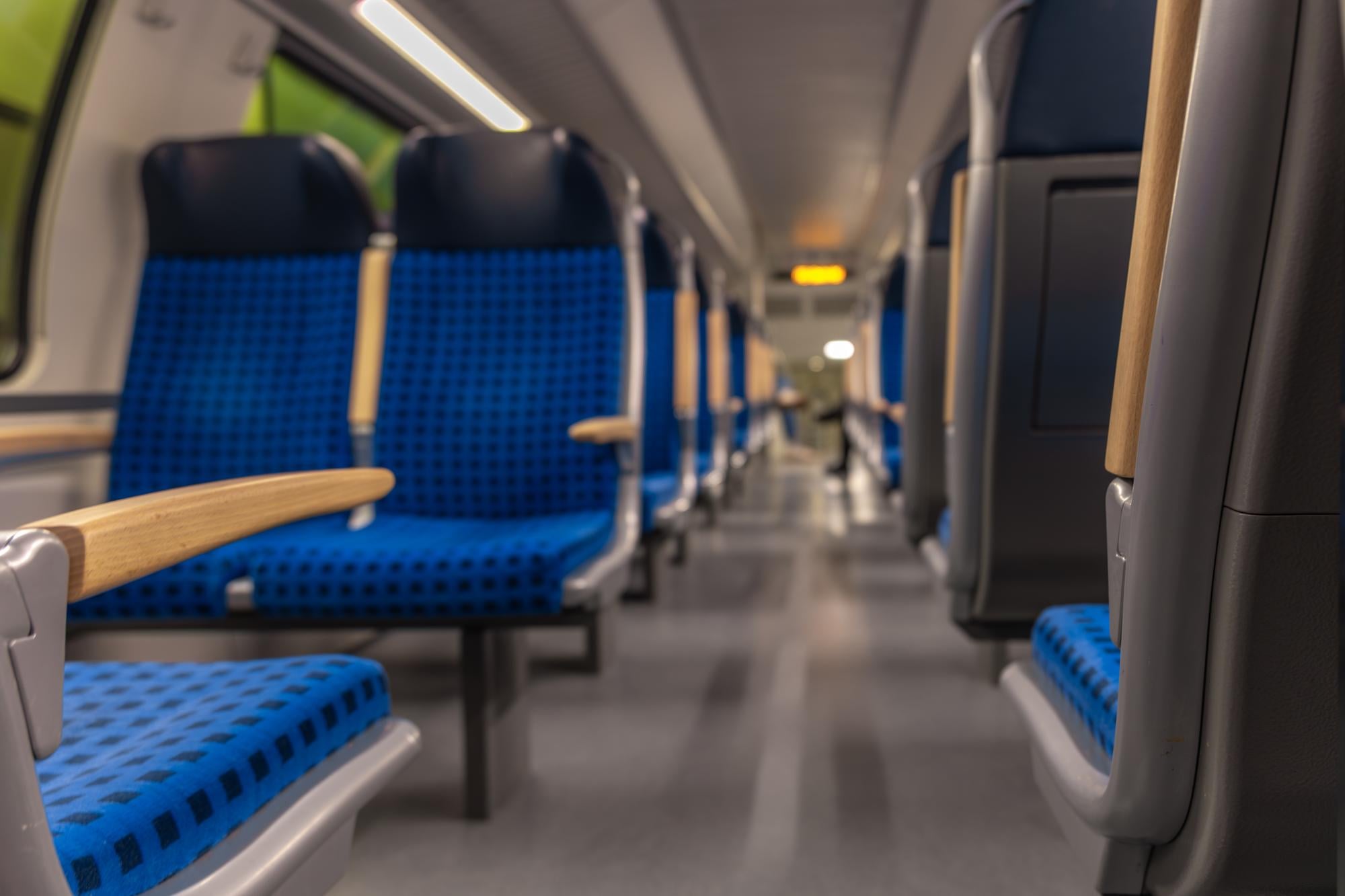
Make a Scene
The air-conditioning died twenty minutes outside of Boston.
I felt it before anyone said anything. A shudder in the vents above the windows. A long mechanical sigh. Then silence where the hum had been.
At first, nobody noticed.
Then the heat started creeping in.
It was the third week of July. Ninety-one degrees outside. The Northeast Regional to New York. Train 171. Four hours and nine minutes, Boston South Station to Penn Station, if nothing went wrong.
Something always goes wrong.
I had a window seat.
Car 5. Seat 43A. Facing forward. I’d booked it three weeks ago, the night the hospice nurse called.
I had a canvas tote at my feet with a cardigan I wouldn’t need, a paperback I wouldn’t read, and a Tupperware container of lemon bars for my mother, who couldn’t eat them anymore.
I was going anyway.
The carriage got hot fast.
By Route 128, people were fanning themselves with the Amtrak safety cards. By Mansfield, a baby three rows back was crying. Steady. Furious. A woman across the aisle had taken off her blazer and was pressing a cold water bottle to the back of her neck.
A man in the front of the car went to find the conductor.
He came back five minutes later.
“They know,” he announced. “They’re working on it. They say maybe Providence.”
People groaned.
Every seat was taken. Every single one. A Friday afternoon in July. People going to New York for the weekend. People going home. I’d looked when I boarded. There wasn’t an empty seat in Car 5, or Car 4, or Car 6.
There was nowhere to move.
The man beside me was big.
Not fat, exactly. Broad. Fifty, maybe. Thick neck. Sunburned forearms. A gray polo shirt and khaki shorts and boat shoes without socks. A wedding ring. A canvas messenger bag on the floor between his feet with a lanyard spilling out of the front pocket.
He’d sat down at South Station with a grunt and spread his knees wide so his leg was against mine and opened his laptop on the tray table.
I’d moved my leg.
He hadn’t noticed.
Then he started unbuttoning his shirt.
At first, I thought he was just loosening it. The collar. The top button. Everybody was hot.
Then he pulled the whole thing over his head.
Stuffed it into his messenger bag.
And sat there.
Bare-chested.
In seat 43B. On a packed train. Two inches from my shoulder.
I looked out the window.
Massachusetts going by. Pine trees. Strip malls. A Dunkin’ Donuts. A cemetery.
I tried to ignore him.
I’m good at that. I’ve had practice.
My name is Joanna Pratt. I’m forty-four years old.
I’m a pediatric speech therapist in Brookline. I teach four-year-olds how to say their R’s and help toddlers who’ve never spoken a word find their first one. I have a sixteen-year-old daughter named Maya. I’ve been divorced for six years. I own a small blue house in Roslindale with a porch that needs painting.
My mother is dying.
Her name is Doris. She’s eighty-one. She lives in Queens, in the same two-bedroom apartment in Jackson Heights where I grew up. Pancreatic cancer. They found it in April. By June, they said weeks.
Hospice set up a bed in her living room. By the window. Where she can see the 7 train go by on the elevated tracks. She says the sound helps her sleep. She’s heard it every night for fifty-two years.
I’d been going down every weekend. Four hours there. Four hours back. Every Friday after my last patient.
This weekend, the nurse said, might be the last one.
My mother taught me a lot of things.
How to make a pie crust without a recipe. How to iron a collar. How to walk into a room like you belong there even when you don’t.
And one thing she said more than anything else. Over and over. My whole childhood.
Don’t make a scene, Joanna.
When a boy pulled my hair on the school bus in second grade. Don’t make a scene.
When a man on the subway rubbed against me in the crowd on the way to my first job at fifteen. Just move away, honey. Don’t make a scene.
When my boss at the deli on Roosevelt Avenue kept putting his hand on my lower back when I reached for the cold cuts. Some men are like that. Keep your head down. Don’t make a scene.
When my husband said things in front of his friends that made my face burn. Every marriage has its moments, Jo. Don’t make a scene at the party.
She wasn’t a cruel woman. I want to be clear about that.
She was a seamstress. She raised me alone after my father left when I was six. She worked sixty hours a week altering wedding dresses in a shop on 82nd Street. She came home with pins in her mouth and needle pricks on her fingers. She never once complained.
She was just from a time when women were taught to take up as little space as possible.
To be quiet.
To fold themselves smaller and smaller until nobody could see them.
And then she taught me.
And three weeks ago, I taught my daughter.
Then his sweaty arm brushed against mine.
It was his left arm. Bare. Damp. Hot. Covered in coarse gray hair. It slid along my right arm from shoulder to elbow as he reached for his water bottle.
I flinched.
I moved closer to the window.
There wasn’t much room. Two inches, maybe. Between my shoulder and the glass.
I took them.
A few minutes later, his bare side pressed against me.
Not his arm this time.
His side. His ribs. His whole flank. Sweaty and hot. Pressed against my right arm and the side of my body. Through my thin cotton blouse.
I could feel his skin through the fabric.
I could feel his sweat soaking into my sleeve.
I could smell him. Sunscreen and sweat and something sour.
“Excuse me,” I said. “Please keep your distance.”
He barely reacted.
He was typing on his laptop. An email. I could see the screen. Something about a budget meeting.
He shifted maybe half an inch. Not even.
I looked across the aisle.
The woman with the cold water bottle was looking at me. Seventies, maybe. White hair cut short. Reading glasses on a beaded chain. A crossword book open on her lap. She’d stopped doing the crossword.
Our eyes met.
She raised one eyebrow.
I looked away.
Don’t make a scene, Joanna.
When it happened again, five minutes later, I complained.
He’d leaned back in his seat. Stretched. Raised both arms over his head. And when he brought them down, his whole bare torso came with them. Sideways. Into me.
His chest was against my arm. His armpit was against my shoulder.
I pushed back. Not hard. Just enough.
“Sir,” I said. Louder this time. “Please. Stop touching me.”
He laughed.
He actually laughed.
He turned his head and looked at me for the first time. Small eyes. Red face. A gold chain around his neck, tangled in the gray hair on his chest.
“It’s ninety degrees,” he said. “You want me to cook in my shirt?”
“I don’t care what you wear,” I said. “Just keep your distance.”
He glanced at the tiny space between me and the window.
Two inches. Maybe less now.
“Then move over,” he said.
“I can’t move any farther.”
He shrugged.
And went back to his email.
I sat there with my face burning.
Not from the heat.
I looked out the window. Attleboro. A water tower. A Home Depot. A cemetery. Why are there always cemeteries along train tracks?
I could hear my mother.
Just move away, honey. Don’t make a scene.
I’d moved away. There was nowhere left to move.
I need to tell you about Maya.
Three weeks ago.
She came home from her summer job at the library on a Tuesday. She was quiet. Maya isn’t quiet. Maya is sixteen and opinionated and talks with her hands and argues with me about everything from climate policy to whether cereal counts as soup.
She came in the front door and went straight to her room and closed the door.
I knocked.
“Maya? Honey? You okay?”
“Fine.”
“You don’t sound fine.”
Silence.
Then the door opened.
She’d been crying.
She told me at the kitchen table.
On the 39 bus. Coming home from the library on Centre Street. It was packed. Rush hour. She was standing, holding the pole.
A man got on at Forest Hills. Older. Forties. Big. He stood behind her.
At first she thought it was the crowd.
Then she realized it wasn’t.
He was pressing himself against her. From behind. Every time the bus lurched. Then when the bus didn’t lurch.
She moved.
He followed.
She moved again.
He followed again.
“I didn’t know what to do,” Maya said. “There were like forty people on the bus. Nobody was looking. I just stood there. I moved as far as I could. And he just kept—”
She couldn’t finish.
“He got off at Roslindale Square,” she said. “He smiled at me. When he got off. He smiled.”
I reached across the table and took her hand.
“Oh, baby,” I said. “I’m so sorry.”
“What was I supposed to do, Mom?”
And I said it.
God help me. I said it.
The same words. In the same voice. Fifty years later.
“Next time,” I said, “just move away. Get off at the next stop if you have to. Text me. I’ll come get you. Don’t engage with him. Don’t make a scene. You never know what a man like that might do.”
Maya pulled her hand back.
She looked at me.
I’ll never forget her face.
“So I’m supposed to just take it?” she said.
“No, honey, that’s not what I—”
“You’re telling me to move away,” she said. “I did move away. He followed me. There was nowhere else to go.”
“I know—”
“So I get off the bus,” Maya said. “At the wrong stop. And walk a mile home in the dark. And he gets to stay on the bus. In his seat. Smiling.”
I didn’t say anything.
“Why is it always the girl who has to move?” Maya said.
Her voice cracked.
“Why is it never him?”
She went to her room.
She closed the door.
I sat at the kitchen table for a long time.
I didn’t have an answer.
I’d never had one. Not in forty-four years.
A minute later, the man in 43B leaned into me again.
This time, there was no way it was accidental.
He didn’t stretch. He didn’t reach for anything. He didn’t shift in his seat.
He just leaned.
Slowly. Deliberately. His whole bare side against my body. His sweaty arm sliding down the length of mine.
And he left it there.
He didn’t look at me. He kept typing. His face was perfectly calm.
But he left it there.
Pressed against me.
I looked down at his arm on mine.
At the sweat beading in the gray hair. At his wedding ring. At the gold chain tangled on his chest.
I looked out the window.
Kingston, Rhode Island. A sign. A parking lot. A cemetery.
I thought about my mother. In a hospice bed in Queens. Listening for the 7 train.
I thought about Maya. On the 39 bus. Moving away and moving away until there was nowhere left to go.
Why is it always the girl who has to move?
That was enough.
I stopped arguing.
I stopped asking.
I decided to handle things differently.
I didn’t yell.
I didn’t push him.
I didn’t make a scene.
Not yet.
I reached down into my canvas tote. Slowly. Like I was looking for my book.
I took out my phone.
I held it in my lap. Down low. Below the tray table. Where he couldn’t see the screen.
Three months ago, Maya made me save a number in my phone.
It was after a girl at her school got followed home from the T. They’d done an assembly. A transit police officer came and talked to them.
Maya came home and grabbed my phone off the counter.
“What are you doing?” I said.
“Putting in the numbers,” she said. “MBTA Transit Police. Text line. And Amtrak Police. They have one too. You text them and they come. You don’t have to call. You don’t have to say anything out loud.”
“Why do I need that?”
Maya looked at me.
“Mom,” she said. “You take the train to Grandma’s every weekend. By yourself.”
She handed me back my phone.
“Just in case,” she said.
I scrolled down.
There it was. Under A.
AMTRAK POLICE (TEXT) — 78287.
I opened a new message.
My hands were shaking. I typed with my thumbs. Slowly. Carefully.
Northeast Regional 171. Boston to NY. Car 5. Seat 43B. Shirtless man, approx 50, gray hair, gold chain, wedding ring. He is repeatedly pressing his bare body against me after I asked him to stop 3 times. He laughed and told me to move. I have nowhere to move. I am in 43A. Please help.
I read it twice.
I pressed send.
Delivered.
Then I did the second thing.
I opened the camera.
I turned it to video.
I held it in my lap. Angled up. Tilted toward the gap between us. Toward his bare arm on mine. Toward his hand on the tray table. Toward the laptop screen.
I pressed record.
And then I did the third thing.
I looked across the aisle.
At the woman with the white hair and the reading glasses on a beaded chain.
She was still watching me. Her crossword book still open in her lap. She hadn’t written anything in it for twenty minutes.
I didn’t say anything.
I just looked at her.
And I let her see my face.
She looked at me for a long moment.
Then she looked at the man in 43B. At his bare torso. At his arm pressed against mine.
She closed her crossword book.
She reached into her purse.
She took out her own phone.
She held it up. Not hiding it. Not even a little.
And she pointed it straight at him.
At first, he didn’t notice.
He was still typing. Still leaning.
The train rocked along the tracks. Somewhere behind us, the baby was still crying.
Two minutes passed.
Three.
My phone buzzed in my lap.
I looked down.
A reply.
AMTRAK POLICE: We have received your message. An officer will meet Train 171 at New Haven. The conductor has been notified and is on the way to your car. Remain in your seat. Do not engage. If you feel you are in immediate danger, call 911.
I didn’t move.
I didn’t say anything.
I kept the video recording.
Then the door at the front of Car 5 slid open.
The conductor came through.
A woman. Fifty-something. Dark blue uniform. Silver Amtrak badge. A radio on her hip. Her name tag said D. WALSH.
She walked down the aisle. Slowly. Looking at seat numbers.
She stopped at row 43.
She looked at me.
Then she looked at the man in 43B.
At his bare chest. At his arm.
That’s when his expression suddenly changed.
He looked up from his laptop.
He saw the conductor standing over him.
He looked around the carriage.
At the woman across the aisle. Holding her phone up. Pointed at him.
At the young man in the seat in front of her. A college kid in a Northeastern T-shirt. Who’d turned all the way around in his seat. And was also holding up his phone.
At three other people in the rows around us. Who had stopped fanning themselves. And were looking at him.
Then he looked back at me.
At my phone. In my lap. The red recording light blinking.
And at the screen above it. Where the text from Amtrak Police was still open.
An officer will meet Train 171 at New Haven.
“What did you do?” he said.
His voice was different. Higher. The laugh was gone.
I said nothing.
“Sir,” the conductor said. “I’m going to need you to put your shirt back on.”
He didn’t move.
He was staring at my phone.
“Sir,” the conductor said again. “Shirt. Now. And then I need you to stand up and come with me to the café car.”
He looked at her.
He looked at me.
His face turned bright red.
Not from the heat.
“Please,” he said.
His voice cracked.
“Please, don’t! Don’t do this to me!”
The whole carriage went quiet.
Even the baby stopped crying.
He grabbed his messenger bag. He yanked his shirt out of it. He pulled it over his head so fast he got his arm stuck in the wrong hole. He fought with it. He got it on. Inside out.
“I wasn’t doing anything,” he said. To the conductor. To me. To the whole car. “I wasn’t doing anything. It’s hot. It’s a hundred degrees in here. I was just trying to get comfortable.”
“Sir,” the conductor said. “Please stand up.”
“She’s overreacting,” he said. He pointed at me. “She’s being hysterical. I barely touched her. It’s a crowded train. There’s no room. What am I supposed to do?”
“Keep your distance,” said the woman across the aisle.
He turned around.
She was still holding up her phone.
“She asked you to keep your distance,” she said. Calmly. “Three times. I heard every one. The first time, you ignored her. The second time, you laughed and told her to move. The third time, you didn’t say anything. You just leaned into her and stayed there.”
She lowered her phone.
“I have the last nine minutes,” she said. “Every second.”
“So do I,” said the college kid in the Northeastern shirt.
He held up his phone.
“Since Kingston,” he said. “You leaned on her like eight times. On purpose. You were smiling.”
The man stared at them.
He turned back to me.
“Please,” he said again. Lower. Quieter. Leaning toward me so nobody else could hear.
“Please,” he said. “Ma’am. I’m sorry. Okay? I’m sorry. I didn’t mean anything by it. I’m going to a conference. In New York. A work thing. If the police get involved—”
He stopped.
“I have kids,” he said. “I have a wife. I have a job. Please. Just tell her it was a misunderstanding. Tell her you overreacted. I’ll move. I’ll go stand in the vestibule. I’ll do whatever you want. Please don’t do this to me.”
I looked at him.
I looked at his face. Red and sweating and terrified.
I looked at the lanyard spilling out of the front pocket of his messenger bag.
I could read it now. From where I was sitting.
NEW ENGLAND ASSOCIATION OF SCHOOL ADMINISTRATORS — SUMMER LEADERSHIP CONFERENCE.
RICHARD HOLLAND.
ASSISTANT PRINCIPAL — WESTFIELD MIDDLE SCHOOL.
I felt something go very cold inside me.
Assistant principal. Middle school.
Middle school.
Eleven-year-olds. Twelve-year-olds. Thirteen-year-olds.
Girls.
“I have kids too,” I said quietly.
He stared at me.
“A daughter,” I said. “She’s sixteen. Three weeks ago, a man pressed himself against her on a bus. She moved away. He followed her. She moved again. He followed her again. She didn’t know what to do.”
He didn’t say anything.
“And I told her,” I said, “to just move away. To not make a scene.”
My voice was shaking now.
“I told her that,” I said. “Because that’s what my mother told me. And her mother told her. For a hundred years. Every woman in my family. Just move away. Don’t make a scene.”
I looked at him.
“I moved away from you,” I said. “All the way to the window. There’s nowhere else for me to go.”
“Please,” he said.
“You didn’t stop,” I said. “When I asked you nicely. You didn’t stop when I asked you again. You laughed at me. You told me to move. And then you leaned on me and stayed there. On purpose. While you typed an email.”
I took a breath.
“You weren’t thinking about your kids,” I said. “Or your wife. Or your job. Not for one second. You were thinking about what you could get away with. On a crowded train. With nowhere for me to go.”
He opened his mouth.
He didn’t say anything.
“Sir,” the conductor said. Firmly. “Stand up. Right now. Bring your bag.”
He stood up.
His legs were shaking.
He picked up his messenger bag. His laptop. His water bottle. His shirt was still inside out.
The conductor stepped aside to let him into the aisle.
He walked past her. Toward the front of the car. Toward the café car.
Every person in Car 5 watched him go.
At the door, he stopped.
He turned around.
He looked at me.
“I’ll lose my job,” he said. “Do you understand that? Because of you. I’ll lose everything.”
I looked back at him.
“No,” I said. “Because of you.”
The door slid shut behind him.
The conductor stayed by my seat.
She crouched down in the aisle so she was eye level with me.
“Ma’am,” she said quietly. “Are you okay?”
I didn’t say anything.
I realized I was shaking. My whole body. My hands. My knees.
The red light on my phone was still blinking. Still recording.
I pressed stop.
“I’m okay,” I said.
“Are you hurt?”
“No.”
“He’s going to sit in the café car with our assistant conductor until New Haven,” she said. “The Amtrak Police officer will board there. He’ll want to talk to you. Is that all right?”
I nodded.
“Do you want to move?” she asked. “I can find you a seat in the café car. Or Business Class. There’s one open up there.”
I thought about it.
Then I shook my head.
“No,” I said. “This is my seat. I’m staying in it.”
The conductor looked at me for a long moment.
Then she almost smiled.
“Good,” she said.
She stood up.
She looked across the aisle at the woman with the white hair.
“Ma’am,” she said. “Thank you.”
“I’m eighty-three,” the woman said. “I’ve been waiting sixty years to do that.”
The conductor left.
The car was quiet for a long time.
Then the college kid in the Northeastern shirt turned around in his seat again.
“You okay?” he asked.
“I’m okay,” I said. “Thank you. For filming.”
He shrugged. Embarrassed.
“My sister,” he said. “Same thing happened to her. On the Orange Line. Last year. Nobody did anything. She said forty people saw it and nobody did anything.”
He looked down.
“I’m not going to be one of the forty,” he said.
Somebody three rows back started clapping.
Just one person. Then another. Then the woman across the aisle. Then the college kid.
Then half the car.
I didn’t know where to look.
I looked out the window. Westerly, Rhode Island. A marsh. Herons in the tall grass.
My face was burning.
But this time, it wasn’t shame.
The woman across the aisle leaned over.
“Dorothy,” she said. She held out her hand. “Dorothy Kessler. Mystic, Connecticut. Retired schoolteacher.”
“Joanna,” I said. I shook her hand. “Joanna Pratt.”
“Joanna,” Dorothy said. “You did that very well.”
“I don’t feel like I did anything well,” I said. “I feel like I’m going to throw up.”
“That’s the adrenaline,” Dorothy said. “It’ll pass.”
She was quiet for a moment.
“Can I tell you something?” she said.
“Of course.”
She looked out her own window.
“In 1963,” she said, “I was nineteen. I took the train from New London to New York for a job interview. A secretarial job. My first real one. I wore my best dress. Navy blue. With a little white collar.”
She was quiet.
“There was a man next to me,” she said. “In a suit. Older. He put his hand on my knee. Under his newspaper. Around Old Saybrook. And he left it there. All the way to Stamford.”
I put my hand over my mouth.
“I didn’t say anything,” Dorothy said. “I didn’t move. I sat there with his hand on my knee for an hour and twenty minutes and looked out the window and pretended it wasn’t happening. Because that’s what we were taught. Don’t make a scene. Don’t embarrass yourself. Don’t embarrass him.”
She turned back to me.
“I didn’t get the job,” she said. “I walked into that interview and couldn’t stop shaking. I couldn’t answer a single question. I went home on the next train and never told anyone. Not my mother. Not my husband. Not anyone.”
She reached across the aisle.
She put her hand on my arm. Lightly.
“You’re the first person I’ve ever told,” she said.
I couldn’t speak.
“I watched you,” Dorothy said. “For twenty minutes. Moving closer and closer to that window. Making yourself smaller and smaller.”
She squeezed my arm.
“And I thought, There she is,” Dorothy said. “There’s me in 1963.”
“And then?”
“And then you looked at me,” Dorothy said. “And I saw your face. And I thought, Not this time.”
The train slowed coming into New Haven.
Union Station. A brick platform. Heat shimmering off the tracks.
The air-conditioning still wasn’t working.
Two Amtrak Police officers were standing on the platform when the doors opened. A man and a woman. In navy blue uniforms. With radios.
They boarded the café car first.
Through the window, I saw them walk him off the train.
Richard Holland. Assistant Principal. Westfield Middle School.
His shirt was still inside out.
He didn’t look up.
The woman officer came to Car 5.
Her name was Sergeant Renée Caldwell. She was maybe forty. Short braids. A calm voice.
She knelt in the aisle next to my seat.
“Ms. Pratt?”
“Yes.”
“I’m Sergeant Caldwell. I got your text. I want to start by saying you did everything right.”
I didn’t know what to say to that.
“Can you tell me what happened?”
I told her.
All of it. The heat. The shirt. The arm. The side. Please keep your distance. Then move over. The laugh. The lean.
I showed her my video.
Dorothy showed her hers.
The college kid showed her his. His name was Darius. He was a junior at Northeastern. Mechanical engineering.
Sergeant Caldwell watched all three.
When she was done, she sat back on her heels.
“Ms. Pratt,” she said. “I need to ask you. Do you want to press charges?”
The car was silent.
Everyone was listening. I could feel it.
I thought about his face in the aisle. Red. Sweating. Terrified.
Please don’t do this to me.
I have kids. I have a wife. I have a job.
I thought about his lanyard.
Assistant Principal. Westfield Middle School.
“Can I ask you something first?” I said.
“Of course.”
“Has this happened before? With him? On this train?”
Sergeant Caldwell didn’t answer right away.
She looked at her partner, who’d come down the aisle behind her.
Then she looked back at me.
“I can’t discuss other cases,” she said carefully.
“I understand.”
She was quiet for a moment.
“But I’ll tell you this,” she said. “When your text came in, I ran the description. Through our system. And there are two other incident reports on the Northeast Regional in the last fourteen months. Same route. Same description. Shirtless man, approximately fifty, gold chain, wedding ring.”
I closed my eyes.
“Neither woman pressed charges,” Sergeant Caldwell said. “Neither one had video. Neither one had witnesses. One of them said she didn’t want to make a scene.”
I opened my eyes.
“Yes,” I said. “I want to press charges.”
Sergeant Caldwell nodded.
“Okay,” she said. “He’ll be charged under Connecticut law. Sexual assault in the fourth degree. Unwanted intentional contact. It’s a misdemeanor. But it’s a sex offense. It’ll go on his record.”
“And his job?”
Sergeant Caldwell looked at me.
“Ms. Pratt,” she said quietly. “He works in a middle school. Massachusetts requires schools to be notified when an employee is charged with a sex offense.”
She paused.
“His school will know,” she said. “Monday.”
I looked out the window.
At the platform. At the heat shimmering off the tracks.
At a man in an inside-out gray polo shirt sitting on a bench between two police officers. With his head in his hands.
I’ll lose my job. Because of you.
No. Because of you.
“Ms. Pratt,” Sergeant Caldwell said. “You’re going to feel bad about this. Tonight. Tomorrow. Maybe for a while. You’re going to think about his kids. His wife. His job.”
“I already do.”
“I know,” she said. “Everybody does. That’s how they get away with it. For years. Because the women they do it to feel bad for them.”
She stood up.
“But you’re not the one who did this to his kids,” she said. “He is.”
They took my statement on the platform.
It took forty minutes. The train waited. Nobody complained. Nobody in Car 5 said a word about the delay.
When I got back on, the air-conditioning was working.
Somebody in the back cheered.
I sat back down in seat 43A.
Seat 43B was empty.
Dorothy leaned across the aisle.
“Joanna,” she said. “Would you mind if I sat with you? The rest of the way?”
I looked at the empty seat.
“Please,” I said.
She sat with me all the way to New York.
Two hours and twelve minutes.
She told me about her husband, Walter, who died in 2019. About her three children. About thirty-four years teaching fourth grade in Mystic. About her granddaughter, who was a freshman at UConn.
“I’ve never told her,” Dorothy said. “About 1963. I’ve never told any of them.”
“Will you?”
Dorothy thought about it.
“Yes,” she said. “Tonight. When I get to my daughter’s. I’m going to sit her down. And my granddaughter. And I’m going to tell them.”
She looked at me.
“And I’m going to tell them about you,” she said. “About the woman in 43A who made a scene.”
Somewhere around Stamford, my phone buzzed.
Maya.
Mom, are you on the train? How’s Grandma? Text me when you get there.
I looked at it for a long time.
Then I called her.
“Mom?” she said. “Why are you calling? Is Grandma okay?”
“Grandma’s okay,” I said. “As far as I know. I’m not there yet.”
“Then what’s wrong? You never call.”
I took a breath.
“Maya,” I said. “I need to tell you something. And I need to say I’m sorry.”
I told her.
On the train. With Dorothy sitting next to me. With Darius in the seat in front of us pretending not to listen.
I told her everything.
The heat. The shirt. The arm. Then move over. The text to Amtrak Police. The number she’d saved in my phone three months ago. Just in case.
The video. Dorothy across the aisle. Darius turning around in his seat.
Please don’t do this to me.
I have kids too.
Maya didn’t say anything for a long time.
“Mom,” she said finally. Her voice was small. “Are you okay?”
“I’m okay,” I said. “I’m shaking. But I’m okay.”
“You texted the police?”
“I did.”
“You recorded him?”
“I did.”
“You didn’t move away?”
I looked out the window. At Long Island Sound. Glittering in the late afternoon sun.
“I moved away as far as I could,” I said. “And then I stopped. And I made him be the one to move.”
Maya was crying. I could hear it.
“Maya,” I said. “Three weeks ago. At the kitchen table. When you told me about the bus.”
“Mom—”
“I told you to just move away,” I said. “To not make a scene. I told you that because that’s what Grandma told me. And her mother told her. And every woman in our family for a hundred years.”
My voice was breaking.
“I was wrong,” I said. “I was so wrong, baby. You asked me why it’s always the girl who has to move. Why it’s never him.”
“I remember.”
“I didn’t have an answer,” I said. “I’ve never had an answer. Not my whole life.”
I took a breath.
“I have one now,” I said.
“What is it?” Maya whispered.
“It shouldn’t be,” I said. “It should be him. Every time. And if he won’t move, you make him.”
Maya didn’t say anything.
Then:
“Mom,” she said. “I’m so proud of you.”
I put my hand over my mouth.
Dorothy took my other hand.
She held it the rest of the way to New York.
I got to my mother’s apartment in Jackson Heights at seven-forty.
The hospice nurse, a Jamaican woman named Clarice who’d been coming three days a week since June, met me at the door.
“She’s been asking for you,” Clarice said. “All afternoon. Where’s Joanna? Is Joanna’s train late?”
“It was,” I said. “The air-conditioning broke.”
“She’ll want to hear about it,” Clarice said. “She’s sharp today. One of her good days.”
My mother was in the hospital bed by the window.
Tiny. Eighty-one years old. Eighty-five pounds. Her white hair thin on the pillow. An oxygen tube under her nose.
The 7 train was rumbling by on the elevated tracks outside. The windows rattled.
She turned her head when I came in.
She smiled.
“There she is,” she said. “My girl.”
I sat down next to her bed.
I took her hand. It was so light. Like holding a bird.
“Your train was late,” she said.
“The air-conditioning broke.”
“In July?” She clicked her tongue. “Amtrak. They should be ashamed.”
“Mom,” I said. “Something happened. On the train.”
She looked at me.
Something in my face must have told her.
Her eyes sharpened.
“Tell me,” she said.
I told her.
All of it.
I didn’t leave anything out. The shirt. The sweat. Then move over. The lean. The text. The video. Dorothy. Darius. Please don’t do this to me. The lanyard. Assistant Principal. Middle School.
Sergeant Caldwell. Two other reports. Neither woman pressed charges. One of them said she didn’t want to make a scene.
My mother didn’t say a word the whole time.
She just held my hand and listened.
When I finished, she was quiet for a long time.
The 7 train went by again. The windows rattled.
I waited for her to say it.
Oh, Joanna. You shouldn’t have made a scene.
She didn’t say it.
She turned her head on the pillow. She looked out the window. At the elevated tracks. At the lights of the train going by.
“1958,” she said.
I didn’t understand.
“I was thirteen,” my mother said. “I took the 7 train to school. Every day. From right here. 74th Street. To Queensboro Plaza. Then the N to Astoria.”
She was quiet.
“There was a man,” she said. “On the 7. He rode it every morning. Same car. Same time. He’d stand behind the schoolgirls. In the crowd. And he’d press against us.”
I stopped breathing.
“Every morning,” my mother said. “For two years. Me and my friend Rosalie. We’d try to get on a different car. He’d find us. We’d try to stand by the door. He’d follow us.”
“Mom—”
“I told my mother,” my mother said. “When I was fourteen. Your grandmother. At the kitchen table. In this apartment.”
She looked at me.
“And do you know what she said?”
I knew.
“Don’t make a scene, Doris,” my mother said. “Just move away. Men are like that. You’ll only embarrass yourself.”
I put my head down on the edge of the hospital bed.
My mother put her hand on my hair.
“I said it to you,” she said quietly. “Your whole life. The same words. In the same voice. Because it’s what I knew. Because it’s what kept me safe. Or what I thought kept me safe.”
Her hand moved on my hair.
“It didn’t keep me safe,” she said. “It just kept me quiet.”
“I said it to Maya,” I whispered. “Three weeks ago. The same thing.”
My mother’s hand stopped.
“Oh, Joanna,” she said.
“I know.”
“Oh, my girl.”
“I called her,” I said. “From the train. I told her I was wrong. I told her it should be him who moves. Every time.”
My mother didn’t say anything for a long time.
Then she said, “What did she say?”
“She said she was proud of me.”
My mother started crying.
I’d never seen my mother cry. Not when my father left. Not when her sister died. Not when the doctor said pancreatic.
She lay in a hospice bed in Jackson Heights with the 7 train rattling the windows and cried.
“Rosalie,” she said. “My friend Rosalie. From the 7 train. In 1958.”
“What happened to her?”
“She stopped going to school,” my mother said. “When she was fifteen. She said she felt sick every morning. She dropped out. She got married at seventeen. To a man who hit her.”
She wiped her eyes with a trembling hand.
“I always thought,” she said, “if one of us had made a scene. Just once. On that train. If somebody had seen. If somebody had done something.”
She looked at me.
“Maybe Rosalie would’ve finished school,” she said.
I didn’t know what to say.
So I didn’t say anything.
I climbed up onto the hospital bed. Carefully. Next to my mother. The way I did when I was little and had a nightmare.
I lay down next to her.
She was so small. So light.
She put her arm around me.
“Joanna,” she said into my hair. “I want you to promise me something.”
“Anything.”
“Teach her,” my mother said. “Maya. Teach her to make a scene. Every time. As loud as she needs to.”
She pulled me closer.
“And when she has a daughter,” she said, “teach her too.”
“I promise,” I said.
“Good,” my mother said.
She was quiet for a long time.
The 7 train went by.
“Joanna,” she said.
“Yeah, Mom?”
“I’m so proud of you,” she said.
My mother died nine days later.
On a Sunday morning. In her bed by the window. With the 7 train going by.
I was holding one hand.
Maya was holding the other.
She’d taken the train down with me on Friday. The Northeast Regional. Car 5. She insisted.
“I want to sit in the seat,” she said. “Where it happened.”
She sat in 43A.
I sat in 43B.
Nobody pressed against anybody.
At the very end, my mother opened her eyes.
She looked at Maya.
“Maya,” she said. Barely a whisper.
“I’m here, Grandma.”
“Your mother,” my mother said. “She made a scene.”
Maya smiled. Through her tears.
“I know, Grandma.”
“Good,” my mother said. “Make one too. Every time. Promise me.”
“I promise,” Maya said.
My mother closed her eyes.
Six weeks later, Sergeant Caldwell called.
I was at work. Between patients. A four-year-old named Theo had just said his first clear R. Rrrrrabbit. His mother cried.
My phone buzzed.
Amtrak Police — Sgt. Caldwell.
I stepped into the hallway.
“Ms. Pratt,” she said. “I wanted to give you an update. On the Holland case.”
“Okay.”
“After your report,” she said, “we reached out to the two women from the earlier incidents. On the Northeast Regional. We told them there’d been another report. With video. With witnesses.”
I leaned against the wall.
“Both of them agreed to give statements,” Sergeant Caldwell said. “Both of them identified him from a photo lineup.”
I closed my eyes.
“And then,” Sergeant Caldwell said, “his school district got the notification. Westfield. And when they put him on administrative leave, two more women came forward. Teachers. At his school. Former colleagues.”
She paused.
“And a former student,” she said quietly. “From 2014. She’s twenty-four now. She was in seventh grade. She said he used to stand too close to her in the hallway. Every day. She told her mother. Her mother told her to just stay away from him.”
I put my hand over my mouth.
“He’s been terminated,” Sergeant Caldwell said. “Westfield fired him last week. The Massachusetts Department of Education has revoked his administrator’s license. The district attorney in Hampden County is reviewing the school complaints.”
“And the train?”
“He pleaded guilty yesterday,” Sergeant Caldwell said. “In New Haven. Three counts. Fourth-degree sexual assault. One for you. Two for the other women on the train.”
I couldn’t speak.
“Ms. Pratt,” she said. “Five women. Over fourteen months on the train. Over eleven years at that school. And a seventh-grader.”
She was quiet for a moment.
“None of them said anything,” she said. “Until you.”
I hung up.
I stood in the hallway of the speech therapy clinic in Brookline for a long time.
Then I went back into the room.
Theo was sitting at the little table with his mother. He looked up at me.
“Miss Joanna,” he said. Very carefully. “Rrrrrabbit.”
I knelt down next to him.
“That’s perfect, Theo,” I said. “That’s so perfect. Say it loud.”
He grinned.
“RRRRRABBIT!” he shouted.
His mother laughed. I laughed.
“Good,” I said. “Always say it loud.”
That night, I told Maya.
At the kitchen table. Where she’d told me about the bus.
She listened to the whole thing.
When I got to the part about the seventh-grader, she put down her fork.
“She told her mom,” Maya said slowly. “And her mom told her to stay away from him.”
“Yes.”
“Same as you told me.”
“Same as Grandma told me,” I said. “Same as her mother told her.”
Maya looked at her plate.
“How many girls, Mom?” she said quietly. “How many girls, over a hundred years, did somebody tell to just move away?”
I didn’t have an answer.
I didn’t think anybody did.
Two months later, in October, my phone buzzed at 4:52 p.m.
I was at work. Between patients.
Maya.
Mom.
Then:
Mom, I’m on the 39.
My heart stopped.
I called her immediately.
She didn’t pick up.
I texted. Maya? Are you okay? What’s happening?
Nothing.
I stood in the hallway of the clinic with my phone in my hand and couldn’t breathe.
Thirty seconds. A minute.
Then my phone buzzed again.
Mom I’m okay.
A man was doing it again. Different guy. Standing too close behind a girl. Like 13. Middle school backpack. She was trying to move away and he kept following her.
I made a scene.
I sat down on the floor of the hallway.
I said really loud, “SIR, STOP TOUCHING HER.” Like REALLY loud. The whole bus turned around.
And I stood next to the girl. And a lady with groceries stood on the other side. And a guy in a Bruins jersey stood behind us.
The bus driver stopped the bus. At Jamaica Plain. And told him to get off.
He got off.
The girl was crying. I gave her my number. I told her about the text line. MBTA Transit Police. I put it in her phone.
Just in case.
Then one more message.
Mom, I made a scene.
I made a scene.
I sat on the floor of the clinic hallway and cried.
My coworker, a speech therapist named Lena, found me there.
“Joanna? Oh my God. Are you okay? What happened?”
I held up my phone.
She read it.
She sat down on the floor next to me.
She put her arm around my shoulders.
We sat there together on the floor of the hallway until my next patient came.
I keep that text.
I’ve never deleted it. I never will.
Mom, I made a scene.
People ask me sometimes about the train.
The heat. The shirt. The sweaty arm pressing against mine. Then move over. Please, don’t! Don’t do this to me!
They ask if I feel bad. About his job. About his license. About his wife and his kids. About a man who was going to a leadership conference and ended up pleading guilty in a courtroom in New Haven.
I tell them the truth.
Sometimes.
Sometimes, late at night, I think about his face in the aisle. Red and sweating and terrified. I’ll lose everything.
And then I think about the seventh-grader in 2014. Who told her mother. Whose mother told her to stay away from him.
And I think about Rosalie. On the 7 train in 1958. Who stopped going to school.
And I think about Dorothy. On a train from New London in 1963. In her best navy blue dress. With a stranger’s hand on her knee from Old Saybrook to Stamford.
And I don’t feel bad anymore.
My mother taught me not to make a scene.
Her mother taught her.
Her mother’s mother taught her.
A hundred years of women. Folding themselves smaller and smaller. Moving to the window. Moving to the door. Getting off at the wrong stop. Walking home in the dark.
So the men could stay in their seats.
It took me forty-four years and a broken air conditioner to figure it out.
There’s always somewhere else to move.
Until there isn’t.
And when there isn’t, you have two choices.
You can disappear.
Or you can make a scene.
I made one.
On the Northeast Regional. Car 5. Seat 43A.
My daughter made one on the 39 bus.
And somewhere in Jamaica Plain, there’s a thirteen-year-old girl with a middle school backpack who has a number saved in her phone.
Just in case.
Someday, she’ll have a daughter.
And she’ll know what to tell her.

Adrian Hawthorne is a celebrated author and dedicated archivist who finds inspiration in the hidden stories of the past. Educated at Oxford, he now works at the National Archives, where preserving history fuels his evocative writing. Balancing archival precision with creative storytelling, Adrian founded the Hawthorne Institute of Literary Arts to mentor emerging writers and honor the timeless art of narrative.