“This one?” I asked.
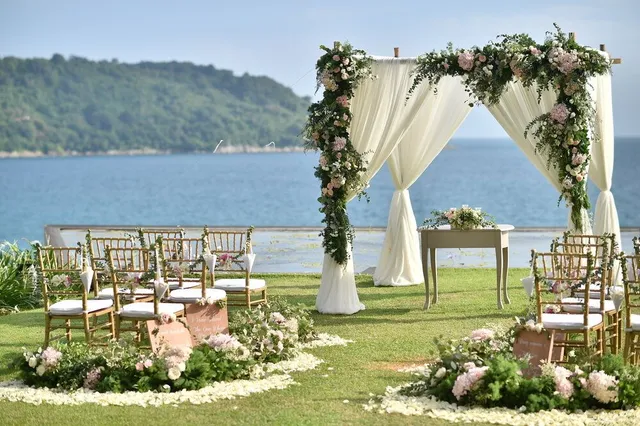
The cream envelope shone in the September sun. I held it above my head the way a teacher holds up a test, and twenty-nine people in linen and good loafers watched it as if it might open on its own. Down at the water, a gull complained about something. The tide was coming in.
Cullen’s face did a thing I had not seen since he was eight and I found a cracked window and a baseball.
“Where did you get that?” he said.
“It was in my front hall. In a drawer. Under a stack of takeout menus, actually, which I’ve been meaning to ask you about.” I turned the envelope over so everyone could see the strip of clear tape across the flap. “Somebody opened this and resealed it. Badly. I’d have used a better tape.”
Laurelai Vance stepped forward in a coral dress, one hand pressed to her pearls. “Margaret, this is hardly the place.”
“You chose the place, Laurelai. You set out the chairs.”
I should tell you how I came to be sitting on my own porch with a coffee cup on the railing and a dozen people judging my parenting.
My name is Margaret Hollis. I’m seventy-one. I was a court stenographer in Providence for thirty-eight years, which means I have typed the worst moments of other people’s lives at two hundred and forty words a minute without changing my expression. It’s good training. You learn that people say who they are very clearly if you just stop interrupting.
My husband, Nile, was a marine contractor. He built docks and seawalls up and down the Rhode Island coast, and he came home every night smelling of creosote and salt, with sawdust in the creases of his neck. He died fourteen years ago, in March, of a heart attack on a job site in Narragansett, standing on a piling he had set himself.
The beach house was his dream and, in the end, mine.
In 2003, after a hurricane took the roof off a gray-shingled cottage on a spit of land in Charlestown that everyone called the Point, Nile found it at an estate auction. The owners had walked away. The porch had collapsed. A family of raccoons had moved into the master bedroom. We bought it for $212,000, which was every dollar we had, and for six summers we rebuilt it ourselves. Nile did the structure. I did the paint and the floors and the cursing. We slept on a mattress in the living room for the first year and ate dinner on the hood of his truck.
He painted the front door blue himself, a deep, certain blue he mixed from three cans. “Same as the water at four o’clock,” he said.
That house is appraised at $1.94 million now. I don’t care about that number. It is the only place on earth where my husband’s handwriting is still on the studs. He wrote the date on every beam before it went up.
Cullen is my only child. He’s thirty-eight, a regional sales director for a medical-supply company, with Nile’s shoulders and a salesman’s trick of making you feel like the most important person in the room right up until you stop being useful. When he was small, he followed Nile everywhere with a toy hammer. At eleven he held the other end of a tape measure for an entire Saturday and never once complained.
I don’t know exactly when it changed. I think it was when he started making real money. There was a year when his phone calls became shorter and his invitations rarer, and a Christmas when he introduced me to a colleague as “my mother, she’s, retired, from the courts,” and the pause before retired had a shape.
I told myself it was ambition. Ambition, in a young man, can look a great deal like contempt.
Then he met Blythe.
She was thirty-three, a pharmaceutical marketing executive, with a wide, white, lovely smile and the kind of polish that takes years of maintenance. I liked her at first. I’ll say that. She brought lilies the first time we met. She asked about Nile and listened to the answer. She admired the house, and I watched her walk the porch with one hand on the rail, looking down the long gray planks to the water, and I thought: she loves it. Good.
I should have asked what she loved about it.
Her parents were Laurelai and Miles Vance, of a gated community in Barrington. Miles owned three car dealerships. Laurelai chaired charity luncheons and had a way of looking at your shoes before she looked at your face. They invited me to dinner once, at a restaurant where the menu had no prices, and Laurelai said, over the crab, “Cullen tells us you have a little place at the shore. How sweet.”
Little. A house I had rebuilt with a crowbar.
On a Sunday morning in early September, my phone rang while I was standing in my kitchen with a cup of coffee. The number was Cullen’s. The background was an airport, loud and echoing, with a boarding announcement rolling over it.
“Mom. Big news.”
“Good morning, sweetheart.”
“Blythe and I got married yesterday.”
I put down the cup.
I want to describe the next few seconds exactly, because I’ve gone over them. I wasn’t angry. I was quiet, in the way a courtroom goes quiet in the half second after a verdict, before anyone reacts. I heard the refrigerator hum. I heard the clock. I heard my own breathing.
“Yesterday.”
“At the Vance place, in Barrington. It was small. Forty-six people.”
“Forty-six.”
“Close friends, mostly. It was kind of, I don’t know, it was for people with status, Mom. You’d have hated it, honestly. All that standing around. Cocktail hour.”
People with status.
I had typed those words before. In depositions. They always arrive in the same tone, light and helpful, the tone of someone explaining why a door was locked.
“I see.”
“We’re flying to Hawaii now. Twelve days. And Mom, when we land on the twenty-sixth, we’re going straight to the Point.”
I waited.
“I mean, Blythe’s parents are giving us a welcome-home party there. It’s all planned. We gave up the apartment in Providence.” He laughed, easy and quick. “It’s just, it’s always been understood, right? The house was going to be ours eventually. Dad always said.”
I looked out the kitchen window at the maple.
Nile had said no such thing. Nile had said, and I have it in writing, in a note I’ll tell you about, something very different.
“Congratulations, sweetheart,” I said. “Have a safe flight.”
I hung up. I picked up my car keys.
It’s forty minutes from my house in Warwick to the Point, down Route 1, past the salt ponds and the stands of scrub oak, with the radio off. I drove it with both hands on the wheel.
The blue door looked the same. The porch swing moved a little in the wind. I let myself in with my key, and the smell hit me first, a smell I did not know. Vanilla, expensive, a candle on the kitchen counter in a glass jar with a gold lid.
Four suitcases stood in the front hall. Leather, matching, the color of cream. Six moving boxes were stacked against the wall, labeled in Blythe’s looping hand: KITCHEN, BOOKS, B’S SHOES, B’S SHOES 2.
They had moved in. Before the wedding. Before the honeymoon. They had come, I understood, the weekend before, while I was at my sister’s in Newport, using the spare key I’d given Cullen “for emergencies.”
I walked down the hall to the master bedroom.
A white bathrobe, thick, hotel-quality, hung on the back of the door.
My own robe, the faded green terrycloth one Nile bought me in 1996, had been moved to the hallway closet and wadded onto a shelf, beneath a stack of beach towels.
I stood there with it in my hands.
Then I went into the living room and looked at the mantel.
For fourteen years, a photograph had stood there in a plain wooden frame. Nile, on the dock at the Point, in a stained cap, squinting into the sun with a hammer in one hand and a grin like an open window. I had dusted that frame every Sunday.
The mantel was bare.
I looked in the kitchen. The bookshelf. The hall table. Then I opened the drawer under the telephone and found it, face down, buried beneath a pile of takeout menus. Pizza. Thai. A place called Bao Down.
I picked it up. The glass was smudged. I wiped it on my sleeve. Nile looked back at me, delighted, with sawdust in his eyebrows.
I held that photograph for a very long time.

Adrian Hawthorne is a celebrated author and dedicated archivist who finds inspiration in the hidden stories of the past. Educated at Oxford, he now works at the National Archives, where preserving history fuels his evocative writing. Balancing archival precision with creative storytelling, Adrian founded the Hawthorne Institute of Literary Arts to mentor emerging writers and honor the timeless art of narrative.