My phone buzzed in my scrub jacket pocket at 11:42 a.m., right in the middle of changing a dressing in room seven.
I almost let it go. I had three more patients waiting, a doctor who wanted vitals on the hour for the man in room nine, and my break wasn’t until two o’clock. Whoever it was could leave a message.
But it kept buzzing. And something in my chest made me look up.
“Mrs. Alvarez,” I said to the woman in the bed, “I’ll be right back. Don’t touch that.”
She held up both hands. “Wouldn’t dream of it, honey.”
I stepped out into the hallway and pulled out the phone.
Unknown number.
I almost didn’t answer. I never answer unknown numbers. They’re always somebody trying to sell me an extended warranty on a car I bought used.
I answered anyway.
“Hello?”
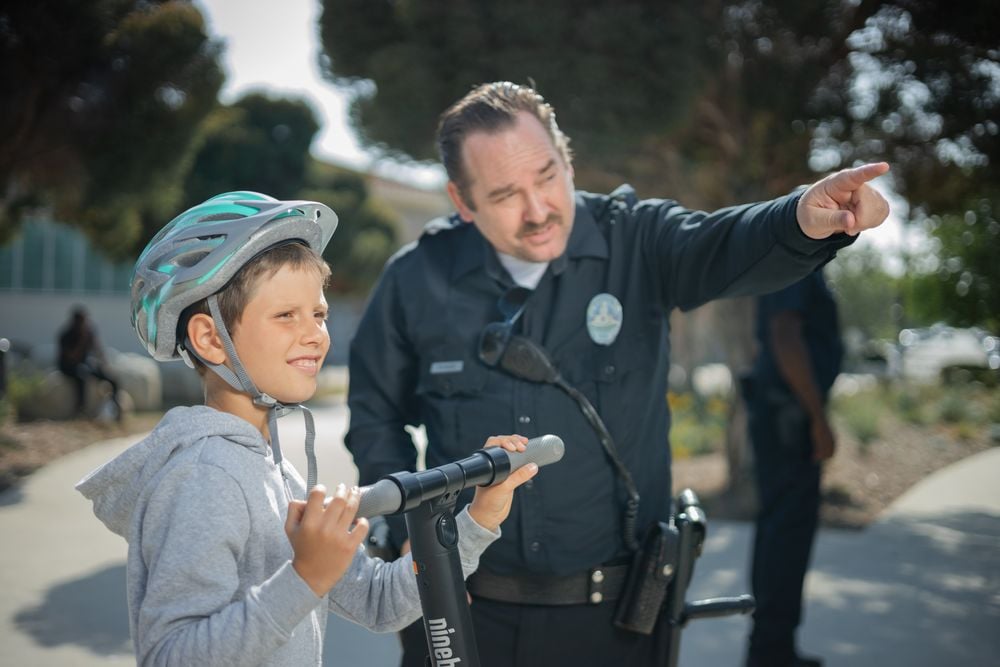
“Ma’am? This is Officer Benny Reyes. I’m calling about your boys.”
Every bit of air left my body.
“Your children are safe,” he said quickly. “I want you to hear that first. But I need you to come home. Your older son was involved in a situation, and I’d rather explain it in person.”
I pressed my back flat against the hallway wall. A cart rattled past me. Somebody was paging respiratory over the speaker.
“Are my children okay? What happened? Is Logan hurt?”
“There’s no immediate danger,” he said. “But it’s important you come home as soon as you can.”
“Officer, please, just tell me—”
The call ended.
I stared at the screen. Call ended. 0:38.
Thirty-eight seconds. That’s all it took.
I don’t remember walking to the nurses’ station. I just remember being there, holding onto the edge of the counter, and Denise, my charge nurse, looking up at me over her glasses.
“Rachel? You’re white as a sheet.”
“Family emergency. I have to go. Room seven needs her dressing finished and nine needs vitals at noon.”
“Go,” Denise said. She was already standing up. “I’ve got it. Go.”
I left in the middle of my shift. I didn’t change. I didn’t clock out. I still had my hospital badge clipped to my chest and a pen behind my ear and a roll of tape in my pocket.
I drove through two red lights on the way home.
I didn’t even really see them. I just remember a horn blaring somewhere behind me and realizing, a block later, what I’d done.
The drive was twenty minutes long.
And I spent every single one of them imagining the worst.
My name is Rachel. I’m forty-one years old. I’ve been a nurse for nineteen years.
You’d think that would make me calm in an emergency. At work, it does. I’ve done CPR on a man twice my size. I’ve held a teenager’s hand while she bled out after a car wreck. I’ve stood in rooms where everything was going wrong and kept my voice steady because that’s what my job is.
But that’s other people’s emergencies.
When it’s your own kids, all that training goes right out the window. You’re not a nurse anymore. You’re just a mother in a car going too fast, saying please, please, please to nobody at all.
My oldest, Logan, was seventeen.
He’d had two run-ins with the police in his life. Neither was serious.
The first time, he was fourteen. A bunch of his friends set up a bike race down Maple Street, the big hill by the hardware store. It ended with three of them nearly taking out a parked car at the bottom. One kid went over his handlebars and skinned both knees. Logan swerved into a hedge.
An officer pulled up and gave all six of them a talking-to right there in the hardware store parking lot. In front of everybody. In front of Mrs. Kowalski, who works the register and tells the entire town everything she sees.
Logan still says it was the most embarrassed he’s ever been in his life.
“He made us sit on the curb, Mom,” he told me that night, red to the ears. “Like little kids. And Mrs. Kowalski brought out juice boxes.”
I laughed so hard I had to put my fork down. His dad laughed even harder.
“You’re lucky,” Daniel said, wiping his eyes. “When I was your age, my dad would have made me ride that bike to the police station and apologize to the whole department.”
“That’s not even a real thing.”
“It was in 1998.”
The second time, Logan was sixteen.
His best friend, Marcus, made it to the regional soccer tournament two towns over. It was a Thursday afternoon. Logan was supposed to be in chemistry.
Instead, he walked out of school at lunch, hitched a ride with Marcus’s older cousin, and watched the whole game from the bleachers. He didn’t tell anybody until it was over.
The school called me. Then the school called the police, because a student had walked off campus without permission. And a sheriff’s deputy found Logan at the tournament, sitting in the stands with a hot dog, screaming his head off because Marcus had just scored.
“I’m sorry,” he said when he got home. He actually looked sorry. “I just… he’s been working for this for three years, Mom. I didn’t want him to look up and not see anybody there for him.”
I grounded him for two weeks.
But I understood. Marcus’s dad had left when he was nine. His mom works nights at the plant. Nobody else was going to be in those stands.
That was it. That was the whole history of my oldest son’s involvement with the police.
A bike race and a soccer game.
But in a small town like ours, people remember things. Even the little ones.
And after Daniel died, it felt like Logan was being watched a little more closely than other kids his age. Like everybody had already decided which way he was going to go. The boy who lost his father. The one who got quiet. The one who stayed out late. The one with the bike race and the soccer game.
I noticed it at the grocery store, the way some of the other mothers looked at him. I noticed it at school meetings, the way his teachers used the word concerned.
It stayed with me more than I liked to admit.
There’d been a third time, actually, a few months before that phone call. But it didn’t count. Not really.
Somebody spray-painted the side of the old water tower behind the high school. Big black letters. Something rude about the principal. Logan had been walking home from Marcus’s that night, cutting across the field by the tower around ten o’clock. Somebody saw him and called it in.
A deputy came to our door the next morning and asked if Logan could come down to the station and answer a few questions.
I sat next to him in that little gray room for an hour. He answered every question. He didn’t have any paint on his hands. He didn’t have any paint in his room. He’d been at Marcus’s playing video games until 9:45, and Marcus’s mom confirmed it.
Two days later, they found the kids who did it. Two juniors from the next town over. Nobody from our family had anything to do with it.
But I couldn’t shake how it felt, sitting in that gray room. How easy it had been for them to look at Logan and think, Yeah. Probably him.
That night I sat on the edge of his bed.
“Promise me this won’t happen again,” I said.
“Mom, I didn’t do anything.”
“I know you didn’t. I know. But you can’t be wandering around at ten o’clock at night, Logan. Not now. People see you and they think things. And I can’t…” My voice cracked. “You’re my rock, Logan. Andrew and I are counting on you.”
He looked at me for a long time.
“Okay, Mom,” he said quietly. “I promise.”
And I believed him. I always believed him.
But that didn’t stop the fear from coming back every time something felt off.
Daniel died two years before that phone call.
He was forty-two. He was a contractor. He built decks and redid kitchens and fixed half the porches in town. He was big and loud and laughed with his whole body, and he hummed constantly, while he worked, while he drove, while he brushed his teeth.
On a Tuesday in March, he was driving home from a job site out on Route 12. He felt something wrong in his chest. He pulled over onto the shoulder and put his hazards on.
That’s as far as he got.
A trucker found him about forty minutes later, still sitting behind the wheel with his seatbelt on. The paramedics said it was a massive heart attack. They said it was probably very fast.
They said there was nothing anybody could have done.
But there’s one thing I never stopped thinking about. One thing that kept me up at night, more than the money, more than the bills, more than anything.
He was alone.
He sat there on the side of the road for forty minutes, and nobody knew. Nobody stopped. Cars just drove by.
He died alone in his truck with his hazard lights blinking.
Logan was fifteen. Andrew was barely one.
After the funeral, Logan stopped talking much. He quit the soccer team. He sold his drum kit, which he’d been begging for since he was eight, without even telling me. He put the money in an envelope and left it on the kitchen table with a note that said For bills.
I found it after my shift. I sat at the kitchen table and cried for an hour.
He was fifteen.
Money got tight fast. Daniel had life insurance, but not much. The house had a mortgage. Andrew needed daycare. I went from three twelve-hour shifts a week to five. Then I started picking up doubles whenever they were offered.
While I worked, Andrew went to Little Acorns, the daycare at the end of our block. And Logan picked him up at 3:15 every afternoon after school.
Nobody asked him to. Nobody had to remind him. He just did it.
He’d walk home from the high school, stop at Little Acorns, sign Andrew out, and walk him the four blocks home holding his hand. He’d make him a snack. He’d give him a bath. He’d put him to bed if I was working late.
On days when there was no school, Logan stayed home with Andrew all day so I could work without paying for an extra day of daycare we couldn’t afford.
It had been that way for two years. And Logan had never once complained.
Not once.
I remember coming home late one night, around eleven, after a double. The house was quiet. I walked into the kitchen and found Logan at the table with his chemistry homework spread out in front of him. Andrew was asleep on his chest, wrapped in a blanket, drooling on Logan’s T-shirt.
“He had a nightmare,” Logan whispered. “He wouldn’t go back down.”
“You should have put him in his crib.”
“He’d just wake up again.” Logan shrugged one shoulder, carefully, so he wouldn’t wake him. “It’s fine. I can do this one-handed.”
He was doing chemistry equations with his left hand. He’s right-handed.
Another time, I watched him coax Andrew through a full-blown meltdown at dinner because Andrew had decided, for no reason anybody could understand, that he would not eat anything orange. Not carrots. Not sweet potatoes. Not mac and cheese. Nothing.
“Orange is lava,” Andrew announced, pushing his plate away.
“Ah,” Logan said seriously. “Well. That makes sense.”
“Logan, don’t encourage him.”
He held up a hand to me. Then he leaned over to Andrew.
“But you know what? Superheroes eat lava. That’s how they get their powers.”
Andrew looked at him suspiciously. “Which superheroes?”
“All of them. It’s a secret. Don’t tell anybody.”
Andrew ate every carrot on his plate. Then he asked for more lava.
I just sat there with my mouth open.
“You’re good with him,” I said later, while we were cleaning up.
“He’s easy,” Logan said, shrugging.
He wasn’t easy. Andrew was three years old and stubborn as a mule.
Logan just made him look easy.
But even with all of that, I worried.
I worried because Logan had gotten so quiet. Because he didn’t laugh as much as he used to. Because he stayed in his room with his headphones on and didn’t come out until dinner.
I worried because some nights, after Andrew was asleep and I’d gone to bed, I’d hear the back door open and close. I’d lie there in the dark and listen to it. Sometimes it was twenty minutes before I heard it again. Sometimes an hour.
I never asked him about it. I was scared of what he’d say.
I’d lie there doing the math. Where could he go at eleven o’clock at night in a town this small? Who was he with? What was he doing?
And I’d think about that gray room at the police station. And the water tower. And the mothers at the grocery store.
And I’d think, I’m losing him. I’m losing him, and I don’t know how to stop it.
So when Officer Benny Reyes called me at 11:42 on a Thursday morning and said Your older son was involved in a situation, my mind went straight to the worst.
I spent the whole twenty-minute drive building stories in my head.
He’d been caught with something. He’d gotten into a fight. He’d left Andrew alone. Somebody had gotten hurt. He’d been arrested. He was in the back of a police car.
It’s important you come home as soon as you can.
Why couldn’t he just tell me on the phone?
What was so bad that he had to say it to my face?
I turned onto our street.
And the first thing I saw was Officer Benny standing in my driveway.
I knew him. Everybody in town knew Benny. He’d been on the force about fifteen years. Big guy, mustache, a laugh you could hear from across the high school football field on Friday nights. He coached Little League in the summer. His wife, Theresa, taught second grade.
He was the one who’d given Logan and his friends the talking-to in the hardware store parking lot. Juice boxes and all.
And he was standing in my driveway, holding Andrew.
Andrew was asleep on his shoulder.
He was wearing his dinosaur pajama pants and his little red rain boots on the wrong feet. One small hand was still wrapped around a half-eaten cracker. His mouth was open. His cheek was squished against Benny’s uniform.
For a second, I just sat in the car.
I didn’t get out. I couldn’t. I sat there with the engine running and my hands on the wheel and looked at that picture, because I needed to understand it before I moved.
My baby was fine. My baby was sleeping.
But where was Logan?
I got out of the car and crossed the driveway fast. I didn’t close the car door behind me.
“What’s going on, Officer?”
Benny looked down at the boy on his shoulder.
“Is this your son?”
“Yes. Benny, you know he’s my son. Where’s Logan? What happened?”
He shifted Andrew a little higher on his shoulder. Andrew sighed in his sleep and tightened his grip on the cracker.
“Ma’am,” Benny said gently, “we need to talk about your older son. But I want you to know right now, it’s not what you’re expecting.”
I stared at him.
He didn’t explain. He just turned and walked toward my front door, still carrying Andrew, and I followed him inside.
I didn’t know what that sentence meant. I didn’t know if not what you’re expecting meant better or worse.
Logan was standing at the kitchen counter, holding a glass of water.
He was still in his gray hoodie and his old basketball shorts. His sneakers were untied. His hair was sticking up on one side, the way it does when he runs his hands through it too many times.
He looked up when I came in.
He looked at me the way he used to when he was little and something had gone wrong at school. That mix of trying to look calm and not quite pulling it off.
That look told me something was really wrong.
“Mom?” His voice cracked. “What’s going on?”
“That is exactly what I’m asking you, Logan.”
My voice came out much louder than I meant it to. Andrew stirred on Benny’s shoulder.
Benny put one hand on my shoulder for just a second.
“Ma’am. Calm down. Just give me one more minute, and everything will make sense.”
My heart was racing so hard I could feel it in my ears.
I waited.
Benny walked over to the couch and laid Andrew down very carefully on the cushions. He tucked the throw blanket around him. Andrew didn’t even open his eyes. He just rolled onto his side and stuck his thumb in his mouth.
Then Benny walked back to the kitchen. He reached past Logan, picked up the glass of water off the counter, took a long sip, and set it back down.
I didn’t understand what I was watching. Why was he drinking my son’s water? Why wasn’t anybody saying anything?
Then he looked right at me.
“Your son didn’t do anything wrong.”
I stared at him.
“What?”
“He’s right, Mom,” Logan said quietly.
My brain wouldn’t catch up. I’d been so sure. For twenty minutes, I’d been so sure of one thing. And now my son and a police officer were standing in my kitchen handing me a completely different story, and I couldn’t make the pieces fit.
“Then why…” I looked from one of them to the other. “Then why are you here?”
Benny looked at Logan.
“Why don’t you tell her?”
Logan picked up his glass of water. Then put it back down without drinking it.
I noticed his fingers were trembling. Just slightly. He was trying hard to keep it from showing. He’s always been like that, ever since he was a little boy. When he gets scared, he gets very still and very quiet, and he tries to make his hands behave.
He used to do it at the dentist. He used to do it at Daniel’s funeral.
“I mean,” he said, looking at the floor, “it wasn’t a big deal, Officer.”
“It was a big deal,” Benny said.
“Logan,” I snapped, “just tell me. What did you do?”
He scratched the back of his neck.
“I took Andrew out for a walk,” he said. “This morning. Just around the block. He wanted to see the Jacksons’ dog.”
“Rufus,” I said automatically.
“Yeah. Rufus. He’s been asking all week. So I put his boots on him and we went.”
“And?”
“And we were passing Mr. Henson’s house.” He looked up at me. “You know him, Mom. He’s the one who gives Andrew butterscotch candies through the fence sometimes.”
I knew who he meant.
Walter Henson. The older man four houses down, in the white house with the green porch swing. He was seventy-eight. He’d been a widower for as long as we’d lived on the street. He always waved when I drove past. He grew enormous tomatoes and gave them to everybody on the block in August whether they wanted them or not.
When Daniel died, he’d shown up at our door with a pot of chili and a card. He didn’t come in. He just handed it to me and said, “My Helen went in ‘09. It doesn’t get better. But it gets different.” Then he walked back home.
I’d thought about that sentence a lot over the past two years.
“I know Mr. Henson,” I said.
“And then I heard a thud,” Logan said.
Benny took a step forward.
“Mr. Henson lives alone,” he said quietly. “He has a heart condition. Has for a few years.”
“He was on the porch, Mom,” Logan said. “On the ground. Next to the swing. He wasn’t really moving.”
I could see it. I didn’t even have to try.
My seventeen-year-old standing on the sidewalk with his three-year-old brother. Rufus barking somewhere down the street. A man lying on his porch.
And maybe half a second to decide what to do next.
“I told Andrew to stay by the fence,” Logan said. “I made him hold onto it with both hands. I said, Don’t move. Stay right there. Don’t let go of the fence no matter what. And then I ran over.”
From the couch, Andrew heard his name. He shifted in his sleep and resettled. One rain boot fell off onto the floor.
The cracker was gone now. I found out later it had ended up somewhere in Benny’s jacket pocket.
“I called 911,” Logan said. “They stayed on the line with me the whole time.”
Benny took over. His voice was steady. I’ve heard voices like that at work. It’s the voice you use when you need somebody to hear exactly what you’re saying.
“Your son followed every instruction they gave him,” he said. “He checked for breathing. When Mr. Henson stopped breathing, he started chest compressions. The dispatcher counted with him. He did compressions for almost six minutes, Rachel. Six minutes. He kept talking to Mr. Henson the whole time. He didn’t leave his side.”
I looked at Logan.
He was looking at the floor again. His jaw was set the way it gets when he doesn’t want anybody to see his face.
“Six minutes?” I whispered.
I know what six minutes of chest compressions feels like. I’ve done it. Your arms burn. Your shoulders shake. You’re pushing two inches deep, a hundred and ten times a minute, and after about two minutes you start to feel like you can’t do one more.
Trained adults switch off every two minutes. That’s the rule. Because nobody can do it alone longer than that and keep doing it right.
My son did it for six.
“I didn’t really count,” Logan said to the floor. “The lady on the phone counted. I just did what she said.”
Then he said something that made the whole room go still.
“I just didn’t want him to be alone, Mom.”
Those words settled into the kitchen and stayed there.
I knew. The second he said them, I knew exactly why.
Daniel, on the side of Route 12. Forty minutes. Hazard lights blinking. Cars going by.
Nobody stopped.
I looked at my son’s face. He wouldn’t look at me. But I saw his chin wobble, just once, before he got it under control.
He was thinking about it too. Of course he was. He’d been thinking about it the whole time he was pushing on that old man’s chest.
Then Benny said the part that made me reach for the back of the nearest chair.
“If Logan hadn’t acted when he did,” he said, “Mr. Henson would not have made it.”
I grabbed the kitchen chair. I gripped it so hard that the wood pressed into my palm and left a mark that was still there an hour later.
“The paramedics got his heart going again in the driveway,” Benny said. “They said whoever did those compressions kept blood moving to his brain. They said it might have made the difference.”
“Is he…” I could barely get the words out. “Is he alive?”
“He’s alive. They took him to St. Agnes. Your hospital. He was awake in the ambulance. Asking for his reading glasses.”
I let out a sound I didn’t recognize. Half laugh, half sob.
I thought about every night I’d spent lying awake.
All those nights, terrified I was losing Logan. Terrified he was turning into somebody I couldn’t reach anymore. Listening to the back door open and close.
All those mornings, watching him walk out the door, doing the math in my head. Counting the hours until I knew he was home and safe. Wondering what he was doing. Wondering who he was becoming.
And my son had been out there this morning, four houses down, on his knees on a stranger’s porch, keeping that man’s heart going with his own two hands.
“Andrew,” I managed. My voice shook. “He was out there alone? While all of this was happening?”
Benny shook his head.
“Not long. That’s actually how we got involved. My partner and I were already in the neighborhood on rounds. We turned onto your street and saw this little guy holding onto a fence with both hands, screaming his head off for his brother.”
I closed my eyes.
“And then we saw Logan on the porch,” Benny went on. “He looked panicked. He was doing compressions, with the phone on speaker next to him on the boards. So I pulled over and ran up. He’d already called for help. He looked up at me and said, He’s down, he’s down, I can’t stop.”
“My boy,” I gasped.
“I took over compressions,” Benny said. “The ambulance got there about a minute later. Mr. Henson was gone by the time I got my jacket off.” He shook his head. “My colleague, Officer Tran, stayed with Andrew on the sidewalk. She gave him crackers out of her car. I drove Logan and Andrew home after the ambulance left. I knew your family, so I figured it was best if I stayed and explained everything to you myself.”
He looked at me.
“I’m sorry about the phone call. I know how it must have sounded. I’ve never been good at those. My wife says I sound like I’m reading a ransom note.”
Andrew slid off the couch right then.
He didn’t say anything. He was still half asleep. He padded across the kitchen in one rain boot and one sock, walked straight over to his brother, and wrapped both arms around Logan’s leg.
No reason. No explanation. The way toddlers do.
Logan looked down at him. He reached down and ruffled his hair.
“Hey, buddy.”
“You falled down too,” Andrew said into his knee.
“Nah. I didn’t fall down. I was helping.”
“You was pushing the man.”
“Yeah. I was pushing the man so his heart would work.”
Andrew thought about that.
“Did his heart work?”
Logan’s voice cracked.
“Yeah, buddy. It worked.”
I looked at my two sons standing there in our kitchen.
I couldn’t look away.
The big one in his gray hoodie, with his untied sneakers and his hair sticking up. The little one in one rain boot, holding on to his brother’s leg like it was a tree in a storm.
Daniel should have been there. Daniel should have seen it.
But Daniel was the reason, I think. In a way. The reason Logan didn’t hesitate.
Benny picked up his cap off the counter. He turned it over in his big hands for a second.
Then he turned to me.
“I remembered what you told me at the store last month,” he said. “That you were worried about Logan. That you didn’t know if you were handling things right.”
I’d said that. I’d forgotten I said it.
I’d run into Benny in the cereal aisle at Harmon’s Market about a month earlier. It was a Tuesday night. I was still in my scrubs after a double. I was standing in front of the Cheerios, too tired to decide between the regular and the honey nut, and he came around the corner with a basket full of frozen pizzas.
“Rachel. How you holding up?”
And somehow, standing there in the cereal aisle at nine o’clock at night, I ended up telling him more than I meant to.
About Logan being so quiet. About the back door at night. About the water tower and the gray room. About how I didn’t know who he was anymore and I didn’t know how to reach him. About how I was scared that I was getting it all wrong. That Daniel would have known what to do, and I didn’t.
I’d started crying right there next to the Cheerios. Benny had just stood there and let me. Then he’d handed me a box of honey nut and said, “These are better,” and walked away.
I was so embarrassed I’d avoided him for weeks.
“You deserved to hear this part too,” Benny said now. “That’s why I called you. That’s why I stayed.”
He put his cap on.
“And I’ll be honest with you, Rachel. Since we’re being honest. That thing with the water tower. I was the one who told the deputy to bring Logan in.” He shook his head. “Somebody said they saw a tall kid in a gray hoodie by the tower, and I thought of him. Because of the bike race. Because of the soccer game. Because of what everybody in town says about him since his dad passed.”
Logan looked up.
“That wasn’t fair,” Benny said. “That was me being lazy. I’m sorry, son.”
Logan didn’t say anything. He just nodded once.
Benny turned back to me.
“You don’t need to worry about Logan as much as you think. He’s figuring things out. He’s becoming the kind of young man you can rely on.” He paused at the door. “Honestly? He already is one.”
Then he headed out.
I heard his cruiser start up in the driveway. I heard it pull away.
I stepped forward and put my arms around Logan before I’d entirely decided to.
He went a little stiff at first, the way teenagers do when their mother hugs them out of nowhere. Andrew was still attached to his leg. It was awkward. My hospital badge dug into his shoulder.
I held on anyway. Just a second longer than usual.
Then Logan hugged me back.
His arms came around me. He’s taller than me now. He has been for a year. When did that happen? He put his chin on top of my head, the way Daniel used to.
“Hey,” he said. “It’s okay, Mom.”
I pulled back and looked at him. Really looked at him.
“I thought I was the one holding everything together, sweetie,” I said. My voice was shaking. “I thought I was the only one keeping this family upright.”
Logan looked at me for a long moment.
He had an expression on his face I hadn’t seen in a very long time. Something open. A little tired. And completely honest.
“No, Mom,” he said. “We both are.”
I called Denise from the kitchen and told her I wasn’t coming back that day.
“Is everybody okay?” she asked.
“Everybody’s okay,” I said. Then I started crying again. “Everybody’s better than okay.”
“Do I want to know?”
“Walter Henson. Seventy-eight. They brought him into the ED this morning. Cardiac arrest.”
“Oh, honey, I heard about that. He’s up in the cardiac unit. They say some kid did CPR on him on his front porch for—”
“That was my kid,” I said.
Denise was quiet for a moment.
“Rachel,” she said. “Your Logan?”
“My Logan.”
“Well,” Denise said. “I’ll be damned.”
That afternoon, while Andrew napped, I sat on the back porch with Logan.
He’d taken a shower. His hair was wet. He’d changed into a different hoodie, a blue one, the one that used to be Daniel’s. It still hangs off his shoulders a little.
We sat on the top step and looked out at the backyard. At the old swing set Daniel built when Logan was four. At the shed with the lopsided door that Daniel always said he’d fix.
For a while, neither of us said anything.
“Were you scared?” I finally asked.
He thought about it.
“Not while it was happening,” he said. “While it was happening, I was just counting. The lady on the phone kept saying push, push, push, and I just kept doing it. My arms were on fire. I thought I was going to throw up.” He looked down at his hands. “After, when Officer Benny took over. That’s when I got scared. I sat down on the porch steps and I couldn’t stop shaking.”
“That’s normal,” I said. “That’s adrenaline. It happens to me every time.”
“Really?”
“Every time, Logan. Nineteen years. I go into the supply closet afterward and shake like a leaf.”
He almost smiled.
“How did you know what to do?” I asked.
He shrugged.
“The lady on the phone told me.”
“Logan. Most people freeze. Most people stand there. I’ve seen grown men stand there with their mouths open while somebody was dying in front of them. How did you know to start?”
He was quiet for a long time.
“I took a class,” he said finally.
I turned to look at him.
“What class?”
“CPR. At the Y. Last fall.” He picked at a loose thread on his sleeve. “On Tuesday nights. The ones where I said I was at Marcus’s.”
I stared at him.
“Why didn’t you tell me?”
He didn’t answer right away. He looked out at the shed with the crooked door.
“Because of Dad,” he said. “I kept thinking. If somebody had stopped. If somebody on that road had pulled over and known what to do…” He swallowed. “I know they said it was too fast. I know they said nobody could have done anything. But I kept thinking about it. And I didn’t want to be somebody who just drove by.”
I couldn’t speak.
“And I didn’t tell you,” he said, “because I thought you’d cry. And you already cry enough.”
I put my hand over my mouth.
I’d thought he was out doing something wrong on those Tuesday nights. I’d lain awake and worried.
He’d been at the Y, on his knees on a mat, practicing chest compressions on a plastic dummy.
“Is that where you go at night, too?” I asked quietly. “When the back door opens?”
He looked at me, startled.
“You hear that?”
“Logan. I’m your mother. I hear everything.”
He rubbed his face with both hands.
“I just walk,” he said. “Around the block. Sometimes down to the park. I can’t sleep sometimes. Since Dad. My head gets too loud. So I walk until it gets quiet.” He looked at me. “I’m not doing anything bad, Mom. I swear. I just walk.”
“Why didn’t you tell me that?”
“Same reason.”
“Because I’d cry?”
He nodded.
I was crying.
He sighed and put his arm around my shoulders.
“See?” he said. “This is exactly what I was talking about.”
I laughed. I laughed and cried at the same time, sitting on the back step in my wrinkled scrubs, with my son’s arm around me.
“From now on,” I said, wiping my face, “you tell me. Even if it makes me cry. Especially if it makes me cry. Okay?”
“Okay.”
“And if you can’t sleep, you knock on my door. I don’t care if it’s three in the morning.”
“You’re always sleeping after a double.”
“Then wake me up.”
He was quiet.
“Okay,” he said. “I promise.”
And this time, I knew he meant something different by it.
The next morning, I asked for the day off. Denise gave it to me before I finished asking.
I drove Logan and Andrew to St. Agnes. Up to the fourth floor, the cardiac step-down unit. I know every nurse up there. When we walked out of the elevator, three of them came out from behind the desk.
“Is this him?” asked Patrice, who’s worked cardiac for twenty-five years and doesn’t impress easily.
“This is him,” I said.
Patrice looked Logan up and down. Then she shook his hand. Hard.
“Six minutes,” she said. “Solo. You know how many people I’ve worked with who can’t do that?”
Logan turned bright red.
Mr. Henson was sitting up in bed in room 412. He had wires taped to his chest and an IV in his arm and his reading glasses on his nose. He was doing a crossword puzzle in the newspaper.
He looked up when we came in.
He looked at me. Then at Andrew, who was hiding behind my leg. Then at Logan.
He set down the newspaper and took off his glasses.
“Well,” he said. His voice was rough. “There he is.”
Logan stood in the doorway with his hands shoved in his hoodie pocket.
“Hi, Mr. Henson.”
“Come here, son.”
Logan walked over to the bed. Mr. Henson reached up and took his hand in both of his. They were thin hands, old hands, covered in spots. But his grip was strong.
“They tell me you broke two of my ribs,” Mr. Henson said.
Logan’s face fell. “Oh my God. I’m so sorry, I didn’t—”
“Son.” Mr. Henson squeezed his hand. “That’s the nicest thing anybody’s done for me in fifteen years.”
Logan stared at him.
Then he laughed. A real laugh. Surprised out of him.
They talked for a while. Mr. Henson told him about the porch. How he’d gone out to get the mail and felt the ground tip sideways. How the last thing he remembered was the porch boards under his cheek and thinking, Well, Walter, this is it. This is how you go. Alone, like a fool, on your own front porch.
“And then,” he said, “I heard this voice.”
Logan looked down.
“I don’t remember what you said. I don’t remember any words. Just a voice. Somebody talking to me. Somebody right there.” His eyes filled up. “I wasn’t alone. That’s what I remember. I thought I was going to be alone, and I wasn’t.”
Logan didn’t say anything. He just nodded.
I had to go stand by the window for a minute.
Andrew finally came out from behind my leg. He walked up to the side of the bed and looked at Mr. Henson very seriously.
“Your heart works now?”
“It works now,” Mr. Henson said. “Thanks to your brother.”
Andrew considered that. Then he reached into the pocket of his little jeans and pulled out a butterscotch candy. It was a little smushed. He must have been carrying it around for days.
He held it out.
“For you. For your heart.”
Mr. Henson took the candy. He held it in his palm and looked at it for a long time.
“I usually give these to you,” he said.
“Now it’s my turn,” Andrew said.
On the way home, in the car, Logan was quiet. Andrew had fallen asleep in his car seat with his mouth open.
“Mom?”
“Yeah?”
“Do you think Dad would have…” He stopped.
“Would have what, sweetie?”
He looked out the window.
“I don’t know. Been proud. Or whatever.”
I pulled over.
I didn’t plan to. I just did. Right there on the side of Elm Street, in front of the library. I put the car in park and turned off the engine.
Logan looked at me, alarmed. “Mom, what are you doing?”
I turned in my seat to face him.
“Logan. Your father would have stood in the middle of Main Street and told every single person who walked by. He would have called his brother in Ohio and his mother in Florida and the guys at the lumber yard. He would have made a sign. He would have bought you a steak dinner and then told the waiter about it and then told the people at the next table.”
Logan was smiling now, a little. Looking down at his hands.
“He would have been so proud of you he wouldn’t have been able to stand it,” I said. “And I know that, because I can barely stand it myself.”
Word got around town, the way it always does.
By Saturday, Mrs. Kowalski at the hardware store knew. By Sunday, the whole church knew. By Monday, the principal had called me at work to ask if Logan would mind being recognized at the next school assembly.
Logan minded very much.
“Mom. No. Absolutely not.”
“It’s just a little certificate.”
“In front of the entire school?”
“You did a brave thing.”
“Mom, I will move to Canada.”
We compromised. The principal gave him the certificate in her office, with just me and Officer Benny there. Logan shook her hand and said thank you and turned the color of a tomato and left as fast as he could.
But I noticed something, in the weeks after.
The mothers at the grocery store started looking at Logan differently. Mrs. Kowalski gave him a free soda every time he came into the hardware store. The coach of the soccer team called the house to ask, very carefully, whether Logan might ever think about coming back to the team.
Logan said he’d think about it.
He didn’t say no.
I want to be careful how I say this next part.
I’m not grateful that it took a man nearly dying on his porch for this town to see my son clearly. I’m not grateful that it took that for me to see him.
But I’m grateful I finally did.
For two years, I’d been looking at Logan through a fog. Through grief and exhaustion and fear. Through other people’s opinions. Through that gray room at the police station.
I’d been so busy watching for the boy I was scared he’d become that I almost missed the one he already was.
Later that first evening, the day of the phone call, after Benny was long gone and Andrew had fallen back asleep on the couch after a bowl of chicken nuggets and fries, I sat at the kitchen table and watched Logan rinse the dishes at the sink.
I’d offered to do them. He’d waved me off.
“Sit down, Mom. You worked half a double.”
So I sat.
He stood at the sink with his sleeves pushed up, rinsing plates and stacking them in the drying rack. The window over the sink was dark. The kitchen smelled like chicken nuggets and dish soap.
And he was humming.
Low and easy, under his breath, while he worked. A song I half-recognized but couldn’t place.
I sat very still. Listening.
It hit me then that I hadn’t heard Logan hum in over a year. Maybe longer. Maybe since the funeral.
He used to hum all the time when he was little. He’d hum in the bathtub. He’d hum while he built Legos. He’d hum at the dinner table until Daniel and I told him to eat.
Somewhere in all the noise and the exhaustion and the worry, that small, ordinary thing had slipped away without me even noticing.
And now it was back. Quiet and easy. Like it had been waiting for the right moment to come home.
It took me a minute to figure out what the song was.
Then I knew.
It was “Brown Eyed Girl.” Van Morrison.
Daniel used to hum it constantly. While he shaved. While he drove. While he built the swing set in the backyard, with nails sticking out of his mouth. He hummed it to Logan as a baby, rocking him in the middle of the night. He hummed it to Andrew too, that first year, before he died.
He hummed it so much that I used to beg him to learn a second song.
“Rach,” he’d say. “Why would I need a second song? This one’s perfect.”
I sat at that kitchen table and listened to my son hum his father’s song while he rinsed the dishes.
I didn’t say anything. I didn’t want to interrupt it. I was scared if I said a word, he’d notice and stop.
So I just sat there.
I stayed at the table until the dishes were done, saying nothing at all.
When he finished, he dried his hands on the dish towel and turned around and saw me watching him.
“What?” he said.
“Nothing,” I said. “Nothing, sweetie. Go to bed.”
He looked at me suspiciously. Then he leaned down and kissed the top of my head on his way past.
“Night, Mom.”
“Goodnight, baby.”
After he went upstairs, I sat alone in the kitchen for a long time.
After Daniel died, there were so many nights I sat right there and wondered how I was going to do this. How I was going to raise two boys on my own. Pay the mortgage. Work the doubles. Get Andrew to daycare and Logan through high school.
Whether I was enough. Whether I was doing any of it right.
For two years, all I could see was what might go wrong. All the ways I might fail. All the people Logan might become if I didn’t hold everything together tight enough.
I thought I was the only thing holding this family up.
I was wrong.
That night, around eleven, I heard the back door open.
I lay in bed in the dark and listened.
Then I heard footsteps on the stairs. Coming up, not going down.
There was a soft knock on my door.
“Mom?” Logan’s voice. “You awake?”
I sat up. “I’m awake.”
The door opened a crack. He stood there in the hallway in Daniel’s blue hoodie.
“I can’t sleep,” he said. “My head’s too loud.”
I pulled back the covers on Daniel’s side of the bed.
He hesitated. He’s seventeen. He’s taller than me. It’s not exactly cool.
Then he came in anyway and sat down on top of the blankets with his back against the headboard. Like he used to when he was eight and had a nightmare.
“I was going to go walk,” he said. “But you said to knock.”
“I did say that.”
“So I knocked.”
“I’m glad you did.”
We sat there in the dark for a while. Not saying anything.
Then, after a few minutes, I heard him start to hum. Very quietly.
I closed my eyes and listened.
He fell asleep sitting up, about twenty minutes later. His head tipped over onto my shoulder.
I didn’t move. I didn’t want to wake him.
I sat there in the dark with my son’s head on my shoulder, and I thought about Walter Henson saying, I wasn’t alone. That’s what I remember.
And I thought about Daniel on the side of the road.
And I thought about Logan on that porch, his arms on fire, counting. Push, push, push. Refusing to stop. Refusing to let someone else be alone.
My boys are going to be fine.
More than fine.
I spent so long being afraid of who they might turn into. I spent so many nights doing the math, counting the hours, listening for the back door.
I never once stopped to look at who they already were.
They’re good. They’re kind. They’re braver than I am.
They’re going to make me proud.
They already do.

Lila Hart is a dedicated Digital Archivist and Research Specialist with a keen eye for preserving and curating meaningful content. At TheArchivists, she specializes in organizing and managing digital archives, ensuring that valuable stories and historical moments are accessible for generations to come.
Lila earned her degree in History and Archival Studies from the University of Edinburgh, where she cultivated her passion for documenting the past and preserving cultural heritage. Her expertise lies in combining traditional archival techniques with modern digital tools, allowing her to create comprehensive and engaging collections that resonate with audiences worldwide.
At TheArchivists, Lila is known for her meticulous attention to detail and her ability to uncover hidden gems within extensive archives. Her work is praised for its depth, authenticity, and contribution to the preservation of knowledge in the digital age.
Driven by a commitment to preserving stories that matter, Lila is passionate about exploring the intersection of history and technology. Her goal is to ensure that every piece of content she handles reflects the richness of human experiences and remains a source of inspiration for years to come.