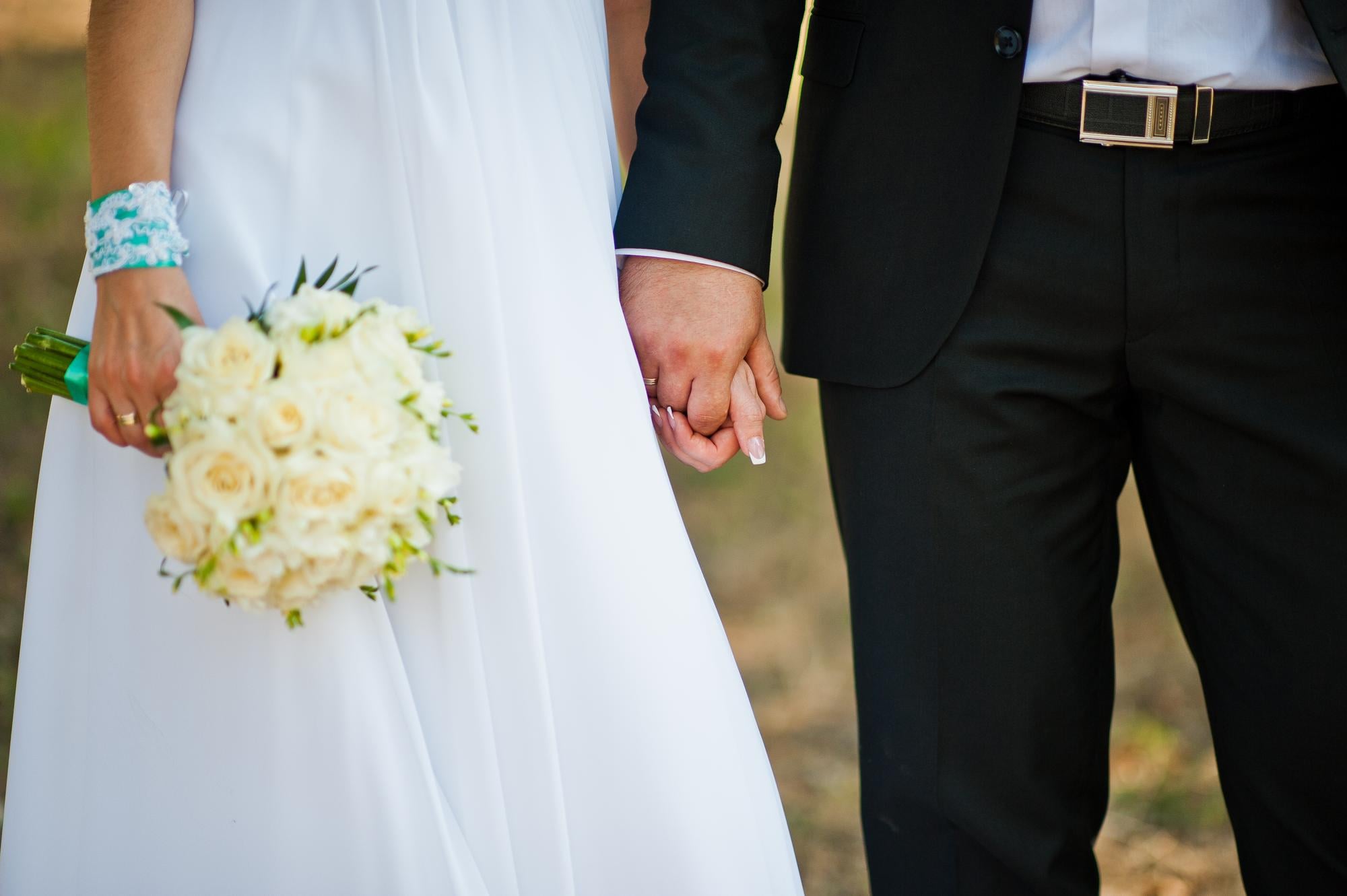
The Final Page
My son called me from an airport at 9:14 on a Sunday morning.
I know the exact time because I was standing at my kitchen counter in Wilmington, waiting for the toaster, and I looked at the clock on the stove when the phone rang. I remember thinking, Cullen never calls this early.
“Mom! Big news.”
There was noise behind him. Rolling suitcases. A woman’s voice on a loudspeaker saying something about Gate 14.
“Blythe and I got married yesterday.”
The toast popped up.
I didn’t touch it.
“You… what?”
“We got married! At the Carolina Yacht Club. It was beautiful, Mom. Honestly, the best day of my life.”
I set my coffee cup down on the counter very carefully, the way you set something down when your hands stop feeling like your own.
“Yesterday,” I said.
“Yesterday.”
“How many people were there?”
He hesitated. Just for a second. But I’m his mother. I heard it.
“Forty-six. Just close friends, Mom. People with status. Blythe’s parents’ people, mostly, and some of my clients. You’d have hated it, honestly. All that small talk. Nobody you’d know.”
People with status.
I stood there in the kitchen where I’d packed his school lunches for twelve years, holding a coffee cup that said WORLD’S OKAYEST MOM, which he’d given me as a joke when he was nineteen.
Forty-six guests.
I wasn’t one of them.
“Mom? You there?”
“I’m here.”
“Okay, so listen, our flight to Maui is boarding in a few minutes. But I wanted to tell you, when we land back on the 26th, we’re going straight to the point.”
The point.
My beach house.
“We already moved some stuff out there,” he went on, fast, the way he talks when he’s selling something. “Blythe gave up her apartment, and my lease was up anyway, so it just made sense. We’ll get it all set up when we’re back. You don’t have to do anything.”
I looked out my kitchen window at the crepe myrtle Nile planted the year Cullen was born.
“Mom?”
I smiled into the phone. I don’t know why. Maybe because if I hadn’t smiled, I would have screamed.
“Congratulations, sweetheart,” I said. “Have a safe flight.”
“Thanks, Mom! Love you! Gotta run!”
He hung up.
I stood there for a long time. The toast went cold. The coffee went cold.
Then I picked up my car keys.
My name is Delia Vance. I’m seventy-one years old.
I was a school secretary for thirty-one years at Bradley Creek Elementary. My husband, Nile, was a carpenter. He built houses for other people his whole life, and then one summer he built one for us.
Cullen is our only child. He’s forty-one now. He sells commercial real estate in Charlotte and Wilmington, and he’s very good at it. He has a voice that makes people want to sign things.
He got that from neither of us. Nile used to say Cullen was born talking to the customer.
I want to tell you about the house. Because you can’t understand any of this unless you understand the house.
In September of 1996, Hurricane Fran came across the North Carolina coast like a fist. It tore roofs off, pushed boats into living rooms, and left half the houses on Bell Island looking like someone had stepped on them.
The next spring, Nile came home from a job and put a newspaper on the kitchen table.
FOR SALE BY OWNER. Bell Island. Storm damage. As-is. Sandpiper Point.
“Del,” he said. “Let’s go look.”
The house sat at the very end of the point, where the sound meets the ocean. Gray shingles, half of them gone. A wraparound porch with a hole you could fall through. The front door was hanging by one hinge, and there was a dead crab in the kitchen sink.
The owners were an older couple from Raleigh who’d already taken their insurance money and never wanted to see it again. They wanted $142,000.
That was a fortune to us. Nile made about forty thousand a year. I made twenty-two.
We stood on the broken porch at sunset. The water went pink, then orange, then gray. A pelican came down out of the sky and hit the water like a dropped rock.
“Nile,” I said. “We can’t afford this.”
“We can’t afford a house,” he said. “We can afford a wreck. And I know how to fix a wreck.”
We took out a second mortgage on our little house in Wilmington. We emptied the savings account we’d been building for Cullen’s college. We signed the papers at a title office in Hampstead on April 3rd, 1997, and Nile carried me across the porch, stepping very carefully around the hole.
Then we spent six summers rebuilding it.
Every weekend from May to September. Every vacation day Nile had. Cullen was twelve when we started. He hated it. He wanted to be at the pool in Wilmington with his friends, not pulling nails out of old boards.
But Nile made him do it anyway.
“Someday this is going to be yours, buddy,” he’d say, handing Cullen a hammer. “You should know what’s holding it up.”
The last thing Nile did, the summer of 2002, was paint the front door.
He chose the color himself at the hardware store in Surf City. A bright, clear blue. He called it “Del’s eyes.” I told him that was the corniest thing I’d ever heard. He painted it anyway, standing on the porch with his radio playing beach music, a streak of blue on his cheek.
That door is still blue. I’ve repainted it three times since he died, always in the same color.
Nile died fourteen years ago. A stroke, in the workshop behind the beach house, on a Saturday in March. He was sixty-one. He’d gone out to sharpen a chisel.
His life insurance policy paid out $250,000. I used most of it to pay off what was left on both mortgages, because Nile always said he wanted the point to be “free and clear” before he died. He didn’t quite make it. So I finished it for him.
I put his picture on the mantel at the beach house the week after the funeral. Nile on the porch in his paint-splattered T-shirt, squinting at the camera, holding up a level like it was a trophy.
It stayed there for fourteen years.
Every time I walked in the door, he was the first person I saw.
It’s an hour and ten minutes from my house in Wilmington to Bell Island. I drove it in fifty-five that Sunday.
I crossed the swing bridge, turned onto Sandpiper Point Road, and pulled into the crushed-shell driveway.
There was a car I didn’t recognize parked on the side of the road. A white Range Rover. But no one was in it.
I walked up the porch steps and unlocked the blue door.
The first thing I noticed was the smell. Not the usual smell of salt and old wood and the lavender sachets I keep in the drawers. Something sweet and expensive. A candle, maybe. Or a perfume.
The second thing I noticed was the suitcases.
Four of them, lined up in the front hall. Matching. Cream-colored leather with gold initials stamped on the side. B.A. Blythe Ashford.
Behind them were six moving boxes, neatly taped and labeled with a black marker in tidy, rounded handwriting. Master Closet. Bathroom. Kitchen — Fragile. Books.
I walked through the living room.
My afghan, the yellow one my mother crocheted, had been folded and put on the bottom shelf of the bookcase. In its place on the couch was a gray throw blanket with a tag still on it.
I went down the hall to my bedroom.
My bedroom. The one with the window that looks out over the sound. The one Nile and I slept in for nineteen summers.
There was a white bathrobe hanging on the hook on the back of the door. Thick, plush, with the same gold initials. B.A.
My own robe, my faded blue cotton one, was gone.
I found it in the hallway closet, wadded up on the floor behind the vacuum cleaner.
I stood there holding it. I didn’t feel angry yet. I felt something closer to what you feel when you come home and realize someone’s been inside while you were gone. That cold little twist in your stomach. Like the house wasn’t quite yours anymore.
But the thing that hurt the most was the mantel.
I walked back into the living room, and I looked up out of habit, the way I always do, to say hello to Nile.
He wasn’t there.
In his place was a tall glass vase full of dried pampas grass and a framed print that said, in fancy gold script, Salt in the Air, Sand in Our Hair.
I stood there for a full minute.
Then I started looking.
I looked behind the couch. Under the cushions. In the bookcase. In the cabinet under the TV.
I found him in the kitchen drawer by the back door. The junk drawer. The one with rubber bands and old batteries and takeout menus from the pizza place in Surf City.
He was face down. Under three menus and a phone book from 2009.
I picked him up and turned him over.
Nile squinted up at me with his level, just like always. There was a crack running across the corner of the glass that hadn’t been there before.
I held that photograph against my chest and leaned against the counter, and for a while I couldn’t breathe.
Someday this is going to be yours, buddy.
Then I took out my phone and called a locksmith.
His name was Dwayne, and he ran Coastal Lock & Key out of a van in Holly Ridge. He got there by 3:30.
He was a big man in a fishing shirt with a gray ponytail and a toothpick in his mouth. He looked at the blue door, then at me.
“All of ’em?” he said.
“Every exterior lock. Front, back, the side door to the porch, and the shed out back.”
“Got a reason?”
“My son moved in without asking.”
He took the toothpick out of his mouth and looked at me for a second.
“You own the place, ma’am?”
“Since 1997.”
He nodded slowly. “Then that’s reason enough.”
It took him two hours. While he worked, I carried the suitcases outside.
They were heavy. I’m seventy-one, and my back isn’t what it was. I had to stop twice on the porch steps and catch my breath. But I wasn’t going to ask Dwayne for help with that. I needed to do it myself.
Four suitcases. Six boxes. One white bathrobe, folded neatly on top.
I set them all on the lawn in a neat row, under the old live oak where Nile hung Cullen’s tire swing in 1998. I put a blue tarp over them in case it rained.
Then I stood back and took a photograph.
Dwayne finished at 5:40. The bill was $385. I paid with a check and wrote Locks — the point in the memo line, because Nile always said to write down what it’s for.
He handed me two shiny new sets of keys.
“You want me to make any extras?” he asked.
“No,” I said. “Not yet.”
I sat on the porch steps, opened my phone, and sent the picture to Cullen.
Then I typed:
Congratulations again. I’ve changed the locks at the point. Your things are safe.
I pressed send.
I don’t know how they had cell service over the Pacific Ocean, but they did. Because my phone immediately exploded.
MOM WHAT
What are you doing??
Call me right now
Why are our bags on the LAWN
Then a long one.
Mom, we told everyone we’re living there. Everyone. Blythe’s parents, my office, all our friends. We already changed our address. What am I supposed to tell people?
Then a message from a number I didn’t have saved.
Delia, this is Blythe. I’m crying on a plane right now. I gave up my apartment. My deposit is gone. We have nowhere to go. I don’t understand why you’re doing this to us on our HONEYMOON.
I read that one twice.
Doing this to us.
I typed back to both of them:
Enjoy your honeymoon. We’ll talk when you’re home.
Then I turned off my phone and set it on the porch beside me, face down.
The sun was going down over the sound. Pink, then orange, then gray.
I set Nile’s picture back on the mantel where it belonged. I put the vase of pampas grass in the shed.
Then I made a cup of tea and sat in Nile’s rocking chair and watched a pelican fall out of the sky.
“I wondered when you’d do something.”
I jumped.
Pearl Haskins was standing at the bottom of my porch steps in her housecoat and rubber boots, holding a flashlight and a plate covered in foil.
Pearl has lived next door since 1989. She’s eighty-four, about five feet tall, and has opinions about everything, including the weather, the governor, and the correct way to boil shrimp. When Nile died, she didn’t send flowers. She came over with a bucket and a mop and cleaned my whole kitchen without saying a word.
“Pound cake,” she said, holding up the plate. “I figured you’d need it.”
“How long have you been watching?”
“Since the locksmith van,” she said, climbing the steps slowly. “Dwayne’s my nephew’s ex-brother-in-law. Nothing happens on this island I don’t hear about.”
She sat down in the rocking chair beside mine. We ate pound cake off the plate with our fingers.
“They’ve been out here three times this month,” Pearl said. “Your boy and that girl. And a woman with very large sunglasses.”
“Blythe’s mother,” I said. “Laurelai.”
“Laurelai.” Pearl said it slowly, like she was tasting something sour. “She was out here by herself last Tuesday. Walking around with a tape measure.”
“A tape measure?”
“Measuring your porch. Then she stood in your yard on her phone for half an hour, saying things like ‘the tent goes here’ and ‘we’ll do the bar by the oak tree.’”
I set down my piece of cake.
“Pearl. What tent?”
Pearl looked at me with her sharp little eyes.
“Honey,” she said, “I was hoping you’d tell me.”
The wedding photographs went up on Wednesday.
I found them on Facebook. I’m not very good with Facebook, but Pearl’s granddaughter showed me how to search names.
There were a hundred and twelve photos. Blythe’s mother had posted them all in one album called Our Fairytale ✨ Cullen & Blythe.
I sat at my kitchen table in Wilmington and went through every single one.
There was my son in a navy tuxedo with a white rose on his lapel, smiling so wide his eyes crinkled. He looked happy. I want to be fair about that. He looked genuinely, completely happy, and part of me was glad, even then.
There was Blythe in a long white dress with no straps, her blonde hair swept up, diamonds in her ears. She’s thirty-four, very pretty, with the kind of smile that looks good in photographs.
There were the flowers. White roses and white hydrangeas everywhere, spilling over every table.
There were the guests in their linen suits and silk dresses, holding champagne glasses, laughing on a wide green lawn beside the water.
And there was the cake.
Three tiers, white, with little sugar seashells pressed into the frosting.
And on top of it, instead of a bride and groom, there was a tiny house.
I leaned closer to my laptop screen.
Gray shingles. A wraparound porch with white railings. An old live oak beside it, made of green and brown icing. A little path of crushed shells leading up to the steps.
And the front door, painted a bright, clear blue.
Del’s eyes.
My house was on their wedding cake.
Under the photo, Laurelai had written: The happy couple’s new home at the beach! Dreams do come true!
I sat back in my chair.
My house had made it onto the wedding cake. I hadn’t made it onto the guest list.
I kept scrolling, slower now. Photographs of the toasts. Miles, Blythe’s father, a tall gray-haired man, holding a microphone and looking a little uncomfortable. Laurelai, dark-haired and beautiful at sixty, dripping in pearls, kissing Blythe on the cheek.
Then I saw a comment under a photo of Cullen alone, standing by the water.
From a woman named Tiffany Rourke.
So sorry your mom couldn’t make it, Cullen. Hope she’s feeling better!
I read it four times.
Feeling better.
I hadn’t been sick. I hadn’t so much as had a cold since last winter.
I scrolled through more comments. There were others.
Sending love to your mom.
Such a shame she couldn’t be there, I know she’d have been so proud.
Prayers for her recovery!
Recovery.
He hadn’t just left me out. He’d told forty-six people I was too sick to come.
He’d made me an invalid, so nobody would ask why his mother wasn’t there.
I closed the laptop. I sat there in my kitchen with my hands folded on top of it, for a very long time.
Then I went out to the backyard and pulled weeds for two hours, because Nile always said when you don’t know what to do with your hands, give them some work.
On Thursday, Laurelai called.
I was at the grocery store on Oleander Drive, standing in front of the bananas. My phone buzzed. A number from Charlotte.
“Delia? This is Laurelai Ashford. Blythe’s mother.”
Her voice was smooth as cream. The kind of voice you hear at country club luncheons.
“Hello, Laurelai.”
“I think we should speak frankly, woman to woman.”
“All right.”
“I understand you’ve had some kind of emotional reaction to the wedding. And that’s understandable. Weddings are very emotional. But what you’ve done is extremely inappropriate.”
“What I’ve done.”
“Throwing the children’s luggage on the ground. Changing the locks. Delia, my daughter called me sobbing from Maui. She’s on her honeymoon. She has nowhere to live now.”
I picked up a bunch of bananas and put it back down.
“Laurelai, your daughter moved into my house without asking me.”
“It’s not your house, Delia. Not really. Everyone knows the house was promised to Cullen. He’s told us all about it. His father always said it would be his. And frankly, a woman your age, alone, in a house that size, on an island, it’s not sensible. Cullen told me you hardly go out there anymore.”
“I go out there every Saturday.”
“Well. I’m sure you think you do.”
I stood very still in the produce aisle.
I’m sure you think you do.
It was the same tone Cullen must have used when he told his wedding guests I was unwell. I could hear it now. Concerned. Gentle. Poisonous.
“Laurelai,” I said. “Did you take my husband’s photograph off the mantel?”
Silence on the line.
“I was staging the house,” she said finally. “For the welcome home. It needed a fresher look. I didn’t throw anything away.”
“You put him in a junk drawer. Face down. Under a phone book.”
“I’m not going to apologize for decorating.”
“No,” I said. “I didn’t think you would.”
Her voice dropped. All the cream went out of it.
“Let me be very clear. My daughter has been through enough. We have told everyone in our circle that the children are living at the beach house. If you embarrass Blythe, if you humiliate my family over this, I promise you will regret it.”
“Is that a threat, Laurelai?”
“It’s advice,” she said. “From one mother to another.”
She hung up.
A young man restocking the avocados was staring at me.
“You okay, ma’am?”
“I’m fine,” I said. “Do you know if the bananas are organic?”
On Saturday, Miles called.
I almost didn’t answer. I assumed it would be more of the same.
But Miles Ashford’s voice was quiet. Hesitant. A man who doesn’t call people very often.
“Mrs. Vance. This is Miles. Blythe’s father. I’m sorry to bother you.”
“It’s all right.”
“I won’t keep you long. I just—I have a strange question, and I need an honest answer. Is there some kind of problem with the paperwork?”
“What paperwork?”
He paused.
“For the house. The beach house. Cullen told me back in June it was done. Signed. That you’d deeded it over to him.”
My hand tightened on the phone.
“He told you that?”
“He said it right at our kitchen table. He said you’d signed it over as an early wedding gift. He showed me a picture of the document on his phone.”
I sat down at my kitchen table. Slowly.
“Mr. Ashford. Why are you asking me this now?”
He let out a long breath.
“Because in July, I loaned Cullen eighty-five thousand dollars. He had some debts. Credit cards, a car lease. Some business losses I didn’t fully understand. I wanted my daughter’s husband to start fresh. My attorney drew up a promissory note. Cullen listed the beach house as his main asset. He said if anything ever went wrong, the property was there.”
He stopped.
“Last week, my attorney ran a title search. Just routine. And the county records still show the owner as Delia R. Vance. Nothing’s been recorded. No deed transfer. Nothing.”
I closed my eyes.
“That’s because nothing was signed, Mr. Ashford.”
There was a long, heavy silence on the line.
“I see,” he said finally. His voice was very tired. “I was afraid of that.”
“Did you know they weren’t going to invite me to the wedding?”
Another silence.
“Laurelai handled the guest list,” he said quietly. “Cullen said you weren’t well. That you didn’t want to travel. I believed him. I’m sorry. I should have called you myself.”
“Yes,” I said. “You should have.”
“I’ll understand if you hang up on me.”
I didn’t hang up.
“Mr. Ashford. You said he showed you a picture of the document. On his phone.”
“Yes.”
“What did it look like?”
“A deed. Your names. Cullen’s name. A lawyer’s letterhead at the top. Whitlock, I think it said.”
I felt the floor tilt a little under my chair.
Because there was only one document in the world that matched that description.
And it had been sitting in a sealed envelope on my front hall table since May.
I need to go back to May now.
In April, I turned seventy-one. On my birthday, I sat on the porch at the point by myself and thought about how many summers I had left. Five? Ten? If I was lucky, fifteen.
And I thought about Nile.
When Nile was in the hospital, those last two days, he couldn’t talk much. The stroke took most of his words. But on the second night, he asked for a pen. The nurse brought him one, and a pad of paper from the nurses’ station. And he wrote something in his big, shaky carpenter’s handwriting. He folded it twice and handed it to me.
“For Cullen,” he managed to say. “When he marries.”
Then he went to sleep. He died the next morning.
I never opened it. I put it in an envelope and kept it in my jewelry box for fourteen years.
But in April, after my birthday, I took it out. I sat at the kitchen table and held it for a long time.
Then I called Graham Whitlock.
Graham has been our family’s attorney since 1997. He handled the closing on the point. He handled Nile’s estate. He’s seventy-five now, a little stooped, with white eyebrows that go everywhere and a bow tie every single day of his life. His office is above a bookstore on Front Street in Wilmington.
I sat in the leather chair across from his desk on May 12th.
“I want to give Cullen the beach house,” I said. “On his wedding day. I don’t know when that will be. He’s been with Blythe for two years now. I think it’s coming soon.”
Graham folded his hands.
“What exactly do you want to do, Delia?”
“I want to deed it to him. But I want to keep the right to use it as long as I live. I don’t want to be put out to pasture. I just want it to be his, the way Nile wanted. With me still allowed on the porch.”
Graham nodded slowly.
“That’s a deed reserving a life estate. It’s a common arrangement. You’d still own the right to live there and use it for your lifetime. Cullen would own the rest, and it would fully pass to him when you’re gone.”
He’d recommended I get an appraisal first. A man named Ronald Pettigrew came out in April with a clipboard and a laser measure and walked through every room. His report came in the mail a week later.
Market value as of April 21st: $1,940,000.
I’d sat at my kitchen table and laughed out loud. A wreck with a dead crab in the sink. Bought for $142,000.
Graham drafted the deed. It took him three weeks. Then he put it in a long cream-colored envelope with his letterhead on it.
“It’s ready whenever you are,” he told me. “You’ll sign it in front of a notary. Then I’ll record it with the county. Until you sign and it’s recorded, it’s just paper.”
“I want to sign it on his wedding day,” I said. “In front of him. I want him to watch me do it. And I want to give him Nile’s letter at the same time.”
Graham smiled at me over his glasses.
“That’s a lovely idea, Delia.”
I put Nile’s folded note inside the envelope with the deed. Then I sealed it.
I brought it home and set it on the little table in my front hall, where I keep my keys and the mail. I wanted to see it every day. I wanted to remember what it was for.
It sat there all summer.
After Miles hung up, I went to the front hall.
The envelope was right where I’d left it. Cream-colored. Law Offices of Graham T. Whitlock in dark green print across the top.
I picked it up.
At first, it looked fine.
Then I turned it over.
Along the flap, so neat you could barely see it, there was a thin strip of clear tape.
I didn’t put that there.
I sealed that envelope myself in Graham’s office. I licked it. I remember the taste of the glue.
Someone had opened it. Carefully. And closed it again.
I stood there in my front hall in my house slippers, holding it, and I remembered.
In June, Cullen came to stay with me for a weekend. He said his apartment was getting new carpet. He said he’d fix my Wi-Fi, which had been acting up. I went to my church circle Saturday morning and left him alone in the house for three hours.
When I came back, the Wi-Fi was working. He’d made me lunch. A chicken salad, the way I like it, with grapes.
He’d been so sweet that weekend.
I remember thinking, He’s finally growing up.
I sat down on the little bench in the hall.
I didn’t open the envelope. Not then. I didn’t need to. I knew exactly what he’d seen.
His name, on a deed to a house worth almost two million dollars.
And he’d decided that was enough.
The next morning, Pearl knocked on my door at the point. I’d driven out the night before. I couldn’t stand being in Wilmington with that envelope.
She was holding a card. Heavy, cream-colored, with a gold border. The kind of card that costs four dollars each.
“This came in my mailbox yesterday,” Pearl said. “I’m fairly sure it was an accident. Somebody’s assistant got a little carried away with the island address list.”
I took it from her.
Please join us for a
WELCOME HOME CELEBRATION
honoring the newlyweds
Cullen & Blythe Vance
at their new home on Sandpiper Point
Saturday, September 26th, at four o’clock
Champagne toast & the passing of the keys
Hosted by Laurelai and Miles Ashford
At the bottom, in small italic print:
Kindly RSVP by September 20th.
“The passing of the keys,” I said out loud.
“I asked around,” Pearl said. “Thirty-four people invited. Mostly from Charlotte. The caterer’s from Wrightsville Beach. Doreen at the post office says the tent rental company is coming Friday.”
“Nobody asked me.”
“No, honey. Nobody did.”
I turned the card over in my hands.
They were going to stand on my lawn. Thirty-four people in their linen and pearls. And the guest of honor, as far as I could tell, was going to be me, handing over my keys to my son and his wife in front of all their friends.
So the house would be theirs. In front of witnesses. So I couldn’t take it back without looking like a bitter, confused old woman. The one who’d been too unwell to come to the wedding.
“What are you going to do?” Pearl asked.
I looked at the blue door.
“I’m going to call Graham,” I said. “And then I’m not going to cancel anything.”
Graham came out to the point that afternoon. He sat on my porch in his bow tie with a glass of iced tea and the envelope in his lap.
He looked at the tape for a long time.
“You’re sure?”
“I’m sure.”
He opened it with a letter opener. Carefully. He slid out the deed. Fourteen pages. And Nile’s folded note, still folded, still in the same creases.
He flipped through the deed. He turned to the last page.
Then he looked up at me with his wild white eyebrows.
“Well,” he said. “Whoever opened this didn’t read it all the way through.”
“What do you mean?”
He turned the page toward me.
I saw it. And I started to laugh. I couldn’t stop. I laughed until tears ran down my face and Pearl came out of her house to see what was wrong.
What I want to tell you next is the day itself.
September 26th was sunny and warm, the kind of early fall day on the coast when the light gets soft and golden and the water turns the color of green glass.
The tent people came Friday, just like Pearl said. I didn’t stop them. They set up a white tent on the side lawn near the live oak, and a bar with a white tablecloth, and a little platform by the porch steps.
On Saturday morning, I put the suitcases and boxes back on the lawn, right in front of the platform, under the tarp. I’d kept them in the shed all week, safe and dry. I folded the white bathrobe and set it on top.
Then I made a pot of coffee, put on my best navy dress and Nile’s grandmother’s cameo brooch, and sat on the porch in his rocking chair.
Graham sat beside me in a folding chair, in a seersucker suit and a pale yellow bow tie. He’d brought a thin folder.
Pearl sat on her own porch next door with a pair of binoculars, which she did not even pretend to hide.
At 3:15, the caterers arrived. Two young women in black aprons carrying trays of shrimp and little crab cakes. They looked at me sitting there, and at the suitcases, and at each other.
“Ma’am, are you… with the party?”
“In a manner of speaking,” I said.
At 3:30, Laurelai arrived.
She stepped out of a silver Mercedes in a pale pink dress and enormous sunglasses. She walked straight past the suitcases without looking at them and started directing people.
“Chairs here. Facing the door. Two rows. Leave an aisle.”
A young man from the rental company started unfolding white chairs on my lawn, in two neat rows facing my front door. Like a wedding. Like a ceremony.
Laurelai came up the porch steps. She stopped in front of me.
“Delia,” she said, with a tight smile. “I’m so glad you came to your senses.”
“I’m on my own porch, Laurelai.”
“Yes, well. When the children arrive, we’ll do the toast, and then you’ll hand Cullen the keys. You can say a few words if you like. Keep it short. People have had a long drive.”
“Of course,” I said.
She looked at Graham.
“And who is this?”
“Graham Whitlock,” said Graham pleasantly, not getting up. “I’m Mrs. Vance’s attorney.”
Laurelai’s smile flickered. Just for a second.
“How nice,” she said. And she walked away.
By four o’clock, there were twenty-nine people on my lawn.
They came in shiny cars from Charlotte and Raleigh. Women in silk dresses and wide-brimmed hats. Men in pastel shirts and boat shoes with no socks. They took glasses of champagne from the bar and stood under the tent, chatting and laughing, looking out at the water.
Several of them glanced at the suitcases on the lawn.
Then they glanced at me.
I heard one woman whisper to another, “Is that the mother?”
“I thought she was sick?”
“She doesn’t look sick.”
Miles arrived alone, a few minutes after four. He wore a gray suit. He didn’t take any champagne. He walked slowly up my driveway, stopped at the foot of the porch, and looked up at me.
He didn’t say anything. He just nodded, once. Then he went and stood at the very back of the crowd, under the live oak, with his hands in his pockets.
At 4:20, a long black car pulled into the driveway.
The whole crowd turned.
Someone started clapping. Then everyone was clapping.
The back door opened, and Blythe stepped out first, tan and glowing, in a white sundress with a lei of purple orchids around her neck. She waved and laughed. Somebody whistled.
Then Cullen got out.
He was tan too. He wore a white linen shirt open at the collar and sunglasses pushed up on his head. He was smiling. He started to wave at the crowd.
Then he saw the suitcases.
His hand stopped halfway up.
His smile froze. Then it slid off his face entirely.
He looked at the suitcases. Then at the chairs. Then he looked up at the porch and saw me in his father’s rocking chair, holding a cup of coffee.
The clapping faltered. Died away.
Cullen walked up the crushed-shell path. Fast. His jaw was tight. Blythe hurried behind him, her orchids bouncing.
He stopped at the bottom of my porch steps.
“Mom.” His voice was low and hard. “Open the door. Now.”
I didn’t move.
Laurelai pushed through the crowd and came to stand beside him.
“Delia, give the children their keys. Everyone’s waiting.”
“Hello, Cullen,” I said. “How was Maui?”
“Mom. I’m not doing this here.”
“You invited everyone here,” I said. “I didn’t.”
“Mom—”
“Who told you this house was yours?”
His face went red. I’d seen that face before. When he was six and wanted a toy truck at Kmart and I said no. When he was sixteen and wrecked Nile’s pickup and tried to blame the other driver.
“This house was always going to be mine! You know that! Dad told me a hundred times!”
“Your father told you a lot of things.”
Cullen came up one more step.
And then he shouted it. Loud. So loud a gull lifted off the dock.
“I saw the deed, Mom! In your front hall! It’s done!”
Every voice on the lawn went silent.
Twenty-nine people stood staring at us. Glasses of champagne frozen halfway to their mouths.
At the back, under the live oak, Miles closed his eyes.
I slowly set my coffee down on the little table beside the rocking chair.
Then I reached into my purse.
I took out the long cream-colored envelope with Law Offices of Graham T. Whitlock printed across the top in dark green ink. The thin strip of clear tape still along the flap.
I held it up so everyone could see.
“This one?” I asked.
Cullen’s face went white.
He knew it. I watched him know it. I watched him understand that I knew too.
“Mom,” he said. Much quieter now.
I opened the envelope. I slid out the deed. I let the first pages fall open so everyone could see the heading. GENERAL WARRANTY DEED RESERVING LIFE ESTATE. His name, typed neatly. Grantee: Cullen Nile Vance.
There was a murmur in the crowd.
Then I turned to the final page.
I held it up high, facing the lawn.
There were two lines at the bottom, one for my signature and one for the date. Both empty.
Below them was the notary block. Sworn and subscribed before me this ___ day of ________. Empty. No stamp. No seal.
And stuck to the edge of the page, still there after four months, was a bright yellow plastic tab with a black arrow on it.
SIGN HERE.
Nobody said anything.
“You didn’t read to the end, sweetheart,” I said quietly.
Cullen stared at that yellow tab like it was a snake.
“You never signed it,” he said.
“I never signed it.”
“But—you were going to. It’s got my name on it. You were going to—”
“I was going to sign it on your wedding day,” I said. “That was the plan. That was the whole point. Graham was going to bring a notary to the reception. I was going to stand up in front of everyone you loved, and sign this house over to you, and give you your father’s letter. That was my wedding gift.”
My voice broke a little. I let it.
“But I wasn’t invited to the wedding.”
Someone in the crowd said, “Oh, my God,” very softly.
Graham stood up then, slowly, holding his thin folder.
“For the record,” he said, in his calm, courtroom voice, “I’m Graham Whitlock, Mrs. Vance’s attorney. As of this morning, the New Hanover and Pender County property records show the owner of 14 Sandpiper Point Road as Delia R. Vance. No transfer has ever been recorded. This property belongs to Mrs. Vance. It always has.”
He held up a printout from the county register of deeds. Recorded on April 3rd, 1997. Grantees: Nile A. Vance and Delia R. Vance. And the second page, from 2012, after Nile died, showing me alone.
Laurelai’s face had gone the color of skim milk.
“This is—this is absurd,” she said. “Cullen told us—”
“Cullen told you a lot of things,” I said. “He told forty-six people at his wedding that I was too sick to come. Didn’t he?”
Every head on that lawn turned to look at my son.
Tiffany Rourke, in a wide straw hat in the second row, put her hand over her mouth.
“You told them I was sick,” I said to Cullen. “So nobody would ask why your mother wasn’t there.”
He didn’t answer.
He couldn’t even look at me.
“Is that true?” Blythe said.
Everyone turned to her. She was standing behind Cullen, her orchid lei crooked, her face pale under her tan.
“Cullen. Is that true? You told me she didn’t want to come. You told me she said weddings were too much for her now.”
Cullen turned around.
“Blythe, honey—”
“You told me she offered us the house. You said she couldn’t wait for us to move in. You said she cried when you told her.”
“She would have,” Cullen said desperately. “If I’d asked her. She would have said yes. She always says yes.”
The words hung there over my lawn.
She always says yes.
And I thought: That’s it. That’s the whole thing, right there. He’s been counting on it his whole life.
Miles came forward then, through the crowd, walking slowly, his hands still in his pockets.
He stopped beside his wife and looked at Cullen.
“Son,” he said. His voice was very quiet, but everyone heard it. “In July, you sat at my kitchen table and told me this deed was signed. You showed me a picture of it on your phone. I loaned you eighty-five thousand dollars on the strength of that picture.”
Laurelai turned to him. “Miles. Not here.”
“Yes, here,” said Miles. He didn’t raise his voice. He didn’t have to. “You wanted an audience, Laurelai. You’ve got one.”
He looked up at me on the porch.
“Mrs. Vance, I owe you an apology. A real one. I should have called you before the wedding. I should have asked my own questions instead of letting other people answer them for me.”
“Thank you, Mr. Ashford.”
He turned back to the crowd.
“The party’s over, everybody,” he said. “Thank you for coming. Please drive safely.”
They left slowly at first. Then faster.
Women picked up their hats. Men put down their champagne glasses on the bar, still half full. Nobody said goodbye to Laurelai. A few people stopped by the porch steps on their way to their cars and said quietly, “I’m so sorry, Mrs. Vance,” or “I didn’t know.”
Tiffany Rourke stopped and touched my arm.
“I’m so glad you’re well,” she said. She meant it.
The caterers packed up the crab cakes. The young man from the rental company started folding up the white chairs.
Laurelai stood by her silver Mercedes for a long time, staring at her phone. Then she got in and drove away without her husband.
Miles stayed. He helped the rental man fold chairs, without saying anything, his gray jacket off and his sleeves rolled up.
Blythe sat down on one of her own suitcases on my lawn and cried with her face in her hands, the orchids crushed against her chest.
And Cullen stood at the bottom of my porch steps.
He stood there for a long time.
“Mom,” he said finally. “Can we talk? Inside?”
I looked at him.
Forty-one years old. Sunburned. His linen shirt wrinkled from the flight. His father’s chin. His father’s hands, hanging useless at his sides.
“Not inside,” I said. “Not today.”
“Where are we supposed to go?”
From behind him, Miles said, “You’ll come home with me. Both of you. We have room.”
Cullen turned around and looked at his father-in-law. A man he’d lied to for eighty-five thousand dollars, offering him a bed.
Something cracked in my son’s face then. I saw it. Something that had been very tight for a very long time.
He picked up two suitcases off the lawn and carried them to Miles’s car. Then he came back for two more. Then the boxes.
He did it himself. Nobody helped him.
When he came back for the white bathrobe, he stopped and looked up at me one more time.
“What did Dad’s letter say?” he asked.
I held the folded note in my lap. Still unopened. Still in the same creases.
“When you’re ready to hear it,” I said, “come back and ask me.”
That night, Pearl came over with the rest of the pound cake. We sat on the porch in the dark and watched the lights of the shrimp boats out past the inlet.
“You were magnificent,” Pearl said.
“I don’t feel magnificent.”
“You never do, after. That’s how you know you did it right.”
We ate pound cake.
“Are you going to open the letter?” she asked.
“No,” I said. “It’s not mine to open. Nile wrote it for Cullen.”
For eleven days, I didn’t hear from my son.
I heard about him, though. Pearl’s granddaughter was friends on Facebook with someone who knew someone. Cullen and Blythe were staying in the guest wing of the Ashfords’ house in Myers Park. Laurelai had stopped posting anything at all. The Our Fairytale ✨ album had quietly disappeared.
Miles called me once, on a Thursday.
“I thought you should know,” he said. “Cullen came into my study last night with his laptop. He showed me everything. His bank statements. His credit card statements. His credit report. He’s carrying a little over a hundred and forty thousand in debt, even after my loan. The honeymoon alone was nineteen thousand on a credit card. He’d been counting on the house to sell or borrow against, eventually.”
I closed my eyes.
“Sell it?”
“He’d had a broker friend look at it. In August. As a rental. Apparently it could bring in six or seven thousand a week in the summer. That was his plan. Live in it in the winter, rent it in the summer, and pay everything off.”
My house. Nile’s house. The house with the blue door. Rented out by the week to strangers who would put their wet towels on the porch railing he sanded by hand.
“Mr. Ashford. Why are you telling me this?”
“Because he asked me to,” Miles said quietly. “He said he couldn’t say it to you himself yet. He said he wanted you to know everything. No more stories.”
I didn’t say anything for a while.
“He’s selling the BMW,” Miles added. “And he’s set up a payment plan with me. Fifteen hundred a month. My attorney redrew the note. No house on it this time. Just his name.”
“Thank you for telling me.”
“Mrs. Vance?”
“Yes?”
“Blythe wants to see you. Alone. Would that be all right?”
Blythe came out to the point on a Tuesday afternoon.
She drove herself, in a small gray Honda I’d never seen before. She wore jeans and a plain blue T-shirt and no makeup. Her hair was pulled back in a ponytail. She looked about twenty years old.
She stood at the bottom of the porch steps like Cullen had, unsure.
“Can I come up?”
“You can come up.”
She sat in Pearl’s rocking chair. I poured her a glass of sweet tea. For a while, we just sat there, watching the water.
“I didn’t know,” she said finally. “I want you to know that. I’m not saying it to get out of anything. I did plenty wrong. But I didn’t know he said you were sick. I didn’t know you never offered the house. My mother told me you’d agreed to everything. Cullen told me the same.”
“And you didn’t think to call me?”
She looked down at her glass.
“No,” she said. “I didn’t. Mom said you were difficult. Cullen said you’d make the wedding about yourself. Mom said it would be easier for everyone if it was just our kind of people.”
“Your kind of people.”
She flinched.
“I’m sorry,” she whispered. “That’s my mother’s voice. I’ve been hearing it my whole life. I didn’t even notice I was using it.”
She turned the glass around and around in her hands.
“The robe,” she said. “In your bedroom. Mom told me to hang it there. She said it was the master and it should be ours. And the photo, the one of your husband. Mom said it was ‘too much.’ She said a bride shouldn’t come home to a dead man on the mantel.”
My throat got tight.
“I should have stopped her,” Blythe said. “I just stood there. I always just stand there.”
I looked at this young woman, twisting her napkin into a little rope.
“Blythe,” I said. “Do you know what Nile did, the summer he died? He came out here every weekend, by himself, and he repainted this whole porch. Every board. He was sixty-one. His back was terrible. He said he wanted it perfect for when Cullen brought his own family here someday.”
She was crying now. Quietly.
“That’s who you put in the drawer,” I said.
“I’m so sorry.”
“I know you are.”
She wiped her face with the back of her hand.
“I think I married someone I don’t know,” she said.
“No,” I said. “I think you married someone who doesn’t know himself yet. I’m his mother, and I’ve been watching him try to be somebody else for twenty years.”
Cullen came on the twelfth day.
He didn’t call first. He just showed up on a gray, windy Saturday morning in Miles’s old pickup truck.
I was on the porch. I’d been out there since six, watching the sky.
There was a storm out in the Atlantic. Not a hurricane, just a big nor’easter-type system the weather people were calling a “coastal low.” Winds up to fifty, they said. Heavy rain. High tide flooding at the point.
Cullen got out of the truck. He was wearing jeans and an old Carolina sweatshirt. He hadn’t shaved. He looked thin.
He stood at the bottom of the steps.
“I heard about the storm,” he said. “On the news. I figured somebody should put the shutters up. Dad always did them himself. I know you can’t lift them anymore.”
I looked at him for a long time.
“They’re in the workshop,” I said. “Behind the house. You’ll need the key.”
I held it out. One of Dwayne’s new brass keys, on a ring with a little plastic tag that said Shop.
He came up the steps slowly and took it out of my hand.
He looked at it. Then at me.
“I haven’t been in Dad’s shop since the funeral,” he said.
“I know.”
He opened the workshop for the first time in fourteen years.
I stood in the doorway and watched him.
Everything was still there. Nile’s workbench. His tools hanging on the pegboard in their outlines, each one traced in black marker so you’d know where it went back. The coffee can full of nails. The radio, still tuned to the beach music station. A half-finished birdhouse on the bench, waiting.
Cullen stood in the middle of it all and didn’t move.
Then he walked to the pegboard and touched the outline of a hammer. The hammer was still in it. The same one Nile handed him when he was twelve.
“He drew these,” Cullen said. “I remember him drawing these. I thought it was so stupid.”
“He said if you can see where something belongs, you’ll always put it back.”
Cullen took the hammer down off the pegboard.
His shoulders started to shake.
I didn’t go to him. Not yet. Some things a person has to do on his own.
It took us four hours to get the shutters up.
The wind was already picking up. Rain came in sideways off the ocean in cold, stinging sheets. Cullen climbed the ladder and I held it steady, the way I’d held it for Nile a hundred times. He hammered and drilled and swore and dropped screws in the wet sand and climbed down to find them.
He didn’t complain once.
Halfway through, a gust ripped one of the porch railings loose. The old one on the corner, by the steps, where the wood had gotten soft. It swung out and banged against the post.
“I’ll get some lumber Monday,” Cullen shouted over the wind. “I can fix that.”
“You know how?”
He looked at me through the rain, water running down his face.
“Dad showed me,” he said. “I wasn’t listening very hard. But I think I remember.”
By the time we were done, it was dark and we were both soaked to the skin. We sat in the kitchen with towels around our shoulders and the shutters rattling and the wind howling around the point like something alive.
I made tomato soup from a can and grilled cheese sandwiches. The way I made them when he was little.
He ate two.
Then he set down his spoon.
“I need to tell you why,” he said.
I waited.
“When I started in commercial real estate, I was the only guy in my office whose dad wasn’t a doctor or a lawyer or a developer,” he said. “Everybody was from Myers Park or Raleigh or Atlanta. They’d talk about their parents’ boats and their parents’ clubs and their parents’ places in Highlands. And somebody asked me once, at a dinner, what my dad did. And I said ‘construction.’ And they all nodded like they thought he owned a company.”
He looked down at the table.
“I didn’t correct them.”
“Oh, Cullen.”
“And it just kept going. I let them think we had money. I let them think the beach house was a family property, like it’d been handed down for generations. And then I met Blythe, and her mother—her mother was so impressed. With the house. With the ‘Vance place on the point.’ And I just… I kept building it up. Bigger and bigger. I couldn’t stop.”
“And I didn’t fit the story,” I said quietly.
He flinched.
“Mom—”
“A school secretary. A carpenter’s widow. With a Kmart watch and a car with a hundred and sixty thousand miles on it.”
“I’m so ashamed,” he said, and his voice came apart. “I’m so ashamed, Mom. Not of you. Of me. I stood up at my wedding and let forty-six people think my mother was dying, because I didn’t want them to meet her and find out who I really was.”
He put his face in his hands.
“Dad built this whole house with his hands, and I’ve been lying about it my whole life.”
I got up from my chair. I walked around the table. I put my arms around my son’s wet shoulders.
He leaned against me and cried like he was twelve years old again, with a splinter in his thumb, and his father had just told him to suck it up.
“It’s all right,” I said.
“It’s not all right.”
“No,” I agreed. “It’s not. But you’re here. You put up the shutters. That’s a start.”
The storm passed in the night.
In the morning, the sky was scrubbed clean and blue. The beach was covered in seaweed and broken shells. The tide had come right up to the bottom of the porch steps and gone back down, leaving a line of foam across the lawn.
The house was fine. Nile always built things to last.
I went to my bedroom and took the folded note out of the drawer of my nightstand, where I’d put it after the party.
I went out to the porch, where Cullen was sitting with a cup of coffee, looking at the water.
“You asked me what your father’s letter said,” I said. “Are you ready?”
He looked at the note in my hand.
He set down his coffee. He wiped his hands on his jeans.
“Yes,” he said.
I gave it to him.
He unfolded it slowly. The paper was soft and yellowed, the creases almost worn through. Nile’s handwriting was terrible on a good day, and this hadn’t been a good day. The letters wandered across the page like they were trying to find their way home.
Cullen read it to himself first. Then he read it out loud, his voice shaking.
Cul —
Happy wedding day, buddy.
Your mom is giving you the point. I asked her to. It’s yours now.
But I want you to remember something. It was never worth anything. It was a wreck with a dead crab in the sink. What made it worth something was your mother on the ladder holding it steady, every summer, for six years. And you, complaining the whole time, pulling nails.
The house is just wood. The people are the point. That’s why we call it that. (That’s a joke. Your mother is rolling her eyes.)
Bring your wife out here. Sit on the porch with your mom. Fix the railings when they go soft.
Don’t ever let anybody tell you what we built isn’t good enough.
Love, Dad
Cullen set the letter down in his lap.
He didn’t say anything for a long time.
Then he laughed. A wet, broken laugh.
“That’s a terrible joke,” he said.
“It was the worst joke,” I agreed. “I rolled my eyes so hard it hurt.”
He looked at me. His eyes were red.
“I’m not ready for the house, Mom,” he said. “I don’t deserve it. Not now. Maybe not ever.”
“I know.”
“Don’t sign it. Please. Not yet.”
“I wasn’t going to,” I said.
I did go back to Graham’s office in November, though.
I sat in the same leather chair. Graham wore a burgundy bow tie with little anchors on it.
“I’d like to change things,” I said.
He picked up his pen.
We tore up the old deed. Graham ran it through his shredder himself, and the yellow SIGN HERE tab went in last. It made a crunching sound.
Then he drew up something new. A trust. The Nile and Delia Vance Family Trust. The point went into it. I’m the trustee for as long as I live. When I’m gone, the house will stay in the trust, for Cullen and any children he has, to use. Not to sell. Not to borrow against. Not to rent by the week to strangers.
To use. Like a family.
If Cullen ever wants to sell it, the trust says it has to be agreed to by a successor trustee. Graham asked me who I wanted that to be.
I thought about it.
“Pearl’s granddaughter,” I said. “Rachel. She’s an accountant in Wilmington. She doesn’t care about anybody’s status. She’ll ask the right questions.”
Graham laughed and wrote it down.
I signed every page in front of Graham’s notary, a cheerful woman named Bettina with glitter on her fingernails. She checked my driver’s license. She watched me sign. She stamped every page.
“Recorded with the county by Friday,” Graham said. “Done properly this time.”
Cullen fixed the porch railing in October, the week after the storm.
It took him three weekends. He bought the lumber at the hardware store in Surf City, the same one where Nile bought the paint for the blue door. He measured wrong twice. He swore a lot. He used his father’s hammer and his father’s level and his father’s saw.
When it was done, he stood back and looked at it, sweaty and sunburned in October, and grinned like he was twelve.
“It’s crooked,” I said.
“It’s a little crooked,” he agreed. “It’s got character.”
He comes out most Saturdays now. Sometimes with Blythe. Sometimes alone.
He finished the birdhouse Nile left on the workbench. It’s hanging on the live oak now, beside the place where the tire swing used to be.
He’s paying Miles back every month. He told me the BMW sold for thirty-one thousand dollars, and he’s driving Miles’s old pickup, and he’s never been happier with a car in his life.
He also took down the wedding posts from his own social media. He wrote something in their place. Blythe showed it to me on her phone, because I still can’t find anything on Facebook.
I owe some people an apology. My mother was not sick on my wedding day. She wasn’t invited. That was my choice and it was the wrong one. She’s the best person I know and I was too ashamed of my own life to let her be seen in it. I’m working on fixing that.
Three hundred and twelve people commented on it.
One of them was Tiffany Rourke, who wrote: Your mom is a legend.
Pearl had it printed and framed. It’s hanging in her bathroom, which she says is the highest honor she can give anything.
Laurelai has not called me again. I hear she’s very busy with a gala in Charlotte.
Miles calls about once a month, just to talk. He came out to the point in December and helped Cullen re-shingle the corner of the shed where the storm pulled a few loose. He’s terrible with a hammer. He said he’s never had so much fun in his life.
In April, on my seventy-second birthday, Cullen and Blythe got married again.
Not a wedding, exactly. They’re already married. Graham says there’s nothing legal about it.
But Blythe said she wanted to say her vows somewhere she’d actually chosen. With the people she actually wanted there.
So they did it on my porch at sunset.
There were eleven people. Me. Pearl, in a purple hat. Miles, in his gray suit. Graham, in a bow tie covered with tiny seashells. Rachel, Pearl’s granddaughter. Dwayne the locksmith, who turned out to be an ordained minister through a website and asked if he could officiate. Two of Blythe’s real friends from college. Lou from the hardware store in Surf City. And Tiffany Rourke, who drove four hours from Atlanta.
Cullen asked me to sit in the front row.
There was only one row. It was a bench Cullen built himself out of leftover railing wood. It’s a little crooked.
He wore jeans and a white shirt. Blythe wore a plain blue dress, the color of the front door. She’d picked the color on purpose.
Before they started, Cullen came over to me and knelt down beside the bench.
“Mom. Is it all right if I go get something?”
“Go ahead.”
He went inside the house. He came back out a minute later holding the picture from the mantel. Nile, squinting at the camera in his paint-splattered T-shirt, holding up his level like a trophy. The crack in the corner of the glass still there. Cullen never wanted to replace it.
He set it on the porch railing, right beside where they were going to stand. Facing the water.
“Now everybody’s here,” he said.
The sun went down while they said their vows. Pink, then orange, then gray. A pelican came out of the sky and hit the water like a dropped rock, and Pearl said, “Well, there’s your sign,” and everybody laughed.
Dwayne pronounced them husband and wife a second time. Everybody clapped. Miles cried. Graham pretended he wasn’t crying and blew his nose very loudly.
There was a cake afterward. Pearl made it. Two layers, lemon, with buttercream frosting that was starting to slide a little in the warm air.
There was nothing on top of it.
No tiny house. No sugar shingles. No blue door.
Just a little handwritten card stuck into the frosting on a toothpick, in Cullen’s handwriting:
The people are the point.
I’m seventy-two now. The house is worth more than two million dollars, the county tells me, which seems ridiculous every time I hear it.
People still ask me sometimes, mostly Pearl, if I’d do it all again. The locks. The suitcases on the lawn. The envelope in front of twenty-nine strangers.
I tell them the truth.
I didn’t do it to punish my son. I did it because he’d started believing that what mattered about our family was what it was worth. The price of the house. The guest list. The people with status.
He forgot what his father knew with his hands. That a thing is only valuable because of who stood on the ladder, holding it steady.
I couldn’t tell him that. He wouldn’t have heard it. I had to show him the final page.
The page that was blank because he never thought to ask me.
Some mornings now, I sit on the porch with my coffee and watch my son on a ladder, fixing something that doesn’t really need fixing, just because his father would have done it.
And every time he climbs up, I go out and hold the bottom of the ladder steady.
He doesn’t need me to. He’s a grown man.
But I do it anyway.
That was always the point.

Laura Bennett writes about complicated family dynamics, difficult conversations, and the quiet moments that change everything. Her stories focus on real-life tensions — inheritance disputes, strained marriages, loyalty tests — and the strength people find when they finally speak up. She believes the smallest decisions often carry the biggest consequences.