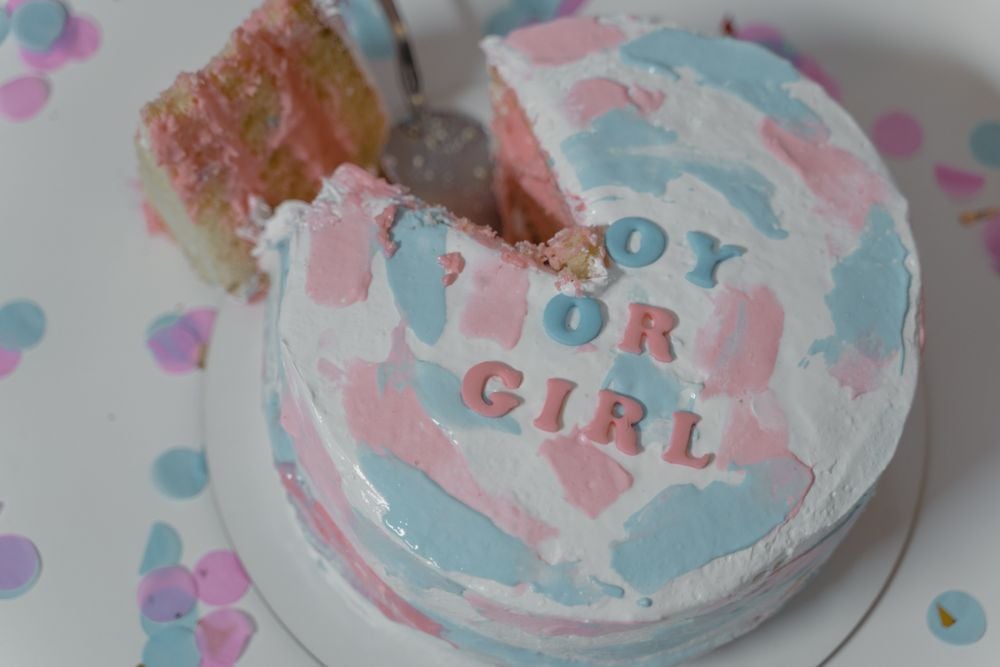
I knew we were having a girl before anybody cut the cake.
I’m not proud of it. But I’d peeked.
It happened at my twenty-week ultrasound. The technician printed out a little card, sealed it in an envelope, and handed it to me with a smile. “For your party,” she said. “Don’t look!”
I didn’t look. Not in the office. Not in the elevator. Not in the parking lot.
I made it all the way to my car before I peeled back the flap.
Just a corner. Just enough to see the first word.
Girl.
I sat in the driver’s seat with the engine off and both hands over my mouth. I don’t know how long. Ten minutes, maybe. A woman walking to her car looked in my window, saw me crying, and knocked on the glass to ask if I was okay.
“I’m fine,” I told her. “I’m wonderful.”
Then I resealed the envelope with a glue stick from my glove box, drove straight to my sister Hannah’s apartment, and handed it to her like nothing had happened.
“Don’t tell me,” I said. “I want to find out with everybody else.”
Hannah looked at me through her glasses. She’s two years older than me. She’s known me my whole life.
“You looked,” she said.
“I did not look.”
“Nora. You have glue on your thumb.”
I didn’t answer that. I just smiled. I couldn’t stop smiling.
A daughter.
On the drive home, I let myself picture her.
Little shoes lined up by our front door. Tiny sneakers with light-up soles. Bedtime stories, all the ones my mother read to me. Goodnight Moon and Where the Wild Things Are and The Very Hungry Caterpillar. A little girl with her own opinions about everything. Her own laugh. Her own way of seeing the world.
Maybe she’d love books like me. Maybe she’d love numbers. Maybe she’d love bugs, or dinosaurs, or ballet, or mud.
I didn’t care. I just wanted to meet her.
My husband, Ryan, always said he didn’t care either.
“Healthy baby,” he’d say, every time someone asked. “That’s all I want. Ten fingers, ten toes.”
He’d say it with a big grin and his hand on my belly.
And then, a minute later, he’d start talking about teaching our son to play football.
I should explain about Ryan.
We’d been married four years. We met at a friend’s wedding. He was a groomsman. I was a bridesmaid. We got paired up to walk down the aisle together, and he tripped on the runner and almost took us both down, and then laughed about it for the entire reception.
He was funny. Warm. A little loud. He worked as a regional manager for a sporting goods company. He coached a youth soccer team on weekends. He knew every player on every team in every sport, and he could tell you their stats from memory.
He was good with kids. That’s what I always noticed. At family barbecues, he’d be the one in the yard with all the nieces and nephews, throwing the ball, organizing games, letting the little ones tackle him.
I thought he’d be a wonderful father.
We tried for a year before I got pregnant. A long year. A year of tests and calendars and disappointment every month. When I finally saw two pink lines on a stick in our bathroom at five in the morning, I woke him up by jumping on the bed.
He cried. He actually cried.
“We’re having a baby,” he kept saying. “Nora. We’re having a baby.”
He called his parents right then. Six a.m. on a Sunday. His father answered.
“Dad,” Ryan said. “You’re going to be a grandpa.”
I heard Martin whoop through the phone.
“A grandson!” Martin shouted. “Finally! Somebody to teach the family business!”
The family business, in Martin’s mind, was the Dallas Cowboys.
Ryan laughed.
“Or a granddaughter, Dad.”
“Sure, sure,” Martin said. “But a grandson, right? Fingers crossed.”
Over the next few months, the comments started piling up.
They were small. Funny, mostly. I laughed at most of them.
Ryan bought a tiny football at the store. Regulation logo, palm-sized. He put it on the shelf in the room we’d decided would be the nursery.
“Gotta start them early,” he said.
He found a little Cowboys jersey online. Newborn size. Number 88.
“Look how cute this is,” he said, holding up his phone.
“It is cute,” I said. “What if it’s a girl?”
He grinned. “Girls can wear jerseys.”
“Right.”
“Not the same, though.”
“What’s not the same?”
He shrugged and scrolled to something else.
At dinner one night, he talked for twenty minutes about the camping trips he was going to take with “the kid.”
The lake his dad used to take him to up north. The tent they’d sleep in. The fishing rods. How he’d teach “him” to bait a hook. How to clean a fish. How to start a campfire with one match.
“You keep saying him,” I pointed out.
“Do I?”
“Every time.”
He laughed. “Habit.”
“What if we have a girl?”
He reached across the table and squeezed my hand.
“Then we’ll try again,” he said.
He winked when he said it.
I thought he was joking.
I really did.
There was one conversation, though. Months before the party. I didn’t think much about it at the time. But I’d think about it later, over and over, sitting on my sister’s floor.
We were in bed. Lights off. I was lying on my side with a pillow between my knees because my back hurt.
“Ryan,” I said. “What if our kid hates sports?”
He was quiet for a second.
“What do you mean?”
“Like, what if they don’t want to play football? What if they want to do ballet? Or chess? Or paint?”
He laughed. “Then I’ll teach them chess. I’m great at chess.”
“You’re terrible at chess. You lost to my grandmother.”
“She cheats.”
“She does not cheat.”
He was quiet for a while. I thought he’d fallen asleep.
Then he said, “I just hope our first one is somebody I understand. You know? Somebody I can… connect with.”
“You’ll connect with whoever they are.”
“Yeah,” he said. “I know.” But he didn’t sound like he knew.
Then, half asleep, he added something else.
“Girls aren’t the same, though.”
I lay there in the dark for a long time.
I told myself he was tired. I told myself he didn’t mean it the way it sounded.
I shrugged it off.
I shouldn’t have.
The party was on a Saturday in late April.
Hannah had volunteered to make the cake. Hannah volunteers to make every cake in our family. She’s a third-grade teacher, but she bakes the way some people do yoga. To calm down. To feel like herself.
She spent most of Friday in her tiny apartment kitchen. I went over around four to keep her company. The whole place smelled like vanilla and butter.
She’d baked three round layers of white cake. She’d carved a hollow out of the middle of the bottom two. She’d filled the hollow with frosting, and she wouldn’t let me see what color it was.
“Close your eyes,” she said every time she opened the frosting bowl.
“Hannah. I already know.”
“You do not already know. You had glue on your thumb, but you don’t know.”
I laughed. “Fine. I don’t know.”
She iced the whole outside in plain white buttercream. Smooth as glass. Then she decided it wasn’t smooth enough and scraped it off and did it again.
Then she decided the piping around the edge looked “drunk” and scraped that off and did it again.
“It looks perfect,” I said at eight o’clock.
“It looks fine. It has to look perfect.”
At nine o’clock, she pulled a little wooden sign out of a paper bag. She’d had it made at a craft fair. A little painted rectangle on a stick, white with gold letters.
ALREADY SO LOVED.
She stuck it carefully into the top of the cake. Right in the center.
Then she stood back and looked at it.
“There,” she said. “Now it’s perfect.”
I hugged her from behind. She smelled like frosting.
“Thank you,” I said.
“Shut up,” she said. “You’re going to make me cry on the buttercream.”
The next afternoon, Hannah arrived at our house carrying the cake in a big white box like it was a newborn itself.
She walked it through our kitchen and out onto the back patio and set it down on the table under the big umbrella. She lifted the box off very, very slowly.
Ryan came over to look.
“Wow,” he said. “Hannah. That’s beautiful.”
“Thank you.”
He reached out toward it.
“Don’t touch it,” Hannah warned. She slapped his hand away. “Don’t you dare touch it until everyone’s watching.”
Ryan laughed.
He held up both hands. “Yes, ma’am.”
Our patio was crowded by three o’clock.
Ryan’s parents. My parents. Hannah. Ryan’s brother Josh and his wife and their two little boys. My cousins. Our neighbors. Ryan’s coworkers. My best friend from college, who drove four hours to be there.
There were pink and blue balloons tied along the back fence, bobbing in the breeze. Hannah had made a sign out of poster board: TOUCHDOWN OR TUTU? That was Ryan’s idea. He thought it was hilarious.
People were wearing pink or blue stickers on their shirts, depending on their guess. Ryan was wearing a blue one. So was his father. So was his brother. So were his brother’s two boys.
I wasn’t wearing any sticker.
Ryan’s mother, Ines, came over and hugged me. She held on for a long time.
“Whatever happens,” she said quietly in my ear, “I’m happy for you. You know that, right? Whatever it is. I’m so happy for you.”
“I know, Ines. Thank you.”
She pulled back and looked at me with her dark eyes. Ines is small and quiet, with silver hair she keeps in a neat bun. She was born in Portugal and came to the States when she was nineteen. She still has a little bit of an accent when she’s tired or upset.
She wasn’t wearing a sticker either.
Across the patio, Ryan’s father, Martin, was standing next to Ryan by the grill, talking about football.
The Cowboys’ draft picks. Their quarterback situation. Some trade that was going to ruin the whole season.
Martin was a big man. Retired from the fire department after thirty years. Loud laugh. Firm handshake. He’d always been friendly to me, in a distant sort of way. He’d ask how my job was and then not really listen to the answer.
He clapped Ryan on the back.
“Can’t wait,” he said loudly. “Gonna have a little linebacker running around.”
Ryan grinned.
I noticed that.
I noticed Ines notice it too. She was standing across the patio holding a glass of lemonade, and she watched her husband and her son with an expression I couldn’t quite read.
I didn’t think much of it.
At four o’clock, Hannah tapped a spoon against her glass.
“Okay!” she called. “Everybody! It’s time!”
People gathered around the table under the umbrella. Phones came out. My cousin Bridget started a video. Ryan’s brother lifted his youngest up onto his shoulders so he could see.
Hannah picked up the big knife. She handed it to Ryan.
“You do the honors,” she said.
Ryan took it. He looked at me across the table. He winked.
“Ready?” he said.
“Ready.”
He put the knife into the cake. Slowly. Right down through the middle. He cut a second line. He slid the knife under the slice and lifted it out onto a paper plate.
Pink frosting spilled out of the middle onto the plate.
Bright, happy, bubblegum pink.
Everybody cheered.
My mother screamed. My best friend jumped up and down. Josh’s little boys yelled “Pink! Pink!” without really understanding what it meant. Somebody popped a confetti cannon, and pink paper rained down all over the patio.
I started crying.
I’d known for two weeks. But seeing it, out there in the open, with everyone I loved standing around me, it was different. It was real.
A daughter. We were having a daughter.
I turned to look at Ryan.
Ryan didn’t move.
He was standing there holding the knife. Staring down at the slice of cake on the plate. At the pink frosting.
His face had gone completely still.
The cheering started to die down. People noticed. My mother stopped jumping. Bridget lowered her phone a little.
“You’ve got to be kidding me,” Ryan said.
A few people laughed. Uncertainly. Like maybe he was joking. Like it was part of the bit.
He wasn’t joking.
He put down the knife.
Then he grabbed the cake stand with both hands.
And he flipped it.
The entire cake went over the edge of the table.
It hit the patio stones with a wet, heavy, horrible sound. Three layers of white cake and pink frosting, smashing into pieces across the concrete.
Pink frosting splattered everywhere. On the table legs. On the patio chairs. On Hannah’s white canvas shoes. She was standing right next to it. She jumped back, but not fast enough.
The little wooden sign flew off the top. It tumbled across the stones and landed face-up near the table leg.
ALREADY SO LOVED.
For a moment, nobody said anything.
Nobody moved.
The only sound was the balloons bumping against the fence in the wind.
Then I found my voice.
“Ryan!”
He turned toward me. His face was red. His jaw was tight.
“I wanted a son,” he said. His voice was loud. Too loud. Everybody heard it. “That’s all I wanted. Was that really too much to ask?”
I looked down at my stomach.
At the round bump under my yellow sundress. I’d bought it for the party. I’d thought it would look nice in the pictures.
Our daughter was right there. Right under my hand. She’d been kicking all afternoon.
And her father was standing over the pieces of her celebration, talking like she’d already disappointed him.
Like she’d already failed at something.
She wasn’t even born yet.
Hannah crouched down beside the wreckage.
She didn’t say anything. She just knelt on the patio stones in her frosting-covered shoes and stared at what was left of the cake she’d spent a whole day making.
Her hands were shaking.
She reached out slowly and picked up the little wooden sign. The corner was smeared with pink. She held it in both hands and looked at it.
Then Ryan’s mother stood up.
Ines had been sitting in a chair near the back of the patio. She set her lemonade down on the ground very carefully. Then she stood. She smoothed her skirt.
She walked across the patio, through the scattered confetti, and stopped right in front of her son.
She’s about five feet tall. Ryan’s six-one. She had to tilt her head back to look up at him.
“Remember something,” Ines said.
Her voice was quiet. But everybody could hear it.
“A woman gave you life,” she said. “A woman carried you for nine months. A woman raised you. A woman sat up with you every night you were sick. And your wife is carrying your child right now. Right here. In front of you.”
Ryan’s face flushed even redder.
“Don’t you stand here,” Ines said, “acting like that child is some kind of tragedy.”
“Mom,” Ryan said. He tried to laugh. “Come on. It’s not that serious.”
“You overturned a cake,” Ines said, “because your baby is a girl.”
Ryan opened his mouth.
He didn’t have an answer.
Then Ines turned her head and looked across the patio at her husband.
Martin was still standing by the grill. He hadn’t moved since the cake hit the ground. He was holding a beer bottle so tight his knuckles were white.
“Do you know what your father said,” Ines said to Ryan, without taking her eyes off Martin, “when he found out I was pregnant with you?”
Martin straightened up.
“Ines,” he said. His voice was low. Warning. “Please. Don’t.”
“No,” Ines said. “He needs to hear it. He’s needed to hear it for a long time.”
Ryan looked back and forth between his parents.
“Hear what?” he said. “Mom. What are you talking about?”
Ines’s voice broke.
“Your father,” she said, “told me he’d rather lose me than become your father.”
The patio went completely silent.
Not quiet. Silent. I could hear the neighbor’s sprinkler running two yards over.
Ryan laughed.
Once. A short, sharp sound.
Not because anything was funny. Because he didn’t believe her. Because it didn’t fit anything he knew.
“Dad?” he said.
Martin stared down at the pink frosting on the patio stones.
He didn’t look at his son. He didn’t look at his wife. He just stared at the ground.
“We were young,” he said finally.
“That isn’t an answer,” Ryan said.
Ines folded her arms across her chest.
“When I told him I was pregnant,” she said, “he told me to choose. Him or the baby. He said he wasn’t ready. He said he’d never wanted children. He said if I had you, he’d leave.”
Her voice was shaking now, but she kept going.
“And I told him I was having you,” she said. “I told him I didn’t need his permission. I packed his bag myself.”
Ryan’s face drained of color.
He turned to his father.
“But you stayed,” he said.
Martin was quiet for a long moment.
“Yes,” he said.
“Why?”
Martin opened his mouth.
Then he closed it again.
Ines answered for him.
“He came back,” she said quietly. “Two months before you were born. He showed up at my sister’s apartment with flowers. He said he’d been thinking. He said he was sorry. He said he wanted to try.”
Ryan looked suddenly smaller. Like the air had gone out of him.
“But you always said,” he said to his father, “I was the best thing that ever happened to you. You said it at my wedding. In your toast. In front of everybody.”
“You were,” Martin said quickly. “You were the best thing that ever happened to me.”
“Then why,” Ryan said, “didn’t you want me?”
Nobody moved.
Nobody breathed.
Josh’s little boy, still up on his father’s shoulders, whispered, “Daddy, why is Grandpa sad?” And Josh shushed him.
I should have felt sorry for Ryan right then.
And part of me did. I’m not made of stone. I watched my husband find out, in front of forty people, that his father had once tried to walk away from him before he was even born. I watched it hit him. I watched his face crumple.
Part of me wanted to go to him.
But the ruined cake was lying on the patio between us.
And our daughter was still inside me.
And he’d just told everyone we knew that she wasn’t what he wanted.
I turned around.
I reached for Hannah. She was still crouched on the ground, holding the wooden sign. I put my hand on her shoulder.
“Can you take me home with you?” I said.
My voice came out very small.
Hannah looked up at me. She stood up immediately.
“Yes,” she said.
Ryan turned.
“Wait,” he said. “Nora. Wait. You’re leaving? Over a cake?”
I stared at him.
“You’re still calling it a cake?”
“I was shocked!” He held up both hands. “I didn’t mean—I was surprised, okay? I didn’t mean anything by it—”
“You said you didn’t want her.”
“I said I wanted a boy.”
“You threw her celebration on the ground,” I said. “In front of everybody we know.”
His jaw tightened.
“Now you’re making me sound like a monster.”
I put my hand on my stomach. She kicked. Right under my palm. Like she was listening.
“I’m not bringing our daughter,” I said, “into a home where she has to apologize for being born a girl.”
He had no answer.
He just stood there. With frosting on his shoes and confetti in his hair.
Hannah took the little wooden sign and wiped it gently on a napkin. She couldn’t get all the pink off. She tucked it into her purse.
Then she took my hand.
And we walked out through the side gate together. Past the pink and blue balloons. Past the TOUCHDOWN OR TUTU? sign.
Nobody stopped us.
At Hannah’s apartment, I sat on her old green sofa wearing a pair of her fuzzy slippers. My feet had swollen so much in the last month that none of my own shoes fit right. Hers were a size bigger.
Hannah made tea. Chamomile with honey, the way our mother used to make it.
I barely touched it.
I just sat there, holding the mug, staring at the wall.
“I should’ve seen it,” I whispered.
Hannah sat down on the couch beside me. “What?”
“All those jokes,” I said. “Then we’ll try again. The football. The jersey. The camping trips. Him, him, him. He told me, Hannah. He told me for months. I just didn’t listen.”
Hannah put her hand on my knee.
“You couldn’t have known he’d do that,” she said. “Nobody could have known that. I didn’t know that. And I’ve never liked his haircut.”
I almost laughed.
But I couldn’t stop thinking about it.
The football on the nursery shelf. The little jersey, number 88. The fishing rod he’d found at a garage sale, kid-sized, and hung on the wall of our garage.
Gotta start them early.
The camping trips he’d already planned. The lake his father took him to. Teaching him to bait a hook.
And that night in bed. I just hope our first one is somebody I understand.
Girls aren’t the same, though.
I’d shrugged it off. I’d told myself he was tired.
Now, sitting on Hannah’s couch, I kept picturing something.
A little girl. Maybe six years old. Holding up a drawing she’d made. Or a puppet show. Or a song she’d written. Or a rock she’d found that looked like a heart.
Daddy, look.
And her father barely looking up.
Hannah got up and went to her purse. She came back with the little wooden sign.
She set it down on the coffee table in front of me.
ALREADY SO LOVED.
The pink smear covered half the gold letters. You could still read it. Barely.
“I made that,” Hannah said quietly, “because I was excited to meet her. I’m still excited to meet her.”
I started crying again. Big, ugly, shaking tears.
Hannah put her arm around me.
“She is loved,” she said into my hair. “She’s so loved, Nora. Even if Ryan hasn’t figured out how to show it yet.”
I stayed at Hannah’s that night.
Ryan called six times.
I didn’t answer.
At around ten, I sent one text.
I need space. Do not come here.
He replied almost immediately.
I understand.
I put the phone face down on the coffee table.
A minute later, it buzzed again.
I picked it up.
Dad never told me he almost left us.
I stared at that message for a long time.
I didn’t know what to do with it.
Maybe Martin had eventually become the father Ryan remembered. The one at every game. The one who drove him to practice. The one who gave that toast at our wedding.
Maybe he’d loved Ryan deeply but shown it badly. Maybe he’d been scared. Maybe he’d been young and stupid and done the best he could.
But none of that changed what happened on our patio.
None of it changed the sound the cake made when it hit the ground.
I turned off my phone.
Later that night, Hannah found me sitting on the floor beside the sofa.
I couldn’t sleep. My back hurt. The baby kept kicking.
I was holding the first photograph from our ultrasound. The one from twelve weeks. I’d brought it with me in my purse; I always carried it. It was black and white and grainy. A little curved shape. A tiny profile. A forehead and a little nose and a little round chin.
I touched the edge of the picture.
“Do you think she’ll ever find out?” I asked.
Hannah sat down on the floor next to me in her pajamas.
“About the party?”
I nodded.
Hannah was quiet for a while.
“I don’t know,” she said finally. “Maybe someday. Somebody had their phone out. There’s probably a video.” She took a breath. “But what happened today doesn’t get to decide what her whole life will be. It was one afternoon. She’s going to have a lot of afternoons.”
I wanted to believe her.
But what scared me wasn’t really that one awful afternoon.
It was all the afternoons after it.
Christmas mornings, when Ryan might buy the wrong presents because some part of him still wanted a boy. Footballs instead of art sets. Fishing rods instead of whatever she actually asked for.
School concerts he might miss because there was a game on.
Ballet recitals he’d sit through on his phone.
A daughter asking, someday, why Daddy never seemed interested in the things she loved. Why he lit up for her cousins’ football games but looked bored at her science fair.
And then trying harder. And harder. Trying to become someone he’d be proud of.
That’s what kept me up.
I remembered something else Ryan had told me once. Early on, when we first started dating.
He said his dad never missed a single one of his games. Not one. In twelve years.
“He’d be up in the stands every Saturday,” Ryan said. “Screaming his head off. Best feeling in the world. Scoring a touchdown and looking up and seeing my dad going crazy.”
“What about when you weren’t playing?” I’d asked. “What did you two do?”
Ryan had thought about it.
“I don’t know,” he said. “Watched games, I guess.”
At the time, I thought that was sweet.
Hannah put her hand on my stomach. The baby kicked right into her palm. Hannah gasped and laughed.
“She’s strong,” she said.
“She’s been kicking all day.”
“Probably mad about the cake.”
I laughed. Really laughed. For the first time since four o’clock.
Hannah kept her hand there.
“Whatever happens with Ryan,” she said, “this little girl won’t be alone. Not ever. She has you. She has me. She has Mom and Dad. She has Ines, from the look of things. She’s going to have so many people.”
For the first time since that afternoon, I believed something good might still be waiting for us.
Two days later, my phone rang. It was Ines.
I almost didn’t answer. I thought she was calling to defend Ryan. To tell me he didn’t mean it. To ask me to come home.
I answered anyway.
“Nora,” she said. “It’s Ines. Do you have a minute?”
“Yes.”
“I’m not calling to defend him,” she said right away. “I want you to know that. I’m not calling to tell you to go back. That’s your decision. I’m calling to say I’m sorry.”
I sat up on Hannah’s couch.
“You don’t have anything to be sorry for, Ines. You stood up for me. In front of everyone.”
“I should have stood up a long time ago,” she said. Her voice was tired. “That’s what I’m sorry for. I should have stopped Martin from making our son feel like he always had to prove himself. A long, long time ago.”
I sat very still.
“What do you mean?”
Ines was quiet for a moment. I could hear her breathing on the other end.
“When Ryan was little,” she said, “he loved to draw.”
I frowned. “Ryan?”
“Animals. Houses. Pictures of us. The three of us standing in front of the house with a big yellow sun. Dogs. Horses. He drew horses all the time. He’d sit at the kitchen table for hours. He had a box of crayons he wouldn’t let anybody touch.”
I tried to picture it. Ryan, sitting at a kitchen table, drawing horses.
I couldn’t.
“Ryan loves football,” I said.
“He does now,” Ines said quietly.
She went quiet again.
“Martin wanted a boy who played football,” she said. “He’d played in high school. He’d had a scholarship offer, before he hurt his knee. Football was everything to him. And when Ryan came along, he didn’t know what to do with a little boy who wanted to sit inside and draw horses.”
She took a long breath.
“So I helped,” she said. “God forgive me, I helped. I used to tell Ryan to put his crayons away and go outside with his dad. Go play with Daddy. Daddy wants to throw the ball with you. I thought I was helping them get close. I thought if they had something to share, Martin would finally…” She stopped. “I don’t know. Finally be the father I hoped he’d be.”
She sounded so ashamed.
“And it worked,” she said. “That’s the terrible part. It worked. Martin was so proud when Ryan started scoring goals. So proud. He’d come home from games walking on air. And I told myself that was normal. That’s what fathers and sons do.”
I sat there on Hannah’s couch and thought about every story Ryan had ever told me about his childhood.
The time he scored the winning touchdown in sixth grade. The fishing trip where he caught a pike bigger than his father’s. The trophy from the state tournament that’s still sitting on a shelf in his parents’ living room. The camping trips up north.
Every good memory involved a game.
A fishing trip.
A trophy.
Something his father was proud of.
He’d never once mentioned drawing.
Not once in five years.
“Does Ryan know?” I asked. “What you just told me? About the drawing?”
Ines was quiet for a long time.
“I think,” she said slowly, “he’s starting to remember.”
Ryan went to his parents’ house that Tuesday.
I learned all the details later. Weeks later. When he finally sat down and told me everything that happened that day.
But I’ll tell it to you now, the way he told it to me.
He drove over in the afternoon. He wanted to ask his father, to his face, whether his mother had been telling the truth. Whether it was really true. Whether Martin had really told her to choose.
But Martin wasn’t home. He’d gone to the hardware store.
Ines answered the door. She offered him coffee.
Ryan said no. He didn’t want coffee. He didn’t know what he wanted.
So instead, he wandered upstairs. To the bedroom where he grew up. His parents had kept it almost exactly the same. Same navy blue walls. Same twin bed with the plaid comforter. Same posters.
His old football photograph was still hanging beside the door. Eighth grade. Him in his uniform, helmet under his arm, grinning at the camera with a gap in his front teeth.
He stood and looked at it for a long time.
He remembered that game. He’d scored twice. Two touchdowns. The second one was a fifty-yard run down the sideline. After the game, his father had come down out of the stands and lifted him up onto his shoulders. In front of everybody. Paraded him around the field.
Ryan had felt enormous. He’d felt like a giant.
That’s what he remembered when he thought about his father. That moment. Up on his shoulders. On top of the world.
Ines came up the stairs behind him. She stood in the doorway.
“I kept your school things,” she said quietly. “In the bottom drawer of your dresser. All of it. From when you were little.”
She left him alone.
Ryan knelt down and opened the drawer.
Old school exercise books, the kind with the marbled black-and-white covers. A report card from second grade. Ryan is a pleasure to have in class. A plastic dinosaur. A box of crayons. The big box, sixty-four colors, with the built-in sharpener in the back. Most of the crayons were worn down to stubs.
And under the crayons, a folded piece of paper.
He unfolded it.
It was a drawing. In crayon.
A little boy, holding a man’s hand. They were standing in front of a yellow house under a big round sun with spiky rays. The man was very tall, much taller than the house. The little boy had a big smile. Both of them had big smiles.
And above them, in uneven, wobbly letters, it said:
ME AND DADDY.
Ryan recognized it immediately.
He told me later that it was like a door opening in his head. A door he didn’t know was there.
He’d made it when he was six. He’d worked on it for a long time. An entire afternoon. He’d tried to get the house exactly right. He’d started over twice because the door was crooked.
And then he remembered bringing it to his father.
It was evening. Martin was sitting in his recliner in the living room, watching a game on TV.
Ryan walked up beside the chair, holding the drawing in both hands.
“Dad,” he said. “Look.”
Martin glanced over. For maybe one second.
“That’s nice, buddy,” he said. Then he turned back to the TV. “Hey. Want to go throw the ball around?”
Ryan put the drawing down on the side table.
He went outside.
They threw the ball around in the yard until it got dark. His father taught him how to put his fingers on the laces. How to throw a spiral. His father said, “There you go! That’s my boy!” when he finally got one right.
And Ryan felt good. Really good. His dad was so happy.
The next afternoon, Ryan asked his father to play football again.
And the following day.
And the day after that.
And eventually, the crayons stayed in the drawer.
He’d never thought about that as a loss. Not once in thirty years.
Not until he was kneeling on the floor of his childhood bedroom, holding that drawing in his hands.
And he realized he couldn’t remember the last time he’d drawn anything.
Anything at all. Not a doodle. Not a sketch. Not a stick figure on a napkin.
He could remember every goal his father ever praised. Every touchdown. Every fish. Every trophy.
He couldn’t remember his father ever asking him what he wanted to draw.
When Martin came home from the hardware store, Ryan was still sitting on his old bed, holding the paper.
Martin came upstairs. He stopped in the doorway.
“Ryan,” he said. “Your mother said you were here.”
Ryan looked up at him.
“Did you ever like this?” he asked.
He held out the drawing.
Martin blinked. He came into the room. He took the paper and looked at it.
“What is it?”
“Something I made you,” Ryan said. “When I was six.”
Martin looked at it for a long time.
“Of course I liked it,” he said.
“Then why don’t I remember you ever saying so?”
Martin’s face changed. Got defensive. Got hard.
“Ryan,” he said. “I went to every single one of your games. Every one. Twelve years.”
“I know.”
“I drove you to practice. Every morning at six. I paid for all your equipment. Your cleats. Your helmet. Your camp every summer.”
“I know, Dad.”
“Then what,” Martin said, “are you accusing me of?”
Ryan held up the drawing between them.
“I didn’t always want to play,” he said quietly.
Martin stared at him.
He looked at the drawing. He looked at his son.
Then he turned around and looked at Ines. She’d come up the stairs behind him and was standing in the hallway.
Waiting for her to step in. Waiting for her to smooth it over the way she always had. Oh, Martin, he doesn’t mean it. Ryan, your father loves you.
She didn’t rescue him.
She just stood there in the hallway with her hands folded.
“I loved you,” Martin said. His voice cracked. “I love you. You know that.”
Ryan’s voice cracked too.
“Did you ever love me,” he said, “before I became the son you wanted?”
Martin sat down on the edge of the bed. Heavily. The springs groaned.
For a long time, he didn’t say anything at all.
He just held the drawing in his big hands and looked at it.
Then, finally, he started to talk.
He told Ryan he’d been terrified of becoming a father. Terrified. His own father had been a drunk who hit him. He’d grown up swearing he’d never have kids. When Ines told him she was pregnant, he panicked. He ran.
“I was twenty-two,” he said. “I was a kid. I was so scared I couldn’t breathe.”
He’d come back. He’d spent two months sleeping on a friend’s couch and thinking and drinking too much, and then one night he’d realized that if he didn’t go back, he’d be exactly like his own father. A man who wasn’t there.
So he went back.
“And when you were born,” Martin said, “and they told me you were a boy, I thought… okay. Okay. I can do this. I know boys. I was a boy. I know football. I know fishing. I know how to throw a ball and bait a hook and change a tire. I can teach him all that. I can be a good father if I just teach him all the things I know.”
He looked down at the drawing.
“But you didn’t want to do any of that,” he said quietly. “You wanted to sit inside and draw horses. And I didn’t know what to do with a kid who wanted to draw. I didn’t know how to talk to you. I didn’t know how to be with you. I didn’t know anything about drawing.”
“So you taught me to want what you wanted,” Ryan said.
Martin nodded slowly.
“I thought we were close,” he said. “I thought we were so close.”
“We were,” Ryan said. “When I was doing your things.”
In the hallway, Ines started crying.
“I helped,” she said. “Ryan. I helped him do it. I kept telling you to go make Daddy proud. Every day. Put the crayons away. Go outside. Make Daddy proud.”
Ryan looked at both of them. His mother in the doorway. His father on the bed.
“You already had a son who loved you,” he said. “You didn’t have to change him.”
Martin lowered his eyes.
“I know that now,” he said.
Ryan asked to see me the next evening.
I agreed to meet him at Hannah’s apartment. On neutral ground. With Hannah in the next room.
He knocked on the door at seven o’clock exactly.
He looked exhausted. He hadn’t shaved. He had dark circles under his eyes. He was wearing a wrinkled T-shirt I’d never seen him wear outside the house.
He didn’t bring flowers.
He didn’t bring a gift. No jewelry. No teddy bear. No grand gesture.
He just stood there in the doorway with his hands in his pockets.
“Can I come in?”
I stepped aside.
He sat down on Hannah’s green sofa. I sat in the armchair across from him. The little wooden sign was still on the coffee table between us. ALREADY SO LOVED. He looked at it for a long time.
Then he looked up at me.
“I was wrong to destroy the cake,” he said.
I waited.
“And?”
He was quiet for a moment.
“I was wrong to act like our daughter was a disappointment,” he said. “In front of everyone. In front of you. She’s not a disappointment. She’s not. I was wrong.”
I waited some more.
“I thought,” he said slowly, “that being a dad meant having somebody to do the things I did with my dad. Football. Fishing. Camping. All of it. That’s what I thought fatherhood was.”
“She could still like football,” I said.
“I know.”
“That wasn’t the problem, Ryan.”
“No,” he said. “I know it wasn’t.”
He rubbed his hands together. Over and over. Like they were cold.
“I pictured a boy,” he said, “because I thought that was the only way I’d know how to be a father. I thought I’d know what to do with a boy. I thought a girl would be…” He stopped. “A stranger. Somebody I wouldn’t know how to talk to.”
I thought about Ines’s story. About the box of crayons in the bottom drawer. About the drawing.
ME AND DADDY.
“Ryan,” I said. “What if our daughter spends her whole childhood trying to become the son you wanted?”
He started crying.
Not a little. Really crying. His shoulders shook. He put his face in his hands.
I didn’t reach for him.
I wanted to. Part of me wanted to so badly. Four years of marriage. I knew how to comfort him. I knew exactly where to put my hand on his back.
But I didn’t.
“She hasn’t even been born yet,” I said quietly. “And you’ve already told a patio full of people that she isn’t enough.”
“I know.”
“Do you?”
He lowered his hands. He looked at me. His eyes were red.
“I keep thinking about how hard I tried to make Dad proud,” he said. “My whole life. Every game. Every practice. Every time I looked up at the stands to see if he was cheering.” He swallowed. “I quit drawing when I was six because he looked at the TV instead of at me. And I never even noticed I’d quit.”
“And?”
“And I don’t want her trying that hard with me,” he said. “I don’t want her looking up at the stands. I don’t want her quitting something she loves because I didn’t look.”
“Wanting isn’t enough, Ryan,” I said.
He nodded.
“I know,” he said. “I know it’s not.”
I told him I wasn’t coming home yet.
I told him that an apology couldn’t undo what everybody had seen. Forty people. My mother. My best friend. His brother’s little boys.
And it couldn’t undo what I’d heard. I wanted a son. Was that really too much to ask?
“I’m going to need to see it,” I said. “Not hear it. See it. For a long time.”
He didn’t argue.
“Okay,” he said. “That’s fair.”
He stood up to leave. At the door, he stopped.
“Can I apologize to Hannah?” he asked. “Not right now. But sometime. When she’s ready.”
I looked at him.
“Only if she’s willing to hear you,” I said.
Hannah made him wait a week.
“I need to be less angry first,” she told me. “Otherwise I’m going to hit him with a rolling pin.”
The following Thursday, Ryan came back to Hannah’s apartment.
He stood in her tiny kitchen. The same kitchen where she’d spent all day Friday baking. She was leaning against the counter with her arms crossed.
“I’m sorry,” Ryan said, “that I destroyed something you worked so hard on.”
Hannah didn’t uncross her arms.
“It wasn’t just the hours,” she said.
“I know.”
“Three layers. Two batches of frosting. I redid the decorations twice. I had that sign made at a craft fair.” Her voice was very steady. “But that’s not why I’m angry.”
“I know.”
“I made that cake,” Hannah said, “because I already loved my niece. Before I even knew what color the frosting would be. I loved her.”
Ryan looked down at the floor.
“She deserved better,” he said. “From me. From her own father.”
“Yes,” Hannah said. “She did.”
He didn’t argue.
He didn’t make excuses. He didn’t say I was surprised or I was shocked. He didn’t ask Hannah to tell me how sorry he was, or that he’d behaved well, or that he deserved a second chance.
He just stood there and took it.
After a long moment, Hannah uncrossed her arms.
“Okay,” she said. “Apology accepted. Mostly. Don’t push it.”
After that, Ryan started preparing for the baby.
Really preparing.
He came to my doctor’s appointments when I invited him. Only when I invited him. He sat in the corner of the exam room and listened and asked questions. Real questions. About my blood pressure. About the baby’s growth. About what labor would be like.
He read the newborn-care books I’d bought. All four of them. I found one of them on Hannah’s porch one evening, with a note stuck to the cover. Done. Chapter 7 is terrifying. Can we talk about it?
He asked me what help I’d need after the baby came. What I’d need from him. What I’d need from his mother. What I’d need from my mother.
And then he listened when I answered.
He actually listened. He wrote it down on a notepad on his phone.
He also started going to counseling.
He told me about it on the phone one night.
“I found a guy,” he said. “A therapist. Dr. Okoro. He specializes in, like, family stuff. Father stuff. I went yesterday.”
“How was it?”
He was quiet for a long time.
“Hard,” he said. “I cried for forty minutes. About a drawing of a horse.”
“You’re going back?”
“Every Wednesday.”
“Ryan,” I said. “You know I’m not promising to come back. Just because you’re going to therapy.”
“I know,” he said. “I’m not doing it so you’ll come back. I’m doing it so I’m a better dad. Whether you come back or not. She’s going to have a dad either way. I want him to be a decent one.”
In June, we started talking about getting the house ready.
He asked me whether I wanted the nursery painted.
“I want to choose together,” I said.
So the next weekend, he came to Hannah’s apartment with a handful of paint samples from the hardware store. Little cardboard strips with five shades each.
Yellow. Like butter.
Green. Like the first leaves in spring.
Blue. Pale, like the sky early in the morning.
And pink. Soft, like the inside of a seashell.
He laid them all out on Hannah’s coffee table in a row. Side by side.
I looked at them.
Not one of them mattered more than another. That was the thing. He hadn’t brought a bunch of blues and one pink stuck at the end. He hadn’t brought all pinks and made a face. He’d just brought colors. Every color.
“What do you think?” he asked.
“I like the green,” I said.
“Me too.”
We picked the green.
Then one afternoon in July, Ryan pulled out his phone and showed me something.
It was a little football jersey. Cowboys. Number 88. Like the one he’d shown me before the party.
My stomach tightened. I felt my whole body go cold.
He saw my face. He smiled. Not a big smile. A careful one.
“They make these in every size,” he said. “From newborn all the way up. Maybe she’ll like football someday. Maybe she’ll want to come to games with me. Maybe she’ll be the toughest kid on the team.”
I looked at him.
“And if she doesn’t?” I said.
He shrugged.
“Then we’ll find out what she does like,” he said.
He put his phone away.
No disappointment in his voice. No argument. No girls aren’t the same.
Just the possibility. A daughter who could grow up being exactly who she was.
He sat back on the couch.
There were still days when it was hard.
Days when Ryan would walk into a room, and I’d see the cake hitting the ground. Hear that wet, heavy sound. See the pink splatter across Hannah’s shoes.
I’d flinch. I couldn’t help it.
He noticed. He always noticed.
He never once asked me to forget it. He never said can we just move past this. He never said I already apologized.
He just let it be there.
In August, we drove over to his parents’ house. Martin had offered to give us Ryan’s old crib. It had been in their garage for thirty years. Solid oak. He’d sanded it and refinished it himself over the summer.
When we pulled into the driveway, Martin was standing in the open garage holding a screwdriver. The crib was in pieces on a tarp at his feet.
He looked at me as I got out of the car. He put down the screwdriver.
“Nora,” he said. “I owe you an apology too.”
I stopped.
I waited.
He wiped his hands on a rag. Slowly. Like he was buying time.
“When Ryan overturned that cake,” he said, “I should’ve said something. I should’ve stepped in. Instead, the first thing I did was try to stop Ines from telling him the truth.” He shook his head. “I was more worried about keeping our family secrets than about what he’d just done to you. And to your daughter.”
I looked at him for a long moment.
“I wish you’d spoken up that day,” I said.
He nodded.
“I know,” he said quietly. “So do I.”
Ines came out of the house a minute later. She was carrying something folded in her arms.
A blanket. Hand-knitted. Soft, cream-colored yarn, with a border of little green leaves.
“I made this,” she said. “Over the summer. No pressure to take it. If you don’t want it, I understand.”
I took it from her. I held it against my face. It smelled like her house. Like lavender and coffee.
“Thank you, Ines,” I said. “It’s beautiful.”
She squeezed my hand.
Martin looked at the blanket. Then at his wife.
Then at Ryan.
“Your mother,” he said quietly, “did so much that I treated like it was ordinary. Every day. For thirty years. And I never once said thank you.”
Ines didn’t say anything.
She just looked at her husband for a long moment. And then she went back inside the house.
Ryan loaded the crib pieces into the back of my car.
That evening, he went back to our house and spent four hours assembling them himself. Alone. In the green nursery.
He read every instruction. He didn’t call his father once to come over and take over, the way he would have before. He called me twice, to ask a question about a screw. But not his father.
At around eleven o’clock, he sent me a picture. The crib, all put together. Standing in the middle of the green room.
Done. Where do you want it?
Not where he thought it should go.
Where I wanted it.
I texted back. By the window. So she can see the trees.
He moved it there.
It was the middle of September before I felt ready to move home.
I told Ryan the day before. We were sitting on the back patio. The same patio. The stones had been power-washed. You couldn’t see any pink anymore.
“I’m coming back tomorrow,” I said.
He let out a breath.
“But I need you to hear this,” I said. “If our daughter ever becomes the target of your disappointment, I’ll leave. I’ll take her, and I’ll leave. And I won’t come back.”
He looked at me.
“I understand,” he said.
“I’m not saying it to threaten you. I’m saying it so you know.”
“I know,” he said. “I’d leave too. If I were you. I’d leave too.”
I moved home.
And I watched him. Every day.
Not what he promised. What he did.
How he talked to me. How he talked about her. How he spent his evenings. Whether he read to my belly at night, which he started doing in October, from a book of fairy tales Hannah gave us. Whether he went to his Wednesday sessions with Dr. Okoro. He never missed one.
One night in October, I came downstairs at midnight for a glass of water and found him sitting at the kitchen table.
He had a pad of paper in front of him. And a pencil.
He was drawing.
A horse. A wobbly, lopsided, terrible horse. Its legs were the wrong length. Its head was too big.
He looked up at me, embarrassed. He tried to cover it with his hand.
“Don’t laugh,” he said.
“I’m not laughing.”
“It’s really bad.”
“It’s a horse,” I said. “It’s definitely a horse.”
He looked down at it.
“Dr. Okoro said I should try,” he said. “He said maybe I’d want to draw something for her room. Something for her. Before she gets here.”
I sat down beside him at the table.
“Draw it,” I said.
He drew for an hour. I watched.
Our daughter arrived on a rainy morning in late November.
Six pounds, eleven ounces.
Small.
Furious.
Perfectly herself.
She came out screaming. Red-faced, fists balled up, absolutely outraged about the whole thing. The nurse laughed.
“She’s got opinions,” the nurse said.
“Good,” I said.
When the nurse placed her in Ryan’s arms for the first time, he looked absolutely terrified.
He held her like she was made of glass. Like she might break if he breathed wrong. His arms were stiff. His face was pale.
Then she stopped screaming.
She opened her eyes. Dark eyes, still cloudy, the way all newborns are.
And she reached out and curled her tiny fingers around his thumb.
His face changed.
I watched it happen from the bed. All the fear slid away. Something else came in to replace it. Something I’d never seen on his face before.
He started crying.
“Hi,” he whispered to her.
She blinked up at him.
“I’m your dad,” he said.
For a moment, he couldn’t say anything else.
He just stood there in the hospital room with his daughter in his arms and her fingers around his thumb, crying, with rain streaming down the window behind him.
Then he bent down closer. He put his face right next to hers.
“You don’t have to be anything for me,” he whispered. “You hear me? Not anything.”
He kissed her forehead.
“You’re already enough.”
We named her Clara Ines.
Clara, after my grandmother. Ines, after his mother.
When we told Ines, in the hospital two days later, she put her hand over her mouth and didn’t say anything for a full minute.
Then she held Clara in her arms in the rocking chair by the window, and she sang to her in Portuguese. A song her own mother sang to her, she said. A long time ago.
Martin stood behind the rocking chair with his hand on his wife’s shoulder.
After a while, Ines held the baby up toward him.
“Do you want to hold your granddaughter, Martin?”
He hesitated. Just for a second.
Then he took her. He held her very carefully, the way you hold something you’re afraid you don’t deserve.
Clara looked up at him with her cloudy dark eyes.
“Hello, Clara,” Martin said quietly. “I’m your grandpa.”
He looked at her for a long time.
“I’m going to try to do this better,” he said.
I don’t know if he was talking to her, or to Ryan, or to Ines.
Maybe all three.
A few days after we brought Clara home, Hannah came to visit.
She came up the stairs with a small paper bag in her hands. She stood in the doorway of the green nursery and looked around at everything. The crib by the window. Ines’s blanket folded over the side. The rocking chair.
And on the wall above the changing table, a framed drawing.
A horse. Wobbly. Lopsided. Legs the wrong length. Its head too big. Standing in a field under a big yellow sun with spiky rays.
And a little girl beside it, holding its reins.
In the corner, in neat letters, it said: FOR CLARA. LOVE, DAD.
Hannah stared at it for a long time.
“Ryan drew that?” she said.
“Ryan drew that.”
“It’s terrible.”
“It’s perfect,” I said.
Hannah smiled. “Yeah. It is.”
Then she held out the paper bag.
“I brought her something,” she said.
Ryan was standing in the doorway behind her, holding Clara against his shoulder. He came into the room.
Hannah reached into the bag and pulled it out.
The little wooden cake topper.
She’d cleaned it. Washed it carefully. Sanded down the stick. But one corner still carried a faint pink stain where the frosting had soaked into the wood. She couldn’t get it out.
ALREADY SO LOVED.
Ryan handed Clara to me.
He took the wooden sign from Hannah. He held it in both hands.
He held it for a long time. Running his thumb over the pink stain on the corner. He didn’t say anything.
Hannah didn’t say anything either.
Then Ryan walked across the nursery to the little white shelf above the crib. The one where he’d once put the palm-sized football.
The football wasn’t there anymore. He’d moved it to a box in the closet weeks ago. “For later,” he’d said. “If she wants it.”
He set the wooden sign on the shelf instead. Right in the middle.
He stepped back and looked at it.
“There,” he said quietly.
Our daughter slept under it that night.
And every night after.
She had no idea what had happened before she was born. The cake. The patio. The pink frosting splattered across her aunt’s shoes. Her father’s voice, loud, in front of forty people. Was that really too much to ask?
One day, we might tell her. When she’s older.
Maybe Ryan will tell her himself. He says he wants to. He says she should hear it from him.
But whatever happens, whatever we decide to tell her, there’s one thing she’ll never have to do.
She’ll never have to earn the words on that sign.
Not from her aunt.
Not from me.
And if her father keeps choosing to be the man he’s learning to become, every single day, one wobbly drawing at a time, not from him either.

Laura Bennett writes about complicated family dynamics, difficult conversations, and the quiet moments that change everything. Her stories focus on real-life tensions — inheritance disputes, strained marriages, loyalty tests — and the strength people find when they finally speak up. She believes the smallest decisions often carry the biggest consequences.