The garbage truck was two blocks away when I found it.
I could hear it grinding and beeping down the street, that ugly hydraulic groan, the clank of a bin being lifted and slammed back down. It was 7:30 on a Sunday morning, and I had only come back to my parents’ house for one reason. I’d left my jacket on the back of a kitchen chair after Dad’s 60th birthday party the night before.
That was it. Grab the jacket. Maybe have a cup of coffee with Mom if she was up. In and out.
I pulled into the driveway and saw the cans lined up at the curb. Pickup day. Nothing strange about that.
But sitting on top of the recycling bin, tipped a little to one side, was a brown paper grocery bag. And sticking out of the top of that bag was a corner of brown craft paper, tied with twine.
I knew that paper. I knew that twine. I had wrapped it myself at my kitchen table two nights earlier, folding the corners three times until they were perfect.
I got out of my truck. My legs moved on their own. I walked over and pulled the bag open.
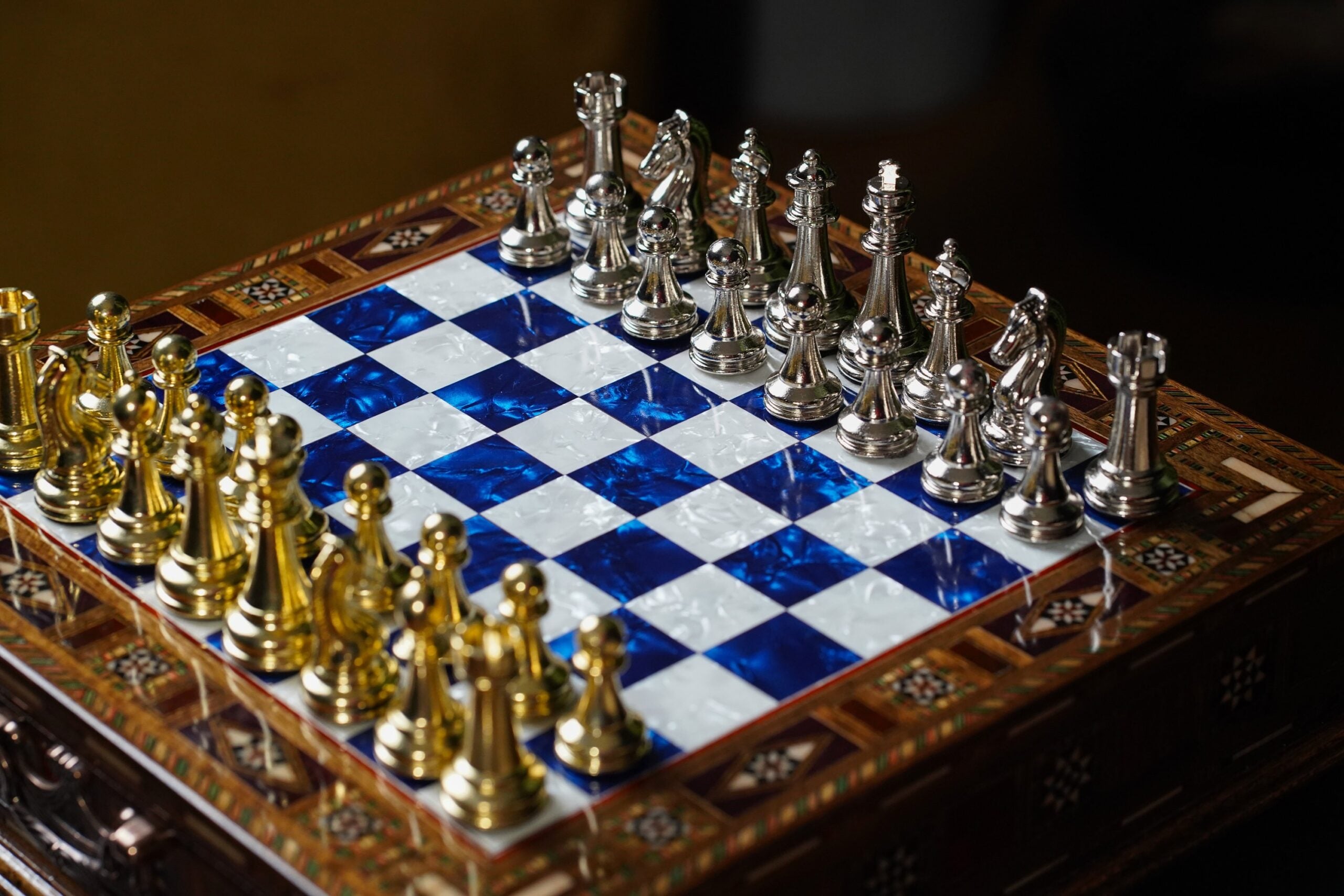
There it was. The chess set.
Still wrapped. The twine still knotted the way I’d knotted it. He hadn’t even opened it a second time. He’d taken it off the table after the party and thrown it out with the paper plates and the napkins and the empty beer cans. There was a smear of white frosting on the paper right where the brass nameplate sat underneath.
Three months of my life. Every night until two in the morning. Sanding, shaping, oiling, engraving.
I stood there holding it, and the truck got closer. Beep. Grind. Clank.
Five more minutes and it would have been crushed in the back of that truck and hauled to the county landfill, and I never would have known.
I looked up at the house.
Through the kitchen window, I could see my father sitting at the table with his coffee. He was reading the paper. On his left wrist, catching the morning light, was the watch my brother had given him the night before.
He didn’t look up. He didn’t see me standing in his driveway holding the gift he’d thrown away.
He just turned the page.
I carried the chess set back to my truck. I set it on the passenger seat like it was something alive. I got in. I backed out of the driveway.
I didn’t go inside for my jacket. I didn’t knock. I didn’t scream or cry or punch the steering wheel. I just drove home in complete silence, carried that box into my apartment, set it on my workbench, and sat down on the floor.
I sat there for a long time.
My name is Michael. I was 32 years old that morning. And that was the last time I ever walked up to my father’s house hoping he would finally see me.

Specialty: Emotional Turning Points
Rachel Monroe writes character-driven stories about betrayal, second chances, and unexpected resilience. Her work highlights the emotional side of family conflict — the silences, the misunderstandings, and the moments when someone quietly decides they’ve had enough.