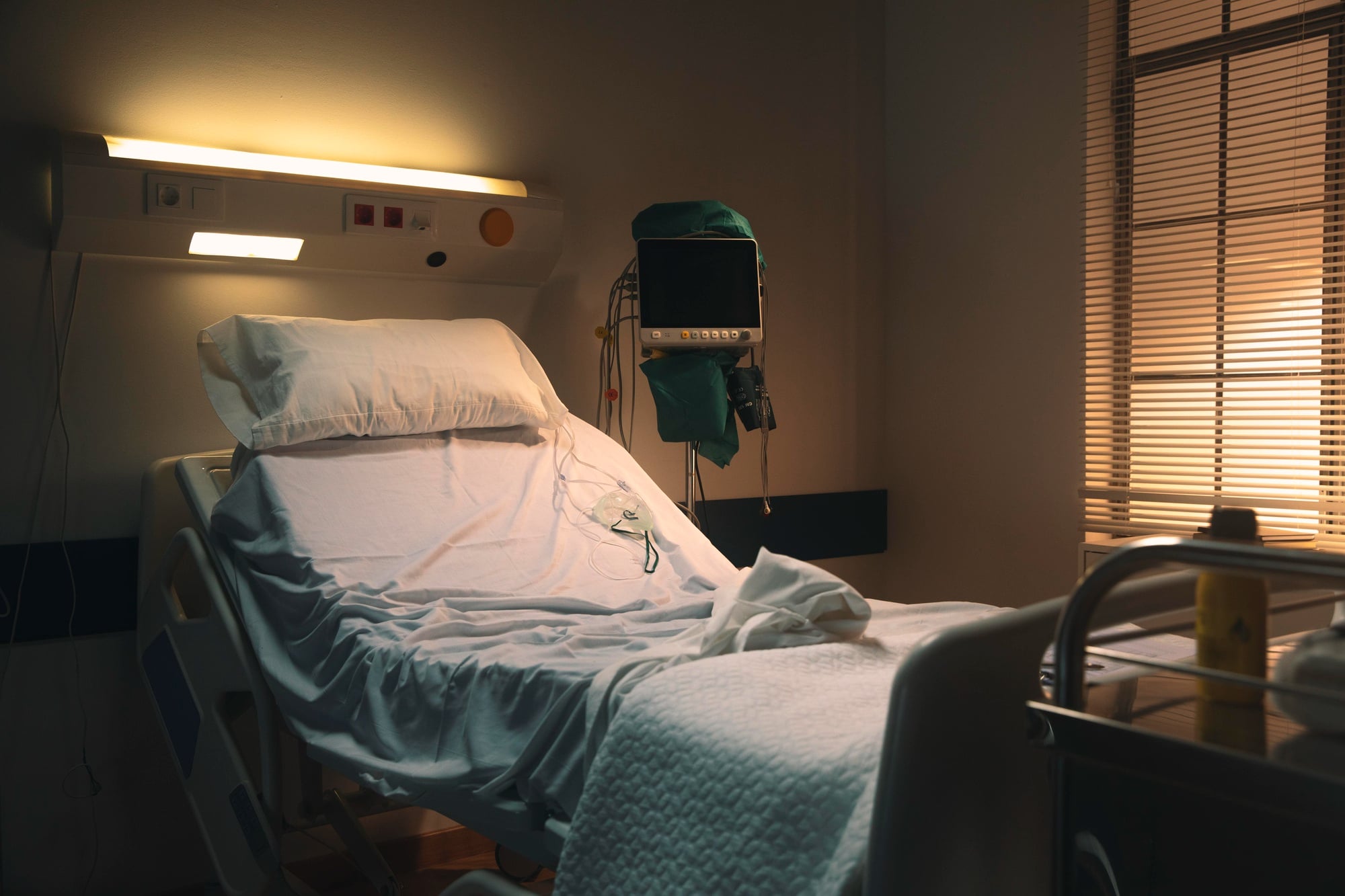
The Blue Suitcase
When I was nineteen, my best friend promised that if neither of us was married by sixty, we would find each other and finally get married.
I turned sixty last Tuesday.
That evening, at 7:42, my old landline rang for the first time in months.
I almost didn’t answer it.
Nobody calls the landline anymore. Only telemarketers and the pharmacy and a woman from my church who doesn’t trust cell phones. I keep it because my mother kept hers, and because it was installed in this little house in Asheville in 1994 and I’ve never seen a reason to cancel it.
I was sitting at my kitchen table with a slice of carrot cake my neighbor Doris had brought over. One candle in it. A 6 and a 0 made out of frosting.
I’d blown out the candle by myself.
I hadn’t made a wish. I’m sixty years old. I’d stopped making wishes a long time ago.
The phone rang four times.
On the fifth ring, I picked it up.
“Hello?”
“Is this Hannah Pryor?”
A man’s voice. Young. Thirties, maybe. Tired. Careful.
“Yes.”
“My name is Lucas,” he said. “Lucas Brennan. I’m Douglas’s son.”
I stopped breathing.
“My father is in the hospital,” Lucas said. “Mission Hospital. Here in Asheville. He doesn’t have much time left.”
I couldn’t say anything.
“He asked me to call you,” Lucas said. “Today. He’s been asking all week. He said it had to be today.”
There was a pause.
“He’s right here,” Lucas said. “He wants to talk to you. Is that all right?”
I heard the phone being passed.
The rustle of sheets. A machine beeping. Somebody breathing. Ragged. Wet.
Then a voice.
“Ruthie?”
My knees nearly gave way.
I sat down hard in my kitchen chair. I knocked the plate with the carrot cake. It slid. It didn’t fall.
Douglas was the only person who ever called me that.
Ruthie. Short for Ruthless. Because when we were seventeen I beat him at Monopoly six games in a row and refused to give him a single loan.
Nobody else had ever called me that. Not in forty-one years.
Hearing it made me nineteen again. Standing under the football bleachers at Harlan Springs High School in Ohio. In August. In the dark. With his little finger wrapped around mine.
“You remembered,” I whispered.
“I remembered every birthday, Hannah,” he said.
Then he began to cry.
I need to tell you about Douglas.
So you understand why a sixty-year-old retired English teacher drove to a hospital at eight o’clock on her birthday with frosting still on her fingers.
We met when we were seventeen.
In Harlan Springs, Ohio. Population four thousand. A town where everybody knew everybody’s business before they did. Where the Methodist church and the Dairy Queen were the two most important buildings and you could get from one end of Main Street to the other in four minutes on a bike.
He moved there in the summer of 1982. From Dayton. His father, Frank Brennan, got a job managing the new Kroger.
He walked into Mrs. Ellison’s junior English class on the first day of school in a Cincinnati Reds T-shirt and sat down at the desk next to mine.
He looked at the book on my desk.
Jane Eyre. I was reading it for the fourth time.
“Is that the one where the crazy wife is in the attic?” he said.
“She’s not crazy,” I said. “She’s misunderstood.”
He grinned.
“She set the house on fire,” he said.
“She had reasons.”
We argued about Jane Eyre for the rest of the year.
And then about everything else.
We became inseparable almost immediately.
He drove a 1974 Plymouth Duster that was more rust than car. I rode in the passenger seat with my feet on the dashboard. We drove to Lake Loramie on Saturdays and sat on the hood and talked until it got dark. We ate French fries at the Dairy Queen every Friday night. I stole his. Every time. He let me.
We studied together at my kitchen table. He was good at math. I was good at everything else. We traded.
We always insisted we were just friends.
To everybody. To ourselves.
He dated other girls. Cindy Myers. Then Amy Pruitt. Then a girl from Sidney whose name I’ve forgotten on purpose.
I went to prom with Kevin Hollister. He stepped on my foot four times and spent the whole night talking about his truck.
Douglas went with Amy Pruitt.
At the end of the night, he found me in the parking lot. Sitting on the hood of his Duster. In my blue dress. With my shoes in my hand.
He sat down next to me.
“How was Kevin?” he asked.
“He talked about his truck for three hours.”
“Amy talked about her hair for three hours,” Douglas said.
We laughed until we couldn’t breathe.
Whenever our classmates teased us about getting married someday, we laughed.
Because neither of us wanted to risk losing what we already had.
That’s what we told ourselves.
My mother didn’t like him.
Marion Pryor. She was a bank teller at First National on Main Street. She was proper. Careful. She ironed her blouses on Sunday night for the whole week. She sent thank-you notes for everything.
She said Douglas was not our kind.
I asked her what that meant.
She said, “His father manages a grocery store, Hannah. His mother works at the Laundromat. They live in a rental on Water Street.”
“So?”
“So you’re going to college,” my mother said. “You’re going to be somebody. And he’s going to stay here and stock shelves like his father.”
She was wrong.
He got a scholarship to Purdue. Engineering. Full ride.
She still didn’t like him.
My father, Walter, did.
He was a high school chemistry teacher. Quiet. Gentle. He wore cardigans with leather elbow patches and smoked a pipe on the back porch and read Steinbeck.
He liked Douglas because Douglas asked him questions about chemistry and actually listened to the answers.
“That boy,” my father said once, “is going to build bridges someday.”
He did.
My father died in 1990.
A heart attack. In his classroom. During fourth period.
He never knew what happened.
The summer before college, after we’d both endured terrible dates on the same Saturday night, we ended up under the football bleachers.
August. Hot. Cicadas so loud you could barely hear yourself.
I’d been on a date with a boy named Tommy Briggs who tried to put his hand up my shirt in the parking lot of the movie theater. I slapped him and walked home.
Douglas had been on a date with a girl from Piqua who spent the whole dinner talking about her ex-boyfriend.
We met under the bleachers. Where we always met. It was our place.
We sat on the grass. In the dark. Looking up through the slats at the stars.
“I’m never dating anybody ever again,” I said.
“Me neither,” Douglas said.
“I’m going to be a spinster. I’m going to have nine cats. I’m going to teach English and grade papers and die alone in a little house full of books.”
“That sounds kind of nice, actually,” Douglas said.
I hit his arm.
He was quiet for a long time.
Then he said something.
“If we’re both still single at sixty,” he said, “we’ll stop being idiots and find each other.”
I looked at him.
He was looking up at the stars. Not at me.
“What does that mean?” I said.
“It means,” Douglas said, “if nobody else is dumb enough to marry either of us by the time we’re sixty, we’ll marry each other.”
I laughed.
But my heart was pounding.
I hooked my pinky around his.
“Deal,” I said.
He held on.
For a long time.
Longer than a pinky promise needs.
Two months later, he left for Purdue.
West Lafayette, Indiana. Three states away. Well. One state away. Indiana’s right next to Ohio. But it felt like three.
I went to Ohio University in Athens. English literature.
We wrote letters.
Real ones. On paper. With stamps.
At first, sometimes three in a single week.
His letters were long. Funny. Full of drawings. He drew his professors as cartoon animals. His statics professor was a walrus. His roommate was a raccoon.
He told me about the bridges he was learning to design. How you have to account for the load. The weight of everything that will ever cross it. The trucks and the cars and the people and the wind and the snow and the way the steel expands in summer and contracts in winter.
A bridge has to hold everything, Ruthie, he wrote. Even the things you can’t see coming.
I wrote back about Brontë and Austen and Faulkner. About my roommate, who cried every time she called her mother. About the boy in my poetry seminar who only wrote about his dog.
I signed every letter the same way.
Love, Ruthie.
He signed every one the same way.
Yours, Doug.
I kept every single one.
By sophomore year, his replies became less frequent.
Once a week. Then every two weeks. Then once a month.
He was busy, he said. Engineering is hard. Labs. Problem sets.
By junior year, I finally understood something.
It hit me in the middle of a lecture on Wuthering Heights. My professor was reading aloud. The scene where Catherine says, Whatever our souls are made of, his and mine are the same.
I put my pen down.
I sat in that lecture hall in Athens, Ohio, and realized I was in love with Douglas Brennan.
I’d been in love with him since I was seventeen.
Since he sat down next to me and said the crazy wife set the house on fire.
I went back to my dorm.
I wrote him a letter.
Eleven pages. Everything. The bleachers. The pinky promise. Wuthering Heights.
I didn’t mail it.
I was too scared.
I put it in my desk drawer.
The next week, his letter came.
He mentioned a girl.
There’s this girl in my thermodynamics class. Grace. She’s really smart. You’d like her. She reads.
I tore up the eleven pages.
The next year and a half, he mentioned Grace more and more.
Grace and I went to Chicago for the weekend.
Grace’s parents are really nice. Her dad’s a minister in Fort Wayne.
Grace says hi.
I wrote back. I said I was happy for him. I said Grace sounded wonderful.
I cried in the bathroom of my dorm after every letter.
In the spring of 1986, I was home in Harlan Springs for Easter break.
I was twenty. A senior. I’d been accepted to graduate school at Ohio State. A master’s in English.
I came home on a Thursday.
My mother was in the kitchen.
She looked strange. Pale.
“There’s a letter for you,” she said. “From Douglas. It came on Tuesday.”
She handed it to me.
I opened it in my bedroom.
It was one page.
His handwriting. But different. Shaky. Like he’d written it fast. Or angry. Or crying.
Hannah,
I’m getting married. To Grace. In June.
Please don’t contact me again.
I’m sorry.
— Douglas
That was all.
No Ruthie. No Yours, Doug.
Hannah. And Douglas.
Like strangers.
I read it eleven times.
I sat on my bed and read it until the words didn’t look like words anymore.
Please don’t contact me again.
I didn’t understand.
He’d written two weeks earlier. A normal letter. About a bridge project. About Grace’s parents’ dog. He’d drawn a picture of the dog as a dragon.
Nothing about getting married.
Nothing about not contacting him.
And then this.
I went downstairs.
My mother was at the kitchen sink. Washing a dish that was already clean.
“Mom,” I said. “Did Douglas call? Did anything happen?”
My mother didn’t turn around.
“I don’t know anything about it, Hannah,” she said.
“He said not to contact him. Why would he say that?”
My mother turned off the water.
She dried her hands on a dish towel. Slowly. Very carefully.
“Some boys,” she said, “outgrow the girls from home.”
She put her hand on my cheek.
“It’s better this way, sweetheart,” she said. “You’ll see.”
I cried for weeks.
Then I put all his letters into a suitcase.
An old blue Samsonite. Hard-shell. With a brass latch and a little key. My grandmother’s. From her honeymoon in 1938.
I put every letter in it. Three years of them. Four hundred and twelve. I counted.
And the last one. On top.
Please don’t contact me again.
I locked it.
I hid it in the back of my bedroom closet. In my mother’s house in Harlan Springs. Behind my old winter coats.
I went to Ohio State in the fall.
I got my master’s degree. Then my teaching certificate.
I moved away.
I taught high school English in Columbus for six years. Then in Charlotte. Then in Asheville, North Carolina, for twenty-six years. At Asheville High. AP Literature.
I taught Jane Eyre every single year.
Every year, some kid would raise their hand and say, Isn’t that the one with the crazy wife in the attic?
And every year, I’d say, She’s not crazy. She’s misunderstood.
And every year, I’d think about a boy in a Reds T-shirt.
I traveled. Paris. Rome. Edinburgh. I walked the moors in Yorkshire where the Brontës lived. I stood in front of their house in Haworth and cried.
I had friends. Good ones. A book club. A garden.
I dated. Some.
A history professor at UNC Asheville named Gerald. For four years. He asked me to marry him in 2003.
I said no.
I never married.
Whenever people asked why, I said I hadn’t met the right person.
It was easier than admitting the truth.
That I’d met him at seventeen.
And spent the next forty years wondering what might have happened.
My mother died in 2011.
Breast cancer. She was seventy-four.
I went home to Harlan Springs to clean out the house.
The blue suitcase was gone.
I looked everywhere. Every closet. The attic. The basement. The garage.
It wasn’t there.
I asked my mother’s neighbor, Mrs. Kessler, who’d helped her during the last months.
“A blue suitcase?” Mrs. Kessler said. “Oh. Yes. I remember. Your mother asked me to mail something for her. In March. Right before she went into hospice. A big box. Heavy.”
“Mail it where?”
Mrs. Kessler thought about it.
“North Carolina, I think,” she said. “Or South Carolina. I don’t remember, honey. Somewhere south.”
I live in North Carolina.
But it never came to me.
I thought she’d thrown it away. I thought Mrs. Kessler was confused.
I grieved it. The letters. The drawings. A bridge has to hold everything.
And I let it go.
“Hannah,” Douglas whispered on the phone.
On my sixtieth birthday. In my kitchen. With frosting on my fingers.
“There’s something I need to tell you before I die.”
“What is it?” I said.
“I was in love with you,” he said. “When we made that promise. Under the bleachers.”
I put my hand over my mouth.
“I’d already bought a ring,” he said.
I couldn’t breathe.
“In 1986,” he said. “Spring break. I drove home from Purdue. With a ring in my pocket. I was going to ask you. At the bleachers. On Easter Sunday.”
My hand was shaking so badly I almost dropped the phone.
“Then why,” I said. “Why did you marry someone else?”
His breathing grew uneven.
The machine in the background beeped faster.
“Please,” he said. “Come to the hospital. There’s something you need to see.”
He took a long, rattling breath.
“Once you see it,” he said, “you’ll understand why I walked away.”
Forty minutes later, I walked into his room.
Mission Hospital. Fifth floor. Oncology. Room 512.
He looked terribly frail.
Under a white blanket. In a hospital gown. Oxygen tubes in his nose. An IV in his arm. His hair was white. What was left of it. His face was thin. Gray. The skin stretched over his cheekbones.
But I recognized his eyes immediately.
Blue. Pale blue. Like Lake Loramie in August.
The same eyes that watched me steal French fries off his plate at the Dairy Queen every Friday night for two years.
He looked at me.
He reached out his hand.
Thin. Shaking. Covered in bruises from the needles.
“You came,” he whispered.
I took his hand.
“Of course I came,” I said.
He held on.
The same way he held my pinky under the bleachers.
Longer than he needed to.
His son was standing by the window.
Thirties. Tall. Dark hair. His father’s jaw. His father’s eyes. In a gray sweater. With dark circles under his eyes. Like he hadn’t slept in a week.
Next to him was a chair.
On the chair were three things.
An old blue suitcase.
A small velvet ring box.
And a faded photograph.
I recognized the suitcase instantly.
Blue Samsonite. Hard-shell. Scuffed at the corners. A brass latch. A little key hanging from the handle on a piece of string.
My grandmother’s honeymoon suitcase. From 1938.
The one I’d put Douglas’s letters in. And hidden in my closet behind my winter coats. In 1986.
The one I thought my mother threw away.
“Where did you get that?” I asked.
Lucas didn’t answer.
Instead, he picked up the photograph.
He handed it to me.
It was a snapshot. Square. The colors faded to orange and brown the way photographs from the eighties fade.
My mother.
In a hospital room. Sitting in a vinyl chair. Holding a newborn baby wrapped in a pale yellow blanket.
She looked younger than I remembered her. Forty-something. Her hair was darker. She was wearing a blouse I recognized. Lavender. With a little lace collar. She ironed it every Sunday night.
She wasn’t smiling.
She was looking down at the baby.
And something about her expression made me uneasy.
It wasn’t love.
It wasn’t joy.
It was something closer to fear.
I turned the photograph over.
On the back, someone had written in blue ink.
A date.
September 1987.
And under it, two names.
Hannah and Douglas.
I looked at the photograph.
I looked at Douglas. In the bed. With tears running down into the oxygen tubes.
I looked back at the photograph.
At my mother. Holding a baby. In September of 1987.
Seventeen months after his last letter.
“Douglas,” I said. My voice didn’t sound like mine. “Whose baby is this?”
His eyes filled with tears.
He couldn’t speak.
Lucas pulled out the chair next to the bed. The one without the suitcase on it.
“Please sit down, Hannah,” he said.
I sat.
“Before Dad explains why you two were separated,” Lucas said quietly, “there’s something you need to understand.”
He looked at the photograph in my hands.
“About what your mother did,” he said.
I looked down at the photograph.
At my mother. In her lavender blouse. Holding a baby she wasn’t smiling at.
My mother spent her whole life telling me that Douglas chose another woman.
Some boys outgrow the girls from home.
It’s better this way, sweetheart.
Now, forty years later, sitting in a hospital room on my sixtieth birthday, I was beginning to wonder whether she’d told me the truth about anything.
Douglas squeezed my hand.
He took a breath. Slow. Rattling. Through the oxygen.
“Easter Sunday,” he said. “1986. I drove home from Purdue. Friday night. Four hours. With the ring in my pocket.”
He looked at the velvet box on the chair.
“I went to your house on Saturday morning,” he said. “To ask your father. For permission. The old-fashioned way. Your dad always liked me.”
“He did,” I whispered.
“Your father wasn’t home,” Douglas said. “He was at a chemistry conference. In Columbus. You weren’t home either. You were driving back from Athens. You weren’t getting in until Saturday night.”
He closed his eyes.
“Your mother answered the door,” he said.
“I told her,” Douglas said. “I don’t know why. I was twenty. I was nervous. I was excited. I had the ring. I showed it to her. I said, Mrs. Pryor, I’m going to ask Hannah to marry me tomorrow. Under the bleachers. I wanted you and Mr. Pryor to know first.”
His voice broke.
“She went white,” he said. “Like a ghost. She grabbed the door frame. I thought she was going to faint.”
“She asked me to come inside,” Douglas said. “She sat me down at your kitchen table. She made coffee. Her hands were shaking so bad she spilled it.”
He opened his eyes.
He looked at me.
“And then she told me,” he said, “that you were my sister.”
The room went silent.
The machine beeped.
“What?” I said.
“She said,” Douglas said, “that in the summer of 1965, she and my father had an affair. Frank Brennan. Before he married my mother. Before he moved to Dayton. When he was working at a grocery store in Sidney.”
He swallowed.
“She said you were born in 1966. Nine months later. She said your father, Walter, didn’t know. She said nobody knew. She said she’d been terrified for two years. Ever since I moved to Harlan Springs. Ever since she found out who my father was.”
He looked at the photograph in my hand.
“She said if I married you,” he said, “I’d be marrying my half-sister.”
I stared at him.
“That’s not true,” I said. “That’s—Douglas, that’s not true. My father was Walter Pryor. I have his nose. I have his hands. I’m left-handed like him.”
“I know,” Douglas whispered.
“How do you know?”
Douglas looked at his son.
Lucas walked over to the chair by the window.
He unlocked the blue suitcase.
Inside were the letters.
All of them. Four hundred and twelve. Rubber-banded in stacks. In his handwriting. With the drawings. The walrus professor. The raccoon roommate. The dog drawn as a dragon.
Exactly as I’d left them.
And on top, something else.
An envelope. Large. Manila.
And a smaller envelope. White. Sealed. Then opened.
My mother’s handwriting on the front.
Douglas Brennan. Private.
Lucas handed me the white envelope.
“This came in March of 2011,” Lucas said. “To our house. In Hendersonville. In a box. With the suitcase.”
He looked at his father.
“Dad opened it at the kitchen table,” he said. “I was twenty-three. Home from college. I watched him read it.”
He swallowed.
“I’d never seen my father cry,” he said. “Until that day.”
I unfolded the letter.
My mother’s handwriting. Careful. Slanted. Shaky at the end. From the cancer.
Douglas,
I’m dying. The doctors say six weeks. I don’t have the courage to say this to your face. Or to Hannah’s. So I’m writing it, and I’m sending it to you, and God help me, I’m sending it too late.
What I told you in April of 1986 was a lie.
Hannah is not your sister.
Walter Pryor was her father. I was faithful to Walter until 1986. Every day. Hannah is his. You can see it in her face.
I want to tell you why I lied. You deserve that.
In the summer of 1985, your father came into the bank. To open an account for the new Kroger. I hadn’t seen him since 1965. Since before I married Walter. We’d dated, briefly, in Sidney. When I was twenty-two. It meant nothing.
He remembered me.
He asked me to lunch.
I was forty-two. My marriage was quiet. Walter was a good man but he lived in his books and his classroom and his pipe on the porch. And Frank Brennan looked at me like I was still twenty-two.
I’m not proud of it.
It went on for a year.
In March of 1986, I found out I was pregnant.
Frank’s.
I was forty-three. I was terrified. Walter and I hadn’t—it had been a long time. He would know. Everyone would know. Your mother would know. The whole town.
And then you came to my door. On a Saturday morning. With a ring.
And you said you were going to marry my daughter. Frank Brennan’s son. Marrying my daughter. Sitting at my kitchen table. Holding Sunday dinners. Christmases. Grandchildren.
And Frank’s baby growing inside me.
I couldn’t breathe.
I thought, if this happens, it will all come out. Somebody will see. Somebody will do the math. Your father would look at my baby and know. And you would be standing there. Married to Hannah. In the middle of it.
So I lied.
I told you the worst lie I could think of. The only one I knew would make you leave and never come back.
I took the truth and twisted it. Frank’s child was growing in me. I told you it was Hannah.
You believed me. Of course you did. You were twenty. You trusted grown-ups.
You wrote her a letter that afternoon. At my kitchen table. I watched you write it. You cried the whole time.
I mailed it myself.
I read it first.
“Please don’t contact me again.”
It was the cruelest thing you could have said to her. And I made you say it.
And then you wrote another letter. In 1987. Didn’t you? To Hannah. You sent it to my house. I know because I took it out of the mailbox.
I never gave it to her.
It’s in this suitcase. Under the others. Unopened.
The baby was born in September of 1987. I went to stay with my sister in Toledo for the last four months. I told everyone I was caring for her. I gave birth at St. Vincent’s. I gave the baby up for adoption the same week.
A girl.
I held her once. My sister took a photograph. I wrote two names on the back. Not hers. I never knew hers. I wrote the names of the people she would never be allowed to know.
Her sister. Her brother.
Hannah and Douglas.
Walter died in 1990 never knowing. Frank died in 2004 never knowing. I have carried this alone for twenty-five years.
Hannah never married. Did you know that? She’s forty-four. She teaches English in Asheville. She never married. I watched her come home every Christmas alone and I knew why and I said nothing.
I’ve kept her suitcase. All your letters. I’ve read every one. God forgive me. I’ve read every single one.
I’m sending them to you. Not to her. I don’t have the courage to face her even on paper.
You decide, Douglas. Whether she should know. I’m sorry it has to be you. I’m sorry for everything.
You were always good enough for her.
I was the one who wasn’t.
— Marion Pryor
I put the letter down.
On the white hospital blanket. Next to Douglas’s hand.
I couldn’t see anything.
“She lied,” I whispered.
“She lied,” Douglas said.
“For twenty-five years.”
“For twenty-five years,” Douglas said. “And then she died. And left it with me.”
I looked at him.
“2011,” I said. “You’ve known since 2011.”
He closed his eyes.
“Why didn’t you call me?” I said. “Why didn’t you tell me? Fourteen years, Douglas. Fourteen years.”
He didn’t answer.
He couldn’t.
Lucas answered for him.
“Because he was married,” Lucas said quietly.
I looked at him.
“To my mother,” Lucas said. “Grace. For twenty-five years by then.”
He sat down on the edge of the windowsill.
“He loved her,” Lucas said. “I want you to know that. He did. Not the way he loved you. But he loved her. She was kind and smart and she read everything and she was the best mother in the world.”
He swallowed.
“He married her eight weeks after your mother told him that lie,” Lucas said. “In June of 1986. In her father’s church in Fort Wayne. She knew something was wrong. He wouldn’t tell her what. She married him anyway.”
“When the suitcase came,” Lucas said, “he sat at the kitchen table for six hours. I watched him. He read every letter. All four hundred and twelve. Then your mother’s letter. Then the one he wrote to you in 1987. The one that never got to you.”
He looked at his father.
“And then he went upstairs,” Lucas said, “and he told my mother everything.”
“Everything?” I whispered.
“Everything,” Lucas said. “The bleachers. The promise. The ring. The lie. You.”
He looked at me.
“I was in the hallway,” he said. “I heard all of it.”
“What did she say?”
Lucas was quiet for a long moment.
“She said, Douglas, if you go to her now, I’ll understand. I’ll let you go.”
I put my hand over my mouth.
“And Dad said no,” Lucas said. “He said, Grace, I made a promise to you. In your father’s church. In front of God. I’m not going to break it because somebody else broke theirs.”
He looked at the photograph.
“He said, I’ll keep my promise to you. For as long as you’re here.”
“And then,” Lucas said, “he said something else. I didn’t understand it until a few weeks ago.”
He looked at me.
“He said, And if I’m still alive when Hannah turns sixty, I’ll keep my promise to her too.”
The room was very quiet.
“My mother died three years ago,” Lucas said. “Alzheimer’s. In 2022.”
He wiped his eyes.
“Dad took care of her. For six years. At home. Every day. He fed her. He bathed her. He read to her. At the end, she didn’t know who he was. She thought he was her father. He let her think so.”
His voice broke.
“He kept his promise,” Lucas said. “Every day. Until the last one.”
“A month after she died,” Lucas said, “he got his diagnosis. Pancreatic cancer. Stage four. They gave him eight months.”
He looked at his father.
“That was twenty-two months ago,” he said.
I looked at Douglas.
At his thin, gray face. At the oxygen tubes. At the bruises on his arms from the needles.
“Twenty-two months,” I said.
“He wasn’t going to die,” Lucas said, “before October fourteenth.”
October fourteenth.
My birthday.
“The oncologist couldn’t believe it,” Lucas said. “Every month she said this is the last good month. Every month he proved her wrong. She asked him once, in June, what he was holding on for.”
He almost smiled.
“He said, A pinky promise.”
Douglas opened his eyes.
He looked at me.
“Ruthie,” he whispered.
“I’m here.”
“The letter,” he said. “In the suitcase. The 1987 one. The one your mother took.”
He moved his hand. Barely.
“Read it,” he said. “Please. I want you to have it. Before.”
Lucas reached into the suitcase.
Under the rubber-banded stacks. At the very bottom.
He took out an envelope.
Small. White. Yellowed. Sealed. Never opened.
A twenty-two-cent stamp in the corner. With a picture of a flag.
Addressed in Douglas’s handwriting. Younger. Steadier.
Hannah Pryor. 114 Elm Street. Harlan Springs, Ohio.
Postmarked West Lafayette, IN. September 2, 1987.
I opened it.
My hands were shaking so badly Lucas had to help me.
Ruthie,
I know I told you not to contact me. I know I’m married. I know this is wrong.
But I can’t stop thinking about you.
I need you to know that what I said in that letter wasn’t because of you. Something happened. Something I can’t tell you. Something that makes it impossible for us. Not because I don’t want to. Because I can’t.
Your mother knows. Ask her someday. When you’re ready. When she’s ready.
I married Grace because I couldn’t stand being alone with what I know. She’s good. She’s kind. She deserves better than me.
I’m keeping the ring. The one I bought for you. I can’t give it back. I can’t sell it. I can’t throw it away.
I’m going to keep it. And if somehow, someday, the impossible thing turns out not to be true, I’m going to find you.
Under the bleachers. At sixty. Like we said.
Remember our deal.
Yours,
Doug
I read it three times.
Then I folded it.
I held it against my chest.
Douglas was watching me.
“I meant it,” he whispered.
“I know,” I said.
“I’m sorry it took so long.”
I looked at the velvet ring box on the chair by the window.
Small. Dark blue. Worn at the corners.
Douglas followed my eyes.
“Lucas,” he said.
Lucas picked it up.
He handed it to his father.
Douglas’s hands were shaking so badly he couldn’t open it.
Lucas opened it for him.
Inside, on a bed of faded blue satin, was a ring.
Small. Simple. A thin gold band. With a tiny diamond. Barely bigger than a grain of sugar.
The kind of ring a twenty-year-old engineering student on a scholarship could afford in 1986.
“Eighty-four dollars,” Douglas whispered. “At a jewelry store in West Lafayette. I worked thirty hours in the dining hall to pay for it.”
He looked at it.
“I kept it in my sock drawer,” he said. “For thirty-nine years.”
He looked up at me.
“Hannah Ruth Pryor,” he said.
His voice was barely a whisper. Rattling. Wet.
“We’re both sixty.”
He took a breath.
“Neither of us got married to anybody else in a way that stuck,” he said. “Well. I did. But she’s gone. And she told me to go.”
He almost smiled.
“So I think,” he said, “we can stop being idiots now.”
He held out the ring.
“Will you marry me, Ruthie?”
I want to tell you I said something beautiful.
Something from Brontë. Something from Austen. Something I’d spent forty years teaching teenagers to recognize.
I didn’t.
I said, “You idiot.”
And then I said, “Yes.”
The hospital chaplain married us at 11:15 that night.
In Room 512. On the fifth floor of Mission Hospital.
His name was Father Ruiz. Sixty-something. Catholic. He’d been sitting with Douglas every day for two weeks. He knew the whole story. He’d been waiting too.
He brought a little book. And a candle. Battery-operated. Hospital rules.
Lucas was our witness.
And a night nurse named Shontelle. Who cried through the whole thing and kept saying, I’ve worked here eighteen years and I’ve never seen anything like this.
Douglas couldn’t stand. He couldn’t sit up. His breathing was too bad.
So I stood next to the bed. In the dress I’d worn to Doris’s for cake. A green cardigan. With frosting on the cuff.
I held his hand.
Father Ruiz read the vows.
Douglas couldn’t say much. He nodded. He squeezed my hand. When it was time, he whispered, “I do.”
So quietly only I heard it.
But I heard it.
Lucas helped him put the ring on my finger.
His hands were shaking so badly it took three tries.
It didn’t fit.
Of course it didn’t. I was twenty when he bought it. I’m sixty now.
It stopped at my second knuckle.
Douglas looked at it.
He started to laugh.
Weak. Rattling. Wet. But a laugh.
“I should’ve measured,” he whispered.
I laughed too.
I couldn’t stop.
Father Ruiz said, “By the power vested in me by God and the State of North Carolina, I now pronounce you husband and wife.”
I bent down.
I kissed him.
His lips were dry and cracked and tasted like hospital Jell-O.
It was the best kiss of my life.
He lived for six more days.
I didn’t leave the room.
Lucas brought me clothes from my house. Doris brought food. Shontelle brought me a cot from the supply closet and put it next to his bed.
I slept with my hand on his arm.
We talked.
When he could. In bits and pieces. In the middle of the night when the morphine wore thin.
About everything.
The bleachers. The Duster. Lake Loramie. French fries. Prom.
About his bridges. He built forty-one of them. Across North Carolina and Tennessee and Virginia. The longest one was over the French Broad River outside Marshall.
“I named it,” he whispered. “Secretly. In my head. Every bridge I built, I gave it a name.”
“What was that one called?”
He looked at me.
“Ruthless,” he said.
I read him the letters.
All four hundred and twelve.
Out loud. In order. From September of 1983 to March of 1986.
It took four days.
He laughed at the walrus professor. He cried at the dog drawn as a dragon.
When I got to the last one before the lie, the one from March of 1986 about the bridge project, he stopped me.
“That one,” he said. “Read the end again.”
I read it.
A bridge has to hold everything, Ruthie. Even the things you can’t see coming.
He was quiet for a long time.
“I built forty-one bridges,” he whispered. “And I couldn’t build one between Harlan Springs and Athens, Ohio.”
“You did,” I said. “You just took the long way.”
On the fifth day, he asked about the baby.
“Marion’s baby,” he said. “The girl. In the photograph.”
He looked at me.
“Your sister,” he said. “And mine.”
I hadn’t thought about it.
Not really. Not with everything else.
But she was out there. Somewhere. A woman. Thirty-eight years old. Born at St. Vincent’s in Toledo in September of 1987. Given up for adoption the same week.
My half-sister.
His half-sister.
The impossible thing that kept us apart. That never touched either of us.
“Lucas,” Douglas whispered. “Did you—”
“I did, Dad,” Lucas said.
He sat down on the edge of the bed.
“When you told me the whole story,” Lucas said. “In August. When you knew you were going to make it to October. You asked me to find her. If I could.”
He took out his phone.
“I did a DNA test,” he said. “Ancestry. In August. Because I’m your son. Frank Brennan’s grandson. If she’d ever tested, she’d show up as my half-aunt.”
He swiped his screen.
“She showed up,” he said.
I stopped breathing.
“Her name is Clara Whitfield,” Lucas said. “She’s thirty-eight. She lives in Knoxville. Two hours from here.”
He looked at me.
“She’s a pediatric nurse,” he said. “At East Tennessee Children’s Hospital.”
He swallowed.
“She tested in 2019,” he said. “Looking for her birth parents. She found out Frank was her father. She found out he was dead. She never found out who her mother was. Marion never tested. And neither did you.”
“I messaged her,” Lucas said. “In September. I told her everything. Who her father was. Who her mother was. About Dad. About you.”
He looked at me.
“She wrote back,” he said.
He handed me his phone.
Lucas — I don’t even know what to say. I’ve been looking for 6 years. I always knew I had siblings somewhere. My adoptive mom told me when I was 12 that the woman who gave birth to me cried when she handed me over. That she held me and somebody took a picture.
I’d really like to meet them. Both of them. Douglas and Hannah. If they’re willing. If there’s time.
— Clara
She came on the sixth day.
October twentieth. A Monday. Two in the afternoon.
She walked into Room 512.
Thirty-eight. Tall. Dark hair. In blue scrubs. She’d come straight from a shift.
I looked at her.
And I saw my mother.
Not the woman in the lavender blouse. Not the woman at the kitchen sink washing a clean dish.
My mother at forty. In the photographs from before. Laughing at a church picnic. With her head thrown back.
Clara had her chin. Her cheekbones. The little gap between her front teeth.
And she had Douglas’s eyes.
Pale blue. Like Lake Loramie in August.
She stood in the doorway.
She looked at me.
She looked at Douglas.
She didn’t say anything.
Then she walked to the bed.
She knelt down next to it.
She took Douglas’s hand.
The one without the IV.
“Hi,” she said softly. “I’m Clara. I think I’m your sister.”
Douglas looked at her.
For a long time.
He was so tired. He could barely keep his eyes open.
But he looked at her.
“You have my father’s eyes,” he whispered.
“I’ve been told,” Clara said. “Lucas sent me a picture.”
Then she looked at me.
Across the bed.
“And you,” she said. “You’re Hannah.”
“I’m Hannah.”
She looked at me for a long time.
“I have something,” she said.
She reached into the pocket of her scrubs.
She took out a photograph.
Small. Square. Faded orange and brown.
It was the same photograph.
A woman in a lavender blouse. In a hospital room. Holding a newborn in a pale yellow blanket.
Not smiling. Looking down at the baby with something like fear.
“My adoptive mother had it,” Clara said. “The hospital gave it to her. With the adoption papers. My birth mother asked them to.”
She turned it over.
On the back, in the same blue ink. In my mother’s handwriting.
September 1987.
For Clara. If anyone asks, tell her she was held.
I couldn’t speak.
“Two copies,” Clara said. “She made two. One for me. One she kept.”
She looked at the one on the chair by the window. The one from the suitcase.
Hannah and Douglas.
“She kept yours,” Clara said. “And she gave me mine.”
She looked at me.
“She named me,” she said. “Did you know that? The adoption papers said the birth mother requested the name Clara. My adoptive parents kept it.”
“Clara was my grandmother’s name,” I whispered. “My mother’s mother. Clara Ruth Hollister.”
Clara stared at me.
“Ruth,” she said.
“Ruth,” I said.
“Like Ruthie,” she said.
Douglas made a sound.
A laugh. Or a sob. Or both.
He died that night.
At 3:41 in the morning. October twenty-first.
I was holding one hand.
Clara was holding the other.
Lucas was sitting at the foot of the bed.
He didn’t say anything at the end.
He couldn’t.
But he looked at me.
For a long time.
The way he looked at me under the bleachers in 1983. The way he looked at me on the hood of his Duster after prom.
Longer than he needed to.
Then he closed his eyes.
And held on.
And then let go.
We buried him in Hendersonville.
Next to Grace.
That’s what he wanted. Lucas told me. He’d asked in August.
“He said Mom kept her promise to him,” Lucas said. “He’s keeping his to her.”
I didn’t mind.
I stood at the graveside in the rain. With Lucas on one side. And Clara on the other.
My stepson.
My sister.
The ring didn’t fit.
It still doesn’t.
I wear it on a gold chain around my neck. Next to my heart. Clara found the chain for me. At a jewelry store in Knoxville.
She had it engraved. On the back of the clasp. Tiny letters.
Deal.
That was a year ago.
Lucas comes on Sundays.
He’s thirty-eight. An engineer. Like his father. He builds bridges for the North Carolina Department of Transportation. He’s working on one now over the Swannanoa River.
He hasn’t told me what he’s naming it.
I think I know.
Clara comes on Saturdays.
She drives two hours from Knoxville. Every week. She brings her kids. Two little girls. Maisie and June. Six and four.
They call me Aunt Ruthie.
I didn’t teach them that.
Clara did.
“It’s your name,” she said. “In our family. That’s what we call you.”
Clara and I went to Harlan Springs in the spring.
To the house on Elm Street. It’s owned by a young couple now. They let us walk through it.
We stood in my old bedroom. In front of the closet. Where I hid the blue suitcase behind my winter coats in 1986.
Clara looked at it for a long time.
“She stood here,” Clara said quietly. “Didn’t she? Marion. Our mother. She stood here and took it out of the closet. And read every letter.”
“Every one,” I said.
“And kept them for twenty-five years.”
“Twenty-five years.”
“Do you forgive her?” Clara asked.
I thought about it for a long time.
I thought about a woman in a lavender blouse. Forty-three. Pregnant. Terrified. Sitting at a kitchen table with a twenty-year-old boy holding a ring.
Telling the worst lie she could think of.
To keep her own secret.
And losing her daughter’s whole life to it.
“I don’t know,” I said. “Not yet.”
Clara nodded.
“She held me,” Clara said. “Once. Before they took me. My adoptive mom said she cried.”
She looked at the closet.
“I think she was trying to hold everything,” Clara said. “And she dropped all of it.”
Then we went to the high school.
Harlan Springs High. It’s a new building now. Brick and glass. But the football field is in the same place.
And the bleachers.
New ones. Aluminum. But in the same spot.
We crawled under them.
Two women. Sixty-one and thirty-nine. Half-sisters. In the dark. In April. Looking up through the slats at the sky.
I took the chain off my neck.
I held up the ring.
The tiny diamond caught the light. Barely bigger than a grain of sugar.
Eighty-four dollars. Thirty hours in the dining hall.
“He was going to ask me right here,” I said. “On Easter Sunday. 1986.”
Clara looked at the ring.
“If she hadn’t lied,” Clara said. “Would you have said yes?”
I didn’t even have to think about it.
“I’d have said you idiot,” I said. “And then I’d have said yes.”
Clara laughed.
Then she put her arm around me.
We sat under the bleachers for a long time.
The blue suitcase is in my living room now.
Not in a closet. Not hidden. On a table. By the window. With the lid open.
Four hundred and twelve letters. In order. Rubber-banded.
The 1987 letter on top. The one that took thirty-eight years to arrive.
My mother’s confession under it.
And the two photographs. Side by side.
Hannah and Douglas.
For Clara. If anyone asks, tell her she was held.
But there are new letters in it too.
Every week, I write one.
To Douglas.
On paper. With a pen. The way we used to.
I tell him about Lucas’s bridge. About Maisie losing her first tooth. About June learning to read. About Clara’s new job as charge nurse.
About the kids in my old AP Lit class who still email me. One of them is teaching Jane Eyre now. In Raleigh.
She says some kid always raises their hand and asks about the crazy wife in the attic.
She says she always tells them, She’s not crazy. She’s misunderstood.
I sign every letter the same way.
Love, Ruthie.
I put them in the suitcase.
On top.
I don’t seal them.
Clara asked me once why I write to him.
“He’s gone,” she said gently. “He can’t read them.”
I looked at the suitcase.
At four hundred and twelve letters from a boy who drew his professor as a walrus.
At one letter that took thirty-eight years to reach me.
At a confession from a mother who stole half my life to save her own.
“Because for forty years,” I said, “I thought he stopped writing.”
I picked up a pen.
“I’m not going to stop,” I said.
People ask me sometimes how I can stand it.
Forty-one years apart. Six days married.
They think it’s a tragedy.
I tell them about the bridge.
Douglas built forty-one bridges in his life.
He told me once, on the fifth night, in the dark, when the morphine was thin, what makes a good one.
“It’s not the steel,” he whispered. “Or the concrete. Or the length.”
“What is it?”
“It’s whether it holds,” he said. “When everything you didn’t see coming crosses it all at once.”
My mother’s lie crossed us.
Forty years of silence. A marriage. A baby. A suitcase in the mail. A wife with Alzheimer’s. A cancer that should have killed him in eight months.
All of it.
All at once.
And on October fourteenth, at 7:42 p.m., an old landline rang in a little house in Asheville.
And a voice said, Ruthie?
It held.
It took the long way.
But it held.

Laura Bennett writes about complicated family dynamics, difficult conversations, and the quiet moments that change everything. Her stories focus on real-life tensions — inheritance disputes, strained marriages, loyalty tests — and the strength people find when they finally speak up. She believes the smallest decisions often carry the biggest consequences.