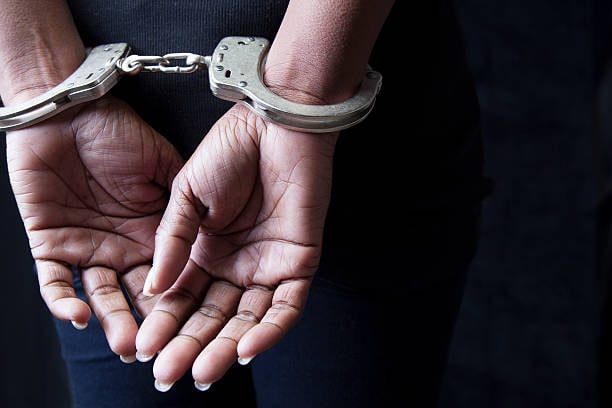
“Deputy Miller,” I said. “Please remove these handcuffs.”
Miller looked at his sheriff for permission. Voss couldn’t bring himself to give another order.
With shaking hands, the young deputy unlocked the cuffs and stepped back. Deep red marks ringed both my wrists. The left one had started to swell where Voss had twisted it against the booth.
The clerk behind the desk, a gray-haired woman whose nameplate read DORIS KEELER, quietly picked up a pen and began writing on a legal pad. Later I learned she wrote down the exact time the cuffs came off: 1:47 p.m.
“Thank you, Deputy,” I said to Miller. I said it without any anger, because something told me this young man was standing at the most important fork in the road of his life, and I wanted to see which way he’d turn.
The sirens got louder. Then the station’s front doors swung open.
Three federal agents walked in, two women and a man, in dark windbreakers with FBI in yellow letters across the back. Behind them came a tall, silver-haired man in a gray suit carrying a thick accordion file with PELL COUNTY written on the tab in black marker. Behind him was a sharp-eyed woman in a navy pantsuit with a leather portfolio under her arm.
Voss straightened his uniform and stepped forward with his hand out, like a man welcoming guests to a barbecue.
“Afternoon, folks. Sheriff Dalton Voss. What can I do for the FBI today?”
The lead agent, a tall Black woman in her forties with close-cropped hair, walked right past his hand without looking at it and came straight to me.
“Judge Whitlock,” she said. “Special Agent Renee Calloway, FBI Atlanta. Are you injured?”
She looked at my wrists, and her jaw tightened.
“I’ll be fine,” I said. “But I’d like every detail of what happened to me today preserved. All of it.”
“Yes, ma’am.” Agent Calloway turned to her colleague, a younger agent with red hair named Kessler. “Secure the booking logs, the dispatch recordings, the body camera footage from every officer involved, and the surveillance video from this building. Then go to the Magnolia Diner and get their security footage and the name of every witness.”
“On it,” Kessler said.
The woman in the navy suit stepped forward. “Monica Delgado, Assistant United States Attorney, Public Corruption Section.” She nodded at me. “Judge. We were on our way here today for a different reason. I’m sorry you got caught up in it.”
“What reason?” Voss asked. His voice had gone up half an octave.
The silver-haired man set his accordion file on the booking desk and unwound the string.
“Special Agent Thomas Greer,” he said. “I’ve been leading an investigation into this department since July.” He pulled out a stack of documents and spread them across the desk. “These are complaints from residents of Pell County. People who say they were threatened, wrongfully arrested, or pressured to drop complaints against your department. Some of these complaints were filed with your office and then disappeared. Others were marked ‘resolved’ with no investigation at all.”
For the first time since I’d come into his county, nobody was asking Sheriff Voss what he wanted.

Specialty: Legal & Financial Drama
Michael Carter covers stories where money, power, and personal history collide. His writing often explores courtroom battles, business conflicts, and the subtle strategies people use when pushed into a corner. He focuses on grounded, realistic storytelling with attention to detail and believable motivations.