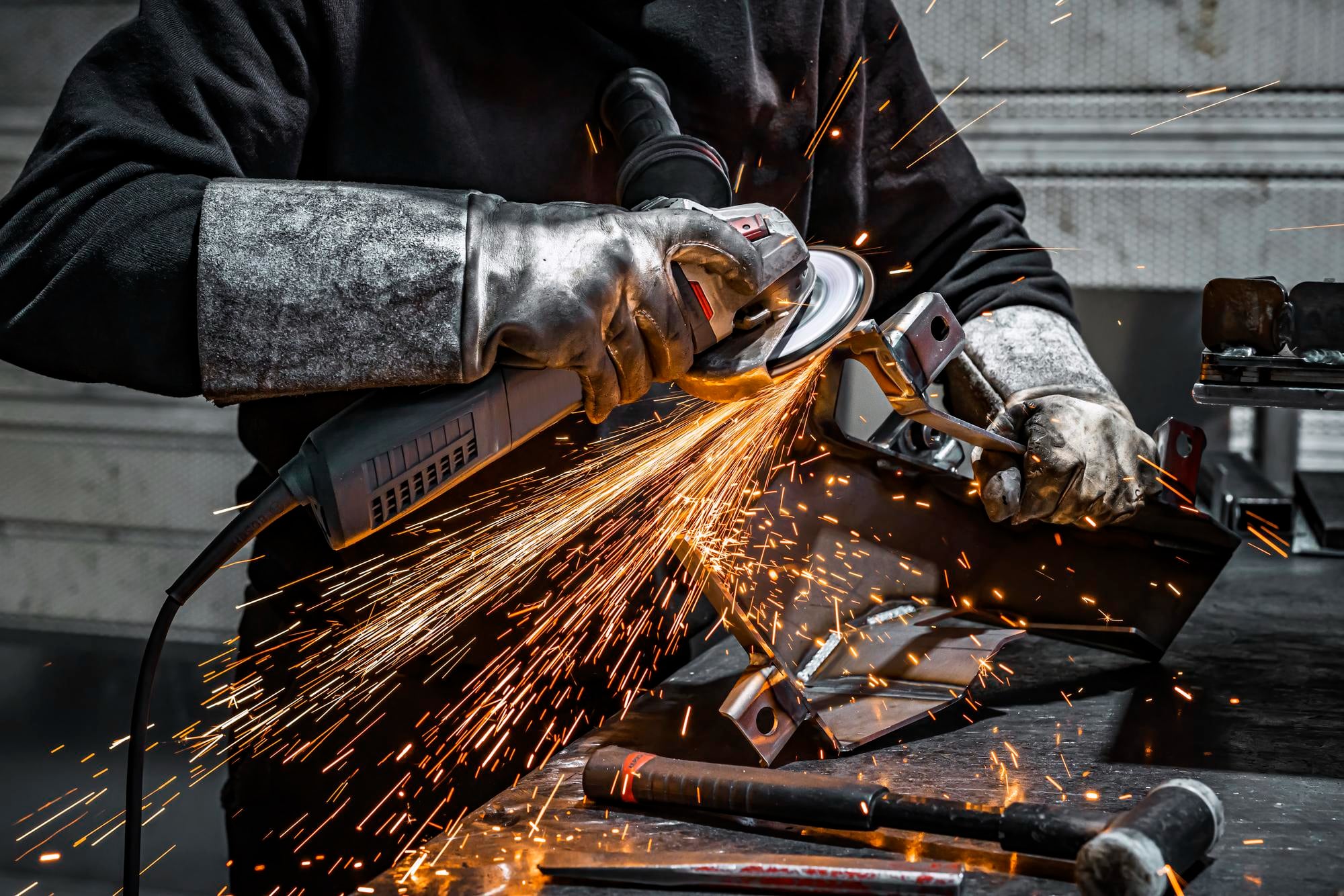
The Arch
My name is Will Mercer.
I’m thirty-two now. But I was thirty-one when my little sister told me I wasn’t good enough to attend the wedding I’d helped make beautiful.
I’m a welder outside Georgetown, Kentucky.
I build gates. I repair trailers. I make railings for porches and churches and the steps of old ladies who can’t get up them anymore without something to hold on to. I take whatever honest jobs come through the door of my shop.
For six years, that shop was half of a rented pole barn off Lemons Mill Road. Gravel floor. A tin roof that leaked in heavy rain. A wasp nest in the northeast corner that I’d learned to live with. We had an understanding. They stayed up there. I stayed down here.
The coffee was terrible. The heater was older than me. In January, I could see my breath until about ten in the morning.
But it was mine.
The machine I used most was my father’s welder.
A Lincoln. Red. Ugly. Loud. So old that half the young welders I know wouldn’t touch it. They want inverters with digital screens. Lightweight. Quiet.
Dad’s Lincoln weighs four hundred pounds and hums like a tractor.
I call it the Old Man.
Dad’s name was Danny Mercer.
He welded for a tank and trailer company in Lexington for thirty years. Big tankers. Grain trailers. Livestock haulers. He could lay a bead so straight you’d swear it was drawn with a ruler.
A heart attack took him the week before Christmas.
I was nineteen.
He had thick fingers. Scarred knuckles. Burn marks up both forearms like freckles. And a white line across his left thumb where a grinder caught him in 1991.
When I was little, I’d sit on his lap after supper and trace those scars with my finger.
“How’d you get this one?”
“Shark,” he’d say.
“What about this one?”
“Bear.”
“And this one?”
He’d look across the kitchen at my mother.
“Your mama,” he’d say. “First time I tried to hold her hand.”
Mom used to laugh at that one.
She’d throw a dish towel at him.
Somewhere along the way, she stopped laughing.
My mother’s name is Deanna.
I think I understand part of why she changed.
Mom’s older sister, Glenna, married an insurance man in Lexington. A big house in Chevy Chase. A membership at the Lexington Country Club. Glenna wore pearls to Thanksgiving.
For twenty years, Aunt Glenna made little remarks about Dad.
Does the company let him wash up before he comes home, Deanna?
It must be nice to have a husband who can fix things. Roger just hires people for that.
Danny, you’d better not sit on the white sofa. Not in those pants.
Dad laughed it off.
Mom didn’t.
She never forgot any of it.
By the time my sister Sydney was grown, I think Mom had made herself a promise. Her daughter would never be looked down on the way she believed she’d been.
Her daughter would marry up.
Her daughter would have the white sofa.
Sydney is five years younger than me.
She was born in April of 1999. The same spring Dad planted a dogwood tree in our front yard on Hamilton Street.
He planted it the week she came home from the hospital. He said every girl ought to have a tree that blooms on her birthday.
Every April after that, when the dogwood bloomed white and pink, Dad would carry Sydney outside and take a picture.
Same tree. Same spot. Same pose.
Sydney in a dress. Dad behind her in his work shirt. One big scarred hand resting on her little shoulder.
Fourteen pictures. From the year she was born until the year he died.
They hung in the hallway. In a row. Fourteen frames.
You could watch her grow. And watch the tree grow. And watch Dad’s hair go gray.
But his hand was always the same.
After he died, Mom took those photographs down.
She said they made her too sad.
I believed her.
But I noticed she gradually stopped talking about Dad’s welding, too. When people asked what he’d done, she’d say He worked in manufacturing. Like it was a desk job.
She never once said welder.
I went to welding school after the funeral.
Bluegrass Community and Technical College. Eighteen months. Then five years at a fabrication company in Winchester. Then I opened my own shop at twenty-five.
I started with the Old Man, a used F-250, and about four thousand dollars I’d saved by living on peanut butter and working Saturdays.
Mom never seemed proud of it.
When I’d come to Sunday dinner in my work clothes, she’d look at my hands before she looked at my face.
“Will,” she’d say. “Couldn’t you at least wear gloves?”
“I do wear gloves, Mom.”
“Then why are your hands like that?”
“Because I work with them.”
She’d sigh.
And I’d go to the kitchen sink and scrub my hands with the dish soap and the green scrubby sponge. The way Dad used to.
Sydney would laugh sometimes.
I’d laugh along.
I didn’t want every Sunday to turn into a fight.
Sydney went to the University of Kentucky for two years. She studied communications. She didn’t like it. She left and took a job at a boutique on Short Street in downtown Lexington. Expensive clothes. Candles that cost fifty dollars.
That’s where she met Preston Whitaker.
If you know construction around Lexington, you know Whitaker Steel Erectors.
Every steel building in Fayette County for thirty years. Hospitals. Parking garages. The new stadium expansion at UK. The big distribution center off I-75.
Preston’s father, Garland Whitaker, started that company.
He started it as an ironworker. At eighteen. Walking beams.
Preston was thirty.
Handsome. Tall. Always looked like he’d stepped out of an Orvis catalog. Quarter-zips and hiking boots that had never seen a trail. He drove a spotless black Ford Raptor and lived in a condo in a converted tobacco warehouse downtown.
As far as I could tell, he’d never held a job longer than four months.
I met him at Mom’s house on Easter.
I’d come straight from a job. A farmer in Scott County had a horse trailer with a broken hitch. He had a mare to haul to Keeneland on Monday. I fixed it on Sunday morning. Didn’t have time to change.
I walked into Mom’s kitchen in my Carhartts. With grease on my jeans.
Sydney introduced us.
“Preston, this is my brother, Will.”
I held out my hand.
Preston looked down at it.
At the black under my fingernails. At the burn on the back of my knuckle.
He shook it with two fingers.
The way you’d pick up a dead mouse.
A minute later, I heard the bathroom faucet running.
For a long time.
I didn’t say anything.
At dinner, Sydney talked about the Whitaker farm.
Near Midway. Two hundred acres. Black plank fences. Horses. A pond. And an old tobacco barn that Preston’s late mother, Francis, had restored herself.
“She did the whole thing,” Sydney said. “With her own hands. Took her four years. Preston says she used to say the barn was the only thing in her life she’d built herself.”
She took a sip of wine.
“And there’s this huge oak tree,” Sydney said. “Next to the barn. Like, three hundred years old. Francis always said she wanted Preston to get married under it.”
Mom listened like Sydney was describing Buckingham Palace.
Francis had died two years before. Breast cancer. Garland was a widower now.
They got engaged that Christmas.
I was happy for my sister.
Or I wanted to be.
I’d seen enough of Preston to have my doubts. But Sydney was twenty-five and she was excited. And it wasn’t my place to pick her husband.
Part 2: The Dogwood
In June, she called me.
“Will, I need a favor.”
“What’s up, Sid?”
Nobody calls her Sid but me. Dad started it. When she was three, she couldn’t say Sydney. She said Sid-nee. Dad said Sid was easier.
“The wedding’s September twentieth,” she said. “At the farm. Under the oak.”
“I know.”
“Preston’s dad really wants an arch,” she said. “Under the tree. Something we can stand under for the ceremony. We’ve looked at everything online. Everything’s flimsy. Plastic. Cheap-looking. And everything that’s nice costs like eight thousand dollars.”
She paused.
“I thought maybe you could make something?”
I had three gates on order. A railing for a church in Paris. A trailer repair due Friday.
“You want me to build your wedding arch?” I said.
“Please?”
I said yes.
Sydney hadn’t asked me to make anything for her in years.
When she was nine, I made her a bird feeder in shop class. Wood and copper. She hung it outside her bedroom window. It was still there when she moved out.
I liked the thought of building her something she might keep.
I drove to the Whitaker farm the next Saturday.
It was beautiful. I’ll give them that.
Black plank fences running over green hills. Thoroughbreds in the pastures. A long gravel drive lined with sycamores. A big white house with green shutters.
And the barn.
An old tobacco barn. Tall. Dark wood. Weathered almost silver. With a metal roof painted red. Restored so carefully you could see every original beam.
A wedding coordinator met me in the gravel lot.
Small. Fast. Fifties. Two pencils stuck behind her ears. A clipboard. Reading glasses on a beaded chain.
“You must be the brother,” she said. “I’m Marne. Marne Akers.”
“Will.”
“Mr. Whitaker’s covering materials,” she said. “Send me an invoice when you’re done. Whatever you need. Don’t skimp.”
She walked me to the oak.
I stopped.
It was enormous.
A white oak. Hundreds of years old. The trunk was so thick three men couldn’t have reached around it. The branches stretched out sideways for sixty feet. Low and wide. Like arms.
The grass under it was soft and green. The light came through the leaves in patches.
I understood immediately why Francis Whitaker loved that spot.
I took my measurements.
I took photographs.
I stood under the oak for a long time.
I went home and started drawing.
At my kitchen table. On graph paper. With a mechanical pencil. The way Dad taught me.
Draw it first, Will. Every time. Steel doesn’t forgive you for guessing.
Two uprights. Square steel tubing. Two inches. Eight feet tall.
Across the top, a curve. Gentle. Like the branches of the oak. I’d roll it on a pipe bender.
And along both uprights, climbing up the sides and over the curve—
Dogwood.
Branches cut from sixteen-gauge sheet steel. Twisting. Reaching.
And blossoms.
Four petals each. The way real dogwood blossoms have four petals. Each one with that little notch at the tip. Like somebody pinched it.
I thought about Dad.
Standing under the dogwood in our front yard on Hamilton Street. Every April. With Sydney on his hip. Then holding her hand. Then with his hand on her shoulder.
Fourteen pictures.
I wondered if she’d remember when she saw them.
At the very top, in the center of the curve, a plate. Round. Twelve inches across.
An S and a P. Joined by a small curl of steel.
Sydney and Preston.
It took three weekends.
Every Saturday and Sunday. Six in the morning until dark.
I cut every blossom by hand. With a plasma cutter. Two hundred and eight of them.
I bent every petal with a pair of pliers. One at a time. So each blossom caught the light at a different angle. Like real flowers. No two the same.
My hands got cut up. Little nicks from the sheet metal. Burns from the grinder. A blister on my right thumb from the pliers that popped and bled and blistered again.
I didn’t care.
I welded the branches to the uprights with the Old Man. Dad’s Lincoln. Laying beads so small and clean they disappeared into the steel.
I painted the frame black. Satin.
I painted the blossoms white. With the faintest blush of pink at the center. Like the dogwood on Hamilton Street.
My fiancée came out to the shop on the last Sunday.
Carly Burke.
She’s a large-animal veterinarian. At a clinic in Paris that does mostly horses and cattle. She’s delivered calves in snowstorms. She’s put down horses she loved. She’s had her arm inside a cow up to the shoulder more times than she can count.
She’s not easily impressed.
She walked around the arch.
Once.
Twice.
She didn’t say anything.
Then she reached out.
She touched one of the steel blossoms.
Gently. With one finger. On the notch at the tip of the petal.
“Will,” she said. “Does Sydney know why you put these here?”
“I don’t know if she remembers Dad’s tree,” I said.
Carly looked at the blossoms for a long time.
“She’ll remember,” she said. “When she sees it.”
I hoped she was right.
I sent Marne an invoice.
Mercer Welding & Fabrication
Customer: Whitaker Farm — Sydney Mercer & Preston Whitaker
Item: Wedding arch, custom.
Steel tubing, sheet steel, hardware: $1,140.
Welding wire, gas, consumables: $310.
Paint, primer: $210.
Concrete, anchors: $140.
Materials total: $1,800.
And under Labor, I wrote:
No charge for Sid.
In July, my best friend helped me install it.
His name is Ellis Fordham. Everybody calls him Tiny. He’s six-foot-five and about three hundred pounds.
We’ve been friends since sophomore year shop class at Scott County High. He accidentally set his sleeve on fire with a cutting torch. I put it out with a bucket of sand. He’s been loyal ever since.
He runs a backhoe for a construction outfit in Georgetown now. He brought it on a trailer.
We dug footings under the oak. Two of them. Three feet deep. Careful not to cut the big roots.
We poured concrete.
We set anchor bolts.
The next weekend, we came back with the arch on my flatbed trailer.
Tiny lifted it with the backhoe. Slowly. I guided it down onto the anchors.
We bolted it in.
It wasn’t going anywhere.
I didn’t want it to stand for one afternoon.
I wanted it to stand for fifty years.
Sydney came to see it that evening.
She drove out in her little white Jeep. In shorts and a tank top and flip-flops.
She walked across the grass to the oak.
She stopped.
The sun was going down behind the barn. Gold light coming through the oak leaves. Hitting the arch.
The steel blossoms lit up. White and pink. Every one at a different angle. Two hundred and eight of them.
“Oh my gosh,” Sydney said. “Will.”
She walked underneath it.
She took out her phone. She took pictures. Dozens. From every angle.
“It’s beautiful,” she said. “It’s so beautiful.”
She turned around.
She hugged me.
A real hug. Both arms. Tight. Her face against my shoulder.
For two seconds, I felt like we were kids again.
Like she was nine and I was fourteen and I’d just given her a bird feeder made of wood and copper.
She let go.
She looked back up at the arch.
At the S and the P.
“Preston’s going to love this,” she said.
She didn’t mention the dogwood.
I figured she’d notice eventually.
Part 3: The Call
Eight days later, my phone rang.
I was lying on a creeper under a horse trailer. A customer from Versailles. Broken spring hanger. Rusted through.
I wiped my hand on my jeans. I answered.
“Hey, Sid.”
“Hey, Will,” she said. “I wanted to talk to you about the wedding.”
I listened.
She explained. Fast. Like she’d rehearsed it.
The guest list was getting crowded. Three hundred people. Garland had business associates coming. Developers. Bankers. A state senator. Preston wanted the celebration to have a certain atmosphere.
“And you know how you are, Will,” she said.
“How am I?”
“You’ll probably come straight from work,” she said. “Or stand around with Tiny all night by the beer tent. In your boots.”
I stared at the rusted spring hanger above my head.
“What are you saying, Sid?”
She hesitated.
“Preston thinks it’d be easier if you didn’t come,” she said.
I didn’t say anything.
“And honestly,” Sydney said. “I agree.”
I lay there on my back on the creeper.
Under a horse trailer.
With a wrench in my hand.
“You don’t want your own brother at your wedding,” I said.
“Don’t make it sound like that,” Sydney said.
“How else should I say it?”
She sighed.
That long, put-upon sigh she learned from Mom.
“His family’s rich, Will,” she said. “These are important people. Just send a gift.”
I closed my eyes.
“I already did, Sid,” I said.
“What?”
“It’s standing under your oak,” I said.
I ended the call.
I finished the trailer.
The customer was paying me to finish it. He had a mare to haul to a vet in Lexington on Thursday. It wasn’t his fault my sister didn’t want me at her wedding.
I replaced the spring hanger. I welded in a new mount. I greased everything.
I didn’t think about Sydney while I did it.
That’s the thing about welding. You can’t think about anything else. If you do, you burn through.
When I was done, I drove home.
I parked in my driveway.
I sat in my truck.
Then I called Mom.
I still believed she’d tell Sydney she’d gone too far.
I still believed that.
At thirty-one.
“Hi, honey,” Mom said.
“Mom. Sid just called me.”
“I know,” Mom said. “She told me she was going to.”
I sat very still.
“You knew?”
“Honey,” Mom said. “It’s one day.”
“She uninvited me, Mom.”
“I know. And I think it’s for the best.”
“For the best?”
“These aren’t our kind of people, Will,” Mom said. “You’d be uncomfortable. You’d stand in the corner. You don’t know how to talk to bankers and senators.”
“Then let me be uncomfortable,” I said. “It’s my sister’s wedding.”
“Don’t make this about you,” Mom said.
“Mom,” I said. “She asked me to build the arch. I spent three weekends on it. I didn’t charge her one dime for labor.”
Mom sighed.
And then she said something that stayed with me.
For a long time.
“Look at your hands, Will,” she said.
I looked down.
Black under my fingernails. Grease in the creases of my knuckles. A fresh burn on the back of my right hand from the spring hanger. Pink and shiny. A cut on my left thumb from the dogwood petals that hadn’t healed yet.
“These people shake hands for a living,” Mom said.
I looked at my hands for a long time.
“These are Dad’s hands, Mom,” I said quietly.
She didn’t say anything.
“You used to like them,” I said.
There was a long silence on the phone.
Then she said, “That’s not fair, Will.”
“Neither is any of this,” I said.
I hung up.
Carly came home at seven.
She’d been at a farm in Bourbon County all afternoon. Treating a colicky mare. She smelled like hay and horse and antiseptic.
She found me at the kitchen table.
She looked at my face.
She didn’t ask.
She turned off the stove where I’d started to make dinner and forgotten about it.
She took two root beers out of the refrigerator. She opened them. She handed me one.
She sat down next to me.
I told her.
She listened to the whole thing. Without interrupting.
When I finished, she took a long drink of her root beer.
“Are you going to beg?” she said.
“For what?”
“For an invitation.”
“No,” I said.
“Good,” Carly said.
She set her bottle down.
“Because I already bought the shoes I’m going to marry you in,” she said. “In April. And I’d hate to have to start looking for another groom. It’s a lot of work.”
I laughed.
I couldn’t help it.
It was exactly what I needed.
She put her hand over mine. Over the burn.
“Will,” she said. “You built something beautiful.”
She looked at me.
“Let it stand,” she said.
So I did.
All through July and August, Mom posted wedding countdowns on Facebook.
58 days until my baby girl says I DO!
44 days! The venue is STUNNING!
Every post had a picture of Sydney. Under my arch. In different outfits. Different angles. The steel dogwood blossoms glowing in the sunlight behind her.
People commented.
Where did you get that arch?? It’s gorgeous!
Is that custom? I need one for my daughter’s wedding!
Who made that?
Mom never answered.
Sydney sent me the wedding registry.
By text. A link to Crate & Barrel. And a message.
Here’s the registry in case you want to get us something. Just so you don’t buy anything weird.
I didn’t order a gift.
Mine weighed four hundred pounds.
And it was already bolted into the ground.
In August, I ran into Preston.
At the Southern States farm supply store in Georgetown. I was buying welding rod and a bag of feed for Carly’s barn cats.
He was there with three friends. All in the same quarter-zips. Buying a cooler and a bag of ice. For a float trip on the Kentucky River.
He saw me.
He came over.
“Hey, man,” he said.
He turned to his friends.
“Guys,” he said. “This is Sydney’s brother. The welder.”
He said the welder the way you’d say the janitor. Or the guy who pumps septic tanks.
His friends smirked.
Then Preston put his hand on my shoulder.
“Hey,” he said. “No hard feelings about the wedding, right?”
“Sure,” I said.
“It’s just a certain kind of event, you know?” Preston said. “Black tie. Business people. It’s not really your scene.”
I looked at him.
“I know,” I said. “I built the arch.”
One of his friends stopped smirking.
The tall one. With the sunglasses on top of his head.
He looked at Preston.
“Wait,” he said. “That steel arch? Under your mom’s tree? With the flowers?”
He looked at me.
“You made that?”
I picked up my welding rod and my bag of cat food.
I went to the register.
I went back to work.
Part 4: Garland
The following Thursday, a little after seven in the morning, a truck pulled into my gravel lot.
Tiny was there. He’d brought a backhoe bucket with a cracked weld on the teeth. I was halfway through fixing it.
We heard the truck before we saw it.
A rattle. A clank. A muffler that needed replacing.
An old white Ford F-150.
A 1997, maybe. Dented tailgate. Rust around the wheel wells. Red Kentucky clay caked along the doors.
It parked next to my truck.
A man got out.
Sixties. Maybe seventy. Gray hair cut short. A faded blue work shirt with the sleeves rolled up. Jeans worn white at the knees. Boots that had been resoled more than once.
He walked into my shop.
He didn’t say anything.
He walked straight to the workbench where Tiny’s backhoe bucket was clamped.
He looked at the weld I’d just laid. On the tooth adapter.
He bent down. Close. He studied it.
He ran his thumb along the bead.
Then he straightened up.
He looked at me.
“You Will?” he said.
“Yes, sir.”
“Garland Whitaker,” he said.
Tiny dropped his coffee.
I straightened up.
I wiped my hands on my jeans.
I didn’t know what to do.
Garland Whitaker held out his hand.
I reached for it.
He didn’t shake it.
“Let me see yours,” he said.
I hesitated.
Then I held out my hand.
He took it.
He turned it over. Palm up. He looked at it.
The calluses. The burns. The black in the creases. The cut on my thumb from the dogwood petals. The new burn on the back from the spring hanger.
He turned it back over.
He looked at the knuckles. The scars.
He didn’t say anything for a long time.
Then he held up his own hand.
Thick fingers. Knuckles like walnuts. Burn marks scattered across the back. And a long white scar. Running diagonally across his palm. From the base of his pinky to his wrist.
“Cable,” Garland said. “Cincinnati. 1978. Riverfront Stadium expansion. A choker cable snapped. Whipped across. I grabbed it. Nearly took me off the beam. Sixty feet up.”
He looked at the scar.
“Nineteen stitches,” he said. “I was back up the next morning.”
His hands looked like Dad’s.
They looked like mine.
Garland glanced around my shop.
At the gravel floor. The leaking roof. The wasp nest in the corner. The coffee maker on the shelf with the stained carafe.
At the Old Man. Dad’s red Lincoln. Humming in the corner.
He looked at it for a long time.
“Your sister told me you don’t like weddings,” he said.
I didn’t answer.
“Said you hate crowds,” Garland said. “Said you’d rather work. Said you’d be uncomfortable.”
He looked at the coffee mugs hanging on hooks beside my workbench. Six of them. Mismatched. One said WORLD’S OKAYEST WELDER. Carly gave it to me.
“Doesn’t sound right to me,” he said.
“I wasn’t invited, sir,” I said.
Garland nodded slowly.
Like he’d already guessed.
“I saw that arch,” he said. “Under Francis’s oak.”
He looked at me.
“Walked around it twice,” he said. “I’ve hired welders for forty-five years. Some of the best in the state. Most of them couldn’t make work that clean.”
He looked at the floor. At the gravel.
“Those flowers,” he said. “On the arch. They’re dogwood.”
“Yes, sir.”
“Why dogwood?”
I told him.
About Dad. About the tree on Hamilton Street. Planted the spring Sydney was born. About the fourteen photographs. Every April. Dad in his work shirt. His scarred hand on her shoulder.
About how Mom took them down after the funeral.
About how I wondered if Sydney would remember.
Garland listened.
He didn’t interrupt.
When I finished, he didn’t say anything for a long time.
“Marne showed me your invoice,” he said finally.
He reached into his shirt pocket.
He took out a folded piece of paper.
He unfolded it.
My invoice.
He put his finger on the line at the bottom.
Labor: No charge for Sid.
“I’ve been signing invoices for forty-five years,” Garland said. “I’ve never seen that line before.”
He folded it back up.
He put it in his pocket.
“I told my son I wanted to meet the man who built that arch,” Garland said. “Three weeks ago. At dinner. I said, Whoever made that, I want to shake his hand. I want him at the wedding. I want him sitting up front.”
He looked at me.
“Your sister said you didn’t do weddings,” he said. “Your mother agreed. Preston said, Trust me, Dad. He’s not the type.”
I felt my face get warm.
Garland looked directly at me.
“Did they tell you not to come?” he said.
I didn’t answer right away.
I looked at Tiny.
Tiny was standing by the backhoe bucket with his coffee spilled on his boots. Staring at me.
“Yes, sir,” I said.
“Do you have anything in writing?” Garland asked.
I took out my phone.
I showed him the text from Sydney.
Here’s the registry in case you want to get us something. Just so you don’t buy anything weird.
And I told him exactly what she’d said on the phone. Word for word. Preston thinks it’d be easier if you didn’t come. And honestly, I agree. His family’s rich, Will. Just send a gift.
Garland read the text twice.
His jaw got tight.
Then he reached into his back pocket.
He took out a phone.
An old flip phone. Silver. Scratched.
He opened it.
He dialed.
He put it on speaker.
He set it down on my welding table. Next to Tiny’s backhoe bucket.
It rang four times.
“Dad?”
Preston. Groggy. Half asleep. It was seven-fifteen.
“Son,” Garland said. “Why isn’t Sydney’s brother on the wedding list?”
There was a pause.
“Dad,” Preston said. “Come on. It’s seven in the morning.”
“Answer the question.”
Preston sighed.
“The guy’s a welder, Dad,” he said. “He shows up looking like he crawled out of a furnace. He’s got black under his nails. He smells like a burnt tire. You should’ve seen him at Easter.”
He yawned.
“Even Sid’s mom didn’t want him there,” he said. “It’s a black-tie wedding. You’ve got the senator coming. The Kentucky Bank people. I didn’t want it to be awkward.”
Garland looked down at his hands.
At his scarred palm. The cable scar from Cincinnati.
“A welder,” he repeated.
“Dad, you know what I mean,” Preston said.
Garland closed the phone.
He didn’t say goodbye.
He just closed it.
For a moment, nobody spoke.
The Old Man hummed in the corner.
The wasps buzzed in the rafters.
Then Garland looked at me.
“I do now,” he said quietly.
Part 5: The First Trailer
He didn’t leave.
I thought he would. I thought he’d get back in his truck and drive back to Midway and deal with his son.
Instead, he walked over to the corner.
To the Old Man.
He stood in front of it. Looking at it.
At the red paint, faded almost pink. The dents. The scratches. The black handles worn smooth. The serial number plate riveted to the side.
He bent down.
He read the serial number.
He stayed bent down for a long time.
“Where’d you get this machine?” he said. Without turning around.
“It was my dad’s,” I said.
Garland straightened up.
Slowly.
He turned around.
His face had changed.
“Your father,” he said. “What was his name?”
“Danny,” I said. “Danny Mercer.”
Garland put his hand on the welder.
On the top. Flat. The way you’d put your hand on a horse.
“Did he work at Fayette Tank and Trailer?” he said. “Off Leestown Road?”
I stared at him.
“Thirty years,” I said.
Garland closed his eyes.
“Sit down, son,” he said.
I sat down on my shop stool.
Tiny sat on an overturned bucket.
Garland leaned against the workbench. With his arms crossed. Looking at the Old Man.
“1989,” he said. “I was thirty. I’d been walking iron for twelve years. Union. Local 70. Good money. But I wanted my own crew.”
He looked at the floor.
“I had a wife. A baby. Preston wasn’t born yet. Our first. A girl. Annie. She was two.”
He paused.
“I had nine hundred dollars,” Garland said. “And one job lined up. A barn. A pole barn. For a farmer in Woodford County. Steel frame. Sixty feet.”
“I needed a trailer,” Garland said. “To haul the steel. A gooseneck. Thirty-two feet. Heavy duty.”
He shook his head.
“A new one cost twelve thousand dollars,” he said. “I didn’t have it. I didn’t have a third of it.”
“I found an old one,” he said. “In a junkyard in Frankfort. Rusted out. The frame was cracked in four places. The axles were bent. The deck was rotted through. They wanted three hundred dollars for it.”
He looked at me.
“I bought it,” he said. “And I towed it to Fayette Tank and Trailer. On a Saturday morning. Because I heard they had a welder there who’d do side work.”
He looked at the Old Man.
“Your dad was there,” he said. “By himself. In the back. Working on something of his own. On this machine.”
He tapped the top of the welder.
“This one,” he said. “I’d know it anywhere. It had a sticker on the side. A Wildcats sticker. Half peeled off.”
I looked at the side of the Old Man.
There’s a mark there. A rectangle. Where something used to be stuck. Faded blue at the edges.
“I asked him what it’d cost,” Garland said. “To fix the trailer. He looked at it for a long time. He walked around it twice.”
Garland almost smiled.
“He said, About two weekends.”
“I said, I can’t pay you for two weekends. I’ve got nine hundred dollars. I need it for steel.”
Garland looked at me.
“Your father said, Then pay me for the steel.”
“He fixed it,” Garland said. “Two weekends. He rebuilt the frame. Straightened the axles. Put in new crossmembers. Welded on a new deck. I watched him do it. I handed him tools.”
He looked at his hands.
“I learned more about welding those two weekends than I did in twelve years on the iron,” he said.
“When he was done,” Garland said, “he handed me a bill.”
He reached into his back pocket.
He took out his wallet. Old. Brown leather. Worn through at the corners.
He opened it.
From behind his driver’s license, he pulled out a piece of paper.
Folded. Small. Yellowed. Soft as cloth.
He unfolded it.
He handed it to me.
It was a receipt.
From a pad. Carbon copy. The pink one. Faded almost white.
In handwriting I’d know anywhere.
Danny Mercer
Customer: Garland W.
Gooseneck trailer — frame, axles, deck.
Steel and rod: $211.40
Labor: No charge. Pay it forward.
I couldn’t breathe.
I sat on my stool. In my shop. With my father’s handwriting in my hand.
No charge.
Pay it forward.
“I built the barn,” Garland said quietly. “With that trailer. Then another barn. Then a warehouse. Then a church in Versailles. By 1995, I had six crews. By 2005, I had forty.”
He looked around my shop.
“Whitaker Steel Erectors started on a junk trailer your father rebuilt for two hundred and eleven dollars,” he said.
“I tried to find him,” Garland said. “In ‘96. When I had money. I went back to Fayette Tank. They said he was on the road. Delivering a tanker to Texas.”
He looked at the receipt.
“I left a check,” he said. “Twelve thousand dollars. With his foreman.”
I looked at him.
“It came back,” Garland said. “In the mail. A week later. Uncashed.”
He almost laughed.
“With a note,” he said. “On the back of the envelope. In the same handwriting.”
“What did it say?”
Garland looked at me.
“Already paid. Did you pass it on?”
I put my hand over my mouth.
“I didn’t,” Garland said. “Not really. Not the way he meant.”
He looked at the floor.
“I gave money,” he said. “To charities. To the university. I put my name on a scholarship. But I never once did what your father did. Fixed somebody’s broken thing with my own hands for the price of the steel.”
He shook his head.
“I got too big,” he said. “Too busy. I forgot.”
He looked up at me.
“And then I saw your invoice,” he said. “Three weeks ago. Marne showed it to me. No charge for Sid.”
He took the receipt back from me. Carefully.
“I knew that line,” he said. “I’ve been carrying it in my wallet for thirty-six years.”
“Your father,” Garland said. “Did he ever mention me?”
I thought about it.
I thought about Dad. At the kitchen table. Tracing his scars. Shark. Bear. Your mama.
“No,” I said.
Garland nodded slowly.
“No,” he said. “He wouldn’t have.”
Part 6: Preston
Garland drove back to Midway that morning.
He didn’t tell me what he was going to do.
He just shook my hand.
All of it. His whole hand around mine. Scar to scar.
And he said, “Saturday the twentieth. Two o’clock. You’ll be there.”
“Mr. Whitaker—”
“Garland.”
“Garland,” I said. “My sister doesn’t want me there.”
Garland looked at me for a long time.
“Your sister,” he said, “is about to marry into a family that started on your daddy’s welds.”
He put his hat on.
“She just doesn’t know it yet,” he said.
Preston came to my shop on Saturday.
Alone. In the black Raptor. Nine a.m.
He parked in the gravel. He sat in the truck for a while.
Then he got out.
He was wearing jeans. Old ones. And a T-shirt. A gray one. Plain. No logo.
He walked into my shop.
He looked terrible.
Like he hadn’t slept.
“Will,” he said.
“Preston.”
He stood there for a long time.
Looking around. At the Old Man. At the wasp nest. At the gravel floor.
“My dad told me,” he said finally. “About the trailer. About your father. About the receipt in his wallet.”
He swallowed.
“I didn’t know,” he said. “I’ve seen that receipt. My whole life. In his wallet. Behind his license. I asked him about it once when I was a kid. He said, That’s the most important piece of paper I own. I thought it was a joke.”
“He made me read it,” Preston said. “Thursday night. At the kitchen table. Out loud.”
He looked at the floor.
“Labor: No charge. Pay it forward.”
“Then he told me something,” Preston said. “He said, Son, I raised you wrong. After your mother died, I gave you everything. Money. A condo. A truck. I thought I was making up for her being gone. I never once made you build anything.”
His voice cracked.
“He said, You shook that man’s hand with two fingers. Because it was dirty. Do you know what’s in that dirt? Every building I ever built. This house. Your condo. Your truck. Your whole life.”
Preston looked at his own hands.
Clean. Soft. A watch that cost more than my truck.
“He said I can’t marry Sydney,” Preston said, “unless I come here and do one thing.”
“What?”
Preston looked at the Old Man.
“Weld something,” he said. “With your dad’s machine. One weld. And bring it to the wedding.”
I looked at him for a long time.
“Preston,” I said. “Have you ever welded anything?”
“No.”
“Ever held a torch?”
“No.”
“Ever worn a welding hood?”
He shook his head.
I sighed.
I went to the hook on the wall.
I took down Dad’s old welding jacket. Leather. Brown. Burned in a hundred places. It still smelled like him. A little.
I handed it to Preston.
“Put this on,” I said.
It took him four hours.
He burned himself twice. Once on the wrist. Once on the back of his hand. He yelped like a kicked dog both times.
I didn’t laugh.
I put aloe on it. The same aloe Dad used to put on mine.
He laid twenty-three bad welds. Lumpy. Crooked. Porous. Burned through.
I made him grind them off. Every one. And start over.
He didn’t complain.
Not once.
On the twenty-fourth try, around one in the afternoon, he laid a bead.
Two inches long. On two pieces of scrap steel. Joining them at a right angle.
It wasn’t pretty. It wasn’t straight.
But it held.
He lifted his hood.
He looked at it.
His face was black with soot. His hair was soaked with sweat. His wrist was blistered.
He looked at his hands.
Black under the fingernails.
He looked at me.
“Will,” he said. “I’m sorry.”
I didn’t say anything.
“For the two fingers,” Preston said. “At Easter. For washing my hands. For the welder. For telling Sydney not to invite you.”
He looked at the weld.
“My mom built that barn,” he said. “Did you know that? Francis. With her own hands. Four years. She used to come in from the barn at night with splinters and blisters and paint in her hair.”
He swallowed.
“And she’d hold my face in her hands,” he said. “And I’d tell her she was dirty.”
He looked at me.
“She’d laugh,” he said. “And say, That’s what love looks like, baby. It doesn’t wash off.”
He picked up the two pieces of steel.
Joined by one crooked weld.
“I forgot,” he said.
Part 7: Sydney
Sydney came on Sunday.
Alone. In her little white Jeep.
She parked in the gravel.
She sat in the Jeep for a long time.
I watched her through the shop door.
Then she got out.
She was carrying something.
A shoebox.
She walked into the shop.
She stopped.
She looked at the Old Man.
She looked at me.
“Garland told me,” she said. “About Dad. About the trailer. The receipt.”
She swallowed.
“And Preston told me about yesterday,” she said. “He came home with his wrist bandaged and soot in his ears. He showed me the weld. He cried.”
She held out the shoebox.
“Mom gave me this,” she said. “Last night. When I told her what happened.”
I took it.
I opened it.
Photographs.
Fourteen of them.
In their old frames. The cheap brass ones from Walmart. Dusty. One of the glass panes was cracked.
A dogwood tree. White and pink. In a front yard on Hamilton Street.
A little girl in a dress.
And a man behind her. In a work shirt.
With one big scarred hand on her shoulder.
Fourteen times.
“She didn’t take them down because they made her sad,” Sydney said quietly.
I looked up at her.
“She told me last night,” Sydney said. “She took them down because of Aunt Glenna.”
“At the funeral,” Sydney said. “After. At the house. Aunt Glenna walked down the hallway. She looked at the photos. And she said, Deanna, you might want to take these down. You don’t want people remembering him like that. In his work clothes. With those hands.”
I closed my eyes.
“Mom took them down that night,” Sydney said. “She put them in this box. In the back of her closet.”
She looked at the photos.
“She said she was ashamed of herself,” Sydney said. “For ten years. Every time she looked at that closet.”
“And she said,” Sydney said, “she told you to look at your hands. Like Aunt Glenna told her.”
Sydney’s chin was trembling.
“Will,” she said. “I didn’t notice the dogwood.”
I looked at her.
“On the arch,” she said. “I stood under it. I took fifty pictures. I hugged you. I posted it on Instagram. Two thousand likes.”
She was crying now.
“I never once looked at what the flowers were,” she said.
“Garland asked me,” she said. “Thursday night. He said, Sydney, what kind of flowers are on your arch?”
She wiped her face.
“And I didn’t know,” she said. “I said, Roses? Lilies? And Garland just looked at me.”
“And then he showed me Dad’s receipt,” she said. “And he said, Your brother put dogwood on that arch. Do you know why?”
She couldn’t talk anymore.
She just stood there.
In my shop. In the gravel. Crying.
I put the shoebox down.
I took her in my arms.
“I drove out there,” Sydney said. Into my shoulder. “Last night. To the farm. In the dark. With a flashlight.”
She pulled back.
“I counted them,” she said. “The blossoms. Two hundred and eight.”
“Two hundred and eight,” I said.
“Every one is different,” she said. “Every petal is bent a different way.”
She looked at my hands.
At the cut on my thumb. Still healing.
“You did every one by hand,” she said.
“Every one,” I said.
She took my hand.
She turned it over. Palm up.
She looked at it.
The calluses. The burns. The black in the creases.
She traced the cut on my thumb with her finger.
The way I used to trace Dad’s scars.
At the kitchen table.
After supper.
“How’d you get this one?” she asked.
I almost laughed.
“Dogwood,” I said.
Part 8: September 20th
The wedding was at two o’clock.
I wore a suit.
Charcoal gray. From the Men’s Wearhouse in Lexington. Carly made me buy it.
But I didn’t scrub my hands.
Not with dish soap. Not with the green scrubby sponge.
I washed them. Like any man washes his hands before a wedding.
But I left the black in the creases.
I left the cut on my thumb.
I left the burn from the spring hanger.
Carly looked at my hands in the truck.
She smiled.
She took one and kissed the knuckles.
“Perfect,” she said.
Three hundred people.
White chairs in rows on the grass under the oak. The barn behind. Black plank fences. Horses in the pasture.
The senator. The bankers. The developers. In suits and summer dresses.
Aunt Glenna. In pearls.
And Tiny.
In a suit that didn’t quite fit. Sitting in the second row. Next to Carly.
Garland put him there.
I wasn’t sitting.
At one-fifty-five, I was standing at the edge of the barn.
Waiting.
Sydney came out at two.
In her dress. Ivory. Simple. Her hair down. A small bouquet.
Of dogwood.
White and pink.
Out of season. In September. Carly found a florist in Louisville who forced the branches in a greenhouse. It cost four hundred dollars. Garland paid for it. He wouldn’t let anybody else.
Sydney stopped next to me.
She looked at me.
She looked at my hands.
She took my left arm.
“Ready?” I said.
“Dad would’ve been ready,” she said.
We walked down the aisle.
Across the grass. Between the white chairs. Toward the oak.
Toward the arch.
Mom was in the front row.
She saw us coming.
She saw my arm. Through Sydney’s. My hand on top of hers.
My dirty, scarred, burned hand.
Resting on her daughter’s.
Mom put her hand over her mouth.
The way she used to. At the kitchen table. When Dad said Your mama, first time I tried to hold her hand.
Preston was standing under the arch.
In his tuxedo.
With a bandage on his left wrist.
He saw us coming.
He didn’t look at Sydney first.
He looked at me.
When we got to the arch, I stopped.
I took Sydney’s hand off my arm.
I held it out.
Preston reached for it.
Then he stopped.
He looked at my hand. Holding hers.
He let go of her hand.
He held out his own hand.
To me.
All of it.
His whole hand.
I took it.
He shook it.
Firm. Long. Palm to palm.
His blistered wrist. My burned knuckles.
He didn’t let go.
“Thank you,” he said quietly. “For the arch. For the lesson. For Sid.”
Then he let go.
And took my sister’s hand.
They got married under the arch.
Under two hundred and eight steel dogwood blossoms.
Under Francis Whitaker’s oak.
I stood next to Garland in the front row.
He held my father’s receipt in his hand the whole time.
Folded. Yellowed. Soft as cloth.
Part 9: The Toast
Garland gave a toast at the reception.
In the barn. Under Francis’s beams. With string lights and three hundred people and a bluegrass band from Berea.
He stood up at the head table.
In a suit that didn’t quite fit. With his scarred hands.
“I’m not a talker,” he said.
Everybody laughed. Everybody knew Garland Whitaker wasn’t a talker.
“I’ve built a lot of things,” he said. “In forty-five years. Hospitals. Stadiums. Parking garages. Some of you are sitting in buildings I put up.”
He looked at the senator.
“Your office in Frankfort,” he said. “I hung that steel in ‘04.”
The senator raised his glass.
“But I want to tell you about the first thing,” Garland said.
He reached into his pocket.
He took out the receipt.
He held it up.
He told them.
The junk trailer. The nine hundred dollars. The welder in the back of Fayette Tank and Trailer on a Saturday morning. Two weekends. Then pay me for the steel.
The check that came back uncashed.
Already paid. Did you pass it on?
The barn was dead silent.
“His name was Danny Mercer,” Garland said.
He looked at me.
“His son built that arch out there,” he said. “Under my wife’s oak. For his sister. For the price of the steel.”
He held up my invoice. The one Marne gave him.
Labor: No charge for Sid.
“I’ve been carrying a receipt in my wallet for thirty-six years,” Garland said. “Waiting to find out if I ever paid it forward.”
He looked at his son. At Preston. In his tuxedo. With the bandage on his wrist.
“I hadn’t,” he said. “Not really. Not until last Saturday. When my son spent four hours in a gravel-floored shop in Georgetown with blisters on his hands. Learning to lay one bead.”
He reached under the table.
He took out something.
Two pieces of scrap steel.
Joined at a right angle.
By one crooked weld.
He set it on the head table.
Next to the wedding cake.
“That’s my son’s first weld,” Garland said.
He looked at it.
“It’s ugly,” he said.
Everybody laughed.
“It’s crooked,” he said. “It’s porous. Danny Mercer would’ve made him grind it off.”
He looked at me.
“Will did make him grind it off,” he said. “Twenty-three times.”
He picked it up.
He held it up.
“But it holds,” Garland said.
He looked at Preston.
At Sydney.
“That’s all a marriage is,” he said. “Two pieces of something. Joined by a weld that isn’t pretty. That you have to keep fixing. That gets burned and ground down and laid again.”
His voice cracked.
“Francis and I had a crooked weld for thirty-four years,” he said. “It held.”
He set the steel down.
He raised his glass.
“To Danny Mercer’s hands,” he said.
Three hundred people stood up.
“To Danny Mercer’s hands.”
Mom found me afterward.
Outside the barn. In the dark. By the arch. Under the oak.
I was standing there with a beer. Looking at the blossoms in the string lights.
She stood next to me.
She didn’t say anything for a long time.
Then she reached over.
She took my hand.
My right hand. With the burn from the spring hanger.
She held it.
She looked at it.
“Will,” she said. “I’m sorry.”
I didn’t say anything.
“For look at your hands,” she said. “For Easter. For every Sunday dinner. For couldn’t you wear gloves.”
She was crying.
“For taking down the pictures,” she said.
“Sid told me,” I said. “About Aunt Glenna.”
Mom nodded.
“I let her make me ashamed of the best man I ever knew,” she said. “And then I tried to make you ashamed too.”
She looked at my hand.
“Because if you were ashamed,” she said, “then I wasn’t the only one.”
She traced the burn on my knuckles.
With one finger.
“Your father used to tell you I gave him that one,” she said. “Remember? The scar on his thumb. Your mama. First time I tried to hold her hand.”
“I remember.”
Mom laughed. Through her tears.
“It was true,” she said.
I looked at her.
“1987,” she said. “A church picnic in Nicholasville. He was trying to impress me. Grilling burgers. I reached for his hand and knocked the spatula off the grill. It hit his thumb. He burned it on the grate trying to catch it.”
She was laughing and crying at the same time.
“He told everybody it was a grinder,” she said. “For thirty years. Except you kids. He told you the truth.”
“He said it was the best scar he ever got,” Mom said.
She held my hand tighter.
“He said it was the day he met the woman who’d make him wash his hands for the rest of his life.”
Part 10: April
Carly and I got married the next April.
Under the arch.
Under Francis Whitaker’s oak.
Garland asked. Sydney asked. Preston asked.
I said yes.
It was small. Fifty people. Tiny was my best man. In a suit that fit this time. Garland bought it for him.
Carly wore her shoes. The ones she bought in July. Brown leather boots. Tall. With a little heel.
Garland gave me a wedding present.
An envelope.
I opened it.
A lease.
On a building in Georgetown. Off Delaplain Road. A real shop. Concrete floor. Insulated walls. A heated bay. A roof that doesn’t leak.
No wasp nest.
“Garland,” I said. “I can’t—”
“It’s not a gift,” Garland said. “It’s a contract.”
He handed me another envelope.
Whitaker Steel Erectors. A three-year agreement. Custom railings, gates, and ornamental steel for every residential project they took on in the Bluegrass.
At full price.
Labor included.
“I’m not giving you anything,” Garland said. “I’m hiring you. At your rate. Because you’re the best I’ve seen.”
He looked at me.
“Your daddy wouldn’t take my money,” he said. “Thirty-six years ago. Not for charity.”
He tapped the contract.
“You’ll take it for work,” he said.
I moved the Old Man into the new shop in May.
I put it in the corner. By the window. Where the light comes in.
I found a sticker.
On eBay. A University of Kentucky Wildcats sticker. Vintage. From the eighties. The same kind Dad had.
I stuck it on the side of the Old Man.
Right in the faded rectangle.
Every April now, Sydney comes to the farm.
To the oak.
To the arch.
Last April, she brought somebody.
A baby.
Three weeks old. A girl. Wrapped in a white blanket.
Her name is Danielle.
They call her Dani.
Sydney stood under the arch. Under the two hundred and eight steel blossoms. Holding Dani.
She looked at me.
“Will,” she said. “Come here.”
I walked over.
“Put your hand on her shoulder,” Sydney said.
I looked at my hand.
I’d come straight from the shop. Black under the nails. A fresh burn on my wrist from a gate I was building for a horse farm in Paris.
“Sid,” I said. “I didn’t wash up.”
Sydney smiled.
“I know,” she said. “That’s the point.”
I put my hand on my niece’s shoulder.
Very gently.
My scarred hand. Dad’s hand.
On a three-week-old girl in a white blanket.
Preston took the picture.
It’s on Sydney’s wall now.
In the hallway of their house in Midway.
The first in a row.
There’ll be more.
Every April.
Mom hung the old ones back up too.
All fourteen.
In her hallway. On Hamilton Street.
In a row.
Right where they used to be.
The dogwood in the front yard is still there.
Thirty years old now.
It bloomed this April. White and pink.
People ask me sometimes about the arch.
Tourists. Wedding guests. Brides who see it on Instagram and call my shop.
Can you make me one like that? With the steel flowers?
I tell them yes.
But I don’t make the dogwood for anybody else.
I make them roses. Magnolias. Sunflowers. Wisteria. Whatever they want.
The dogwood is for us.
And at the bottom of every invoice, under Labor, I write my rate.
Fair. Honest.
The way Garland taught me.
Except once a year.
Once a year, somebody comes into my shop who can’t pay.
A widow with a broken gate. A farmer with a cracked trailer. A kid with a junk trailer he bought for three hundred dollars and a dream about building barns.
I fix it.
On the Old Man.
And on the invoice, under Labor, I write the same thing.
Every time.
In my handwriting. Which looks a lot like my father’s.
No charge. Pay it forward.
Last month, a kid came in.
Nineteen. Skinny. A Wildcats cap. Fresh out of the welding program at Bluegrass Community and Technical College.
He wanted to start his own shop.
He had a used truck and about four thousand dollars.
He didn’t have a welder.
I looked at him for a long time.
Then I took him to the corner.
By the window.
Where the light comes in.
I showed him the Old Man.
“This was my dad’s,” I said. “Four hundred pounds. Thirty-five years old. Ugly. Loud.”
The kid looked at it.
“It’s beautiful,” he said.
I smiled.
“Come in on Saturdays,” I said. “You can use it. Until you can buy your own.”
“How much?” he asked.
I looked at his hands.
Clean. Soft. Not a scar on them.
Yet.
“Price of the rod,” I said.
He grinned.
He held out his hand.
I shook it.
All of it.
Palm to palm.
His hands will look like mine someday.
Like Garland’s.
Like Dad’s.
And somebody will look at them.
And tell him to wear gloves.
I hope he remembers what my mother finally told me.
Under an oak tree. In the dark. With string lights and two hundred and eight steel blossoms.
That’s what love looks like.
It doesn’t wash off.

Adrian Hawthorne is a celebrated author and dedicated archivist who finds inspiration in the hidden stories of the past. Educated at Oxford, he now works at the National Archives, where preserving history fuels his evocative writing. Balancing archival precision with creative storytelling, Adrian founded the Hawthorne Institute of Literary Arts to mentor emerging writers and honor the timeless art of narrative.