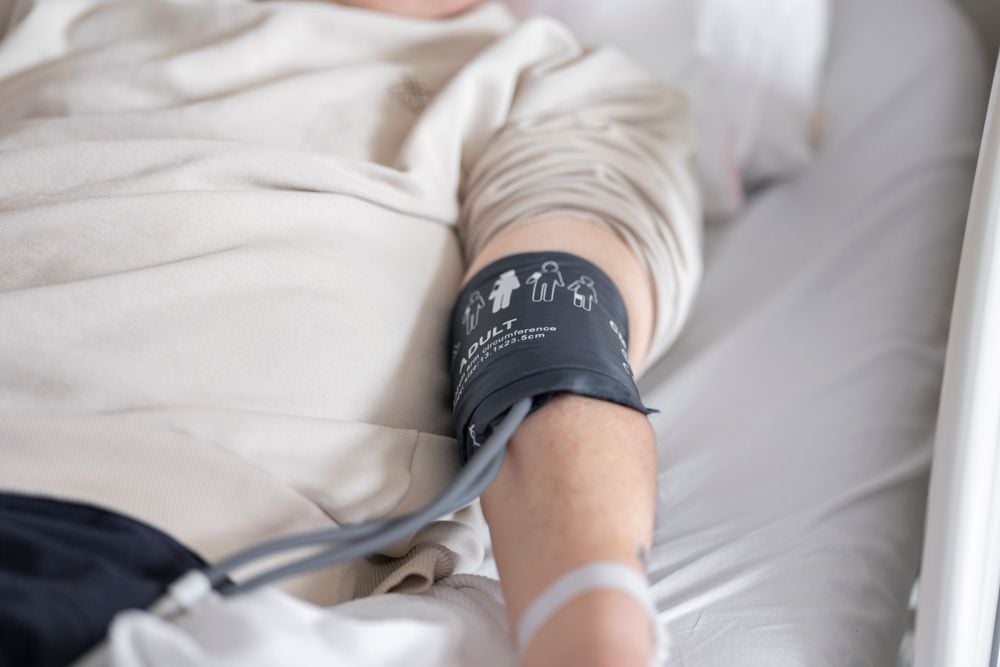
I was thirty years old when I lost the ability to walk.
Three years later, I went on my first date.
She took one look at me, gasped “Oh my God,” grabbed her bag, and ran out of the café.
I sat in the doorway holding a bunch of grocery-store tulips, watching her disappear down the sidewalk, and I thought I knew exactly why she’d run.
I didn’t know a thing.
What she told me two days later, standing in my kitchen with tears running down her face, turned everything I believed about the worst night of my life upside down.
“We met that night,” she said. “Matt, I’m so sorry.”
I wish I’d understood right then what she was apologizing for.
Three years before that café, I had a normal life.
I was thirty. I worked IT support for a regional bank, which mostly meant telling people to turn their computers off and on again. I had a one-bedroom apartment with a balcony that was too small for a chair. I played pickup basketball on Tuesday nights with guys from work who were all better than me.
And I’d been dating Rachel for almost two years.
I’d spent eight months saving for an engagement ring.
It wasn’t fancy. A small round diamond on a thin gold band. But I’d picked it out myself, at a little jewelry store downtown run by an old man named Mr. Abramowitz who’d spent forty-five minutes explaining diamond clarity to me with a jeweler’s loupe and a lot of patience.
“She’ll love it,” he said, when he handed me the little velvet box.
“How do you know?”
He shrugged. “Because you spent forty-five minutes picking it.”
That night, I took Rachel to dinner at an Italian place downtown. Her favorite. Candles on the tables. Breadsticks in little glasses. A waiter who called everybody “my friend.”
The ring box was in the inside pocket of my jacket.
I kept touching it. I couldn’t help it. I’d reach up and feel the little square shape through the fabric, just to make sure it was still there.
“You’ve checked your pocket six times,” Rachel said over her pasta.
“Have I?”
“Matt. You’re sweating.”
“It’s warm in here.”
She stared at me. “It’s literally freezing in here. I’m wearing my coat.”
She was. She had her coat around her shoulders.
I laughed and changed the subject.
I had a plan.
After dinner, we’d walk to the park on Elm Street. The one with the old stone fountain. That’s where we had our first kiss, twenty-two months earlier, on a bench under a streetlight after a terrible movie. I’d stop at that same bench. I’d get down on one knee. I’d say the speech I’d been rehearsing in the shower for three weeks.
It started with, Rachel, the first time I kissed you, I knew.
It ended with a question.
After dinner, Rachel looked at her phone.
“Oh no,” she said. “We’re late.”
“For what?”
“My friends are waiting. At Claudia’s place. It’s her birthday, remember? I told you. Come on!”
I didn’t remember. But I didn’t argue. I figured we could stop at the park on the way. Five minutes. Ten at the most.
She grabbed my hand and pulled me out of the restaurant toward the corner. Toward the crosswalk.
The little white walking man on the signal had turned into a flashing red hand. Don’t walk. Don’t walk. Don’t walk.
“Rachel,” I said. “The light’s flashing.”
“We can make it!”
She stepped off the curb. Pulling me with her.
“Rachel, wait!”
She didn’t.
I saw the headlights first. Coming around the corner way too fast. Way, way too fast. Bright and white and getting bigger.
Rachel was in the middle of the crosswalk. Right in front of them.
I didn’t think. There wasn’t time to think.
I grabbed her arm with both hands and shoved her back as hard as I could. Back toward the curb.
She flew backward and landed on the sidewalk.
Then the car hit me.
Everything went black.
My last memory before it went black was my hand. Gripping the ring box in my pocket. Squeezing it so hard I could feel the corners.
Romantic, right?
Too bad nobody was filming.
After that, I only have pieces.
Sirens. Loud ones. Coming closer.
Strangers shouting. A woman screaming, Somebody call 911! A man saying, Don’t move him. Don’t move him.
Pain. Everywhere and nowhere at the same time.
Then nothing.
Then lights. Bright ones. Moving over my head. Ceiling tiles going by.
Then nothing again.
Then, at some point, a hand.
A hand wrapped around mine. Small. Warm. Holding on tight.
“Please,” a voice said. “Stay with me. Stay with me, okay?”
“Rachel?” I croaked. My throat felt like it was full of sand.
“I’m here, Matt,” the voice said. “I’m right here.”
Then everything went black again.
The next time I surfaced, the hand was still there.
Something wet dropped onto my knuckles. Then another drop.
She was crying.
Aww, I thought. She really loves me.
And then I passed out again. Feeling extremely smug about it.
When I finally woke up for real, a doctor was standing over my bed.
He was older, with gray hair and tired eyes and a white coat with a coffee stain on the pocket. He was holding a clipboard.
“Matt,” he said. “I’m Dr. Sorensen. Do you know where you are?”
“Hospital.”
“Good. Do you know what happened?”
“Car.”
“That’s right.” He pulled a chair up to the side of the bed and sat down. That’s when I knew it was bad. Doctors don’t sit down for good news. “Matt, you have a serious spinal cord injury.”
“Okay,” I said.
I don’t know why I said okay. It’s just what came out.
He looked at me for a long moment.
“You can’t feel your legs,” he said. “Can you?”
I tried to move them.
Nothing.
I tried again. Harder. Like they were just being stubborn. Like if I yelled at them loud enough inside my head, they’d listen.
Nothing.
I couldn’t even feel the blanket on them. It was like they belonged to somebody else. Like they were just lying there next to me on the bed.
“Will that change?” I asked.
Dr. Sorensen was quiet.
“The chances,” he said carefully, “are very small.”
I nodded. Like he’d just told me my parking meter had expired.
“Okay,” I said again.
Rachel had walked away with bruises. A scraped elbow. A sprained wrist. A bump on her forehead where she’d hit the sidewalk.
I was grateful for that. I really was. I lay there in that hospital bed and thought about the headlights coming at her, and I was so grateful.
I’d have done it again. A hundred times. I still would.
She visited me twice.
The first time, two days after the accident, she sat by my bed and held my hand and cried. She kept saying thank you and I’m sorry over and over. She brought me a balloon that said GET WELL SOON and a bag of the gummy bears I liked.
The second time was four days later.
She didn’t hold my hand that time. She sat in the chair by the window with her arms crossed.
She stared at the floor.
“Matt,” she said. “I can’t do this.”
“Do what?” I asked.
She waved her hand around. At the bed. At the machines. At the wheelchair folded up in the corner that the physical therapist had brought in that morning.
“This,” she said. “Hospitals. Wheelchairs. Rehab. Everything.”
“You don’t have to take care of me,” I said. “I’m not asking you to take care of me.”
“I know,” she said. “I know you’re not. But I can’t pretend it’ll be the same. Because it won’t be. It’s not going to be the same, Matt.”
I stared at her.
“Are you breaking up with me?”
She started to cry.
“I’m sorry,” she said. “I’m so sorry.”
I wanted to beg her to stay.
I had the words ready. Right there in my mouth. Please. Please don’t go. I’ll get better. I’ll work so hard. I’ll walk again. I’ll do whatever it takes. Just please don’t leave me alone in here.
But I knew what it felt like to be left.
My parents walked out when I was eight.
Not both at once. That would have been easier, maybe.
My dad left first. Packed a suitcase one Tuesday while I was at school. When I got home, his closet was empty and my mom was sitting at the kitchen table smoking a cigarette, even though she’d quit two years earlier.
My mom left three months later. She said she was going to the store. She took the car. She never came back.
I sat on the front steps of our apartment building until it got dark. Waiting.
My grandmother found me there.
Grandma Marta. My dad’s mother. Five feet tall, Polish, with hands that smelled like onions and flour and a voice like a hammer. She lived across town. Somebody had called her.
She sat down on the steps next to me. She didn’t say anything for a long time. She just sat there.
Then she put her arm around me.
“You still have me, sweetheart,” she said. “You still have me.”
She raised me.
In her little two-bedroom house with the yellow kitchen and the plastic covers on the living room furniture. She taught me to cook. Pierogi. Cabbage rolls. Potato pancakes. Her famous chicken soup with the tiny noodles she rolled out by hand.
“A man who can fry an egg,” she’d say, standing next to me at the stove, “is never lonely.”
She died two years before the accident. A stroke, in her garden, while she was planting tomatoes.
So when Rachel sat in that chair by the window and told me she couldn’t do this, she was the last person I had.
The very last one.
But I wasn’t going to beg.
I’d sat on those front steps once already, waiting for somebody to come back. I wasn’t going to do it again.
So I swallowed the begging. I swallowed all of it.
And I let her go.
“Okay,” I said. “Okay, Rachel.”
She stood up. She looked at me for a long moment. Like she wanted to say something else.
Then she picked up her purse and left.
Back then, I thought I’d never see her again.
Rehab was hell.
There’s no other way to say it.
Four months in a rehabilitation center. Five days a week. Six hours a day. Learning how to do everything all over again. How to sit up. How to get from the bed to the wheelchair. How to get from the wheelchair to the toilet. How to get dressed. How to put on socks without being able to feel your own feet.
My physical therapist was a woman named Dolores. Sixty years old, built like a fire hydrant, with a voice that could cut glass.
“Again, Matt.”
“I’ve already tried six times!”
“Then make it seven.”
“Dolores, I’m tired.”
“Everybody’s tired. Nobody cares. Seven.”
I hated her.
I love her now. I send her a fruit basket every Christmas.
I learned how to transfer from my chair to the couch. To the car. To the shower bench.
I learned how to cook sitting down.
That was the hardest part, honestly. Harder than the transfers. Because cooking was the thing that made me feel like myself. It was Grandma Marta’s yellow kitchen. It was Sunday soup. It was home.
And now I couldn’t reach anything.
“Who designed these cabinets?” I said, the first time they put me in the practice kitchen at rehab. I was staring up at the shelves, which were about a mile above my head.
“Someone tall?” my occupational therapist suggested.
“Someone who hates me.”
When I got home from rehab, my apartment had been modified. A ramp at the front entrance. Grab bars in the bathroom. A lowered counter in the kitchen.
But it still wasn’t easy. Nothing was easy.
One night, about two weeks after I got home, I was trying to make dinner. I reached for a pot on the stove and knocked a whole box of pasta onto the floor. Penne everywhere. Under the stove. Under the table. All over.
I was so angry I grabbed the dish towel off my lap and threw it across the room.
It landed in the corner by the refrigerator.
I sat there breathing hard.
Great, I thought. Now pick it up, genius.
I couldn’t.
I couldn’t reach it from my chair. And I didn’t have my grabber tool. It was in the bedroom.
The towel stayed in that corner for two days.
Grandma Marta used to say: A man who can fry an egg is never lonely.
Sorry, Grandma.
You were wrong.
I could fry an egg. I could fry a perfect egg. I could make potato pancakes that would make you cry.
I was the loneliest man in the world.
Still, I wasn’t giving up.
About six months after I got home from rehab, I started a cooking blog. Under a fake name.
Marta’s Kitchen.
It was simple. Just videos. Short ones. I’d set my phone up on a little tripod above my counter and film my hands cooking. Chopping onions. Rolling dough. Flipping pancakes. Grandma’s recipes, mostly. Some of my own.
I only ever filmed my hands. And the food.
Never my face. Never the chair.
The very first comment I ever got said: Show your face, man. Who are you?
I wrote back: Just enjoy the pancakes.
I wanted people to judge my cooking. Not my wheelchair.
I wanted one thing in my life where nobody looked at me with that look. The sad one. The pity one. The oh, you poor thing one.
On Marta’s Kitchen, I was just a pair of hands that made really good pancakes.
And my pancakes were a hit.
I don’t know why. Maybe because they were really good. Grandma’s recipe, with buttermilk and a little bit of nutmeg and the secret ingredient, which was a spoonful of sour cream. Maybe because the videos were short and calming. Maybe because I always talked to the camera like it was an old friend sitting at my counter.
Within a year, Marta’s Kitchen had forty thousand followers.
I still never showed my face.
Then one day, about a year and a half after I started the blog, I got a direct message.
It was from someone named Hannah.
It was a photograph.
The photograph was of a cake. Or something that had once been a cake. It was nearly black. Charred. Smoking a little. Sitting in a pan on top of a stove that also looked a little scorched.
Under it, she’d written:
Your recipe tried to kill me.
I laughed. Out loud. Alone in my kitchen.
It had been my three-ingredient chocolate mug cake. The easiest recipe I’d ever posted. Flour, cocoa, sugar. You couldn’t mess it up.
I wrote back:
That’s actually impressive. It’s a three-ingredient cake.
She replied almost instantly.
Four, if you count the smoke.
I laughed so hard I almost tipped my chair over.
After that, she kept sending me burnt things.
Burnt cookies. Burnt muffins. A burnt pizza that looked like a manhole cover. Burnt toast, with the caption I don’t even know how this happened. I was standing right there.
One time, she sent me a picture of a saucepan with a black ring scorched around the bottom.
What was that? I asked.
Water, she wrote. I was boiling water. For tea. And I forgot about it. And it burned.
You can’t burn water.
And yet.
I still don’t know how she did it. I’ve thought about it a lot.
She was twenty-nine. A nurse. She worked twelve-hour shifts, mostly nights, at a hospital across town. That was why she was always cooking at strange hours. Two in the morning. Seven in the morning. Whenever she got home.
“I can save people’s lives,” she wrote once. “But I cannot make a cupcake. It’s my great tragedy.”
She loved old comedies. Black and white ones. Some Like It Hot. Bringing Up Baby. Arsenic and Old Lace. She could quote entire scenes.
She hated raisins in baked goods.
“Raisins,” she wrote, “are just sad grapes.”
“That’s the most accurate thing anyone has ever said,” I wrote back.
She laughed at my jokes. Even the bad ones. Especially the bad ones.
She listened when I talked about my day. Even when my day was nothing. Even when my day was I reorganized my spice rack and found a jar of paprika from 2014.
“What did you do with it?” she asked.
“I held a small funeral.”
“Did you say a few words?”
“I said, You were never spicy enough. Rest in peace.”
She sent me back about forty crying-laughing emojis.
I told her about Grandma Marta.
About the yellow kitchen and the plastic covers on the couch. About the chicken soup with the tiny hand-rolled noodles. About a man who can fry an egg is never lonely.
And one night, very late, I told her about my parents. About my dad’s empty closet. About my mom going to the store and never coming back. About sitting on the front steps until it got dark.
She didn’t write anything for almost a full minute. The little dots appeared and disappeared.
Then she wrote:
I’m so sorry, Matt. That’s a lot for a kid to carry.
And then:
I hope you know you’re not still sitting on those steps.
I read that one about thirty times.
A few weeks after that, we moved from texting to phone calls.
The first time I heard her voice, I was so nervous I almost hung up. I’d been talking to her for two months, and I’d never heard her voice.
It was warmer than I expected. Lower. She laughed with her whole chest.
“You sound different than I thought,” she said.
“Different how?”
She was quiet for a moment.
“I don’t know,” she said slowly. “Familiar, maybe. Like I’ve heard your voice somewhere before.”
“Maybe on the videos,” I said. “I talk in them.”
“Maybe,” she said. But she sounded unsure.
We talked every day after that. Sometimes for hours. She’d call me on her drive home from the hospital at seven in the morning, and I’d make breakfast while she told me about her shift. I’d describe exactly what I was cooking, step by step, and she’d say, “Stop it, you’re torturing me, I’m starving.”
She told me about her patients. Not their names, never their names. Just stories. The old man who flirted with every nurse on the floor. The little girl who wanted a pink cast. The guy who’d swallowed his car keys on a dare.
“How do you get car keys out of someone’s stomach?” I asked.
“You don’t want to know.”
“I really do.”
“You really don’t.”
There was just one problem.
Hannah didn’t know I used a wheelchair.
At first, it just never came up. We were talking about cakes. About raisins. About old movies. It didn’t seem relevant.
Then, as the weeks went on, it started to feel relevant. More and more.
And then I got scared.
Every time I opened my mouth to tell her, I’d think about Rachel sitting in that chair by the hospital window. I can’t do this. And I’d close my mouth again.
I told myself I’d tell her next time. Next call. Next week.
I never did.
Four months after that first burnt cake, she texted me late one night.
Are you ever going to ask me out?
I stared at the screen for a long time.
I thought we were taking it slow, I wrote.
Matt. We’ve been talking for four months.
That’s practically a marriage.
Then you owe me dinner, she wrote.
My heart was pounding.
Okay, I wrote. I’ll pick the restaurant.
I told myself I’d explain everything in person.
Before she saw me. Or right when she saw me. I’d get there early. I’d text her from outside. Hey, before you come in, there’s something I should have told you.
Obviously, a flawless plan.
I picked a café downtown. A little place called Pemberton’s, with big windows and wooden tables and the best lemon tart in the city. I’d been there once before. It had a ramp at the front door and the tables weren’t too high. I’d checked.
On the day of our date, I got there twenty minutes early.
I rolled up the ramp and stopped outside the front window. I checked my reflection in the glass.
Blue button-down shirt. Ironed. My good jeans. My hair combed, then messed up, then combed again. A bunch of yellow tulips from the grocery store in my lap, wrapped in plastic.
I looked terrified.
“Looking good, Romeo.”
I turned around.
An older man was standing by the café entrance. Maybe seventy. Bald as an egg. Little round glasses. A white apron tied around his waist and a tray tucked under his arm. A name tag that said SAL.
“Thanks,” I said.
“First date?”
“Is it that obvious?”
He grinned.
“Flowers. Nervous face. Third time checking your hair in my window. It’s pretty obvious, son.”
I laughed. It came out shaky.
“Actually,” I said, “I might cancel.”
Sal raised his eyebrows.
“Why would you do a stupid thing like that?”
I looked down at my lap. At the tulips. At my legs.
“She doesn’t know I’m in a wheelchair,” I said.
“Ah,” Sal said.
He set his tray down on one of the little outdoor tables. He pulled out a chair and sat down, facing me. Like he had all the time in the world.
“We’ve been talking for four months,” I said. “Every day. And I never told her. And now she’s about to walk in here and see me. And what if she sees me and leaves?”
Sal shrugged.
“Then she’s not worth your time.”
“Easy for you to say.”
He leaned forward and put his elbows on his knees.
“Son, I’ve been married forty years,” he said. “Four-oh. You know what my wife said to me on our very first date?”
“What?”
“She said I was too short, too skinny, and I had terrible hair.”
I glanced up at his bald head. Shining in the afternoon sun.
“She wasn’t wrong,” I said.
Sal burst out laughing. A big, booming laugh. People at the next table looked over.
“Exactly!” he said, slapping his knee. “She wasn’t wrong! But she gave me a chance anyway.”
“And?”
“Four kids. Seven grandkids. And she still complains about my hair.” He grinned. “Every single day. Forty years.”
I smiled. Then I looked at the café door.
“Maybe I should’ve told her,” I said quietly. “Before. On the phone. Weeks ago.”
“Maybe,” Sal agreed. “Probably. But you can’t change that sitting out here on the sidewalk.”
“What if she runs?”
Sal looked at me for a long moment.
“Then at least you’ll know,” he said. “But if you run first, son, you’ll spend years wondering. You’ll lie awake at night thinking what if. Trust me. What if is a lot heavier than no.”
I took a long, deep breath.
“You’re pretty wise,” I said. “For a waiter.”
“Don’t tell my wife,” Sal said, standing up. “She thinks I’m an idiot.”
He picked up his tray. He walked over to the café door and held it open.
He bowed a little, like a butler in an old movie.
“After you, Romeo.”
I rolled inside.
I’d planned to text her first. From outside. Before she got there.
But she was already there.
She was sitting at a table by the window. She’d gotten there early too.
I knew it was her right away. I’d seen pictures. Dark curly hair pulled back in a clip. Big brown eyes. A light blue sweater. A cup of tea in front of her. She was reading the menu.
She looked up when the door opened.
She saw me, and she smiled.
Then her eyes moved down.
She saw the chair.
And then she looked back up at my face. Really looked at it.
The smile vanished from her face.
All the color drained out of it. All at once. Like somebody had pulled a plug.
She stood up so fast her chair scraped across the floor. Her tea sloshed over the side of the cup.
“No,” she said. “Oh God. Oh my God. It can’t be you.”
“Hannah,” I said. “Please. I should’ve told you. I know I should’ve told you, I’m so sorry—”
She put her hand over her mouth.
She was shaking. I could see it from across the room. Her whole body was shaking.
She stared at me for one more second.
Then she grabbed her bag off the back of her chair.
And she ran.
She ran right past me. Out the door. Past Sal, who was standing on the sidewalk with his tray, staring.
I turned my chair around in the doorway and watched her go. Running down the sidewalk. Not looking back. Her curly hair bouncing. Her bag banging against her hip.
She turned the corner, and she was gone.
I sat there in the doorway of Pemberton’s Café with a bunch of grocery-store tulips in my lap.
I felt like I’d shown up to my own funeral.
Sal came over slowly. He put one hand on my shoulder.
He didn’t say anything. He didn’t have to.
After a while, he said, “You want a lemon tart, son? On the house.”
“No,” I said. “Thanks, Sal.”
“You want a coffee?”
“No.”
“You want me to go find her and yell at her?”
I almost laughed.
“No,” I said. “She has every right.”
“Nobody has the right to do that,” Sal said firmly.
I handed him the tulips.
“Give these to your wife,” I said. “Tell her they’re from an idiot.”
He looked down at the tulips. Then at me.
“She’ll like that,” he said quietly.
I thought I knew why she’d run.
I’d seen that look before. On Rachel’s face, in that hospital room.
I can’t do this.
I didn’t know a damn thing.
That night, I sat on my couch in the dark and texted her.
I’m sorry I wasn’t honest with you. You deserved to know. I should have told you a long time ago. I was scared. That’s not an excuse. I’m sorry.
She didn’t answer.
I watched the screen for an hour. The message said Delivered. Then, at around ten o’clock, it said Read.
Still no answer.
I thought that was it.
I thought that was the end.
The next morning, I tried again.
Hannah, please. You don’t have to talk to me. You don’t have to see me again. Just tell me you’re okay.
Nothing.
I made coffee. I didn’t drink it.
I sat at my kitchen table and stared at the wall.
And I kept hearing her voice. Over and over. In my head.
It can’t be you.
That was the thing.
It kept bothering me. Like a splinter.
She didn’t say Oh my God, you’re in a wheelchair. She didn’t say You didn’t tell me. She didn’t say I can’t do this.
She said It can’t be you.
Like she recognized me.
Like she’d seen me before.
And I remembered the phone call. The first one.
You sound familiar. Like I’ve heard your voice somewhere before.
I picked up my phone.
I scrolled through my contacts. All the way down. Past people I hadn’t talked to in years.
I stopped on a name I hadn’t touched in three years.
Rachel.
I stared at it for a long time.
Then I texted her.
Rachel. It’s Matt. I need to ask you something.
She answered within two minutes.
Matt? Oh my God. Is everything okay? Are you okay?
I’m fine, I wrote. Do you remember the hospital? After my accident?
Of course I do.
I opened my photos. I found a picture Hannah had sent me a few weeks earlier. Her, in her scrubs, standing in a hospital break room, holding up a burnt muffin with a horrified expression. Exhibit A, she’d captioned it.
I sent it to Rachel.
Have you ever seen this woman before?
The three little dots appeared. Then disappeared.
They appeared again. Then disappeared.
Three times.
Then:
Yes. I remember her.
My heart started pounding.
Where from?
The hospital. That night. The night of your accident.
Are you sure?
Pretty sure. I remember her face. She was there. In your room.
Do you know her name?
No. She was a nurse, I think. Why? What’s going on?
So I told her. Not everything. Just enough. That Hannah and I had met online. That we’d been talking for four months. That she’d seen me at a café yesterday and run out the door.
Rachel didn’t answer for a long time.
Then:
Matt. Can I tell you something?
What?
I was awful to you.
I stared at the screen.
I didn’t say anything. I didn’t know what to say.
The dots appeared again.
You saved my life. You pushed me out of the way of a car. And I walked away from you when you needed me most. Four days later. I walked away.
Yeah, I wrote. You did.
I’m sorry. I was so scared. I was twenty-nine and I’d never been scared like that and I didn’t know what to do and I ran.
I know, I wrote.
And I did know. I think I always knew.
Maybe we could get coffee sometime? she wrote. Just to talk? I’d really like to see you.
I almost laughed.
Three years. Three years of nothing. Not one text. Not one call. Not on my birthday. Not on the anniversary of the accident. Nothing.
And she picked today to deliver her apology.
Rachel, I wrote. I don’t hate you. I mean that. But that part of my life is over.
She didn’t answer for a long time.
Then: Okay. I understand. I’m glad you’re okay, Matt. I really am.
Rachel had apparently been saving that apology for three years.
She picked a hell of a day to deliver it.
But she’d given me one useful thing.
Hannah and I had crossed paths before.
On the worst night of my life.
I picked up my phone again.
I called St. Joseph’s. The hospital where they’d taken me after the accident. Where I’d spent three weeks before they transferred me to rehab.
“St. Joseph’s, how can I direct your call?”
“Could you connect me with the fourth floor? Neuro step-down unit. I’m looking for Nancy Kowalczyk. She’s a charge nurse.”
“One moment, please.”
Hold music. Something with violins.
Then a voice. A voice I’d know anywhere.
“This is Nancy.”
Nancy had been my nurse for most of my time at St. Joseph’s.
She was in her fifties. Short gray hair. Reading glasses on a beaded chain around her neck. She’d been a nurse for thirty years and she had absolutely zero patience for nonsense. The other nurses were a little bit afraid of her.
She’d been the one who sat with me the night after Rachel broke up with me. The night I couldn’t stop staring at the ceiling.
She didn’t say anything that night. She just sat in the chair by my bed and did a crossword puzzle until I fell asleep. Every time she got stuck on a clue, she’d read it out loud to me.
Seven letters. Opposite of surrender.
Persist, I’d said.
She’d smiled and written it in.
“Nancy,” I said. “It’s Matt. Matt Kowalski. From three years ago. The car accident.”
“Matt?” Her voice went up an octave. “Matt Kowalski? Is everything okay, honey?”
“Everything’s fine. I just…” I took a breath. “I need to ask you something. In person. If that’s okay.”
She was quiet for a moment.
“Sounds serious,” she said.
“It is.”
“Come by this afternoon,” she said. “Four o’clock. I’m on till seven. I’ll meet you in the cafeteria.”
“I’ll be there.”
I got there at 3:45.
The hospital smelled exactly the same. Antiseptic and cafeteria coffee and something else, something I couldn’t name. It made my stomach turn over. I hadn’t been back since the day they transferred me to rehab.
I rolled through the lobby. Past the information desk. Past the gift shop with the balloons in the window. GET WELL SOON. The same balloons Rachel had brought me.
Nancy was waiting in the cafeteria.
She saw me coming and stood up. She came across the room and wrapped her arms around me before I’d even stopped rolling.
“Look at you!” she said, pulling back. She held my face in both hands. “You look so much better! You look healthy! You put on weight!”
“Thanks, Nancy. I’ve been working on it.”
“Still cooking?”
“Always.”
“Good.” She sat back down. “I knew you would. You used to talk about your grandmother’s pierogi in your sleep.”
I blinked. “I did?”
“Every night for a week. Pierogi and cabbage rolls. You’d wake up starving.”
We talked for a few minutes. About rehab. About my apartment. About Dolores, who Nancy apparently knew, and who apparently terrified everybody.
“She made me cry twice,” I said.
“Only twice? She must have liked you.”
Then I took a breath.
“Nancy,” I said. “I need to ask you something.”
I took out my phone. I pulled up the picture. Hannah, in her scrubs, holding up the burnt muffin.
I turned the phone around and held it out.
“Do you remember her?”
Nancy put on her reading glasses. She squinted at the screen.
Her face softened right away.
“Oh,” she said. “Hannah.”
“You know her?”
“Of course I know her. She worked on my floor for almost two years.” She smiled a little. “She’s a good nurse. One of the best I ever trained. Terrible cook, though. She brought cookies for the staff Christmas party once, and we had to open a window.”
“Can you tell me anything about her?”
Nancy looked at the picture for a long time.
Then she sighed.
“Poor girl,” she said quietly. “She still feels so guilty about what happened to you.”
The cafeteria went silent.
I mean, it didn’t. There were people everywhere. Trays clattering. Somebody’s pager going off. A TV on the wall playing the news.
But for me, everything went silent.
“Guilty?” I said.
Nancy’s face changed.
I watched it happen. I watched her realize what she’d just said. Her mouth closed. Her eyes went wide.
“Oh,” she said. “Oh, honey. I probably shouldn’t have said that.”
“Guilty about what?”
“Matt. Forget I said anything.”
“Have you talked to her? About me?”
Nancy looked away. At the wall. At the TV.
“I can’t discuss this,” she said.
“Nancy, please. Just tell me what she did.”
“I can’t, honey. I’m sorry. It’s not my story to tell.”
I looked down at the picture on my phone.
Hannah, smiling, holding up a burnt muffin.
She still feels so guilty about what happened to you.
A car hit me three years ago.
It came around the corner way too fast and hit me in a crosswalk and kept going.
They never found the driver.
The police had looked. They had a partial plate from a witness. A dark sedan. That’s all. No arrests. No suspects. Nothing.
They never found the driver.
And now Hannah had looked at me and said It can’t be you and run out the door.
And Nancy said she felt guilty.
No, I thought. No. That’s ridiculous. That’s crazy. That’s a movie. That doesn’t happen in real life.
But my hands were shaking.
“Just tell her I’m looking for her,” I said finally. “Please. That’s all. Just tell her I came by. Tell her I want to talk to her.”
Nancy looked at me for a long moment over her reading glasses.
“I’ll tell her you came by,” she said quietly.
That didn’t help me sleep.
I lay in bed that night and stared at the ceiling. Just like I’d done in that hospital bed three years earlier.
My mind kept going places I didn’t want it to go.
A dark sedan. Coming around the corner way too fast.
A nurse who worked nights. Driving home at strange hours.
It can’t be you.
She still feels so guilty.
Whatever she’d done, I decided, lying there in the dark, I wanted to hear it from her.
From her. Not from Nancy. Not from Rachel. Not from my own imagination at two in the morning.
From her.
Someone knocked on my door the next morning.
Nine-fifteen. I was in the kitchen making coffee.
I rolled to the door and opened it.
Hannah was standing there.
Her eyes were red and swollen. She’d been crying. A lot. For a long time, by the look of it. She was wearing the same blue sweater from the café. Her hair was a mess. She looked like she hadn’t slept at all.
“Hannah,” I said. “Hannah, I’m so sorry. I should’ve told you from the very beginning. Every time we talked, I wanted to tell you, and I was scared, and—”
“Stop,” she said.
“I know I—”
“Matt.”
Her voice was shaking.
“The wheelchair?” she said. “Is that really why you think I ran?”
I didn’t know what to say.
I just sat there in the doorway, looking up at her.
“Nancy called me,” she said. “Last night. She said you came by the hospital. She said you were asking about me.”
“I just needed answers,” I said.
“I know,” she said. “I know you did.”
She stepped inside. She closed the door behind her.
And then she did something I didn’t expect.
She knelt down in front of my chair. Right there in my front hall. So we were eye to eye.
And she reached out and took my hand.
Tears were rolling down her cheeks.
She squeezed my hand. Tight.
Something about the way she did it. The way her fingers wrapped around mine. Small. Warm.
I’d felt it before.
“The night you were hit by that car,” she said. “There’s something I have to tell you.”
I could feel my pulse pounding in my throat.
I’d been thinking about it all night. All night, lying in that bed.
“Were you…” I said. My voice cracked. “Were you the one who…”
“No,” she said fast. Really fast. Her eyes went huge. “No. No, Matt. I wasn’t driving. I wasn’t anywhere near that car.” She shook her head. “God. Oh God, Matt. Is that what you thought? Is that what you’ve been thinking?”
“Nancy said you felt guilty,” I said.
“I do,” she said.
“Then why?”
She took a long, shaky breath.
“Because I was there,” she said.
“Where?”
“At the hospital. That night. When they brought you in.” She squeezed my hand even tighter. “I was your nurse, Matt.”
I stared at her.
I couldn’t say anything.
“I’d just finished a twelve-hour shift,” she said. “I was in the locker room. Changing. I was about to go home. And then the ER called up. They had a trauma coming in. A pedestrian. Spinal injury. And the fourth floor was short-staffed. Two nurses had called in sick.” She wiped her face with her free hand. “Nancy asked me to stay. Just for a few more hours. Just until they could get somebody else in.”
“And you stayed.”
“I stayed,” she said. “For the whole night. And the next night. And the night after that.”
“Why don’t I remember you?” I asked.
“You were unconscious when they brought you up,” she said. “For almost two days. And then you were on very heavy pain medication. Morphine. You were in and out. Mostly out.”
“So we talked?”
“A little,” she said. “In the middle of the night. When you’d wake up. You’d talk for a few minutes, and then you’d drift off again.”
“What did I talk about?”
She almost smiled. Through the tears.
“Pierogi,” she said. “Your grandmother’s pierogi. And her chicken soup. With the tiny noodles. You told me exactly how to roll them. Three times.”
I closed my eyes.
You used to talk about your grandmother’s pierogi in your sleep.
“And you kept asking for Rachel,” Hannah said quietly.
I opened my eyes.
“Over and over,” she said. “Where’s Rachel? Is Rachel okay? Is she hurt? Where’s Rachel?” She swallowed. “And sometimes, when you woke up, you’d grab my hand. Really hard. And you’d beg me not to go.”
“What did you say?” I whispered.
“I told you I wasn’t going anywhere,” she said. “I said, I’m here, Matt. I’m right here.”
I couldn’t speak.
I just sat there, holding her hand, staring at her.
I’m here, Matt.
“I know it was unprofessional,” Hannah said. Her voice was very small. “I know. You were my patient. I’d been a nurse for four years. I knew better. I knew you don’t let yourself get attached. That’s the first thing they teach you.” She shook her head. “But I couldn’t stop thinking about you. This guy who’d pushed his girlfriend out of the way of a car. Who woke up in the middle of the night talking about his grandmother’s soup. Who held my hand like he was drowning.”
“And then?”
“And then Rachel came,” she said.
“On the second day,” Hannah said. “She came in with a balloon. And she said she was your girlfriend. And she asked me to help her pack up your things. Your clothes from that night. They’d been cut off you in the ER, and they were in a plastic bag in the closet. She wanted to take them home and wash them.”
“My jacket,” I said. “My phone. My wallet.”
“Yes.”
She swallowed hard.
“When I picked up your jacket,” she said, “to fold it, something fell out of the inside pocket. And landed on the floor. Right by my foot.”
I knew before she said it.
I could feel it. The little square shape. The corners pressing into my palm.
“A small box,” Hannah said.
“The ring,” I said.
“I picked it up,” she said. “And I didn’t know what it was. I didn’t think. I just picked it up off the floor and held it out to her. And I said, Oh, is this yours?”
“And she opened it.”
“She opened it,” Hannah said. “Right there. And she just… looked at it. For a long time. She didn’t say anything.”
“What did she say?”
“She asked me if you’d mentioned it. If you’d said anything about it. When you were awake. To anybody.” Hannah shook her head. “I said no. You hadn’t. You only talked about pierogi and Rachel.”
“And then?”
Hannah’s voice dropped to almost a whisper.
“She closed the box,” she said. “And she put it back in your jacket pocket. And she looked at me, and she said, Nothing. It’s nothing.”
She wiped her eyes.
“That’s when I realized,” she said. “You’d been going to propose. That night. That’s where you’d been going. That’s why you were dressed up.”
“What did you do?” I asked quietly.
“I felt ashamed,” Hannah said. “So ashamed. Here I was, falling for this man in a hospital bed. A patient. And he’d been about to propose to someone. He already had someone. He’d almost died for her.” She looked down. “I felt like the worst person in the world.”
“So you left.”
“I asked Nancy for a transfer,” she said. “The next day. To the pediatric floor. I said I needed a change.” She shook her head. “I never said goodbye to you. I just stopped coming. I worked my last night shift on your floor, and when you woke up in the morning, I was gone.”
She was crying again. Hard.
“For three years,” she said, “I thought you two got married. I thought about it all the time. I’d see a couple in the grocery store, or at the park, and I’d think, I wonder if Matt and Rachel are happy. I wonder if they have kids yet. I used to imagine your wedding.”
“Rachel and me?”
“Yes.”
“And when I saw you at the café,” she said. “When you rolled in, and I saw your face. I knew you right away. I’d been looking at your face for three years, in my head. And I thought, Oh my God. It’s him. It’s the man from the hospital.”
“And?”
“And then I realized you were alone,” she said. “You’d come to meet me. Which meant Rachel had left you.”
She looked up at me.
“Because of the ring,” she said. “Because I found the ring. Because I handed it to her.”
“Hannah,” I said.
“I thought it would bring you closer,” she said. “When I saw her open it. I thought, Okay. Good. She’ll see he loves her. She’ll stay. She’ll take care of him. But it did the opposite. It made her run.”
“Rachel left me four days after the accident,” I said.
“Exactly!” Hannah said. “Two days after I gave her the ring. Two days, Matt. Oh God. I thought it was my fault.”
“Hannah—”
“If I hadn’t dropped that box—if I hadn’t picked it up and handed it to her—she might have stayed! She might have—”
“Stop.”
“She might have—”
“Hannah.” I squeezed her hand. Hard. “Look at me.”
She looked at me.
Her face was wet and blotchy and her nose was running.
“Rachel made her own choice,” I said. “You didn’t make it for her. You didn’t make anything happen. You picked something up off the floor. That’s all you did.”
But I was thinking.
I was thinking about Rachel. Sitting in that chair by the hospital window. With her arms crossed. Staring at the floor.
I can’t do this. This. Hospitals. Wheelchairs. Everything.
Everything.
I’d always wondered about that word. Everything. What it meant. What was included in it.
Now I knew.
She’d already seen the ring when she said it. Two days earlier.
She’d held it in her hand. She’d known what I’d been planning to ask her. And then she’d looked at the wheelchair folded up in the corner of my hospital room.
And maybe, I thought, the idea of marrying a man who couldn’t walk scared her even more than the crash had.
Maybe everything meant forever.
“I used to think Rachel was my future,” I said quietly. “I really did. I picked out that ring for forty-five minutes with an old man and a jeweler’s loupe. But she left when it counted, Hannah. When it really, really counted. And a ring in a box wasn’t going to change that. Nothing was going to change that. That’s who she was.”
Hannah wiped her cheeks with the sleeve of her sweater.
“All this time,” she said, “I thought you were married.”
“Nope.”
“And happy.”
“I wasn’t,” I said. “Happy. Not for a long, long while.”
She looked at me.
“Until?”
I smiled.
“Until some woman nearly burned her whole kitchen down,” I said, “with my three-ingredient cake.”
She laughed.
Through her tears. A real laugh. With her whole chest. The same laugh I’d been hearing on the phone every morning for two months.
“Why did you run?” I asked. “From the café? If it wasn’t the chair.”
She took a breath.
“I saw your face,” she said, “and I panicked. I’d been thinking about that guy in the hospital bed for three years. That young guy who talked about soup and held my hand. And suddenly, there he was. Rolling through the door of a café. Holding tulips. Coming to meet me.” She shook her head. “I couldn’t breathe. I couldn’t think. All I could think was, I did this. I ruined his life. And now he’s here, and he doesn’t even know.”
“And you thought you’d wrecked my life.”
“Yes,” she whispered.
“And I thought you ran because of the chair,” I said.
She shook her head slowly.
“Matt,” she said. “I fell for you while you were lying in that hospital bed. You couldn’t move. You couldn’t feel your legs. You were full of tubes. You didn’t even know my name.” She squeezed my hand. “I didn’t fall for your legs.”
I couldn’t say a word.
“And then,” she said, “I fell for you all over again. Four months ago. Without even knowing it was you. Without ever seeing your face. Just a pair of hands. Making pancakes.”
I sat there in my front hall with her hand in mine.
And something clicked in my head.
Something I’d been carrying around for three years without knowing it.
“Hannah,” I said slowly. “Can I ask you something?”
“Anything.”
“That night. The very first night. When I first woke up after the accident. Was Rachel there?”
She looked at me.
“No,” she said. “Not yet. She didn’t come until the next afternoon. They wouldn’t let her up to the floor until she’d been checked out in the ER herself.”
“Then who was holding my hand?”
She looked at me for a long time.
Her eyes filled up again.
“I was,” she said.
“You were crying,” I said.
She nodded.
“A little.”
“Why?”
She looked down at our hands. At her fingers wrapped around mine.
“Because you kept begging me not to leave,” she said. “You held on so tight. And you were so scared. And you kept saying, Please, please don’t go. And I knew about your parents. Not then. I didn’t know then. But I could hear it. In your voice. I could hear somebody who’d been left before.”
She squeezed my hand.
The same exact way she’d squeezed it that night. Three years earlier. In the dark. With the machines beeping.
“And I promised I wouldn’t,” she said.
For three years, I’d thought it was Rachel.
For three years, I’d held on to that memory. The hand. The tears dropping onto my knuckles. I’m here, Matt. I’d held on to it through rehab and the dish towel in the corner and every lonely night in my apartment.
I’d thought it was the last good thing Rachel ever gave me.
It was Hannah.
It had been Hannah all along.
I smiled.
I couldn’t help it.
“Well,” I said. “You did leave. Once.”
She laughed. A wet, broken, surprised laugh.
“Only because I thought you belonged to someone else,” she said.
“And now?”
She looked at me. Really looked. At my face. My chair. My hand in hers.
“Now I know better,” she said.
I pulled her close.
And I kissed her.
Right there in my front hall. Her on her knees on the floor. Me in my chair. Both of us crying. My coffee going cold in the kitchen.
It was the best kiss of my life.
We spent the rest of that day talking.
All of it. Everything we’d never said in four months of phone calls. She told me about the pediatric floor, and the little girl with the pink cast, and how she’d moved hospitals a year later because she couldn’t stop walking past my old room.
I told her about rehab. About Dolores. About the towel that stayed in the corner for two days.
“Two days?” she said.
“I was very stubborn.”
“You could have called somebody.”
“Who?” I said. “There wasn’t anybody to call.”
She was quiet for a long time.
“There is now,” she said.
Around six o’clock, she said, “I’m starving.”
“I’ll make dinner.”
“Can I help?”
I looked at her.
“Hannah,” I said. “You burned water.”
“I’m aware that I burned water, Matt.”
“You set off a smoke alarm with a three-ingredient cake.”
“I have a lot to learn,” she said. “And I happen to know a very good teacher. He has forty thousand followers. He talks about pierogi in his sleep.”
So I taught her.
My grandmother’s pierogi. From scratch. Standing at my lowered kitchen counter, me in my chair, her standing beside me with flour all over her blue sweater.
I showed her how to make the dough. How to roll it thin, but not too thin. How to cut the circles with the rim of a drinking glass, the way Grandma Marta did. How to fill them with potato and cheese and fried onion. How to fold them over and pinch the edges shut.
“You’re pinching too hard,” I said.
“I’m pinching normally.”
“You’re pinching like you’re angry at it.”
“Maybe I am angry at it.”
“Gently. Like you’re holding someone’s hand.”
She stopped.
She looked at me.
Then she picked up the next pierogi and pinched the edges shut. Gently. Slowly.
Perfectly.
They didn’t burn.
Not one.
We ate them at my kitchen table with sour cream and fried onions on top. Hannah ate eleven.
“These are the best things I’ve ever eaten,” she said, with her mouth full.
“Grandma Marta’s recipe.”
“I wish I could’ve met her.”
I thought about Grandma Marta. Standing at the stove in her yellow kitchen. A man who can fry an egg is never lonely.
“She would’ve loved you,” I said. “She would have hated your cooking. But she would have loved you.”
A few months later, I finally did something I’d been putting off for three years.
I opened the bottom drawer of my dresser. I took out the small velvet box. The one that had fallen out of my jacket pocket onto a hospital floor.
I’d found it in the plastic bag with my clothes when I got home from rehab. I’d never known Rachel had seen it. I’d never known anybody had. I’d just put it in the drawer and closed it and tried not to think about it.
I drove it downtown to Mr. Abramowitz’s little jewelry store.
He was still there. Older. Slower. Same jeweler’s loupe around his neck.
He looked at the box. Then he looked at me. At the chair.
“I remember you,” he said quietly. “Forty-five minutes.”
“I need to sell it back,” I said. “If you’ll take it.”
He opened the box. He looked at the ring for a long moment.
“She didn’t say yes?”
“I never got to ask,” I said. “And I’m glad I didn’t.”
He nodded slowly. He didn’t ask anything else.
He gave me a fair price. More than fair.
I used the money to redo my kitchen.
All of it. New counters, lowered all the way around. Cabinets I could actually reach. A cooktop with the controls on the front so I didn’t have to reach over the burners. A wall oven at the right height, with a door that swings to the side.
Hannah helped me pick everything out. She has terrible taste in tile. We argued about it for a week. I won.
When it was finished, she stood in the middle of the new kitchen with her hands on her hips.
“Who designed these cabinets?” she said.
“Someone who loves me,” I said.
She laughed.
I still run Marta’s Kitchen.
It has sixty thousand followers now.
Last month, for the first time, I filmed a video with my face in it. The whole thing. Me, in my chair, at my new counter, making Grandma’s chicken soup with the tiny hand-rolled noodles.
And in the background, if you look carefully, there’s a woman with curly dark hair, standing at the stove.
Not burning anything.
The first comment said: Wait. Is that the burnt cake lady?!
Hannah wrote back from her own account:
It’s me. I’ve been rehabilitated. Mostly.
People ask me sometimes, when they find out how we met. The accident. The hospital. The burnt cake. The café.
They ask me if I believe in fate. In destiny. In things happening for a reason.
I don’t know.
I don’t think I lost my legs for a reason. I don’t think a car came around a corner too fast so I could meet the love of my life. That’s too neat. Life isn’t that neat.
But I do know this.
On the worst night of my life, lying broken in a hospital bed, scared and alone and calling for someone who was never going to stay, somebody held my hand.
Somebody I didn’t know. Somebody who’d already worked twelve hours and should have gone home.
She held on. And she said, I’m here, Matt. I’m not going anywhere.
And three years later, she kept her promise.
Grandma Marta was wrong about one thing.
A man who can fry an egg can still be lonely.
But she was right about something else. Something she said to me on the front steps of my parents’ apartment building, when I was eight years old and the world had just ended.
You still have me, sweetheart.
You can lose almost everything.
And somebody can still find you.

Adrian Hawthorne is a celebrated author and dedicated archivist who finds inspiration in the hidden stories of the past. Educated at Oxford, he now works at the National Archives, where preserving history fuels his evocative writing. Balancing archival precision with creative storytelling, Adrian founded the Hawthorne Institute of Literary Arts to mentor emerging writers and honor the timeless art of narrative.