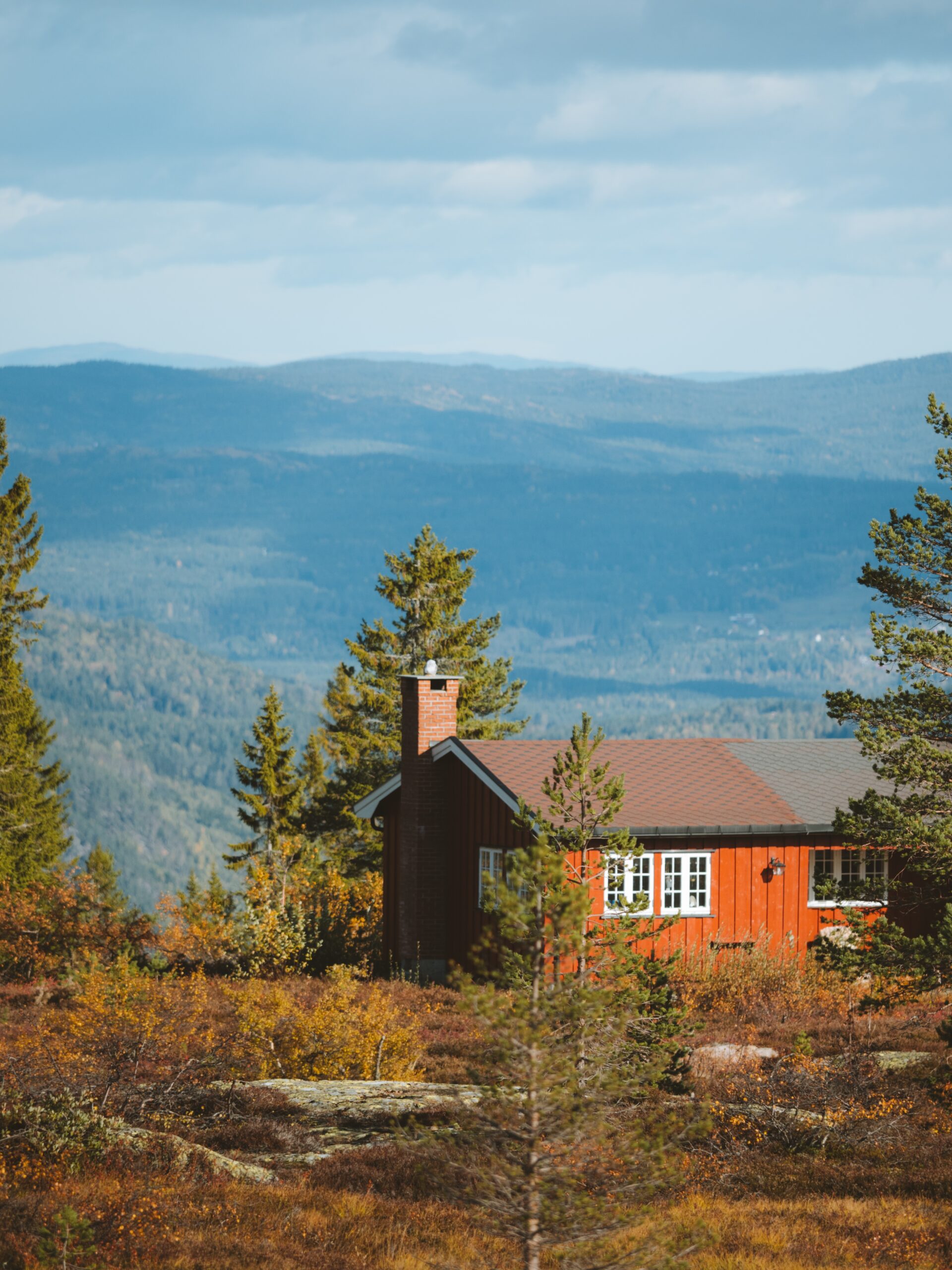
At 7:40 on the morning of December 27th, I heard an engine grinding up the gravel.
I was standing on the porch of my grandmother’s cabin with a cup of coffee in my hand and my winter coat buttoned to the chin. The sun was just coming over the ridge, turning the frost on the hemlocks pink and gold.
A twenty-foot moving truck came up Ridge Road in first gear, my brother Gil at the wheel. Behind it came his wife Rey’s gray Honda, with two small faces pressed against the back window, a mattress strapped to the roof, and a pink tricycle bungeed to the trunk.
At the bottom of my driveway, parked broadside across the entrance with its lights off, sat a Harlan County sheriff’s cruiser.
The deputy climbed out. He was tall and broad-shouldered, about thirty, with a name tag that read OKAFOR. He’d arrived an hour earlier, knocked politely, and asked to see my deed. I showed him the certified copy from the county clerk’s office. He photographed it with his phone.
“Ma’am,” he’d said, “I’ll stay until they turn around. I’d like this to be quiet.”
“So would I.”
Now I watched from the porch as he walked up to Gil’s window.
I couldn’t hear the first part. I saw Gil roll the window down. I saw his face do a quick, confused flinch. I saw the deputy raise one hand, polite and steady, and say the words I later learned by heart.
“Sir, this is private property. The owner has told us she has not given anyone permission to move in. Do you have her authorization?”
“My father said it was fine,” Gil said. “It’s a family cabin.”
“The owner told us directly that she hasn’t authorized entry.”
A long pause.
In the back seat of the Honda, my four-year-old niece June waved at me through the glass.
I waved back.
I’d love to tell you that didn’t hurt. It was the worst moment of the whole thing, and it had nothing to do with Gil.
By eight o’clock, my phone was buzzing itself across the kitchen table.
Dad. Dad. Mom. Gil. Rey. Dad.
I let it go. I’d turned the ringer off and left the screen face up, and I watched the names stack up like cordwood. Twenty-seven missed calls by nine. Forty-one by ten. By noon, my father alone had called sixty-three times.
The first voicemail came at 7:52. I listened to it standing at the window.
“Why is there a deputy standing next to their moving truck? What did you do? Call me back right now, Lane.”
At 8:15: “This is your brother’s family. Two little kids. They gave up their apartment for this. Do you understand what you’ve done?”
At 9:30, it was my mother, her voice low and shaking.
“This is not who I raised you to be. Your grandmother would be ashamed of you.”
That one almost got me. It slid in under the ribs, to the place where a thirty-six-year-old woman is still a little girl at a kitchen table waiting to be told she’s good.
I set the phone down and took the guest book off the shelf.

Adrian Hawthorne is a celebrated author and dedicated archivist who finds inspiration in the hidden stories of the past. Educated at Oxford, he now works at the National Archives, where preserving history fuels his evocative writing. Balancing archival precision with creative storytelling, Adrian founded the Hawthorne Institute of Literary Arts to mentor emerging writers and honor the timeless art of narrative.