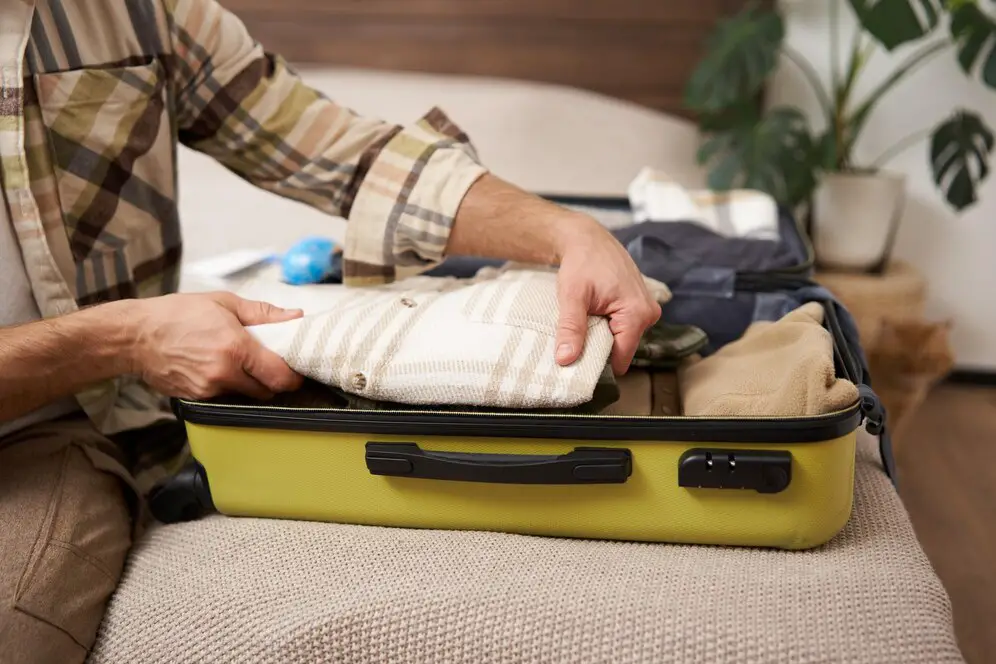
The movers arrived at ten: three men in navy shirts with a twenty-six-foot truck. The foreman was a heavyset man with a gray mustache named Dominic. He took off his cap on the porch.
“Ms. Hale? You’ve got a list?”
I handed him the folder. He flipped through it slowly, page after page. I watched his face, braced for a flicker of judgment. Instead, he closed it and handed it back.
“You just point,” he said.
So I did.
The television from my room went first. Then my sofa, a gray three-seater from my old apartment with a coffee stain I’d never gotten out. My armchair. My coffee table. The little refrigerator with a freezer the size of a shoebox. The microwave. The espresso machine, which cost $340 and which I’d once had to explain to my mother wasn’t “just a coffee pot.” My stackable washer and dryer from the basement, bought in 2022 because Mom kept shrinking my sweaters.
Room by room, the house changed shape.
I left the kitchen refrigerator. I left the family washer and dryer. I left the living room sofa and the big TV in the den, even though I’d paid for them. I couldn’t prove they were mine, and I’d decided with Gordon that I would only take what I could prove.
I went upstairs and stood in the doorway of Lily’s room, with its pink walls and its heaps of clothes. I’d paid for a lot of what was in there: a laptop, a ring light, a spring wardrobe. But they’d been gifts. I don’t take back gifts.
Around two, Dominic found me on the landing.
“Ma’am,” he said gently. “Is there somewhere you’re going?”
“Yes.”
“Somewhere you’re safe?”
I looked at him, a man in his fifties with grease on his hands and a gold crucifix at his throat.
“It’s the safest I’ve ever been,” I said.
He nodded. “Good.”
By four o’clock, the house looked almost unfamiliar. It still had a staircase and curtains and family photos on the mantel, but it had lost the feeling of a place where somebody lived.
I walked through it one last time. I stood in the dining room where I’d roasted so many chickens. In the kitchen, I watered the little ceramic pot of rosemary on the windowsill. Then I felt foolish and watered it again.
I laid an envelope on the kitchen counter. Under it, I left a second copy of my folder, all forty-one pages of the ledger plus the credit report, with a yellow sticky note on the Capital One account that said: Who opened this?
I’d written the letter at one in the morning on a Sunday. I’d torn up eleven drafts. In the end, it was short.
Mom, Dad, Lily,
I’ve moved out. I took only the belongings I’m legally entitled to keep, and I have records for every item. Everything that belonged to the household is still here.
I’m not angry. I’m tired. For ten years, I’ve paid for the things you needed, and I did it because I love you. I’d like to keep loving you. I can’t do it from inside the budget.
I’m done being your second option, your backup plan, and your bank account.
The phone lines will move to Dad’s name in thirty days. The phone company is sending the paperwork.
Lily, there are sixteen payments left on your car. They’re yours now.
Please don’t contact me about money. If you’d like to talk about anything else, I’ll be glad to hear from you when I’m ready.
Victoria
I laid my house key on top. It made a small, clear sound on the envelope.
I walked out the front door and left it unlocked. I wanted them to be able to get in.
Then I got in my car and drove away from the house I grew up in, past the neighbor’s basketball hoop and the little free library on the corner, without once looking in the rearview mirror.

Laura Bennett writes about complicated family dynamics, difficult conversations, and the quiet moments that change everything. Her stories focus on real-life tensions — inheritance disputes, strained marriages, loyalty tests — and the strength people find when they finally speak up. She believes the smallest decisions often carry the biggest consequences.