The call came on a Tuesday afternoon, while I was halfway through reconciling a vendor invoice at the office, and I knew from the first breath on the line that something was terribly wrong.
My daughter was crying, but it was not the loud, theatrical crying she used as a teenager when she lost a hair appointment. It was thin and broken, the sound of someone trying to speak through a closed throat.
“Mom, I need you.”
I stood up so fast my chair rolled into the filing cabinet behind me. “Sophie, where are you? What happened?”
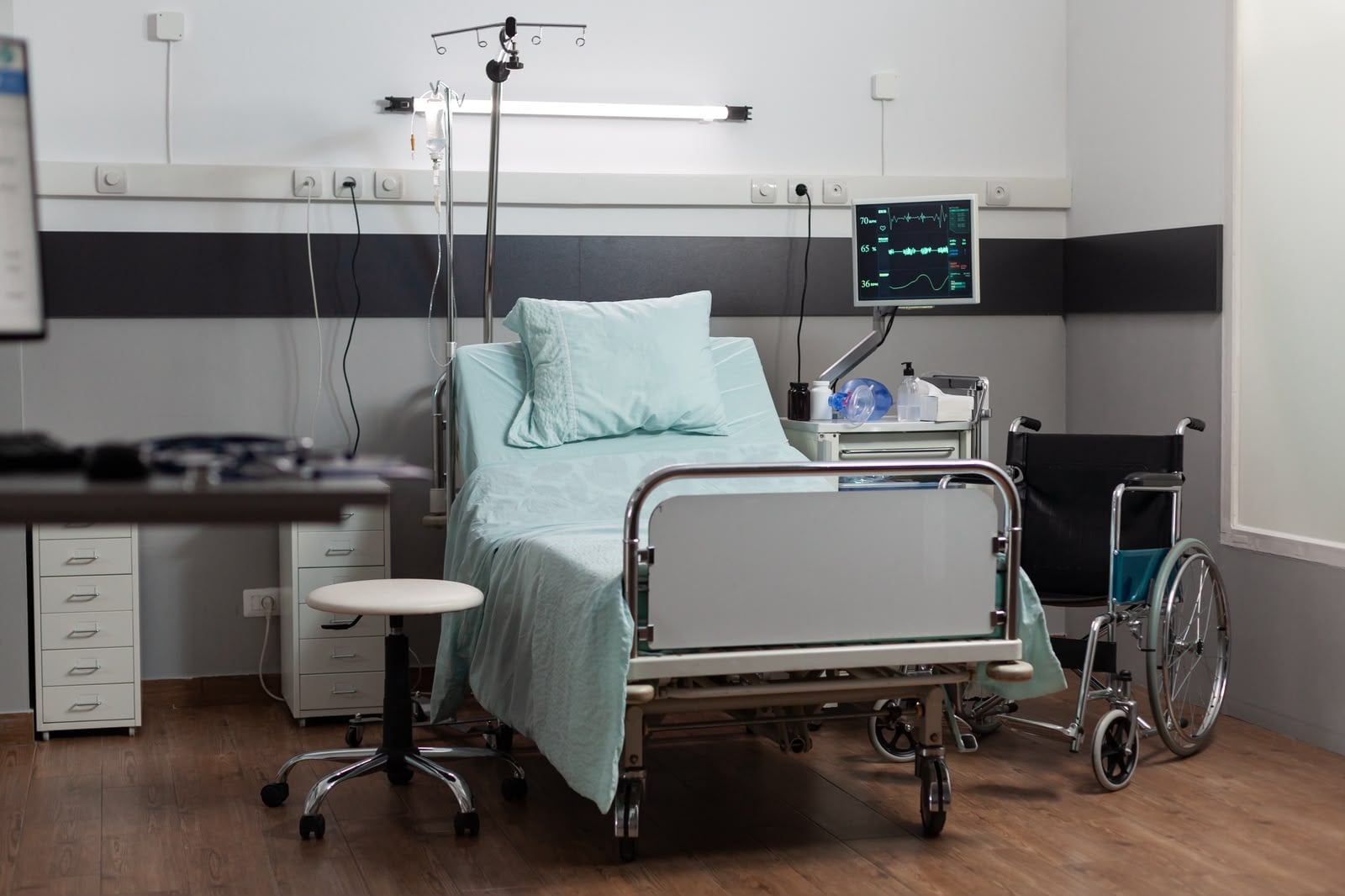
“I’m at the hospital.”
“Were you in an accident?”
“No. It’s my heart.”
I want to explain what that word did to me, because everything that followed grew out of it. My husband Daniel died of a heart attack when he was forty eight years old. He went out to get the mail on an ordinary October morning, and I found him on the front walk with the envelopes scattered around him like leaves. Sophie was thirteen. She was the one who called the ambulance, because I could not make my hands work. In the eight years since, I had learned to live with most things, but I had never learned to hear that particular word without my own heart dropping into my stomach.
“What do you mean, your heart?” I said.
“They found something wrong. They say I need surgery, Mom. They said it could get worse if I wait.”
My daughter had played volleyball for four years in high school. She ran in the mornings and had never once complained of chest pain or dizziness. But I did not think about any of that in the moment. I thought of Daniel on the front walk, and I pressed my palm flat against my sternum as though I could hold something in place.
“Which hospital?”
She named a private medical center near her university, one I had seen advertised on billboards along the interstate. Then she lowered her voice. “Mom, the insurance won’t cover it. They’re saying it’s not an approved procedure or something. They need payment up front.”
“How much?”
A long, wet breath. “Twenty four thousand dollars.”
I sat back down. The number did not frighten me the way it should have. It was almost exactly what I had in my emergency savings, the account I had built a few hundred dollars at a time over seven years, the money meant for a collapsed roof or a layoff or the day I could no longer work. I had never spent a dollar of it. I had always told myself that it was for the real disaster, and I remember thinking, with a strange and terrible calm, that the disaster had finally come.
“Don’t worry about the money,” I told her. “I will take care of it.”
“Thank you, Mom.” She started to sob again. “I knew you would.”
I called my supervisor and told her I had a family emergency. She did not ask a single question. Then I drove to my bank, where I sat across from a young loan officer named Marcy and moved the entire balance into a new account. I had not planned to do it that way. My sister Vanessa had suggested it the night before, when she called to say she was worried about Sophie. She had been so gentle, so careful. Sophie has been having some health scares, she told me, and she did not want me to be frightened, but if Sophie ever asked for help, I should not hesitate. She said it would be easier for the hospital if the funds were in an account Sophie could access directly, so that nothing got delayed. A joint account, with Sophie’s name beside mine. I signed the forms in a daze, thinking only of how kind my sister was being.
Vanessa is four years younger than I am. After Daniel died, she was the one who drove over every Sunday with a casserole and sat with me at the kitchen table while I stared at the wall. She helped me sort through his papers and fill out the survivor forms and the insurance claims, because I could not read the words without crying. I trusted her completely. I would have said, without a flicker of doubt, that she was the person in the world I trusted most after my daughter.
I packed a small bag and started the drive.
It was four hours of gripped steering wheel and clenched jaw. I barely remember the highway. I know the sky was the flat white of a coming rain and that I passed a field of wet black cattle and a billboard for a personal injury lawyer, but mostly I remember my phone, lying faceup on the passenger seat, lighting up every time a message came in. Sophie sent them in little bursts.
They are getting me ready.
The doctor says everything should be fine.
Please hurry, Mom.
I called her twice. The first time she answered in a whisper and said she could not talk, the nurses were prepping her. The second time it went to voicemail. I told myself that was normal. I told myself a great many things on that road.
It was nearly evening when I reached the medical center. It was a glossy building of glass and pale stone, with a lobby fountain and a woman at the desk wearing a silk scarf. I gave my daughter’s name and heard my own voice crack as I said it. The woman typed for a moment and told me Sophie was already in recovery on the fourth floor.
Recovery. I almost wept with relief right there at the desk. The surgery was over, she was alive, and I had arrived in time to hold her hand when she woke.
I took the elevator up and walked down a quiet corridor with soft carpet and soft lighting, the kind of hospital that does not smell like a hospital. I found her room and pushed open the door.
My handbag slid off my shoulder and hit the floor.
My daughter was propped up on a bed of white pillows, and her face was swallowed in bandages. Thick gauze was wrapped across her nose. A strip of tape ran along her cheekbones. The skin around her eyes was swollen to a glossy purple, and a stretch of elastic fabric held her jaw and chin in a tight band. I could see almost nothing of the face I had memorized since the day she was born, only her eyes, glinting between the swelling like two dark coins in water.
“Sophie?”
She turned her head slowly. “Mom?”
I crossed the room and put my hand on the rail of the bed, afraid to touch her. “Oh, sweetheart. What happened to your face?”
She looked away toward the window. “Please do not panic.”
“Do not panic? Your whole face is bandaged.”
“There was a complication.”
My pulse began to pound in my ears. “What kind of complication?”
“Something with the anesthesia. They had to do some treatment on my face. It is a long story, Mom, I do not understand all of it.”
“But they operated on your heart.”
She closed her eyes. “Yes.”
“And they fixed it?”
“Yes, Mom.”
“Are you sure?”
“Yes!” She snapped it so sharply that I took a step back. I had expected fear from her, exhaustion, maybe a rush of gratitude that I had come. Instead my daughter looked at me with open irritation, the way she used to look at me at fifteen when I asked where she was going.
I pulled the visitor’s chair to the side of the bed and sat down. My knees were not steady. “I would like to talk to your surgeon.”
“He is busy.”
“I only want to understand what happened.”
“Mom, I am exhausted.”
I watched her for a long moment, searching what I could see of her face. Then she said, in a smaller and more careful voice, “Did you bring the money?”
It took me a second to understand the question. “The money.”
“The twenty four thousand dollars.”
“Yes. It is in the account.”
Her shoulders loosened, visibly, and I noticed it with a cold little pinch of attention. “Good. They need payment before I can be discharged.”
I took her hand. It was warm and dry and a little too steady. I told myself she was overwhelmed, medicated, frightened. I told myself that people say strange things after anesthesia. I squeezed her fingers and said, “Rest. I will take care of everything,” and I went downstairs to the billing office, holding on to that sentence like a handrail.
The billing counter was a curved desk of blond wood, and behind it sat a pleasant young man who typed my daughter’s name and nodded. I told him I wanted an itemized statement before I authorized any payment. It was a habit of mine from years of balancing other people’s accounts, and I remember the faint flicker in his expression, as if he had been told someone might ask. He printed several pages. I glanced at the total at the bottom of the last sheet.
Twenty three thousand, eight hundred and sixty dollars.
It was so close to what Sophie had told me that the closeness itself felt like a coincidence I should be grateful for. I had not yet looked at the lines above the total when a voice spoke behind me.
“Mrs. Lawson?”
I turned. A tall man in his fifties, with gray at his temples and a surgical cap tucked into the pocket of his coat, held out a hand. “I am Dr. Bennett. I performed your daughter’s procedure.”
All the air left my body in a rush. I took his hand in both of mine. “Doctor, thank you. Thank you so much. I have been out of my mind. I drove four hours, I was so afraid that something would happen to her heart.”
He smiled politely. It was a practiced, professional smile, and it held for a moment before something behind it shifted. “Your daughter is recovering very well. I am glad your family was able to support her decision.”
“Her decision?”
“At her age, a procedure of this kind requires a great deal of thought.”
I laughed, a little breathlessly. “Well, when your life is in danger, there is not much to decide.”
The smile left his face. “Her life in danger?”
A chill moved down the back of my neck, slow as a drop of water. “Doctor, are we talking about Sophie? Sophie Lawson?”
“Yes.”
“Then you understand why I was terrified. She told me her heart was failing. She said she needed emergency surgery.”
He lowered the folder he was holding, slowly, until it rested against his thigh. “Her heart,” he repeated.
“Yes.”
“Mrs. Lawson, I think there has been a serious misunderstanding.”
My mouth had gone dry. “What kind of misunderstanding?”
He glanced past me at the young man behind the counter, who suddenly became very interested in his screen. “Perhaps we should speak privately.”
He led me into a small consultation room with two armchairs and a box of tissues on a low table, a room I suspect was designed for exactly this kind of conversation. He closed the door and did not sit. He explained, carefully, that because my daughter was an adult he was limited in what he could discuss without her consent. But there was one thing he felt he could not let me leave without knowing.
“No cardiac procedure was performed here today. Your daughter has not had any operation on her heart.”
I stared at him. The words reached me but would not connect to anything. “I do not understand.”
“Sophie came to us for an elective facial surgery. It was scheduled three weeks ago. She completed her consultations and her pre operative testing, and she was fully informed about the procedure and the recovery.” He paused. “Her heart, as far as our testing showed, is perfectly healthy.”
Elective. I looked down at the pages in my hand as though they might rearrange themselves. At the top of the first sheet, beneath the hospital’s name, was a line I had missed in my hurry. Department of Aesthetic and Reconstructive Surgery. Beneath it, line after line of charges. Rhinoplasty. Facial contouring. General anesthesia. Surgical facility fee. Post operative care and recovery suite, three nights.
My hands began to shake so badly that the paper rattled.
“She told me she could die,” I said.
“I am so sorry you were given that impression.”
I sat down in one of the armchairs without deciding to. The room seemed to tilt gently, the way a boat tilts when someone steps aboard. Twenty four thousand dollars. Seven years of small deposits. The Christmas I had skipped buying a coat. The two jobs I had worked after Daniel died. And four hours on a gray highway picturing my daughter on an operating table while I begged a God I had stopped speaking to for years to let her live.
Tears rose in my eyes and I let them. Dr. Bennett did not say anything. After a moment he took a tissue from the box and set it on the table beside me, and that small act of ordinary decency undid me more than any comment could have.
When I could see again, my eyes fell on the admission sheet at the back of the stack. In the lower corner, beside Sophie’s name and date of birth, was a box labeled Emergency contact / financial coordinator. Someone had written a name in blue ink and a phone number I knew by heart, because I had dialed it a thousand times.
Vanessa Reed.
My sister.
I read it twice. Then I looked up at the doctor. “This woman. Was she involved in scheduling this surgery?”
He hesitated, and I saw him weigh his obligations. “I can only share what your daughter has authorized. But I will tell you that the person listed there called our office several times in the past two weeks.” He chose his words with great care. “I would suggest you speak with your daughter.”
I thanked him. I do not remember how I stood or how I walked back to the elevator. I only remember that the carpet in the hallway seemed to stretch much farther than it had on the way in.
Vanessa had called me the previous evening. I replayed the call as the elevator climbed. Her voice had been warm and concerned, the voice that had brought me soup in the worst winter of my life. Sophie has been having some health scares, Maggie. She did not want to worry you. If she needs help, do not hesitate. Do not hold back. And then the account, the joint account, so Sophie could pay the hospital directly. It had all felt like love. It had all felt like family closing around me.
Sophie was sitting upright against the pillows when I came in, looking at her phone. She lowered it and tried to smile through the bandages, and the effect was ghastly.
“Did you pay?” she asked.
I closed the door behind me and stood against it. “No.”
The smile disappeared. “What do you mean, no?”
“I spoke to Dr. Bennett.”
She went still. Even through the swelling I saw the color leave what skin was visible. I held up the invoice and turned it so she could see the header.
“Would you like to tell me why this says aesthetic surgery?”
She did not answer. The monitor beside her bed ticked steadily, and a cart rattled somewhere far down the hall. When she finally spoke, it was to the window.
“Mom. Please.”
“Please what?”
“Do not make a scene.”
Something rose in me then that I had not felt in years, hot and clean and almost welcome after the long numbness. “You told me your heart was failing, Sophie. You told me you were going to die.”
She began to cry. Not loudly. The tears just slid out from under the bandages and ran down her neck. “I knew you would not help me otherwise.”
“You thought the way to ask for help was to tell me you might die.”
“You do not understand how much pressure I am under.”
“What pressure? What could possibly justify this?”
She shook her head, and I watched her decide not to answer. I took a breath and made my voice quieter, because I had suddenly realized that shouting would lead nowhere. “Does your aunt Vanessa know about this?”
The change in her face was so swift and so complete that I almost did not need her to speak. Her eyes flicked to the door. Her fingers tightened on the phone. It was the look of a child who has heard the car in the driveway.
“Did she help you plan it?”
“Mom, do not call her.”
“Why not?”
“Because she will be furious.”
“Furious about what, Sophie?”
She was sobbing in earnest now, great gasping breaths that must have hurt her face. “Because the surgery was not the only reason we needed the money.”
The room seemed to go very quiet. “What does that mean?”
She reached for her phone with a trembling hand. It took her three tries to open the screen. “Aunt Vanessa said everything would be fine as long as I followed the plan. She said you would never even notice.”
“What plan?”
She did not answer. She simply opened a conversation and turned the phone toward me. I took it from her, because she was shaking too hard to hold it steady, and I began to read.
It was a thread between my daughter and my sister that went back almost a month. I scrolled to the top and read down, slowly, the way you read a letter from a doctor. The early messages were warm. Vanessa told Sophie she was beautiful. She said she had always seen something special in her. She said it was a shame Sophie had been so insecure about her face since that awful thing on social media, and that she deserved to feel like herself. She said her mother would never understand, because Margaret was from another generation, practical to a fault, and that sometimes a woman had to take her own happiness into her own hands. She offered to help. She said she knew a wonderful surgeon. She said she could arrange the financing.
Sophie wrote back with a flood of hearts. You are the only one who gets me.
Then the tone of the conversation changed, so gradually that I almost missed the turn. The financing, Vanessa explained, was not quite settled, but she could handle it, she only needed Sophie to do one small thing in return. Her mother had savings. If Sophie could convince her that the situation was urgent, if she could make her believe it was a medical emergency, there would be no need for a loan at all. She will move faster if she is scared, Vanessa wrote. People do not ask questions when they are scared.
I stopped reading and put a hand over my mouth.
Further down, the night before Sophie called me, there was a message that I read three times.
Make sure your mother believes it is urgent. We cannot afford another delay.
I scrolled on. Sophie had asked what delay she meant. Vanessa had written something about a payment deadline and a man named Curtis who was getting impatient. Sophie had asked who Curtis was, and Vanessa had told her not to worry, it was grown up business. There were messages about the joint account and the exact amount to request. There was a message that read Tell her not to ask for an itemized receipt. Hospitals make it confusing and she will just worry. And at the very bottom, timestamped only forty minutes earlier, while I was sitting at the billing counter, a message from Vanessa that made my stomach turn to ice.
Has your mother paid yet? Tell her it must go through tonight. Wire instructions are in your email. Once it is in, we are almost done with the house.
I looked up at my daughter. “The house?”
She covered her face with both hands, pressing the bandages, and made a low animal sound.
“Sophie. What is this about my house?”
“I did not know it was going to go this far,” she said, through her fingers. “I swear I did not. She told me it was just the money for the surgery. She said the house was something else, something she was handling for you.”
“Handling for me.”
“She said you had agreed to it. She said it was just paperwork.”
I had lived in that house for twenty two years. Daniel and I had bought it the year Sophie was born, a modest brick colonial with a crooked porch and a maple in the yard that he had planted himself. I had paid off the last of the mortgage four years earlier, after Daniel’s life insurance and a great many overtime shifts. I remember tearing up the final statement at the kitchen table, not out of triumph but out of a quiet, fierce satisfaction. The house was ours. It was the one thing in my life that no one could take away.
I stood very still for a moment. Then I did what I have always done when the ground gives way. I made a list.
I told Sophie to stay where she was and not to touch her phone. I took the phone with me, which she did not resist, and I stepped into the corridor and called my bank. It was past closing, but the branch had an after hours line for fraud, and I was transferred to a woman named Denise who listened to my story with the patience of someone who had heard worse. I told her I needed to freeze the joint account opened that morning. I told her that the other signer was my daughter, that I believed she was under undue influence, and that I suspected an attempt to wire funds out of the account that evening.
There was a pause and the sound of keys. “Mrs. Lawson,” Denise said, “I am seeing a pending outgoing wire request on that account, submitted at 5:41 this evening. It is flagged for review. Twenty three thousand, eight hundred and sixty dollars, to a business account.”
“Hold it. Please. Do not release it.”
“I have already placed a hold, ma’am. Because of the size and the age of the account, it would not have processed until morning. I will freeze everything now and open a fraud case.” She lowered her voice. “I am glad you called.”
I leaned my forehead against the cool wall of the hallway and closed my eyes. The money was safe. I had stopped it with a single phone call, and the relief was so sharp it made me dizzy.
I called Gloria Patel next. Gloria had handled Daniel’s estate eight years earlier, a small, sharp woman in her sixties who wore reading glasses on a beaded chain and had never once talked down to me. I reached her at home. She listened to the whole story without interrupting, and when I finished she was silent for a moment.
“Margaret,” she said, “I need you to do something for me tonight. Can you get online and look up your property record on the county recorder’s website? Tell me exactly what you see.”
I sat down in a plastic chair in the corridor, balanced my laptop on my knees, and searched my own address. The page loaded slowly. I read down the list of recorded documents, past the original deed, past the satisfaction of mortgage with its familiar stamp. And at the bottom, filed nineteen days earlier, was an entry I had never seen.
Deed of Trust. Grantor: Margaret A. Lawson. Beneficiary: Vance Capital Holdings LLC. Principal amount: $90,000.
My name. My signature. A notary seal I did not recognize.
I read the words to Gloria in a voice that did not sound like mine. There was a short silence on the line, and then she said, very gently, “Margaret, did you sign anything like this?”
“No. I have never heard of this company. I have never borrowed a dollar against that house.”
“Then somebody forged your signature.” Her voice was steady and controlled, and I realized she was speaking slowly for my sake. “A recorded lien like that is not valid if the signature is fraudulent. We can contest it, and we will. But I want you to hear me. The money you stopped tonight was almost certainly meant to make a payment on that loan. If the borrower defaults, the lender can begin foreclosure, even on a fraudulent deed, until the court sorts it out. Someone was trying to buy time.”
Vanessa. I knew it as clearly as I knew my own name. Vanessa had sat at my kitchen table after Daniel died and gathered my papers. She had my driver’s license number, my Social Security number, my signature on dozens of forms. She had held my hand and told me she would take care of everything, and I had let her.
“I am going to call a detective I trust,” Gloria said. “His name is Alan Brooks. He handles financial crimes for the county, and he does not make a fuss. Stay at the hospital tonight. Do not confront your sister. Do not let your daughter contact her. Can you do that?”
I looked through the narrow glass window of Sophie’s door. She was curled on her side with her bandaged face turned to the wall, a small figure in a hospital gown. “Yes.”
“Good. We will fix this, Margaret. I promise.”
I went back into the room. Sophie did not look up. I sat in the visitor’s chair and said nothing for a long time, and the silence between us grew thick and strange. When she finally spoke, her voice was barely audible.
“Are you going to leave?”
“No.”
“I would not blame you.”
“I am not going anywhere, Sophie.” I heard how flat and tired my voice sounded. “But you are going to tell me everything. Not tonight, if you cannot. But soon. And you are going to tell the truth, all of it, even the parts that make you ashamed.”
She nodded against the pillow. Then she told me anyway, haltingly, in pieces, through a night that felt endless.
It had started in the spring, she said, with a comment. A girl in her dormitory had posted a photograph of her at a party, and a stranger had left a cruel remark about her nose. It was nothing, a flicker of casual meanness, but it had lodged in her like a splinter. She had said nothing to me about it, because she knew I would tell her she was lovely and that the comment did not matter, and she could not bear to hear it. Instead she had told Vanessa, over the phone, one lonely evening in April.
Vanessa had listened. That was the thing Sophie kept returning to. Her aunt had listened, and agreed, and said she understood, and said that sometimes the world was unfair and a woman had to change what she could. She had started sending small gifts. She had called every week. She had told Sophie that her mother was a wonderful woman but a little rigid, a little afraid of life, and that she did not understand what it was to be young in a world that judged faces. Over the summer, my sister had slowly, patiently, made herself the only person Sophie trusted.
“She made me feel like she was on my side,” Sophie said. “Like you were not.”
It was the sentence that hurt most, and I sat with it without flinching. I thought about all the hours I had worked, all the weekends I had missed, all the times I had said practical, sensible things when what my daughter needed was someone to simply listen. I did not tell Sophie she was wrong. I only said, “I am so sorry I did not hear you.”
She cried harder then.
The rest came out in fragments. Vanessa had told her the surgery would cost twenty four thousand dollars and that she would arrange the money. A few weeks ago she had called, brisk and unsmiling, and said the arrangements had fallen through, but that there was another way. Her mother had savings. If Sophie could make her believe it was a medical emergency, no one would need to know the truth. It would be just between the two of them. And Vanessa would make sure the money was repaid, with interest, as soon as her business turned around.
Sophie had said no at first. She told me that, and I believed her, because her voice cracked when she said it. She had said no twice. But Vanessa had been patient, and then she had been disappointed, and then, finally, she had been cold. She said she had risked everything to help Sophie, that she had put her own name on the hospital forms, that she had pulled strings with the doctor. Now Sophie was going to leave her stranded. It was a quiet kind of cruelty, the kind that never raised its voice, and Sophie, who had wanted so badly to be seen, had caved.
“I thought it would be one lie,” she whispered. “One lie, and then it would be over, and I could pay you back, and you would never find out.”
“It was never going to be one lie,” I said gently. “That is not how it works.”
Toward dawn, she slept. I did not. I sat in the chair with a hospital blanket around my shoulders and watched the gray light grow at the edges of the curtains, and I thought about my sister. I tried to find the person I had known in the woman who had written those messages, and I could not. Vanessa had been sitting in my life for decades. I tried to remember when she had first started asking for small loans, a few hundred here, a few thousand there, for her boutique, which had never quite broken even. I tried to remember when the warmth had curdled into calculation, and I realized that perhaps it never had. Perhaps I had simply never looked at the thing underneath.
Detective Alan Brooks arrived at eight in the morning. He was a broad, quiet man in a rumpled gray jacket who shook my hand and sat in the corner of the room with a small notebook. He spent an hour with Sophie, with her permission, and he was gentle with her in a way that made me trust him at once. He read the messages and copied them, with her consent. He asked about the account, the wire, the forms. And when he finished, he looked at me and said, in a low voice, “Mrs. Lawson, I believe your sister has done this before.”
Vance Capital Holdings, he told me, was not a real company in any meaningful sense. It was a private lender run by a man named Curtis Vance, who lent money at brutal rates to people with failing businesses and collected on the property they put up as collateral. Vanessa had borrowed from him the year before, when her boutique was sinking. She had offered her own condo as security and defaulted within months. The ninety thousand dollar loan on my house had been her attempt to refinance the debt, using a forged deed to make it appear that she was borrowing against property she did not own. The first payment on it was due that Friday. If it was missed, Vance had already warned her, he would call the whole balance.
“She needed cash by Friday,” Brooks said. “She came up with a way to get it from you, and a way to pay for your daughter’s surgery at the same time so that Sophie would keep quiet. It was efficient, I will give her that.”
I laughed. It was an ugly sound. “She used my daughter.”
“Yes,” he said. “She did.”
He asked whether I would be willing to help him. It was almost nine by then, and Vanessa had been sending Sophie messages every ten minutes since dawn, asking whether the wire had gone through. If I wished, Sophie could reply as though nothing had changed. She could say the payment was ready, but that I wanted to speak to Vanessa in person first, to thank her. Vanessa, he suspected, would not be able to resist.
I looked at my daughter. She was sitting up in bed, her swollen eyes fixed on me, waiting. It occurred to me that this was the moment she would remember, years from now, when she thought about what kind of mother I had been. I did not want her to see me turn away.
“What do you need me to do?” I said.
Vanessa arrived at the hospital at half past eleven. I watched her from the doorway of an empty room across the hall, with Detective Brooks beside me and a second officer in plain clothes near the elevator. She came down the corridor with her usual confident stride, in a camel coat and low heels, her hair freshly blown out, a leather folder tucked under her arm. She looked like a woman arriving at a lunch meeting. When she reached Sophie’s door, she paused, smoothed her coat, arranged her features into an expression of tender concern, and went in.
I counted to ten and followed her.
“Maggie!” She turned with her arms already opening, her eyes bright and warm. “Oh, my darling, I came as soon as I could. I have been so worried. How is she? How are you holding up?”
I did not step into the embrace. I stood in the doorway with my hands at my sides and looked at my sister, at the familiar curve of her cheek and the little scar on her chin from a bicycle accident when she was nine, and I felt something quiet and final settle in my chest.
“Hello, Vanessa.”
Her arms lowered slowly. Something in my voice must have reached her, because the warmth in her face flickered. “Maggie? Is something wrong?”
“I saw the invoice,” I said. “I spoke to Dr. Bennett.”
For a moment nothing happened. Then her gaze slid to Sophie, who sat rigid against the pillows with her hands knotted in the blanket, and back to me. I watched her calculate. It took less than two seconds, and in that time I saw her consider denial, and anger, and tears, and discard each in turn.
“Maggie, whatever Sophie has told you, she was confused,” she said, in a soothing voice. “She is on a lot of medication. She has been under tremendous stress.”
“I read the messages, Vanessa.”
“What messages?”
“The ones where you told her to make sure I believed it was urgent. The ones where you told her to keep me from asking for an itemized receipt.” I kept my voice level. “The ones about the house.”
The leather folder slipped a little against her hip. I saw her fingers tighten on it. “I do not know what you are talking about.”
“There is a deed of trust recorded against my home,” I said. “It has my signature on it. I did not sign it.”
Her face went white. It was not a gradual change. It was as if someone had drawn a curtain down behind her skin. She opened her mouth, and the practiced softness was gone from her voice when she spoke, replaced by something thinner and sharper.
“You do not understand what you are meddling with.”
“Then explain it to me.”
“I was going to fix it.” She took a step toward me. “Maggie, listen. It was temporary. I was going to repay all of it, every penny, as soon as the business turned around. Nobody was going to be hurt. You would never have known. That house is paid off, you are not using the equity, it was just sitting there. I only needed a bridge.”
“You forged my name.”
“I borrowed it.”
I almost laughed. Borrowed. It was the word my own mind had been reaching for all night, to soften the thing I could not look at directly. But I had stopped using it.
“You told my daughter I might lose her,” I said. “You let me drive four hours believing she was dying. You knew about Daniel.”
Her eyes dropped, and for a flicker of a second I saw something like shame. It did not last.
“I did what I had to,” she said. “You always had everything, Maggie. You had a husband, and a house, and a daughter who adored you. I had nothing. I had a failing shop and a man who threatened to take my home. Do you know what it is like to watch someone else’s life go right while yours falls apart? I only wanted a little of what you had.”
“It was not yours to take.”
“You would have given it to me if I had asked.”
It was the truest thing she had said, and it landed like a blow. I would have. I would have given her a good part of it, if she had come to me in tears and told me the truth. That was what made it unbearable. She had not needed to lie. She had simply not trusted me enough to ask.
“Yes,” I said quietly. “I would have.”
Behind her, the door opened wider. Detective Brooks stepped in, with the second officer close behind him. He held up his badge, and Vanessa turned, and I will carry the look on her face to my grave. It was not guilt. It was pure, naked disbelief, the look of a person who has spent her whole life landing on her feet and has just felt the ground vanish.
“Vanessa Reed,” he said, “I am Detective Brooks with the county financial crimes unit. I would like to ask you some questions about a recorded deed of trust and a wire transfer request. You are not obligated to speak with me, and you have the right to an attorney.”
She turned back to me. “Maggie.”
I said nothing.
“Maggie, please. I am your sister.”
“I know,” I said. “That is why it hurts.”
They took her out through the corridor, not in handcuffs, but with a hand at her elbow and a quiet, firm dignity that I found, absurdly, almost kind. The folder fell from her arm as she went. A sheaf of papers slid across the floor, and I bent and picked one up. It was a fresh deed of trust, a second document, for a larger amount, with my name typed at the bottom and a blank line waiting for my signature. She had come that morning to get it signed.
I stood in the hallway with the paper in my hand and listened to her heels fade down the corridor, and I understood at last how close the edge had been.
The weeks that followed were long and gray and full of paperwork. Gloria Patel moved quickly. Within ten days a judge had declared the recorded deed void on its face, citing the forgery and the false notarization, and the lien was removed from my property. The notary turned out to be a friend of Vanessa’s who had been quietly stamping documents for years and who agreed to cooperate in exchange for leniency. Curtis Vance, when the investigators reached him, folded almost immediately and turned over every record he had, eager to be seen as a victim rather than an accomplice. The wire that Denise had frozen was returned to me in full. The state filed charges against my sister for forgery, attempted fraud, and theft by deception.
Vanessa pleaded guilty in January. I did not attend the hearing. Gloria told me she stood before the judge with her hands clasped and said very little, and that when she was asked whether she wished to address the court, she shook her head. She received a sentence of three years, with a portion suspended and the remainder to be served in a state facility, along with an order of restitution that she will be paying off for the rest of her working life. I have not spoken to her since the day in the hospital. I do not know whether I will. I think about her more than I expected to, at odd moments, washing dishes or watering the maple in the yard. I think about the little girl who used to sit on the edge of my bed and ask me to braid her hair. I do not forgive her yet. But I no longer hate her, either. It is a strange, quiet place to stand, somewhere between the two.
Sophie came home with me the day after the hospital discharged her. We drove the four hours in near silence, her bandages still in place, her face turned toward the passenger window. I stopped once for gas and once for coffee. At the second stop she finally spoke.
“Mom, I will pay you back. All of it. Every dollar. I will take a leave from school if I have to.”
“You will not take a leave from school.”
“I want to.”
“I know.” I kept my eyes on the road. “But the money is not what I need from you.”
She was quiet for a mile. “What do you need?”
I thought about it. “I need you to tell me the truth. Even when it is hard. Especially when it is hard. I need you to believe that you can come to me with anything, even something you think will make me angry, and that I will still be there.”
I heard her breathe in. “That is a lot.”
“I know it is.”
“I do not know if I am good at that.”
“Neither am I,” I said. “We will learn.”
The bandages came off two weeks later. I took her to a follow up appointment with Dr. Bennett, who examined her carefully and pronounced the healing excellent, and who, when Sophie left the room to retrieve her coat, quietly told me that he would have refused the procedure if he had known the circumstances. I thanked him. I told him I did not blame him. He seemed relieved, and a little haunted.
When Sophie saw her face in the mirror for the first time, she did not say anything for a long while. She turned her head slowly from one side to the other, studying herself with an expression I could not read. Then she looked at me in the glass.
“I look different,” she said.
“You look like you.”
“I do not know if I feel like me.”
I stepped behind her and rested my hands on her shoulders. “That might take a little time.”
She leaned back against me, and we stood there, two faces in a bathroom mirror, one older and one younger, and I thought of Daniel and how much of him I saw in her. His stubborn chin. His rare, crooked smile. The surgery had changed a few lines, and I would be lying if I said I did not notice. But what I saw, looking at her, was my daughter. Frightened, and sorry, and so much braver than she knew.
She started counseling in the spring, with a gentle woman named Dr. Okafor who specialized in young adults. I did not ask what they talked about, and Sophie did not volunteer it at first. But one evening in April, while we were washing dishes after dinner, she said without looking at me, “I think I wanted someone to tell me I was enough. And when you said I was lovely, I thought you had to say that because you were my mother.”
I set down the plate I was drying. “I did say it because I was your mother. And I said it because it was true.”
“I know that now.” She was scrubbing a pan with unnecessary force. “It took me a while.”
“That is all right.”
“I am sorry, Mom.”
“I know you are.”
She stopped scrubbing. She turned and looked at me with her new, slightly different face and her old, familiar eyes, and I opened my arms, and she walked into them.
We stood at the sink for a long time, the water running over the forgotten pan.
In June, Sophie went back to school. She had decided to change her major to counseling psychology. She told me she wanted to work with young women who felt the way she had, who believed that someone else’s cruelty was a truth about them. She took a job at the campus library, and every month she sent me a check, small and carefully written, with a note that said Paid. I deposited the first one and then stopped depositing them, setting them aside in a drawer instead, because I did not want the money. But I understood that she needed to give it, the way some wounds need to be dressed before they can heal, so I kept every check and said nothing.
I have also kept something else. On the first anniversary of Daniel’s death after all of this, I walked out to the front walk at dawn, in my robe and slippers, and stood where I had found him. The maple he planted had turned the color of rust, and the air smelled of cold leaves and chimney smoke. I thought about how much I had lost and how much I had nearly lost again. I thought about my sister, and my daughter, and the long, lonely road that leads to the people we trust.
The mail truck rattled up the street. The carrier waved. I took the envelopes from my box, bills and catalogs and a postcard from Sophie with a picture of the library tower, and I stood there reading it in the early light. Dear Mom, it said. Heart is fine. Doing better than fine. Come visit soon.
I laughed out loud. It was a real laugh, the first one that had come easily in a very long time, and it startled a sparrow from the maple.
Then I carried the mail up the crooked steps of the house that was mine, in the life I had held on to, and I put the kettle on for the first morning in years that did not feel like a countdown to something I could not stop.

Lila Hart is a dedicated Digital Archivist and Research Specialist with a keen eye for preserving and curating meaningful content. At TheArchivists, she specializes in organizing and managing digital archives, ensuring that valuable stories and historical moments are accessible for generations to come.
Lila earned her degree in History and Archival Studies from the University of Edinburgh, where she cultivated her passion for documenting the past and preserving cultural heritage. Her expertise lies in combining traditional archival techniques with modern digital tools, allowing her to create comprehensive and engaging collections that resonate with audiences worldwide.
At TheArchivists, Lila is known for her meticulous attention to detail and her ability to uncover hidden gems within extensive archives. Her work is praised for its depth, authenticity, and contribution to the preservation of knowledge in the digital age.
Driven by a commitment to preserving stories that matter, Lila is passionate about exploring the intersection of history and technology. Her goal is to ensure that every piece of content she handles reflects the richness of human experiences and remains a source of inspiration for years to come.