Carry Me
Part One: Before
Before the accident, I used to run. Not marathons, nothing impressive, just three miles every morning along the Centennial Trail beside the Spokane River, before Caleb woke up and the day began. I liked the sound of my sneakers on the path and the way the river looked at six in the morning, silver and fast and full of light. I liked the burn in my legs on the last hill. I never once thought about my legs except when they were tired.
My name is Melissa Grant. I’m forty-four years old, and I live in Spokane, Washington, in a small blue house on the South Hill with a crooked front porch and a lilac bush by the mailbox. I work from home as a medical billing specialist, which means I spend eight hours a day arguing with insurance companies on behalf of people who are too sick to argue with them themselves. I’m very good at it. I’ve had a lot of practice.
And I’ve been in a wheelchair for six years.
When my son Caleb was twelve, I was in a car accident that left me paralyzed from the waist down. It was a Thursday in November, wet and dark at five-thirty in the evening, and we were driving home from his basketball practice in my old silver Corolla. We were three blocks from home, at the intersection of Grand and 29th, when a pickup truck came through the red light and hit us on the driver’s side.
I don’t remember the impact. I remember the green light. I remember Caleb in the back seat saying something about practice. And then I remember nothing until the hospital.
I still remember waking up at Sacred Heart Medical Center and hearing the doctors explain it. A spinal cord injury at the T10 vertebra. A complete injury, which meant the connection between my brain and everything below my waist had been severed. I would never be able to walk again.
I remember the neurosurgeon’s face as he said it, kind and tired, a man who’d said those words many times before. I remember staring at the ceiling tiles and counting them, because if I counted them, I didn’t have to understand. And I remember turning my head and seeing Caleb sitting in a plastic chair beside my bed, with a cut on his forehead and a cast on his wrist, holding my hand. He hadn’t let go since they brought me up from surgery, the nurse told me later.
Part Two: “This Isn’t What I Signed Up For”
My husband, Brian, came to the hospital every day for the first week.
He brought flowers. He sat by my bed and talked to the doctors and filled out paperwork. He held my hand when they told me I’d need months of inpatient rehabilitation. He kissed my forehead every night before he left. I remember thinking that whatever else happened, at least we had each other.
Then, on the eighth day, he didn’t come.
He came on the ninth. He stood at the foot of my bed with his hands in his jacket pockets, and he didn’t sit down. He didn’t take off his coat. He looked at me lying there with my useless legs under the hospital blanket, and then he looked at the window.
“Mel,” he said. “I can’t do this.”
I didn’t understand at first. I thought he meant the hospital, the long days, the smell of disinfectant. I started to say something about how it would get easier when I came home.
“No,” he said. “This. All of it. You in a wheelchair. Me taking care of you for the rest of our lives.” He shook his head. “This isn’t what I signed up for. I want a better life.”
He left that night. He moved in with a woman from his office, a coworker named Tara, who it turned out he’d been seeing for six months before the accident. He filed for divorce in January. He agreed to child support, which he paid irregularly for two years and then not at all. He saw Caleb four times in the next six years. Four.
I was left completely alone, lying in a hospital bed, realizing I couldn’t walk, while Caleb sat beside me. Twelve years old, the child I was still fully responsible for, with his wrist in a cast and his small hand wrapped around mine.
God, I was terrified.
Part Three: Learning Again
The first few years were incredibly difficult. I don’t know how else to say it.
I spent three months in inpatient rehabilitation at St. Luke’s, learning to live all over again. Learning to transfer from the bed to the wheelchair without falling. Learning to dress myself sitting down. Learning to manage my bladder and my bowels in ways I’d never imagined having to think about. Learning to roll up a ramp and over a curb and through a doorway without scraping my knuckles raw.
Caleb stayed with my neighbor, Bernice Tully, a retired schoolteacher who’d lived next door for twenty years. She drove him to visit me every single day after school. He’d come into the therapy gym in his backpack and sit on the bench and watch me struggle with the parallel bars, holding myself up with my arms while my legs hung useless beneath me, and he never once looked away.
When I finally came home, the house wasn’t built for me. The front porch had four steps. The bathroom door was too narrow for my chair. The kitchen counters were too high, the cupboards out of reach, the stove burners at the level of my eyes.
So I learned. I learned to cook from a wheelchair, with a mirror mounted over the stove so I could see into the pots. I learned to clean with long-handled tools and a reacher-grabber. Bernice’s son-in-law built a plywood ramp over the porch steps for free. A church group came and widened the bathroom door. And I learned to ask for help, which was the hardest lesson of all.
And I learned to be a mother from a wheelchair.
I helped Caleb with his homework at the kitchen table every night. Pre-algebra, then algebra, then geometry, then chemistry, which I was terrible at, so we learned it together from YouTube videos. I never missed a school performance. I sat in the aisle at the end of the row at every band concert, every science fair, every basketball game where he sat on the bench for most of the season. The gyms at his middle school didn’t have ramps up into the bleachers, so I sat on the floor at the end of the court with my wheelchair parked by the door. I cheered louder than anyone.
I tried to always be there for him as much as I possibly could. I think I was trying to make up for being in a wheelchair. Or for his father leaving. Or for something I couldn’t name.
Part Four: Tight
I found a job I could do remotely, medical billing for a group of clinics in eastern Washington. It paid fifteen dollars an hour when I started. It pays twenty-three now. With what was left of my disability insurance and the child support that stopped coming when Caleb was fourteen, it was enough. Barely.
Money was tight. That’s an understatement. We ate a lot of pasta and a lot of eggs. We didn’t have cable. Caleb’s clothes came from the Goodwill on Division Street, and his shoes came from a church program that gave free sneakers to kids every August. When he needed a calculator for algebra, I sold my wedding ring at a pawn shop on Sprague Avenue for a hundred and forty dollars.
I never told him where the money came from.
I did everything I could to make sure Caleb had everything he needed. I just couldn’t give him everything he wanted.
The thing he wanted most, I found out later, was something I’d lost: my car. My old Corolla was totaled in the accident, and I’d never been able to replace it. A wheelchair-accessible van with hand controls costs fifty or sixty thousand dollars new. A used one, if you can find one, costs thirty. We didn’t have thirty. We didn’t have three.
So for six years, I didn’t drive. I took the Spokane Transit paratransit van to doctor appointments, which you have to book a day ahead and which arrives anytime within a thirty-minute window. Bernice drove me to the grocery store on Saturdays. And Caleb, once he turned sixteen, drove me everywhere else in Bernice’s old Buick, which she let him borrow, folding my wheelchair into the trunk and lifting me into the passenger seat himself.
I hated it. Not him. Never him. I hated that my son had to lift his mother into a car like a sack of groceries. That I couldn’t take myself anywhere. That the freedom I used to have, the morning runs and the long drives and the windows down on the highway, was gone.
Part Five: Caleb
I should tell you about my son.
Caleb is eighteen now. He’s six-foot-two, lanky and long-armed, with his father’s dark hair and my green eyes and a crooked front tooth he refused to let me fix because, he said, braces were a waste of money we didn’t have. He’s quiet. He’s always been quiet. He’s the kind of boy who notices things and doesn’t say them out loud.
After the accident, he grew up very fast.
At twelve, he learned to do laundry so I wouldn’t have to wrestle the basket down the basement stairs, which I couldn’t do anyway. At thirteen, he learned to cook spaghetti and grilled cheese and scrambled eggs. At fourteen, he learned how to help me transfer from my wheelchair to the couch when my arms were tired, the way the physical therapist had shown him, with his knees bent and his back straight.
He never complained. Not once. Not when his friends were going to the lake on weekends and he was home helping me clean the gutters with a long pole from the porch. Not when I couldn’t go to his parent-teacher conferences because the paratransit van didn’t come. Not when his father didn’t show up for his eighth-grade graduation, or his fifteenth birthday, or his sixteenth.
I worried about him all the time. I worried that he was carrying too much. I worried he’d never get to be a kid. I worried that he’d grow up resenting me, the mother in the wheelchair who made his life smaller.
“Caleb,” I said once, when he was fifteen, after he’d spent a whole Saturday fixing the leaky kitchen faucet instead of going to a friend’s birthday party. “You don’t have to do all this. I can call someone.”
He looked up at me from under the sink, with a wrench in his hand and grease on his face.
“Mom,” he said. “Who’s gonna be here if I’m not?”
Part Six: The Shop
In his junior year, Caleb got a job.
He said it was at a restaurant downtown, washing dishes four nights a week and on Saturdays. He’d come home at ten o’clock at night smelling like motor oil and gasoline, which I thought was strange for a restaurant. When I asked about it, he said they made him take out the trash by the mechanic shop next door.
I believed him. I had no reason not to.
He also took auto shop at Lewis and Clark High School, which surprised me. He’d always been a straight-A student, good at math and science, and I’d assumed he’d take AP Physics or computer science. When I asked why he’d chosen auto shop, he shrugged.
“Mr. Raskin’s cool,” he said. “And it’s useful. You never know when you’ll need to fix a car.”
“We don’t have a car,” I said.
“Bernice does,” he said. “Someday she’ll need help with it.”
He got into the University of Washington in March of his senior year. The engineering program in Seattle, one of the best in the country. He got a partial scholarship and a grant, and with student loans and work-study, he could afford it.
I cried when he showed me the email. I cried so hard I had to wheel myself into the bathroom so he wouldn’t see. Seattle was five hours away on the other side of the Cascades. He’d be gone.
But that was what I’d wanted for him. For six years, that was what I’d been fighting for. A life bigger than this little blue house and his mother in a wheelchair.
Part Seven: Graduation Morning
Recently, Caleb graduated from high school. We’d been looking forward to the ceremony for months.
The Lewis and Clark graduation was held at the Spokane Arena downtown, a big concrete building on the north bank of the river, home of the hockey team and the minor league basketball team. Four thousand people. Three hundred and forty graduates in blue caps and gowns.
The arena has wheelchair seating, a whole row of it on the floor level, right in front of the stage. I called three weeks ahead to make sure I’d have a spot.
I put on my favorite printed blouse that morning. It’s a soft cotton blouse, navy with little yellow sunflowers all over it. Caleb gave it to me two Christmases ago. He bought it at Nordstrom with his own money and wrapped it himself, badly, with too much tape. It’s the nicest thing I own.
Bernice did my makeup at her kitchen table. She curled my hair. She drove me downtown in her old Buick, with Caleb in the back seat in his blue cap and gown, nervous and quiet, staring out the window.
We arrived early. I’m always early. When you’re in a wheelchair, you learn that everything takes longer: parking, elevators, ramps, bathrooms. Bernice helped me through the security line and down the long concrete ramp to the floor level, and I took my place in the wheelchair section, close to the stage. Right in front. Bernice sat in a folding chair beside me.
From where I sat, I could see Caleb in the rows of graduates, in his blue cap and gown, whispering with his classmates. His best friend, Diego Santos, was sitting next to him, and two other boys from auto shop, and a girl named Hannah who’d been his lab partner in chemistry. They were all leaning together, talking, glancing over at me.
I waved. Caleb waved back. Then he turned back to his friends, and they huddled together again.
I was so incredibly proud I couldn’t stop smiling.
Part Eight: His Name
The ceremony started at ten. The band played “Pomp and Circumstance.” The principal gave a speech. The valedictorian gave a speech, then the class president. A choir sang. I didn’t hear much of it. I was watching my son.
Then they started calling names, alphabetically. A long, slow line of blue caps crossing the stage, one at a time, shaking the principal’s hand, taking a diploma, smiling for the photographer. Parents whooping and cheering from the stands. Air horns. Somebody’s grandmother shouting a name so loud the whole arena laughed.
When they got to the G’s, I grabbed my phone, ready to record.
“Caleb Michael Grant,” the principal said into the microphone.
Caleb stood up from his row. He walked down the aisle toward the stage.
Then, halfway there, he suddenly stopped. He turned and came straight over to me.
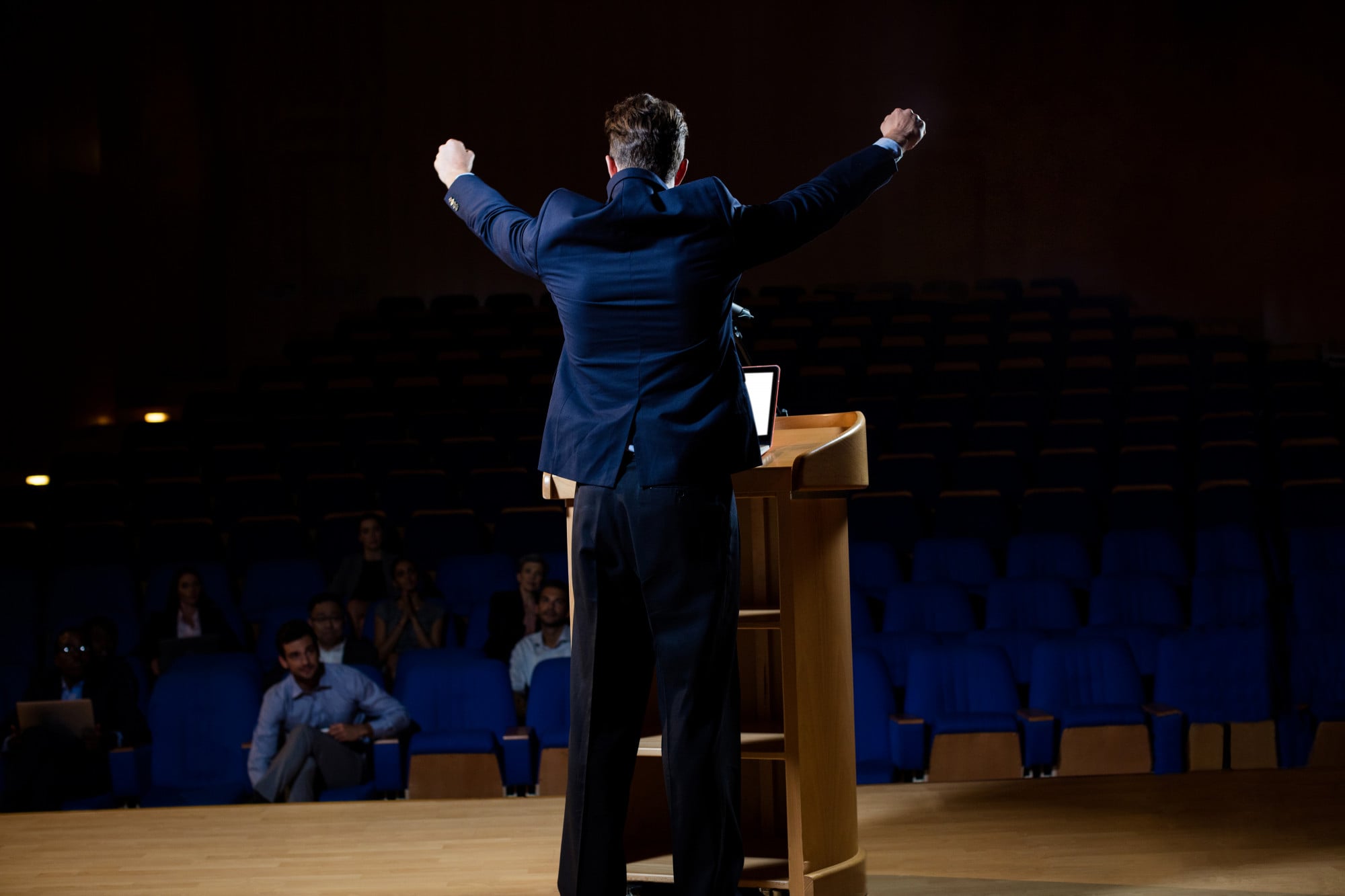
The principal paused at the podium with the next diploma in his hand. People in the stands murmured. I could feel four thousand pairs of eyes turning to follow my son as he walked across the floor of the Spokane Arena, in his blue cap and gown, straight to the wheelchair section.
He knelt beside my wheelchair. He put his hand on my arm.
“Mom,” he whispered. “I want you up there with me.”
I stared at him.
“Oh, sweetheart,” I said. “This is your special day. How am I supposed to get up there?”
I looked at the stage. It was four feet off the floor, with a set of six steps on either side. There was no ramp. I’d noticed that the moment we came in. I’d felt the familiar little twist of disappointment, the one I feel a dozen times a day. There’s no way up for me.
Caleb smiled. That crooked front tooth.
“Then let’s make it our day,” he said.
Part Nine: The Climb
Caleb turned around and crouched down in front of my wheelchair with his back to me.
“Arms around my neck, Mom,” he said.
“Caleb,” I whispered. “People are watching.”
“I know,” he said. “Arms around my neck.”
I put my arms around his neck. He reached back and hooked his arms under my knees, the way he’d done a hundred times getting me into Bernice’s Buick, and he stood up. Carefully. Slowly. With his knees bent and his back straight, the way the physical therapist taught him when he was fourteen.
He lifted me out of my wheelchair and onto his back.
The arena went silent.
Four thousand people. Three hundred and thirty-nine other graduates. The principal at the podium. The band. All of them watching my son carry his paralyzed mother across the floor of the Spokane Arena on his back.
I had absolutely no idea what was happening or why he was doing this.
He carried me to the stage. He carried me up the six steps, one at a time, slowly, holding my legs with his arms and leaning forward so I wouldn’t slip. I held on to his neck with my face pressed against his shoulder. I could feel his heart pounding through his gown. I could smell the cheap cologne he’d put on that morning, the one I bought him at Walgreens for his birthday.
I didn’t look at the audience. I couldn’t. I just held on.
Then several of Caleb’s classmates stood up from their rows.
Diego Santos and the two boys from auto shop, Jake and Tyrell. And Hannah, his chemistry lab partner. They walked down the aisle to the wheelchair section. They picked up my empty wheelchair together, one on each corner, and carried it up the steps behind us.
They set it down in the middle of the stage, beside the podium. They locked the brakes.
Caleb turned around and carefully lowered me into it. He knelt in front of me and straightened my legs on the footrests. He tucked my sunflower blouse where it had come untucked. He fixed a curl that had fallen across my face.
Then he stood up.
The principal, Dr. Hargrove, was standing at the podium with his mouth slightly open. He looked at Caleb. He looked at me. He looked at the four kids standing behind my wheelchair.
Then he smiled, picked up Caleb’s diploma, and handed it to him.
“Congratulations, Mr. Grant,” he said quietly.
I sat there on the stage, in front of four thousand people, smiling through my tears.
And the arena exploded.
People stood up in the stands. They clapped and cheered and whistled. Somebody started chanting Caleb’s name, then the whole senior class joined in. CA-LEB. CA-LEB. CA-LEB. The sound filled the arena until I could feel it vibrating in the metal frame of my wheelchair.
Caleb stood beside me with his diploma in one hand and his other hand on my shoulder. He looked down at me. His eyes were wet.
Part Ten: The Microphone
Then, suddenly, he turned to the podium.
He leaned over and said something to Dr. Hargrove, quietly. Dr. Hargrove looked surprised. Then he nodded slowly and stepped aside.
Caleb took the microphone off its stand.
“Excuse me, everyone,” he said.
His voice came out of every speaker in the arena. It was shaking. “There’s something important I want to say.”
The room went silent. Four thousand people sat back down. The chanting stopped. The band set down their instruments.
Caleb looked at me. He held the microphone in both hands.
“Mom,” he said. “I have something for you.”
He swallowed hard. “There’s something I’ve done that I haven’t told you about yet,” he said. “Actually, two things. I can’t hide the truth anymore.” He looked out at the audience, then back at me. “And I want to admit it in front of everyone.”
My heart started beating faster. I stared at him, completely confused.
Something I’ve done. I can’t hide the truth anymore. A hundred terrible possibilities flashed through my mind in about two seconds. That he wasn’t going to UW. That he was in trouble. That he’d been in touch with his father. That he was sick.
Everyone around us looked at one another, unable to believe what was happening. In the front row of the wheelchair section, I could see Bernice with both hands over her mouth.
Part Eleven: The First Truth
Caleb took a breath.
“Six years ago,” he said into the microphone, “my mom and I were in a car accident. Most of you probably know that. A truck ran a red light at Grand and 29th and hit our car. My mom was paralyzed. She’s been in a wheelchair ever since.”
He looked down at his diploma.
“What nobody knows,” he said, “is that it was my fault.”
The arena was so quiet I could hear the hum of the lights.
I stared at my son. “Caleb,” I said. “What are you…”
He didn’t look at me. He kept looking at the diploma in his hand.
“I was twelve,” he said. “We were driving home from basketball practice. I was in the back seat. And I’d unbuckled my seat belt to reach for my Nintendo DS, which I’d dropped on the floor.”
He swallowed.
“Mom saw me in the rearview mirror,” he said. “She turned around to tell me to put my seat belt back on. She said, Caleb, buckle up. Right now. And she was turned around, looking at me, when the light turned green and she started through the intersection.”
His voice cracked.
“She didn’t see the truck,” he said. “Because she was looking at me.”
He turned and finally looked at me. His face was wet.
“I’ve known for six years, Mom,” he said. “Every single day. Every time I lift you into Bernice’s car. Every time I watch you try to reach the top shelf. Every time you sit on the gym floor at my games because there’s no way into the bleachers.” He wiped his face with the sleeve of his gown. “I did that. I’m the reason you can’t walk. I’m the reason Dad left. I’m the reason for all of it.”
Part Twelve: What I Knew
I sat in my wheelchair on the stage of the Spokane Arena, in front of four thousand people, and I couldn’t breathe.
Six years. My son had been carrying this for six years. Since he was twelve years old. Every load of laundry. Every bowl of spaghetti. Every Saturday spent fixing the faucet instead of going to a birthday party. Every time he said Who’s gonna be here if I’m not?
He wasn’t helping me because he loved me. Or not only that. He was paying a debt he thought he owed.
“Caleb,” I said.
He couldn’t look at me.
“Caleb,” I said again. “Give me the microphone.”
He hesitated. Then he handed it to me.
I held it in both hands. My hands were shaking. I’d never spoken into a microphone in my life. I’d never spoken in front of four thousand people. Six years ago I’d have been terrified.
I wasn’t terrified. I was too busy being heartbroken.
“Caleb,” I said. “Look at me.”
He looked at me.
“I remember,” I said. “I remember turning around. I remember telling you to buckle up.”
His face crumpled.
“And I remember something else,” I said. “Something you don’t know. Because you were twelve, and you were hurt, and nobody showed you the police report.”
I took a breath.
“The light was green,” I said. “Our light. When I pulled into that intersection, the light was green. And the man in the pickup truck, a man named Gary Ostrander, was driving fifty-two miles an hour in a thirty zone. His blood alcohol was 0.19. He ran a light that had been red for four and a half seconds.”
Caleb stared at me.
“There were three witnesses,” I said. “A woman at the bus stop. A man in the car behind us. A cashier at the gas station on the corner. They all said the same thing. That truck never even touched its brakes.”
I reached out and took my son’s hand.
“Caleb,” I said. “If I’d been looking straight ahead with both hands on the wheel, that truck would still have hit us. At the same speed. In the same spot. The accident reconstruction expert told me so himself. He said I’d have needed to see it coming a full three seconds before I entered the intersection, and nobody could have.”
My voice broke.
“It was never your fault,” I said. “Not for one second. It was a drunk man in a truck who ran a red light. That’s all it was.”
Caleb stood there on the stage with his diploma in one hand and my hand in the other. His shoulders were shaking.
“You never told me,” he whispered. He wasn’t speaking into the microphone, but it picked him up anyway. “Why didn’t you tell me?”
“Because I didn’t know you thought it was your fault,” I said. “You never said a word. Not once in six years.” I squeezed his hand. “Oh, baby. I’d have told you a thousand times. I’d have told you every single day.”
Part Thirteen: “Dad Left Because of Him”
“And your father,” I said.
Caleb flinched.
I looked out at the audience. Four thousand faces. Then I looked back at my son, and I said the thing I’d never said out loud.
“Your father didn’t leave because of the accident,” I said. “He’d been seeing another woman for six months before it happened. He was already gone. He just used the wheelchair as a door.”
Caleb’s mouth opened. Nothing came out.
“That was never yours to carry either,” I said. “None of it. Not my legs. Not your father. Not one single thing.”
I let go of his hand. I held the microphone with both of mine.
“You’ve been carrying me for six years,” I said. “Not just today, up those stairs. Every day. And I let you. Because I was scared, and I was alone, and I didn’t know how to do it without you.”
I looked at my son. My tall, lanky, crooked-toothed son, eighteen years old, crying on the stage of the Spokane Arena in his blue cap and gown.
“But I need you to know something,” I said. “You were never paying anything back. There was never a debt. Everything you did for me, you did because you’re good. Not because you’re guilty.”
Caleb knelt down in front of my wheelchair, right there in the middle of the stage. He put his arms around my waist and his head in my lap, and he sobbed. In front of four thousand people. The way he did when he was twelve, beside my hospital bed.
I put my hand on his blue graduation cap.
And four thousand people sat in silence and let us have it.
Part Fourteen: The Second Truth
It was a long time before Caleb stood up.
When he did, his face was red and blotchy, and his cap had fallen off and was lying on the stage. Diego picked it up and handed it to him. Caleb put it back on crooked. He took the microphone back from me, gently.
“Okay,” he said. His voice was rough. “Okay. That was the first thing.”
A few people in the audience laughed softly, wiping their eyes.
“There’s a second thing,” Caleb said.
He looked at me.
“Mom,” he said. “I didn’t work at a restaurant.”
I blinked. “What?”
“I told you I washed dishes at a restaurant downtown,” Caleb said. “For two years. Four nights a week and Saturdays.” He shook his head. “I didn’t. I worked at Dunbar’s Auto Repair. On East Sprague. For Mr. Earl Dunbar.”
He looked out at the audience.
“Mr. Dunbar’s here,” he said. “Can you stand up, Mr. Dunbar?”
In the stands, about twenty rows up, an old man stood up. Seventy, maybe, with a gray beard and a John Deere cap and big greasy hands. He raised one hand and waved.
People clapped.
“Mr. Dunbar gave me a job when I was sixteen,” Caleb said. “Even though I didn’t know anything about cars. He taught me everything. Oil changes. Brakes. Transmissions. He let me stay late and work on my own project after the shop closed.”
He turned to me.
“And Mr. Raskin,” he said, nodding at a short, bald man in a sport coat sitting with the teachers at the side of the stage. “My auto shop teacher. He let me use the school garage on weekends.”
Mr. Raskin raised his hand and waved, grinning.
Part Fifteen: The Keys
“Two years ago,” Caleb said, “I found a van at a salvage auction in Spokane Valley. A 2014 Honda Odyssey. It had been in a hailstorm. The roof was dented and the windshield was cracked and the paint was ruined. The insurance company totaled it.”
He swallowed.
“I bought it for eleven hundred dollars,” he said. “Everything I’d saved from Mr. Dunbar’s shop.”
I stared at him. I couldn’t move.
“Mr. Dunbar and I fixed the engine,” Caleb said. “Mr. Raskin and my auto shop class fixed the body. Diego and Jake and Tyrell pounded out every single hail dent by hand.” He looked at the boys standing behind my wheelchair. “Hannah painted it. Two coats. In the school paint booth.”
Hannah waved shyly.
“And then I wrote a letter,” Caleb said, “to a mobility company in Spokane. Inland Adaptive. The owner is a man named Roger Kessler. He’s been in a wheelchair for thirty years. I told him about you, Mom. And about the accident. And about the van.”
He looked up into the stands. A man in a wheelchair in the accessible section near the top, sitting beside a woman with gray hair, raised his hand.
“Mr. Kessler donated a ramp,” Caleb said. “A folding side-entry ramp. And hand controls. And installed them for free. Last month.”
Then he reached into the pocket of his graduation gown.
He took out a key. A single car key, on a silver key ring, with a little metal charm hanging from it: a tiny pair of running shoes.
He knelt down in front of my wheelchair. He held it out.
“Mom,” he said. “It’s parked outside. Right by the door. In the handicapped spot.”
His voice broke.
“It’s yours,” he said. “You can drive again.”
Part Sixteen: The Van
I don’t remember taking the key from him. I remember looking down and seeing it in my hand, the little silver running shoes catching the stage lights.
I remember the sound the arena made. Not cheering this time. It was something deeper and quieter, four thousand people all making the same sound at once, a kind of collective gasp, and then a low murmur, and then people crying. In the stands, in the rows of graduates, at the teachers’ table. I saw Mr. Raskin take off his glasses and wipe his eyes. I saw Dr. Hargrove at the podium put his hand over his mouth.
And I saw Bernice in the front row of the wheelchair section, seventy-six years old, standing up with tears pouring down her face and both arms raised over her head.
“Caleb,” I whispered. “Two years?”
“Two years,” he said. “Every night after school. Every Saturday.” He wiped his face. “I wanted it done before I left for Seattle. So you wouldn’t need me to drive you anymore. So you wouldn’t need anybody.”
He took my hand, the one holding the key.
“You used to run,” he said. “Before. Every morning. Along the river.” He smiled through his tears. “I remember. I used to watch you from my window. You’d come home all sweaty and happy and make me pancakes.”
He closed my fingers around the key.
“I can’t give you that back, Mom,” he said. “But I can give you the road.”
Part Seventeen: Outside
After the ceremony, after the last name was called and the caps went flying into the air and the band played the school fight song, Caleb pushed me out the side door of the arena into the June sunshine. Bernice came behind us, holding my purse and crying. Diego and Jake and Tyrell and Hannah followed. Mr. Dunbar, Mr. Raskin, and Mr. Kessler, wheeling himself, with his wife beside him.
And about two hundred other people. Graduates and parents and grandparents who’d seen what happened on that stage and followed us out the door to see the van.
It was parked in the first handicapped spot by the side entrance, right by the river.
A 2014 Honda Odyssey. Painted a deep, shining blue. Not navy, not royal, but a bright, clear blue, the color of the Spokane River on a summer morning. The paint was perfect, not a single dent anywhere. The windows sparkled. On the passenger side, the sliding door was open, and a silver ramp was folded down to the pavement, ready.
And on the back window, in small white letters, Hannah had painted three words.
FOR MOM’S MORNINGS.
I couldn’t speak. I just sat there in my wheelchair in the parking lot, looking at it.
“Want to try it?” Caleb asked.
He pushed me to the ramp. I wheeled myself up, slowly, into the van. The driver’s seat had been removed, Mr. Kessler explained, so I could roll my wheelchair right into its place and lock it down. There were hand controls mounted on the steering column, a push-pull lever for the gas and the brake, and a spinner knob on the steering wheel so I could steer with one hand.
I locked my chair into place. I put my hands on the steering wheel.
I hadn’t sat behind a steering wheel in six years.
Caleb climbed into the passenger seat. He reached over and buckled my seat belt across me, then his own.
“I’m buckled, Mom,” he said quietly. “See?”
I looked at him. At my son in his crooked graduation cap, buckled into the passenger seat of a van he’d rebuilt with his own hands over two years, in secret, washing grease off his arms every night before he came home so I wouldn’t know.
I started to laugh. Then I started to cry. Then I was doing both at once, sitting behind the wheel of my blue van in the parking lot of the Spokane Arena, while two hundred people cheered outside the windows.
Part Eighteen: The Drive
Mr. Kessler spent twenty minutes teaching me the hand controls in the parking lot. Push forward to brake. Pull back to accelerate. Spinner knob for steering. I drove in slow circles around the empty end of the lot, with Caleb in the passenger seat and Mr. Kessler watching from his wheelchair, calling out instructions.
Then I said, “Caleb. I want to go somewhere.”
“Where?” he asked.
“The river,” I said. “The Centennial Trail.”
I drove us there myself. Slowly, carefully, in the right lane, five miles under the speed limit, with my hands shaking on the controls. Down Washington Street, across the bridge over the river, the water shining silver underneath us, then west on Riverside, past the old brick buildings downtown.
Caleb didn’t say a word the whole way. He just sat in the passenger seat with his hands in his lap, watching me drive.
I parked at the trailhead by Peaceful Valley, where I used to start my morning runs. I unlocked my chair. I lowered the ramp. I rolled down onto the pavement, and Caleb came around from the other side.
The trail was smooth and paved, wide enough for a wheelchair. I’d never noticed that before, when I was running on it. I’d never had to.
I put my hands on my wheels and pushed.
I rolled down the Centennial Trail beside the Spokane River for the first time in six years. Past the old pine trees and the basalt cliffs and the water rushing fast and white over the rocks below. Joggers passed me and smiled. A man on a bicycle rang his bell. The wind came off the water, cold and fresh, and pulled at my hair.
Caleb walked beside me. He didn’t push my chair. He didn’t offer to. He just walked.
At the top of the little hill by the footbridge, the hill that used to burn my legs on the last stretch of my run, I stopped. I was breathing hard. My arms ached.
I looked down at the river. Silver and fast and full of light, exactly the way I remembered it.
“Mom?” Caleb said. “You okay?”
I nodded. I couldn’t talk.
He knelt down beside my wheelchair on the trail, the same way he’d knelt beside me in the arena.
“I used to watch you from my window,” he said quietly. “When you came home from running. You always looked so happy.” He looked at the river. “After the accident, I never saw you look like that again.”
He looked up at me. “Until today.”
Part Nineteen: Seattle
Caleb left for the University of Washington in September.
I drove him there. Myself. Five hours across the state on Interstate 90, over Snoqualmie Pass, with all his things packed in the back of the blue van and the radio playing and the windows down. He offered to drive. I said no.
I helped him carry his boxes up to his dorm room on the fourth floor of a building called McCarty Hall. Well, he carried the boxes. I rode the elevator and supervised. I made his bed. I hung his clothes in the closet. I put a framed picture on his desk: the two of us on the stage of the Spokane Arena, his arm around my shoulders, both of us crying and laughing, the diploma in his hand. Bernice took it from the front row.
When it was time to leave, he walked me out to the parking lot. I rolled up the ramp into the van and locked my chair into place. He leaned in through the open door.
“Mom,” he said. “Call me when you get home.”
“I will,” I said.
“Promise,” he said. “I want to know you made it.”
I looked at my son, eighteen years old, standing in a parking lot in Seattle, about to start his own life. Six years of carrying me. Six years of guilt he didn’t deserve. Two years of grease and hail dents and secrets.
“Caleb,” I said. “Can I ask you something?”
“Anything.”
“Are you going to be okay? Without me to take care of?”
He laughed. A real laugh. The crooked front tooth.
“Mom,” he said. “That’s the whole point.” He leaned in and kissed my cheek. “I don’t have to take care of you anymore. Not because you don’t need me. Because you’ve got a van.”
He stepped back. He closed the sliding door. He stood on the curb with his hands in his pockets and watched me pull out of the parking lot.
I drove home across the mountains alone. Five hours. Over the pass, through the pine forests, down into the dry brown hills of eastern Washington, with the sun going down behind me in the rearview mirror. I sang along to the radio with the windows down, badly and loudly, the way I used to on my morning runs.
When I got home, I called him.
“I made it,” I said.
“I know,” he said. “I’ve been watching your location on my phone the whole way.”
I laughed so hard I almost dropped the phone.
Part Twenty: Mornings
It’s spring now. Caleb is finishing his first year at UW. He’s majoring in mechanical engineering. He wants to design mobility vehicles, he says. Vans and wheelchairs and hand controls. He’s been interning on weekends with a company in Seattle that builds adaptive equipment, and Mr. Kessler, who has become a dear friend of ours, says Caleb is going to change the industry.
He calls me every Sunday night. He comes home every few weeks. When he does, I pick him up at the bus station in my blue van.
And every morning, at six o’clock, I drive myself to the trailhead at Peaceful Valley.
I unlock my chair. I lower the ramp. I roll down onto the Centennial Trail, and I push. Three miles along the Spokane River, the same route I used to run. Past the pine trees and the basalt cliffs and the water rushing silver over the rocks.
My arms burn on the last hill now, instead of my legs. I like the burn. I like the sound of my wheels on the pavement and the way the river looks at six in the morning, fast and full of light.
There’s a group of us now. Mr. Kessler joined me first, in February. Then a young veteran named Marcus who lost both legs in Afghanistan. Then a woman named Patricia who has MS, and a teenage boy named Eli who has cerebral palsy and races in a lightweight sport chair so fast none of us can keep up.
We call ourselves the Morning Rollers. We meet at the trailhead every day at six. Rain or shine. Sometimes snow.
Last month, a reporter from the Spokesman-Review wrote a story about us. The headline said: For These Spokane Rollers, the Morning Run Never Ended.
People ask me sometimes what I think about when I’m out there on the trail. They expect me to say I think about my legs, or the accident, or what I lost.
I don’t.
I think about my son on the stage of the Spokane Arena, kneeling beside my wheelchair with a microphone in his hand, saying the thing he’d been carrying for six years.
It was my fault.
And I think about how many people walk around their whole lives carrying something that was never theirs to carry. Guilt. Shame. A debt they never owed. Sometimes it’s a twelve-year-old boy who thinks his mother can’t walk because he unbuckled his seat belt. Sometimes it’s a mother who thinks her son only stays because he has to.
The bravest thing my son ever did wasn’t carrying me up those stairs. It was putting down what he’d been carrying all those years, out loud, in front of four thousand people, so I could finally tell him it was never his.
Last week, Caleb came home for spring break. On Saturday morning, at six o’clock, he came with me to the trailhead.
He didn’t push my chair. He didn’t offer to. He just walked beside me, the whole three miles, with his hands in his pockets, while I pushed myself along the river.
At the top of the last hill by the footbridge, I stopped to catch my breath. He stopped beside me. We looked out at the water together without saying anything.
Then he reached down and checked my seat belt, the lap belt on my wheelchair. It was buckled. He tugged it once to make sure.
“Just checking,” he said, with his crooked smile.
“I’m buckled, Caleb,” I said. “See?”
He laughed. Then he looked at the river for a long moment, and he said, very quietly, “Thanks for telling me, Mom. At graduation. About the light.”
“Thanks for asking me to the stage,” I said.
We stood there at the top of the hill in the cold spring morning, my son and me, the river rushing below us, silver and fast and full of light.
Then I put my hands on my wheels, and we finished the run together.

Laura Bennett writes about complicated family dynamics, difficult conversations, and the quiet moments that change everything. Her stories focus on real-life tensions — inheritance disputes, strained marriages, loyalty tests — and the strength people find when they finally speak up. She believes the smallest decisions often carry the biggest consequences.