I was holding a chicken casserole when I saw my son’s car.
I’d made it that morning. His favorite. The one with the crushed potato chips on top that he used to eat straight out of the pan when he was a teenager, standing up at the counter, while I pretended to be annoyed.
I’d driven forty minutes with it on the passenger seat, wrapped in a dish towel to keep it warm.
I got out of my car in his driveway, holding the casserole in both hands.
And I almost dropped it.
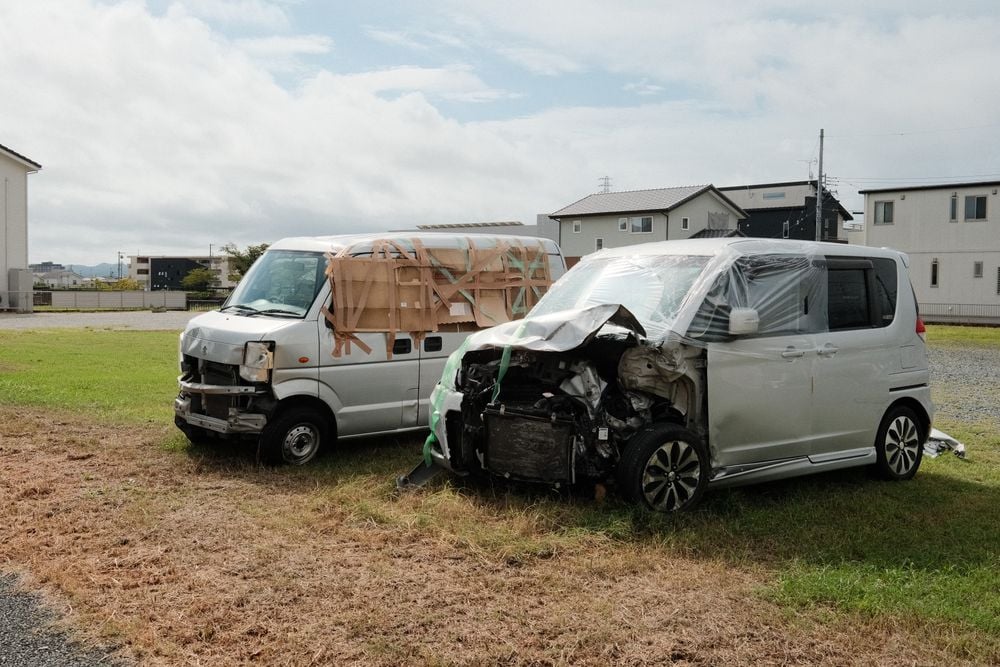
Daniel’s car was destroyed.
Deep scratches ran along both doors. Long, jagged lines, gouged into the paint, like someone had dragged a key from the front bumper to the back. Bright pink spray paint covered the hood in big swirling loops. One of the side mirrors was hanging off by its wires, swinging a little in the wind.
And sticking out of the cracked windshield, wedged right in the center of a spiderweb of broken glass, was a shoe.
An enormous black high-heeled shoe.
With a silver buckle.
A woman was standing on the sidewalk with a little white dog on a leash. She was taking pictures of the car with her phone.
She saw me and lowered it.
“Is this your car?” she asked.
“My son’s,” I said.
She looked at the shoe in the windshield. Then back at me.
“Somebody was angry,” she said.
I stood in the driveway and stared at the damage.
“First Lily breaks his heart,” I muttered. “And now this.”
I balanced the casserole on the hood of my own car. I reached into my pocket for my phone. I was going to call the police.
Then I saw it.
A piece of paper. Folded in half. Tucked under the windshield wiper on the driver’s side, right next to the shoe.
I pulled it out.
Two words were written across the front, in black marker.
For your mom.
I unfolded it.
Inside, there was one more sentence.
He owes more than he’s telling you.
I’d like to tell you that I knew right then. That I stood in that driveway and saw the whole thing for what it was.
I didn’t.
I’d spent thirty years not seeing what my son was.
So let me start at the beginning. Let me tell you who I am. And then you’ll understand why it took me so long.
At six-foot-four, I’ve spent most of my life reaching things other people couldn’t.
Basketball hoops.
Top shelves.
Impossible goals.
But there was one thing I could never quite reach.
The courage to tell my son no.
My name is Margaret Hale. I’m fifty-eight years old.
I grew up in a small town in Indiana, where basketball is more or less a religion. I was taller than every boy in my class by the time I was eleven. The other girls called me Stretch and Lamppost and Jolly Green Giant. I used to slouch in every school picture, trying to look smaller.
Then, in seventh grade, a gym teacher named Mrs. Patterson handed me a basketball.
“Stop slouching, Margaret,” she said. “God made you this tall for a reason. Let’s find out what it is.”
I played in high school. I played in college, on a full scholarship. And then, for six years, I played professionally. Overseas first, in Italy and Spain, because there weren’t many places for women to play in the United States back then. Then, when the American league started, I played two seasons here before my knees gave out.
I wasn’t the best player in the world. I was never a superstar.
But I was very, very hard to get past.
When I retired, I was thirty-two. I had two bad knees and a little money saved and absolutely no idea what to do with the rest of my life.
So I opened a sporting goods store.
One store. In a strip mall in Columbus, Ohio. I sold basketballs and sneakers and soccer cleats and baseball gloves. I knew what I was selling. I knew what a kid needed when she walked in nervous about her first tryout. I knew which shoes would hurt a sixteen-year-old’s knees and which ones wouldn’t.
The store did well. So I opened another one. And then another.
Now I own seven. Across Ohio and Indiana. Hale Sports. There’s a picture of me in my old uniform on the wall behind the register in every single one.
I’ve negotiated million-dollar leases without blinking. I’ve sat across from shoe company executives and told them their prices were too high, and watched them lower them. I’ve fired managers who stole from me. I’ve stood in front of a bank loan committee and talked them into lending me money nobody thought I’d ever pay back.
I paid it back. Early.
But my son, Daniel, could defeat me with three words.
Mom, I need…
And out came my checkbook.
Daniel was born when I was twenty-eight. Right in the middle of my playing career. I took four months off to have him and went back to Spain with a baby on my hip.
My husband, Tom, came with me. He was a high school chemistry teacher. He took a leave of absence and followed me across the world, and he raised our son in a little apartment in Barcelona while I traveled to games.
When we came back to the States, Tom went back to teaching. And I opened my first store.
And I was busy. So busy. Every day. Every weekend. Building the business.
Tom was the one who was home.
I think that’s where it started.
The guilt.
Every time I missed one of Daniel’s baseball games because I was at a trade show in Chicago. Every time I missed a parent-teacher conference because a store manager quit without notice. Every time Tom tucked him in because I was still at the office at nine o’clock at night.
I’d come home and see my little boy asleep in his bed, and I’d feel it. That terrible ache. I’m not here enough.
So I made up for it the only way I knew how.
I gave him things.
A new bike. A new video game. Expensive sneakers from my own stores. The best baseball glove. Tickets to every game he wanted to see.
When he was sixteen, I bought him a car. A brand-new one. Red. He drove it into a ditch three months later. I bought him another one.
When he was eighteen, he went to college. He dropped out after a year and a half. He said it wasn’t for him. He wanted to find his own path.
I said that was fine.
When he was twenty-five, Tom and I bought a smaller house. A condo, closer to my main store. Our knees were getting worse. We didn’t need four bedrooms anymore.
We gave Daniel our old house.
The house he grew up in. With the basketball hoop over the garage that Tom put up when Daniel was four. With the pencil marks on the kitchen doorframe where we measured how tall he was every birthday.
We signed it over to him. Free and clear.
“He needs a fresh start,” I said to Tom.
Tom thought it was too much.
I remember the conversation. We were sitting at the kitchen table in our new condo. Tom had his reading glasses on and the newspaper in front of him. He looked at me over the top of it.
“Margaret,” he said. “You bought him a car. Two cars. You pay his phone bill. You pay his car insurance. And now you’re giving him our house.”
“He needed a fresh start, Tom.”
“You’re spoiling him.”
“I’m giving him opportunities.”
Tom put the newspaper down.
“Margaret,” he said. “He’s twenty-six.”
“And?”
“And yesterday,” Tom said, “he called you and asked you to pay a parking ticket.”
That was true. Forty-five dollars. He’d parked in a fire lane outside a restaurant.
“He was having a difficult week,” I said.
Tom shook his head.
But he was smiling. That soft, patient smile of his. The one that said, I love you. Even when you’re wrong. Especially when you’re wrong.
I’d been married to Tom for twenty-eight years. I loved that smile more than anything in the world.
Five years ago, that smile disappeared.
Tom got sick.
Pancreatic cancer. They found it in March, after he’d been tired for months and losing weight he couldn’t explain. By the time they found it, it had already spread.
The doctors said we had options. Treatments. Clinical trials. Expensive ones. Some of them weren’t covered by insurance.
I didn’t care.
I spent whatever it took. A specialist in Houston. A clinical trial in Baltimore. A treatment in Germany that cost more than my first store.
One night in the hospital in Baltimore, Tom took my hand.
He was so thin by then. His wedding ring was loose on his finger. He’d wrapped tape around the inside of it so it wouldn’t fall off.
“Margaret,” he said. “Stop spending so much on treatments.”
“We’re not giving up,” I said.
“I’m not asking you to give up,” he said. “I’m asking you to be smart. These trials aren’t working. You know they’re not. And you’re spending everything.”
“I have everything I need,” I said. “I have you.”
He squeezed my hand.
“Promise me,” he said, “that you’ll save something for yourself. After. Promise me you’ll take care of you. Not just the stores. Not just Daniel. You.”
I promised.
I didn’t mean it. Not really. I just wanted him to stop worrying.
Tom died in August. Five months after they found it.
He died at home, in our condo, in a hospital bed we’d set up in the living room by the big window. He wanted to see the trees.
Daniel was there. He held one of his father’s hands. I held the other.
At the very end, Tom opened his eyes. He looked at Daniel for a long time.
Then he looked at me.
He didn’t say anything. He was too weak by then.
But I knew what he was thinking.
Save something for yourself.
After Tom died, Daniel became the center of my whole world.
He was all I had left. My husband was gone. My parents were gone. My sister lived in Arizona. I had my stores, and I had Daniel.
And Daniel learned something.
I don’t think he did it on purpose at first. I don’t think he planned it. But he learned it, the way kids learn everything. By trying it once and seeing what happened.
The first time was about two months after the funeral.
He called me on a Tuesday night.
“Mom, I need some help with the property taxes on the house,” he said. “It’s due next week. I’m a little short.”
“How short?”
“About four thousand.”
I hesitated. Just for a second. Tom had always handled things like this. Tom would have said, Daniel, you’ve had the house for a year. You knew the taxes were coming. What did you do with the money?
“Daniel,” I said. “Your father wanted you to be independent. To handle things like this yourself.”
There was a pause on the line.
“I know,” Daniel said. His voice cracked a little. “But Dad would’ve helped me, Mom. You know he would have. He’d never turn me away.”
I wrote the check that night.
After that, he said it every time.
Dad would’ve helped me.
When his car needed new brakes. Dad would’ve helped me.
When his dishwasher broke. Dad would’ve helped me.
When he had a dentist bill he couldn’t pay. When he needed a security deposit for a vacation. When he got another parking ticket. When his phone broke.
Dad would’ve helped me, Mom.
And I gave in.
Every time.
Maybe because I missed Tom as much as Daniel did. Maybe because when Daniel said Dad, for just one second, Tom was in the room with us again. Maybe because writing a check felt like doing something. Like I was still taking care of the family Tom left behind.
I don’t know.
I just know I couldn’t say no.
My son was handsome. Tall, like me. Six-foot-three. Charming, like his father. He could walk into any room and make friends with anybody in five minutes.
But he never seemed to stick with anything.
He worked for a car dealership for eight months. He quit. He worked for a gym, selling memberships. He quit. He worked in one of my stores for six weeks, as an assistant manager. The real manager, a woman named Rhonda who’d been with me for fifteen years, came into my office at the end of the sixth week and closed the door.
“Margaret,” she said. “I’m sorry. I can’t have him here. He comes in late. He leaves early. He spends half the day on his phone in the back room. The staff don’t respect him. And frankly, neither do I.”
I moved him to a different store.
He quit two weeks later.
“He just needs to find his direction,” I told myself.
I told myself that for years.
For nine years, I thought Lily would help him find it.
They’d known each other since high school. They didn’t date back then. She was a quiet, smart girl who sat in the front row of every class. He was the tall, funny boy in the back.
They ran into each other again at a friend’s wedding when they were twenty-one. He asked her to dance. They’d been together ever since.
At five-foot-one, Lily barely reached his shoulder. When they stood next to each other, she had to tilt her head all the way back to look up at him. When I stood next to both of them, I looked like a lighthouse with two boats parked at the bottom.
“Mom,” Daniel used to say, rolling his eyes. “Please stop calling us your little romantic comedy.”
“Then stop looking so adorable together!” I’d say.
Lily would laugh. She had a big laugh for such a small person.
Lily was a physical therapist.
That was how she and I really got close. My knees. Fifteen years of professional basketball had destroyed them. After Tom died, the pain got worse. My doctor recommended physical therapy, and Lily said, “Come to my clinic. I’ll take care of you.”
So I went. Every Tuesday and Thursday, for two years.
She was tough. She made me do exercises that made me sweat and swear. She didn’t let me quit. When I complained, she’d say, “You played professional basketball with these knees. You can do ten more squats.”
And somewhere in those two years, sitting on her treatment table with ice packs on my knees, she became one of the people I loved most in the world.
Lily often visited me without Daniel.
She’d come over on Sunday afternoons and we’d sit on my balcony and drink iced tea and talk. About her job. About my stores. About books. About Tom. She’d known Tom too. She’d been at the hospital in Baltimore. She’d been at the funeral, holding my hand.
“You know,” I told her once, “you’re practically my daughter.”
She grinned.
“Does that mean I get Christmas presents?” she said.
“Of course!”
She laughed and threw her arms around my waist. That was as high as she could reach.
Lily was the one who addressed all my Christmas cards. Every year since Tom died. I had terrible handwriting. Tom always used to do it. After he was gone, I sat down at the kitchen table to do it myself, and I got through three envelopes before I started crying.
Lily took the pen out of my hand.
“Let me,” she said.
She had beautiful handwriting. Elegant, flowing cursive. Like something out of an old movie.
She addressed every card for me. Every year. Two hundred of them. Customers. Employees. Friends. Business partners.
I expected a wedding invitation any day.
I mean that. I truly did. They’d been together nine years. They were thirty. Lily’s parents and I had started making little jokes about it at holidays.
When are these two going to make it official?
I’d even started looking at mother-of-the-groom dresses online. Secretly. At night. In size extra-tall.
Instead, one Sunday evening in April, Daniel called me.
He was crying.
“Mom,” he said. “Lily cheated on me.”
I nearly dropped my coffee.
“What?” I said. “After nine years? With whom?”
“It doesn’t matter,” he said. He was sobbing. “She ruined everything. Everything, Mom.”
“Where are you?”
“Home.”
“I’m coming.”
“Mom, you don’t have to…”
But I was already grabbing my keys.
Daniel opened the front door of the house he grew up in.
He looked terrible. His eyes were swollen and red. His hair was unwashed and sticking up in the back. He was wearing a stained T-shirt and sweatpants.
“Have you eaten anything?” I said.
“I’m not hungry, Mom.”
He collapsed against me. Right there in the doorway. He’s thirty years old and six-foot-three, but he collapsed against me like he was seven.
I put my arms around him.
“Oh, sweetheart,” I said. “Tell me what happened.”
“She ruined everything,” he said into my shoulder.
We sat on the couch in the living room. I made him a grilled cheese sandwich. He ate half of it.
He didn’t tell me much. He just kept saying the same thing. She cheated. She ruined everything. It’s over.
I couldn’t believe it. Not Lily. Not my Lily. Not the girl who made me do ten more squats. Not the girl who addressed my Christmas cards.
“I’ll call her,” I said. I reached for my phone.
“No!”
His voice was so sharp that I actually stepped back.
I’d never heard him talk like that. Not to me.
“Daniel?”
He took a breath. His voice got softer.
“Please, Mom,” he said. “Please don’t get involved. I just want to forget her. I just want this to be over.”
“But Lily owes you an explanation,” I said. “After nine years. She owes you that much.”
“I don’t want one.”
I studied his face. Something about it bothered me. I couldn’t say what.
“Are you sure?” I said.
“Promise me, Mom,” he said. “Promise me you won’t call her.”
I promised.
And for the next four days, I kept that promise.
Even when Lily called me on Tuesday, and I watched her name light up my phone, and I let it go to voicemail. She didn’t leave a message.
Even when Daniel stopped answering my calls on Wednesday.
By Thursday morning, I’d had enough.
I took the day off work. I made his favorite chicken casserole, the one with the crushed potato chips on top. I wrapped it in a dish towel and put it on the passenger seat and drove forty minutes to his house.
And I found his car.
Standing in his driveway, I read the note again.
For your mom.
He owes more than he’s telling you.
I knew Lily’s handwriting. Two hundred Christmas cards a year.
This wasn’t it.
These letters were crooked. Blocky. Uneven. Like someone had written them with their left hand. Or in a hurry.
“This doesn’t look like hers,” I muttered. “Unless she was too angry to write neatly.”
But something else bothered me even more.
The shoe.
I looked at it again. Sticking out of the windshield.
It was enormous. A women’s size thirteen, at least. Maybe fourteen.
Lily wore a size five. I knew because I’d bought her running shoes from my store every year for her birthday. She had tiny feet. Like a child’s. She used to complain that she had to buy her shoes in the kids’ section sometimes.
There was no way that shoe was Lily’s.
Before I could look at it more closely, the front door opened.
“Mom?”
Daniel was standing in the doorway in his sweatpants.
I marched toward him across the yard.
“Daniel,” I said. “What happened to your car?”
He looked past me. At the car. At the shoe.
He didn’t look surprised.
I noticed that later. Much later. Lying awake at night. He didn’t look surprised at all.
“I’m calling the police,” I said. I pulled out my phone.
“No, Mom! Please!” He came down the porch steps. “Please don’t. I don’t want to make things worse.”
“Daniel, someone destroyed your car! Someone vandalized it! That’s a crime!”
“I know,” he said. “But I just want this whole nightmare to end. Please. Just let it go.”
“Was this Lily?” I said.
“I don’t know.”
“There’s a note!”
I held it out to him.
He took it.
He read it.
His face drained of color. All of it. He went white.
“Where did you find this?” he said quietly.
“Under the wiper.”
He swallowed hard.
“She’s unbelievable,” he said.
“What does it mean, Daniel?” I said. “He owes more than he’s telling you. What does that mean?”
He rubbed his forehead.
He looked at the note for a long time.
Then he said, “There’s something I didn’t tell you, Mom.”
I followed him inside.
I set the casserole down on the kitchen counter. I didn’t take off my coat.
“Then start talking,” I said.
He sat down at the kitchen table. The same table where he ate his breakfast every morning when he was a little boy. Where Tom helped him with his homework. Where I sat every night, too late, after work, eating cold dinner by myself.
“Lily didn’t just cheat on me,” Daniel said. “She took out loans. Big ones. Personal loans.”
“Loans for what?”
“Wedding stuff,” he said. “Things like that. She was planning a wedding. Before. The venue. The dress. A deposit on a honeymoon. She just kept spending.”
“And how are you involved?”
He looked down at the table.
“I cosigned,” he said. “On all of them. Because I trusted her. Because I thought we were getting married.”
“Then why,” I said slowly, “would she say you owe her money? In the note?”
“That’s exactly why she left it,” Daniel said. “Don’t you see? She wants you to believe I owe her money. When really I’m the one who’s stuck paying all her debts. She wants to turn you against me. So you won’t help me.”
“How much?” I said.
He stared at his hands on the table.
“About eighty thousand dollars,” he said.
“Eighty thousand?”
“Mom, please,” he said. “Please don’t yell.”
“I’m not yelling,” I said. I wasn’t. I was standing very still in the middle of the kitchen. “I’m asking a question. I’m asking why Lily would need eighty thousand dollars in loans. When her parents have more money than most people earn in three lifetimes.”
That was true.
Lily’s parents, the Bennetts, owned a chain of car dealerships. Twelve of them, across three states. They had a house on a lake with its own boathouse. They had a ski condo in Colorado. They’d paid for Lily’s college and her graduate school and her first car and her condo.
Lily was the only child. They adored her.
“They cut her off,” Daniel said. “After some big argument. I don’t know the details!”
I looked at him.
Something didn’t add up.
The Bennetts cutting off Lily. Their only daughter. The girl they called Peanut at Thanksgiving dinner. The girl whose father cried at her graduation from physical therapy school.
It didn’t add up.
And I had a feeling, deep in my stomach, that Daniel was still hiding something.
His eyes filled with tears.
“I thought I was going to marry her, Mom,” he said. “I wanted to take care of her. I wanted to provide for her. Without running to you. For once. Without asking you for anything.”
My heart broke.
It actually broke. I could feel it.
“Oh, sweetheart,” I said. I sat down next to him. “You were only trying to do the right thing.”
“I was trying to be a man,” he said. “Like Dad. But I can’t pay it back. I can’t.”
“How much time do you have?” I said. “To repay it?”
“The lenders won’t wait,” he whispered. “They’ve been calling. Every day. They’re threatening to take me to court. To put a lien on the house.”
He looked up at me.
“Could you lend me the money, Mom?” he said. “Just this once? I’ll pay you back. I swear. Every penny.”
“Eighty thousand dollars is a lot of money, Daniel.”
“But you can afford it!”
He said it so fast. So easily. Like it was obvious. Like it was nothing.
But you can afford it.
“That’s not the point,” I said. “Show me the loan documents.”
He hesitated.
“They’re with my accountant,” he said.
“Then call him.”
“Mom, please. I can’t deal with this right now. I can’t. I’m barely holding it together.”
Something still didn’t add up.
I’m a businesswoman. I’ve looked at a thousand loan documents in my life. I know how they work. I know that when you cosign a loan, you get copies. You get statements every month. In the mail. In your email.
You don’t send all of them to an accountant.
And Daniel didn’t have an accountant. I knew that. I’d been paying for his tax preparation myself for five years.
But this was my son.
My son, sitting at the kitchen table where he grew up, with tears running down his face.
How could I doubt him? When he needed me most?
I sighed.
“I’ll think about it,” I said.
His shoulders relaxed. All at once. Like a balloon letting out air.
“Thank you, Mom,” he said. “Thank you. I knew you’d understand.”
Driving home that afternoon, I wanted to believe him.
I wanted to believe him so badly. The same way I’d always believed him. Every excuse. Every emergency. Every Dad would’ve helped me.
But my gut was telling me something was wrong.
I played basketball for twenty years. You learn to trust your gut. You learn to feel when a player is about to fake left and go right. You learn to read the shoulders, the hips, the eyes.
My gut was telling me my son was faking left.
And for the first time in his life, I wasn’t going to hand him money without finding out the truth.
I knew exactly where to start.
Lily deserved a chance to tell her side of the story.
The next afternoon, Friday, I drove to Lily’s condo.
I’d broken my promise to Daniel. I knew that. I felt sick about it.
But I had to know.
When I pulled up across the street, there was a car parked outside her building.
A brand-new luxury SUV. White. Shiny. The kind that costs more than some houses.
“Eighty thousand in debt,” I muttered, “and you’re buying that?”
Then Lily came out of the building.
She was wearing workout clothes and carrying a gym bag. She walked straight to the white SUV, unlocked it, and climbed in.
She drove away.
I followed her.
I know how that sounds. A fifty-eight-year-old woman, six-foot-four, following a five-foot-one physical therapist through the streets of Columbus in a Ford Explorer.
I kept a reasonable distance. Two cars back.
She drove about fifteen minutes. She pulled into the parking lot of a big shopping mall. She parked near the entrance.
I parked four rows back.
Before I could even get out of my car, she spotted me.
You can’t really hide when you’re six-foot-four.
She stood next to her SUV with her gym bag over her shoulder and stared at me across the parking lot.
“Oh,” she said. “You’ve got to be kidding me.”
I got out of my car. I walked over.
“Lily,” I said. “We need to talk.”
“Will your family ever leave me alone?” she said.
Her voice was tired. Exhausted. Not angry. Just worn out.
“After what you did to Daniel?” I said. “And now you’re driving that? A car like that? When he’s stuck with your debts?”
Lily stared at me.
“My parents bought it,” she said. “For my thirtieth birthday. Last month. You were invited to the party, Margaret. You didn’t come because you had a store opening in Dayton.”
“The parents who supposedly cut you off?”
Lily’s face changed.
“Daniel told you that?” she said quietly.
I nodded.
“Of course he did,” Lily said.
“Daniel told me,” I said, “that you cheated on him. That you took out eighty thousand dollars in loans for a wedding. And that your parents cut you off, and he’s stuck paying your debts.”
Lily looked at me for a long time.
“None of that is true, Margaret,” she said. “Not one word of it. I had dinner with my parents last night. My dad made his barbecue ribs. My mom asked about you.”
I stared at her.
I couldn’t say anything.
She reached into her gym bag and took out her phone.
“Would you like to see,” she said, “what actually happened?”
“Of course,” I said. “Of course. I want to hear your side, Lily. That’s why I’m here.”
She opened her phone. She scrolled. She held it out to me.
“Look at these,” she said.
It was her banking app. A list of transfers.
To Daniel.
Five thousand dollars. Ten thousand. Three thousand. Fifteen thousand. Two thousand. Eight thousand.
Over and over. Every few weeks. For almost two years.
“Your parents sent Daniel money?” I said. “All of this?”
“Some of it is from my parents,” Lily said. “And some of it is from me. Most of it, actually. My savings. My retirement account. I cashed it out.”
“He told us he was starting a business,” she said. “An online sporting goods company. Selling equipment online. Direct to customers. He had a whole presentation. Slides. A logo. A website mockup.”
“A business?” I said. “Why didn’t he tell me?”
“He said he didn’t want to compete with your stores,” Lily said. “He said it would be awkward. He said he needed independent investors. People outside the family. So it would be his thing. So he could prove himself.”
She scrolled through her phone some more. She showed me a text message.
The contact name was Ex-Jerk, with a little eye-rolling emoji next to it.
Ex-Jerk : Please don’t mention any of this to Mom. I want to surprise her when I’m successful.
I stared at that message.
I want to surprise her when I’m successful.
“Eventually,” Lily said, “my dad asked for financial statements. For the business. He’s run car dealerships for thirty years. He wanted to see the numbers. Sales. Inventory. Profit and loss.”
“And?”
“And Daniel kept making excuses,” Lily said. “The accountant was on vacation. The spreadsheet got corrupted. The website was being redesigned. He’d send them next week. Then the week after.”
She put her phone down at her side.
“After six months of that,” she said, “we stopped sending him money.”
“And the cheating?” I said.
Lily laughed. It wasn’t a happy laugh.
“He invented that,” she said. “After I broke up with him.”
“You broke up with him?”
“Three weeks ago,” Lily said. “On a Saturday. At his kitchen table.”
I shook my head.
“He wouldn’t,” I said. “Lily. He wouldn’t do that. Not Daniel.”
“He already did,” Lily said.
She looked so tired. Older than thirty. There were dark circles under her eyes. Her shoulders were slumped.
“I loved him, Margaret,” she said quietly. “I really did. I defended him for nine years. To my parents. To my friends. To everybody. Every time someone said he was lazy, or he was using me, I defended him.”
She took a breath.
“But when I finally asked him where the money went,” she said, “all of it, my retirement, my parents’ money, he accused me of not trusting him. He said if I really loved him, I wouldn’t ask.”
She scrolled through her phone one more time. She showed me another message.
Ex-Jerk : If you really loved me, you’d stop asking questions and let me handle the money.
I read it three times.
“He actually said that to you?” I said.
“More than once,” Lily said.
She put her phone away in her gym bag.
“But Lily,” I said. “Daniel told me you were the one who owed him money. He said you’d left a note. Threatening him.”
Lily looked at me.
“Ask him where it went, Margaret,” she said quietly. “Ask him where all of it went. And ask him how much he took from you.”
My stomach tightened into a knot.
How much he took from you.
She turned toward her car.
“Lily,” I said. “Wait.”
She stopped.
“Did you destroy his car?” I said.
She turned around and stared at me.
“What?” she said. “Margaret. I haven’t been anywhere near his house since we broke up. Three weeks. I blocked his number. I’m not going near him.”
“Somebody destroyed it,” I said. “Yesterday. Or the day before. Scratched it. Spray-painted it. Broke the windshield. And they left a high-heeled shoe stuck in the glass.”
Lily’s eyebrows went up.
“A shoe?”
“A high heel.”
“What size?” she said.
“Quite large.”
Lily looked down at her own feet.
She was wearing tiny white sneakers. Size five. I knew, because I’d bought them for her.
She lifted one foot and wiggled it at me.
“Do those,” she said, “look large to you, Margaret?”
I almost laughed.
And then I remembered something.
Something about that shoe.
The silver buckle.
I’d seen one exactly like it before.
“Wait,” I said slowly. “Wait. I used to own heels like that.”
Lily looked at me.
“Custom-made,” I said. “Years ago. For charity galas. When I was still playing. You can’t find heels in a size fourteen in a regular store. I had a shoemaker in Indianapolis make them for me. Black patent leather. With a silver buckle on the side.”
“Where are they now?” Lily asked.
I felt the blood drain from my face.
“In a storage box,” I said. “In the basement. At Daniel’s house.”
I thought I’d finally figured out what my son had been hiding.
I had no idea how much worse the truth would be.
I drove straight to Daniel’s house.
This time, I didn’t bring any food.
And I didn’t bring my checkbook.
He answered the door in sweatpants and a T-shirt. He smiled when he saw me.
“Mom!” he said. “Hey. Come in. Did you think about the loan?”
“I spoke to Lily,” I said.
His smile disappeared.
“You what?”
“I spoke to her,” I said. “This afternoon.”
“Why would you do that?” His voice went high and sharp. “You promised, Mom. You promised me.”
“Because your story didn’t make sense, Daniel.”
He stepped aside to let me in. His hands were shaking.
“She’s lying, Mom!” he said. “Don’t you see? She’s trying to turn you against me! That’s what she does! She manipulates people! She…”
“Then explain the money her parents sent you,” I said.
He stopped talking.
He stood there in the front hallway of the house he grew up in. Next to the pencil marks on the doorframe. Daniel, age 4. Daniel, age 7. Daniel, age 12.
And he started crying.
Big, heaving sobs. His face crumpled up. Tears ran down his cheeks.
Every other time in his life, that had worked.
Every time he cried, since he was a baby, I’d fold. I’d pick him up. I’d hold him. I’d give him whatever he wanted to make it stop.
He knew that.
I knew he knew that.
“Daniel,” I said. “Stop.”
He froze.
Mid-sob. Mouth open. Tears on his face.
He stared at me.
I’d never spoken to him like that before. Not once. Not in thirty years. Not in that voice. My coach voice. The one I used on the court when a teammate was about to do something stupid.
“Where’s the money?” I said.
He wiped his face with the back of his hand.
“I invested it,” he said. “In a startup. The sporting goods thing. But it failed. It just failed, Mom. These things fail all the time.”
“Then show me proof.”
“You’re treating me like a criminal,” he said.
“I’m treating you like an adult,” I said. “For the first time in your life. Show me your bank statements. Right now. On your phone.”
“Mom, please…”
“No more excuses, Daniel.”
He looked at me for a long time.
He must have seen something in my face. Something he’d never seen there before.
Because after a while, very slowly, he took his phone out of his pocket.
He opened his banking app.
He held it out to me.
I leaned closer.
I scrolled.
Dozens of transactions. Hundreds. Going back months. Years.
The names on them were names I recognized. I’d seen them on billboards along the highway. In commercials during basketball games. On the sides of buses.
Online casinos. Sports betting apps. Poker sites.
I felt the whole room tilt.
“Daniel,” I said.
He didn’t say anything.
“Are these,” I said, “casino payments?”
His eyes filled with tears again. Real ones, this time. I could tell the difference now.
“Mom…” he said.
“Answer me.”
“Yes,” he said.
I didn’t trust my legs anymore.
I lowered myself into a chair at the kitchen table.
“How long?” I said.
He sat down across from me.
“About two years,” he whispered.
“How much?”
He whispered something. So quietly I couldn’t hear it.
“Louder,” I said.
“Everything,” Daniel said.
I stared at him.
“My savings,” he said. “What little I had. Everything Lily gave me. Everything her parents invested in my… in the business. That didn’t exist.”
“And the money I gave you?” I said.
He nodded slowly.
“I gambled that away too,” he said.
I sat there at the kitchen table.
And I remembered.
The emergency property tax payment. Four thousand dollars. Dad would’ve helped me.
The broken dishwasher. Eight hundred. The broken furnace. Twenty-two hundred. The mysterious medical bills. A dentist. An urgent care visit. A specialist for his back. Fourteen hundred. Three thousand. Six thousand.
The rent on a storage unit. The car insurance. The new phone. The other new phone.
Dad would’ve helped me, Mom.
“All those times,” I said slowly. “All those times you needed help. All those emergencies.”
“I was trying to win it back!” Daniel said.
“You were gambling?”
“I kept thinking,” he said. His voice was breaking. “I kept thinking one big win would fix everything. Just one. I’d win it all back. And I’d pay everybody back. You. Lily. Her parents. And nobody would ever know.”
“And the eighty thousand dollars?” I said.
He looked down at the table.
“I owe people money,” he said quietly. “Credit cards. Two payday loan places. And a guy. From a poker game. In a basement on the east side. He’s been texting me.”
“Texting you what?”
He didn’t answer.
“What, Daniel?”
“That he knows where I live,” Daniel whispered.
“I thought,” he said, “if you helped me clear it. All of it. Everything at once. I could start over. Clean.”
“So Lily never took out those loans?” I said.
“No.”
“There were never any wedding loans? Any cosigning?”
“No,” Daniel said. “I made that up. I thought you’d give me the money if you believed I was paying off her debts. I thought you’d feel sorry for me.”
I looked at the phone screen again. At the list of casinos.
Then I remembered the car.
“The shoe,” I said.
He went very still.
“What?”
“That enormous black shoe,” I said. “With the silver buckle. In your windshield. It came from my old charity gala clothes, didn’t it? From the box in the basement.”
He stared at the floor.
“Daniel?”
“Yes,” he said.
“You destroyed your own car?” I said. “Yourself? You scratched it and spray-painted it and broke the windshield and wrote that note?”
He nodded slowly.
“Why?” I said. “Why on earth would you do that?”
“Because I wanted you to blame Lily,” he said.
His voice was flat. Empty. Like he was too tired to lie anymore.
“I thought the note would make her look like she was threatening me. Over money. Then I’d tell you about the loans. And you’d be so angry at her that you’d help me pay them. Right away. Without asking questions.”
“I was already on your side!” I said.
I said it so loud he flinched.
“I was already on your side, Daniel! I drove over here with a casserole! I believed every word you said about her! I was ready to never speak to her again!”
I stood up from the table.
“And you didn’t even know when I’d visit,” I said. “You did all that to your car, and you didn’t even know when I was coming.”
“I knew you’d come eventually,” Daniel said. “You always come. You always come when I stop answering. I stopped answering on Wednesday so you’d come on Thursday.”
He looked up at me.
“I thought you’d be too angry at Lily,” he said, “to question my story.”
I stood there in the kitchen.
In the house where I’d measured him on the doorframe every birthday.
“Do you know,” I said, “how many times I’ve defended you, Daniel?”
“Mom…”
“To your father,” I said. “Every single time. He’s having a difficult week, Tom. He just needs to find his direction, Tom. To Rhonda at the store. To my sister. To my friends. To myself. At three o’clock in the morning. Every single night.”
My voice cracked.
“I believed every excuse,” I said. “I paid every bill. I never once asked to see a receipt. And you used that. You used it against me.”
He fell to his knees.
Right there on the kitchen floor. In front of me.
“Mom, please,” he said. “I know. I know I messed up. I know. I’m so sorry.”
I looked down at him.
My six-foot-three son. On his knees on the linoleum.
“I’ll stop,” he said. “I’ll stop gambling. I swear. I swear to God. I’ll never do it again.”
“You need professional help,” I said. “Not a promise. Help. A counselor. A program. Gamblers Anonymous. Whatever it takes.”
“I know.”
“You need a job. A real one. That you show up to every single day.”
“I know, Mom.”
“And you owe Lily an apology,” I said. “And her parents. A real one. In person. Not a text message.”
“I know, Mom.” He grabbed my hand. Both of his hands around one of mine. “I know. I’ll do all of it. I promise. But please. Please, Mom. Help me one last time. Just this once. Just the eighty thousand. And then I’ll do everything else.”
“Daniel,” I said. “We’ve been through this.”
He tightened his grip on my hand.
He looked up at me with tears running down his face.
And he said it.
“Dad would’ve helped me.”
I looked at him.
For a long time.
“Your father,” I said quietly, “spent the last months of his life worrying about leaving me with enough.”
Daniel’s face changed.
“He was dying,” I said. “In a hospital bed in Baltimore. With tape wrapped around his wedding ring so it wouldn’t fall off his finger. And the thing he worried about was whether I’d save something for myself.”
I took a breath.
“And you,” I said, “have spent five years using his memory to take more.”
Daniel lowered his eyes.
He didn’t say anything.
For the first time in my life, standing in that kitchen, I realized how often I’d mistaken guilt for love.
Every check I wrote. Every bill I paid. Every of course, sweetheart. I’d told myself it was love.
It wasn’t.
It was guilt. For every game I missed. For every night I came home late. For being the mother who was at the office instead of at home.
And it was grief. For Tom. For the family we used to be.
And I’d let my son feed on both of them. For years.
Not anymore.
“I love you, Daniel,” I said.
He looked up. Hopeful. I saw it in his face. That flash of hope. Here it comes. She’s going to give in.
“But I’m not giving you eighty thousand dollars,” I said.
His face fell.
“Mom!” he said. “You can’t do this! You can’t abandon me!”
“I’m not abandoning you,” I said. “You have a house, Daniel. A house your father and I gave you, free and clear. You’re thirty years old. You’re healthy. You can work. You’ll figure out how to repay these people yourself.”
“How? How, Mom? You don’t understand! These people…”
“Then you’ll sell the house,” I said. “If that’s what it takes. You’ll sell it and pay everyone back. Starting with Lily’s family.”
He stared at me. His mouth was open.
“You’re really leaving me to handle this alone?” he said.
I gently pulled my hand out of his.
“I’m finally,” I said, “allowing you to grow up.”
I walked out of the kitchen. Past the pencil marks on the doorframe. Out the front door.
His destroyed car was still sitting in the driveway, with my old shoe sticking out of the windshield.
I didn’t take the shoe back.
I sat in my car in his driveway for a long time.
My hands were shaking on the steering wheel.
I kept waiting for him to come out the front door. To run after me. To bang on my window and cry.
He didn’t come out.
After twenty minutes, I started the car and drove home.
That night, I called Lily.
She answered on the first ring.
“I’m so sorry,” I said. “Lily, I’m so sorry. For doubting you. For following you to the mall like a crazy person. For not calling you back on Tuesday. For all of it.”
She was quiet for a moment.
“Was it the shoe?” she said.
“It was the shoe,” I said.
“Was he…” She stopped. “Was it gambling, Margaret? That’s what I figured. At the end. That’s what my dad thought too.”
“Yes,” I said.
She let out a long breath.
“I’m sorry,” she said. “I’m so sorry, Margaret. I know how much you love him.”
“I hope,” I said, “that we can still be close. You and me. Despite everything. I’d understand if you didn’t want to. I’d completely understand. But I hope we can.”
Lily was quiet for a long time.
“You still owe me ten more squats,” she said finally. “From last Thursday. You skipped them.”
I laughed. I couldn’t help it. I was crying and laughing at the same time.
“I’ll be there on Tuesday,” I said.
I couldn’t sleep that night.
I lay in bed in my condo and stared at the ceiling. Tom’s side of the bed was empty. It had been empty for five years.
I thought about Daniel on his knees on the kitchen floor.
I thought about the man from the poker game. He knows where I live.
I almost got up. Three times. I almost got dressed and drove back to his house with my checkbook.
Three times, I lay back down.
On the fourth time, I got up and went to the closet.
On the top shelf, there was a box. Tom’s things. His reading glasses. His watch. His favorite sweater, the gray one with the hole in the elbow. A stack of letters.
At the bottom of the box, there was a notebook. A plain spiral one. I’d found it after he died, in his desk drawer. I’d never been able to read it all the way through.
I opened it now.
It was full of Tom’s handwriting. Little notes. Lists. Lesson plans. A recipe for chili.
And on the last page that had any writing on it, dated two weeks before he died, there was a short paragraph.
Margaret is going to want to give Daniel everything after I’m gone. She’s going to feel guilty. She always feels guilty. She’s going to think that’s what I would have wanted.
It isn’t.
If I could tell her one thing, it would be this: The kindest thing you can do for him is let him fall. And be there when he gets up. But don’t catch him. Not again. He’ll never learn to stand if you keep catching him.
I sat on the floor of my closet with Tom’s notebook in my lap.
And I cried for the first time since the funeral.
I didn’t hear from Daniel for nine days.
Nine days. The longest I’d gone without talking to my son in his entire life.
Every day, I picked up my phone to call him. Every day, I put it down.
On the ninth day, he called me.
“Mom,” he said.
His voice sounded different. Quiet. Hoarse.
“Daniel. Are you okay? Are you safe?”
“I’m okay,” he said. “I went to a meeting. Last night. Gamblers Anonymous. In a church basement on Fifth Street.”
I closed my eyes.
“How was it?” I said.
“Terrible,” he said. “Awful. There was a guy there who lost his whole house. His wife left. His kids won’t talk to him.” He was quiet for a moment. “He’s sixty. He’s been coming for eleven years. He said the first meeting was the worst day of his life and the best day of his life.”
I didn’t say anything.
“I’m going back on Thursday,” he said.
“I talked to a lawyer,” he said. “A guy from the meeting gave me his number. He helps people with gambling debts. He said I should put the house on the market. He said I’ll have enough to pay off almost everybody. The credit cards. The payday places. The guy from the poker game. And most of what I owe the Bennetts.”
“And then where will you live?”
“I found an apartment,” he said. “A studio. Above a laundromat. It’s terrible. The kitchen is the size of a closet.”
He laughed a little. Not happily.
“It’s six hundred a month,” he said. “I can afford six hundred a month. If I get a job.”
“Have you looked?” I said.
“I applied at a warehouse,” he said. “Overnight shift. Loading trucks. Eighteen dollars an hour. They called me back today. I start Monday.”
I didn’t say anything for a long time.
“Mom?” he said. “Are you still there?”
“I’m here,” I said.
“I’m not asking you for anything,” he said. “I just wanted you to know.”
“Daniel,” I said.
“Yeah?”
“I’ll pay for the counseling,” I said. “If you want a counselor. A real one, not just the meetings. One-on-one. I’ll pay the counselor directly. Not you. I’ll never give you cash again. But I’ll pay for that.”
He was quiet.
“That’s fair,” he said finally. “That’s… yeah. That’s fair.”
The house sold in June.
The house he grew up in. With the basketball hoop over the garage. With the pencil marks on the kitchen doorframe.
A young couple bought it. Teachers. Like Tom. With a little boy, four years old.
The day before the closing, I drove over one last time.
Daniel was there. He’d packed everything. The house was empty.
We stood together in the kitchen.
I took out my phone and took a picture of the doorframe. Daniel, age 4. Daniel, age 7. Daniel, age 12. Daniel, age 16.
“Should we paint over it?” Daniel said. “Before they move in?”
I thought about it.
“No,” I said. “Leave it. Let them start their own marks. Right underneath.”
Daniel paid the Bennetts back fifty-two thousand dollars from the sale of the house.
He drove to their house on the lake to deliver the check in person. Lily told me about it later. He stood on their front porch for ten minutes before he rang the doorbell. When Lily’s father opened the door, Daniel handed him the check and said he was sorry. He said he’d lied to them. He said there had never been a business. He said he’d gambled it all away.
Mr. Bennett looked at the check for a long time.
Then he said, “There’s still about thirty thousand missing, son.”
“I know, sir,” Daniel said. “I’ll pay it. Every month. A hundred dollars at a time, if that’s all I’ve got. It’s going to take me a long time.”
Mr. Bennett looked at him.
“Okay,” he said. “A hundred dollars a month. On the first. Don’t miss one.”
He hasn’t missed one.
It’s been a year and a half.
Every month, on the first, Lily texts me. Just one word.
Paid.
Daniel still lives in the studio apartment above the laundromat.
He still works at the warehouse. They moved him to the day shift after six months. Then they made him a shift supervisor. He has twelve people working under him now.
He goes to his meetings every Thursday night in the church basement on Fifth Street. He sees his counselor every other Tuesday. I pay the counselor directly. I’ve never once given him cash.
He’s been clean for nineteen months.
He relapsed once. In the fourth month. He lost three hundred dollars on a basketball game in a single night. He called me the next morning and told me. Before I even asked.
“I went to two meetings yesterday,” he said. “And I called my sponsor at two in the morning. I’m starting over. Day one.”
I didn’t give him the three hundred dollars.
He didn’t ask.
Lily and I still have our Tuesdays and Thursdays.
I’m not doing physical therapy anymore. My knees are as good as they’re going to get. But we meet at an outdoor basketball court in a park near her clinic. At six o’clock, after she gets off work.
She’s terrible at basketball. Truly, spectacularly terrible. She’s five-foot-one. She can barely get the ball up to the rim.
But I’m teaching her.
“Stop slouching, Lily,” I tell her. “God made you this short for a reason. Let’s find out what it is.”
She throws the ball at my head.
A few months ago, Lily started dating someone new. A dentist. Five-foot-six. She brought him to one of our Tuesday games.
He was even worse at basketball than she is.
I like him very much.
Last month, on a Sunday afternoon, Daniel came to my condo for dinner.
He’d started doing that again. Once a month. He takes the bus, because he sold his car. The destroyed one. For parts. Four hundred dollars. He put it toward the Bennetts.
He brought dessert. A pie from the grocery store. Apple. He’d paid for it himself. He showed me the receipt, half joking, holding it up like a trophy.
“Eight ninety-nine,” he said. “My money. Not yours.”
I laughed.
After dinner, we sat on my balcony.
The same balcony where Lily and I used to drink iced tea. Where Tom used to read the newspaper in the mornings with his reading glasses on.
Daniel was quiet for a long time.
Then he reached into his jacket pocket and took out an envelope.
He handed it to me.
“What’s this?” I said.
“Open it.”
Inside, there was a check.
Fifty dollars.
Pay to the order of: Margaret Hale.
In the memo line, in Daniel’s messy handwriting, it said: 1 of 2,000.
I looked up at him.
“I added it up,” he said quietly. “Everything I took from you. Since Dad died. The property taxes. The dishwasher. The fake medical bills. All of it. I went through every text message. Every check.”
He swallowed.
“It’s about a hundred thousand dollars,” he said. “So. Two thousand checks. Fifty dollars a month. After I finish paying back the Bennetts.”
He looked down at his hands.
“It’s going to take me about a hundred and sixty years,” he said. “But I’m going to start.”
I sat there on my balcony holding a fifty-dollar check.
I’ve negotiated million-dollar contracts. I’ve signed leases for seven stores. I’ve held checks with a lot of zeroes on them.
None of them ever meant as much as that one.
“Daniel,” I said. “You don’t have to pay me back.”
“I know,” he said. “That’s why I’m doing it.”
I didn’t cash the check.
I put it in Tom’s box, on the top shelf of my closet. With his reading glasses and his gray sweater and his notebook.
Right on top of the page that says, Don’t catch him. He’ll never learn to stand if you keep catching him.
I also did something for myself last month.
For the first time in five years.
I booked a trip. Ten days. To Spain. To Barcelona. Where Tom raised Daniel in a little apartment while I traveled to basketball games.
I’m going by myself. In April.
I’m going to find that apartment. I’m going to stand outside and look up at the window. I’m going to eat dinner at the little restaurant on the corner where Tom used to take Daniel every Friday night.
And I’m going to think about Tom.
Promise me you’ll save something for yourself.
It took me five years. But I’m keeping that promise.
For thirty years, I mistook rescuing my son for loving him.
Every check. Every bill. Every emergency. Every time I reached down and caught him before he hit the ground.
I thought that was what a good mother did.
Now I understand.
Sometimes love means stepping aside.
Sometimes love means letting someone fall.
And then standing there, close enough to see, while they learn how to get back up on their own.

Adrian Hawthorne is a celebrated author and dedicated archivist who finds inspiration in the hidden stories of the past. Educated at Oxford, he now works at the National Archives, where preserving history fuels his evocative writing. Balancing archival precision with creative storytelling, Adrian founded the Hawthorne Institute of Literary Arts to mentor emerging writers and honor the timeless art of narrative.